What to look for in nature in Missouri this April
April is when Missouri’s spring turns green and loud. Wild turkeys gobble at dawn, ruby-throated hummingbirds and the first warblers pass through, and frogs sing from every pond while crawfish frogs snore on western prairies. Redbuds give way to dogwoods, morel hunters head for wooded slopes, and paddlefish and crappie draw anglers to the lakes. Days gain more than two minutes each, yet freezes, floods and tornadoes can still arrive. Dates and details by place follow.
Other months in Missouri: October, November, December, January, February, March.
Start here
- Listen for gobblers at first light. Stand quietly at a field edge or on a trail in the half hour before sunrise and count the gobbles. The 2027 turkey season was not yet posted by MDC at the time of writing, so check its page, and wear hunter orange if you share public land.
- Hang the hummingbird feeder and scan the canopy. Ruby-throated hummingbirds start arriving in early to mid-April. At Mingo, Eagle Bluffs or a woodland trail, look up for warblers and scarlet tanagers as April moves into May.
- Walk a wooded slope for dogwood, redbud and bluebells. Redbud flowers open on bare twigs, flowering dogwood follows from mid-April, and bottomland woods carry Virginia bluebells, phlox and mayapple. Stay on trails and leave morels and flowers where they are unless you know the rules.
In the Naturalist’s Field Journal, your first hummingbird, tanager and warbler of the year go in "birds I have seen," and a dogwood or redbud, followed from tight bud to open bloom, fits "a tree through the seasons." A frog evening can fill a "map of sounds," a bluebird or phoebe suits "nest observed," and "dusk and dawn watch" catches the turkeys. If you walked a wooded slope in March, "the same place twice" invites you back.
Regions used below: Northwest Missouri; Northeast Missouri; Kansas City area; St. Louis area; Central Missouri/Columbia; the Ozarks; Southwest Missouri/Springfield; Southeast Missouri and the Bootheel.
When do wild turkeys gobble in Missouri, and when is turkey season?
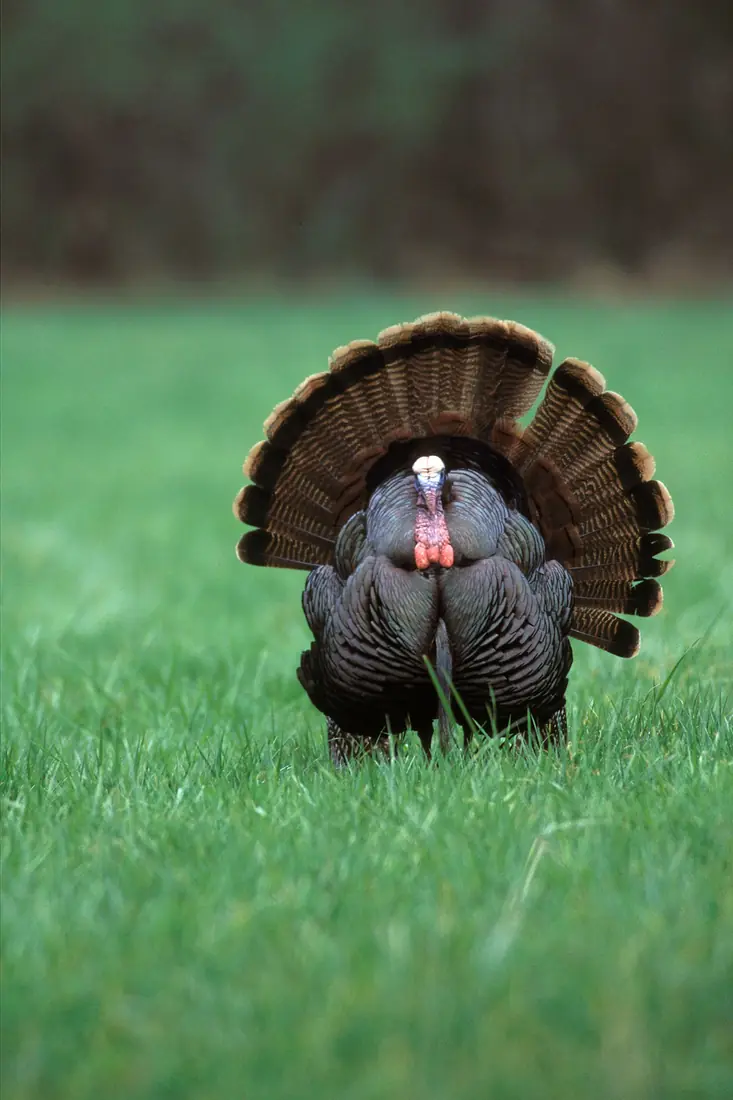
April is the month when Missouri woods sound different at dawn. Male wild turkeys, called toms, gobble from the roost to announce themselves and to draw hens, then strut with fanned tails and puffed feathers. Enjoying it takes no hunting gear: a quiet roadside, a field edge or a conservation area trail before sunrise is enough. The Missouri Department of Conservation (MDC) notes that the species grew from around 2,500 birds to several hundred thousand within about 75 years of management, though it also says turkey numbers have declined across much of the eastern United States and blames the loss of good nesting and brood-rearing habitat.
-
Gobbling and strutting
All of April, loudest around first light · Open woodland mixed with fields, statewide
MDC says toms gobble in spring to tell other males where they are and to attract females, spreading their tails and puffing their feathers in display. Hens then lay roughly 10 to 14 eggs in a shallow ground nest, and incubation takes about a month. Refuges mention the same rhythm: Mingo lists turkey mating displays among its spring sights, and Loess Bluffs says turkeys can be heard there during the breeding season.
-
Spring turkey season
MDC dates for 2027 not yet released · Public and private land statewide
For 2026, MDC set a youth portion on April 11 and 12 and a regular season from April 20 through May 10. Those are last year’s dates, not 2027’s, so watch MDC’s spring turkey page and its regulations booklet for the 2027 schedule before planning. MDC’s page describes a limit of two bearded turkeys, with only one allowed in the opening week, and says nonresidents were cut to a single bearded bird in the spring. Shooting begins 30 minutes before sunrise; the regular season ends at 1 p.m., while the youth portion lasts until sunset.
A quiet way to join in is to go out for the half hour before sunrise, stand still at a field edge and count the gobbles you hear. Write the number, the weather and the time in your Naturalist’s Field Journal, and repeat on a calm morning and a windy one to see how the weather changes what carries.
Which birds arrive in Missouri in April, and where do you see migrants?
April is the month when Missouri’s trees and wetlands fill with birds that spent the winter in the tropics. Mingo National Wildlife Refuge in the southeast calls April and May its best months for spring migrants, and Swan Lake in the north says April and May are the best time for shorebirds. A few sites, a morning visit and patience are all it takes. For the earlier waves of snow geese and pelicans, see our March guide; this month is about songbirds, hummingbirds and shorebirds.
-
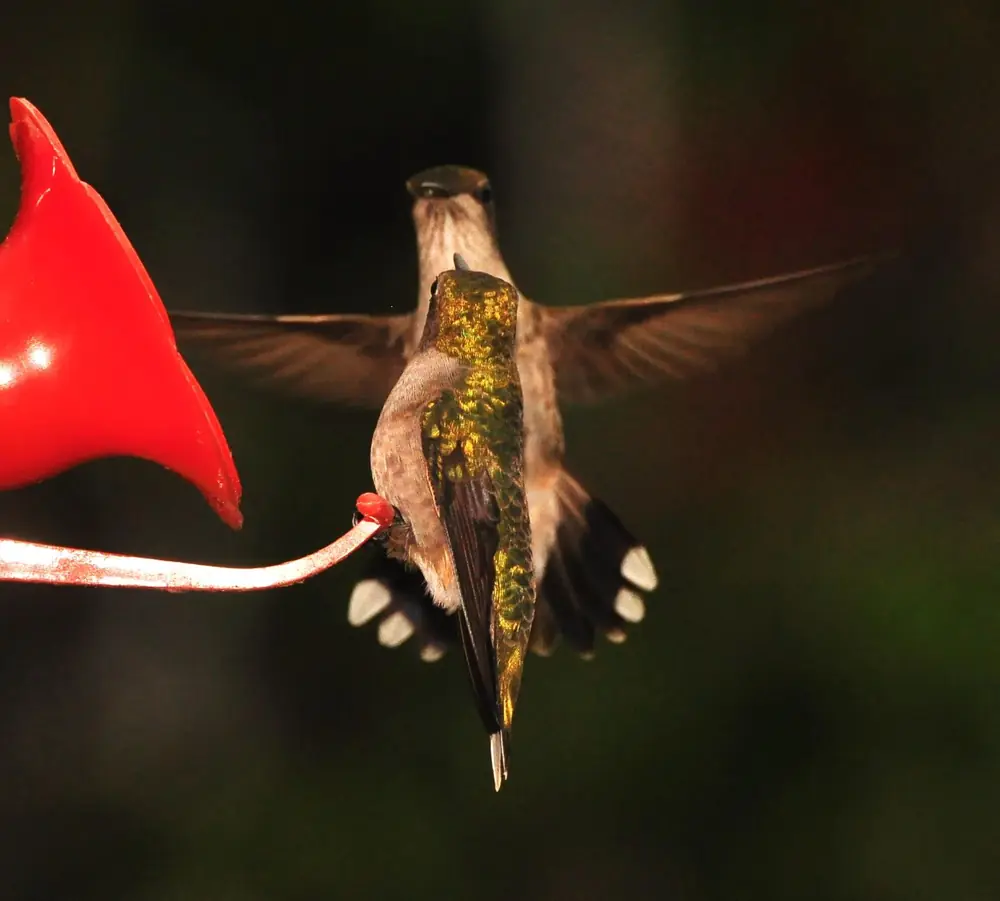
Ruby-throated hummingbird
Early to mid-April for the first arrivals · Woodland edges, gardens and feeders statewide
MDC’s field guide says the species begins arriving in early April, with nesting under way by mid-May, and an MDC release on spring migration said to expect hummingbirds around mid-April, with a few reported in Arkansas by late March that year. Put feeders out by early April. MDC’s mixture is one part sugar to four parts boiling water, cooled, with no red dye. Clean feeders twice a week in hot weather and weekly in cool weather. MDC adds that migrating hummingbirds can lose up to half their body weight, and many fly nonstop across the Gulf of Mexico, so a feeder helps. Journey North maps arrivals and takes reports.
-
Warblers
Early April through May, with numbers highest from late April into early May · Mingo, riverside woods and woodland conservation areas
MDC’s field guide describes the black-throated green warbler as a transient that passes through from early April to the end of May, with spring numbers peaking in late April and early May. It forages in the upper canopy, so bring binoculars and look up. Mingo lists the prothonotary warbler among its featured species, and the refuge’s 0.8-mile Swampwalk boardwalk runs through bottomland hardwood forest. In 2025 MDC offered free guided warbler walks at Mullenix Ford Access near Novinger and at Big Creek Conservation Area near Kirksville; watch its events page for 2027 versions.
-
Scarlet tanager
Back by mid-April, with peak numbers in mid-May · Mature oak-hickory forest, high in the canopy
MDC says scarlet tanagers return in mid-April and are most numerous in mid-May. Males are a brilliant scarlet with black wings and tail; females are yellow below and olive above. Both stay high in the canopy of oak-hickory forests and large shade trees, so a song heard overhead often comes before a sighting.
-
Shorebirds and wetland birds
April and May · Swan Lake, Loess Bluffs, Eagle Bluffs and Riverlands
Swan Lake National Wildlife Refuge near Sumner says April and May are the best months to see shorebirds, and its wildlife drive is open from the first Saturday in March through October. Eagle Bluffs Conservation Area near Columbia has 17 shallow pools across 1,100 acres and lists shorebirds, waterfowl, pelicans and warblers among its spring visitors. The Audubon Center at Riverlands near the meeting of the Mississippi and Missouri rivers, covers 3,700 acres of woods, marshes and mudflats, and Audubon says terns, bitterns and rails are common there in spring. Loess Bluffs lists shorebirds, wading birds and ducks among its spring migrants, with a 10-mile auto tour open daily.
-
Nest builders at the house
April into May · Porches, barns, bridges and yards
MDC’s April notes mention eastern phoebes building mud and plant nests under eaves, cliff swallows gathering at puddles to build mud nests on bridges and barns, and killdeer laying eggs in ground nests. Eastern bluebirds, according to MDC, settle in nest sites during March and April, lay 2 to 7 eggs and usually raise two broods in a season, so a nest box is worth watching.
Which frogs, lizards and snakes are active in Missouri in April?
Warm, damp evenings in April bring the biggest chorus of the year. MDC’s Xplor magazine describes a spring concert in which the voices come in a sequence, so a pond can sound different from one week to the next. Reptiles join in as soil and rock warm up. Details on the species follow.
-
Southern leopard frog and boreal chorus frog
April · Ponds, ditches, wet fields and floodplains
The magazine says the boreal chorus frog concert peaks in April and that southern leopard frog males "really begin belting it out in April." MDC’s April notes say male leopard frogs call at dusk. Stand still near the water’s edge at dusk and let your ears sort the voices.
-
Green frog, bullfrog and American toad
Mid-April onward · Ponds, lake edges and wet yards
According to the same source, the green frog concert begins in earnest in mid-April and the bullfrog chorus starts in April and grows loudest in June. American toads call from mid-March and peak in May, so April is the build-up. Fowler’s toads start calling in late March in southern Missouri and in May in the north. MDC says gray treefrogs usually start singing in May once the weather reaches 60 degrees, so an April night with a warm rain may bring early voices but is not the norm.
-
Northern crawfish frog
March through mid-May, on the first heavy, mild rains · Prairie pools and fishless ponds
MDC describes the crawfish frog’s call as a deep, loud snore, and says a chorus has been likened to pigs feeding. Males leave their crayfish burrows and travel to breeding pools after heavy rain and moderate temperatures. The species is considered vulnerable in Missouri because of habitat loss and is a species of conservation concern, with a steep decline north of the Missouri River.
-
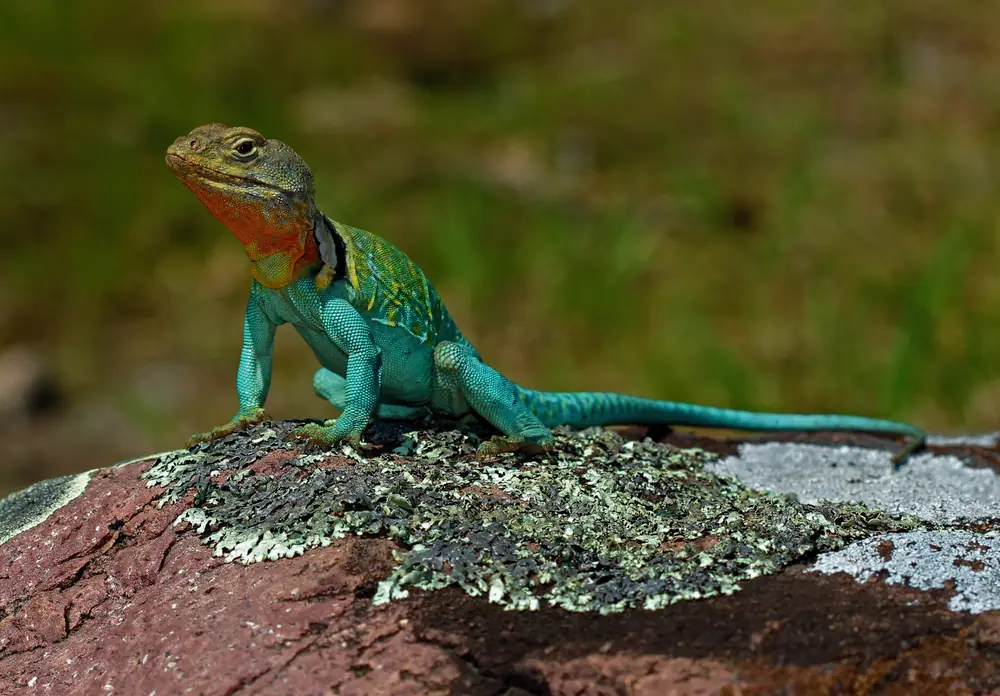
Eastern collared lizard
April to September, with peak activity May to late July · Sunny, rocky Ozark glades and the St. Francois Mountains
MDC says collared lizards are active mainly from April to September. They grow 8 to 14 inches long, males show tan, yellow, green or blue-green colors in the May to June breeding season, and both sexes have dark collar bands. Despite the nickname "mountain boomer" they make no sound. The species was once rare but has recovered thanks to glade restoration. Look on warm, sunny days, and leave rocks unturned, since they are the lizards’ homes.
To count rather than just listen, the Saint Louis Zoo’s FrogWatch USA program trains volunteers to identify the common frogs and toads of the St. Louis area by ear. It runs February through August, and the zoo had not posted 2027 training dates when we checked. A frog evening is an ideal "map of sounds" page in the field journal.
What blooms in Missouri in April, and when do the dogwoods open?
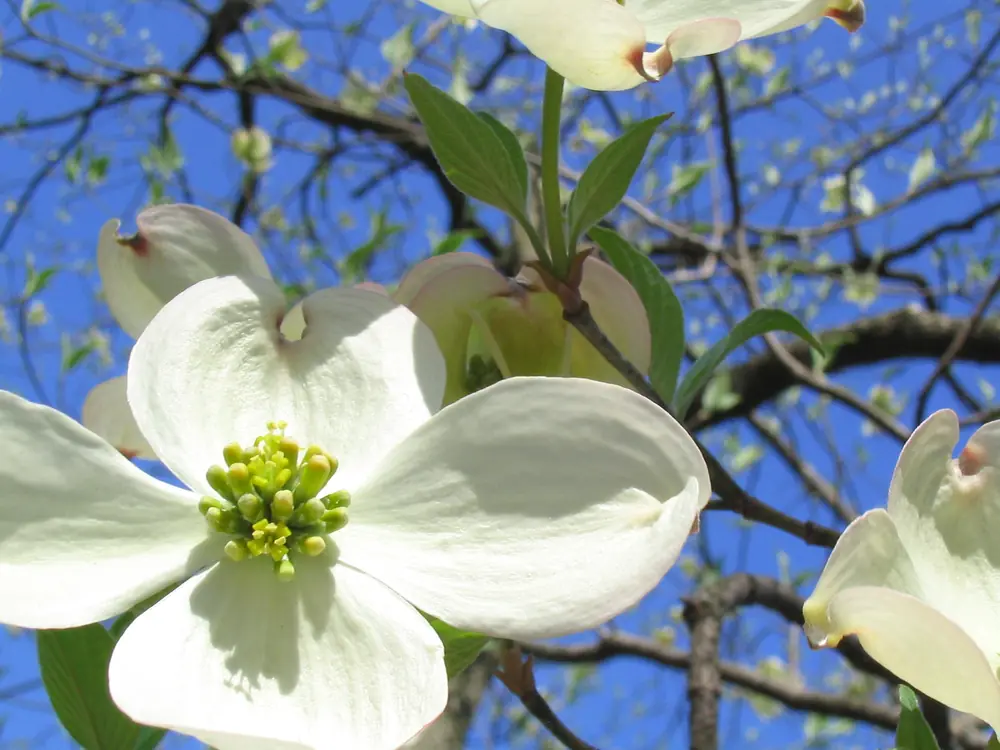
April is when the woods flip from brown to white and pink. Mingo’s staff say dogwood and redbud trees burst into full bloom after a few warm days, and MDC’s field guide dates flowering dogwood from mid-April to mid-May. Behind them, the forest floor is busy. In our March guide we covered the first ephemerals; April is the second wave.
-
Flowering dogwood
Mid-April to mid-May · Mostly the Ozarks, also north of the Missouri River, especially in the east
Missouri adopted the flowering dogwood as its state tree in 1955. What look like white petals are bracts around a cluster of small yellowish flowers. The fruit, which ripens from August to November, is a preferred food of wild turkey and at least 28 other kinds of birds, according to MDC.
-
Eastern redbud
Late March to early May · Woodland edges, hillsides and yards statewide
MDC says redbud blooms from late March into early May. The rose-purple flowers open in clusters on bare branches before the leaves, which makes the tree a handy calendar: if redbuds are fading and dogwoods are opening, you are at the middle of the month.
-
Wild plum and its butterflies
April to May · Thickets, fencerows and prairie edges
MDC says wild plum flowers from April to May in fragrant white clusters and forms thickets. Its blossoms feed Henry’s elfin and spring azure butterflies, as well as bees. MDC’s April notes in two years pair wild plum bloom with these two butterflies and add the falcate orangetip, which emerges in April and May, and the giant swallowtail, which begins to appear.
-
Woodland bluebells, phlox and mayapple
First half of April into May · Bottomland forest, ravines and stream banks
The Missouri Botanical Garden’s Shaw Nature Reserve in Gray Summit describes April as the time for bluebells, phlox, mayapple, celandine poppy and bellwort, with thousands of daffodils around the Pinetum in the first half of the month. MDC says Virginia bluebells bloom from March to June, open from pink buds to light blue bells, and are uncommon or absent in the northwest quarter. Buying nursery-grown plants rather than wild-dug ones protects wild populations.
-
Violets, hawthorns and leatherwood
April · Woods, roadsides and bottomlands
MDC says Missouri has 17 native violets and that April is the best month to look for them; it adds that you need both flower and leaf to name one. Hawthorns, over 75 species in Missouri, carry white flower clusters from April into June, and downy hawthorn is the state flower. MDC’s April 2026 notes list eastern leatherwood among the month’s blooms.
To track the season, pick one dogwood and one redbud near home and note the day each bud swells, opens and fades. That is the "tree through the seasons" plate of the Naturalist’s Field Journal; a few years of notes become your own bloom calendar. Our Missouri frost dates show when a late freeze could still nip open blossoms.
When do morels come up in Missouri, and what are the rules?
Morel hunting is a spring tradition across the state, and April is when it peaks in most places. MDC’s morel page puts the season at late March to early May and offers a rule of thumb: morels peak when lilacs bloom. We cannot give a date for 2027, because the weather decides, and neither MDC nor any other agency can predict it that far out.
-
Weather and timing
Late March to early May · Wooded slopes, river bottoms and apple trees
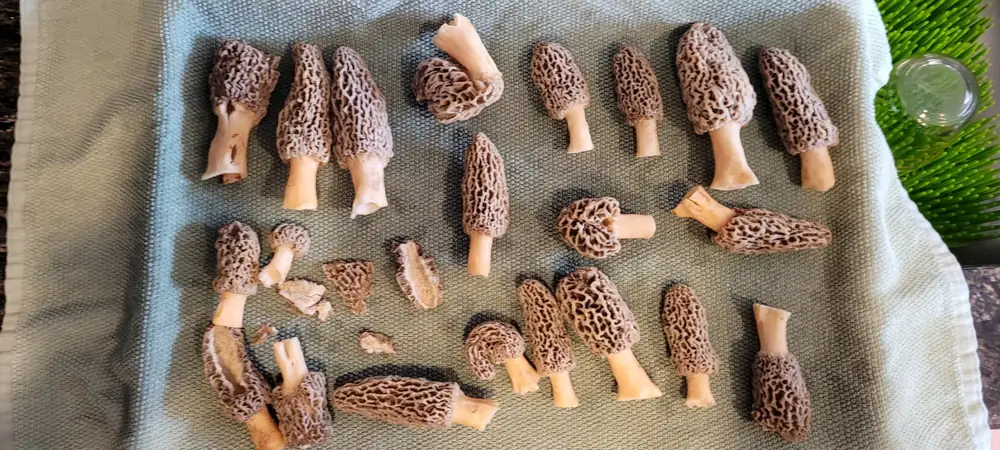
MDC says morels appear after warm, moist spring weather with daytime temperatures in the low 70s and nighttime temperatures in the 50s. Look on south- and west-facing slopes early in the season and on north- and east-facing ones later. Elms, ashes, cottonwoods and old apple trees are favorites, and ground disturbed by flooding, fire or logging often produces them.
-
Three kinds of morel
April · Mixed woods and floodplains
MDC’s April notes list black morels, which are smaller and appear first; yellow morels, which can stand 12 inches tall; and half-free morels, scattered in mixed woods. A fourth mushroom, the big red false morel, is considered toxic. MDC warns that misidentifying and eating the wrong mushroom can cause anything from mild stomach upset to organ failure or death, so use a field guide or consult a mycologist before eating anything.
-
Where you may pick
During the season · Check the area first
MDC says most public lands in Missouri allow collecting mushrooms for personal use, but you should check the regulations for each area before picking. Ask permission on private land. During spring turkey season, hunters share the same woods, so wear hunter orange.
What is biting and running in Missouri streams and lakes in April?
Rising water and warming shallows set off spawning runs, and anglers follow. The dates below come from MDC’s 2026 season table; MDC had not posted all 2027 dates when we wrote this, so confirm them before you go.
-
Paddlefish snagging
In 2026, March 15 to April 30 on the lakes and to May 15 on the Mississippi River · Lake of the Ozarks, Truman Lake and Table Rock Lake
Paddlefish are large, long-snouted fish, and Missouri allows snagging them in spring. An MDC fisheries biologist has said the best conditions come when the water reaches 50 to 55 degrees and the flow rises, and that Lake of the Ozarks and Truman peak in April while Table Rock peaks early. MDC’s 2018 release listed a limit of two fish, a 34-inch minimum on the lakes and a fishing permit, but rules change, so read the current regulations before you go.
-
Crappie spawn
April · Shallow, brushy coves and banks of lakes and ponds
MDC’s April notes say white and black crappie spawn this month. When the fish are in the shallows, a minnow under a bobber cast toward the bank is a classic family method, and MDC’s season table lists crappie among the fish open in April.
How warm is a Missouri April, and what are the weather hazards?
April is the month when the average high crosses into the upper 60s over most of the state. Kirksville’s average high is 62.4 °F, St. Louis’s is 68.0 and Joplin’s 69.2, while average lows range from 39.5 °F at Kirksville to 47.0 at St. Louis. Precipitation runs from 3.71 inches at St. Joseph to 5.18 at Cape Girardeau, with only a trace of snow in the normals where NOAA publishes one.
| Station | Average high | Average low | Precipitation | Snowfall |
|---|---|---|---|---|
| Kirksville | 62.4 | 39.5 | 4.09 | 0.8 |
| St. Joseph | 65.9 | 41.8 | 3.71 | not published |
| Kansas City (airport) | 65.5 | 43.7 | 4.05 | 0.3 |
| Columbia | 67.2 | 45.6 | 4.88 | 0.2 |
| St. Louis (Lambert) | 68.0 | 47.0 | 4.73 | 0.2 |
| Springfield | 68.4 | 45.6 | 4.71 | 0.1 |
| Joplin | 69.2 | 46.6 | 4.99 | not published |
| Cape Girardeau | 69.0 | 46.8 | 5.18 | not published |
Storms. April and May are the heart of Missouri’s tornado season. Have a weather radio or phone alerts working and pick your shelter spot in advance. The National Weather Service puts a basement first, then a safe room or an inside room without windows. A car is no refuge, and sheds, mobile homes and tents are poor shelters.
Flooding. The Weather Service says a mere six inches of fast-moving water can topple an adult, and a foot of it can float most cars. Low-water crossings flood quickly in April downpours, so turn around rather than drive through.
Late freezes. A spring freeze is still possible; the table below shows how late. For longer-range outlooks, the Climate Prediction Center releases fresh 90-day maps around mid-month on its seasonal outlook page. Our weather page has more on reading forecasts, and the cloud guide helps with spotting storm-building skies.
When is the last spring freeze in Missouri?
Later than April’s mild afternoons suggest. The median is the date after which half of all years have seen their final 32 °F night. In the north that date is late: April 21 at Kirksville and April 19 at St. Joseph, with Kansas City at April 13. Farther south the medians are Springfield on April 9, Joplin on April 6, Columbia and Cape Girardeau on April 5, and St. Louis, earliest of all, on April 1. Even so, one spring in ten sees a freeze later than April 18 in St. Louis, and later than May 5 at Kirksville.
| Station | One year in ten | Median | Nine years in ten |
|---|---|---|---|
| Kirksville | Apr 7 | Apr 21 | May 5 |
| St. Joseph | Apr 5 | Apr 19 | May 3 |
| Kansas City | Mar 30 | Apr 13 | Apr 29 |
| Columbia | Mar 19 | Apr 5 | Apr 21 |
| St. Louis | Mar 14 | Apr 1 | Apr 18 |
| Springfield | Mar 26 | Apr 9 | Apr 27 |
| Joplin | Mar 22 | Apr 6 | Apr 23 |
| Cape Girardeau | Mar 19 | Apr 5 | Apr 21 |
The median is a date to start watching, not a safe planting date. Dogwood, redbud and wild plum blossoms and tender garden seedlings can be damaged by a late freeze, and a sheet over a plant overnight is cheap insurance. Our Missouri frost dates page has your town.
How much daylight does Missouri gain in April?
Between 65 and 73 minutes, and the north gains the most. At Kirksville the day stretches from 12 hours 41 minutes on April 1 to 13 hours 53 minutes on April 30; in the south, Springfield, Joplin and Cape Girardeau start at 12 hours 36 or 37 minutes and finish at 13 hours 41 or 42 minutes. A day adds roughly 2.2 to 2.5 minutes, and by April 30 even the southernmost city has over 13 and a half hours of sun. Missouri keeps daylight time all month, so there is no clock change to muddy the picture.
| City | Apr 1 | Apr 30 | Gained | Per day |
|---|---|---|---|---|
| Kirksville | 12 h 41 m | 13 h 53 m | 72 min | 2.5 min |
| St. Joseph | 12 h 39 m | 13 h 52 m | 73 min | 2.5 min |
| Kansas City | 12 h 39 m | 13 h 49 m | 70 min | 2.4 min |
| Columbia | 12 h 39 m | 13 h 48 m | 69 min | 2.4 min |
| St. Louis | 12 h 38 m | 13 h 47 m | 69 min | 2.4 min |
| Springfield | 12 h 37 m | 13 h 42 m | 65 min | 2.2 min |
| Joplin | 12 h 36 m | 13 h 41 m | 65 min | 2.2 min |
| Cape Girardeau | 12 h 37 m | 13 h 42 m | 65 min | 2.2 min |
The pace eases toward the June solstice. For the exact sunrise and sunset at your own address, use our daylight calculator.
What can you see in Missouri's night sky in April 2027?
April brings the Pink Moon on the 20th, a washed-out Lyrid meteor shower and a bright pair of planets in the evening. Moon times are Central Daylight Time, which Missouri keeps all month.
-
Jupiter and Mars in the evening
All month · High in the south after dark
Jupiter, far brighter than any star, stays out most of the night: for the central U.S., by our calculation, it sets roughly nine hours past sunset at the start of April and seven hours past sunset at the start of May. Mars, dimmer and reddish, shares that stretch of sky. A mere degree separates the Moon and Jupiter around April 14 and 15, by our calculation, and the Moon lies roughly three degrees from Mars that day, so watch the Moon pass among them on those evenings.
-
Venus before sunrise
All month · Low in the east before dawn
Venus remains a brilliant morning star but is sinking toward the Sun: by our calculation it is up roughly 75 minutes before dawn at the start of April, trimmed to nearly an hour by the start of May. A slim crescent Moon passes near Venus before sunrise on April 3 and 4.
-
Saturn and Mercury are out of sight
April · Near the Sun
Saturn lines up behind the Sun on April 7, and Mercury does the same on April 28. Neither can be seen from Missouri this month. Saturn reappears in the dawn sky toward the end of April, and Mercury turns up in the evening in May.
-
The Lyrids
Peak the night of April 22 into April 23 · Anywhere dark, after the Moon sets or in the hours before it rises
Lyrid meteors fall between about April 14 and 30; SeaSky rates the shower as average, near 20 an hour at its best. This year a waning gibbous Moon, nearly full and three days past it, climbs into view near 10 p.m., so only the early evening stays dark, and the Lyra radiant is still low toward the northeast at that hour. One prediction from the IMO puts the maximum near 8:41 p.m. CDT on April 22, and it calls the conditions poor. Realistically, expect only a few meteors in an hour.
-
The Pink Moon
Full on Tuesday, April 20, at 5:27 p.m. CDT · Rising in the east around sunset
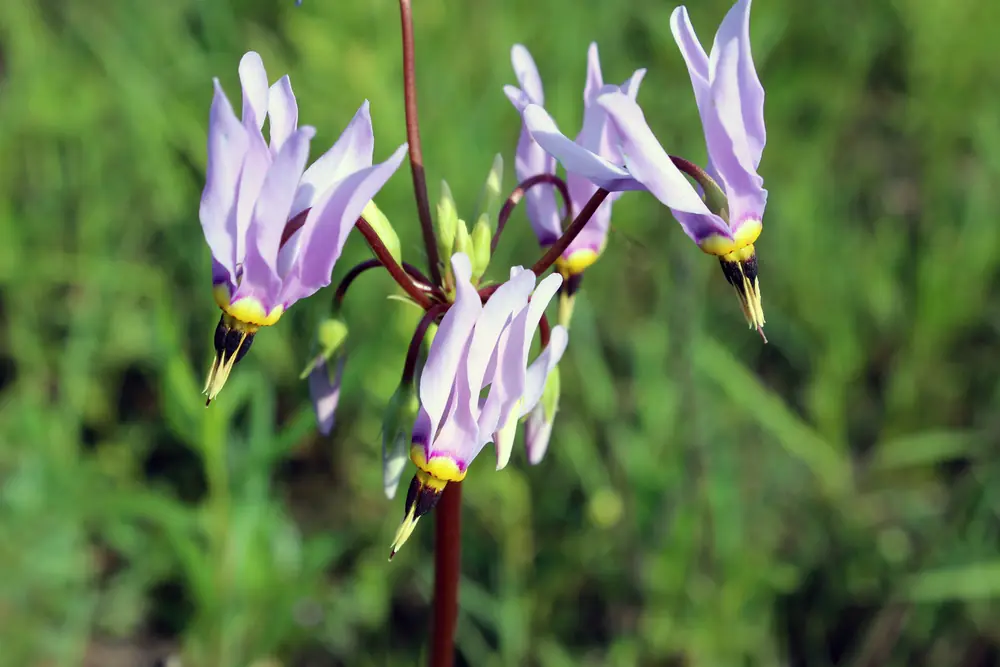
The full instant, 5:27 p.m. CDT, comes ahead of moonrise in Missouri, so the evening of the 20th gives the best view, and the evenings on either side also look nearly full. The name Pink Moon comes from the early spring bloom of moss pink, or wild ground phlox, according to SeaSky. It is not pink in the sky.
| Phase | Date | Time |
|---|---|---|
| New moon | Tuesday, Apr 6 | 6:51 p.m. CDT |
| First quarter | Tuesday, Apr 13 | 5:56 p.m. CDT |
| Full moon, the Pink Moon | Tuesday, Apr 20 | 5:27 p.m. CDT (looks full the evening of Apr 20) |
| Last quarter | Wednesday, Apr 28 | 3:18 p.m. CDT |
There are no eclipses in April 2027. Our moon phases page shows the Moon on any other date. The Eta Aquariids, which should be well placed this year because their early-May peak falls near the May 6 new moon, arrive next month.
What are good April nature outings for Missouri families?
- Friday, April 2: Missouri’s Arbor Day. MDC says the state has observed it on the first Friday in April since 1886. Plant a native tree or visit one; MDC’s George O. White State Forest Nursery near Licking sells seedlings, with orders in recent years open until April 15.
- Early to mid-April: hang the hummingbird feeders and tell Journey North about your first sighting.
- A turkey-dawn outing. Visit a field edge before sunrise and listen. Check MDC for 2027 turkey season dates and wear orange if you share public land.
- Thursday, April 22: Earth Day, a good day for a trash pickup along a creek or a walk to see which trees have leafed out.
- A frog evening. Go to a pond at dusk with a flashlight turned off and try naming the voices. The Saint Louis Zoo’s FrogWatch USA runs February through August.
- Friday, April 30, to Monday, May 3: City Nature Challenge. Organizers have set 2027 observing for April 30 through May 3, with identification time running to May 16. Download iNaturalist, photograph wild plants and animals, and mark cultivated plants as cultivated. Check the St. Louis and Kansas City organizers’ pages to join their local counts.
- Last Friday in April: national Arbor Day, which falls on April 30 in 2027.
MDC and the refuges publish many free programs, but most 2027 dates were still unposted at the time of writing, so confirm each event with its organizer. Last month’s stories are in our March guide, and the nature index lists every state.
Safety notes for April in Missouri
- Hunting and trapping open in April (MDC, 2026-27): goose hunting under the Light Goose Conservation Order (snow, blue and Ross’s geese) continues to April 30, 2027, and a private-land trapping extension for opossum, raccoon, skunk and coyote lasts through April 14. Expect hunters near goose areas.
- Spring turkey: MDC had not yet released 2027 spring turkey dates when this page was written. The 2026 youth portion fell on April 11 and 12, with the regular season April 20 to May 10, so expect hunters in the woods at dawn for much of the later month.
- Hunter orange: MDC’s orange rule applies to firearms deer and elk hunting, and its list of exceptions includes migratory game birds, and the page does not list spring turkey season among its requirements. MDC’s safety advice is still to wear blaze orange while moving through the woods, to avoid red, white, blue and black clothing, which resembles a turkey, and, as non-hunters, to wear orange as hikers, birders and mushroom hunters. MDC says most turkey hunting incidents involve hunters who shoot at sound, color or movement.
- Ticks: University of Missouri Extension says tick activity picks up in spring and increases through April, with peaks around June and July. Light-colored clothing helps, as do pants tucked into socks and an EPA-approved repellent. Keep to the center of trails and inspect skin and hairlines when you get home.
- Snakes: copperheads and other snakes become active as the days warm, and wet springs can send them into garages and patios. Watch where you place hands and feet, leave snakes alone, and use a walking stick on rocky ground. If someone is bitten, seek medical care.
- Black bears: MDC says Missouri’s black bears live mostly in the south, and that bears leave dens in spring. For bear country, it recommends keeping bird feeders indoors from April through November, locking up trash and pet food, and never feeding bears: "A fed bear is a dead bear." On trails, make noise, hike in groups, leash dogs and give bears room to leave.
- Baby animals: MDC says most young animals are not orphaned. A feathered fledgling hopping on the ground can spend up to 10 days learning to fly, and parents are nearby. Leave wildlife wild.
Sources (54)
- MDC newsroom: deer and turkey hunting dates for 2026-2027 seasons (2026 spring turkey dates, nonresident limit)
- MDC: spring turkey hunting (shooting hours, limits, public land rule)
- MDC field guide: wild turkey
- MDC: 2026-27 hunting and trapping seasons
- MDC: 2026-27 hunting and trapping seasons, page 2 (Light Goose Conservation Order)
- MDC: hunter orange requirement
- MDC newsroom: turkey hunting safety (2018 release)
- MDC field guide: ruby-throated hummingbird
- MDC newsroom: supporting hummingbirds during spring migration
- Journey North: hummingbirds
- Journey North: monarchs
- MDC field guide: black-throated green warbler
- MDC newsroom: birdwatching in northeastern Missouri (2025 warbler walks)
- MDC field guide: scarlet tanager
- MDC field guide: eastern bluebird
- U.S. Fish and Wildlife Service: Mingo National Wildlife Refuge, visit us
- U.S. Fish and Wildlife Service: Mingo National Wildlife Refuge, seasons of wildlife
- U.S. Fish and Wildlife Service: Swan Lake National Wildlife Refuge, visit us
- U.S. Fish and Wildlife Service: Loess Bluffs National Wildlife Refuge, visit us
- U.S. Fish and Wildlife Service: Loess Bluffs National Wildlife Refuge, seasons of wildlife
- MDC: Eagle Bluffs Conservation Area
- Audubon Center at Riverlands: birds
- MDC Xplor: Spring Concert (frog and toad calling times)
- MDC field guide: northern crawfish frog
- MDC field guide: eastern collared lizard
- Saint Louis Zoo: FrogWatch USA
- Missouri Conservationist, April 2024: Get Outside in April
- Missouri Conservationist, April 2025: Get Outside in April
- Missouri Conservationist, April 2026: Get Outside in April
- MDC field guide: flowering dogwood
- MDC field guide: eastern redbud
- MDC field guide: wild plum
- MDC field guide: Virginia bluebells
- MDC field guide: shooting star
- Missouri Botanical Garden: Shaw Nature Reserve natural history by month
- MDC: morel hunting
- MDC: 2026 fishing seasons table (paddlefish, trout parks)
- MDC newsroom: paddlefish season (2018 release, peak timing and rules)
- NOAA NCEI: 1991-2020 monthly normals for Missouri stations (data API)
- Spectrum News: Tornadoes by the numbers and intensities in Missouri (March 2024)
- National Weather Service: tornado safety, during a tornado
- National Weather Service: Turn Around Don't Drown
- Climate Prediction Center: seasonal outlooks
- U.S. Naval Observatory: moon phases (data API)
- Sea and Sky: Astronomy Calendar of Celestial Events 2027
- MU Extension: ticks have no off season
- KY3: MDC on staying away from copperhead snakes (June 2025)
- MDC newsroom: Be BearWise to avoid conflicts with black bears
- MDC newsroom: leave wildlife wild this spring
- MDC bulletin: Arbor Days in April (state and national dates, seedlings)
- Earth Day Network: about Earth Day
- City Nature Challenge: official site (2027 dates)
- City of St. Louis: City Nature Challenge
- Photos via Wikimedia Commons; licenses are listed with each picture