What to look for in nature in Missouri this November
November is when Missouri’s wetlands fill and its woods go quiet. Well over a hundred thousand ducks and the season’s snow geese crowd the pools at Loess Bluffs under the loess hills, trumpeter swans start to drift in from the north, and bucks chase does across every county in the middle of the month, just as the November firearms portion opens. In the eastern Ozarks a shrub called witch-hazel blooms after its leaves have fallen, pin oaks rattle with brown leaves they will keep until spring, and the trout parks switch to flies-only on Friday the 13th. Standard time returns before dawn on the 1st, and from then on Missouri evenings close in fast. Here is where and when to look.
Other months in Missouri: October, December.
Start here

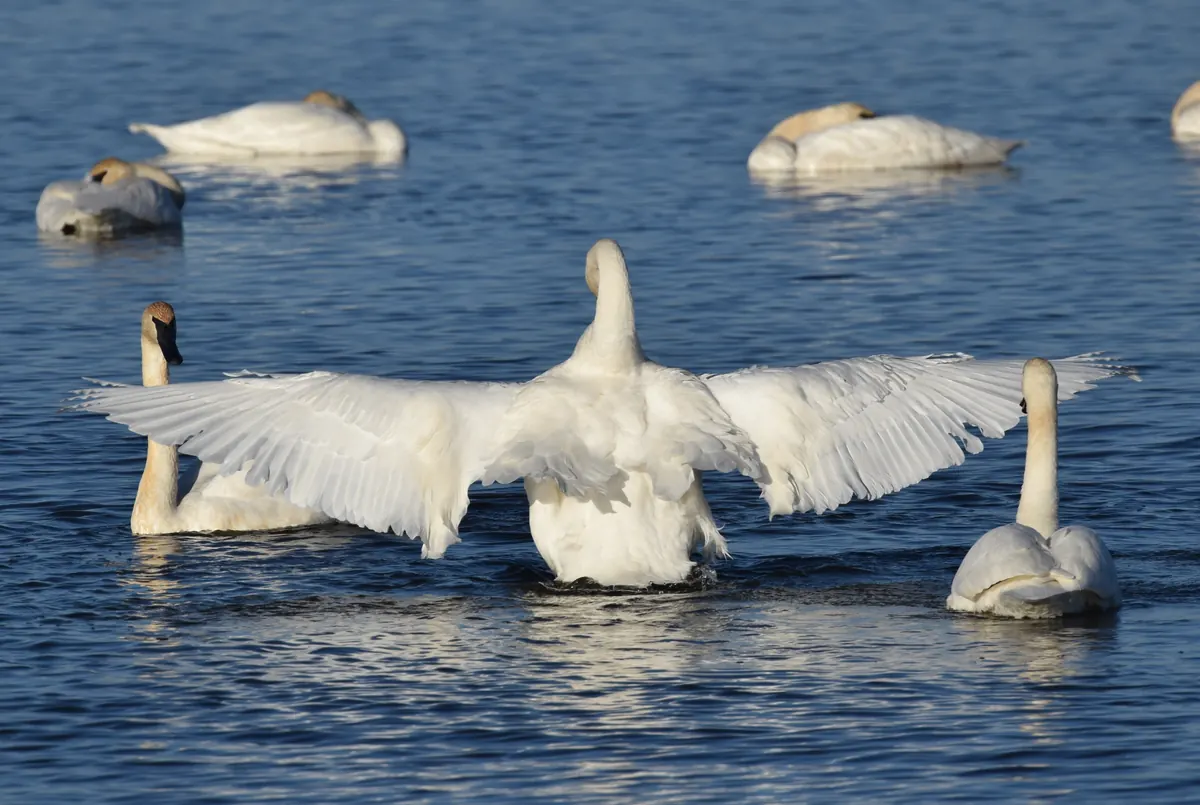
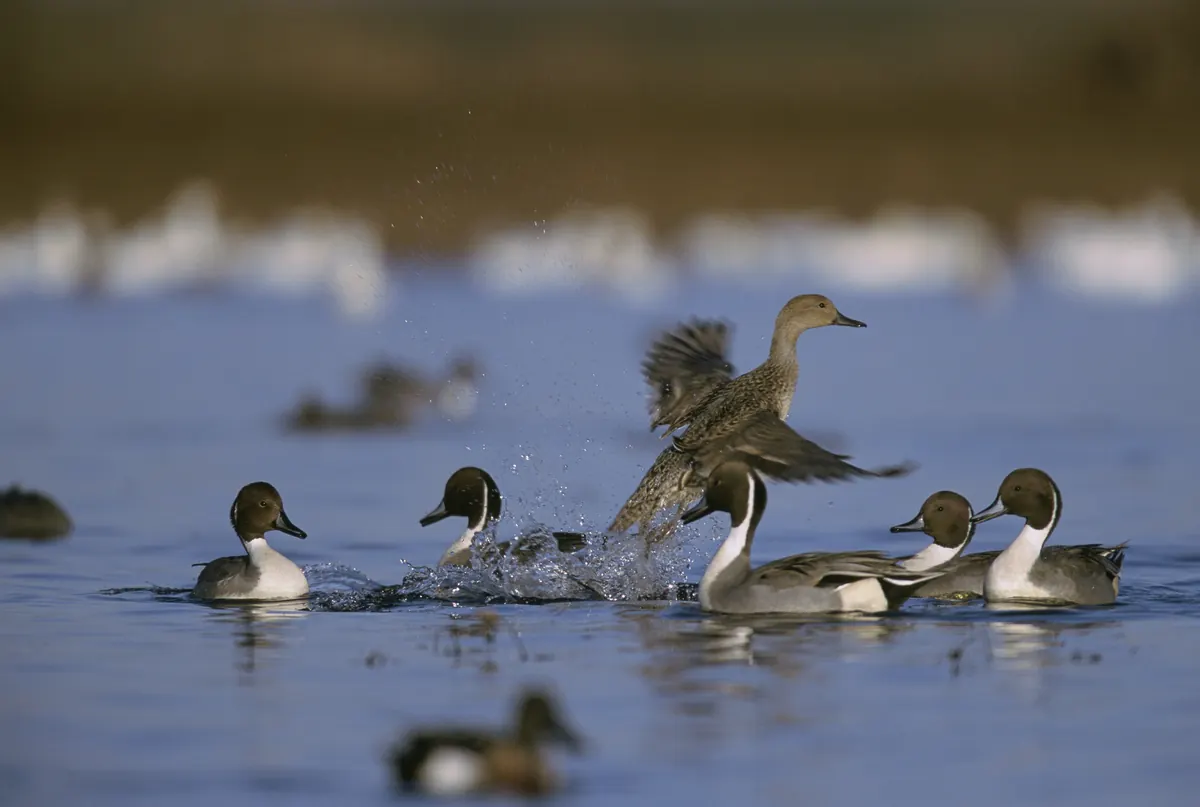
- Ducks, geese and swans at Loess Bluffs. The refuge near Mound City expects its snow goose peak in the middle or second half of November, and its survey of November 20, 2025 found more than 130,000 ducks, mostly mallards and pintails, along with 513 trumpeter swans; five days later the swans numbered 730. Cars can drive the tour route daily, from half an hour before sunup to half an hour after sundown.
- The rut, and an orange hat. MDC puts the peak of the deer breeding season in mid-November, and the November firearms portion runs from Saturday, November 14, through Tuesday, November 24. Drive slowly at dawn and dusk, and wear blaze orange if you walk public land those eleven days and over the youth portion, November 27–29.
- Leonids, then a Beaver supermoon. For the Leonids, wait for moonset around 12:30 a.m. and watch until first light on Wednesday, November 18. The full Beaver Moon, a modest supermoon, reaches full at 8:53 in the morning, Central time, on Tuesday, November 24, and looks round on the evenings of both the 23rd and the 24th.
In the Naturalist’s Field Journal, the “birds I have seen” list has room for the first trumpeter swan and the pintails at Loess Bluffs, the “tracks to know” plate is made for a deer trail pressed into the mud of a creek crossing, and “a tree through the seasons” suits a single pin oak that refuses to drop its leaves. Use the “dusk and dawn watch” on a rut morning, and if you find a flowering witch-hazel, sketch it on the daily field log beside the date.
Regions used below: Northwest Missouri; Northeast Missouri; Kansas City area; St. Louis area; Central Missouri/Columbia; the Ozarks; Southwest Missouri/Springfield; Southeast Missouri and the Bootheel.
When do the snow geese and ducks peak at Loess Bluffs?
For the U.S. Fish and Wildlife Service, the fall high point for snow geese at Loess Bluffs National Wildlife Refuge falls in the middle to latter part of November, and the refuge’s own visitor page calls October through December the best stretch for migrating waterfowl. It is the one place in Missouri where you can sit in a car on a cold morning and watch a hundred thousand birds lift at once. The refuge sits on the Missouri River floodplain under the loess hills in Holt County, about half an hour north of St. Joseph, and cars may use the 10-mile tour loop from 30 minutes before sunup until 30 minutes after sundown, on every day of the year including holidays. Indoors, the visitor center keeps Tuesday-to-Saturday hours, 10 to 3.
What the refuge does not promise is a particular number. The staff count birds most weeks in fall and post each survey as a short report, and the two late-November counts from 2025 show how quickly the mix can change in five days. Ducks outnumbered geese by a wide margin. Pintails dropped by two thirds between the two counts while snow geese more than tripled, and the trumpeter swans, which MDC describes as present in Missouri from late November to late March, were already there in the hundreds.
| Species or group | Nov 20, 2025 | Nov 25, 2025 |
|---|---|---|
| Mallard | 54,505 | 43,305 |
| Northern pintail | 52,635 | 18,560 |
| Green-winged teal | 17,345 | 3,360 |
| Gadwall | 8,255 | 4,395 |
| All ducks | 139,386 | 75,528 |
| Snow goose | 4,310 | 14,300 |
| Greater white-fronted goose | 11,500 | 2,740 |
| Trumpeter swan | 513 | 730 |
| Bald eagle (adults and immatures) | 17 | 31 |
Snow goose numbers in the hundreds of thousands come in some autumns and not others; in 2025 the big flocks had not arrived by Thanksgiving week, which is why it pays to read the latest survey before you make the drive. Look for the blue morph mixed into the white flocks: MDC describes it as grayish brown with a white head and neck. Elsewhere, Mingo National Wildlife Refuge near Puxico says its waterfowl are usually most numerous in early to mid-December but can be present in large numbers from November on, and its auto tour normally runs through November, weather permitting. The interior of Swan Lake refuge near Sumner is closed to visitors from the end of October to early March, though the silo observation tower at headquarters stays open, with keys handed out during visitor center hours.
When do trumpeter swans and bald eagles arrive in Missouri?
Two of the largest birds in North America start showing up this month, and both are still building at the end of it.
-
Trumpeter swans
Late November to late March · Loess Bluffs; Columbia Bottom, Cooley Lake, Pony Express Lake and Perry Memorial conservation areas; the Mississippi backwaters near West Alton
MDC counts the trumpeter as a winter visitor that is typically here from late November until late March, and it names Columbia Bottom Conservation Area at the confluence, Cooley Lake near Missouri City, Pony Express Lake near Osborn and Ralph and Martha Perry Memorial Conservation Area as places to look. The Corps of Engineers’ Riverlands Migratory Bird Sanctuary at West Alton, with an Audubon center on site, is the best-known swan spot near St. Louis; Audubon’s winter programs there run from December through February, so November is the early, quiet part of the season. A trumpeter is huge, roughly twice the size of a snow goose, with an all-black bill. A tundra swan is smaller, and MDC says its bill looks slightly dished, with the back point just meeting the eye.
-
Bald eagles follow the ducks
Building through late November; best December to February · Loess Bluffs, Mingo, the big reservoirs and the Mississippi and Missouri rivers
Missouri is one of the leading states for wintering bald eagles, MDC says, and the birds trail the waterfowl south. In 2025 the Loess Bluffs count nearly doubled between November 20 and 25, from 17 to 31, and the refuge says up to about 300 can gather at the peak, which usually comes around the start of December. Mingo’s winter visitors swell its resident eagles from December. Missouri also had more than 600 active eagle nests in 2025, so some of the eagles you see now are local birds; Mingo says nesting there begins in December. The 47th annual Eagle Days at Loess Bluffs is set for December 5 and 6, 8:30 a.m. to 4 p.m.
-
Short-eared owls on the prairies
October to April · Large grasslands and native prairie, especially in the west
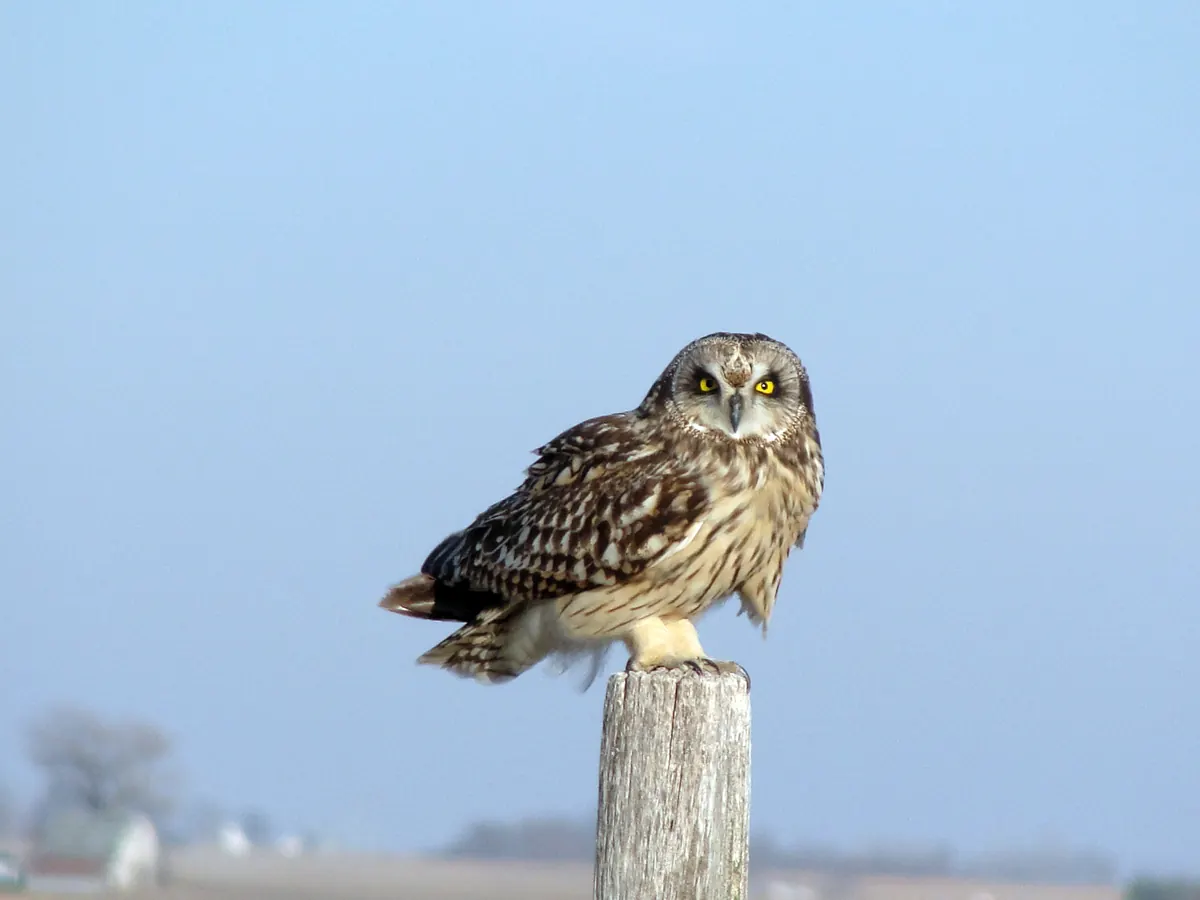
An uncommon winter resident and a species of conservation concern in Missouri, the short-eared owl hunts low over open grass with a loose, mothlike flight, often in the last hour of daylight. MDC suggests W. R. Kearn Memorial and Shawnee Trail conservation areas and notes that a winter roost can hold twenty or more owls in a thicket, a ravine or among hay bales. Watch from the road at dusk rather than walking into the grass.
When is the deer rut in Missouri, and when does firearms season open?
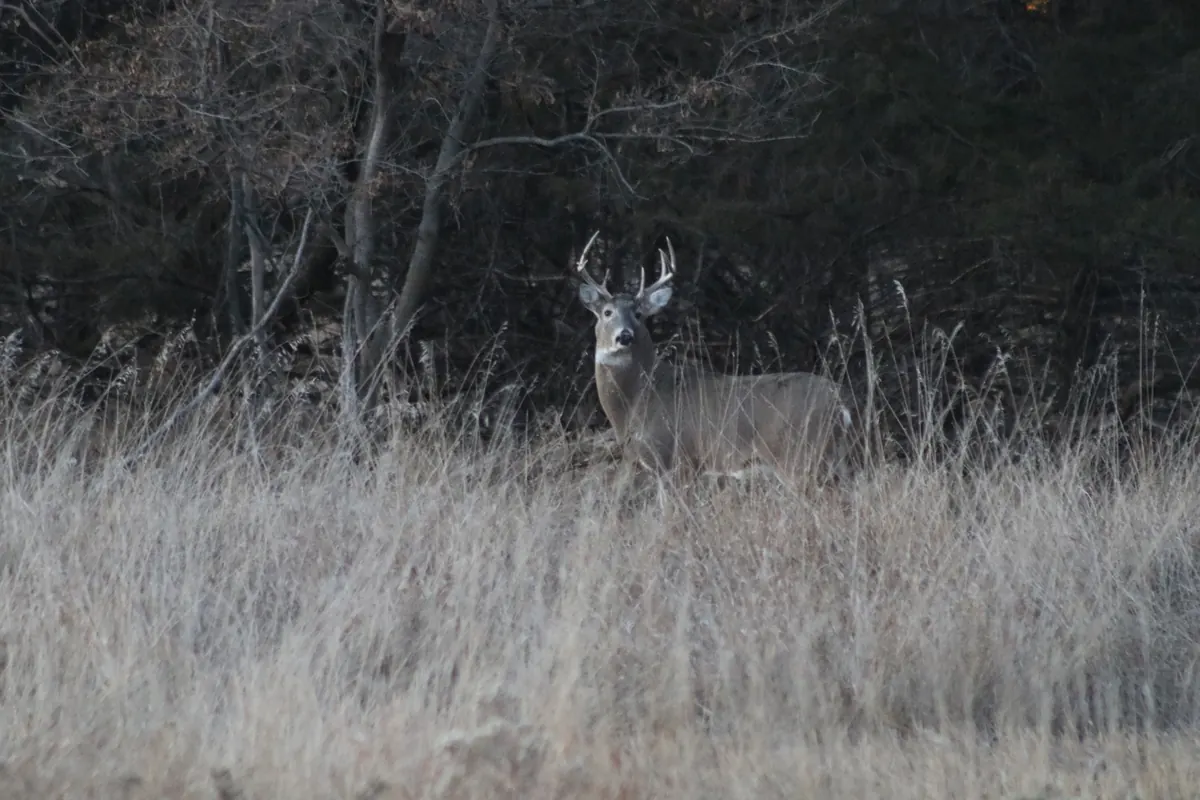
The middle of the month, on both counts. MDC’s field guide places the rutting peak in mid-November, and the November portion of firearms deer season runs Saturday, November 14, through Tuesday, November 24, 2026. Archery season pauses for those eleven days, closing November 13 and reopening November 25 through January 15.
-
Bucks on the move
Peak around mid-November · Statewide; field edges, creek bottoms and the roads between them
During the rut, bucks travel far from their usual ground looking for does and pay little attention to traffic. The rubs and scrapes that appeared in October now get fresh visits: a sapling stripped of bark at knee height, a patch of bare, pawed earth under an overhanging branch. Go out at first light, find a field edge with a long view, and sit still. Then drive home slowly.
-
Mandatory CWD sampling on opening weekend
Saturday and Sunday, November 14 and 15 · The counties on MDC’s 2026 list, including Holt, Andrew, Buchanan, Greene, Shannon, Carter, Reynolds and St. Charles
MDC now rotates its mandatory chronic wasting disease sampling around the state so that every county comes up once in four years. Hunters who take a deer in a listed county on opening weekend must bring it, or its head, to a sampling station the same day; the stations run from 7:30 a.m. to 8 p.m. If you are not hunting, you will notice the stations and the traffic at them; if you are, check the full county list on MDC’s page before you go.
-
Elk after the rut at Peck Ranch
Driving tour closed November 5–9 for a managed deer hunt · Peck Ranch Conservation Area, near Winona in Shannon County
Bulls have stopped bugling by now, yet the herd still grazes in the open fields along the driving route in the first and last hours of daylight. MDC has closed the tour for November 5 through 9 for a managed hunt, and says other hunting seasons can close it as well, so check the elk tour page before you drive down for the November firearms weekends.
What is still blooming or holding on in Missouri’s woods in November?
Most of the color is gone by the second week, though MDC’s weekly fall color reports continue to about mid-November and the southeastern lowlands are the last to finish. What is left is subtler, and some of it only makes sense once the leaves are down.
-
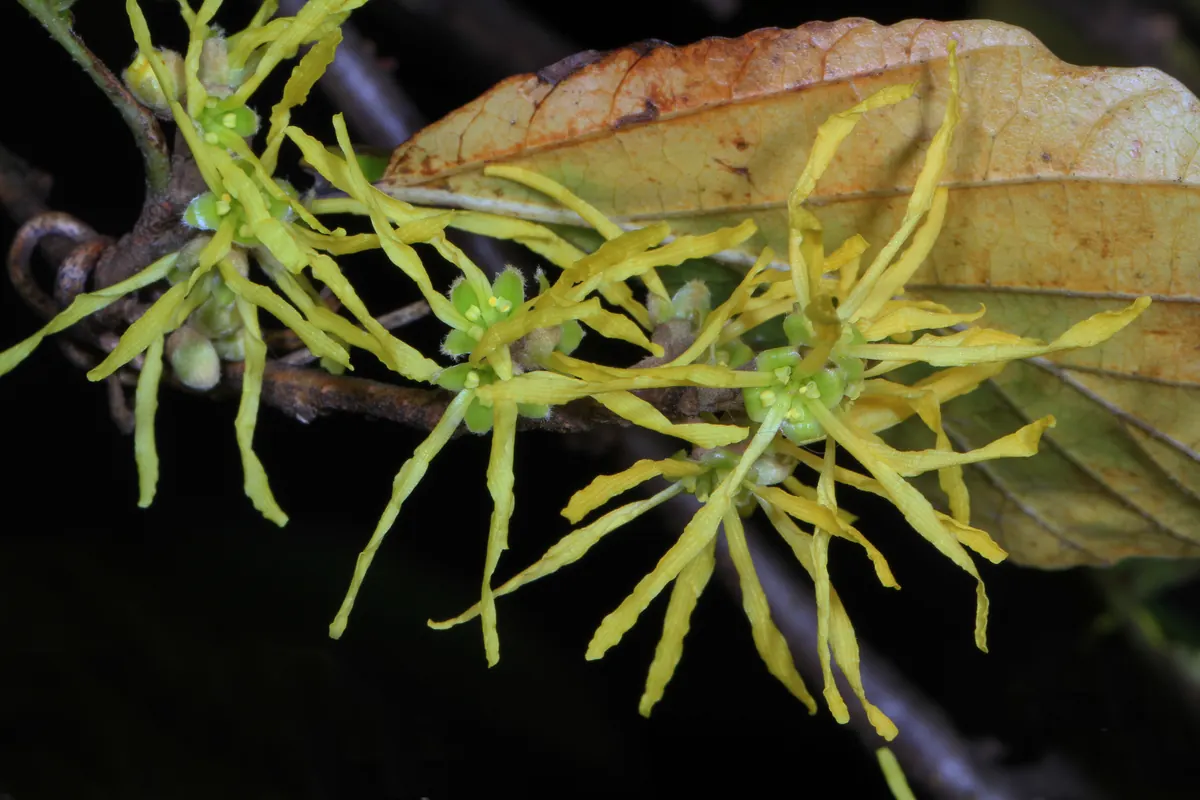
Eastern witch-hazel in flower
November–December · Scattered in the eastern Ozarks; an outlying population in Barry County
Missouri has two native witch-hazels, and they bloom at opposite ends of winter. The Ozark witch-hazel of gravelly streambeds flowers from January into April. Its relative, the eastern or common witch-hazel, flowers in November and December, MDC says, which often makes it the year’s last native shrub in bloom. Look along the twigs for little clusters of four ribbon-thin yellow petals, crinkled like paper streamers, on a shrub that has already dropped its leaves. On a mild afternoon, smell them.
-
Oaks that keep their leaves
From now until spring growth pushes the old leaves off · Pin oaks and shingle oaks statewide; young oaks of many kinds; American beech in the southeast
When the maples and hickories stand bare, some oaks stay clothed in dry tan leaves all winter. MDC’s field guide says the dead leaves of the shingle oak often persist through winter, and its Conservationist magazine has listed pin oaks, young oaks of other species and, in southeast Missouri, American beech as trees with the same habit. The habit is called marcescence. One idea is that these trees spread north from warmer places and still run on a later clock; another is that the rattling dead leaves put off deer browsing the buds. A young pin oak in a city park is the easiest place to see it.
-
Eastern red cedar turns bronze
After the first hard frost · Old fields, glades and fencerows statewide
MDC notes that cedar foliage goes bronze after the first frost and stays somewhat reddish through winter, which is why whole hillsides in the Ozarks take on a rusty cast now. The blue, waxy berrylike cones that ripened in late summer are still on the female trees, and cedar waxwings, robins and many other birds work through them. Seeds that pass through a waxwing sprout better than those that do not.
With the leaves down, November is also the month to learn bark and silhouette: shagbark hickory’s peeling plates, the corky ridges of hackberry, sycamore’s white upper limbs along every creek.
When does flies-only trout fishing start at Missouri’s trout parks?
On Friday, November 13. MDC’s rule is that catch-and-release fishing takes over at the four trout parks from the second Friday in November until the second Monday in February, and only flies are allowed. Maramec Spring Park near St. James is open daily from 8 a.m. to 4 p.m.; Bennett Spring near Lebanon, Montauk near Salem and Roaring River near Cassville are open Friday through Monday, 8 a.m. to 4 p.m. The fish are released, but you still need the right permit and tag, which MDC lists on its trout parks page.
The appeal of a November trout park is the light: low sun on spring-fed water that holds near the same cool temperature all year, mist rising on cold mornings, and the woods around Montauk and Roaring River down to bare branches.
Which birds come to Missouri feeders in November, and is it a finch year?
The 2026–27 Project FeederWatch season begins November 1 and closes April 30. Counters pick a pair of back-to-back days, up to weekly, and log the highest count of each species in view together; there is a participation fee, and Cornell Lab and Birds Canada scientists use the counts.
-
The winter finch forecast
Posted September 25, 2026 · Feeders and conifers statewide
The Finch Research Network’s forecast for this winter does not single out Missouri, but its overall reading points to a quiet one here. Cone and seed crops failed over a broad stretch of the central boreal forest, so northern finches are expected to head toward the Great Lakes and the Northeast, where conifer cones are plentiful, and the forecast expects no big irruptions in the southeastern states. Pine siskins could move in numbers in the Northeast, and a small purple finch flight may come late. Red-breasted nuthatches, which flooded south to the Gulf Coast a year ago, should mostly stay in the north woods. If a siskin or a purple finch reaches your feeder, report it: those records are how the forecast gets checked.
-
A big year for blue jays
Fall migration, through November · Oak woods, yards with acorns
The same forecast expects an above-average blue jay flight, with beechnut and acorn crops widely good in the East; on one September day the Hawk Ridge count in Minnesota tallied more than 13,000 jays. Watch for loose groups of jays moving in the morning, and for jays caching acorns in lawns and gutters.
-
Great horned owls start hooting
Evenings from late fall · Woodlots, wooded parks, suburbs
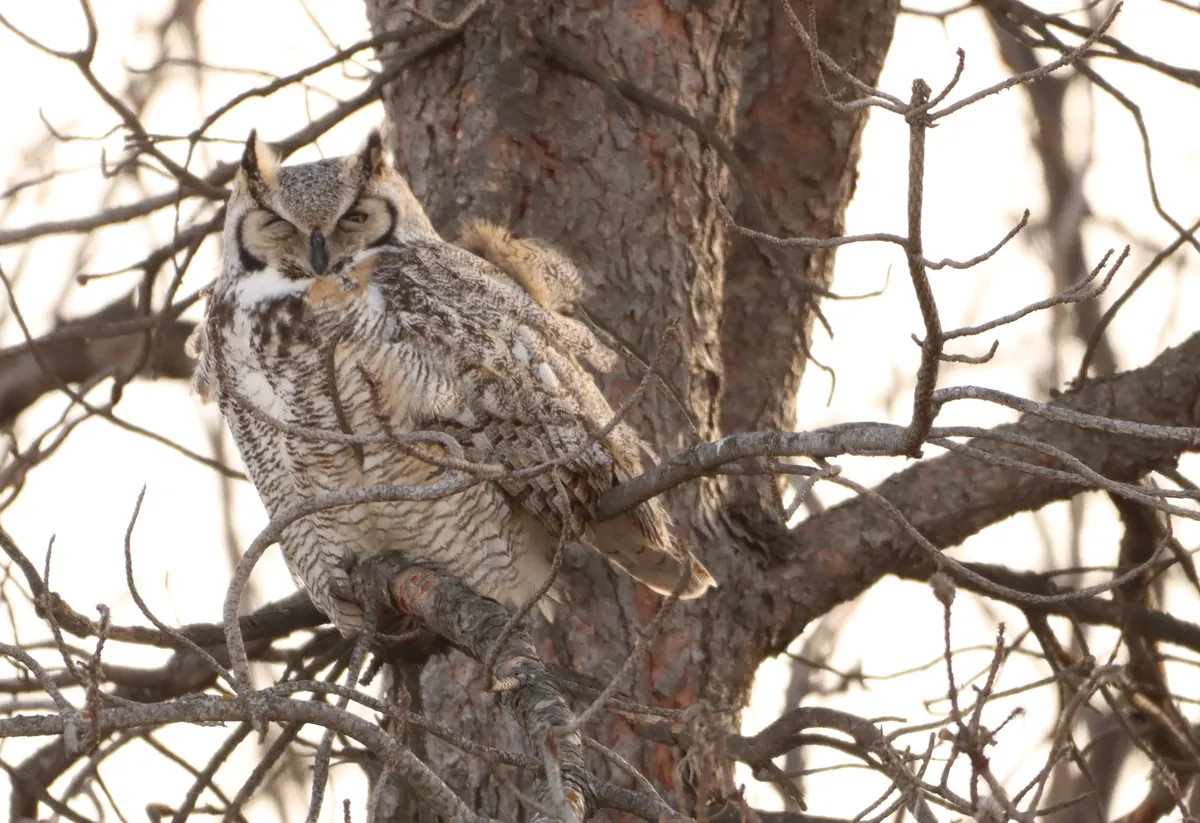
Great horned owls nest earlier than almost any other Missouri bird, breeding in late January or early February, and MDC says several months of hooting come first. That puts the duets in November and December. Listen after dark for three to eight deep hoots in a rhythm, and for a second, higher-pitched owl answering: that is the pair.
MDC’s Virtual Nature Center has an online program on winter bird feeding on Friday, November 20, from 3:30 to 4:30 p.m., if you are setting up a feeder for the first time.
Has Missouri had its first freeze yet?
Almost everywhere, yes. In a median year, all but one of the eight stations below have already dropped to 32 °F before November begins: St. Joseph by October 17, Kirksville by October 19, Kansas City and Joplin by October 24, Cape Girardeau by October 25, Springfield by October 27 and Columbia by October 31. Their nine-in-ten dates, by which a freeze has come in nine years out of ten, fall between October 30 and November 14, so even a late year usually catches them by mid-month. The exception is the St. Louis station, downtown in the city’s heat, where the median is November 4 and one year in ten is still frost-free on November 21.
| Station | One year in ten | Median | Nine years in ten |
|---|---|---|---|
| Kirksville | Oct 2 | Oct 19 | Oct 31 |
| St. Joseph | Sep 30 | Oct 17 | Oct 30 |
| Kansas City | Oct 9 | Oct 24 | Nov 5 |
| Columbia | Oct 17 | Oct 31 | Nov 14 |
| St. Louis | Oct 24 | Nov 4 | Nov 21 |
| Joplin | Oct 8 | Oct 24 | Nov 6 |
| Springfield | Oct 14 | Oct 27 | Nov 9 |
| Cape Girardeau | Oct 12 | Oct 25 | Nov 6 |
If your garden is somewhere between these stations, our Missouri frost date lookup covers hundreds of towns. In the city of St. Louis and along its river bottoms the last tender plants can hang on into November; elsewhere, the November job is mulching, cleaning tools and noting the date of the first night that freezes the birdbath solid.
How early does it get dark in Missouri in November?
Earlier than it seems possible, because two things happen at once. At 2 a.m. on Sunday, November 1, Missouri’s clocks drop back to 1 a.m., and that afternoon Kansas City’s sun goes down at 5:17 p.m. by the clock, where Saturday’s set at 6:18. Then the days keep shrinking: by November 30 the sun sets at 4:56 p.m. in Kansas City and Springfield and at 4:40 p.m. in St. Louis, and Missouri cities lose 49 to 55 minutes of daylight over the month, the most in the north. Kansas City and Springfield keep later sunsets than St. Louis because they sit farther west in the same time zone.
| City | Nov 1 | Nov 30 | Lost | Per day |
|---|---|---|---|---|
| Kirksville | 10 h 27 m | 9 h 32 m | 55 min | 1.9 min |
| St. Joseph | 10 h 29 m | 9 h 36 m | 53 min | 1.8 min |
| Kansas City | 10 h 31 m | 9 h 38 m | 53 min | 1.8 min |
| Columbia | 10 h 32 m | 9 h 40 m | 52 min | 1.8 min |
| St. Louis | 10 h 33 m | 9 h 41 m | 52 min | 1.8 min |
| Springfield | 10 h 37 m | 9 h 48 m | 49 min | 1.7 min |
| Joplin | 10 h 38 m | 9 h 49 m | 49 min | 1.7 min |
| Cape Girardeau | 10 h 37 m | 9 h 48 m | 49 min | 1.7 min |
The commute home is now in twilight or dark for most of the state, which overlaps with the deer rut: a bad combination on rural two-lane roads. For your own street’s sunrise, sunset and twilight times, the daylight calculator works for any Missouri address.
What is November weather like in Missouri, and what could a strong El Niño mean for the winter?
November is the month the state’s climate splits north to south. NOAA’s 1991–2020 normals give St. Joseph only 1.9 inches of precipitation and Kansas City 2.0, while Cape Girardeau gets 4.3; Springfield and St. Louis are in between at about 3.4 to 3.6 inches. Normal highs fall to the mid-50s, from 53 °F at St. Joseph to 58 °F at Joplin, and normal lows sit just above or just below freezing, from 31 °F at St. Joseph to 37 °F at St. Louis and Joplin. The first snow of the season is possible but rarely amounts to much: the November normal is about an inch at Kansas City, 0.9 inch at St. Louis, 0.8 at Columbia and 0.6 at Springfield.
Behind all of that sits the Pacific. On September 10, NOAA’s Climate Prediction Center rated the odds of this El Niño turning very strong at more than 90 percent during the fall and winter. Missouri is a borderland for El Niño. Writing for MU Extension in August, climatologist Zach Leasor noted that El Niño winters here have tended to be wetter, with the northern half more often running warm and the southern half sometimes running cool, and stressed that no two events behave alike. The last strong one, 2015–16, gave Missouri a wet, warm fall and then a winter close to average. We wrote this before NOAA’s official winter outlook, which comes out on October 15; look for it then among the CPC 90-day outlook maps; we will add what it says for Missouri. Day to day, our weather page carries the local forecast.
What is in Missouri’s night sky in November?
With new moon on November 9, the first half of November has moonless early evenings, and the long nights after the time change mean the sky is fully dark by about 6:30 p.m. All times below are Central Standard Time.
-
Taurid fireballs
Southern Taurids peak around November 5, Northern Taurids around November 12 · Anywhere dark; the radiant in Taurus is up most of the night
The two Taurid streams, both debris from Comet Encke, rarely top ten meteors an hour, yet they are famous for slow, brilliant fireballs. The International Meteor Organization points out that November 9’s dark moon sits neatly between the two maxima. Near the southern peak on the 5th, moonrise holds off until roughly 3 a.m.; around the 12th the young crescent sets by about 7:30 p.m. Any clear night before mid-month is worth a look.
-
The Leonids
Best from moonset, around 12:30 a.m., until dawn on Wednesday, November 18 · Face east or overhead; Leo climbs after midnight
The International Meteor Organization’s predicted peak is late afternoon on Tuesday, November 17, Central time, giving perhaps 15 an hour from a dark rural site; nobody is predicting an outburst for 2026. Moonset comes near 12:30 a.m. that night, and Leo is highest just before dawn, so the morning of the 18th is best, with the mornings of the 17th and 19th as backups. Leonids hit the air at high speed, and the bright ones may leave a glowing streak for a second or two.
-
The Beaver Moon, a modest supermoon
Full at 8:53 a.m. on Tuesday, November 24; looks full on the evenings of November 23 and 24 · Rising in the east-northeast around sunset
November’s full moon comes roughly 30 hours ahead of lunar perigee, which is why several almanacs list it as a supermoon; the difference in size from an ordinary full moon is too small to notice by eye. On the night of the 23rd the Moon drifts across the Pleiades region, and its light will drown the little cluster.
-
Planets before dawn, Saturn after dusk
All month; Mars and Jupiter closest on the mornings of November 15 and 16 · Saturn in the south after dark; the others in the east and southeast before sunrise
After dusk, Saturn has the southern sky to itself among the bright planets. The mornings are crowded: Venus rises higher each week before sunrise, peaking in brilliance around Thanksgiving; Jupiter and Mars share Leo, about one degree apart in the predawn sky of the 15th and 16th, and Mercury shows low in the east-southeast, best from about November 18 to 25. On November 7, a very thin crescent Moon may sit close to Venus just above the dawn horizon; you will need a flat eastern view and binoculars.
| Phase | Date | Time |
|---|---|---|
| Last quarter | Sunday, Nov 1 | 2:28 p.m. |
| New moon | Monday, Nov 9 | 1:02 a.m. |
| First quarter | Tuesday, Nov 17 | 5:48 a.m. |
| Full moon, the Beaver Moon | Tuesday, Nov 24 | 8:53 a.m. (looks full on the evenings of Nov 23 and 24) |
| Last quarter | Tuesday, Dec 1 | 12:08 a.m. |
See the cloud forecast before a cold night outside; our Moon calendar gives local moonrise and moonset for your town.
What can Missouri families do outdoors in November?
- Friday, November 6: Beginner Bird Walk at MDC’s Anita B. Gorman Conservation Discovery Center in Kansas City, 10:30 a.m. to noon; register through MDC’s events site.
- Saturday, November 7: Birds and Brew at Mingo National Wildlife Refuge, 7 to 10 a.m. from the visitor center near Puxico, an MDC birding morning; registration required.
- Saturday, November 7: Guided Bison Saunter at Prairie State Park near Mindenmines, 1 to 3 p.m. from the Regal Tallgrass Prairie Nature Center, on National Bison Day: about 2 miles on uneven ground, free, limited to 30 people. Call the park at 417-843-6711 to register.
- Friday, November 13: Dark Sky Program at Thousand Hills State Park near Kirksville, 5:30 to 7:30 p.m. at the Point Shelter, with telescopes from park staff and Truman State University; free, no registration, weather permitting. The same evening Burr Oak Woods in Blue Springs runs a Friday the 13th night hike, 4:30 to 6 p.m., with registration.
- Saturday, November 21: Trees and Trails in Swope Park, an MDC forest walk from 10 a.m. to noon run by Burr Oak Woods; Powder Valley Conservation Nature Center in Kirkwood has Nature Center Saturday programs on mammals and reptiles that morning and on November 28.
- Tuesday, November 24: Night Hike for kids at Springfield Conservation Nature Center, 6:30 to 8 p.m.; the Beaver Moon will be all but full overhead. Registration required.
- Friday, November 27, the day after Thanksgiving: Missouri state parks generally charge no entrance fee (camping, lodging and cave tours cost extra), so pick a trail and go. No special Black Friday programs were posted when we checked.
- Citizen science: sign up for FeederWatch, whose counting season opens November 1; send short-eared owl, trumpeter swan or purple finch sightings to eBird; and read the weekly Loess Bluffs survey before you drive north.
We took these dates from MDC and state park calendars in early October; MDC events fill up and can change, so check the listing before you go. Looking ahead, Eagle Days at Loess Bluffs is December 5 and 6. Our Missouri October guide covers the fall color and the start of the goose migration.
Safety notes for November in Missouri
- Hunting seasons this month (MDC, 2026–27): archery deer through November 13 and again November 25 to January 15; the November firearms deer portion November 14–24 and the late youth portion November 27–29; ducks in the North Zone all month (October 31 to December 29), in the Middle Zone from November 7, and in the South Zone November 26–29 before reopening December 7; youth waterfowl days November 21–22 in the South Zone; geese from November 11; furbearer trapping, coyote and bobcat included, from November 15. The managed deer hunt closes the Peck Ranch elk tour November 5–9.
- Blaze orange: during any firearms deer portion, MDC requires everyone hunting any game to wear orange on the head and on the upper body (a shirt, vest or coat), visible from every direction; camouflage orange does not count. Migratory-bird hunters and some archery hunters are exempt. The rule does not cover hikers, but anyone on public land from November 14 to 24 and November 27 to 29 should wear an orange cap and vest, and keep dogs in orange too.
- Deer and headlights: rutting bucks plus dark commutes put more deer in front of more headlights in the second half of the month. Slow down near wooded creek crossings, and when one deer crosses, assume a second is following.
- Cold water: lakes and rivers cool faster than the air. Falling out of a canoe or duck boat this month can disable a swimmer in minutes, so keep a life jacket buckled whenever you are afloat, and do not walk on early ice on farm ponds.
- Short days: pack a headlamp for every afternoon walk, and aim to reach the trailhead again before sunset, which comes before 5 p.m. in every Missouri city by the last week of the month.
- Dry leaves: fallen leaves and dry air let a grass or woods fire run quickly in November. Check for local burn bans before a campfire or a leaf burn, and never burn on a windy day.
Sources
- U.S. Fish and Wildlife Service: Loess Bluffs National Wildlife Refuge, species (snow goose and bald eagle timing)
- U.S. Fish and Wildlife Service: Loess Bluffs National Wildlife Refuge, visit us (auto tour and visitor center hours, best months)
- U.S. Fish and Wildlife Service: Loess Bluffs waterfowl and eagle survey, November 20, 2025
- U.S. Fish and Wildlife Service: Loess Bluffs waterfowl and eagle survey, November 25, 2025
- U.S. Fish and Wildlife Service: Mingo National Wildlife Refuge, visit us (waterfowl and eagle timing, auto tour)
- U.S. Fish and Wildlife Service: Swan Lake National Wildlife Refuge, visit us (closure and observation tower)
- MDC field guide: snow goose (blue morph)
- MDC field guide: trumpeter swan (timing, places, tundra swan comparison)
- National Audubon Society: Audubon Center at Riverlands, Birds of Winter
- MDC field guide: bald eagle (more than 600 active nests in 2025)
- MDC: Eagle Days events (47th Eagle Days at Loess Bluffs, December 5–6, 2026)
- MDC field guide: short-eared owl
- MDC field guide: white-tailed deer (rut timing)
- MDC: 2026–27 hunting and trapping seasons
- MDC: waterfowl hunting seasons 2026–27
- MDC: hunter orange requirement
- MDC: mandatory CWD sampling, November 14–15, 2026
- MDC: elk driving tours at Peck Ranch (2026 closures)
- MDC: fall color reports
- MDC field guide: Ozark witch-hazel (with eastern witch-hazel range and flowering)
- MDC field guide: shingle oak (dead leaves often persist through winter)
- Missouri Conservationist, December 2013: Ombudsman on oaks that keep their leaves
- MDC field guide: eastern red cedar
- MDC: trout parks (winter catch-and-release season and hours)
- Project FeederWatch: how to participate
- Finch Research Network: Winter Finch Forecast 2026–2027
- MDC field guide: great horned owl
- NOAA NCEI: 1991–2020 first-freeze probability normals (data API; the table uses the city stations on our frost page)
- NOAA NCEI: 1991–2020 monthly normals for precipitation, temperature and snowfall (data API)
- Climate Prediction Center: ENSO diagnostic discussion, September 10, 2026
- Climate Prediction Center: seasonal outlooks (winter outlook due October 15, 2026)
- University of Missouri Extension, Integrated Pest Management: El Niño Returns in 2026 (August 6, 2026)
- NOAA Climate.gov: United States El Niño impacts
- U.S. Naval Observatory: moon phases (data API)
- International Meteor Organization: 2026 meteor shower calendar
- EarthSky: what is a supermoon (2026 full supermoons)
- EarthSky: best stargazing of 2026 (Mars and Jupiter conjunction)
- EarthSky: Mercury at greatest western elongation
- Farmers’ Almanac: November full Beaver Moon
- MDC events listing (November 2026 programs and registration)
- Missouri State Parks: Guided Bison Saunter, Prairie State Park, November 7, 2026
- Missouri State Parks: Dark Sky Program, Thousand Hills State Park (November 13, 2026)
- Missouri State Parks: 2026 astronomy events
- Missouri State Parks: Lake of the Ozarks region (park admission free; fees for camping, lodging and cave tours)
- Photos via Wikimedia Commons; licenses and photographers are credited under each picture
