What to look for in nature in Missouri this January
January is Missouri’s coldest month by the numbers, and it is also the heart of bald eagle season. Northern birds crowd the open water below dams and along the big rivers, while the state’s own pairs are already rebuilding nests and courting. Late in the month great horned owls begin incubating, horned larks sing over bare fields, and in the Ozarks a shrub on the gravel bars blooms in the cold. Days get longer from the first morning of the year. Below are the places, the dates, and what to watch for.
Other months in Missouri: October, November, December, February.
Start here

- Eagle Days at Lake of the Ozarks. The 27th Lake of the Ozarks Eagle Days runs Saturday, January 9, from 9 a.m. to 4:30 p.m., with hourly live-eagle programs by the World Bird Sanctuary, owl and eagle talks from Dickerson Park Zoo, and spotting scopes at the Bagnell Dam river access, where eagles hunt the tailwater.
- Quadrantid meteors, January 3–4. Missouri’s best Quadrantid hours this year run from late Sunday, January 3, until dawn on the 4th, and a thin crescent Moon that rises late will barely brighten the sky. Pick a dark spot, face northeast in the last hours of the night, and allow your eyes half an hour.
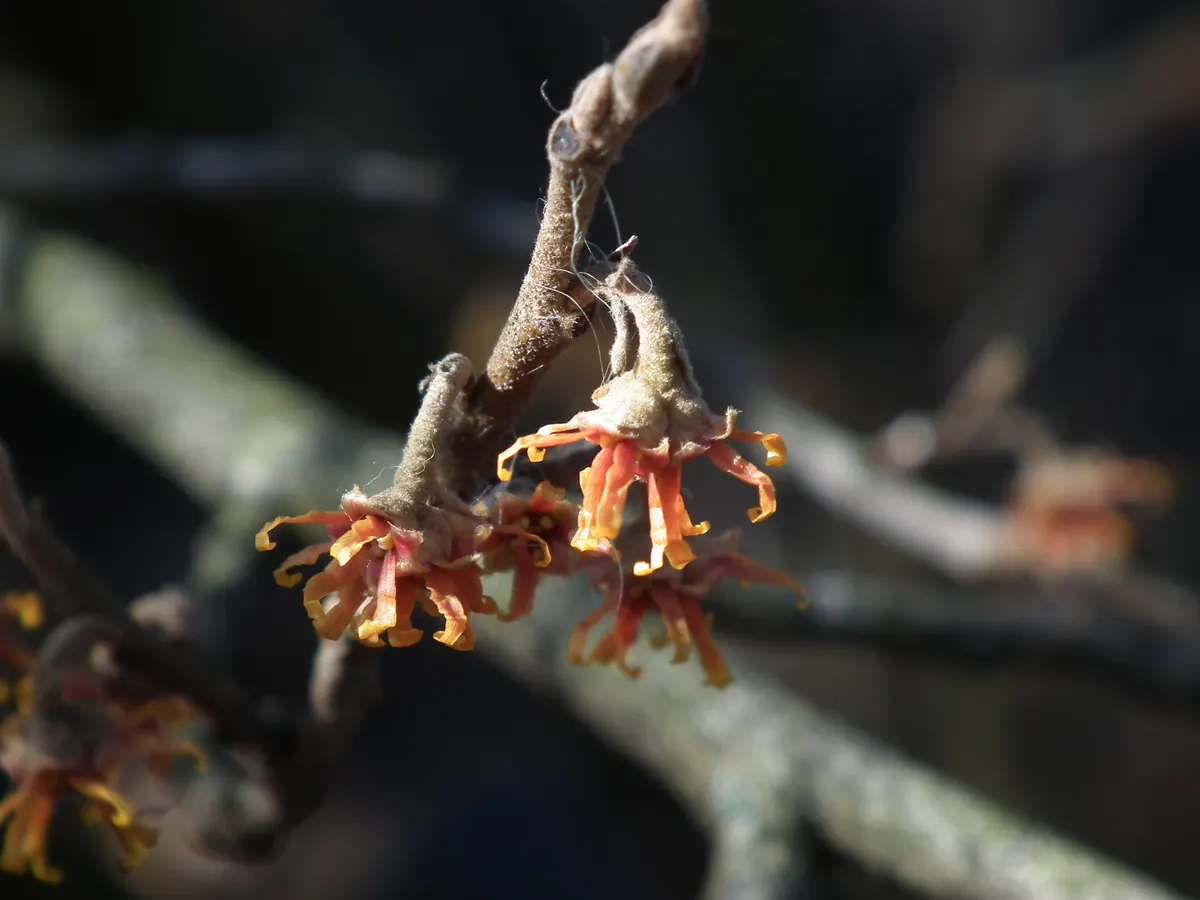
- Smell a winter flower. Ozark witch hazel opens its small, ribbon-petaled flowers on Ozark gravel bars and stream banks as early as January. On a mild afternoon, find a shrub in bloom and lean in: the scent is strong for so tiny a flower, and gnats and midges come to it.
In the Naturalist’s Field Journal, the “nest observed” plate fits an eagle nest you watch from a respectful distance; note the date you first see a bird sitting low and staying put. Use “a map of sounds” for a night when great horned owls are dueting, and “colours of the day” for the copper-orange of witch hazel against gray January woods. An evening at a prairie edge waiting for short-eared owls fits in the “dusk and dawn watch” plate; every eagle, swan and lark you add this month goes on “birds I have seen.”
Regions used below: Northwest Missouri; Northeast Missouri; Kansas City area; St. Louis area; Central Missouri/Columbia; the Ozarks; Southwest Missouri/Springfield; Southeast Missouri and the Bootheel.
Where are the most bald eagles in Missouri in January?
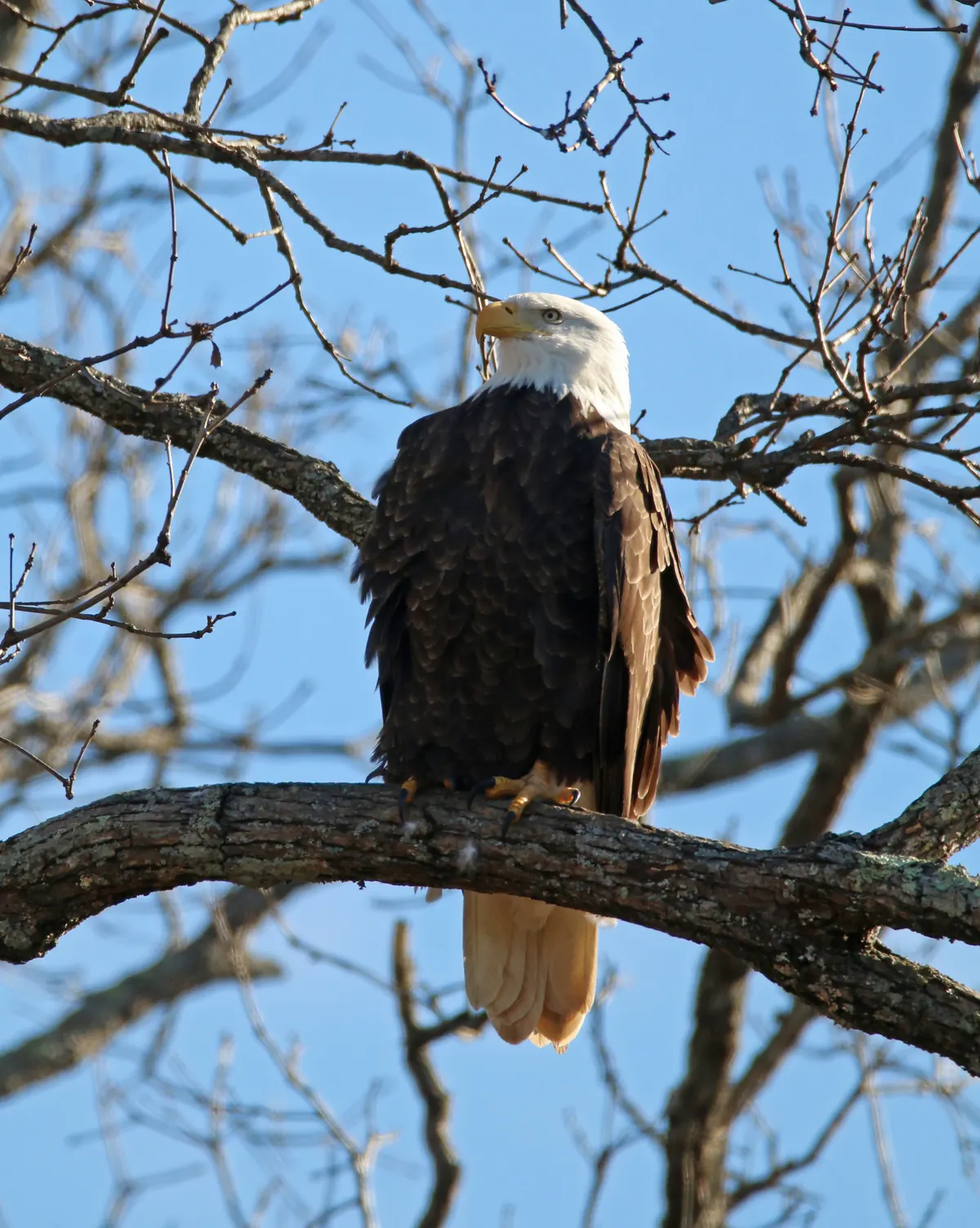
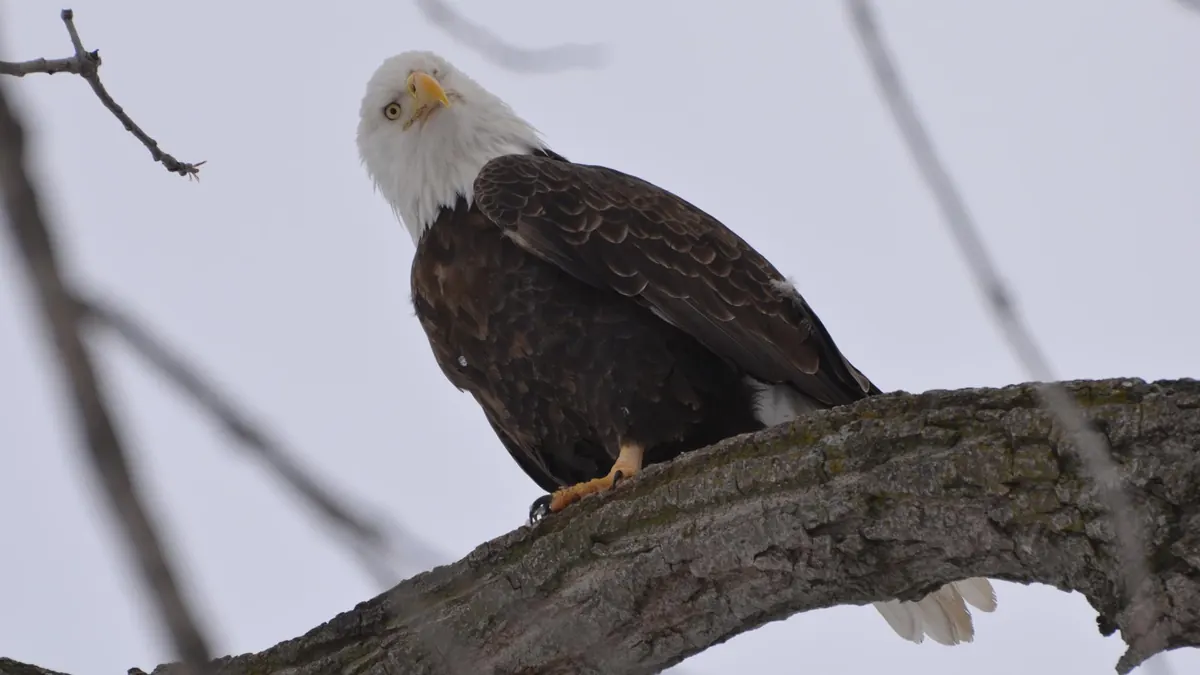
At the dams, on the big rivers and around the large reservoirs, wherever the water stays open. MDC estimates that roughly 1,200 to 2,700 bald eagles are reported across the state each winter, most of them birds that nest in Canada and the Great Lakes states and come south for food. Its viewing guide calls late December to early February the best window, which makes January the heart of the season. The harder the cold, the tighter the birds gather: when ponds and backwaters lock up, the fish are easiest to reach in the turbulent water just below a dam.
MDC’s advice is simple: arrive early. Eagles fish most actively in the morning, then spend long stretches perched in big trees along the shore. Look for white heads in the tallest snags, and for dark, mottled young birds, which take four to five years to grow their white head and tail.
-
Mississippi River dams
Late December to early February, mornings best · Lock and Dam 24 at Clarksville; Lock and Dam 20 at Canton; Old Chain of Rocks Bridge, St. Louis
The river below each lock stays open in cold that freezes the pools above, and eagles patrol the churning water for fish. At Clarksville the town sits right beside Lock and Dam 24, so you can watch from the riverfront. In St. Louis, the Old Chain of Rocks Bridge (south of I-270 off Riverview Drive) gives a long view of the river.
-
Reservoirs and their tailwaters
All month · Bagnell Dam Access at Lake of the Ozarks; Truman Reservoir at Warsaw; Stockton Lake; Smithville Lake north of Kansas City; Eagle Point Recreation Area at Lake Wappapello; Table Rock Lake and Shepherd of the Hills Fish Hatchery near Branson
The big reservoirs hold eagles all winter. Below Table Rock Dam, MDC points to the Shepherd of the Hills hatchery grounds on cold Lake Taneycomo. Scan distant shoreline trees first.
-
Refuges and conservation areas
All month · Loess Bluffs NWR near Mound City; Swan Lake NWR near Sumner; Schell-Osage CA near El Dorado Springs; Eagle Bluffs CA southwest of Columbia; Mingo NWR and Duck Creek CA near Puxico; Moses Eagle Park, Stella
Loess Bluffs says December and January are its best eagle months, and its 10-mile auto tour opens daily 30 minutes before sunrise. Fish come first in an eagle’s diet, but MDC notes that they also take birds and mammals and readily scavenge or steal a meal, so they gather wherever ducks and geese are packed together. Moses Eagle Park in Stella, a small town in Newton County, is one of the few spots in the far southwest on MDC’s list.
-
The Midwinter Bald Eagle Survey
First two weeks of January · Standard routes nationwide, including Missouri rivers
Every January, several hundred people across the country count eagles along fixed, non-overlapping routes; the Army Corps runs the survey today, with the U.S. Geological Survey handling the analysis. In Missouri, MDC staff and partners take part; Fort Leonard Wood has helped since 1976, and in 2023 a helicopter crew counted 35 eagles along 99 miles of the Gasconade River, 49 of the Big Piney and part of Roubidoux Creek. The counts are what let biologists say the recovery is real.
Not all of these birds are northern visitors. MDC counted more than 600 active nests in the state in 2025, and the resident pairs are now busy at home, as the next section explains.
When do bald eagles court and lay eggs in Missouri?
Courtship peaks this month. An MDC guide to eagle nesting ecology says that in the Midwest serious nest repairs start in December and January, mating usually happens in January, and the first eggs follow soon after, somewhere from early or mid-February into early March. The repairs are part of the courtship: a pair that raised young last year usually stays together and tries again in the same nest, adding sticks and clearing out last season’s debris.
-
Cartwheel flights
Winter, on calm, clear days · Over rivers and lakes near nest sites
The most dramatic courtship display: two eagles climb high, lock talons and tumble end over end toward the ground, breaking apart before they hit and flying back up. It is brief and easy to miss, so if you see two adults circling high together, keep watching.
-
The nest itself
Visible all winter in bare trees · Tall sycamores and cottonwoods near water, statewide
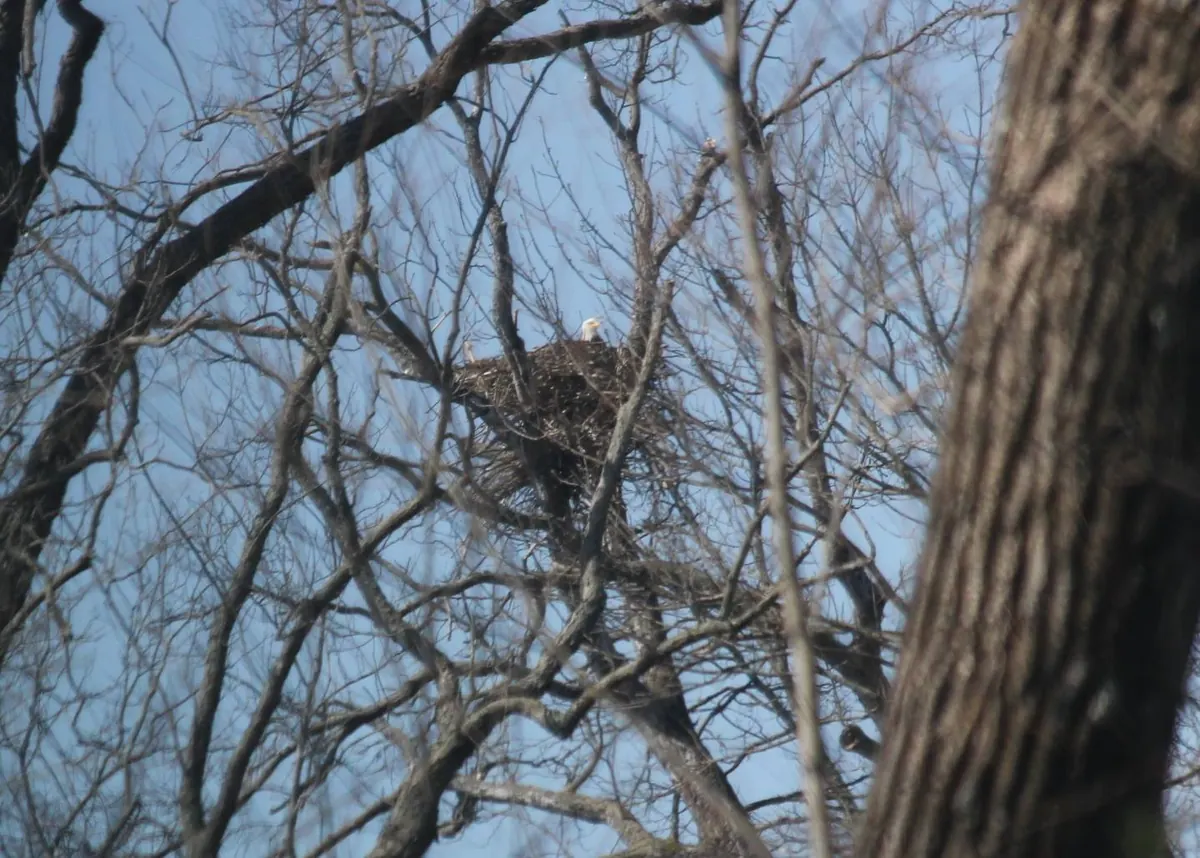
MDC’s nesting guide says typical eagle nests run five or six feet across and three or four feet high, and that a large share in Missouri sit in sycamores and cottonwoods in lowlands near water. Many pairs keep a second, spare nest in their territory and switch between them. An old, unused eagle nest is sometimes taken over by a great horned owl, a red-tailed hawk or even a pair of Canada geese.
Once a female lays, an adult sits on the nest almost constantly; incubation takes about 35 days, so January courtship means eaglets by March or April. Watch nests only from far off, with binoculars or a scope: the Bald and Golden Eagle Protection Act bars disturbing a nesting eagle to the point of interfering with breeding. To help, MDC’s Eagle Watch Program trains volunteers to check known nests and report new ones.
When are Missouri’s Eagle Days and eagle watches in January 2027?
Several are already on the calendar, and others repeat every year at about the same time. We list a 2027 date only where the organizer has posted one.
-
Lake of the Ozarks Eagle Days
Saturday, January 9, 2027, 9 a.m. to 4:30 p.m. · Lake Ozark and Camdenton: Christ the King Lutheran Church and Mt. Carmel Baptist Church on Bagnell Dam Boulevard, the Bagnell Dam river access, Willmore Lodge and Bridal Cave
Now in its 27th year and run by a partnership of local tourism groups, churches and the Lake of the Ozarks chapter of the Missouri Master Naturalists. Dickerson Park Zoo gives hourly programs on eagles and owls, the World Bird Sanctuary brings live eagles every hour, and scopes are set up at the river access below the dam. There are coloring and photo contests for children.
-
Bald Eagle Day at Roaring River State Park
Saturday, January 16, 2027, 3 to 5 p.m. · CCC Lodge, Roaring River State Park, about 7 miles south of Cassville
A free, come-and-go afternoon with no sign-up: eagle crafts and displays, warm drinks, and park binoculars and scopes for scanning the valley. Dress for the cold, and call the park nature center at 417-847-3742 with questions.
-
Clarksville Eagle Days
Traditionally the last weekend of January · Lock and Dam 24, the Apple Shed and Riverfront Park, Clarksville
MDC has held Eagle Days in this Mississippi River town for many years, with live eagle shows and scopes trained on the river. No 2027 date was listed in early October; look for it on MDC’s Eagle Days page or call MDC’s northeast office.
-
Birds of Winter at Riverlands
Weekends from December through February · Audubon Center at Riverlands, West Alton
The Audubon Center runs a series of winter weekends built around bald eagles, trumpeter swans and short-eared owls, with eagle meet-and-greets, guided walks and a fire pit. Its schedule usually includes eagle Saturdays in January and February and an MDC Eagle Days in February; check the center’s events page for 2027 dates. Across the Mississippi, the Alton Eagle Ice Festival is set for Saturday, January 9, 2027, from 10 a.m. to 4 p.m. in Alton, Illinois.
Which Missouri birds start nesting in the middle of winter?
A few species get started while snow can still fall. Nesting this early gives the young a long season to grow before their first winter.
-
Great horned owls on eggs
Breeding late January into early February · Woodlots, river bottoms, wooded parks and suburbs statewide
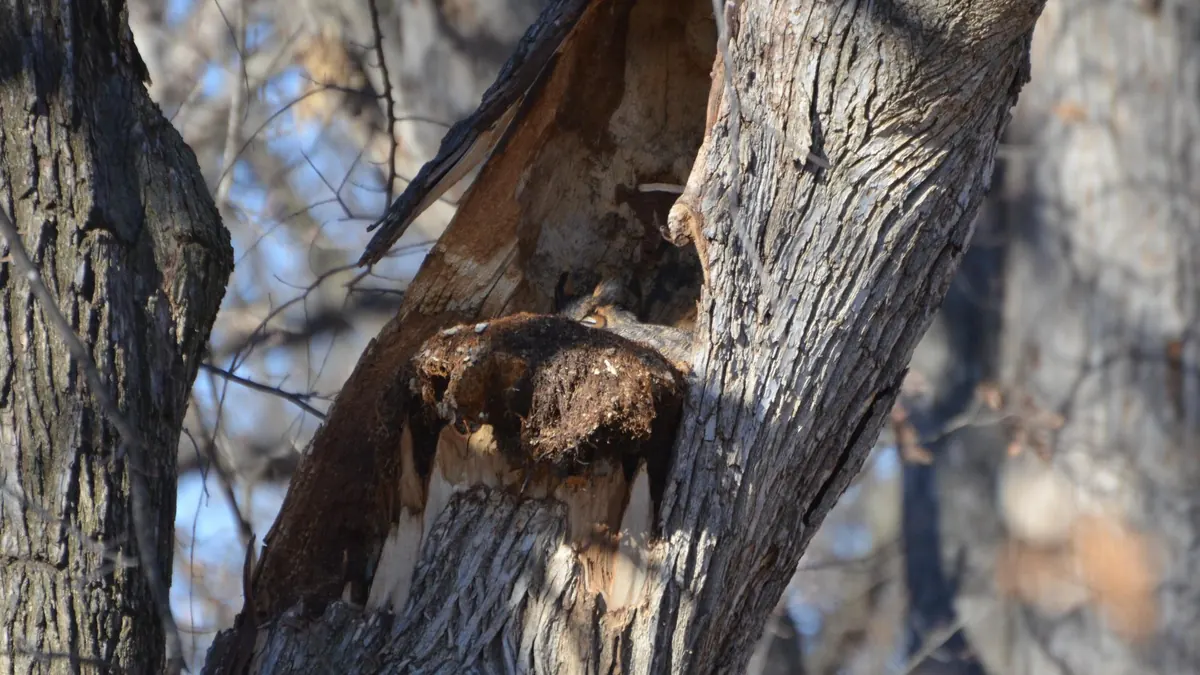
MDC calls the great horned owl a common resident in nearly every habitat, and says breeding takes place in late January or early February after months of hooting. Rather than building, the owls borrow: a crow’s, hawk’s or squirrel’s old nest, a tree hollow, a rock ledge or a quiet barn. A clutch averages two eggs, and incubation runs about a month. Late in the month, if a pair has been hooting near your house, scan the old stick nests in the neighborhood for a pair of ear tufts sticking up over the rim.
-
Horned larks singing over bare fields
Courtship songs from January; nests from February · Plowed fields and other wide, open ground; uncommon in the Ozarks
MDC counts the horned lark among Missouri’s earliest nesting birds. Winter flocks scatter as males start their display flights, rising several hundred feet while giving a thin, tinkling song, then plunging toward the ground with wings closed and opening them only at the last moment. Drive a quiet farm road on a bright January morning and listen for the song coming from high above.
Barred owls, the big-timber owls of river bottoms and swamps, follow a little later: MDC puts their courtship and breeding in February and March, so their “who cooks for you” calls grow more frequent toward the end of the month. MDC’s owl prowls and night hikes at nature centers fill quickly in winter; check its events calendar for January programs near you once they are posted.
Does anything bloom in Missouri in January?
Yes, though you have to know where to look. MDC calls Ozark witch hazel the state’s first native plant to bloom each year, and a tiny woodland wildflower can follow on a mild spell.
-
Ozark witch hazel
Flowers January to April, rarely in December · Gravelly and rocky streambeds, the foot of rocky slopes and stream banks in the Ozark Highlands of southern and east-central Missouri
A many-stemmed shrub of moderate to fast-flowing Ozark streams, where it roots among the cobbles on the gravel bars. Each flower has four narrow, ribbonlike petals, orange to dark red and only rarely yellow, and they are strongly scented. On warm winter days gnats and midges visit them. Look along Ozark float streams and their rocky tributaries, or in a garden: the species is increasingly planted for its winter flowers.
-
Harbinger of spring
MDC gives its bloom season as January to April · Bottomland and moist upland forest, ravines and stream valleys; statewide, most common in the eastern and southern halves
The name says it: MDC calls it the flower that opens the spring season. It starts blooming at only 2 to 3 inches tall, with tight clusters of tiny white petals and dark anthers that earn it the nickname “pepper and salt.” You will need to kneel to see it, and a warm week to find it this early.
-
Green in a brown woods
All winter · Woodland edges, glades, spring branches
MDC’s January notes point out other winter greens: the basal leaves of Ohio horsemint stay green all winter, and sumac berries hang on to feed deer. In the spring branches, aquatic plants keep growing all winter in water that stays around 55 °F.
A tip for witch hazel: the flowers are small and the shrub is gray and twiggy, so it is easiest to spot when low sun shines through the petals from behind.
What happens in Missouri’s Ozark spring streams in the middle of winter?
Spring-fed water barely changes temperature with the seasons, so on the coldest, calmest January dawns the big springs (Bennett, Montauk, Alley, Maramec) send up fog while frost coats every twig along the bank. That steady cold water also makes room for one of the month’s less-known events.
-
Wild rainbow trout spawning
Late December through early February · Ozark spring branches and spring-fed streams with self-sustaining trout
Rainbow trout are not native to Missouri and can live only in water that stays below 70 °F. Most populations are kept up by stocking, but MDC says small wild populations have taken hold in some streams, and those fish spawn now, while hatchery broodstock spawn in October and November. The female fans out a shallow pit in clean gravel on a riffle, the male fertilizes the eggs, and she covers them with gravel. A freshly cleaned patch of gravel that looks lighter than the streambed around it may be a nest, so step around it.
-
Flies-only fishing at the trout parks
Through Monday, February 8, 2027 · Bennett Spring, Montauk, Roaring River and Maramec Spring
MDC’s winter season at the four trout parks is catch-and-release and ends on the second Monday of February, which falls on February 8 this year. Only flies may be used. Maramec Spring is open every day from 8 a.m. to 4 p.m.; the three state park trout parks are open Friday through Monday, same hours. Anglers need a fishing permit unless exempt, plus a daily trout tag ($5 for adults, $3 for anglers 15 and under). Catch-and-keep fishing resumes March 1.
For more on the trout parks’ winter season, see our Missouri November guide.
Which winter birds are worth looking for in Missouri in January?
Beyond eagles, January is a good month for the birds that come only in winter, and for the quiet residents that are easier to see in leafless trees.
-
Short-eared owls at dusk
October to April; best in the last hour of daylight · Large grasslands and native prairie, plus big marshes such as Riverlands
MDC lists this owl as a species of conservation concern that winters in Missouri, mostly from October through April, and almost never nests here now. Short-eared owls hunt close to the ground over open grass, often in the late afternoon, with a floppy, mothlike flight. Winter roosts can hold 20 or more birds in grassy draws and thickets. Park at a prairie edge before sunset, stay in or near the car, and scan low over the grass.
-
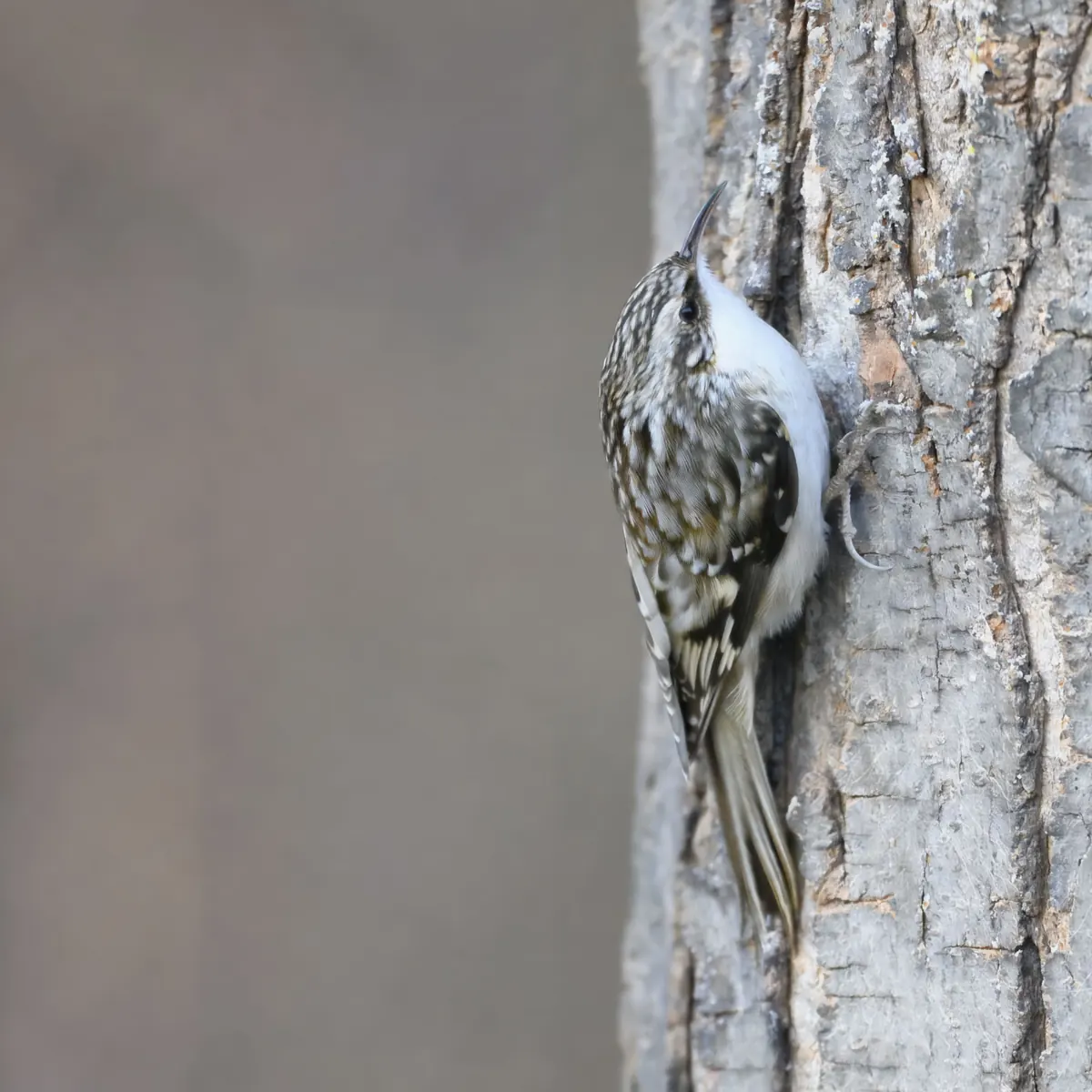
Brown creeper
Winter, in smaller numbers than in migration · Forests and second-growth woods in valleys and floodplains, especially in southern Missouri
A streaky brown bird about 5¼ inches long that starts at the bottom of a rough-barked tree and spirals up the trunk, propped on its stiff tail, probing the bark for insects and spiders. It also takes suet at feeders.
-
Northern finches: probably not
Any time in winter · Feeders and conifers
The Finch Research Network’s September forecast, covered in our November guide, still points to a lean year here: cone crops are good across eastern Canada and the Northeast, which should hold most northern finches there. A pine siskin or purple finch at the feeder would be worth reporting.
Project FeederWatch runs through April 30 if you want your feeder counts to go into a long-running data set.
How cold is January in Missouri, and what could a strong El Niño mean?
At all eight stations in the table, no month averages colder. In NOAA’s 1991–2020 normals, Kirksville’s average high is 33.6 °F and its average low 15.1 °F, five to six degrees colder than its December averages; St. Louis averages 40.4 °F and 23.8 °F. Springfield and Joplin, in the southwest, average highs in the mid 40s. Normal snowfall for the month is about 4½ to 6 inches at the stations that keep snow records. Averages hide the swings, though: mild days can give way abruptly to an Arctic outbreak with single-digit or subzero mornings, as the El Niño winter of 2016 showed.
| Station | Average high | Average low | Precipitation | Snowfall |
|---|---|---|---|---|
| Kirksville | 33.6 | 15.1 | 1.39 | 6.0 |
| St. Joseph | 37.4 | 17.1 | 0.71 | not published |
| Kansas City (airport) | 38.4 | 19.5 | 1.16 | 4.9 |
| Columbia | 39.5 | 22.5 | 2.12 | 6.0 |
| St. Louis (Lambert) | 40.4 | 23.8 | 2.59 | 5.7 |
| Springfield | 44.3 | 24.2 | 2.54 | 4.4 |
| Joplin | 44.8 | 25.0 | 1.92 | not published |
| Cape Girardeau | 43.0 | 26.2 | 3.51 | not published |
Missouri’s winter of 2026–27 arrives alongside what could be a very strong El Niño, which NOAA’s September 10 ENSO discussion rated more than 90 percent likely. For Missouri, though, a strong El Niño is no guarantee of anything. State climatologist Pat Guinan described Missouri a decade ago as a transition state for El Niño’s winter effects, and University of Missouri climatologist Zach Leasor wrote this August that such winters here have tended to run wetter, with the north leaning warm and the south sometimes cool. Forecasters at the National Weather Service in Springfield, speaking to local reporters in September, said past strong El Niño winters in the Ozarks have usually been wetter than normal but have not reliably been snowier, so the odds lean slightly toward fewer snowstorms, though any single storm could still be a big one.
The last strong event shows the mix. The Missouri Climate Center’s review of January 2016 found the month a little under a degree warmer than normal statewide, yet broken up by Arctic blasts on January 9–13 and 16–19, with the coldest morning on the 18th, below zero across much of the north. Columbia did not measure its first snow of the season until January 9, breaking a record for the latest first snowfall that had stood since 1890. This page was written before NOAA’s winter outlook (out October 15 and refreshed monthly); the newest version is on the 90-day outlook maps from CPC. For the days just ahead, use our local forecast page, and when you start planning the spring garden, our frost dates for Missouri give the last-freeze odds for your town.
How much daylight does Missouri gain in January?
Between 40 and 46 minutes, depending on where you live. Kirksville, in the far north, starts the year with 9 hours 22 minutes from sunrise to sunset and ends January with 10 hours 8 minutes, a gain of 46 minutes; Joplin and Springfield climb from 9 hours 40 minutes to 10 hours 20 minutes. The pace picks up through the month, so late January gains far more each day than New Year’s week does.
| City | Jan 1 | Jan 31 | Gained | Per day |
|---|---|---|---|---|
| Kirksville | 9 h 22 m | 10 h 08 m | 46 min | 1.5 min |
| St. Joseph | 9 h 24 m | 10 h 10 m | 46 min | 1.5 min |
| Kansas City | 9 h 28 m | 10 h 12 m | 44 min | 1.5 min |
| Columbia | 9 h 30 m | 10 h 12 m | 42 min | 1.4 min |
| St. Louis | 9 h 31 m | 10 h 14 m | 43 min | 1.4 min |
| Springfield | 9 h 40 m | 10 h 20 m | 40 min | 1.3 min |
| Joplin | 9 h 40 m | 10 h 20 m | 40 min | 1.3 min |
| Cape Girardeau | 9 h 39 m | 10 h 19 m | 40 min | 1.3 min |
Southern cities start the month with more daylight but gain it a little more slowly, so by the end of January the gap between Kirksville and Joplin has narrowed. To find sunrise and sunset for your own address on any date, try our day length calculator.
What can you see in Missouri’s night sky in January 2027?
Three highlights: the Quadrantids in the first week, the year’s nearest full moon on the 22nd, and Venus at its best before sunrise. All times are Central Standard Time.
-
Quadrantid meteor shower
Sunday night, January 3, until dawn Monday, January 4 · Northeast sky; most meteors before dawn
Quadrantid meteors fly from late December into the second week of January, yet the maximum is brief, about six hours. One prediction from the American Meteor Society puts it near 9:30 p.m. Sunday; EarthSky gives a time closer to midnight. Because the radiant (between Boötes and Draco) sits low in the evening and climbs overnight, Missouri’s best hours come before Monday’s dawn. The waning crescent Moon, under a fifth lit, does not rise until the small hours. Under a truly dark rural sky a patient watcher may count a few dozen an hour; in town, far fewer.
-
Perihelion
Saturday, January 2, 8:33 p.m. · Everywhere
Earth passes its closest point to the Sun for 2027, about 91.4 million miles. Being nearest the Sun in midwinter shows that our seasons come from the tilted axis, not from distance.
-
Venus, the morning star
Greatest elongation Sunday, January 3; all month before sunrise · Southeast before dawn
By the 3rd the planet hangs a full 47 degrees from the Sun in the morning sky, and nothing else in the dawn sky comes close in brightness. A backyard telescope will show it about half illuminated.
-
The Wolf Moon
Full at 6:17 a.m. Friday, January 22 · Rising in the east-northeast at dusk on Thursday the 21st
Full about 14½ hours after perigee, the Wolf Moon is 2027’s closest, at some 222,229 miles. Thursday the 21st is the night to see it, up from dusk until dawn. Two evenings later, on Saturday the 23rd, look for the Moon beside Jupiter and Regulus in Leo.
-
Planets in the evening
Late January · West-southwest, southwest and east after dark
Mercury edges up into the dusk late in the month, before its finest dusk showing of the season in early February; scan just above the west-southwest horizon some 30 minutes past sundown. Saturn drifts lower in the southwest each week, while Jupiter climbs out of the east each evening, a month away from opposition (February 10).
| Phase | Date | Time |
|---|---|---|
| New moon | Thursday, Jan 7 | 2:24 p.m. |
| First quarter | Friday, Jan 15 | 2:34 p.m. |
| Full moon, the Wolf Moon | Friday, Jan 22 | 6:17 a.m. (the closest full moon of 2027) |
| Last quarter | Friday, Jan 29 | 4:55 a.m. |
Moonless evenings for deep-sky viewing run from about January 3 to 12. Solar activity has passed its peak but the Sun can still produce a strong storm, so aurora in Missouri is unlikely but not impossible; NOAA’s Space Weather Prediction Center issues alerts. Check our cloud forecast before heading out, and see our moon phase calendar for local moonrise times.
What can Missouri families do outdoors in January?
- New Year’s Day: First Day Hikes. Missouri State Parks led guided hikes across the state on January 1, 2026; the 2027 schedule had not appeared by early October and is normally posted in December.
- January 1–5: final days of the Christmas Bird Count. Any circle may set its one count day as late as January 5, so a few teams could still be in the field. The Missouri Birding Society lists dates and compilers; newcomers are welcome.
- Saturday, January 9: Eagle Days at Lake of the Ozarks, free, 9 a.m. to 4:30 p.m.
- Saturday, January 16: Bald Eagle Day at Roaring River, free, 3 to 5 p.m., no registration.
- Late January: Clarksville Eagle Days, usually the month’s last weekend; MDC confirms the date.
- Winter weekends at the Audubon Center at Riverlands, West Alton; 2027 dates on the center’s calendar.
- Project FeederWatch (through April 30): choose a two-day window, record the highest number of each species in view together, and send the tallies to the Cornell Lab and Birds Canada.
- Eagle Watch Program: MDC volunteers monitor a known nest at least three times a season, half an hour or more per visit, about 10 hours a year.
- Next month: Audubon lists the Great Backyard Bird Count for Presidents’ Day weekend, the 12th to the 15th of February, so plan a yard count.
We collected these from MDC, Missouri State Parks and organizers’ websites in early October. Winter weather can cancel programs, so confirm before setting out. For the first eagle festivals, the swans and winter survival, see our Missouri December guide.
Safety notes for January in Missouri
- Hunting seasons open in January (MDC, 2026–27): archery deer and archery turkey through January 15; the alternative methods portion of firearms deer season through January 5; quail and pheasant through January 15; ducks and coots in the Middle Zone through January 10 and in the South Zone through January 31 (the North Zone closed December 29); Canada, white-fronted, snow and Ross’s geese and brant through February 6; rabbits and squirrels through February 15; red and gray fox and badger through January 31; bobcats, raccoons, opossums, skunks and trapping of coyotes, mink, otters and muskrats through February 28; crows through March 3; beaver and nutria trapping through March 31. Coyote hunting is open all year.
- Hunter orange, January 1–5: during the alternative methods portion, hunters of any game need a hunter-orange cap plus an orange upper garment (shirt, vest or coat) plainly visible from every direction, and camo orange does not qualify. Exempt are migratory bird hunters, archery-permit holders, and small game and furbearer hunters. Orange is not required of hikers, but a bright hat and a vest for the dog are sensible on public land that week, and through duck and goose season near wetlands.
- Ice: MDC’s rule of thumb is no less than 4 inches of clear, hard ice, and only after several days of highs well below freezing. With a partner, drill a test hole a few feet from shore and every 50 feet after that, since ice can be 6 inches thick in one spot and 2 inches a few feet away. Stay off ice near open water kept free by ducks and geese, and be wary of snow-covered ice, which freezes more slowly. Never go out alone.
- Cold and wind: January’s Arctic outbreaks bring subzero wind chills, especially in northern Missouri. Dress in layers, cover ears and fingers, and keep eagle-watching sessions short on windy riverbanks.
- Riverbanks below dams: the water at the locks is fast, cold and turbulent. Watch from overlooks and parking areas, and keep children back from the edge.
- Short days: daylight is still well under 10½ hours at month’s end. Start winter hikes early and carry a headlamp.
- Eagles and owls: keep well back from nests, and do not play recorded owl calls near a nest during breeding season.
Sources
- MDC: The Bald Eagle in Missouri (2025 brochure; winter numbers, viewing hot spots, nesting, Eagle Watch Program)
- MDC field guide: bald eagle (more than 600 active nests in 2025)
- MDC: Bald Eagle Nesting Ecology and Phenology (Missouri Eagle Watch Program guide)
- MDC: Eagle Days events
- MDC Discover Nature Notes: Bald Eagles and Eagle Days (past Eagle Days dates, including Clarksville)
- MDC event listing: Clarksville Eagle Days (past event, Lock and Dam 24, Apple Shed, Riverfront Park)
- U.S. Fish and Wildlife Service: Loess Bluffs National Wildlife Refuge, visit us
- SciStarter: Midwinter Bald Eagle Survey
- U.S. Army: Fort Leonard Wood assists MDC with annual eagle survey (January 12, 2023)
- Lake of the Ozarks Eagle Days, January 9, 2027
- Missouri State Parks: Bald Eagle Day, Roaring River State Park, January 16, 2027
- National Audubon Society: Audubon Center at Riverlands, Birds of Winter
- Great Rivers & Routes: Alton Eagle Ice Festival 2027
- MDC field guide: great horned owl
- MDC field guide: horned lark
- MDC field guide: barred owl
- Missouri Conservationist, January 2026: Get Outside in January
- MDC field guide: Ozark witch hazel
- MDC field guide: harbinger of spring
- MDC field guide: rainbow trout
- MDC: trout parks (winter catch-and-release season, hours, tags)
- MDC field guide: short-eared owl
- MDC field guide: brown creeper
- Finch Research Network: Winter Finch Forecast 2026–2027 (September 25, 2026)
- Project FeederWatch
- NOAA NCEI: 1991–2020 monthly normals for Missouri stations (data API)
- Climate Prediction Center: ENSO diagnostic discussion, September 10, 2026
- Climate Prediction Center: seasonal outlooks (winter outlook due October 15, 2026)
- University of Missouri Extension, Integrated Pest Management: El Niño Returns in 2026 (August 2026)
- Missouri Climate Center: El Niño and its impact on Missouri winter (December 16, 2015)
- Missouri Climate Center: January 2016 weather and its impacts on Missouri
- Cassville Democrat: Winter outlook, what does El Niño mean? (NWS Springfield comments, September 22, 2026)
- U.S. Naval Observatory: moon phases (data API)
- U.S. Naval Observatory: Earth’s seasons and perihelion 2027
- American Meteor Society: meteor shower calendar
- EarthSky: Quadrantid meteor shower
- EarthSky: what is a supermoon
- EarthSky: Venus at greatest western elongation
- Fred Espenak: Sky Event Almanac 2027
- NOAA Space Weather Prediction Center: aurora forecast
- Missouri State Parks: First Day Hikes
- Missouri Birding Society: Christmas Bird Count dates for 2026–2027
- MDC: 2026–27 hunting and trapping seasons
- MDC: hunter orange requirement
- MDC: ice fishing (ice safety)
- National Audubon Society: Great Backyard Bird Count (February 12–15, 2027)
- Photos via Wikimedia Commons; licenses and photographers are credited under each picture
