What to look for in nature in Montana this March
March is the first month of meteorological spring in Montana, but it behaves like a month of arguments. Snow can still fall in every town in the tables below, and at most airports the last freeze is two months away. Even so, the year’s first big movements are under way. Snow geese and tundra swans pile into the wetlands along the Rocky Mountain Front, sharp-tailed grouse start dancing on the prairie at first light, ground squirrels poke out of their burrows, mountain bluebirds return to fence posts, and the first male grizzlies leave their dens. The days gain more than an hour and a half of light between March 1 and March 31, clocks jump forward on March 14, the equinox comes on the 20th, and the Worm Moon turns full in the small hours of the 22nd. Each section that follows covers one subject, with the source for every date.
Other months in Montana: October, November, December, January, February, April.
Start here
- Be at Freezout Lake by dawn. Plan a morning at Freezout Lake Wildlife Management Area in the last ten days of March, or time a trip to the Wild Wings Festival in Choteau, March 19 to 21. Bring binoculars and stay in the car.
- Look for a bluebird on a fence post. Mountain bluebirds are due back from mid-March in the Bozeman area. Scan fence posts and nest boxes along country roads, and check your own box is clean and ready.
- Find the first buttercup. Walk a sunny sagebrush slope once the snow has gone and look low for the shiny yellow sagebrush buttercup, one of the earliest wildflowers in the state.
A Naturalist’s Field Journal gets plenty of use in March. A dawn lek or a lake full of geese belongs on the map-of-sounds plate, and a pond or hillside revisited weekly fits the same-place-twice plate. Enter your first bluebird, ground squirrel and buttercup in the daily log, put the bluebird on the birds list, and switch to the nest plate if a pair takes your box.
Regions used below: Northwest and Glacier; Missoula and the western valleys; Southwest and Yellowstone country; Central Montana and the Rocky Mountain Front; Hi-Line and the northeast; Billings and the southeast.
When do snow geese and tundra swans fill Freezout Lake in March?
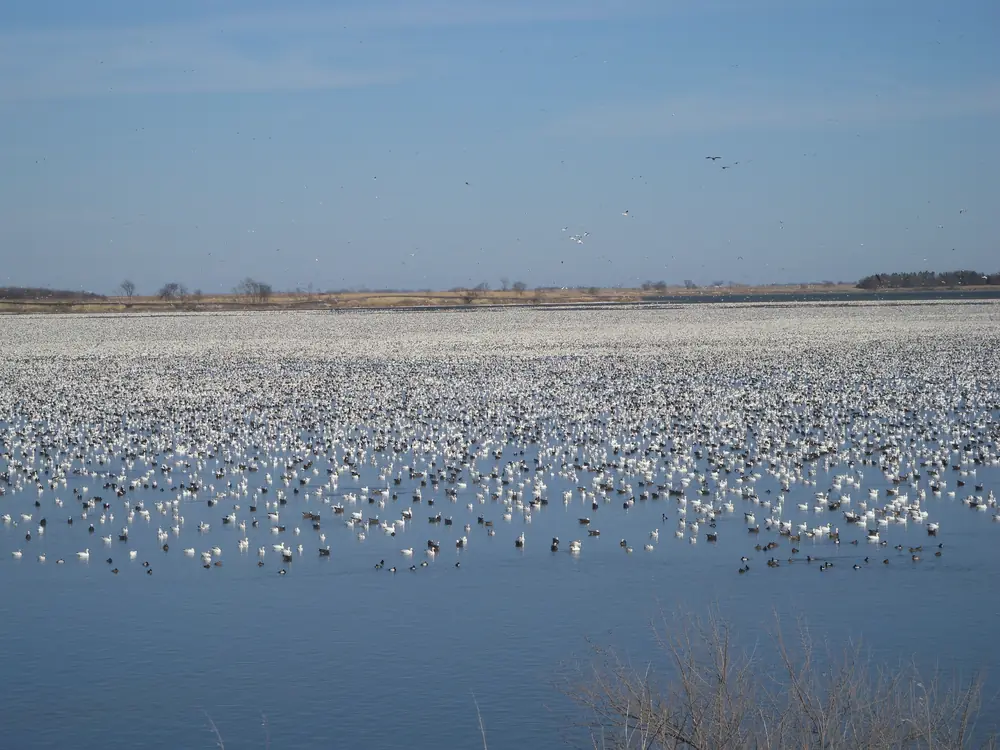
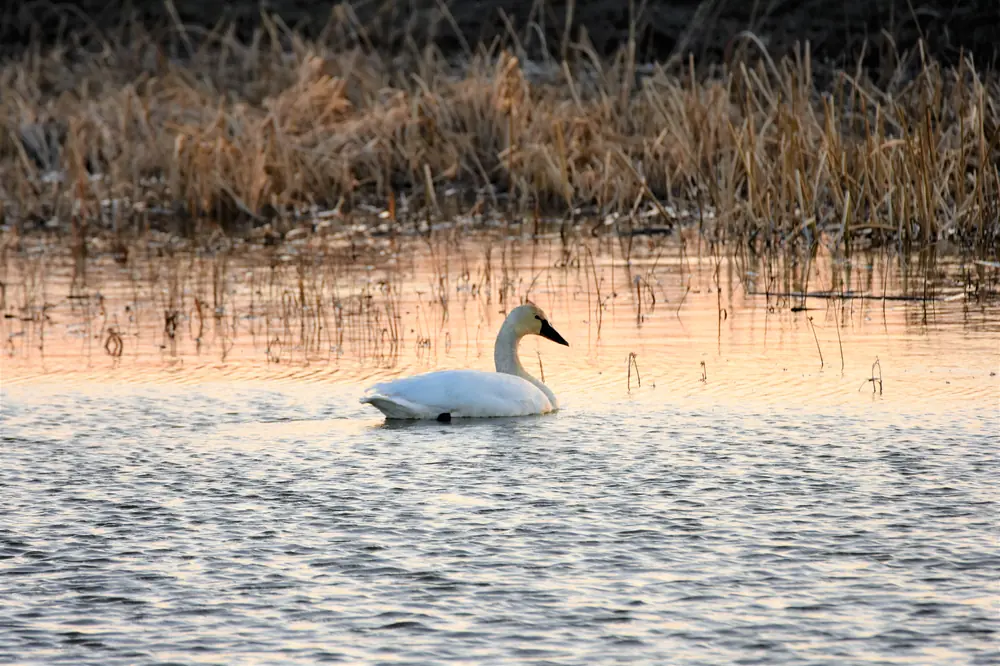
Few spring sights in the Northern Rockies match a March morning at Freezout Lake Wildlife Management Area, a 12,000-acre patchwork of lakes, ponds and dikes off U.S. Highway 89 near Fairfield, about 40 miles northwest of Great Falls. Montana Fish, Wildlife & Parks (FWP) says waterfowl migration there begins during March and carries into April, and that about 230 bird species have been recorded on the area. The agency’s brochure adds that its largest one-time sightings total 300,000 snow geese and 10,000 tundra swans, a high-water mark rather than a normal day. On its migration page, FWP describes the best days as up to 60,000 snow geese and 5,000 swans, birds resting on the way from California to nesting grounds in the Canadian Arctic and feeding in the farm fields around the lake.
-
The big days, usually in late March
Early March into April; FWP staff have pointed to the last week or so of March as the usual best window · Freezout Lake Wildlife Management Area, U.S. Highway 89 near Fairfield
When the 2026 migration got going, an FWP wildlife biologist told KXLF that the last seven to ten days of March are usually the best time to plan a visit, and that snow goose numbers that spring were close to double the normal for the date after a mild winter. Weather can shift the whole schedule. A U.S. Department of Agriculture photo caption from April 2018 notes that late snow and ice farther north held unusually large numbers of swans in north-central Montana. For the best light and activity, FWP’s advice, as reported by KXLF, is to come in early morning or late afternoon, since the birds feed in nearby fields through the middle of the day. Stay on the designated roads and pullouts, and do not stop on a road shoulder to watch; local reporting from 2026 listed that as a traffic hazard.
-
The Wild Wings Festival in Choteau
March 19 to 21, 2027, according to the organizer · Choteau, with guided tours out to Freezout Lake
The festival’s own website gives March 19 to 21, 2027, and says the program will be posted in late 2026 or early 2027, so check it before you plan around any single event. The 2026 schedule is a fair guide to the style: a photography workshop, an evening meet-and-greet with food trucks and conservation booths, a showing of the film “Flight of the Swans,” free guided morning tours of the lake, and a talk by the head of the Raptor View Research Institute on eagles captured along the Rocky Mountain Front. In 2026 most events were free and held at the Choteau Pavilion, with the film at the Roxy Theatre.
-
Pintails, mallards and swans at Benton Lake
From about mid-March, as the ice leaves · Benton Lake National Wildlife Refuge, 12 miles north of Great Falls
According to the refuge, large numbers of pintails, mallards and tundra swans appear at Benton Lake from mid-March, once ice leaves the shallow marsh and runoff collects. Snow geese turn up too, in flocks of a few hundred to a few thousand that linger a week or longer, and bald eagles and peregrine falcons often appear nearby. The refuge’s nine-mile Prairie Marsh Wildlife Drive is a gravel road open year-round in daylight hours, though bad weather can close it.
Snow geese lift off in great waves around sunrise, and a flock spooked by a car or a person on foot burns energy it needs for the flight north. Stay in the vehicle, use binoculars, and let the birds settle. If you visit more than once, the same-place-twice plate in a Naturalist’s Field Journal is a good home for your counts and the changing water.
Where can you watch sharp-tailed grouse dance in Montana in March?
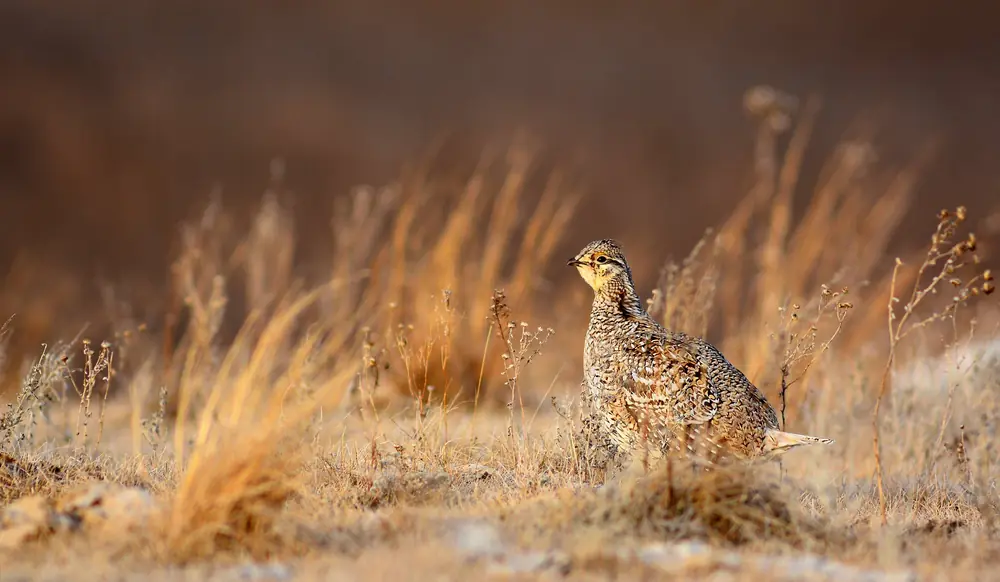
Before the geese peak, while snow still lingers in the coulees, male sharp-tailed grouse are already dancing. FWP’s Montana Outdoors magazine says they gather at first light in March or early April on traditional display grounds, called leks, and that the same sites are used year after year. The males coo, bow with their wings held out, and shuffle and stomp through a rapid routine, while the hens show little interest.
-
Sharp-tailed grouse on the open prairie
At first light, March into early April · Native grassland and public prairie; ask the local FWP biologist about active leks
FWP’s advice is to arrive before sunrise, park at least 100 yards from the birds, watch from your vehicle or a small portable blind, and never let a dog chase birds on or near a lek. Active sites show up at dawn as a cluster of birds on bare ground. If you stumble onto a lek, back away quietly rather than creeping closer for a better angle.
-
The Grouse House at Benton Lake
By lottery, usually Thursday through Sunday from the last weekend of March to the middle weekend of May; check the refuge for 2027 dates · Benton Lake National Wildlife Refuge, 12 miles north of Great Falls
The refuge runs a free viewing blind, nicknamed the Grouse House, that seats six on folding chairs and has room for ten. Access is by lottery, entered by emailing the refuge your contact details and top three dates; in past years the entry deadline fell in the last days of March, and the refuge posts each year’s date itself. The lek was first noticed in 1988 with 12 males, and visitors have reported seeing 45 to 70 dancers. On the refuge’s activities page you can also watch a live camera on the same lek, best, the refuge says, first thing in the morning.
-
Greater sage-grouse leks
Spring dawns; follow FWP’s viewing guidelines · Sagebrush country, mostly on private and public rangeland
Greater sage-grouse also gather at dawn on leks, where males strut with fanned tails and make popping sounds with their inflated air sacs. FWP publishes Recreational Viewing Guidelines for these birds and lists habitat loss, mainly from converting native shrub-steppe to cropland and from new energy development, as the main threat. Watch from a car, keep your distance, and skip roads that are muddy.
A map-of-sounds page in a Naturalist’s Field Journal suits a dawn lek: note the cooing, the foot-stamping and the time the dancers broke up.
Which birds return to Montana in March, and which wait for April?
March belongs to the scouts. Mountain bluebirds, golden eagles and waterfowl are on the move; sandhill cranes, ospreys and warblers mostly are not. The timing below draws on the Montana Natural Heritage Program’s Field Guide, Montana Audubon and FWP, and every date is a typical window that snow and cold can push around.
-
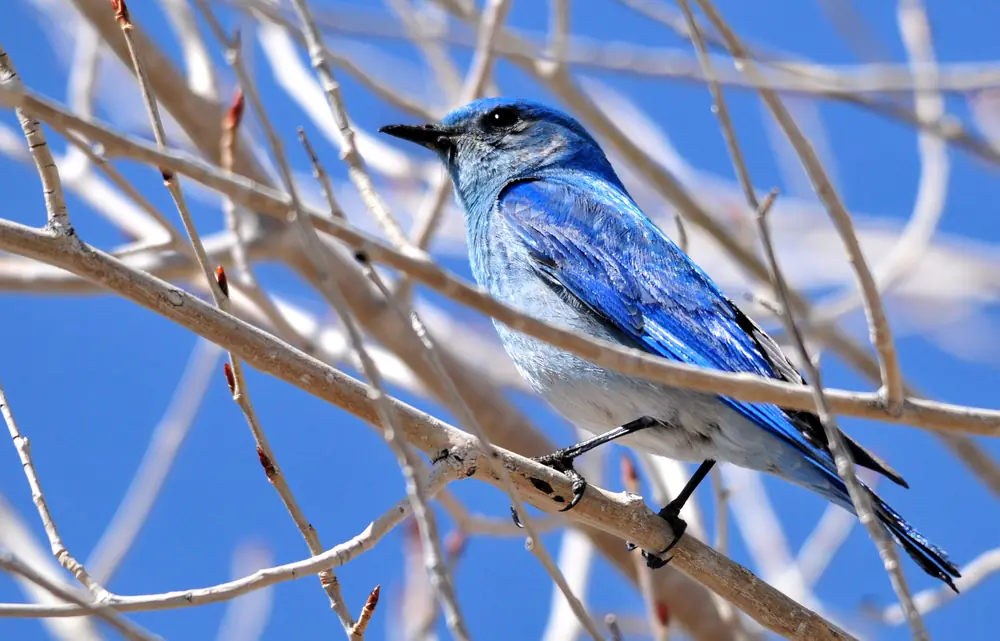
Mountain bluebirds on the fence posts
Bozeman-area spring migration, usually March 15 to April 25; nesting records run April 5 to June 25 · Open sagebrush, grassland and aspen country; roadside nest-box trails
A Bozeman-area writer in 2015 put the arrival of mountain bluebirds at mid-March through early April. In the early 1970s Montanans began nailing nest boxes to fence posts, and volunteers with Mountain Bluebird Trails have since placed more than 8,000 nesting structures, usually five or more boxes roughly 100 to 300 yards apart along roads. A 2014 FWP magazine article reports that in western Montana valleys the western bluebird, rusty-chested rather than all sky-blue, has largely replaced the mountain bluebird at those boxes, so the bird on a valley post may be either. If you plan to put up a box, March is the time to have it ready.
-
Golden eagles heading north
Late February to May; at one Alberta watch, heaviest from mid-March into early April · Along the Rocky Mountain Front and other ranges; Montana Audubon is scouting a spring watch near Ramsay, west of Butte
FWP describes an “eagle highway” along the Rocky Mountain Front from Glacier to Yellowstone, and notes that a tracked eagle used a different route in spring than in fall. The Rocky Mountain Eagle Research Foundation, which counts eagles at a site in Alberta, says the first golden eagles go north in late February and that the peak lasts from mid-March to the first week of April, with the flight over by mid-May. Those are Alberta dates, and timing shifts with weather and place. Montana Audubon, scouting for a reliable spring hawk watch, says raptors move north across Montana from late March to early May. Its first counts near Ramsay on March 31 and April 1 found very few birds, which it blamed on cold, windy weather and being well before peak, so it planned a return in late April; its best count so far was five golden eagles among other hawks on April 23, 2021.
-
What waits for April and May
Cranes in mid-April; ospreys in late April to early May; warblers in mid-May · Wet meadows, river valleys and mountain streams
The Field Guide gives April 15 to May 12 as spring migration for sandhill cranes around Bozeman and mid-April for large flocks in northeastern Montana, so a crane in March would be an early scout. A Bozeman-area bird guide puts osprey arrival in late April to early May and the first yellow warblers in mid-May. March is the month to learn calls and clear nest boxes so the rush finds you ready.
What wakes up in Montana in March: ground squirrels, frogs and the first wildflower?
Under the grass, in meltwater ponds and on south-facing slopes, March starts the clock for animals that spent the winter underground or under ice. The signs are small, but they are the first of the year.
-
Richardson’s ground squirrels
Between February and April, depending on elevation and weather; males first, females 10 to 14 days later · Prairie, hayfields and refuge roads in the eastern two-thirds of the state
The Montana Department of Agriculture says Richardson’s ground squirrels leave hibernation between February and April and that mated females give birth to a single litter in April or May. The Field Guide adds that females typically mate three to five days after emerging. Benton Lake’s staff list them among the spring sights on refuge roads and in the fields.
-
Columbian ground squirrels
Late March and early April in most areas; south-facing slopes can wake one to three weeks before north-facing ones · Western Montana meadows, hillsides and campgrounds
These larger squirrels come out later. According to the state agriculture department, males appear one to two weeks ahead of females, and breeding begins shortly after the females emerge and lasts about two weeks. Where you see the first one depends on snow cover, soil temperature and the slope you are standing on.
-
Columbia spotted frogs in the meltwater
Breeding from mid-March to mid-June, depending on snowmelt, temperature and elevation · Ponds, springs, beaver ponds and wet meadows in western Montana mountains and valleys
The Field Guide calls the Columbia spotted frog the most common frog in the mountains and mountain valleys of western Montana. Females lay grapefruit-sized, globular egg masses in shallow water at the margins of ponds, often alongside many other females’ masses. Montana’s other early-spring singers keep later hours: the boreal chorus frog breeds from late April to June, and the Sierran treefrog in April and May, so the full spring chorus is an April story.
-
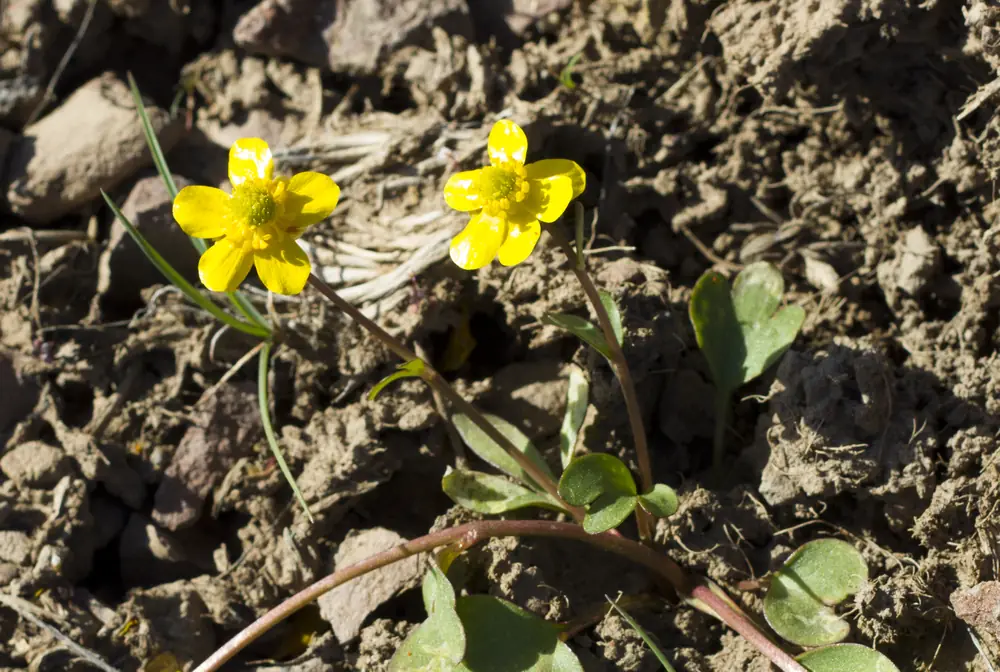
Sagebrush buttercup
Usually March and April, sometimes as early as February · Sagebrush flats, grasslands and open woods at low and middle elevations
The Field Guide calls this bright yellow, shiny-petaled flower one of Montana’s earliest bloomers. A native plant column in the Great Falls Gazette describes it as widespread, especially in the western half of the state, and mostly a low-elevation plant, though it can be found above six thousand feet. It stands only half a foot tall at most, so get low.
Put the first squirrel, the first frog egg mass and the first buttercup on the dusk-and-dawn or nest-observed plates of a Naturalist’s Field Journal with the date and the weather.
When do Montana’s grizzly bears leave their dens?
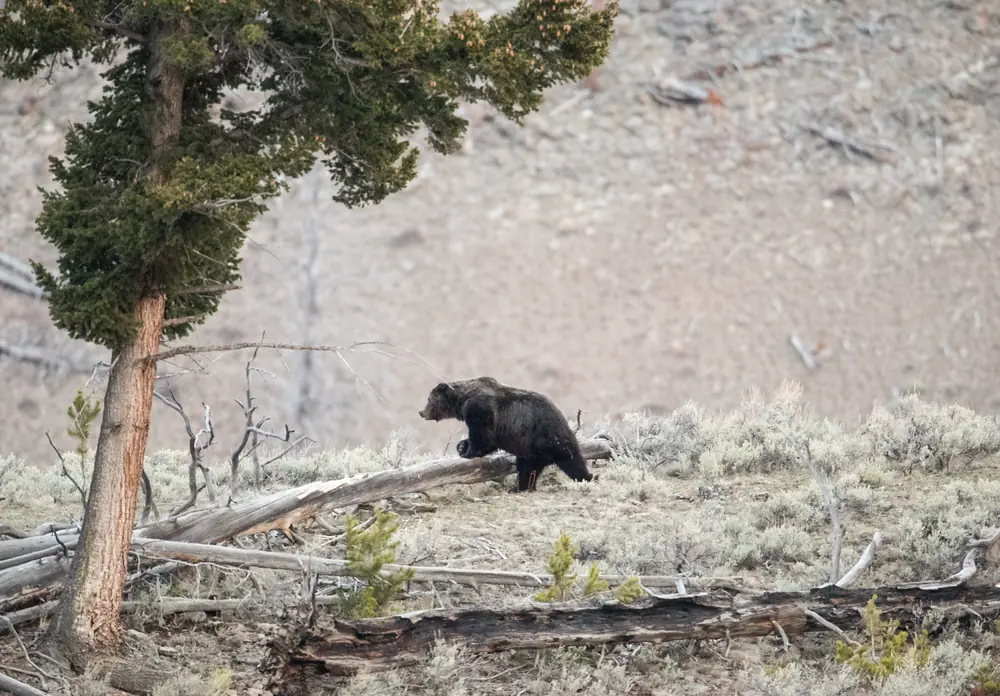
February’s page noted the first grizzlies stirring in the Yellowstone country. March is when the exits become common. FWP says grizzlies den for roughly November through March and typically emerge in March and April, and federal wildlife managers say adult males usually leave first.
-
The first males out
March and April · Greater Yellowstone, Glacier and the other grizzly ranges of western Montana
The Fish and Wildlife Service’s spring advisory, issued April 1, 2024 for Montana, Wyoming, Idaho and Washington, says male grizzlies typically leave their dens in March and April and females with cubs appear in April and May. A March 2019 Glacier National Park release reported bear tracks in the snow and said both grizzly and black bears live and travel in the park.
-
Food comes first
As soon as they are out · Low valleys, river bottoms and wherever winter-killed animals lie
Glacier’s release says the bears are hungry and look especially for carcasses of winter-killed animals. FWP notes that both grizzlies and black bears are opportunistic feeders on roots, grasses, insects, small mammals, fish and carrion. A carcass is a bear’s property, and bears defend it, so scavengers circling a draw are a reason to turn around.
-
Cubs wait until April or May
April and May · Denning country; mothers move cautiously with newborns
FWP says females give birth in the den and nurse through the whole five to six months without eating or drinking; twin cubs are more common than singles. A mother with cubs is the most protective bear you can meet, which is why the agencies stress noise, groups and bear spray from the first warm days.
Take bird feeders down now: FWP advises not feeding birds during active bear season and suggests bird baths, nest boxes and native plants instead. Store garbage in a bear-resistant bin or locked building until it is collected.
What is open in Yellowstone and Glacier in March 2027?
Both parks are mostly still wintry in March, and the schedules for 2027 are partly posted, partly not. Here is what the agencies have said.
-
Yellowstone’s year-round road
All year; check conditions before you go · North Entrance at Gardiner through Mammoth Hot Springs and Tower Junction to the Northeast Entrance at Cooke City, via the Lamar Valley
The National Park Service says this is the only road in Yellowstone generally open all year to regular vehicles. From it you can scan the northern range for bison, elk and, with a spotting scope and patience, wolves. Park rules call for staying at least 100 yards from bears, wolves and cougars and at least 25 yards from all other animals, including bison and elk, and the safest view is often from inside the car.
-
Oversnow travel ends in mid-March
Mammoth to Norris through March 7; Norris to Madison, Canyon Village and the Washburn overlook through March 9; Canyon to Fishing Bridge through March 14; the West, South and East entrances and remaining groomed roads through March 15, 2027 · Interior roads of Yellowstone, open only to guided snowmobiles and snowcoaches
These are the Park Service’s posted 2026–27 oversnow dates (travel begins December 15, 2026), and it warns that all dates can change with weather. Wheeled-vehicle opening dates for 2027 were still unposted in October 2026; the 2026 schedule began April 17, so check the park roads page in spring.
-
Glacier’s plows start on the east side
Road clearing begins in late March on the east side; most roads open by mid-to-late May · Glacier National Park; Apgar and St. Mary campgrounds stay open year-round
The park says lower-elevation trails usually melt out by the end of April, while mid- and high-elevation trails are generally under snow and some do not clear until late July. Plowing the Going-to-the-Sun Road takes two and a half to three months by the park’s account, so an opening date over Logan Pass cannot be known in March. Most visitor services reopen from late May to early June.
What is March weather like in Montana, and what hazards come with it?
March is the last full month of snow for most of Montana’s lowlands. NOAA’s 1991–2020 normals show average highs from the low 40s to 49 °F, and every station in the table averages freezing or colder lows on 21 to 30 nights of the month. Great Falls’ normal March snowfall is 10.1 inches and Billings’ is 8.2. Glasgow, on the Hi-Line, averages only a 41.8 °F high and nearly three nights a month below 0 °F.
| Station | Average high | Average low | Precipitation | Snowfall | Nights below 32 °F |
|---|---|---|---|---|---|
| Missoula | 47.9 | 26.8 | 0.92 | 5.00 | 25.0 |
| Helena | 47.5 | 24.6 | 0.52 | 4.60 | 25.4 |
| Great Falls | 46.1 | 22.1 | 0.68 | 10.10 | 25.3 |
| Bozeman (Gallatin Field) | 46.4 | 21.6 | 0.93 | not published | 27.9 |
| Butte | 43.7 | 19.4 | 0.64 | not published | 29.6 |
| Billings | 49.0 | 26.9 | 0.90 | 8.20 | 21.1 |
| Glasgow | 41.8 | 21.4 | 0.47 | 5.60 | 27.7 |
| Miles City | 46.8 | 22.5 | 0.55 | not published | 24.9 |
The Western Regional Climate Center’s Montana narrative explains the month’s main hazards. East of the Divide, warm, windy “chinook” spells reach from the Browning-Shelby area southeast to the Yellowstone Valley above Billings, with winds often 25 to 50 mph or more that can last for days. Ice jams during spring breakup, usually in March, cause backwater flooding, and heavy rain on thawing snow is a serious flood threat. Mountain snowpack, the center adds, often keeps building until around April 1 to 15, and heavy snowstorms can arrive as late as May 1 in the higher southwestern half of the state. Watch for sudden warm-ups that loosen river ice, and for the cold that follows them.
NOAA publishes new seasonal maps monthly; find the latest at the Climate Prediction Center’s 90-day outlook, and check our weather page for the days just ahead.
When is the last spring freeze in Montana?
In March the question is still far off. NOAA’s 1991–2020 normals put the median last 32 °F freeze at Helena on May 9, Billings on May 4, Glasgow on May 6 and Miles City on May 8, and later in the western valleys and around Bozeman: Missoula May 16, Great Falls May 19, Bozeman May 26 and Kalispell May 31. Kalispell’s nine-years-in-ten date is June 22. Use the table as a long view when planning seed-starting and bird feeders, and treat any warm March week as a loan, not a promise.
| Station | One year in ten | Median | Nine years in ten |
|---|---|---|---|
| Kalispell Glacier Airport (Flathead valley) | May 13 | May 31 | Jun 22 |
| Missoula International Airport | May 3 | May 16 | Jun 1 |
| Helena Regional Airport | Apr 29 | May 9 | May 25 |
| Great Falls International Airport | May 7 | May 19 | Jun 2 |
| Bozeman Gallatin Field | May 11 | May 26 | Jun 12 |
| Billings Logan International Airport | Apr 20 | May 4 | May 18 |
| Glasgow International Airport (Hi-Line) | Apr 24 | May 6 | May 18 |
| Miles City F Wiley Field (southeast) | Apr 26 | May 8 | May 21 |
Our Montana frost-date guide lists dates for more towns, and the February page covers the season just before.
How much daylight does Montana gain in March?
Day length grows fastest around the equinoxes, and March is one of those stretches. Across the eight towns below the gain from March 1 to March 31 is between about 97 and 105 minutes, roughly three and a half minutes a day at the northern end. The gain is largest at the northern towns, between 3.2 and 3.5 minutes a day; the table shows day length from sunrise to sunset, not clock times, so the March 14 clock change does not affect it.
| City | Mar 1 | Mar 31 | Gained | Per day |
|---|---|---|---|---|
| Kalispell | 11 h 03 m | 12 h 48 m | 105 min | 3.5 min |
| Missoula | 11 h 06 m | 12 h 47 m | 101 min | 3.4 min |
| Helena | 11 h 06 m | 12 h 46 m | 100 min | 3.3 min |
| Great Falls | 11 h 04 m | 12 h 47 m | 103 min | 3.4 min |
| Bozeman | 11 h 08 m | 12 h 45 m | 97 min | 3.2 min |
| Billings | 11 h 08 m | 12 h 45 m | 97 min | 3.2 min |
| Glasgow | 11 h 03 m | 12 h 48 m | 105 min | 3.5 min |
| Miles City | 11 h 06 m | 12 h 46 m | 100 min | 3.3 min |
For your own town’s sunrise and sunset, our daylight tool gives the times. Daylight time begins in the early hours of Sunday, March 14, and from that day the clock times of sunrise and sunset sit an hour later.
What can you see in Montana’s night sky in March 2027?
Times here are Mountain. Because the clock change falls on March 14, the new moon of the 8th is listed in standard time (MST) and everything later in daylight time (MDT). Spring begins at the equinox on Saturday, March 20, at 2:25 p.m. MDT (U.S. Naval Observatory).
-
The Worm Moon
Look east at dusk on Sunday, March 21; the Moon is full before dawn on March 22 · Anywhere with a clear eastern horizon
Tradition names this full moon the Worm Moon. Full comes at 4:44 a.m. MDT on Monday the 22nd, so Sunday evening, the 21st, gives the best rising Moon, over prairie and peaks alike. The disk looks round for a night either side, and moonlight drowns faint stars, so the darkest skies come near the new moon of the 8th.
-
Mercury before dawn
Farthest from the Sun on the night of March 16 to 17; easiest to catch from about March 8 to 25 · Low in the east-southeast, before sunrise
The planet reaches its widest morning separation, 27.6 degrees west of the Sun, at 4:20 UTC on March 17, which is the night of the 16th in Montana. The angle is shallow for northern observers, so find a clear, flat east-southeast horizon and bring binoculars; dazzling Venus floats far above it. SeaSky’s calendar calls it the best time to see Mercury in the morning sky.
-
Jupiter, the Moon and Mars
The Moon sits beside Jupiter on March 18 and 19; Mars lies about four degrees from Jupiter around the 30th and 31st (our calculation) · High in the east and south after dusk
Jupiter stays in the evening sky all spring. By our own calculation, the Moon, about 88 percent lit, slides past the planet at under a degree on the 19th, and around the 30th and 31st Mars and Jupiter stand roughly four degrees apart, high in the sky around 8 p.m. MDT. By the same calculation the thin waning crescent sits near Venus before dawn on March 4 and 5, still in standard time.
-
Daylight time begins
Sunday, March 14, 2027, at 2 a.m. · All of Montana
Federal law sets daylight time to begin at 2 a.m. on the second Sunday in March, which falls on March 14 in 2027. Dawn bird walks and owl evenings both shift an hour on the clock, so give your body a few days.
-
Northern lights
Any clear, dark night; March is statistically active · Open northern horizons, away from town lights
Northern lights can show on any clear night, and magnetic storms tend to bunch up near the equinoxes. NOAA’s Space Weather Prediction Center publishes a short-term aurora forecast, and its predicted-cycle chart shows the monthly sunspot count near 86 for March 2027, down from the cycle’s peak. That is general background, not a forecast for any one night.
| Phase | Date | Time |
|---|---|---|
| New moon | Mon, Mar 8 | 2:29 a.m. MST |
| First quarter | Mon, Mar 15 | 10:25 a.m. MDT |
| Full moon (Worm Moon) | Mon, Mar 22 | 4:44 a.m. MDT |
| Last quarter | Mon, Mar 29 | 6:54 p.m. MDT |
Keep the moon phase calendar handy, and when you look for stars and planets, the cloud guide will help you judge whether it will clear by dark.
What can Montana families do outside in March 2027?
Few organizers had set March 2027 programs by October 2026. Fixed dates are given where an organizer’s own page shows them; everything else is described as the usual pattern, so check each host before you set out. For the month before, see February in Montana; the nature guides for every state are one tap away.
-
Wild Wings Festival, Choteau
March 19 to 21, 2027 · Choteau Pavilion and Freezout Lake
This is the date posted by the festival’s organizers; they say the schedule will go up later. Children do well on the dawn goose tours if they bring snacks and a thermos, since most of the best action is in the cold hour after sunrise.
-
Watch the Grouse House on camera
Early morning, late March to May · Benton Lake National Wildlife Refuge’s website
If you cannot get a seat in the blind, the live video link on the refuge’s activities page puts the lek on your screen, and the refuge says the best time to catch the dancers is first thing in the morning.
-
Join Project FeederWatch while it lasts
Through April 30 · Any window, yard or park
The Cornell Lab’s feeder count runs from November 1 to April 30 and is flexible: count as often or as little as you like. U.S. residents pay $18 a year. Remember to take feeders down once bears are out.
-
Start a NestWatch card
Whenever nests are active; check the project site · Backyard boxes and fence-post bluebird trails
NestWatch, another Cornell Lab project, welcomes anyone. Clean and mount your box this month, then log what you see; the website and mobile app both take reports.
-
Programs in Missoula and Billings
Check the calendars; no March 2027 events were posted yet · Montana Natural History Center, Missoula; Montana Audubon Center, Billings
Both centers list their upcoming programs online and update them throughout the year. The Audubon Center’s calendar showed only an October bat program when this page was written.
-
Log your sightings with Journey North
All spring · Online
On Journey North you can post what you see and browse maps of other people’s reports; a bluebird or a first robin makes a good entry.
Safety notes for March in Montana
- New license year. FWP’s license year began March 1 in 2026, and conservation licenses, which are needed to use wildlife management areas, are renewed then. Check the agency’s license page for the 2027 details.
- Hunting and trapping still open. FWP lists the 2026–27 general wolf hunting season ending March 14, 2027, and wolf trapping ending March 15, 2027 outside the zone covered by a federal court order (inside that area it ended February 15). The mountain lion winter season runs December 1 through April 14, subject to quotas. Spring turkey and spring black bear seasons began April 15 in 2026, not in March; the 2027 dates should appear in FWP’s regulations, and bear hunters must pass the agency’s bear identification test first.
- Blaze orange. Under state law, a person hunting big game needs at least 400 square inches of daylight fluorescent orange above the waist, with exceptions for the special archery season and for wolf hunting outside the general deer and elk season. For spring turkey hunting, FWP says avoid white, red, black and blue clothing and wear orange when walking in or out in busy areas.
- Shed antlers. Most winter-range wildlife management areas stay closed until noon on May 15. A $50 nonresident shed hunting license has been required on these areas since 2026, and nonresidents may not pick up antlers there during the first seven days after opening. Shed hunting is prohibited in state and national parks.
- Fishing. FWP’s 2026 regulations show lakes and reservoirs open all year and the Central and Eastern districts’ rivers and streams open all year, while Western District rivers and streams open the third Saturday in May through November 30, with exceptions. Read the current regulations for your water.
- Bears. Carry bear spray where it is handy, make noise, travel in groups, and stay at least 100 yards from bears. Store food and garbage away and take bird feeders down. Report bear sightings or conflicts to the local wildlife agency.
- Thin ice. FWP says to look for at least four to six inches of clear ice and to avoid pressure ridges, inlets, outlets, docks and springs; March thaws make ice treacherous.
- Floods and wind. Ice jams can cause sudden backwater flooding on rivers in March, and chinook winds can gust strongly east of the Divide. Never drive through water covering a road.
- Avalanches. Mountain snowpack keeps building through March, according to the regional climate center,, so check the Gallatin National Forest Avalanche Center forecast or your local center before skiing or riding steep terrain.
With wildlife on the move, give animals space: leave grouse leks, goose flocks and any young animals alone. For your own garden planning, see our Montana frost-date guide.
Sources (59)
- Montana FWP: Freezout Lake Wildlife Management Area brochure
- Montana FWP: waterfowl migration tracking (Freezout Lake counts)
- KXLF: spring migration underway at Freezout Lake
- KXLF: timing the Freezout Lake waterfowl migration
- Wild Wings Festival, Choteau: organizer’s site
- U.S. Fish and Wildlife Service: Benton Lake National Wildlife Refuge, overview
- U.S. Fish and Wildlife Service: Benton Lake National Wildlife Refuge, seasons of wildlife and grouse blind lottery
- U.S. Fish and Wildlife Service: Benton Lake National Wildlife Refuge, activities
- USDA NRCS Montana: tundra swan photo caption, April 2018 (via Wikimedia Commons)
- Montana FWP: Montana Outdoors, sharp-tailed grouse
- Montana FWP: sage-grouse
- Montana Field Guide: Mountain Bluebird
- Montana FWP: Montana Outdoors, bluebirds in western Montana (March–April 2014)
- Outside Bozeman: The Flight of Spring
- Montana Field Guide: Sandhill Crane
- Rocky Mountain Eagle Research Foundation: the eagle migration (Alberta)
- Montana Audubon: a promising new hawk watch site near Ramsay
- Montana FWP: raptor migration tracking and the Rocky Mountain Front “eagle highway”
- Montana Field Guide: Columbia Spotted Frog
- Montana Field Guide: Boreal Chorus Frog
- Montana Field Guide: Sierran Treefrog
- Montana Department of Agriculture: Columbian ground squirrel biology
- Montana Department of Agriculture: Richardson’s ground squirrel bulletin
- Montana Field Guide: Richardson’s Ground Squirrel
- Montana Field Guide: Sagebrush Buttercup
- Great Falls Gazette: Buck’s Native Plant Corner, sagebrush buttercup
- Montana FWP: all about bears (denning and emergence)
- U.S. Fish and Wildlife Service: grizzly bears emerge from dens, April 1, 2024
- National Park Service: bears are emerging from dens in Glacier National Park (March 29, 2019)
- Montana FWP: living in bear country
- National Park Service: Yellowstone park roads
- National Park Service: Yellowstone safety
- National Park Service: visiting Glacier National Park in spring
- Western Regional Climate Center: climate of Montana
- NOAA NCEI: March 1991–2020 normals for the eight Montana airports in the table (data service)
- NOAA Climate Prediction Center: seasonal outlooks
- NOAA Space Weather Prediction Center: predicted solar cycle
- NOAA Space Weather Prediction Center: aurora 30-minute forecast
- U.S. Naval Observatory: moon phases, 2027
- U.S. Naval Observatory: seasons, 2027
- SeaSky: astronomy calendar 2027
- U.S. Code, 15 U.S.C. 260a: daylight saving time
- Montana FWP: wolf hunting and trapping seasons
- Montana FWP: mountain lion regulations
- Montana FWP: black bear hunting
- Montana FWP: spring turkey hunting
- Montana FWP: fishing regulations
- Montana FWP: new license year, March 2026
- Montana FWP: license year bulletin, March 1, 2026
- KXLF: how to prepare for shed hunting in Montana
- Montana Code Annotated 87-6-414, hunter orange
- Montana FWP: ice safety
- Gallatin National Forest Avalanche Center
- Cornell Lab: Project FeederWatch
- Cornell Lab: NestWatch
- Journey North
- Montana Natural History Center: events
- Montana Audubon Center, Billings: events
- Photos via Wikimedia Commons; licenses and photographers are credited under each picture
.jpg)
