What to look for in nature in Montana this October
In Montana, October is the month the high country closes and the valleys fill up. Golden eagles ride the Bridger ridge south by the hundreds, the larch forests of the northwest go from green to gold, snow geese begin to settle on Freezout Lake, and grizzly and black bears come down looking for anything with calories. Most of the state has already had its first freeze, and the first snow of the season is ordinary, not news. What follows is a guide to the month by region, with dates and sources.
Start here

- Golden eagles over the Bridgers. The ridge above Bridger Bowl, northeast of Bozeman, sees the biggest golden eagle migration counted anywhere in the lower 48. The count runs through October 31, and the eagle peak lands in mid-October, when a warm day with a southwest wind can bring more than 200 past the lookout.
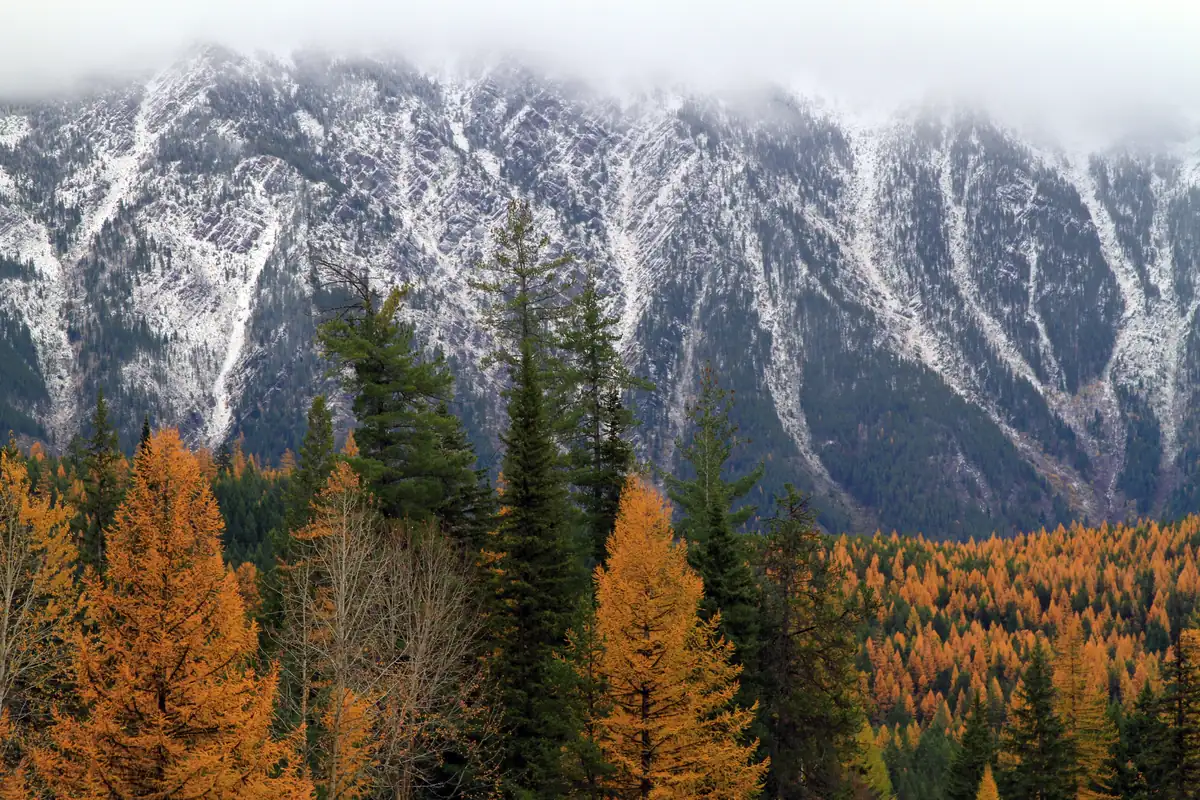
- Larch gold in the northwest. Western larch, a conifer that drops its needles, turns gold from the middle of October into early November across the Flathead, Kootenai and Clark Fork country.
- Bears in the valleys. A spring windstorm stripped the huckleberry blossoms in northwest Montana, and FWP bear specialists have been answering far more calls than usual. Bears are feeding hard before they den, so pick the apples, bring in the bird feeders and carry bear spray on every walk.
Montana Octobers deserve a written record. In the Naturalist’s Field Journal, give the “birds I have seen” list your golden eagles and the first rough-legged hawk on a fence post; let the tree-through-the-seasons page follow one larch or cottonwood, use the tracks-to-know plate for the first prints in new snow, and press a ponderosa scale onto the seeds-pods-and-cones page. Put a date on each.
Regions used below: Northwest and Glacier; Missoula and the western valleys; Southwest and Yellowstone country; Central Montana and the Rocky Mountain Front; Hi-Line and the northeast; Billings and the southeast.
Where can you watch golden eagles migrate in Montana in October?
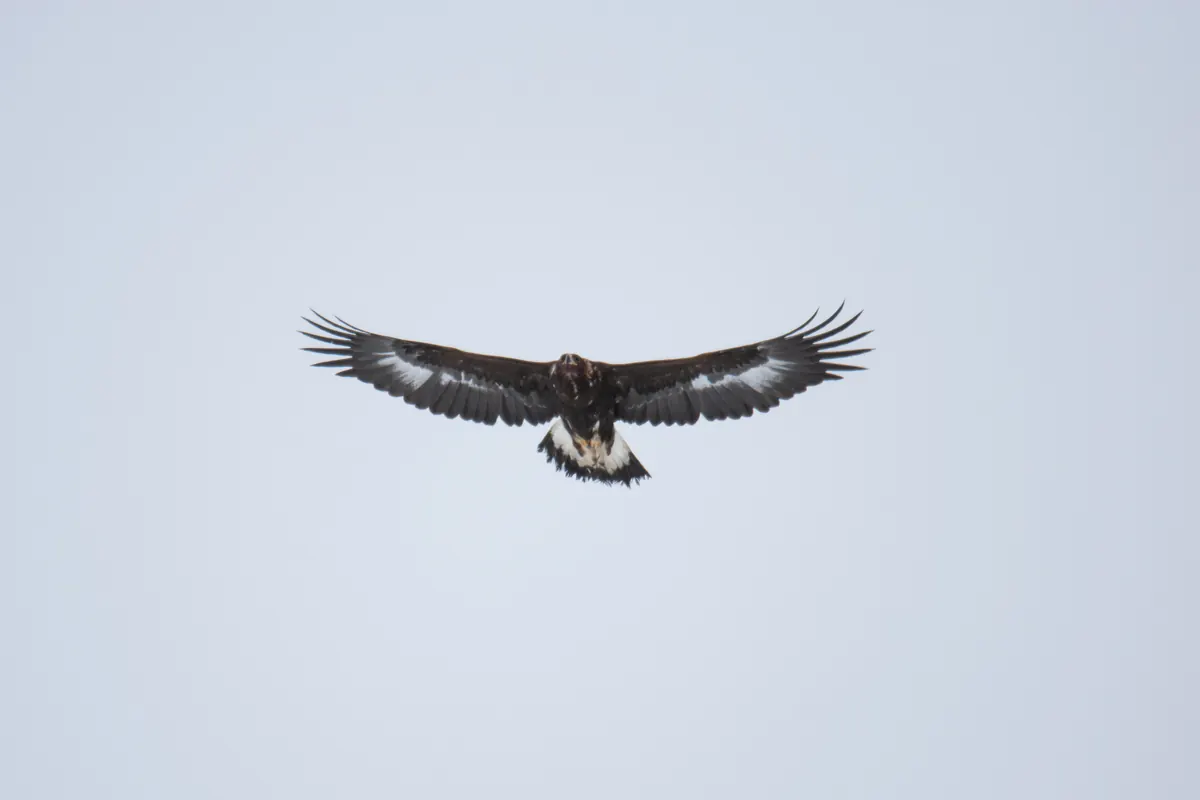
On the crest of the Bridger Range, at roughly 8,500 feet on the crest above Bridger Bowl ski area, a team of counters has tallied southbound raptors every fall since 1992. The ridge runs north to south, and on days with a southwest wind the updraft along its western face lets big birds glide for miles without a wingbeat. HawkCount’s site profile describes this flyway as holding the largest concentration of golden eagles in the lower 48 states. The count season runs from late August through October 31; seasonal totals usually fall between about 1,200 and 1,900 golden eagles, and the eagle push comes in mid-October, sometimes topping 200 birds in a day. About 17 raptor species pass in all, with hawks and falcons strongest in late September and early October.
-
Getting to the lookout
Late morning to mid-afternoon, through October 31 · Bridger Bowl, about 15 miles up Bridger Canyon Road (Montana 86) from Bozeman
From the Deer Park Chalet, a primitive road climbs about a mile and a half to the top of the Bridger lift, and a short walk puts you on the ridge. Plan on roughly 2,100 feet of climbing and up to two hours each way, and bring a windproof layer, gloves, food, water and binoculars.
-
Telling a golden from a young bald eagle
All month · Anywhere in the mountains and foothills
Young golden eagles show white patches at the base of the tail and in the wing, and young bald eagles are blotchy too. The quick check is the head: small on a golden, big and jutting forward like a prow on a bald eagle. Both species winter in Montana.
If the Bridger hike is more than you want, HawkCount posts the daily tallies online, and watching the numbers climb during a stretch of southwest wind is its own kind of fun. Before you go, check the weather page for wind direction on the ridge; a calm or east-wind day is usually slow.
When do the larches turn gold in Montana?
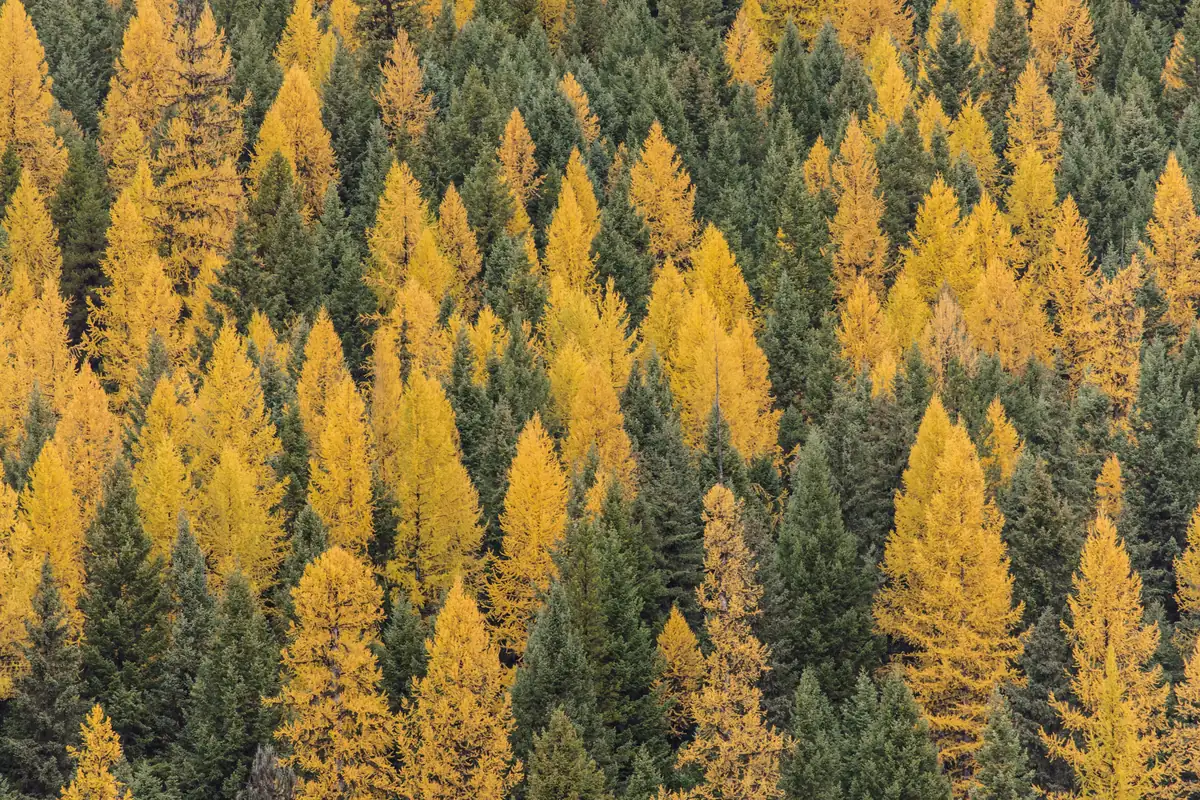
Montana gets two waves of fall color. The first is the aspens, cottonwoods and willows along creeks and rivers; KTVH’s weather team puts the state’s main foliage peak in mid-October. The second is the western larch, which does something almost no other conifer does: its needles go yellow and then drop. The U.S. Forest Service describes the foliage moving from light green in spring and summer to gold in fall. Larch grows mainly in the upper Columbia River basin, which in Montana means the northwest, west of the Continental Divide. The trees can live for more than 900 years and top 180 feet.
| What | Where to look | Typical timing |
|---|---|---|
| Aspen, cottonwood and willow | Creek bottoms and river valleys statewide; aspen groves on the Rocky Mountain Front and in the Gallatin and Madison valleys | Earlier in the high country; around mid-October in the valleys |
| Western larch | Flathead, Kootenai, Swan, Blackfoot and Clark Fork valleys; Glacier’s west side | Starts early to mid-October; strongest in the second half of the month, lingering into early November |
| Subalpine larch | Rocky timberline basins in the far west of the state | Varies with elevation; ask the local ranger district before a long hike |
| Cottonwoods along the big rivers | Yellowstone, Missouri and Milk river bottoms in the east | Usually mid-October, sooner after an early hard freeze |
On October 19, 2019, Glacier National Park reported its larches were “nearing their golden peak”; that is one year’s snapshot, but a useful one. The Going-to-the-Sun Road is typically fully open until the third Monday of October, which this year is October 19, but the Park Service closes stretches earlier whenever snow arrives, so check the road status the morning you go. Near Seeley Lake stands Big Gus, the largest western larch known, which KTVH reports is thought to be about a thousand years old. To follow the change close to home, the Field almanac estimates leaf-off from satellite imagery for your own coordinates.
Which birds arrive and leave Montana in October?
October is changeover month. The warblers and swallows are gone, the prairie hawks that nest here have mostly left, and the birds that breed in the Arctic and northern Canada start to show up for the winter. Watch big water for waterfowl, open country for hawks on posts, and the conifer slopes for the jays and nutcrackers that stay all year.
-
Snow geese and tundra swans at Freezout Lake
Ducks and swans through October; snow geese usually near the end of the month, staying until hard freeze · Freezout Lake Wildlife Management Area, on U.S. 89 between Fairfield and Choteau
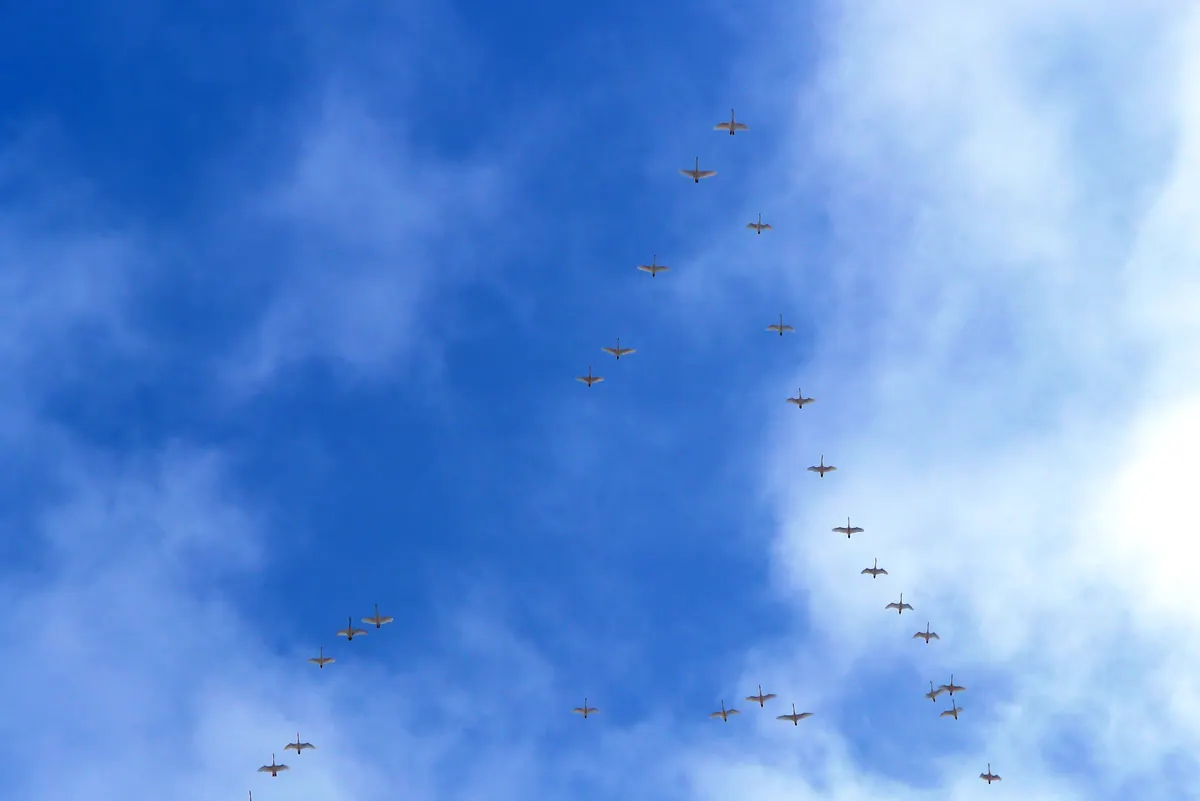
This 12,000-acre complex under the Rocky Mountain Front is best known for its spring spectacle, but fall has its own. FWP’s area guide says teal and pintails are the first migrants in September, snow geese usually arrive near the end of October and stay until severe weather sets in, and other ducks remain until the water locks up. At peak, as many as 300,000 snow geese and 10,000 tundra swans have been counted on the area at one time. A core part of the WMA closes to all hunting from the waterfowl opener (October 3 this year) through November 19, which gives the birds a resting place; check with FWP’s Great Falls office for where visitors can stand and watch during that closure.
-
Rough-legged hawks from the Arctic
Arriving through October; most numerous October to March · Fence posts, power poles and stubble fields statewide
The Montana Natural Heritage Program lists rough-legged hawks as the most common buteo in Montana in winter. They nest in northern Canada and Alaska. Look for a white tail with a broad dark tip and a dark belly band. They hover over one spot like a giant kestrel before dropping on a vole.
-
Bohemian waxwings, soon
Late October into early December · Mountain ash, crabapple and juniper berries in towns
Around Bozeman, the Heritage Program gives the fall migration window for Bohemian waxwings as October 25 to December 5, with the peak in November.
-
Clark’s nutcrackers and their pine seeds
All fall · Ponderosa, limber and whitebark pine forests
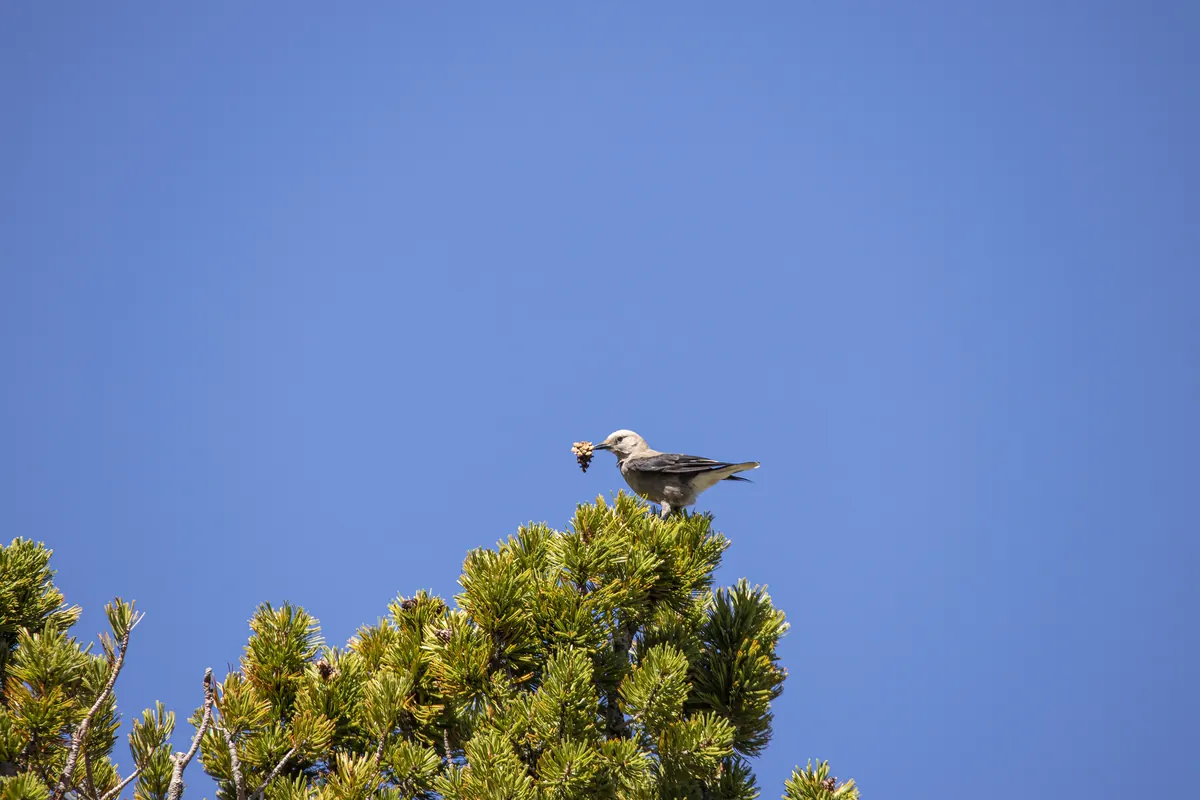
These gray, black and white relatives of jays live in Montana year-round and spend the fall burying seeds. Heritage Program records note that nutcrackers may carry pine seeds more than 19 miles to cache them, and that conifer seeds, mostly ponderosa pine, made up 83 percent of the food found in western Montana nutcrackers in a 1940s study. Forgotten caches become the next whitebark pines.
eBird’s Montana bar charts show when each species comes and goes for your county, and adding your own lists fills gaps in a big, thinly birded state.
Why are bears coming into Montana towns this fall?
Every fall, grizzly and black bears enter hyperphagia, weeks of near-constant eating to build the fat that carries them through the den. The Montana Natural Heritage Program notes that in fall, berries and pine nuts make up most of a grizzly’s diet. This year the berries let them down. FWP bear specialist Garrett Tovey told the Western News in August that a mid-April wind and rain storm “blew the blossoms off” the huckleberries in northwest Montana, and that his team was already on pace to double its 2025 conflict calls.
Hungry bears head for easy calories: fruit trees, garbage, bird feeders, chickens and pet food.
-
What to do at home
Now until the bears den · Anywhere in bear country, including towns such as Kalispell, Missoula, Bozeman, Red Lodge and Choteau
Pick fruit as it ripens and pick up windfalls every day. Keep garbage inside until pickup morning; FWP can lend bear-resistant carts and electric fencing for fruit trees and chicken coops. Take down bird feeders until bears are denned. If a bear does get into something, call the FWP regional office quickly, before the habit sets.
-
What to do on the trail
All month, especially at dawn and dusk · Forest, river bottoms and brushy draws, east of the mountains as well as west
Carry bear spray where you can reach it with one hand, and know how to use it. Travel in a group, talk or clap in thick brush and near noisy water, and give a wide berth to any carcass or place where ravens and magpies are gathering.
The feeding goes on until deep snow and cold send the bears to their dens. A dusting of snow on the trail makes the day’s wildlife traffic easy to read; tracks are one of the pleasures of the season, and a big track is also a reason to turn around.
What are elk, pronghorn, deer and bighorn sheep doing in October?
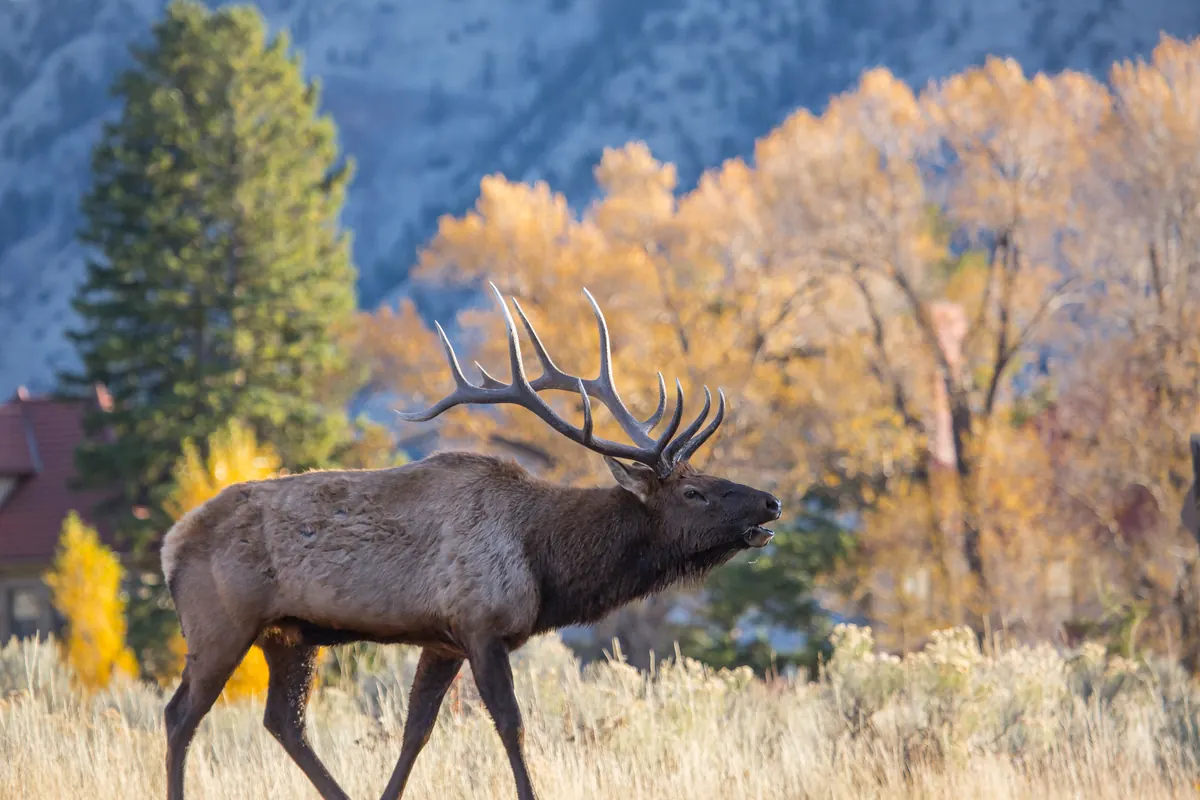
The Montana Natural Heritage Program sums up the calendar neatly. Elk breed in late September and early October, so the bugling that started in September winds down during the first half of the month. Pronghorn breed in late September; bucks shed their horn sheaths in November. Mule deer breed in late November, and bighorn sheep rams start their head-butting contests in mid-to-late November. October is the lull between, when bucks rub their antlers on saplings, rams gather on the winter range, and elk begin drifting down toward it.
-
Elk on the northern range
Bugling into mid-October · Around Gardiner and at Mammoth Hot Springs, just across the Wyoming line; along the Madison River in Yellowstone
Yellowstone National Park lists the rut as running from early September to mid-October, with the northern range around Mammoth among the easiest places to hear it. Bulls are dangerous in the rut: stay well back, keep a car between you and them, and never walk out to get the photo.
-
Pronghorn on the open plains
All month · Sagebrush and grassland from the Hi-Line to the Wyoming line
After the breeding season, pronghorn gather into larger herds. The Heritage Program notes that about seven in ten adult does carry small horns of their own, and that fences can be a real barrier to these animals, which evolved to run rather than jump.
-
Brown trout and kokanee on the move
Browns spawn October through December; kokanee runs from September into late fall · Rivers and tributaries statewide for browns; lakes and reservoirs west of the Divide for kokanee
Brown trout move upstream or into tributaries in fall and dig redds, shallow gravel nests, where eggs sit through the winter and hatch between February and April. A clean, pale oval of gravel in a riffle is a redd; stay off it when you wade. Kokanee, the landlocked form of the sockeye salmon, turn red and run up tributary streams or crowd shorelines to spawn in November and December, and die soon afterward.
When is the first freeze in Montana, and when does it snow?
In most of Montana the first freeze is a September event. At the Bozeman and Kalispell airports, the median first 32 °F night falls on September 16 and September 10, and Missoula, Great Falls and Helena typically see theirs between September 24 and 30. October is when the stragglers go: Billings, whose airport sits on the rims above the city, has a median of October 7, and the station on the east shore of Flathead Lake near Bigfork holds out until October 15 thanks to the big lake beside it. By Halloween, frost has reached nine years in ten at every station in the table below.
| Station | One year in ten | Median | Nine years in ten |
|---|---|---|---|
| Kalispell Glacier Airport (Flathead valley) | Aug 26 | Sep 10 | Sep 25 |
| Bigfork 13 S (east shore of Flathead Lake) | Sep 30 | Oct 15 | Oct 30 |
| Missoula International Airport | Sep 12 | Sep 26 | Oct 8 |
| Helena Regional Airport | Sep 17 | Sep 30 | Oct 11 |
| Great Falls International Airport | Sep 9 | Sep 24 | Oct 5 |
| Bozeman Gallatin Field | Sep 2 | Sep 16 | Sep 29 |
| Billings Logan International Airport | Sep 26 | Oct 7 | Oct 21 |
| Glasgow International Airport (Hi-Line) | Sep 17 | Sep 30 | Oct 13 |
| Miles City F Wiley Field (southeast) | Sep 17 | Sep 30 | Oct 14 |
Snow is part of a normal October here. NOAA’s 1991–2020 normals give Great Falls 5.2 inches for the month and Billings 4.5, with 2.8 at Helena, 1.5 at Glasgow and just 0.9 at Missoula, where the valley sits in the rain shadow of the Bitterroots. The full list of Montana stations, including high, cold places like Butte and West Yellowstone’s Hebgen Dam, is on the Montana frost dates page. Put a thermometer at knee height in the garden; on a clear, still night, the ground can frost even when town reads 36 °F.
How much daylight does Montana lose in October?
A lot, because Montana is far north. Glasgow on the Hi-Line gives up 101 minutes of daylight between October 1 and October 31, Kalispell 100, and Billings and Bozeman, farther south, 92. That is more than three minutes a day in the north. In Great Falls, sunrise slides from 7:24 to 8:08 a.m. over the month and sunset from 7:04 to 6:09 p.m., both on daylight time. Daylight saving time ends early on Sunday, November 1, and after that sunset comes around 5 p.m. and the drive home is in the dark.
| City | Oct 1 | Oct 31 | Lost | Per day |
|---|---|---|---|---|
| Kalispell | 11 h 39 m | 9 h 59 m | 100 min | 3.3 min |
| Missoula | 11 h 40 m | 10 h 04 m | 96 min | 3.2 min |
| Helena | 11 h 41 m | 10 h 05 m | 96 min | 3.2 min |
| Great Falls | 11 h 40 m | 10 h 01 m | 99 min | 3.3 min |
| Bozeman | 11 h 41 m | 10 h 09 m | 92 min | 3.1 min |
| Billings | 11 h 41 m | 10 h 09 m | 92 min | 3.1 min |
| Glasgow | 11 h 39 m | 9 h 58 m | 101 min | 3.4 min |
| Miles City | 11 h 41 m | 10 h 06 m | 95 min | 3.2 min |
The daylight calculator works out the minutes of light you will lose this week at your own address.
What is October weather like in Montana, and what will El Niño bring this winter?
October in Montana swings. A week of blue sky and 65 °F afternoons can end in a single day with a cold front, a north wind and snow on the plains, and then melt off again. Across the big towns, the 1991–2020 NOAA normal for an October afternoon runs from 54 °F at Butte to 59 °F at Billings and Miles City, and nights average from 27 °F at Butte to about 37 °F at Billings. It is a dry month in most of the state: 0.78 inch of precipitation at Helena, 0.92 at Glasgow, 1.07 at Great Falls, 1.18 at Missoula and 1.37 at Billings.
Then there is winter. NOAA’s Climate Prediction Center, writing on September 10, said El Niño was building and rated a very strong event for the 2026–27 cold season as better than nine chances in ten; its next monthly discussion is due October 8, and NOAA’s full winter outlook comes out in mid-October. The Montana Climate Office’s analysis of past events finds El Niño winters warmer than normal across the state, more so toward the northeast, and slightly drier than normal only in north-central Montana, while the southwest and far east have tended to run slightly wetter. The pattern is a tendency, not a promise: KRTV’s review of the strong 2015–16 winter found Helena with only about 63 percent of its normal snow, yet Glasgow and Missoula reached normal. For October itself, El Niño’s grip is still weak, and day-to-day weather will come from the usual Pacific storms and Canadian cold fronts.
For a forecast built for your own place, including the chance of that first snow, use our weather page.
What can you see in Montana’s night sky in October?
-
The moon and Jupiter at moonrise
Tuesday, October 6, about 2:40 to 3:10 a.m. MDT · Right on the eastern horizon; a flat, open view is essential
The thin old moon covers Jupiter in the small hours of October 6, but in Montana it happens as the pair are rising, and the state sits near the northern edge of the zone where the moon covers the planet at all. The International Occultation Timing Association gives Great Falls a brief event right at the edge: the moon rises at 2:43 a.m., Jupiter slips behind it at 2:50 and comes back at 2:57, with the moon at most a degree above the horizon. In Helena the moon rises at 2:49 with Jupiter already hidden, and the planet reappears at 3:01 a.m., again about a degree up. Near the North Dakota line, IOTA’s times for Williston, 2:43 for the disappearance and 3:04 a.m. Mountain time for the reappearance, with the moon 4 to 7 degrees up, suggest Sidney and Culbertson see both halves. Billings, Bozeman and Missoula are not on IOTA’s list; there, and in any mountain valley, the crescent and Jupiter will likely clear the ridge already together or just parting.
-
The Hunter’s Moon
Evenings of Sunday, October 25 and Monday, October 26 · Low in the east around sunset
The moon is full at 10:12 p.m. MDT on Sunday the 25th. In Billings it comes up at 5:36 p.m. that evening, about half an hour before the 6:11 sunset, and at 6:04 on the 26th, just ahead of sunset. Missoula’s times are 5:55 and 6:22 p.m. Ignore any supermoon headlines; the moon is nowhere near perigee.
-
Orionid meteors
Before dawn on October 21 and 22 · Anywhere dark, facing south and east
The Orionids, dust from Halley’s Comet, are active from October 2 through November 7 and their broad maximum falls on the 21st and 22nd. A waxing gibbous moon lights the evening, but on the 22nd it sets between 3:12 a.m. (Sidney) and 3:54 a.m. (Missoula), and the sky stays dark until civil twilight begins, around 7 a.m. in the east and 7:30 in the west.
-
Draconid meteors
Evening of Thursday, October 8 · Face north after dark
A small shower of slow meteors that peaks after dusk rather than before dawn, so children can stay up for it, and this year no moonlight interferes. Expect a few per hour at best. Two days later, the new moon of October 10 opens the darkest stretch of the month.
-
Planets: Saturn up all night, Jupiter and Mars before dawn
Saturn at opposition October 4; moon near Saturn October 23–24; Mars at the Beehive the morning of October 11 · Saturn in the east at dusk; Jupiter and Mars in the east before sunrise
Saturn, opposite the sun on October 4, is a steady pale-gold point that climbs out of the eastern horizon at dusk and stays up until dawn; even a 60-power spotting scope on a tripod should show its rings. On the 23rd and again the 24th, a fat gibbous moon parks beside Saturn. Venus, by contrast, sinks out of the dusk glow once October’s first few evenings pass, then reaches inferior conjunction, directly sunward of Earth, on the 23rd. In the predawn east, Jupiter outshines everything, while dimmer, rust-colored Mars drifts through the Beehive, a loose swarm of stars, on the morning of the 11th; hold binoculars steady against a car roof.
-
Dark skies and a night photography program
Saturday, October 10, 8 p.m. (registration required) · Bannack State Park, southwest of Dillon
Montana State Parks has a Night Photography program at the ghost town of Bannack on October 10, which is also the night of the new moon, so the Milky Way and the old false-front buildings should both be at their best.
| Phase | Date | Time |
|---|---|---|
| Last quarter | Saturday, Oct 3 | 7:25 a.m. MDT |
| New moon | Saturday, Oct 10 | 9:50 a.m. MDT |
| First quarter | Sunday, Oct 18 | 10:12 a.m. MDT |
| Full moon, the Hunter’s Moon | Sunday, Oct 25 | 10:12 p.m. MDT (looks full the evenings of Oct 25 and 26) |
| Last quarter | Sunday, Nov 1 | 1:28 p.m. MST |
Clouds decide everything; our cloud forecast shows tonight’s cover, and the moon phases page gives moonrise and moonset for your town.
What is going to seed and cone in Montana in October?
By October, Montana’s wildflowers are mostly done, and the season is about seeds, cones and fruit. Rabbitbrush stays yellow in the sagebrush into early October, snowberries and rose hips hang on bare stems, and chokecherry leaves go purple on the coulee slopes. In the forests, the cones matter most.
-
Whitebark pine cones
Seeds ripe from late summer; cached through October · High ridges near timberline, east to Liberty and Park counties
According to the Heritage Program, whitebark pine cones stay on the tree and stay closed until squirrels or birds tear them open, and the seeds are wingless. Red squirrels cut and hoard the cones in middens, grizzlies raid those middens, and nutcrackers bury the seeds. The tree is listed as threatened under the Endangered Species Act because of blister rust, beetles and fire, so an intact cone high on a ridge is a small good sign.
-
Ponderosa and Douglas-fir cones
Falling now · Foothill forests statewide
Ponderosa cones are the heavy, prickly ones under big orange-barked trees; Douglas-fir cones are small and hang onto three-pointed bracts, like the back legs and tail of a mouse hiding under each scale.
-
Larch needles
Dropping from late October · Northwest Montana
When the larches let go, the trail turns into a soft yellow carpet. Pick up one short shoot, called a spur, and count the needles: the Heritage Program gives western larch 15 to 30 per spur, each three-sided. Subalpine larch, the small timberline cousin, carries up to 40 per spur, and its needles are four-sided.
What can Montana families do outside in October?
Montana Fish, Wildlife and Parks runs a statewide events calendar, and October 2026 is full of programs aimed at children. Many need tickets or registration, and weather can cancel outdoor events, so confirm with the host before you drive. Other states and other months are gathered on our nature pages, if you are planning a trip beyond Montana.
-
Montana WILD, Helena
October 6, 7, 14, 15, 21, 27, 28 and 30 · Montana WILD education center, Helena
A children’s program nearly every week: Owl Pellet Dissection (Tuesday, October 6, 4 p.m.), Critter Tales wildlife story time (Wednesdays, October 7, 14, 21 and 28, 10 a.m.), Native Seed Ball Craft (Thursday, October 15, 4 p.m.), Skull Detective (Wednesday, October 21, noon), Meet Montana’s “Spooky” Species (Tuesday, October 27, 4 p.m.) and Owl-O-Ween (Friday, October 30, 3 p.m.). Tickets are required.
-
Giant Springs State Park, Great Falls
Friday, October 2, 10 a.m.; Friday, October 9, 4:30 p.m. · Giant Springs State Park
A Mommy N’ Me program for small children on October 2, and a Trick or Treat Walk on October 9.
-
Makoshika State Park, Glendive
Saturday, October 10, 1 p.m.; Friday, October 30, 4 p.m. · Makoshika State Park
National Fossil Day on October 10 at Montana’s largest state park, whose badlands have yielded Triceratops and other dinosaurs, then Spooky Montana Folklore on October 30.
-
Bannack and Pictograph Cave
Bannack Ghost Walks October 23 and 24, 7 and 9 p.m.; Pictograph Cave Spooky Tour Saturday, October 24, 7 p.m. · Bannack State Park near Dillon; Pictograph Cave State Park near Billings
Evening tours for older children who like a good story; the Bannack walks need tickets.
-
Other good outings
All month · Across the state
Lewis and Clark Caverns stops cave tours after September 30, but the park, its trails and campground stay open, and the road to the upper visitor area can be walked or biked. Lone Pine State Park above Kalispell hosts Night 2 of its Indigenous Speakers Series on Monday, October 5, at 6 p.m.
-
Science you can help with
Any time · From home or on a walk
Enter bird lists in eBird, especially from rural counties with few observers. Submit observations of plants and animals to the Montana Natural Heritage Program, which uses them to map where species live. Hunters can take deer, elk and moose to FWP for chronic wasting disease sampling; see the FWP CWD page for stations and dates.
Safety notes for October in Montana
- Hunting seasons and hunter orange. Archery deer and elk runs through October 18, the two-day youth deer hunt is October 15–16, and the general rifle season for deer and elk opens Saturday, October 24, and runs through November 29. Antelope general season is October 10–November 8, the resident pheasant season opens October 10 (October 20 for nonresidents on public and access lands), duck and goose seasons open October 3 in both flyways with a split in Central Flyway Zone 2, and backcountry districts 150, 280 and 316 have been open to rifles since September 15. Montana law (MCA 87-6-414) requires anyone hunting with a firearm, and any outfitter or guide with them, to wear hunter orange (fluorescent) material covering no less than 400 square inches, worn above the waist where it is always visible; bowhunters are exempt only in archery-only seasons and districts. Anyone on public land from late October on should wear orange too, dogs included.
- Bears. This is a heavy-conflict year in the northwest corner of the state. Carry bear spray, keep camps and yards clean, and report grizzly encounters to FWP. Black bear hunters must be sure of their target; grizzlies cannot be hunted in Montana.
- Early winter in the mountains. Snow can close high roads and passes overnight, and the Going-to-the-Sun Road is typically only fully open through October 19. On the Bridger ridge and other high trails, carry layers, a headlamp and traction, and turn back when the wind picks up. Early-season snow on steep slopes can slide.
- Chronic wasting disease. CWD has been found across much of Montana. FWP requires that the head, brain and spinal column of deer, elk and moose stay at the kill site or, if transported for processing, go to a class II landfill afterward; never dump a carcass on public land.
- Deer and elk on the roads. Migration and the rut put more animals on highways at dawn and dusk, and the darker evenings after November 1 make them harder to see. Slow down where you see them, and watch for a second animal behind the first.
Sources
- HawkCount: Bridger Mountains, Montana, site profile (count dates, access, golden eagle totals)
- BirdWatching: Bridger Mountains Hawk Watch, Bozeman, Montana
- Sacajawea Audubon Society: Bridger Mountains Raptor Survey
- Montana Natural Heritage Program field guide: golden eagle
- U.S. Forest Service silvics: western larch
- Montana Natural Heritage Program field guide: western larch
- Montana Natural Heritage Program field guide: subalpine larch
- Glacier National Park: the turning of the larch (October 19, 2019)
- KTVH Weather Wise: Montana’s second fall color season
- National Park Service: Going-to-the-Sun Road information, Glacier National Park
- Montana FWP: Freezout Lake Wildlife Management Area guide
- Montana FWP: waterfowl migration tracking
- Montana Natural Heritage Program field guide: rough-legged hawk
- Montana Natural Heritage Program field guide: Bohemian waxwing
- Montana Natural Heritage Program field guide: Clark’s nutcracker
- Montana Natural Heritage Program field guide: tundra swan
- Montana Natural Heritage Program field guide: snow goose
- eBird: Montana region explorer
- The Western News: with hucks in short supply, officials hope to reduce bear conflicts (August 25, 2026)
- Montana Natural Heritage Program field guide: grizzly bear
- Montana Natural Heritage Program field guide: elk
- Montana Natural Heritage Program field guide: pronghorn
- Montana Natural Heritage Program field guide: mule deer
- Montana Natural Heritage Program field guide: bighorn sheep
- National Park Service: elk in Yellowstone
- Montana Natural Heritage Program field guide: brown trout
- Montana Natural Heritage Program field guide: kokanee
- Montana Natural Heritage Program field guide: whitebark pine
- Amphibian Publishing: Montana frost dates (NOAA 1991–2020 normals)
- NOAA NCEI: U.S. monthly climate normals, 1991–2020 (Billings, Missoula, Great Falls, Helena, Bozeman, Glasgow, Miles City, Butte)
- U.S. Naval Observatory: sun and moon rise and set data (one-day API)
- U.S. Naval Observatory: phases of the moon
- NOAA Climate Prediction Center: ENSO diagnostic discussion, September 10, 2026
- Montana Climate Office: winter outlook and El Niño in Montana
- KRTV: what El Niño means for Montana’s winter
- NBC Montana: strong El Niño could shape western Montana’s fall and winter outlook (September 25, 2026)
- International Occultation Timing Association: occultation of Jupiter, October 6, 2026
- Montana FWP events calendar (state parks, Montana WILD and education programs, October 2026)
- Montana FWP: Lewis and Clark Caverns State Park
- Montana FWP: hunting regulations
- Montana FWP: 2026 deer, elk and antelope regulations (season dates, hunter orange, CWD, bear safety)
- Montana FWP: 2026 upland game bird regulations
- Montana FWP: 2026 waterfowl, sandhill crane, dove and snipe regulations
- Montana Natural Heritage Program: submit observations
- Gallatin National Forest Avalanche Center
- U.S. Fish and Wildlife Service: whitebark pine, threatened under the Endangered Species Act
- Photos via Wikimedia Commons; licenses and photographers are credited under each picture
