What to look for in nature in Montana this February
Montana’s February closes out meteorological winter, and much of what begins this month happens out of sight. Great horned owls settle onto their eggs, wolves and red foxes are in their mating season, and in the Yellowstone country the first grizzlies can already be out of their dens. Golden eagles start their roller-coaster courtship flights over the foothills, and the first northbound migrants follow the Rocky Mountain Front toward Canada. For elk, deer and bison these are the leanest weeks of the year. Above the snowfields at night, Jupiter (February 10) and Mars (February 19) reach their oppositions, and every town in our table gains more than an hour of daylight. Below, section by section, is the month in Montana, with the sources for each date.
Other months in Montana: October, November, December, January.
Start here
- Find a nesting great horned owl. Revisit the old hawk nests you spotted in bare cottonwoods last fall. From mid-February, two little horns showing over the edge mean an owl is incubating; look from a long way off.
- Count birds for four days. Give the chickadees, magpies and juncos outside your window a quarter hour of attention during the four-day backyard count that starts Friday the 12th, then log them in eBird or Merlin.
- See two planets at opposition. Jupiter reaches opposition on the 10th, Mars nine days later. Look east as dusk fades for the two bright planets in Leo, which stay up until dawn.
February fills several pages of a Naturalist’s Field Journal. Put a great horned owl or golden eagle pair on the nest-observed plate, draw a fox or wolf trail from new snow among your tracks to know, and note on the dusk-and-dawn plate which evening the owls first started up. Your Great Backyard Bird Count list belongs on “birds I have seen,” and any bison, elk or wolves from the northern range go on the mammal watch.
Regions used below: Northwest and Glacier; Missoula and the western valleys; Southwest and Yellowstone country; Central Montana and the Rocky Mountain Front; Hi-Line and the northeast; Billings and the southeast.
Which Montana owls are calling and nesting in February?
February is when Montana’s owls get down to business. The Montana Natural History Center describes the hooting season as running from February through April, the clearest sound of the turning year in a landscape that still looks like deep winter. Great horned owls go first and are already sitting on eggs; the small forest owls of the high country are only now finding their voices. Pick a calm, clear evening, stand still for ten minutes after the light goes, and let your ears adjust.
-
Great horned owls on eggs
Eggs from mid-February to late March; about a month of incubation · Old hawk and crow nests in cottonwoods, cliff ledges, barns and shelterbelts statewide
In western Montana, the Owl Research Institute in Charlo says great horned owls lay from mid-February until late March, most often two eggs spaced a couple of days apart. The female then sits for 30 to 37 days, 33 on average, through snowstorms and subzero nights. Two tufted ear points showing above an old stick nest mean a hen is on eggs. Keep your distance and keep moving; an owl that flushes leaves her clutch to chill.
-
Boreal owls tuning up in the spruce-fir
Males start in late January; females join in early February; calling builds through March · Mature spruce and subalpine fir forests of western Montana, mostly above about 5,000 feet
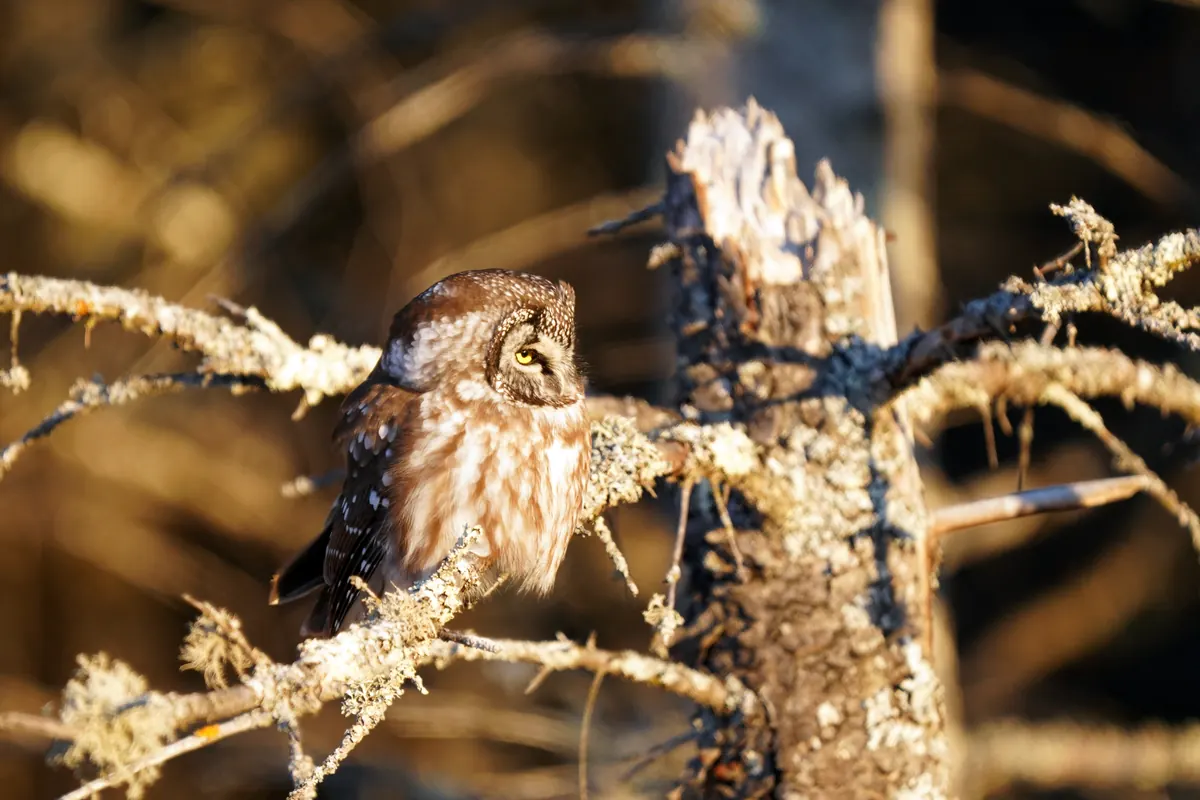
This robin-sized owl lives in old, layered spruce-fir forest high in the mountains, and the Montana Field Guide notes that none were found below about 4,240 feet in surveys across Montana and Idaho. Males begin in late January, females answer from early February, and the calling picks up through March, well before eggs are laid in April and May.
-
Learn the voices before you go
Any evening this month · Your own neighborhood first, then a river bottom or forest edge
Of the 15 owl species recorded in Montana, all but the snowy owl nest here. Learn their calls from recordings at home, then listen outdoors without playing them back, since broadcast calls disturb nesting birds. Scolding chickadees in a thick conifer at midday often point to a roosting owl.
For a monthly owl page in a Naturalist’s Field Journal, the map-of-sounds plate works well: mark where each call came from and the time you heard it.
When do wolves, foxes and mountain lions breed in Montana?
For Montana’s wild dogs and cats, the year’s pairing season falls in the dead of winter, so that pups and kittens arrive in spring when food comes back. February is the peak for wolves and red foxes, and fresh snow lets you read some of it as it happens.
-
Wolf packs in their mating season
Courtship and mating in February; pups born in April · Yellowstone’s northern range from Gardiner to the Lamar Valley; wolf country across western and central Montana
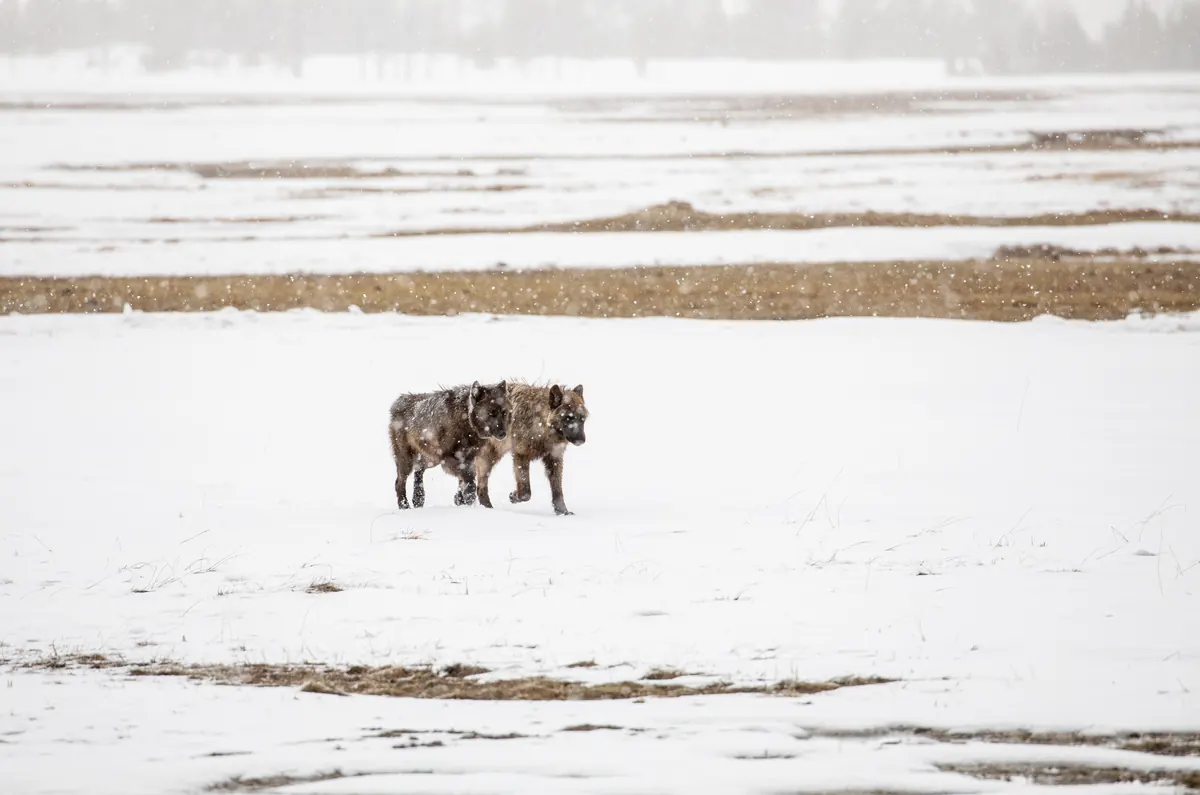
The Montana Field Guide puts wolf breeding in mid- to late February, and Yellowstone’s biologists describe courtship there in mid-February. Gestation runs about 63 days, so pups are born in mid- to late April in a den the pair may have dug or borrowed. Wolves howl to keep a pack together, to claim territory and to coordinate, the park explains, and a howl carries roughly 6 miles through forest and close to 10 miles over open country, so a still February dawn on the northern range is the time to listen.
-
Red foxes pairing up
Breeding mostly in February in western Montana; kits born late March to April · Farm country, river bottoms, town edges and open valleys statewide
The Montana Field Guide gives a breeding window of February 8 to March 8 in western Montana, mostly in February, with kits born in late March or April after about 52 days. Pairs travel together now, so look for two neat, nearly straight lines of prints running side by side.
-
Mountain lions searching for mates
Breeding peaks from February through May · Rimrock, foothill breaks and timbered canyons where deer and elk winter
Lions can breed in any month, but Yellowstone’s handbook says the park’s cats breed mainly from February through May. Lions without kittens wander their home ranges looking for each other and leave scrapes, small piles of scraped-up debris that carry scent and, from a female, signal whether she is ready to breed. You will almost never see a lion, but February snow sometimes shows a round, four-toed track with no claw marks, often along a ridge or canyon bottom.
In Yellowstone, keep a full 100 yards between you and any wolf, and in the rest of Montana treat a fox or coyote that walks toward you as a reason to back away and make noise.
Do grizzly bears come out of their dens in February in Montana?
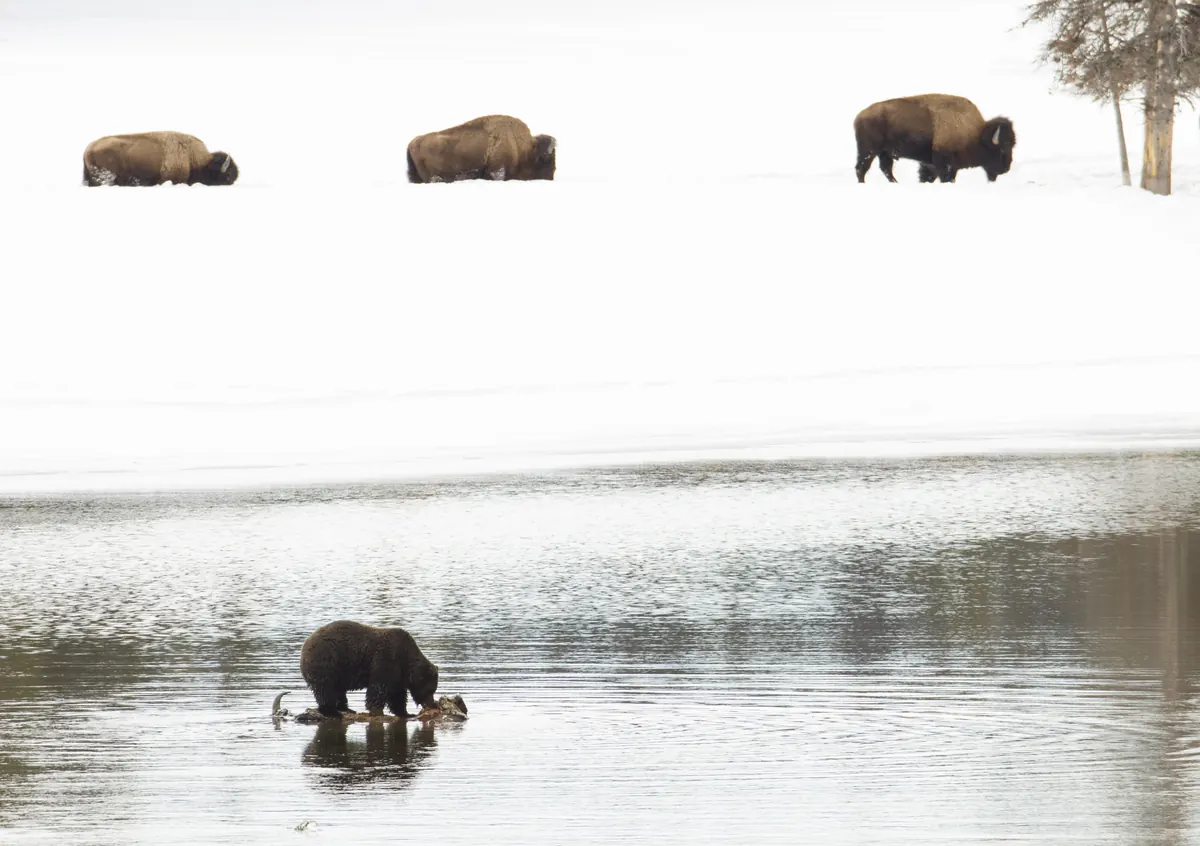
Some do. Most of Montana’s bears sleep through February, but the month is not as bear-free as many people assume. Inside the dens, this is also when the year’s cubs are born.
-
The first grizzlies out
Emergence can begin in early February; most bears are out by early May · Greater Yellowstone, including Montana’s side of the park and the surrounding national forests
The 2026 Yellowstone Resources and Issues Handbook says Greater Yellowstone grizzlies begin leaving their dens in early February, and that males usually come out before females. A bear that emerges this early goes looking for winter-killed elk and bison, so carcasses along rivers and on the northern range are where to expect the first ones. Females with cubs stay close to the den, typically within about 2 miles, until late May.
-
Cubs born in the den
Late January to early February · Dens dug into steep, snowy mountain slopes
Grizzly mothers give birth inside the den around the turn from January to February, usually to one or two cubs weighing only 8 to 12 ounces and about 8 inches long, according to the same handbook. Black bear cubs arrive over a similar stretch, from mid-January into early February, and their mother keeps sleeping for about two more months while they nurse.
-
What this means for February outings
From early February on · Grizzly country west of the plains, from the Yellowstone area to the Rocky Mountain Front, Glacier and the Cabinet-Yaak
A late-winter bear is unlikely but possible, and one feeding on a carcass may defend it. Skiers, snowshoers and anyone hunting for antlers or wolf sign in grizzly country should carry bear spray where they can reach it with one hand, travel with others, and give any gathering of ravens, magpies or eagles a wide berth. FWP’s bear-country advice fits the season too: avoid feeding birds while bears are active, since sunflower seed and suet draw hungry bears.
When do golden eagles court and migrate along Montana’s Rocky Mountain Front?
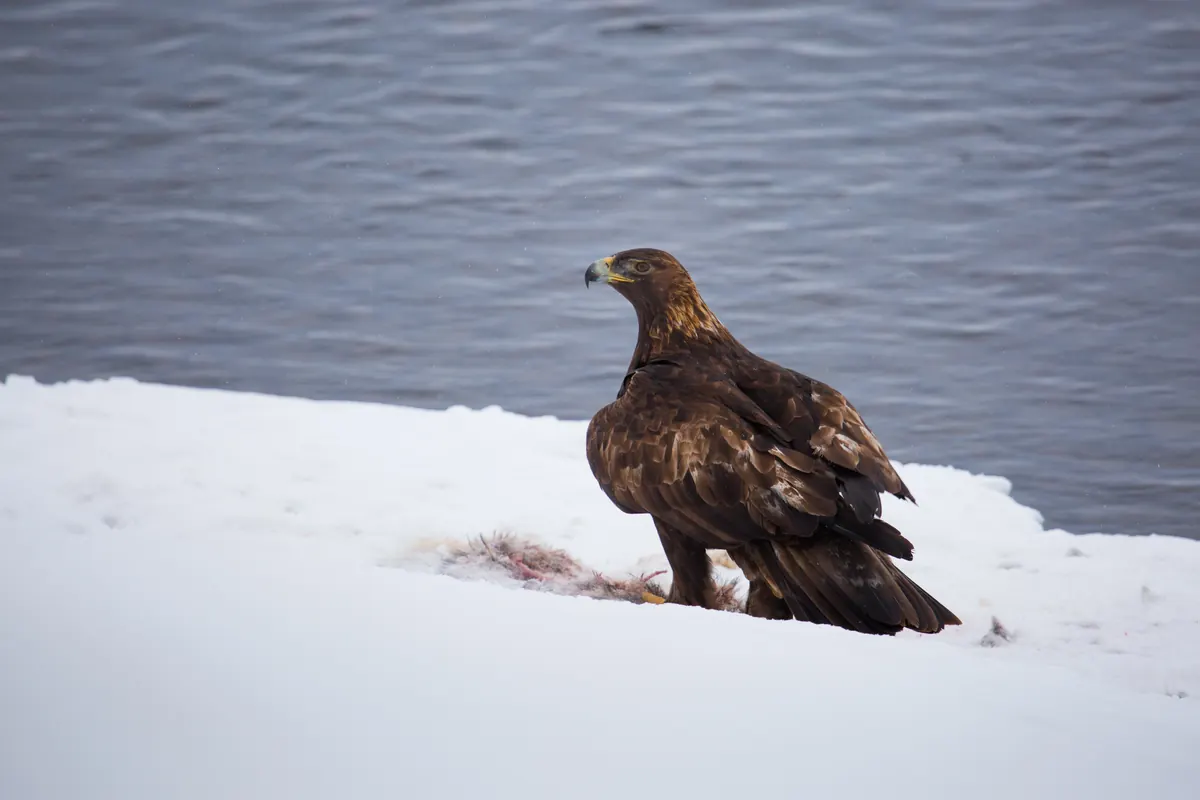
January was the month for bald eagles crowded at open water. February brings the eagles’ next stage: courtship flights over the foothills, and the first golden eagles beginning to stream north along the mountains toward Canada and Alaska.
-
Golden eagle sky dances
From mid-February into April · Foothills, canyons and cliff country, such as the Bridgers and the Gallatin Valley edges near Bozeman
The Montana Field Guide records golden eagle courtship flights near Bozeman from February 14 to April 26, and from late February through March in another study area. Watch for one or both birds of a pair climbing high, folding their wings into a steep dive, then swooping back up, over and over, in long roller-coaster loops above a nesting cliff. Golden eagles lay one to three eggs in March or April, so a pair carrying sticks to a ledge this month is getting ready.
-
The first northbound migrants
First birds late February; peak mid-March to the first week of April · Along the Rocky Mountain Front, the “eagle highway” from Yellowstone north through Montana to Glacier and Alberta
FWP describes the mountain front from Yellowstone to Glacier as an “eagle highway,” used by thousands of golden eagles in spring and fall. Just north of the border, the Rocky Mountain Eagle Research Foundation’s long-running counts in Alberta find that the first golden eagles head north in late February, with the main flight from mid-March to early April. On a day with a strong west wind, look along the east face of the mountains, where updrafts off the ridges let eagles glide north for miles without a wingbeat.
-
Bald eagle pairs back at the nest
Late winter; eggs from February in Yellowstone, March or April in most of Montana · Big cottonwoods and snags along the Missouri, Yellowstone, Clark Fork, Flathead and Madison rivers
Bald eagle pairs stay together for years and reuse their nests, adding sticks until some grow to 12 feet tall and 8 feet across, the Montana Field Guide says. Yellowstone’s handbook notes that park pairs can lay from February to mid-April, while the state field guide gives March or April as typical for Montana as a whole. A pair perched side by side near a giant nest in late February is a sign that eggs are close.
Why is February the hardest month for Montana’s elk, deer and bison?
By February, Montana’s big-game animals have been living for months on dry grass, twigs and stored fat, and the deepest snow of the year often still lies ahead in the mountains. FWP has long warned that late winter, with deep snow, little food and fat reserves running low, is the riskiest time of year for Montana’s deer and elk. Every unnecessary run costs energy an animal may not be able to replace before green-up.
-
Bison leave the park for lower ground
Most often in late winter; Montana’s bison hunt runs through February 28, 2027 · The Gardiner Basin north of Yellowstone, and the basin around West Yellowstone
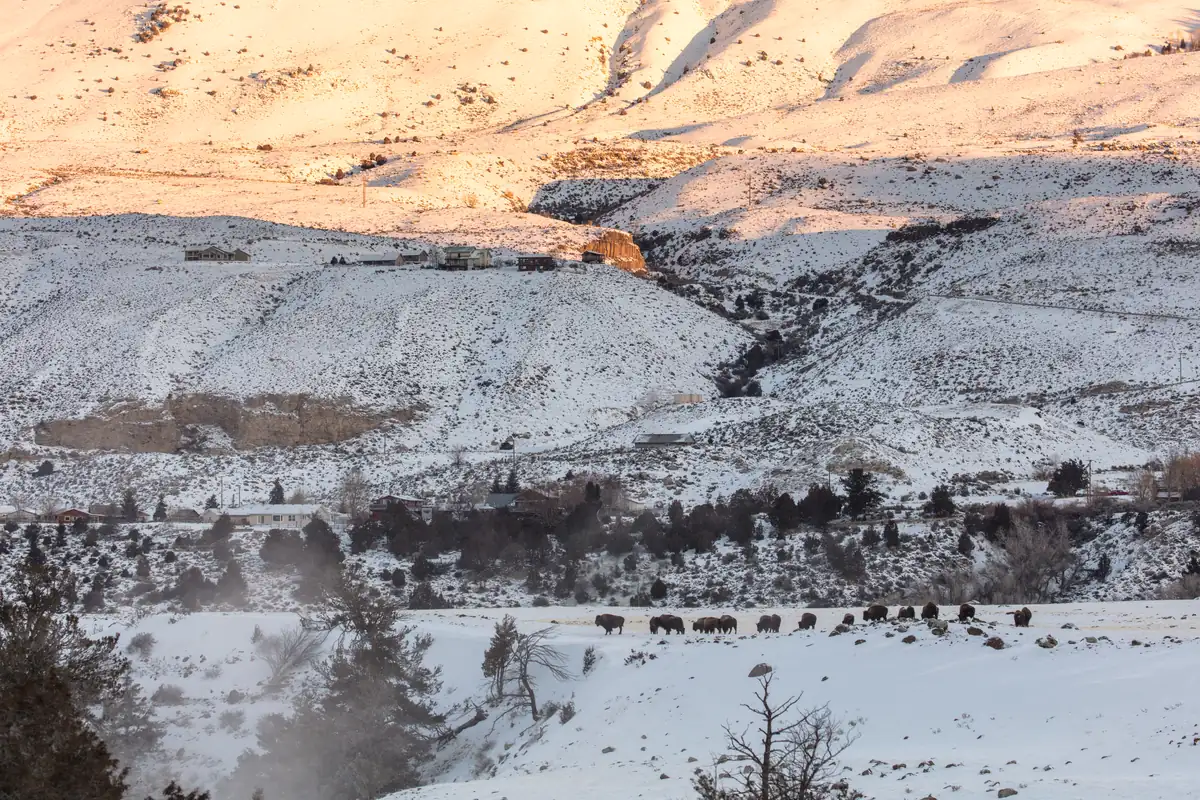
As snow piles up and crusts over, Yellowstone bison drop to lower elevations, sometimes traveling up to 70 miles between summer and winter ranges, the park says. In deep-snow winters, many follow the Yellowstone River north out of the park into the Gardiner Basin, while the central herd pushes west toward West Yellowstone. Federal, state and tribal agencies manage these animals under an interagency plan, and FWP’s bison hunting season, by special drawing only, runs November 15, 2026, to February 28, 2027, in the districts around Gardiner and West Yellowstone.
-
Elk and deer on the winter range
All month; wildlife management area closures continue until May 15 · Foothill winter ranges statewide, many visible from county roads
Most of FWP’s winter-range wildlife management areas stay closed to people into mid-May, and February is a good time to understand why. FWP asks skiers, snowshoers and snowmobilers to steer clear of bedded animals and to keep dogs leashed around deer and elk, noting that the stress of a chase can eventually kill an animal.
-
Antlers coming off
Most bull elk shed in March and April; mule deer and white-tailed deer through late winter and spring · Winter ranges
Yellowstone’s handbook says most bull elk drop their antlers in March and April, and that falling testosterone and lengthening days set off the shedding. The same handbook says deer shed theirs in late winter and spring. FWP asks shed hunters to avoid areas with wintering wildlife, since late winter and early spring are stressful times for deer and elk. Wildlife management areas open to antler hunters only when their winter closures end, at noon on May 15 for most, and since 2026 nonresidents need a $50 shed hunting license for those areas and must wait until each has been open for seven days.
How can you count birds for science in Montana in February 2027?
Montana winters are long on birdwatching time and short on birders, so every count from a back window or a winter walk adds something. February offers one big weekend event and several ways to keep counting into spring.
-
The Great Backyard Bird Count
Friday, February 12, through Monday, February 15, 2027 · Anywhere: a yard, a park, a fishing access site or a ranch lane
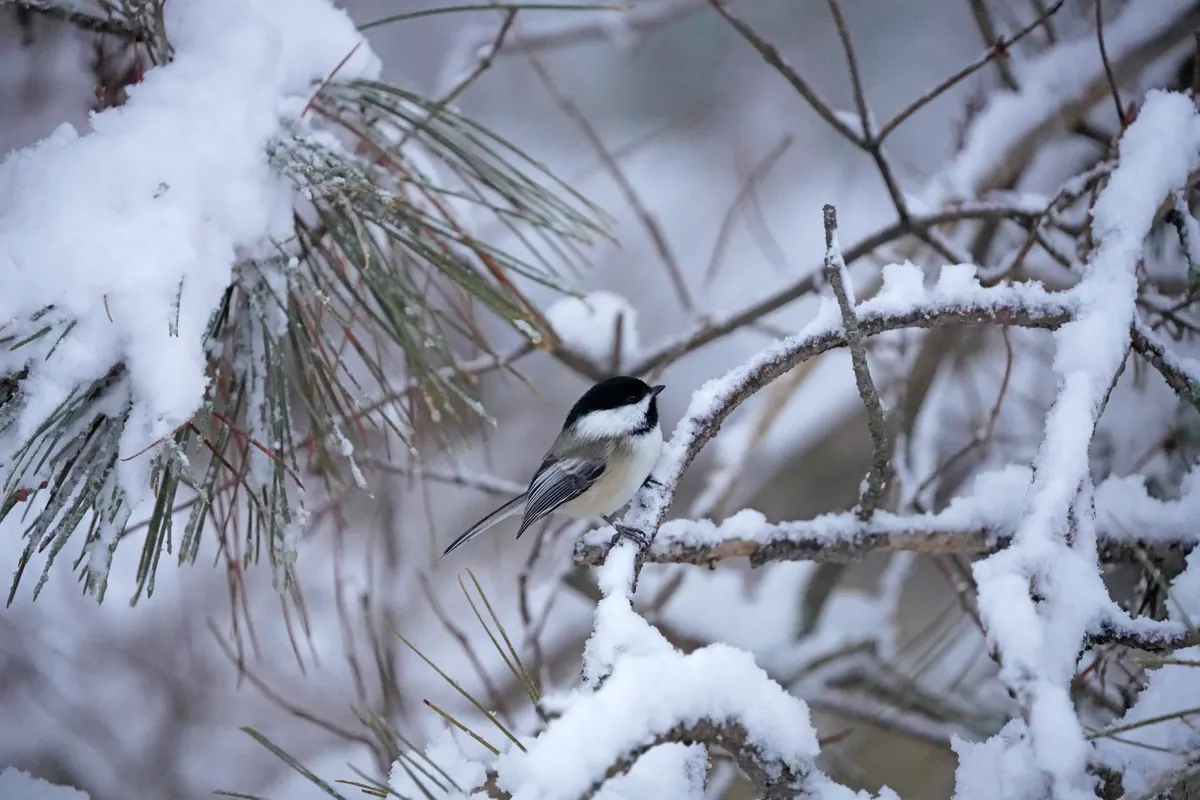
Audubon lists the 30th Great Backyard Bird Count for February 12 to 15, 2027, over the Presidents’ Day weekend. Spend 15 minutes or longer watching on any of the four days, count every bird you can identify, and enter the list in the Merlin app or eBird. In Montana, feeder lists of black-capped and mountain chickadees, red-breasted nuthatches, juncos, house finches and downy woodpeckers are as useful as a rare-bird sighting, because they show where the common birds are wintering.
-
Project FeederWatch
November 1 through April · Any yard or window with a view of birds
Run jointly by Cornell and its Canadian partner, FeederWatch keeps going all winter; you can count weekly or only now and then, and you do not need a feeder, just a spot you like to watch. U.S. participants pay an $18 annual fee. If you do feed birds in bear country, plan to take feeders down before the bears are on the move in spring.
-
eBird and the state’s species records
Year round · Statewide
An eBird checklist from a winter walk adds to the same database scientists use to map migration, and the Montana Natural Heritage Program welcomes observations of animals and plants for its statewide records.
How cold and snowy is February in Montana, and how might a strong El Niño change it?
As the final month of meteorological winter, February in Montana usually eases off a little from January without ever turning mild. NOAA’s 1991–2020 normals show average highs reaching 37 to 39 °F at Missoula, Helena, Great Falls and Billings, while Glasgow, on the Hi-Line, still averages a high of only 28 °F and more than eight subzero nights. In Great Falls, February’s normal snowfall of 10.1 inches is actually a bit more than January’s.
| Station | Average high | Average low | Precipitation | Snowfall | Nights below 0 °F |
|---|---|---|---|---|---|
| Missoula | 37.0 | 20.9 | 0.88 | 8.5 | 1.4 |
| Helena | 37.2 | 17.2 | 0.42 | 6.6 | 3.3 |
| Great Falls | 37.1 | 15.4 | 0.59 | 10.1 | 4.9 |
| Bozeman (Gallatin Field) | 35.6 | 12.7 | 0.42 | not published | 4.6 |
| Butte | 34.6 | 9.8 | 0.43 | not published | 6.3 |
| Billings | 39.2 | 19.7 | 0.57 | 9.1 | 3.3 |
| Glasgow | 28.0 | 9.4 | 0.35 | 6.2 | 8.4 |
| Miles City | 34.7 | 12.5 | 0.26 | not published | 6.1 |
Up in the mountains, February decides a lot. The Natural Resources Conservation Service’s February 1, 2024, outlook put it plainly: two to three months of the normal snow-building season were still left. That winter showed how much the month can matter. More than half of the agency’s Montana snow sites had their lowest or second-lowest snowpack on record on February 1, 2024, and the basin around Helena sat at a record low from early December to mid-February. Then a run of February storms arrived, and by March 1 fewer than 60 of 230 sites still ranked at their lowest or second-lowest.
Montana heads into 2027 with the tropical Pacific running hot. Writing on September 10 from College Park, Maryland, the El Niño specialists at NOAA set the probability of very strong conditions through fall and winter above 90 percent. Looking at this winter, the U.S. Geological Survey’s climate scientists note that warmer or drier conditions in the northern part of the region can reduce snow accumulation and bring earlier snow loss. That is a lean, not a forecast for any one storm; cold outbreaks and heavy mountain snow remain possible in a warm-leaning winter. NOAA’s official outlook arrives October 15 and gets a monthly update; find the latest maps at NOAA’s 90-day outlook page, and our forecast for your town covers the days just ahead.
How much daylight does Montana gain in February?
February hands back between 80 and 88 minutes of daylight across Montana. The northern towns gain fastest: Kalispell and Glasgow each add 88 minutes, about 3.3 minutes a day, while Bozeman and Billings, the southernmost cities in the table, add 80. By February 28, every town listed except Glasgow, at 10 hours 59 minutes, has reached 11 hours of daylight or a few minutes more. Because the daily gain is still climbing toward its March peak, the lengthening evenings become more obvious every week.
| City | Feb 1 | Feb 28 | Gained | Per day |
|---|---|---|---|---|
| Kalispell | 9 h 32 m | 11 h 00 m | 88 min | 3.3 min |
| Missoula | 9 h 38 m | 11 h 02 m | 84 min | 3.1 min |
| Helena | 9 h 40 m | 11 h 02 m | 82 min | 3.0 min |
| Great Falls | 9 h 35 m | 11 h 01 m | 86 min | 3.2 min |
| Bozeman | 9 h 44 m | 11 h 04 m | 80 min | 3.0 min |
| Billings | 9 h 44 m | 11 h 04 m | 80 min | 3.0 min |
| Glasgow | 9 h 31 m | 10 h 59 m | 88 min | 3.3 min |
| Miles City | 9 h 41 m | 11 h 03 m | 82 min | 3.0 min |
Tuesday, February 2, is Groundhog Day, yet the astronomical middle of the season, measured from solstice to equinox, is February 3 or 4. Clocks spring forward on March 14, 2027. Check any date and place with our daylight and sun-time tool.
What can you see in Montana’s night sky in February 2027?
Two bright planets take turns at opposition this month, first giant Jupiter, then Mars nine days behind, and both spend the whole night among the stars of Leo. Times below are Mountain Standard Time.
-
Jupiter at its best
Opposition on the evening of Wednesday, February 10 · Rising in the east at sunset, high in the south around midnight
Opposition comes at 5:21 p.m. on February 10, so Jupiter rises as the sun sets, rides high at midnight and shines its brightest for 2027. At about magnitude minus 2.5 it outshines every star, and Earth passes closest to it that same day, some 405 million miles away. Look for a dazzling, steady white light climbing the eastern sky as dusk deepens.
-
Mars at opposition
Friday, February 19; closest to Earth February 20 · Rising in the east around sunset, in Leo not far from Jupiter
Mars reaches opposition during the Friday morning of February 19 by Mountain time, and the two planets pass closest a day later, roughly 63 million miles apart. With Mars swinging wide near aphelion, the far end of its lopsided path, it shows this time as a fairly small orange spark, not the glaring red light of a close approach. It is still the closest Mars gets before 2029. Late on February 19, the nearly full moon slides just past Jupiter.
-
The Snow Moon and a penumbral eclipse Montana will miss
Full at 4:23 p.m. on Saturday, February 20 · Rising in the east around sunset
Some almanacs call this month’s Snow Moon a supermoon, while stricter lists leave it just short. It shares the sky that evening with Jupiter, Mars and the star Regulus. A faint penumbral eclipse happens the same afternoon, but from the Mountain time zone it is over or nearly over by moonrise, so Montanans will not see it; even in the eastern states it is only a slight gray shading. Two weeks earlier, the annular eclipse of the sun can be watched in Chile, Argentina, Antarctica and western and southern Africa, nowhere north of the equator in the Americas; from Glasgow to Libby, February 6 is just an ordinary new-moon morning.
-
Mercury after sunset, Venus before dawn
Mercury: late January to about February 10. Venus: all month · Mercury very low in the west-southwest; Venus in the southeast before sunrise
By Montana clocks, Mercury reaches its widest evening separation on February 2, the planet’s best dusk appearance this winter; try 30 to 45 minutes after sunset with a clear western horizon. On the evening of February 7, a hairline crescent moon about a day old should hang near it, low in the twilight. Venus remains a brilliant morning star, while Saturn sinks week by week toward the western horizon after dusk.
| Phase | Date | Time |
|---|---|---|
| New moon | Saturday, Feb 6 | 8:56 a.m. |
| First quarter | Sunday, Feb 14 | 12:58 a.m. |
| Full moon, the Snow Moon | Saturday, Feb 20 | 4:23 p.m. |
| Last quarter | Saturday, Feb 27 | 10:16 p.m. |
Moonless evenings run from about February 2 through 11. Solar Cycle 25 peaked in late 2024 and is winding down, but strong storms remain possible, and one can still light up the northern sky over the Hi-Line; NOAA’s Space Weather Prediction Center posts the short-range forecast. For each night’s moonrise, try our moon phase calendar, and the live cloud map shows where the sky is clearing.
What can Montana families do outside in February 2027?
Few hosts had posted February 2027 programs when this page was written, so dated items below are fixed ones, and everything else gives the usual pattern; check each host’s site before you set out. To look back, read January in Montana, and for other places see our nature guides for every state.
-
Count birds over Presidents’ Day weekend
February 12 to 15, 2027 · Home, school or any park
The Great Backyard Bird Count is ideal for children: 15 minutes, a window, and a tally sheet. Let each child keep one species, such as chickadees or magpies, and count the biggest number seen at once.
-
An evening owl walk
Any calm evening; check hosts for 2027 programs · River trails and town parks; the Montana Audubon Center on the Yellowstone River in Billings
The Montana Audubon Center in Billings and Missoula’s natural history center both post owl programs on their calendars when they are scheduled; check both for 2027. On your own, a 20-minute walk after sunset with flashlights off is enough to hear great horned owls in many towns.
-
Montana Natural History Center programs
Tuesdays and Thursdays, September through May · 120 Hickory Street, Missoula, and sites around town
The center’s miniNaturalist program for children aged 2 to 4 meets on Tuesday mornings, free with admission or membership, and its free nature journaling club gathers on Thursday mornings at sites around Missoula.
-
Snowshoe with a ranger in Glacier
Weekends in winter · Apgar and the plowed lower Going-to-the-Sun Road to Lake McDonald Lodge
Glacier runs ranger-led snowshoe walks on winter weekends, when the Apgar Visitor Center is open on Saturdays and Sundays. White-tailed deer are the large mammal you are most likely to see, and ravens and waterfowl on Lake McDonald round out the list. Call first.
-
Wolf watching on the northern range
Dawn and dusk, all month · The road from Gardiner through Mammoth to the Lamar Valley and Cooke City, open to cars all winter
February’s mating season makes wolves restless and vocal. Pack hot drinks, binoculars or a borrowed scope, and patience; children do best with short stops and a warm car between them.
-
Lee Metcalf National Wildlife Refuge
Sunrise to sunset; visitor center Monday to Saturday · Near Stevensville in the Bitterroot Valley
The refuge’s Kenai Nature Trail and wildlife viewing area stay open in winter and make an easy, flat winter walk with children.
Safety notes for February in Montana
- Hunting and trapping still open. Upland bird and waterfowl seasons have closed, but several others continue into or through February. General wolf hunting runs to March 15, 2027, unless a regional quota closes it sooner on 24 hours’ notice. Wolf trapping ends February 15 in the western part of the state covered by a federal court order (FWP Regions 1 to 3 plus adjoining country) and March 15 everywhere else. The winter mountain lion season lasts to April 14, also subject to quotas. Bison hunting near Gardiner and West Yellowstone ends February 28, and some elk and deer shoulder seasons run as late as February 15. Bobcat trapping closes February 15 in FWP Regions 1 to 3 and March 1 in Regions 4 to 7; marten and fisher close February 15 where open; beaver, otter, mink and muskrat trapping continue into spring.
- Blaze orange. Under MCA 87-6-414, a person hunting game animals, and an outfitter or guide accompanying one, needs 400 square inches or more of fluorescent hunter orange on the outer clothing above the waist, always visible. Bowhunters in the special archery season are exempt, and so are wolf hunters once the general deer and elk season has closed. Bright colors make sense for skiers, hikers and dogs too.
- Traps and dogs. With bobcat, wolf and water trapping open, keep dogs leashed or close near trailheads, creeks and beaver ponds, and learn how to open a trap before you need to.
- Late-season ice. February thaws and chinook winds soften ice from the top as springs and moving water thin it underneath. FWP asks for 4 inches of solid clear ice before you walk out, 7 before you drive a snowmobile or ATV onto it; stay off river ice altogether, and avoid inlets, outlets, docks and pressure ridges.
- Avalanches. February snowpacks are deep and layered. Read the day’s avalanche forecast from the Gallatin National Forest Avalanche Center or the Flathead Avalanche Center before skiing, riding or snowshoeing in steep terrain, and bring a transceiver, probe and shovel, plus a trained partner.
- Cold snaps and bears. Subzero nights are still routine, especially on the Hi-Line, so pack extra layers and a headlamp. In grizzly country, carry bear spray from early February on; the first bears can be out of their dens.
When the seed catalogs arrive, our Montana frost-date guide gives the median date of the final spring frost for towns across the state.
Sources
- Montana Natural History Center: Winter Owls
- Owl Research Institute: Great Horned Owls, the nesting season begins
- Montana Field Guide: Great Horned Owl
- Montana Field Guide: Boreal Owl
- Montana Field Guide: Gray Wolf
- National Park Service: Wolves in Yellowstone
- Montana Field Guide: Red Fox
- National Park Service: Yellowstone Resources and Issues Handbook 2026, wildlife chapter (bears, cougars, wolves, bison, elk antlers, bald eagles)
- Montana FWP: Living in bear country
- Montana Field Guide: Golden Eagle
- Montana FWP: raptor migration tracking and the Rocky Mountain Front “eagle highway”
- Rocky Mountain Eagle Research Foundation: the eagle migration
- Montana Field Guide: Bald Eagle
- National Park Service: Bison in Yellowstone
- National Park Service: Interagency Bison Management Plan operations begin (February 2022)
- Montana FWP: bison hunting regulations, 2026–27 season
- Montana FWP: WMA closure chart
- Montana FWP: what to know about the new license year, including the nonresident shed hunting license (March 2026)
- Montana FWP release via The Outdoor Wire: changes for shed antler hunting in 2026 (February 2026)
- National Audubon Society: Great Backyard Bird Count (February 12–15, 2027)
- Project FeederWatch: project overview
- eBird: Montana
- Montana Natural Heritage Program
- NOAA NCEI: U.S. Climate Normals, 1991–2020
- NOAA NCEI: February normals for the eight Montana airports in the table (data service)
- USDA NRCS: Montana Water Supply Outlook Report, February 1, 2024
- USDA NRCS: Montana Water Supply Outlook Report, March 1, 2024
- NOAA Climate Prediction Center: ENSO diagnostic discussion, September 10, 2026
- NOAA Climate Prediction Center: seasonal outlooks
- USGS Climate Adaptation Science Centers: regional super El Niño impacts, North Central U.S.
- U.S. Naval Observatory: phases of the moon
- U.S. Naval Observatory: sun and moon rise and set for one day
- U.S. Naval Observatory: Earth’s seasons
- Fred Espenak, Sky Event Almanac 2027
- NASA Goddard: lunar eclipses of 2021–2030
- NASA Goddard: solar eclipses of 2021–2030
- NOAA Space Weather Prediction Center: aurora 30-minute forecast
- U.S. Code, 15 U.S.C. 260a: daylight saving time
- Montana Natural History Center: events
- Montana Natural History Center: family programs
- Montana Audubon Center, Billings: events
- Glacier National Park: winter visits
- Yellowstone National Park: visiting in winter
- U.S. Fish and Wildlife Service: Lee Metcalf National Wildlife Refuge, visit us
- Montana FWP: hunting seasons
- Montana FWP: 2026 wolf and furbearer regulations
- Montana FWP: mountain lion regulations
- Montana Code Annotated 87-6-414, hunter orange
- Montana FWP: ice safety
- Gallatin National Forest Avalanche Center
- Flathead Avalanche Center
- Photos via Wikimedia Commons; licenses and photographers are credited under each picture
