What to look for in nature in Montana this November
In Montana, November is when the state turns from fall to winter. Snow geese and tundra swans crowd the last open water at Freezout Lake, bighorn rams start slamming horns on the slopes above the Clark Fork, and flocks of Bohemian waxwings drop into town to strip the mountain ash. Bears are heading for their dens, the first ice skins the ponds, and on November 30 the sun sets between about 4:15 and 4:50 p.m. This guide covers the month across the state, with dates and the sources behind them.
Other months in Montana: October, December.
Start here
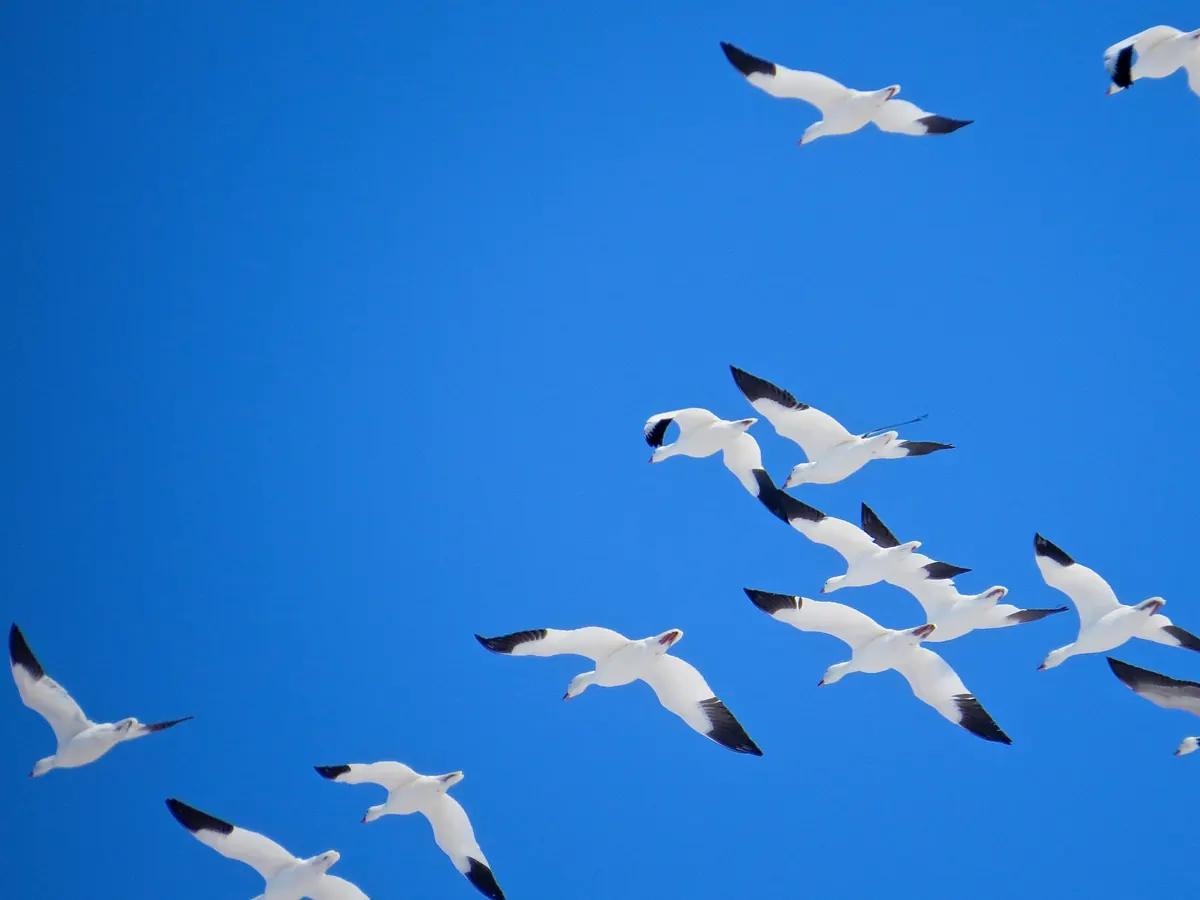
- Swans and geese before the freeze. Freezout Lake, on U.S. 89 below the Rocky Mountain Front, holds snow geese and tundra swans until ice closes the water, usually by around November 20. Go early in the month, and be there near sunrise or sunset when the flocks move.
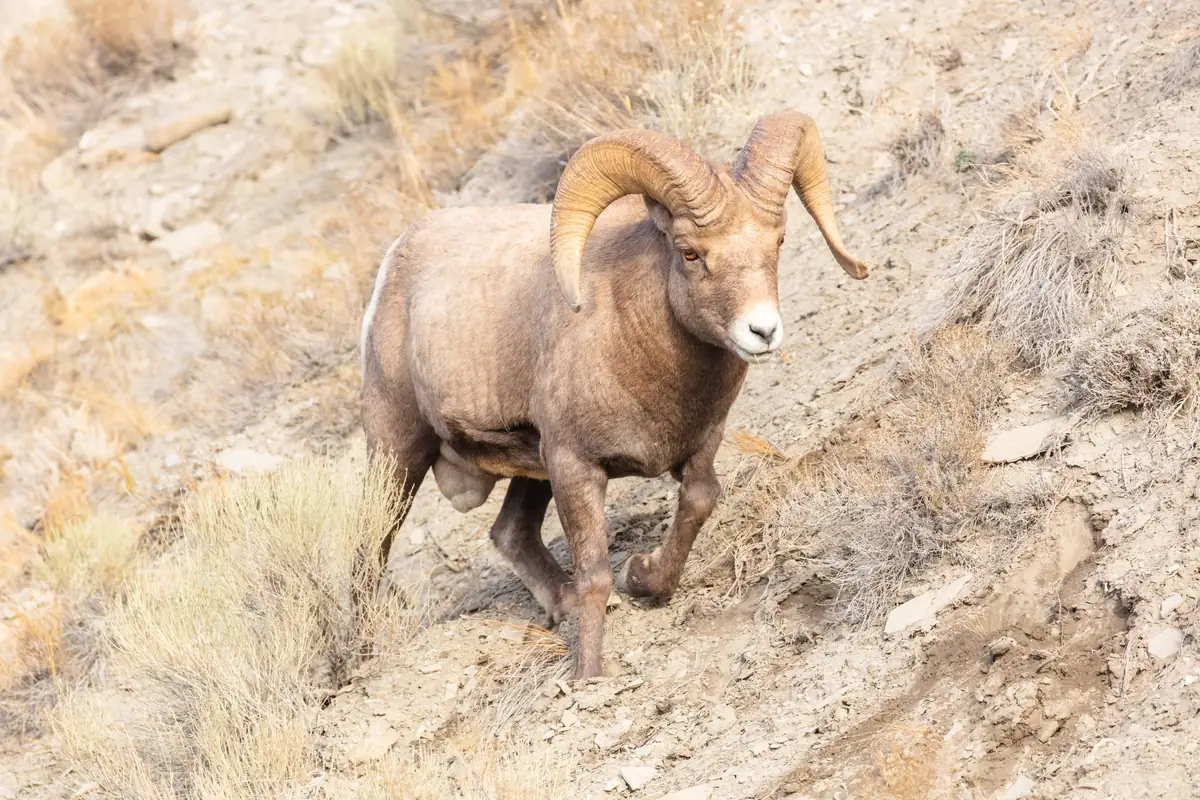
- Rams in the rut. Bighorn sheep breed from mid to late November. FWP's Bighorn Viewing Site, about 7 miles east of Thompson Falls on Montana 200, and Gardner Canyon on Yellowstone's year-round northern road are reliable places to watch rams square off.
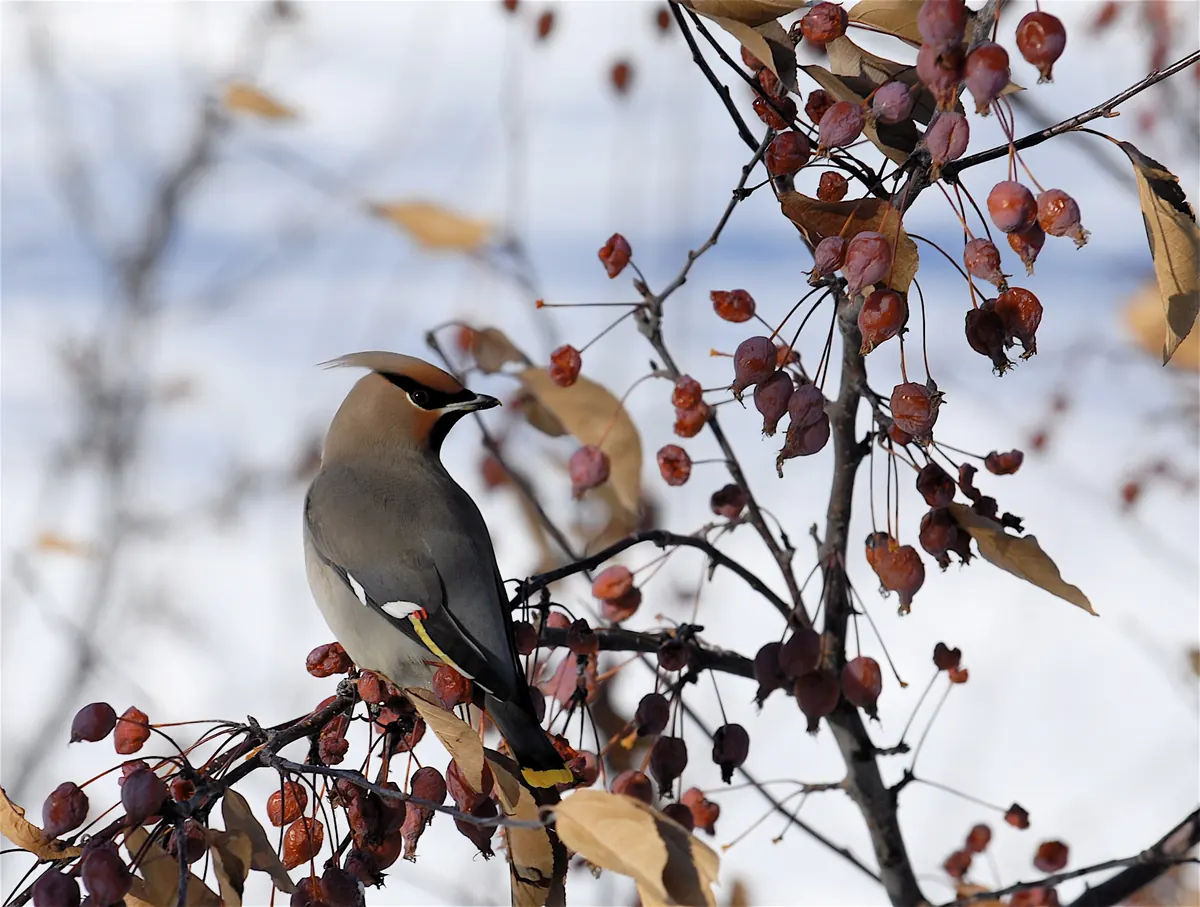
- Waxwings in the mountain ash. Bohemian waxwings from the north usually reach the Bozeman area between November 8 and 25. Listen for a high, buzzy trill and check any tree still heavy with berries.
November in Montana fills a Naturalist’s Field Journal quickly. Add the first rough-legged hawk and the first waxwing flock to “birds I have seen,” keep a mammal watch page for rams and rutting bucks, draw the first clean prints in snow on the tracks-to-know plate, and use the dusk-and-dawn watch to time the geese leaving and returning. Return to an October spot for “the same place twice.”
Regions used below: Northwest and Glacier; Missoula and the western valleys; Southwest and Yellowstone country; Central Montana and the Rocky Mountain Front; Hi-Line and the northeast; Billings and the southeast.
Where can you still see snow geese and swans in Montana in November?
November is a race against ice. The geese and swans that pour into northern Montana from the Arctic stay only as long as they can find open water to roost on and stubble fields to glean, and once the big marshes lock up they keep moving south. The first two or three weeks of the month are usually the last good window on the plains; after that, the action shifts to rivers, springs and reservoirs that freeze late.
-
Freezout Lake before freeze-up
Early to mid-November, until the water freezes · Freezout Lake Wildlife Management Area, along U.S. 89 between Fairfield and Choteau
The FWP area guide says snow geese usually reach Freezout near the end of October and hang on until severe winter weather moves in, and that other ducks and geese stay until the lake itself freezes. A seasonally closed section on the south and southwest edges of the area gives the birds a refuge through November 19. When it reopens on November 20, the guide notes, most of the area has usually frozen and there is little waterfowl activity left, which tells you when to go: sooner rather than later.
Snow geese spend their days in grain fields and come back to the water to rest, so the hours around sunrise and sunset usually bring the most noise and motion. At the height of a migration the guide counts birds in the hundreds of thousands. FWP posts running tallies only for the spring flight, so in fall you are counting for yourself.
-
Tundra swans in the valleys
Late October into early December, most numerous in November · Ennis Lake, the Gallatin and Bitterroot valleys, Freezout Lake
For the Bozeman area, the Montana Natural Heritage Program gives the fall tundra swan passage as October 25 to December 5, with November the peak. Lee Metcalf National Wildlife Refuge near Stevensville gets both swans.
-
Trumpeter swans from Canada
Mid-November to mid-December · South along the Rocky Mountain Front toward Red Rock Lakes and the upper Madison
Montana's own trumpeter swans, the flock centered on Red Rock Lakes National Wildlife Refuge in the Centennial Valley, do not migrate. Each fall, though, trumpeters from Alberta, British Columbia and the Yukon come south to join them. The Heritage Program says these Canadian birds tend to follow the Rocky Mountain Front, pushing on as each body of water freezes, and gives their passage near Bozeman as November 15 to December 15.
To separate them, listen: a trumpeter honks low and brassy, a tundra swan gives a higher, softer whoop, and many tundra swans carry a yellow fleck of skin just ahead of each eye.
When do bighorn sheep, mountain goats and deer rut in Montana?
October belonged to elk. November belongs to the animals with horns that do not shed and antlers that will drop in winter. According to the Montana Natural Heritage Program, bighorn sheep breed from mid to late November, mountain goats in November and December, mule deer in late November, and white-tailed deer from mid-November, running into early December in western Montana. For a few weeks the males are easier to see than at any other time.
-
Bighorn rams on the Clark Fork
October 15 to May 1 for viewing; the rut is mid to late November · Bighorn Viewing Site, about 7 miles east of Thompson Falls on Montana 200
FWP manages a small wildlife management area here, on the KooKooSint slopes above the highway, specifically so people can watch sheep, and lists October 15 to May 1 as the best viewing season. The area is walk-in only and closed to firing weapons year-round, but the sheep are often visible from the road. Pull completely off the highway and use binoculars from the car or the turnout.
During the rut, rams of similar size square off, rear and slam their horns together. Yellowstone's biologists point out that a ram's skull has two layers of bone above the brain, a built-in shock absorber for exactly this.
-
Bighorns in Gardner Canyon
All winter; mating season begins in November · Between Gardiner and Mammoth Hot Springs, on the one Yellowstone road open all year
The National Park Service lists Gardner Canyon, the stretch of the Gardner River between the North Entrance and Mammoth, as a year-round place to see bighorns, and Mount Everts above it gets the heaviest use by sheep in the park.
-
Mountain goats on the cliffs
Courtship from late October; breeding in November and December · Cliffy, south-facing canyon walls and windblown ridges in ranges such as the Bitterroots, Sapphires, Cabinets and the Rocky Mountain Front
Billy goats fight differently from rams. Instead of a head-on crash, the Heritage Program notes, they circle and jab at each other's hindquarters and flanks with their short, sharp horns, sometimes doing real damage.
-
Mule deer and whitetail bucks
Mule deer in late November; whitetails mid-November to early December · Foothills, river bottoms and farm edges statewide
Rutting bucks of both species develop swollen necks, the change stronger in mule deer. Bucks on the move after does pay less attention to traffic, so slow down at dawn and dusk. Mule deer bucks keep their antlers until January or February. Pronghorn bucks, whose rut ended in early fall, shed the outer sheaths of their horns in November; a dark, hollow horn shell in the sagebrush is worth a sketch.
Which winter birds arrive in Montana in November?
A second cast arrives from the north now, some every winter, others only when food fails in Canada.
-
Rough-legged hawks
Bozeman-area passage November 5 to December 10 · Fence posts, power poles and stubble fields across the plains and open valleys
Montana's most common wintering buteo nests in northern Canada and Alaska. The Heritage Program gives the fall movement through the Bozeman area as November 5 to December 10, and says light-phase birds are the usual form there, though dark birds turn up regularly. Look for a hawk hovering in place over a field, with feathered legs all the way to the toes.
-
Bohemian waxwings in town
Bozeman-area arrival November 8 to 25 · Mountain ash, crabapple, juniper and Russian olive in towns and shelterbelts
Waxwings travel in tight, wheezing flocks that strip a fruit tree in a morning and move on. The Heritage Program puts their normal arrival near Bozeman between November 8 and 25. Check for a rusty patch under the tail.
-
Bald eagles on open water
Wintering birds arrive by about November 20 near Bozeman and stay until April · Rivers, reservoirs and dams that stay ice-free, including the Missouri below Canyon Ferry and at Fort Peck
Montana keeps its nesting bald eagles all year, but birds from farther north arrive for the winter. The Heritage Program records wintering eagles near Bozeman arriving by November 20 and leaving by April 25, and notes fall and winter gatherings on the Missouri at Canyon Ferry Dam and Fort Peck. The big eagle gatherings of past decades, on McDonald Creek in Glacier and below Canyon Ferry, fed on kokanee runs that have since dwindled, so today the birds are spread thinly along open water.
-
Snowy owls on the plains
From November in some winters · Open plains, grain fields and grassland, mostly east of the mountains
Snowy owls raise their young on Arctic tundra and come south to open plains and farmland, where they hunt voles. Their numbers vary a great deal from winter to winter; in a good year a few sit on fence posts, haystacks and the ground across the plains, and in a lean one hardly any are reported. Keep your distance and do not chase one for a photo.
-
A thin year for pine seeds
All winter · Mountain forests statewide
According to the Finch Research Network's 2026–27 winter forecast, the pines of the interior West (limber, whitebark, ponderosa and pinyon) mostly failed to set cones this year, and Type 2 red crossbills are expected to head east in response. Translation for Montana: crossbills and other pine-seed eaters may be scarcer in the mountains this winter, and the strong spruce crops lie well to the north in British Columbia and Alaska. Good mountain-ash crops in Canada may also hold many waxwings farther north.
Counting backyard birds this winter? Project FeederWatch begins its 2026–27 count on November 1 and continues into April; you pick the days, and U.S. participants pay $18. West of the plains, keep the feeders in the garage until bears are asleep (see below).
What is open in Yellowstone and Glacier in November?
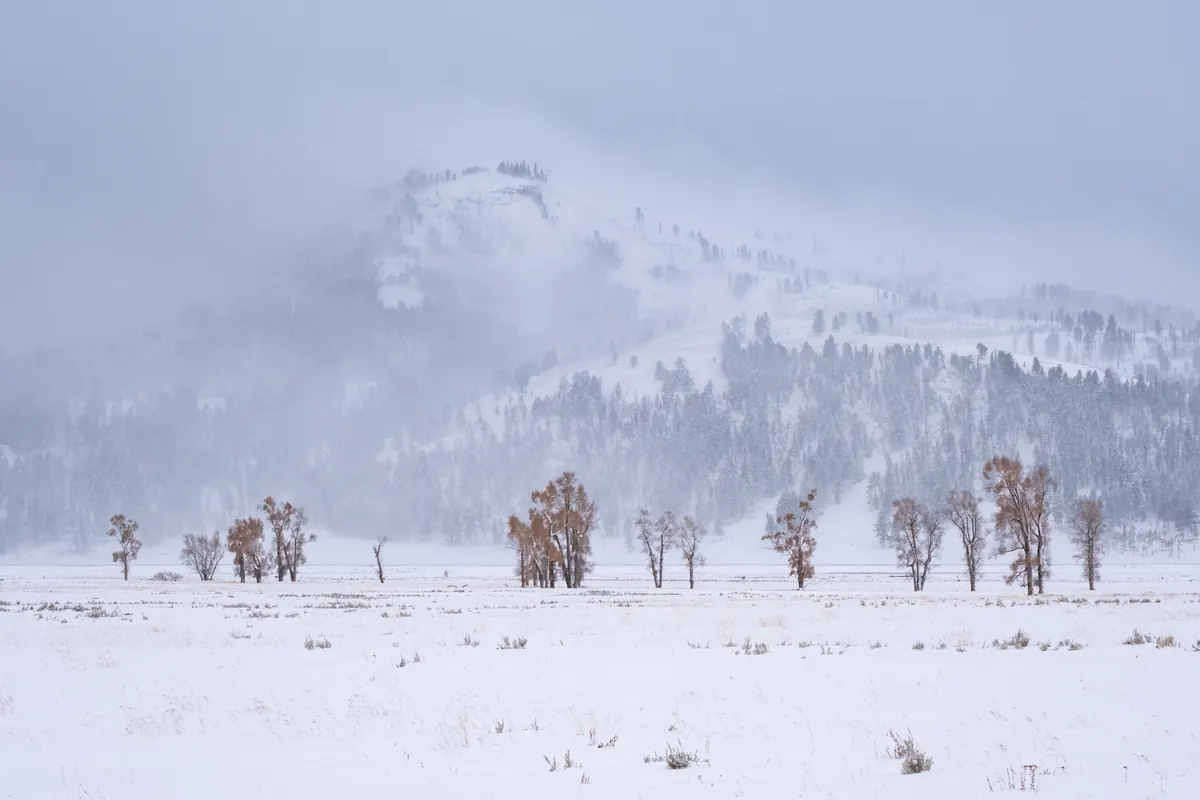
Both big parks go into winter mode this month, and both get very quiet, which is the reward.
-
Yellowstone's northern road
Open all year to regular vehicles · North Entrance at Gardiner through Mammoth Hot Springs, Tower Junction and the Lamar Valley to Cooke City
From early November the West, South and East entrances and nearly all park roads close to ordinary cars. The Park Service keeps one route open year-round: from the North Entrance at Gardiner, past Mammoth and through the Lamar Valley, to the Northeast Entrance and Cooke City. Oversnow travel on the interior roads, by guided snowmobile and snowcoach, does not start until mid-December. Check road status before you drive.
-
Glacier's west side
All winter, weather permitting · Going-to-the-Sun Road from West Glacier to Lake McDonald Lodge
Glacier keeps the lower Going-to-the-Sun Road plowed from West Glacier to Lake McDonald Lodge year-round, weather permitting; beyond that the road belongs to skiers, snowshoers and walkers. The Apgar Visitor Center opens on winter weekends.
-
A free entrance day
Wednesday, November 11 (Veterans Day) · Every fee-charging national park, including Glacier and Yellowstone
Veterans Day is one of the Park Service's fee-free days. New this year, only U.S. citizens and residents get in free; international visitors pay the regular fee.
Are bears still out in Montana in November?
Some are, and that matters more than usual this year. FWP says Montana's bears typically spend five to six months in their dens, roughly November through March. A bear that has eaten well can go to sleep early; one that has not may keep roaming. In August, FWP's bear staff in the northwest warned that a spring storm had wrecked the huckleberry crop and that conflict calls were running far ahead of 2025, so expect some hungry bears to stay out late.
-
How a den is made
Dens are dug in fall; most bears are in them by December · Mostly steep, north-facing mountain slopes
FWP says Montana grizzlies usually dig their dens in the upper or middle third of slopes between 30 and 60 degrees, facing north, at 6,000 to 10,000 feet, where snow piles deep and stays. The digging takes three to seven days and can move up to a ton of soil. Grizzly cubs are born in these dens in midwinter, about two months after the embryo implants in late fall, according to the Heritage Program.
-
What it means for you
Until the snow is deep and the bears are gone · Bear country across western and southwestern Montana, plus the Front and island ranges
Keep bird feeders, garbage and pet food out of reach until bears are clearly denned for the season, usually after the first lasting snow in your area. Hunters should carry bear spray, get an elk or deer carcass off the ground or away from the kill site quickly, and approach a carcass left overnight with care, upwind and making noise.
When do kokanee spawn, and when does the ice form?
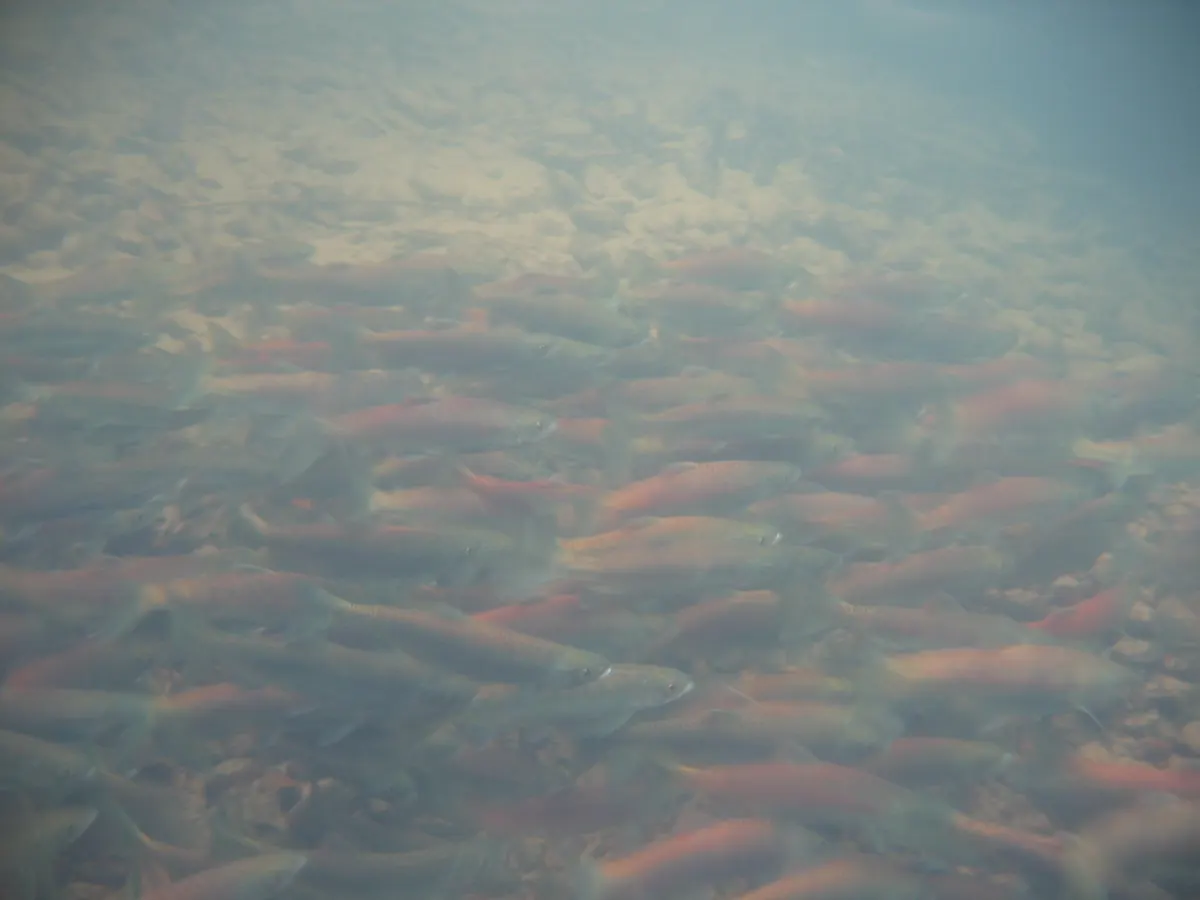
Kokanee and brown trout are spawning in the gravel this month, and the first ice is forming on ponds and sloughs; if you wade, step around any pale, freshly swept oval of gravel, which is likely a nest.
-
Kokanee in red
Spawning in pairs from November into December · Tributaries and shorelines of lakes and reservoirs west of the Divide, such as Lake Koocanusa
Kokanee are sockeye salmon that live their whole lives in fresh water. The Heritage Program notes that they usually mature at four years, spawn in pairs during November and December over gravel and rubble in creeks or along lake shores, and die soon after. Their eggs hatch in about 110 days in water at 43 °F, and the young swim to the lake in spring. Spawning males turn red with a hooked jaw, and a run in a small, clear creek is easy to watch from the bank.
-
First ice
Ponds, sloughs and shallow bays first; big lakes much later · Statewide
FWP's ice guidance is blunt: stay off anything under 4 inches of clear ice, never be the first one out, and never walk on river ice. Springs, inlets, outlets and docks keep ice thin, and snow on top can hide weak spots. Early ice in November is the most deceptive of the season, so admire it from the bank, and keep dogs leashed near open water.
Has Montana had its first freeze yet?
Almost certainly. By November, the question is not whether it has frozen but how hard. Every station in the table below normally sees its first 32 °F night well before the month begins. The holdout is Bigfork, beside Flathead Lake, where the lake's stored heat delays the median first freeze to October 15; only about one fall in ten gets past October 30 there without a frost. Everywhere else, from the Flathead valley to Miles City, the first freeze is a September or early October memory.
Watch instead for the next steps: nights in the teens, needle ice in bare soil, and snow that lasts on north slopes from one storm to the next.
| Station | One year in ten | Median | Nine years in ten |
|---|---|---|---|
| Kalispell Glacier Airport (Flathead valley) | Aug 26 | Sep 10 | Sep 25 |
| Bigfork 13 S (east shore of Flathead Lake) | Sep 30 | Oct 15 | Oct 30 |
| Missoula International Airport | Sep 12 | Sep 26 | Oct 8 |
| Helena Regional Airport | Sep 17 | Sep 30 | Oct 11 |
| Great Falls International Airport | Sep 9 | Sep 24 | Oct 5 |
| Bozeman Gallatin Field | Sep 2 | Sep 16 | Sep 29 |
| Billings Logan International Airport | Sep 26 | Oct 7 | Oct 21 |
| Glasgow International Airport (Hi-Line) | Sep 17 | Sep 30 | Oct 13 |
| Miles City F Wiley Field (southeast) | Sep 17 | Sep 30 | Oct 14 |
Dates for many more Montana stations, including the spring last-frost dates that matter for next year's garden, are listed on our Montana frost dates page.
How early does it get dark in Montana in November?
Two things happen at once. When daylight saving ends early on Sunday, November 1, Montana swaps an hour of evening light for an hour of morning: in Great Falls, sunset on Saturday, October 31, is at 6:09 p.m. daylight time, and on Sunday it is 5:08 p.m. standard time. Then the days keep shrinking. Kalispell and Glasgow, the two northernmost towns in the table, each lose 75 minutes of daylight between November 1 and November 30, about 2.6 minutes a day, and finish the month with just 8 hours 40 minutes of sun. Bozeman and Billings, farther south, lose 68 minutes.
By November 30, the sun sets at 4:15 p.m. in Glasgow, 4:19 in Miles City, 4:32 in Billings, 4:37 in Great Falls and 4:50 in Missoula, and sunrise has slipped back to around 7:25 to 8:05 a.m. The eastern towns see the earliest sunsets because they sit near the eastern edge of the Mountain time zone.
| City | Nov 1 | Nov 30 | Lost | Per day |
|---|---|---|---|---|
| Kalispell | 9 h 55 m | 8 h 40 m | 75 min | 2.6 min |
| Missoula | 10 h 01 m | 8 h 50 m | 71 min | 2.4 min |
| Helena | 10 h 03 m | 8 h 52 m | 71 min | 2.4 min |
| Great Falls | 9 h 59 m | 8 h 46 m | 73 min | 2.5 min |
| Bozeman | 10 h 07 m | 8 h 59 m | 68 min | 2.3 min |
| Billings | 10 h 06 m | 8 h 58 m | 68 min | 2.3 min |
| Glasgow | 9 h 55 m | 8 h 40 m | 75 min | 2.6 min |
| Miles City | 10 h 03 m | 8 h 54 m | 69 min | 2.4 min |
Our day length calculator gives sunrise, sunset and the minutes of light lost each week for your exact spot.
How much snow does Montana get in November, and what will El Niño bring?
November is the month winter usually takes hold east of the mountains. NOAA's 1991–2020 normals give Great Falls 9.2 inches of snow for the month, Billings 6.5, Glasgow 5.9, and Helena and Missoula 5.4 each. Average afternoon highs fall into the low and mid 40s across the plains (45.7 °F at Billings, 43.7 at Great Falls, 40.0 at Glasgow), and Missoula's November afternoons, at 39.9 °F, are the coolest of the large towns even though its nights are milder than Bozeman's or Glasgow's. Butte averages a frosty 15.5 °F at night.
Then there is El Niño. Federal forecasters wrote on September 10 that the Pacific was headed for a very strong El Niño, giving it upward of 90 percent odds for the fall and winter (NOAA Climate Prediction Center). Montana will have to wait until mid-October, the 15th, for NOAA's formal December-to-February maps, which were not out as we went to press; you can read it, and the maps for the months that follow, on the Climate Prediction Center's seasonal outlook page.
History offers clues. Speaking to the Missoula Current in August, State Climatologist Kelsey Jencso said these winters usually run warm and dry in western Montana, above all west of the Continental Divide, with weaker and patchier effects to the east. An earlier Montana Climate Office review of past winters found El Niño warmth across the whole state, strongest toward the northeast, with only north-central Montana running slightly dry. KRTV's meteorologist, looking back at the last four strong events, found below-average snowpack in Montana, particularly in the western mountains, and a lean toward below-average snowfall at Great Falls. After last winter, when the Montana Free Press reported 84 of 250 long-term snow sites at record lows by early April, a second thin year would matter for rivers and fire season. None of this is a forecast for any one storm: El Niño winters still bring cold snaps and heavy mountain snow.
For the next few days at your own location, our local forecast shows temperature, wind and the chance of snow hour by hour.
What can you see in Montana's night sky in November?
With clocks back on standard time and the sun down before 5 p.m. for most of the month, November nights in Montana are long, dark and often clear and cold. Times below are Mountain Standard Time.
-
The Beaver Moon, a modest supermoon
Full at 7:53 a.m. MST on Tuesday, November 24; looks full the evenings of November 23 and 24 · Rising in the east-northeast around sunset
The full moon comes on the morning of the 24th, about a day before its closest approach to Earth for the month, so it qualifies as a supermoon, if only a mild one. Watch it rise on Monday evening, November 23, or Tuesday evening, November 24; the second is a little nearer the exact moment. That first night it slides across or past the Pleiades, its glare hiding all but the brightest Seven Sisters.
-
The Leonids
Best before dawn on Wednesday, November 18 (also the 17th and 19th) · Anywhere dark, once the moon has set
Expect a modest show from the Leonids this year, roughly 15 meteors per hour in a perfectly dark sky, with no outburst predicted. A first-quarter moon sets around midnight, and the radiant in Leo climbs highest just before dawn, so the hours from moonset until the sky begins to lighten are best. Dress for single digits on the Hi-Line.
-
Taurid fireballs
Southern Taurids peak around November 5; Northern Taurids around November 12 · Most of the night, from evening on
Taurid meteors come from Comet Encke and are few, roughly 5 to 10 an hour, but they drift slowly and a handful each year are dazzling fireballs. This year the new moon (November 9) sits neatly between the two Taurid maxima.
-
Planets before dawn, and Saturn after dusk
All month; Mars and Jupiter closest on the mornings of November 15 and 16 · East and southeast before sunrise; south and southwest after dark
Before sunrise, Venus blazes in the southeast and climbs a little higher each week, peaking in brightness late in the month. Jupiter and dimmer, orange Mars share Leo, and they pass within roughly a degree of each other before dawn on November 15 and 16. Low Mercury is easiest to catch in the third week, around the 18th through the 25th. Evenings belong to Saturn alone, a steady yellowish point well up in the south once twilight fades.
-
Northern lights
Any clear night, with luck · Low on the northern horizon, best away from town lights
Solar Cycle 25 crested in late 2024 and sunspots are thinning, yet the declining years of a cycle can still throw off big geomagnetic storms. A state that reaches 49 degrees north, with 15-hour nights by late November, is well placed to catch one. NOAA's Space Weather Prediction Center posts a short-range aurora forecast.
| Phase | Date | Time |
|---|---|---|
| Last quarter | Sunday, Nov 1 | 1:28 p.m. MST |
| New moon | Monday, Nov 9 | 12:02 a.m. MST (just after midnight on the night of Nov 8) |
| First quarter | Tuesday, Nov 17 | 4:48 a.m. MST |
| Full moon, the Beaver Moon | Tuesday, Nov 24 | 7:53 a.m. MST (looks full the evenings of Nov 23 and 24) |
| Last quarter | Monday, Nov 30 | 11:08 p.m. MST |
Before you head out, look at our cloud cover map; a high, thin overcast can hide a meteor shower even when the sky looks fine at dusk. Our moon phase calendar lists moonrise and moonset for any Montana town.
What can Montana families do outside in November?
November is a quieter month for organized programs, and FWP's statewide events calendar had not posted its November listings when this page was written, so check it for Montana WILD and state park programs closer to the date. The events below come from the hosts' own calendars; confirm before driving. For other months in Montana, see what to look for in October, and for other states, browse our nature guides by state.
-
Animal tracking at Council Grove
Saturday, November 14, 10 a.m. to noon · Council Grove State Park, west of Missoula
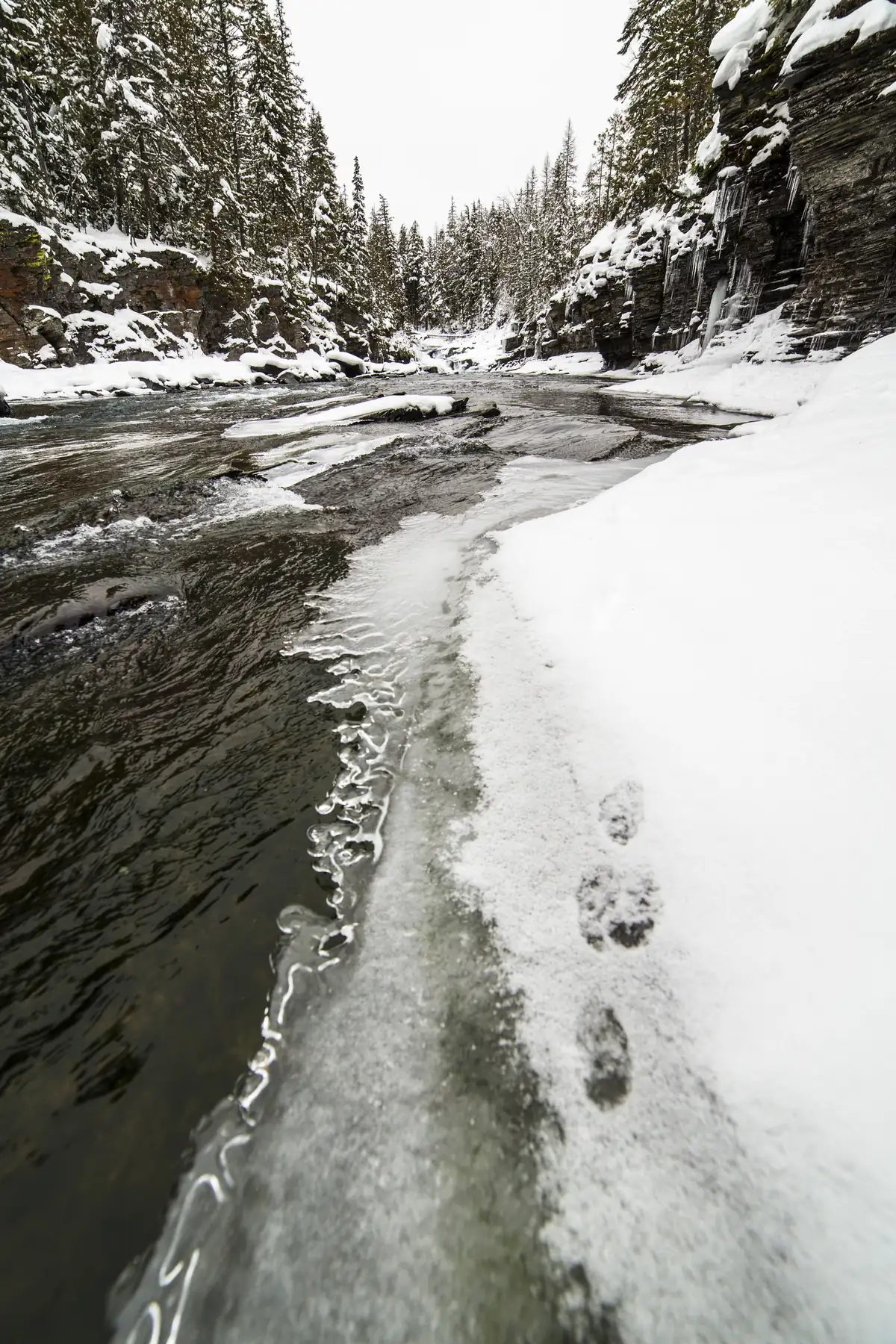
The Montana Natural History Center's tracking walk with certified tracker Jamie Schultz covers prints, scat, feeding sign and trails, with field guides and tape measures provided. Children are welcome. The fee is $40 for members and $45 for others, and registration is required.
-
Montana Natural History Center, Missoula
Tuesdays at 10 a.m.; Thursdays at 10 a.m.; Wednesday, November 4, 6 p.m.; Wednesday, November 18, 11:30 a.m. · Montana Natural History Center, 120 Hickory Street, and sites around Missoula
The free miniNaturalist program for children aged about 2 to 4 meets every Tuesday morning with songs, stories and outdoor play in the center's garden. A free nature journaling club meets weekly on Thursday mornings at sites around town. On November 4, geologist Rob Thomas talks about his book on Montana's best geology sites, and on November 18 the center hosts a drop-in nature journaling session, moved up a week this month to avoid Thanksgiving.
-
State parks on the day after Thanksgiving
Friday, November 27 · Montana state parks
Residents who add the state parks fee to their vehicle registration enter state parks free every day, so the day after Thanksgiving, November 27, is an easy day for a walk at Giant Springs, Lone Pine or Makoshika.
-
Science you can join
All month · Backyards, parks and open country
Log your bird walks in eBird, where many rural Montana counties have few checklists, and send your wildflower, bird or mammal records to the state Natural Heritage Program for its species maps.
Safety notes for November in Montana
- Hunting seasons and hunter orange. The general deer and elk rifle season runs through Sunday, November 29, as do the fall seasons for black bear, mountain lion, moose, bighorn sheep and mountain goat. The general antelope season ends November 8. Pheasant, grouse, partridge and fall turkey seasons continue to January 1; duck seasons run to January 15 in the Pacific Flyway, January 7 in Central Flyway Zone 1 and January 19 in Zone 2. The general wolf season runs to March 15, 2027. Under MCA 87-6-414, a big game hunter, and a guide or outfitter accompanying one, must have no less than 400 square inches of fluorescent orange on outer garments above the waist, always visible. Exempt are archers in the bow-only season and anyone hunting wolves outside the general rifle season. Everyone else using public land this month, people and dogs alike, is safer in orange.
- Traps. Beaver trapping opens November 1 in the three western FWP regions, and otter, mink and muskrat trapping opens statewide the same day. Wolf trapping opens November 30 outside the area covered by a federal court order and January 1 inside it. Keep dogs close and under control on public land, especially near water and along trails.
- Bears. Bears that did not find enough food this fall may stay active into December. Carry bear spray, and treat any carcass or gathering of ravens and magpies as a place to avoid.
- Thin ice. Stay off ice thinner than 4 inches, never walk on river ice, and keep children and dogs off ponds until a cold spell has built solid ice.
- Short days and winter roads. Sunset comes before 5 p.m., so pack a headlamp, a warm layer and traction for icy trails on any afternoon outing. Mountain passes can turn icy in minutes, and deer are most active on roads at dawn and dusk during the rut. Snow on steep slopes can slide; check the regional avalanche centers before heading into the high country.
Sources
- Montana FWP: Freezout Lake Wildlife Management Area guide (fall migration, closed area through November 19)
- Montana FWP: waterfowl migration tracking (spring counts at Freezout Lake)
- Montana Natural Heritage Program field guide: tundra swan
- Montana Natural Heritage Program field guide: trumpeter swan
- Montana Natural Heritage Program field guide: snow goose
- BirdWatching: Lee Metcalf National Wildlife Refuge, Stevensville, Montana
- Montana Natural Heritage Program field guide: bighorn sheep
- Montana FWP: Bighorn Viewing Site Wildlife Management Area, Thompson Falls
- National Park Service: bighorn sheep in Yellowstone
- Montana Natural Heritage Program field guide: mountain goat
- Montana Natural Heritage Program field guide: mule deer
- Montana Natural Heritage Program field guide: white-tailed deer
- Montana Natural Heritage Program field guide: pronghorn
- Montana Natural Heritage Program field guide: rough-legged hawk
- Montana Natural Heritage Program field guide: Bohemian waxwing
- Montana Natural Heritage Program field guide: bald eagle
- Montana Natural Heritage Program field guide: snowy owl
- Finch Research Network: Winter Finch Forecast 2026–2027
- Project FeederWatch: project overview (season dates, fee)
- eBird: Montana region explorer
- National Park Service: Yellowstone park roads (seasonal closures, year-round northern road)
- National Park Service: winter in Glacier National Park
- National Park Service: 2026 entrance fee-free days
- Montana FWP: all about bears (denning)
- Montana FWP: Bear Aware for hunters and anglers
- Montana Natural Heritage Program field guide: grizzly bear
- The Western News: with hucks in short supply, officials hope to reduce bear conflicts (August 25, 2026)
- Montana Natural Heritage Program field guide: kokanee
- Montana Natural Heritage Program field guide: brown trout
- Montana FWP: ice fishing safety (ice thickness guidance)
- Amphibian Publishing: Montana frost dates (NOAA 1991–2020 normals)
- NOAA NCEI: U.S. monthly climate normals, 1991–2020 (Great Falls, Billings, Glasgow, Helena, Missoula, Bozeman, Miles City, Butte)
- U.S. Naval Observatory: sun and moon rise and set data
- U.S. Naval Observatory: phases of the moon
- NOAA Climate Prediction Center: ENSO diagnostic discussion, September 10, 2026
- NOAA Climate Prediction Center: seasonal (90-day) outlooks
- Missoula Current: Climate Connections, forecasts from the Montana Climate Office (August 8, 2026)
- Montana Climate Office: winter outlook and El Niño in Montana
- KRTV Montana Ag Network: El Niño impacts on precipitation
- Montana Free Press: snowpack hits record-low levels across Montana (April 10, 2026)
- International Meteor Organization: 2026 meteor shower calendar
- EarthSky: what is a supermoon? (2026 full supermoons)
- NOAA Space Weather Prediction Center: solar cycle progression
- NOAA Space Weather Prediction Center: aurora 30-minute forecast
- Montana Natural History Center: events calendar (November 2026)
- Montana Natural History Center: Tracking and Sign with Jamie Schultz, November 14, 2026
- Montana FWP events calendar
- Montana FWP: a pass or fee is required to access state parks (resident vehicle registration fee)
- Montana FWP: 2026 hunting season dates
- Montana FWP: 2026 wolf, furbearer and trapping regulations (season dates, hunter orange)
- Montana Code Annotated 87-6-414: hunter orange while big game hunting
- Montana Natural Heritage Program: submit observations
- Gallatin National Forest Avalanche Center
- Photos via Wikimedia Commons; licenses and photographers are credited under each picture
