What to look for in nature in Nevada this April
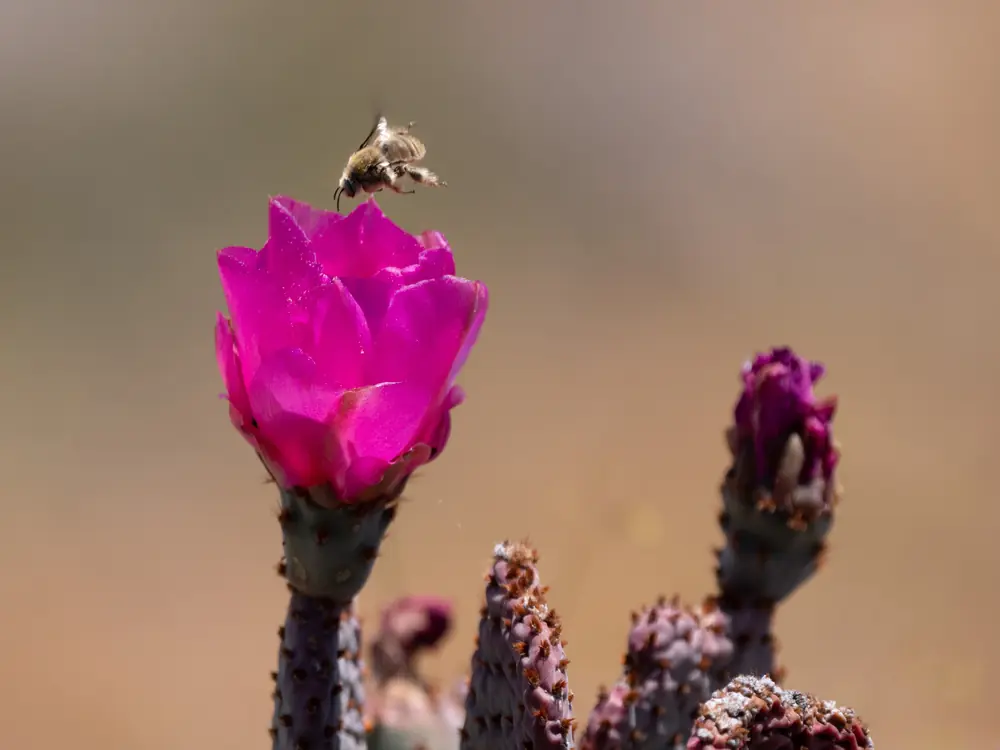
April is when Nevada’s south is in full spring and its north has only just begun. In the Mojave, cacti, penstemon and desert marigold open around Red Rock Canyon, and the Joshua tree and yucca country follows as the bloom climbs the slopes. Near Fallon, the first shorebirds arrive in the Lahontan Valley wetlands ahead of a May peak. At Ash Meadows, biologists dive into Devils Hole for the spring count of the world’s rarest fish, a tiny pupfish that nearly disappeared in 2025. At Pyramid Lake, cutthroat trout come inshore, and shore fishing is usually best around mid-April. In the high ranges the snow is still melting and the Wheeler Peak Scenic Drive stays closed until about Memorial Day. A Pink Moon turns full on the afternoon of the 20th, with Arbor Day on the 30th. Read on from the Mojave to Ruby Lake.
Other months in Nevada: October, November, December, January, February, March.
Start here
- Start a weekly bloom photo. Pick one wash or roadside near you and photograph it the same day every week, as Red Rock’s staff do each spring.
- Look for shorebirds. Bring binoculars to the Lahontan Valley wetlands near Fallon and write down every species with long legs or a long bill.
- Follow the pupfish count. Watch for news of the Devils Hole spring count and note the number in your journal.
In the Naturalist’s Field Journal, enter shorebirds and desert migrants on “birds I have seen,” bloom and burrows on “reading the signs,” and a wash or roadside on “the same place twice.” “Mammal watch” fits bighorn at a distance, and “dusk and dawn watch” suits a Ruby Lake morning.
Regions used below: Reno, Carson City and Lake Tahoe; Northern Nevada: Winnemucca, Elko and the Ruby Mountains; Central Nevada: Fallon, Austin and Tonopah; Eastern Nevada: Ely and Great Basin National Park; Southern Nevada: Las Vegas, the Spring Mountains and the Mojave.
When do wildflowers bloom around Las Vegas and Red Rock in April?
In March the Mojave bloom was still climbing out of the lowest washes. April is when it reaches the cacti, the shrubs and the mid-elevation slopes, and when the first spring flowers begin to open in the cold ranges to the north and east. How big the bloom is depends on winter rain that has not fallen yet, so this section is about the order of events, not a promise.
-
Red Rock Canyon, week by week through April
Early to late April in the two spring reports on file · Red Rock Canyon National Conservation Area, west of Las Vegas
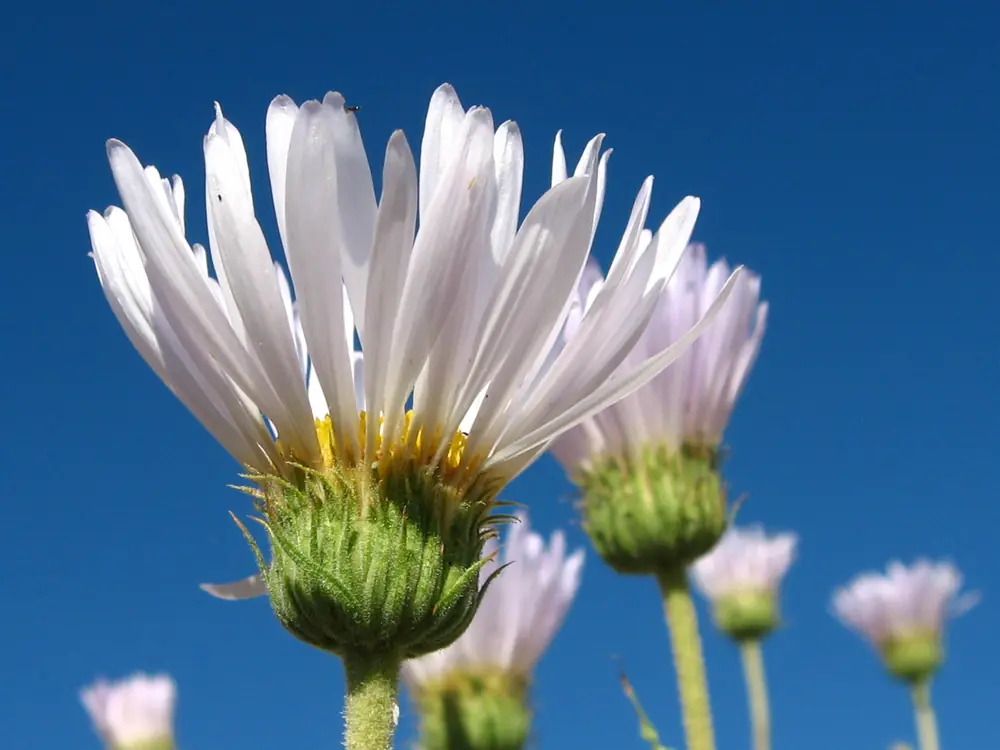
The conservation area has posted weekly bloom reports in past springs. In 2019, the week of April 7 brought the first cactus flowers, firecracker penstemon, yellow two-tone penstemon and desert marigold along the Scenic Drive and State Route 159. By the week of April 14, desert hyacinth was blooming in numbers around Willow Spring, with globemallow, blackbrush, western redbud and straggling mariposa lily at Fossil Ridge. The week of April 21 added banana yucca, cliffrose, Apache plume and Palmer penstemon near the Visitor Center, and the week of April 28 brought Mojave aster along the Moenkopi Trail, plus beavertail, hedgehog and prickly pear cactus.
The 2020 reports tell a similar story with different dates. On April 4 the common flowers were desert paintbrush, fiddleneck, filaree and wild rhubarb. The April 11 report describes cool, wet weather, with primrose and bastard toadflax out along trails and roads. On April 18 the staff listed desert marigold, early Mojave aster and small carpets of Wallace’s woolly daisy, and by April 28 cliffrose, redbud, beavertail cactus, Mojave goldenbush and purple sage were flowering. Early in May 2020 naturalists counted about 60 species in flower. These are two individual springs, not a calendar: a wet or dry winter can move every date by weeks.
-
Bloom climbs the slope
Low desert first; mid-elevations from mid-April; high country in May · Lake Mead National Recreation Area, Red Rock, Cima Dome and the Spring Mountains
The National Park Service says in nearby Mojave National Preserve, in California, that the best flower viewing moves up the mountains by roughly 1,000 feet of elevation each fortnight, and its bloom chart lists Cima Dome and the Mid Hills for mid to late April and the High Peaks for early May. The same page says a handful of good soaking storms makes a memorable year and that a big bloom is by no means annual. Lake Mead National Recreation Area lists about 700 species of flowering plants and gets under 6 inches of rain in a year, and the Park Service writes that favorable winter and early spring rains turn bare slopes and washes into a mass of color. The group Friends of Nevada Wilderness says the Mojave is home to nearly 2,000 plant species, and it suggests staying on hard-packed surfaces or old road tracks, because fluffy desert soil is easily damaged.
-
Great Basin National Park in April
Spring is a transition; the Scenic Drive to the bristlecone groves usually opens around Memorial Day · Great Basin National Park, near Baker
The park describes spring as the return of wildlife and birds and the start of wildflower bloom as snow melts. It warns that temperatures can run from the 20s F at night to the 70s F in the day. The Wheeler Peak Scenic Drive, which climbs to about 10,000 feet, typically opens in late May, around Memorial Day, but the date depends on snow, and the north-facing slopes hold ice that plows struggle to clear. While it is closed, the park suggests the Baker Creek Road, the first half mile of Pole Canyon and the first mile of the Lehman Creek Trail. Those routes are snow-free more often than the high trails.
Red Rock’s website lists timed-entry reservations for the Scenic Drive from October 1 through May 31 during daytime hours, and Scenic Drive hours of 6 a.m. to 8 p.m. from April to September. Check before you drive out, and photograph one wash weekly. A Field Journal page for the same place twice is made for this kind of log.
What is the Devils Hole pupfish count, and why do biologists dive in April?
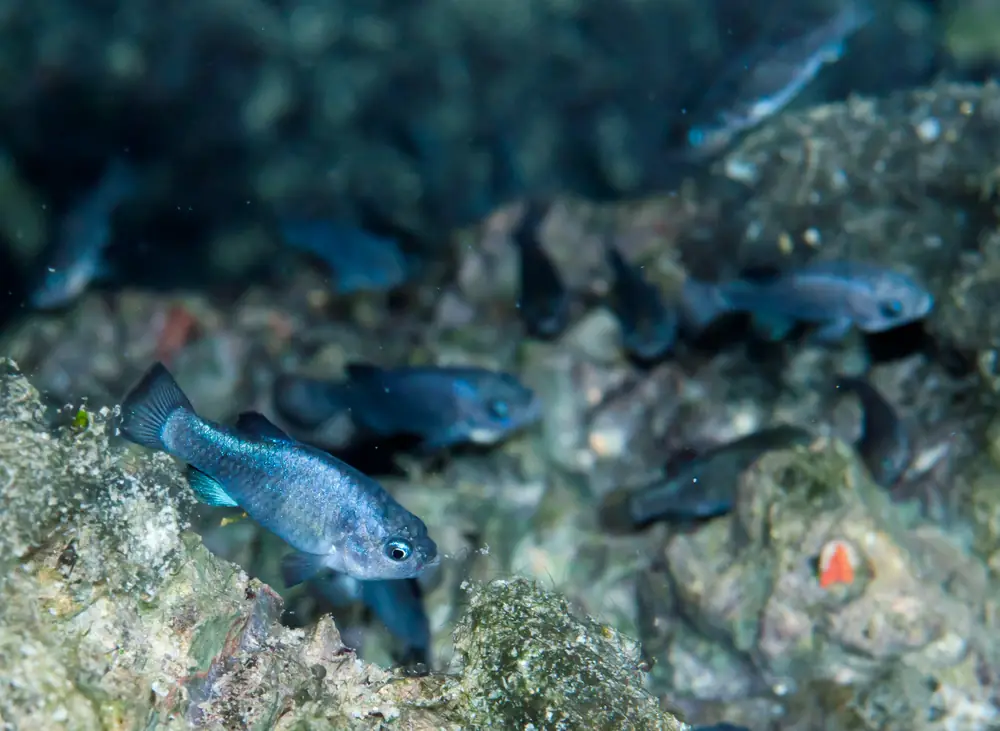
Ash Meadows National Wildlife Refuge, in Nye County is described by the Fish and Wildlife Service as the largest remaining oasis in the Mojave Desert and as holding the highest concentration of endemic species in the United States. At its heart is Devils Hole, a water-filled limestone cavern that is home to the world’s rarest fish.
-
The spring count
Early April in recent years; 2027 dates not announced · Devils Hole, in the Death Valley National Park unit at Ash Meadows
The National Park Service, Fish and Wildlife Service and Nevada Department of Wildlife count the Devils Hole pupfish each spring and fall. In 2024 the spring count took place on April 6 and 7: divers descended as deep as 100 feet while other scientists counted fish on the shallow shelf at the surface. They found 191 fish, the highest spring total in 25 years. The Park Service says that before the mid-1990s the spring count ran 200 to 250 fish, that the population then averaged about 90 for roughly two decades, and that the low was 35 in 2013. Biologists saw fish in good condition, with courtship and spawning behavior.
-
A hard 2025, and a recovery under way
Earthquakes December 2024 and February 2025; counts in 2025 and spring 2026 · Devils Hole
The Fish and Wildlife Service reports that earthquakes in December 2024 and February 2025 set off waves of about six feet inside the cavern, sweeping algae and eggs off a shallow shelf of roughly 215 square feet where the fish feed and spawn. A dive early in 2025 found only about 20 fish (reports date it to February or March). Agencies then released 19 captive-bred pupfish from the Ash Meadows Fish Conservation Facility, the first such transfer into the wild population. The spring 2026 count was 77, nearly four times the 2025 low, and biologists saw many juveniles. Several hundred fish are kept in the captive facility as insurance. The 2027 spring count is a fair thing to watch for in the news in April or May.
-
Visiting the refuge
Year-round; check for closures · Ash Meadows National Wildlife Refuge
The refuge has a visitor center, accessible boardwalks, and views of the springs, dune fields, alkali seeps and mesquite and ash groves. It lists eight threatened or endangered plants. The refuge announced that the Point of Rocks Road and Boardwalk would be closed from September 15 to November 15, 2026 for reconstruction, so confirm current conditions by phone at (775) 372-5435 before you go. Pupfish are tiny, 1 to 1.5 inches long, so bring binoculars or a camera with a zoom lens for the springs that are open to visitors, and keep your hands out of the water.
Add the count to your journal as a yearly note: spring and fall, a small number, and what changed between them.
Is April the start of shorebird season in the Lahontan Valley?
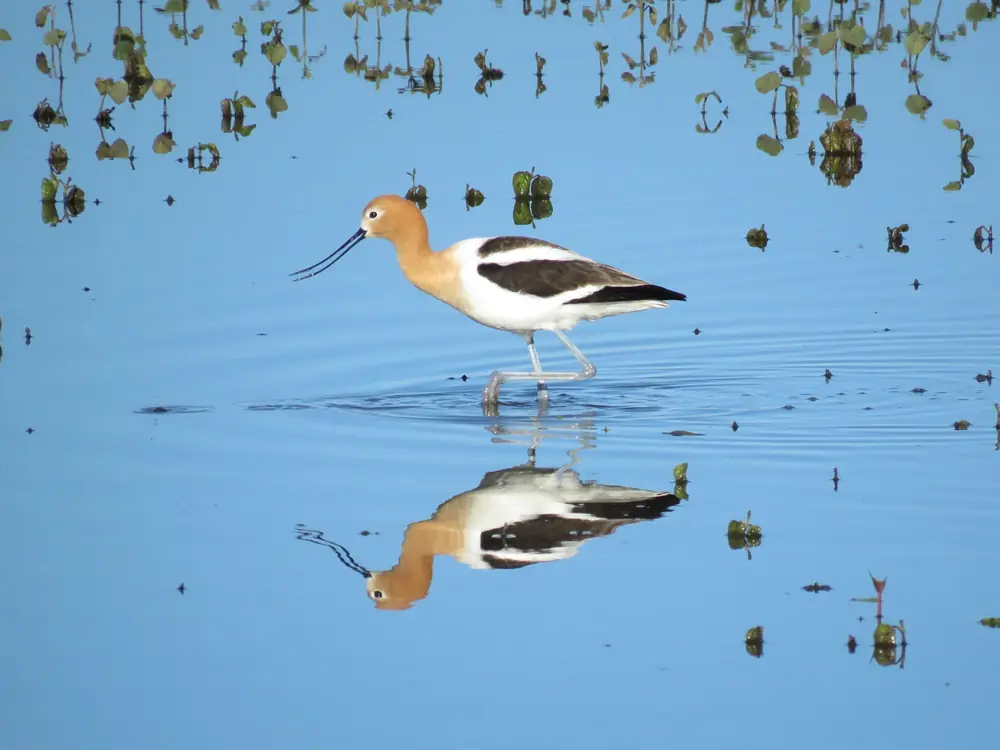
In March the ducks and swans dominate the wetlands near Fallon. In April the first waves of shorebirds arrive, though the biggest numbers come later, so this is a good month to catch the beginning of a season that peaks in May.
-
The shorebird window
April and May · Stillwater National Wildlife Refuge, Carson Lake and the Humboldt Wildlife Management Area
An Audubon report on the spring of 2022 describes an April to May migration window, with volunteer surveys running through May 5. Birds recorded included long-billed dowitchers, dunlin, least and western sandpipers and snowy plovers. On May 5 that year, two wetland units at Stillwater held over 500 shorebirds. The same report says the irrigation allocation reached just 70% that spring and that the Nevada Department of Wildlife had enough water to hold only about 200 acres of wetland habitat during migration, and that the Carson Lake team worked with the irrigation district and farmers to create shallow-flooded shorebird habitat for the first time. Habitat changes from year to year with the water, so the same unit can be dry one April and full the next.
-
What a visit looks like
Open year-round · Stillwater National Wildlife Refuge, 17 miles northeast of Fallon
The Fish and Wildlife Service lists more than 250 bird species at Stillwater, including American avocets, long-billed dowitchers, tundra swans and canvasbacks. Entrance is free, and there is an auto tour loop around Lower Foxtail Lake and Stillwater Point Reservoir, hiking trails with interpretive signs and a visitor center. The refuge warns about harmful algal blooms in the water and says toxic cyanobacteria can kill dogs within minutes to hours, so keep pets out of discolored water.
-
The Spring Wings festival
Annual, spring; 2027 dates not posted when this page was written · Fallon, with Festival Central at Oats Park
The Spring Wings Bird Festival is an annual celebration of the Lahontan Valley wetlands. In 2022 the Fish and Wildlife Service listed it for April 30 and May 1, with self-guided tours to five wetland areas (Carson Lake, the Fallon Paiute Shoshone Tribal Wetlands, the NAS Fallon Nature Trail, Lahontan State Recreation Area and Stillwater), a Big Day birding competition and a scavenger hunt. The festival’s own website, springwingsbirdfest.org, showed no 2027 dates when we checked, so confirm with the organizers before you plan around it.
Make one April trip and write down the species and counts. Come back in May and compare, using the “birds I have seen” plate.
What can you see at Ruby Lake National Wildlife Refuge in April?
Far from any city, Ruby Lake National Wildlife Refuge covers 40,048 acres of marsh, meadows, grassland and brushy upland just east of the Ruby Mountains. The Fish and Wildlife Service calls it one of the most remote refuges in the lower 48 states. April there is as much about reaching it as about the birds.
-
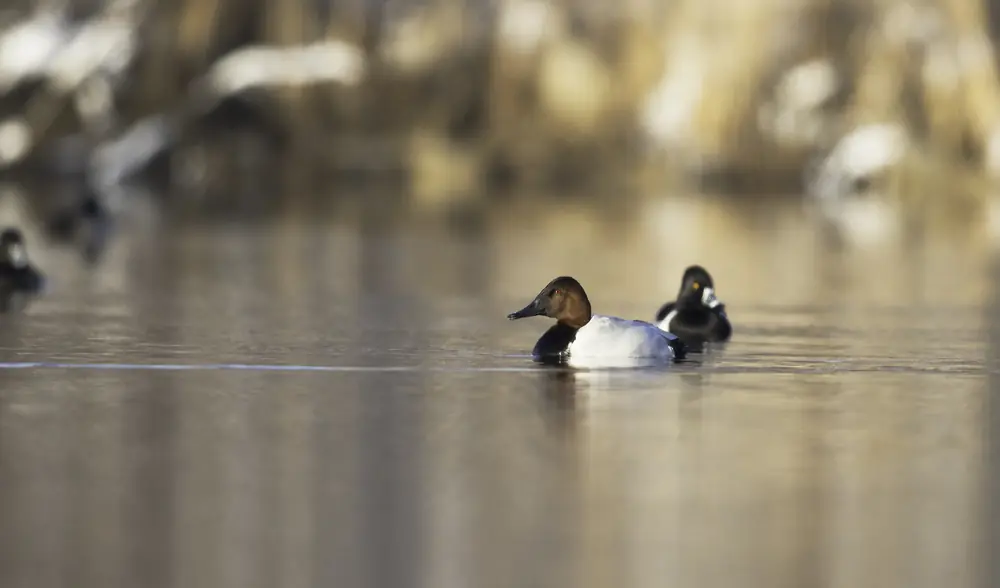
Canvasbacks on the South Marsh
Nesting season follows in spring; ask the refuge about timing · South Marsh and Ruby Marsh, east of Elko
The refuge says the South Marsh supports the largest nesting population of canvasback ducks west of the Mississippi River outside Alaska. The refuge’s own pages do not give an April date for the first arrivals, so call (775) 779-2237 or write rubylake@fws.gov for current sightings before you drive.
-
Getting there
Check roads from November through May · Gravel roads to refuge headquarters
Every route to headquarters includes 13 to 30 miles of gravel road. The refuge warns visitors to check road conditions with headquarters, especially from November through May, notes that Harrison Pass is not passable in winter and that drifting snow can stop travel except for the largest 4WD vehicles. The refuge is open from one hour before sunrise to one hour after sunset (longer during waterfowl hunting season).
If the roads are open, bring layers and binoculars, stay on designated routes and write the date of each species you see in the Field Journal.
Where can you see migrants and desert bighorn near Las Vegas in April?
Southern Nevada sits on the Pacific Flyway, and its green patches pull in tired songbirds. The same mountains hold the state’s best-known wild sheep.
-
Desert National Wildlife Refuge and Corn Creek
Spring mornings are best for migrants · Corn Creek, north of Las Vegas
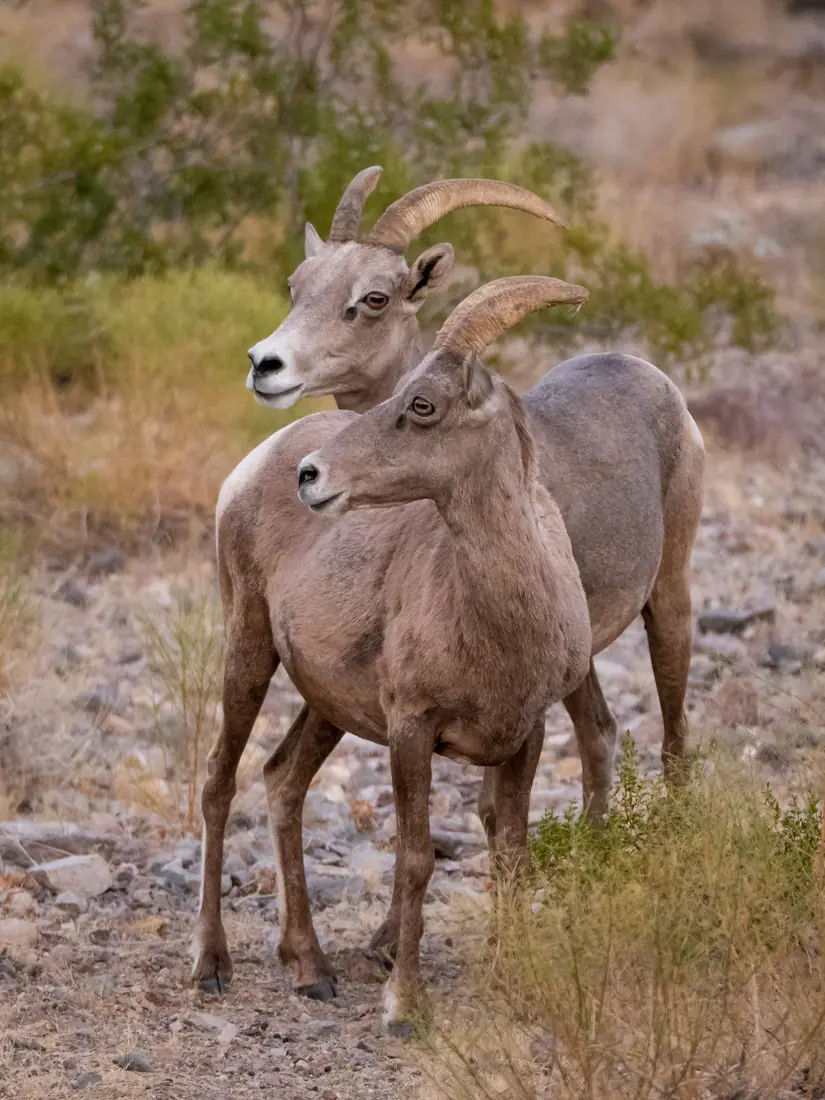
The Fish and Wildlife Service says Desert National Wildlife Refuge, founded in 1936, protects the largest intact habitat for desert bighorn sheep in the Mojave Desert. It lists more than 320 bird species, over 500 plants, 52 mammals and 32 reptiles. Its seasonal guide for spring says to watch for migratory birds in the morning and notes that tortoises and lizards come out of brumation and become more active. Backcountry roads are open to passenger vehicles, but the refuge recommends high-clearance 4WD for rough terrain and bans off-highway vehicles. Visitor center hours change, so check the refuge page.
-
Viewing bighorn from a distance
April through November is peak viewing at Hemenway Park · Hemenway Park in Boulder City, Valley of Fire, Red Rock and Lake Mead
A Nevada news article quotes Doug Nielsen of the Nevada Department of Wildlife recommending that watchers sit, watch and use a good pair of binoculars, because “if you’re moving you’re not watching.” Fish and Wildlife Service tips in the article suggest scanning in early to mid-morning with the sun at your back, keeping 30 to 40 yards from the animals and using a phone’s zoom instead of walking closer. The National Park Service calls the sheep of Lake Mead wary of people. If a sheep stamps its feet or flips its tail, you are too close.
Birds here are easiest in the first hours after sunrise. Write the weather beside each list so you can compare calm and windy mornings.
When is the best April shore fishing at Pyramid Lake?
For anglers, April is the high point of the year on Pyramid Lake. For everyone else it is the month when the cutthroat trout come close enough to the shore to be seen.
-
The mid-April shore bite
Season October 1 to June 30; best shore fishing around mid-April · Pyramid Lake, on the Pyramid Lake Paiute Reservation
According to the tribal fisheries program, shore anglers do best around the middle of April, when most mature cutthroat are ready to spawn, and water temperatures in the high 40s during March and April bring the fish inshore. Schools become visible in very shallow water near 50 °F, and storms can shift the timing by as much as three weeks in a given year. Anglers 12 and older need a tribal permit, sold at the stores and ranger station on the lake and online. Current rules require barbless hooks and the release of trout under 17 inches and between 20 and 24 inches (fork length).
-
Watching without fishing
Any day; tribal rules apply · The lakeshore and the lower Truckee River
The lake is tribal land, and visitors follow the tribe’s rules on camping, boating and permits. The white pelicans that returned in March (see Nevada in March) are still passing through, and a pair of binoculars on a calm morning reveals more than you expect.
Buy the tribal permit even if you plan only to watch from a car, if you intend to fish at all, and ask rangers about closures.
How warm, windy and wet is April in Nevada?
April warms quickly in the south and slowly in the mountains. NOAA’s 1991 to 2020 normals put April highs near 78 °F in Las Vegas and near 59 °F in Ely, where the average low stays at 27.5 °F. Mountain stations still collect snow: the Mt. Charleston Fire Station averages 6.2 inches in April and Great Basin National Park averages 7.2 inches.
| Station | Average high | Average low | Precipitation | Snowfall |
|---|---|---|---|---|
| Reno (airport) | 64.7 °F | 38.5 °F | 0.44 in | 0.4 in |
| Carson City | 61.7 °F | 35.8 °F | 0.51 in | 0.0 in |
| Winnemucca (airport) | 63.5 °F | 31.6 °F | 1.00 in | 1.8 in |
| Elko (airport) | 59.6 °F | 31.5 °F | 1.05 in | 3.3 in |
| Ely (airport) | 58.9 °F | 27.5 °F | 1.07 in | 5.3 in |
| Great Basin National Park | 55.3 °F | 31.9 °F | 1.57 in | 7.2 in |
| Tonopah (airport) | 64.3 °F | 35.6 °F | 0.29 in | not published |
| Mt. Charleston Fire Station | 54.7 °F | 29.8 °F | 1.01 in | 6.2 in |
| Las Vegas (airport) | 78.5 °F | 56.9 °F | 0.20 in | 0.0 in |
Wind and flash floods are the hazards that catch visitors out. Forecasters at the National Weather Service in Las Vegas report that the strong winds of cold-season storms are most common in spring, a season it also says can bring rather sharp temperature changes. Thunderstorms typically build in the mountains around the valley and then drift in, and flash floods from them sweep down normally dry washes. A cold front can bring snow to the northern and eastern ranges at the same time as 80 °F in Las Vegas.
A fresh set of three-month outlooks from NOAA’s Climate Prediction Center appears every month around its middle, on the 90-day outlook page. Use the weather page for the day’s forecast and the cloud guide to read spring skies.
When is the last spring freeze in Nevada?
April is still a freezing month for most of the state. Median last-freeze dates (32 °F) in NOAA’s 1991 to 2020 normals are April 20 at the Reno airport, April 30 at Tonopah, May 6 at Fallon, May 29 at Elko and June 12 at Ely. Around Las Vegas the freezing season usually ends in January or February.
| Station | One year in ten | Median | Nine years in ten |
|---|---|---|---|
| Reno | Apr 6 | Apr 20 | May 5 |
| Fallon | Apr 21 | May 6 | May 25 |
| Winnemucca | May 10 | May 31 | Jun 19 |
| Elko | May 10 | May 29 | Jun 16 |
| Ely | May 29 | Jun 12 | Jun 28 |
| Tonopah | Apr 14 | Apr 30 | May 22 |
| Las Vegas | Dec 20 | Jan 20 | Feb 14 |
| Laughlin | Dec 11 | Jan 5 | Feb 13 |
A row speaks for a single weather station, not a whole region, and mountain towns differ from valley floors by weeks. The early column is a gamble, since only one spring in ten is free of freezing by then. Towns missing here are on our Nevada frost dates page.
How much daylight does Nevada gain in April?
Nevada’s cities gain between 60 minutes (Laughlin) and 75 minutes (Winnemucca) of daylight over April, an average of 2.1 to 2.6 minutes each day. At month’s end the sun is up about 13 and a half hours in Laughlin and almost 14 in Winnemucca and Elko. After the March 14 clock change, both sunrise and sunset come an hour later by the clock than they did at the start of March.
| City | Apr 1 | Apr 30 | Gained | Per day |
|---|---|---|---|---|
| Reno | 12 h 39 m | 13 h 50 m | 71 min | 2.4 min |
| Fallon | 12 h 40 m | 13 h 51 m | 71 min | 2.4 min |
| Winnemucca | 12 h 42 m | 13 h 57 m | 75 min | 2.6 min |
| Elko | 12 h 41 m | 13 h 55 m | 74 min | 2.6 min |
| Ely | 12 h 39 m | 13 h 50 m | 71 min | 2.4 min |
| Tonopah | 12 h 38 m | 13 h 45 m | 67 min | 2.3 min |
| Las Vegas | 12 h 35 m | 13 h 38 m | 63 min | 2.2 min |
| Laughlin | 12 h 35 m | 13 h 35 m | 60 min | 2.1 min |
Longer evenings help a dusk walk after work, but the best birding is still the first two hours after sunrise. Look up any other town on the daylight page.
What is in the night sky over Nevada in April?
The April sky offers a Pink Moon, a moonlit Lyrid shower, one bright planet at dusk and another before dawn. Clock times here are Pacific daylight time, and West Wendover, on Mountain time, adds an hour.
-
Pink Moon
Full at 3:27 p.m. Pacific daylight time on Tuesday, April 20; best evening is that same Tuesday · Anywhere with a clear eastern horizon
The exact moment of full comes in the afternoon, so the Moon rises round near sunset on the 20th and looks full again the next evening. The name Pink Moon refers to early spring wildflowers, not to color.
-
Lyrids, a poor year
Peak about 6:41 p.m. Pacific daylight time on Thursday, April 22 (daylight); best hours the night of April 22 to 23 · Dark sites
In a dark, moonless sky the Lyrids yield about 20 meteors an hour. In 2027 the Moon is roughly 95% lit, so moonlight erases all but the boldest streaks. It climbs over the horizon late in the evening, leaving a short moonless stretch after dusk when the shower’s radiant, in Lyra, stands low in the northeast. Expect a scattering of meteors, perhaps several an hour.
-
Jupiter and Mars in the evening
All month; the Moon passes Jupiter on the evenings of April 14 and 15 · High in the south and west after dark, in Leo
Jupiter is the brightest point of light in the evening sky. Our figures put the Moon, two-thirds lit on April 14 and 15, about a degree from the planet, and on the 15th 3 degrees from fainter Mars. At the start of April Jupiter stays above the horizon for roughly nine hours after dark, and it sets a little sooner every night.
-
Venus in the morning
All month; rising about 75 minutes before sunrise on April 1 · Low in the east before dawn
Venus is still the brightest object at dawn but slips toward the Sun a little each week. By our own calculation, before dawn on April 3 and 4 a crescent Moon, only 9% lit, sits next to it. Saturn is lost in the Sun’s glare around its conjunction on April 7 and cannot be seen this month.
-
Milky Way before dawn
April 1 to 14 and April 28 to 30, around the April 6 new moon · Dark sites such as Great Basin National Park and the open desert
At 40 degrees north, the best moonless window runs up to about two hours before dawn. We calculated these windows ourselves, so treat them as rough. The Eta Aquariid meteor shower peaks around the mornings of May 5 to 7, close to the May 6 new moon, which should make it a well-placed year for it.
| Phase | Date | Time |
|---|---|---|
| New Moon | Apr 6 | 4:51 p.m. PDT |
| First Quarter | Apr 13 | 3:56 p.m. PDT |
| Full Moon (Pink Moon) | Apr 20 | 3:27 p.m. PDT |
| Last Quarter | Apr 28 | 1:18 p.m. PDT |
Other dates are on the moon phase page.
What can families do outdoors in Nevada in April?
Organizers announce most of the programs below late, so 2027 dates are usually not set yet.
- Celebrate Earth Day, Thursday, April 22. The date is fixed, as EARTHDAY.ORG notes. A good family version is to walk one block or trail and write down every living thing you find.
- Plant a tree on Arbor Day. Nevada’s statute puts Arbor Day on April’s final Friday, which is April 30, 2027; towns may hold events on other dates. The state has two official trees: the single-leaf pinon and the bristlecone pine. Check with your city or the Nevada Division of Forestry for local plantings.
- Keep a bloom diary. Choose a wash, a roadside or a backyard and photograph it each week. Compare with the Red Rock reports above.
- Look for shorebirds. Bring binoculars to Stillwater or Carson Lake. Check the Spring Wings website for 2027 dates.
- Report spring arrivals. Send migrant sightings to Journey North and bird lists to eBird.
- Visit Great Basin National Park. Check the park’s alerts and conditions page for the cave tours and the Scenic Drive, since both change with the season.
- Keep a journal. The Naturalist’s Field Journal offers plates for first arrivals and for returning to one spot. More states are listed on the nature index, and Nevada in March covers the earlier part of spring.
Safety notes for April in Nevada
April combines desert warmth, mountain snow and a busy outdoor season.
- Spring turkey hunts continue. Under the department’s adopted regulation, the 2027 junior hunt (0138) ends on May 2 in the listed units across six counties, and the limited-entry hunts, which opened March 27, also end May 2. Lander County units 151 and 152 split theirs into windows, with the April ones running April 10 through 18 and April 24 through May 2. Tags for unit 051 in Humboldt County (Paradise Valley) are sold until the season closes. The national park itself is closed to hunting. Tags are mostly by drawing, so most readers are birders, but expect camouflaged hunters at first light in those units.
- Trapping ends April 30. Trapping for beaver, mink and muskrat closes statewide at the end of April (it opened October 1), so keep dogs leashed near streams and ditches until then.
- Wear something bright. We did not find an orange requirement for spring turkey hunts in the regulation we read, so confirm the rule for your hunt. A bright hat or vest is a cheap precaution when you walk in turkey country.
- Rattlesnakes. The Nevada Department of Wildlife counts six rattlesnake species in the state and puts their active season at March through October. Never reach where you cannot see, and keep pets on a short leash.
- Flash floods. Water only 6 inches deep, if it is moving fast, can knock down an adult, and a foot of rushing water can float most cars. Never drive into flooded roads or hike washes when storms are upstream.
- Wind and cold swings. Spring winds are most common in the spring months, per the National Weather Service in Las Vegas. Secure loose items, and carry layers in the mountains, where temperatures at Great Basin National Park can swing from the 20s F to the 70s F in one day.
- Algae and water. Stillwater National Wildlife Refuge warns that harmful algal blooms can be fatal to dogs. Keep pets away from discolored water.
- Remote roads. Ruby Lake roads are gravel and can be blocked by snow, and Desert National Wildlife Refuge recommends high-clearance 4WD for backcountry roads. Tell someone your route and carry water.
- Wild animals. Keep a long distance from sheep, horses and any animal with young.
Check the local forecast before heading out.
Sources (38)
- Red Rock Canyon National Conservation Area: Spring 2019 wildflower report
- Red Rock Canyon National Conservation Area: Spring 2020 wildflower report
- Red Rock Canyon National Conservation Area: Visitor information and Scenic Drive reservations
- National Park Service, Mojave National Preserve: Wildflowers
- National Park Service, Lake Mead National Recreation Area: Plants
- Friends of Nevada Wilderness: The desert in bloom
- National Park Service, Great Basin National Park: Visiting in spring
- National Park Service: Wheeler Peak Scenic Drive
- National Park Service, Great Basin National Park: Alerts and conditions
- National Park Service, Death Valley: Devils Hole pupfish spring 2024 count
- U.S. Fish and Wildlife Service: Inside Devils Hole
- WYPR: As federal scientists faced turmoil, the Devils Hole pupfish reached a crisis point (May 2026)
- U.S. Fish and Wildlife Service: Ash Meadows National Wildlife Refuge
- Audubon: Collaborative efforts elevate shorebirds during spring migration in the Lahontan Valley
- U.S. Fish and Wildlife Service: Stillwater National Wildlife Refuge
- U.S. Fish and Wildlife Service: Spring Wings Bird Festival (2022)
- Spring Wings Bird Fest
- U.S. Fish and Wildlife Service: Ruby Lake National Wildlife Refuge
- U.S. Fish and Wildlife Service: Ruby Lake visit us
- U.S. Fish and Wildlife Service: Desert National Wildlife Refuge
- U.S. Fish and Wildlife Service: Desert National Wildlife Refuge, seasons of wildlife
- The Nevadan: Where to see desert bighorn sheep in Nevada
- National Park Service, Lake Mead National Recreation Area: Mammals
- Pyramid Lake Fisheries: Fishing seasons
- NOAA NCEI data service: monthly normals 1991–2020 for ten Nevada stations
- National Weather Service Las Vegas: Climate of Las Vegas
- NOAA Climate Prediction Center: 90-day outlooks
- U.S. Naval Observatory: Phases of the Moon, 2027
- U.S. Naval Observatory: Earth’s seasons and Sun data (2027)
- Sea and Sky: Astronomy calendar of celestial events 2027
- NDOW Commission Regulation 26-13 as adopted: upland game, furbearer and spring turkey seasons
- Nevada Division of Forestry: Urban and community forestry (Arbor Day)
- Nevada Revised Statutes 235.040: state trees
- EARTHDAY.ORG
- Nevada Department of Wildlife: Living with rattlesnakes
- National Weather Service: Turn around, don’t drown
- Journey North: Tracking wildlife migration and seasonal change
- Photos via Wikimedia Commons; licenses and photographers are credited under each picture
