What to look for in nature in Nevada this March
March is when Nevada’s two climates pull apart. In the Mojave, desert paintbrush and the first Joshua tree blooms are waiting at Red Rock Canyon, while the desert tortoises are still underground, and Mojave Max, the Las Vegas tortoise that kids guess about, has come out later each spring in recent years. In the sagebrush, greater sage-grouse are taking up their dawn display. At Pyramid Lake the American white pelicans are returning to Anaho Island, and in the Sierra foothills the first black bears are leaving their dens. Mountain snow still falls on Mt. Charleston and the Snake Range, and the last spring freeze at Elko or Ely is still two months away. Nevadans lose an hour of sleep on the night of March 13 to 14, spring officially starts at 1:25 p.m. on the 20th, and a Worm Moon turns full at 3:44 a.m. on the 22nd. The sections below run from the Mojave to the Ruby Mountains.
Other months in Nevada: October, November, December, January, February, April.
Start here

- Check the dawn for sage-grouse. Choose a sagebrush road you know well, and be parked on it before first light on a still morning once March is half over. Listen for displaying males, and stay in your car.
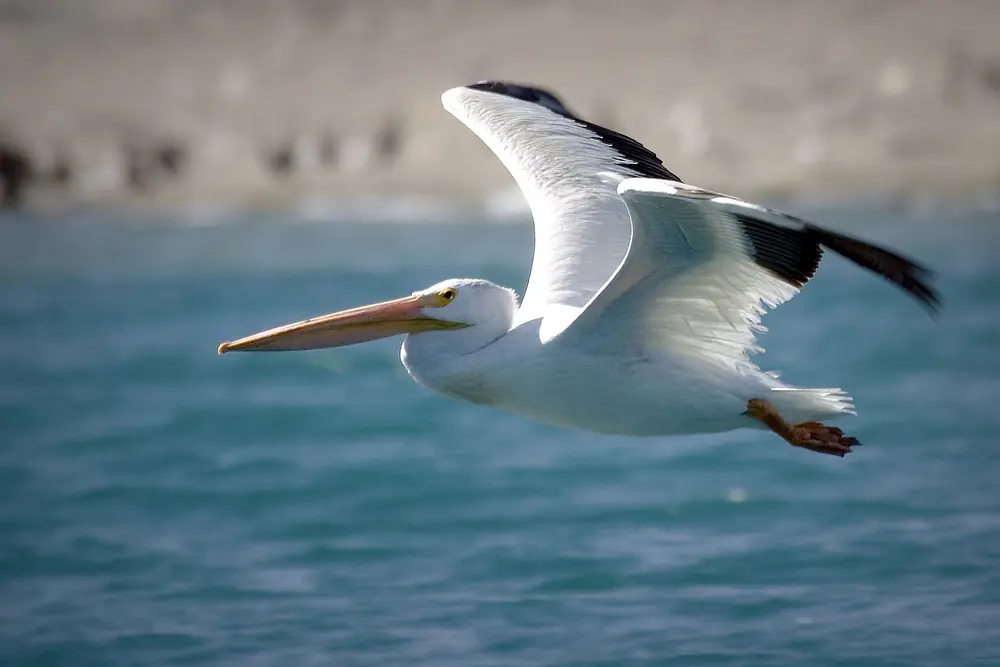
- Scan Pyramid Lake for pelicans. Bring binoculars to the lake’s western shore and watch for big white birds with black wing tips, back from their winter homes to the island in the lake.
- Follow the Mojave bloom. Photograph one roadside or wash near Las Vegas every week. Joshua tree buds and desert paintbrush came first in the two Red Rock reports from past years.
In the Naturalist’s Field Journal, enter your first pelicans and sage-grouse, “reading the signs” for the Mojave bloom and tortoise burrows, and “mammal watch” for black bears and wild horse foals. The “same place twice” plate suits a wash or roadside you revisit all spring, and “a map of sounds” fits a dawn near a lek.
Regions used below: Reno, Carson City and Lake Tahoe; Northern Nevada: Winnemucca, Elko and the Ruby Mountains; Central Nevada: Fallon, Austin and Tonopah; Eastern Nevada: Ely and Great Basin National Park; Southern Nevada: Las Vegas, the Spring Mountains and the Mojave.
When do desert tortoises and Mojave Max come out of their burrows?
Desert tortoises are creatures of the burrow. The Nevada Department of Wildlife (NDOW) says they spend about 95% of their time inside, so a tortoise above ground is a small event. In the Las Vegas Valley, one tortoise has turned that event into a spring tradition, though in recent years he has stayed underground well past March.
-
Mojave Max, southern Nevada’s unofficial first day of spring
Recent emergences from late April to May 10; the earliest on record is February 14, 2005 · Springs Preserve, Las Vegas
Mojave Max lives in the tortoise habitat at the Springs Preserve, a fenced area of about 15 acres where the tortoises wear radio transmitters. Clark County officials look after him, and Las Vegas television stations treat his first appearance as the unofficial start of spring in southern Nevada. Schoolchildren guess the day and hour he will come out, and the winning class in 2026 earned a field trip to the preserve.
The record shows how far the date moves. A 2017 KNPR report said he came out on April 6 that year and that, over 18 years of the contest, dates had ranged from February 14, 2005 to April 17, 2012. Since then he has trended later: a Las Vegas station reported April 24 as his longest wait in 2023, the record became May 8 in 2025, and in 2026 he beat it by two days on May 10. He is one animal in a managed habitat, so his date tells a story about one spring, not a forecast for wild tortoises.
-
What wild tortoises do as the weather warms
Spring through fall, often after rain · Mojave Desert of southern Nevada, including Lake Mead National Recreation Area
The National Park Service describes desert tortoises as emerging to feed and mate during the spring and staying active through the fall, sometimes coming out again after summer storms. They were listed as threatened in 1990, and the Park Service says populations have fallen by as much as 90% in some areas since the 1980s. The same page says it is unlawful to bother a desert tortoise in any way.
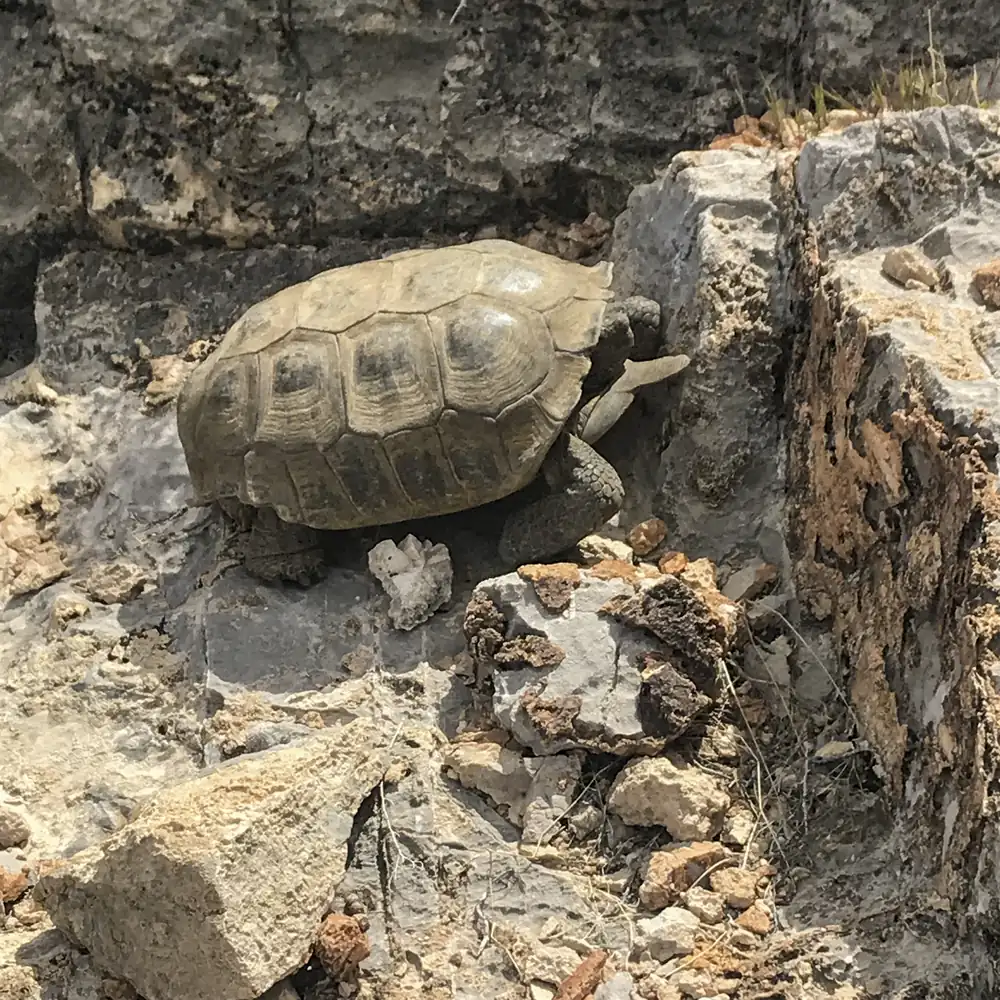
Wild tortoises do not keep Max’s calendar. A photograph posted to Wikimedia Commons shows one out on limestone at Red Rock Canyon on March 26, 2020, so a warm spell can bring them up earlier than the Springs Preserve’s star.
-
If you meet one
Any warm day from March on · Desert roads and trails in southern Nevada
NDOW advises against handling wild desert tortoises, because a startled tortoise may empty the water it stores in its bladder, a serious loss in a dry spring. Stay back and use a zoom lens. If one is crossing a road, slow down and steer around it.
Note the date, place and temperature of your first wild tortoise. The “same place twice” plate in the Field Journal lets you compare one burrow from year to year.
When do greater sage-grouse dance on their leks in Nevada?
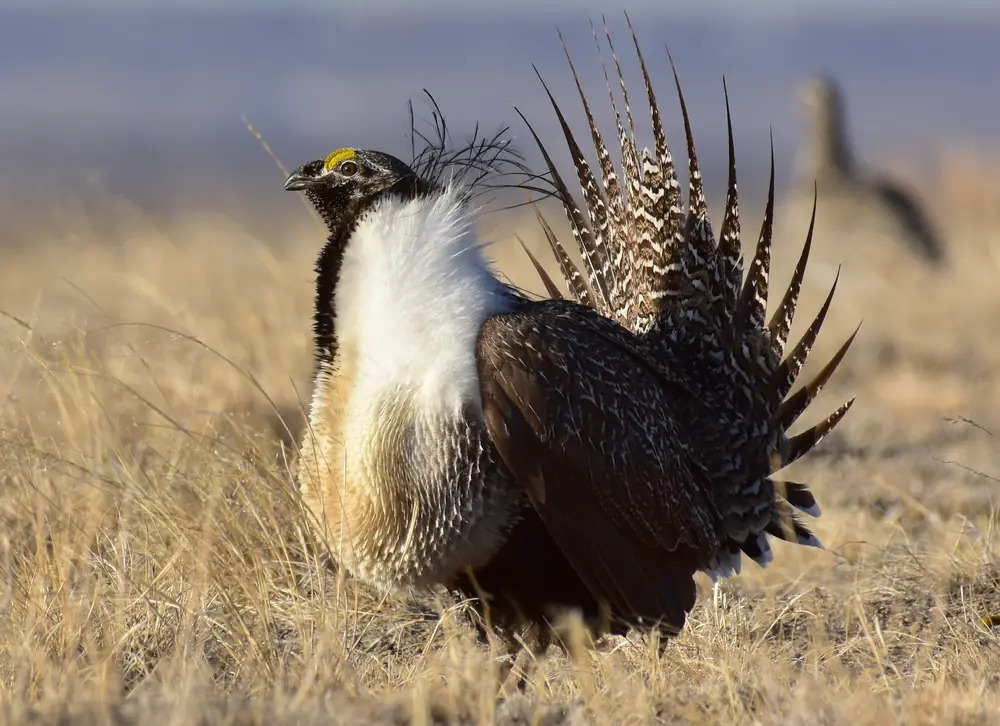
Sagebrush country does not look busy in March, but before sunrise on certain open patches of ground it is one of the most theatrical places in the state. Greater sage-grouse gather on traditional display grounds called leks, and NDOW notes that the males begin their courtship by inflating their air sacs and spreading their tail feathers.
-
The lek season
Late February or early March to mid-May, depending on weather and snowpack; March and April at dawn are best · Sagebrush flats across northern and central Nevada, mostly on public land
Nevada’s shed antler course says displays typically begin in late February or early March and last through mid-May, depending on weather and snowpack. A fact sheet from University of Nevada, Reno Extension puts the start of breeding at about mid-March, when males start to congregate, and a natural history magazine says March and April, around dawn, are the best months to watch. At the height of the season a male repeats his display up to about ten times a minute, in sessions of three or four hours, with tail fanned and two yellow chest sacs gulped full of air.
-
After the dance
Nesting mostly follows in April and May · Sagebrush within a few miles of the lek
The Extension fact sheet reports that most nesting happens within 4 miles of the lek, though some nests have been found as far as 12 miles away. Between 10% and 86% of nesting hens produce chicks, and adult females do better than yearlings. That wide range is one reason biologists watch the early-spring weather and the health of the sagebrush so closely.
-
Watching without harming
Before first light, leaving once the birds disperse · Roads that already pass near a lek
Nevada’s shed antler course warns that sage-grouse are susceptible to people, off-road vehicles and other disturbance during the display season. A sensible rule is to stay on existing roads, watch from a parked vehicle with the engine off, arrive in the dark and leave only after the birds do. If you want to see a lek for the first time, ask NDOW, a Bureau of Land Management field office or a local Audubon chapter about a guided trip, and do not post exact lek locations online.
Record the date, the wind and the number of males in your journal after a quiet morning at the edge of a lek.
When do American white pelicans return to Pyramid Lake?
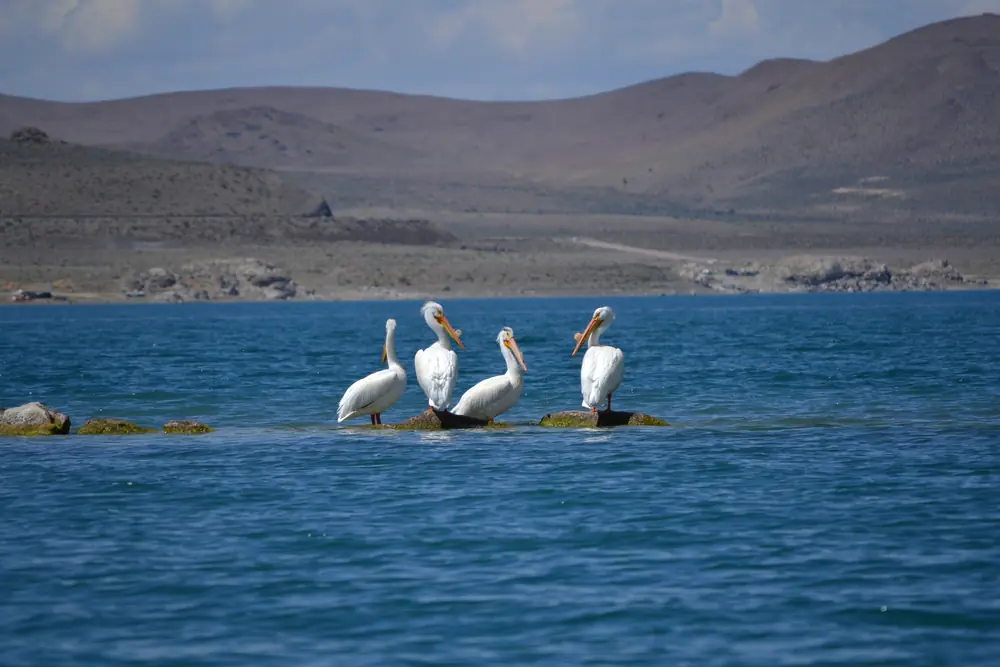
Pyramid Lake, northeast of Reno, holds a bird colony that surprises first-time visitors: huge white pelicans in a desert. The U.S. Fish and Wildlife Service says Anaho Island National Wildlife Refuge offers safe nesting habitat for one of the largest colonies of American white pelicans in the western United States.
-
Pelicans back on the island
Usually February or March; pelicans also pass through the region from March to May · Anaho Island in Pyramid Lake (closed to the public); pelicans seen on the Truckee River and nearby lakes
A Truckee River conservation guide says pelicans and other breeding birds normally arrive on Anaho Island in February or March and migrate through the region in March to May. The island refuge is off limits to visitors, and for the surrounding lake the Fish and Wildlife Service sends people to the Pyramid Lake Paiute Tribe, which sets the rules on camping, boating, fishing and permits. The same guide says pelicans can also be watched on the Truckee River upstream as far as Reno, at Washoe Lake and at Lake Tahoe, and below Marble Bluff Dam on the lower river. Look for a very large, white bird with black wing tips, flying low in a line or floating in a flock.
-
Cutthroat trout move inshore
March and April, with the shore bite usually peaking in mid-April · Pyramid Lake shoreline on the Pyramid Lake Paiute Reservation
The tribe’s fisheries program says the lake’s Lahontan cutthroat trout season runs from October 1 to June 30 and that anglers 12 and older need a tribal fishing permit. As the water warms toward the high 40s in March and April, the cutthroat gather inshore looking for running water to spawn, and the shore bite usually peaks in mid-April. At the tribe’s hatchery, weekly spawns take place in April. A Nevada Independent report says the Marble Bluff Fish Passage, built in 1975 about 3 miles above the lake, sorts fish by strain as they move toward the river.
-
Cui-ui, a fish found nowhere else
Large runs typically come in May, after this month · Pyramid Lake and the lower Truckee River
The cui-ui is a rare sucker-type fish found today only in Pyramid Lake, and it was listed as an endangered species in 1967. The tribal fisheries program says large runs up the Truckee River typically happen in May, when higher flows bring muddy water to the lake with temperatures in the mid 50s. March is the month to learn the place, not to expect the run.
Take binoculars to the western shore, and follow the posted rules of the Pyramid Lake Paiute Tribe, because the lake is tribal land.
Where do migrating birds stop in the Lahontan Valley?
In the high desert, water is a rare resource, and spring migrants find it with remarkable precision. March is the early edge of the season in northern Nevada: ducks, geese and swans are still using open water, and the great wave of shorebirds arrives later, in late April and May.
-
Lahontan Valley wetlands, a shorebird reserve
Waterfowl in March; the shorebird wave in late April and May · Stillwater National Wildlife Refuge and Carson Lake, near Fallon
Audubon reports that in May 1988 the Western Hemisphere Shorebird Reserve Network added 220,000 acres of the Lahontan Valley wetlands, protecting more than 100,000 shorebirds a year. The valley once supported about 250,000 a year, and long-billed dowitchers have been counted at more than 100,000 in a single day. Western and least sandpipers, American avocets, Wilson’s phalaropes and long-billed curlews also use the wetlands. Stillwater refuge reports over 250 species of birds seen there, names tundra swans among them and has an auto tour loop for drivers. Survey reports describe the main shorebird migration as late April and May, so March visitors should expect ducks, swans and early arrivals.
Water supply decides everything. In the drought spring of 2022, Audubon reported, the irrigation allocation was only 70% of normal deliveries, which cut the water reaching the wetlands, and managers said that limited habitat for shorebirds.
-
The Spring Wings festival
Annual, held in spring; 2027 dates not posted when this page was written · Fallon, Churchill County
The Spring Wings Birding and Outdoor Festival has been hosted by Stillwater National Wildlife Refuge and the Friends of Stillwater NWR; the Fish and Wildlife Service announced the 14th annual festival in 2011. The date moves from year to year, so check with the refuge or Fallon’s tourism office.
A March trip to the Lahontan Valley is a good baseline. Return in late April or May and compare your two lists.
Which Nevada mammals wake up or have young in March?
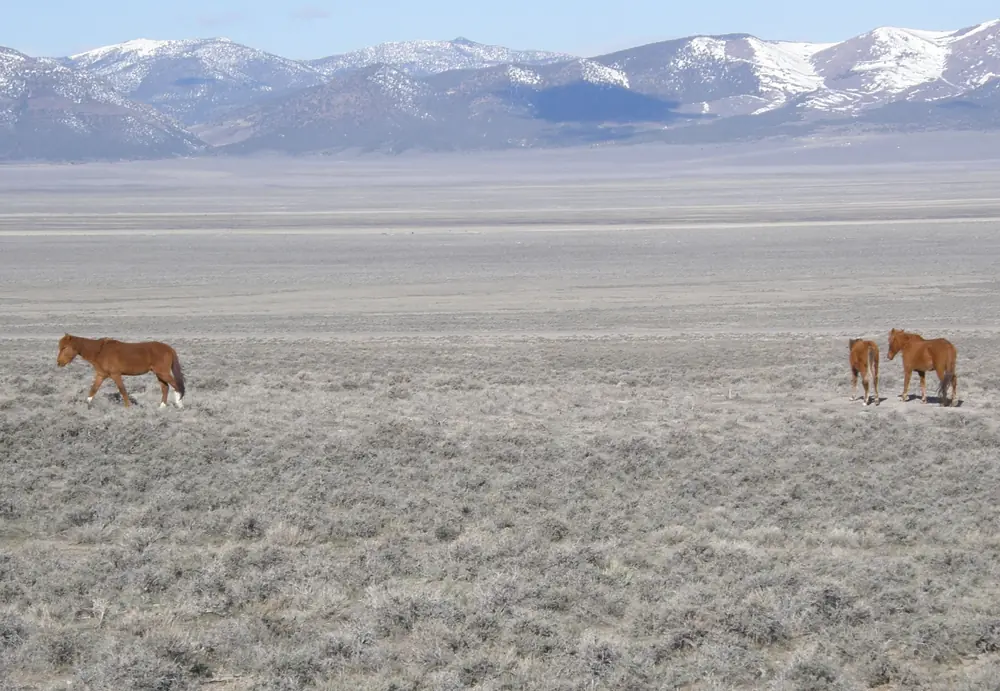
Two of the state’s best-known mammals, black bears and wild horses, have their spring turning point this month. Neither calls for a trip into the backcountry, but both ask for good manners.
-
Black bears leave their dens
Mid-March for the first bears; females with cubs usually mid-April to early May · Sierra foothills around Reno, Carson City and Lake Tahoe
NDOW’s black bear page places the species in the mountains and foothills of the Sierra Nevada and the Lake Tahoe area. In an older NDOW news release, biologist Carl Lackey said mid-March is when bears leave their dens to search for food, that males and females without cubs come out first, and that females with cubs usually follow from mid-April to early May. NDOW’s advice to people in bear country was to keep garage doors shut and car doors locked and to keep all food sources, including garbage, away from bears. Feeding big game animals is against Nevada law, and the release counted bird seed and vegetables left out for bears as feeding.
-
Wild horse foals
Foaling usually begins in March and runs through June, busiest in late April and early May · Herd areas across the Great Basin, including north of Reno
The Bureau of Land Management’s population table estimated 37,426 wild horses and 5,146 burros in Nevada on March 1, 2026, out of 61,523 horses and 23,943 burros nationally. A wild horse advocacy group describes the foaling season as typically beginning in March and lasting through June, with the busiest weeks in late April and early May, and one of its authors saw a band with new foals north of Reno on May 1. That timing comes from a single advocacy source, so treat the peak as a rough guide. Stay far back from mares and foals, keep dogs leashed and never try to feed or touch a wild horse.
Both stories come back to the same rule: wild animals with young or an empty stomach are at their least predictable. Watch from a distance, and note what you see under “mammal watch” in the Field Journal.
When do wildflowers and Joshua trees bloom around Las Vegas in March?
In the Mojave, the bloom starts at the bottom of the slope and climbs. Whether March is spectacular or sparse depends on the winter rain, which nobody can know yet, so the useful thing to learn now is the order in which things open.
-
Two springs at Red Rock Canyon, week by week
Early March to late April in the two spring reports · Red Rock Canyon National Conservation Area, west of Las Vegas
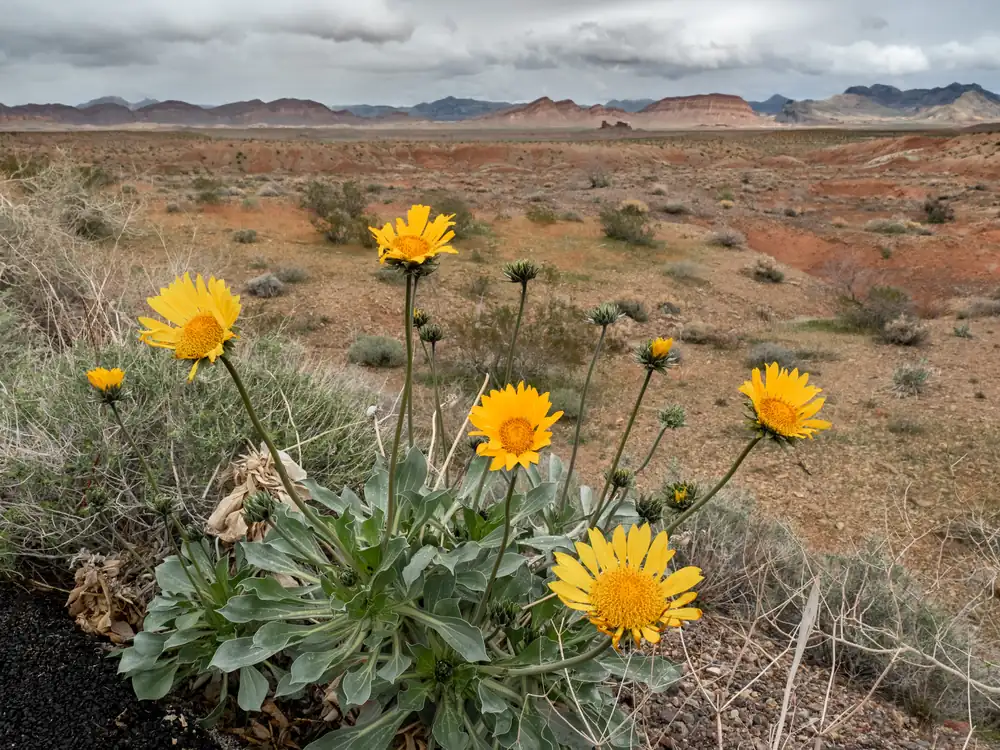
The conservation area posted weekly bloom reports in 2019 and 2020. In 2019, Joshua tree flower buds were appearing along State Route 159 in the week of March 3, Fremont phacelia was blooming well around Willow Spring and Lost Creek in the week of March 17, and the Joshua trees were spectacular with creamy white blooms in the week of March 24. Firecracker penstemon and desert marigold followed in the week of April 7. In 2020, desert paintbrush, filaree, wild rhubarb, pointleaf manzanita and silk tassel were out between March 14 and 21, freckled milkvetch and pretty shooting star near seeps were out by March 28, and globemallow came in early April. These are two individual years, not a calendar: a wet or a dry winter can shift every date. National Park Service photographs from Northshore Road at Lake Mead show the yellow sunray already in bloom on March 10, 2020.
-
Elevation sets the schedule
Low desert first, high country weeks later · Lake Mead National Recreation Area, Red Rock Canyon, the Spring Mountains and Mojave National Preserve
The National Park Service says in the neighboring Mojave National Preserve that peak wildflower viewing advances upslope at about 1,000 feet every two weeks, and that a few well-timed soaking storms produce a memorable bloom. Lake Mead National Recreation Area has roughly 700 species of flowering plants, and the Park Service notes that favorable winter and early spring rains transform bare slopes into a mass of color. A Nevada conservation group says the Mojave Desert hosts nearly 2,000 plant species.
-
Visiting Red Rock without damaging it
Scenic Drive reservations posted for October 1 to May 31 · Red Rock Canyon Scenic Drive
The conservation area’s website says the Scenic Drive requires a timed-entry reservation from October 1 through May 31 during the daytime hours of 8 a.m. to 5 p.m., and posts longer hours from April to September. Rules change, so check before you go, and stay on hard-packed trails, as the conservation group advises, because fragile desert soils recover slowly.
Pick one wash or roadside and photograph it weekly through April, as the Red Rock reports did.
How cold, windy and snowy is March in Nevada?
Very different on the two ends of the state. In NOAA’s 1991 to 2020 normals, the average high in March is about 71 °F at the Las Vegas airport and about 52 °F at the Ely airport, where the average low is below 23 °F. Mountain stations still collect real snow: the Mt. Charleston Fire Station averages 17.2 inches in March and Great Basin National Park averages 7.3 inches.
| Station | Average high | Average low | Precipitation | Snowfall |
|---|---|---|---|---|
| Reno (airport) | 59.2 °F | 34.0 °F | 0.80 in | 2.9 in |
| Carson City | 56.2 °F | 31.6 °F | 1.24 in | 1.6 in |
| Winnemucca (airport) | 57.7 °F | 27.5 °F | 0.87 in | 3.0 in |
| Elko (airport) | 53.1 °F | 26.8 °F | 0.97 in | 5.5 in |
| Ely (airport) | 52.4 °F | 22.9 °F | 0.98 in | 9.5 in |
| Great Basin National Park | 48.3 °F | 27.0 °F | 1.21 in | 7.3 in |
| Tonopah (airport) | 57.6 °F | 30.1 °F | 0.52 in | not published |
| Mt. Charleston Fire Station | 49.1 °F | 25.7 °F | 2.91 in | 17.2 in |
| Las Vegas (airport) | 71.1 °F | 50.5 °F | 0.42 in | 0.0 in |
Wind is the hazard that surprises visitors. The National Weather Service office in Las Vegas says strong winds with cold-season storms can occur from late September to early June, are most common in spring and fall, and that winds over 50 mph, though infrequent, bring blowing dust and sand that can be among the most provoking weather the valley sees. Mountain roads are another concern: the National Park Service describes spring at Great Basin National Park as a transitional time, advises visitors to come ready for cold and snow or the start of a warm summer, and says the Wheeler Peak Scenic Drive closes to vehicles in winter.
NOAA’s Climate Prediction Center posts new three-month outlooks each month, around mid-month, at its 90-day outlook page. For a forecast on the day, use our weather page, and watch for spring cloud patterns in the cloud guide.
When is the last spring freeze in Nevada?
Later than most people think. In NOAA’s 1991 to 2020 normals, the median last 32 °F freeze at the Reno airport is April 20, at the Elko airport May 29 and at the Ely airport June 12, so tender plants in the high valleys are safest in June. In the Las Vegas Valley the table shows freezing usually ending in January or February, so March frost there is a stray event.
| Station | One year in ten | Median | Nine years in ten |
|---|---|---|---|
| Reno | Apr 6 | Apr 20 | May 5 |
| Fallon | Apr 21 | May 6 | May 25 |
| Winnemucca | May 10 | May 31 | Jun 19 |
| Elko | May 10 | May 29 | Jun 16 |
| Ely | May 29 | Jun 12 | Jun 28 |
| Tonopah | Apr 14 | Apr 30 | May 22 |
| Las Vegas | Dec 20 | Jan 20 | Feb 14 |
| Laughlin | Dec 11 | Jan 5 | Feb 13 |
Each row is one station, not a region: Ely’s airport sits about 1,800 feet higher than Reno’s and behaves accordingly. Planting by the earliest column is a gamble, because only the luckiest tenth of springs are freeze-free by then. For more stations, see our Nevada frost dates.
How much daylight does Nevada gain in March, and when do the clocks change?
March is one of the two months in which the day lengthens fastest, and Nevada's cities gain between 66 minutes (Laughlin) and 82 minutes (Winnemucca and Elko) of daylight over the course of the month, or about 2 to 3 minutes a day. The March equinox arrives on Saturday the 20th at 1:25 p.m. Pacific daylight time (2:25 p.m. in West Wendover), and on that day daylight and darkness come close to equal.
| City | Mar 1 | Mar 31 | Gained | Per day |
|---|---|---|---|---|
| Reno | 11 h 19 m | 12 h 37 m | 78 min | 2.6 min |
| Fallon | 11 h 19 m | 12 h 37 m | 78 min | 2.6 min |
| Winnemucca | 11 h 17 m | 12 h 39 m | 82 min | 2.7 min |
| Elko | 11 h 17 m | 12 h 39 m | 82 min | 2.7 min |
| Ely | 11 h 20 m | 12 h 36 m | 76 min | 2.5 min |
| Tonopah | 11 h 21 m | 12 h 35 m | 74 min | 2.5 min |
| Las Vegas | 11 h 24 m | 12 h 34 m | 70 min | 2.3 min |
| Laughlin | 11 h 26 m | 12 h 32 m | 66 min | 2.2 min |
Clocks spring forward at 2:00 a.m. on Sunday, March 14, in Nevada, as in most of the country; Hawaii and most of Arizona skip the change. The U.S. Naval Observatory’s tables show the jump. In Las Vegas the Sun rises at 5:54 a.m. and sets at 5:46 p.m. Pacific standard time on March 13, then rises at 6:53 a.m. and sets at 6:47 p.m. Pacific daylight time on March 14. In Reno the same two days read 6:14 a.m. and 6:04 p.m. standard time, then 7:12 a.m. and 7:05 p.m. daylight time. Plan a dawn lek visit with the clocks in mind: the same sunrise is an hour later on the clock after March 14. Compare your own city on our daylight page.
What is in the night sky over Nevada in March?
March offers a quiet but rewarding sky: a bright Worm Moon, two evening planets, two morning planets and the first pre-dawn views of the Milky Way’s center. Times are Pacific; West Wendover keeps Mountain time and is an hour later. Times before March 14 are standard time, and later times are daylight time.
-
Worm Moon
Full at 3:44 a.m. Pacific daylight time on Monday, March 22; best evening is Sunday, March 21 · Anywhere with a clear eastern horizon
Folklore calls the March full moon the Worm Moon. The exact moment of full comes before dawn on the 22nd, which means the Moon already looks round as it rises near sunset on Sunday the 21st, and again the next evening. See the moon table below for the other phases.
-
Jupiter and Mars in the evening
All month; the Moon passes Jupiter on the evenings of March 18 and 19, and Mars and Jupiter are about four degrees apart on the evening of March 30 (our calculation) · High in the east and south after dark, in the constellation Leo
Jupiter was opposite the Sun on February 10 and still dominates the evening sky, at magnitude about -2.5 on March 1 (our calculation). After dark on the 18th and 19th, a bright gibbous Moon (88% lit) parks itself beside Jupiter, within roughly a degree by our calculation. Mars is fainter, about magnitude -1.1 on March 1 and dimming; on the evening of March 30 the two are about four degrees apart, also by our calculation. The pair sets earlier as the month goes on.
-
Venus and Mercury before sunrise
Mercury is best from about March 8 to 25, with its greatest western elongation on March 17; Venus is brilliant all month · Low in the east-southeast in the hour before sunrise
Venus blazes in the dawn at about magnitude -4.1. On the first of the month it comes up almost two hours before the Sun, by our calculation, and then it slips closer to the Sun week by week. A thin waning crescent Moon hangs near Venus on the 4th and 5th, again by our calculation. Mercury stands farthest west of the Sun (27.6 degrees) on March 17, and is easiest to catch low in the east-southeast with a flat horizon and binoculars. Saturn sinks into the evening twilight through March and is gone by April.
-
The Milky Way returns before dawn
Best around the March 8 new moon, roughly March 5 to 16, and again on March 31 · Dark sites such as Great Basin National Park and the open desert
The bright center of the Milky Way climbs the southeast sky before dawn for the first time this year. At 40 degrees north the window is about an hour and a half of moonless dark at best, and longer farther south; these windows are our calculations, so treat them as approximate.
| Phase | Date | Time |
|---|---|---|
| New Moon | Mar 8 | 1:29 a.m. PST |
| First Quarter | Mar 15 | 9:25 a.m. PDT |
| Full Moon (Worm Moon) | Mar 22 | 3:44 a.m. PDT |
| Last Quarter | Mar 29 | 5:54 p.m. PDT |
Check the phases for any date on our moon phase page.
What can families do outdoors in Nevada in March?
Most programs below are annual, with dates that organizers announce later.
- Make a Mojave Max guess. The contest has been an annual spring tradition for children in southern Nevada. Ask Clark County or the Springs Preserve for the 2027 rules and dates, and write down your guess in a journal. Remember that recent emergences ran from late April to May 10.
- Mark the equinox. On March 20, measure a fence post’s noon shadow, then compare it with the shadow you measured at the winter midpoint in Nevada in February.
- Report spring arrivals. You can send hummingbird and other migrant sightings to Journey North, and any bird list to eBird. Note the date of your first swallow, bluebird or robin.
- Watch pelicans from the shore. Take binoculars to the western shore of Pyramid Lake or the Truckee River below Marble Bluff, and obey tribal rules.
- Visit Great Basin National Park. As of late September 2026, the park listed 30-minute lantern tours of Lehman Caves and said full tours would return when infrastructure work was finished, so check the park’s alerts and conditions page and reserve ahead. Lower Lehman Creek Campground is the only campground open year-round.
- Try the Field Journal. The Naturalist’s Field Journal has pages for the first birds, the same place twice and the signs of spring. Browse other states on the nature index.
Safety notes for March in Nevada
March mixes winter hazards with the first spring ones, often within the same day.
- Spring turkey hunts begin. NDOW’s adopted regulation for 2027 lists a youth hunt (hunt 0138) from March 20 to May 2, 2027, in specific units of Lyon, Elko, White Pine, Pershing, Lander and Lincoln counties, and a limited-entry hunt that opens on the last Saturday in March (March 27) and runs through the first Sunday in May (May 2). Lander County units 151 and 152 use three separate windows: March 27 to April 4, April 10 to 18 and April 24 to May 2. The Moapa Valley youth hunt is listed as closed in 2027, and hunting is not permitted inside Great Basin National Park. Tags are by drawing, and the application deadline is already past, so most readers are birders, not hunters: expect hunters in the field at dawn in these areas.
- Late goose season ends early. Nevada’s late light-goose season usually closes in the first days of March, and some wildlife management areas are closed to it. NDOW had not published 2027 migratory bird dates where we could read them, so check its waterfowl regulations before you walk a wetland.
- Trapping stays open. The furbearer season for beaver, mink and muskrat runs statewide from October 1 to April 30. The otter season runs October 1 to March 31 in Elko, Eureka, Humboldt, Lander and Pershing counties. Keep dogs close and on leash near streams and ditches.
- Wear something bright. NDOW’s upland game checklist calls orange clothing highly recommended in Nevada, and the pages we read set no orange rule for the spring turkey hunts, so confirm the requirement for your hunt in the current regulations. Hikers on hunting land should wear a bright color too.
- Rattlesnakes. NDOW says rattlesnakes are most active from March to October and that Nevada has six species. Look before you step, sit or reach, and give any snake space.
- Bears and food. From mid-March on, lock away garbage and pet food in bear country, and skip the bird feeder, as NDOW advises.
- Wind and dust. The National Weather Service says winds over 50 mph, though infrequent, bring blowing dust that cuts visibility. Slow down and secure loose items.
- Flash floods. Spring storms can send water down desert washes. The National Weather Service warns that fast water only 6 inches deep can topple a grown person and a foot of it can sweep away most cars, so never drive into a flooded road.
- Mountain snow. Spring snow can still close roads in the high ranges of the south and east. The Sierra Avalanche Center posts a daily forecast for the central Sierra Nevada, but its home page does not say whether the Carson Range is included, so check its map before relying on it.
Check the local forecast before heading out.
Sources (51)
- Nevada Department of Wildlife: Desert Tortoise
- Fox5 Las Vegas: Mojave Max still underground, nearing record late emergence (May 4, 2026)
- Fox5 Las Vegas: Mojave Max emergence contest winner (May 22, 2026)
- KNPR: Mojave Max emerges, signaling spring (April 2017)
- News3LV: Mojave Max finally emerges from burrow (April 2023)
- Springs Preserve: Wildlife and desert tortoise habitat
- National Park Service, Lake Mead National Recreation Area: Desert tortoise
- Nevada Department of Wildlife: Greater Sage-Grouse
- Nevada Shed Antler Course (Hunter-Ed.com): Sage-grouse information
- University of Nevada, Reno Extension: sage-grouse fact sheet
- Discover Wildlife: Greater sage-grouse leks
- U.S. Fish and Wildlife Service: Anaho Island National Wildlife Refuge
- Truckee River Guide: American white pelican
- Pyramid Lake Fisheries: Fishing seasons
- Pyramid Lake Fisheries: Hatcheries
- The Nevada Independent: The complex comeback of Lahontan cutthroat trout
- Audubon: Lahontan Wetlands celebrates 30 years as an internationally important site
- Audubon: Collaborative efforts elevate shorebirds during spring migration in the Lahontan Valley
- U.S. Fish and Wildlife Service: Stillwater National Wildlife Refuge
- U.S. Fish and Wildlife Service: Spring Wings Festival (2011 announcement)
- Nevada Department of Wildlife: Black Bear
- Carson Now: Black bears emerging in spring (Nevada Department of Wildlife release)
- Northern Nevada Business Weekly: Bears awakening after hibernation (March 2014)
- Bureau of Land Management: Wild Horse and Burro Program data
- Return to Freedom: Spring in full swing for Great Basin wild horses
- Red Rock Canyon National Conservation Area: Spring 2019 wildflower report
- Red Rock Canyon National Conservation Area: Spring 2020 wildflower report
- Red Rock Canyon National Conservation Area: Visitor information and Scenic Drive reservations
- National Park Service, Mojave National Preserve: Wildflowers
- National Park Service, Lake Mead National Recreation Area: Plants
- Friends of Nevada Wilderness: The desert in bloom
- NOAA NCEI data service: monthly normals 1991–2020 for ten Nevada stations
- National Weather Service Las Vegas: Climate of Las Vegas
- National Park Service, Great Basin National Park: Alerts and conditions
- National Park Service, Great Basin National Park: Visiting in winter
- News3LV: Lehman Caves closed through spring for new lighting
- NOAA Climate Prediction Center: 90-day outlooks
- U.S. Naval Observatory: Earth’s seasons (2027 equinox data service)
- U.S. Naval Observatory: Phases of the Moon, 2027
- U.S. Naval Observatory: Sun and Moon rise, set and transit (Las Vegas and Reno, March 13, 14 and 20, 2027)
- Sea and Sky: Astronomy calendar of celestial events 2027
- NIST: Daylight saving time
- NDOW Commission Regulation 26-13 as adopted: upland game, furbearer and spring turkey seasons
- NDOW: Upland game hunting checklist (orange clothing recommended)
- Nevada Department of Wildlife: Living with rattlesnakes
- National Weather Service: Turn around, don’t drown
- Sierra Avalanche Center
- Journey North: Tracking wildlife migration and seasonal change
- Wikimedia Commons: Desert tortoise at Red Rock National Conservation Area (photographed March 26, 2020)
- Wikimedia Commons: Sunray in Bloom on Northshore Road, Lake Mead National Recreation Area (National Park Service, March 10, 2020)
- Photos via Wikimedia Commons; licenses and photographers are credited under each picture

.jpg)
