What to look for in nature in Nevada this January
January is the heart of Nevada’s winter. Bald eagles reach their peak, gathering on calving ranches in the Carson Valley and on the open water of Lake Mead and Lake Tahoe while volunteers count them. Calm spells fill the northern valleys with pogonip, the freezing fog that coats sagebrush in ice, and snow surveyors go up the mountains to weigh the snowpack that will feed next summer’s rivers. White-tailed jackrabbits are dressed in white, pikas live off their haystacks under the snow, and great horned owls begin to lay eggs. In the south, the ponds of the Las Vegas valley fill with wintering ducks. Overhead come the Quadrantid meteors, perihelion and a Wolf Moon supermoon. The sections below go from the Tahoe shore to the Mojave.
Other months in Nevada: October, November, December, February.
Start here
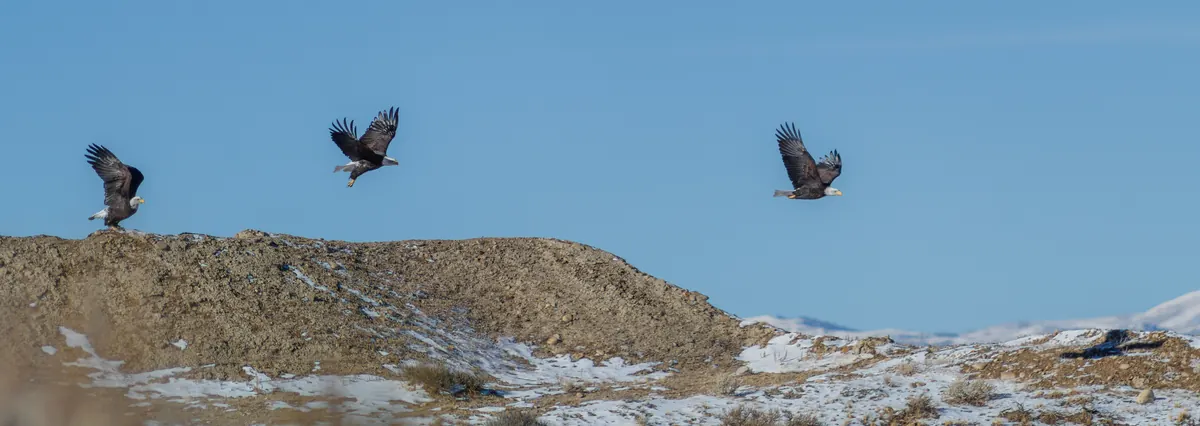
- Eagles on the ranches. Drive the public roads around Genoa and Minden on a January morning and check the tall cottonwoods and power poles. Calving season draws bald eagles and other raptors to the Carson Valley in winter.
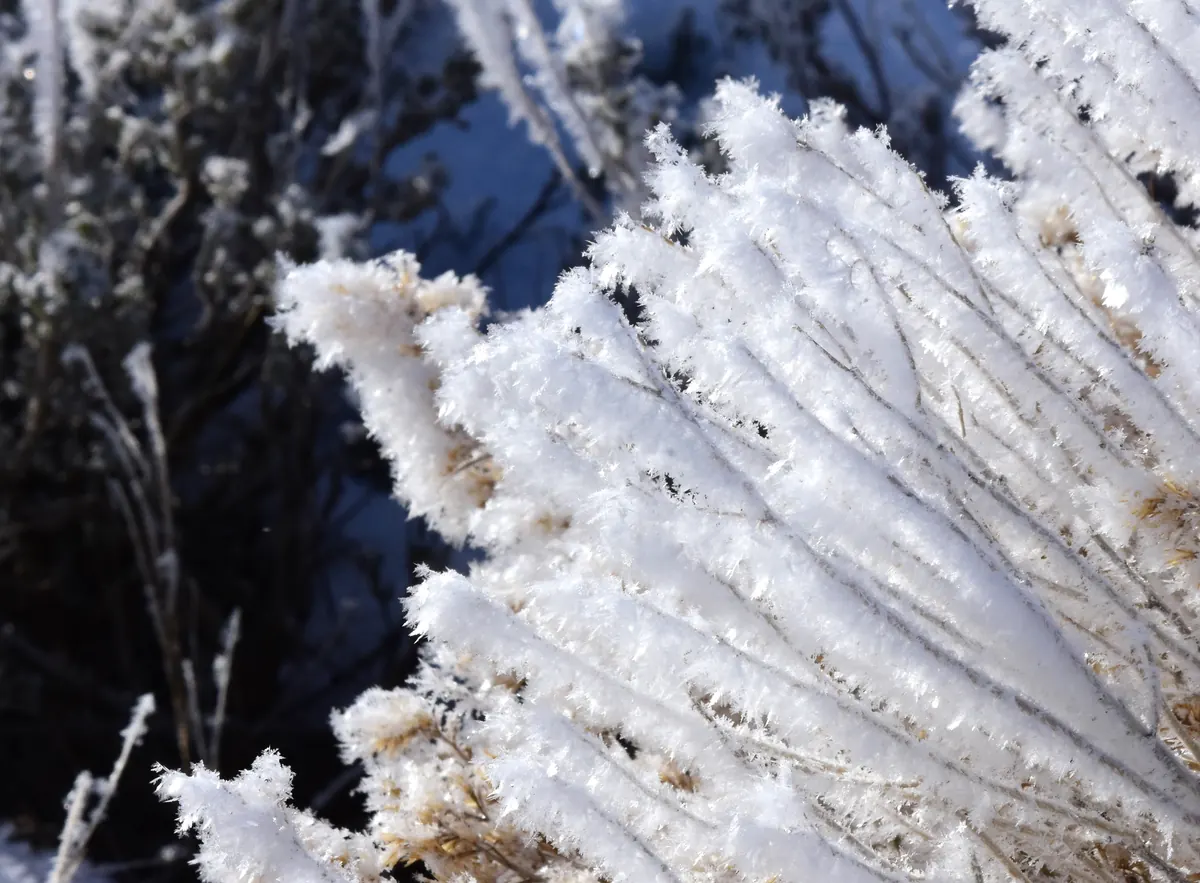
- Find frost after a foggy night. When the northern valleys sit in freezing fog, go out at first light to see rime on sagebrush and fences. A hand lens shows the ice spikes, and the sun can melt them in an hour.
- Quadrantids and the Wolf Moon. The Quadrantids peak overnight January 3 to 4 under a nearly moonless sky, and the January 22 Wolf Moon (exactly full at 4:17 a.m. PST) is the year’s nearest full moon.
In the Naturalist’s Field Journal, log every bald eagle and owl under “birds I have seen,” sketch jackrabbit or mouse prints on the tracks-to-know page, keep a daily field log of fog mornings with the temperature, and note the Quadrantids or the Wolf Moon rise on a dusk and dawn watch. Return to the same spot each week and record the snow depth on “the same place twice.”
Regions used below: Reno, Carson City and Lake Tahoe; Northern Nevada: Winnemucca, Elko and the Ruby Mountains; Central Nevada: Fallon, Austin and Tonopah; Eastern Nevada: Ely and Great Basin National Park; Southern Nevada: Las Vegas, the Spring Mountains and the Mojave.
Where can you see bald eagles in Nevada in January?
January is peak eagle season. The birds that began trickling in during November have now settled in for the cold months, and the National Park Service says Lake Mead and Lake Mohave hold their largest numbers between December and February. Bald eagles hunt fish and waterfowl, so they gather wherever water stays open, but in western Nevada many of them spend the month on cattle ranches instead. It is also counting month: a national midwinter survey, begun in 1979, tallies wintering eagles each January.
-
Calving season in the Carson Valley
Mostly January and February; some birds from December · Ranch country around Genoa, Minden and Gardnerville
Ranchers in the Carson Valley calve in the dead of winter, and eagles come for the afterbirth and for calves that did not survive. Carson Valley’s tourism office says bald eagles, golden eagles, falcons and hawks gather there for the afterbirth from December to early February. Scan power poles and bare cottonwoods from public roads; the pastures are private. The valley’s Eagles and Agriculture weekend, run by the chamber of commerce, is held each winter in late January or early February (the 2026 edition ran February 5 to 8). The chamber had not announced its 2027 weekend when this page went up; check with the organizer at carsonvalleynv.org.
-
Counting from boats on Lake Mead
Every January · Lake Mead and Lake Mohave, especially the Overton Arm
Lake Mead National Recreation Area has taken part in the national midwinter count since 1981, with a standardized method since 2001, and its eagles favor the Overton Arm, where the Virgin and Muddy rivers enter the lake. The park reports that its eagle counts rose sharply after 2009, with the largest numbers between December and February. From shore, try the coves and points near Overton on a calm morning.
-
Lake Tahoe’s open water
All month; the count is usually a weekday morning in early or mid January · Lakeshore from Incline Village and Sand Harbor to Zephyr Cove
Tahoe stays open when smaller lakes freeze, so eagles fish it all winter. The Tahoe Institute for Natural Science runs a midwinter count from 26 lookouts around the basin, a tradition that began in 1979. The 2026 count fell on Friday, January 9, and for 2027 the institute’s page said only that registration would open soon. Birders of every level can volunteer.
A mottled brown eagle with no white head is usually a young bald eagle, not a golden eagle; look for the heavier bill and white blotches under the wings. Log each sighting in eBird.
What is pogonip, and why do Nevada valleys sit in freezing fog?
On some January mornings Reno, Carson City, Winnemucca or Elko wake up inside a cold gray cloud, and every twig, fence wire and sagebrush leaf comes out furred with ice. Old-timers in the Great Basin call it pogonip. The word is usually traced to a Shoshone term for cloud, and it was in English print by 1860; the National Weather Service glossary lists pogonip as another name for ice fog.
-
How a valley fills with cold air
Calm, clear spells between storms, mostly December and January · Truckee Meadows, Carson and Eagle valleys, the Humboldt River valley, Elko and Spring Creek
After a storm leaves fresh snow or moist ground, a ridge of high pressure often parks over the Great Basin. On the long, clear nights the valley floor loses heat, the coldest and densest air drains off the slopes and pools at the bottom, and warmer air settles on top like a lid. That temperature inversion can hold for days. When the trapped air is near saturation and below freezing, fog forms out of tiny droplets that stay liquid well below 32 °F, and they freeze the instant they touch something solid.
-
Rime and hoar frost
Mornings during and after a fog event · Sagebrush, cottonwoods, rabbitbrush and fences on valley floors
The feathery ice that coats everything after a pogonip is mostly rime, built from fog droplets freezing on contact, and it grows on the windward side of a twig in little spikes. Hoar frost forms differently, straight from water vapor on still, clear nights, as flat six-sided plates and needles. A hand lens on a frosted sagebrush often shows both. Go early, since sun or wind can strip it within an hour.
-
When the lid traps smoke
The burn-code season runs November 1 to February 28 · Washoe County, including Reno and Sparks
The same lid holds down wood smoke and exhaust. Washoe County’s air quality managers post a daily color code from November through February: green means burning is fine, yellow asks residents to cut back, and red, called when an inversion is not expected to lift, bans wood burning for 24 hours or until the air improves. The code is posted at OurCleanAir.com.
Freezing fog also glazes roads and bridges with nearly invisible ice, and the weather offices in Reno and Elko can issue freezing fog advisories when visibility drops. Look at the forecast for your valley before an early drive, and leave extra stopping distance.
How is Nevada’s snowpack measured, and why does January matter?
Most of the water that runs in Nevada’s rivers in summer falls as mountain snow in winter. Sierra snow feeds the Truckee, Carson and Walker rivers and the farms around Fallon, according to the Western Regional Climate Center, so January storms are watched closely.
-
A Reno professor’s snow tube
Developed in the early 1900s · Mount Rose, above Reno
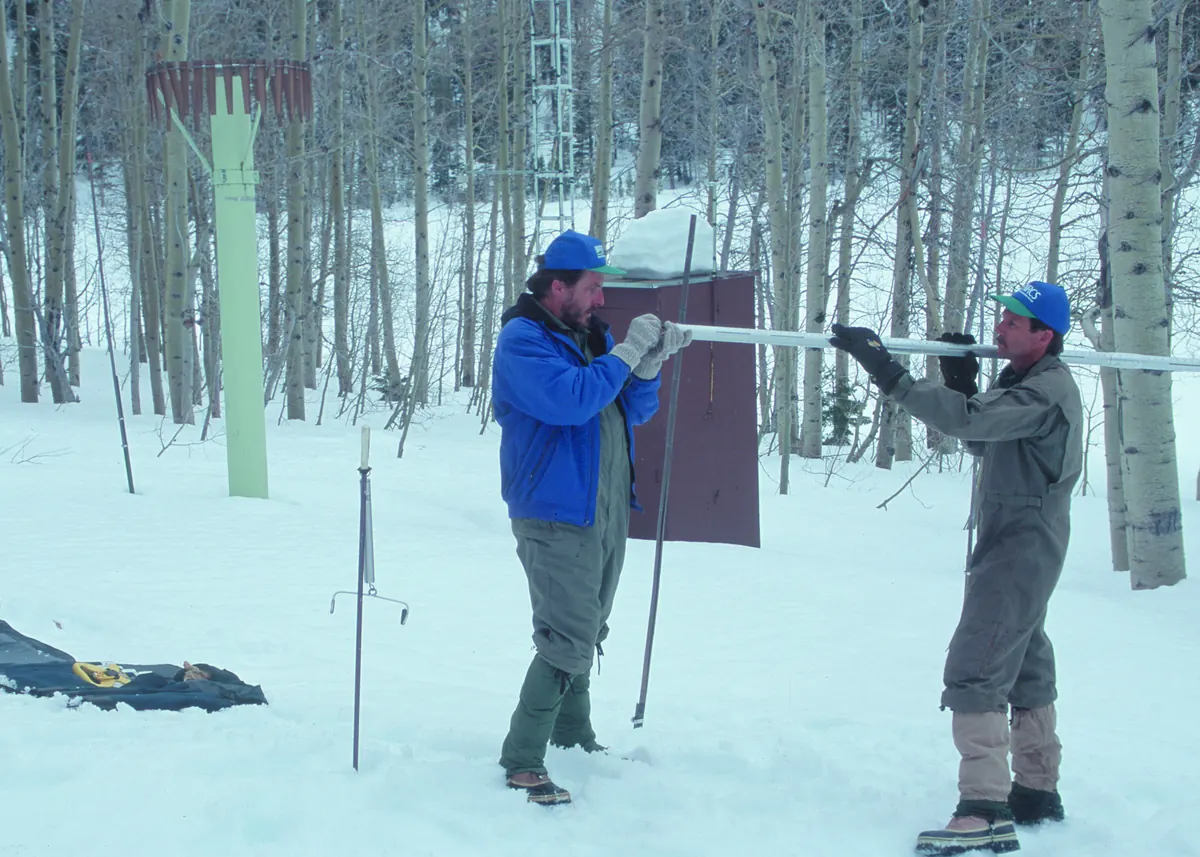
James E. Church taught classics at the University of Nevada from 1901 to 1939, and he spent his weekends on Mount Rose, where he and friends built a summit observatory in 1906. To work out how much water lay in the snow, he designed a long metal tube with a toothed cutter at the bottom: push it down to the ground, pull out the core, and weigh it. Sources date the Mount Rose sampler to between 1906 and 1908, and in 1910 Church issued what has been called the first water supply forecast in the West, for the Lake Tahoe and Truckee River area, where lake-level disputes made it valuable. Surveyors across the West still use tubes of nearly the same design.
-
Snow courses and SNOTEL
Through winter and spring · Mountain ranges statewide, from the Carson Range to the Rubies and the Snake Range
Today the Natural Resources Conservation Service runs Nevada’s snow survey. Crews still take hand measurements with snow tubes at snow courses, and automated SNOTEL stations report snow water content, snow depth, precipitation and temperature from the high country in near real time. The agency turns those numbers into water supply forecasts for farms, towns and reservoirs, and its Nevada Water Supply Outlook Reports come out each month from January through May.
-
Out on the snow yourself
Whenever there is enough snow · Great Basin National Park; Mount Rose Highway trailheads; Lamoille Canyon
At Great Basin National Park the Wheeler Peak Scenic Drive closes to cars above Upper Lehman Creek Campground in winter but stays open to people on skis and snowshoes, and the trails are not groomed. Dig a small pit and look at the wall: each storm leaves a layer, and a crust marks a thaw or a windy spell. Keep off steep slopes; the Park Service says avalanches are frequent high in the Snake Range through winter and spring.
Measure the snow in your yard after each storm and compare it with the nearest SNOTEL site.
How do Nevada’s mammals get through the coldest month?
Animals active in January rely on camouflage, stored food and the snow itself, and fresh snow records their every trip.
-
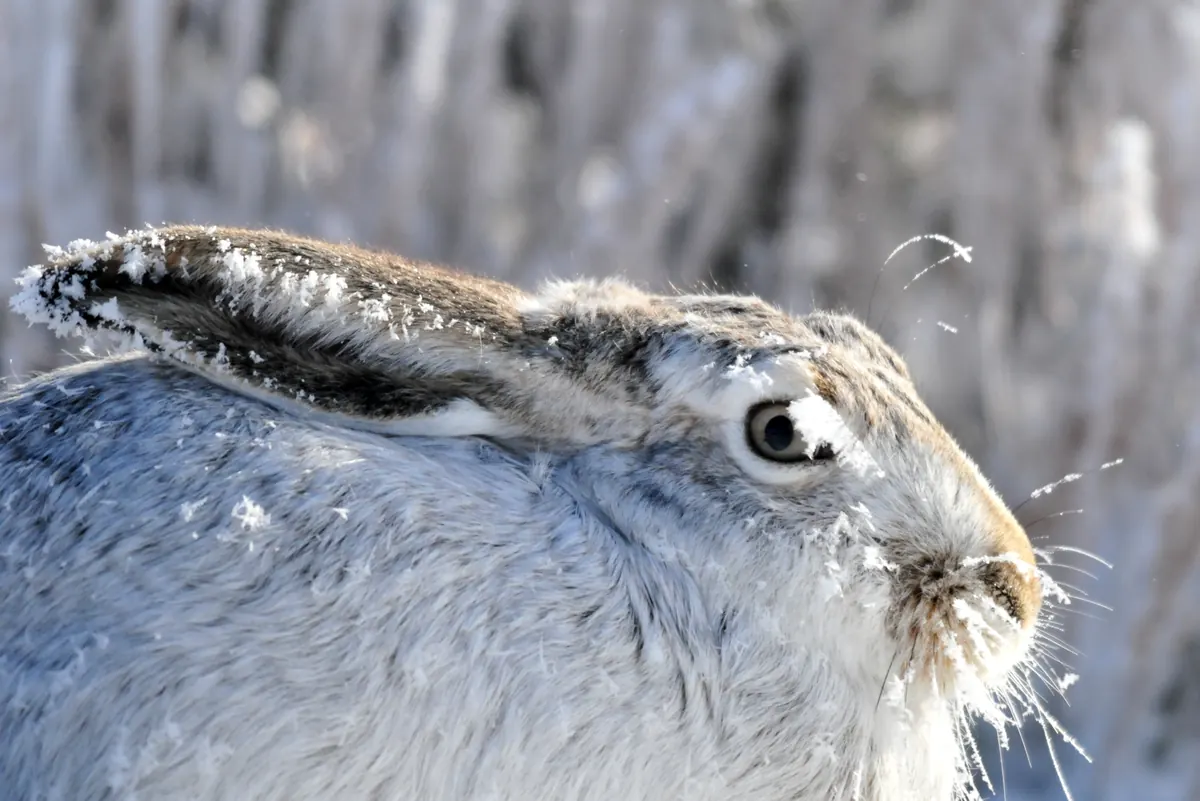
White-tailed jackrabbits turn pale
All winter · Sagebrush flats, grasslands and pastures in the north and center, and up into alpine country
Nevada has two jackrabbits, and only one changes color. NDOW describes the white-tailed jackrabbit as the state’s largest rabbit and says its fur turns mostly white in winter, unlike the black-tailed jackrabbit of the lower deserts. Both are hares. They feed from dusk to dawn and spend the day pressed into a shallow scrape under a shrub called a form, trusting to stillness; if flushed, NDOW says, a white-tail bounds away in leaps of 12 to 20 feet at up to 35 miles an hour. In snow, look for the big, widely spaced sets of four prints, with the two long hind feet landing ahead of the front pair.
-
Pikas living off their haystacks
All winter, under the snow · High rock slides near alpine meadows, such as those in the Snake Range, Ruby Mountains and Carson Range
The American pika, a six-ounce relative of rabbits, does not hibernate. NDOW notes that pikas spend summer cutting and storing plants for winter in haystacks tucked among the rocks, and a National Park Service brief explains that they then depend on a deep, insulating blanket of snow to survive cold temperatures while they eat their stores. That makes them sensitive to warm, thin-snow winters; in the Great Basin, researchers have found pikas gone from 44 percent of the sites where they were recorded within the last century or so. A sharp “meep” from a sunny talus slope can still give one away.
Yellow-bellied marmots, by contrast, stay underground until March. After a light snow, follow one trail of prints as far as it goes and sketch the route in your journal.
Which birds are worth looking for in Nevada’s mountains and towns in January?
January pushes some mountain birds down to where people can see them, and one resident starts nesting while the ground is frozen.
-
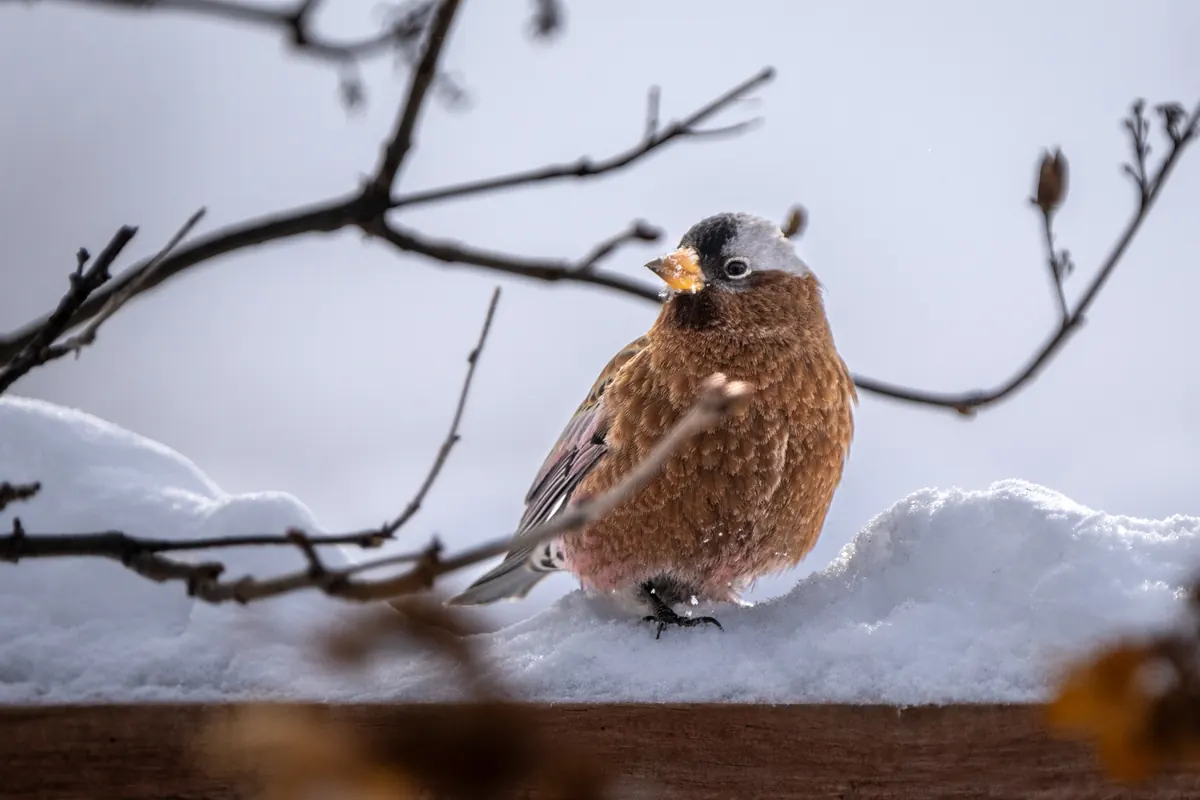
Rosy-finches in the high valleys
Winter, especially after heavy snow · Northeastern and eastern Nevada; feeders in mountain towns
The black rosy-finch nests among the highest peaks of the northern Great Basin, including the rock glacier below Wheeler Peak in Great Basin National Park and the high Ruby Mountains. Audubon notes that most move downhill in late fall, and that winter flocks turn up in high valleys and plateaus, sometimes in towns. Gray-crowned rosy-finches often travel with them. Look for dark, sparrow-sized birds with pink in the wings, wheeling over snowy fields.
-
Great horned owls on eggs
Courtship from December; eggs in midwinter · Old hawk or raven nests in cottonwoods and on cliff ledges, from Reno parks to the Las Vegas valley
Few North American birds nest earlier. Pairs that hooted duets in December now settle on a nest, usually an old stick nest built by a hawk or raven. Audubon explains why they start so early: the young need their parents through the summer and into fall to learn to hunt, so the clock starts in midwinter. The eggs take about a month to hatch. Two ear tufts showing over a stick nest give the female away; watch from a distance.
Write down the date of the first nest you find; next January you will have something to compare.
Where can you see wintering ducks around Las Vegas in January?
While northern Nevada’s marshes partly freeze, the ponds and channels of the Las Vegas valley stay open, and ducks from Canada and the northern states fill them from roughly November to March. By NOAA’s normals, a January afternoon at the Las Vegas airport averages about 58 °F, so this is the comfortable time of year to bird the desert floor.
-
Henderson Bird Viewing Preserve
Mornings, November to March for waterfowl · Henderson, southeast of Las Vegas
Red Rock Audubon describes the preserve as nine ponds over about 140 acres, with a paved, wheelchair-accessible path roughly three-quarters of a mile long and binoculars to borrow. A local birding guide lists northern shovelers, northern pintails, green-winged and cinnamon teal and buffleheads among the winter regulars. Go early, since morning is the best time and the preserve keeps short winter hours; check the City of Henderson’s current hours before you go and sign in at the visitor center.
-
Clark County Wetlands Park
Daily; winter is the busiest season for ducks · East end of Tropicana Avenue, along the Las Vegas Wash
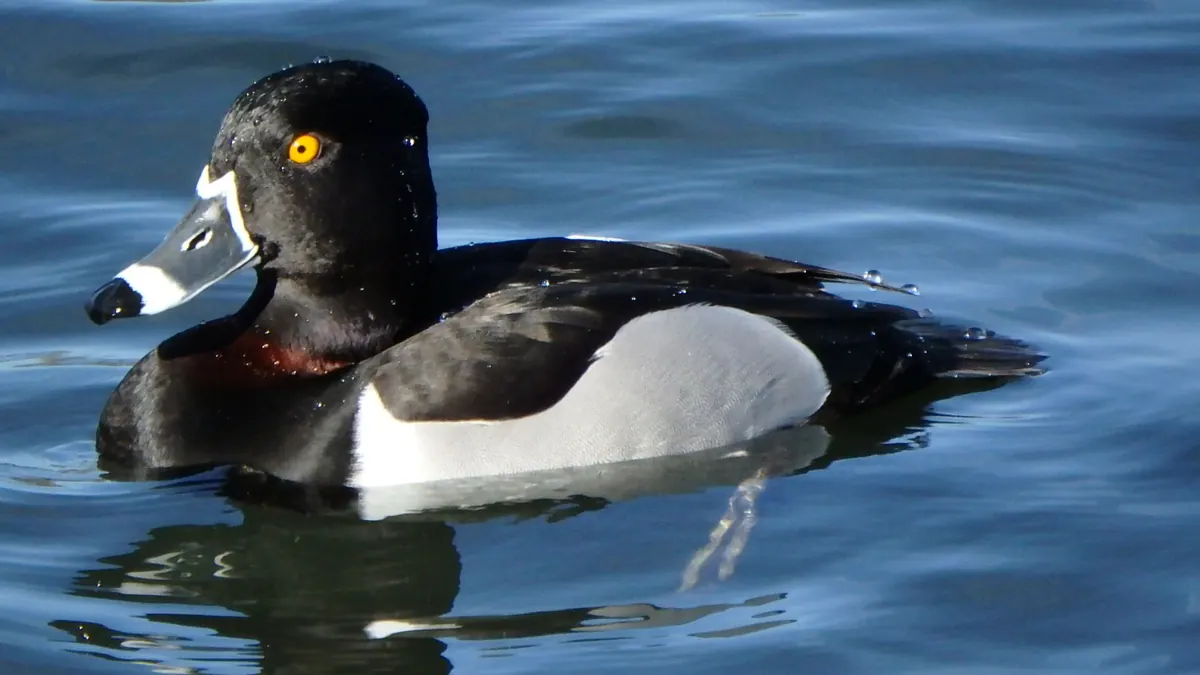
The park follows the Las Vegas Wash, the channel that drains the valley toward Lake Mead. Red Rock Audubon lists two miles of concrete trails in the nature preserve, along with gravel side paths, ponds and a bird blind. The park’s own lesson sheet on winter ducks features ring-necked ducks and mallards, with American coots on the same water.
-
Dabblers and divers
Any visit · Big Weir Bridge at the Wetlands Park, or any pond
A Wetlands Park lesson sheet for children sorts ducks into two groups. Dabblers, such as mallards and shovelers, tip bottoms-up to feed in the shallows and stand level on land because their legs sit near the middle of the body. Divers, such as ring-necked ducks, vanish completely underwater, and their legs sit far back, so they stand upright. Tally each kind from the bridge, then find the coots, which belong to the rail family.
Desert tortoises are still asleep in their burrows this month. Clark County students can enter the Mojave Max Emergence Contest, which asks them to guess when the Springs Preserve’s resident tortoise will first come out in spring; in 2024 he emerged on April 23.
Is there ice fishing in Nevada in January?
Yes, on a handful of high, cold reservoirs in the east and northeast, in winters cold enough to make it safe. January is when ice is most likely to be thick enough there, but even then it is not guaranteed.
-
Cave Lake
Ice fishing is popular from December through March · Cave Lake State Park, southeast of Ely
NDOW describes Cave Lake as a 32-acre reservoir with an average depth of 25 feet, stocked with rainbow and brown trout; the state record brown trout, at 27 pounds 5 ounces, came from here in 1984. The park also hosts the ice sculpture contest of Ely’s Fire and Ice Winter Festival (see the families section).
-
Comins Lake
Only when the ice allows; check NDOW’s reports · About 7 miles south of Ely
Comins is one of the area’s ice-fishing standbys, but coverage can be patchy: NDOW’s update on January 9, 2026, found the lake only half covered, with most of the south end open water, and repeated a warning worth memorizing: “All ice should be considered unsafe.”
Before you walk out, read the latest NDOW fishing report for the water you plan to visit, drill a test hole near shore, and turn back if the ice is under four inches of clear, hard ice. Wear ice picks where you can grab them, never fish alone, and keep children and dogs off untested ice.
How cold and snowy is January in Nevada, and could El Niño change that?
January is Nevada’s coldest month on average at most stations. The NOAA normals below run from the mild Mojave to the high valleys of the northeast, where nights in the low teens are routine; the snowiest station in the table is high in the Spring Mountains above Las Vegas.
| Station | Average high | Average low | Precipitation | Snowfall |
|---|---|---|---|---|
| Reno (airport) | 47.7 °F | 26.1 °F | 1.25 in | 5.2 in |
| Carson City | 45.5 °F | 24.1 °F | 1.72 in | 3.6 in |
| Winnemucca (airport) | 44.0 °F | 20.5 °F | 0.96 in | 4.4 in |
| Elko (airport) | 37.9 °F | 16.0 °F | 1.19 in | 10.4 in |
| Ryndon, near Elko | 37.1 °F | 12.1 °F | 1.16 in | not published |
| Ely (airport) | 41.0 °F | 12.4 °F | 0.75 in | 10.5 in |
| Great Basin National Park | 39.5 °F | 19.7 °F | 1.30 in | 12.3 in |
| Tonopah (airport) | 45.8 °F | 22.0 °F | 0.45 in | not published |
| Mt. Charleston Fire Station | 44.2 °F | 21.5 °F | 3.70 in | 20.5 in |
| Las Vegas (airport) | 58.5 °F | 40.5 °F | 0.56 in | 0.0 in |
Ryndon and Ely share the coldest nights in the table, averaging about 12 °F, and the Mt. Charleston station, at about 7,440 feet, averages over 20 inches of January snow while the valley below averages none. According to the Western Regional Climate Center, mountain barriers north and east of the state usually shield Nevada from Arctic air, though occasionally a cold air mass spills over them and brings a prolonged cold wave.
This winter has an unusual backdrop. Odds are high, above 90% in a NOAA ENSO discussion dated September 10, that the current El Niño turns very strong before Nevada’s winter is out. For the southern tip of the state there is a published local record to look at. A National Weather Service study of El Niño in the Las Vegas valley, by two forecasters at the Las Vegas office using the airport record, found that 13 of 18 El Niño episodes between 1951 and 2007 brought above-normal precipitation in the cold season from November to April, that measurable snow fell in only two of them, and that strong events ran near or below normal in temperature. A fact sheet by Nevada’s state climatologist and a colleague at University of Nevada, Reno Extension reaches a similar conclusion for Clark County and southern Nye and Lincoln counties, which tend to be cooler and wetter in El Niño winters, but finds no consistent El Niño signal for most of northern and central Nevada. So Las Vegas leans toward a wetter late winter, while Reno and Elko could go either way. NOAA refreshes its three-month outlooks monthly, and for frost dates in your town see our Nevada frost page.
How much daylight does Nevada gain in January?
The solstice is behind us, and every town in Nevada adds daylight all month. The gain starts slowly and speeds up as the month goes on, so the per-day figures in the table are averages: early January adds less than that, late January more. Sunrise keeps sliding later until early January, so at first the extra light arrives at the end of the day.
| City | Jan 1 | Jan 31 | Gained | Per day |
|---|---|---|---|---|
| Reno | 9 h 26 m | 10 h 10 m | 44 min | 1.5 min |
| Fallon | 9 h 27 m | 10 h 11 m | 44 min | 1.5 min |
| Winnemucca | 9 h 17 m | 10 h 05 m | 48 min | 1.6 min |
| Elko | 9 h 19 m | 10 h 05 m | 46 min | 1.5 min |
| Ely | 9 h 28 m | 10 h 12 m | 44 min | 1.5 min |
| Tonopah | 9 h 35 m | 10 h 17 m | 42 min | 1.4 min |
| Las Vegas | 9 h 45 m | 10 h 24 m | 39 min | 1.3 min |
| Laughlin | 9 h 50 m | 10 h 28 m | 38 min | 1.3 min |
The northern towns start the month with the shortest days and gain the most, which is why Winnemucca and Elko catch up with Las Vegas a little more each week. To see sunrise and sunset times for your own town on any date, use the daylight calculator.
What can you see in Nevada’s night sky in January?
January nights in Nevada run about 14 hours long, and the cold, dry air is often very clear once the valley fog burns off. Climb above an inversion to a pass or a dark campground, and the stars can be startling.
-
Quadrantid meteors
Night of Sunday, January 3, into the morning of Monday, January 4 · Face northeast; the radiant climbs through the night
Moonlight barely interferes this year, since only a slim crescent rises late in the night. The peak is short, roughly six hours, and forecasters differ on its timing; two published predictions put it at about 7:30 p.m. or 9:47 p.m. Pacific time on Sunday the 3rd. With the radiant low early on, Nevada’s best window is likely the hours just before Monday’s sunrise, when dozens per hour are possible from a dark site.
-
Earth closest to the sun
Saturday, January 2, at 6:33 p.m. Pacific time · Everywhere
That evening the sun is only some 91.4 million miles away, its nearest for 2027. Nevada stays cold anyway, because a low winter sun, not distance, rules the season.
-
The Wolf Moon, a supermoon
Night of Thursday, January 21, into Friday, January 22 · Rising in the east-northeast at dusk on the 21st
The moon is exactly full at 4:17 a.m. Pacific time on Friday the 22nd, about 14 hours after perigee, so this is 2027’s biggest and brightest full moon and a supermoon by every definition. Watch it rise on the 21st or the 22nd. A night later, on Saturday the 23rd, Jupiter and the bright star Regulus shine just beside it.
-
Venus at dawn, Jupiter all night
All month · Southeast before sunrise; east in the evening, high in the south by midnight
Venus, at greatest western elongation on Sunday, January 3, is the dazzling point in the southeast at dawn. Jupiter, approaching its February opposition, rises in early evening and is up nearly all night in Leo. Saturn sinks lower in the southwest after dusk. Sharp eyes may catch Mercury hugging the west-southwest horizon in twilight as January ends.
| Phase | Date | Time |
|---|---|---|
| New moon | Thursday, Jan 7 | 12:24 p.m. |
| First quarter | Friday, Jan 15 | 12:34 p.m. |
| Full moon, the Wolf Moon | Friday, Jan 22 | 4:17 a.m. (looks full the evenings of Jan 21 and 22) |
| Last quarter | Friday, Jan 29 | 2:55 a.m. |
Fog and cloud spoil many January nights, so check the cloud cover map first; local moonrise times are on the moon phase calendar.
What can families do outdoors in Nevada in January?
- Walk with a ranger on New Year’s Day. For January 1, 2026, Nevada State Parks led guided walks at 11 parks, from Washoe Lake, Spooner Lake and Mormon Station in the west to Cathedral Gorge, Valley of Fire and Ice Age Fossils in the south and east, plus a statewide mileage challenge. Watch the state parks events calendar in December for the 2027 list.
- Finish the Christmas Bird Count season. The count window runs through Tuesday, January 5, 2027, and a few Nevada circles may still hold their count day in the first days of the year. Audubon’s Circle Finder shows each circle and its compiler.
- Go to Ely for Fire and Ice. White Pine County’s winter festival has run since 2003, usually over Martin Luther King Jr. weekend (the third weekend of January), with ice sculptures carved over three days at Cave Lake State Park, a skating rink, guided hikes and fireworks over the lake. The 2027 schedule was not yet out in early fall, so check with the organizer at elynevada.net.
- Sort ducks at the Wetlands Park. Stand on Big Weir Bridge in Las Vegas and tally dabbling ducks against diving ducks, then look for coots. Henderson Bird Viewing Preserve lends binoculars to visitors.
- Look for eagles in the Carson Valley. Make a slow loop on the valley’s public roads on a January morning, stopping at each tall cottonwood, and let the children keep the tally.
Keep the day’s eagle tally, the duck count and the first owl you hear in the Naturalist’s Field Journal. For what came before, read Nevada’s December guide, and browse other states and months from the main nature page.
Safety notes for January in Nevada
- The last weeks of waterfowl season. Under NDOW’s 2026–27 small game regulations, duck and goose hunting runs through January 18 in the four-county Northeast Zone around Elko and Ely. In the Northwest Zone it pauses on January 4 and 5 and then reopens from January 6 to 31, and in the South Zone (Clark, Esmeralda, Lincoln and Nye counties) it continues to January 31. Swan permits for Churchill, Lyon and Pershing counties use those same Northwest dates.
- Upland game and furbearers. Hunters may take chukar, Hungarian partridge and three quail (California, Gambel’s and mountain) until February 7, 2027. Cottontails and white-tailed jackrabbits stay open to the last day of February, as do kit and red fox; bobcat and gray fox run to the third Sunday in February (February 21). Beaver, mink and muskrat trapping continues statewide to April 30, so keep dogs leashed near streams and marshes.
- Late big game hunts. Most late deer, elk and bighorn hunts close on January 1, but a few run into the month: desert bighorn hunts in units 280 to 282 on the Nevada Test and Training Range to January 3, an antlerless elk hunt in unit 113 from January 2 to 31, and desert bighorn hunts in southern units 262 to 268 from January 5 to February 20.
- Bright clothing. Nevada has no hunter orange law, but NDOW’s upland checklist says an orange vest and hat are highly recommended. Hikers and birders sharing hunted land should wear a bright color too, and put a bright vest or collar on the dog.
- Bitter cold and short days. January lows average in the teens or colder in Elko, Ely and much of the northeast, and the day length table shows how little daylight there is. Start early, pack a headlamp and spare layers, and leave a trip plan with someone, since much of central Nevada has no cell signal.
- Ice and freezing fog. Treat all ice as unsafe until tested, and slow down in freezing fog, which leaves black ice on roads and bridges.
- Avalanches. The Sierra Avalanche Center publishes a daily forecast at 7 a.m. for the mountains around Lake Tahoe. No avalanche center forecasts for the Ruby Mountains or the Snake Range, so anyone heading into steep terrain there needs their own training and gear.
- Winter driving. Carry chains, a shovel, blankets and food on mountain passes and remote highways.
Sources
- National Park Service, Lake Mead National Recreation Area: Bald Eagle (survey history, Overton Arm, seasonal timing)
- U.S. Army Corps of Engineers: National Midwinter Bald Eagle Survey
- Nevada Department of Wildlife: Bald Eagle
- Visit Carson Valley: Eagles and Agriculture
- Visit Carson Valley: Carson Valley’s extraordinary winter wildlife
- Carson Valley Chamber of Commerce: Eagles & Agriculture
- Tahoe Institute for Natural Science: Mid-Winter Bald Eagle Count
- Sierra Sun: Annual Tahoe bald eagle count set for January 2025
- NOAA National Weather Service glossary: ice fog (pogonip)
- A.Word.A.Day: pogonip (definition and Shoshone origin)
- Washoe County Northern Nevada Public Health: Know the Code, burn code notifications
- NWS Reno: Monthly climate report, December 2025 (valley inversions)
- Western Regional Climate Center: Climate of Nevada
- University of Nevada, Reno: Inventing the Snow Survey, an exhibit on Dr. James E. Church
- The Record-Courier: Tahoe’s father of snow science, James E. Church (January 10, 2025)
- USDA NRCS Nevada: Snow Survey (reports January through May; checked against the June 10, 2026 archived copy)
- Drought.gov (NIDIS): NRCS SNOTEL and snow course data
- National Park Service, Great Basin: Visiting in Winter
- Nevada Department of Wildlife: White-tailed Jackrabbit
- Nevada Department of Wildlife: Pika
- National Park Service: Pikas resource brief
- National Park Service, Great Basin: Mammals
- Audubon Field Guide: Black Rosy-Finch
- National Park Service, Great Basin: Birds
- Finch Research Network: Winter Finch Forecast 2026–2027
- Audubon: Why Great Horned Owls start nesting in the winter
- Red Rock Audubon Society: Places to bird (Henderson Bird Viewing Preserve, Clark County Wetlands Park, Corn Creek)
- Clark County Wetlands Park: Ducks, the dabblers and divers (lesson sheet, PDF)
- Mojave Max Emergence Contest
- Nevada Department of Wildlife: Cave Lake
- NDOW via Nevada Fish Reports: Comins Lake ice update (January 9, 2026)
- NOAA NCEI: U.S. Climate Normals, 1991–2020
- NOAA NCEI data service: monthly normals 1991–2020 for the Nevada stations in the table
- NOAA Climate Prediction Center: ENSO diagnostic discussion, September 10, 2026
- NOAA Climate Prediction Center: 90-day outlooks
- NWS Las Vegas (Stachelski and Czyzyk): El Niño and La Niña episodes and their impact on the weather in the Las Vegas Valley (PDF)
- University of Nevada, Reno Extension (Khoh and McAfee, 2019): El Niño, La Niña and what they mean for winter precipitation in Nevada
- U.S. Naval Observatory: Phases of the Moon
- U.S. Naval Observatory: Earth’s seasons and apsides
- U.S. Naval Observatory: Sun and Moon rise, set and transit
- American Meteor Society: Meteor shower calendar
- EarthSky: What is a supermoon?
- Fred Espenak: Sky Event Almanac 2027 (GMT)
- NOAA Space Weather Prediction Center: Aurora 30-minute forecast
- Nevada State Parks: Events
- Carson Now: Nevada State Parks First Day Hike challenge (December 15, 2025)
- Audubon: Christmas Bird Count Circle Finder
- Welcome to Ely: Fire and Ice Winter Festival
- NDOW 2026–27 Small Game Hunting Regulations: migratory game bird seasons
- NDOW 2026–27 Small Game Hunting Regulations: upland game bird, rabbit, dove and crow seasons
- NDOW 2026–27 Small Game Hunting Regulations: furbearer seasons
- NDOW: Commission Regulation 25-07, big game seasons 2025–2026 and 2026–2027 (PDF)
- NDOW: Upland game hunting checklist (PDF; orange clothing recommendation)
- Sierra Avalanche Center
- Birding Around Las Vegas: Henderson Bird Viewing Preserve
- Ely Times: NDOW advises against ice fishing (January 10, 2025)
- Photos via Wikimedia Commons; licenses and photographers are credited under each picture
