What to look for in nature in Nevada this October
October is the month Nevada’s high country and low desert trade places. Aspens go gold on the mountain ranges while the valley floors around Elko and Ely have usually frozen already; hawks and eagles stream south along the Goshute Mountains near the Utah line; pinyon cones open and families head out with sacks for pine nuts; Pyramid Lake reopens to trout anglers on the 1st; and around Las Vegas, where the first freeze is still two months off, male tarantulas are out walking at dusk. What follows is a region-by-region guide to the month, dated wherever the sources allow.
Start here

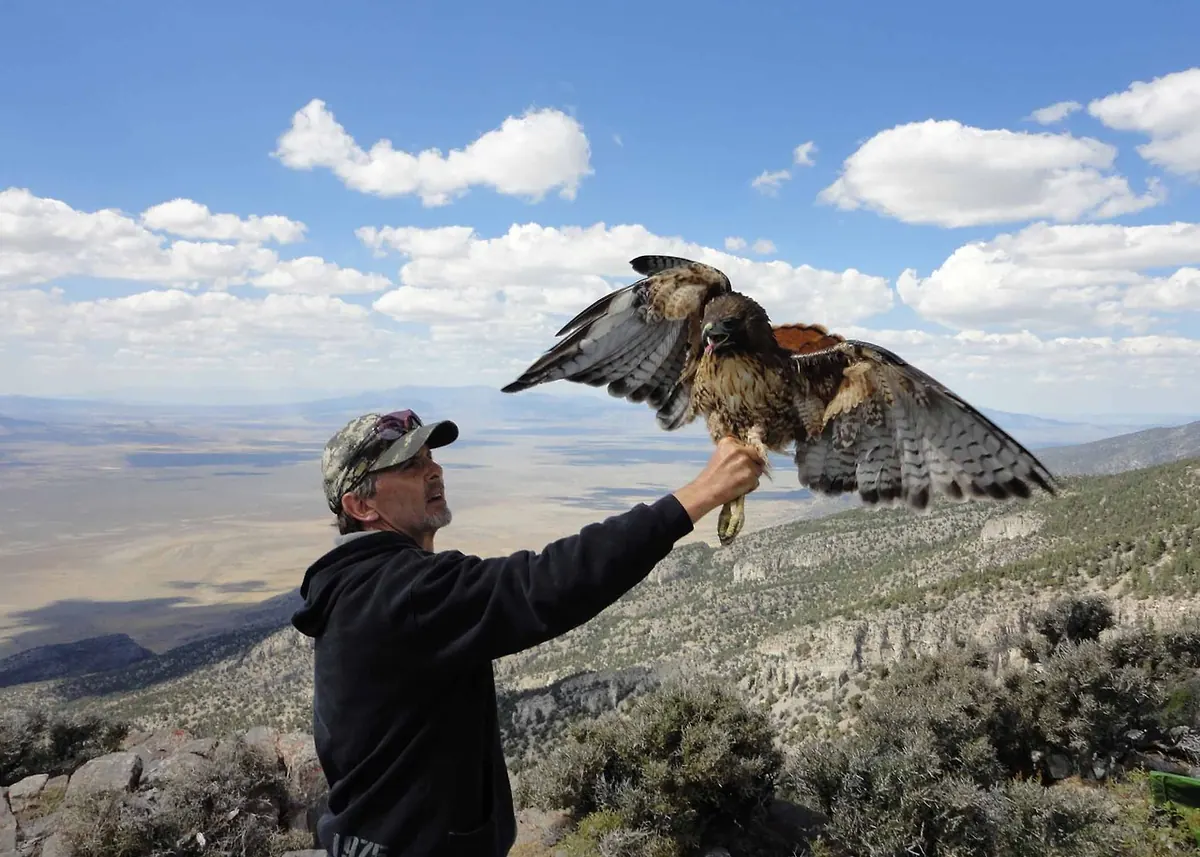
- The Goshute hawk flight. HawkWatch International has counted raptors on a 9,000-foot ridge southwest of West Wendover every fall since the early 1980s. NDOW puts the bulk of the passage between about September 10 and October 14, so the first two weeks of October are the time to make the climb and watch hawks being banded and released.
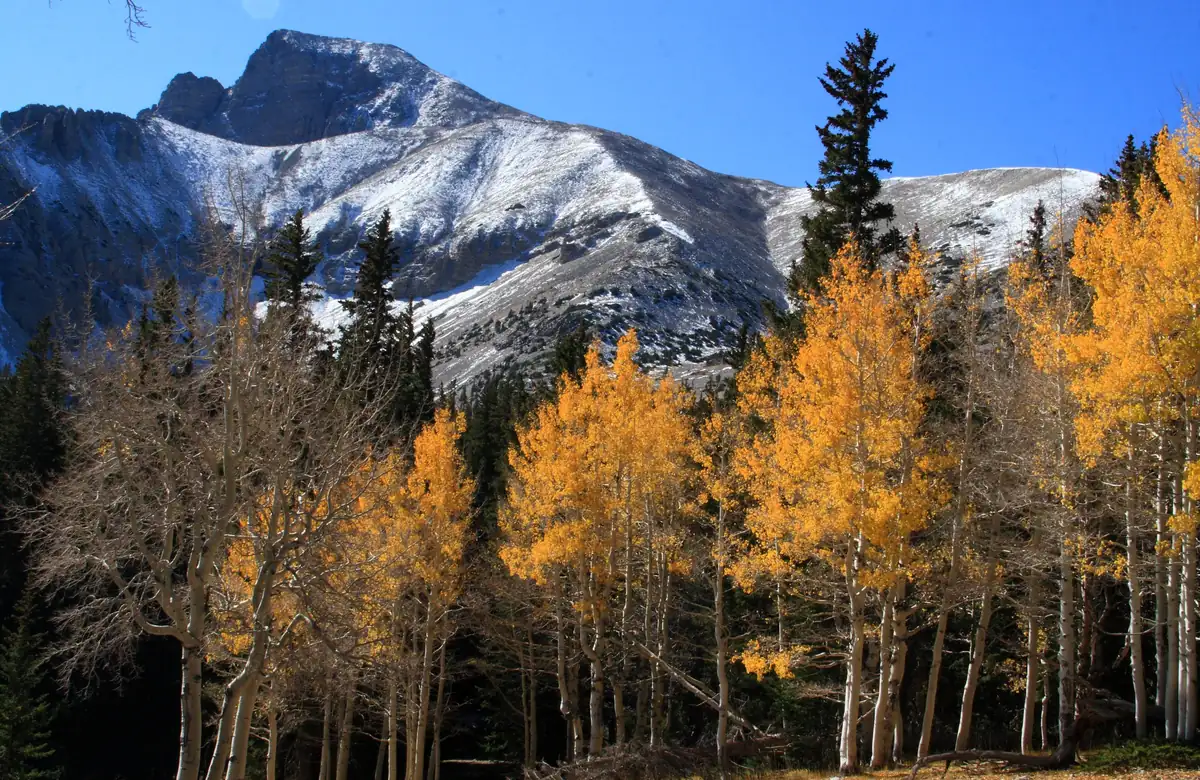
- Aspen gold, top down. Color starts on the highest slopes in September and works downhill. Great Basin National Park’s scenic drive, Lamoille Canyon in the Rubies and Lee Canyon in the Spring Mountains are the reliable places; the Wheeler Peak road usually closes for the winter by November 1.
- Pine nuts and Pyramid Lake. Pine nut gathering runs from September into late October on the Humboldt-Toiyabe, up to 25 pounds per household without a permit. Pyramid Lake’s trout season opens October 1 under Pyramid Lake Paiute Tribe rules, with a tribal permit, artificial lures and barbless hooks.
Keep a record: in your Naturalist’s Field Journal, list the Goshute hawks and Stillwater’s first ducks under “birds I have seen,” give the tree-through-the-seasons page one aspen or cottonwood you can visit weekly, sketch an opened pinyon cone on the seeds-pods-and-cones plate, and log a tarantula walk or the Orionids in the dusk and dawn watch. Write the date and the place beside each one.
Regions used below: Reno, Carson City and Lake Tahoe; Northern Nevada: Winnemucca, Elko and the Ruby Mountains; Central Nevada: Fallon, Austin and Tonopah; Eastern Nevada: Ely and Great Basin National Park; Southern Nevada: Las Vegas, the Spring Mountains and the Mojave.
When do the aspens turn gold in Nevada?
Nevada’s fall color is mostly one tree, the quaking aspen, with narrowleaf and Fremont cottonwoods along the creeks and rivers. It follows elevation more than latitude: stands near timberline turn in the second half of September, mid-slope groves peak in early to mid-October, and cottonwoods in the valleys hold on into late October.
-
Great Basin National Park
Late September to mid-October; scenic drive usually closes by November 1 · Wheeler Peak Scenic Drive, Baker Creek, Snake Creek and Strawberry Creek
The Park Service lists the 12-mile Wheeler Peak Scenic Drive and the Baker, Snake and Strawberry creek roads as the places for golden aspens, with cottonwoods yellow along Snake Creek lower down. The upper drive and Wheeler Peak Campground generally close after the first heavy snow, by November 1, and the Great Basin Visitor Center in Baker usually closes in mid-October, though Lehman Caves Visitor Center stays open all year.
-
Lamoille Canyon and the Ruby Mountains
Mid-September at the top, early October lower down · Lamoille Canyon Road southeast of Elko; Thomas Canyon
Elko’s own fall drive climbs a glacier-carved canyon lined with aspen and cottonwood. The higher groves around Thomas Canyon often turn by mid-September, so an early October trip catches the lower canyon. The Rubies can take snow at any point in October; carry chains or turn around if the road ices.
-
Lee Canyon and Kyle Canyon, Spring Mountains
Early to mid-October · Spring Mountains National Recreation Area, about 50 miles northwest of Las Vegas
A Forest Service photographer caught aspens in Lee Canyon going from green to yellow on September 18, 2026, which points to fuller color in the first half of October. The groves sit above 8,000 feet, so they turn well before anything in the valley does.
For your own yard or park, the Field almanac estimates when leaves go from green to bare using satellite data. Choose a single aspen or cottonwood, take its picture weekly from one fixed place, and note when it stands bare.
Where can you watch hawks and eagles migrate in Nevada?
The Goshute Mountains, in White Pine and Elko counties near the Utah line, form a long north–south wall on the Intermountain Flyway. Hawks riding the updrafts along that wall pass one ridge-top site in numbers that few places in the West can match. HawkWatch International, working with the BLM, has run a standardized count there since the early 1980s: its crew counts from August 15 to November 5, typically tallying 10,000 to 25,000 migrants of up to 17 species a season, and a trapping crew bands several hundred more each fall.
-
When to go
Bulk of the flight about September 10–October 14 · Goshute Mountain Watchable Wildlife Area, about 24 miles southwest of West Wendover off U.S. 93 Alternate
NDOW’s Wildlife Discovery Trail page gives the main passage window as roughly September 10 to October 14. The counters are on the ridge from 9 a.m. to 5 p.m., weather permitting. As at most ridge watches, a clear day just after a cold front is usually worth the drive.
-
What you will see
October mornings and early afternoons · The count site at about 9,000 feet
Sharp-shinned, Cooper’s and red-tailed hawks make up most of the flight, with turkey vultures, golden eagles, American goshawks, ferruginous hawks and falcons mixed in. If the banders catch a bird while you are there, they will often show it and release it in front of visitors.
-
Getting there
Allow a full day · Dirt roads to the trailhead, then a steep trail
The hike is about 2.5 miles with roughly 1,800 feet of climb (the BLM describes it as a three-mile trail), there is no water or other service at the top, and camping is limited to the parking area. Groups larger than six are asked to register in advance with HawkWatch.
If the Goshute climb is too much, watch any long north–south ridge on a clear afternoon after a front. Red-tailed hawks and golden eagles use the same updrafts all over the state, and daily Goshute totals are posted on HawkCount, so you can see what the counters saw that day.
Where are the ducks, swans and pinyon jays this October?
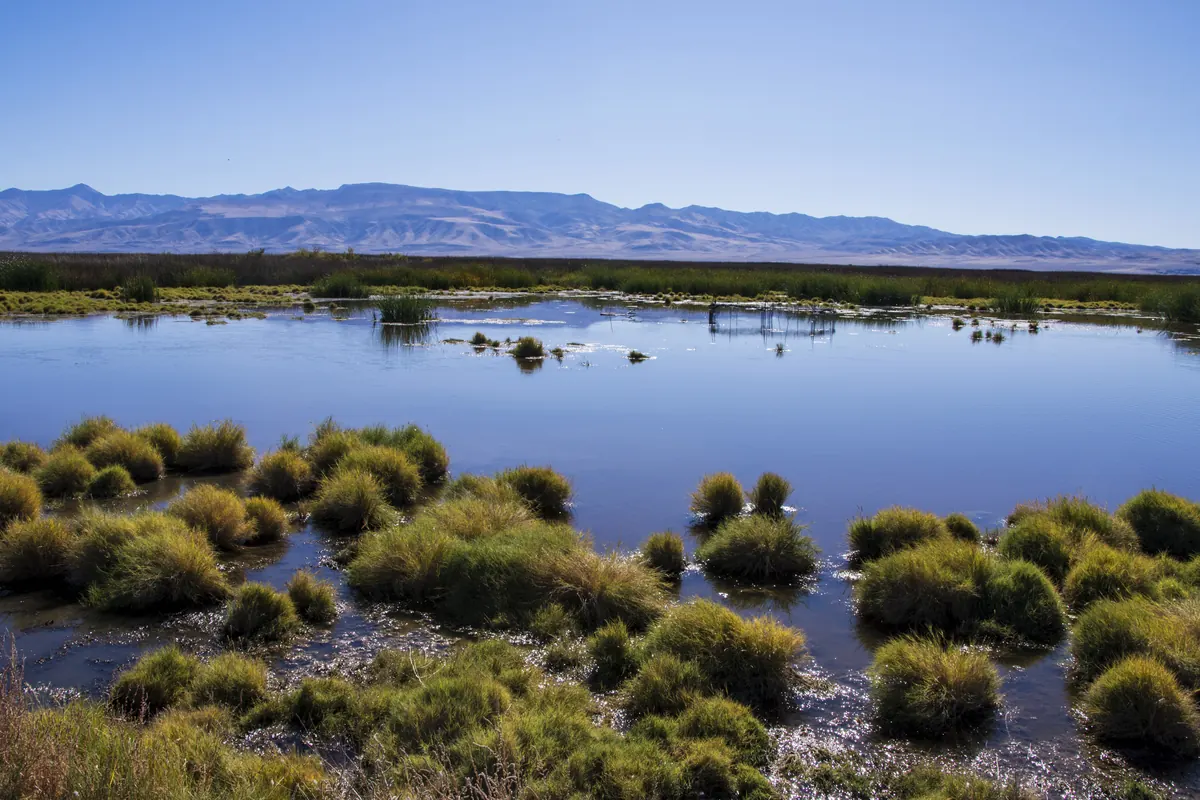
Nevada’s marshes sit at the end of rivers that never reach the sea, and in fall they draw the Pacific Flyway down into the desert. Ducks build through October, swans follow in November, and in the pinyon hills the jays are busy hiding the cone crop.
-
Stillwater National Wildlife Refuge
Ducks build through October; tundra swans mostly from November · About 17 miles northeast of Fallon; free entry
The refuge covers more than 80,000 acres of marsh, river channel and salt desert where the Carson River ends. It is an Audubon Important Bird Area and a site of hemispheric importance in the Western Hemisphere Shorebird Reserve Network. In October look for canvasbacks, redheads, northern pintails and ruddy ducks, with snow geese and tundra swans coming later in the fall. The refuge has warned that blue-green algae in its water can kill a dog within hours, so keep pets out of the ponds.
-
Ruby Lake National Wildlife Refuge
Open daily from an hour before sunrise to an hour after sunset · South end of Ruby Valley, east of the Ruby Mountains
About 40,000 acres of marsh, meadow and brushy upland under the east face of the Rubies. Fall brings migrating ducks onto the open water, with the aspens on the range above. The auto tour route is open to vehicles except during habitat work. The refuge recommends the Secret Pass route once winter weather threatens rather than Harrison Pass.
-
Washoe Lake Bird Fest
Saturday, October 3, 10 a.m.–2 p.m.; guided walk at 9 a.m. · Washoe Lake State Park, south day-use area, between Reno and Carson City
A free festival (park entry is waived) with bird walks for beginners, talks every half hour on the lake’s habitat and bird biology, owl-pellet dissection and bird bingo. No registration needed.
-
Pinyon jays and Clark’s nutcrackers
All month, noisiest in the mornings · Pinyon-juniper hills statewide
Flocks of pinyon jays move through the woodland like a blue, chattering wave. NDOW notes that an expanding throat pouch lets one jay carry about 40 seeds at a time to its caches; the caches it never returns to help plant new pinyons. NDOW lists the shrinking of pinyon-juniper woodland as a main threat to the species.
-
Chukar in the canyons
Regular season opens Saturday, October 17 · Rocky, cheatgrass-covered canyon slopes
Listen for the rising “chuck-chuck-chukar” from a talus slope in the early morning. The partridge was brought from Asia and is now the classic upland bird of Nevada’s dry canyons; the youth hunt runs September 26 to October 4 and the regular season opens October 17.
Around Las Vegas, the Corn Creek unit of Desert National Wildlife Refuge, a spring oasis within the largest refuge outside Alaska, is worth an early-morning walk for songbirds passing through; the refuge lists more than 320 bird species in all. Log what you see in eBird, which lets you compare your checklist with everyone else’s from the same hotspot.
When does trout season open at Pyramid Lake?
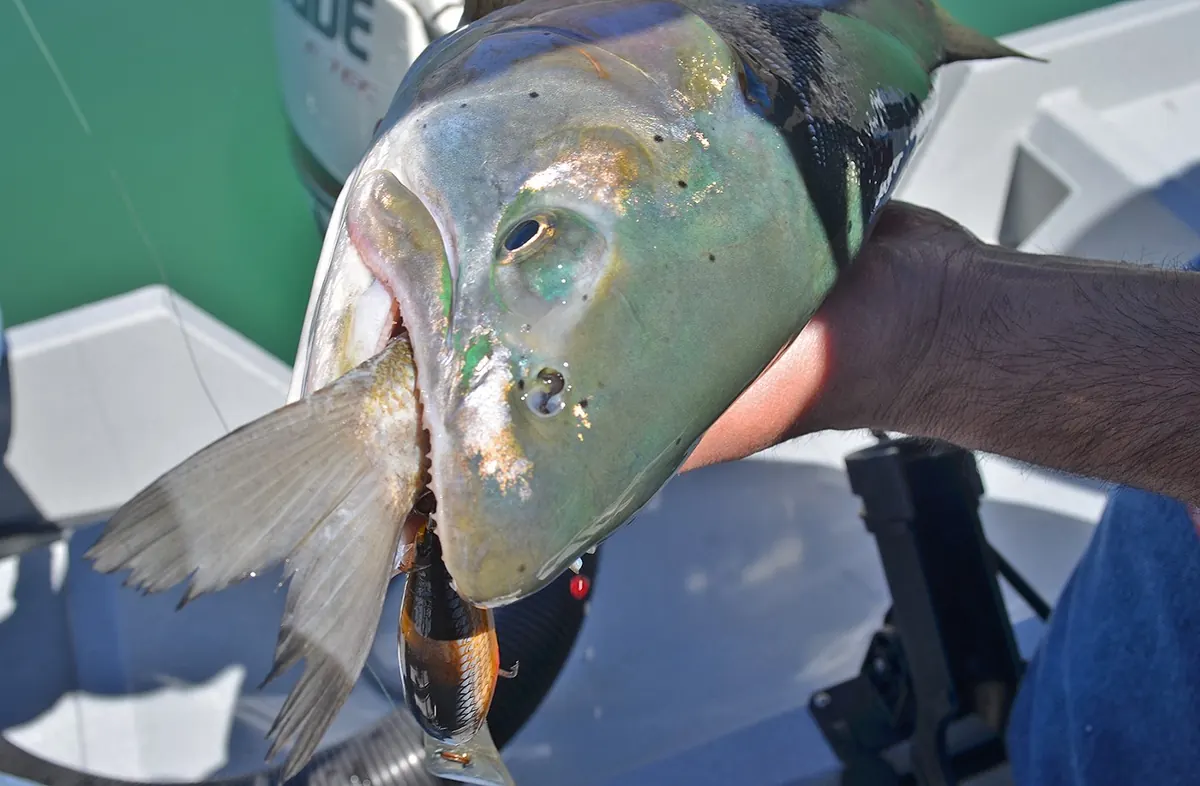
Pyramid Lake, northeast of Reno inside the Pyramid Lake Paiute Reservation, is the home water of the Lahontan cutthroat trout, the largest cutthroat in the world and a federally threatened species. Hatcheries keep the population going, and the tribe manages the fishery under its own rules.
-
The October 1 opener
Season runs October 1 to June 30 · Pyramid Lake, shore and boat
Pyramid Lake Fisheries sets the trout season from October 1 through June 30. Every angler 12 and older needs a tribal permit, sold at stores around the lake and online. Bait is not allowed, only artificial lures; hooks must be barbless; and fish under 17 inches or between 20 and 24 inches fork length go back in the water.
-
How the fish behave in fall
As the lake cools through October and November · Drop-offs and beaches
The trout spend the warm months deep, coming up only briefly for young tui chub. As surface water cools in fall they move back toward the shallows. Pyramid Lake Fisheries puts the best fall fishing between Thanksgiving and Christmas, so October is a slower, quieter start rather than the peak.
When is the first frost and freeze in Nevada?
Few states have a wider spread. A ranch in the high valleys of Elko County can expect its first 32 °F night in mid-September, while the Las Vegas airport usually waits until mid-December. Elevation and cold-air drainage do most of the work: the long valley floors of the north and east collect cold air on still nights and freeze weeks earlier than towns only a little lower in the west.
| Station | One year in ten | Median | Nine years in ten |
|---|---|---|---|
| Reno Tahoe International Airport | Oct 11 | Oct 23 | Nov 3 |
| Carson City | Sep 24 | Oct 6 | Oct 20 |
| Incline Village (Lake Tahoe) | Sep 30 | Oct 13 | Oct 30 |
| Winnemucca Municipal Airport | Sep 3 | Sep 17 | Oct 1 |
| Elko Regional Airport | Sep 3 | Sep 18 | Oct 1 |
| Ely Yelland Field Airport | Aug 31 | Sep 13 | Sep 26 |
| Hawthorne (west-central) | Oct 12 | Oct 25 | Nov 8 |
| Mount Charleston Fire Station (Spring Mountains) | Sep 19 | Oct 2 | Oct 17 |
| Las Vegas Mccarran Airport (now Harry Reid International) | Nov 28 | Dec 15 | Jan 7 |
Read the table as odds. In Elko (median September 18) and Winnemucca (median September 17), the freeze has come by October 1 in nine years out of ten, so a garden still standing there is living on borrowed time. Carson City’s median is October 6, Incline Village’s October 13, and Reno’s airport, on the warm side of the Truckee Meadows, not until October 23; Hawthorne’s is October 25. Ely has usually frozen by mid-September (median September 13). Mount Charleston, about 7,500 feet up, freezes around October 2, while the Las Vegas airport below it has a median of December 15. Cover tender plants on any clear, calm night the forecast drops below 36 °F, since leaves radiate heat and frost before the thermometer at five feet reads 32. Every station for your area is on the Nevada frost dates page.
How much daylight does Nevada lose in October?
Everywhere in the state starts October with just under 12 hours of daylight. The north loses more than the south over the month: Elko and Winnemucca give up 78 minutes, Las Vegas 66 and Laughlin 63.
| City | Oct 1 | Oct 31 | Lost | Per day |
|---|---|---|---|---|
| Reno | 11 h 45 m | 10 h 32 m | 73 min | 2.4 min |
| Carson City | 11 h 46 m | 10 h 33 m | 73 min | 2.4 min |
| Winnemucca | 11 h 45 m | 10 h 27 m | 78 min | 2.6 min |
| Elko | 11 h 45 m | 10 h 27 m | 78 min | 2.6 min |
| Ely | 11 h 46 m | 10 h 33 m | 73 min | 2.4 min |
| Tonopah | 11 h 47 m | 10 h 37 m | 70 min | 2.3 min |
| Las Vegas | 11 h 48 m | 10 h 42 m | 66 min | 2.2 min |
| Laughlin | 11 h 49 m | 10 h 46 m | 63 min | 2.1 min |
Nevada clocks go back an hour at 2 a.m. on the first Sunday of November, the 1st. Sunset in Reno jumps from about 5:59 p.m. on October 31 to just before 5 p.m. that weekend, and in Las Vegas from 5:45 to about 4:45, so the evening walk moves into the dark overnight. West Wendover keeps Mountain time and changes on the same night. Sunrise and sunset for your own coordinates, and the rate of change, are on the daylight page.
What is October weather like in Nevada, and what could El Niño bring?
October is one of the calmest, clearest months of the year here. The summer monsoon has ended, the first Pacific storms are only starting to reach the Sierra, and the dry air lets days warm quickly and nights fall hard. By the 1991–2020 normals, Reno averages highs near 70 °F and lows near 40 in October; Las Vegas about 81 and 60; Winnemucca 69 and 30; Elko 66 and 29; and Ely 65 and 28. That 35- to 40-degree daily swing in the northern valleys is the thing visitors underestimate. Monthly precipitation normals are small everywhere: about a third of an inch at Las Vegas, half an inch at Reno, and three-quarters of an inch at Elko and Ely, much of it from one or two early storms that can bring the first snow to the Rubies, the Snake Range and the Carson Range.
This winter the Pacific is heading into a very strong El Niño. NOAA’s ENSO update of September 10 puts the chance of a “very strong” event between now and late winter above 90%, and NOAA’s seasonal outlook for December through February is due in mid-October. For Nevada the answer depends on where you live. A University of Nevada, Reno Extension fact sheet co-written by the state climatologist finds that El Niño winters in Clark County and the southern parts of Nye and Lincoln counties are often, though not always, cooler and wetter than normal, because the storm track slides south. Across the rest of the state, El Niño has been a poor guide: northern Nevada and the Sierra have had wet, dry and ordinary El Niño winters alike. The National Weather Service office in Reno made the same point in September, noting that much of the region’s winter precipitation comes from atmospheric rivers, which show no clear link to El Niño at this latitude. October itself feels little of it either way. Current conditions and the pressure trend for your town are on the weather page.
What is in the night sky over Nevada this October?
-
The Hunter’s Moon
Evenings of Sunday, October 25, and Monday, October 26 · Low in the east-northeast at dusk
The moon is exactly full at 9:12 p.m. Pacific time on the 25th. In Reno it rises at about 5:36 p.m. that evening, half an hour before sunset, and at about 6:10 p.m. on the 26th; in Las Vegas the times are about 5:23 and 5:59 p.m. It is an ordinary full moon, not a supermoon. Watch it clear a mountain range and turn from orange to white as it climbs.
-
Saturn at its best
Opposition October 4; the moon alongside October 23–24 · Rising in the east as the sun sets
Saturn reaches opposition on the 4th. From a Nevada backyard that means the ringed planet clears the eastern ridgeline around sunset, stays up until morning and shines its brightest of 2026 as a steady, pale-gold light. Even a modest backyard telescope will pick out its rings. Look for the moon parked beside Saturn on the 23rd and 24th.
-
Orionid meteors
Before dawn, October 21 and 22 · Anywhere dark; face east or south
Orionids fly from October 2 until November 7, with the best mornings on the 21st and 22nd; far from town lights, expect a meteor every few minutes at best. In Reno the moon sets at about 2:21 a.m. on the 21st and 3:25 a.m. on the 22nd (in Las Vegas about 2:06 and 3:08), which leaves two to three hours of real darkness until dawn begins to show at about 5:45. Nevada’s dark valleys make this a good year to try it.
-
Draconid meteors
Evening of Thursday, October 8 · High in the north after dark
Draconids are few and slow, yet they come early in the night, and with the moon nearly new a child can lie on a blanket at 8 p.m. and have a fair chance of catching one.
-
Planets before dawn, and a near miss
Mornings all month; Mars at the Beehive October 11; Jupiter and the moon October 6 · East before sunrise; Venus low in the west at dusk only in the first days
Venus clings to the western horizon after sunset for only the first two or three evenings of October, then disappears into the glare and reaches inferior conjunction, directly between Earth and sun, on October 23. Before sunrise, Jupiter is the brilliant light in the east and Mars the fainter orange one higher up. At dawn on October 11, binoculars show Mars sliding through the Beehive cluster in Cancer. On October 6 the crescent moon passes in front of Jupiter, but from Nevada the event is over before the moon rises: it comes up at about 2:38 a.m. in Reno and 2:25 a.m. in Las Vegas with Jupiter just clear of its edge, and at West Wendover Jupiter reappears within minutes of moonrise, too low to see. The pair still make a striking sight low in the east.
-
Ranger astronomy
Limited schedule through October · Great Basin National Park
Great Basin National Park’s evening astronomy programs continue through October on a reduced schedule. Check the park calendar before you drive; the new-moon weekend of October 10 is the darkest.
| Phase | Date | Time |
|---|---|---|
| Last quarter | Saturday, Oct 3 | 6:25 a.m. |
| New moon | Saturday, Oct 10 | 8:50 a.m. |
| First quarter | Sunday, Oct 18 | 9:12 a.m. |
| Full moon, the Hunter’s Moon | Sunday, Oct 25 | 9:12 p.m. (looks full the evenings of Oct 25 and 26) |
| Last quarter | Sunday, Nov 1 | 12:28 p.m. PST |
Tonight’s cloud forecast for your town is on the clouds page, and the moon phase calendar gives local moonrise and moonset.
What is blooming and going to seed in Nevada in October?
Nevada’s fall bloom is yellow and gray-green, and it belongs to the shrubs. The sagebrush sea and the rabbitbrush along every road carry the late season, while the pinyon woodlands put out the one crop people have gathered here for thousands of years.
-
Rubber rabbitbrush
Bloom finishing in the north; starting in the Mojave by mid-October · Roadsides, washes and disturbed ground statewide
The mounds of golden-yellow flowers that line highways in September are the season’s last big nectar source for bees, flies and butterflies. The Forest Service’s fire-effects database notes that high-elevation plants flower in summer while low Mojave Desert populations do not start until mid-October, so the bloom moves downhill into the southern valleys as it ends in the north. Seed disperses from early September to mid-November in the Great Basin.
-
Big sagebrush in flower
Late August through October; seed October to December · Valleys and foothills across the Great Basin
Easy to miss: basin big sagebrush flowers from late August into October, with tiny yellowish heads on tall stalks above the leaves. The flowers are wind- or self-pollinated, so they have no need to be showy. Seed follows from October to December, and most of it falls within about 30 feet of the parent plant.
-
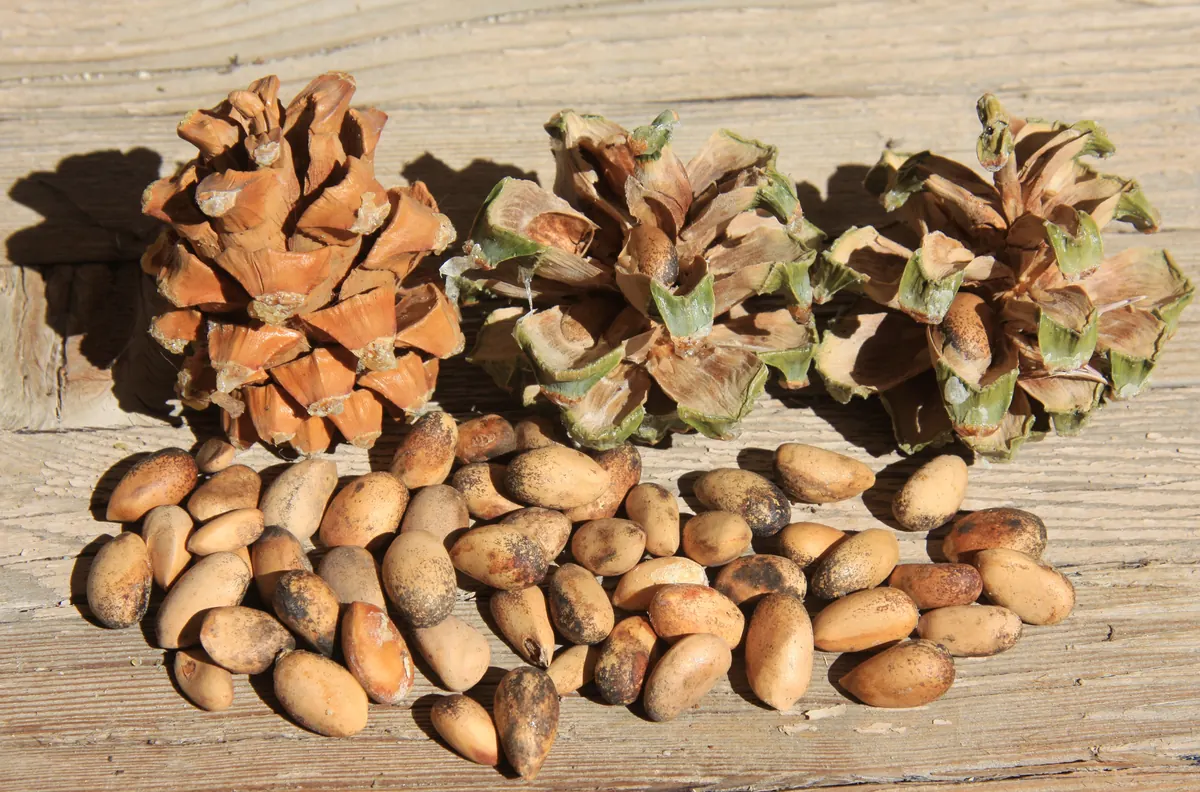
Pine nut season
September into late October, depending on the crop · Singleleaf pinyon woodland on the Humboldt-Toiyabe National Forest and BLM land
When the pinyon cones open, the brown-shelled nuts inside are ripe. The Forest Service allows each household to gather up to 25 pounds a season for personal use at no charge in the Austin-Tonopah, Bridgeport, Carson, Ely and Mountain City–Ruby Mountains–Jarbidge districts and the Spring Mountains; more than that needs a permit from the local BLM or Forest Service office. Gather by hand, ladder or hook only, never by breaking branches. Gathering pine nuts is a long tradition for the Washoe, Paiute and Western Shoshone peoples. The crop varies a great deal from range to range and year to year, so ask the local office where cones are opening and whether any areas are closed.
-
Bristlecones and aspens
Before the snow · Great Basin National Park and other high ranges
The Great Basin bristlecone pines on Wheeler Peak do not change color, but the walk up through the gold aspens to reach them is at its best now. The Park Service lists a longer route to the Magic Grove of bristlecones, about 12 miles round trip, for experienced hikers.
Draw an opened pinyon cone beside a twig of rabbitbrush gone to fluff.
What are tarantulas, tortoises and mule deer doing in October?
As the heat breaks, the desert’s animals have one more busy stretch before winter. In the south, reptiles and spiders take advantage of warm afternoons; in the north, deer shift toward lower country.
-
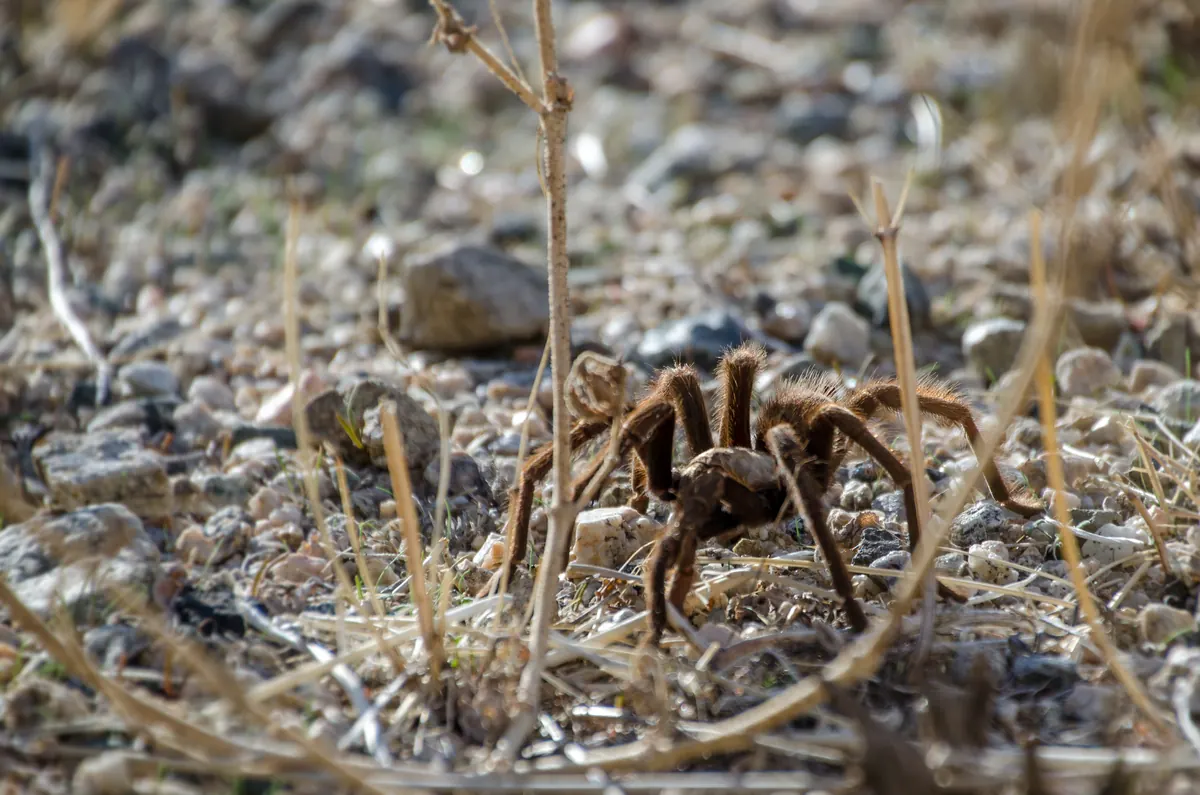
Tarantulas on the move
September through October, most at dusk · Red Rock Canyon, the Mojave and central Nevada around Gabbs
What people call the tarantula migration is really mature males wandering in search of females. The Red Rock Canyon Interpretive Association says fall is the time to see them crossing the desert at sunrise and sunset, and the town of Gabbs in Nye County sees so many that they outnumber its residents. Desert tarantulas are docile and bite only if handled; females can live more than 20 years, while a male dies within months of this walk. Let them cross the road.
-
Desert tortoises before brumation
Active on warm days until the weather cools · Mojave Desert, Clark County and southern Nye and Lincoln counties
The Mojave desert tortoise is federally threatened. It is out on warm fall days and then retreats into its burrow to brumate, the reptile version of hibernation, once the heat of summer has fully broken; Springs Preserve’s resident tortoise, Mojave Max, does the same. If you see one on a road, give it room and do not pick it up: a handled tortoise may void the water it has stored, which is hard to replace in the desert.
-
Mule deer
Moving downhill as the first snow comes · From summer range in the mountains toward sagebrush winter range
NDOW calls mule deer sagebrush obligates: in winter they depend on sagebrush when little else is available. Deer in the Rubies and other northern ranges drift down toward that winter range as snow comes, which puts more of them on highways at dawn and dusk. Later in the fall, NDOW notes, bucks lock antlers and can fight to exhaustion.
Tarantulas and tortoises are both good subjects for the dusk and dawn watch: note the time, the temperature and where you saw each animal.
What can families do outdoors in Nevada in October?
- Go to Bird Fest at Washoe Lake State Park on Saturday, October 3. Guided bird walk at 9 a.m., festival 10 a.m. to 2 p.m., park entry waived.
- Book the Nature Journal Workshop at Kershaw-Ryan State Park, October 8–10. Rangers and local artists teach observation and drawing on easy hikes near Caliente; the workshop is free with the $5 park fee, but you must register by calling 775-726-3564 or emailing krsp@parks.nv.gov.
- Try the ranger programs at Ice Age Fossils State Park in North Las Vegas. The park calendar lists Tortoise Time on October 4, a Megafauna Walk and Talk on October 10, Pop-Up Science on insects versus arachnids on October 11, and a mammoth scavenger hunt on October 17; confirm times with the park.
- Visit the Butterfly Habitat at Springs Preserve in Las Vegas, open 10 a.m. to 3 p.m. from October 3 to November 23 with general admission. Haunted Harvest runs October 22–25 in the evenings, and on Nevada Day, Friday, October 30, general admission is free for Nevada residents.
- Count something that matters. Upload tarantula, tortoise or rabbitbrush-pollinator photos to iNaturalist, enter a bird list in eBird, or follow the daily hawk counts from the Goshutes on HawkCount. Watch a cold front arrive using the weather page, then note the wind shift and the first ducks.
For a keepsake of the month, the Naturalist’s Field Journal has pages for a daily log, a bird list and a tree followed through the seasons. More months and states are on the nature index.
Safety notes for October in Nevada
- Hunting seasons are open across the state. Most any-legal-weapon (rifle) mule deer hunts open October 5 and run to about November 5, with unit group 101–109 opening October 1 and several other unit groups not opening until November 5. Chukar, Hungarian partridge and quail open October 17 and run to February 7, 2027. Duck and goose season opened September 26 in the Northeast Zone (Elko, Eureka, Lander and White Pine counties) and opens October 17 in the Northwest Zone (including Washoe, Carson City, Churchill and Humboldt counties) and in the South Zone, where it pauses October 26–27 and reopens on the 28th; the Moapa Valley opens October 31. Dove season ends October 30. Youth waterfowl days are October 3 in the Northwest Zone and October 24 in the Moapa Valley part of Overton Wildlife Management Area.
- Hunter orange is not required in Nevada, but NDOW strongly recommends that hunters wear orange visible from all sides. Hikers, pine nut gatherers and dog walkers should wear something bright too, especially on refuges and wildlife areas during duck season and in pinyon country during deer season.
- Cold nights, sudden snow. A 70-degree afternoon in the Rubies or on the Snake Range can be followed by a night in the 20s or an early storm. Carry a warm layer, a headlamp and extra water on every hike, and tell someone your route: cell coverage is absent across much of the state.
- Long, empty roads. Fuel up before crossing central Nevada, and watch for deer, cattle and wild horses at dusk.
- Algae and water. Stillwater refuge warns that blue-green algae blooms are toxic to dogs; keep pets out of warm, green or scummy water anywhere.
- Tarantulas and rattlesnakes. Tarantulas are harmless unless handled; rattlesnakes stay active on warm afternoons into October in the south, so watch where you put your hands.
- Red Rock Canyon reservations. Timed-entry reservations for the scenic drive are required from October 1 to May 31 between 8 a.m. and 5 p.m.
Sources
- NDOW Nevada Wildlife Discovery Trail: Goshute Mountain Watchable Wildlife Area
- BLM: Goshute Mountain Watchable Wildlife Area
- HawkWatch International: Goshute Mountains HawkWatch (count season, species, visitor information)
- HawkCount: Goshute Mountains site data
- National Park Service: Visiting Great Basin National Park in fall
- National Park Service: Great Basin operating hours and seasons
- DVIDS / U.S. Forest Service: fall colors in Lee Canyon, Spring Mountains NRA, September 18, 2026
- Humboldt-Toiyabe National Forest: Thomas Canyon Campground, Ruby Mountains
- U.S. Fish and Wildlife Service: Stillwater National Wildlife Refuge
- U.S. Fish and Wildlife Service: Stillwater National Wildlife Refuge, about us (acreage, Important Bird Area, WHSRN)
- BirdWatching: Stillwater National Wildlife Refuge hotspot guide
- U.S. Fish and Wildlife Service: Ruby Lake National Wildlife Refuge
- U.S. Fish and Wildlife Service: Desert National Wildlife Refuge
- Nevada State Parks: Bird Fest 2026, Washoe Lake State Park
- Nevada State Parks: Nature Journal Workshop, Kershaw-Ryan State Park, October 8–10, 2026
- Nevada State Parks: Ice Age Fossils State Park events calendar
- Nevada State Parks: upcoming events
- Vegas24Seven: Springs Preserve calendar of events for October–November 2026
- Springs Preserve: Haunted Harvest
- NDOW: Pinyon jay
- NDOW: Mule deer
- Pyramid Lake Fisheries: fishing seasons and regulations
- Pyramid Lake Paiute Tribe: fishing permits
- Mammoth Times: pine nut harvest season on the Humboldt-Toiyabe National Forest (Forest Service rules)
- USDA Forest Service Fire Effects Information System: rubber rabbitbrush
- USDA Forest Service Fire Effects Information System: basin big sagebrush
- Red Rock Canyon Interpretive Association: Wildlife Wednesday, desert tarantulas
- KUNR: Gabbs, Nevada, is the epicenter of a tarantula migration
- Mojave Max (Clark County Desert Conservation Program)
- BLM: Red Rock Canyon National Conservation Area (timed entry, October 1–May 31)
- NOAA Climate Prediction Center: ENSO diagnostic discussion, September 10, 2026
- University of Nevada, Reno Extension: El Niño, La Niña and what they mean for winter precipitation in Nevada
- Nevada Appeal: forecasters on El Niño and the coming winter (NWS Reno), September 11, 2026
- NWS Reno: climate data (NOWData, 1991–2020 normals for Reno and Winnemucca)
- NWS Las Vegas: climate data (NOWData, 1991–2020 normals)
- NWS Elko: climate data (NOWData, 1991–2020 normals for Elko and Ely)
- U.S. Naval Observatory: sun and moon rise/set data
- U.S. Naval Observatory: phases of the moon
- International Occultation Timing Association: occultation of Jupiter, October 6, 2026
- American Meteor Society: meteor shower calendar
- NDOW: CR 26-10, 2026–2027 migratory game bird seasons and bag limits
- NDOW: CR 25-07, 2025–2026 and 2026–2027 big game seasons
- Nevada small game hunting guide (eRegulations, NDOW): upland game bird seasons 2026–2027
- Nevada hunter education (NDOW-approved course): regulations and hunter orange
- NOAA National Centers for Environmental Information: U.S. climate normals 1991–2020
- Photos via Wikimedia Commons; licenses and photographers are credited under each picture
