What to look for in nature in New Hampshire this March
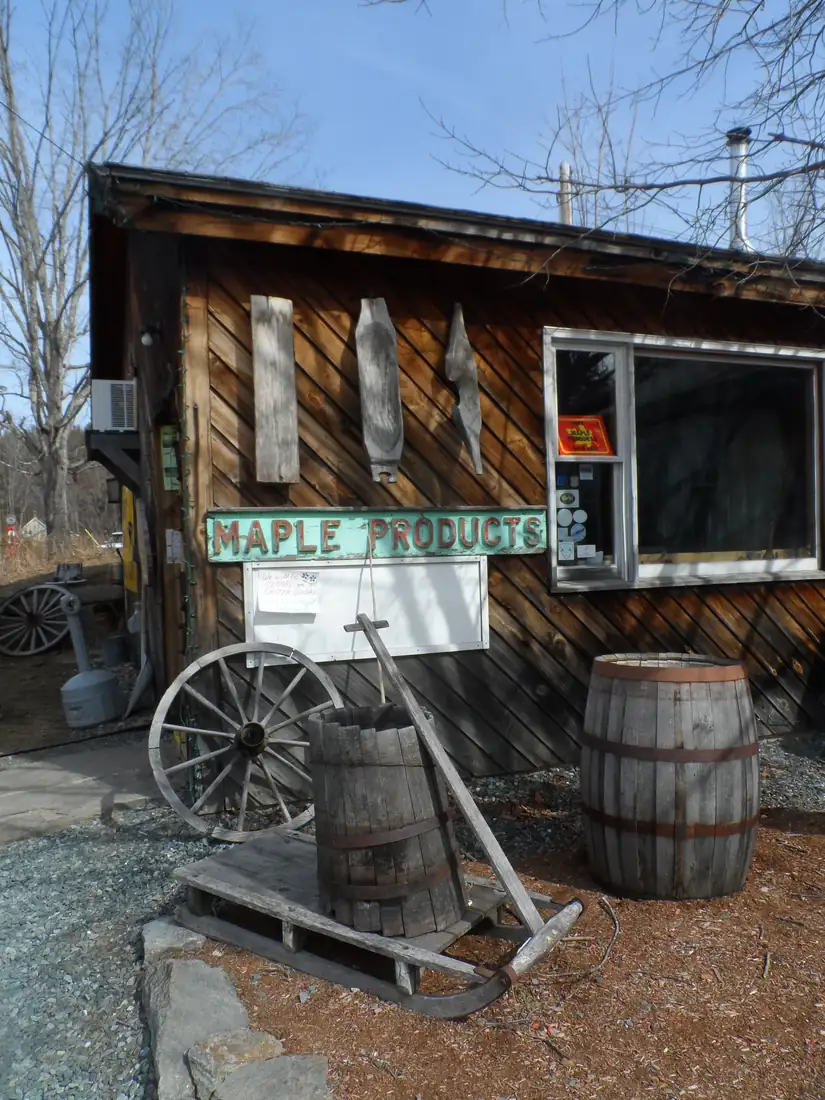
March is the month New Hampshire thaws. Sugarhouses steam as Maple Weekend arrives on March 20 and 21, the first warm, rainy nights send frogs and salamanders across the roads, woodcocks begin their dusk sky dances and geese stop on the Connecticut River. Black bears leave their dens, eagles sit on eggs, and skunk cabbage melts the snow around it. Daylight grows by about an hour and a half between the first and last of the month. Every date below has a source.
Other months in New Hampshire: October, November, December, January, February, April.
Start here
- Visit a sugarhouse. New Hampshire Maple Weekend is March 20 and 21, 2027, according to the producers association. Check its directory for each sugarhouse’s hours, then watch for steam from the roof.
- Listen at dusk on a wet night. On the first warm, rainy evenings, with temperatures above 40 °F, peepers and wood frogs call from vernal pools and amphibians cross roads. Drive slowly, or walk out with a flashlight.
- Find a woodcock. At dusk in a clearing next to wet, brushy woods, listen for the nasal peent of a male woodcock before his spiral flight. Clocks spring forward on March 14, so in late March and early April dusk comes between 7 and 8 p.m.
Fits the Naturalist’s Field Journal: the daily field log for each first sighting, birds I have seen for the woodcock and the early geese, a map of sounds for the peeper chorus, the dusk and dawn watch for the equinox and the Worm Moon, and a tree through the seasons for the day the buds break.
Regions used below: Great North Woods; White Mountains; Lakes Region; Dartmouth–Lake Sunapee and the Upper Valley; Monadnock Region; Merrimack Valley; Seacoast.
When is New Hampshire Maple Weekend in 2027, and how long does sugaring last?
The New Hampshire Maple Producers Association lists New Hampshire Maple Weekend as March 20 and 21, 2027, a Saturday and Sunday. Its page invites member sugarhouses to hold open houses and events, so details differ from place to place: check the association’s online directory for hours, tastings and tours before you drive. In 2026 the Keene Sentinel described the event as drawing nearly 200 sugarhouses, with an interactive map from the association to help visitors plan a route.
-
What makes the sap run
Cold nights, mild days · Sugarbushes statewide
UNH Extension’s guidance for backyard sugarmakers is that sap flows best when nights fall into the 20s and days climb into the 40s. At about 2 percent sugar, sap is boiled down roughly 43 to 1 to make syrup, by the extension service’s rule of thumb, and beginners are told to expect eight to ten runs over a season, each one a stretch of freezing nights followed by thawing days.
-
Why the season is never the same twice
Three to eight weeks · Statewide
Producers told New Hampshire Public Radio in March 2026 that a season can last as little as three weeks or as long as eight. That year a cold, snowy winter delayed the first good runs by about two weeks at one Raymond sugarhouse, and a Hinsdale producer said the season used to begin in mid-February for more than twenty years before creeping into January over the past decade. In the warm winter of 2024 a Freedom sugarmaker started boiling on February 10, his earliest ever.
-
How the season ends
Late March to April · Statewide
Sugaring stops when the trees wake up. UNH Extension warns that early budbreak in red maples gives syrup an off flavor, and producers told NHPR that days in the 60s and 70s slow the flow and push the buds. A cold March can stretch the season into April, as a Loudon producer expected in the snowy winter of 2026; a warm one can end it before Maple Weekend. If your visit falls in a mild week, call ahead and ask whether the sugarhouse is boiling, and keep children back from the evaporator: hot sap and syrup cause severe burns, the extension service reminds sugarmakers.
The first drips often come in late February; our February page covers the start of the run.
When do frogs and salamanders start crossing New Hampshire roads?
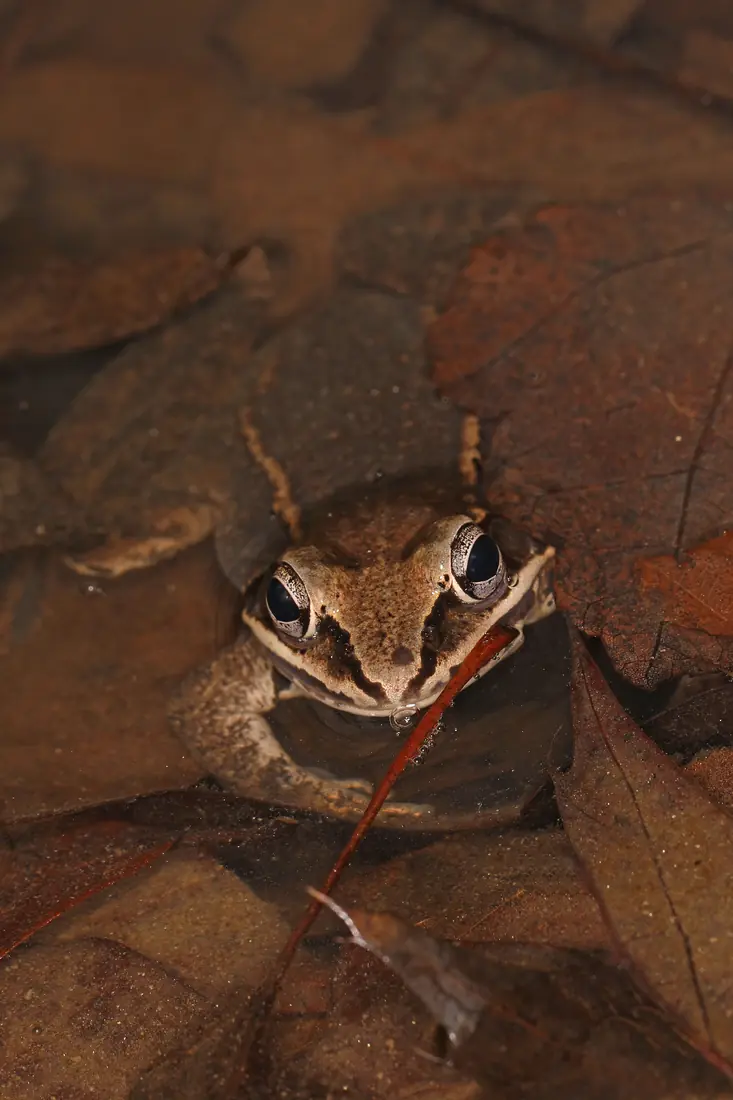
When spring’s first mild, wet evenings arrive, wood frogs, spring peepers and spotted salamanders leave the woods where they spent the winter and head for vernal pools and other wetlands to breed. The biggest of these nights are called Big Nights, and because roads cut across so many routes, volunteers in the Monadnock Region turn out with headlamps and reflective vests. The Harris Center for Conservation Education, based in Hancock, runs the Salamander Crossing Brigades. The timing follows the weather: a major Big Night in its 2026 report came on March 26, while WBUR reported in April 2025 that the previous year’s first crossing night at North Lincoln Street in Keene had come on February 28, the second-earliest in 17 years of records.
-
What a Big Night looks like
A rainy evening, usually above 40 °F · Roads next to wetlands and vernal pools
New Hampshire Fish and Game describes migration nights as rainy evenings with temperatures above 40 °F. At North Lincoln Street in Keene, which the city closes to cars during migration conditions, volunteers counted 1,512 live amphibians in four hours on March 26, 2026, the night the project passed 100,000 rescues since 2007. Across the 2026 season more than 400 volunteers worked 41 crossing sites in 18 towns and helped 10,024 amphibians across: 5,765 spring peepers, 2,258 wood frogs, 891 spotted salamanders and smaller numbers of red-backed, four-toed and Jefferson-complex salamanders and American toads.
-
Wood frogs, the first callers
Early spring, as ice leaves vernal pools · Vernal pools and flooded woods
NH Audubon describes wood frogs as among the first frogs to emerge, with males gathering in groups to call. The sound is nearer to ducks quacking or chickens cackling than to a frog’s croak. They survive winter frozen solid: the liver floods the body with glucose, ice forms only between skin and muscle, and the heart stops until spring thaws the frog from the inside out.
-
Spring peepers, south to north
Once overnight lows stay in the 40s · Wet woods and pond edges, Keene to Milan
The Forest Society’s Something Wild column says peeper choruses begin once overnight temperatures are regularly in the forties and spread from south to north, with first-call posts coming from Keene before Franconia and Milan. A male measures an inch and a half at most, yet right beside him the sound reaches around 90 decibels. The season at any one pool lasts just a few weeks, though Fish and Game notes that peepers, toads and pickerel frogs keep calling into May and June.
-
How to help, and where to report
Training is annual, usually a March evening · Online and at crossing sites
Fish and Game advises skipping drives on rainy nights above 40 °F during the migration when you can, slowing down near wetlands, and choosing larger roads over small wooded ones. The Harris Center trains new volunteers every year; in recent years that was a March evening on Zoom, and the 2027 date is not posted, so check with the organizer. Send sightings to the state’s Reptile and Amphibian Reporting Program at RAARP@wildlife.nh.gov.
Great Bay National Wildlife Refuge in Newington protects extensive vernal pool complexes, according to its fact sheet, and the pools are worth a dusk walk in April.
Which birds return to New Hampshire in March?
NH Audubon calls March the start of real bird movement: waterfowl migration is in full swing, different species are possible every week, and the best viewing is on open water in rainy weather, on large lakes and flooded fields, along river valleys and on the coastal plain. In a warm spring with little ice or snow, migration can pass through quickly and be missed. The notes below mix what NH Audubon says is typical with what its weekly rare bird alerts reported in March 2025, which are examples of what has happened, not a forecast.
-
American woodcock, the sky dancer
Early March to mid-May; display peaks in April · Open clearings next to wet, brushy woods
NH Audubon says woodcocks are most active from early March through mid-May. At dusk, which in late March and early April comes between 7 and 8 p.m. (clocks spring forward on March 14), a male starts with nasal peents from a clearing, spirals up with twittering wings for about a minute, and drops silently back down. He repeats the show for 30 to 60 minutes and again just before dawn. Look in recently cut areas, power-line corridors, mowed lawns, Christmas tree farms and weedy fields near wet woods. Great Bay National Wildlife Refuge lists woodcock among its abundant young-forest species.
-
Geese, ducks and rarities on the Connecticut River
Mid-March · Connecticut and Merrimack rivers, Great Bay
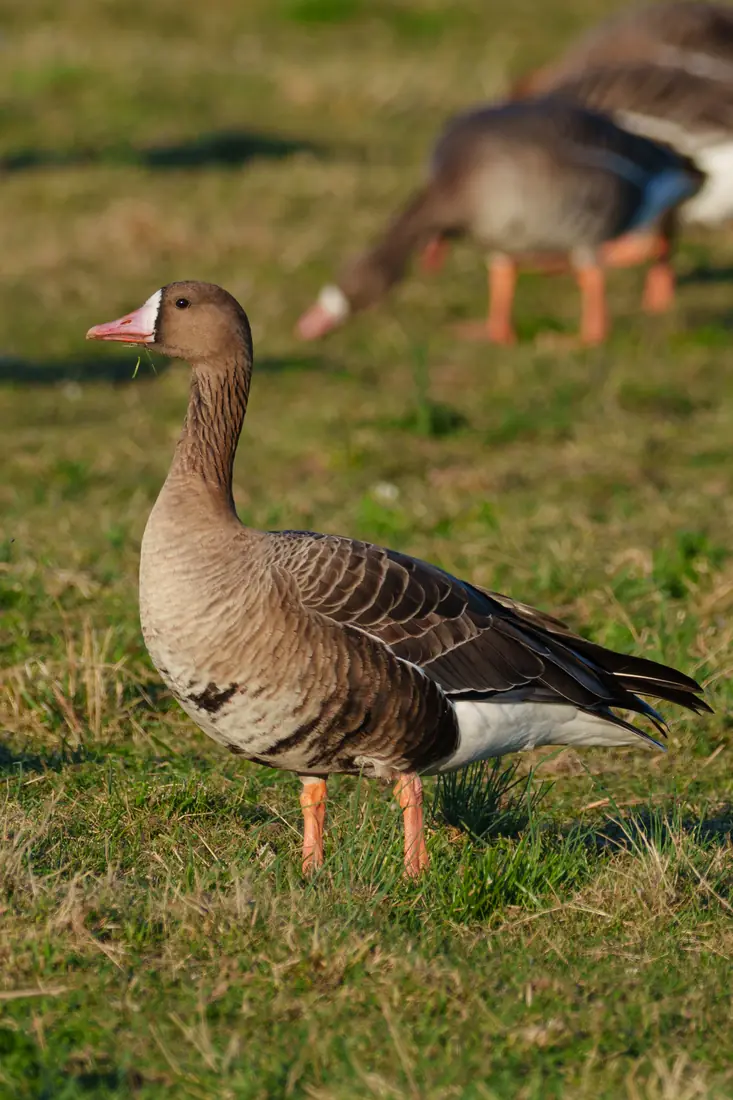
NH Audubon names the Connecticut River in mid-March as the best place to look for rare geese such as the greater white-fronted goose. In March 2025 its alerts reported a pink-footed goose in Haverhill on the 12th, a greater white-fronted goose beside the Cheshire Rail Trail in Walpole on the 13th and 15th and at Great Meadows in Charlestown on the 18th, and seven snow geese at a Concord farm on the 16th. Also listed were five brant at Rye Harbor State Park and 90 green-winged teal at Horseshoe Pond in Concord, both on the 23rd. The refuge fact sheet says Great Bay and Stubbs Pond hold 50 to 80 percent of the state’s wintering waterfowl, including scaup, mergansers, goldeneyes, brant, coots and black ducks, so the bay is worth a look as they leave.
-
The first songs and the first migrants
March, earliest in the south · Fields, marshes, yards and ponds
Black-capped chickadees begin singing in late February or early March, and NH Audubon notes their song is sometimes mistaken for an eastern phoebe, which usually returns in early to mid April. Killdeer come back about when the woodcocks do, and red-shouldered hawks return in March, though broad-winged hawks do not arrive until mid-April. NH Audubon’s own list of spring signs includes singing robins, red-winged blackbirds and song sparrows. The March 2025 alerts also reported tree swallows at Horseshoe Pond in Concord on the 15th, nine sandhill cranes over Hinsdale on the 21st, and black vultures along the Connecticut River in Walpole, a reminder that a few early birds always come ahead of the main wave.
Add each first arrival, with its date, to the birds-I-have-seen plate of the Field Journal.
What wakes up in New Hampshire in March: bears, eagles and falcons?
Winter is not over in March, but the animals that sleep through it begin to stir, and the raptors that stayed are already nesting.
-
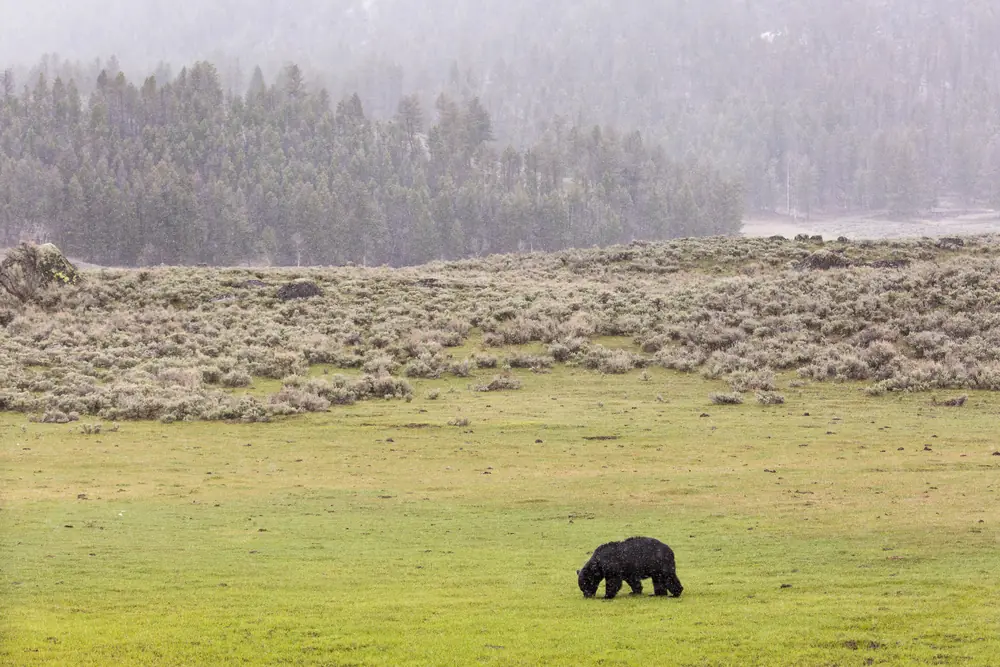
Black bears leave their dens
Spring, as the snow melts · Statewide
Fish and Game’s annual spring notice, posted in late March 2026, says bears are leaving their dens and looking for any food they can find, which means bird feeders, backyard poultry and garbage. The agency asks everyone to take feeders down by April 1, and south of the White Mountains by March 15 or at the first spring-like weather, whichever comes first. Unsecured garbage (35 percent of conflicts), unprotected poultry (27 percent) and bird feeders (20 percent) account for most bear conflicts, so fixing them could prevent more than 80 percent. Put trash out the morning of pickup, and fence chickens and bees with electric wire. Report problem bears to 1-888-SHY-BEAR (1-888-749-2327).
-
Bald eagles are already incubating
Eggs from late February; March is incubation · Rivers, lakes and Great Bay
NH Audubon reports that some eagles begin incubating before the end of February, while other pairs are still freshening their huge nests in pines in March. In 2026 it confirmed 107 territorial pairs and 85 incubating pairs, and 100 chicks fledged from 64 nests, the first time the count of fledglings reached triple digits. Watch from a distance with binoculars, since a startled adult can leave eggs exposed to the cold, and report nest activity to NH Audubon.
-
Peregrines, kestrels and the northbound raptors
March · City towers, cliffs and open country
NH Audubon’s raptor note for March describes peregrine falcons scraping nest bowls, including a webcam-watched pair at the Brady Sullivan Tower in Manchester, and the return of American kestrels, ospreys, golden eagles, northern harriers (a state-endangered species) and tiny saw-whet owls heading to northern territories.
Record a nest you are watching on the nest-observed plate of the Naturalist’s Field Journal.
What is the first wildflower in New Hampshire?
The answer is usually skunk cabbage, which opens while snow still lies on the ground. The first week of real thaw also brings swelling buds on every tree, the first mourning cloak butterflies and the first bees on warm afternoons.
-
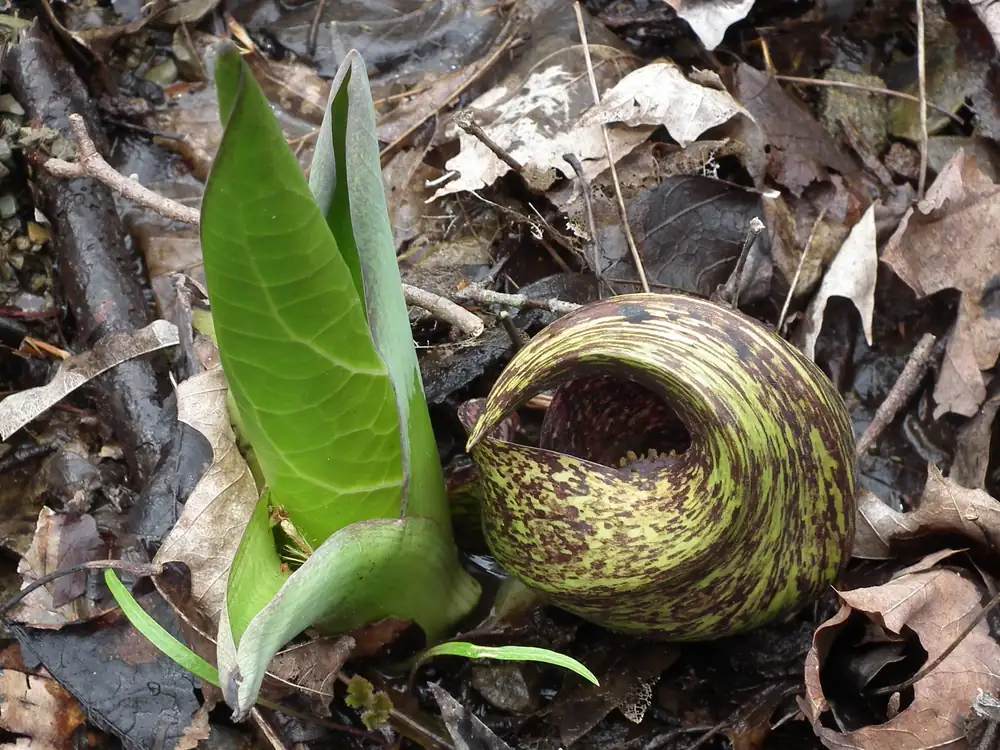
Skunk cabbage, the plant that makes its own heat
March and April, sometimes through snow · Wet woods, seeps and swamp edges
The National Park Service says eastern skunk cabbage burns carbohydrate stored in its underground stem to hold its flowers 15 to 35 degrees warmer than the air, warm enough to melt the snow around it. It blooms from March through April. Look for a maroon, cup-shaped spathe hiding a knob of tiny flowers; the large green leaves unroll afterward. Flies that like rotting flesh pollinate it, and honeybees may use the warm hoods as warming stations on cold foraging trips. The plants return to the same soggy spot year after year.
-
Buds, mayflowers and the first butterflies
Late March into April · Woodland edges and sunny clearings
In a spring-signs post on March 31, 2025, NH Audubon listed swelling tree buds, Canada mayflower coming up, mourning cloak butterflies and active bees. Do not expect much color above the valleys yet: the best wildflowers in New Hampshire come in April and May.
Pick one tree and follow it through the year on the tree plate of the Naturalist’s Field Journal, noting the day its buds open.
What is March like on Mount Washington and in Tuckerman Ravine?
March is still deep winter above treeline. The Mount Washington Observatory says conditions in the Alpine Zone are more winter-like than spring-like in March, with true spring arriving closer to late April and May. Its climate summary gives the summit a normal March average temperature of 12.9 °F, a record high of 54 °F (set in 1998 and 2012) and a record low of -38 °F (1950). March is the second-snowiest month there, with a normal 46.2 inches and a record 98.0 inches in 1970. The wind averages 39.8 mph, hurricane-force gusts occur on about one day in two, and the March record gust is 180 mph, set in 1942.
-
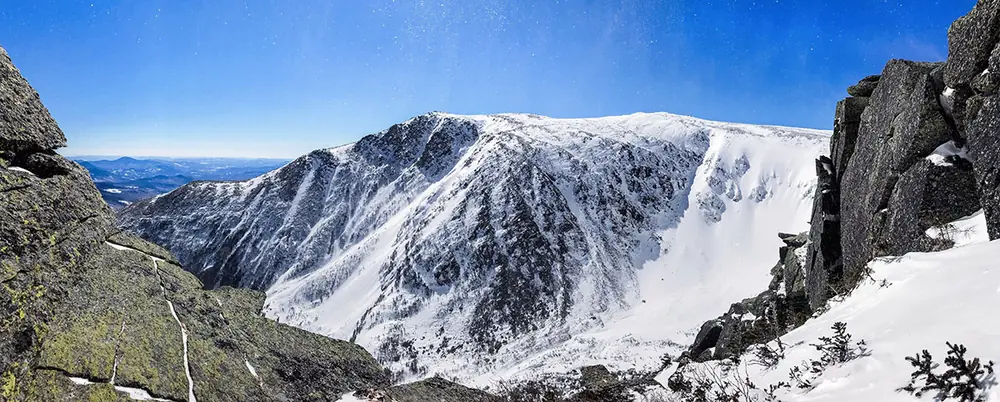
Spring conditions in Tuckerman Ravine
Late March through spring · Tuckerman Ravine, east side of Mount Washington
The U.S. Forest Service says the Hermit Lake Shelters at the foot of the ravine are open year-round with a caretaker on site, with eight lean-tos and three tent platforms. The Mount Washington Avalanche Center lists the spring dangers: icefall, especially at Lunch Rocks; glide cracks and snow holes that work like crevasses; refrozen, icy snow where a fall is hard to stop; snow undermined by running water; and wet avalanches after rain or warming. Its website showed forecasts closed for the season as of May 25, 2026.
How much daylight does New Hampshire gain in March?
Every town gains close to an hour and a half of daylight over the month. On March 1, daylight runs from 11 h 09 m in Colebrook to 11 h 13 m in Nashua. By March 31 all eight towns have between 12 h 41 m and 12 h 43 m, a gain of 88 to 94 minutes, or about 3 minutes a day. The table counts hours of daylight, so the clock change does not alter it, but the clock times of sunrise and sunset do jump an hour later. In Boston the sunset, worked out from the NOAA solar equations, falls near 5:48 p.m. standard time on March 13 and 6:49 p.m. daylight time on March 14; New Hampshire towns see the same one-hour jump overnight.
| City | Mar 1 | Mar 31 | Gained | Per day |
|---|---|---|---|---|
| Colebrook | 11 h 09 m | 12 h 43 m | 94 min | 3.1 min |
| Berlin | 11 h 10 m | 12 h 43 m | 93 min | 3.1 min |
| Littleton | 11 h 10 m | 12 h 43 m | 93 min | 3.1 min |
| North Conway | 11 h 11 m | 12 h 42 m | 91 min | 3.0 min |
| Hanover | 11 h 12 m | 12 h 42 m | 90 min | 3.0 min |
| Concord | 11 h 12 m | 12 h 41 m | 89 min | 3.0 min |
| Portsmouth | 11 h 13 m | 12 h 41 m | 88 min | 2.9 min |
| Nashua | 11 h 13 m | 12 h 41 m | 88 min | 2.9 min |
For a different town, use our daylight page.
What is March weather in New Hampshire, and when does the ice go out?
NOAA’s 1991–2020 normals below show March turning from winter to mud: southern and Seacoast highs reach the low 40s, and average lows stay below freezing everywhere. Concord averages 13.6 inches of March snow, Lakeport 2 only 9.4, Pinkham Notch 26.4 and the Mount Washington summit 46.2. The Climate Prediction Center’s 90-day outlook for the season ahead appears once a month, near mid-month, at NOAA’s 90-day outlook page.
-
When does ice go out on Lake Winnipesaukee?
Usually mid to late April; March in the warmest years · Lakes Region
Ice-out is declared when the cruise ship MS Mount Washington could reach all five of its ports: Alton Bay, Center Harbor, Meredith, Weirs Beach and Wolfeboro. Emerson Aviation of Gilford, which has made the call since 1979, announces it from the air. The earliest on record is March 17, 2024, ahead of March 18, 2016; the latest was May 12, 1888. In 2026 it came on April 12. NHPR notes that four of the earliest declarations have come within the last 16 years, but mid to late April remains the traditional date, and a declaration does not mean every bay is clear. The state Department of Environmental Services collects ice-out reports from residents for lakes and ponds.
-
Why is it called mud season?
March and April · Dirt roads and back roads
An NHPR explainer, with a dirt-road expert, says frost can run deeper than four feet in the coldest parts of New England, the sun thaws soil from the top down, and meltwater has nowhere to go because the ground below is still frozen. The worst mud follows a long, cold, snowy winter and a chilly spring; a spring rain can help by carrying warmth that pushes the frost line down.
-
Flood and ice-jam season
Flood Safety Awareness Week is held each March; check ReadyNH · River valleys statewide
The state Office of Planning and Development observes Flood Safety Awareness Week each March (March 9–13 in 2026) and calls flooding the most common and costly disaster in New Hampshire. The National Weather Service office in Gray, Maine, issues a Winter and Spring Flood Potential Outlook every two weeks in late winter. Its February 2026 edition rated flood risk low because drought had left room in the rivers, but warned that thick river ice raised the ice-jam potential. An NWS hydrologist told NHPR that ice is the wild card, because a jam can flood a river almost instantly, even in a dry year.
| Station | Average high | Average low | Precipitation | Snowfall |
|---|---|---|---|---|
| First Connecticut Lake (Great North Woods) | 34.2 °F | 9.6 °F | 3.04 in | 24.6 in |
| Lancaster (upper Connecticut valley) | 38.1 °F | 14.1 °F | 2.21 in | 11.6 in |
| Berlin (Androscoggin valley) | 38.4 °F | 16.0 °F | 3.00 in | 16.1 in |
| York Pond (White Mountains) | 36.4 °F | 14.5 °F | 3.19 in | 16.4 in |
| Pinkham Notch (White Mountains) | 36.2 °F | 14.9 °F | 4.87 in | 26.4 in |
| Mount Washington summit | 20.8 °F | 4.9 °F | 6.72 in | 46.2 in |
| Hanover (Upper Valley) | 43.7 °F | 23.6 °F | 2.96 in | 13.5 in |
| Lakeport 2 (Laconia, Lakes Region) | 42.5 °F | 21.2 °F | 3.39 in | 9.4 in |
| Concord Municipal Airport | 43.6 °F | 23.3 °F | 3.28 in | 13.6 in |
| Keene (Monadnock Region) | 43.0 °F | 19.7 °F | 3.35 in | 11.0 in |
| Durham (Seacoast) | 44.6 °F | 24.0 °F | 3.49 in | 6.8 in |
| Greenland (Seacoast) | 43.3 °F | 25.3 °F | 4.77 in | 13.9 in |
When is the last spring freeze in New Hampshire?
Not in March, anywhere in the state. By NOAA’s 1991–2020 normals, the median date of the last 32 °F night ranges from April 21 at Manchester Airport to May 30 at Berlin Municipal Airport, and the Great North Woods and the White Mountains are not done with frost until late May in a typical year. A warm week in March is a head start for the sugar maples, not for the garden.
| Station | One year in ten | Median | Nine years in ten |
|---|---|---|---|
| First Connecticut Lake (Great North Woods) | May 9 | May 25 | Jun 8 |
| Berlin Municipal Airport (Androscoggin valley) | May 15 | May 30 | Jun 11 |
| Pinkham Notch (White Mountains) | May 3 | May 18 | Jun 1 |
| Hanover (Upper Valley) | Apr 21 | May 1 | May 15 |
| Lakeport 2 (Laconia, Lakes Region) | Apr 19 | Apr 30 | May 13 |
| Keene (Monadnock Region) | Apr 30 | May 14 | May 28 |
| Concord Municipal Airport | Apr 27 | May 8 | May 22 |
| Manchester Airport | Apr 8 | Apr 21 | May 6 |
| Greenland (Seacoast) | Apr 23 | May 4 | May 18 |
Look up your own town on our New Hampshire frost dates page.
What can you see in the New Hampshire night sky in March 2027?
Daylight time begins at 2 a.m. on Sunday, March 14, which moves every clock time after that date an hour later. Spring begins astronomically at 4:25 p.m. EDT on the 20th. Phase times in the table come from the U.S. Naval Observatory, shown in Eastern time.
-
The Worm Moon
Full at 6:44 a.m. EDT on Monday, March 22 · Anywhere with an open eastern horizon
The March full moon carries a name tied to the thaw, the Worm Moon, and is also called the Crow Moon or Sap Moon. It is exactly full at dawn, so look for it rising round and bright at dusk on Sunday the 21st or Monday the 22nd. None of the full moons from March to September 2027 is a supermoon.
-
Venus and Mercury before sunrise
Venus all month; Mercury best from about March 8 to 25 · Low in the east and southeast before dawn
Venus is the bright object low in the east-southeast before sunrise, and the waning crescent moon passes close to it on March 4 and 5. Mercury’s best morning appearance of the spring comes in the same weeks, with its widest separation from the sun just after midnight on Wednesday, March 17 (12:20 a.m. EDT). Near that date Mercury is up about an hour before dawn at 40 degrees north; scan the east-southeast with binoculars.
-
Jupiter and Mars in the evening
Moon beside Jupiter March 18 and 19; Mars near Jupiter March 30 to 31 · High in the south after dark, in the constellation Leo
Jupiter and Mars are both in Leo and stay above the horizon from dusk until close to dawn at the start of the month, Jupiter the brighter. By our own calculation, the gibbous moon sits within a degree of Jupiter on March 18 and 19, and by the evening of March 30 Mars stands about four degrees from it. Saturn, sinking into the western twilight early in the month, reaches conjunction with the sun on April 7. Our calculations are made for the central United States, so allow some difference in New Hampshire.
-
The Milky Way and the aurora
Milky Way: best around the March 8 new moon · Dark sites, away from town lights
The Milky Way’s bright core can be tried for in the last hour or so before dawn; our own calculation puts the best nights at March 5 to 16 for 40 degrees north, and the window shrinks farther north. Aurora can appear on any clear, dark night. NOAA’s Space Weather Prediction Center posts a forecast 30 to 90 minutes ahead, and no agency can forecast aurora weeks in advance.
| Phase | Date | Time |
|---|---|---|
| New moon | Monday, Mar 8 | 4:29 a.m. EST |
| First quarter | Monday, Mar 15 | 12:25 p.m. EDT |
| Full moon (Worm Moon) | Monday, Mar 22 | 6:44 a.m. EDT, at dawn; the evenings of Mar 21 and Mar 22 both show a full-looking moon |
| Last quarter | Monday, Mar 29 | 8:54 p.m. EDT |
See moon phases for any month, and cloud types for the sky by day.
What can New Hampshire families do outdoors in March 2027?
- Sunday, March 14: clocks go forward. The extra evening light is a reason for a dusk walk to listen for peepers and woodcocks.
- Saturday and Sunday, March 20 and 21: New Hampshire Maple Weekend. The producers association lists these dates; check its directory for each sugarhouse’s hours, and bring boots.
- Saturday, March 20: first day of spring. Mark where the sun sets from your yard and check again in June.
- Sunday and Monday, March 21 and 22: the Worm Moon. Watch it rise near sunset on both evenings.
- Through April 30: Project FeederWatch. Cornell’s season runs November 1 to April 30, though feeders should come down on Fish and Game’s bear dates.
- Warm, rainy evenings: help amphibians across. The Harris Center trains Monadnock Region volunteers every year; check with the organizer for the 2027 date.
The Naturalist’s Field Journal is the place to log your finds, and the nature index lists other states and months.
Safety notes for March in New Hampshire
- Seasons still open. Fish and Game’s 2026–27 season listings show snowshoe hare hunting through March 31, 2027, and coyote hunting with no closed season, with night hunting allowed January 1 to March 31. Fox, raccoon, opossum and skunk hunting and some furbearer trapping have recently run into late March or early April; exact 2027 closing dates and bag limits are in the 2026–27 hunting digest, so confirm them with Fish and Game before you rely on them. Spring turkey does not open in March: in 2026 it opened May 1 after a youth weekend in late April, and Fish and Game sets each year’s dates.
- Hunter orange. State law (RSA 207:38-b) recommends, but does not require, a hat, vest or other garment in hunter orange visible from all sides at 200 feet. Wear some on woods roads, and put your dog in it too.
- Weak ice. Fish and Game rules require bob houses off the ice by April 1. The fishing digest puts adequate ice for a small group at 5 to 6 inches of solid, clear ice, but late-winter ice is rarely solid; avoid inlets, outlets and shorelines.
- Ticks are back. UNH Extension says adult blacklegged ticks are active from late March through May, and in mild weather above 40 °F with no snow cover. Wear long pants tucked into socks, use repellent, check yourself at bedtime, and pull a tick off steadily with tweezers.
- Wildfire season begins. The Forest Protection Bureau calls spring the busiest wildfire season, when dead leaves and grass are dry before green-up. A fire permit is required for campfires and open burning unless the ground is covered with snow or ice; get one at NHFirePermit.com or from your town forest fire warden.
- Mountains and rivers. Icefall, glide cracks and wet avalanches are real hazards in Tuckerman Ravine, so read the Avalanche Center forecast first. Never drive through flooded roads, and stay off ice-choked rivers in a thaw.
Sources (56)
- NH Maple Producers Association: NH Maple Weekend, March 20–21, 2027
- UNH Extension: Maple sugaring tips for beginners and backyard maple sugar producers
- Keene Sentinel: Table picks top 3 events for spring 2026 (31st Maple Weekend)
- NHPR: NH maple syrup producers hope for temps to hold after slow start to the season (March 16, 2026)
- NHPR: Maple month in a warm winter, how climate change is reshaping NH’s syrup season (March 13, 2024)
- Concord Monitor: Warming days, cold nights mean it’s almost maple syrup season (February 17, 2026)
- Harris Center for Conservation Education: Field reports from the 2026 amphibian migration
- Harris Center: Salamander Crossing Brigade workshop (March 13, 2025)
- Harris Center: events calendar
- WBUR: Amphibian crossings in New Hampshire (April 25, 2025)
- Northern Woodlands: Safe passage for salamanders
- NH Fish and Game: Watch for amphibians crossing Granite State roads (April 21, 2025)
- NH Audubon: Wood frogs
- NH Forest Society, Something Wild: Why are spring peepers so loud?
- NH Audubon, Joy of Birding: March birding highlights
- NH Audubon: What to watch for in March (2026)
- NH Audubon: In search of the wild timberdoodle
- NH Audubon: Rare bird alert, March 17, 2025
- NH Audubon: Rare bird alert, March 24, 2025
- U.S. Fish and Wildlife Service: Great Bay National Wildlife Refuge fact sheet
- U.S. Fish and Wildlife Service: Great Bay National Wildlife Refuge
- NH Audubon: Signs of spring, nature awakens in New Hampshire (March 31, 2025)
- NH Fish and Game: Be responsible with bear attractants this spring (2026)
- NH Audubon: Bald eagle nesting season
- NH Audubon: It’s raptor spring!
- NH Audubon: NH bald eagle 2026 breeding season results
- National Park Service: Skunk cabbage (Symplocarpus foetidus)
- Mount Washington Observatory: March on Mount Washington
- U.S. Forest Service: Hermit Lake Shelters
- Mount Washington Avalanche Center: Springtime mountain hazards
- Mount Washington Avalanche Center
- NOAA NCEI: Monthly climate normals 1991–2020 for twelve New Hampshire stations
- Weirs.com: Ice-out watch begins (Lake Winnipesaukee)
- Boston Globe: Earliest ice-out on Lake Winnipesaukee (March 18, 2024)
- Boston Globe: New England lakes ice-out (April 4, 2025)
- NHPR: Spring is here, ice-out declared on Lake Winnipesaukee (April 13, 2026)
- NHPR: State officials want local observations as ice-out season begins (March 9, 2020)
- NHPR: Ask Sam, what makes for a very bad mud season (March 19, 2021)
- NHPR: Drought, snowmelt and New Hampshire’s spring (March 12, 2026)
- NH Office of Planning and Development: New Hampshire Flood Safety Awareness Week
- National Weather Service Gray: Winter and Spring Bi-Weekly Flood Potential Outlook (February 18, 2026)
- NOAA Climate Prediction Center: 90-day outlooks
- U.S. Naval Observatory: Moon phases, March 2027
- U.S. Naval Observatory: Earth’s seasons and apsides, 2027
- Fred Espenak: Sky Event Almanac 2027
- NOAA Space Weather Prediction Center: Aurora 30-minute forecast
- NH Rules and Regulations Digest 2026: Ice fishing
- NH Fish and Game: 2026 spring turkey season opens May 1
- New Hampshire RSA 207:38-b, hunter orange recommendation
- UNH Extension: Biology and management of ticks in New Hampshire
- Keene Sentinel: How to reduce wildfire risk in New Hampshire (spring 2026)
- Project FeederWatch: How to participate
- NH Audubon: Events calendar, March 2027
- Photos via Wikimedia Commons; licenses and photographers are credited on each file page
- NH Fish and Game: hunting dates and seasons
- NH Fish and Game: furbearer hunting and trapping
