What to look for in nature in New Hampshire this December
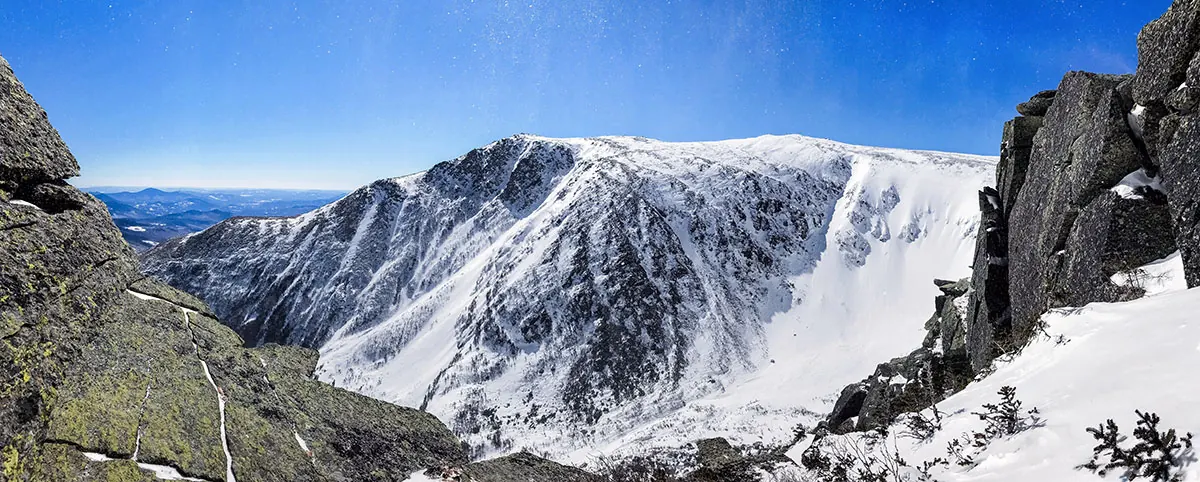
December is when New Hampshire settles into winter. Meteorological winter begins on the 1st, the sun sets around four o’clock, and the color left in the woods belongs to pine, hemlock, spruce and fir. It is a month for counting birds: feeders go back up once the bears have denned, Christmas Bird Count teams cover 21 circles from the Connecticut Lakes to the open ocean, and bald eagles gather where rivers stay open. Great horned owls start calling, winter moths flutter at Seacoast porch lights, and the long nights bring the Geminids and a full moon nearer than any other in 2026. Every date below has a source.
Other months in New Hampshire: October, November.
Start here
- Count birds for science. Bird counters fan out between mid-December and early January. New Hampshire has 21 circles, including two counted by boat off the coast; NH Audubon lists every compiler, and anyone living inside a circle can count a home feeder on count day.
- Look for eagles on open water. A record 100 young eagles fledged from New Hampshire nests in 2026. In winter, look for eagles, young and old, along open stretches of the Merrimack between Concord and Manchester, perched in tall riverside trees.
- Stay up for the Geminids. Geminid meteors, the most plentiful of the year, are at their best late on December 13 and before dawn on the 14th, in a moonless sky. Ten days later, on December 23, the Cold Moon is the closest full moon of 2026.
Keep it in the Naturalist’s Field Journal: log count-day and feeder birds in “birds I have seen,” sketch a coyote or hare trail on the tracks-to-know plate, tape a fir or hemlock sprig onto seeds, pods and cones, and keep the dusk-and-dawn watch for the night the great horned owls first call. On the solstice, note the sunset time on the daily field log.
Regions used below: Great North Woods; White Mountains; Lakes Region; Dartmouth–Lake Sunapee and the Upper Valley; Monadnock Region; Merrimack Valley; Seacoast.
When is the Christmas Bird Count in New Hampshire in 2026?
Count season, the 127th since Audubon began it, spans the three weeks from Monday, December 14, to Tuesday, January 5, 2027. Each count circle, 15 miles across and the same every year, picks a single day inside that window, and teams spend that day counting every bird they can find inside it. NH Audubon lists 21 active counts in the state, from Pittsburg to the Isles of Shoals, along with each compiler. Taking part costs nothing, and beginners are welcome.
-
Join a team or count from home
One day per circle, December 14 to January 5 · Any of the 21 count circles; find yours through NH Audubon’s list or Audubon’s circle finder
Write to the compiler early in December. A newcomer usually rides along with an experienced leader, which is the fastest way anyone learns winter birds. If your house sits inside a circle, you can watch your feeders on count day and send in a tally, and that counts too. As of early October few 2026 dates were up; in 2025 the counts ran from Concord and Keene on December 14 to Sandwich on January 4, so expect a similar spread and confirm with the compiler.
-
North Country counts
Usually the week before Christmas · Pittsburg, Errol-Umbagog, Littleton, Crawford Notch, North Conway
The northern circles cover spruce-fir country, lakes that freeze early and some of the coldest towns in the state, so totals are small but the birds are different from the south’s. With the Finch Research Network expecting plenty of pine siskins and red crossbills in the Northeast this winter, the conifer stands may be busier than usual. Last year these counts fell between December 17 and 21. Light runs short that far north, so bring a headlamp for the drive home.
-
Counting from a boat
Isles of Shoals: a calm day from late December; Jeffreys Ledge: the first day from December 15 with seas of 2 feet or less · Offshore from Rye and Portsmouth
Two of New Hampshire’s counts happen at sea and wait on the weather. NH Bird Records lists the Isles of Shoals count for a day between December 26 and January 5, chosen by the forecast, and NH Audubon notes that the Jeffreys Ledge count goes out on the first day from December 15 with seas no higher than 2 feet. Expect seabirds, sea ducks and alcids rather than feeder birds.
Results usually appear in the winter issue of New Hampshire Bird Records and in Audubon’s national database. NH Audubon says these counts, together with its Backyard Winter Bird Survey, now give winter bald eagle numbers that closely match its old roost surveys.
Where can you see bald eagles in New Hampshire in winter?
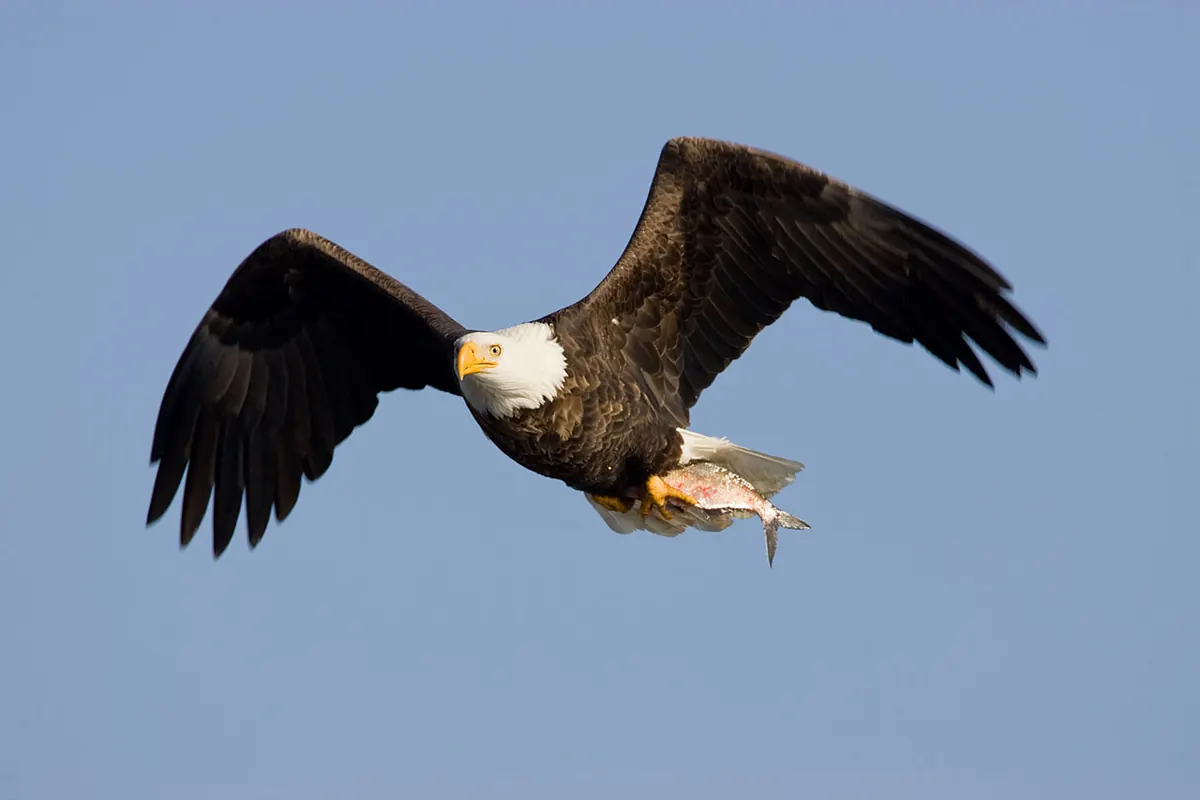
Wherever the water stays open. As lakes and rivers farther north lock up, eagles move to stretches of river below dams and rapids, and to tidal water that rarely freezes. In winter the state’s own breeding adults are joined by immature birds, which are mottled brown and white and lack the white head until about their fifth year.
-
The Merrimack between Concord and Manchester
December into March, best on cold, breezy days · Riverbanks and bridges from Concord south to Manchester, and other rivers that stay open below dams and rapids
NH Audubon’s winter trips have long followed the Merrimack between Concord and Manchester, describing eagles that come south as Canadian waters freeze. Five Rivers Conservation Trust, which protects land along the river near Concord, says most sightings there come in winter, often of birds perched on dead trees or feeding on a deer or waterfowl carcass caught in the ice. Scan the tallest riverside trees with binoculars before you walk the bank.
-
A record year for young eagles
The 2026 nesting season, reported in September · Statewide
NH Audubon reported on September 3 that 100 young eagles left New Hampshire nests in 2026, the first time the count has reached three digits, up from 85 in 2025. Monitors found 107 territorial pairs and 64 nests. The recovery began in 1989, when one pair fledged the first eaglet in the state in 40 years.
-
Hear it from the biologists
Wednesday, December 9, 7 to 8:30 p.m. · NH Audubon Seacoast Chapter program, listed at the Seacoast Science Center in Rye and as a Zoom talk
NH Audubon’s avian biologist will explain how volunteers now log nest visits through an online system, and what the 2026 data show. Check the event listing for whether to attend in person or online.
When can bird feeders go up in New Hampshire, and which birds will come?
December 1 is the date New Hampshire’s wildlife agencies give for hanging feeders, and UNH Extension’s fact sheet sets the season at December 1 to April 1, to keep black bears from learning that backyards mean food. The date is a floor, not a starting gun: in a mild December with bears still about, wait for a stretch of cold days and nights, and if a bear is active in your neighborhood, take the feeders in.
-
The regulars
From the first week a feeder goes up · Backyards statewide
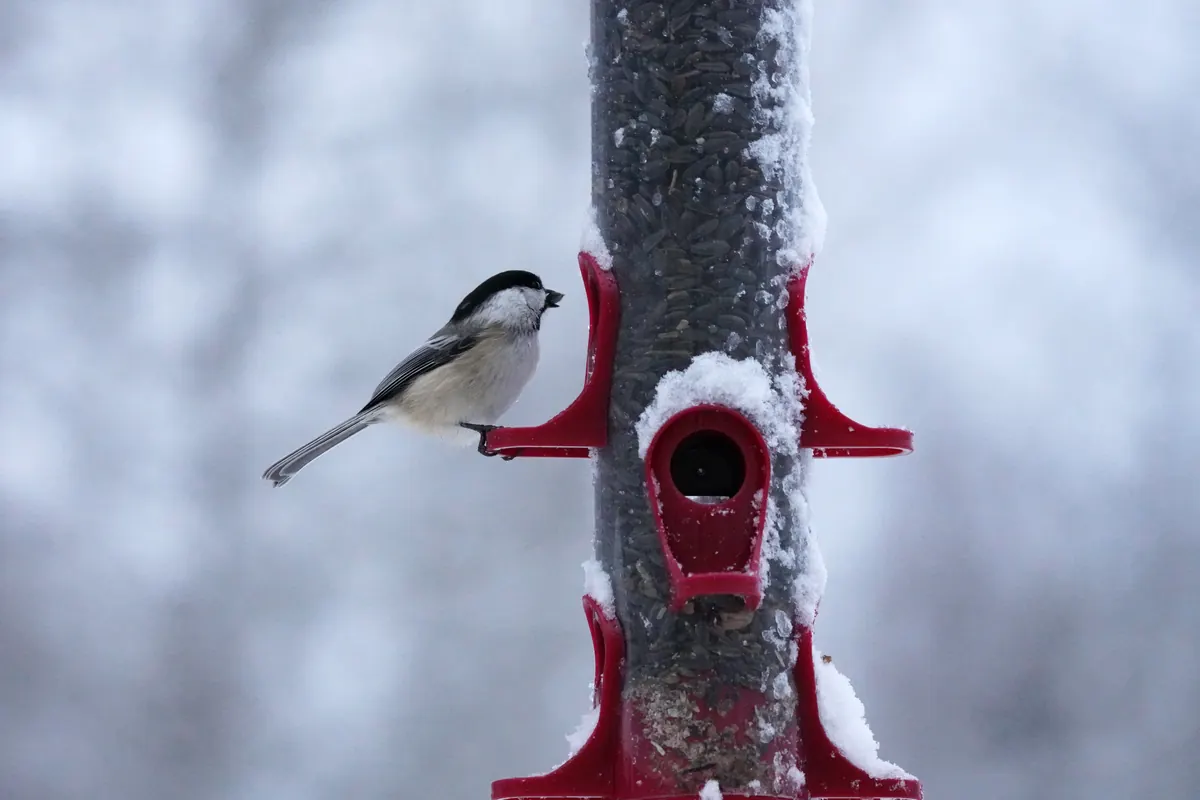
Black-capped chickadees usually find a new feeder first. UNH Extension lists the usual company: dark-eyed juncos, blue jays, downy and hairy woodpeckers, nuthatches, sparrows and mourning doves. This season, the Finch Research Network expects a strong flight of pine siskins into the Northeast, so a flock of streaky, yellow-flashing little finches at the thistle feeder would not be a surprise.
-
What to put out
All winter · Feeders, suet cages and a heated or regularly changed water dish
Black oil sunflower seed draws the widest range of birds. Suet brings woodpeckers and nuthatches; nyjer suits siskins and goldfinches. Unfrozen water is scarce in a New Hampshire winter, and birds use it for drinking and bathing, so a dish of water can draw as many visitors as the seed.
-
Keep it safe
Every couple of weeks · Feeders, windows and the space below
Wash feeders with soap and hot water, then soak them in one part bleach to nine parts water to stop disease spreading between birds. Feeding stations raise the risk of window strikes and cat attacks, so think about where the feeder hangs relative to big windows, and keep cats indoors.
Since November 1, FeederWatch volunteers have been sending the Cornell Lab and Birds Canada their backyard tallies, and they keep at it until April 30; a December of counts from a newly stocked feeder is exactly the data it wants.
Why do owls hoot on December nights in New Hampshire?
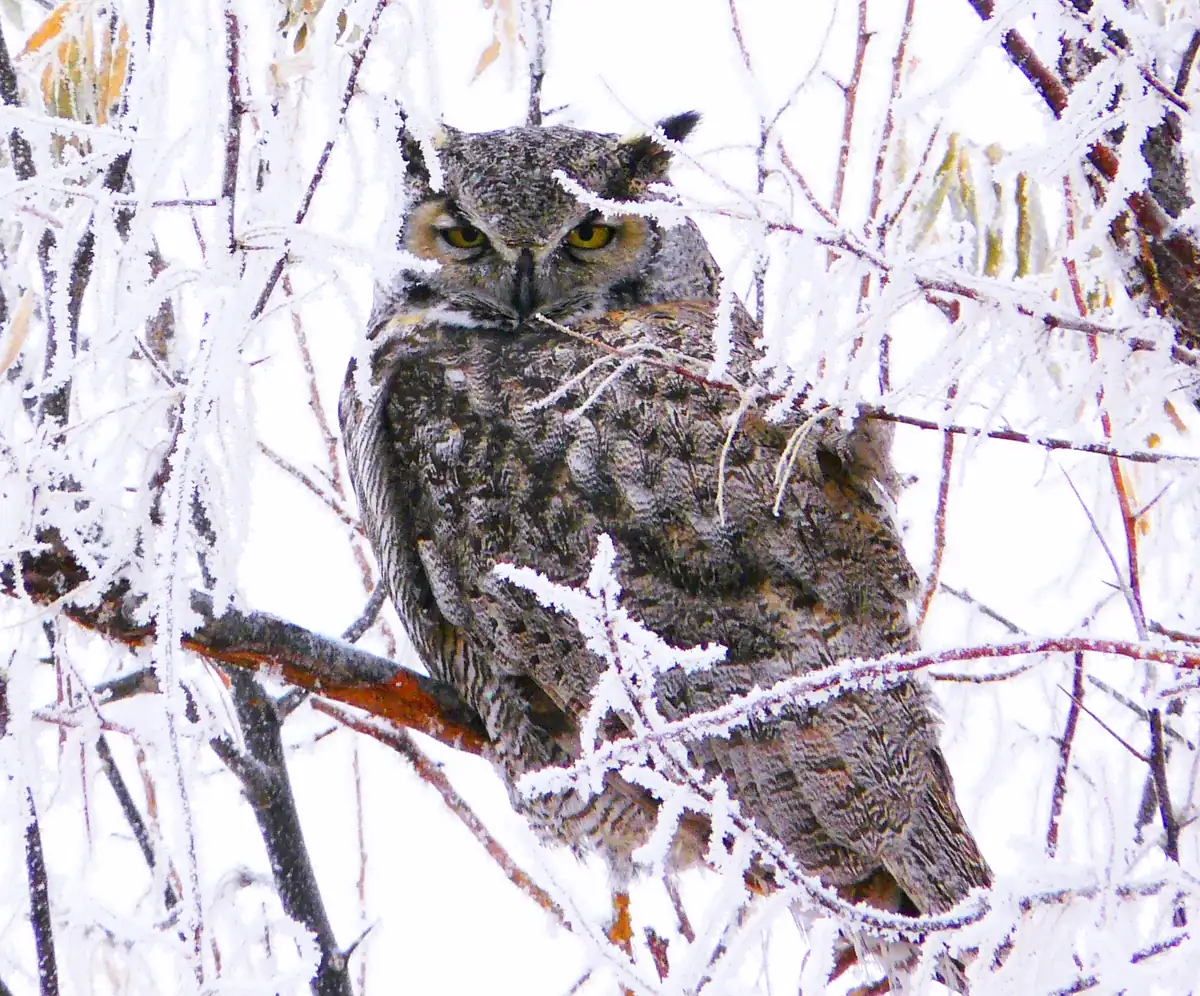
Because they are getting ready to nest in the coldest part of the year. Great horned owls, found across the state all year, start pairing up as the nights lengthen, and NH PBS NatureWorks puts their mating in January and early February, with the female laying two or three eggs. That means the deep, soft hoots carry best through the late December woods.
-
Great horned owl
Evenings and before dawn, building through late December · Woodlots near fields, town forests, river edges
Listen for a low series of five or so hoots, with the male’s voice deeper than the female’s, sometimes answering each other in a duet. On a still night the sound travels a long way. Their prey ranges from mice and squirrels to skunks and ducks.
-
Barred owl
Any month, but easy to hear on calm winter nights · Mixed and wet woods statewide
The one that seems to ask who is cooking dinner (“Who cooks for you? Who cooks for you all?”). NHPR’s Something Wild notes that barred owls court in winter and lay eggs as early as February in a hollow hardwood, and that they are often seen in daylight too, perched low along a woods road.
-
How to go owling
The first hour after dark, on a windless night · A quiet road or trail edge
Stand still and listen; you will hear owls long before you see them. Keep the flashlight down, and if you do spot one, give it room. For families with young readers, the Harris Center’s Wild Scientist Book Club meets on Thursday, December 17, 4 to 5 p.m., at the Hancock Town Library to talk about owls (ages 8 to 10; registration required).
How do you tell New Hampshire’s evergreens apart in winter?
With the hardwoods bare, the conifers carry the color of the woods until April. A few minutes with a needle between your fingers sorts out the common ones; New Hampshire State Parks’ tree guide and UNH Extension give the clues below.
-
Eastern white pine
All year · Southern and central New Hampshire, in pure stands and mixed with oak and hemlock
The only common one with needles in bundles: soft, flexible and 2 to 4 inches long, in clusters (look closely and you will usually count five). The cones are long, about 3 to 7 inches, and litter the snow under big trees.
-
Eastern hemlock
All year · Cool ravines, stream banks and shady slopes in the southern and central parts of the state
Short, flat needles, each with a faint pale line beneath, on drooping, lacy twigs. The cones are tiny, under an inch. Look for it with yellow birch and beech on north-facing slopes and along brooks.
-
Spruce or fir?
All year · The North Country, the high slopes of the White Mountains and wet lowlands
Roll a single needle. UNH Extension notes that red spruce and balsam fir together make up the spruce-fir forest of the mountains and northern flats, where deer often shelter in deep snow. Spruce needles are four-sided, sharp and roll easily; balsam fir needles are flat, soft and blunt, with two whitish stripes underneath, and won’t roll. Fir bark carries resin blisters, its cones stand upright on the branch, and crushed needles smell like a holiday wreath. UNH Extension calls balsam fir a Christmas favorite for centuries because it holds its needles and color well indoors.
-
Cut your own in the national forest
When permits go on sale, usually late November · White Mountain National Forest, outside wilderness areas and other closed zones
Last year the Forest Service sold Christmas tree permits for $5 from November 20, online through Recreation.gov (with a $2.50 fee) or at ranger stations in Gorham, Campton and Conway. A fourth grader holding an Every Kid Outdoors pass qualified for a free one. Rules last season: one tree per household, hand tools only, a stump under 6 inches across and no taller than 10 inches, and at least 100 feet from paved roads, water and developed sites (50 feet from dirt roads). Check the 2026 permit page before you go, and pick a tree from a crowded stand.
What are the pale moths fluttering at porch lights on the Seacoast in December?
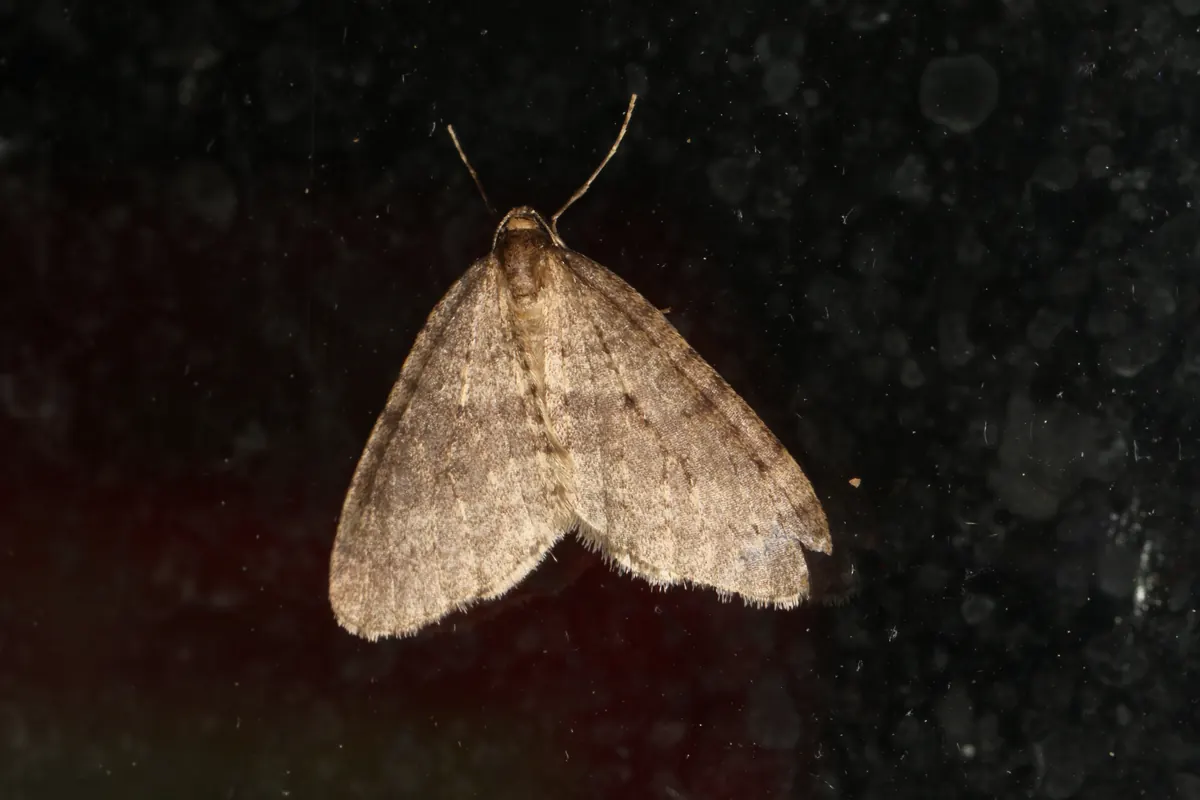
Very likely winter moths, a European species that spread north from eastern Massachusetts and now lives in coastal and southern New Hampshire. It does its living backward: the caterpillars feed in spring, and the adults emerge from the soil in late fall and mate in the cold.
-
Males at the lights, females on the trunks
From mid to late November (usually before Thanksgiving) into January, on nights above freezing · Seacoast towns and southern New Hampshire, near oaks, maples and apple trees
UMass Extension describes the small, plain males as strongly drawn to outdoor lamps and holiday lights. The females are nearly wingless and cannot fly; look for them after dark crawling up tree trunks, where each lays some 150 to 350 eggs in bark crevices. Northern Woodlands magazine notes that they mate from late fall through early winter whenever the air is above freezing.
-
A pest that has been tamed
Ongoing · New England
The state’s forest health program found winter moth defoliation in several Seacoast towns, on oaks, maples, birches and apple trees. From 2005, researchers released a small parasitic fly, Cyzenis albicans, in neighboring states, and by Northern Woodlands’ account winter moth in New Hampshire, Massachusetts and Rhode Island no longer causes noticeable defoliation. A December moth at the window now is a curiosity, not an emergency.
How do New Hampshire animals survive the winter, and what tracks will they leave?
December sorts the state’s animals into sleepers, part-timers and the ones that tough it out. The figures below come from a certified wildlife biologist’s summary of New Hampshire’s seven hibernators, and from NH Audubon.
-
True hibernators
Already asleep by December · Burrows, dens and caves statewide
Woodchucks go under in early fall; a hibernating one’s heart slows from about 105 beats a minute to 4, and its body cools to around 38 °F. Chipmunks sleep in spells of weeks, waking to eat from an underground cache of nuts. Five species of the state’s bats spend about seven months in winter dens, their heart rates falling from about 210 a minute to 8.
-
Bears, raccoons and skunks: lighter sleepers
Most bears denned by December; raccoons and skunks out on mild nights · Woods statewide
A denning black bear’s temperature falls only about 10 degrees, and its breathing slows from about 40 breaths a minute to 8 or 10, for five or six months. Raccoons and striped skunks hole up during the coldest spells and wander on thaws, which is why fresh skunk tracks can appear in a December snow.
-
Wood frogs, frozen solid
All winter · Under the leaf litter in moist woods
NH Audubon describes how a wood frog survives being frozen: ice forms between its skin and muscle while glucose from the liver keeps ice out of its cells, and the frog waits out the winter with no heartbeat. In spring it thaws from the inside out.
-
Tracks to learn first
After any fresh snow, and in mud on thaw days · Field edges, stream banks, woods roads
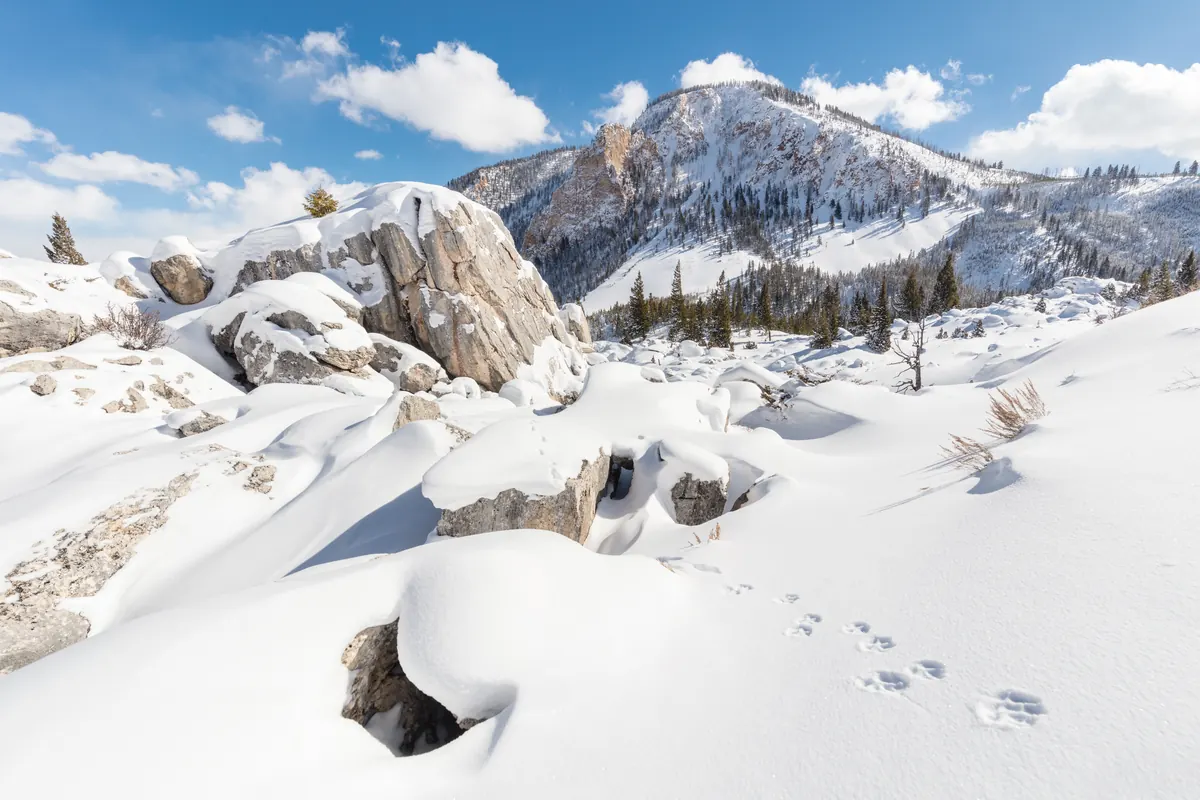
Fish and Game’s pocket track guide gives sizes worth memorizing: a white-tailed deer’s print is 2½ to 3 inches, a moose’s 4½ to 5½, a coyote’s about 2¼ to 2½, a red fox’s 2 to 2¼, a bobcat’s about 1⅞ and a fisher’s about 2¼. A snowshoe hare’s big hind feet leave prints about 5 inches long, landing ahead of the small front ones. Bring a ruler or use your glove, and photograph tracks with something for scale.
Tracking is easiest the morning after a light snowfall; deep, dry powder hides detail. The Naturalist’s Field Journal plates for tracks and for reading the signs are made for exactly this.
When is the earliest sunset in New Hampshire?
Not on the solstice. In Concord the sun sets at 4:11 p.m. every evening from December 3 to 15, a run centered on the 9th, while sunrise keeps getting later until early January. Colebrook and Berlin get the earliest evenings in the table, with sunset at 4:05 p.m. around December 10. The shortest day itself, December 21, gives Colebrook 8 h 47 m of daylight and Nashua 9 h 02 m. Between the solstice and New Year’s Eve each town gains three or four minutes, and nearly all of that gain comes in the afternoon.
| City | Dec 1 | Dec 21 | Dec 31 | Earliest sunset |
|---|---|---|---|---|
| Colebrook | 9 h 02 m | 8 h 47 m | 8 h 50 m | 4:05 p.m., Dec 10 |
| Berlin | 9 h 05 m | 8 h 50 m | 8 h 54 m | 4:05 p.m., Dec 10 |
| Littleton | 9 h 06 m | 8 h 51 m | 8 h 55 m | 4:08 p.m., Dec 9 |
| North Conway | 9 h 09 m | 8 h 53 m | 8 h 57 m | 4:06 p.m., Dec 9 |
| Hanover | 9 h 10 m | 8 h 55 m | 8 h 59 m | 4:12 p.m., Dec 9 |
| Concord | 9 h 14 m | 8 h 59 m | 9 h 02 m | 4:11 p.m., Dec 9 |
| Portsmouth | 9 h 14 m | 9 h 00 m | 9 h 03 m | 4:08 p.m., Dec 9 |
| Nashua | 9 h 16 m | 9 h 02 m | 9 h 06 m | 4:12 p.m., Dec 9 |
Solstice: 3:50 p.m. EST, Monday the 21st, when the sun reaches its southernmost point. Find your own street’s sunset on the daylight calculator.
How cold and snowy is December in New Hampshire, and what could El Niño do this winter?
Weather scientists open winter on December 1, bundling the year’s three coldest months, on average, into one season. Astronomers wait for the solstice on the 21st. In New Hampshire the difference between north and south is large. The NOAA 1991–2020 normals below give First Connecticut Lake an average December high of 28.7 °F and nearly 32 inches of snow, while Durham, near the coast, averages 37.7 °F and under 9 inches. The summit of Mount Washington is in a class of its own, with highs averaging about 20 °F and close to 48 inches of snow in the month.
| Station | Average high | Average low | Precipitation | Snowfall |
|---|---|---|---|---|
| First Connecticut Lake (Great North Woods) | 28.7 °F | 11.1 °F | 3.57 in | 31.9 in |
| Lancaster (upper Connecticut valley) | 31.1 °F | 13.0 °F | 2.90 in | 19.5 in |
| Berlin (Androscoggin valley) | 32.4 °F | 14.1 °F | 3.73 in | 17.2 in |
| York Pond (White Mountains) | 30.1 °F | 11.5 °F | 4.22 in | 18.2 in |
| Pinkham Notch (White Mountains) | 31.5 °F | 13.7 °F | 5.98 in | 28.9 in |
| Mount Washington summit | 20.1 °F | 3.5 °F | 7.35 in | 47.7 in |
| Hanover (Upper Valley) | 35.6 °F | 20.4 °F | 3.44 in | 13.4 in |
| Lakeport 2 (Laconia, Lakes Region) | 36.2 °F | 20.2 °F | 3.92 in | 12.8 in |
| Concord Municipal Airport | 37.1 °F | 19.5 °F | 3.70 in | 14.3 in |
| Keene (Monadnock Region) | 35.6 °F | 17.8 °F | 3.92 in | 14.4 in |
| Durham (Seacoast) | 37.7 °F | 21.0 °F | 4.04 in | 8.9 in |
| Greenland (Seacoast) | 37.8 °F | 22.3 °F | 4.88 in | 14.2 in |
This winter comes with an unusual backdrop. NOAA’s Climate Prediction Center, in its September 10 ENSO discussion, gave odds above 90 percent that the Pacific’s very strong El Niño holds on from fall into winter. An outlook prepared by NOAA and the Northeast Regional Climate Center during the strong El Niño of 2015 described the usual pattern: the polar jet stream stays farther north, warmth tends to reach well into the Northeast in strong events, and coastal storms are more frequent, though whether a given storm brings snow or rain depends on its track. New Hampshire’s state climatologist told NHPR in September that this El Niño will likely mean a mild winter. Mild on average is not the same as snowless, and one well-placed nor’easter can still bring a big storm.
The government’s own winter forecast, covering December through February, lands on October 15; its maps will be posted with the CPC 90-day outlooks. Nearer term, try our weather page, and for the spring side of the freeze calendar, the New Hampshire frost dates.
What is in the New Hampshire night sky in December 2026?
The longest nights of the year, the best meteor shower of the year and the biggest full moon of the year all land in December. Times are Eastern Standard Time.
-
The Geminids
Night of Sunday, December 13, into Monday, December 14 · Look high in the east and overhead; the radiant in Gemini is highest around 2 a.m.
The International Meteor Organization puts the peak on December 14. That figure of roughly 150 an hour is an ideal-sky number for a radiant straight up, so a few dozen an hour after midnight counts as a good night here. The young crescent moon is down by mid-evening, leaving the hours after it dark. Dress as if for ice fishing, and lie back on a pad or sled.
-
The Cold Moon, closest of the year
Full at 8:28 p.m. on Wednesday, December 23 · Rising in the northeast around sunset
Full moon comes about seven hours before the moon’s closest approach to Earth for the month, which makes this the nearest, and so the largest-looking, full moon of 2026. It will look full on Christmas Eve as well.
-
Planets
All month · Saturn in the south and southwest after dusk; Venus, Jupiter and Mars before dawn
After dark, Saturn stands alone among the bright planets. At dawn, Venus outshines everything else, low in the southeast; Jupiter clears the eastern horizon earlier every night, by mid-evening as Christmas nears, and Mars is not far from it in Leo. Early on December 4 and 5, look for a slender crescent moon in the same part of the dawn sky as Venus, with the star Spica between the two on the 4th.
-
Ursids and an early-January bonus
Ursids peak December 22; Quadrantids night of January 3 to 4, 2027 · Ursids from the north; Quadrantids from the northeast before dawn
The Ursids are small, around 10 an hour at best, and a nearly full moon spoils them this year. The Quadrantids, which can be strong but peak sharply, arrive just before a new moon, so the night of January 3 is worth a look. Long winter nights also help with the northern lights: the sun is past its peak but still capable of strong storms, and the North Country has the best chance.
| Phase | Date | Time |
|---|---|---|
| Last quarter | Tuesday, Dec 1 | 1:08 a.m. |
| New moon | Tuesday, Dec 8 | 7:52 p.m. |
| First quarter | Thursday, Dec 17 | 12:42 a.m. |
| Full moon (Cold Moon) | Wednesday, Dec 23 | 8:28 p.m.; the year’s closest full moon |
| Last quarter | Wednesday, Dec 30 | 1:59 p.m. |
| New moon | Thursday, Jan 7, 2027 | 3:24 p.m. |
See whether the clouds will cooperate on Today’s sky, and check when the moon rises over your own town with our moon phase calendar.
What can New Hampshire families do outdoors in December 2026?
- From Tuesday, December 1: put up the feeder once the weather has turned properly cold, and start a Project FeederWatch count. Children can keep the tally of chickadees and juncos.
- Saturdays, December 5 and December 19: telescopes at UNH. The university’s observatory in Durham opens to everyone from 8 to 10 p.m.; it is free and needs no booking. Sessions are called off for bad weather; the observatory posts notices on its Facebook page in the late afternoon.
- Wednesday, December 9, 7 p.m.: bald eagles, NH Audubon’s Seacoast Chapter program on the state’s eagle monitoring (see the listing for the in-person or Zoom option).
- Sunday night, December 13: meteor watch. Once the crescent moon is gone, even an hour in a dark backyard with blankets should show some bright meteors.
- Mid-December into early January: a bird count for the whole family. Ask the compiler for your circle whether a family can join a team or count the home feeder on count day.
- Thursday, December 17, 4 p.m.: owls for 8- to 10-year-olds, the Harris Center’s Wild Scientist Book Club at the Hancock Town Library (registration required).
- Through the month: art at the Audubon centers. NH Audubon’s McLane Center in Concord (through December 31) and Massabesic Center in Auburn (through December 23) have nature art exhibits on view, 11 a.m. to 5 p.m. on the days listed in the calendar, with a walk on the trails outside afterward.
- Monday, December 21: mark the solstice with a walk timed to end at sunset, between about 4:08 p.m. in Colebrook and Berlin and 4:15 p.m. in Nashua and Hanover, and write down the time in your journal.
- Friday, January 1, 2027: First Day Hikes. For 2026, New Hampshire State Parks hosted guided and self-guided New Year’s Day walks at seven parks, with warm drinks and advance registration required; watch nhstateparks.org in December for the 2027 list.
For more months and states, browse the nature guides. Bring the Naturalist’s Field Journal along to record whichever you choose. The November page for New Hampshire covers the late hawk flight and the Seacoast’s arriving winter birds.
Safety notes for December in New Hampshire
- Deer season is not over. Regular firearms deer season runs through Sunday, December 6 (in northernmost Unit A it ended November 29). Bowhunters can still take deer and fall turkey until December 15, or December 8 in Unit A; grouse season lasts through New Year’s Eve, gray squirrel to January 31 and snowshoe hare to March 31, per Fish and Game’s 2026 season list. Duck hunting continues in the Inland and Connecticut River zone to December 24 and on the coast to January 17, 2027.
- Orange is advice, not law. State law, RSA 207:38-b, merely recommends that gun and bow hunters (duck and goose hunters aside) wear orange on a hat or vest that shows from 200 feet away. Fish and Game urges everyone in the woods during the seasons to wear blaze orange, and a bright vest on the dog is wise too.
- Early ice is rarely safe ice. Fish and Game’s minimum is 6 inches of hard ice for one person on foot and 8 to 10 inches for snowmobiles or off-highway vehicles. Avoid clear-thin, honeycombed or dark-looking ice and anywhere near inlets, outlets and springs; check thickness with a chisel or auger as you go, and carry ice picks, a rope and a flotation coat. A Fish and Game captain’s advice from last December: if a dog goes through, do not go out after it.
- Plan around 4 p.m. darkness. With sunset as early as 4:05 p.m. in the north, start hikes early, carry a headlamp with fresh batteries and extra layers, and bring microspikes for icy trails. Above treeline in the White Mountains, conditions are full winter: the summit of Mount Washington averages a December low of 3.5 °F before wind chill.
- Bears and feeders. A bear that finds a feeder may stay active late into December; bring feeders in at once if one visits.
- Roads and storms. The first plowable snow and freezing rain often come in December; leave plows plenty of space and carry blankets, a shovel and food in the car.
Sources
- National Audubon Society: join the Christmas Bird Count (December 14 to January 5)
- NH Audubon: Christmas Bird Count, New Hampshire counts and compilers
- New Hampshire Bird Records: New Hampshire Christmas Bird Count
- NH Audubon: Bald Eagle conservation project
- NH Audubon: NH Bald Eagle 2026 breeding season results (September 3, 2026)
- NH Audubon: Bald Eagle Monitoring in NH, Seacoast Chapter program (December 9, 2026)
- NH Audubon Afield, Winter 2012–13 (winter eagles along the Merrimack)
- Five Rivers Conservation Trust: bald eagles on the Merrimack River
- UNH Cooperative Extension: winter bird feeding fact sheet
- NH Fish and Game: bears, frequently asked questions (feeders and denning)
- NH Audubon: bird feeding basics
- Finch Research Network: winter finch forecast 2026–2027
- Project FeederWatch: how to participate
- NH PBS NatureWorks: great horned owl
- NHPR Something Wild: how to go owling in New Hampshire (December 30, 2022)
- Harris Center: Wild Scientist Book Club, owling (December 17, 2026)
- New Hampshire State Parks: common trees of New Hampshire identification guide
- UNH Cooperative Extension: balsam fir (May 15, 2023)
- UNH Cooperative Extension: silvicultural principles for New Hampshire forest types
- USDA Forest Service: White Mountain National Forest Christmas tree permits (2025 release)
- Recreation.gov: White Mountain National Forest Christmas tree permit rules
- UMass Extension: winter moth, Operophtera brumata
- NH Bugs (NH Division of Forests and Lands and UNH Extension): winter moth
- Northern Woodlands: an exotic pest story with a happy ending (Winter 2022)
- What’s Wild in NH (certified wildlife biologist): New Hampshire’s seven hibernators
- NH Audubon: wood frogs
- NH Fish and Game: pocket guide to N.H. animal tracks
- NOAA NCEI: 1991–2020 monthly normals for twelve New Hampshire stations (data API)
- Climate Prediction Center: ENSO diagnostic discussion, September 10, 2026
- Climate Prediction Center: seasonal outlooks (winter outlook issued October 15, 2026)
- NOAA and Northeast Regional Climate Center: El Niño impacts and outlook, Eastern Region (October 2015)
- NHPR: 2026 was the 7th warmest summer in NH history (September 21, 2026)
- NOAA Climate.gov: United States El Niño impacts
- U.S. Naval Observatory: moon phases from November 2026 (data API)
- U.S. Naval Observatory: Earth’s seasons, 2026 (December solstice)
- International Meteor Organization: 2026 meteor shower calendar
- EarthSky: what is a supermoon? (2026 full supermoons)
- EarthSky: Venus at greatest western elongation
- NOAA Space Weather Prediction Center: solar cycle progression
- University of New Hampshire: UNH Observatory public observing nights
- NH Audubon: events calendar, December 2026
- New Hampshire State Parks: First Day Hikes 2026
- NH Department of Natural and Cultural Resources: 2026 First Day Hikes locations
- NH Fish and Game: New Hampshire hunting seasons open September 1 (2026 dates)
- NH Fish and Game: 2026–2027 migratory waterfowl hunting seasons
- New Hampshire RSA 207:38-b: hunter orange recommendation
- NH Fish and Game: exercise caution around all forms of ice this winter (December 27, 2024)
- NHPR: keeping yourself safe this winter, on roads, at home and on the ice (December 5, 2025)
- Photos via Wikimedia Commons; licenses and photographers are credited under each picture
