What to look for in nature in New Hampshire this January
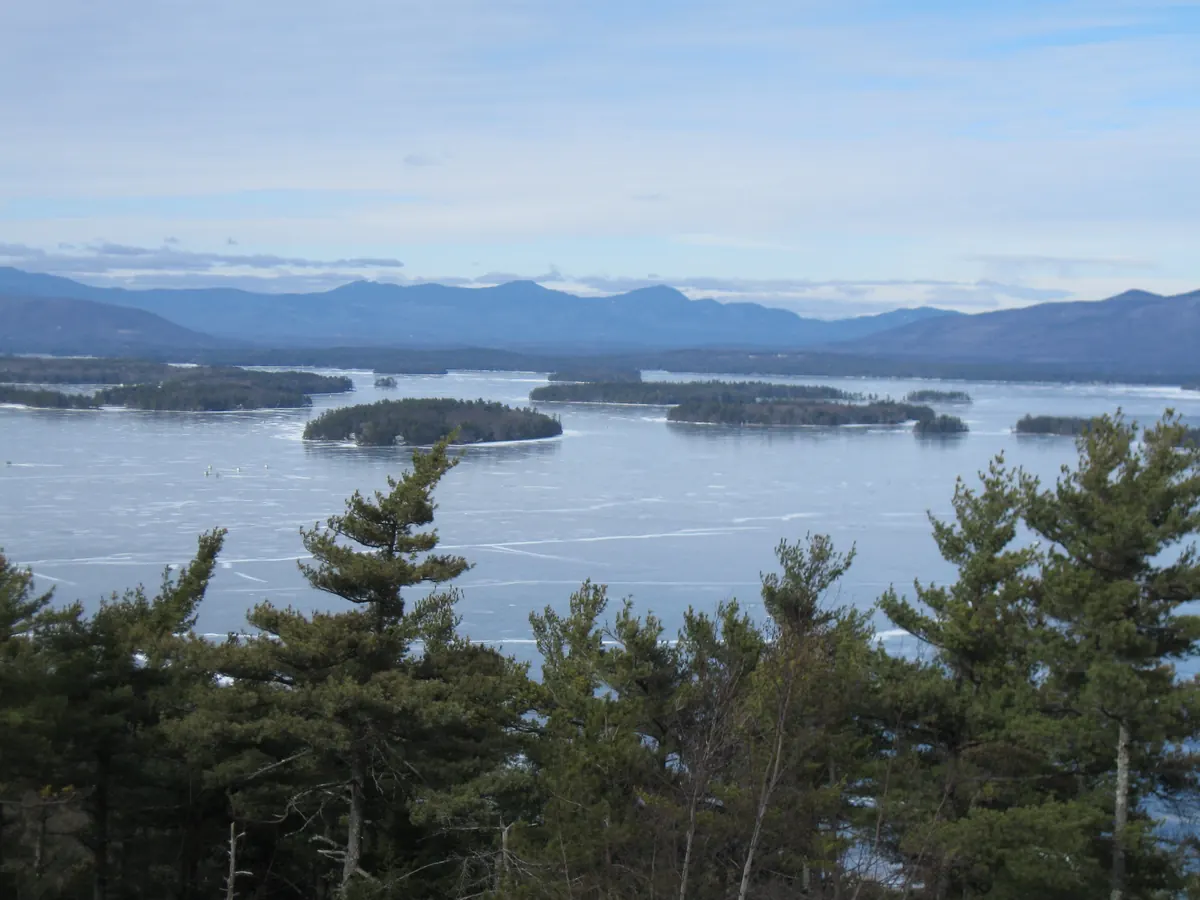
By January, a New Hampshire winter is running at full depth. In Concord the normal daily temperature reaches its low point in the fourth week of the month, the big lakes lock up, and bob houses appear on Winnipesaukee once lake trout season opens on New Year’s Day. Bald eagles crowd the last open water, great horned owls begin incubating while snow still covers their nests, and moose in the North Country carry winter ticks that start to mature late in the month. Under the snowpack, voles and shrews keep living at close to freezing, and on any thaw, millions of snow fleas pepper the surface. Afternoons stretch a little each week, a strong meteor shower comes in the first days, and the 22nd brings 2027’s nearest full moon. Every date below has a source.
Other months in New Hampshire: October, November, December, February.
Start here
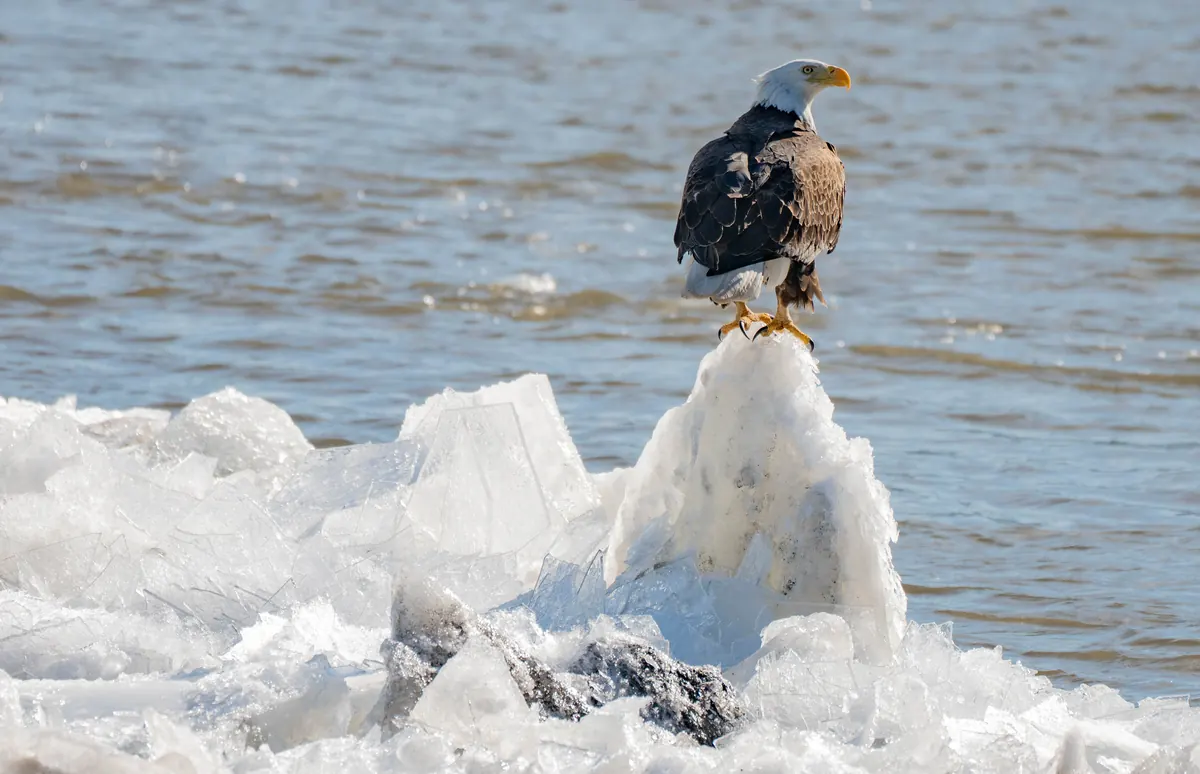
- Scan open water for eagles. January squeezes eagles onto whatever water stays unfrozen. On the last statewide midwinter count, in January 2020, volunteers tallied 101 bald eagles, and the Lakes Region held the most. Check river outlets, dam tailraces and Great Bay on a cold, bright morning.
- Try the ice on Free Fishing Day. New Hampshire waives the fishing license on the third Saturday of January, which in 2027 is January 16. Lake trout waters open to ice anglers on January 1. Check the ice yourself with a spud or auger before trusting it.
- Get up early for the Quadrantids. The year’s first strong meteor shower tops out after dark on Sunday, January 3, running into the small hours of Monday. A slim crescent moon climbs up only shortly before sunrise, so the last dark hours give the best counts.
Keep it in the Naturalist’s Field Journal: start the daily field log on January 1 and note the sunset each Sunday to watch the afternoons stretch, sketch a deer trail or a vole’s exit hole on the tracks-to-know plate, use reading the signs for moose beds and browsed twigs, add the eagles from the river to birds I have seen, and draw one hardwood’s bark on a tree through the seasons so you can return to it in May.
Regions used below: Great North Woods; White Mountains; Lakes Region; Dartmouth–Lake Sunapee and the Upper Valley; Monadnock Region; Merrimack Valley; Seacoast.
Where do bald eagles gather in New Hampshire in January?
At the open water left once lakes and slow rivers freeze. For four decades NH Audubon measured this every January for Fish and Game’s Nongame Program, as the state’s share of the national Midwinter Bald Eagle Survey. The counts trace one of the state’s great wildlife recoveries, from 12 eagles in 1984 to 25 in 1994 and 55 in 2005.
-
A count that grew past 100
A single count day in the first half of January, until 2020 · Rivers, lakes and the Great Bay estuary statewide
On count day, January 13, 2018, volunteers found 77 bald eagles, 46 of them adults and 29 immatures, and the two-week count period that surrounded it documented 97 eagles. The final survey, held January 9 to 11, 2020, logged 101 bald eagles and 2 golden eagles, which NH Audubon called the first time in four decades the count had passed 100. NH Audubon then ended the winter count after 40 straight years to focus on other raptor projects.
-
Where the 2018 eagles were
Count day, January 13, 2018 · By watershed; see the table
The Merrimack watershed held the most birds that day, followed by Great Bay and the Seacoast and then the Lakes Region. In 2020 the Lakes Region led, with 31 bald eagles. The pattern is the same each winter: eagles gather where a current, a dam outflow or the tide keeps ice from forming and fish and ducks within reach. Below the outlets of the big lakes, along the lower Connecticut and around the edges of Great Bay are all worth a look.
-
How to watch, and how to help
All month; mornings after a hard freeze are best · From bridges, boat launches and pull-offs, at a distance
Bring binoculars and stay in or near the car; an eagle flushed off a fish wastes energy it cannot spare in January. NH Audubon says the eagles reported on Christmas Bird Counts and its two-day Backyard Winter Bird Survey now track the trend of its old winter surveys, so the survey on February 13 and 14, 2027, is the place to report the eagle over your yard.
| Area | Bald eagles |
|---|---|
| Merrimack River watershed | 26 |
| Great Bay and the Seacoast | 18 |
| Lakes Region | 16 |
| Connecticut River | 9 |
| Androscoggin River | 4 |
| Saco and Ossipee rivers and elsewhere | 4 |
| Statewide total | 77 (46 adults, 29 immatures, 2 of unknown age) |
The December page for New Hampshire covers the wintering eagles on the Merrimack and the record 2026 nesting season.
When does ice fishing season start in New Hampshire, and when is Free Fishing Day?
Many ponds can be fished through the ice whenever it is safe, but the big lake trout and salmon lakes, Winnipesaukee among them, have their own ice season that opens on January 1. The 2026 freshwater digest lists the rules below.
-
Lake trout through the ice
January 1 to March 31 · Designated lake trout and salmon lakes, such as Winnipesaukee
On these lakes the ice season runs January 1 through March 31, with a daily limit of 2 lake trout. Each angler may use only 2 ice fishing devices there, compared with 6 on most other waters, and landlocked salmon may not be taken through the ice at all. Bob houses have to be off the ice by April 1. On some designated waters an angler may also set up to 6 lines for cusk, a bottom-dwelling cod relative; these may be left unattended, but the bait end has to be checked once in every 24 hours.
-
Free Fishing Day
Saturday, January 16, 2027 (the third Saturday in January) · Any inland or coastal water in the state
State fisheries rule Fis 1203.01 sets the winter free fishing day on the third Saturday of January every year, and anyone, resident or not, may fish that day without a license. Every other rule still applies, and people entered in a fishing tournament must still be licensed. It is the easiest day of the year for a family to borrow a jig rod and try a pond; confirm the date on Fish and Game’s free fishing days page, and test the ice before you walk out.
-
Smelt shanties on the tidal rivers
In winters when the tidal rivers freeze · The Squamscott in Stratham and Exeter, and other rivers feeding Great Bay
Small rainbow smelt, eight-inch silvery fish that live at sea and run up rivers to spawn, have long drawn anglers to shanties on the Seacoast’s frozen tidal rivers. The fishery has slumped: NHPR reported in 2015 that people who once filled buckets with a hundred smelt a night in 2011 were catching almost none. A Fish and Game biologist told the station the population appeared to be shifting north as the Gulf of Maine warms.
Fish and Game’s guidance on ice thickness is in the safety notes at the end of this page.
How do moose and deer get through a New Hampshire January?
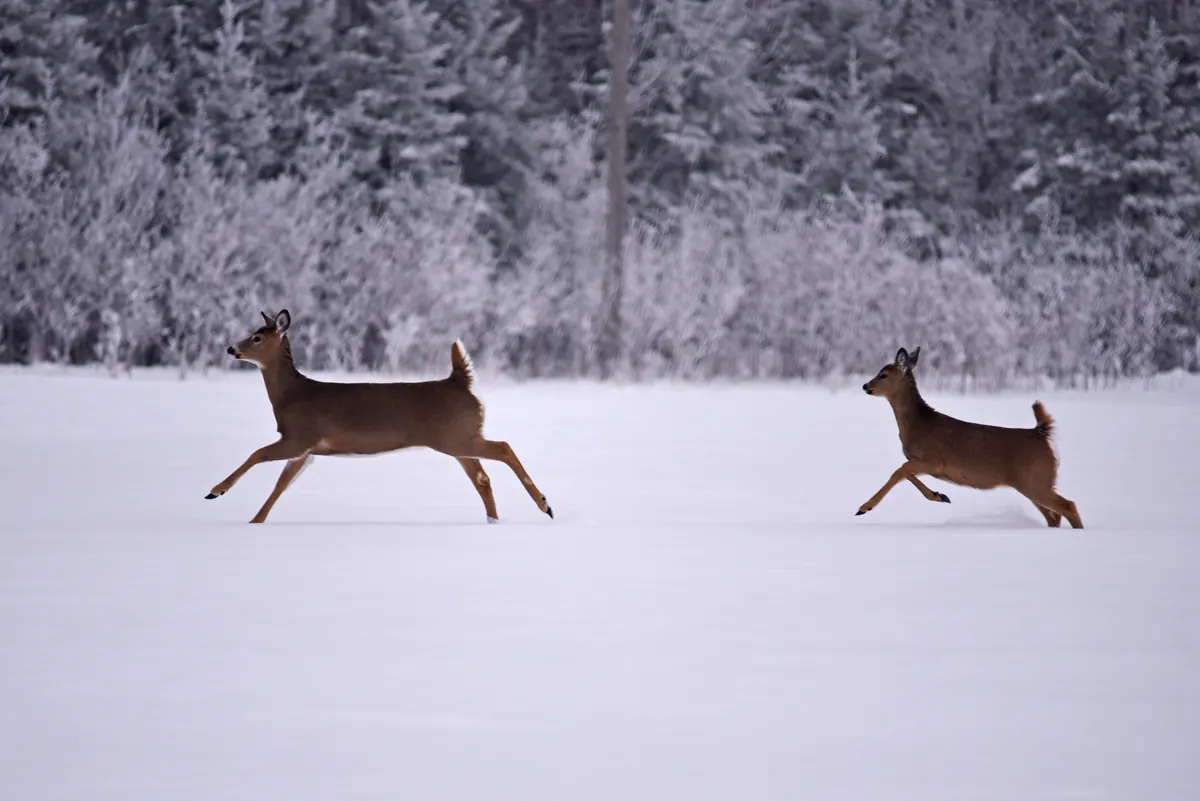
Very differently. Deer retreat to dense softwood shelter once snow gets deep. Long-legged moose can wade almost anywhere, but many carry a heavy load of winter ticks, and January is when those ticks start to change.
-
Winter ticks on moose
Riding along all winter; the first adults appear in late January · Moose range in the North Country, the White Mountains and western Maine border country
The winter tick is the only one-host tick in New Hampshire, UNH Extension explains: larvae climb aboard a passing moose in fall and stay on that one animal, feeding once as larvae and again as nymphs. Work in Alberta found the first adult ticks in late January, with engorged females dropping off in late March or April, and UNH specimen records fit the same calendar. Moose groom far too late to keep up, and by late winter a heavily infested animal has rubbed away so much hair, starting at the shoulders, that it looks pale gray or tan. Calves carry the highest loads for their size and are most at risk. In January, look near moose beds for browsed twigs; later, in bad tick years, those beds hold blood and fallen ticks, and ravens in New Hampshire have been seen picking them out.
-
Deer yards in the softwoods
When the snow gets deep, often from January · Mature hemlock, spruce-fir and northern white cedar, mostly below 2,000 feet
Good forestry guidance from UNH Extension says deer move into wintering areas once snow is 10 to 12 inches deep and keep to the dense core of the yard when it reaches 16 to 20 inches; hemlock and northern white cedar make the best cover, and only about 3 percent of the state’s land qualifies. Fish and Game’s 2024 deer assessment adds that the move can begin as snow nears 15 inches and can happen within a single day. The same report notes that eight of the past ten winters were milder than average, so southern deer have used their yards only now and then.
-
Please don’t feed the deer
All winter · Backyards statewide
Fish and Game asks people every winter not to put out food for deer. Deer are ruminants whose gut microbes need weeks to adjust to a new diet, and a sudden supply of corn or other rich food can disrupt digestion badly enough to kill them; twelve deer died that way in South Hampton in 2015. Feeding sites also lure deer across roads and spread disease.
When do great horned owls lay eggs in New Hampshire?
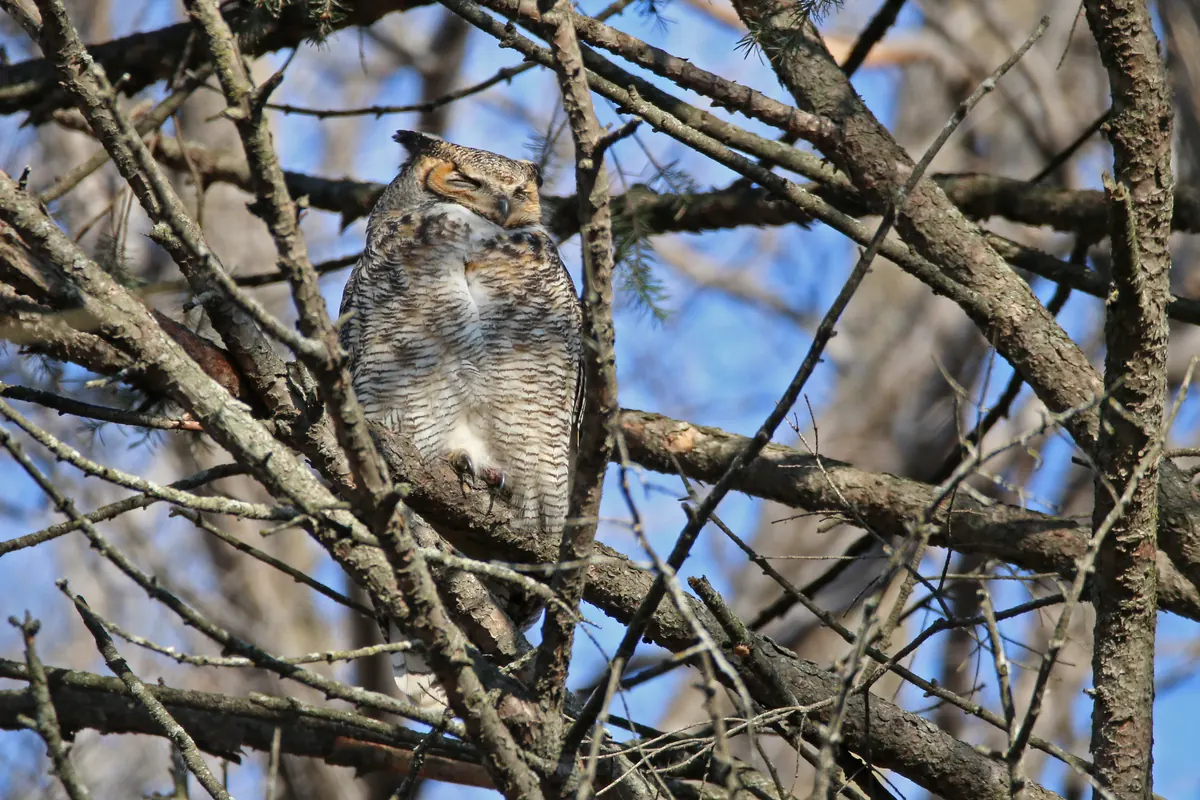
Sooner than nearly any other bird in New Hampshire. December’s hooting was the pairing up; by late January many pairs are ready to nest. NH Audubon’s State of the Birds account says that in the northern United States great horned owls may lay eggs by late January or early February, and the female then sits on them for about a month, so a nest can hold owlets by late February.
-
A great horned owl on eggs
Late January into February · Old hawk or heron nests and broken-topped snags, often near fields and wetlands
This owl almost never builds a nest of its own, moving instead into an old hawk or heron nest of sticks or the hollow top of a broken snag. With the trees bare, a sitting female sometimes gives herself away by two ear tufts showing over the edge of the sticks. If you find one, keep well back and keep the location to yourself. NH Audubon lists the species as declining in the state, so each successful nest counts.
-
Duets in the cold
The first weeks of January onward, after dark · Woodlots and town forests statewide
The Outside Story, a natural history column supported by the New Hampshire Charitable Foundation, notes that owl courtship gets going in the first weeks of January. Listen for paired great horned owls trading hoots: the female’s voice is higher and her call carries an extra note at the start. The column’s advice is to go out on a night when the moon is bright and the air is still, which makes the week of the Wolf Moon, around January 22, a good one to try.
-
The other winter owls
Courtship building from midwinter into April · Mixed woods, swamps and conifer thickets
Five owls live in the Northeast all year and court in winter, the same column says: great horned, barred, eastern screech, long-eared and northern saw-whet. Barred owls get noisiest from late February into April. Snowy owls are different: Arctic visitors that turn up on the Seacoast in some winters and not others, with Hampton Beach and Rye Harbor state parks the usual places, as the November page for New Hampshire describes.
What lives under the snow in New Hampshire in winter?
A good deal more than it seems. Between the ground and the base of the snowpack lies the subnivean zone, a world of tunnels kept from freezing solid by the snow above it. Northern Woodlands’ Outside Story explains that mice, voles and shrews need only six inches of snow for a sturdy roof, and that under about eight inches the space stays within a degree or two of 32 °F, however cold the night above.
-
Voles, mice and shrews in their tunnels
Whenever the snow is deeper than about 6 inches · Fields, woods edges, stone walls and lawns
The small mammals build long runways between food and shelter, with air shafts to the surface. When the snow finally melts in spring, the network shows up as raised, matted tunnels winding across the grass.
-
Hunting from above
All winter, day and night · Open fields and meadows
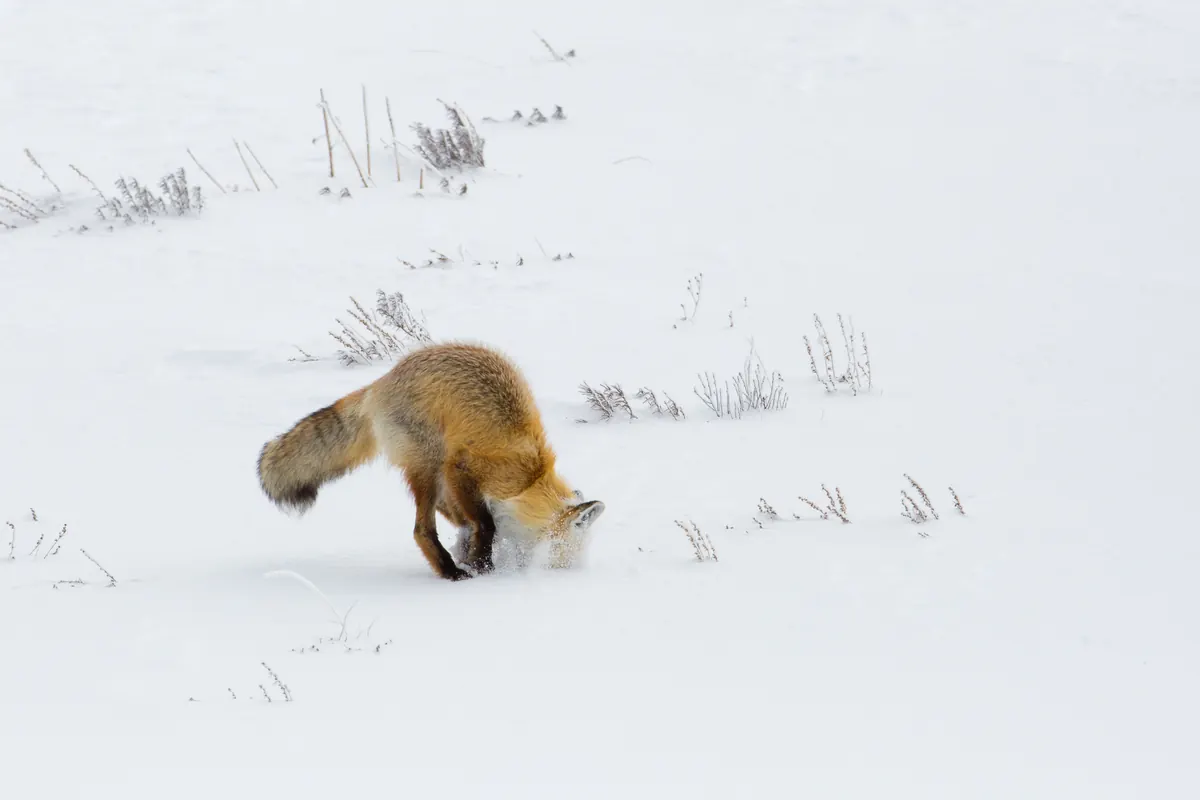
Predators work the snow by ear and nose. The same column says owls can hear rodents moving under the snow from thirty yards off and plunge through the crust to catch them, foxes and coyotes find them by scent and pounce headfirst, and slim ermine slip down the air shafts.
-
Snow fleas on a thaw
Mild spells in January, and on into spring · Snow around tree trunks, in footprints and along the edges of melt pools
On a day near or above freezing, the snow at the base of a tree can look as if someone sprinkled pepper on it. Those specks are springtails, the snow fleas of UNH Extension’s fact sheet: tiny, harmless, purplish or dark gray to black creatures that gather in the millions during thaws and feed on decaying leaves and other organic matter. Look closely and they flick themselves into the air with a forked spring folded under the body. A hand lens and a few minutes are all you need.
The tracks and sleepers story, from woodchucks to frozen wood frogs, is on the December page.
How can you identify New Hampshire’s hardwood trees in winter?
Forget the leaves and use what UNH Extension foresters call the three B’s: branching, buds and bark. Each one narrows the list quickly, and January, with snow on the ground and no foliage in the way, is the easiest time to practice.
-
Branching first
All winter · Any woodlot or street tree
Look at where the twigs leave a branch. Most trees are alternate, with twigs staggered along the stem. Only a few are opposite, with twigs in pairs: maples, ashes, horse chestnut, dogwoods, viburnums and elderberry.
-
Buds and twigs
All winter; next spring’s leaves and flowers are already packed inside · Low branches and saplings within reach
Ask whether the buds are pointed or round, long or short, and pressed close to the twig or angled off it. UNH Extension’s examples: speckled alder holds football-shaped buds up on little stalks, shagbark hickory has big, stout ones, and black birch buds hug the twig. Scratch or snap a black birch twig and it smells strongly of wintergreen, a test that works on the coldest day.
-
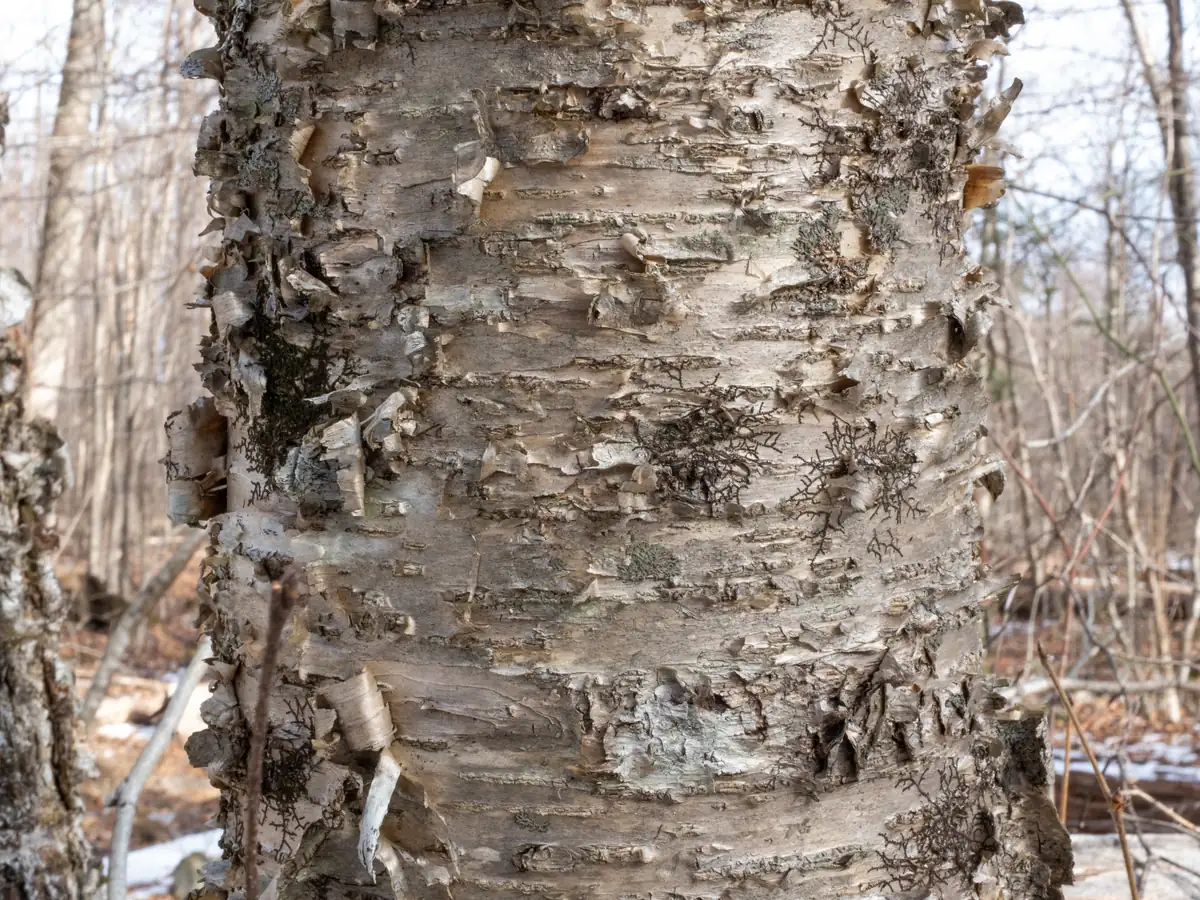
Bark against the snow
All winter · Mature trees in mixed woods
An Extension guide built on Michael Wojtech’s bark types sorts the common trees well. Yellow birch peels in curly horizontal strips; beech and red maple stay smooth and unbroken; black cherry breaks into scales or plates; northern red oak has ridges with reddish color in the furrows; black birch and bigtooth aspen show visible lenticels, the short horizontal pores. Bark changes with age, so compare young and old trees.
UNH Extension and the Harris Center have run winter tree identification walks in past Januaries, for example in Harrisville on January 7, 2025; watch the Extension events calendar for any 2027 dates. The December page covers the evergreens.
How much daylight does New Hampshire gain in January?
A little under an hour, with the northern towns gaining most. Colebrook, at the top of the table, has 8 h 51 m on January 1 and 9 h 46 m by January 31, 55 minutes more. Nashua, near the Massachusetts line, starts with more light, 9 h 07 m, but gains only 49 minutes. Concord climbs from 9 h 03 m to 9 h 54 m. Because sunrise keeps creeping later into the first days of January, almost all of the month’s early gain lands in the afternoon, and the pace picks up as the weeks pass.
| City | Jan 1 | Jan 31 | Gained | Per day |
|---|---|---|---|---|
| Colebrook | 8 h 51 m | 9 h 46 m | 55 min | 1.8 min |
| Berlin | 8 h 55 m | 9 h 47 m | 52 min | 1.7 min |
| Littleton | 8 h 56 m | 9 h 49 m | 53 min | 1.8 min |
| North Conway | 8 h 58 m | 9 h 50 m | 52 min | 1.7 min |
| Hanover | 9 h 00 m | 9 h 52 m | 52 min | 1.7 min |
| Concord | 9 h 03 m | 9 h 54 m | 51 min | 1.7 min |
| Portsmouth | 9 h 04 m | 9 h 55 m | 51 min | 1.7 min |
| Nashua | 9 h 07 m | 9 h 56 m | 49 min | 1.6 min |
Even at the end of the month, no town in the table has reached ten hours of daylight. For a single street’s sunrise and sunset, open our daylight calculator.
How cold is January in New Hampshire, and what might El Niño do to it?
Cold, steadily. Published NOAA 1991–2020 daily normals for Concord bottom out at an average temperature of 21.5 °F on January 22 to 24, with normal lows near 12 °F through the last third of the month. The monthly normals below show how wide the range is: First Connecticut Lake averages a January low just below zero and about 30 inches of snow; Durham, a few miles from salt water, has lows around 14 °F and under 11 inches. On the summit of Mount Washington the average high is 14.9 °F, and the Mount Washington Observatory’s lowest reading ever, -47 °F, came on January 29, 1934; the summit tied it on February 4, 2023.
| Station | Average high | Average low | Precipitation | Snowfall |
|---|---|---|---|---|
| First Connecticut Lake (Great North Woods) | 22.4 °F | -0.3 °F | 3.02 in | 30.3 in |
| Lancaster (upper Connecticut valley) | 25.3 °F | 3.4 °F | 2.43 in | 17.9 in |
| Berlin (Androscoggin valley) | 26.9 °F | 5.4 °F | 2.73 in | 18.2 in |
| York Pond (White Mountains) | 25.1 °F | 3.5 °F | 3.22 in | 21.4 in |
| Pinkham Notch (White Mountains) | 26.0 °F | 6.2 °F | 5.31 in | 28.5 in |
| Mount Washington summit | 14.9 °F | -3.2 °F | 5.74 in | 41.4 in |
| Hanover (Upper Valley) | 30.3 °F | 13.0 °F | 2.73 in | 16.4 in |
| Lakeport 2 (Laconia, Lakes Region) | 30.3 °F | 11.7 °F | 3.08 in | 18.8 in |
| Concord Municipal Airport | 31.6 °F | 12.9 °F | 2.80 in | 17.1 in |
| Keene (Monadnock Region) | 30.4 °F | 10.4 °F | 3.12 in | 15.2 in |
| Durham (Seacoast) | 32.9 °F | 14.4 °F | 2.65 in | 10.8 in |
| Greenland (Seacoast) | 32.6 °F | 16.3 °F | 3.63 in | 17.1 in |
This January follows a very strong El Niño. When the Climate Prediction Center issued its September 10, 2026 ENSO update, it rated the chance that a very strong event persists into the winter months as better than 9 in 10. Two published analyses hint at what that has meant here. NOAA’s 2018 El Niño outlook for the Northeast looks back at 2015–16, then the strongest El Niño measured: the region ran warm from end to end, and snowfall in New England fell below normal. The same report cites research showing that El Niño winters average roughly two more nor’easters that ride the coast north from below Cape Hatteras, especially when the event is strong; the January 2016 blizzard hit the Northeast during the 2015–16 event. NOAA’s Climate.gov, looking at 13 moderate-to-strong El Niño winters since 1959, found snowfall generally reduced across interior New England, while stressing that single winters vary widely. Taken together: lean toward a mild January with thin snow, but do not rule out one heavy nor’easter.
The government’s winter outlook is issued October 15 and revised monthly; see the latest maps at NOAA’s 90-day outlooks. Short-range forecasts live on our weather page, and the New Hampshire frost dates count down to spring planting.
What can you see in the New Hampshire night sky in January 2027?
Long, dark evenings and plenty to see: a strong meteor shower early on, Venus blazing before dawn, perihelion, and the year’s closest full moon. All clock times here are Eastern Standard Time.
-
The Quadrantids
Night of Sunday, January 3, into Monday, January 4 · Anywhere dark with a view of the northeast; the radiant climbs through the night
Forecasters differ on the exact peak, with one estimate at about 10:30 p.m. Sunday and another shortly before 1 a.m. Monday. Either way, the shower’s radiant (in the Boötes and Draco part of the northern sky) rises higher hour by hour through the night, which makes Monday’s predawn hours the ones to watch. Only a sliver of waning moon will be up then. Far from town lights in the North Country, expect perhaps several dozen meteors an hour at the peak, and far fewer a day before or after.
-
Perihelion and the morning star
Earth closest to the Sun Saturday, January 2, 9:33 p.m.; Venus farthest from the Sun in the sky January 3 · Venus low in the southeast before sunrise
Earth is nearest the Sun at 9:33 p.m. on Saturday the 2nd, some 91.4 million miles out, which shows that winter is about the tilt of the axis, not distance. On Sunday morning Venus hits its widest swing from the Sun on this morning run, 47 degrees, and it is the brightest planet in the dawn sky all month.
-
The Wolf Moon, closest of 2027
Full at 7:17 a.m. Friday, January 22 · Rising in the northeast at dusk on the 21st
The instant of full moon falls some 14 and a half hours after perigee, so no full moon in 2027 comes closer, at about 222,000 miles. Watch it rise on Thursday evening, January 21, and it will still look full on Friday night. On Saturday evening, January 23, look for Jupiter close beside the moon after it rises.
-
Planets and the aurora
All month · Saturn in the southwest after dark; Jupiter rising in the east by mid-evening; Mercury low in the west-southwest in the last days of the month
Saturn sinks lower in the evening twilight as the month goes on, while Jupiter, heading for opposition in February, rises earlier every night. Mercury starts its finest evening appearance of the season late in January, low after sunset. Solar activity has eased since the cycle’s peak in 2024, yet big geomagnetic storms can still happen; NOAA’s aurora forecast is worth a look on clear, moonless evenings in the first half of the month.
| Phase | Date | Time |
|---|---|---|
| New moon | Thursday, Jan 7 | 3:24 p.m. |
| First quarter | Friday, Jan 15 | 3:34 p.m. |
| Full moon (Wolf Moon) | Friday, Jan 22 | 7:17 a.m.; the closest full moon of 2027 |
| Last quarter | Friday, Jan 29 | 5:55 a.m. |
Check the cloud cover before a late night on Today’s sky, and see the moon’s phase for any night of the month on our moon phase calendar.
What can New Hampshire families do outdoors in January 2027?
- New Year’s Day walks, January 1. The state park system has led New Year’s Day walks, some with a guide and some on your own, at seven parks in recent years; the 2027 list is usually announced in December at nhstateparks.org.
- Until January 5: Christmas Bird Count stragglers. Some circles, including the Isles of Shoals count, which waits for calm seas, may still be counting in the first days of the year; NH Audubon lists the compilers.
- Saturday, January 9, 8:30 a.m. to 12:30 p.m.: birds of the winter coast. NH Audubon’s Seacoast Chapter starts at Hampton Beach State Park and works north looking for loons, scoters, mergansers, grebes and perhaps snow buntings and white-winged gulls. Space is limited to 20; sign up through the chapter.
- Saturday, January 16: Free Fishing Day. No license needed anywhere in the state; pick a small, well-used pond and check the ice first.
- Telescopes in Durham. Twice a month, on a Saturday, the UNH Observatory opens its telescopes to the public for free, from 8 to 10 p.m. in winter, and it calls the night off for clouds or snowy roads. Its January 2027 sessions were not yet posted in early October, so check with the observatory’s page and its Facebook notice that afternoon.
- Around January 21 to 22: an owl walk by moonlight. On a still night, stand at the edge of a field and listen for great horned owls trading hoots.
- Coming up: the Backyard Winter Bird Survey, February 13 and 14, 2027. NH Audubon asks people to watch their yards for any amount of time that weekend and report what they see.
Browse every state and month in our nature guides, and keep a January record in the Naturalist’s Field Journal.
Safety notes for January in New Hampshire
- Hunting and trapping continue. In Fish and Game’s 2026–27 seasons, the Coastal Zone duck season stays open through January 17, 2027, and a waterfowl weekend for veterans and active military is set for January 23 and 24 in the Connecticut River Zone. Gray squirrel season runs through January 31, snowshoe hare through March 31 (limits vary by unit), and cottontail through March 15 in four units in the south (H2, K, L and M). The 2026–27 hunting digest lists coyote with no closed season and night hunting allowed from January 1 to March 31, fox, raccoon and opossum hunting through March 31, and in the southern units (G through M) beaver, otter, mink and muskrat trapping runs through April 10, coyote trapping to March 31, and fox, raccoon and opossum trapping to January 15. Bobcat is closed.
- Hunter orange is recommended, not required. RSA 207:38-b says gun and bow hunters, except waterfowl hunters, should wear an orange hat, vest or other garment visible from all sides at 200 feet. A bright layer is a good idea for anyone walking the woods or field edges this month, and for dogs too.
- Measure the ice, every time. Fish and Game’s minimums: 6 inches of hard ice to walk on, and 8 to 10 inches before a snowmobile, an OHRV or a group goes out. Thickness alone is no guarantee. Moving water at inlets, outlets and spring holes thins ice from below, and docks and rocks soak up sun and weaken it around them; honeycombed or dark patches are warnings. Carry ice picks where you can grab them, a rope and a flotation coat.
- If someone goes through, Fish and Game’s advice is not to run to the hole. Lie flat, reach with a rope or branch, and pull back across solid ice. If it is you, turn toward the way you came, lay your arms on the unbroken edge and kick hard.
- Cold and wind. Late January brings Concord’s lowest normal temperatures of the year, and the summit of Mount Washington averages a January low of -3.2 °F before the wind is added. Above treeline, full winter conditions are the norm; pack spare layers, a light and microspikes, and be ready to turn around early.
- Short days still. Even on January 31 no town in the daylight table gets ten hours of sun; start winter hikes early and plan to be off the trail well before dark.
- Storms. Strong El Niño winters tend to bring extra nor’easters; keep a shovel, blankets, water and food in the car, and give plows room.
Sources
- NH Audubon: Results for the 38th Annual NH Mid-winter Bald Eagle Survey
- NH Audubon: Hello New Hampshire Eagle Watchers (end of the midwinter survey, 2020 results)
- NH Audubon: Bald Eagle conservation
- NH Audubon: Backyard Winter Bird Survey 2027
- NH Rules and Regulations Digest 2026: Ice fishing
- NH Fish and Game: Free Fishing Day in New Hampshire is January 17, 2026
- NH Fish and Game: Free fishing days in New Hampshire
- N.H. Admin. Code Fis 1203.01, Free Fishing Day (third Saturday in January)
- NH Fishing Digest 2026: Lakes and ponds with special rules (Winnipesaukee)
- NHPR: As waters warm, smelt getting scarce in Great Bay (2015)
- UNH Extension: Winter tick (Dermacentor albipictus)
- UNH Extension, Good Forestry in the Granite State: Deer wintering areas
- NH Fish and Game: New Hampshire White-tailed Deer Assessment 2024
- NH Fish and Game: Refrain from feeding deer this winter (via City of Rochester)
- NH Audubon State of the Birds: Great horned owl
- NH Charitable Foundation, The Outside Story: In January, owl courtship begins
- NH Audubon State of the Birds: Snowy owl
- Northern Woodlands, The Outside Story: The subnivean zone, shelter in the snow
- UNH Extension: Springtails or snowfleas fact sheet
- UNH Extension: Mind your B’s to identify winter trees
- UNH Extension: Bark, a great way to identify trees in the winter
- UNH Extension: Winter tree identification workshop, January 2025
- NOAA NCEI: Monthly climate normals 1991–2020 for twelve New Hampshire stations
- NOAA NCEI: Daily climate normals 1991–2020, Concord Municipal Airport
- Mount Washington Observatory: The ups and downs of January (all-time record low)
- Mount Washington Observatory: Re-tracing February’s Arctic air mass and record cold
- NOAA Climate Prediction Center: ENSO diagnostic discussion, September 10, 2026
- NOAA Climate Prediction Center: 90-day outlooks
- NOAA and Northeast Regional Climate Center: El Niño impacts and outlook, Northeast region (October 2018)
- NOAA Climate.gov: How does El Niño affect snowfall over North America?
- U.S. Naval Observatory: Moon phases
- U.S. Naval Observatory: Earth’s seasons and apsides, 2027
- Fred Espenak: Sky Event Almanac 2027
- American Meteor Society: Meteor shower calendar
- EarthSky: What is a supermoon?
- NOAA Space Weather Prediction Center: Solar cycle progression
- NOAA Space Weather Prediction Center: Aurora 30-minute forecast
- NH Audubon: Birds of the Winter Coast with the Seacoast Chapter, January 9, 2027
- NH Audubon: Christmas Bird Count
- New Hampshire Bird Records: Christmas Bird Count
- NH Division of Parks and Recreation: First Day Hike locations announced
- UNH Observatory: Public observing sessions
- Project FeederWatch: How to participate
- NH Fish and Game: 2026–2027 migratory waterfowl hunting seasons
- NH Fish and Game: Hunting seasons open September 1, 2026
- NH Hunting Digest 2026–27: Small game hunting seasons
- NH Hunting Digest 2026–27: Furbearer hunting and trapping seasons
- NH Fish and Game: Furbearer hunters are now required to register their harvest online (Aug. 27, 2026)
- New Hampshire RSA 207:38-b, hunter orange recommendation
- NH Fish and Game: Exercise caution around all forms of ice this winter
- Photos via Wikimedia Commons; licenses and photographers are credited under each picture
