What to look for in nature in New Jersey this April
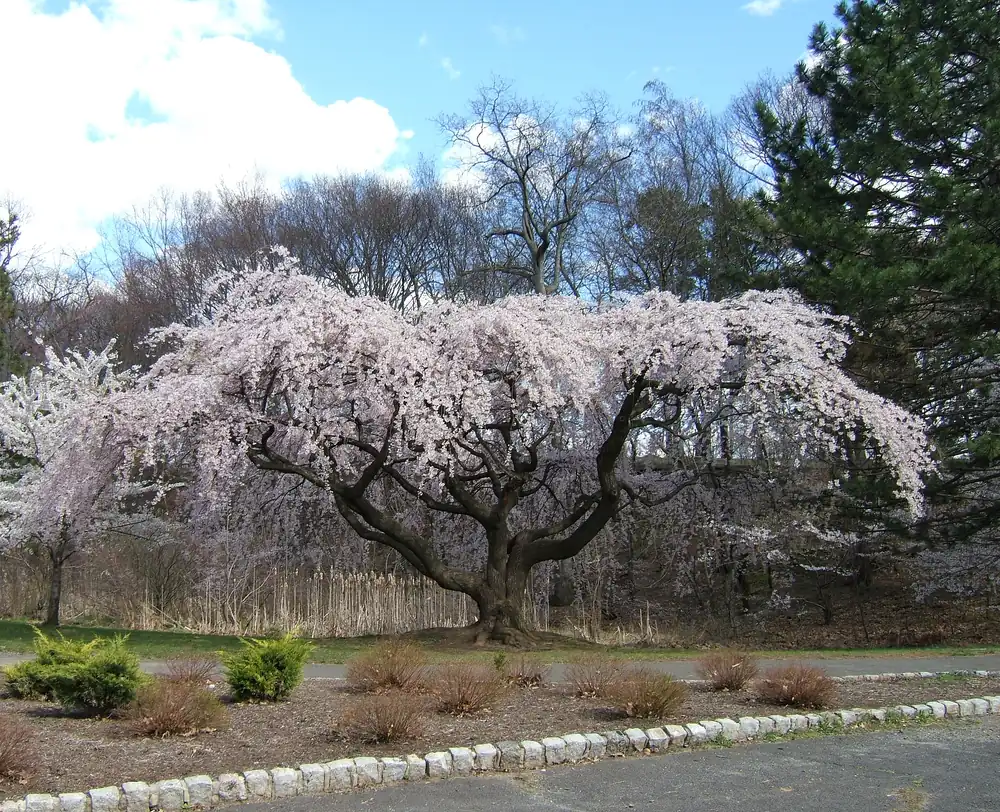
April is when New Jersey turns green from the south up. In a typical year the shad push up the Delaware toward Lambertville, Newark's cherry trees reach full bloom in the second and third weeks, and Cape May Point fills with gannets, loons, swallows and the first warblers. Pyxie moss opens on sandy ground in the Pine Barrens while spring beauties carpet the northern woods. The coast's ospreys and plovers are laying eggs, which makes it the month to give nesting birds room. The weather swings too: the state climatologist's office describes an April that averaged 47.7 degrees (2018) and another that averaged 55.4 (2023), plus a Pinelands fire season that runs into May. Each entry below gives a typical window rather than a promise, and names the group to ask before you travel.
Other months in New Jersey: October, November, December, January, February, March.
Start here
- Visit the cherry grove on a calm weekday. Check the park alliance's bloom updates, then walk the Branch Brook trees when the flowers are open and the wind is down. Note the date of full bloom.
- Get to Cape May Point at sunrise. Stand at the Springwatch platform for an hour with binoculars and write down every species that passes, then compare with the counts in this guide.
- Kneel for pyxie moss or spring beauty. Look at ground level on sandy pinelands or in a moist northern wood, photograph without touching, and log the date you first see each flower.
For the Naturalist's Field Journal in April: record each first arrival on "birds I have seen" and follow one cherry or shadbush on "a tree through the seasons," log pyxie moss and spring beauty on "seeds, pods and cones" or "the same place twice," note frogs and woodcock on "a map of sounds," watch an osprey nest on "nest observed," and keep "reading the signs" for the wind and rain that move the migrants.
Regions used below: Skylands and the Kittatinny Ridge; Gateway and the Watchungs; Central Jersey and the Delaware Valley; Pine Barrens; Jersey Shore; Cape May and the Delaware Bayshore.
When does the shad run on the Delaware River peak in New Jersey?
American shad are silvery fish, the largest members of the herring family, that spend their adult lives at sea and push up the Delaware each spring to spawn. For a river town like Lambertville, April is when the run becomes a local event, and the New Jersey Division of Fish and Wildlife has counted the fish for decades.
-
Fish passing Lambertville
Upstream movement starts once the river is above the mid-40s (°F) and rising; the state's counts put the heaviest passage in mid to late April · The Delaware River at Lambertville, with a state sonar count at the bridge
The state's shad monitoring report for 2001, the year it describes, says sampling ran from March 23 to May 31 and that the mainstem Delaware was above 45 degrees and rising when fish began to move. Low water and warm days can pull the run earlier, and the report places peak passage in mid to late April. Of an estimated 417,300 shad that passed Lambertville that year, about 62 percent went through on April 16, 23 and 26, mostly in daylight and strongest around midmorning and early afternoon. That is one season, not an average, but it shows how a run arrives in a few big pulses.
-
A run that can start early
In 2016 the first shad were reported in late February; the best nets came from mid-April to early May · Seine hauls at Trenton, Lambertville and Easton
The state's 2016 seining summary gives a sense of how much a run can shift. The first fish of that year turned up on February 22, many were in the river by mid-March, and the strongest hauls came between April 13 and early May, with water temperatures ranging from 49 to 69 degrees across the season. The last haul, on May 23, found no shad. Nets also brought up gizzard shad, catfish, striped bass, suckers and carp, so the shad run is part of a busier river.
-
ShadFest
Annual, in spring during the run; no 2027 date was posted when we checked in October 2026 · Lambertville, New Jersey, and New Hope, Pennsylvania
ShadFest is an arts, crafts, food and music festival that honors the fish and its migration. Its organizers say it draws more than 80 artists and crafters, with shad chowder and live music, and that it runs rain or shine. Check shadfest.com for the 2027 weekend before you plan a trip.
Watch from the towpath or a bridge. If you plan to fish, read the current New Jersey fishing digest first, because river rules and licensing change.
When do the cherry blossoms bloom in Newark's Branch Brook Park?
Branch Brook Park, in Newark, holds a famous grove of Japanese flowering cherries. The park's alliance counts 5,300 trees in 18 varieties, and says peak bloom is typically in the second and third weeks of April.
-
Three recent bloom windows
Peak is usually the second and third weeks of April; the park posts the dates after the fact · Branch Brook Park, Newark, in the Northern Division and around the Oval
The alliance lists recent peaks as April 6 to 18 in 2025, April 5 to 15 in 2024 and April 3 to 12 in 2026. The spread of a week or more from year to year follows spring temperatures, so treat any date as a guess and check the park's bloom updates in early April. The park's page says only "See You in 2027," with no festival dates yet.
-
Bloomfest
A festival day held during the bloom; the 2027 date is not posted · The Oval, Northern Division and Prudential Concert Grove (Clifton Avenue entrance)
Essex County Parks calls its 2026 Bloomfest the 50th annual, held on April 19 from 11 a.m. to 5 p.m., free to attend. We found no 2027 date, so ask Essex County Parks for the next one.
Blossoms drop after wind or heavy rain, so a trip on a calm, mild day in the middle of the month is the safest bet. A hard freeze after full bloom can brown the petals; the freeze table below shows how late those can come.
What migrants pass Cape May Point in April?
NJ Audubon's Cape May Springwatch is a daily morning count at the Coral Avenue dune crossing platform in Cape May Point, from March 1 through May 31, with observers on duty at least three hours from dawn. Observers have logged more than 100 species and over 100,000 individual birds across a season. Because winds change daily, April counts leap and collapse, and the observatory's own reports show it.
-
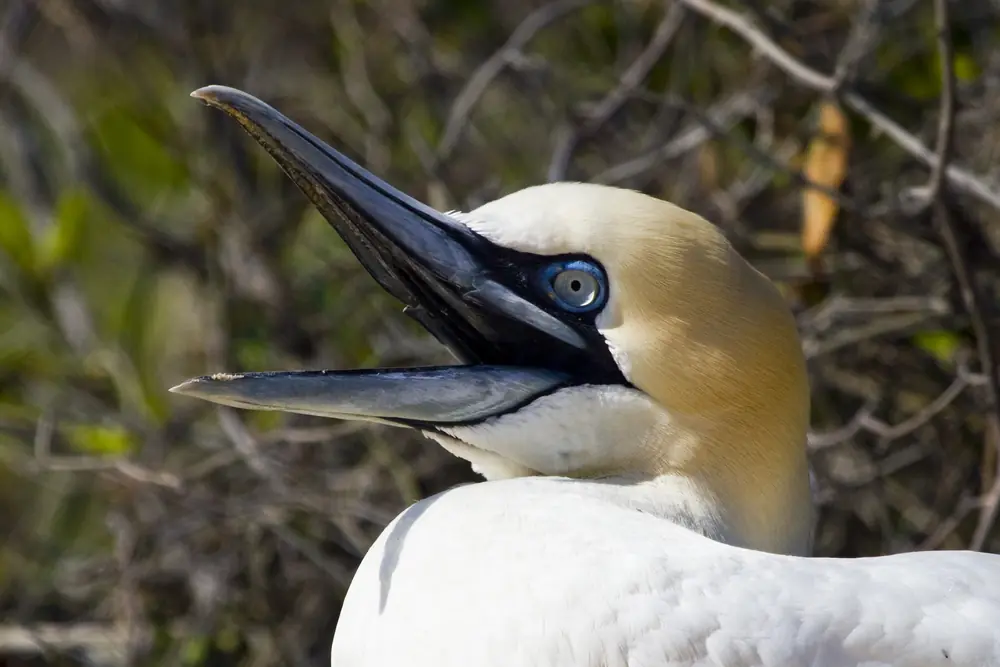
Sea birds streaming past
The first half of April, on good winds · The platform at Cape May Point, looking out over the ocean and the mouth of Delaware Bay
In the early April 2022 report, observers counted 6,458 northern gannets on April 1 and 6,265 on April 5. Surf and black scoters topped 1,000 each on April 9, and on April 14 observers logged 991 red-throated loons, 168 common loons and a total of about 5,000 scoters over two days. A strong 2021 flight on March 31 included more than 3,400 gannets and nearly 500 red-throated loons. These are single seasons chosen as examples, not averages.
-
Songbirds and southern visitors
Arrivals trickle in through the month · Dunes, thickets and the Cape May Point State Park area
The 2022 reports mark the first yellow-throated warblers on April 2 and April 11, the first eastern kingbird on April 10 and the first orchard oriole on April 13. Fifty-eight white ibis arrived on April 11, and a sandhill crane that day was only the second ever logged at Springwatch. Late April that year was cold, windy and winter-like, and the count notes laughing gulls were slightly behind schedule, so a cold spring delays these dates.
-
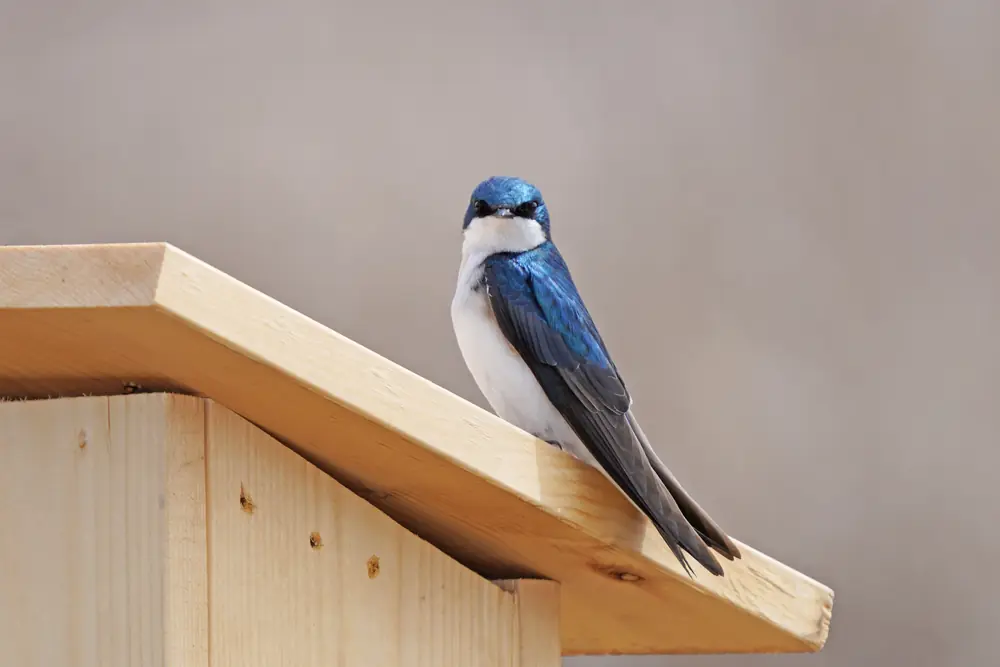
Swallows by the thousand
Late April, when insects fly · Over the dunes and beach at the Point
On April 28, 2022, the platform logged a record 1,816 tree swallows, plus 517 barn swallows and 70 cliff swallows. The same stretch brought royal and caspian terns from April 21 to 23, a Cape May warbler, and a prothonotary warbler on April 30.
| Species | Count | Date |
|---|---|---|
| Northern gannet | 6,458 | April 1 |
| Northern gannet | 6,265 | April 5 |
| Red-throated loon | 991 | April 14 |
| Bonaparte's gull | 898 | April 19 |
| Tree swallow | 1,816 (a Springwatch record) | April 28 |
| Barn swallow | 517 | April 28 |
Dress for wind. Cape May Bird Observatory has announced its 32nd annual Optics Sale for April 17 and 18, 2027 (the NJ Audubon calendar lists 9 a.m. to 5 p.m. on the 17th and 9 a.m. to 3 p.m. on the 18th), a handy time to try binoculars and scopes.
Where are piping plovers, ospreys and eagles nesting in April?
By April the coast's bigger birds are on eggs, and the beaches change character. The beach-nesting birds the state tracks arrive on a schedule: plovers first, then terns and skimmers a few weeks later.
-
Piping plover eggs
Eggs appear from mid-April to late June · Fenced beaches at Sandy Hook, Island Beach, Brigantine and Cape May County
In the state's brochure on beach-nesting birds, piping plovers show up in March and April and start laying around mid-April. Least terns and black skimmers do not come until early May, so April walks on a quiet beach mean only plovers and a few oystercatchers to watch for. The Forsythe refuge says its Holgate Wilderness Area is closed to every activity from April 1 through August 31, and the refuge reports over 360 species seen across all seasons.
-
Ospreys on eggs
April is egg-laying; the state calls it the month of greatest sensitivity · Platforms along the coast and bay shores
The state says ospreys generally come back in late March, nest in April, and are most likely to abandon a nest if disturbed while laying eggs. The Conserve Wildlife Foundation reports that 2025 was the worst breeding season in over 30 years: 57 percent of monitored nests produced no young, and productivity of 0.69 young per active nest sat below the 0.80 needed to hold the population steady. It ties the decline to scarce Atlantic menhaden in nearshore waters. We found no 2026 report.
-
Eagle chicks, grown fast
Hatching is late February to early March; young fly at about 11 weeks · Nests statewide; Duke Farms has a public camera
The New Jersey Conservation Foundation says the state went from one active bald eagle nest in 1982 to nearly 300 by 2025, with incubation lasting about 35 days and fledging at roughly 11 weeks. At Duke Farms, whose camera streams online, the three eaglets that hatched in late February 2025 were banded on April 10, 2025.
The bay shore is next. Delaware Bay's horseshoe crabs spawn on evening high tides in May, which Delaware Audubon ties to the full and new moons of May and early June. Nine beaches in Cape May and Cumberland counties have restricted access that month for the feeding shorebirds, according to the Conserve Wildlife Foundation, so April is the time to plan rather than visit.
When does pyxie moss bloom in the Pine Barrens, and when is the last freeze?
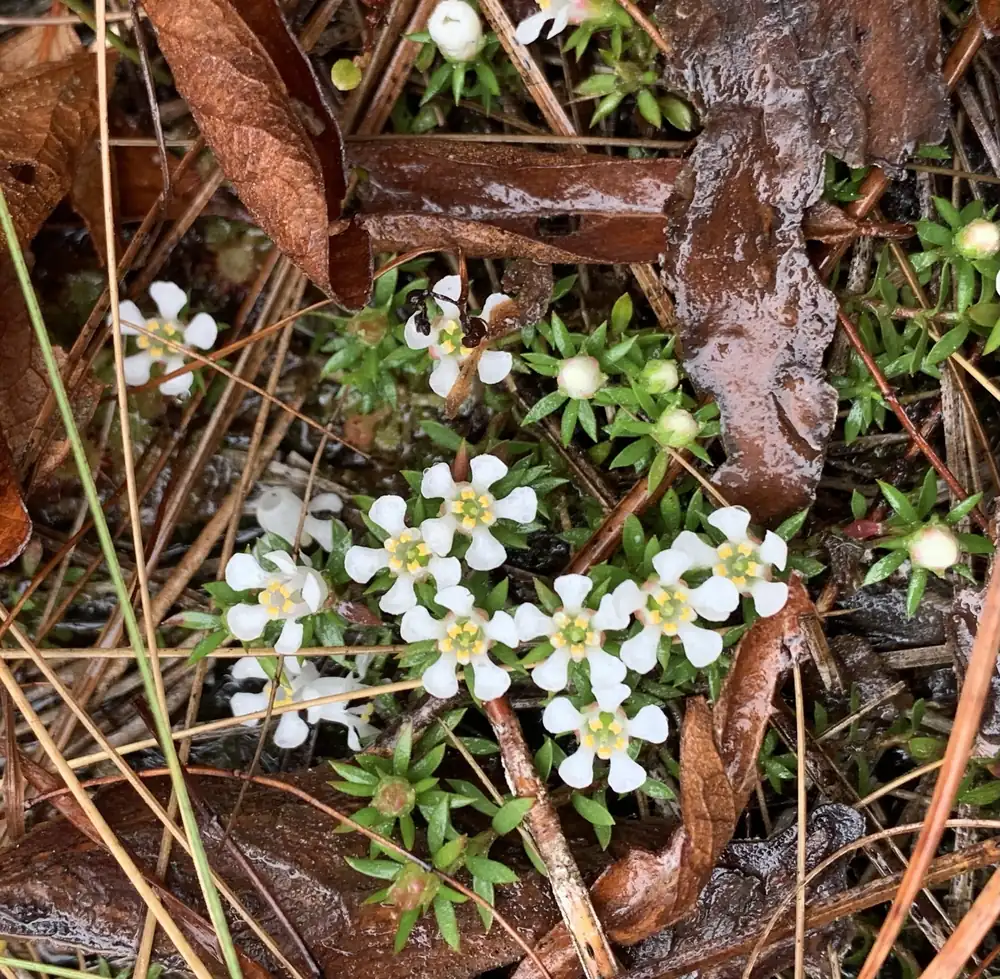
Pyxie moss is not a moss. It is a low evergreen subshrub with needle-like leaves, forming mats 6 to 10 inches across that bloom white to pale pink. It grows in sandy, dry pinelands, mostly in the Pine Barrens. An older botanical description, quoted by the Maurice River conservation group, says pyxie takes the place of hepatica there as an emblem of spring. Mats sometimes form patches a foot across.
-
Pyxie moss
Early April into May, with seed capsules in May and June · Sandy, open ground in the Pine Barrens, for example along sand roads and clearings in the pinelands
Both the Pinelands Preservation Alliance and the Maurice River botany notes give the bloom as early April through May. Look at ground level, since flowers are tiny, and tread lightly; the state ranks the plant as apparently secure. The Pink Moon on April 20 is not named for this plant: Sea and Sky ties the name to moss pink, or wild ground phlox, an early spring flower.
-
A frost can still catch the blooms
Last freezes run from late March at the shore to mid-May in the north · Statewide
The table lists NOAA's 1991 to 2020 dates. The median last freeze falls around April 2 in Newark and April 30 at Sussex in the Skylands. In April 2020 the state climatologist noted cold damage to an estimated quarter of the blueberry crop, a reminder that a cold snap after bloom matters to growers and wildflowers alike.
| Station | One year in ten | Median | Nine years in ten |
|---|---|---|---|
| Sussex 3 WNW (Skylands) | Apr 17 | Apr 30 | May 18 |
| New Brunswick 3 SE (Central Jersey) | Apr 2 | Apr 15 | May 1 |
| Newark International Airport | Mar 20 | Apr 2 | Apr 15 |
| Trenton Mercer County Airport (Delaware Valley) | Mar 30 | Apr 10 | Apr 25 |
| Indian Mills 2 W (Pine Barrens) | Apr 14 | Apr 28 | May 16 |
| Atlantic City International Airport (Pomona) | Apr 2 | Apr 18 | May 5 |
| Atlantic City (Absecon Island) | Mar 10 | Mar 26 | Apr 6 |
| Cape May 2 NW | Mar 19 | Apr 1 | Apr 15 |
Your own town is on the New Jersey frost page. If you read the March guide first, April is the month the same stations tip from freezing nights toward safe planting.
Which woodland wildflowers and trees bloom in New Jersey in April?
The forest floor has a short window. Spring ephemerals bloom before the canopy leafs out and then vanish as the shade deepens, and the shadbush, or serviceberry, flowers white before most trees show leaves.
-
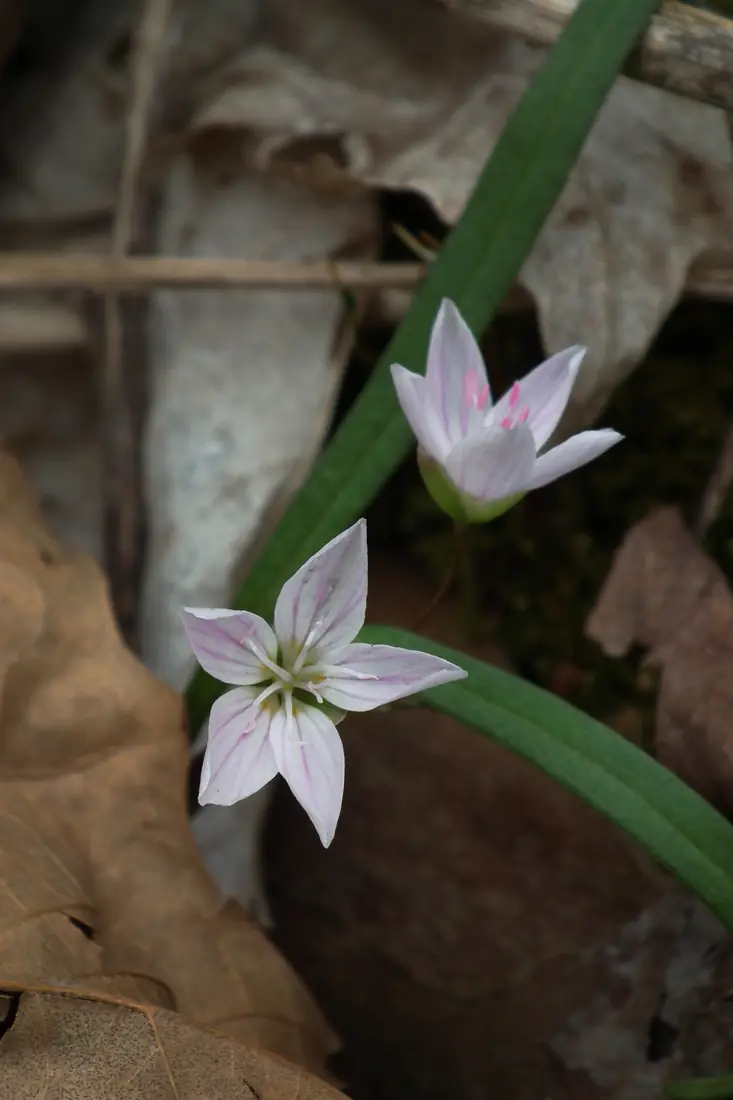
Spring beauty, trout lily and wood anemone
Through April, before leaf-out · Moist woods and floodplains, especially in the northern half
The Great Swamp Watershed Association's April list for its restoration site expects spring beauties, trout lilies and wild geraniums as the first ephemerals, and the Friends of Great Swamp add star flower, dwarf ginseng and wood anemone for the last two weeks of April. The state conservation foundation also names Virginia bluebells, trilliums and rue anemone, and says the south runs a week or two ahead of the north. Bloodroot, which the Lake Hopatcong Foundation gives as March to April, is often over by midmonth.
-
Shadbush in bloom
Early to mid-April, before the canopy closes · Woodland edges and swamp margins
The Friends of Great Swamp describe its white clouds of blossom in the first half of April, before canopy trees leaf out. The name links the tree to the shad run, which comes up the Delaware at the same time of year.
Keep to trails: trampling a woodland carpet can kill plants that took years to bloom. Pick nothing, and photograph low.
What is happening at the Great Swamp in April?
Great Swamp National Wildlife Refuge covers 7,853 acres in Morris County, about 26 miles west of Manhattan, and counts more than 244 bird species. It is a good place to see the April shift in a single morning. The refuge describes spring as a peak time for migrating waterfowl.
-
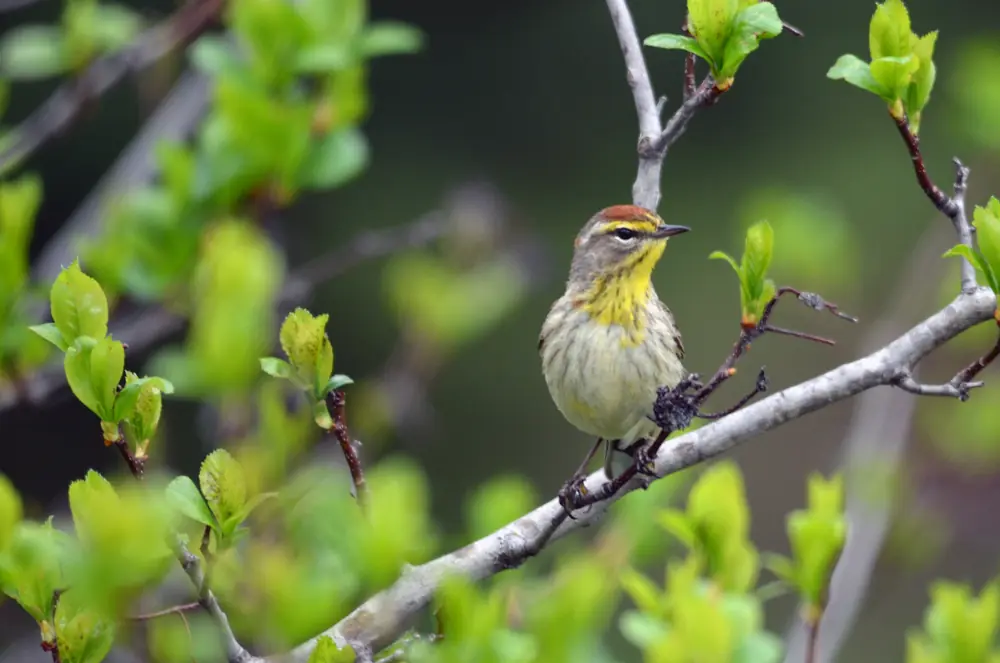
The first half of the month
About April 1 to 15 · Ponds, meadows and the Wildlife Observation Center boardwalks
The Friends of Great Swamp describe tree swallows arriving suddenly, then early palm and pine warblers, a blue-gray gnatcatcher and a great egret stalking the ponds, with bullfrogs and green frogs starting to call. A restoration site list from the Great Swamp Watershed Association adds that peepers and chorus frogs call from the cattail pond on warm, humid evenings, and that wood frog tadpoles are probably out of their egg masses by April. An American woodcock may feed on loose, muddy soil, and its "peent" call peaks through mid-April.
-
The second half
About April 16 to 30 · Woods, edges and wet meadows
Songbird migration picks up with eastern kingbirds and black-and-white warblers, and mallards begin to nest. By the middle of the month most trees have buds bursting, and the Watershed Association points out that the insects that follow are what the neotropical songbirds are timing their flights for.
The refuge's visitor center lists its visitor center as open Tuesday, Thursday, Friday, Saturday and Sunday, 10 a.m. to 4 p.m., and suggests waterproof footgear. Confirm both with the refuge before you drive.
How much daylight does New Jersey gain in April?
Each April day is about two and a half minutes longer than the one before. Newton, in Sussex County, goes from 12 hours 41 minutes of sun on April 1 to 13 hours 57 minutes on April 30, a gain of 76 minutes, while Cape May adds 70 minutes, from 12 hours 38 minutes to 13 hours 48 minutes. Because the north gains faster, Newton ends the month with nine more minutes of sun than Cape May.
| City | Apr 1 | Apr 30 | Gained | Per day |
|---|---|---|---|---|
| Newton | 12 h 41 m | 13 h 57 m | 76 min | 2.6 min |
| Newark | 12 h 41 m | 13 h 55 m | 74 min | 2.6 min |
| Trenton | 12 h 40 m | 13 h 53 m | 73 min | 2.5 min |
| Toms River | 12 h 40 m | 13 h 52 m | 72 min | 2.5 min |
| Camden | 12 h 40 m | 13 h 52 m | 72 min | 2.5 min |
| Atlantic City | 12 h 39 m | 13 h 50 m | 71 min | 2.4 min |
| Cape May | 12 h 38 m | 13 h 48 m | 70 min | 2.4 min |
For sunrise, sunset and dusk in your own town, use the daylight tool.
What is April weather like in New Jersey, and is fire or tornado season a worry?
In the 1991 to 2020 normals, April highs run from the upper 50s in the Skylands to the mid-60s in the Pine Barrens, and the number of freezing nights drops from double digits at Sussex to about one at Newark and Cape May. Averages hide big swings.
-
Three very different Aprils
April 2018, 2020 and 2023 · Statewide; summaries by the state climatologist's office at Rutgers
April 2018 averaged 47.7 degrees, the chilliest April since 1982, with an April 2 snowstorm that dropped 8.2 inches at Cedar Grove and a downpour on April 15 and 16 that left 4.48 inches at Westwood. April 2020 averaged 48.7 degrees, 2.2 below normal, with a wildfire on the 8th in Cumberland County that burned about 1,500 acres and a 76 mph gust at Sea Girt on the 21st. April 2023 averaged 55.4 degrees, 3.9 above normal and the third warmest April since 1895, with a high of 92 degrees in the northwest on the 13th; seven tornadoes rated EF1 to EF2 on April 1, and a Manchester Township fire that burned 3,859 acres.
-
Fire season
Typically peaks from mid-March through mid-May · The Pine Barrens above all, but also the north
State Forest Fire Service officials told the Philadelphia Inquirer in April 2026 that the peak runs mid-March to mid-May, and that the typical year brings about 1,100 wildfires burning about 5,000 acres. The 2025 season brought 1,322 fires and 27,230 acres. Check burn bans and red flag warnings before lighting any fire.
-
Tornadoes and severe storms
Possible any month, with spring and summer the busier stretches · Statewide
Rutgers' state climatologist describes New Jersey as averaging around two tornadoes a year, mostly weak and brief, with more reports along populated corridors where more people are watching. A year like 2023, with seven on April 1 alone, can exceed that.
| Station | High | Low | Nights ≤ 32 °F | Precipitation | Snowfall |
|---|---|---|---|---|---|
| Sussex 3 WNW (Skylands) | 59.7 | 35.8 | 11.3 | 4.18 | 1.2 |
| Newark International Airport | 62.6 | 44.1 | 1.2 | 3.87 | 0.5 |
| New Brunswick 3 SE (Central Jersey) | 62.5 | 40.8 | 4.4 | 3.89 | 0.6 |
| Trenton Mercer County Airport | 62.9 | 42.1 | 2.6 | 3.63 | 0.5 |
| Indian Mills 2 W (Pine Barrens) | 65.2 | 40.2 | 6.7 | 3.66 | 0.5 |
| Atlantic City International Airport | 63.3 | 41.7 | 4.8 | 3.32 | 0.3 |
| Cape May 2 NW | 61.8 | 44.1 | 1.2 | 3.34 | 0.1 |
For clouds that signal a storm, see our cloud guide, and for forecasts our weather tools. New seasonal maps appear on the outlook page of the Climate Prediction Center each month.
What can you see in the New Jersey sky in April 2027?
All clock times here are Eastern daylight time, which has applied since the spring change in mid-March. April brings a Pink Moon, a washed-out Lyrid shower and a bright Jupiter after dark. Our moon-phase tool gives rise and set times for your own town.
-
Pink Moon
Tuesday evening, April 20 (the full moment is 6:27 p.m.) · Low in the east at moonrise
The exact moment of fullness comes shortly before moonrise, so the disk looks round as it climbs. By our calculation it clears the horizon near New York at about 7:50 p.m. Sea and Sky traces the name to wild ground phlox, a pink early bloomer.
-
Lyrid meteors, a weak year
Maximum near 9:41 p.m. on Thursday, April 22, with a shower that lasts from about April 14 to 30 · Face the northeast soon after dark
The International Meteor Organization puts the maximum on that evening, yet a Moon about 95 percent lit climbs above the eastern horizon around 10 p.m. and leaves only the early hours dark. Sea and Sky warns that the glare erases most faint streaks, though a few bright ones may still show. Count on a handful per hour at most.
-
Moon and planets
Mornings of April 3 and 4; evenings of April 14 and 15 · East before dawn; the evening sky after dark
On those mornings a slender old Moon hangs close to brilliant Venus, which by our calculation rises about an hour or more ahead of the Sun. Bright Jupiter owns the evening hours, and the waxing Moon passes close beside it on the 14th and 15th, by our calculation under a degree away at the closest. Mars trails the Moon by about three degrees on the 15th. Saturn is hidden by the Sun's glare all month, having reached conjunction on April 7.
-
Milky Way before dawn
The first two weeks of April and the last three days · A dark site, such as the Pine Barrens or Sussex County
Around 40 degrees north, our calculation puts the bright core in dark sky for as much as two hours before dawn on the best mornings, with the Moon out of the way.
| Phase | Date | Time |
|---|---|---|
| New moon | Tuesday, Apr 6 | 7:51 p.m. (EDT) |
| First quarter | Tuesday, Apr 13 | 6:56 p.m. (EDT) |
| Full moon, the Pink Moon | Tuesday, Apr 20 | 6:27 p.m. (EDT) |
| Last quarter | Wednesday, Apr 28 | 4:18 p.m. (EDT) |
| New moon | Thursday, May 6 | 6:58 a.m. (EDT) |
Where we write "by our calculation," treat the figure as approximate. The Eta Aquariids come at the very start of May, with a nearly absent Moon around May 6.
What are good April nature outings for New Jersey families?
- Branch Brook Park, Newark. Walk the cherry grove in the middle of the month, and call or check the park alliance for the current week's bloom.
- Cape May Springwatch. The count is open every morning through May 31. Arrive near dawn, since the strongest flights often follow a change in wind.
- Cape May Bird Observatory Optics Sale. The NJ Audubon calendar lists April 17 and 18, 2027.
- Great Swamp National Wildlife Refuge. Boardwalks and blinds at the Wildlife Observation Center suit children. Pack boots.
- The Raptor Trust, Millington. Open daily until Memorial Day from 9 a.m. to 4 p.m. if the weather allows. A self-guided walk past the aviaries costs nothing, and dogs must stay home.
- Montclair hawk migration. NJ Audubon says the spring hawk count is held at Mills Reservation, across from the Lookout. Ask NJ Audubon for 2027 dates.
- Earth Day, Thursday, April 22, and Arbor Day, Friday, April 30. Earth Day was first held in 1970. The Arbor Day Foundation lists the state's own Arbor Day as the last Friday of April. Local events vary, so check with your town or county.
- At home: eagle cameras and beach reports. Duke Farms streams its eagle cam, and Osprey Watch lets anyone log a pair.
Last month's guide is the March page; every state sits in our nature collection, and the journal plates mentioned are part of the Naturalist's Field Journal.
Safety notes for April in New Jersey
- Spring turkey. The 2026-27 digest lists a youth turkey day on Saturday, April 24, 2027, with the youth season running April 24 to May 15, and adult weekday periods starting Monday, April 26 (period A runs April 26 to 30, with hunting from half an hour before sunrise to noon). Each permit allows one male turkey. Hunter orange is not required for turkey hunters, so walkers in wildlife management areas on those days are wise to wear bright colors anyway.
- Other seasons. The digest's small-game and migratory-bird pages list no seasons open in April 2027. The light goose conservation order was still to be determined.
- Sundays. Firearm hunting is closed on Sundays except for narrow exceptions, and no hunting of any kind is allowed in state parks and forests that day.
- Trout. The 2026 opener was 8 a.m. on Saturday, April 11, and anglers aged 16 or older needed both a license and a trout stamp. No 2027 opening day was announced when we looked, so ask NJ Fish and Wildlife.
- Ticks. According to the CDC, blacklegged ticks pose their highest biting risk across spring, summer and fall, and it is nymphs and adult females that most often bite people. Treat clothing with repellent, tuck pants into socks, and inspect your skin and gear as soon as you finish.
- Black bears. The conservation foundation reports bears leaving their dens across all 21 counties in March and April. Secure garbage, feed pets indoors, and never feed a bear.
- Fire. Wildfire season typically runs through mid-May. Obey burn bans and keep campfires attended.
- Nests and beaches. Respect every fence and sign, leash dogs where they are permitted, and give ospreys wide room, since April disturbance is what makes them abandon a nest.
- Flash floods. Heavy April rain can flood small streams quickly, as it did on April 15 and 16, 2018. Never drive through standing water.
Sources (50)
- New Jersey Hunting & Trapping Digest 2026–27: spring turkey hunting
- New Jersey Hunting & Trapping Digest 2026–27: general regulations (hunter orange, Sunday hunting)
- New Jersey Hunting & Trapping Digest 2026–27: small game hunting
- New Jersey Hunting & Trapping Digest 2026–27: migratory bird seasons
- WRNJ Radio: Trout season opens Saturday in New Jersey with more fish, expanded access (2026)
- Branch Brook Park Alliance: cherry blossoms
- Essex County Parks: Bloomfest at Branch Brook Park
- NOAA NCEI: monthly climate normals 1991–2020, April values for New Jersey stations
- NJ Audubon: Montclair Hawkwatch
- ShadFest, Lambertville and New Hope
- Pinelands Preservation Alliance: Pyxidanthera barbulata
- Maurice River conservation group: pyxie moss (botany notes)
- Delaware Audubon: horseshoe crab spawning and red knot migration
- NJ Audubon: Cape May Springwatch, early-mid April summary (2022)
- NJ Audubon: Cape May Springwatch, mid-late April summary (2022)
- NJ Audubon: Cape May Springwatch, late March / early April update (2021)
- NJ Audubon: Cape May Springwatch
- NJ Audubon: Cape May Bird Observatory
- NJ Audubon: events calendar, April 2027
- NJ Fish & Wildlife: American shad in the Delaware River (2001 monitoring)
- NJ Fish & Wildlife: 2016 Delaware River shad fishing summary
- Arbor Day Foundation: New Jersey
- Office of the New Jersey State Climatologist: April 2020 summary
- Office of the New Jersey State Climatologist: April 2018 summary
- Office of the New Jersey State Climatologist: April 2023 summary
- Office of the New Jersey State Climatologist: tornadoes in New Jersey
- Conserve Wildlife Foundation of NJ: Amphibian Crossing Project
- Conserve Wildlife Foundation of NJ: Exploring New Jersey's amphibian migrations (March 27, 2024)
- Conserve Wildlife Foundation of NJ: Osprey Project
- Conserve Wildlife Foundation of NJ: Delaware Bay Shorebird Stewards
- NJ Fish & Wildlife: New Jersey's Endangered Beach Nesting Birds (brochure, PDF)
- NJ Fish & Wildlife: osprey nest platform placement
- New Jersey Conservation Foundation: The domestic duties of New Jersey's winter raptors
- Duke Farms: Eagle Cam
- New Jersey Conservation Foundation: Spring is here, what's happening in nature
- Lake Hopatcong Foundation: Bloodroot
- Lake Hopatcong Foundation: Creature Feature, Spring Peepin'
- U.S. Fish and Wildlife Service: Great Swamp National Wildlife Refuge
- Friends of Great Swamp: April wildlife notes
- Great Swamp Watershed Association: April natural events (PDF)
- U.S. Fish and Wildlife Service: Edwin B. Forsythe National Wildlife Refuge
- The Raptor Trust: plan your visit
- New Jersey Conservation Foundation: black bears emerging from dens
- Centers for Disease Control and Prevention: where ticks live
- Philadelphia Inquirer: With no rain in the forecast, N.J. officials are wary of wildfires as the season hits its peak (April 8, 2026)
- Earth Day Network (EARTHDAY.ORG)
- U.S. Naval Observatory: moon phases API (April 2027)
- Sea and Sky: astronomy calendar of celestial events, 2027
- Climate Prediction Center: seasonal (90-day) outlooks
- Photos via Wikimedia Commons; licenses and photographers are credited under each picture
