What to look for in nature in New Jersey this December
December 1 opens meteorological winter, the three-month block that weather records treat as the cold season, and New Jersey’s wildlife has mostly finished moving. Harlequin ducks bob in the surge off the Barnegat jetty, bald eagle pairs along the Delaware River and Bay carry sticks to nests they will lay eggs in by mid-January, and in a good flight year a snowy owl sits on a dune at Island Beach. Birders fan out over thirty Christmas Bird Count circles, the clock reads its earliest sunsets of the year around December 7 and 8, and on December 23 the nearest full moon of 2026 comes up over the bays and pines. Below is where to go and when, region by region.
Other months in New Jersey: October, November.
Start here
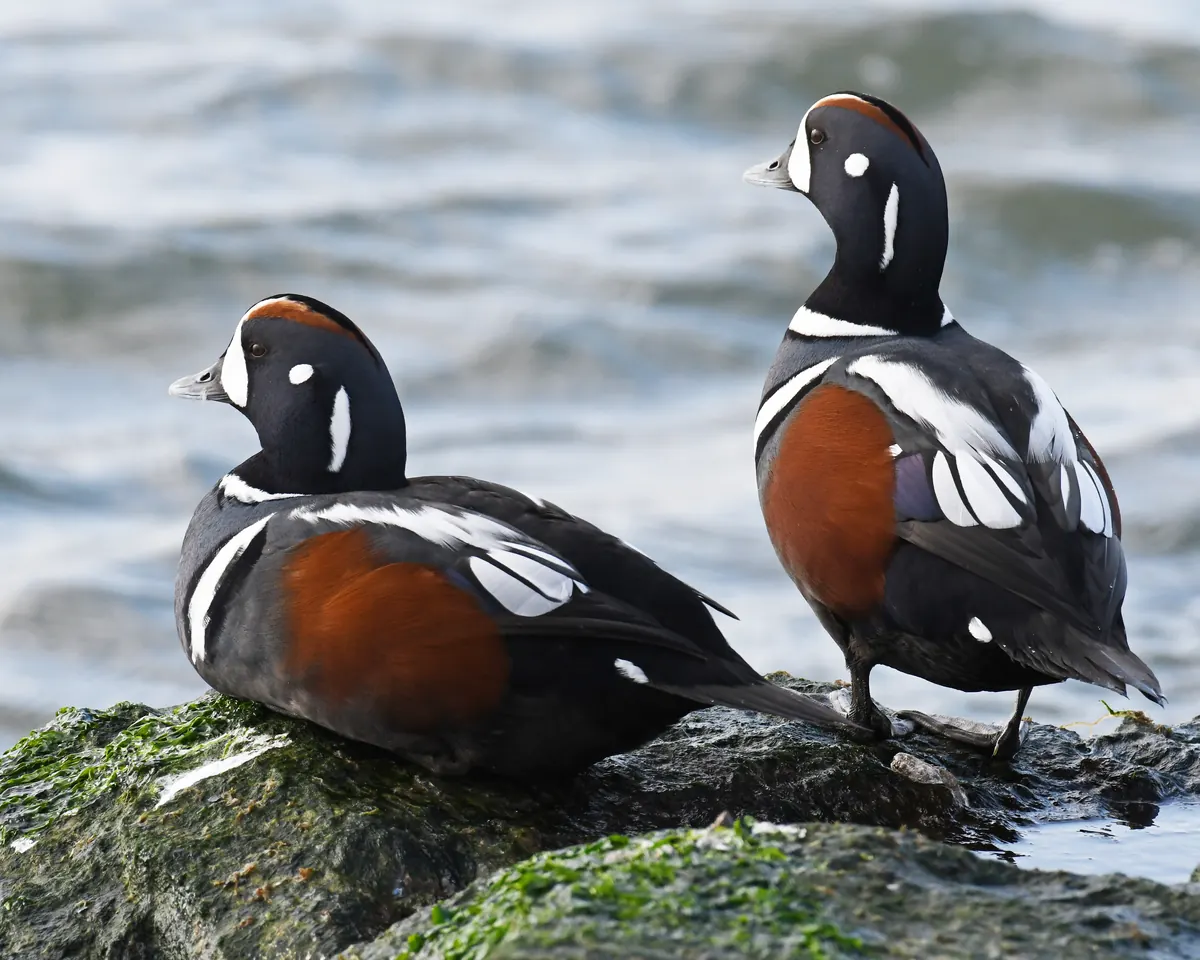
- Walk the Barnegat jetty for harlequins. The rock jetty at Barnegat Lighthouse State Park, at the north tip of Long Beach Island, is the most reliable place in the state for harlequin ducks, common eiders and purple sandpipers. NJ Audubon’s all-day trip there is Saturday, December 12 (fee, registration).
- Sign up for a Christmas Bird Count. New Jersey held 30 counts in the 2024–25 season, from Sussex County down to Cape May. Every circle chooses a single count day between mid-December and January 5, and beginners go out with seasoned counters. Audubon’s online map shows every circle; reach out to the one near you early.
- Stay up for the Geminids. The strongest shower of the year peaks overnight from Sunday, December 13 into Monday, December 14. The young crescent moon sets early, leaving a black sky by late evening, and rates climb toward 2 a.m.
For the Naturalist’s Field Journal in December: copy your Christmas Bird Count list onto “birds I have seen,” give a roadside bald eagle nest its own “nest observed” page, put a sealed pitch pine cone on “seeds, pods and cones,” and draw fox or deer prints from the first snow on “tracks to know.” An evening of short-eared owls over a marsh makes a good “dusk and dawn watch.”
Regions used below: Skylands and the Kittatinny Ridge; Gateway and the Watchungs; Central Jersey and the Delaware Valley; Pine Barrens; Jersey Shore; Cape May and the Delaware Bayshore.
Where can you see harlequin ducks and winter sea ducks in New Jersey?
The ocean birds that streamed past Avalon in November have mostly settled for the winter, and many gather at the stone jetties of the barrier islands, where mussel-covered rocks and strong currents keep food within reach.
-
Harlequin ducks at Barnegat Light
Late fall through early spring; settled in by December · The jetty and inlet at Barnegat Lighthouse State Park, north end of Long Beach Island
Harlequins breed beside fast rivers in the far north and winter in rough surf against rock. New Jersey’s coast is almost all sand, so the Barnegat jetty, built to hold the inlet in place, is their stronghold here. Photographers who work the jetty describe a wintering flock of about 25 to 30. Males are blue-gray with rusty sides and white slashes on the head and breast, and at mid-tide they climb out to rest on the stones, often close to the walkway along the inlet. Common eiders, the heavy sea duck of the North Atlantic, use the same rocks, and long-tailed ducks call to one another across the inlet on still mornings.
-
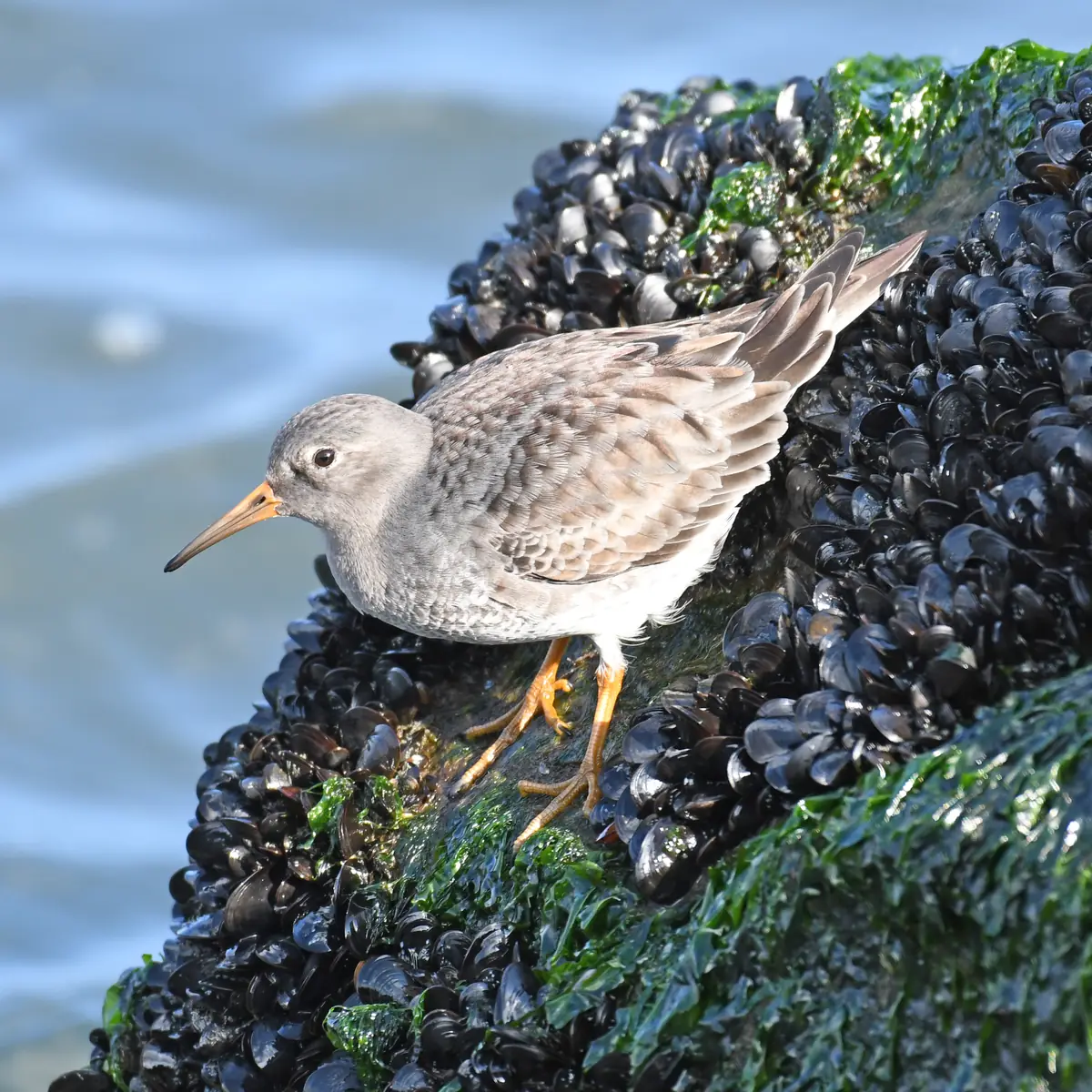
Purple sandpipers on the rocks
Late November into March · The Barnegat jetty; other rock jetties along the coast
This is the one shorebird that seeks out ice-cold spray. Purple sandpipers are stocky and gray with orange-yellow legs and a drooping orange-based bill, and they pick snails and small mussels from the wave-washed rocks just above the waterline. They blend in so well with wet stone that you usually see them only when a wave sends the flock scurrying. Ruddy turnstones, sanderlings and dunlin often work the same beach nearby.
-
The last days of the Avalon Seawatch
Counted daily through December 22 · The seawall at 7th Street, Avalon
NJ Audubon’s seawall count goes on until the 22nd. The scoter flights have thinned by December, but loons, gannets and late sea ducks still pass, and visitors are welcome. Statewide, the 2024–25 Christmas Bird Counts found 2,426 red-throated loons, the second-highest total on record.
Harbor seals are back on the Sandy Hook sandbars; the New Jersey November guide explains where to look and how far back to stay. On the jetty, wear grippy boots, avoid wet or icy stones, and retreat when waves wash over the rocks.
When do bald eagles start nesting in New Jersey?
Bald eagles are the fastest-rising story in New Jersey wildlife. The state had 11 nests in 1995. In 2025, NJ Fish & Wildlife and the Conserve Wildlife Foundation monitored 298 territorial pairs, and 251 of them laid eggs. December is the month those pairs get back to work.
-
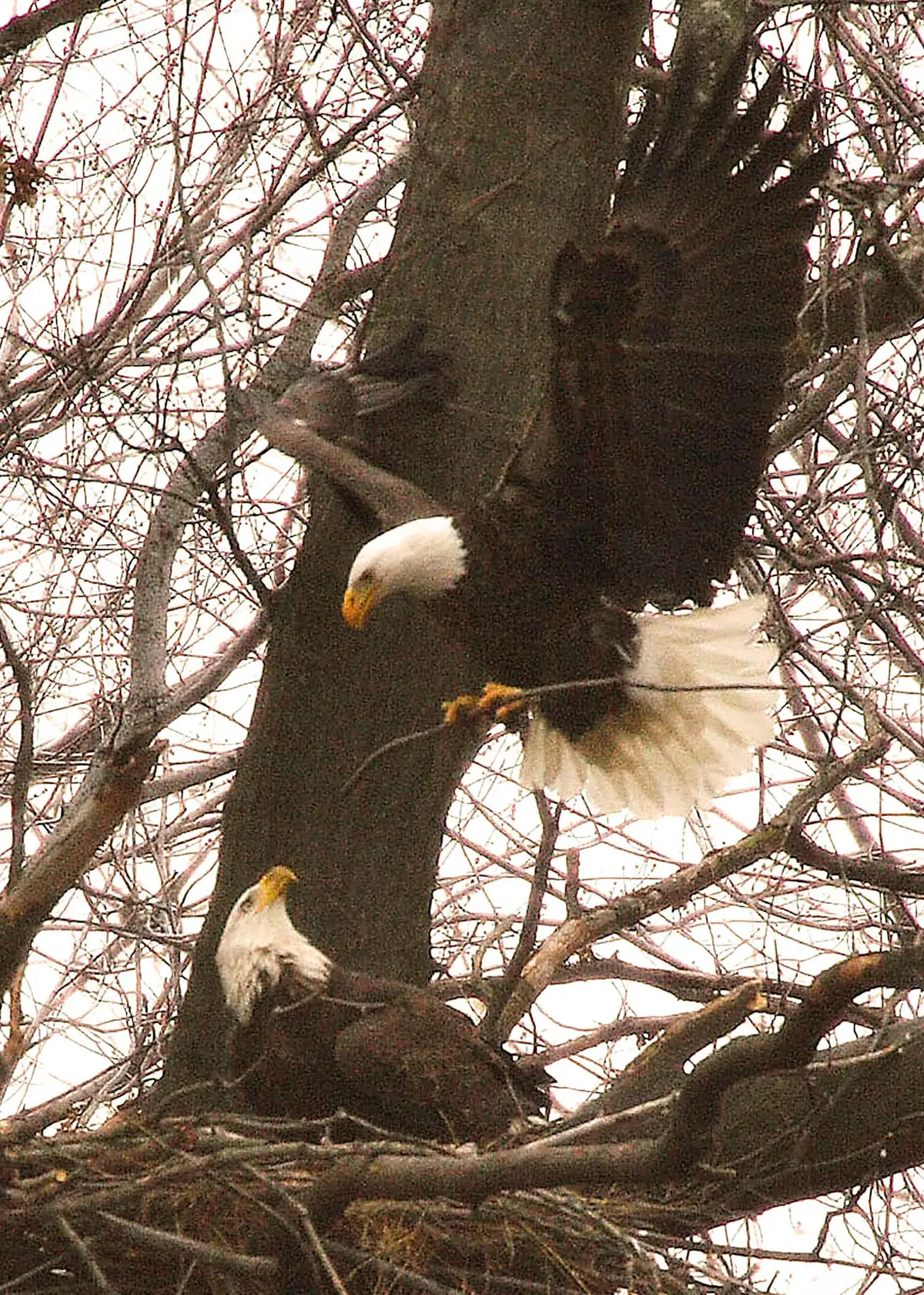
Nest repair and courtship
December into early January; the first eggs from mid-January · Mostly within about 12 miles of the Delaware River and Bay; also reservoirs and rivers statewide
The Nature Conservancy notes that in December, eagles in southern New Jersey are gathering sticks, grass and other material to rebuild their nests, and that egg laying begins about two weeks into the new year. The state’s 2025 nesting report agrees: the earliest pairs it followed were already incubating in the second week of January. Nests are reused and added to every year, and an old one can be several feet deep. Look for a big, dark mass in the crotch of a tall tree near water, and for paired adults perched side by side or flying together, sometimes locking talons in the air.
-
Where to watch
All winter · Maurice River and the Cumberland County marshes; the Delaware River shore; open reservoirs inland
The 2025 report placed most nests in the south, near the Delaware River and Bay, and mostly on private land, which makes the Cumberland and Salem bayshore the state’s best eagle country. The Conservancy’s Maurice River Bluffs Preserve near Millville lets you watch from public land. Northern eagles also winter wherever water stays open, so scan any big unfrozen reservoir or river. New Jersey’s 2024–25 Christmas Bird Counts logged 783 bald eagles.
-
Give them room
Nesting season, January through July · Any active nest
State volunteers watch most nests from at least 1,000 feet with scopes, a good rule for everyone, since a pair disturbed early can abandon the site. Avian influenza has hit eagles here too: active nests fell five percent in 2025, the first drop since monitoring began, and half the complete necropsies on dead eagles tested positive. Report a sick or dead eagle to NJ Fish & Wildlife rather than handling it.
If you find a nest you can see from a road or a public trail, start a “nest observed” page now and visit once a week. The pair’s first night sitting tight, usually in January, is the date to record.
Will snowy owls come to New Jersey this winter, and where can you see owls?
December is owl month. Some owls arrive from the north, and the resident great horned owls start nesting while most birds are still in winter flocks.
-
Snowy owls
Irregular; in flight years from late November through February · Open beaches and dunes: Sandy Hook, Island Beach State Park, Barnegat Light, Forsythe refuge, Cape May
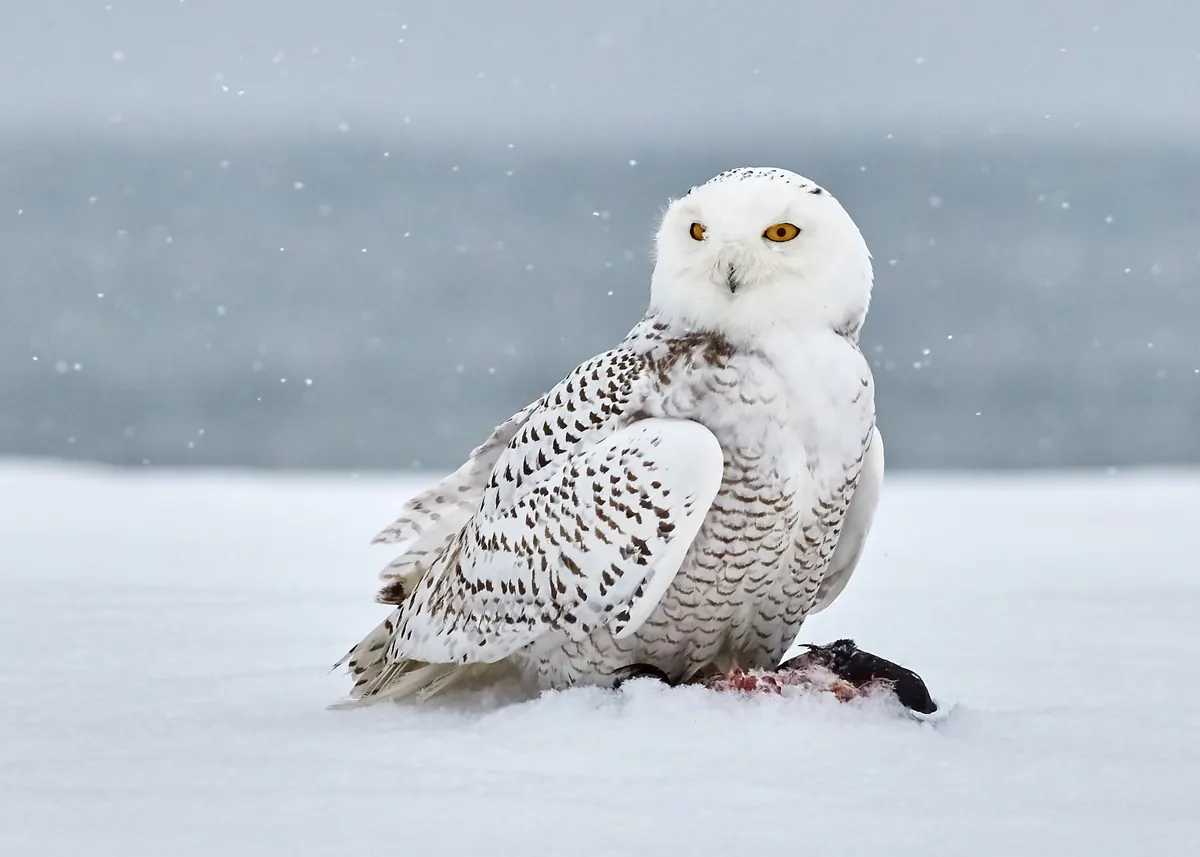
These Arctic owls reach New Jersey in good numbers only in some winters, when many young birds move south; in other years almost none do, and no one can predict a flight months ahead. In the big winter of 2017–18, NJ Audubon helped Project SNOWstorm put transmitters on two young males at Island Beach State Park on November 29. One roamed north almost to Sandy Hook before heading back south, and the other crossed Delaware Bay to Cape Henlopen. On the coast they perch in daylight on dunes, jetties and rooftops, watching for ducks and rodents. Give one plenty of room: if it keeps looking at you or flies off, you are costing it energy it cannot spare.
-
Great horned owls start their year
Calling and pairing in December; eggs often by late winter · Woodlots, parks and suburbs statewide
The New Jersey Conservation Foundation points out that great horned owls begin mating and nesting in December, months ahead of nearly every other bird in the state. Listen after dark for the deep, rhythmic hoots of a pair calling back and forth; the female’s voice is a little higher. Eastern screech owls, which whinny rather than screech, answer from suburban yards, and tiny northern saw-whet owls winter quietly in dense conifers and holly thickets.
-
Short-eared owls at dusk
Winter, in the last half hour of daylight · Large marshes and grasslands, such as the Forsythe impoundments and the Delaware Bayshore marshes
Short-eared owls hunt in the open, flying low and floppy like big moths over the grass as the light goes. They are listed as endangered in New Jersey, so watch from a road or dike, don’t play recordings, and keep your distance from the fields where they roost.
Don’t post the location of a roosting owl that is easy to reach; crowds have flushed owls in the state before. A short-eared owl evening fills a “dusk and dawn watch” page.
How do you join a Christmas Bird Count in New Jersey?
The count started on Christmas Day in 1900, when a group of birders proposed tallying birds instead of shooting them, and it is now among the longest-running volunteer science projects anywhere. Teams cover a circle 15 miles in diameter on one chosen day, trying to record every bird in it. For the 127th count, that window is December 14, 2026 to January 5, 2027.
Audubon’s New Jersey summary for 2024–25, the most recent one out, reports 30 counts in the state, with Oceanville back after a year off and the Island Beach count revived. Together they found 193 species, a total Audubon’s regional editor called well below average. Cape May topped the state with 145 species, its second-lowest in more than half a century, followed by Barnegat, Cumberland County and Oceanville, while Sandy Hook set its own record of 119. Three species were new to New Jersey counts: a sharp-tailed sandpiper at Marmora, a pair of red-necked phalaropes at Island Beach, and a chestnut-collared longspur at Long Branch. Pileated woodpeckers hit a record 237.
| Region | Count circles |
|---|---|
| Skylands and the northwest | Sussex County; Walnut Valley; Warren County–Northampton County; Northwestern Hunterdon County |
| Gateway, Watchungs and the northeast | Ramsey; Hackensack–Ridgewood; Boonton; Great Swamp–Watchung Ridges; Lower Hudson |
| Central Jersey and the Delaware Valley | Somerset County; Princeton; Trenton Marshes; Raritan Estuary; Assunpink; Moorestown; Northwestern Gloucester County |
| Shore | Sandy Hook; Long Branch; Island Beach S.P.; Barnegat; Tuckerton; Oceanville |
| Pine Barrens | Lakehurst; Pinelands |
| Cape May and the Delaware Bayshore | Cape May; Marmora; Belleplain; Cumberland County; Elmer; Salem |
No expertise is needed. Each compiler divides the circle into sectors with a leader for each, and residents inside a circle can often report their feeder birds for the day. There is no charge. Keep your tally on a “birds I have seen” page beside last year’s.
Which evergreen trees can you identify in a New Jersey winter?
With the hardwoods bare, New Jersey’s evergreens stand out, and three of them tell the story of its sand, its swamps and its old farm fields.
-
Pitch pine
All year; closed cones easiest to see on bare winter branches · The Pine Barrens above all; also sandy ridges and coastal sites north to the Kittatinny
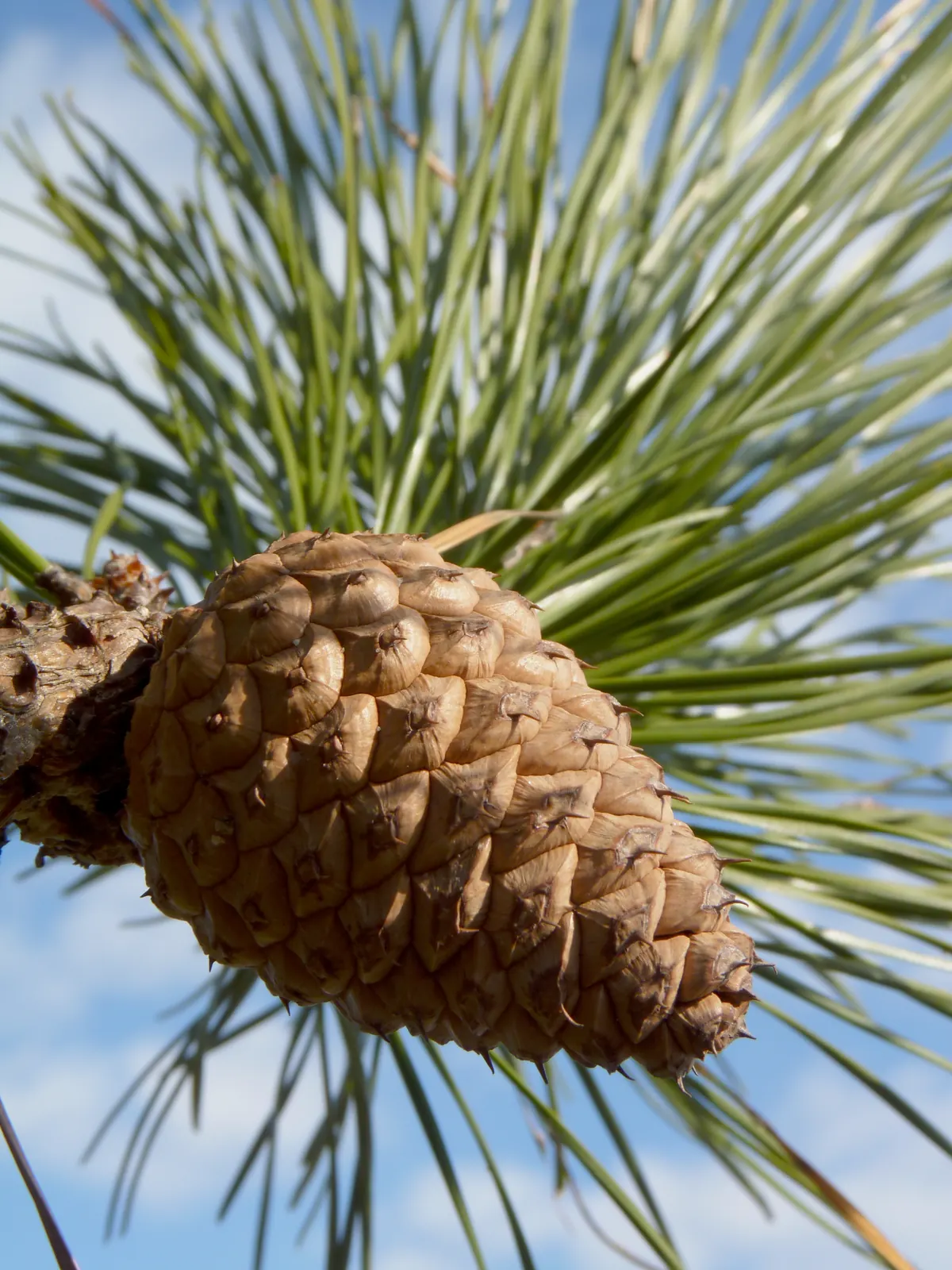
Pitch pine holds stiff needles in bundles of three and can push out new tufts straight from a scorched trunk. Many cones hang unopened for years, waiting for the heat of a fire. The Forest Service’s fire ecology database reports that in the Pine Plains nearly every cone is of this sealed type and that the plains historically burned about every six years, which is what keeps those pines under ten feet tall. On a winter walk, count how many old cones on one tree are still shut.
-
Atlantic white cedar
All year · Swamps along Pine Barrens streams; scattered stands in the north up to about 1,500 feet
Cedars grow so densely that a cedar swamp is dim at noon, and the streams draining them run tea-brown. The light, rot-resistant wood has gone into boats, shingles, barrels and duck decoys since colonial times. Deer are the cedar’s problem in New Jersey: they browse seedlings hardest in winter, when little else is green, and can wipe out young stands.
-
Eastern red cedar
Berries through winter · Old fields, fence rows, roadsides and dunes statewide
The dark, spire-shaped trees filling old farm fields are eastern red cedars, a juniper. Their foliage often bronzes in the cold, and female trees carry frosty blue “berries,” really soft cones, eaten by robins, bluebirds and the cedar waxwing, which takes its name from the tree.
NJ Audubon runs seasonal wreath-making workshops at Lorrimer Sanctuary in Franklin Lakes on December 3, 5, 6, 10 and 12 ($40, registration required), a good excuse to learn needles and scales by touch. A closed pitch pine cone belongs on the “seeds, pods and cones” page.
How do New Jersey’s animals survive the winter?
By December every animal in the state has picked its winter plan: leave, sleep, freeze, or keep working through the cold.
-
Bats asleep in the old iron mines
Hibernating now through early spring · Abandoned mines and caves, mostly in the Highlands
New Jersey has about 20 known bat hibernation sites. At the old Hibernia iron mine in Morris County, some 30,000 bats, mostly little brown bats, wintered in the early 2000s; white-nose syndrome arrived in January 2009 and killed more than 90 percent of them. Gates now protect nearly all the state’s known hibernating bats. Stay out of mines and caves in winter: even quiet visitors rouse bats and make them burn fat they cannot replace.
-
Frozen wood frogs
From the first hard freezes until the first warm March rains · Under the leaf litter in woods near vernal pools
The Conserve Wildlife Foundation describes wood frogs spending the winter as “frog-cicles.” As they cool, their livers pour out glucose and they hold onto urea, and the mix works like antifreeze inside their cells while the water around them freezes. They can stay that way for months, then thaw and head for the vernal pools on the first rainy nights of early spring.
-
Foxes pairing up
Pairs forming now; breeding in January and February · Farm edges, golf courses, dunes and suburbs statewide
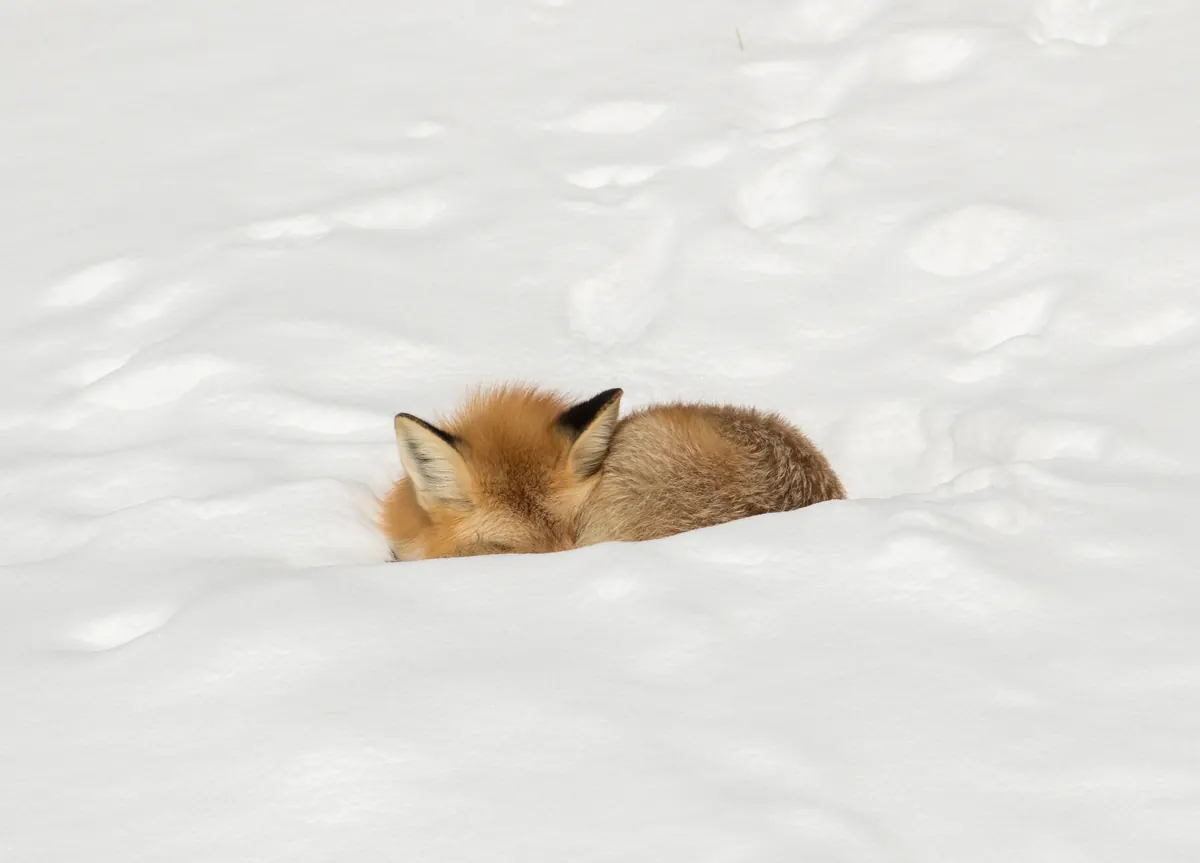
Rutgers Cooperative Extension puts the red fox breeding season in New Jersey in January and February, with kits born in spring. Unpaired foxes look for mates through late fall, so December nights bring sharp barks and screams from the edge of town. Fox tracks in thin snow are easy to tell from a dog’s: small, neat, and set nearly in a single straight line.
-
Tracks after the first snow
The morning after any light snowfall · Trail edges, fields and stream banks; the Skylands for the widest variety
A thin layer of fresh snow on firm ground shows prints best. The Nature Conservancy names its Johnsonburg Swamp Preserve in Warren County as a place where even bobcat tracks turn up: round, about two inches wide, without claw marks. Deer, cottontail, squirrel and fox are the usual finds, and in a snowless December a muddy creek bank works nearly as well.
Black bears are denned now too, though males may wander into the month; secure trash and feeders until the cold is settled. Sketch the best set of prints you find on the “tracks to know” page, with a coin or glove for scale.
When is the earliest sunset in New Jersey, and how short is the shortest day?
The winter solstice comes at 3:50 p.m. Eastern Standard Time on Monday, December 21. That day Newton, in Sussex County, gets 9 hours 13 minutes of daylight and Cape May 9 hours 26 minutes. What catches most people out is that the earliest sunset comes well before the solstice. In Newark the sun goes down at 4:29 p.m. every day from December 3 through December 12, and in Cape May at 4:37 from December 3 through December 10; by the 21st both are a few minutes later. Mornings keep darkening into early January instead. The reason is that solar noon drifts later on the clock all through December, a side effect of Earth’s tilt and its slightly oval orbit, so the shortening day is trimmed mostly from the morning end.
| City | Dec 1 | Dec 21 | Dec 31 | Earliest sunset |
|---|---|---|---|---|
| Newton | 9 h 26 m | 9 h 13 m | 9 h 16 m | 4:30 p.m., Dec 8 |
| Newark | 9 h 29 m | 9 h 15 m | 9 h 18 m | 4:29 p.m., Dec 8 |
| Trenton | 9 h 32 m | 9 h 18 m | 9 h 22 m | 4:33 p.m., Dec 8 |
| Toms River | 9 h 33 m | 9 h 20 m | 9 h 23 m | 4:31 p.m., Dec 7 |
| Camden | 9 h 33 m | 9 h 20 m | 9 h 23 m | 4:35 p.m., Dec 7 |
| Atlantic City | 9 h 36 m | 9 h 24 m | 9 h 26 m | 4:34 p.m., Dec 7 |
| Cape May | 9 h 39 m | 9 h 26 m | 9 h 29 m | 4:37 p.m., Dec 7 |
The return of the light is slow at first: between the solstice and December 31, most of these towns win back only two or three minutes. Look up any New Jersey address on the Field almanac for its sunrise, sunset, twilight and daily change.
How much does it snow in New Jersey in December, and what could El Niño bring?
December is when New Jersey slides from late fall into winter, and the change takes weeks to travel from the Skylands to the cape. In NOAA’s 1991–2020 normals, the Sussex County valleys average highs near 40 °F and 26 frosty nights, while the Cape May station’s average low stays just above freezing. Snowfall drops off the same way, from about 8 inches in a normal northwestern December to 5 at Newark and 2 at Cape May. Precipitation runs 4 to 4.5 inches almost everywhere, mostly as rain south of the Raritan.
| Station | High | Low | Nights ≤ 32 °F | Precipitation | Snowfall | Days with 1 in.+ snow |
|---|---|---|---|---|---|---|
| Sussex 3 WNW (Skylands) | 39.7 | 22.6 | 26.2 | 3.98 | 8.0 | 2.0 |
| Newark International Airport | 44.8 | 31.2 | 17.5 | 4.14 | 5.4 | 1.2 |
| New Brunswick 3 SE (Central Jersey) | 45.4 | 28.4 | 22.4 | 4.49 | 4.9 | 1.3 |
| Trenton Mercer County Airport | 44.4 | 29.3 | 21.5 | 4.04 | 4.6 | 1.1 |
| Indian Mills 2 W (Pine Barrens) | 46.6 | 27.8 | 21.6 | 4.58 | 3.9 | 1.0 |
| Atlantic City International Airport | 48.1 | 29.4 | 21.4 | 4.47 | 3.2 | 0.7 |
| Cape May 2 NW | 48.1 | 33.0 | 16.3 | 4.02 | 2.0 | 0.5 |
A very strong El Niño is all but certain for this winter: NOAA’s forecasters gave it better than nine-in-ten odds in their September 10 update. Its official winter forecast maps are due October 15 and will be posted on NOAA’s seasonal outlook page.
The last two big El Niño Decembers each set a state record, in different directions. The state climatologist’s office at Rutgers found December 2015 to be the mildest December since records began in 1895, averaging 47.8 °F statewide, 12.2 degrees above normal. Newark Airport never once dropped to freezing that month, the grass stayed green, and on Christmas Eve Oceanport in Monmouth County hit 73 °F. December 2023, under the next strong El Niño, was the wettest December on record instead, with 8.20 inches statewide; the storm of December 17–18 brought gusts over 50 mph and pushed the Raritan River to one of its highest crests in a century, while the statewide snowfall for the month was zero. The same office cautioned in 2015 that “there are no reliable relationships between El Niños, even very strong events such as the current one, and NJ weather,” so treat both as possibilities rather than a forecast. The NOAA and Northeast Regional Climate Center summary of El Niño in the region adds that these winters tend to send more coastal storms up the Atlantic seaboard, and whether they bring rain or snow depends on cold air being in place when they arrive.
For the day itself, check Weather now, and use the Today’s sky cloud forecast before a night of meteor watching. If your garden is still producing kale or leeks, the New Jersey frost dates show how the freeze season runs across the state.
What can you see in the New Jersey night sky in December 2026?
Long nights work in your favor this month: the sky is fully dark by about 6 p.m. All times are Eastern Standard Time.
-
The Geminids
Active December 4–20; best from late evening Sunday, December 13 until dawn Monday, December 14 · The whole sky; the radiant near Castor and Pollux climbs high in the east and south
Under an ideal sky the International Meteor Organization expects about 150 Geminids an hour, and this year moonlight is hardly a factor: a crescent about a quarter lit sets by mid-evening. Real counts are always lower, and a suburb loses most of the faint ones, so drive to dark ground such as Wharton State Forest, the Pine Plains or the Kittatinny Ridge. The shower strengthens through the night and is richest near 2 a.m., with the radiant high overhead. Geminids move slower than most meteors, which makes them easier to follow.
-
The Cold Moon
Full at 8:28 p.m. Wednesday, December 23; nearly as round on Christmas Eve · Rising in the east-northeast near sunset
This is the closest full moon of 2026, falling within about seven hours of perigee, its nearest approach to Earth this month. It will look the largest of the year, though the gain over an average full moon can only be seen in a side-by-side photo. Winter full moons also climb higher than summer ones, so on fresh snow its light is enough to walk by. Two nights before it is full, on the 21st, the moon brushes past the Pleiades star cluster. Upcoming phases are listed on the moon phase calendar.
-
Solstice and the planets
Solstice 3:50 p.m. Monday, December 21; planets all month · Saturn in the south and southwest after dark; Venus, Jupiter and Mars in the morning
On solstice day the noon sun is at its lowest over New Jersey, and a lunchtime shadow stretches about twice your height. Saturn holds the evening sky in the south and southwest and sets earlier each night. Before dawn, brilliant Venus dominates the southeast, still pulling away from the sun until early January; look for it with a thin crescent moon and the star Spica on December 4 and 5. Jupiter clears the eastern horizon by late evening as Christmas nears, and Mars gains brightness at dawn.
-
Two weaker showers
Ursids peak December 22; Quadrantids late on January 3 · Ursids near the Little Dipper; Quadrantids in the northeast before dawn
A nearly full moon drowns this year’s Ursids, which manage only about ten an hour at best. Save your effort for the Quadrantids, whose short, sharp peak comes late on January 3 near new moon.
| Phase | Date | Time |
|---|---|---|
| Last quarter | Tuesday, Dec 1 | 1:08 a.m. |
| New moon | Tuesday, Dec 8 | 7:52 p.m. |
| First quarter | Thursday, Dec 17 | 12:42 a.m. |
| Full moon, the Cold Moon | Wednesday, Dec 23 | 8:28 p.m. (the closest full moon of 2026) |
| Last quarter | Wednesday, Dec 30 | 1:59 p.m. |
| New moon | Thursday, Jan 7, 2027 | 3:24 p.m. |
What are good December nature outings for New Jersey families?
- December 3–12: make a wreath from real greens. NJ Audubon’s Lorrimer Sanctuary in Franklin Lakes hosts seasonal wreath workshops on December 3 and 10 (6:30 p.m.) and December 5, 6 and 12 (various times); $40 each, registration needed.
- December 4: the barrier islands. NJ Audubon’s Birding on the Barrier Islands trip meets at the Hereford Inlet seawall in North Wildwood, 10 a.m. to 2 p.m. (fee).
- Saturdays, December 5, 12 and 19: Birding Cape May Point. Two-hour guided walks from the hawkwatch platform at 8 a.m., $8 for members and $12 for others.
- December 9: a free winter waterfowl walk. NJ Audubon and the Lower Cape May County Library lead a 1 to 1.5 mile walk around Cape May Point State Park, 2 to 4 p.m., with loaner binoculars.
- December 12: harlequins and eiders. NJ Audubon’s all-day trip to Barnegat Lighthouse State Park walks the jetty and beaches, 10 a.m. to 4 p.m. ($35 members, $40 others).
- December 13–14: the Geminids. Children can manage an hour from 9 or 10 p.m. Sunday, before the radiant is high; older ones may want the 2 a.m. peak.
- Mid-December onward: count day. Children are welcome on Christmas Bird Count field teams, and a family inside a circle can tally the feeder instead.
- December 21–23: solstice and supermoon. Mark the shortest day by measuring a noon shadow, then watch the Cold Moon rise on the 23rd.
- January 1, 2027: a First Day Hike. New Jersey State Parks has led free guided New Year’s Day hikes at dozens of parks in past years as part of America’s State Parks’ First Day Hikes; its 2027 lineup should appear on the state parks site before the holidays.
Through the winter, keep up a Project FeederWatch count and log outings to eBird. Browse the nature hub for the rest of the country, and find every plate named on this page in the Naturalist’s Field Journal.
Safety notes for December in New Jersey
- Firearm deer and bear week. The six-day firearm deer season runs Monday, December 7 through Saturday, December 12 across the state, and Segment B of the black bear season (shotgun and muzzleloader) runs on the same days. No week of the season puts more people with guns in the woods.
- Other deer seasons. In the High and Medium regulation sets, permit bow season continues to December 31, closed on Christmas Day. Permit muzzleloader days fall on December 1 and on most days from December 14 to 31, and permit shotgun runs December 14–18 (High and Medium) or December 16–18 (Low). NJ Fish & Wildlife’s 2026–27 deer regulations show which set your zone is in.
- Waterfowl. Ducks are in season through the whole month in all three zones. Canada goose hunting resumes December 19 in the North and South zones, and brant resumes December 12 (North and South) and December 24 (Coastal). Dawn gunfire is normal near marshes and bays.
- Hunter orange. Firearm hunters after deer, bear, small game or upland birds need a solid fluorescent orange cap, or an outer garment carrying 200 square inches or more of it, visible all around; a camo-orange cap does not count. This season, for the first time, bowhunters must wear orange during the six-day firearm week as well. Waterfowl, crow and turkey hunters are exempt. Walkers in state forests and on wildlife management areas would be wise to add orange in December, with a blaze vest or collar on the dog.
- Sundays. New Jersey has no firearm hunting on Sundays, and no hunting of any kind in state parks and forests that day. Archery deer hunters may go out on Sundays, but only on private property or wildlife management areas.
- Ice. NJ Fish & Wildlife calls ice 2 inches thick or less unsafe, treats 4 inches as the minimum for ice fishing on foot, and warns that thickness is never even across a pond: springs, currents, inflows and docks all thin it. Early-winter ice is new and patchy, so treat every December pond as unsafe.
- Cold and dark. The sun sets close to 4:30 p.m. for the first half of the month. Turn around on a winter hike by mid-afternoon, pack a headlamp and an extra layer, and stay dry: wet clothes in a 35 °F wind chill you far faster than dry cold.
- Coastal storms and jetties. Nor’easters bring big surf and tidal flooding. Keep off jetties in heavy seas or when the rocks are icy, and keep an eye on the waves while you watch the ducks.
Sources
- NJ Audubon: events calendar, December 2026 (Barnegat harlequin trip, Cape May Point walks, wreath workshops)
- NJ Audubon: Harlequins, Eiders, and More! (Barnegat Lighthouse State Park, December 12, 2026)
- NJ Audubon: Winter Waterfowl in Cape May Point, Lower Cape May County Library walk (December 9, 2026)
- NJ Audubon: Birding on the Barrier Islands (December 4, 2026)
- NJ Audubon: Birding Cape May Point (December 2026 walks)
- NJ Audubon: Seasonal Wreath Making Workshop, Lorrimer Sanctuary
- NJ Audubon: Avalon Seawatch (count runs October 1 to December 22)
- NJ Audubon: snowy owls and Project SNOWstorm at Island Beach State Park
- Project SNOWstorm
- New Jersey State Parks: Barnegat Lighthouse State Park
- Nemesis Bird: Barnegat Lighthouse State Park, NJ (harlequin ducks, purple sandpipers)
- NatureScapes: photographing at the Barnegat jetty (wintering harlequin flock)
- Audubon: The 125th Christmas Bird Count in New Jersey (William J. Boyle, Jr.)
- Audubon: count circles, codes and compilers in the 125th Christmas Bird Count (PDF)
- Audubon: Christmas Bird Count (December 14 to January 5; history since 1900)
- NJ Fish & Wildlife and Conserve Wildlife Foundation: New Jersey Bald Eagle Project Report, 2025 (PDF)
- Conserve Wildlife Foundation of NJ: Bald Eagle Project
- The Nature Conservancy: New Jersey seasonal natural events (eagles at Maurice River Bluffs, tracking at Johnsonburg Swamp)
- New Jersey Conservation Foundation: Winter is perfect for owl spotting (December 9, 2021)
- USDA Forest Service Fire Effects Information System: pitch pine (Pine Barrens cones and fire intervals)
- USDA Forest Service Fire Effects Information System: Atlantic white cedar
- Lady Bird Johnson Wildflower Center: eastern red cedar
- NJ Fish & Wildlife, Endangered and Nongame Species Program: bats in winter (Hibernia, white-nose syndrome)
- Conserve Wildlife Foundation of NJ: Frozen frogs (wood frogs in winter)
- Rutgers Cooperative Extension FS1325: red fox ecology and behavior
- NJ Fish & Wildlife: black bear biology and behavior (denning)
- NOAA NCEI: monthly climate normals 1991–2020, data access service (December values for New Jersey stations)
- NOAA NCEI: U.S. climate normals, 1991–2020
- Office of the New Jersey State Climatologist: December 2015 summary (mildest December on record)
- Office of the New Jersey State Climatologist: December 2023 summary (wettest December on record)
- Climate Prediction Center: ENSO diagnostic discussion, September 10, 2026
- Climate Prediction Center: seasonal (90-day) outlooks
- NOAA and Northeast Regional Climate Center: El Niño impacts and outlook, Northeast region (PDF)
- National Weather Service, Mount Holly (Philadelphia) forecast office
- National Weather Service, New York (Upton) forecast office
- U.S. Naval Observatory: moon phases API, December 2026
- U.S. Naval Observatory: Earth’s seasons, 2026 (solstice December 21, 20:50 UT)
- International Meteor Organization: 2026 meteor shower calendar (Geminids, Ursids, Quadrantids)
- EarthSky: what is a supermoon? (December 2026 the closest full moon of the year)
- EarthSky: Venus at greatest western elongation (January 3, 2027)
- RASC Observer’s Handbook 2026: lunar occultations (Pleiades, December 21)
- NASA JPL Horizons ephemeris system
- NJ Fish & Wildlife: deer seasons and regulations 2026–27 (PDF)
- New Jersey Hunting & Trapping Digest 2026–27: bear hunting regulations (Segment B, December 7–12)
- NJ Fish & Wildlife: 2026–27 migratory bird seasons (PDF)
- New Jersey Hunting & Trapping Digest 2026–27: migratory bird seasons by zone
- New Jersey Hunting & Trapping Digest 2026–27: general regulations (hunter orange, Sunday hunting)
- NJ Fish & Wildlife: ice fishing in New Jersey (ice thickness guidance)
- NJ Fish & Wildlife: ice fishing safety tips (PDF)
- New Jersey State Parks: First Day Hikes
- America’s State Parks: First Day Hikes
- Project FeederWatch: how to participate
- eBird
- Photos via Wikimedia Commons; licenses and photographers are credited under each picture
