What to look for in nature in New Jersey this November
November is when New Jersey turns from a flyway into a wintering ground. Snow geese settle by the thousands into the salt marsh at Brigantine, and Atlantic brant crowd the back bays. Off Avalon, long dark lines of scoters skim south over the waves, while golden eagles ride the northwest wind down the Kittatinny Ridge. Harbor seals return to the rocks and sandbars at Sandy Hook. Inland, the bucks are in the rut, the oaks hang on to their brown leaves, and on Sunday the 1st, standard time brings dark evenings back. This guide walks the state from the ridge to the cape, with dates and sources.
Other months in New Jersey: October, December.
Start here
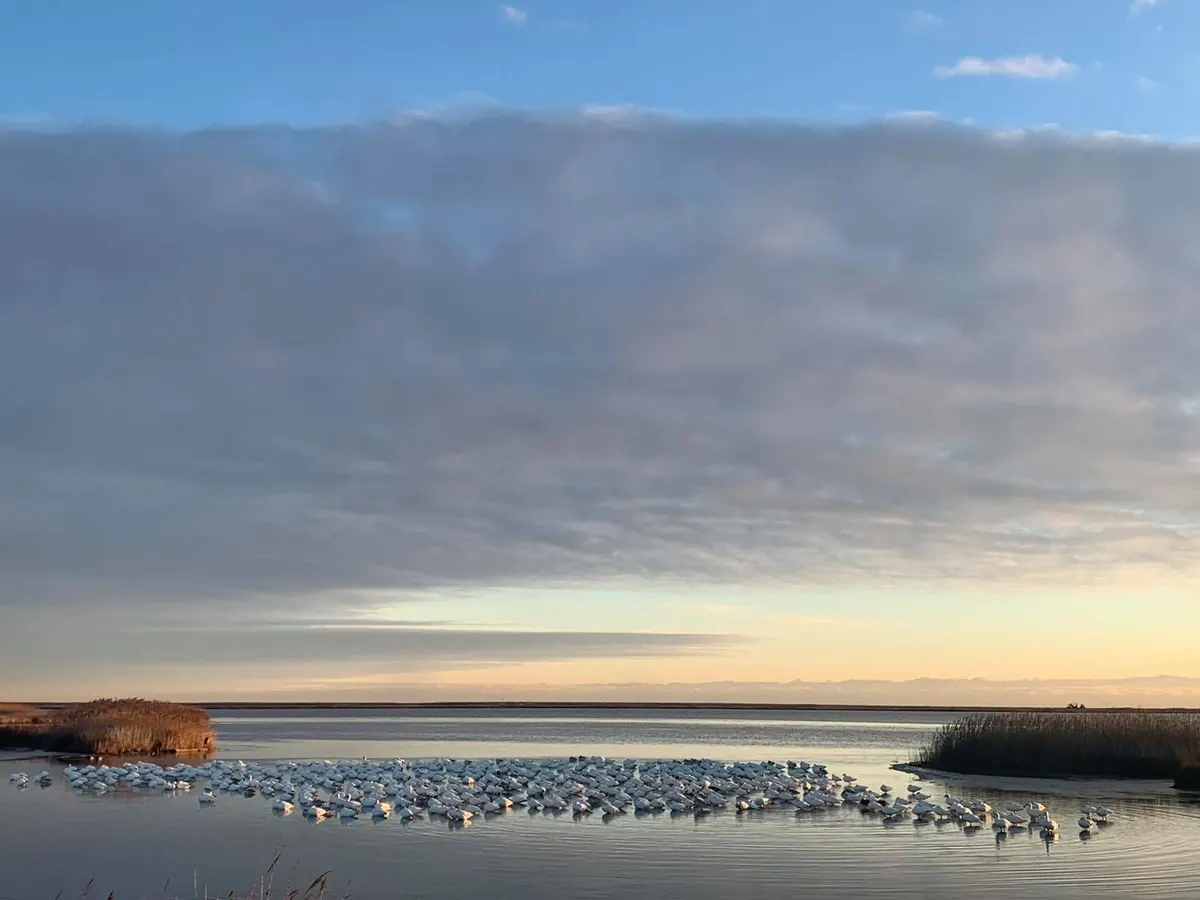
- Drive the Brigantine marshes for snow geese. From mid-November, white rafts of snow geese rest on the impoundments and salt marsh at Edwin B. Forsythe National Wildlife Refuge in Galloway Township. Entry is free on Veterans Day, Wednesday, November 11; other days the car fee is $4.
- Count scoters off Avalon. NJ Audubon counts seabirds from the 7th Street seawall in Avalon every day until December 22. Free seabird identification sessions run there from 2 to 3 p.m. on Sundays, November 1, 8 and 15.
- Get up for the Leonids. The Leonids peak overnight on November 17 into 18. Wait until the half-lit moon goes down around midnight, then watch the eastern sky until dawn begins to brighten.
For the Naturalist’s Field Journal this month: list the season’s first snow goose, brant and black scoter on “birds I have seen,” use “dusk and dawn watch” for deer and woodcock at the edge of a field, “tracks to know” for a deer scrape or a bear print in trail mud, and “the same place twice” for an oak that keeps its brown leaves, revisited in March. Note the wind direction on each bird page.
Regions used below: Skylands and the Kittatinny Ridge; Gateway and the Watchungs; Central Jersey and the Delaware Valley; Pine Barrens; Jersey Shore; Cape May and the Delaware Bayshore.
When do snow geese and brant peak at Brigantine?
Edwin B. Forsythe National Wildlife Refuge, still called Brigantine by most birders, stretches about 50 miles along the southern shore, from Oceanville up to Brick Township. The Fish and Wildlife Service says roughly 80 percent of its 47,000-plus acres is tidal salt marsh, with freshwater pools built along the Wildlife Drive. In fall, according to the refuge’s bird list, huge flocks of ducks and snow geese arrive, and the refuge holds the largest wintering concentrations of American black duck and brant anywhere on the Atlantic coast. November is when that winter population settles in.
-
Snow geese
Building through November; at their peak from mid-November into December · Wildlife Drive impoundments and the open salt marsh, Galloway Township
Greater snow geese nest in the high Arctic and winter along the mid-Atlantic coast, and Forsythe’s marshes are among their favorite stops. The flocks feed on marsh-grass roots, so a field of them leaves mud behind. When an eagle or harrier passes low, the whole flock lifts at once, a white blizzard with black wingtips. The Wildlife Drive is a one-way gravel loop of eight miles through marsh and woods, open sunrise to sunset; drive slowly, stay in the car near the flocks, and use it as a blind.
-
Atlantic brant
Abundant from fall into winter; numbers peak from mid-November into December · Back bays and marsh channels from Barnegat Bay to Cape May; the Forsythe impoundments
Brant are small, dark sea geese with a white necklace, and they eat eelgrass and sea lettuce in shallow bays. The refuge checklist rates them abundant in fall and winter. Watch for low, ragged lines of them over the bay at Barnegat Light, Brigantine and Stone Harbor, and listen for their soft, rolling “cronk.”
-
Black ducks, pintails and the rest
All month, numbers rising after each cold front · Forsythe, the Great Swamp and the bayshore marshes
The refuge bird list rates American black duck, northern pintail and green-winged teal as abundant in fall. Buffleheads, hooded mergansers and greater scaup turn up as the month goes on. American black ducks look like dark mallards with a pale face and a flash of white under the wing in flight, and the Jersey coast is one of their most important wintering areas.
The refuge’s Visitor Information Center keeps Wednesday to Sunday hours, 10 a.m. to 2 p.m. The best light on the geese comes in the first hour after sunrise, with the sun at your back on the drive’s south side.
What is flying past the Jersey Shore in November, and when do the seals come back?
The ocean is the busiest flyway in the state this month, and the birds on it are ones most people never notice: sea ducks, loons and gannets heading for winter quarters off the Carolinas and the Chesapeake.
-
The Avalon Seawatch
Counted every day from October 1 to December 22; about 70 percent of the season’s birds pass between roughly October 7 and November 14 · The seawall at the east end of 7th Street, Avalon
NJ Audubon keeps a counter on the Avalon seawall from sunrise to sunset every day of the season, in all weather. An average season brings about 800,000 seabirds past the point, and a few have come close to a million. The count has logged 129 species. The backbone is scoters: black scoters average about 150,800 a season and surf scoters about 142,100. They pass in long, low strings just above the waves, sometimes for hours. In November the mix shifts toward northern gannets, which fold their wings and plunge for fish, and red-throated loons. In one November week of 2020 the counters logged more than 4,700 gannets on a single day and over a thousand red-throated loons on another.
-
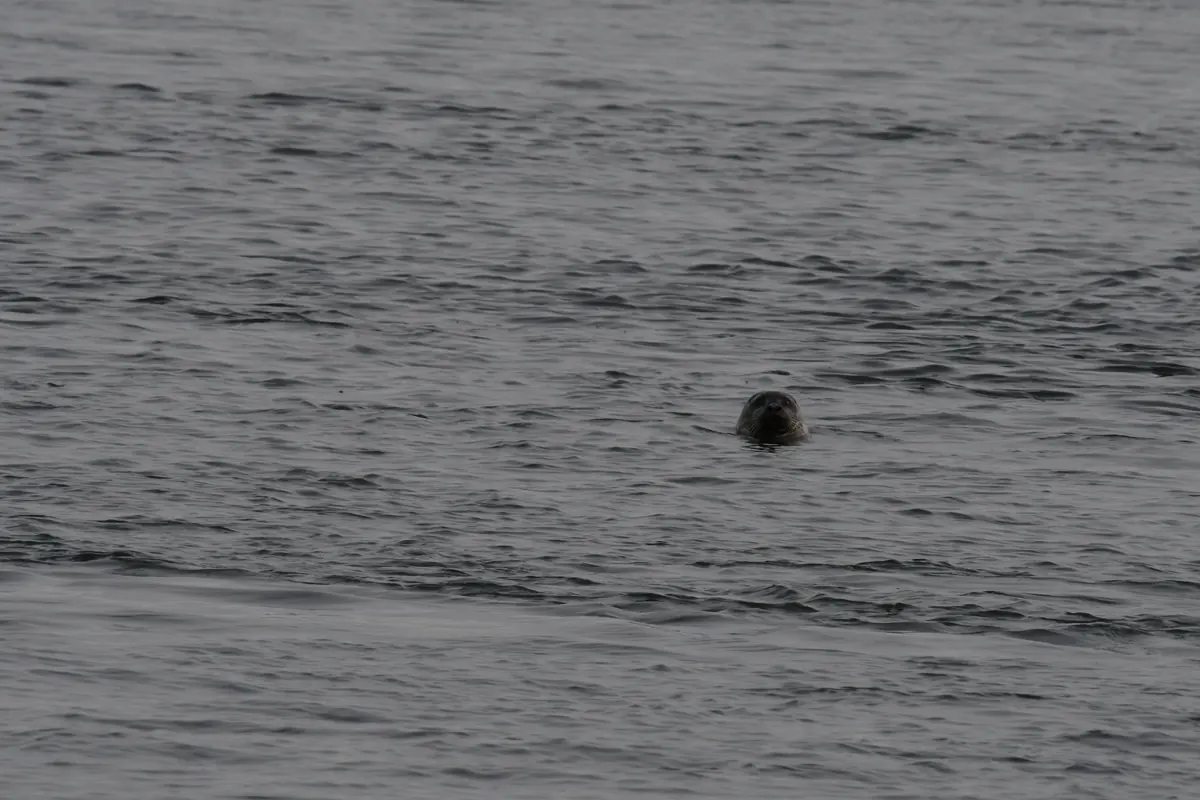
Harbor seals return
November through March · The bayside of Sandy Hook; rock jetties and sandbars along the coast, such as at Barnegat Inlet
Gateway National Recreation Area says seals can be seen throughout the park from November to March, and Sandy Hook’s bayside is the favorite place to look. They haul out on sandbars and rocks at low tide and bob with just a dark head showing at high tide. NOAA Fisheries asks people and pets to keep at least 50 yards (150 feet) back from any seal on shore. A seal resting on a beach is usually healthy; if one looks hurt, call the stranding network rather than going close. Last winter the American Littoral Society’s guided seal walks on the Hook began in January.
-
Striped bass in the surf
The fall run is usually best in November · Raritan Bay, the Sandy Hook rips, inlets and beaches south to Cape May
NOAA Fisheries describes the adults heading south down the coast as the water cools. When bunker and sand eels leave the bays, the bass and gulls follow, and diving birds over the surf are the sign. The coastwide stock is still being rebuilt. New Jersey lets anglers keep one striper a day, and only one measuring at least 28 inches but less than 31.
On a seawatch day, fill a “birds I have seen” page with flock counts rather than single birds: a line of 300 scoters is one entry worth remembering.
Where can you see golden eagles and woodcock in New Jersey in November?
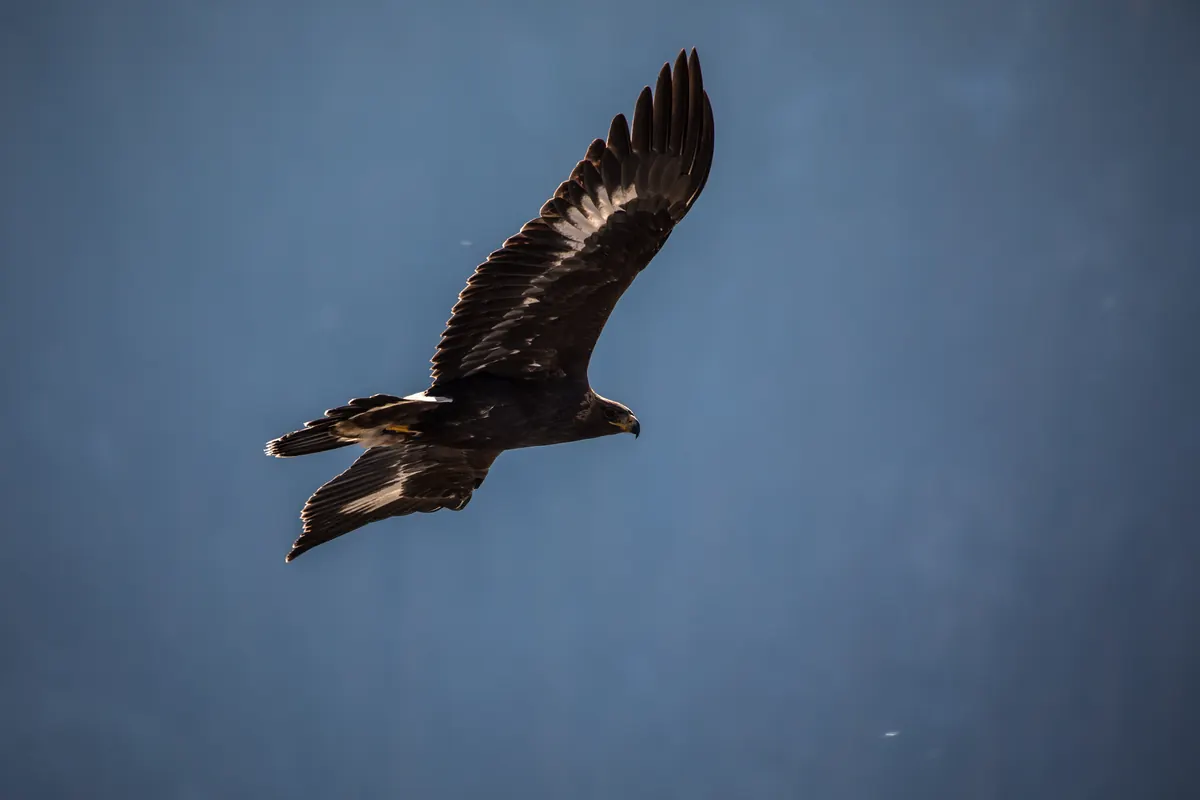
The small hawks are mostly gone by November. What comes next are the big, late migrants that wait for real cold: red-tailed hawks, bald and golden eagles, and the occasional northern goshawk.
-
Raccoon Ridge
Counted from late August to December 1; November is best for red-tails, golden eagles and goshawks · Kittatinny Ridge in Worthington State Forest, Warren County, on the Appalachian Trail
This lookout sits about 1,570 feet up on the Kittatinny, beside the Delaware Water Gap National Recreation Area. HawkCount describes a climb of roughly an hour from the trail crossing where you park. A full season counts about 15,000 raptors, and golden eagles average 46 a fall. The single-day record is 19 golden eagles, on November 3, 2012. Pick a cold, clear day with a northwest wind, dress for winter on the summit, and look for long, flat-winged birds with a golden nape gliding past at eye level.
-
Last weeks at the Cape May hawkwatch
Staffed through November 30 · Hawkwatch platform, Cape May Point State Park
Late fall at Cape May belongs to red-tailed hawks, bald eagles, and golden eagles on good northwest-wind days. Northern goshawks are scarce enough to make the day: in 2021, NJ Audubon reported that the count missed them for only the second time in its history. That year the platform still logged 16 golden eagles. The weekly hawkwatch updates on NJ Audubon’s site tell you what is moving.
-
Woodcock on the Cape May peninsula
Migrants from late October into winter · Fields and thickets around Cape May Point, Higbee Beach and Cape May National Wildlife Refuge
American woodcock, the plump, long-billed shorebirds of wet woods, pile up on the peninsula in late fall the way hawks do, waiting for a north wind to carry them across Delaware Bay. Researchers banded more than 2,000 of them there in late fall between 1968 and 1973 and found they wintered on the coastal plains of Virginia and North Carolina. A later radio-tracking study found migrants present from about late October and showed that they fly out to open fields to spend the night, and that less than a tenth of the peninsula is good habitat for them. At dusk, watch a field edge for a stubby, long-billed bird flying low.
Hawkwatches are free; carry a thermos and a pad to sit on. Note the wind and the temperature next to each eagle on your bird list.
When is the deer rut in New Jersey, and when do bears den?
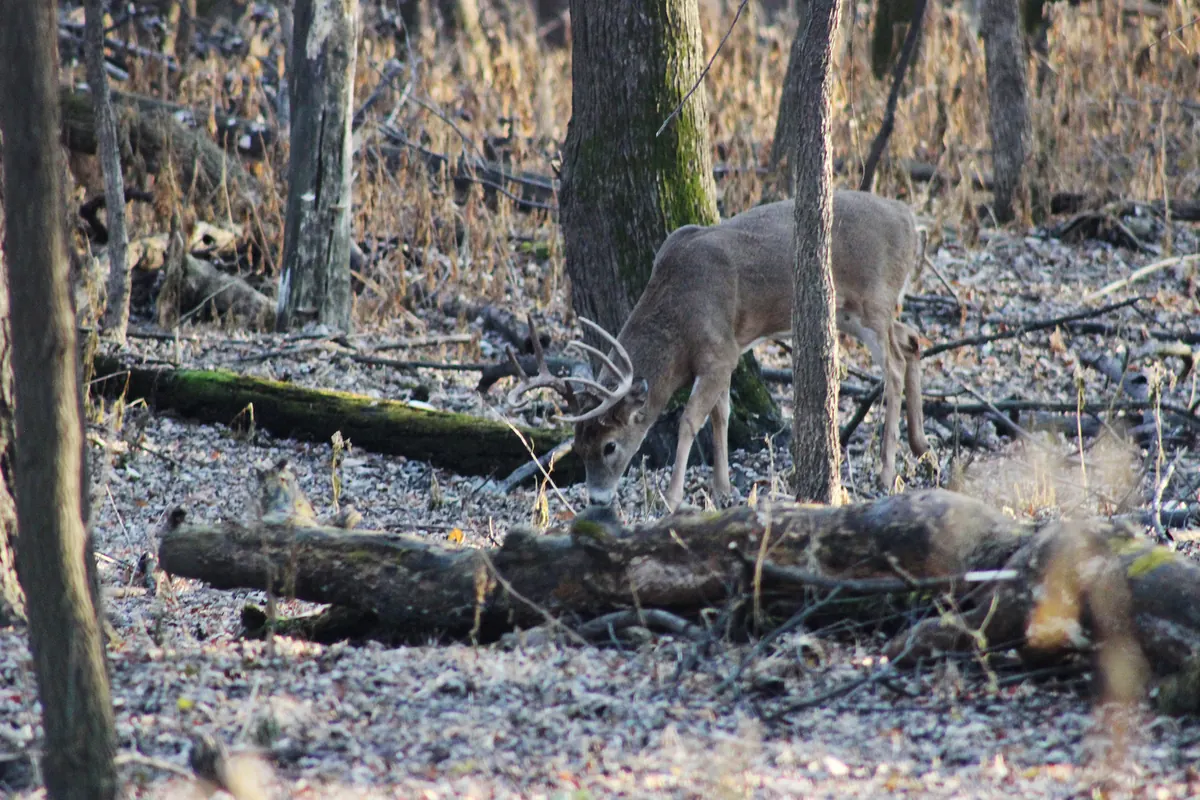
-
The rut
Breeding from late September to January, peaking in mid-November · Statewide, from the Highlands to the suburbs and the Pine Barrens
Rutgers Cooperative Extension puts the peak of breeding in mid-November. Bucks that spent October rubbing saplings now travel far and in daylight, nose to the ground on a doe’s trail, and you may hear a low grunt from the brush. The state Departments of Transportation and Environmental Protection say most of New Jersey’s thousands of deer–car collisions each year come during the mating season, which they put from late October to mid-December. Once standard time returns on November 1, the drive home lands in the dusky hour when deer are most on the move. Their advice: if a deer stands in the road, stop and wait; if a crash can’t be avoided, brake and hold your lane rather than swerving.
-
Bears go to bed
Pregnant females from late October; males often not until December · Mostly the northwest counties; bears now range statewide
NJ Fish & Wildlife says black bears den to wait out the season of scarce food and hard weather. Pregnant females go in first, often by the last week of October, and males may wander into December. Dens can be brush piles, rock crevices, hollow trees, holes dug into a slope, or a hollow under a house or shed. Bears are not true hibernators and may get up and forage on warm winter days, so keep trash secured and bird feeders down at night until well into the cold. Cubs arrive in January, while the mother is still denned.
A fresh scrape, a pawed-bare circle of earth under a low branch that smells musky, is a good find for the “tracks to know” page. Sketch it with the branch above it.
Will winter finches come to New Jersey feeders this year?
Released on September 25, 2026, the Finch Research Network’s annual winter outlook reads the cone and seed crops across Canada’s boreal forest. This year the crops are good in the east and in the far west but poor through much of the middle. Hungry birds from the middle should shift east and south toward the Northeast. Yet the pines, cedars and spruces of the northeastern woods are heavy with cones, so many of those birds may stay up in the conifers instead of visiting yards.
For New Jersey that means a few species are worth watching for. Pine siskins, small streaky finches with a yellow flash in the wing, are expected to move in numbers through the Northeast, with perhaps a small to moderate flight farther south. Red crossbills of the type the forecast calls Type 2 could drift down the coast in late winter, and Cape May is named as one place they may reach. A small push of white-winged crossbills is possible in the East. Few redpolls, pine grosbeaks or Bohemian waxwings should get this far, and evening grosbeaks may get only as far as southern New York and Pennsylvania. Purple finches, if they move at all, are likely to come late and in small numbers.
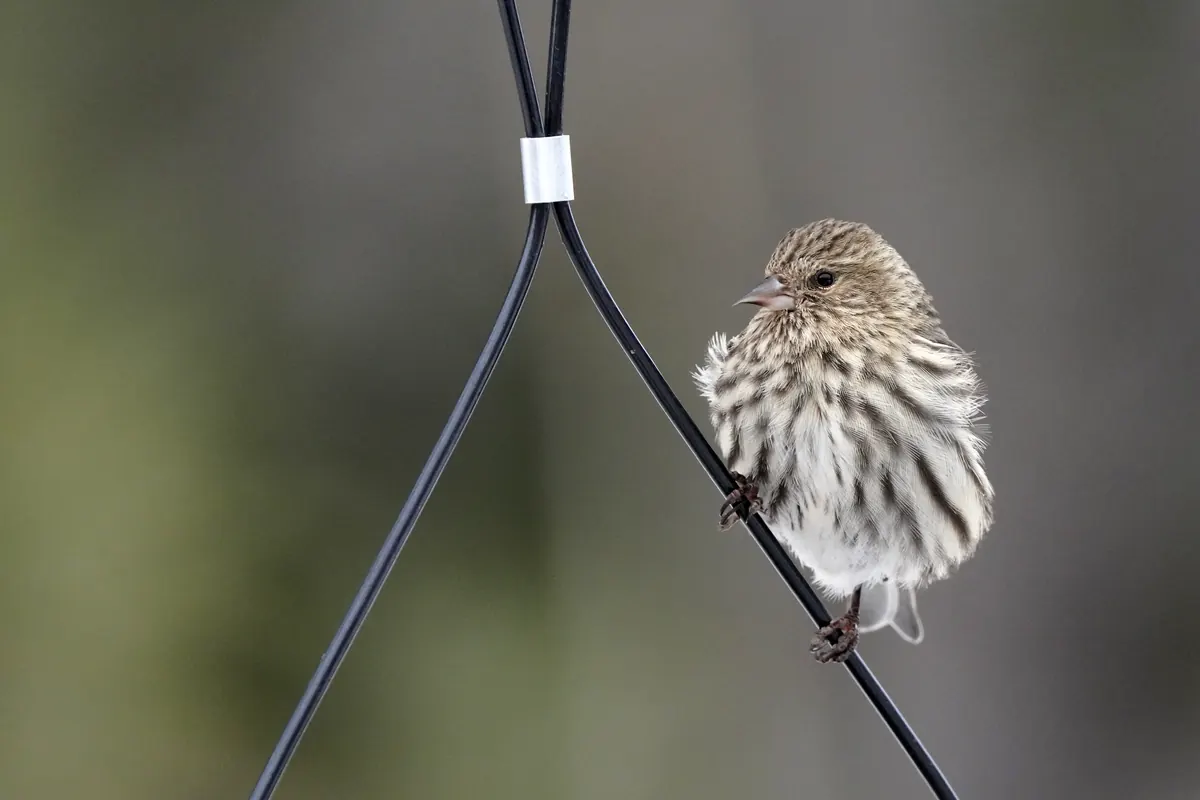
Cornell and Birds Canada’s Project FeederWatch keeps its tallies from November 1 to the end of April. Each count covers two consecutive days, at most weekly, and for every species you write down only the largest flock seen at once, so nothing gets counted twice. A bowl of black-oil sunflower and a tube of nyjer seed is enough to start; where bears roam, hold off on hanging them until the bears have gone to their dens.
Which New Jersey trees keep their leaves into November and winter?
By the start of November most maples and tupelos in the north are bare, and the southern counties finish dropping within a few weeks. What remains are the oaks, the beeches and the evergreens, and the woods take on a new set of colors: russet, tan, and the deep green of holly and pine.
-
Oaks and beeches that won’t let go
November through winter, many until spring · Woods and roadsides statewide; especially young trees and the lower limbs of older ones
Holding dead leaves through winter has a name: marcescence. University of Illinois Extension explains that oaks and beeches are the usual examples, and that it shows most on young trees and on the low branches of older ones. The leaves wither but the layer of cells that would cut them loose never fully forms, so they rattle on the twigs until new growth pushes them off. The reason is still argued over. Ideas include shielding the buds from drying winds, hiding the buds from browsing deer, and dropping the leaves in spring, when their nutrients are most useful.
-
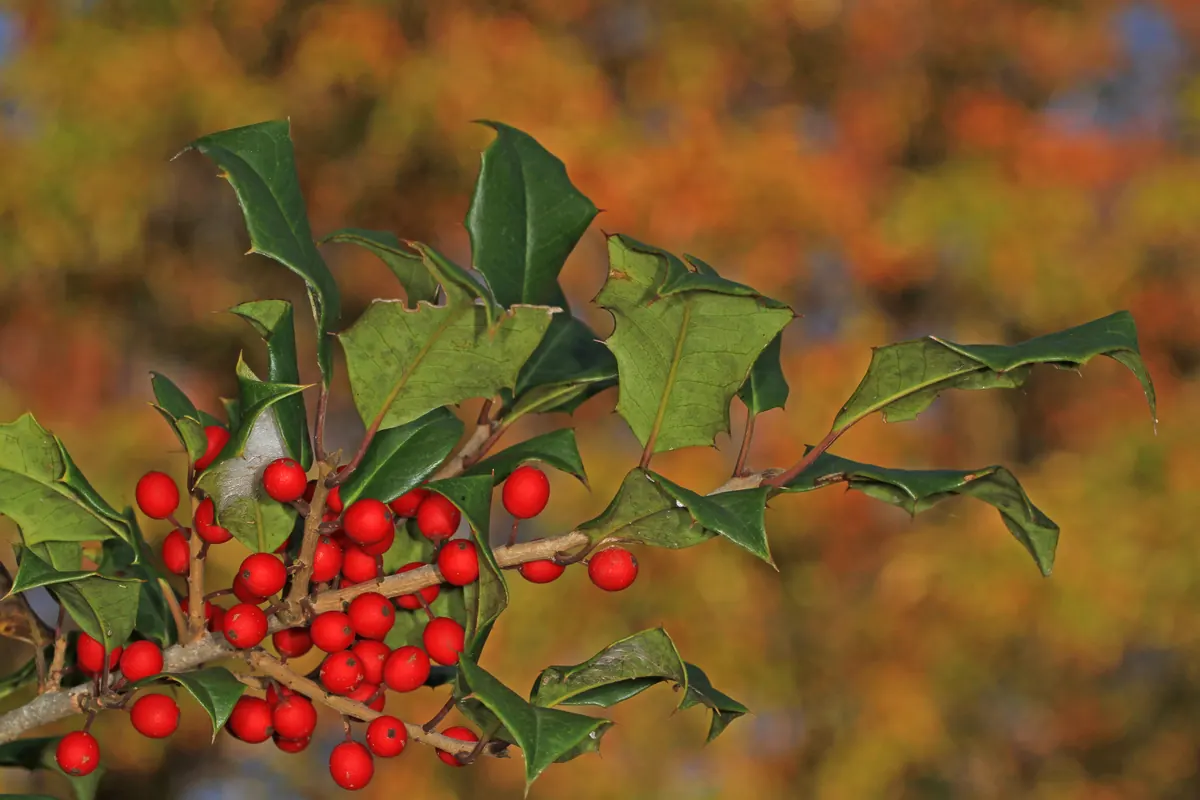
The holly forest at Sandy Hook
Red berries from fall through winter · Gateway National Recreation Area, Sandy Hook; the Old Dune Trail passes near part of it
The National Park Service calls the American holly forest on Sandy Hook the largest stand of the species on the East Coast. One of its trees dates from the 1830s. Only female hollies make the red berries, which feed robins and cedar waxwings into winter. Much of the forest is protected, so stay on marked trails or join a ranger-led walk if one is offered.
Pick one oak or beech that holds its leaves and give it a “same place twice” page: once now, once in March, to see which day it finally lets go.
Has New Jersey had its first freeze yet?
By November 1 the typical year has already brought a freeze to most of inland New Jersey. The median first 32 °F night has come and gone in the Sussex County valleys (October 11), at Charlotteburg Reservoir in the Highlands (October 17), at Indian Mills on the cold pine-barrens sand (October 15), at New Brunswick (October 26) and at Atlantic City International Airport in Pomona (October 29). Trenton’s median falls on November 1 itself. The places still waiting are the ones wrapped in water or pavement: Cape May (median November 9), Newark (November 10), and the Atlantic City station on Absecon Island, where the median is November 21 and one year in ten does not freeze until December 7.
| Station | One year in ten | Median | Nine years in ten |
|---|---|---|---|
| Sussex 3 WNW (Skylands) | Sep 30 | Oct 11 | Oct 27 |
| Charlotteburg Reservoir (Highlands, Passaic County) | Oct 2 | Oct 17 | Nov 3 |
| New Brunswick 3 SE (Central Jersey) | Oct 11 | Oct 26 | Nov 8 |
| Newark International Airport | Oct 28 | Nov 10 | Nov 25 |
| Trenton Mercer County Airport (Delaware Valley) | Oct 15 | Nov 1 | Nov 13 |
| Indian Mills 2 W (Pine Barrens) | Oct 3 | Oct 15 | Oct 30 |
| Atlantic City International Airport (Pomona) | Oct 13 | Oct 29 | Nov 11 |
| Atlantic City (Absecon Island) | Nov 6 | Nov 21 | Dec 7 |
| Cape May 2 NW | Oct 26 | Nov 9 | Nov 26 |
By the end of November, nine years in ten have frozen at every station on this list except the island. Spring dates and many more stations are on our frost dates for New Jersey. Drain and coil garden hoses before the first hard freeze, and record the morning the birdbath first skins over.
How much daylight does New Jersey lose in November?
Just under an hour, and less than October took. Newton, in the far north, gives up 57 minutes between November 1 and November 30, while Cape May loses 52, and the daily loss shrinks a little, from about two minutes a day, as December approaches. The time change on November 1 makes it feel much bigger. Newark’s sunset jumps back to 4:53 p.m. that Sunday and keeps sliding to 4:30 by November 30, while sunrise moves from 6:27 to 7:00 a.m. By Thanksgiving week, an after-work walk happens in the dark.
| City | Nov 1 | Nov 30 | Lost | Per day |
|---|---|---|---|---|
| Newton | 10 h 25 m | 9 h 28 m | 57 min | 2.0 min |
| Newark | 10 h 26 m | 9 h 30 m | 56 min | 1.9 min |
| Trenton | 10 h 28 m | 9 h 33 m | 55 min | 1.9 min |
| Toms River | 10 h 28 m | 9 h 34 m | 54 min | 1.9 min |
| Camden | 10 h 29 m | 9 h 34 m | 55 min | 1.9 min |
| Atlantic City | 10 h 30 m | 9 h 37 m | 53 min | 1.8 min |
| Cape May | 10 h 32 m | 9 h 40 m | 52 min | 1.8 min |
Sun times and twilight for any New Jersey address, plus how fast the light is going this week, live on our Field almanac page.
What is November weather like in New Jersey, and what might a strong El Niño bring this winter?
November is the month the state cools fastest. NOAA’s 1991–2020 normals give Newark an average November high of about 55 °F and a low of 39, Trenton about 55 and 36, and Atlantic City International Airport about 57 and 37. Rain and melted snow total a bit over 3 inches at all three. Snow is a minor player: the November normal is about half an inch at Newark and Trenton and a tenth of an inch at the Atlantic City airport, though an early storm can whiten the Skylands. Hurricane season ends November 30; nor’easters, with gales and back-bay flooding, are the likelier November trouble. Forecasts for most counties come from the Mount Holly weather service office, and for the northeast corner from its Upton, New York neighbor. For what the sky is doing right now, see Weather now and the Today’s sky cloud forecast.
The winter ahead has a strong signal behind it. As of the Climate Prediction Center’s September 10 update, NOAA gives a very strong El Niño over 90 percent odds this fall and winter. The agency’s winter temperature and precipitation maps arrive October 15, and you can find them on NOAA’s 90-day outlook maps from that day.
What has El Niño meant here before? An El Niño briefing from NOAA and the Northeast Regional Climate Center points to research showing more coastal storms in El Niño winters: roughly two extra nor’easters on the classic track up from Cape Hatteras, with strong events especially tied to the increase. Those storms bring the full menu, from beach erosion and high wind to heavy snow and rain. The same summary describes the record El Niño of 2015–16: the whole Northeast ran warmer than normal, but while New England and New York came up short on snow, the Mid-Atlantic, southeastern Pennsylvania included, ended up above normal. A NOAA climate.gov analysis adds that El Niño cuts snowfall most reliably in the interior Northeast and around the Great Lakes, while the Washington, D.C. area has historically averaged more snow in El Niño winters, with large swings from one year to the next. New Jersey sits between those zones, so the best bet is a mild, stormy season whose snow total depends on whether cold air is in place when the coastal storms arrive.
What can you see in the New Jersey night sky in November?
Clocks fall back at 2 a.m. on Sunday, November 1, so evening stargazing starts an hour earlier on the clock. All times below are Eastern Standard Time.
-
The Leonids
Active November 6–30; best in the hours before dawn on Wednesday, November 18 · Look high in the east and southeast after midnight
The International Meteor Organization expects the Leonid peak around 6:45 p.m. on November 17, before the radiant in Leo is up, so the watching is best later that night, after midnight. A first-quarter moon sets around midnight, and Leo climbs higher until dawn. A dark site might show 15 an hour at the peak, fast and often leaving glowing trains. No outburst is predicted this year. The Pine Barrens around Wharton State Forest and the Kittatinny Ridge give the darkest skies in the state.
-
Taurid fireballs and a dark new moon
Southern Taurids peak November 5, Northern Taurids November 12; new moon November 9 · Taurus, high in the southeast by late evening
The two Taurid streams, made of debris from Comet Encke, give only five to ten meteors an hour, but they are slow and some are bright fireballs. With the new moon on November 9 falling between the two peaks, the second week of the month has the darkest nights of November.
-
The Beaver Moon
Full at 9:53 a.m. on Tuesday, November 24; looks full on the evenings of November 23 and 24 · Rising in the east-northeast at dusk
November’s full moon is a modest supermoon, a little closer than average, with its nearest point to Earth coming about 30 hours after full. That same night the moon drifts beside the Seven Sisters, the Pleiades, and its glow all but drowns them. Watch it rise over the ocean from a boardwalk on Tuesday evening, two days before Thanksgiving. The moon phase calendar has every date.
-
A crowded dawn and a lone evening planet
All month · East and southeast before sunrise; south and southwest after dusk
Saturn is the only bright planet of the evening, a steady pale point in the south after dark. The morning sky is full. Venus climbs quickly out of the dawn glow, brilliant in the east-southeast, and is at its most brilliant in Thanksgiving week. Early on Monday, November 9, it sits about a degree from the star Spica. Mars and Jupiter, both in Leo, pass about 1.2 degrees apart before sunrise on the 15th and again the 16th. Mercury is easiest to catch low in the east before sunrise from about November 18 to 25. Binoculars can pick up Uranus, at opposition on the 25th, a faint blue-green dot not far from the Pleiades, once the moon has moved on.
| Phase | Date | Time |
|---|---|---|
| Last quarter | Sunday, Nov 1 | 3:28 p.m. |
| New moon | Monday, Nov 9 | 2:02 a.m. |
| First quarter | Tuesday, Nov 17 | 6:48 a.m. |
| Full moon, the Beaver Moon | Tuesday, Nov 24 | 9:53 a.m. (round on the evenings of Nov 23 and 24) |
| Last quarter | Tuesday, Dec 1 | 1:08 a.m. |
What are good November nature outings for New Jersey families?
- November 1: start FeederWatch. The season opens the same Sunday the clocks fall back. Fill a feeder and do your first two-day count.
- Sundays, November 1, 8 and 15: seabirds at Avalon. NJ Audubon’s free Seabird ID Mini-Workshop runs from 2 to 3 p.m. at the Avalon Seawatch. On Saturday, November 7, its Youth Birders afternoon at the seawatch (1 to 4 p.m.) is also free.
- November 4: monarchs, after the fact. A free evening talk, “Monarchs & Cape May: A Migration Story,” runs 6 to 7:30 p.m. at the Lower Cape May County Library.
- November 6: hawks in Bergen County. NJ Audubon’s Lorrimer Sanctuary in Franklin Lakes holds a free half-hour hawkwatch at 11 a.m.
- November 11: a free drive at Brigantine. National wildlife refuges waive entrance fees on Veterans Day, so the Forsythe Wildlife Drive costs nothing. Count snow geese from the car.
- November 14 and 21: guided trips. NJ Audubon leads a morning trip to Forsythe on the 14th and to Island Beach State Park on the 21st. Both carry a fee and need registration.
- November 17–18: the Leonids. Older children can set an alarm for 3 a.m. and count meteors for half an hour from the yard.
- November 27: the day after Thanksgiving outdoors. Skip the stores and walk a refuge, a beach or a state forest trail instead. If you go to the woods, wear orange: it is a hunting day in much of the state.
Report what you see to eBird, and send seal or stranding sightings to the stranding network rather than posting exact locations. The nature hub has guides for other states and months, and last month’s page, New Jersey in October, covers the hawk and monarch peak. The journal pages named on this page are all in the Naturalist’s Field Journal.
Safety notes for November in New Jersey
- Deer seasons in November. Permit bow season started October 31 and continues through the month (to November 29 in the Low regulation set, into late December elsewhere). Saturday, November 21 is the Youth Firearm Deer Day. In the High regulation set, antlerless-only permit shotgun and muzzleloader hunting runs November 23–25 and November 27, and permit muzzleloader hunting opens in the Medium and Low sets on Monday, November 30, the same day it widens to either sex in the High set. The six-day firearm season and the second black bear segment both follow on December 7–12.
- Small game and birds. Pheasant season opens November 7 (youth days November 2–6), and rabbit and squirrel seasons have been open since September 26. Woodcock is open November 3 to December 5 in the North Zone and from November 7 in the South Zone. Ducks open November 14 in the North Zone and November 21 in the South and Coastal zones; Canada geese, and brant outside the Coastal Zone, also open on November 21. That makes the Saturday before Thanksgiving one of the busiest hunting days of the year. Zones and regulation sets are mapped in NJ Fish & Wildlife’s 2026–27 digest.
- Hunter orange. When hunting deer, bear, small game or upland birds with a gun, hunters must wear either a hat of solid fluorescent orange or an outer layer showing at least 200 square inches of it from every direction. Camouflage orange alone does not qualify. Waterfowl, turkey, crow and woodchuck hunters are exempt, and so are bowhunters except in a few cases, including the six-day firearm week. Walkers have no rule to follow, but an orange hat or vest, and an orange collar or vest on the dog, makes sense on any wildlife management area or state forest this month.
- Sundays are quieter. Firearm hunting is not allowed on Sundays in New Jersey, and state parks and forests allow no hunting at all that day. Deer bowhunting on Sundays is limited to wildlife management areas and private land.
- Short days. Starting November 1, every New Jersey town sees sunset before 5 p.m.; by the 30th it comes between about 4:30 and 4:40. Carry a headlamp on any afternoon hike, and start back well before sunset.
- Cold water. The ocean and bays cool quickly in November, and a capsized kayak or a slip off a jetty can bring on cold shock in seconds. Wear a life jacket and paddle with company.
- Deer on the roads. Rutting bucks and rush-hour darkness overlap all month, so ease off the gas on wooded roads at dawn and dusk.
- Ticks. Adult deer ticks keep questing whenever a winter day turns mild. Check yourself and the dog after leaf-litter walks.
Sources
- U.S. Fish and Wildlife Service: Edwin B. Forsythe National Wildlife Refuge
- U.S. Fish and Wildlife Service: Forsythe refuge, visit us (fees, hours, Veterans Day fee-free day, November 11, 2026)
- U.S. Fish and Wildlife Service: Edwin B. Forsythe National Wildlife Refuge bird list (acreage, habitat, seasonal abundance)
- U.S. Fish and Wildlife Service: Forsythe refuge brochure (seasonal wildlife calendar)
- NJ Audubon: Avalon Seawatch (count dates, season averages, species)
- NJ Audubon: Avalon Seawatch update, November 4–10, 2020
- NJ Audubon: events calendar, November 2026
- NJ Audubon: events list from November 15, 2026
- NJ Audubon: final Cape May Hawkwatch update, November 19–30, 2021
- NJ Audubon: Cape May Hawkwatch reports
- HawkCount: Raccoon Ridge site profile (location, count period, averages, golden eagle record)
- USGS: Krohn and others, Fall migration of woodcock at Cape May, New Jersey (Journal of Wildlife Management, 1977)
- The Condor: Migratory status determines resource selection by American Woodcock at an important fall stopover, Cape May, New Jersey (2020)
- National Park Service, Gateway National Recreation Area: harbor seals
- National Park Service: Holly Forest stop, Sandy Hook
- NOAA Fisheries: share the shore with seals in New England and the Mid-Atlantic (viewing distance)
- NOAA Fisheries: Greater Atlantic Marine Mammal Stranding Network
- American Littoral Society: seal and winter waterfowl walks, Sandy Hook
- NOAA Fisheries: Atlantic striped bass
- N.J.A.C. 7:25-18.1: marine size, season and possession limits (striped bass)
- Rutgers Cooperative Extension FS1202: an overview of white-tailed deer status and management in New Jersey
- NJDOT and NJDEP: drive with extra caution as deer activity increases during the fall rut (October 14, 2025)
- NJ Fish & Wildlife: black bear biology and behavior (denning)
- Finch Research Network: Winter Finch Forecast 2026–2027 (September 25, 2026)
- Project FeederWatch: how to participate
- University of Illinois Extension: marcescence explained
- Arnold Arboretum of Harvard University: the essence of marcescence
- Amphibian Publishing: New Jersey frost dates (NOAA 1991–2020 freeze normals by station)
- NOAA NCEI: U.S. climate normals, 1991–2020
- NOAA Regional Climate Centers, Applied Climate Information System (November normals for Newark, Trenton and Atlantic City)
- Climate Prediction Center: ENSO diagnostic discussion, September 10, 2026
- Climate Prediction Center: seasonal (90-day) outlooks
- NOAA and Northeast Regional Climate Center: El Niño impacts and outlook, Northeast region (nor’easters, winter 2015–16)
- NOAA Climate.gov: how does El Niño affect snowfall over North America?
- National Weather Service, Mount Holly (Philadelphia) forecast office
- National Weather Service, New York (Upton) forecast office
- U.S. Naval Observatory: moon phases API, November 2026
- International Meteor Organization: 2026 meteor shower calendar (Taurids, Leonids)
- EarthSky: what is a supermoon? (2026 full supermoons)
- EarthSky: Mercury at greatest western elongation
- EarthSky: Uranus at opposition
- Star Walk: planetary conjunctions (Mars and Jupiter, November 2026)
- In-The-Sky.org: Venus at greatest brightness, November 27, 2026
- NASA JPL Horizons ephemeris system
- New Jersey Hunting & Trapping Digest 2026–27: deer hunting seasons
- NJ Fish & Wildlife: deer seasons and regulations 2026–27 (youth firearm day, permit seasons by regulation set, bowhunter orange)
- New Jersey Hunting & Trapping Digest 2026–27: bear hunting regulations (Segment B, December 7–12)
- New Jersey Hunting & Trapping Digest 2026–27: migratory bird seasons by zone
- New Jersey Hunting & Trapping Digest 2026–27: upland game birds (pheasant)
- New Jersey Hunting & Trapping Digest 2026–27: small game seasons
- New Jersey Hunting & Trapping Digest 2026–27: general regulations (hunter orange, Sunday hunting)
- University of Rhode Island TickEncounter: blacklegged tick
- eBird
- Photos via Wikimedia Commons; licenses and photographers are credited under each picture
