What to look for in nature in New Jersey this October
October is when New Jersey’s shape matters most. The peninsula funnels hawks, falcons and monarchs down to Cape May Point, where they stall before crossing Delaware Bay. The color starts on the Kittatinny Ridge and reaches the southern counties late in the month. Cranberry bogs in the Pine Barrens are flooded and turned crimson, rainbow trout go into the rivers, and the first snow geese drop into the Brigantine marshes. The first freeze comes early in Sussex County and on the pine-barrens sand, and late on the barrier islands. This guide takes the month place by place, with dates.
Start here

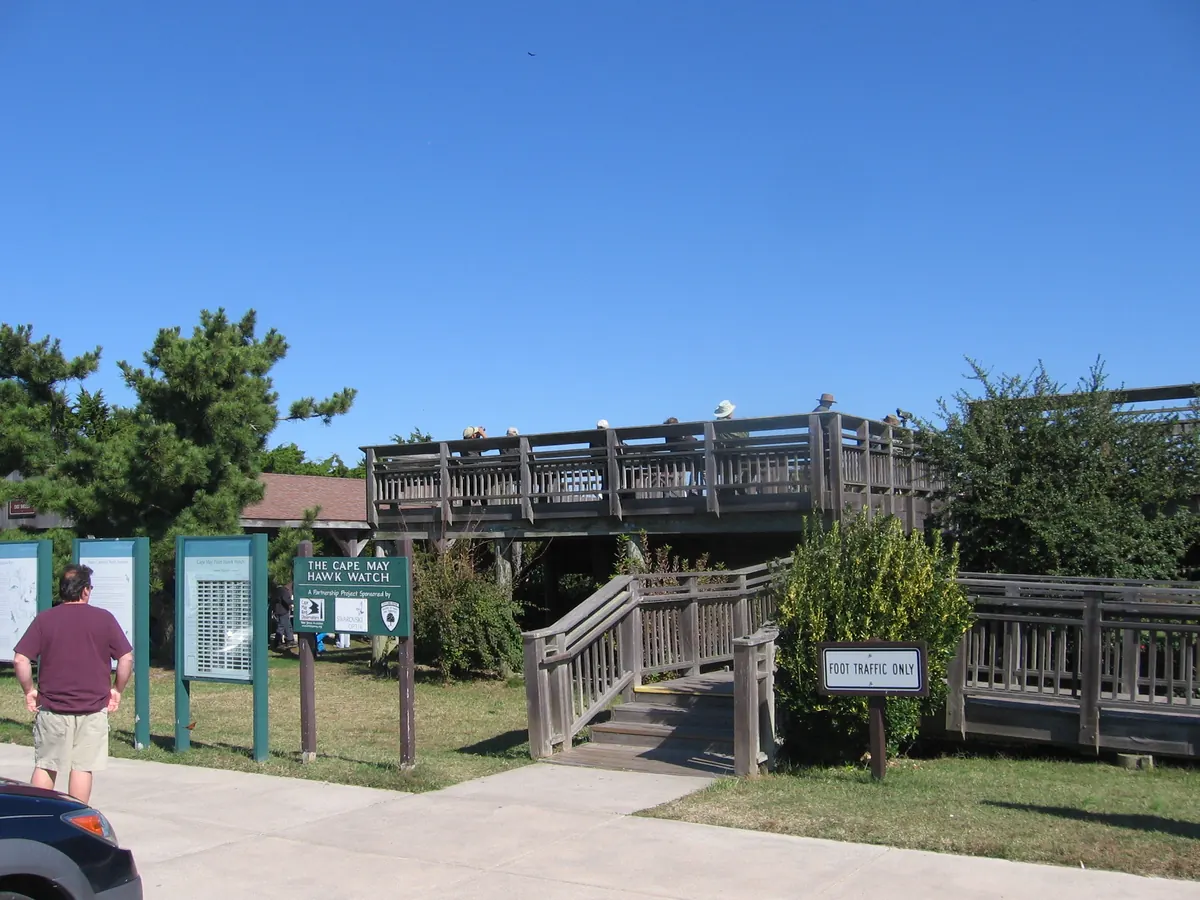
- Stand on the Cape May hawkwatch platform. October brings the most raptors and the widest variety of them to Cape May Point State Park, where hawks, falcons and monarchs bunch up before crossing Delaware Bay. The Cape May Bird Observatory turns 50 this year, and NJ Audubon’s Cape May Fall Festival runs October 15–18.
- Follow the color south. The state forestry service’s 2026 map has Sussex, Warren, Morris, Passaic, Bergen and Hunterdon peaking in early to mid-October, the central counties in mid-October, and the shore and southern counties in mid-to-late October. New maps come out every Friday.
- Watch the moon swallow Jupiter. Early on Tuesday, October 6, a slim waning moon slides over Jupiter. Across New Jersey the planet vanishes at about 4:22 a.m. and comes back out about 5:27, with the sky still fully dark. Binoculars are enough.
Journal pages to use this month in the Naturalist’s Field Journal: “birds I have seen” for the first sharp-shinned hawk and the first snow goose flock, the pollinator watch for monarchs on seaside goldenrod, “seeds, pods and cones” for pitch pine cones and cranberries, and “a tree through the seasons” for one red maple or tupelo from green to bare. Put a date on every page.
Regions used below: Skylands and the Kittatinny Ridge; Gateway and the Watchungs; Central Jersey and the Delaware Valley; Pine Barrens; Jersey Shore; Cape May and the Delaware Bayshore.
When is peak fall color in New Jersey?
The New Jersey Forest Service and State Parks put out their 2026 prediction map on September 22, the first day of fall. The ridge country goes first and the coastal plain last. Park staff noted in late September that low, wet spots in High Point State Park and Stokes State Forest had “already started to see a change.” Updated maps and field reports are due every Friday through the season, so check the latest before driving north.
| Region | Counties | Expected peak |
|---|---|---|
| Skylands, Highlands and the northeast | Sussex, Warren, Morris, Passaic, Bergen, Hunterdon | Early to mid-October; highest ground first |
| Central and Gateway | Essex, Hudson, Union, Middlesex, Somerset, Mercer, Burlington | Mid-October |
| Shore, Pine Barrens and the south | Monmouth, Ocean, Atlantic, Cape May, Cumberland, Salem, Gloucester, Camden | Mid-to-late October |
Where to look: High Point State Park reaches 1,803 feet, the highest ground in the state, and Stokes State Forest runs along the Kittatinny Ridge next door. Both look down on sugar maples, red maples and oaks that turn in waves over three weeks. The Pine Barrens color differently. Pitch pines stay green, so the show comes from the understory: blueberry and huckleberry go deep red, sassafras turns orange, and tupelo (black gum) along the cedar streams is among the earliest trees to go scarlet. The Field almanac gives satellite-based leaf-out and leaf-drop estimates for your address. Choose a single maple and take its picture weekly, framed the same way.
Where can you watch hawks and migrating birds in New Jersey in October?
New Jersey sits across one of the busiest flyways on the continent, and October is its busiest month. Birds heading south along the coast, and along the ridges inland, run out of land at the tip of Cape May. Many circle back up the peninsula instead of crossing open water. The Nature Conservancy explains that raptors “hesitate to cross the Delaware Bay,” and the delay piles them up over the point.
-
The Cape May hawkwatch
Staffed daily September 1 to November 30; the most raptors and the most species from late September into October · Hawkwatch platform, Cape May Point State Park
The Cape May Bird Observatory has counted from this platform every fall since 1976, and it turns 50 this year. Late September into mid-October brings the widest mix of raptors and the big peregrine falcon days. Sharp-shinned hawks, the site’s most numerous raptor, keep coming all month. The best flights follow a cold front, on the first day of northwest wind. On October 3 CMBO holds a free half-hour hawk ID session at the park. At dawn, songbirds drifted out over the bay overnight stream back over Higbee Beach in “morning flight.”
-
Montclair and Bernardsville
September 1 to November 30; red-tailed and red-shouldered hawks build late in October · Montclair Hawk Lookout on First Watchung Mountain; Scherman Hoffman Wildlife Sanctuary, Bernardsville
Montclair has been counted every fall since 1957, which HawkCount calls the second-oldest continuous hawk count in the country after Hawk Mountain. Its fall averages are about 2,560 sharp-shinned hawks, 712 red-tailed hawks, 82 bald eagles and 32 peregrines. Late October belongs to red-tails and red-shouldered hawks, with the odd golden eagle. NJ Audubon’s Scherman Hoffman sanctuary in Bernardsville runs a free hawkwatch from its observation deck on some fall days; the October calendar has it on the 1st and 2nd.
-
First snow geese at Brigantine
Snow geese arriving in October; the peak for snow geese and brant from mid-November into December · Edwin B. Forsythe National Wildlife Refuge, Wildlife Drive, Galloway Township
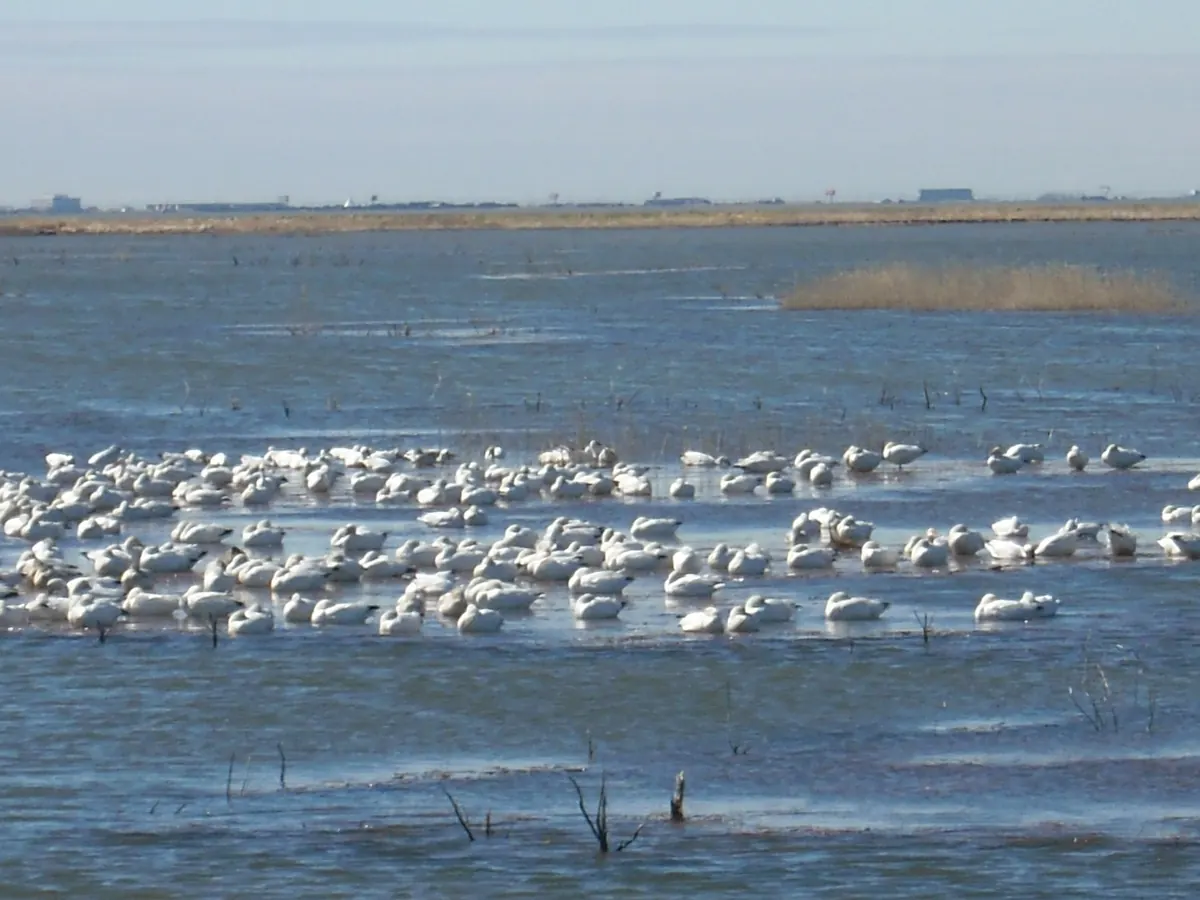
Forsythe protects more than 46,000 acres of salt marsh, bays and pinelands along the southern shore. The refuge’s season calendar lists October as the month when snow geese begin to arrive. In early November, more than 100,000 ducks and geese can pack the impoundments, and snow geese and Atlantic brant peak after mid-November. The eight-mile, one-way, unpaved Wildlife Drive is open daily from sunrise to sunset.
-
Sparrows, kinglets and the Great Swamp
All month · Great Swamp National Wildlife Refuge, Morris County; field edges and thickets statewide
Warblers thin out after the first week and sparrows take their place. Look for white-throated, song, swamp and white-crowned sparrows, with golden-crowned kinglets working the conifers. Great Swamp in Morris County is an easy place to find them. Its Wildlife Observation Center on Long Hill Road has about a mile and a half of boardwalks and blinds over the wet woods, and the ducks start building on the pools. The Friends group posts fall walks on its calendar.
Most NJ Audubon trips carry a small fee and need registration; the hawkwatch platforms are free. Write the wind direction beside each tally in your “birds I have seen” list, and in a few years you will know which winds bring the hawks.
When do monarchs pass through Cape May?
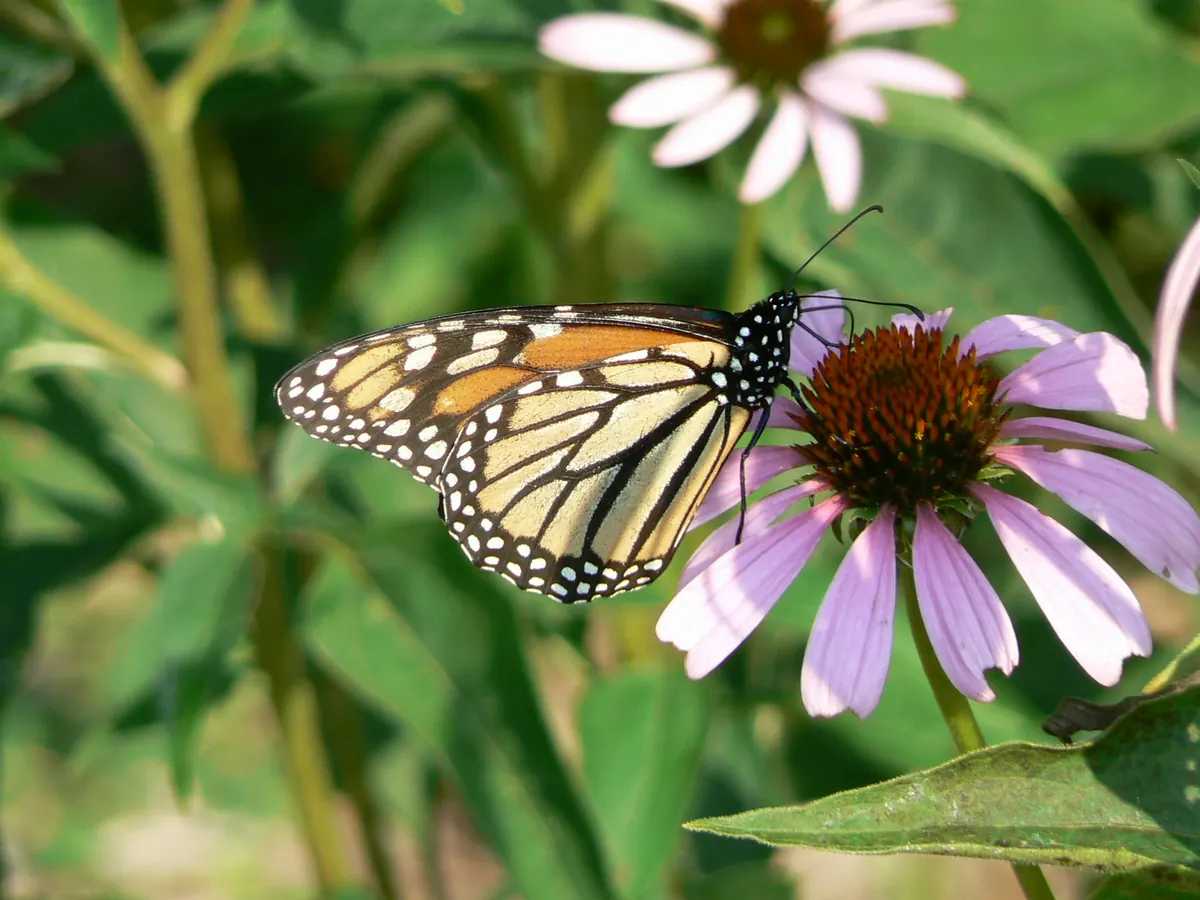
Monarchs follow the coastline south, and the dunes at Cape May Point are where they pile up before crossing the bay. NJ Audubon’s Monarch Monitoring Project has counted them every fall from September 1 to early November. In its early years, the counts peaked reliably in late September. Lately the peak has come later: in 2024 it fell in the second week of October, and about 1,500 monarchs passed through the point on October 7. That evening one roost in Cape May Point held 227 butterflies. 2025 was a poor year. Winds were unhelpful, the best count was more than 500 in half an hour on October 8, and warm October weather meant no large roosts formed. The project still tagged 1,746 monarchs, and one fitted with a tiny radio tag reached central Texas, about 1,300 miles away.
Your best chance at a roost is a cool evening after a day of northwest wind. Look on the lee side of the cedars and pines around the point as the light goes. The project holds free tagging demonstrations at the East Shelter in Cape May Point State Park (2:00 to 2:45 p.m. on October 2 and 3 are listed; more usually appear on the calendar into mid-October), and drop-in sessions at the Nature Center of Cape May. Inland, log the last monarch on your asters and report it to Journey North.
When is fall trout stocking, and when do striped bass run along the New Jersey shore?
-
Fall trout stocking
Tuesday, October 13 to Thursday, October 22 · Rivers the first week, lakes and ponds the second
NJ Fish & Wildlife plans to stock about 29,000 rainbow trout this fall, mostly two-year-old fish. About 1,000 are three-year-old breeders weighing 4 to 6 pounds. The major rivers are stocked the week of October 13, for example about 1,700 fish in the Paulins Kill and 1,280 in the North Branch of the Raritan on the 13th and nearly 3,000 in the Musconetcong on the 14th. Lakes such as Swartswood, Furnace and Echo follow from October 19 to 22. Stocked waters can be fished as soon as the trucks leave, and the daily limit under the revised program is two trout of at least 9 inches. Check the stocking schedule for your water.
-
Striped bass on the move
Building through October; the big fish mostly in November · Raritan Bay, the surf from Sandy Hook to Cape May, inlets and back bays
Striped bass spawn in the Hudson, the Delaware and the Chesapeake, and NOAA Fisheries notes that the adults move south along the coast in fall and winter. New Jersey’s beaches are on the way. As the ocean cools, baitfish pour out of the bays with bass and bluefish behind them. NOAA rates the coastwide stock as overfished and under a rebuilding plan, so rules are tight. Check NJ Fish & Wildlife’s current saltwater limits (a narrow slot of 28 to under 31 inches was in place this year) and use circle hooks with bait.
Put the water temperature beside every fish in the daily field log. Then when you hear “the run is on” at the tackle shop, you will know what the water was doing.
What is happening in the Pine Barrens, and what is blooming in October?
-
The cranberry harvest
Mostly in October · Burlington and Ocean county bogs; Whitesbog Village in Brendan Byrne State Forest
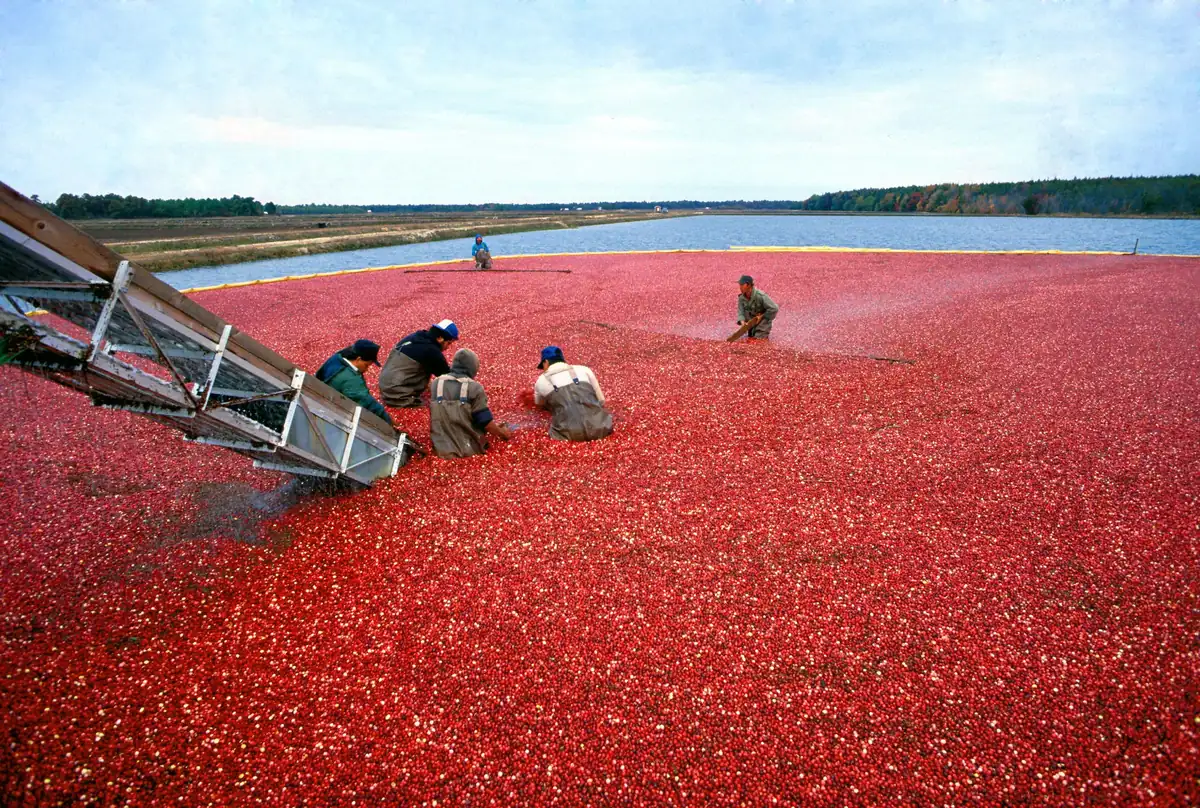
Most of New Jersey’s cranberry crop comes in during October. Growers flood the bogs, and a machine shakes the berries off the vines so they float to the top and can be corralled into a red raft. The Pinelands Alliance traces the commercial industry to the bogs near Pemberton in the early 1900s. Whitesbog was then the largest cranberry farm in the state, and it was there that Elizabeth White and USDA botanist Frederick Coville turned the wild highbush blueberry into a crop. Pinelands Adventures runs a few bog tours in October. The 2026 Chatsworth Cranberry Festival is Saturday and Sunday, October 17 and 18, from 9 a.m. to 4 p.m., rain or shine. Bring cash; phone service in Chatsworth is poor.
-
Pine barrens gentian
Late September into November · Moist, sunny, sandy openings in the Pine Barrens; roadsides and firebreaks
This is the rarest-looking flower most people will ever find by a sand road: an upright deep-blue trumpet about two inches long, bronze-green inside. North Carolina State’s plant guide puts its bloom from late September into December and its range from New Jersey south. In New Jersey it grows only in the Pine Barrens, in open, sunny spots. Photograph it and leave it.
-
Seaside goldenrod and the dune asters
Through October, until the first hard frost · Dunes and salt-marsh edges from Sandy Hook to Cape May
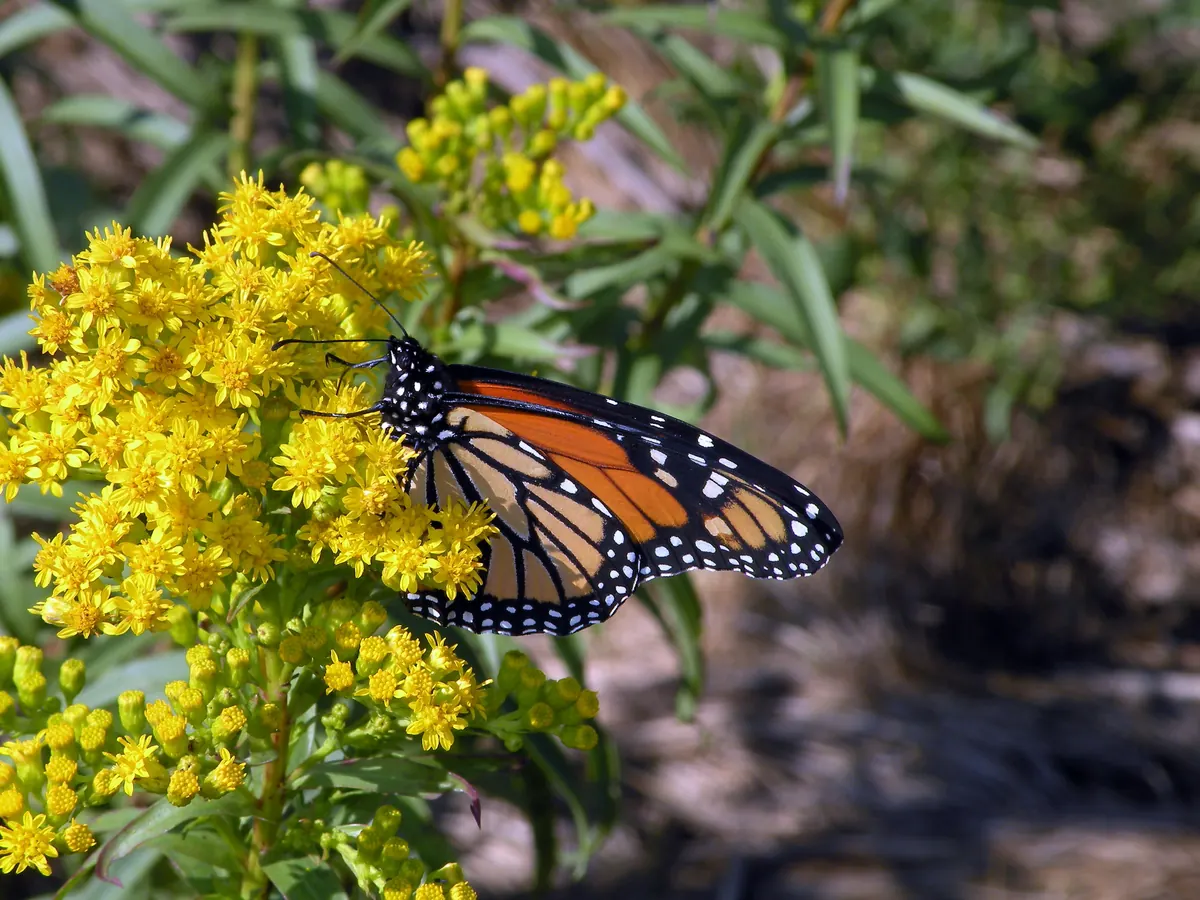
Seaside goldenrod is the big, thick-leaved goldenrod of the dunes, and in October it is the fuel stop for migrating monarchs on the coast. Inland, New England aster and the late goldenrods carry the bumblebee queens and the last butterflies. Ten minutes at one patch fills a pollinator watch page.
-
Witch hazel, the year’s last flower
October into December · Moist woods and ravines statewide
American witch hazel blooms after nearly everything else has quit. Its spidery yellow flowers have four ribbon-like petals and are often out while the leaves are still yellow on the branch. The same twigs hold last year’s woody capsules, which split and throw their shiny black seeds several yards.
When is the first frost and freeze in New Jersey?
In New Jersey, first-freeze dates run about six weeks apart from one corner of the state to another. The valleys of Sussex County freeze first. At the station three miles west-northwest of Sussex borough, the median first fall freeze is October 11, and one year in ten it has already come by September 30. The surprise is in the south. On clear nights cold air settles over the Pine Barrens’ dry sand, so Indian Mills in Burlington County has a median of October 15, earlier than the Highlands. The ocean holds off the freeze along the coast: Atlantic City International Airport, a few miles inland, has a median of October 29, while the Atlantic City station out on Absecon Island waits until November 21. Newark, surrounded by pavement and tidal water, gets its first freeze around November 10. Frost on windshields and lawns tends to show up one to two weeks ahead of the first 32 °F reading.
| Station | One year in ten | Median | Nine years in ten |
|---|---|---|---|
| Sussex 3 WNW (Skylands) | Sep 30 | Oct 11 | Oct 27 |
| Charlotteburg Reservoir (Highlands, Passaic County) | Oct 2 | Oct 17 | Nov 3 |
| New Brunswick 3 SE (Central Jersey) | Oct 11 | Oct 26 | Nov 8 |
| Newark International Airport | Oct 28 | Nov 10 | Nov 25 |
| Trenton Mercer County Airport (Delaware Valley) | Oct 15 | Nov 1 | Nov 13 |
| Indian Mills 2 W (Pine Barrens) | Oct 3 | Oct 15 | Oct 30 |
| Atlantic City International Airport (Pomona) | Oct 13 | Oct 29 | Nov 11 |
| Atlantic City (Absecon Island) | Nov 6 | Nov 21 | Dec 7 |
| Cape May 2 NW | Oct 26 | Nov 9 | Nov 26 |
These stations and dozens more, with spring dates too, are on the New Jersey frost dates page. Before the first clear, calm night in the 30s, pick the last tomatoes and bring in potted herbs. Note the first morning you find ice on the birdbath.
How much daylight does New Jersey lose in October?
A bit over an hour and a quarter. Newton and Newark lose 78 minutes between October 1 and October 31, and Cape May, the farthest south, loses 72. Newark’s sunrise slides from 6:53 to 7:26 a.m. over the month, and its sunset from 6:39 to 5:54 p.m. Standard time returns at 2 a.m. Sunday, November 1: brighter mornings for a few weeks, and dark by suppertime.
| City | Oct 1 | Oct 31 | Lost | Per day |
|---|---|---|---|---|
| Newton | 11 h 45 m | 10 h 27 m | 78 min | 2.6 min |
| Newark | 11 h 46 m | 10 h 28 m | 78 min | 2.6 min |
| Trenton | 11 h 46 m | 10 h 30 m | 76 min | 2.5 min |
| Toms River | 11 h 46 m | 10 h 31 m | 75 min | 2.5 min |
| Camden | 11 h 46 m | 10 h 31 m | 75 min | 2.5 min |
| Atlantic City | 11 h 46 m | 10 h 32 m | 74 min | 2.5 min |
| Cape May | 11 h 46 m | 10 h 34 m | 72 min | 2.4 min |
For your own address, with civil twilight and this week’s loss to the minute, open the Field almanac.
What is October weather like in New Jersey, and what could El Niño mean for the winter?
October is usually a pleasant month here, with cool nights and dry, bright days between the fronts. By NOAA’s 1991–2020 normals, October afternoons average about 66 °F at Newark, Trenton and New Brunswick and near 68 °F at Atlantic City International Airport. The average low ranges from 49 °F at Newark to 44 °F at New Brunswick. Rainfall is about 3.8 inches at Newark and Trenton and 4.1 at New Brunswick and Atlantic City, but a single nor’easter can drop most of that in two days. NWS Mount Holly issues forecasts for most counties, NWS New York at Upton for the northeast corner.
October snow is uncommon but not unheard of. On October 29, 2011, an early nor’easter left 5.2 inches at Newark and 3.2 at Trenton on trees still full of leaves, and branches and power lines came down across the north. The ocean has its own October history. Hurricane Sandy came ashore near Brigantine on the evening of October 29, 2012, and hurricane season officially runs to November 30. Keep an eye on the Weather now page and the Today’s sky cloud forecast when a storm is forecast off the coast.
Looking past October, El Niño matters. NOAA’s ENSO forecasters wrote on September 10 that a very strong event is all but certain (odds over 90 percent) for late fall and winter; the seasonal outlook for December to February arrives in mid-October. October’s weather itself owes little to the Pacific. For New Jersey, NOAA’s Northeast regional summary says El Niño usually drives storms up the coast and tends to make the Eastern Seaboard wetter than normal. The station records bear that out. We added up NOAA’s Newark data: in four of five strong El Niño winters since 1982, December through February was wetter than the 1991–2020 average of 10.6 inches, and three of them (1997–98, 2015–16 and 2023–24) averaged about 40 °F against a normal of 35.5. Snow is the gamble. Newark had just 6.9 inches in 1997–98 and 12.2 in 2023–24, against an average of 32.4, but 47.9 in 2009–10, when Atlantic City piled up 58.1 inches, more than three times its norm. The Mount Holly forecast office has long made the same point: winters under El Niños of similar strength have turned out very differently, depending on what the Atlantic does. So expect a mild, wet season with plenty of coastal storms, and don’t bet on the snow either way.
What can you see in the New Jersey night sky in October?
-
Jupiter goes behind the moon
Tuesday, October 6, about 4:22 to 5:27 a.m. EDT · East-southeast, the moon about 20 degrees up at the start and 32 at the end
A crescent moon, 18 percent lit, rises around 2:25 a.m. with Jupiter right beside it. The International Occultation Timing Association’s predictions for New Jersey have the planet disappearing behind the moon’s bright limb at 4:23 a.m. in Newark, 4:22:41 in Trenton and 4:22 in Atlantic City. It comes back out from the dark limb at 5:27 in Newark and a few seconds under 5:27 in Trenton and Atlantic City. Civil twilight does not start until about 6:31, so both ends happen in a black sky. Jupiter takes a few seconds to disappear, because it is a disk rather than a point. Its moons go behind the moon one at a time over the minutes around it. A small telescope shows it best. You need open sky low in the east-southeast: a beach, a ballfield or the top of a parking deck.
-
Saturn at its best
Opposition October 4; the moon alongside October 23–24 · Rising in the east at dusk, south at midnight
Saturn reaches opposition on October 4: up at dusk, highest near midnight, down at daybreak, a steady pale-gold point in a faint stretch of stars. Any telescope will show the rings. On October 23–24 the waxing gibbous moon drifts by Saturn.
-
The Hunter’s Moon
Sunday, October 25 and Monday, October 26 at moonrise · Eastern horizon; the ocean beaches are ideal
Full phase falls at 12:12 a.m. Monday, October 26, so Sunday and Monday evenings both show a round moon. In Newark it rises at 5:27 p.m. on the 25th, over half an hour before the 6:02 sunset, and at 5:59 on the 26th, a minute before the sun goes down. At Atlantic City the times are 5:30 and 6:04. From the boardwalk, watch it come up orange out of the sea. Some headlines will call it a supermoon, but this one is nowhere near the moon’s closest point to Earth. The moon phases page has the full calendar.
-
Orionids and Draconids
Draconids the evening of October 8; Orionids October 2 to November 7, best before dawn on October 21 and 22 · Somewhere dark, such as the Pine Barrens, Stokes or High Point
The Draconids peak the evening of Thursday, October 8, with no moon to spoil them. The Orionids, grit shed by Halley’s Comet, are active October 2 through November 7 and peak broadly around the 21st and 22nd. The waxing gibbous moon sets at about 3:15 a.m. on the 22nd across the state, and civil twilight begins about 6:48. That leaves three and a half dark hours; Wharton State Forest and the Kittatinny Ridge have the darkest skies.
-
Venus leaves, Jupiter and Mars take the mornings
Venus only the first few evenings; Mars at the Beehive October 11 · Low west after sunset; east before dawn
Catch Venus low in the west in the first days of the month before it sinks into twilight and reaches inferior conjunction on October 23. Jupiter rules the dawn sky in the east. Before sunrise on October 11, binoculars show Mars inside the Beehive cluster in Cancer.
| Phase | Date | Time |
|---|---|---|
| Last quarter | Saturday, Oct 3 | 9:25 a.m. |
| New moon | Saturday, Oct 10 | 11:50 a.m. |
| First quarter | Sunday, Oct 18 | 12:12 p.m. |
| Full moon, the Hunter’s Moon | Monday, Oct 26 | 12:12 a.m. (looks full the evenings of Oct 25 and 26) |
| Last quarter | Sunday, Nov 1 | 3:28 p.m. EST |
What are bears, deer and insects doing in New Jersey in October?
-
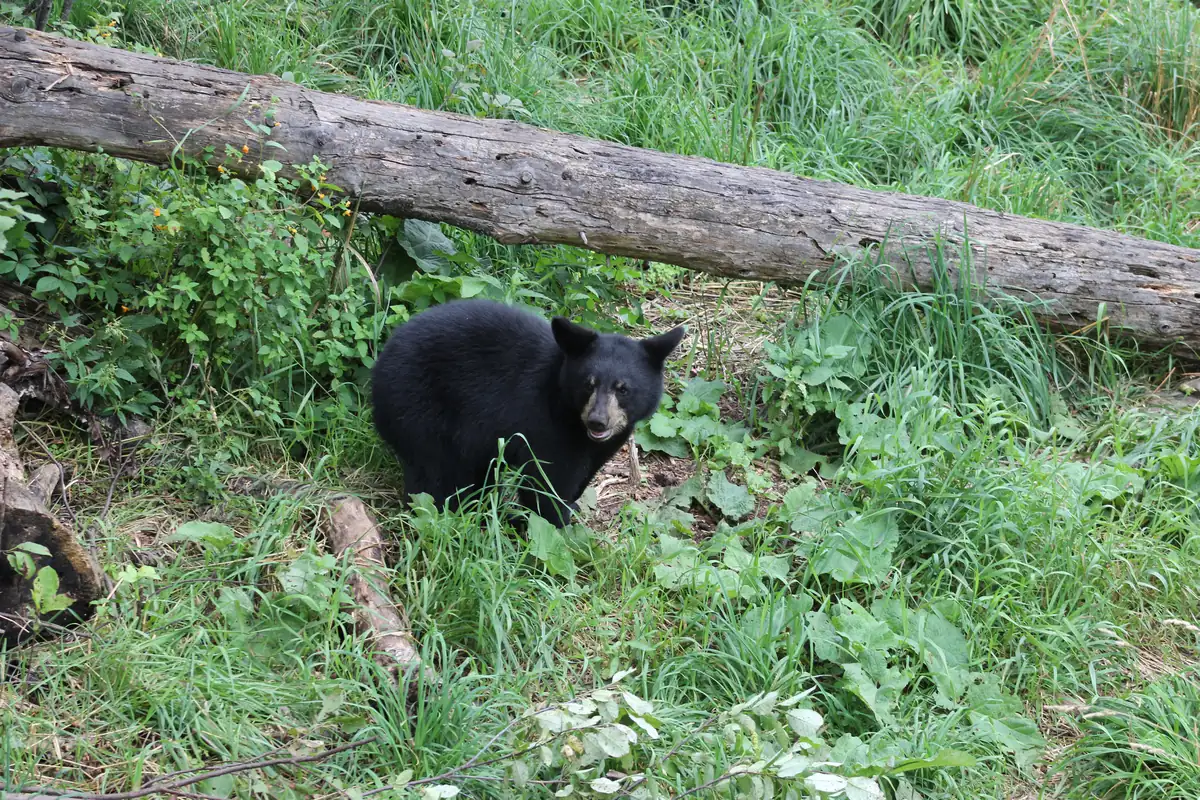
Black bears fattening up
Through November, when most bears den · Mostly Sussex, Warren, Morris and northern Passaic counties; reported in all 21 counties
In fall, black bears go into hyperphagia and may eat about 20,000 calories a day before they den, which starts in November. NJDEP says bears are opportunistic and will eat whatever they can find. Feeding bears is illegal and carries fines of up to $1,000. Keep trash inside until the morning of pickup and take feeders down at night. If you meet a bear, stay calm, don’t look it in the eye, and back away slowly while leaving it room to leave. Report aggressive or damaging bears to NJ Fish & Wildlife at 1-877-927-6337. A track in the mud of a trail edge belongs on the “tracks to know” page.
-
Deer in the pre-rut
Rubs and scrapes from mid-October; the rut peaks in November · Everywhere, including suburbs, and on every road at dusk
Look for bark peeled from saplings at knee height and bare, pawed patches under low limbs: the bucks are marking territory ahead of the rut. New Jersey is dense with deer and cars alike. Slow down at dusk on wooded roads, and if one deer crosses, expect another behind it. Log sightings on the dusk and dawn watch plate.
-
Spotted lanternfly egg masses
Egg-laying from late September into November · Tree trunks, stones, fence posts, patio furniture, vehicles
The adults are feeding hard and laying eggs this month. The egg masses look like smears of gray mud, about an inch or two long, and the New Jersey Department of Agriculture notes that they are laid on “rocks, trees, fence posts, and outdoor furniture.” Scrape them into a bag or a jar of rubbing alcohol or hand sanitizer. You should feel the eggs pop. The adults die with a hard freeze, but the eggs hatch in spring.
-
Ticks, still
Adult blacklegged ticks active October through May · Leaf litter, trail edges, dune grass, the dog
Adult deer ticks are active on any day above freezing from October into spring, and fall is their busiest time. Wear repellent, tuck in your pant legs, and do a full tick check on children and pets once you are home.
What are the best nature outings for New Jersey families in October?
- October 2 and 3: monarch tagging at Cape May Point. Free demonstrations at the East Shelter of the state park, 2:00 to 2:45 p.m. On the 3rd, add the free hawk ID session and the Nature Conservancy’s Little Sit at the South Cape May Meadows (8 a.m. to noon, no registration).
- October 6, before school: the moon and Jupiter. Set the alarm for 4:15 a.m. and step out to watch Jupiter vanish at about 4:22.
- October 8–11: the dark weekend and the Big Sit. Draconids on Thursday evening, new moon on Saturday, and the eBird October Big Day on Saturday the 10th. For the Big Sit! (October 10–11), pick a 17-foot circle in your yard or park and count every bird you detect from it.
- October 13–22: a first trout. Fall stocking puts rainbows in the rivers the first week and in lakes and ponds the second.
- October 15–18: the Cape May Fall Festival. NJ Audubon’s festival at Cape May Convention Hall marks the Cape May Bird Observatory’s 50th year, with field trips, programs and a vendor hall; many trips need registration.
- October 17–18: the Chatsworth Cranberry Festival in the Pine Barrens, 9 a.m. to 4 p.m. Pair it with a walk around the bogs at Whitesbog Village.
- Any weekend: the Skylands color. Drive or hike High Point and Stokes while the northern hills peak, and follow the state’s Friday foliage map to know when to go.
- Citizen science. Report monarchs to Journey North, submit your hawk or feeder lists to eBird, and sign up for Project FeederWatch before its count begins November 1. If you live in bear country, wait to hang feeders until the bears have denned.
Families can print a single-sheet October checklist from the Field almanac. You can browse other states on the nature hub; the plates mentioned here are in the Naturalist’s Field Journal.
Safety notes for October in New Jersey
- Hunting seasons. Fall bow season for deer runs through October 30 (in most of the state it opened September 12; in the Low regulation set it opens October 3). Permit bow season follows from October 31. The first segment of the black bear season is October 12–17, archery only at first, with muzzleloaders allowed on the last three days (October 15–17). Squirrel and rabbit opened September 26. Duck season runs October 10–17 in the North Zone and October 17–24 in the South Zone, with youth waterfowl days on October 3 (North) and October 10 (South); the Coastal Zone waits until November 21. Woodcock opens October 24 in the North Zone. The six-day firearm deer season is December 7–12. Dates vary by zone, so check the 2026–27 Hunting and Trapping Digest for where you are.
- Hunter orange. Anyone hunting with a firearm for deer, bear, rabbit, hare, squirrel, fox, coyote, rails or game birds must wear either a solid daylight-fluorescent orange cap or an outer garment with at least 200 square inches of fluorescent orange visible from all sides. Camo-orange hats don’t count. The rule does not cover waterfowl, crow, turkey or woodchuck hunting. Bowhunters need orange during the six-day firearm season, and firearm bear hunters need it in October. Hikers and dog walkers on Wildlife Management Areas and in the northern state forests should wear bright orange this month too; a blaze collar or vest helps a dog too.
- Sundays. New Jersey allows no firearm hunting on Sundays. Sunday bowhunting for deer is allowed only on Wildlife Management Areas and private land, and state parks and forests have no Sunday hunting at all, which makes Sunday the quietest day for a woods walk in hunting season.
- Bears. Leave no food in parked cars at trailheads, and leash dogs in the Skylands.
- The ocean after the lifeguards leave. The ocean is cooling fast, rip currents run on calm-looking days, and nor’easters build heavy surf and flood the back bays at high tide. Swim, surf or kayak only with company and a life jacket, and stay off jetties in rough water.
- Ticks and mushrooms. Leaf litter still carries adult ticks, and no wild mushroom is safe to eat on a guess.
Sources
- NJ Audubon: Cape May Fall Festival 2026 (October 15–18; Cape May Bird Observatory’s 50th anniversary)
- Cape May Vibe: NJ Audubon’s 2026 Cape May Fall Festival is October 15th to 18th
- NJ Audubon: events calendar, October 2026 (hawk ID, Little Sit, Bernardsville hawkwatch, Higbee morning flight)
- NJ Audubon: monarch events calendar (tagging demos, October 2–3, 2026)
- NJ Audubon: Cape May Monarch Monitoring Project annual report 2024
- NJ Audubon: Cape May Monarch Monitoring Project annual report 2025
- NJ Audubon: Cape May Hawkwatch reports
- The Nature Conservancy: fall bird migration in Cape May
- HawkCount: Montclair Hawk Lookout site profile and averages
- U.S. Fish and Wildlife Service: Edwin B. Forsythe National Wildlife Refuge
- U.S. Fish and Wildlife Service: Forsythe refuge brochure (seasonal wildlife calendar; 46,000 acres)
- U.S. Fish and Wildlife Service: Great Swamp National Wildlife Refuge
- Friends of Great Swamp: events
- News 12 New Jersey: the 2026 fall foliage forecast (NJ State Parks and Forest Service map, September 24, 2026)
- NJDEP on X: annual fall foliage prediction map, September 22, 2026
- The Fisherman: NJ fall 2026 trout stocking report (dates, waters, numbers)
- NJ Fish & Wildlife: fall trout stocking schedule
- NOAA Fisheries: Atlantic striped bass (migration, spawning rivers, stock status)
- Pinelands Alliance: cranberries in the Pinelands (wet harvest, Whitesbog history)
- Chatsworth Cranberry Festival, October 17–18, 2026
- N.C. Extension plant toolbox: pine barrens gentian (Gentiana autumnalis)
- N.C. Extension plant toolbox: common witch hazel
- Lady Bird Johnson Wildflower Center: New England aster
- Journey North: monarch sightings and roost reports
- Amphibian Publishing: New Jersey frost dates (NOAA 1991–2020 freeze normals by station)
- NOAA NCEI: U.S. climate normals, 1991–2020
- NOAA Regional Climate Centers, Applied Climate Information System (station normals, October snow, El Niño winter totals for Newark, Trenton and Atlantic City)
- Climate Prediction Center: ENSO diagnostic discussion, September 10, 2026
- NOAA and Northeast Regional Climate Center: El Niño impacts and outlook, Northeast region (PDF)
- NWS Philadelphia/Mount Holly: winter analogs and past El Niño winters at Philadelphia (PDF)
- Climate Prediction Center: El Niño impacts on New Jersey
- National Weather Service, Mount Holly (Philadelphia) forecast office
- National Weather Service, New York (Upton) forecast office
- National Hurricane Center: tropical cyclone report, Hurricane Sandy (PDF)
- U.S. Naval Observatory: sunrise, sunset, moonrise and moonset (data API; Newark, October 25, 2026)
- U.S. Naval Observatory: phases of the moon
- International Occultation Timing Association: lunar occultation of Jupiter, October 6, 2026 (city timings)
- EarthSky: meteor shower guide; Saturn at opposition; visible planets
- WRNJ: NJDEP urges residents to secure trash as black bear activity increases in fall
- NJ Fish & Wildlife: black bears in New Jersey
- New Jersey Department of Agriculture: spotted lanternfly homeowner resources
- University of Rhode Island TickEncounter: blacklegged tick (adults active October–May)
- New Jersey Hunting & Trapping Digest 2026–27: deer hunting seasons
- New Jersey Hunting & Trapping Digest 2026–27: bear hunting regulations (season segments, hunter orange)
- New Jersey Hunting & Trapping Digest 2026–27: general hunting regulations (hunter orange, Sunday hunting)
- New Jersey Hunting & Trapping Digest 2026–27: deer hunting regulations (orange for bowhunters and ground blinds)
- New Jersey Hunting & Trapping Digest 2026–27: small game seasons
- New Jersey Hunting & Trapping Digest 2026–27: migratory bird seasons by zone
- The Big Sit! 2026 (October 10–11)
- BirdsCaribbean: October Big Day 2026 (Saturday, October 10)
- Project FeederWatch: how to participate
- Photos via Wikimedia Commons; licenses and photographers are credited under each picture
