What to look for in nature in New Jersey this May
May is the month New Jersey's wildlife stops passing through and starts nesting. On the Delaware Bay shore, horseshoe crabs spawn while red knots refuel for the flight to the Arctic. At Cape May Point the Springwatch count runs to the last day of the month and a single wind shift can turn a quiet morning into a big one. Inland, Great Swamp and the Delaware Water Gap fill with warblers in the first two weeks, while piping plovers, least terns and diamondback terrapins need room on the coast. The weather ranges from frosty mornings in the Skylands to a 98-degree afternoon at Newark in a past May. The sky has the Eta Aquariids in the first week, a Flower Moon and seasonal Blue Moon on May 20, and Mercury at its best on the 27th and 28th.
Other months in New Jersey: October, November, December, January, February, March, April.
Start here
- Watch a wind shift at Cape May Point. Stand at the Springwatch platform near sunrise on a morning after a north or west wind and note which species come in off the dunes. Compare your list with the table in this guide.
- Learn the beach rules before you go. Look up the fenced and posted areas on your stretch of shore, keep dogs home, and watch shorebirds from far outside the signs. Log what you see.
- Step outside before dawn for the Eta Aquariids. Go out on the mornings of May 5, 6 or 7 with a reclining chair and a warm layer, and count meteors for 20 minutes.
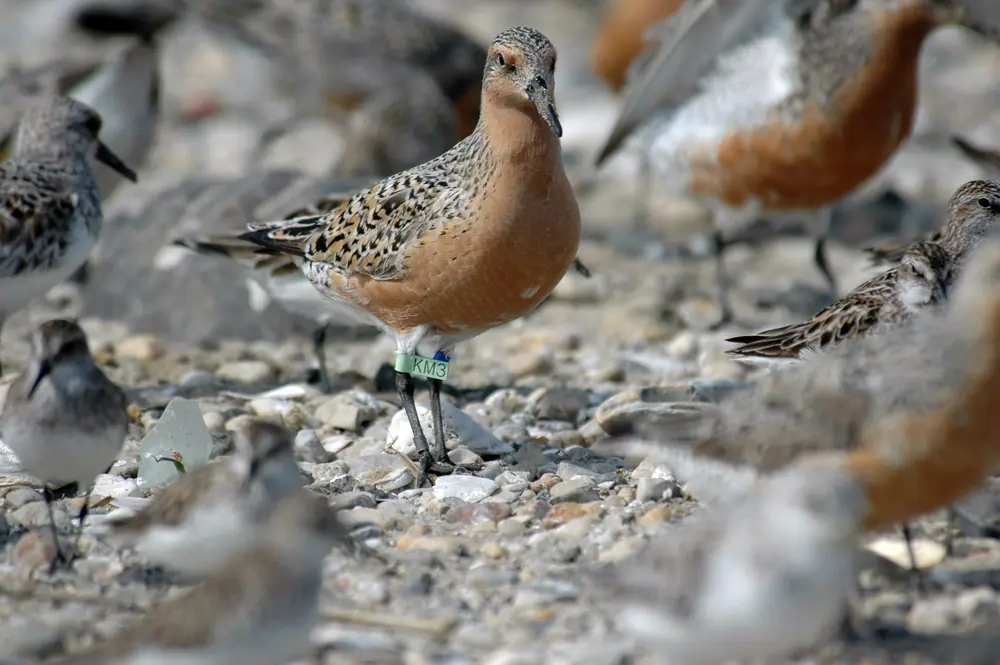
For the Naturalist's Field Journal in May: put your first hummingbird, warbler and indigo bunting on "birds I have seen," log meteors and the Flower Moon on "dusk and dawn watch," map the songs you hear on "a map of sounds," record a nest from a distance on "nest observed," and use "mammal watch" for deer and bears. Revisit one pond or hedgerow weekly for "the same place twice."
Regions used below: Skylands and the Kittatinny Ridge; Gateway and the Watchungs; Central Jersey and the Delaware Valley; Pine Barrens; Jersey Shore; Cape May and the Delaware Bayshore.
What happens on the Delaware Bay beaches in May, and why does it matter to red knots?
Every May a few miles of sand along the bay shore of Cape May and Cumberland counties turn into one of the best-studied wildlife stops in North America. Horseshoe crabs come ashore to spawn, shorebirds that have flown thousands of miles drop in to eat the eggs, and researchers count them all. The Delaware side of the bay shares the same crabs and birds, and the notes below say which source is describing which shore.
-
Horseshoe crabs spawn every May
Evenings in May and early June, with the best watching around the new and full moons · Bay beaches in Cape May and Cumberland counties
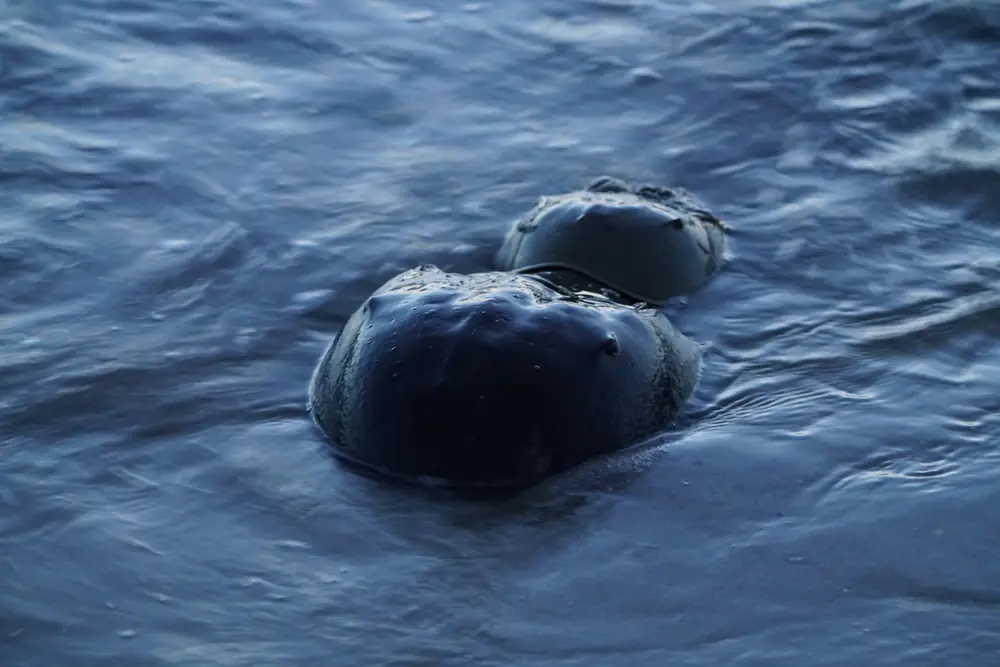
Delaware Audubon calls Delaware Bay the largest horseshoe crab spawning area in the world and says the crabs come ashore every May, with the best viewing in the evening at high tide near the month's new and full moons. In 2027 those moons fall on May 6 and May 20 (see the moon table below). Treat that as a rule of thumb, not a schedule: the Conserve Wildlife Foundation of New Jersey reports that unusually cold bay water in the spring of 2020 pushed the spawn back to early June, and the following year's spawn arrived on time with plenty of eggs.
-
A stopover that decides the summer
Mid to late May, for about two weeks per bird · The bay shore, with the heaviest feeding at the water's edge
The U.S. Fish and Wildlife Service describes Delaware Bay as the principal spring staging area for an estimated 50 to 80 percent of the rufa red knot population, the final Atlantic coast stop before the Arctic. Some of these knots fly more than 9,300 miles north each spring. The agency says the eggs are so abundant and easy to digest that a bird can nearly double its weight in about two weeks. Delaware Audubon adds that knots arrive at very low weights, lower than at any other stopover. The National Audubon field guide ties the species' decline in part to overharvest of horseshoe crabs along the central Atlantic coast, which cut the supply of eggs.
-
Two very different springs in the count
Counts made in May, reported afterward · Delaware Bay, New Jersey and Delaware shores
Dr. Larry Niles of the Conserve Wildlife Foundation reported about 34,500 red knots in the bay in 2018, the highest count in at least 15 years by his account, noting that part of the rise came from birds staying longer rather than a larger population. In 2021 the foundation's biologists counted 6,880, the lowest since counts began in 1982, compared with almost 100,000 passing through in the early 1980s. The foundation traced that drop mostly to the 2020 season: knots reached the bay in May, found few eggs because of the late spawn, and moved on underweight. The survey method catches only part of the birds present, so these are yearly snapshots, not exact totals.
-
Beaches that are closed on purpose
May, with stewards on site · Nine restricted beaches in Cape May and Cumberland counties
The foundation says nine beaches in the two counties have restricted access during May so shorebirds can feed undisturbed. Stewards work them in all weather and in biting-insect season, explaining to visitors why the fences and signs matter. A flushed flock burns energy it cannot spare. If you want to watch, stay outside the posted areas, keep a long distance, and use binoculars. The Cape May Bird Observatory distributes bayshore birding maps, and its Northwood Center in Cape May Point is the place to ask where public viewing is open that week.
Nothing here guarantees a crowd of birds on a given evening. Water temperature, wind and the tide decide the night.
Which birds pass Cape May Point in May, and what makes a big day?
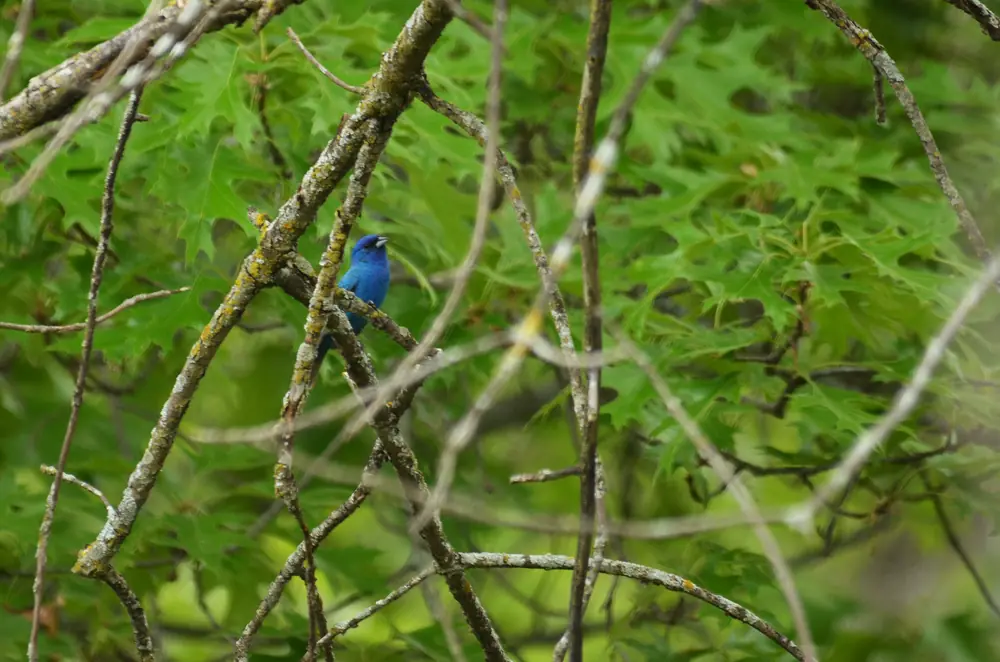
In May the movement along the Cape May peninsula changes character. March and April bring ducks, gannets and early swallows. May brings northbound warblers, tanagers and buntings, plus a trickle of southern wanderers that overshoot their range. Observers for New Jersey Audubon's Cape May Bird Observatory tally every bird from a dune platform at the foot of Coral Avenue, daily from March 1 through May 31, starting at sunrise and watching for three hours or longer, up to six on busy mornings. The project's 2014 to 2018 total was 185,240 birds of 188 species over the whole three-month season.
-
Wind runs the show
Throughout May · Cape May Point and Higbee Beach
The 2022 observers wrote that persistent easterly winds produced poor landbird movement through the first half of the month, and that a shift to the north on May 5 immediately brought more songbirds. The strongest landbird days they describe came on a northerly shift, on the calm, sunny May 16, and on May 23, when a cold front brought northwest winds. The authors single out northeast winds, like those of May 24 to 26 that year, as the ones they do not favor.
-
Seabirds when the weather turns bad
A storm or fog bank, any day · The beach and the point's ocean side
The same easterlies that hurt songbird counts push seabirds close to shore. In the 2022 summaries a strong coastal storm on May 7 and rain on May 8 produced Caspian terns, a Manx shearwater and a Wilson's storm-petrel, and fog on May 10 brought a spring-record 13 roseate terns. Late in the month the count logged 28 sooty shearwaters on May 25 and 14 Wilson's storm-petrels on May 26.
| Date | What the count recorded |
|---|---|
| May 5 | A northerly wind shift brought more landbirds, including Cape May warbler and both orioles |
| May 7 | A strong coastal storm: 8 Caspian terns, 12 American pipits and a common nighthawk from the bay |
| May 8 | Northeast wind and rain stopped most landbird flight; seabirds included a Manx shearwater and a Wilson's storm-petrel |
| May 10 | Fog and a spring-record 13 roseate terns |
| May 12 | The first Ruff ever logged by the count |
| May 16 | Calm and sunny: about 80 species, nearly 50 indigo buntings and 2 summer tanagers |
| May 17 and 19 | 593 cedar waxwings on the 17th, over 400 on the 19th, and the season's first 3 Mississippi kites |
| May 23 | 22 Mississippi kites, 10 broad-winged hawks and 116 eastern kingbirds after a cold front |
| May 31 | A gray kingbird (the ninth Cape May record) and a magnificent frigatebird on the final day |
Check the count's own page for daily totals, and arrive near sunrise. Past years' blog summaries show how far one spring can differ from another.
Where can I find migrating warblers inland, and when do hummingbirds arrive?
You do not need the coast for May migration. Forested refuges and river corridors hold their own waves of songbirds, and the opening two weeks are the busiest in the north. The New Jersey Conservation Foundation notes that the south of the state is generally a week or two earlier than the north, so a wave can reach Cape May days before it arrives in the Skylands.
-
Great Swamp National Wildlife Refuge, Morris County
The first two weeks of May · The Wildlife Observation Center and the boardwalks
The Friends of Great Swamp describe early May as the peak of spring songbird migration, with woods full of color and sound: thrushes calling, vireos, bright migrating warblers, and ruby-throated hummingbirds appearing. The refuge reports more than 244 bird species. Roughly a mile and a half of boardwalk and short trail, with blinds, starts at the Wildlife Observation Center off Long Hill Road, and 8.5 miles of wilderness trail are for walkers only, so waterproof boots help. The visitor center has posted Tuesday and Thursday through Sunday hours, but confirm before a long drive.
-
Flowers at the swamp's edge
First half of May · Wet meadows and shaded borders
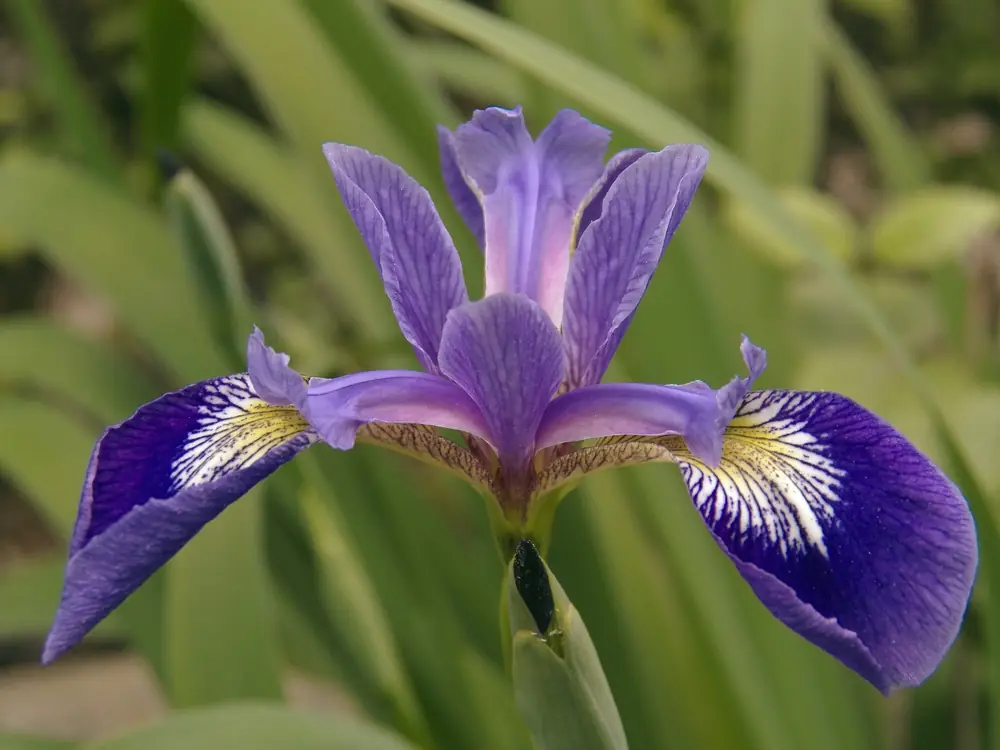
The same Friends of Great Swamp page says the spring ephemerals are giving way to summer wildflowers, with golden ragwort, pinxter azalea, blue flag iris and floating yellow spatterdock expected in bloom. Photograph without picking, and stay on the marked trail, because wet ground tears up quickly.
-
Delaware Water Gap National Recreation Area
May, with the most warblers in the first half of the month · River corridor and ridge forests in Sussex and Warren counties
The National Park Service says over 30 warbler species have been recorded in spring migration along the river valley, including cerulean, blackburnian and black-throated green, and that the area has more than 260 bird species in all. Other nesting birds on its list include Louisiana waterthrush, scarlet tanager and wild turkey. Bald eagles now nest here; the first successful nest fledged two young in 2002. The river itself runs about 40 miles through the park, and the agency's advice is to wear a fitted lifejacket and have a plan.
-
Ruby-throated hummingbirds
Arriving in the first half of May in the north · Gardens, feeders and swamp edges
The Great Swamp page lists hummingbirds among early-May arrivals. Journey North keeps an ongoing map of the species' progress north and takes sightings from anyone through its report page, so a first-of-year log entry is a real contribution. Write down the date and place you see your first one, then compare with a neighbor's.
Check the refuge's page for current hours and any trail closures. The New Jersey Conservation Foundation's description of neotropical migrants is a helpful primer for anyone starting to learn the songs.
Where do beach birds and terrapins nest, and how do I give them room?
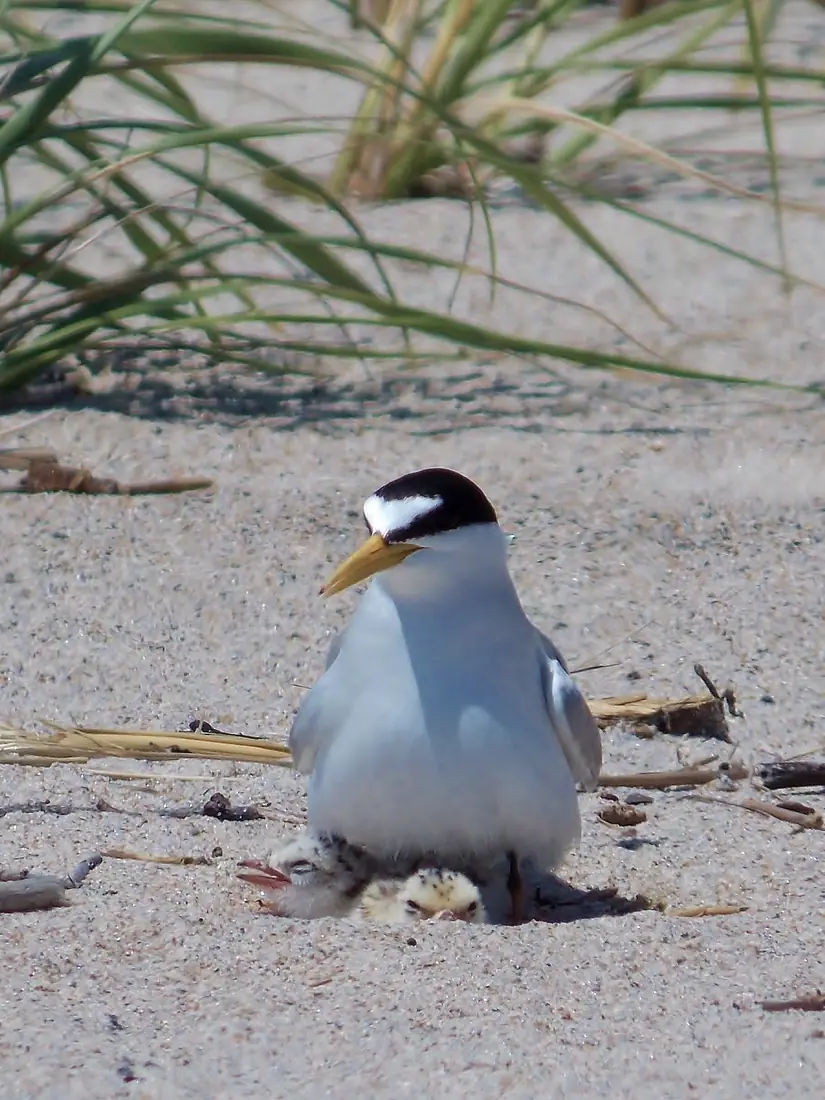
The ocean beaches and back bays carry the second big May story. Piping plovers, least terns and black skimmers are all on the state's endangered list, and diamondback terrapins begin heading for sandy ground to lay eggs. Both are easy to harm without noticing.
-
Three endangered beach nesters
Nesting runs from spring into summer · Barrier islands and open beaches along the Atlantic shore
The state's brochure says piping plovers, least terns and black skimmers nest on the open sand and sometimes in the dunes, and that the plover is also federally threatened. Biologists fence nesting areas and sign them, sometimes caging individual plover nests to keep predators off. The brochure warns that camouflaged eggs and chicks are easy to step on, that parents leaving a nest expose eggs to heat and predators, and that chicks can die within minutes on a hot day. It also says dogs are not allowed on most beaches during nesting season, cats should stay indoors, and food scraps should not be left on the sand because they attract gulls, crows and foxes.
-
A refuge beach that stays closed
April 1 through August 31 · Holgate unit, Edwin B. Forsythe National Wildlife Refuge
The refuge keeps its Holgate unit shut to visitors from the first of April until the end of August so that beach birds can nest in peace. Elsewhere on the refuge, the eight-mile Wildlife Drive, with two observation towers and a salt marsh boardwalk, is open daily from sunrise to sunset for an entry fee. The refuge says sea lavender blooms in its high marsh, though it gives no month.
-
Diamondback terrapins on the road
Peak nesting, with the foundation giving no exact dates · Great Bay Boulevard in Little Egg Harbor, and coastal roads in southern Ocean and Atlantic counties
The Conserve Wildlife Foundation's terrapin project says about 50 terrapins were killed or injured each year on Great Bay Boulevard, a five-mile road through a wildlife management area, before the project began in 2010, and that the number has reportedly been cut in half. Volunteers patrol during peak nesting. The Wetlands Institute in Stone Harbor reported on July 15, 2011 as that year's nesting season ended, counting 1,065 rescued eggs, 482 roadkills and over 275 terrapins helped across roads, so the season runs into early summer. The foundation's page names no start date, so ask either organization when their first crossings appear.
-
What to do if you meet a terrapin
Any time on a coastal road · Roads that cross saltmarsh
The foundation's advice: slow down near marsh roads, pull over safely with hazard lights on, and move the turtle to the soft shoulder facing the direction it was headed. Do not carry it far, since terrapins have small home ranges. Log sightings on the project's iNaturalist page. The species is protected by state law, and suspected collecting goes to the 24-hour hotline, 877-WARN-DEP. Crabbers should use bycatch reduction devices on their traps.
Beach rules change by town and by year, so read the posted signs on arrival.
What nests in New Jersey's fields in May, and what about fawns, bears and bats?
May is the month when young animals appear everywhere, and the right response is almost always to stay back. This section covers grassland nesters, bats, deer and bears.
-
Bobolinks and grasshopper sparrows
Nesting from May on · Hayfields and grasslands, including Joint Base McGuire-Dix-Lakehurst
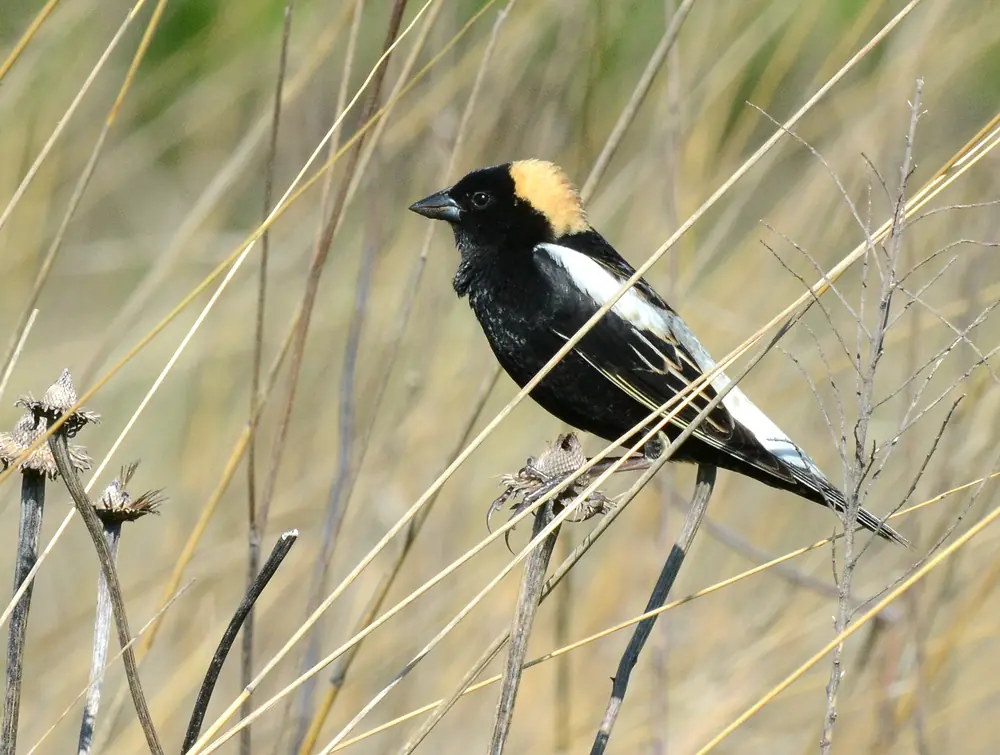
The Conserve Wildlife Foundation lists the bobolink and grasshopper sparrow as state-threatened and says the joint base hosts the state's second-largest known breeding colony of grasshopper sparrows. About a third of the state's threatened and endangered birds depend on grassland. The foundation says mowing, burning and grazing should happen before or after nesting, but earlier and more frequent hay harvests now often fall during the critical weeks. If you farm or manage a hayfield, ask the foundation about timing.
-
Summer Bat Count window opens
Two counts between May 15 and June 21 · Attics, barns, churches and bat houses with a known roost
New Jersey has nine bat species, six year-round residents and three migratory, and five are state endangered. The foundation's volunteers count bats leaving summer roosts at dusk, with two surveys between May 15 and June 21 and two more between July 6 and July 31, skipping nights with rain, wind over about 15 mph or temperatures below 55 degrees. White-nose syndrome, first confirmed in the state in January 2009, has cut populations of affected species at the most important hibernation sites by almost 98 percent.
-
Fawns are not abandoned
Spring and early summer · Lawns, woodland edges and brush
The state's Division of Fish and Wildlife fawn page gives a single instruction for a fawn you find alone: leave it alone. A doe leaves her young hidden for long stretches and returns. Keep dogs away and do not touch.
-
Black bears and their yearlings
Active in all 21 counties · Northwestern forests and anywhere people live near woods
The New Jersey Conservation Foundation says bears emerge from winter dens during March and April and by now roam all 21 counties. Females give birth in mid-January and average three cubs, so by May the cubs are about four months old, and a cub does not strike out until it is about a year and a half old. Feeding bears is illegal in the state. Bear-resistant trash cans, indoor pet feeding and food locked in the car while camping all help.
When is the last freeze in New Jersey, and can May still be cold?
By the first of May, most of the state's median last freeze has passed, but the Skylands and the Pine Barrens can still dip below 32 degrees. The table below uses NOAA normals for 1991 to 2020. Check your own town on the New Jersey frost page.
-
Late cold snaps, recent examples
May 13 to 18, 2021 and 2023 · Walpack in Sussex County and Berkeley Township
The state climatologist's office recorded 28 degrees at Walpack on May 13, 2021, with the last freezing reading at a state weather-network station falling on May 16 at Berkeley Township. In 2023 Walpack dropped to 25 on May 18, though the office reported no significant vegetation damage. In May 2022 the coldest morning came on May 1, with 26 at Walpack and 27 at Berkeley Township. Late freezes are rare in the south and coast but can still catch tender plants inland, so wait until mid-May to move seedlings out in the north.
| Station | One year in ten | Median | Nine years in ten |
|---|---|---|---|
| Sussex 3 WNW (Skylands) | Apr 17 | Apr 30 | May 18 |
| Newark International Airport | Mar 20 | Apr 2 | Apr 15 |
| New Brunswick 3 SE (Central Jersey) | Apr 2 | Apr 15 | May 1 |
| Trenton Mercer County Airport (Delaware Valley) | Mar 30 | Apr 10 | Apr 25 |
| Indian Mills 2 W (Pine Barrens) | Apr 14 | Apr 28 | May 16 |
| Atlantic City International Airport (Pomona) | Apr 2 | Apr 18 | May 5 |
| Cape May 2 NW | Mar 19 | Apr 1 | Apr 15 |
Plan a spring cold snap into any early planting or camping trip, and note the first and last freezing night in your journal.
How much daylight does New Jersey gain in May?
Daylight keeps growing, though more slowly than in March and April. Newark gains the most over the month, 56 minutes, and Cape May the least, 51.
| City | May 1 | May 31 | Gained | Per day |
|---|---|---|---|---|
| Newton | 13 h 59 m | 14 h 54 m | 55 min | 1.8 min |
| Newark | 13 h 57 m | 14 h 53 m | 56 min | 1.9 min |
| Trenton | 13 h 55 m | 14 h 50 m | 55 min | 1.8 min |
| Toms River | 13 h 54 m | 14 h 48 m | 54 min | 1.8 min |
| Camden | 13 h 54 m | 14 h 48 m | 54 min | 1.8 min |
| Atlantic City | 13 h 52 m | 14 h 45 m | 53 min | 1.8 min |
| Cape May | 13 h 50 m | 14 h 41 m | 51 min | 1.7 min |
The daylight tool shows sunrise, sunset and dusk for your town. Pair it with the moon-phase tool when you plan an evening walk.
What is May weather like in New Jersey, and what are the hazards?
Normal May highs sit in the low 70s across the state, with nights from the mid 40s in the Skylands to the low and mid 50s along the Delaware and the coast. Single Mays swing a long way from those averages, as the state climatologist's own summaries show.
-
Four Mays, four moods
May 2021, 2022, 2023 and 2024 · Statewide
May 2021 averaged 61.0 degrees, 0.2 below normal, with a waterspout over Barnegat Bay on May 8 and a statewide dry classification by May 27. May 2022 averaged 63.3, tying as the 14th mildest on record since 1895, then ended with a record 98 degrees at Newark Airport on May 31 and a first-of-the-season EF0 tornado in Monmouth County on May 20. May 2023 averaged 59.3, 1.9 below normal, and May 2 to 31 was the second driest such stretch on record at about one inch statewide. May 2024 averaged 63.9, with nights that were the fourth warmest on record, and squalls on May 23 sent a 59 mph gust through Cream Ridge and downed trees across the northern half of the state.
-
Wildfire smoke and woods fires
May 2021 and May 2023 · Pine Barrens state forests
The state climatologist's office reports wildfires of about 600 acres at Bass River State Forest and over 400 at Brendan Byrne State Forest on May 16 to 18, 2021. In 2023 a fire at Bass River began on May 31 at several hundred acres and passed 3,000 acres by the next morning, and smoke from Canadian wildfires hazed the sky over most of the state between May 9 and May 24. The state's forest fire chief, quoted by the Philadelphia Inquirer in April 2026, put the usual peak at mid-March through mid-May; a typical year has about 1,100 fires, against 1,322 fires and 27,230 acres burned in 2025.
-
Tornadoes and thunderstorms
Any month, with spring storms common · Statewide
The state climatologist's tornado page puts the state's average near two a year and calls most of them weak. The May 17, 2022 storms brought hail to Mercer County and the May 20 storms dropped hail up to 2.5 inches in Shamong, a good reminder that a spring afternoon can turn quickly.
| Station | High | Low | Nights ≤ 32 °F | Precipitation |
|---|---|---|---|---|
| Sussex 3 WNW (Skylands) | 70.5 | 45.8 | 1.9 | 3.87 |
| Newark International Airport | 72.6 | 53.9 | 0.0 | 3.97 |
| New Brunswick 3 SE (Central Jersey) | 72.1 | 50.6 | 0.1 | 4.03 |
| Trenton Mercer County Airport | 72.4 | 51.6 | 0.1 | 3.99 |
| Indian Mills 2 W (Pine Barrens) | 74.3 | 49.9 | 0.8 | 3.76 |
| Atlantic City International Airport | 72.5 | 51.4 | 0.2 | 3.34 |
| Cape May 2 NW | 71.1 | 53.5 | 0.0 | 3.55 |
Our cloud guide shows the towers that signal a storm, and our weather tools give the forecast. Outlooks for the coming three months appear near the middle of each month on the Climate Prediction Center's outlook page.
What can you see in the New Jersey sky in May 2027?
All times here are Eastern daylight time. May opens with a meteor shower under a nearly absent Moon, closes with Mercury at its widest, and has a Flower Moon in between that also counts as a seasonal Blue Moon.
-
Eta Aquariid meteors, an excellent year
Best on the mornings of May 5, 6 and 7, in the last hours before dawn · Face southeast and look wide
Sea and Sky rates the Eta Aquariids an above-average shower and says the Moon is nearly absent as it peaks over the night of May 6 to 7. A razor-thin crescent follows the new moon at 6:58 a.m. on May 6. The constellation Aquarius climbs the southeastern sky only a short while before first light at our latitude, so New Jersey sees fewer streaks than places farther south. Sea and Sky puts the best Northern Hemisphere rate near 30 an hour, and a fair expectation here is fewer. Dark adaptation takes a good twenty minutes, so skip the phone screen.
-
Venus and Saturn, close but low
Mornings of May 6, 7 and 8 · Low in the east before sunrise
By our calculation the pair ride about a degree apart on the mornings of the 6th and 8th and only 0.6 degrees apart on the 7th. Both hug the eastern horizon in Pisces. Venus, near magnitude minus 3.9, lifts only an hour ahead of the Sun, and fainter Saturn, about 0.7, sits beside it. Binoculars and an unobstructed horizon will help.
-
Flower Moon and seasonal Blue Moon
Full at 6:59 a.m. on Thursday, May 20; best viewing the evening of Wednesday, May 19 · Low in the east after sunset
The Moon turns full in the early morning, so the round disk to watch for climbs into view the evening before. By our calculation moonrise near New York is about 7:52 p.m. on the 19th. Sea and Sky gives both names. It also counts this one a Blue Moon by the seasonal reckoning, in which a season holding four full moons names the third; this spring's four run from March to mid June. The modern calendar-month rule gives 2027 no Blue Moon.
-
Jupiter, Mars and the Moon
Evenings of May 12 and 13 · The southwest after dark
By our calculation the Moon, a bit shy of first quarter, passes 1.2 degrees from Jupiter on May 12, nearest at 5:52 p.m. in broad daylight, so look again as dusk deepens. The next night Mars is roughly three degrees from the Moon. Jupiter shines high and stays up late; on May 1 it sets about seven hours after the Sun.
-
Mercury at its widest
Look 45 to 90 minutes after sunset from about May 12 to June 5; greatest elongation May 28 · Low in the west-northwest
By our calculation Mercury sets just 18 minutes after the Sun on May 1, then a far more comfortable 97 minutes after on May 15, at about magnitude minus 0.6. Sea and Sky lists the widest separation, 22.9 degrees east of the Sun, for May 28; our figure puts that moment at 9:14 a.m., so both evenings, the 27th and the 28th, work equally well. Scan the west-northwest horizon between about May 12 and June 5, ideally from a shore with an open view.
-
Milky Way after midnight
May 1 to 14 and May 25 to 31 · A dark site such as the Pine Barrens or Sussex County
By our calculation, near 40 degrees north the galaxy's bright center stands in full darkness, with no Moon, for up to about 3.8 hours on the best of those nights. The Moon spoils the stretch from May 15 to 24.
| Phase | Date | Time |
|---|---|---|
| New moon | Thursday, May 6 | 6:58 a.m. (EDT) |
| First quarter | Thursday, May 13 | 12:44 a.m. (EDT) |
| Full moon, the Flower Moon | Thursday, May 20 | 6:59 a.m. (EDT) |
| Last quarter | Friday, May 28 | 9:58 a.m. (EDT) |
| New moon | Friday, Jun 4 | 3:40 p.m. (EDT) |
Figures marked "by our calculation" are approximate. The moon-phase tool has rise and set times by location.
What are good May nature outings for New Jersey families?
- Cape May Springwatch. The count runs every morning through May 31 at the Coral Avenue platform. Arrive near sunrise, and ask the counters what came in overnight.
- Cape May Bird Observatory. The Northwood Center, at 701 East Lake Drive in Cape May Point, is open daily from 9:30 a.m. to 4:30 p.m. according to the observatory, and the weekly walks need no registration. The Cape May Spring Festival is an annual event, and No 2027 date had been published at our last check, so confirm with New Jersey Audubon.
- World Series of Birding. New Jersey Audubon runs this 24-hour big day every May, and the 2026 event was May 9. The organizer had not posted 2027 dates, so check with New Jersey Audubon.
- World Migratory Bird Day. The organizer says the U.S. celebration falls on the second Saturday of May. It had not posted 2027 details when we looked, so check its website for the date.
- Great Swamp National Wildlife Refuge. Take the Wildlife Observation Center boardwalks early in the month for warblers and wildflowers, and bring insect repellent.
- The Raptor Trust, Millington. The free self-guided aviary trail is open daily, weather permitting, from 9 a.m. to 4 p.m. until Memorial Day, then to 6 p.m. Dogs are not allowed.
- Summer Bat Count. If you know a roost, the foundation's two spring counts fall between May 15 and June 21.
- At home. Report your first hummingbird to Journey North, record a terrapin on the Great Bay Boulevard iNaturalist project, and turn off outdoor lights on warm nights, since light pollution is among the threats to fireflies.
- Memorial Day, Monday, May 31. Hours at many parks and visitor centers change that weekend, so check before you go.
Last month's guide is the April page, with March at its own page. The plates mentioned in this guide belong to the Naturalist's Field Journal, and you can browse the whole nature collection for other states.
Safety notes for May in New Jersey
- Spring turkey. The 2026-27 digest lists the youth period (April 24 to May 15, then May 17 to 28), adult weekday periods B (May 3 to 7), C (May 10 to 14) and D (May 17 to 21 and May 24 to 28, hunting from 30 minutes before sunrise through sunset), and Saturday period E on May 1, 8, 15 and 22 (to noon, except May 22 to sunset). The digest gives hours only for some periods, so confirm on the state page. Turkey hunters are exempt from the hunter-orange rule, so wear bright colors yourself in wildlife management areas on those days.
- Sundays. Firearm hunting is closed on Sundays with narrow exceptions, and hunting of any kind is barred in state parks, forests, national wildlife refuges and the Delaware Water Gap that day.
- Ticks and mosquitoes. The CDC puts the highest blacklegged tick biting risk across spring, summer and fall, with nymphs and adult females the usual biters. The state health department lists nine tick-borne diseases found in New Jersey. Great Swamp reports mosquitoes, ticks and deer flies from May to September. Use repellent, check your skin and gear, and shower soon after a walk.
- Beaches and bay shore. Stay out of fenced and posted areas, keep dogs leashed or home, and give shorebirds a wide berth.
- Bears. Lock up garbage, keep pet food inside, and never offer a bear anything to eat.
- Fawns and fledglings. A young animal found alone is usually fine, so step away. For an injured bird, the Raptor Trust infirmary line is 908-647-2353.
- Fire. The season runs through mid-May, so follow any burn restrictions and keep campfires attended.
- Rivers. The National Park Service reminds paddlers on the Delaware that the river should not be underestimated: wear a lifejacket and check conditions first.
- Storms and heat. Leave the beach or trail at the first thunder, and drink water on hot afternoons, since late May can reach the 90s.
- Pets. Several Delaware Water Gap river beaches bar pets between Memorial Day and Labor Day.
Sources (43)
- Conserve Wildlife Foundation of New Jersey: Delaware Bay shorebird stewards
- Delaware Audubon: horseshoe crabs and red knots
- Conserve Wildlife Foundation: good horseshoe crab egg densities draw 34,500 red knots (2018)
- Conserve Wildlife Foundation: steep decline in red knot numbers (2021)
- U.S. Fish and Wildlife Service: rufa red knot
- National Audubon Society field guide: red knot
- New Jersey Audubon: Cape May Springwatch
- New Jersey Audubon: Cape May Springwatch, early-mid May summary
- New Jersey Audubon: Cape May Springwatch, mid-late May summary
- New Jersey Audubon: Cape May Springwatch post archive
- New Jersey Audubon: Cape May Bird Observatory
- New Jersey Audubon: World Series of Birding
- World Migratory Bird Day
- Friends of Great Swamp: spring sightings
- U.S. Fish and Wildlife Service: Great Swamp National Wildlife Refuge
- National Park Service: Delaware Water Gap birds
- National Park Service: Delaware Water Gap plan your visit
- Journey North: hummingbirds
- New Jersey Conservation Foundation: spring is here
- New Jersey Conservation Foundation: black bears
- New Jersey Division of Fish and Wildlife: beach nesting birds brochure
- U.S. Fish and Wildlife Service: Edwin B. Forsythe National Wildlife Refuge
- Conserve Wildlife Foundation: Great Bay Terrapin Project
- The Wetlands Institute: diamondback terrapin
- Conserve Wildlife Foundation: Grassland Bird Project
- Conserve Wildlife Foundation: Bat Project
- New Jersey Division of Fish and Wildlife: fawns
- The Raptor Trust: visit
- Office of the New Jersey State Climatologist: May 2021
- Office of the New Jersey State Climatologist: May 2022
- Office of the New Jersey State Climatologist: May 2023
- Office of the New Jersey State Climatologist: May 2024
- Office of the New Jersey State Climatologist: tornado climatology
- NOAA NCEI 1991-2020 monthly normals, May, New Jersey stations
- Philadelphia Inquirer: New Jersey wildfire season 2026
- NOAA Climate Prediction Center: seasonal outlooks
- New Jersey Division of Fish and Wildlife: 2026-27 turkey hunting regulations (digest, eRegulations edition)
- New Jersey Division of Fish and Wildlife: 2026-27 general hunting regulations (digest, eRegulations edition)
- Centers for Disease Control and Prevention: where blacklegged ticks live
- New Jersey Department of Health: tickborne diseases
- Sea and Sky: astronomy calendar 2027
- U.S. Naval Observatory: moon phases
- Photos via Wikimedia Commons; licenses and photographers are credited under each picture
