What to look for in nature in New Jersey this March
March is the month New Jersey stops being a winter state without quite becoming a spring one. In a typical year the ospreys come back to their poles along the coast, the first piping plovers walk onto the barrier beaches, spring peepers fill the wet woods after dark, and bloodroot opens in the cool woods of the north. The same month can also swing hard: the state climatologist’s office ranks March 2012 as the mildest on record and March 2018 as the fourth snowiest, after three nor’easters hit and a fourth grazed the state. The Pine Barrens enter their wildfire season. Mark it with the clocks going forward, the equinox and a Worm Moon that is full at breakfast time. This guide goes through what to look for, where, and roughly when, with every date given as a typical window and a note on who to check with.
Other months in New Jersey: October, November, December, January, February, April.
Start here
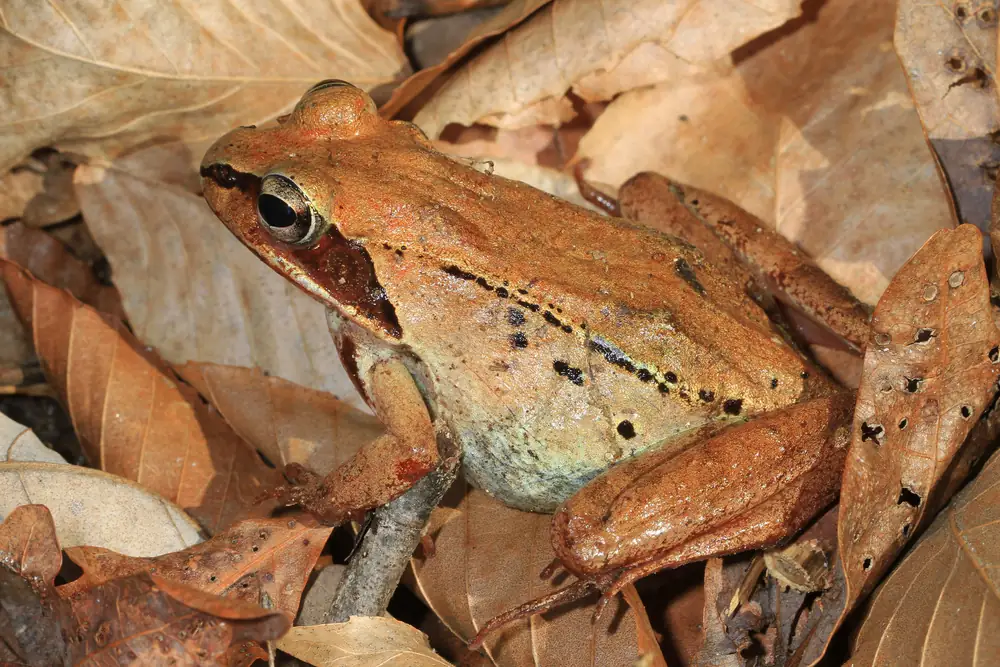
- Listen on the first mild, damp evening. Walk to the edge of a wet woodland or pond after dark on a night above about 45 degrees and stand still for five minutes. The thin, rising whistles are spring peepers, and the clacking is wood frogs. Note the date of the first night you hear them.
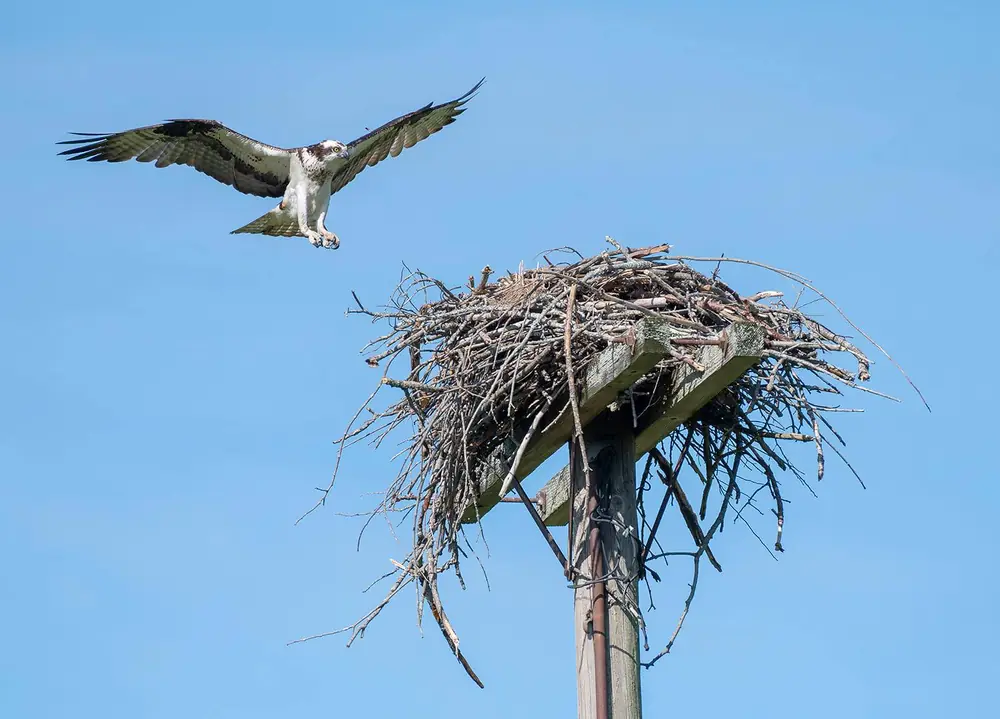
- Find an osprey platform and watch it from a distance. Ospreys usually come back along the coast in mid to late March, males first. Pick a platform or channel marker you can see from a road or boardwalk, check it each week, and keep far enough away that the birds ignore you.
- Check the beach signs before you walk or let a dog out. Piping plovers arrive in March and April, and the Forsythe refuge’s Holgate area closes on April 1. Read the posted signs and fences at the shore every time, and keep dogs leashed or at home.
For the Naturalist’s Field Journal in March: log the first night you hear peepers on “a map of sounds,” put the first osprey on “nest observed” and keep adding to it each week, list each new arrival on “birds I have seen,” note frost, thaw and the clock change on “reading the signs,” and pick one pool, pole or beach for “the same place twice.”
Regions used below: Skylands and the Kittatinny Ridge; Gateway and the Watchungs; Central Jersey and the Delaware Valley; Pine Barrens; Jersey Shore; Cape May and the Delaware Bayshore.
When do ospreys return to New Jersey, and what are the eagle chicks doing?
Two fish-eating raptors set the pace of the coast in March. Bald eagles never left, and their earliest chicks are in the nest. Ospreys are the ones that come back, and their return is one of the most dependable dated signs of the season.
-
Ospreys back on the poles
Mid to late March; males first, females a couple of weeks later · Marsh platforms and channel markers from Sandy Hook to Cape May and along the Delaware Bayshore
Ben Wurst of the Conserve Wildlife Foundation of New Jersey says most of the state’s ospreys nest along the Atlantic coast and arrive in mid to late March, while the state’s nongame wildlife program describes a general return in late March. At Edwin B. Forsythe National Wildlife Refuge, the U.S. Fish and Wildlife Service writes that males arrive around St. Patrick’s Day to inspect and mend the nest, with females following a couple of weeks later. The first sign is often one bird standing on last year’s sticks, because pairs reuse their nests. The state says ospreys are most sensitive to disturbance in April, when they lay eggs.
-
A hard year to follow
Nesting runs April through July · Statewide; the biggest colonies are on Barnegat Bay and the Atlantic coast
New Jersey had a record 800 occupied osprey nests in 2023, and 729 in 2024, when 533 pairs with a known outcome produced 867 young. In 2025 the Conserve Wildlife Foundation reported its worst breeding season in more than 30 years: of 507 nests with a known outcome, 288 (57 percent) produced no young, and only 352 young fledged. The foundation links the poor results to a scarcity of Atlantic menhaden, the birds’ main prey, in nearshore waters, and notes similar declines in the Chesapeake Bay. We found no 2026 report when we wrote this.
-
Eagle chicks at about a month
First hatches late February to early March; chicks stand and feed themselves at about five weeks · Nests statewide
The Raptor Trust’s executive director, quoted by the New Jersey Conservation Foundation, says the first eaglets of a season begin hatching in late February and early March and leave the nest at about 11 weeks. Duke Farms’ resident female laid three eggs in January 2026, on the 13th, 15th and 18th; its camera is a good way to follow a brood without standing near a nest.
| Year | Nests | Young produced | Young per active nest |
|---|---|---|---|
| 2023 | 800 occupied (a record) | Not in the sources we read | Not in the sources we read |
| 2024 | 729 occupied; 533 pairs with a known outcome | 867 | 1.63 |
| 2025 | 689 monitored; 507 with a known outcome | 352 | 0.69 |
Watch from a car window or boardwalk with binoculars. If an adult stares, calls or leaves the nest, you are too close.
Where do piping plovers nest in New Jersey, and when do the beaches close?
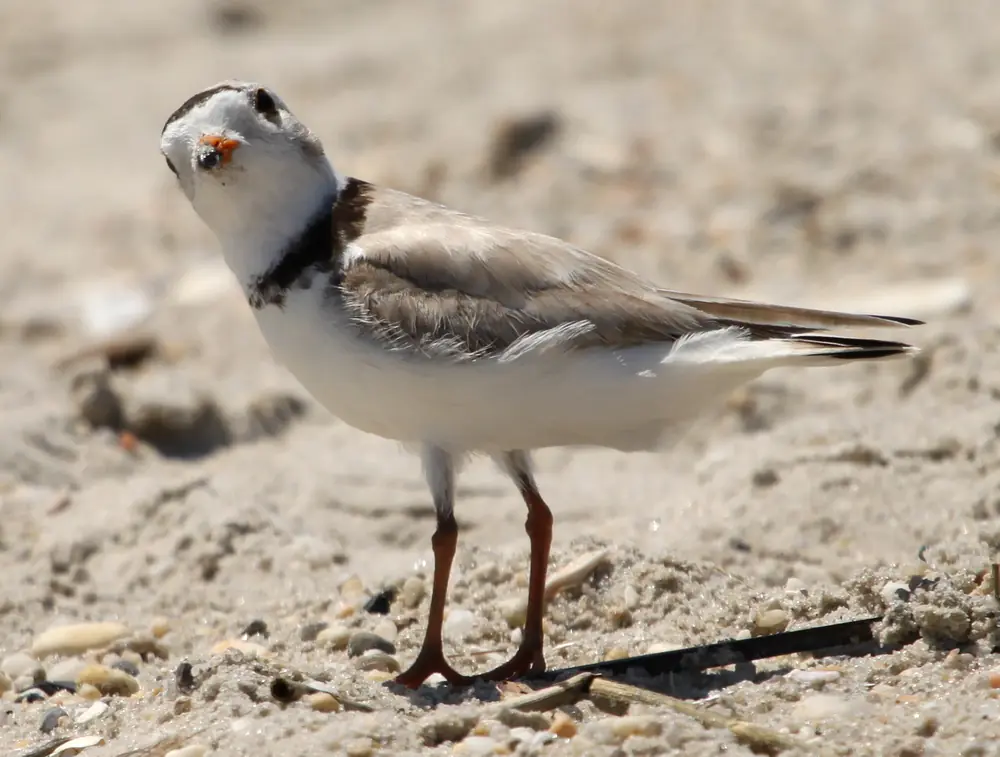
Piping plovers are small, pale, sand-colored shorebirds with a black neck band and an orange bill, and they nest right on the open sand. Listed as endangered by the state and threatened federally, they are the reason some barrier beaches sprout fences and signs each spring.
-
The first birds on the sand
Arrival in March and April; eggs mid-April to late June · Sandy Hook, Island Beach State Park, Barnegat Light, the Forsythe refuge’s Holgate and Little Beach units, and Cape May County
The state’s beach-nesting-bird brochure says plovers arrive in March and April, lay eggs from mid-April to late June, and often nest again if a clutch is lost, with small chicks on the beach until mid-August. Two piping plovers turned up at Cape May Point on March 7 in the 2023 Springwatch report, so a few come early.
-
The lowest count on record
Pairs are counted all season · More than half nest at Holgate, in the Forsythe refuge
The state’s 2025 report counted 76 pairs, down 15 percent from 89 in 2024 and the fewest since intensive monitoring began in 1987; the long-term average is 115 and the peak was 144 in 2003. No plovers nested at Sandy Hook’s Coast Guard Beach for the first time since 1987. Productivity rose to 0.84 fledglings per pair, still well short of the federal goal of 1.50.
-
Closed areas and leashes
Holgate Wilderness Area closed April 1 through August 31 · Fenced and posted beaches statewide
The refuge’s website says Holgate is closed to all activities from April 1 to August 31. The state’s brochure asks beachgoers to respect every fenced or posted area, keep cats indoors, take trash home, and keep dogs leashed where they are allowed at all; most beaches ban them during the nesting season.
| Region | Pairs, 2025 | Share of the state |
|---|---|---|
| Forsythe refuge area (Holgate, Little Beach, North Brigantine) | 41 | 54 percent |
| Central Ocean County (Island Beach State Park, Barnegat Light) | 13 | 17 percent |
| Cape May County | 13 | 17 percent |
| Northern Monmouth County (Sandy Hook) | 9 | 12 percent |
A bird that runs ahead of you dragging a wing, as if hurt, is leading you away from a nest. Turn around and go back the way you came.
What does a March night sound like at a New Jersey vernal pool?
By March the question is less whether the amphibians are moving than what is calling. The New Jersey Conservation Foundation lists seven species that depend on vernal pools to breed: the eastern tiger, blue-spotted, marbled, Jefferson and spotted salamanders, the wood frog and the eastern spadefoot. Pools that dry up in summer keep out the fish that would eat the eggs.
-
The peeper chorus
Evenings from March, loudest on mild, damp nights · Ponds, swamps and wet roadsides across the state
A Lake Hopatcong Foundation naturalist wrote on March 25, 2026, that residents were already hearing the high chorus after dark. Peepers are about an inch long, tan to gray, with a dark X on the back, and they hide by day. Females lay hundreds of eggs in shallow pools, and the foundation says tadpoles can become frogs in as little as six to twelve weeks. Stand still near water and let your ears do the work.
-
A second night at the crossing
A mild, wet night after the first migration night · Swartswood State Park, Waterloo and Hope, the Conserve Wildlife Foundation’s main crossing sites
In a 2024 account by a foundation volunteer, the second crossing night at Swartswood moved 308 wood frogs, many apparently heading back to the woods from the pool, and 58 spring peepers, more active than on the first night and crossing toward the pool. Trips to the pool can be short or can top a quarter mile, and a road across the route is deadly.
-
Frog and toad listening routes
After dark in spring · Fifteen-mile routes with ten stops
Volunteers in the foundation’s Calling Amphibian Monitoring Project drive a set route after dusk and stop at ten places to listen. In 2015, surveyors on 21 routes heard 16 of the state’s 17 frog and toad species; the northern spring peeper was heard on 19 routes. The eastern spadefoot was the one species not detected.
Should you help one across, carry it to the side it was aiming for, and never stop on a blind curve or in traffic. The foundation’s Amphibian Crossing Project page explains how to volunteer.
Which birds arrive at Cape May in March?
The tip of the Cape May peninsula funnels northbound birds toward the mouth of Delaware Bay. NJ Audubon’s Cape May Bird Observatory runs the Cape May Springwatch there, which it calls the only all-species migration count on the East Coast. It runs March 1 to May 31, starting at sunrise for at least three hours, from a dune-top platform opposite the Cape May Point lighthouse.
-
Early March by the numbers
Counted daily at sunrise from March 1 · The platform at Cape May Point, plus grounded-migrant surveys nearby
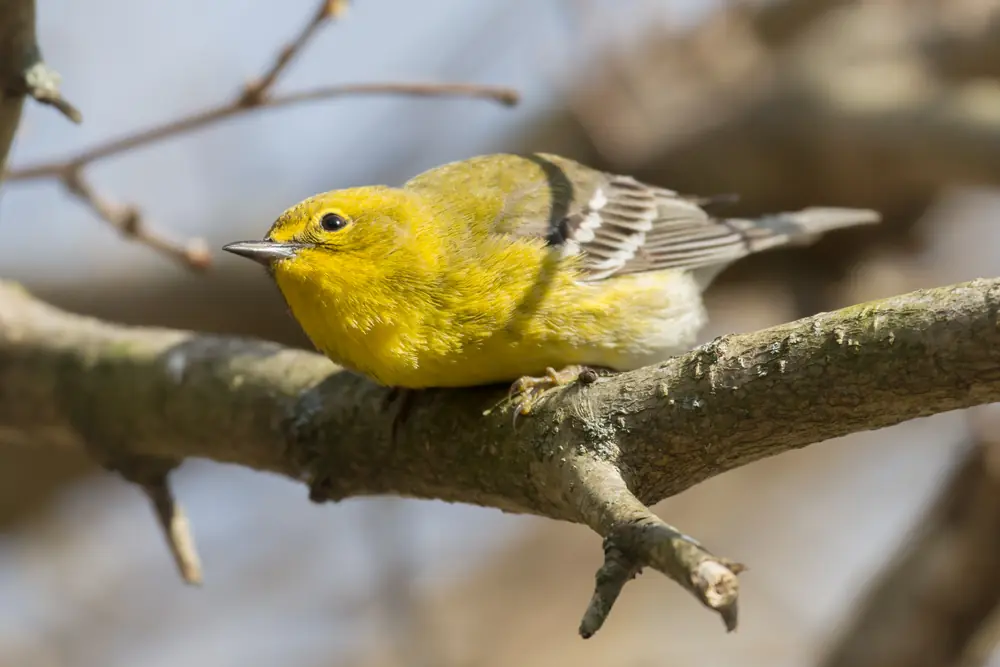
The observatory’s summary of March 1 to 15, 2023, called it a “typical mixed bag.” Highlights were 455 long-tailed ducks on March 4, 105 tree swallows and 24 pine warblers on March 7, three very early brown pelicans on March 6 and 7, and a northern goshawk on March 8. More than 100 bottlenose dolphins were counted on March 9, harbor and gray seals were regular, and the first mourning cloak butterfly flew the same day. One early March is not a forecast, but the mix of sea ducks, swallows and surprise visitors is typical. The page also names northern gannets, red-throated loons and scoters among early-spring waterbirds near the bay.
| Species | Count | Date |
|---|---|---|
| Long-tailed duck | 455 | March 4 |
| Double-crested cormorant | 65 | March 4 |
| Tree swallow | 105 | March 7 |
| Pine warbler | 24 | March 7 |
| Rusty blackbird | 12 | March 7 |
Bring a scope and dress for wind off the water. NJ Audubon’s online calendar listed no March 2027 programs when we checked in October 2026.
What can you see at the Forsythe refuge in March?
Edwin B. Forsythe National Wildlife Refuge protects more than 48,000 acres of the southern coast, over 82 percent of it wetland and most of that salt marsh. It lies on a busy stretch of the Atlantic Flyway, so March mixes birds that wintered with birds passing through.
-
Wintering ducks and brant, and the first ospreys
Through the month; the first osprey males around St. Patrick’s Day · The 8-mile Wildlife Drive, with two observation towers, a salt-marsh boardwalk and an osprey overlook
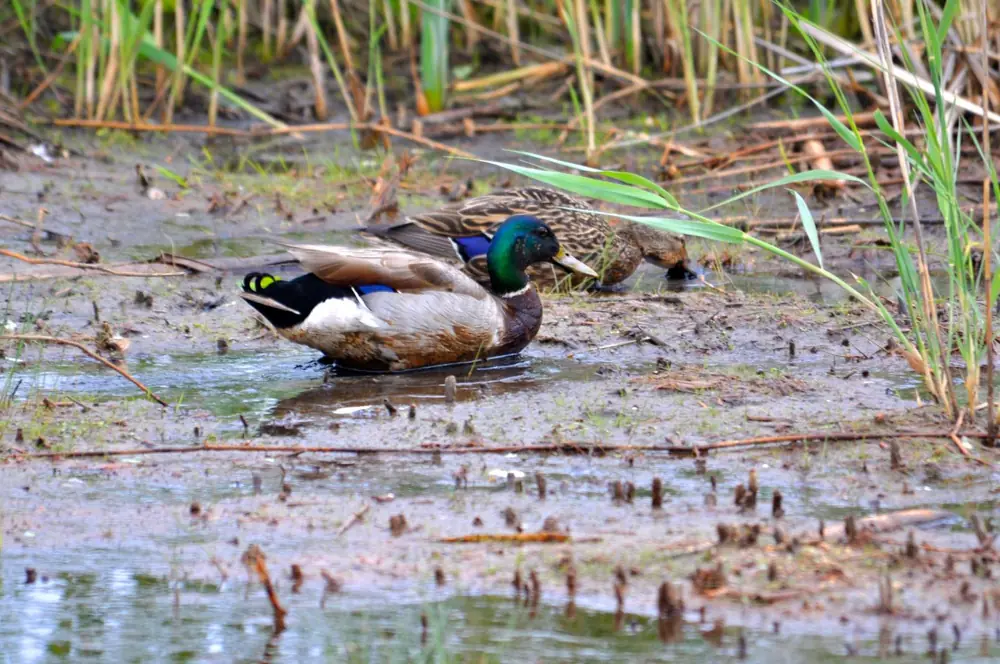
The refuge says it supports large wintering populations of American black ducks and Atlantic brant, and that waterfowl, waders, shorebirds and seabirds can be seen on any given day from the drive. Its guide says ospreys can be watched on their nests from the drive and the overlook, and the refuge runs an osprey camera. Entrance fees apply to the drive and the trails at headquarters.
-
A beach that closes in April
Holgate Wilderness Area closed April 1 through August 31 · The Holgate unit
Plan any walk there for March. The refuge’s website points to its Facebook page for announcements, so check it before you drive.
When is the last frost in New Jersey, and which wildflowers bloom first?
March is when the woods start to bloom, and the last freezing nights are still ahead. The table below, from the stations on the New Jersey frost page, puts the median last freeze in late March at Atlantic City, early April at Newark and Cape May, mid-April at Trenton, New Brunswick and Pomona, and near the end of April in the Pine Barrens and the Skylands. Plants that start early take the risk.
-
Bloodroot and the spring ephemerals
March to April in cool woods; earlier in a warm year · Moist, rich woods and shaded slopes, especially in the north
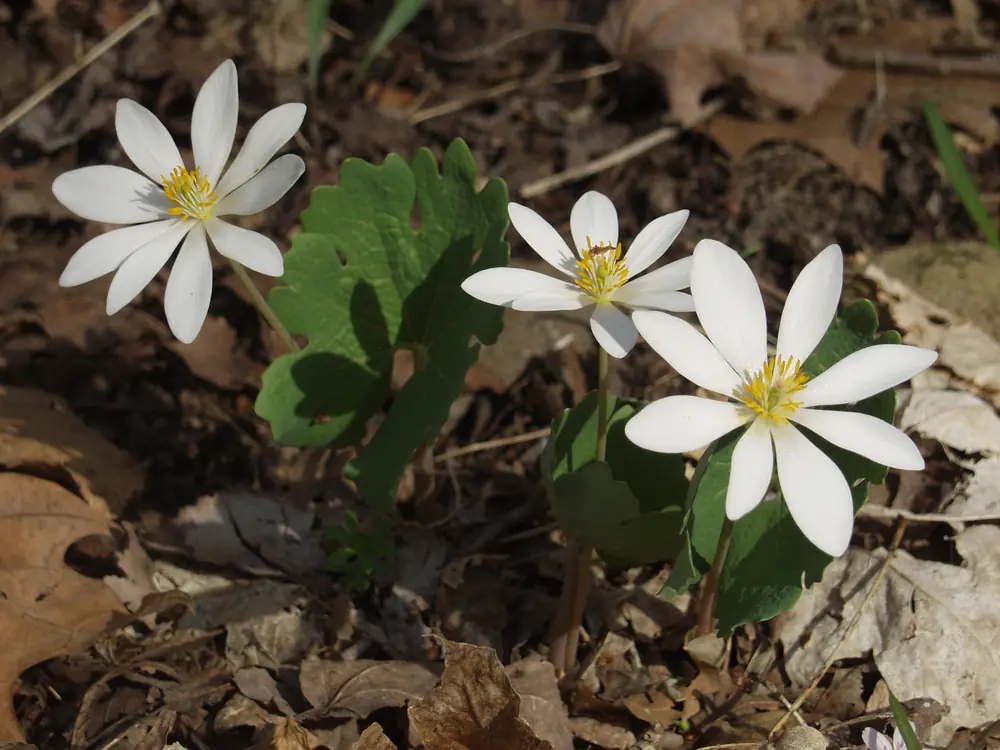
The Lake Hopatcong Foundation calls bloodroot one of the earliest native wildflowers, a single white flower with a yellow center wrapped at first in lobed leaves, named for the red-orange sap in its roots and a pollen source for native bees when little else is in bloom. The New Jersey Conservation Foundation lists it with rue anemone, red columbine, trilliums, violets, wild geranium and mayapple among the ephemerals that bloom between the start of spring and tree leaf-out, and vanish by June as the forest floor darkens.
-
A warm March can backfire
Mid to late March · Statewide
The state climatologist’s office says that in March 2012, after a mid-March warm wave, flowers, shrubs and trees were blossoming and leafing out three to four weeks ahead of average, until cold air arrived overnight on March 26 and 27; orchards held in the mid to upper 20s, and the climatologist wrote that only a strong wind, which kept the air mixed, spared budding fruit from nearly total losses. For tender plants, the table’s “nine years in ten” column is the cautious guide.
| Station | One year in ten | Median | Nine years in ten |
|---|---|---|---|
| Sussex 3 WNW (Skylands) | Apr 17 | Apr 30 | May 18 |
| New Brunswick 3 SE (Central Jersey) | Apr 2 | Apr 15 | May 1 |
| Newark International Airport | Mar 20 | Apr 2 | Apr 15 |
| Trenton Mercer County Airport (Delaware Valley) | Mar 30 | Apr 10 | Apr 25 |
| Indian Mills 2 W (Pine Barrens) | Apr 14 | Apr 28 | May 16 |
| Atlantic City International Airport (Pomona) | Apr 2 | Apr 18 | May 5 |
| Atlantic City (Absecon Island) | Mar 10 | Mar 26 | Apr 6 |
| Cape May 2 NW | Mar 19 | Apr 1 | Apr 15 |
Look up your own town on the frost dates page, and compare with the February guide.
When do the shad run and trout season start in New Jersey?
Two fishing seasons come into view at the end of March, both tied to water temperature and to dates the state has not yet posted for 2027.
-
American shad on the Delaware
Angling usually starts around the end of March; fish move upstream as the river nears 50 degrees · The Delaware River, with popular spots at Lambertville and Bulls Island
The Fisherman magazine, quoting the state’s Division of Fish and Wildlife, says angling for American shad on the Delaware usually begins around the end of March and the run moves upstream once the water reaches about 50 degrees, continuing through May and into June. It also cites a 2025 Pennsylvania Fish and Boat Commission analysis finding juvenile production at a 30-year high while the female spawning population remains at a critical low.
-
Trout stocking
Preseason stocking in March and early April; the 2027 opening date is not yet announced · Stocked lakes, ponds and streams statewide
In 2026 the season opened at 8 a.m. on Saturday, April 11, after more than 180,000 rainbow trout were stocked, with 20,000 brown trout from Pennsylvania. The state said preseason closures of lakes and ponds had been lifted, while certain trout streams stay closed during stocking hours. Anglers 16 or older need a license and a trout stamp. For 2027, see NJ Fish and Wildlife’s spring trout page or call the stocking hotline at (609) 940-7266.
How much daylight does New Jersey gain in March?
March brings the steepest daylight gains of the first half of the year. Newton, in Sussex County, goes from 11 hours 17 minutes of sun on March 1 to 12 hours 39 minutes on March 31, a gain of 82 minutes, and Cape May adds 76 between 11 hours 20 minutes and 12 hours 36 minutes. On the equinox, March 20, day and night are close to equal but not exact, because sunrise and sunset are timed from the Sun’s upper edge; near New York City the day is about 12 hours 8 minutes. These are hours of sun, so the clock change on the 14th leaves them untouched.
| City | Mar 1 | Mar 31 | Gained | Per day |
|---|---|---|---|---|
| Newton | 11 h 17 m | 12 h 39 m | 82 min | 2.7 min |
| Newark | 11 h 17 m | 12 h 38 m | 81 min | 2.7 min |
| Trenton | 11 h 17 m | 12 h 37 m | 80 min | 2.7 min |
| Toms River | 11 h 19 m | 12 h 37 m | 78 min | 2.6 min |
| Camden | 11 h 18 m | 12 h 38 m | 80 min | 2.7 min |
| Atlantic City | 11 h 19 m | 12 h 36 m | 77 min | 2.6 min |
| Cape May | 11 h 20 m | 12 h 36 m | 76 min | 2.5 min |
Newton starts the month three minutes behind Cape May and ends it three minutes ahead. Enter your own town in the daylight tool for its March sunrise, sunset and dusk.
What is March weather like in New Jersey, and when does the fire season peak?
In the 1991 to 2020 normals below, the average March low is 25 degrees at Sussex in the northwest and 35 at Cape May, and Sussex averages more than twice as many nights at or below freezing. Averages hide a lot: individual Marches range from very warm to very snowy.
-
A very warm March and a very snowy one
March 2012 and March 2018 · Statewide, per the Office of the New Jersey State Climatologist at Rutgers
March 2012 tied with 1945 as the mildest March on record, which goes back to 1895, averaging 49.5 degrees, 8.4 above the 1981 to 2010 average. March 2018 averaged 38.0 degrees, 2.8 below that mean; the climatologist wrote that three nor’easters pounded the state and a fourth grazed it, the first starting on the evening of the 1st. Snowfall averaged 16.6 inches statewide, the fourth snowiest March on record, with 26.4 inches in the northern division (a March record) and 44.3 inches at Jefferson Township in Morris County, topping the old 43.0-inch record.
-
Pine Barrens fire season
March through May, typically peaking mid-March to mid-May · The Pine Barrens of Burlington, Ocean and Atlantic Counties above all
Forest Fire Service Chief William Donnelly said in April 2026 that the season typically peaks from mid-March through mid-May. By April 8, 2026, the state had counted 201 wildfires burning 154 acres, against 537 by that point in 2025, a year that included the Jones Road Wildfire in Ocean County, about 15,000 acres, which took 20 days to contain, the Philadelphia Inquirer reported. Inside Climate News said in May 2026 that the service had managed only 35 percent of its 25,000-acre prescribed-burn goal because of late snow, and described early-May conditions with temperatures in the 80s, humidity as low as 19 percent and gusts to 30 miles per hour.
| Station | High | Low | Nights ≤ 32 °F | Precipitation | Snowfall |
|---|---|---|---|---|---|
| Sussex 3 WNW (Skylands) | 47.0 | 25.4 | 24.3 | 3.63 | 6.3 |
| Newark International Airport | 50.9 | 34.2 | 12.4 | 4.13 | 5.6 |
| New Brunswick 3 SE (Central Jersey) | 50.6 | 31.0 | 18.3 | 4.40 | 5.2 |
| Trenton Mercer County Airport | 50.8 | 32.7 | 15.4 | 4.00 | 4.0 |
| Indian Mills 2 W (Pine Barrens) | 52.9 | 30.9 | 18.0 | 4.50 | 3.9 |
| Atlantic City International Airport | 52.6 | 32.6 | 16.6 | 4.52 | 2.2 |
| Cape May 2 NW | 51.7 | 35.4 | 10.6 | 4.10 | 2.5 |
Check wind and tide forecasts before a shore trip, and read the sky ahead of a storm with our cloud guide and weather tools. For the Climate Prediction Center’s newest seasonal outlooks, open the 90-day outlook page.
What can you see in the New Jersey sky in March 2027?
Skip the eclipse and meteor-shower hunting this month; none is on offer. What March does have is a clock change, an equinox, a full moon that peaks at daybreak and a morning with Mercury. Times here are Eastern. Near New York City, a good stand-in for northern and central New Jersey, the Sun comes up at 6:11 a.m. on Saturday, March 13, and at 7:10 a.m. on Sunday, March 14, with sunset moving from 6:00 p.m. to 7:02 p.m. Find your town’s times with the moon-phase tool.
-
Clocks forward
Sunday, March 14, at 2 a.m. · All of New Jersey
The clock jumps from 1:59 to 3:00 a.m. Mornings turn darker and evenings brighter for a few weeks, while the days themselves keep lengthening.
-
Equinox and Worm Moon
Equinox Saturday, March 20, 4:25 p.m.; full moon Monday, March 22, 6:44 a.m. · Any open eastern horizon
The U.S. Naval Observatory lists the equinox at 20:25 universal time, which is 4:25 p.m. in New Jersey; Sea and Sky gives 20:26. Because the exact moment of fullness falls at breakfast time on the 22nd, the Moon looks full at moonrise on Sunday, March 21 (about 6:36 p.m. near New York, by our calculation) and again on Monday evening. Sea and Sky links the Worm Moon name to the season when thawing ground lets earthworms reappear.
-
Mercury, Venus and Jupiter
Mercury at its best from about March 8 to 25; Jupiter every evening · Low in the east-southeast before sunrise; high overhead after dark
Mercury swings widest from the Sun, 27.6 degrees, on Wednesday, March 17, according to Sea and Sky. By our own calculation it clears the horizon roughly an hour ahead of the Sun early in the month, so bring binoculars. Brilliant Venus is already up about two hours before sunrise on March 1; a slim old Moon hangs near it on Thursday and Friday, March 4 and 5. Jupiter holds the evening sky, with a fat gibbous Moon close by on March 18 and 19, and by our calculation Mars lies about four degrees away from it on March 30.
-
Milky Way before dawn
Best about March 5 to 16, around the March 8 new moon · A dark site in the Pine Barrens or Sussex County
By our calculation, at about 40 degrees north the bright core of the Milky Way is up in dark pre-dawn sky for at most roughly 85 minutes on the best nights.
| Phase | Date | Time |
|---|---|---|
| New moon | Monday, Mar 8 | 4:29 a.m. (EST) |
| First quarter | Monday, Mar 15 | 12:25 p.m. (EDT) |
| Full moon, the Worm Moon | Monday, Mar 22 | 6:44 a.m. (EDT), at dawn |
| Last quarter | Monday, Mar 29 | 8:54 p.m. (EDT) |
| New moon | Tuesday, Apr 6 | 7:51 p.m. (EDT) |
Where we write “by our calculation,” the figure is ours, so treat the minutes as approximate.
What are good March nature outings for New Jersey families?
- Daily from March 1: Cape May Springwatch. NJ Audubon’s count runs each year from March 1 to May 31 at the platform opposite the Cape May Point lighthouse. Go in the first hours after sunrise, and ask the observatory about guided walks.
- From home: eagle and osprey cameras. Duke Farms’ eagle cam, the Forsythe refuge’s osprey camera and the Conserve Wildlife Foundation’s Barnegat Light Osprey Cam (launched in 2019) let you follow nests without disturbing them.
- Anytime: Osprey Watch. The foundation uses the Osprey-Watch.org tool, open since 2013, so anyone can record when a pair arrives and whether eggs or young appear.
- Mild, wet nights: the Amphibian Crossing Project. Volunteers are trained and work at set sites; ask the Conserve Wildlife Foundation how to join.
- The Raptor Trust, Millington. Its posted hours from Labor Day to Memorial Day are 9 a.m. to 4 p.m., weather permitting; icy paths can close it for days after a winter storm, so call ahead. The self-guided trail past the aviaries is free, and donations are appreciated.
- NJ Audubon and county programs. NJ Audubon’s calendar showed no March 2027 programs in October 2026. Annual programs usually fill in over the winter, so check with each organizer.
For other months, see the February guide or the full set in our nature collection; the plates named come from the Naturalist’s Field Journal.
Safety notes for March in New Jersey
- Seasons that run into March. In recent seasons NJ Fish and Wildlife’s special-permit season for daytime coyote and fox hunting has run January 1 to March 15, and a woodchuck season has begun March 1. Crow, light goose and furbearer trapping seasons also close in early to mid March, but the agency had not posted a 2026–27 digest where we could read the dates, so check the current Hunting and Trapping Digest for exact closing dates. No deer season is open.
- Spring turkey. New Jersey’s spring turkey season begins in April, after this month; check the Digest for the 2027 dates.
- Orange. New Jersey’s Digest sets hunter-orange rules by season and species, and they differ for daytime coyote and fox, small game and waterfowl hunters; read the current rule before you hunt. Anyone walking a wildlife management area is wise to wear orange too.
- Sundays. Gun hunting is generally not allowed on Sundays, and most state parks are closed to hunting; some wildlife management areas and state forests allow it, so check the Digest for the area you plan to walk.
- Ticks. The CDC says adult blacklegged ticks may be questing whenever winter temperatures climb above freezing, so a mild March afternoon on a trail counts. Wear long pants, use repellent and check yourself afterward.
- Black bears. The New Jersey Conservation Foundation says bears leave their dens in March and April in all 21 counties. Secure garbage, feed pets indoors, keep food in the car when camping or hiking, and never feed a bear.
- Fire. Peak season in the Pine Barrens starts mid-March: keep campfires attended and obey posted burn restrictions.
- Nests and beaches. Stay out of fenced areas and away from osprey and eagle nests, and leash dogs where allowed.
- Roads and tides. Drive slowly near woods on wet nights, and check tide times before a shore walk in a nor’easter.
Sources (35)
- Conserve Wildlife Foundation of NJ: 2024 NJ Osprey Project Report (PDF)
- Conserve Wildlife Foundation of NJ: Osprey Project (2025 season results)
- NJ Fish & Wildlife: osprey nest platform placement
- WHYY: Ospreys return soon; expert seeks help to straighten Navesink River platform (March 6, 2014)
- U.S. Fish and Wildlife Service: Edwin B. Forsythe National Wildlife Refuge, photography (osprey arrival)
- U.S. Fish and Wildlife Service: Edwin B. Forsythe National Wildlife Refuge (home page, Wildlife Drive, Holgate closure)
- New Jersey Conservation Foundation: The domestic duties of New Jersey’s winter raptors
- Duke Farms: Eagle Cam (2026 clutch)
- NJ Fish & Wildlife: Piping Plover Nesting Results in New Jersey, 2025 (PDF)
- NJ Fish & Wildlife: New Jersey’s Endangered Beach Nesting Birds (brochure, PDF)
- New Jersey Conservation Foundation: Spring is here, what’s happening in nature (March 23, 2023)
- Conserve Wildlife Foundation of NJ: Amphibian Crossing Project
- Conserve Wildlife Foundation of NJ: Exploring New Jersey’s amphibian migrations (March 27, 2024)
- Conserve Wildlife Foundation of NJ: Nature’s Chorus, amphibian calls (2015 survey results)
- Lake Hopatcong Foundation: Creature Feature, Spring Peepin’ (March 25, 2026)
- Lake Hopatcong Foundation: Bloodroot (Sanguinaria canadensis)
- NJ Audubon: Cape May Springwatch
- NJ Audubon: Cape May Springwatch, early-March update (March 17, 2023)
- NJ Audubon: events calendar, March 2027 (no events listed yet)
- Office of the New Jersey State Climatologist: March 2018 summary
- Office of the New Jersey State Climatologist: March 2012 summary
- NOAA NCEI: monthly climate normals 1991–2020, March values for New Jersey stations
- Climate Prediction Center: seasonal (90-day) outlooks
- Philadelphia Inquirer: With no rain in the forecast, N.J. officials are wary of wildfires as the season hits its peak (April 8, 2026)
- Inside Climate News: After snowy winter delays prevention, New Jersey faces rising wildfire risk (May 16, 2026)
- The Fisherman: American shad, “founding fish” of the Delaware
- WRNJ Radio: Trout season opens Saturday in New Jersey with more fish, expanded access (2026)
- U.S. Naval Observatory: moon phases API (March to April 2027)
- U.S. Naval Observatory: Earth’s seasons, 2027 (equinox time)
- Sea and Sky: astronomy calendar of celestial events, 2027
- Centers for Disease Control and Prevention: where ticks live
- New Jersey Conservation Foundation: black bears emerging from dens
- The Raptor Trust: plan your visit
- Photos via Wikimedia Commons; licenses and photographers are credited under each picture
- NJ Fish and Wildlife: hunting information (check for the current Hunting and Trapping Digest)
