What to look for in nature in New Mexico this April
April is when New Mexico fills up with travelers. The cranes and snow geese of winter are gone, and in their place come warblers, flycatchers, vireos and shorebirds, passing through the river valleys or settling in to nest. The first wildflowers open in the dunes at White Sands, Mexican wolf pups are born in the forests of the southwest, and the bats begin their nightly flights from Carlsbad Cavern. It is also the start of the windiest stretch of the year, so the same sunny morning that is perfect for birding can turn into a dusty, red-flag afternoon. The days lengthen by about an hour across the month, the clocks keep their current setting, and a late freeze is still possible in the north. Treat every date below as a typical window and check the source before a long drive.
Other months in New Mexico: October, November, December, January, February, March.
Start here

- Listen for a yellow warbler in the cottonwoods. The Bird Alliance of Central New Mexico names the yellow warbler as one of the first migratory songbirds to reach the Albuquerque area in April. Go at first light to a river edge with willows and cottonwoods, stand still, and listen before you look.
- Catch the Pink Moon on Tuesday, April 20. The moon is full at 4:27 p.m. Mountain daylight time, before it has risen. In Albuquerque the sun sets at 7:43 p.m. and the moon clears the horizon at 7:55 p.m., so a round, bright moon appears just as the sky darkens.
- Plan White Sands for the second half of the month. The National Park Service says most dune wildflowers start around the middle of April, and that spring windstorms are frequent. Pick a calm day from the forecast, bring water, and expect blowing sand if the wind comes up.
For the Naturalist’s Field Journal: put your first warbler of the spring on the “birds I have seen” plate, along with when and where you heard it. Visiting one cottonwood or apple branch every week gives you “a tree through the seasons,” and a dawn spent at a river or a prairie edge fits “dusk and dawn watch.” A windy, dusty afternoon makes a good “reading the signs” page, and the Pink Moon rising over the plains fits “the same place twice” if you log the same view again in May.
Regions used below: Northern mountains, Taos and the Enchanted Circle; Four Corners and the northwest; Santa Fe and the Jemez; Albuquerque and the middle Rio Grande; Eastern plains; Southeast and the Pecos valley; Southwest, the Gila and Las Cruces.
Which spring migrants pass through New Mexico in April?
The Bird Alliance of Central New Mexico opened its April newsletter by saying that spring migration had arrived, bringing small songbirds that slip through the leaves almost unseen. In the middle Rio Grande valley the birds follow the river, and the wooded strip of cottonwoods and willows along it, called the bosque, is where they stop to feed. Late April brings more of them than early April, and the order of arrival changes every year.
-
Warblers in the bosque
April, with the first arrivals early in the month · Rivers, wooded edges and shrubby thickets in central New Mexico
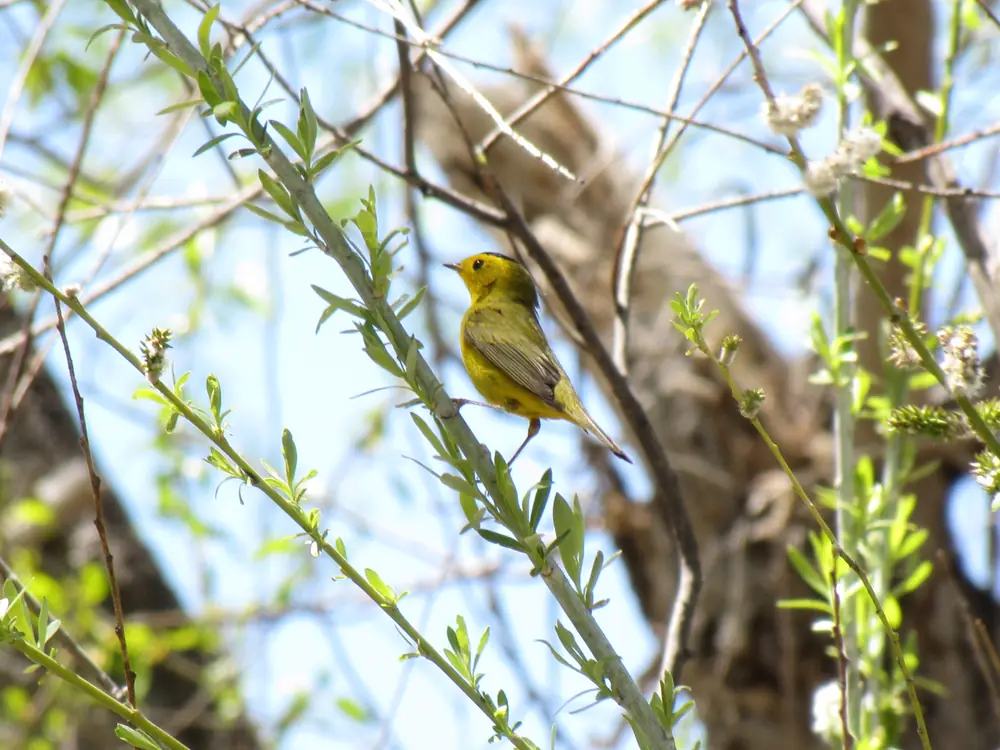
The Bird Alliance lists yellow, Wilson’s, orange-crowned, black-throated and yellow-rumped warblers as April birds. It calls the yellow warbler one of the earliest migratory songbirds to arrive in central New Mexico and says to look for it in riparian habitats, woodland edges and shrubby areas. The yellow-rumped is an early migrant too, and some spend the winter in the region. Wilson’s warbler is the small yellow bird with a bold black cap. The newsletter’s tip for planting native shrubs to help warblers on their journey is worth passing on to anyone with a yard.
-
Shorebirds on the draining ponds
Spring season, mid-February to mid-May · Bosque del Apache National Wildlife Refuge, near Socorro
As the refuge lets its winter wetlands drain in spring, the muddy margins draw migrating plovers, stilts, avocets, curlews and about twenty other kinds of shorebirds, according to the Fish and Wildlife Service. Flycatchers, vireos and a dozen species of warblers also pass through, resting or choosing territories. Which ponds hold water changes weekly, so ask at the visitor center or call 575-835-1828 before you walk out.
-
Avocets and snowy plovers
Listed for spring and summer · Bitter Lake National Wildlife Refuge, near Roswell
The refuge’s seasons-of-wildlife list gives ducks as October through March and snow geese as November through March, so by April the winter crowd has mostly gone. It lists the American avocet and the snowy plover for spring and summer. Both are birds of open mud and shallow water, so scan the shorelines slowly with binoculars and stay on the marked routes.
-
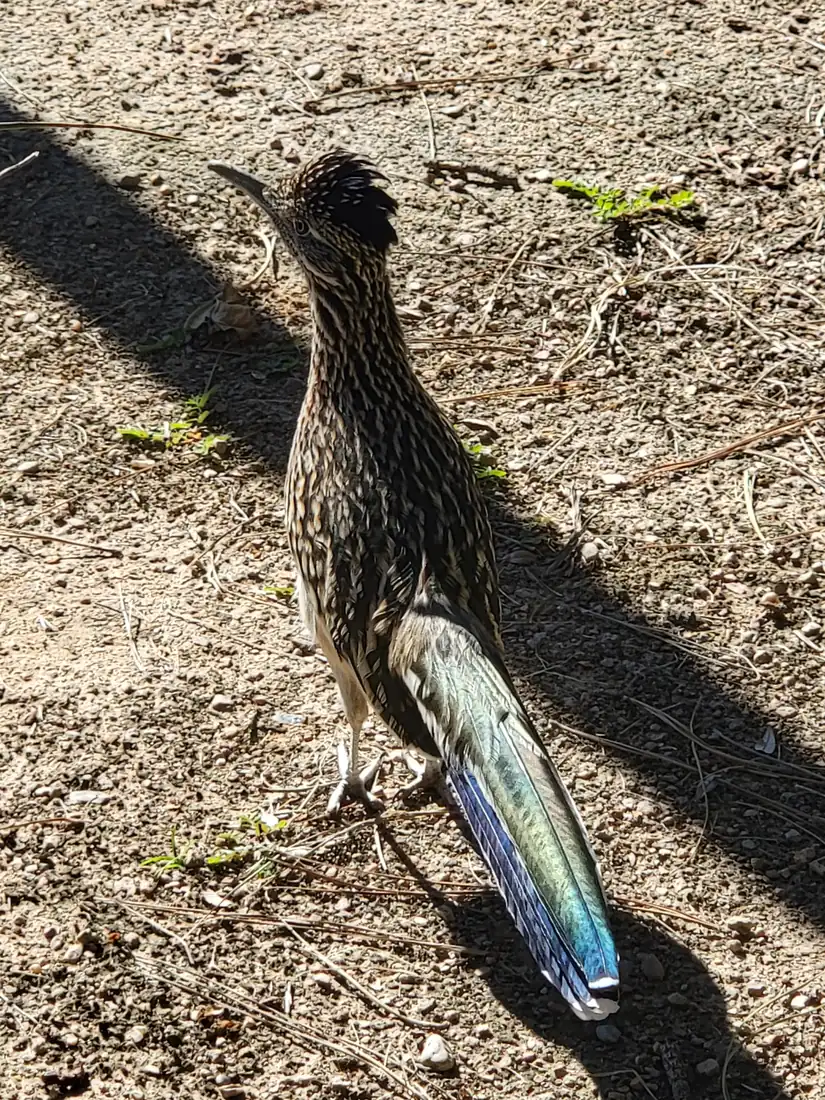
Roadrunners on the loop road
Spring days as lizards and snakes warm up · Auto tour loop and Highway 1 at Bosque del Apache
Greater roadrunners cross the loop road and the highway in spring while hunting slow lizards and snakes. A bird that runs rather than flies is easy to spot from a parked car.
-
A festival for migrating birds
Annual, usually early in April (check the organizer) · Albuquerque
The Albuquerque Urban Bird Coalition sponsors a spring Migratory Bird Festival. In 2024 it was held on April 6 and 7 at the Petroglyph National Monument Visitor Center, with bird walks at 9 a.m. both days, talks and exhibitors. Dates for 2027 had not appeared by the time we looked, so ask the Bird Alliance of Central New Mexico or the coalition before you plan around it.
Write down each new species with the date in your Naturalist’s Field Journal. For the end of the crane season, see our New Mexico March page.
When do wildflowers bloom at White Sands in April?
White Sands National Park has flowers in almost every season, so the National Park Service says there is no single best time to see them. Inside the dunefield the plants bloom later than those in the surrounding desert foothills, because cold air from the mountains pools in the basin at night. For April that means the show is just beginning.
-
Pepperweed first, then the early bloomers
Pepperweed around March 1; most others from about the middle of April · Dune margins, interdunal flats and the residential area of the park
The park calls pepperweed, a white-flowered mustard, the hardiest wildflower and the first to bloom each spring, usually around March 1. Most other wildflowers begin around the middle of April. The common early bloomers in the dunefield are sand verbena, Hartweg’s sundrops, desert mentzelia and White Sands mustard. In mid-May they are joined by gypsum centaury, white evening primrose and greenthread.
-
Soaptree yucca, the star of the spring
Spring · Throughout the dunes
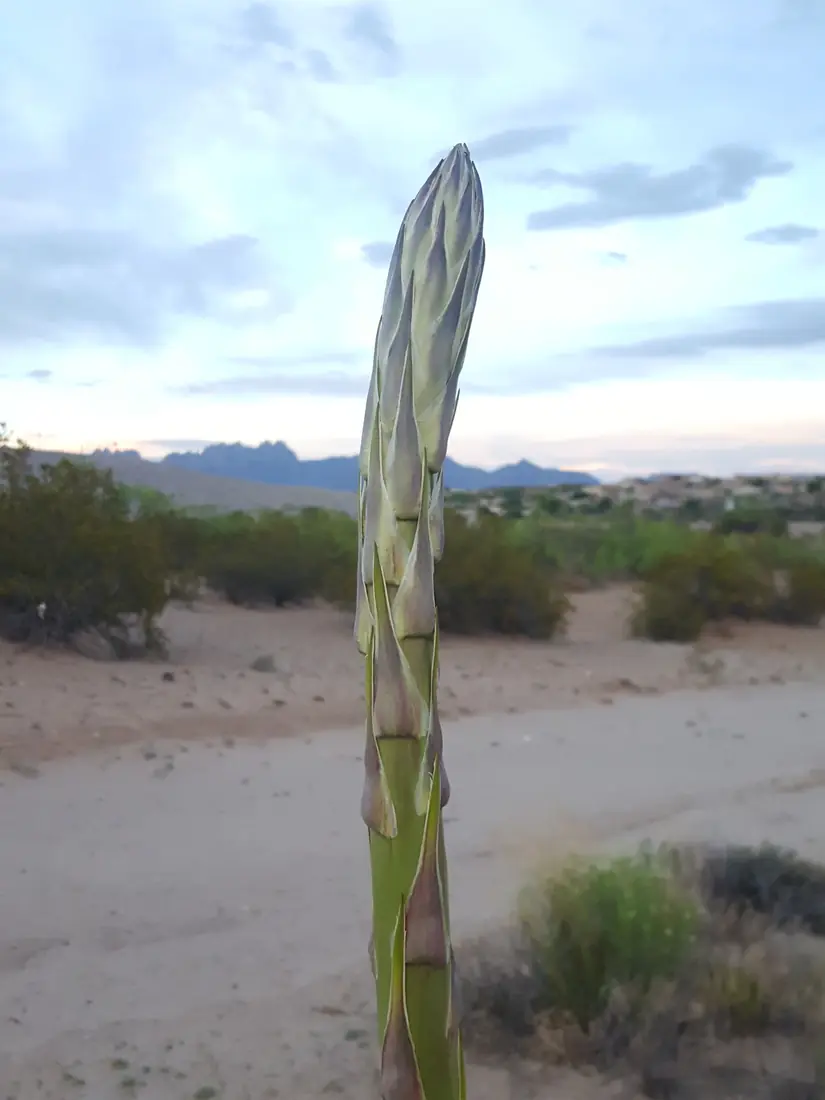
The park names the soaptree yucca as the star of spring flowers. It grows tall and shows white blossoms shaped like upside-down tulips, easy to see from a distance. The prairie gentian is another spring favorite, easiest to find at the start of the Dune Life Nature Trail, where a white form blooms beside the purple one.
-
Wind, sand and the weather
Windstorms frequent from February to May · Dunes Drive and the trails
The Park Service reports that March through May daytime temperatures average about 75 °F, evenings about 40 °F, and that spring winds can reach 50 mph. Blowing sand can look like fog and makes breathing and visibility difficult, and trail posts sometimes fall over in the wind. If you cannot see the next post, turn back. Heavy rain can make the back half of Dunes Drive hard to pass, so check the park’s conditions page before leaving home.
Our clouds guide helps with reading the sky before a windy day on the dunes.
How many Mexican wolves live in New Mexico, and when are the pups born?
Every wild Mexican wolf counted lives in the forests of southwestern New Mexico and eastern Arizona. The Fish and Wildlife Service’s tally for December 31, 2025 gives a minimum of 319 in the wild, compared with 286 a year earlier: 176 in New Mexico and 143 in Arizona. New Mexico had 23 breeding pairs by the service’s definition; the Arizona estimate was still pending. The table shows the end-of-year minimums for the last seven years.
-
Pups arrive in April and May
April and May · Dens in the recovery area, mostly out of public view
The Interagency Field Team notes that wolf pups are generally born from about mid-April to mid-May, and the newborn fostering work in 2024 began in mid-April. That program places newborn pups from zoo breeding facilities into wild dens within 14 days of birth, to improve genetic diversity. The Fish and Wildlife Service said 27 pups were placed into eight dens in Arizona and New Mexico that spring, calling it a record at the time.
-
Seeing a wolf, and respecting one
Any time, especially at dawn and dusk · Gila and Apache national forests
Wild wolves are shy, and most hikers never see one. If you do, give the animal room, stay away from any den, and keep dogs on a leash in the forest.
| Year | Minimum in the wild | New Mexico | Arizona |
|---|---|---|---|
| 2019 | 163 | 87 | 76 |
| 2020 | 186 | 114 | 72 |
| 2021 | 196 | 112 | 84 |
| 2022 | 242 | 137 | 105 |
| 2023 | 257 | 144 | 113 |
| 2024 | 286 | 162 | 124 |
| 2025 | 319 | 176 | 143 |
A bear or wolf track pressed into a muddy trail is a good find for the tracks page of the Naturalist’s Field Journal.
What changes along the Rio Grande Gorge in April?
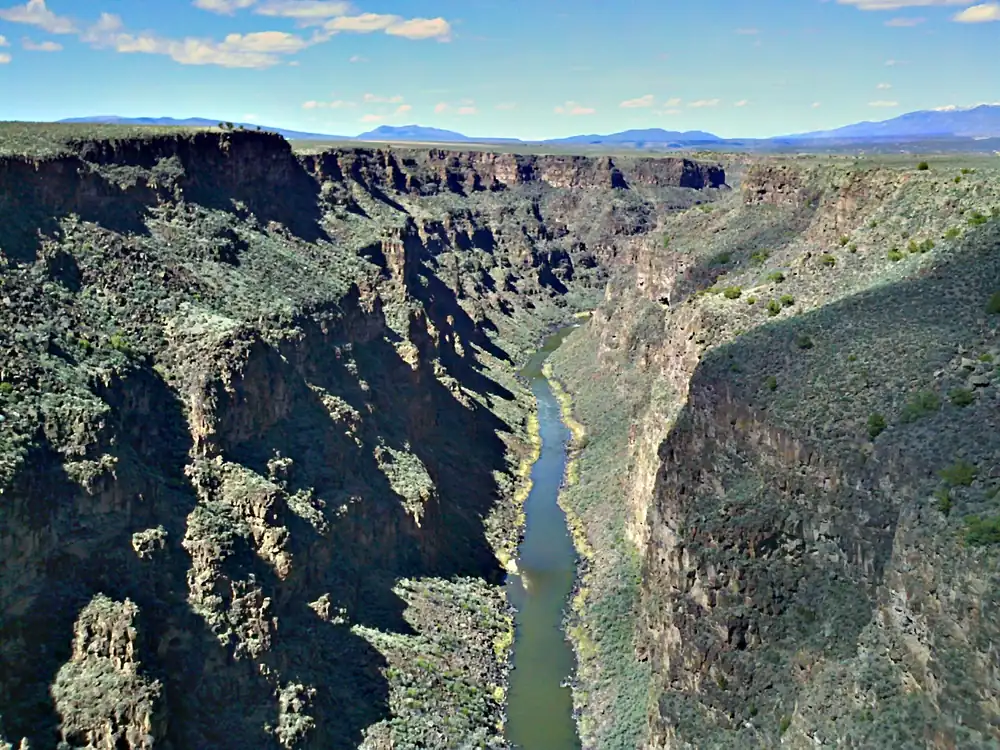
The Rio Grande Wild and Scenic River includes 74 miles of river through the Rio Grande Gorge, which the Bureau of Land Management describes as 800 feet deep. April is when the river, the cliffs and the visitor facilities all start to wake up.
-
A closed stretch for nesting raptors
April and May · Ute Mountain section, Rio Grande Wild and Scenic River
The Bureau of Land Management closes the Ute Mountain section to all boating during April and May to protect raptor breeding habitat. The rest of the year the section is open. If you plan a float, confirm which stretches are open with the Taos Field Office at 575-758-4766, and give cliffs wide space even from the rim.
-
Cold, swift water
All spring · Orilla Verde Recreation Area and the Lower Gorge
The agency requires life jackets for all boating and floating, including stand-up paddle boards and inflatables, and does not recommend swimming in the river because of swift currents and cold temperatures. River flows are unpredictable, so the agency tells boaters to check the U.S. Geological Survey gauges or call before launching. Spring runoff keeps the water cold even on warm afternoons.
-
The visitor center opens
Mid-April through October · Orilla Verde Recreation Area, near Taos
The agency lists the Orilla Verde visitor center as open from mid-April through October, daily from 8:30 a.m. to 4:30 p.m., and warns that staffing problems can cause surprise closures. The area’s wildlife includes eagles, hawks, songbirds, waterfowl, beaver, cougar, ringtail and mule deer.
Our weather page links to forecasts and river information.
Are the bats and nesting birds back at Carlsbad Caverns in April?
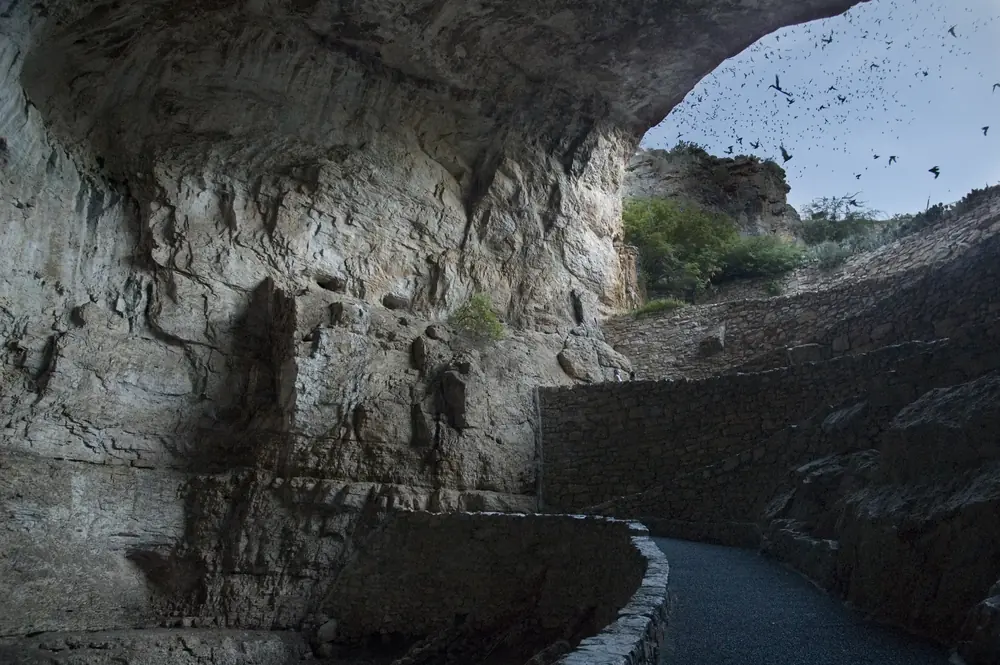
The Carlsbad Caverns National Park bat page says that from April through mid-October visitors watch several hundred thousand Brazilian free-tailed bats leave Carlsbad Cavern each night to feed. The ranger-led Bat Flight Program is a separate matter, and it starts later.
-
The nightly outflight
April through mid-October; ranger program from Memorial Day weekend · Bat Flight Amphitheater, Carlsbad Cavern natural entrance
The park reports that the only correlation scientists have found for when the bats leave is civil twilight, about 28 minutes after sunset, and that the flight can last up to three hours. The bats spiral out counter-clockwise, and the amphitheater fills with the sound and the smell of their wings. The evening program begins Memorial Day weekend, which in 2027 is May 29 to 31, and its start time changes with sunset. Cameras, phones and other electronic devices are not allowed at the program. In April, ask at the visitor center whether the amphitheater is open for evening viewing yet.
-
Rare nesters in the canyons
Spring and summer · Rattlesnake Springs and the dry canyons of the park
The park has recorded 357 bird species and calls its habitat some of New Mexico’s best for three state-threatened birds. Bell’s vireos nest at Rattlesnake Springs, the wooded riparian area. Gray vireos nest in dry canyons with small oaks and junipers, and varied buntings in canyons with somewhat larger trees. Spring arrivals vary with the weather, so ask rangers what has been seen lately.
Our New Mexico March page covers the first cave swallows and the return of the bats from Mexico.
What blooms in New Mexico in April, and when is the last freeze?
April is the month when the freeze risk is falling fastest. The median last freeze at the Las Cruces station is already past, in Albuquerque it comes around April 6, and in Taos it is not until the third week of May. The table shows the early, middle and late dates for eight stations. If you want to be nearly sure, read the last column.
-
Apples and peaches
Peaches late March to April; apples early to mid-April at Alcalde · Orchards and backyards in the north
A New Mexico State University circular gives those bloom times for its Alcalde research center and notes that bloom dates vary from year to year. The circular lists the temperatures that damage open blossoms in a figure, and its message is that a hard freeze at full bloom can ruin a crop. Watch the overnight low before covering a tree.
-
Poppies in the Gila Lower Box
March and April in wet years · Gila Lower Box Canyon, southwestern New Mexico
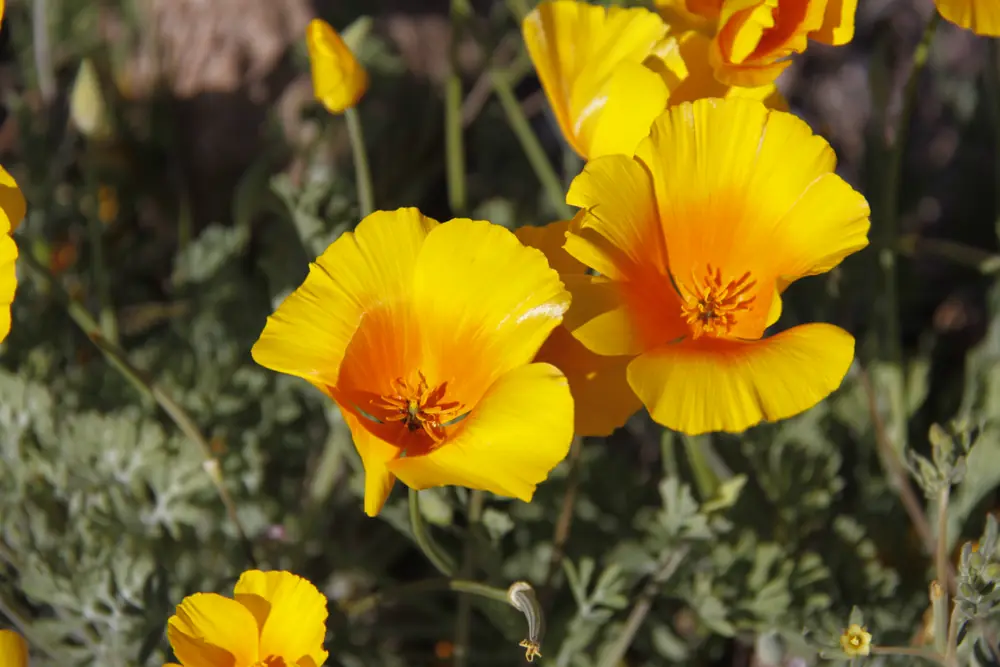
A Bureau of Land Management photo caption says orange poppies line the canyon in wet years and peak in March and April, depending on the year. The agency’s pages describe a cottonwood and willow canyon with some of the best birding in New Mexico, with bird counts ranging from about 200 to 265 species on different pages. Reaching it takes a four-wheel-drive, high-clearance vehicle on a county road.
-
Planting by the table
April and May · Home gardens
For tender plants, use the last column: by that date nine springs out of ten are finished with freezing. The middle column is an even bet. Elevation matters as much as latitude: Santa Fe and Taos usually wait until May, while Las Cruces and the Silver City area are normally done by early April.
| Station | One year in ten | Median | Nine years in ten |
|---|---|---|---|
| Taos | May 7 | May 19 | May 31 |
| Farmington Regional Airport | Apr 20 | May 2 | May 18 |
| Clayton 1 N (northeast plains) | Apr 21 | May 4 | May 19 |
| Santa Fe County Municipal Airport | Apr 22 | May 4 | May 17 |
| Albuquerque International Airport | Mar 17 | Apr 6 | Apr 23 |
| Roswell Climat (Roswell) | Mar 31 | Apr 13 | Apr 28 |
| Fort Bayard (Silver City area) | Mar 14 | Apr 4 | Apr 22 |
| State Univ (Las Cruces) | Feb 23 | Mar 12 | Apr 2 |
Our New Mexico frost dates page lists more towns, so you can find a station near you.
How windy and dry is April in New Mexico?
Wind is the signature of an April in New Mexico: the Albuquerque weather office finds April and May to be the windiest months. The jet stream is still strong over the Southwest while it drifts north, and sunshine heats the ground until rising air mixes the faster upper winds down to the surface. A high wind warning means sustained winds of 40 mph or gusts of 58 mph. The table gives April normals at nine stations, with April 2026 beside them for comparison; the 2026 figures are preliminary until certified.
-
A warm, dry April in 2026
April 2026 · Central and northern New Mexico
All nine stations ran warmer than normal in April 2026, from 1.9 °F above at Roswell to 4.7 °F above at Clayton. Precipitation was below normal at eight of nine; only Gallup was above. Albuquerque measured 0.17 inch against a normal 0.51 inch. This is one spring, so treat it as an example of how far April can lean, not as a forecast.
-
A spring storm on April 26, 2026
Late April · Eastern and central New Mexico
The office described a Pacific storm with damaging wind gusts, very high fire danger in the east, rain in the north and west, and a few inches of snow in the high mountains of the north. The highest gust was 69 mph at Clines Corners, and Albuquerque’s Sunport reported 62 mph. Red Flag Threat Index values reached 7 in the East Central Plains, and a fire already burning in the region grew quickly. The same wind pulled dust into the air over the southeast.
-
What to watch
All month · Plains, highways and foothills
Check the fire weather forecast and any red flag warning before camping, burning or towing a trailer. Snow can still fall in the northern mountains, and a late freeze can return to the north after warm weeks.
| Station | Normal average temperature | Normal precipitation | April 2026 average temperature |
|---|---|---|---|
| Gallup | 47.0 °F | 0.46 in | 49.1 °F |
| Las Vegas | 47.8 °F | 0.68 in | 50.9 °F |
| Raton | 48.1 °F | 1.03 in | 51.2 °F |
| Santa Fe | 50.2 °F | 0.53 in | 52.7 °F |
| Farmington | 51.3 °F | 0.56 in | 53.8 °F |
| Clayton | 52.0 °F | 1.12 in | 56.7 °F |
| Albuquerque Sunport | 56.8 °F | 0.51 in | 60.1 °F |
| Tucumcari | 57.7 °F | 0.90 in | 62.3 °F |
| Roswell | 63.2 °F | 0.57 in | 65.1 °F |
The Climate Prediction Center updates its seasonal outlook near the middle of every month; the current one is on its outlook page. Local forecasts are linked from our weather page.
How much daylight does New Mexico gain in April?
Across the month every town in the table gains between 53 and 65 minutes of daylight, close to two minutes more each day. Raton goes from 12 h 36 m to 13 h 41 m of daylight, and Las Cruces from 12 h 32 m to 13 h 25 m. Naval Observatory times for Albuquerque show sunrise moving from 6:54 a.m. on April 1 to 6:17 a.m. on April 30, and sunset from 7:28 p.m. to 7:51 p.m. On April 20, the night of the Pink Moon, the sun rises at 6:28 a.m. and sets at 7:43 p.m. All of these are daylight time, which has been in effect since March 14 and does not change this month.
| City | Apr 1 | Apr 30 | Gained | Per day |
|---|---|---|---|---|
| Raton | 12 h 36 m | 13 h 41 m | 65 min | 2.2 min |
| Farmington | 12 h 36 m | 13 h 40 m | 64 min | 2.2 min |
| Santa Fe | 12 h 35 m | 13 h 37 m | 62 min | 2.1 min |
| Albuquerque | 12 h 34 m | 13 h 34 m | 60 min | 2.1 min |
| Tucumcari | 12 h 34 m | 13 h 35 m | 61 min | 2.1 min |
| Roswell | 12 h 32 m | 13 h 29 m | 57 min | 2.0 min |
| Silver City | 12 h 32 m | 13 h 27 m | 55 min | 1.9 min |
| Las Cruces | 12 h 32 m | 13 h 25 m | 53 min | 1.8 min |
Use the daylight calculator to find when the sun rises and sets where you live.
What can you see in New Mexico’s night sky in April?
April has a dark new moon early in the month, a full Pink Moon in the middle, and a meteor shower that the Moon spoils this year. All clock times here are Mountain daylight time, which is in effect for the whole month.
-
The Pink Moon
Tuesday, April 20; full at 4:27 p.m. MDT · Anywhere with a clear eastern horizon
The full moon occurs in the afternoon, before it has risen. The Naval Observatory has the sun setting in Albuquerque at 7:43 p.m. on the 20th and the moon rising at 7:55 p.m., so it comes up round and bright just after sunset. Names such as Pink Moon come from folklore, and sources list more than one for April.
-
The Lyrids, a poor year
Peak forecast about 7:40 p.m. MDT on Thursday, April 22 (another calculation puts it about 15 minutes later); active about April 14 to 30 · Dark sites with a view to the northeast
This shower is usually modest, with roughly 20 meteors an hour at best under perfect skies. This year the Moon is close to full, about 95 percent lit, and on the 22nd it clears the Albuquerque horizon at 10:05 p.m., so only the early evening is dark, while Lyra, home of the shower’s radiant, still hugs the northeastern horizon. Counts may be only a few an hour. The Lyrids can surprise with short bursts, but these cannot be predicted.
-
Venus and a thin Moon at dawn
Mornings of April 3 and 4 · Low in the east before sunrise
Venus is a brilliant morning star in April, rising roughly an hour or more before the Sun in our calculations. A thin waning crescent Moon, about 9 percent lit, hangs close by before sunrise on April 3 and again on April 4. Mercury and Saturn are too close to the Sun to see this month.
-
The Moon, Jupiter and Mars
Evenings of April 14 and 15 · High in the south to southwest after dark
The waxing Moon, roughly two-thirds lit, sits close to Jupiter on those evenings, and Mars lies a few degrees away on the 15th. These pairings are our own calculations. Jupiter is the bright, steady, white light; Mars is fainter and orange.
-
The Milky Way’s core before dawn
About April 1 to 14 and April 27 to 30 · Southern sky, last hours of the night
By our calculations the center of the galaxy is above the horizon in dark skies for up to a couple of hours before dawn around the new moon. It sits low in the southern sky, so a clear southern horizon matters. Chaco Culture National Historical Park is a certified International Dark Sky Park and a good choice.
| Phase | Date | Time |
|---|---|---|
| New moon | Tuesday, Apr 6 | 5:51 p.m. MDT |
| First quarter | Tuesday, Apr 13 | 4:56 p.m. MDT |
| Full moon, the Pink Moon | Tuesday, Apr 20 | 4:27 p.m. MDT |
| Last quarter | Wednesday, Apr 28 | 2:18 p.m. MDT |
Every phase for the year is on the moon phase calendar.
What can New Mexico families do outdoors in April?
Calendars for April 2027 are mostly not posted yet. Where we give a date it comes from the organizer, and otherwise we say when it is usually held.
-
Earth Day
Thursday, April 22 · Parks, nature centers and your neighborhood
Earth Day Network lists April 22 and has chosen the theme “Food for Our Planet” for 2027. Local events change each year, so ask your nearest nature center, city open space program or state park what is planned.
-
International Dark Sky Week
Built around the April new moon (April 6, 2027); check dates · State parks and dark-sky sites
The week is usually timed to the new moon in April. In 2026 the governor proclaimed April 13 to 20, and the State Parks Division listed star programs and an owl prowl at Cerrillos Hills, Leasburg Dam, Rockhound, Cimarron Canyon and City of Rocks. Programs for 2027 had not been posted yet, so look at the State Parks events calendar and the park you plan to visit.
-
State park day-use is free for residents, through April 30
Through April 30 · New Mexico State Parks
New Mexico residents are exempt from state park day-use fees from October 1 through April 30, so April is the last month to use the exemption. Camping and non-resident fees still apply.
-
City Nature Challenge
April 30 to May 3, 2027 · Any smartphone, any city
Photos taken from April 30 to May 3 count, identification continues to May 16, and the winners are announced May 20. It starts on the last day of April, so April is a good month to practice photographing plants and animals.
Safety notes for April in New Mexico
Spring turkey hunting, young animals, wind and fire all need some thought in April.
-
Spring turkey hunting
In 2026: youth hunt April 10 to 12; open season April 15 to May 15 · Statewide, except the closed areas the rule book lists
The Department of Wildlife’s 2026–2027 rule book lists those dates for the 2026 season: a youth-only hunt on April 10 to 12, then statewide over-the-counter hunting from April 15 to May 15 except in listed closed areas. The spring bag limit is two bearded turkeys, legal arms are shotguns, bows and crossbows, and it is illegal to shoot a turkey on a roost. April 2027 falls in the next license year, which begins April 1, and its dates come with the next rule book. Confirm before you go.
-
Blaze orange
Whenever you hunt or hike on public land · Military land and Valles Caldera
Blaze orange is required by rule only in narrow cases, such as military reservations and firearm hunts at Valles Caldera National Preserve, where shotgun turkey hunters are excepted. The department encourages orange for hunters everywhere. Hikers who share the woods with hunters should wear a bright jacket or vest.
-
A new license year
April 1 · Hunters and anglers
The rule book says the license year begins April 1 and that earlier licenses are no longer valid. Hunters and anglers also need a current Habitat Stamp for Forest Service and Bureau of Land Management land in New Mexico, with exceptions for children and some older residents.
-
Young animals
Spring · Fields, forests and roadsides
The Department of Wildlife reminds the public to leave fawns, elk calves, bear cubs and other young animals alone. It says newborns hide for about the first week, that the mother is usually a few hundred yards away, and that removing a young animal can cost it its life. Do not approach or touch it, leave quietly, and if you think it is abandoned, note the location and contact the department.
-
Wind, dust and fire
April and May · Plains, highways and foothills
On a windy day, blowing dust can sharply reduce visibility on highways. If you are caught in it, slow down and pull well off the road. Check the NWS Albuquerque fire weather page for any red flag warning, and do not burn, drag chains or park on dry grass on those days.
-
Sandia Crest closure
Through fall 2027 · Sandia Crest, Ellis Trailhead and the road above the 10K lot
The Cibola National Forest began enforcing an area closure on April 30, 2026, covering the Ellis Trailhead, the Sandia Crest Recreation Site and areas along NM-536 beyond the 10K Trailhead parking lot, through fall 2027. The 10K lot is the turnaround point. Check the forest’s page before planning a trip.
Other months and states are linked from the nature hub, and the New Mexico March page covers the month before.
Sources (42)
- NWS Albuquerque: high wind climatology for New Mexico (April and May windiest, warning thresholds)
- NWS Albuquerque: April 2026 climate highlights (normals, April 26 storm, gusts, fire danger)
- NWS Albuquerque: climatological spring runoff data (north peaks mid to late May, south March to April)
- NWS Albuquerque: forecast office home page (fire weather forecasts, red flag warnings)
- Climate Prediction Center: seasonal outlooks (issued monthly near mid-month)
- Bird Alliance of Central New Mexico: April 2024 newsletter (April migrants, warblers, Migratory Bird Festival)
- USFWS Bosque del Apache NWR: wildlife watching (spring shorebirds, warblers, roadrunners)
- USFWS Bosque del Apache NWR: seasons of wildlife (spring defined as mid-February to mid-May)
- USFWS Bitter Lake NWR: seasons of wildlife (avocet and snowy plover, spring and summer)
- National Park Service, White Sands: wildflowers (pepperweed, mid-April bloom, soaptree yucca)
- National Park Service, White Sands: safety (windstorms February to May, trail posts)
- National Park Service, White Sands: weather (spring temperatures, wind, Dunes Drive)
- USFWS: Mexican wolf population statistics 1998 to 2025 (data current as of December 31, 2025)
- USFWS: record number of Mexican wolf pups fostered into New Mexico and Arizona (May 30, 2024)
- Mexican Wolf Interagency Field Team: reintroduction project news (May 2013 denning report)
- Bureau of Land Management: Rio Grande Wild and Scenic River (Ute Mountain raptor closure, Lower Gorge)
- Bureau of Land Management: Orilla Verde Recreation Area (visitor center, life jackets, wildlife)
- Bureau of Land Management: Gila Lower Box Canyon (birding, access)
- Bureau of Land Management: Gila Lower Box Wilderness Study Area (bird diversity)
- Bureau of Land Management photo caption, Gila Lower Box Canyon (poppies peak March and April), via Wikimedia Commons
- National Park Service, Carlsbad Caverns: Brazilian free-tail bat outflight (April through mid-October)
- National Park Service: Bat Flight Program at Carlsbad Cavern (Memorial Day weekend through October)
- National Park Service, Carlsbad Caverns: birds (357 species, Bell's vireo, gray vireo, varied bunting)
- NMSU circular CR-701: fruit tree freeze and frost damage and its management (bloom times at Alcalde)
- New Mexico Department of Wildlife: 2026-2027 hunting rules and information (spring turkey, blaze orange, license year, Habitat Stamp)
- New Mexico Department of Wildlife: hunting information
- New Mexico Department of Game and Fish: public reminded to leave young wildlife alone (May 21, 2018)
- New Mexico Department of Game and Fish: public reminded to leave young wildlife alone (May 20, 2020)
- Cibola National Forest: Sandia Crest area projects update and closure
- U.S. Naval Observatory: moon phases, April 2027
- U.S. Naval Observatory: rise, set and transit times for Albuquerque, April 1, 2027
- U.S. Naval Observatory: rise, set and transit times for Albuquerque, April 20, 2027
- U.S. Naval Observatory: rise, set and transit times for Albuquerque, April 22, 2027
- U.S. Naval Observatory: rise, set and transit times for Albuquerque, April 30, 2027
- Sea and Sky: astronomy calendar of celestial events, 2027 (Pink Moon, Lyrids)
- New Mexico Tourism Department: New Mexico dark skies (Clayton Lake, Chaco, Capulin, Cosmic Campground)
- New Mexico State Parks: experience New Mexico after dark during International Dark Sky Week (April 9, 2026 release)
- New Mexico State Parks: fees and permits (resident day-use exemption October 1 through April 30)
- Earth Day Network: Earth Day 2027 (April 22, theme Food for Our Planet)
- City Nature Challenge: 2027 dates
- Project FeederWatch: project overview (November to April)
- Photos via Wikimedia Commons; licenses and photographers are credited under each picture
.jpg)
.JPG)