What to look for in nature in New Mexico this March
March is New Mexico’s hinge month, the first of meteorological spring, and it can feel like all four seasons in one week. The cranes that wintered at Bosque del Apache are gone north, and the refuge is turning over to shorebirds and roadrunners. On the eastern prairie, lesser prairie-chickens are stamping and booming at dawn. In the south the Gila River is already near its median runoff peak, apricot trees are blooming in the valleys, and the first wildflowers can open in the desert if the winter was wet, while the northern mountains still hold their snow and wait for May. The days gain about an hour of light over the month, the clocks jump ahead on March 14, and the wind starts to blow. Everything in this guide is a typical window, not a promise: check the sources before a long drive.
Other months in New Mexico: October, November, December, January, February, April.
Start here

- Book a prairie-chicken blind. Late March and early April are the weeks conservation groups suggest for a lek visit on the eastern plains. Viewing is by arrangement with The Nature Conservancy or another host, so ask early, and plan to be settled in the blind well before first light.
- Watch the Worm Moon rise on Sunday, March 21. The moon is full early on the 22nd, but the best view is the evening before. In Albuquerque it rises about 6:53 p.m. daylight time, shortly before the sun sets, so you can see the moon climb out of the east while the sky is still blue.
- Check your apricot buds against the forecast. Apricots can be in full bloom in the first week of March, and a hard freeze at that stage kills most of the flowers. Watch the overnight lows, and use the freeze table below to see how late frost can run in your part of the state.
For the Naturalist’s Field Journal: a dawn on a prairie-chicken lek, or the equinox sunrise, suits the dusk and dawn watch page. Your first roadrunner or returning swallow of the year goes in “birds I have seen,” with the date. An apricot or cottonwood branch with swelling buds belongs in “a tree through the seasons,” and a favorite trail goes in “the same place twice,” with a note on the weather that day, and a gusty, dusty afternoon fits “reading the signs.”
Regions used below: Northern mountains, Taos and the Enchanted Circle; Four Corners and the northwest; Santa Fe and the Jemez; Albuquerque and the middle Rio Grande; Eastern plains; Southeast and the Pecos valley; Southwest, the Gila and Las Cruces.
Where do the Bosque del Apache cranes go in March?
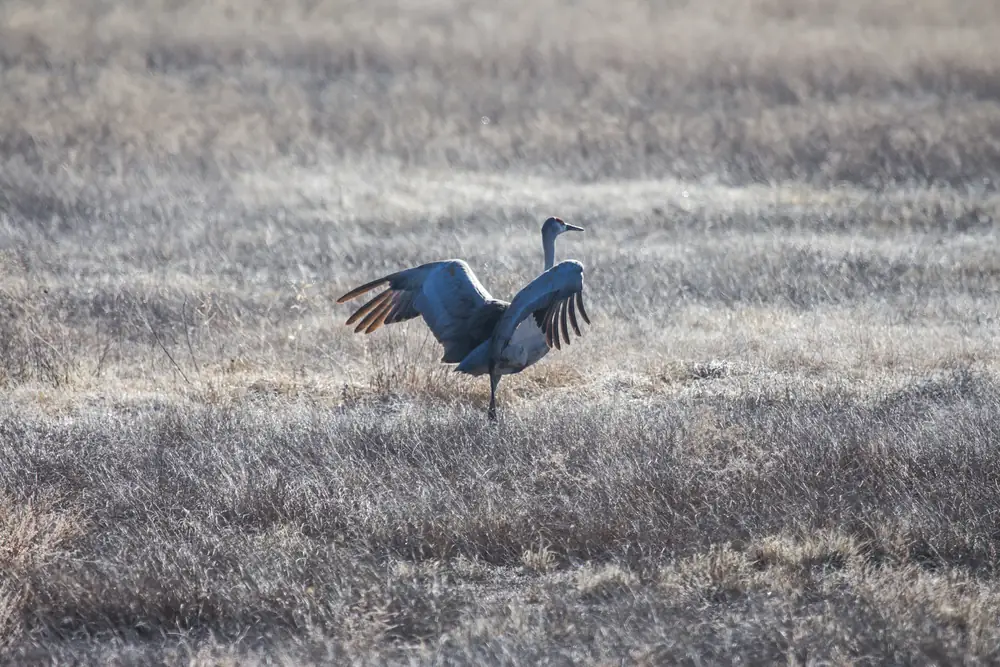
By March the big winter flocks at Bosque del Apache National Wildlife Refuge have mostly lifted off. According to the Friends of Bosque del Apache, sandhill cranes usually start north in mid to late February, and the refuge dates its spring season from mid-February to mid-May. The cranes have not vanished, though. They are on the move, and a New Mexico March is a good time to follow them in your mind to the staging grounds ahead.
-
Staging in Colorado’s San Luis Valley
Peak around the first week of March · Monte Vista National Wildlife Refuge, Colorado
The Fish and Wildlife Service says the peak crane migration at Monte Vista comes around the first week of March, with roughly 18,000 to 21,000 greater sandhill cranes, which the refuge says is ninety-five percent of the Rocky Mountain population, and another 5,000 to 6,000 lesser sandhill cranes passing through. The Friends of Bosque del Apache note that the Rocky Mountain population gathers there in March, and that greater sandhills go on to nest in Utah, Colorado, Wyoming, Montana and Idaho.
-
The long haul to the Platte and beyond
March · Platte River, Nebraska
The lesser sandhills travel much farther. According to the Friends, more than half a million of them gather along Nebraska’s Platte River in March, and they carry on to northern Canada, Alaska and Siberia, a trip of as much as 5,000 miles. A crane festival is held in the San Luis Valley and another along the Platte each spring, and the Friends mention that they fall in early March. Organizers have not all posted 2027 dates yet, so confirm them before planning a drive.
For the cranes’ farewell month, see our New Mexico February page, and read the refuge’s own notices before you plan a trip to the empty ponds.
Which birds are at the refuges in March, once the cranes and geese leave?
The refuges do not empty; they change over. The Fish and Wildlife Service explains that the wetlands at Bosque del Apache that held thousands of ducks, geese and cranes all winter are slowly drained in spring, and the muddy edges that result suit a different crowd.
-
Snow geese at Bitter Lake, then gone
Through March · Bitter Lake National Wildlife Refuge, near Roswell
Bitter Lake lists ducks as present from October through March and snow geese from November through March. Early March may still turn up flocks lifting off the lakes in long, noisy lines, but each week there are fewer. Rules about hunting these birds in March are in the safety section below.
-
Shorebirds and the first migrants
Spring season, mid-February to mid-May · Bosque del Apache National Wildlife Refuge
The refuge lists sandpipers, stilts, plovers, dunlins, curlews, avocets and some twenty other shorebird species among its spring visitors, along with flycatchers, vireos and about a dozen kinds of warblers that either rest here on the way north or stay to claim a territory. The refuge dates this spring season from mid-February to mid-May, so March catches only the early part of the run. Scan the drying pond edges for the early ones, and ask at the visitor center which ponds hold water.
-
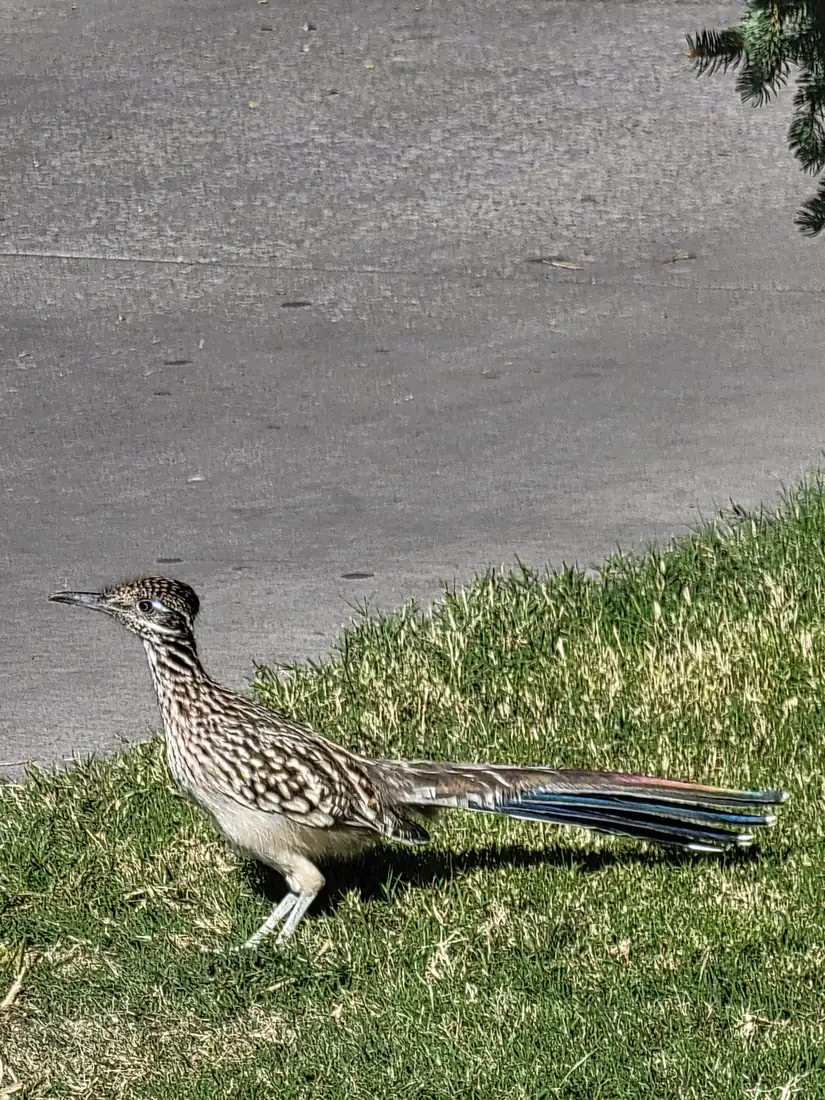
Roadrunners on the hunt
Warm days · Dry roadsides, arroyo edges and gravel at the refuges
The Fish and Wildlife Service points out greater roadrunners hunting sluggish lizards and snakes as the days warm, and the nature center’s volunteer group counts the roadrunner among its year-round residents. The state bird is a fair bet on a sunny morning along dry roadsides.
-
A bosque walk with company
Every Saturday and Sunday, 8:30 a.m. · Rio Grande Nature Center State Park, Albuquerque
Volunteers at the nature center lead a free guided bird walk at the Candelaria wetland blind each weekend, all year, with no registration. The park’s birders list more than 300 species, about 40 of them year-round residents, so a March walk mixes winter stragglers with the first arrivals. A recent sightings list is kept at the visitor center.
Look for roadrunners and the first returning birds, and log each one with its date in your Naturalist’s Field Journal.
When can you see lesser prairie-chickens dance in New Mexico?
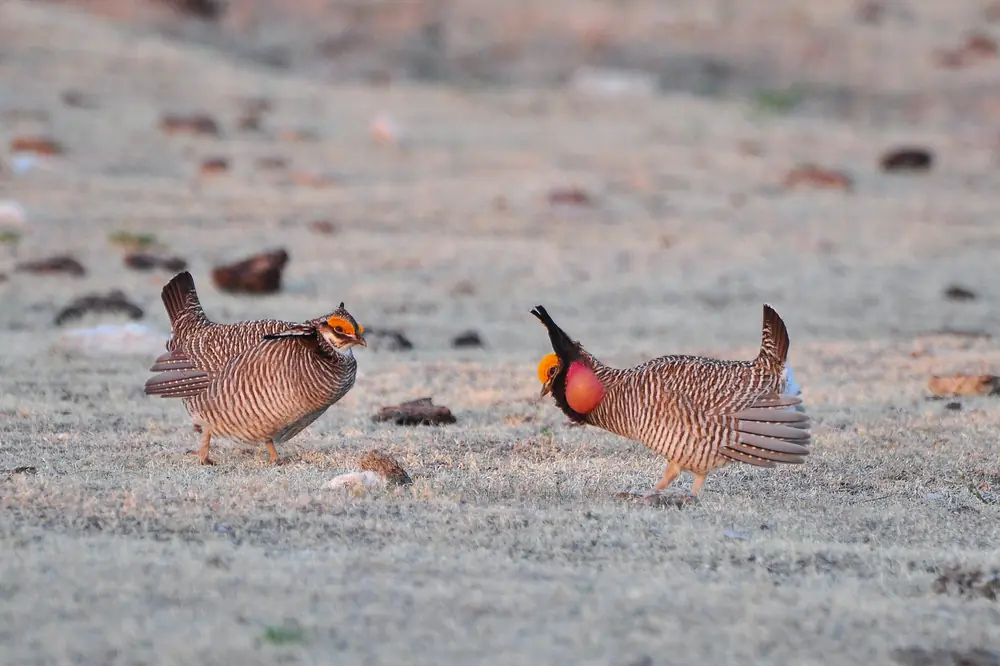
The lesser prairie-chicken is a small grouse of the shinnery oak and grass prairie of the eastern plains, and each spring the males gather on bare patches called leks to stamp, inflate their neck sacs and boom. In February the displays have only just begun, and by late March the dancing is well under way.
-
A lek in full display
Late March and early April · Shinnery oak plains near Portales and Milnesand
Audubon Santa Fe’s field-trip leader reported on a trip on April 9, 2026, where nine males arrived just as the group settled into its blinds and strutted, jumped and called for nearly two hours. The report notes that the count was small because the hens had already chosen mates, and that the group says it will likely try for late March or early April “to insure a good number of dancers.”
-
Getting a seat in a blind
By arrangement, well ahead · Milnesand Prairie Preserve, The Nature Conservancy
The Audubon trip was arranged through staff of The Nature Conservancy, which owns the Milnesand preserve. Viewing at a lek is done from a blind. The Working Lands for Wildlife viewing guide says to arrive well before first light, stay put until the birds leave, usually by mid-morning, and never leave the blind while birds are on the lek. Do not walk onto a lek on your own.
-
A hopeful count
Spring 2025 and 2026 censuses · Milnesand Prairie Preserve
Audubon Santa Fe reported in June 2026 that the Nature Conservancy’s spring census at Milnesand tallied 315 lesser prairie-chickens, up from 183 the year before, calling it one of the better counts in the Southwest. One year’s numbers cannot show a trend, but it is a good-news story for a bird that is often in the headlines for the wrong reasons.
-
Public land and closures
Check each spring · State prairie-chicken wildlife areas
The 2026–27 rule book from the Department of Wildlife opens its Prairie Chicken Areas to furbearer and nongame hunting only from November 1 to March 15, 2027, and says each area’s posted access rules apply. Ask the department what applies to a visit, and keep off the leks themselves.
The first displays and the early part of the season are covered on our New Mexico February page.
When does the snowmelt come to New Mexico’s rivers?
The National Weather Service in Albuquerque has compiled climatological spring runoff data, built on daily median flows from the U.S. Geological Survey. Its summary is that the great majority of gauges in northern New Mexico and far southern Colorado peak in mid to late May, while rivers in the south typically peak from March through April. The Gila River, which drains the Gila Wilderness, is the early riser, with a median peak of March 15.
-
The Gila runs early
Median peak March 15 · Gila River, southwestern New Mexico
Audubon describes the Gila as one of the last free-flowing rivers in the Southwest, lined with cottonwood and willow forest that supports more than 250 bird species. Because its median peak comes in March, the Gila is the river to visit for early-season flow, while the northern rivers are still waiting on their snowmelt.
-
In the north, May is the month
Median peaks May 8 to 30 · Rio Grande, Rio Chama, Jemez, Pecos
Rivers fed by the northern mountains peak weeks after the equinox. If you are planning a rafting trip, a flood-plain walk or fishing on a snowmelt stream, expect March conditions to be nothing like May’s, and remember that individual years can run weeks earlier or later than the medians.
-
A thin snowpack in 2026
March 2026 · Statewide
The Albuquerque weather office reports that record March heat in 2026 rapidly melted a snowpack that was already at record-low levels, a reminder that these median dates describe typical years, not every year.
| River and gauge | Median peak runoff |
|---|---|
| Gila River near Gila | March 15 |
| Rio Ruidoso at Hollywood | April 17 |
| Jemez River near Jemez | May 8 |
| Rio Chama at La Puente | May 15 |
| Rio Grande at Albuquerque | May 23 |
| Rio Grande at Otowi Bridge | May 24 |
| Pecos River near Pecos | May 25 |
| Rio Grande at Embudo | May 30 |
Our weather page links to current river and forecast information.
What blooms in New Mexico in March, and when is the last freeze?
Spring flowers and spring freezes overlap in New Mexico, and March is where the two collide. The table shows when the last freeze usually ends at eight stations. In the Las Cruces area the median is in the middle of March, around Albuquerque it comes in early April, and in Taos it is the third week of May. Anything that opens before those dates is gambling on the weather.
-
Apricots, the first fruit trees
Full bloom can come in the first week of March · Valleys and orchards statewide
A New Mexico State University horticulture article says apricots are in full bloom by the first week of March, so “they’re sure to be bitten by multiple freezes,” and that five apricot varieties at its Los Lunas science center have not produced fruit once since 2007. A university circular lists bloom times at its Alcalde center as March for apricots, late March to April for peaches and early to mid-April for apples, and gives the temperature at which 90 percent of flowers are damaged at full bloom as 22 °F for apricots, 24 °F for peaches and 25 °F for apples. Late frost, it says, is the number one problem for fruit growers in central and northern New Mexico.
-
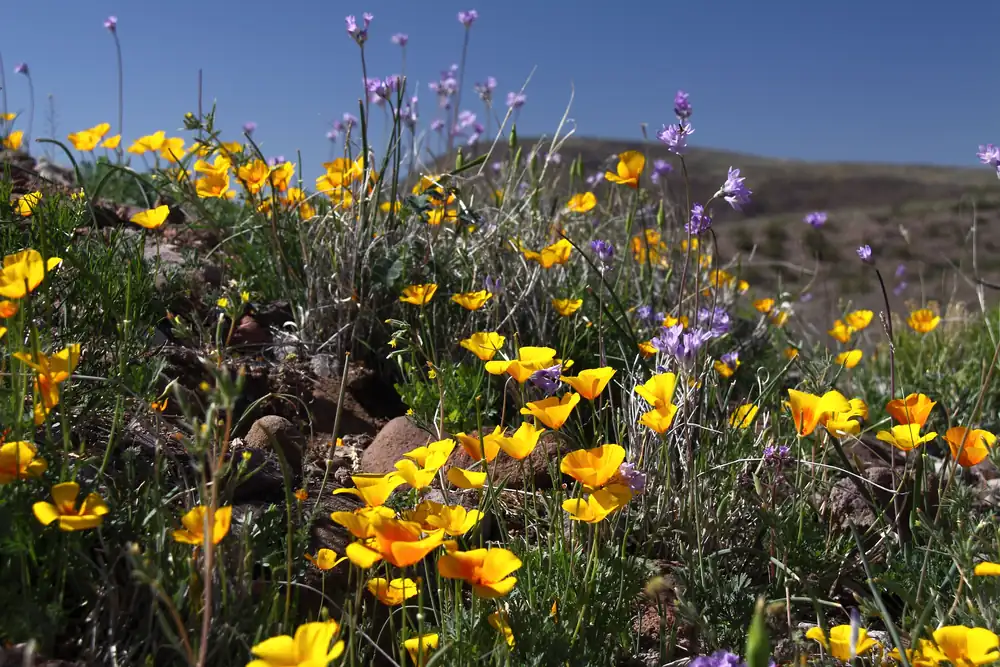
Desert wildflowers, if the rain came
March into April · Southern and eastern New Mexico
An NMSU extension specialist named Mexican poppies, purple verbenas, desert marigolds and desert chicory as spring bloomers in the south and east, and cautioned that how many appear depends on the winter’s precipitation. In a dry year there may be few. The Native Plant Society of New Mexico has chapters in Albuquerque, Santa Fe, Taos, Las Cruces, Silver City and Alamogordo and publishes a wildflower guide, which is the best way to name what you find.
-
Yuccas and chollas at Carlsbad
Yucca blossoms start around March 1, by one park blog’s account · Carlsbad Caverns National Park, Chihuahuan Desert
A park blog from March 2017 described yucca blossoms beginning on March 1, new yellow growth on the chollas, mescal bush blooming soon after, and ocotillos that looked like dead sticks until they leafed out. The timing shifts with each spring, and the blog is a single park’s observation, so treat it as a clue to look for, not a date.
| Station | One year in ten | Median | Nine years in ten |
|---|---|---|---|
| Taos | May 7 | May 19 | May 31 |
| Farmington Regional Airport | Apr 20 | May 2 | May 18 |
| Clayton 1 N (northeast plains) | Apr 21 | May 4 | May 19 |
| Santa Fe County Municipal Airport | Apr 22 | May 4 | May 17 |
| Albuquerque International Airport | Mar 17 | Apr 6 | Apr 23 |
| Roswell Climat (Roswell) | Mar 31 | Apr 13 | Apr 28 |
| Fort Bayard (Silver City area) | Mar 14 | Apr 4 | Apr 22 |
| State Univ (Las Cruces) | Feb 23 | Mar 12 | Apr 2 |
Our New Mexico frost dates page lists last-freeze dates for more towns, so you can match your garden to a station near you.
Which New Mexico animals wake up in March?
Warm afternoons, even in a month that can still bring snow, are the signal for cold-blooded animals and some hibernators. Not everything is stirring yet, and the order matters for your safety.
-
Black bears leave their dens
Males and young first; mothers with cubs in May · Mountain forests: the Sandias, Manzanos, Jemez, Sangre de Cristo, Gila
The Department of Wildlife says male bears and independent young emerge first in spring, and females with cubs follow later, in May. Its biologists have written that pregnant females stay in their dens until about mid-April, weeks later than males. Bears that turn up this early are looking for food, so bring in bird feeders and secure garbage. The department asks the public to report aggressive bears at 888-248-6866.
-
Rattlesnakes warm up
Warm days, increasingly through spring · Rocky hillsides, trails and canyons
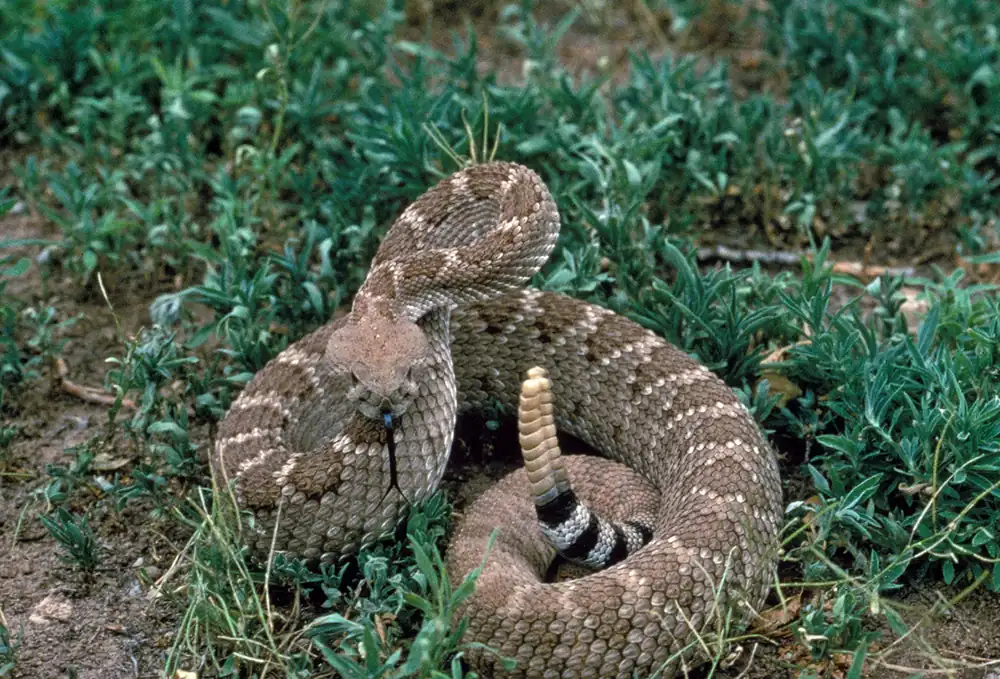
The Pajarito Environmental Education Center says rattlesnakes are most active in spring and summer as temperatures warm, and that two kinds live on the Pajarito Plateau. Warm March days can bring them out onto trails and sunny rocks. Look before you reach or step, and if you are bitten call 911 or Poison Control at 1-800-222-1222.
-
Cave swallows return to the Caverns
By March 10 in one year’s blog post · Carlsbad Caverns National Park
The park’s March 2017 blog noted insects buzzing in the afternoon and cave swallows moving back in. It also described the return of the free-tailed bats as one of the year’s big events.
-
Free-tailed bats come back in spring
Spring; evening flights in summer · Carlsbad Caverns National Park
The park says hundreds of thousands of Mexican free-tailed bats return from Mexico and South America each spring, and that its outflights run from spring through fall. In 2013 a small “bat watch” program started in mid-April, with the full flight program following in May, but those dates are from one year. Check the park for the 2027 schedule before you go.
See our Naturalist’s Field Journal for a plate on tracks to know; a bear print in spring mud is worth recording.
How strong is juniper pollen in March, and when is Arbor Day?
Albuquerque’s air-quality program measures pollen daily, and March is a juniper month. The city’s counts on two March 14 days, one year apart, show how much it varies. On Thursday, March 14, 2024, juniper on the west side was 92, a high level, while the east side measured 10. On Friday, March 14, 2025, the west side was 98, high, and the east side 65, medium. Winds carry the pollen for miles, so the rating where you are can change from one block to the next.
-
Which trees come when
February through spring · Albuquerque and the middle Rio Grande valley
The city’s pollen guide lists juniper and cedar first, then elm, and later cottonwood, poplar and aspen, mulberry, ash, pine and sagebrush. A University of New Mexico allergist said in 2024 that juniper pollen usually begins in mid to late February. The city has banned new planting of mulberry and cypress, and its list of top pollen producers includes mulberry, juniper, elm, ash and cottonwood.
-
Arbor Day in New Mexico
Second Friday in March: March 12, 2027 · Statewide
The Territorial Legislature set the second Friday of March as Arbor Day in 1891, and the governor’s Arbor Month proclamation for March 2023 repeats that date. In 2027 that falls on Friday, March 12. The state Forestry Division’s Conservation Seedling Program offers climate-ready seedlings every spring and fall, and its community forestry staff support town tree plantings. Check with your local forestry office or city for any planting events.
Pollen counts are also posted on the City of Albuquerque’s air-quality page; use them to plan a hike.
How warm and windy is March in New Mexico?
March is the start of New Mexico’s windy season. The National Weather Service in Albuquerque calls April and May the windiest months, with March and June often not far behind, and explains the cause: as the jet stream drifts north, the strengthening spring sun heats the ground, and the rising air mixes strong winds from above down to the surface. The same office issues a high wind warning when sustained winds reach 40 mph or more, or gusts 58 mph or more. The table gives normal March averages at nine stations, with last March beside them for contrast. High winds raise dust and spread grass fires, so check fire restrictions with the state Forestry Division before you light anything.
-
March 2026: not a typical March
March 2026 · Statewide
The Albuquerque office calls March 2026 the warmest March on record, beating the old record by 5.2 °F, so warm that the month averaged more than 5 °F warmer than the normal April. An unusually strong ridge of high pressure over the Desert Southwest drove it, and every automated airport station in the report broke its all-time March high; Albuquerque’s rose from 85 to 91 °F. Albuquerque and Santa Fe received only a trace of precipitation, and Raton none. Fire danger indices reached their maximum values for March. It is a reminder of how far one March can swing from the next.
| Station | Normal average temperature | Normal precipitation | March 2026 average temperature |
|---|---|---|---|
| Gallup | 40.6 °F | 0.62 in | 48.9 °F (warmest on record) |
| Raton | 40.4 °F | 0.81 in | 50.0 °F (warmest on record) |
| Las Vegas | 41.4 °F | 0.60 in | 51.5 °F (warmest on record) |
| Santa Fe | 43.3 °F | 0.66 in | 53.1 °F (warmest on record) |
| Farmington | 44.8 °F | 0.60 in | 53.2 °F (warmest on record) |
| Clayton | 44.9 °F | 0.91 in | 55.8 °F (warmest on record) |
| Albuquerque Sunport | 49.5 °F | 0.46 in | 61.3 °F (warmest on record) |
| Tucumcari | 50.0 °F | 0.84 in | 58.6 °F (warmest on record) |
| Roswell | 55.2 °F | 0.54 in | 62.3 °F (warmest on record) |
Each month around the 15th, NOAA’s forecasters post a new 90-day outlook at cpc.ncep.noaa.gov; that page is the place to see the current one. For forecasts for your town see our weather page.
How much daylight does New Mexico gain in March?
Between the first and last day of March the towns in the table pick up 59 to 71 minutes of sun, a little over two minutes more each day, and every town passes 12 hours of daylight in mid-month. The clock change hides some of that. Naval Observatory times for Albuquerque show sunrise at 6:20 a.m. on Saturday, March 13, still standard time, then 7:19 a.m. on Sunday the 14th after clocks go forward at 2:00 a.m.; sunset jumps from 6:12 p.m. to 7:13 p.m. A week later, on March 21, the sun is up at 7:09 a.m. and down at 7:19 p.m. (daylight time). Day length itself, counted in hours and minutes, ignores the change.
| City | Mar 1 | Mar 31 | Gained | Per day |
|---|---|---|---|---|
| Raton | 11 h 23 m | 12 h 34 m | 71 min | 2.4 min |
| Farmington | 11 h 23 m | 12 h 34 m | 71 min | 2.4 min |
| Santa Fe | 11 h 25 m | 12 h 33 m | 68 min | 2.3 min |
| Albuquerque | 11 h 26 m | 12 h 32 m | 66 min | 2.2 min |
| Tucumcari | 11 h 25 m | 12 h 32 m | 67 min | 2.2 min |
| Roswell | 11 h 29 m | 12 h 31 m | 62 min | 2.1 min |
| Silver City | 11 h 29 m | 12 h 29 m | 60 min | 2.0 min |
| Las Cruces | 11 h 30 m | 12 h 29 m | 59 min | 2.0 min |
To see sunrise and sunset in your own town for any date, try the daylight calculator.
What can you see in New Mexico’s night sky in March?
March has no eclipse or meteor shower worth planning around, but it does have the equinox, a Worm Moon and planets at both ends of the night. Clock times use Mountain time. Before the Sunday, March 14 switch they are standard time, and from that morning they are daylight time everywhere in the state.
-
The equinox, and sunrise at Chaco
Equinox Saturday, March 20, 2:25 p.m. MDT · Casa Rinconada, Chaco Culture National Historical Park
Spring begins at the March equinox, which the Naval Observatory puts at 20:25 UTC, or 2:25 p.m. in New Mexico. The National Park Service says Chaco Culture National Historical Park presents a sunrise program at Casa Rinconada, a Chacoan great kiva, where visitors observe the alignment of the building with the equinox sunrise. The park has held such talks for years, but dates and times change, and this park is far down dirt roads, so look at the park’s calendar or call before you drive.
-
The Worm Moon
Best on the evening of Sunday, March 21; full at 4:44 a.m. Monday, March 22 · Anywhere with a clear eastern horizon
The full moon is early on the 22nd, but the evening before it is very nearly full. For Albuquerque, the Naval Observatory has moonrise at 6:53 p.m. on March 21, with sunset at 7:19 p.m., so the full disk climbs out of the east with the sky still light. Names such as Worm Moon, Crow Moon and Sap Moon come from folklore, and sources list several for March.
-
Mercury and Venus before sunrise
Mercury at its widest on the night of March 16 to 17; best roughly March 8 to 25 · Low in the east-southeast before dawn
The innermost planet reaches its widest morning position, about 27.6 degrees west of the Sun, on the night of March 16 to 17; sources disagree by a few hours on the exact moment. For most of the month it is a faint point just above the east-southeast horizon in twilight, so find a spot with a low, open view. Brilliant Venus is far higher and easy to find, clearing the horizon well over an hour and a half ahead of sunrise on March 1 in our calculations, with a slim old crescent moon hanging nearby on March 4 and 5.
-
Jupiter, with the moon and then Mars
Moon near Jupiter on the evenings of March 18 and 19; Mars near Jupiter around March 30 · High in the south and southwest in the evening
Jupiter spends the evening high in the sky near the Leo and Cancer border. The Moon, a bright gibbous about 88 percent lit, passes close to it, within about a degree, on March 18 and 19. Later, around the night of March 30 to 31, orange Mars sits about four degrees from Jupiter, with both planets high in the evening sky. The pairing dates come from our own calculations, so use them to pick the right evenings, not to time anything to the minute.
-
The Milky Way’s core returns before dawn
Early to mid-March and around March 31 · Southern horizon, in the last hours before dawn
The bright center of our galaxy rises again in the pre-dawn hours, and the dark-sky window is short, so the best dates are around the March 8 new moon and again near March 31. Our calculations suggest only a couple of hours of useful darkness even in the south of the state. Chaco, a certified International Dark Sky Park since 2013, is a good place to look.
| Phase | Date | Time |
|---|---|---|
| New moon | Monday, Mar 8 | 2:29 a.m. MST |
| First quarter | Monday, Mar 15 | 10:25 a.m. MDT |
| Full moon, the Worm Moon | Monday, Mar 22 | 4:44 a.m. MDT |
| Last quarter | Monday, Mar 29 | 6:54 p.m. MDT |
The moon phase calendar lists every phase of the year.
What can New Mexico families do outdoors in March?
Most 2027 event calendars are not out yet, so call or check each place first. State parks charge New Mexico residents no day-use fee through April 30, under an exemption that began October 1.
-
Renew your fishing license
Licenses expire March 31 · Online, by phone or at license vendors
The Department of Wildlife says fishing licenses are valid April 1 through March 31 of the following year, and that anglers 12 and older need one, so anyone fishing in the last days of March should check the date on theirs.
-
Project FeederWatch winds down
Season runs November to April · Your backyard feeder
The project counts the birds at feeders through April, with an annual fee of $18 for U.S. participants, and March is the last full month of counts. Notice who is leaving and who has arrived.
-
Journey North hummingbird maps
Spring · Online
Journey North asks volunteers to log hummingbird sightings and publishes maps of the birds’ spring advance. The program’s page centers on ruby-throated hummingbirds, an eastern species, so New Mexico’s broad-tailed and black-chinned birds may not show on the maps. At the Randall Davey Audubon Center in Santa Fe, staff reported that broad-tailed males appeared in the second week of April in 2025.
-
The City Nature Challenge
April 30 to May 3, 2027 · Your city, any smartphone
Organizers have posted the 2027 dates: observations from April 30 to May 3, identification through May 16. It is a good habit to start photographing plants and animals now.
Safety notes for March in New Mexico
Hunting, wind and waking animals all call for care in March.
-
Who is hunting, and what to wear
March · Statewide
Under the Department of Wildlife’s 2026–27 rules, several seasons overlap March. Any-legal-weapon javelina hunts run February 1 to March 31 in many units. Statewide cougar season and over-the-counter Barbary sheep licenses run to March 31. Oryx hunts continue, including a once-in-a-lifetime hunt on the Stallion Range of White Sands Missile Range on March 5 to 7 and off-range hunts listed for March 1 to 31. Spring turkey season comes after March: the current rule book lists April 15 to May 15 for the 2026 season, and 2027 dates arrive with the next rule book.
-
Snow geese and the conservation order
Ends March 10, 2027 · Bernardo hunt units and other open areas
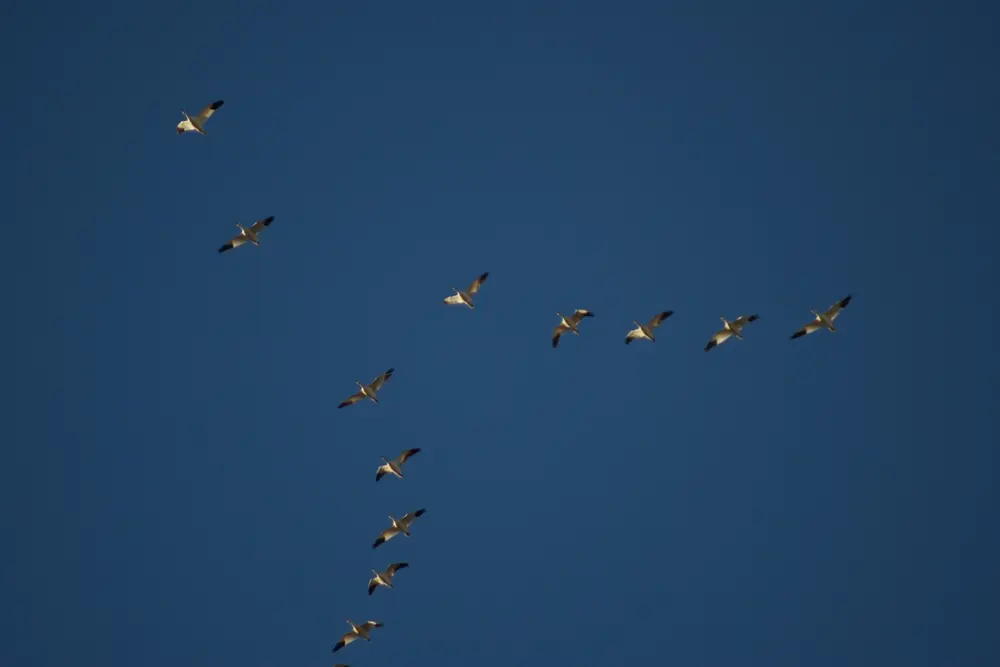
The Light Goose Conservation Order for snow and Ross’s geese runs February 1 to March 10, 2027, with no bag limit and a free permit required. Wildlife areas may have their own rules, so read the migratory bird supplement before you go, and expect hunters near any wetland where geese gather.
-
Blaze orange
Whenever you hunt or hike on public land · Military land and Valles Caldera
Blaze orange is required only in narrow cases: 144 square inches or more on military reservations (a vest at Fort Bliss, including McGregor Range), and 244 square inches for a firearm elk hunt in Valles Caldera National Preserve. Elsewhere the law does not require it, though the department urges every hunter to wear it, and a brightly colored jacket is a smart idea for hikers.
-
Traps and snares
Through March 15 for badger, bobcat, fox, ringtail and weasel · Private land only
The furbearer season for those species lasts until March 15, and beaver, muskrat, nutria and raccoon trapping lasts until March 31. State rules ban traps and snares on public land, though ranches and other private holdings are fair game, so dogs belong on a leash along farm tracks.
-
Wind, dust and fire
March through June · Plains, highways and foothills
On a high-wind day blowing dust can cut visibility on open highways. If it turns dark, slow down and pull off the road well clear of traffic. Never throw a cigarette from a car, and check fire restrictions at the Forestry Division before a campfire.
-
Bears, snakes and cold water
March · Mountains, canyons and lakes
Secure food and garbage against hungry bears, step carefully around rocks and logs on warm days, and stay out of cold, fast water, which can run high in the southern rivers while their runoff peaks.
-
Trail closures
Through fall 2027 · Sandia Crest
The Cibola National Forest said on October 2, 2026, that Sandia Crest, the Ellis Trailhead and the road above the 10K Trailhead parking area are closed through fall 2027 for hazard tree, fuel and recreation-site projects. Cars turn around at the 10K lot. The La Luz Trail stays open to the tram but not onward to the crest.
To explore other months and states, start at the nature hub. Our clouds guide helps with reading spring skies, and the daylight tool shows how the March 14 clock change shifts sunrise and sunset in your town. See also the New Mexico February page for the season before.
Sources (51)
- NWS Albuquerque: high wind climatology for New Mexico (April and May windiest, warning thresholds)
- NWS Albuquerque: March 2026 climate highlights (normals, record warmth, fire danger)
- NWS Albuquerque: climatological spring runoff data (median peak dates)
- Climate Prediction Center: seasonal outlooks (issued monthly near mid-month)
- USFWS Bosque del Apache NWR: seasons of wildlife
- USFWS Bosque del Apache NWR: wildlife watching (spring season, shorebirds, roadrunners)
- USFWS Bitter Lake NWR: seasons of wildlife
- USFWS Monte Vista NWR: sandhill crane migration (peak around the first week of March)
- Friends of Bosque del Apache: sandhill crane migration, an annual cycle
- Friends of Bosque del Apache: bidding farewell to the cranes as spring migration begins
- Friends of the Rio Grande Nature Center: birding at the park (weekend bird walks)
- Audubon Santa Fe: lesser prairie-chicken lek field trip, April 9, 2026
- Audubon Santa Fe: more chickens at Milnesand (spring census, June 2026)
- Working Lands for Wildlife: lesser prairie-chicken identification and viewing tips
- Audubon: celebrating the Gila River (bird diversity, free-flowing river)
- Audubon Southwest: hummingbirds and haiku (Randall Davey Audubon Center, June 2025)
- Journey North: hummingbird migration program
- NMSU circular CR-701: fruit tree freeze and frost damage and its management
- NMSU Southwest Yard and Garden: fruit tree blossoms and frost (April 6, 2019)
- NMSU Southwest Yard and Garden: spring wildflowers (March 28, 2015)
- Native Plant Society of New Mexico: chapters and wildflower guide
- National Park Service, Carlsbad Caverns: spring at the park (March 10, 2017 blog)
- National Park Service, Carlsbad Caverns: spring at Carlsbad Caverns (March 4, 2013 news release)
- National Park Service, Carlsbad Caverns: bats (outflights spring through fall)
- New Mexico Department of Wildlife: bear aware in spring
- New Mexico Department of Wildlife: be bear aware when outdoors this spring (April 21, 2016)
- New Mexico Department of Wildlife: research, dens and bears (August 6, 2025)
- City of Albuquerque Air Quality: daily status and pollen counts, March 14, 2024
- City of Albuquerque Air Quality: daily status and pollen counts, March 14, 2025
- City of Albuquerque: pollen identification guide
- City of Albuquerque: restricted trees for pollen control
- UNM Health Sciences: New Mexico allergy season survival guide (February 27, 2024)
- State of New Mexico: Arbor Month proclamation, March 2023 (second Friday of March, 1891)
- New Mexico Forestry Division (EMNRD): seedling program and fire restrictions
- National Park Service, Chaco Culture: night sky and equinox programs
- National Park Service, Chaco Culture: earlier equinox events notice (September 2007)
- New Mexico Department of Wildlife: hunting information
- New Mexico Department of Wildlife: 2026–2027 hunting rules and information (javelina, cougar, oryx, furbearers, blaze orange, turkey)
- New Mexico Department of Wildlife: 2026–2027 migratory game bird rules (Light Goose Conservation Order to March 10, 2027)
- U.S. Naval Observatory: moon phases, March and April 2027
- U.S. Naval Observatory: Earth’s seasons, 2027 (March equinox)
- U.S. Naval Observatory: rise, set and transit times for Albuquerque, March 13, 2027
- U.S. Naval Observatory: rise, set and transit times for Albuquerque, March 14, 2027
- U.S. Naval Observatory: rise, set and transit times for Albuquerque, March 21, 2027
- Sea and Sky: astronomy calendar of celestial events, 2027
- New Mexico State Parks: fees and permits (resident day-use exemption October 1 – April 30)
- Project FeederWatch: project overview (November to April)
- City Nature Challenge: 2027 dates
- Cibola National Forest: Sandia Crest area projects update and closure (October 2, 2026)
- New Mexico Department of Wildlife: fishing licenses and permits (valid April 1 through March 31)
- Photos via Wikimedia Commons; licenses and photographers are credited under each picture
