What to look for in nature in New Mexico this November
November is when New Mexico’s winter visitors settle in. Snow geese and sandhill cranes pack the ponds of the Rio Grande and the Pecos, bald eagles take up their perches over the northern lakes, and most of the state’s black bears crawl into their dens. With daylight time over on the first, most towns see the sun go down before 5:30. Up high, the first real snowstorm usually arrives this month; down in Las Cruces, the tomatoes may still be waiting for their first frost. The notes below follow the cranes, the eagles and the weather across the state.
Other months in New Mexico: October, December.
Start here

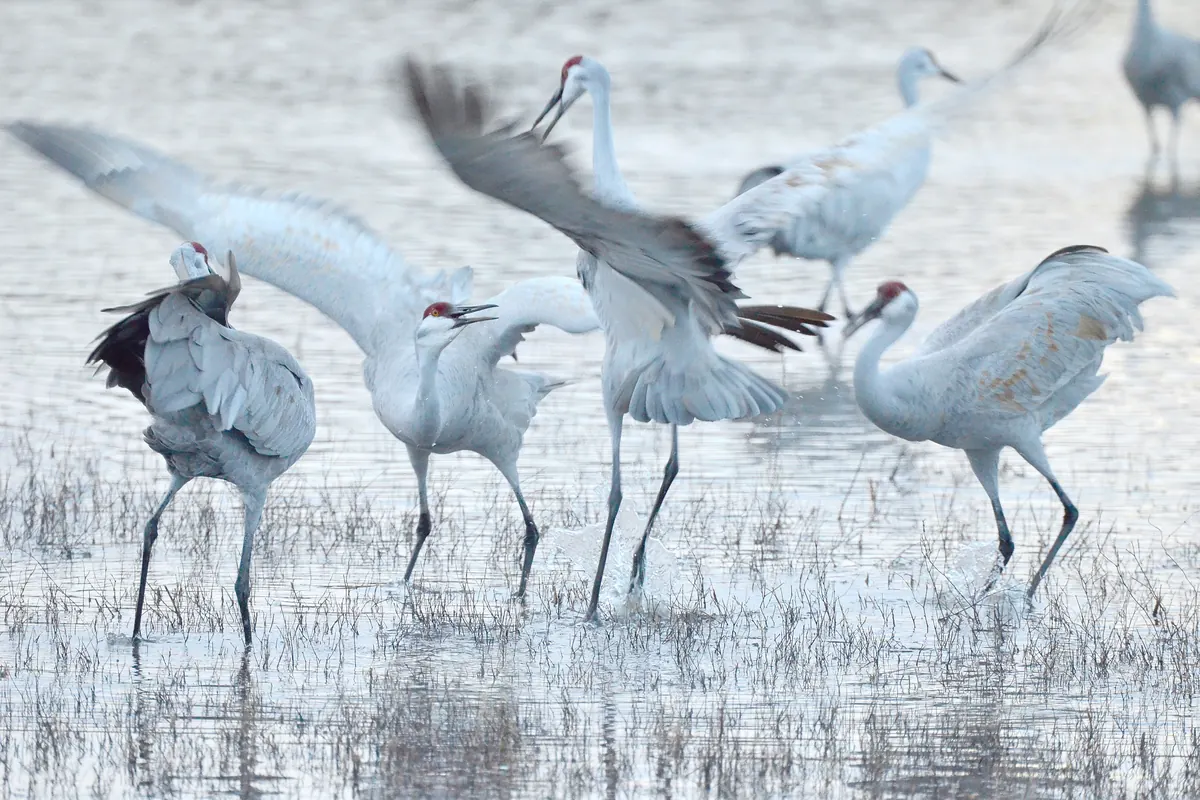
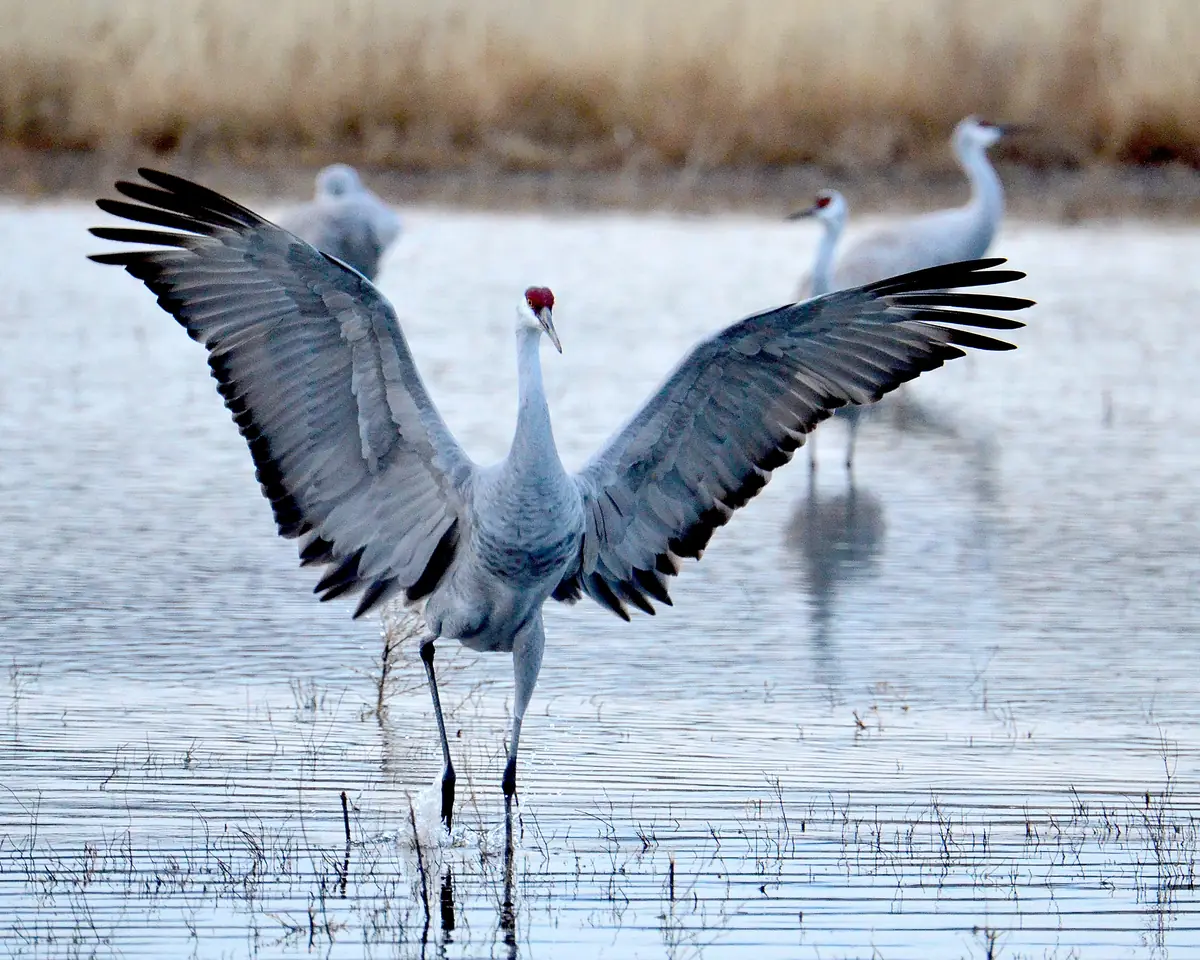
- Geese lifting off at Bosque del Apache. The refuge counts mid-November through late January as its peak season, when thousands of snow geese, Ross’s geese and sandhill cranes spend the night standing in shallow water. Be on a pond’s edge before sunrise and wait for the geese to rise all at once and head out to the fields.
- Thanksgiving cranes at Bitter Lake. Bitter Lake National Wildlife Refuge, just northeast of Roswell, says its lesser sandhill cranes, more than 26,000 of them, peak around Thanksgiving. The auto tour is open sunrise to sunset, and late afternoon is when the flocks come back to the water.
- A supermoon and a planet pairing. Mars and Jupiter sit side by side high in the predawn sky on both the 15th and the 16th. The full Beaver Moon comes at 7:53 a.m. MST on Tuesday, November 24, a modest supermoon; it comes up round and bright at dusk on Monday and Tuesday.
In the Naturalist’s Field Journal, a crane or goose fly-out belongs under dusk and dawn watch, while each winter arrival goes (first junco, first bald eagle, first Ross’s goose) under “birds I have seen”; a dropped gray crane feather on a refuge levee suits the feather found plate. Walk one stretch of bosque at the start and the end of the month and the same place twice page will show you how fast the cottonwoods empty.
Regions used below: Northern mountains, Taos and the Enchanted Circle; Four Corners and the northwest; Santa Fe and the Jemez; Albuquerque and the middle Rio Grande; Eastern plains; Southeast and the Pecos valley; Southwest, the Gila and Las Cruces.
Where are the sandhill cranes and snow geese in New Mexico in November?
Almost everywhere there is water and a cut grain field. The cranes that winter in New Mexico mostly fly in during November and December, according to the refuge manager at Bosque del Apache, and the Friends of the refuge add that roughly four in five Rocky Mountain greater sandhill cranes pass their winter in the Middle Rio Grande Valley. On the Pecos side, the lesser sandhill cranes of the Central Flyway build up at Bitter Lake. November is the month the numbers climb.
-
Bosque del Apache National Wildlife Refuge
Peak season from mid-November to late January; refuge open from an hour before sunrise to an hour after sunset · South of Socorro, off I-25 at San Antonio
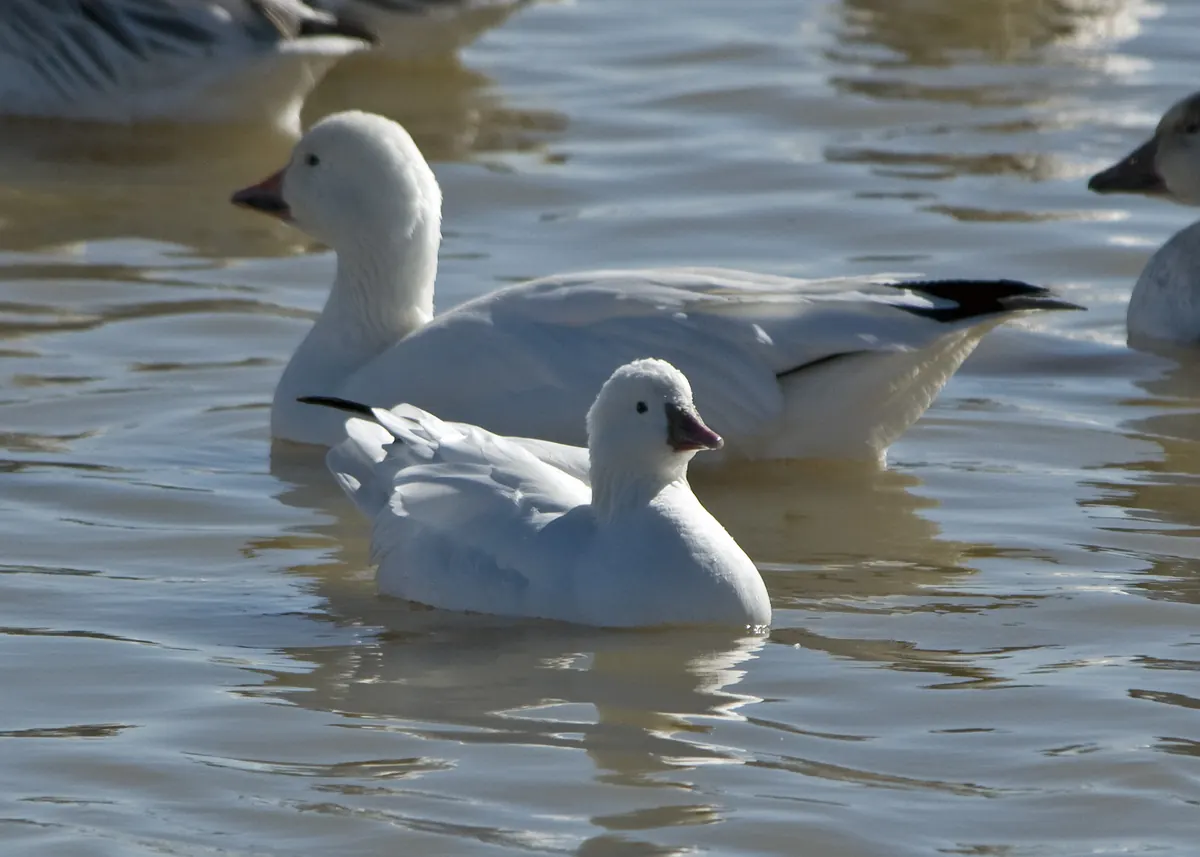
At night the geese and cranes stand in the refuge’s shallow ponds, where water gives them warning and protection from predators. Near dawn the geese take off together and spread across the valley’s fields to feed, and smaller crane groups follow. Roosts and feeding spots move during the winter, so stop at the visitor center (open Thursday through Tuesday, 9 to 4) for the day’s best sites. Entry is $5 a car, and free on Veterans Day, Wednesday, November 11. Water-control construction may close parts of the Tour Loop on short notice this fall; the refuge asks visitors to call 575-835-1828 the day before or the day of a visit.
-
Bitter Lake National Wildlife Refuge
Cranes from October through December, peaking around Thanksgiving · Northeast of Roswell, Chaves County
The refuge says more than 26,000 lesser sandhill cranes use it in fall migration, along with more than 50,000 snow geese and ducks. The lesser cranes are the smaller, shorter-billed form that breeds in the Arctic. Drive the auto tour (sunrise to sunset) and park near the open water late in the day, when long lines of cranes come in from the farm fields bugling. The refuge lists visitor center hours of 9 to 4; check its page for which days it is staffed.
-
Albuquerque’s Open Space Visitor Center
Through the winter · Coors Boulevard, Albuquerque’s west side
The city manages the farm fields beside the visitor center as wildlife habitat, and they are among the easiest places in the state to watch cranes from a parking lot. Call 505-768-4950 for current hours. On November 21 the center’s Family Nature Club walk takes migration as its theme (see the families section).
-
Snow geese and Ross’s geese
Growing through November · Bosque del Apache, Bitter Lake, Bernardo and the middle valley fields
The two white geese fly together. Ross’s goose is the smaller one, with a stubby bill that lacks the snow goose’s black “grin” patch. Dark “blue” snow geese mix in too; count them in one flock and note the number.
Cranes are also a game bird here. The Department of Wildlife’s draw hunts in the Middle Rio Grande Valley run November 14–15 and 28–29, with a youth hunt on November 21, mostly on private farmland; the Bernardo and Casa Colorada wildlife areas are closed to crane hunting during those regular draw hunts.
Where can you see bald eagles in New Mexico this winter?
Only a handful of bald eagles summer in New Mexico, but from November on the state gains a winter population from the north. They gather where there is open water, fish and ducks, and they spend long hours sitting still in tall trees, so a slow drive past every tall snag usually finds one. Sierra County’s birding guide adds that a few turn up around Elephant Butte Lake in the colder months.
-
Maxwell National Wildlife Refuge
Eagles arrive late October to early November; numbers peak in February · Near Maxwell, Colfax County, off I-25 at Exit 426
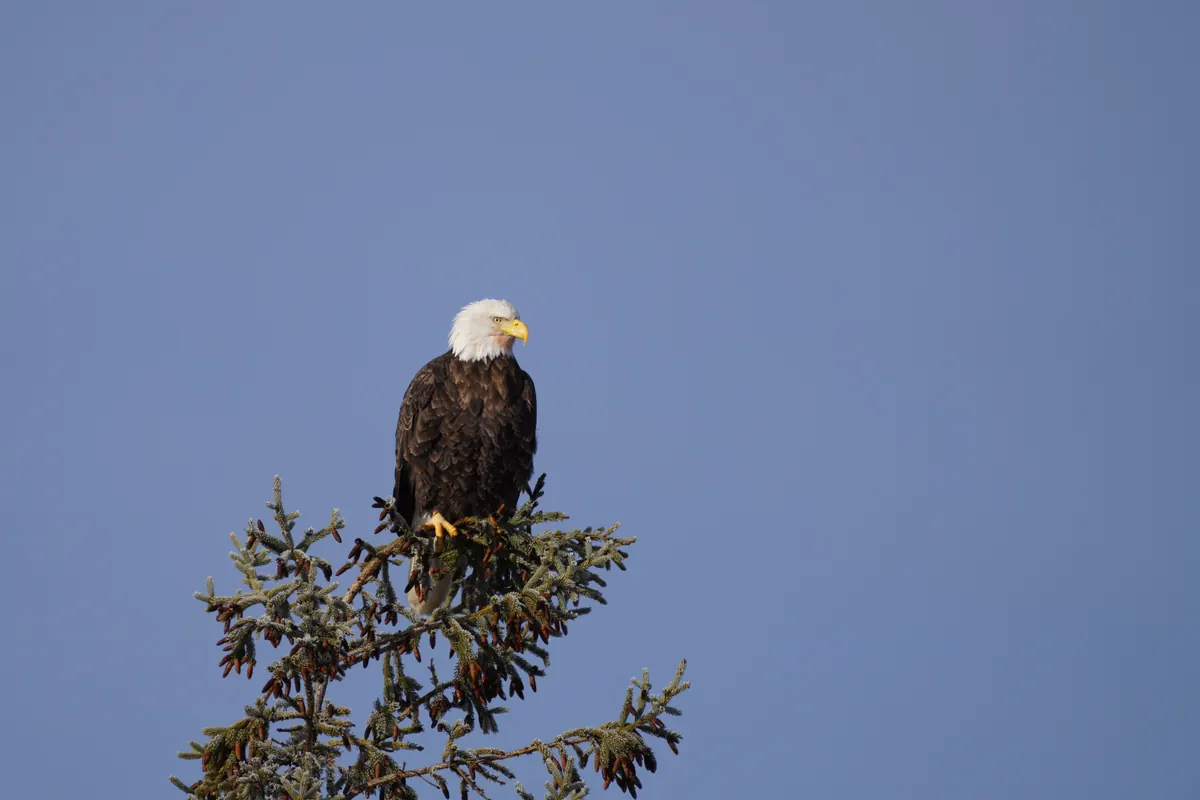
The refuge reports as many as 60 bald eagles wintering on its playa lakes and wetlands, and golden eagles hunt the same grassland. Eagles gather around Stubblefield Lake and other open water. The refuge is open sunrise to sunset with no fee; the visitor center opens only by appointment, so bring a scope and a thermos.
-
El Vado and the Chama lakes
Winter · El Vado Lake State Park, Rio Arriba County
New Mexico State Parks calls El Vado and its surroundings a major wintering ground for bald eagles. The highway across El Vado Dam was scheduled to reopen after September 4 following renovation closures, so confirm the road before you go.
Only adults, about five years old and up, wear the white head and tail; the brown, blotchy young ones pass easily for golden eagles. Record each eagle’s age and perch, and you will learn which snags your local birds favor.
When does kokanee snagging open at Heron Lake?
On Veterans Day, Wednesday, November 11. The kokanee snagging season opened October 1 at Navajo, El Vado and Eagle Nest, but Heron Lake and Willow Creek stay closed from October 1 through November 10 while the Department of Wildlife collects eggs for its hatchery. During that closure, anglers may not even carry a kokanee while fishing there.
-
Heron Lake and Willow Creek
Snagging open November 11 – December 31 · Rio Arriba County, west of Tierra Amarilla
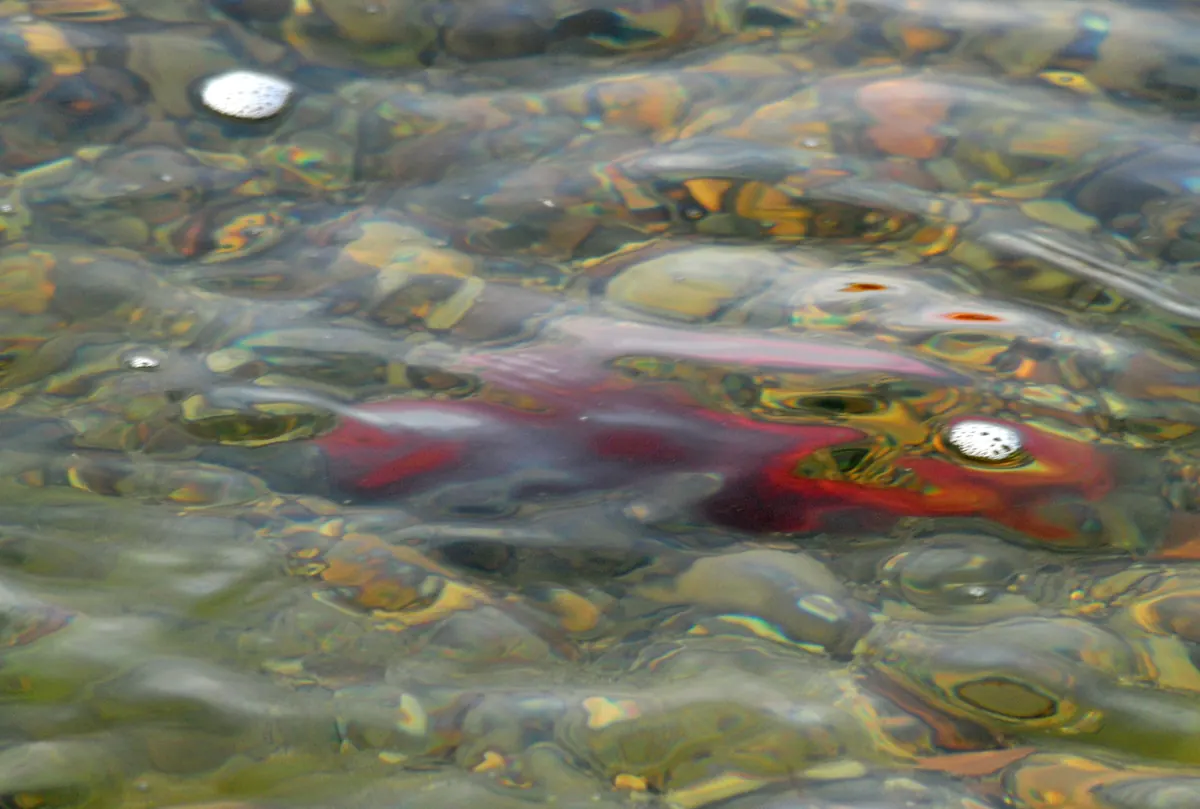
The bag limit in the special snagging season is 12 kokanee a day and 24 in possession, and any other fish that is snagged must be released. Boats on Heron are held to trolling speed, which keeps the lake quiet. By mid-November most of the spawners are dark red with hooked jaws, and they die after spawning, so a shoreline full of spent fish is normal, not a sign of trouble. Kokanee are a landlocked sockeye salmon, and even without a rod, polarized glasses will show you the red fish milling over the gravel at the Willow Creek inlet.
The fishing rules include a consumption advisory for Heron Lake kokanee; read it before you plan a fish dinner.
What is left of fall color in New Mexico in November?
The aspens are long finished by now, and the last show belongs to the valley trees. In the Rio Grande bosque, the cottonwood canopy goes yellow and then bare through the late fall, with the southern valleys usually running a little behind the north. This year may be different: the Friends of the Rio Grande Nature Center reported that after the hottest summer in over a century, with the river dry for much of the season, stressed cottonwoods began dropping leaves months early. Expect thinner color in places, and note what you see.
-
Cottonwoods along the river
Late fall; timing varies with the year and the river · Paseo del Bosque Trail in Albuquerque, Corrales, the Mesilla Valley, the Gila
The Forest Service’s summary for Fremont cottonwood places leaf fall from mid-October onward in general terms, and Rio Grande cottonwoods behave much the same. Pick one tree you pass often and give it a page: the date half its leaves are gone, the date it is bare, and the morning of the first frost. Bare branches also show you the old nests of hawks and magpies that the leaves hid all summer.
-
A poor piñon year?
Fall and winter · Piñon and ponderosa woodland
The Finch Research Network’s winter forecast, published September 25, reports a widespread failure of pinyon, ponderosa and other pine cone crops across the interior mountain West. If your local trees are bare of cones, expect piñon jays and Steller’s jays to wander more widely and to show up at feeders, and do not expect much of a nut harvest. Check a few trees near you before drawing conclusions; cone crops are patchy.
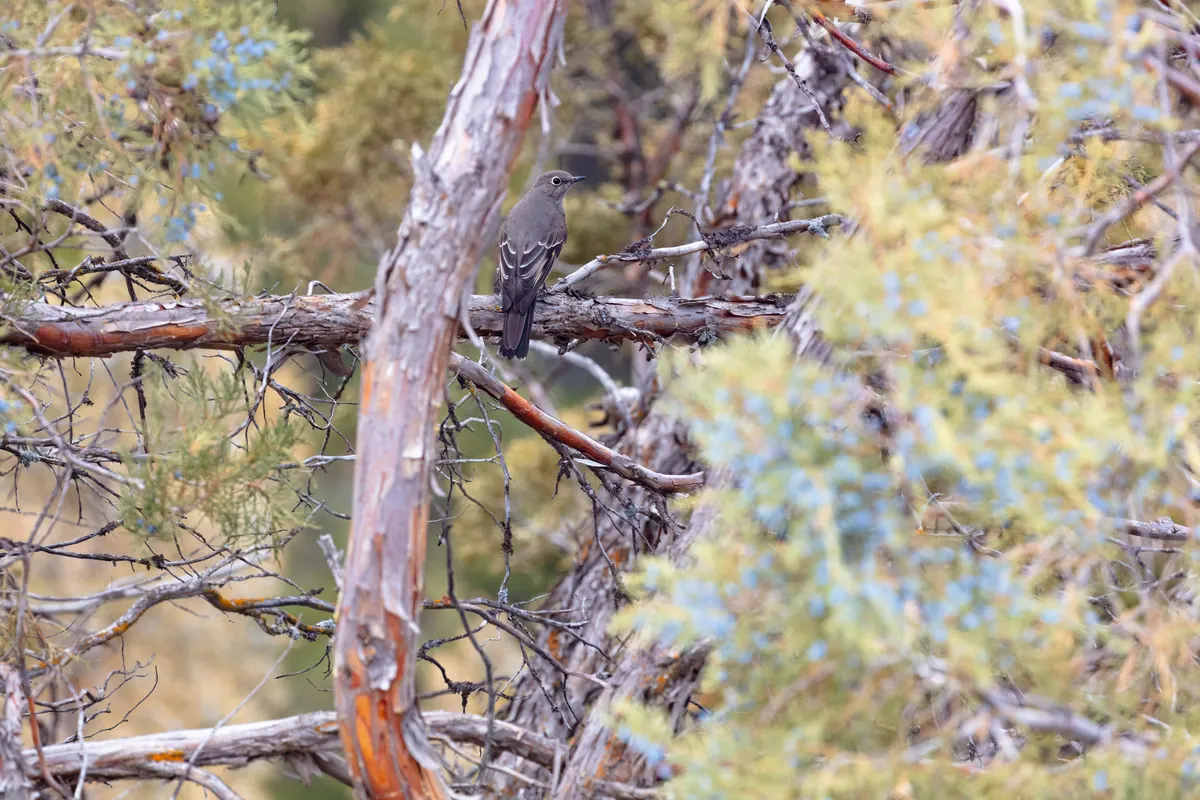
Juniper berries, which are really small fleshy cones, ripen dusty blue in the fall. Rocky Mountain National Park’s naturalists note that Townsend’s solitaires live largely or entirely on them through the nonbreeding season, and that both sexes defend a patch of junipers against other birds, singing through fall and winter to hold it. Listen for that clear, warbling song from a juniper top on a cold, still morning.
Are the bears asleep yet, and what else is getting ready for winter?
Most of them are, or soon will be. The New Mexico Department of Wildlife says bears here begin entering dens by October 15 and that most are denned between October 15 and November 15, though a few stay out until after December 1. Females, especially those with cubs, go in earliest. Strictly speaking, a black bear’s winter sleep is torpor: its heart rate falls to 12 to 15 beats a minute, its body temperature drops to about 47 °F, and it can lose about a fifth of its weight without eating or drinking.
-
Bears: the last few weeks
Early November · Foothills and mountain towns statewide
A bear that has not denned yet is still hunting calories, so keep trash and bird seed secured until the cold weather settles in. Dens are often under the roots of big trees or rock overhangs, lined with needles, twigs and grass; if you stumble on one, leave quietly.
-
Bats: gone from the caves
After October · Carlsbad Caverns National Park
Carlsbad’s Bat Flight Program runs April through October. In the fall the Park Service describes the colony of Brazilian free-tailed bats heading south to Mexico for the winter, with the last stragglers flying out in late afternoon, so November evenings at the amphitheater are quiet. The cavern itself stays open for walking.
-
Elk and deer move lower
As snow builds · Valles Caldera, the Sangre de Cristos, the Pecos and Gila high country
As snow covers the high meadows, elk and mule deer drift lower. With hunts open in many units, expect more traffic on forest roads and watch for crossing animals at dawn and dusk.
Valle de Oro National Wildlife Refuge runs hibernation programs for small children on November 6 and 13, a good excuse to talk about who sleeps, who migrates and who just puts on a thicker coat. Write down your own answer for one animal you see this month.
Which winter birds come to New Mexico feeders in November?
Juncos and sparrows are the usual first arrivals of the cold season, and in a poor cone year mountain birds come lower in search of food. Whether the nomadic finches turn up depends on seed crops far to the north and west.
-
Project FeederWatch begins
November 1, 2026 – April 30, 2027 · Any yard, balcony, schoolyard or nature center
Ithaca’s ornithologists and their Canadian partners collect the tallies, and U.S. participants pay $18 a season. Each count spans two straight days and records, per species, the peak number visible at once. Counting weekly is welcome, but a single session all winter still helps.
-
The finch forecast
Issued September 25, 2026 · Statewide, mainly the north and the mountains
This year’s forecast from the Finch Research Network is written mostly for the East, but its western notes matter here: with the pine crops poor across much of the interior West, red crossbills have already been moving east since midsummer. Pine siskins, evening grosbeaks and Cassin’s finches are worth watching for in the northern mountains, without any promise they will come.
-
Feeders in bear country
Until the bears den · Foothill neighborhoods
Wildlife officers ask foothill residents to take feeders down while bears are active. Once a few hard freezes have passed and the bears have gone to den, a feeder by a window becomes a winter-long field guide.
New Mexico’s Department of Wildlife is still taking checklists for its 2026 Birding Big Year contest through the end of the year, and every junco and goose counts.
When does it usually snow in New Mexico, and what could El Niño bring this winter?
November is the month the cold season arrives in earnest. At the Albuquerque Sunport, the normals give an average November high of 57.3 °F and low of 34.1 °F, with 0.57 inch of precipitation and 0.9 inch of snow. Roswell runs warmer (highs near 66 °F), and Clayton on the northeast plains averages 2.7 inches of November snow.
-
The first snow in the valley
Late November to December, on average · Albuquerque metro and the middle valley
For the Albuquerque forecast office, a season’s first snowfall is the first day that leaves 0.1 inch or more. By that measure the Sunport’s long-term average date is November 29, the foothills’ November 26, Estancia’s November 26, Corrales’ December 1, the South Valley’s December 8 and Los Lunas’ December 21. The lower and warmer the spot, the longer the wait.
-
When a November storm goes big
Any year; November 7–9, 2024, for example · Mostly the north and east
The office’s summary of November 2024 describes a historic storm that shut both I-25 and I-40. A CoCoRaHS observer in Las Vegas measured 31.7 inches, a November record for a three-day total there; Cimarron had about 26 inches, Roy 24, and Clayton ended the month with 22.9 inches against its normal of 2.7. Raton Pass reported blizzard conditions. Most Novembers are far gentler, but the plains can turn dangerous in a few hours.
El Niño this winter. In a discussion dated September 10, 2026, the Climate Prediction Center said there was a better-than-90-percent chance of El Niño reaching very strong levels during the cool season. In New Mexico the Albuquerque office’s review of past events found that wetter winters and springs become more likely in El Niño years, that strong events tended to bring the biggest surpluses, and that the signal is clearest in the southern and central parts of the state and weaker in the north. The same office stresses that other climate patterns also matter, so El Niño improves the odds without promising a wet season. NOAA’s official winter outlook is due October 15, after this page was written; it will appear among the CPC’s 90-day outlooks. For the next few days in your own town, try our weather page.
Has my part of New Mexico had its first freeze yet?
By November 1 most of the state has. The northern mountains, the Four Corners, Santa Fe and the northeastern plains reach their median first freeze in late September or the first half of October, and the Albuquerque valley and Roswell follow by the end of October. Three places on this list are still waiting at the start of the month in a typical year: the Sunport (median November 3), the Silver City area (November 8) and Las Cruces (November 13). In the latest years Las Cruces and Fort Bayard hold out until about November 24.
| Station | One year in ten | Median | Nine years in ten |
|---|---|---|---|
| Taos | Sep 23 | Oct 3 | Oct 14 |
| Farmington Regional Airport | Sep 29 | Oct 13 | Oct 25 |
| Clayton 1 N (northeast plains) | Sep 30 | Oct 11 | Oct 22 |
| Santa Fe County Municipal Airport | Oct 4 | Oct 15 | Oct 25 |
| Albuquerque Valley | Oct 13 | Oct 24 | Nov 4 |
| Albuquerque International Airport | Oct 21 | Nov 3 | Nov 16 |
| Roswell Climat (Roswell) | Oct 16 | Oct 30 | Nov 11 |
| Fort Bayard (Silver City area) | Oct 23 | Nov 8 | Nov 24 |
| State Univ (Las Cruces) | Oct 30 | Nov 13 | Nov 24 |
Gardeners in the Mesilla Valley and the lower Pecos can still gain a week or two with a frost cloth on clear, still nights. To find the station closest to you, open the frost dates for New Mexico, then record your own first frost; on a calm night the low spots in a yard can freeze well before the airport does.
How short do the days get in New Mexico in November?
The days shrink by 41 to 48 minutes over the month, more in the north than the south: Raton and Farmington lose 48 minutes, Albuquerque 45 and Las Cruces 41. The bigger jolt comes on November 1, when the clocks go back. Albuquerque’s sun sets at 6:13 p.m. MDT on Saturday, October 31, and at 5:12 p.m. MST the next evening; on the 30th the sun drops at 4:55 p.m., with sunrise at 6:56 a.m. Raton’s sunset reaches 4:41 by the end of the month, while Las Cruces holds on until 5:02.
| City | Nov 1 | Nov 30 | Lost | Per day |
|---|---|---|---|---|
| Raton | 10 h 38 m | 9 h 50 m | 48 min | 1.7 min |
| Farmington | 10 h 39 m | 9 h 51 m | 48 min | 1.7 min |
| Santa Fe | 10 h 42 m | 9 h 57 m | 45 min | 1.6 min |
| Albuquerque | 10 h 44 m | 9 h 59 m | 45 min | 1.6 min |
| Tucumcari | 10 h 44 m | 9 h 59 m | 45 min | 1.6 min |
| Roswell | 10 h 49 m | 10 h 07 m | 42 min | 1.4 min |
| Silver City | 10 h 51 m | 10 h 10 m | 41 min | 1.4 min |
| Las Cruces | 10 h 53 m | 10 h 12 m | 41 min | 1.4 min |
Sunrise, sunset and twilight for any town in the state are in our daylight calculator, along with how many minutes you will lose this week.
What can you see in the New Mexico night sky in November?
All times here are Mountain Standard Time, kept statewide, Navajo Nation included, from the first Sunday of the month onward. Long, dry nights make November a fine month for the morning planets, and the new moon on November 9 leaves the middle of the month dark.
-
Taurid fireballs
Southern Taurids around November 5; Northern Taurids around November 12 · Radiant in Taurus, well up by late evening
The International Meteor Organization puts the Taurids at only 5 to 10 an hour, yet they are slow and now and then throw off a bright fireball. Comet Encke shed the debris. Near the 5th the thin waning moon does not come up until the early morning hours, and around the 12th a thin crescent has set by mid-evening.
-
Venus near Spica
Before dawn, November 9 · Low in the east-southeast
Venus has just moved into the morning sky and is climbing quickly. On the 9th it passes about a degree from Spica, the bright star of Virgo; binoculars will hold both. Two mornings earlier, on the 7th, a very thin crescent sits close to Venus deep in the dawn glow, which needs a clear, flat eastern horizon.
-
Mars and Jupiter together
Before dawn, November 15 and 16 · High in the south-east before sunrise, in Leo
The two planets come within about a degree of each other, closest on the evening of the 15th, so look on both mornings. Jupiter is the far brighter of the pair; Mars is the smaller, orange one. Around the 14th to 16th Mercury, Venus, Mars and Jupiter are all in the morning sky together.
-
The Leonids
Best after the moon sets until dawn on Wednesday, November 18; the 17th and 19th are worth a try · Anywhere dark; the radiant in Leo rises near midnight
Forecasters expect an ordinary year of about 15 an hour, without an outburst. The half-lit moon goes down near midnight, so the hours before dawn stay dark just as Leo climbs high. At 71 kilometers a second, Leonids are among the swiftest meteors, and a bright one can leave a smoky train that lingers for seconds.
-
Mercury at dawn
About November 18 to 25 · Very low in the east-southeast before sunrise
Mercury swings farthest west of the sun on the 20th. Look low in the east-southeast about 45 minutes before sunrise. Brilliant Venus, higher up, is at its most dazzling for this morning apparition in the last week of the month.
-
The Beaver Moon, a supermoon
Full at 7:53 a.m. MST, Tuesday, November 24 · Rising in the east-northeast at dusk
Full comes on Tuesday morning, so both Monday’s and Tuesday’s moonrise show an apparently complete disk. It is near perigee, its closest point to Earth, so by most definitions it counts as a supermoon, though a slightly smaller one than December’s. Before dawn on the 24th it slides across the Pleiades, but moonlight drowns the little cluster.
| Phase | Date | Time |
|---|---|---|
| Last quarter | Sunday, Nov 1 | 1:28 p.m. MST |
| New moon | Monday, Nov 9 | 12:02 a.m. MST (just after midnight on Sunday night) |
| First quarter | Tuesday, Nov 17 | 4:48 a.m. MST |
| Full moon, the Beaver Moon | Tuesday, Nov 24 | 7:53 a.m. MST (looks full the evenings of Nov 23 and 24) |
| Last quarter | Monday, Nov 30 | 11:08 p.m. MST |
In the evening, look south after dark for Saturn, the lone bright planet of early night. Our moon phase calendar shows the moon for every night of the month, and a clear Leonid morning makes a fine entry in the journal’s dusk and dawn watch.
What can New Mexico families do outdoors in November?
Residents get in free all season: New Mexico State Parks waives day-use fees for New Mexico residents from October 1 through April 30, which makes the day after Thanksgiving, Friday, November 27, an easy day for a park. Nonresidents pay $10 a day.
- November 1 onward: count your feeder birds for Project FeederWatch.
- Friday, November 6: Nature Tots: Hibernation at Valle de Oro National Wildlife Refuge in Albuquerque’s South Valley, 10 to 11:30 a.m., with electric shuttle tours of the refuge on demand from 9:30 a.m. to 2 p.m.
- Saturday, November 7: two mornings out. A beginners’ bird walk led by Open Space staff at Mariposa Basin Park, 7:30 to 9:30 a.m.; or make leaf globes at Valle de Oro, 10 a.m. to 1 p.m.
- Wednesday, November 11: free entry at Bosque del Apache for Veterans Day, and the first day of kokanee snagging at Heron Lake.
- Friday, November 13: Nature Kids: Hibernation at Valle de Oro, 10 to 11:30 a.m.
- Saturday, November 14: a bosque walk with a volunteer naturalist at the Rio Grande Nature Center State Park, 10:30 a.m., limited to twelve people.
- Saturday, November 21: stories and cranes. “Thanksgiving in the Bosque” stories for ages 5 to 10, at 10:30 a.m. in the Rio Grande Nature Center’s outdoor classroom; a Bosque Adventure Hike (9 to 11 a.m.) and a Family Nature Club walk on migration (10 a.m. to noon) at the Open Space Visitor Center.
- Tuesday, November 24: Moonlight Hike at White Sands, 4:30 p.m., under the Beaver Moon. Tickets go on sale on Recreation.gov one month ahead at 8 a.m. Mountain Time and usually sell out in minutes; there are 50 places.
- Saturday, November 28: The Nature of Tea, a sensory workshop with a ranger at Valle de Oro, 9:30 a.m. to 12:30 p.m., by reservation.
- Any weekend morning: free guided bird walks at the Rio Grande Nature Center at 8:30 a.m. every Saturday and Sunday, no registration needed. The park’s visitor center moves into its Education Building in November for renovations lasting into spring 2027.
These come from the organizers’ published 2026 calendars; times change, so check before you drive.
Citizen science. Feeder tallies go to FeederWatch, refuge lists to eBird. With children, estimate a passing goose flock by counting one group of ten and multiplying.
Safety notes for November in New Mexico
- Hunting seasons and orange. November is the heart of New Mexico’s rifle deer season. The Department of Wildlife’s 2026–27 rules set most deer hunts by unit, commonly October 31–November 4, November 7–11, November 14–18 and November 21–29 (some for youths only), and many units also hold elk hunts through November, a few running into early December. Quail season opens statewide on November 15 and runs to February 15; squirrel and dusky grouse stay open through December 31; duck and goose seasons are under way in both zones; and the sandhill crane hunts run in the eastern, southwestern and middle valley areas. New Mexico has no statewide blaze-orange law. The rules require it in two places: on military reservations (at least 144 square inches, with Fort Bliss and McGregor Range asking for a whole vest) and during any firearm elk hunt on Valles Caldera National Preserve (at least 244 square inches). Everywhere else the department simply urges hunters to wear it. If you hike public land on a hunt weekend, wear something bright as well, and the dog deserves an orange collar or vest of its own.
- Fast-changing weather. A November storm can close I-25 over Raton Pass or I-40 east of Albuquerque within hours. Check NMRoads and the forecast before a long drive, and carry water, blankets and a full tank.
- Short days and cold nights. Once the clocks change, sunset in most towns falls between about 4:40 and 5:20, and the Sunport’s normal November day swings from 57 °F in the afternoon to 34 °F by dawn, with far colder nights in the mountains. Start hikes early, carry a headlamp and a warm layer, and tell someone your route.
- Thin ice. The first skim of ice on a mountain pond or stock tank will not hold a person or a dog. Keep children and pets off it until local officials say the ice is safe, and learn the signs for a lake before you walk out.
- Wildlife on the road. Deer and elk cross at dawn and dusk, especially during hunts and after snow. Slow down on mountain and river roads.
- Screwworm and closures. Wildlife officials want to hear about any wild animal with maggot-infested wounds after the September detection of New World screwworm near Mimbres. From October 5, Bear Canyon Wildlife Management Area is closed Monday through Thursday for mitigation work and open Friday through Sunday, with full access expected back in January 2027.
The month that came before is on the New Mexico October page, and other states are gathered on the nature hub. Every crane, eagle and frosty morning you find this month has a page waiting in the Naturalist’s Field Journal, and a front’s approach is easier to spot with our cloud guide in hand.
Sources
- USFWS Bosque del Apache NWR: wildlife watching (peak season mid-November to late January)
- USFWS Bosque del Apache NWR: visit us (hours, fees, Veterans Day fee-free day, Tour Loop construction)
- Friends of Bosque del Apache: sandhill crane questions answered by the refuge manager
- Friends of Bosque del Apache: Festival of the Cranes, December 2–5, 2026
- USFWS Bitter Lake NWR: cranes peak around Thanksgiving; hours
- City of Albuquerque: sandhill cranes at the Open Space Visitor Center
- City of Albuquerque Open Space: events, November 2026
- USFWS Maxwell NWR: wildlife (wintering bald eagles)
- USFWS Maxwell NWR: visit (directions, hours)
- New Mexico State Parks: El Vado Lake State Park (wintering bald eagles, dam road closure)
- Sierra County: birding at Elephant Butte Lake and Dam
- New Mexico Department of Wildlife: 2026–2027 fishing rules and information (kokanee snagging, Heron Lake)
- New Mexico Department of Wildlife: 2026–2027 hunting rules and information (deer, elk, upland seasons; blaze orange)
- New Mexico Department of Wildlife: 2026–2027 migratory game bird rules (sandhill crane and waterfowl seasons)
- New Mexico Department of Wildlife: building a bear den (denning dates and torpor)
- New Mexico Department of Wildlife: bear activity in the Santa Fe foothills (bird feeders)
- New Mexico Department of Wildlife: news (Bear Canyon WMA weekday closures; screwworm)
- New Mexico Department of Wildlife: hunters asked to watch for New World screwworm
- New Mexico Department of Wildlife: 2026 Birding Big Year contest
- Friends of the Rio Grande Nature Center: fall 2026 newsletter (dry summer, early leaf drop, walks and stories, visitor center move)
- Friends of the Rio Grande Nature Center: second-Saturday nature walks
- USFWS Valle de Oro NWR: events, November 2026
- National Park Service, White Sands: Moonlight Hike 2026 schedule
- National Park Service, Carlsbad Caverns: Bat Flight Program (April through October)
- New Mexico State Parks: fees and permits (resident day-use exemption October 1 – April 30)
- Project FeederWatch: project overview (season dates and fee)
- Finch Research Network: Winter Finch Forecast 2026–2027 (September 25, 2026)
- Forest Service Fire Effects Information System: Fremont cottonwood (leaf fall)
- Lady Bird Johnson Wildflower Center: rubber rabbitbrush (chamisa)
- National Park Service, Carlsbad Caverns: bat migration prompts early gate closing
- National Park Service, Rocky Mountain: Townsend’s solitaire (juniper berries and winter territories)
- NWS Albuquerque: November 2024 climate and weather summary (normals, November 7–9 storm)
- NWS Albuquerque: dates of first snowfall
- NWS Albuquerque: fall freeze dates for New Mexico
- NWS Albuquerque: El Niño and New Mexico winter and spring precipitation
- Climate Prediction Center: ENSO diagnostic discussion, September 10, 2026
- Climate Prediction Center: seasonal outlooks (winter outlook issued October 15, 2026)
- U.S. Naval Observatory: moon phases, November 2026
- U.S. Naval Observatory: sun and moon rise and set times
- International Meteor Organization: 2026 meteor shower calendar (archived copy)
- EarthSky: what is a supermoon (2026 full supermoons)
- EarthSky: Mercury at greatest western elongation
- EarthSky: Uranus at opposition
- Sea and Sky: astronomy calendar 2026
- Time and Date: Navajo Nation time changes (daylight time ends November 1, 2026)
- NIST: daylight saving time
- New Mexico Department of Transportation: NMRoads road conditions
- Photos via Wikimedia Commons; licenses and photographers are credited under each picture
