What to look for in nature in New York this April
April in New York is the month when spring stops being an argument and starts being a schedule. At Derby Hill on Lake Ontario, broad-winged hawks can pass by the thousands in a single late-April day. The Hudson fills with fish as the shadbush blooms, and bald eagle chicks hatch at Montezuma. Woodland pools echo with chorus frogs, peepers and, later in the month, toads, and bloodroot, trout lilies and magnolias open in the same weeks. Up north, ice leaves the Adirondack lakes, loons come back and wild turkeys begin to strut. The days gain more than an hour in the city, the Pink Moon fills out on the 20th, and bright moonlight spoils most of the Lyrids two nights later. Bring boots and a rain jacket: April rewards patience and wet shoes.
Other months in New York: October, November, December, January, February, March.
Start here
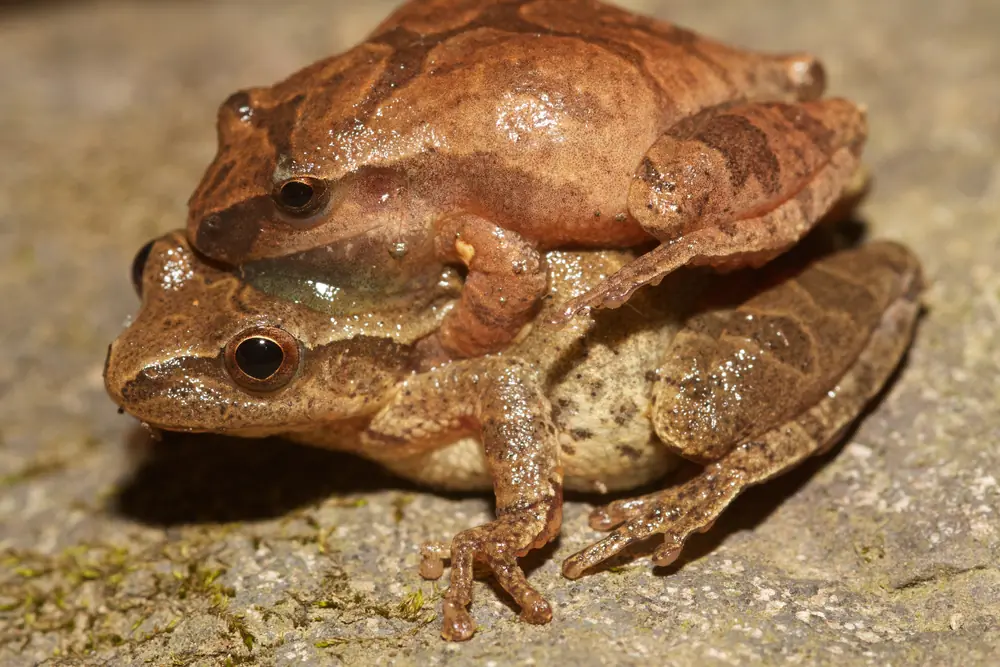
- Stand at a pond or marsh edge at dusk. On a mild evening, stand still near a wet meadow, pond or woodland pool and listen for the order of callers: chorus frogs and peepers first, then leopard and pickerel frogs, and toads. Gray treefrogs join late in the month.
- Spend an afternoon at a hawk watch. Pick a day with a south wind, bring a chair and binoculars, and go to Derby Hill or Braddock Bay on Lake Ontario. Late April is when the broad-winged hawks come through.
- Follow one tree from bud to flower. Choose a serviceberry, cherry or maple near home and write the date of its first bloom. The shadbush opens when shad are heading up the Hudson, so the same entry doubles as a fish calendar.
Field Journal plates that fit April in New York: “a map of sounds” to log which frog or toad starts calling when, from chorus frogs and peepers to toads and treefrogs; “birds I have seen” for each hawk, warbler and hummingbird added; “a tree through the seasons” for one bud from swelling to leaf; “nest observed” for an osprey platform or eagle tree; “seeds pods and cones” for the first maple and willow fruits; “dusk and dawn watch” for the Pink Moon and the Lyrids; and “the same place twice” for a pool drawn in March and again in late April.
Regions used below: Adirondacks and North Country; Western New York and the Lake Erie shore; Finger Lakes and Central New York; Southern Tier and Catskills; Capital Region and Hudson Valley; New York City and Long Island.
When is the big hawk flight along Lake Ontario in April?
Late April, when the broad-winged hawks arrive. Northbound raptors do not like to cross open water, so they follow the south shore of Lake Ontario until the shoreline bends, and that bend funnels them past two well-known lookouts. March brings the first vultures and red-tails; April is the month the flight swells.
-
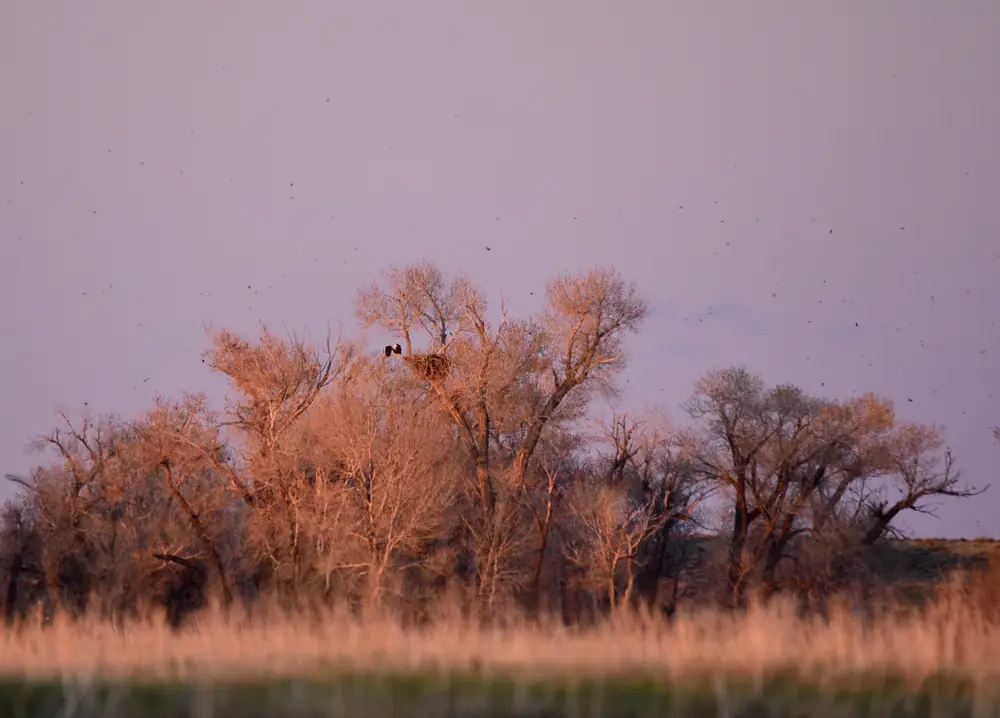
Derby Hill Bird Observatory
The count runs March 1 through May 31; Onondaga Audubon calls April the best month, with broad-winged hawks peaking in late April · Mexico, Oswego County, on the southeast corner of Lake Ontario
Onondaga Audubon, which manages the site, reports that on single days in late April as many as 20,000 broad-winged hawks have been seen. DEC describes the observatory as a 90-acre sanctuary with a boardwalk, overlooks and marsh edges, where about 40,000 raptors of 15 species pass in a typical spring, along with golden and bald eagles and rough-legged hawks. Counters use a north or south lookout depending on the wind, so find out where they are standing.
-
Braddock Bay and the wind rule
Counting continues through May 31 · Braddock Bay Park, west of Rochester
Braddock Bay Raptor Research lists 15 raptors it regularly counts, from turkey vultures and ospreys to goshawks, golden eagles, peregrines and merlins. Its best flights come with strong south winds of 10 miles an hour or more and rising temperatures.
-
Bald eagle chicks at Montezuma
Hatching begins around mid-April, according to the refuge · Montezuma National Wildlife Refuge, Seneca Falls
The refuge says eagle chicks often appear on muskrat houses in the Main Pool and Tschache Pool, and great blue herons nest in the woods beside the Main Pool. Its Wildlife Drive and visitor center open daily April 1 through November 30 (weather permitting, with the visitor center staffed by volunteers from 10 a.m. to 3 p.m.). The Seneca Trail stays closed through August 31 to protect nesting eagles. Warblers peak around mid-May.
Bring a chair and binoculars: a hawk watch is mostly waiting, and one warm south-wind afternoon can beat a week of cold ones.
When do warblers, hummingbirds and ospreys return to New York?
The first wave is sparrows, phoebes and ospreys in early and mid-April. The tropical migrants, the warblers and hummingbirds, mostly arrive from late April into May. Most travel at night, so what you find at dawn depends on what the weather allowed the night before.
-
Warblers in Central Park and other city oases
Audubon places the warbler peak in May and early June, so April is the early part of the season · The Ramble, Summit Rock and the Reservoir in Central Park
Audubon’s guide to Central Park says the Ramble is the most popular wooded area for birders, that Summit Rock can offer as many as ten warbler species at once in spring, and that the Reservoir’s trees can be dripping with warblers. Its advice is to be there by 8 a.m.
-
A radar forecast for birds
BirdCast tools run March 1 to June 15 and August 1 to November 15 · Statewide, by county
Cornell’s BirdCast turns weather radar into live maps, forecast maps and a county dashboard of birds flying at night. Email alerts for 216 U.S. cities say when heavy migration is expected. Warm southerly winds and a clear sky overnight are a good omen for the next morning’s walk.
-
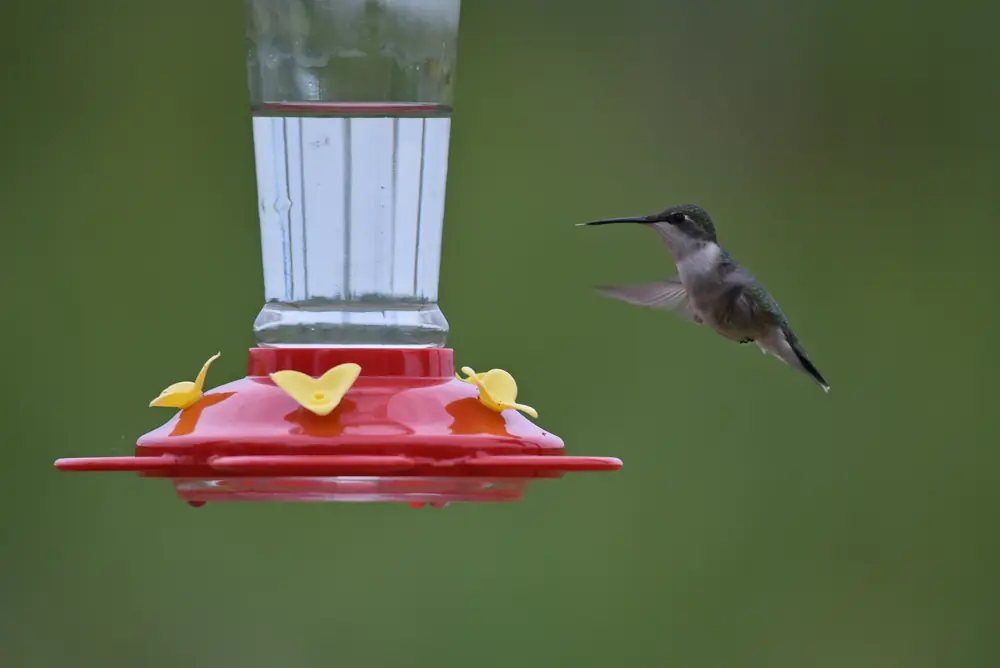
Ruby-throated hummingbirds
Reports vary from year to year; Journey North logged a sighting at Honeoye Falls on April 9, 2023, and its notes show arrivals building through April · Feeders and flower beds statewide
Journey North, which maps hummingbird sightings with the help of volunteers, recommends having a feeder up during migration and keeping red dye out of the nectar. Add your own first sighting to its map.
-
Ospreys on their nests
DEC says ospreys are in the state from April to September · Long Island, the Adirondack lakes, Jamaica Bay, Montezuma and other watery places
DEC notes that these fish-eating raptors reuse their large stick nests year after year, on dead trees and on man-made platforms, and typically lay one to four eggs. Watch quietly from a distance.
Each warbler or thrush you identify is a good entry for the “birds I have seen” page of a field journal, with the date, place and weather.
Which frogs and toads are calling in New York in April?
Nearly all of them, in waves. DEC’s guide to the state’s 14 frogs and toads shows the order: wood frogs and western chorus frogs first, then spring peepers (breeding March to May), then leopard and pickerel frogs and the toads, then gray treefrogs from late April, with bullfrogs and green frogs saving themselves for summer. Walk to a wet meadow or a pond on a mild evening and stand still for five minutes.
-
Wood frogs, chorus frogs and spring peepers
Wood frogs breed over three or four nights after the first hard rain of March or April; chorus frogs mid-March to early May; peepers March to May · Temporary woodland pools, flooded fields, alder swamps and gravel pits
DEC describes the wood frog’s call as short, hoarse quacks that carry only a short distance, the western chorus frog’s as a fingernail run along a comb, and the spring peeper’s as the loud chorus of high peeps. The guide adds that the chorus frog is declining in places for reasons not fully understood.
-
Leopard frogs, pickerel frogs and toads
Northern leopard frog breeding peaks April and May; pickerel frogs and American and Fowler’s toads breed April to May · Grassy marsh edges, slow weedy streams, ponds and ditches
The leopard frog’s voice is a three-second snore followed by nasal clucks, the pickerel frog’s a low rolling snore, and the American toad’s a sustained, high trilling whir. Gray treefrogs follow, breeding from late April into July in beaver ponds and red maple swamps.
-
Egg masses in the pool
Late March into April, depending on the weather · Woodland pools of the Hudson Valley and elsewhere
DEC’s photo guide to woodland pool wildlife shows how to read a pool. Spotted salamander egg masses are very firm and attached to twigs, wood frog eggs sit in large communal rafts of more than a thousand, and orange or green fairy shrimp swim upside down from late winter to early spring. Watch from the bank, keep your hands dry and leave every mass in place.
If you would like to turn a listening habit into data, FrogWatch USA runs from February through August, with local chapters hosted by zoos, parks and aquariums that train volunteers to identify calls. The Hudson Valley amphibian crossing volunteers, whose project runs in March and April, also take new people.
What fish are running in New York rivers in April?
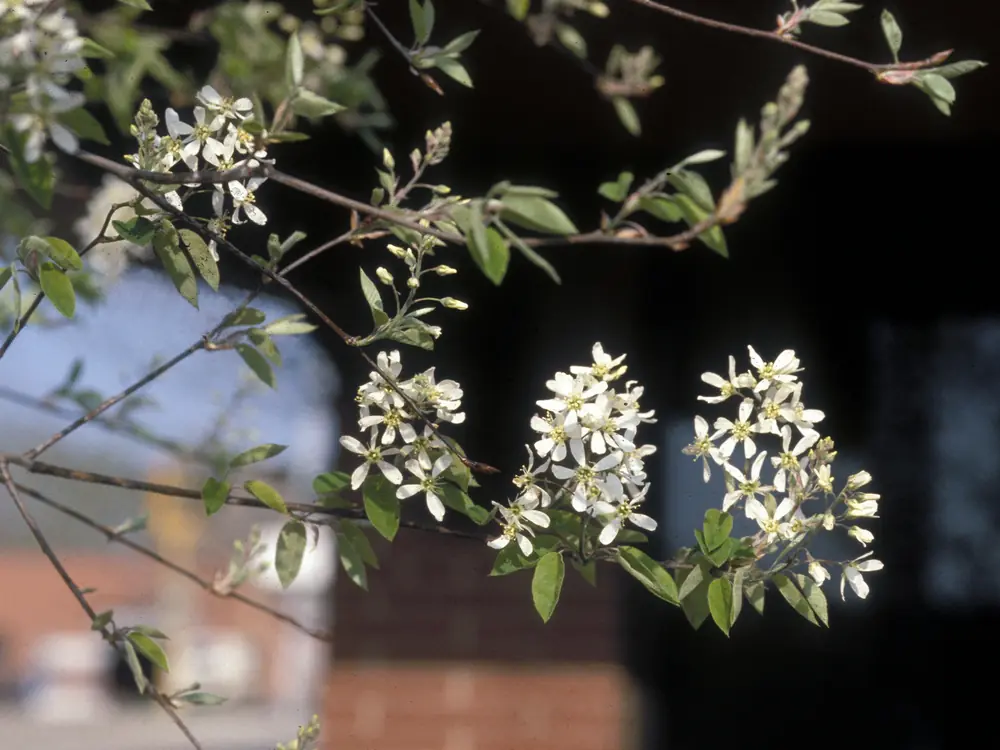
Spring is the season of fish that live in salt water or the Great Lakes and come into rivers to spawn, plus the opener of trout season. The trick for a watcher is to match the fish with the plants: when the shadbush blooms along the Hudson, the shad are not far behind.
-
Shad and river herring in the Hudson
American shad spawn April through June; river herring are surveyed April through early June · The tidal Hudson and its tributary creeks
Scenic Hudson writes that shad wait for water temperatures of 50 to 55 °F before they begin the run, and that the shadbush (serviceberry) blossoms in mid-April, the signal Lenape fishermen used to prepare their weirs. DEC states that recreational and commercial fishing for American shad is prohibited in the Hudson, closed since 2010, and that fish caught by accident must be released at once. River herring are different: DEC says there is no moratorium, because New York manages the fishery under a sustainable fishery management plan; check the current plan and rules. Check the current regulations before you fish for either one.
-
What a good April week looks like on the river
Notes for April 19 to 25, 2013, in DEC’s Hudson River Almanac · Black Creek, Hannacroix Creek and other Hudson tributaries
Naturalists’ entries for that single week include 5,176 glass eels in one overnight net on Black Creek on April 20, 8,067 at Hannacroix Creek on April 24, and 115 herring counted in 15 minutes by high school students at Black Creek. The same entries note shadbush in bloom at Milan on April 23 and three bald eagle nests with eaglets in the Ulster and Dutchess area. One week in one year is not a forecast.
-
Steelhead and trout
The Lake Erie steelhead run covers mid-October through April; the trout season opens April 1 in a normal year · Cattaraugus, Canadaway, Chautauqua and Eighteen Mile Creeks; trout streams statewide
DEC says the bulk of the Lake Erie tributary steelhead run falls between mid-October and April, with March and April the best months to fish the harbors, and that about 230,000 yearling steelhead are stocked yearly in nine tributaries. For trout, DEC announced in March 2026 that the April 1 opener would come with more than 1.7 million catchable brook, brown and rainbow trout stocked from mid-March through early June. Confirm 2027 size and creel limits in DEC’s current guide.
Watching needs no license: stand at a creek mouth on a warm, sunny afternoon and look into the riffles.
Which wildflowers and blossoms peak in New York in April?
April is when New York’s woods and parks go from bare to flowering. In the woods, a short-lived group called spring ephemerals bloom and set seed before the canopy closes; in gardens and parks, magnolias, cherries, redbuds and dogwoods take over. Brooklyn Botanic Garden’s April bloom list runs past sixty entries, among them saucer magnolia, Yoshino cherry, eastern redbud, flowering dogwood, downy serviceberry and bloodroot.
-
Bloodroot, trout lily, spring beauty and Dutchman’s breeches
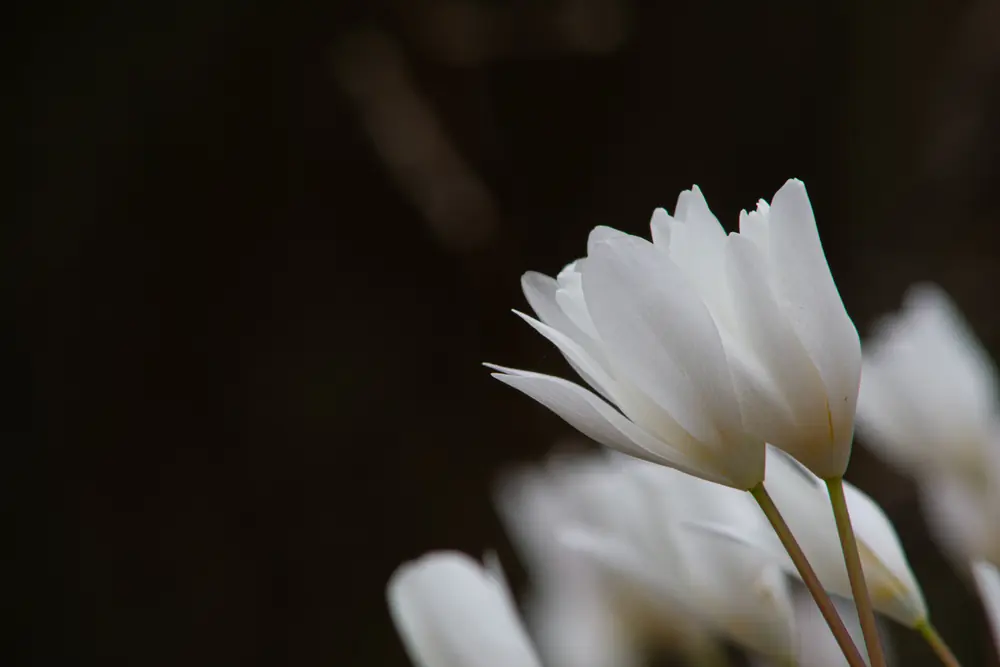
NYC Natural Areas gives bloodroot mid-March to mid-April, trout lily late March to mid-May, spring beauty mid-March to late May, and Dutchman’s breeches late March to early May · Van Cortlandt, Inwood Hill, Pelham Bay and Prospect Parks, and woodlands upstate (later toward the north)
Bloodroot flowers last only a day or two, and trout lilies close their yellow petals at night. A Hudson Valley guide adds hepatica and wood anemone and notes that these plants are protected under New York law, so photograph them and leave them in place.
-
Cherries, magnolias and the Sakura Matsuri
Brooklyn Botanic Garden says cherry season lasts about a month, and individual trees bloom for a week or two; Sakura Matsuri 2027 dates were not posted · Cherry Esplanade and the Japanese Hill-and-Pond Garden, Brooklyn; Prospect Park
The garden writes that its Cherry Esplanade now more often than not blooms in April, rather than in early May as in the past, and its CherryWatch map follows each tree through prebloom, first bloom, peak bloom and post-peak. Prospect Park’s bloom guide places cherries and daffodils at Grand Army Plaza in early April, magnolias and dogwoods along the Long Meadow in mid-April, and spicebush with its small yellow flowers in the Ravine. The festival is annual, and the garden sets its dates around bloom, so check the garden’s calendar in March.
-
Fiddleheads and other spring greens
Spring, when ostrich ferns unroll · Wet floodplain woods
A local news report from June 2026 quoted DEC as calling the ostrich fern a vulnerable, protected plant in New York, and said officers ticketed three people in late April for harvesting its fiddleheads without the required permission. Ask before you pick on private land and check the rules on state land first.
A bloom that arrives two weeks early or late is itself a finding. Write the date of your first bloodroot or cherry in the field journal and compare it with next year’s.
When is the last spring freeze, and how do you track leaf-out?
The last 32 °F reading of spring comes in the first days of April in New York City, around April 27 in Albany and around May 6 in Plattsburgh, according to the 1991–2020 normals below. Gardeners watch the nine-in-ten column; everyone else can watch the plants. Arbor Day is observed in New York on the last Friday in April, which is April 30 in 2027.
-
The plants that keep the calendar
Lilac and honeysuckle first leaf are the standard markers; the timing swings by weeks from year to year · Your own yard
The USA National Phenology Network tracks spring using first leaf and first bloom of lilacs and honeysuckles and compares each year with the 1991–2020 average. You can contribute by logging buds and flowers on those shrubs in its Nature’s Notebook app.
-
Arbor Day and tree planting
Last Friday in April, April 30, 2027; DEC says communities may celebrate on any day · Community plantings; the Hudson Estuary Trees for Tribs program plants spring seedlings along streams
DEC’s Arbor Day page suggests planting a tree or joining a community planting. Trees for Tribs gives free native trees and shrubs for stream-buffer projects and works on a spring and fall planting cycle, with volunteer events listed on its page. In 2026 the program held a potting-up event in New Paltz on April 24 and 25 (volunteers 16 or older, registration required); 2027 dates were not yet posted.
-
April snow is still possible in western New York
NWS Buffalo history shows April snowstorms in 1975, 1990 and 2004 · Western New York and the Southern Tier hills
The Buffalo office’s weather history records more than 12 inches of snow at the airport from April 3 to 5, 1975, with gusts to 70 miles per hour; a record 5.8 inches on April 4, 1990; and 8 to 12 inches reported on April 4 to 5, 2004. Such storms are rare, since Buffalo’s normal April snowfall is 2.5 inches.
| Station | One year in ten | Median | Nine years in ten |
|---|---|---|---|
| Plattsburgh | Apr 24 | May 6 | May 19 |
| Buffalo | Apr 11 | Apr 24 | May 9 |
| Rochester | Apr 12 | Apr 24 | May 8 |
| Syracuse | Apr 16 | Apr 29 | May 13 |
| Albany | Apr 16 | Apr 27 | May 11 |
| Binghamton | Apr 19 | May 2 | May 18 |
| New York | Mar 20 | Apr 2 | Apr 13 |
| Montauk | Mar 26 | Apr 7 | Apr 20 |
These are averages, not predictions: a freeze can still land after the nine-in-ten date, so cover tender plants on clear, still nights. Our New York frost dates page has more stations.
When do Adirondack lakes thaw, loons return and turkeys gobble?
In the north, April is the month when winter lets go: ice leaves the lakes, trails turn to mud, and a few of the first birds of summer arrive while snow still lies in the woods.
-
Ice-out on Adirondack lakes
Ice-out at Lake Placid ranged from March 26 (2012) to May 2 (2014) in the Adirondack Council’s 2009 to 2016 record · Lake Placid, Upper Saranac Lake and other High Peaks lakes
The same article cites EPA figures showing that freeze dates have come later and thaw dates earlier by 0.8 to 1 day per decade since the mid-1800s. A cold spring can keep a lake frozen into May.
-
Common loons
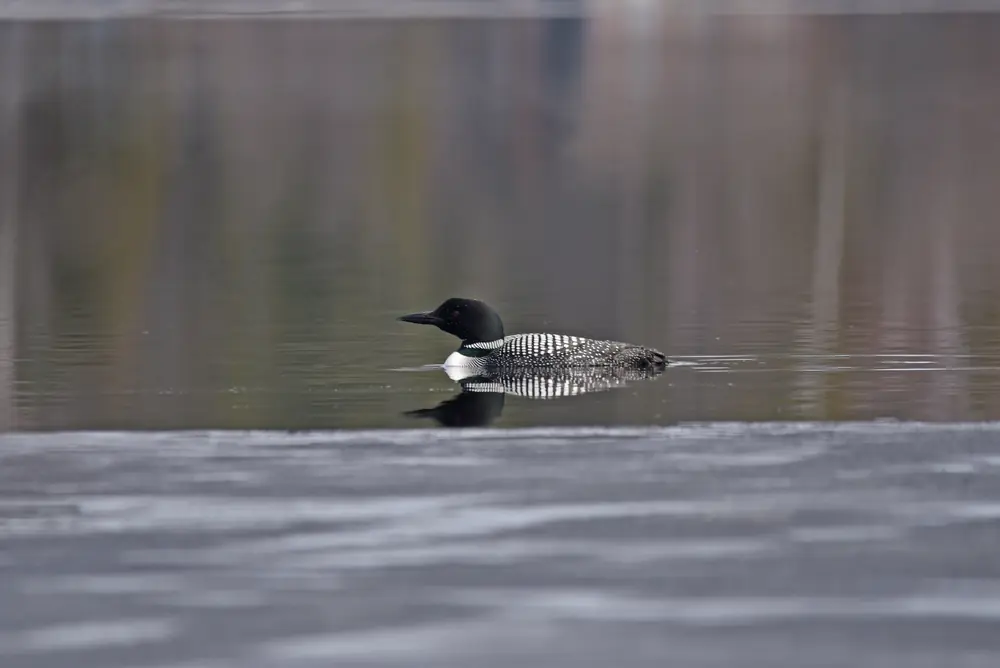
DEC says loons arrive on breeding lakes in late March and April, with nesting in mid-May to June · Adirondack lakes with clear water and small islands or quiet coves
Eggs hatch after 26 to 31 days. DEC asks boaters to stay away from nests and from chicks, since a loon’s legs sit far back on its body and it cannot walk well on land. DEC also names lead fishing tackle, which loons can swallow, as a hazard.
-
Wild turkeys
DEC says the breeding season runs from early April to early June · Woodland edges and fields statewide
Males strut with fluffed feathers, drag their wings and gobble to attract hens. Each hen then nests alone and lays 10 to 12 cream-colored eggs, which hatch after 28 days, usually in late May or early June. The poults fly at two to three weeks and begin to roost in trees. The spring hunting season is timed so that most hens have already mated.
If trails are muddy, walk through the middle rather than skirting the edge. A trail widened by detours can take years to heal.
How warm, snowy and stormy is April in New York?
April swings widely across the state. In the 1991–2020 normals below, average highs run from 49.9 °F at Old Forge to 61.8 °F in Central Park, lows from 28.5 °F at Lake Placid to 45.5 °F in the city, and every station except Rochester (2.99 inches) averages more than three inches of precipitation. NOAA’s Climate Prediction Center posts fresh seasonal outlooks near the middle of every month; the newest is on its seasonal outlook page; check there for the latest.
-
Thunderstorms and tornado warnings
Severe weather risk rises through April and May; Severe Weather Awareness Week in 2026 ran April 19 to 25 · Statewide
The National Weather Service in Buffalo says an average of six tornadoes occur each year across New York, with roughly 17 tornado warnings issued statewide per year. It defines a severe thunderstorm as one with winds of 58 mph or more, hail an inch across or larger, or a tornado. The 2027 awareness week had not been announced; watch your local NWS office’s page.
-
Wildfire season
The residential burn ban runs March 16 through May 14 · Statewide
DEC says the ban covers the peak of wildfire season, when dead grass and leaves lie exposed before the green-up. Open burning is the largest cause of spring fires in the state, and DEC posts a Fire Danger Map when moderate risk appears anywhere in the state. Small recreational fires in pits no larger than three by four feet are still permitted.
| Station | Average high | Average low | Precipitation | Snowfall |
|---|---|---|---|---|
| Old Forge (western Adirondacks) | 49.9 °F | 28.9 °F | 3.58 in | 5.3 in |
| Lake Placid 2 S (High Peaks) | 49.2 °F | 28.5 °F | 3.39 in | 7.8 in |
| Syracuse airport | 56.4 °F | 36.2 °F | 3.48 in | 3.0 in |
| Rochester airport | 56.6 °F | 37.1 °F | 2.99 in | 3.0 in |
| Buffalo airport | 54.7 °F | 36.5 °F | 3.37 in | 2.5 in |
| Binghamton airport | 54.2 °F | 35.0 °F | 3.63 in | 3.8 in |
| Albany airport | 59.2 °F | 36.9 °F | 3.11 in | 1.6 in |
| Central Park | 61.8 °F | 45.5 °F | 4.09 in | 0.4 in |
| Islip (Long Island) | 58.3 °F | 41.2 °F | 4.06 in | 0.6 in |
See the weather page for forecast tools, and use the clouds guide to learn what the towering cumulus of an April afternoon means before the first thunderstorm of the year.
How much daylight does New York gain in April?
April adds about 74 minutes of daylight in New York City and about 85 in Plattsburgh, an average of 2.6 and 2.9 minutes a day. By April 30 the day in New York City is 13 hours and 55 minutes long. All clock times in this guide are Eastern daylight time, because the clocks changed on March 14.
| City | Apr 1 | Apr 30 | Gained | Per day |
|---|---|---|---|---|
| Plattsburgh | 12 h 46 m | 14 h 11 m | 85 min | 2.9 min |
| Buffalo | 12 h 44 m | 14 h 04 m | 80 min | 2.8 min |
| Rochester | 12 h 44 m | 14 h 05 m | 81 min | 2.8 min |
| Syracuse | 12 h 44 m | 14 h 04 m | 80 min | 2.8 min |
| Albany | 12 h 43 m | 14 h 03 m | 80 min | 2.8 min |
| Binghamton | 12 h 42 m | 14 h 00 m | 78 min | 2.7 min |
| New York | 12 h 41 m | 13 h 55 m | 74 min | 2.6 min |
| Montauk | 12 h 42 m | 13 h 56 m | 74 min | 2.6 min |
Use the daylight calculator for sunrise and sunset at any address.
What can you see in the New York night sky in April 2027?
Times below are Eastern daylight time. The new Moon on April 6 leaves the first two weeks darkest; after that the Moon grows toward its April 20 full phase and brightens the night.
-
The Pink Moon
Full at 6:27 p.m. EDT on Tuesday, April 20; best evening April 20 · Rising in the east about 7:50 p.m. in New York City
Sea and Sky ties the name to wild ground phlox, called moss pink, which blooms at this time of year; the same source lists the Sprouting Grass Moon and Fish Moon among other names. The Moon comes up in the east soon after sunset, which makes this a good night for children to watch it clear the trees.
-
The Lyrids, a poor year
Peak the night of April 22 to 23, with maximum expected near 9:40 p.m. EDT on the 22nd (one calculation puts it closer to 10 p.m.) · Look toward Lyra, low in the northeast, in the early evening
Sea and Sky puts a typical peak near 20 meteors an hour, but in 2027 a Moon nearly 95 percent lit, three days past full, washes out the fainter ones. With moonrise near 10 p.m. in New York City, the dark window is the early evening, when the radiant is still low. Expect only a few meteors an hour.
-
Moon, Jupiter and Mars in the evening, Venus before dawn
The Moon passes Jupiter on the evenings of April 14 and 15; it is near Mars on the 15th; Venus is in the east before sunrise all month · Jupiter and Mars in the evening sky; Venus low in the east
Jupiter, in the Leo and Cancer region, is the bright evening planet, where the waxing Moon (68 percent lit) passes close on April 14 and 15, with reddish Mars in the same part of the sky on the 15th. Before sunrise, look low in the east for blazing Venus, with a slim crescent Moon beside it at the start of the month.
-
The Milky Way returns before dawn
Best around the April 6 new moon: roughly April 1 to 14 and April 28 to 30 at 40 degrees north · Low in the southeast to south before dawn, from a dark site
The galaxy’s brightest region comes up in the small hours this month. Our own calculation for 40 degrees north, about New York City’s latitude, gives as much as two hours of dark sky with the core at least 10 degrees up. Go to a dark site, not a city.
| Phase | Date | Time |
|---|---|---|
| New moon | Tuesday, Apr 6 | 7:51 p.m. EDT |
| First quarter | Tuesday, Apr 13 | 6:56 p.m. EDT |
| Full moon, the Pink Moon | Tuesday, Apr 20 | 6:27 p.m. EDT |
| Last quarter | Wednesday, Apr 28 | 4:18 p.m. EDT |
The moon phases page shows the full year, handy for planning a night out for frogs, meteors or stars.
What can New York families do outdoors in April 2027?
- Any mild, wet evening: go to a pond or wet meadow, hold still for five minutes and tally the different voices.
- April 1: Montezuma’s Wildlife Drive and visitor center open for the season (daily, weather permitting).
- Mid-April: watch the shadbush bloom along a river or a trail, and look for eaglets on a nest near the Montezuma pools.
- April 14 and 15: the Moon sits next to Jupiter in the evening sky.
- Tuesday, April 20: the Pink Moon is full at 6:27 p.m. EDT, rising about 7:50 p.m. in New York City.
- Thursday, April 22: Earth Day. Take a trash bag on a walk, or plant a native shrub.
- Friday, April 30: New York’s Arbor Day, by the usual rule of the last Friday in April.
- April 30 to May 3: the global City Nature Challenge starts, a four-day bioblitz of photographs and sounds; look for a team near you.
Children can keep a calling log for the first peeper, toad and gray treefrog in a Naturalist’s Field Journal. More months and states are in the nature guides; New York in March covers the maple, salamander and woodcock stories that come right before these.
Safety notes for April in New York
- Spring turkey season. DEC’s 2026–27 guide lists the youth hunt on April 24 and 25, 2027, for hunters aged 12 to 15 with a mentor, and the regular season May 1 through May 31 statewide, with shooting hours ending at noon. Turkey hunters are told to put on blaze orange when walking in and out.
- Trout and steelhead. The trout season normally opens April 1; confirm the 2027 dates, size limits and special regulations in DEC’s current guide before fishing.
- Ticks. The guide’s tick page advises long sleeves, long pants tucked into socks, light colors, repellent on clothes and shoes, and a daily check of people and pets. Remove a tick with tweezers by pulling upward with steady pressure, then clean the bite.
- Cold water and high streams. Spring runoff makes creeks fast and very cold; keep children back from the banks.
- Ice. Lake ice in the north can look solid when it is rotten. Stay off it in April.
- Storms and floods. If a thunderstorm warning is issued, go indoors, and never drive through a flooded road.
- Fire. No residential brush burning through May 14.
- Wildlife. Keep well back from loons, nesting ospreys and eagles; stay out of fenced shorebird areas; do not feed wildlife.
- Protected plants. Do not pick or dig wildflowers or fiddleheads without the landowner’s permission.
Confirm seasons, limits and closures with DEC before you go, because rules and trail conditions change.
Sources (45)
- DEC Watchable Wildlife: Derby Hill Bird Observatory
- Onondaga Audubon Society: Derby Hill Bird Observatory
- Braddock Bay Raptor Research: spring hawk count
- USFWS Montezuma National Wildlife Refuge: visit us
- USFWS Montezuma National Wildlife Refuge: seasons of wildlife
- USFWS Iroquois National Wildlife Refuge: seasons of wildlife
- Audubon: the insider’s guide to birding in Central Park
- BirdCast: migration forecasts and live maps
- Journey North: hummingbird migration news, April 13, 2023
- DEC: osprey
- DEC: common loon
- DEC: frogs and toads of New York (Conservationist reprint, PDF)
- DEC Hudson River Estuary Program: woodland pool wildlife photo guide (PDF)
- DEC Hudson River Estuary Program: community science volunteer opportunities
- Association of Zoos and Aquariums via SciStarter: FrogWatch USA
- DEC: American shad in the Hudson River
- DEC: river herring
- Scenic Hudson: the shad are running
- DEC Hudson River Almanac, April 19 to 25, 2013
- DEC: steelhead fishing in Lake Erie tributaries
- DEC: start of trout fishing season on April 1 (March 2026)
- NYC Natural Areas Conservancy: four common spring ephemerals
- Hudson Valley One: spring wildflowers of the Hudson Valley
- Brooklyn Botanic Garden: plants in bloom in April
- Brooklyn Botanic Garden: eight things about flowering cherry trees
- Brooklyn Botanic Garden: cherry blossoms and CherryWatch
- Prospect Park Alliance: spring bloom guide
- WWNY: trio accused of illegally harvesting fiddleheads (June 2026)
- DEC: Arbor Day
- DEC: Hudson Estuary Trees for Tribs
- DEC: Trees for Tribs potting-up event announcement, April 2026
- USA National Phenology Network: Status of Spring
- Adirondack Council: thinking of ice-out
- DEC: wild turkey
- 2026–2027 New York Hunting and Trapping Regulations Guide (NYSDEC, eRegulations PDF)
- National Weather Service Buffalo: weather history for April 4
- National Weather Service Buffalo: Severe Weather Awareness Week 2026
- DEC: annual residential brush burning prohibition starts March 16
- NOAA Regional Climate Centers, ACIS: 1991–2020 monthly normals for New York stations
- NOAA NCEI: U.S. climate normals 1991–2020 (frost dates behind the site’s frost page)
- Climate Prediction Center: seasonal (90-day) outlooks
- U.S. Naval Observatory: moon phases for April 2027
- Sea and Sky: astronomy calendar of celestial events 2027
- City Nature Challenge: 2027 dates
- Photos via Wikimedia Commons; licenses and photographers are credited under each picture