What to look for in nature in New York this March
March in New York is a month of arguments between winter and spring, settled one night at a time. A mild, drizzly evening can send thousands of spotted salamanders and wood frogs out of the woods toward breeding pools, and three days later a lake-effect squall buries the same road. Snow and Canada geese number in the tens of thousands at Montezuma, hawks begin funneling along the Lake Ontario shore, woodcock start their dusk sky dances in damp fields, and sugarhouses across the state boil sap on the two Maple Weekends. On the coast the first piping plovers settle onto Long Island sand, and in the Hudson tiny transparent eels arrive from the Sargasso Sea. March 14 brings daylight time, March 20 the equinox, and the dawn of March 22 a full Worm Moon. Wear boots, because March is mud season.
Other months in New York: October, November, December, January, February, April.
Start here
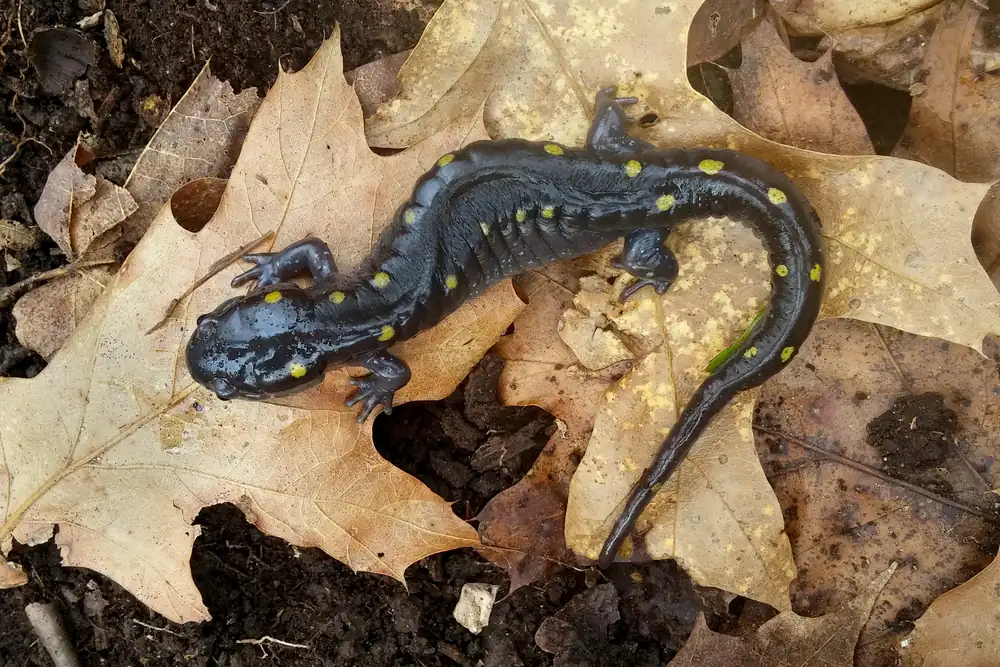
- Be out on the first warm, rainy night. Once the ground has thawed and the night air holds above 40 °F, rain sets spotted salamanders and wood frogs moving across roads that pass woodland pools. Drive slowly on rural roads after dark; if you want to help them across, DEC has a volunteer program with training.
- Find a sugarhouse on Maple Weekend. The organizers have posted 2027 dates already, March 13–14 and 20–21, with most farms open 10 a.m. to 4 p.m. Choose a sugarhouse on the association’s map, and wear boots for the mud.
- Watch geese leave the marsh at dawn. The Iroquois refuge says the spring waterfowl flight may peak from the last two weeks of March into the first two weeks of April. Station yourself at an overlook near sunrise or sunset, when geese leave to feed or come back to roost.
Pages in the Naturalist’s Field Journal that suit a New York March: “the same place twice” for one woodlot or roadside pool, drawn on March 1 and again on March 31; “dusk and dawn watch” for a woodcock’s peenting and spiraling flight; “a map of sounds” for the order in which wood frogs, peepers and robins start calling; “birds I have seen” for each goose, duck and hawk added; and the “daily field log” for the temperature on the night you first hear a frog.
Regions used below: Adirondacks and North Country; Western New York and the Lake Erie shore; Finger Lakes and Central New York; Southern Tier and Catskills; Capital Region and Hudson Valley; New York City and Long Island.
When do salamanders and frogs cross New York roads?
On the first warm, wet nights of spring, usually in March and sometimes starting in late February. DEC’s Amphibian Migrations and Road Crossings Project, begun in 2009 by the Hudson River Estuary Program with Cornell University, describes the trigger as thawed ground, rain and nighttime air temperatures above 40 °F. The animals leave their winter shelters under logs and in burrows and head for the vernal pools where they breed; the “Big Night” is whichever evening brings the most of them across the pavement at once.
-
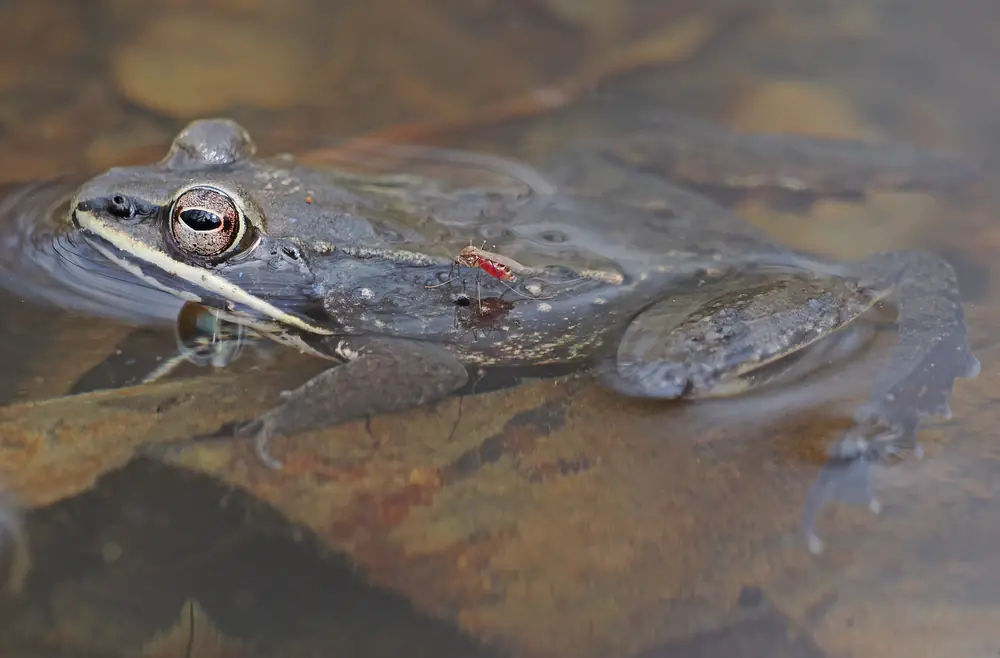
Spotted salamanders, wood frogs and spring peepers
First rainy nights above about 40 °F in late winter or early spring · Woodland roads beside vernal pools and swamps, from the Hudson Valley to Central New York
DEC says these three are the species volunteers record most often. Mole salamanders (the spotted, Jefferson and blue-spotted species) spend most of the year under leaves, in small-animal burrows and beneath logs, and the handbook says they and wood frogs breed in temporary woodland pools. Less often seen are the Jefferson and blue-spotted salamander complex and the four-toed salamander, which DEC counts among species of conservation concern. According to the handbook, a journey to the breeding pool may be anywhere from a few hundred feet to over a quarter mile, so roads and long driveways in between become hazards even where traffic is light.
-
What a Big Night looks like in numbers
Recent years: February 27, 2024, was among the earliest volunteer starts; March 11 and March 18 were big nights in 2026 · Hudson Valley roads in the DEC project; Pompey and Labrador Hollow in Central New York
DEC announced the project’s 18th year in March 2026. It reported that more than 1,000 volunteers had helped an estimated 51,000 amphibians across roads since 2009, and that on March 11, 2026, a scattered-rain evening above 60 °F, at least 125 volunteers surveyed roads between the lower Hudson Valley and the Capital District and assisted more than 1,650 amphibians. In 2024 DEC called volunteers’ start on February 27 one of the earliest since the project began. On March 18, 2026, volunteers working with SUNY-ESF and the Central New York Land Trust patrolled roads near Tinker Falls and Labrador Hollow, where, by a local news report, one group counted at least 184 spotted salamanders.
If you join a crossing, DEC asks you to wear a reflective safety vest and headlamp, never to step in front of traffic, and to handle amphibians only with clean, wet hands, with no hand sanitizer or lotion, because their skin is porous. DEC publishes a volunteer handbook and a training video. The handbook’s rule is to carry each animal across in its direction of travel, release it well off the road, and still count any that got away. Drivers can help too: ease off the gas on the first mild, wet evenings wherever a road runs between woods and a swamp.
Where can you watch snow geese, ducks and hawks migrate in New York in March?
March is when northbound waterfowl and hawks begin streaming through the interior of the state, at the big refuges of the Finger Lakes and the Lake Plains and along the Lake Ontario shore.
-
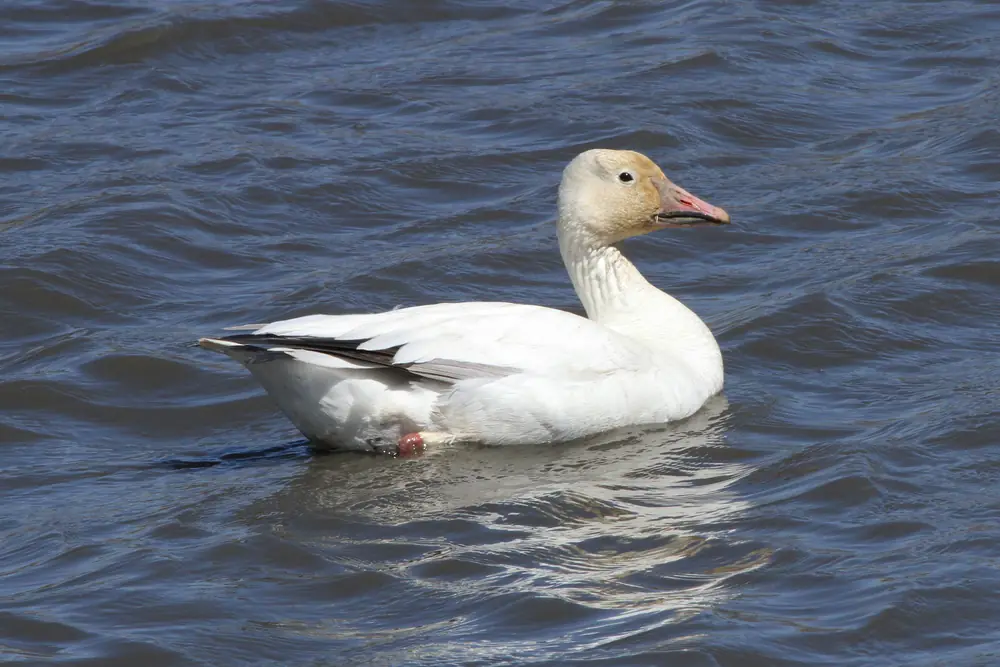
Montezuma National Wildlife Refuge
Late February through April, according to the refuge · Seneca Falls and Savannah, between Cayuga and Seneca Lakes
The refuge’s seasons-of-wildlife page says that in spring Canada and snow geese number in the tens of thousands, and its birding page lists ringnecked ducks, hooded mergansers, shovelers, mallards, wigeon and canvasbacks among the ducks passing through. Canada geese and several duck species begin nesting on the refuge in early March. Plan around the access rules: the Wildlife Drive is open April 1 through November 30, so in March the drive itself is closed and you should ask the refuge which trails and overlooks are open. The Seneca Trail is closed January 1 through August 31 to protect nesting bald eagles. The refuge says most other trails are open from sunrise to sunset all year.
-
Iroquois National Wildlife Refuge
Peak waterfowl movement may fall between the last two weeks of March and the first two weeks of April · Alabama, between Buffalo and Rochester
The refuge reports that geese follow a daily rhythm in migration: they leave the marshes at sunrise to feed within about 15 miles and return at sunset, so the best viewing is at dawn or dusk. It notes that shorebirds and warblers typically peak in May. Check the refuge’s eBird list for what is being seen now.
-
The Lake Ontario hawk watches
Daily counts run March 1 through May 31 at both sites; March is the slow, early part · Derby Hill Bird Observatory, Mexico (Oswego County), and Braddock Bay Park, near Rochester
At Derby Hill, run by Onondaga Audubon, spring counts averaged about 47,000 raptors a year from 2008 to 2017, in a flyer from the continental hawk-count network HMANA; broad-winged hawks and turkey vultures led, followed by red-tailed and sharp-shinned hawks. Braddock Bay has had a standardized spring count since 1977. In March 2019, Braddock Bay’s count tallied 4,017 migrants in 231 hours, led by 3,112 turkey vultures, with a peak day of 982 on March 28; April that year brought 37,070. Early March is slow and turkey vultures lead the count; the big days come later, and on April 18, 2019, the count reached 8,032 migrants. The best flights come on days with winds from the south or southwest, and Braddock Bay’s counters note that winds near 10 miles an hour or a little stronger are best.
Hawk-watch groups welcome visitors. At Derby Hill the north lookout is used on south winds and the south lookout on north winds. Bring a chair and binoculars, and read each site’s daily count before you drive. Braddock Bay Raptor Research holds Bird of Prey Days each spring, April 17–19 in 2026; its 2027 dates were not posted yet, so ask the group.
Is March still maple sugaring season in New York?
Yes. Sap flows on thawing days that follow freezing nights, and March usually supplies plenty of that pairing. A Cornell maple specialist quoted in a Cornell news story said that after more than 50 years in maple he has watched the start date gradually move earlier, but the pattern holds: tap in the cold, boil in the thaw.
-
Maple Weekend
March 13–14 and March 20–21, 2027, 10 a.m. to 4 p.m. at most farms · Participating sugarhouses statewide, listed on the association’s map
The association counts 2027 as year 33 of an event that grew out of a one-day “Maple Sunday” held in 1995 and now spans four days over two weekends. Most farms give free tours and samples, pancake breakfasts may carry a fee, and a few farms keep different hours, so read the listing before driving.
-
How does the season end?
Sugarmakers follow the weather, not the calendar · Sugarbushes from the Catskills to the North Country
Late-season syrup has a distinctive flavor that sugarmakers call “buddy,” and the Cornell Maple Program has studied how consumers respond to it and what to do with it. The same Cornell story shows the risk of a warm start: February 2018 was the fifth warmest on record, then a cold March stalled production. Even in a good year, the final runs depend on how the thaw behaves.
Weekend or not, the signs are easy to spot: a plume of steam above a sugarhouse roof and a muddy tractor track into the woods. If you have a sugar maple in your yard, you can learn the same swing of freeze and thaw with a thermometer and a notebook.
Which birds return to New York in March?
March brings the first returning migrants. Woodcock begin to display as the snow retreats from damp fields, and the Hudson River Almanac’s spring entries show robins, wood ducks and killdeer arriving in the same mild weeks.
-
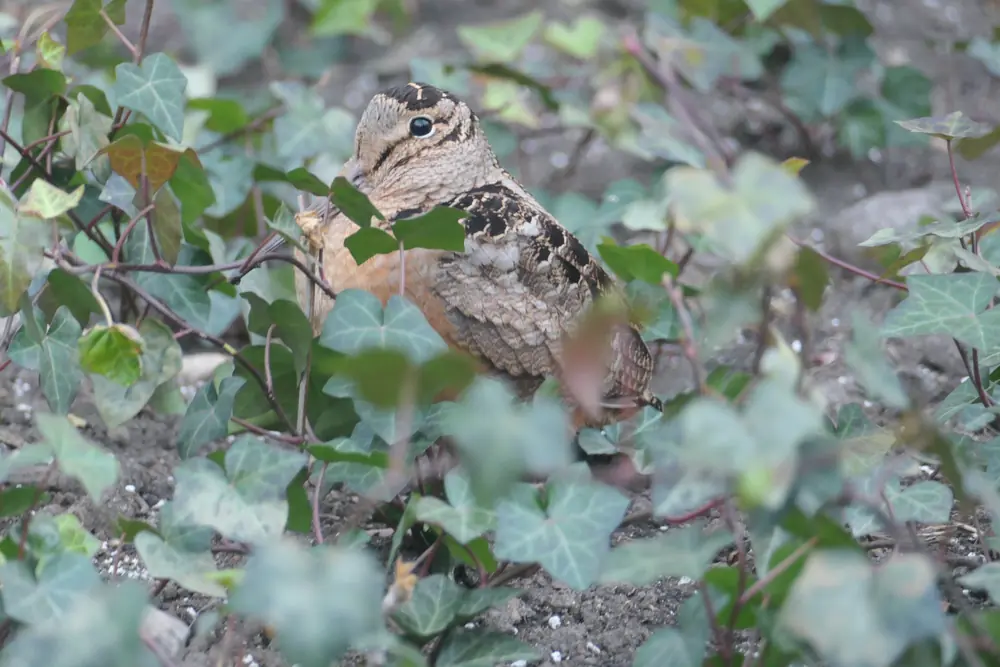
American woodcock and the dusk sky dance
DEC says nesting begins from mid-March into June, so the displays start about then · Damp, brushy fields, young woods and the edges of wet meadows
DEC describes the male’s display: at dusk he sits on the ground in an opening and repeats a low, nasal peent, then takes off low and spirals up on whistling wings 100 to 200 feet, chirping on the way down, and repeats the show until well after dark. DEC says woodcock fly only at night, low over the ground. DEC’s Five Rivers center near Albany offered a woodcock walk on March 18, 2026, repeated March 30, and asked people to register by phone; no 2027 listing was up yet, so watch the DEC events calendar. On your own, wait at the edge of a field a little after sunset, keep your flashlight off and listen for the buzzy call.
-
Robins, wood ducks, killdeer and fox sparrows
Almanac entries from March 11 to 20, 2014; a mild week can bring them sooner · Hudson Valley lawns, wet fields and river coves
Naturalist notes in DEC’s Hudson River Almanac for March 14 to 20, 2014, are a good picture of a late, snowy March: fox sparrows scratching under crocuses that had pushed through snow the day before, woodcock calling over snow cover in New Paltz, robins singing in Westchester, a winter wren singing at dawn in Rosendale on the equinox, and gizzard shad pooled in shallows at low tide. A single week of mild weather can bring all of these at once.
If you keep nest boxes, Cornell’s NestWatch project lets anyone log nest observations and appears to be free, and the New York State Bluebird Society describes a statewide nest box program. Feeders come down by April 1 in bear country (see the mud season section).
What returns to Long Island beaches and the Hudson in March?
On the coast and in the tidal Hudson, March belongs to two small travelers: a shorebird that nests on open sand, and a juvenile fish that has crossed an ocean.
-
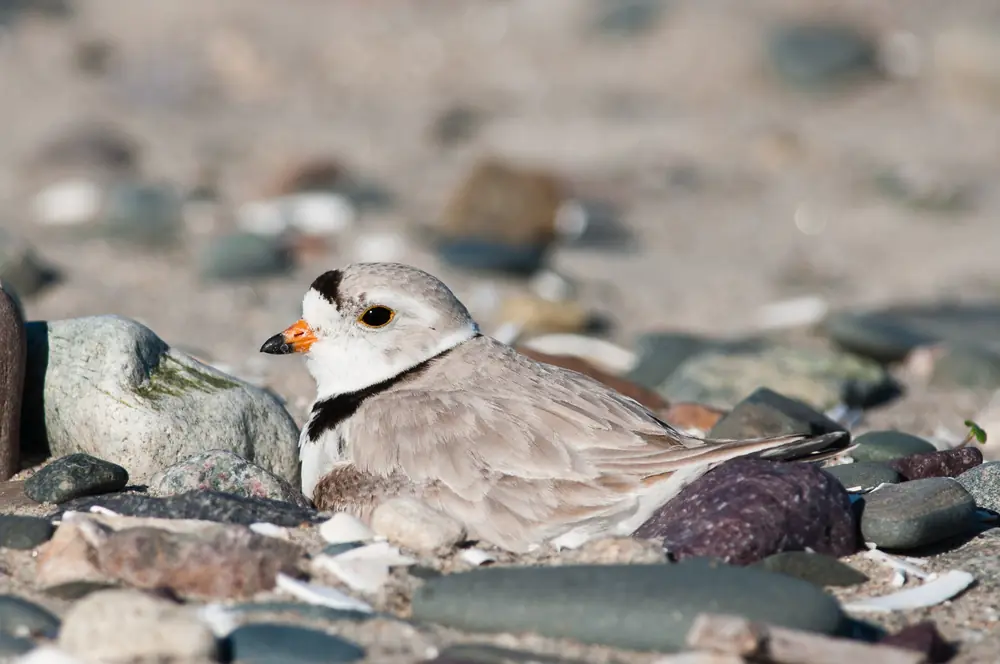
Piping plovers settle onto the sand
DEC says arrival starts early to mid-March; Fire Island’s seasonal protection starts March 15 · Fire Island and other Long Island ocean beaches; DEC notes a pair has nested on the eastern Lake Ontario shore
DEC calls the piping plover the first shorebird to arrive on the breeding grounds, starting in early to mid-March, and says about 200 pairs nest in New York out of roughly 800 on the Atlantic coast. At Fire Island National Seashore, the National Park Service puts the protection season at roughly March 15 through Labor Day: pets and kites are not allowed on many sections of the ocean beaches, and string fencing marks the upper beach where birds court and nest. Park staff begin monitoring in March as adults return, and string fencing goes up in the nesting areas by late March or April. Stay outside the fencing and leash dogs where they are allowed.
-
Glass eels arrive in Hudson tributaries
Monitoring runs daily from mid-March through May · 12 stream sites between New York Harbor and the Capital Region
American eels hatch in the Sargasso Sea and arrive in estuaries every spring as translucent, two-inch “glass eels.” DEC’s Hudson River Estuary Program, with the Hudson River National Estuarine Research Reserve, runs a juvenile eel monitoring project in which about 1,000 volunteers use 10-foot cone-shaped fyke nets, record temperature and tide, and count and release the eels. The project has counted more than two million since it began, and most are released above dams and other barriers to help them reach habitat. DEC invites students, teachers and local residents to volunteer by emailing the program with a site preference.
March beach walks are about birds and the tracks they leave, so keep to the wet sand below the high-tide line and away from any fenced area.
What blooms in New York in March?
Less than you might hope, and nearly always in the south first. In the city and the lower Hudson the earliest garden plants open in a thaw. The fast changes are in the buds and catkins, and the garden collections of Brooklyn, the Bronx and Ithaca make a good clock for them.
-
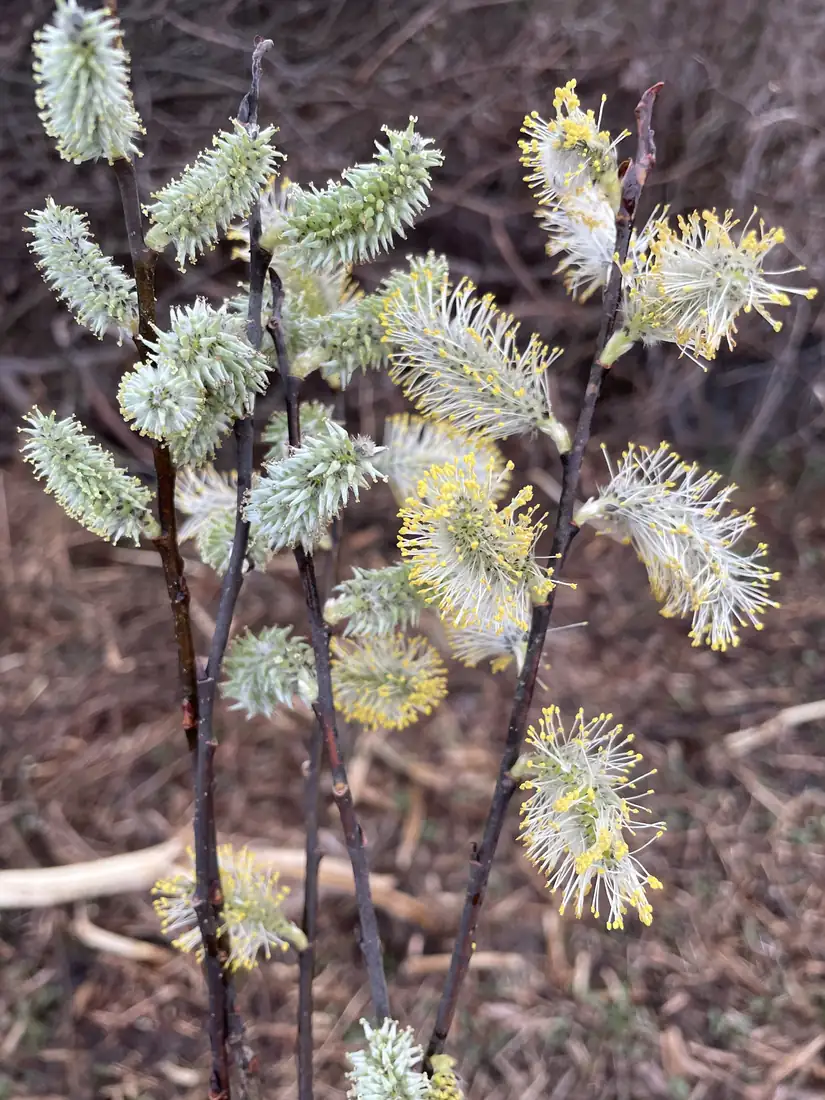
Pussy willow catkins
March, by Brooklyn Botanic Garden’s bloom list; later farther north · Wet edges, stream banks and hedgerows
Pussy willow is among the first shrubs to flower, and Brooklyn Botanic Garden’s March bloom list includes both pussy willow and black pussy willow. Look along wet edges for gray, silky buds that open into yellow-dusted catkins on male plants.
-
Crocuses, snowdrops, witch hazels and magnolias
Crocuses in early March; magnolias typically between mid-March and mid-April; cherries from about the end of March · Brooklyn Botanic Garden, the New York Botanical Garden, Cornell Botanic Gardens and your own yard
Brooklyn Botanic Garden writes that crocuses and other early bulbs typically flower in March, though they have peaked as early as mid-February lately; that magnolias open between mid-March and mid-April and are easily knocked out by late frosts; and that weeping higan cherries typically begin at the end of March. The garden notes that a run of days above 60 °F can trigger early cultivars to open. Cornell Botanic Gardens reports ice melting from Beebe Lake and snowdrops pushing through the snow in its early spring season.
Note the date of each first in your journal, whether a willow catkin or a magnolia bud, so you can compare next year.
What is mud season, and when is the last spring freeze?
Mud season is the stretch when frost leaves the ground from the top down, so the surface thaws while the layer below stays frozen and water has nowhere to go. Trails and dirt roads turn to soup, snow rots into slush and ice, and streams run high. DEC’s spring conditions advisory for the Adirondacks tells hikers to avoid all trails above 2,500 feet during the spring thaw, and notes that those conditions are typically met in late March to mid-April.
-
Stay low and walk through the mud
Typically late March to mid-April, earlier in a warm winter · Adirondack trails, and any trail with snow or ice remaining
DEC’s advisory, issued March 6 in 2024, described “rotten,” slippery ice and snow that will not hold weight, slushy snow prone to post-holing, flooded trails and high-water stream crossings that carry a hypothermia risk. It asks hikers on lower trails to walk through mud and snow rather than around it, because stepping off the path widens trails and tramples vegetation, and to wear sturdy boots, gaiters and traction devices. Check DEC’s Adirondack pages for any notice in effect in the year you go.
-
Bears come out of their dens
DEC says March and April; take feeders down by April 1 · Bear country across much of upstate New York
DEC reports that bears emerge in March and April and go straight for easy calories. Its advice is to take down birdfeeders and clean up seed by April 1, keep garbage in secure buildings and feed pets indoors. Feeding bears, on purpose or by accident, has consequences for whole communities as well as for the bears.
-
Ice goes out of the Lake Erie–Niagara boom
The usual target is April 1, but the 2025–26 boom did not come out until April 23, 2026 · Lake Erie outlet at Buffalo
The New York Power Authority installs a boom of floating spans across the lake’s outlet each winter to reduce the chance of ice jams in the Niagara River, and removes it in spring. The International Joint Commission describes April 1 as the typical removal schedule, but in 2026 thick ice kept the boom in until April 23. WKBW lists February 28 (2012) as the earliest start of removal and May 3 (1971) as the latest. Watching the ice leave Lake Erie is a good way to judge how far behind or ahead spring is running.
| Station | One year in ten | Median | Nine years in ten |
|---|---|---|---|
| Plattsburgh | Apr 24 | May 6 | May 19 |
| Buffalo | Apr 11 | Apr 24 | May 9 |
| Rochester | Apr 12 | Apr 24 | May 8 |
| Syracuse | Apr 16 | Apr 29 | May 13 |
| Albany | Apr 16 | Apr 27 | May 11 |
| Binghamton | Apr 19 | May 2 | May 18 |
| New York (JFK Airport) | Mar 20 | Apr 2 | Apr 13 |
| Montauk | Mar 26 | Apr 7 | Apr 20 |
This is the date of the last 32 °F reading in spring in the NOAA normals for 1991 to 2020. A row of numbers does not make a forecast: frost can still come after the “nine in ten” date, so protect seedlings and fruit blossoms. Our New York frost dates page has the station nearest your town.
How cold, snowy and flood-prone is March in New York?
Colder and snowier than the calendar suggests upstate, and wetter near the coast. The table below shows the 1991–2020 normals. Albany’s normal March high of 45.3 °F and low of 26.1 °F bracket the freeze line, which is why sap runs and why mud forms, while Old Forge averages 22.6 inches of snow in March and Syracuse 19.8. The Climate Prediction Center publishes its seasonal outlook maps around the middle of each month; for the latest, see the seasonal outlook page.
-
Big March snowstorms
Any time in March, especially the first half · Statewide
The National Weather Service office in Upton lists March 12–14, 1888, as the fourth-biggest snowstorm at Central Park, at 21.0 inches, and the March 7–8, 1941, storm at 18.1 inches in a tie for tenth. The NWS office in Buffalo records that Buffalo’s airport got 21.6 inches on March 7–9, 2008, the greatest general (non-lake-effect) snowfall there in 24 years, and that a March 1932 blizzard left drifts of 6 to 10 feet around the airport buildings.
-
Snowmelt, rain and ice jams
Whenever a thaw and rain meet snowpack; the NWS events below fall between March 11 and March 28 · The Mohawk and Upper Hudson valleys, and Buffalo-area creeks
The NWS Albany office’s flood history shows how big a March thaw can be: flood of record at Schenectady on March 28, 1914, caused by an ice jam, a record on the Mohawk at Little Falls on March 13–15, 1977, when temperatures reached the 70s and 80s on heavy snowpack with 3 inches of rain, and ice jams on the Mohawk and a record on the Hudson at North Creek on March 11–13, 2011. In 2025 the governor timed a Flood Safety Awareness Week to March 9–15 as rain and mild air threatened ice jams in the Buffalo area. Never drive through flood water: the governor’s office warns that one foot of moving water can sweep a vehicle away.
-
The spring burn ban
March 16 through May 14, every year · Statewide
By rule, residential brush burning is banned statewide from March 16 to May 14, because open burning of debris is the single largest cause of spring wildfires in New York. DEC says that spring fires fell from 2,649 in 2009 to 1,521 in 2018 after the ban began. Small campfires and fire pits under three feet high and four feet across are allowed, and the minimum fine for a first offense is $500. March winds, dry leaves and little green growth make fires spread quickly.
| Station | Average high | Average low | Precipitation | Snowfall |
|---|---|---|---|---|
| Old Forge (western Adirondacks) | 36.3 °F | 15.0 °F | 3.20 in | 22.6 in |
| Lake Placid 2 S (High Peaks) | 35.9 °F | 16.1 °F | 2.89 in | 18.9 in |
| Syracuse airport | 42.4 °F | 25.2 °F | 3.04 in | 19.8 in |
| Rochester airport | 43.6 °F | 26.8 °F | 2.49 in | 17.9 in |
| Buffalo airport | 41.8 °F | 26.4 °F | 2.89 in | 14.1 in |
| Binghamton airport | 40.7 °F | 24.0 °F | 3.05 in | 16.4 in |
| Albany airport | 45.3 °F | 26.1 °F | 3.09 in | 12.0 in |
| Central Park | 49.9 °F | 35.8 °F | 4.29 in | 5.0 in |
| Islip (Long Island) | 47.7 °F | 32.0 °F | 4.51 in | 6.5 in |
Check forecasts on the weather page for warnings, and see the clouds guide to read the sky: March is the month when low gray stratus and rapidly building cumulus both show up in the same afternoon.
How much daylight does New York gain in March?
Daylight grows quickly in March. In New York City the day is about 2.7 minutes longer each day on average, 82 minutes over the month, and on March 14 the clocks jump ahead an hour, which moves the sunset in the city from about 6:00 p.m. on the 13th to 7:02 p.m. on the 14th and the sunrise from 6:11 a.m. to 7:10 a.m. Day length itself does not change with the clock; only the label does. The equinox falls on Saturday, March 20, 4:25 p.m. EDT, when day and night come close to equal everywhere.
| City | Mar 1 | Mar 31 | Gained | Per day |
|---|---|---|---|---|
| Plattsburgh | 11 h 09 m | 12 h 43 m | 94 min | 3.1 min |
| Buffalo | 11 h 13 m | 12 h 40 m | 87 min | 2.9 min |
| Rochester | 11 h 12 m | 12 h 42 m | 90 min | 3.0 min |
| Syracuse | 11 h 13 m | 12 h 41 m | 88 min | 2.9 min |
| Albany | 11 h 13 m | 12 h 41 m | 88 min | 2.9 min |
| Binghamton | 11 h 15 m | 12 h 40 m | 85 min | 2.8 min |
| New York | 11 h 17 m | 12 h 39 m | 82 min | 2.7 min |
| Montauk | 11 h 17 m | 12 h 39 m | 82 min | 2.7 min |
For sunrise and sunset at a specific address, try the daylight calculator. Clock times in this guide from March 14 on are daylight time.
What can you see in the New York night sky in March 2027?
Times below are Eastern. March 8’s new moon still falls in standard time; the clocks change on March 14, and every time after that is daylight time. After March 14, darkness falls an hour later on the clock.
-
The Worm Moon at dawn
Full at 6:44 a.m. EDT on Monday, March 22; best evenings Sunday, March 21 and Monday, March 22 · Rising in the east around sunset; on March 21 moonrise is about 6:36 p.m. in New York City
Sea and Sky explains the Worm Moon name by the season when ground softens and earthworms reappear. The exact moment of full comes at dawn, so look on the evenings before and after, when the Moon looks full anyway.
-
The equinox and spring clocks
Clocks spring forward at 2 a.m. Sunday, March 14; equinox Saturday, March 20, at 4:25 p.m. EDT · Everywhere
On the equinox the Sun rises due east and sets due west, a nice day to mark with a stick and a compass at a favorite spot. Sunset by the clock is an hour later from March 14.
-
Jupiter and Mars in the evening, Venus before dawn
All month; the Moon passes Jupiter the evenings of March 18 and 19, and Mars and Jupiter pair up around March 30 and 31 · Jupiter and Mars high in the evening sky; Venus in the east before sunrise
Jupiter, the brightest of the evening planets, shines in the region of Leo and Cancer, with Mars (reddish, fainter every week) nearby. The Moon, 88 percent lit, passes within a couple of degrees of Jupiter on March 18 and 19. By our own calculation, Mars and Jupiter are about four degrees apart around March 30 and 31. Venus, a dazzling morning star, climbs the eastern sky roughly two hours ahead of the Sun in early March and slips closer to it as the month goes on. The sky chart sources list Mercury at its greatest western elongation on March 17, a low, difficult target in the east-southeast before dawn.
-
Aurora, if the Sun cooperates
Any clear, dark night; March and September are statistically among the most active months · The North Country is the best bet
Sunspots are declining from the solar maximum, but strong geomagnetic storms are still possible, and they cluster around the equinoxes. No agency forecasts aurora months ahead, so on any clear night check NOAA’s Space Weather Prediction Center aurora dashboard for tonight and tomorrow night.
| Phase | Date | Time |
|---|---|---|
| New moon | Monday, Mar 8 | 4:29 a.m. EST |
| First quarter | Monday, Mar 15 | 12:25 p.m. EDT |
| Full moon, the Worm Moon | Monday, Mar 22 | 6:44 a.m. EDT |
| Last quarter | Monday, Mar 29 | 8:54 p.m. EDT |
Our moon phases page covers the whole year, which helps when you plan a night out for stars or for woodcock.
What can New York families do outdoors in March 2027?
- Any first warm, rainy night: a short, supervised trip to watch salamanders and frogs cross a woodland road; DEC’s handbook explains safe handling.
- March 13–14 and 20–21: New York State Maple Weekend, 10 a.m. to 4 p.m. at most farms.
- Sunday, March 14: daylight time begins at 2 a.m., so sunset jumps to after 7 p.m. in New York City.
- Saturday, March 20: spring begins astronomically at 4:25 p.m. EDT; at sunset, note where the Sun goes down on the horizon.
- The evenings of March 21 and 22: the Worm Moon, which turns full at 6:44 a.m. on the 22nd.
- March evenings: a woodcock walk at dusk; watch the DEC events calendar for 2027 listings from Five Rivers.
- Mid-March onward: email DEC about Hudson glass eel monitoring sites, or spend a windy weekend afternoon at a hawk watch.
Cornell’s Project FeederWatch season closes at the end of April, leaving time to log feeder counts, and its free NestWatch project takes nest observations from anyone. You can add spring entries to the Naturalist’s Field Journal, find more months and states in our nature guides, and look back at New York in February. A Naturalist’s Field Journal gives a child a place to keep the first frog song and the first sap drip.
Safety notes for March in New York
- Hunting seasons. The deer and bear seasons in DEC’s 2026–27 guide are over before March, so the deer-and-bear blaze-orange rule is not in play now. Still open are coyote hunting through March 28 statewide apart from Long Island and the five boroughs, at any hour, and crow hunting through March 31 on Fridays through Mondays. Snow goose seasons run to March 10, and the guide says DEC will decide before March 10 whether to keep the spring conservation order, so check DEC’s website.
- Spring turkey. The youth weekend is April 24–25, 2027, and the regular season runs May 1–31. The guide’s turkey tips tell hunters to wear blaze orange on the way in and out, so a bright jacket is wise on hunting land in April and May.
- Trout. DEC’s notice says October 16 through March 31 is a catch-and-release period using artificial lures only, with the harvest season opening April 1; confirm in the current regulations guide.
- Ticks. The state health department says the blacklegged ticks that carry Lyme disease are most active when temperatures are above freezing, so its advice applies on mild March days: long pants and sleeves, repellent with DEET, picaridin or IR3535, frequent checks, a hot dryer and a shower soon after coming indoors. An infected tick must stay attached for 36 hours or more to spread Lyme disease.
- Water, ice and mud. Rotting ice and streams swollen by snowmelt are dangerous, and Adirondack trails above 2,500 feet are best left alone during the spring advisory.
- Fire and bears. No residential brush burning from March 16 to May 14, and birdfeeders come down by April 1 in bear country.
- Amphibian nights. Wear a reflective vest at road crossings, and never stand in the road.
Always confirm current seasons, bag limits and closures in the DEC guide or on its website before you head out, because March rules can change.
Sources (50)
- DEC: 18th year of the Amphibian Migrations and Road Crossings Project (March 2026)
- DEC: mild weather spurs early start to the salamander and frog migration (March 2024)
- DEC: amphibians and reptiles
- DEC: Amphibian Migrations and Road Crossings volunteer handbook (PDF)
- Explore Upstate: Big Night in Central NY (March 2026)
- USFWS Montezuma National Wildlife Refuge: seasons of wildlife
- USFWS Montezuma National Wildlife Refuge: birding
- USFWS Montezuma National Wildlife Refuge: visit us
- USFWS Iroquois National Wildlife Refuge: seasons of wildlife
- Braddock Bay Raptor Research: hawkwatching
- Braddock Bay Raptor Research: spring hawk count
- Braddock Bay Raptor Research: Bird of Prey Days 2026
- Braddock Bay Raptor Research: 2019 spring hawkwatch report (PDF)
- DEC Watchable Wildlife: Derby Hill Bird Observatory
- Hawk Migration Association of North America: Derby Hill flyer (PDF)
- New York State Maple Weekend 2027
- Cornell CALS: maple season off to fits and starts (2018)
- Cornell Maple Program: Sweet Talk podcast
- DEC: American woodcock
- DEC: Woodcock Walk at Five Rivers (March 2026)
- DEC Hudson River Almanac, March 14 to 20, 2014
- DEC: piping plover
- NPS Fire Island National Seashore: piping plover management
- NPS Fire Island National Seashore: piping plovers
- DEC: 19th year of juvenile eel monitoring (2026)
- Brooklyn Botanic Garden: is that plant blooming early?
- Brooklyn Botanic Garden: plants in bloom in March
- Cornell Botanic Gardens: winter melts into spring
- DEC: spring conditions advisory for the Adirondacks (March 2024)
- DEC: guidance to reduce conflicts with bears (March 2021)
- DEC: annual residential brush burning prohibition starts March 16
- National Weather Service Albany: major floods
- Governor’s office: Flood Safety Awareness Week (March 2025)
- International Joint Commission: Lake Erie–Niagara River Ice Boom information
- WKBW: Niagara River ice boom to be removed
- National Weather Service Buffalo: weather history for March 7
- National Weather Service New York: biggest snowstorms at Central Park (PDF)
- NOAA Regional Climate Centers, ACIS: 1991–2020 monthly normals for New York stations
- NOAA NCEI: U.S. climate normals 1991–2020 (frost dates behind the site’s frost page)
- Climate Prediction Center: seasonal (90-day) outlooks
- New York State Department of Health: tick prevention (March 2023)
- DEC: April 1 start of spring trout season (March 2024)
- 2026–2027 New York Hunting and Trapping Regulations Guide (NYSDEC, eRegulations PDF)
- Cornell Lab of Ornithology: Project FeederWatch
- Cornell Lab of Ornithology: NestWatch
- U.S. Naval Observatory: moon phases for March 2027
- U.S. Naval Observatory: Earth’s seasons and apsides, 2027
- Sea and Sky: astronomy calendar of celestial events 2027
- NOAA Space Weather Prediction Center: aurora dashboard
- Photos via Wikimedia Commons; licenses and photographers are credited under each picture