What to look for in nature in New York this October
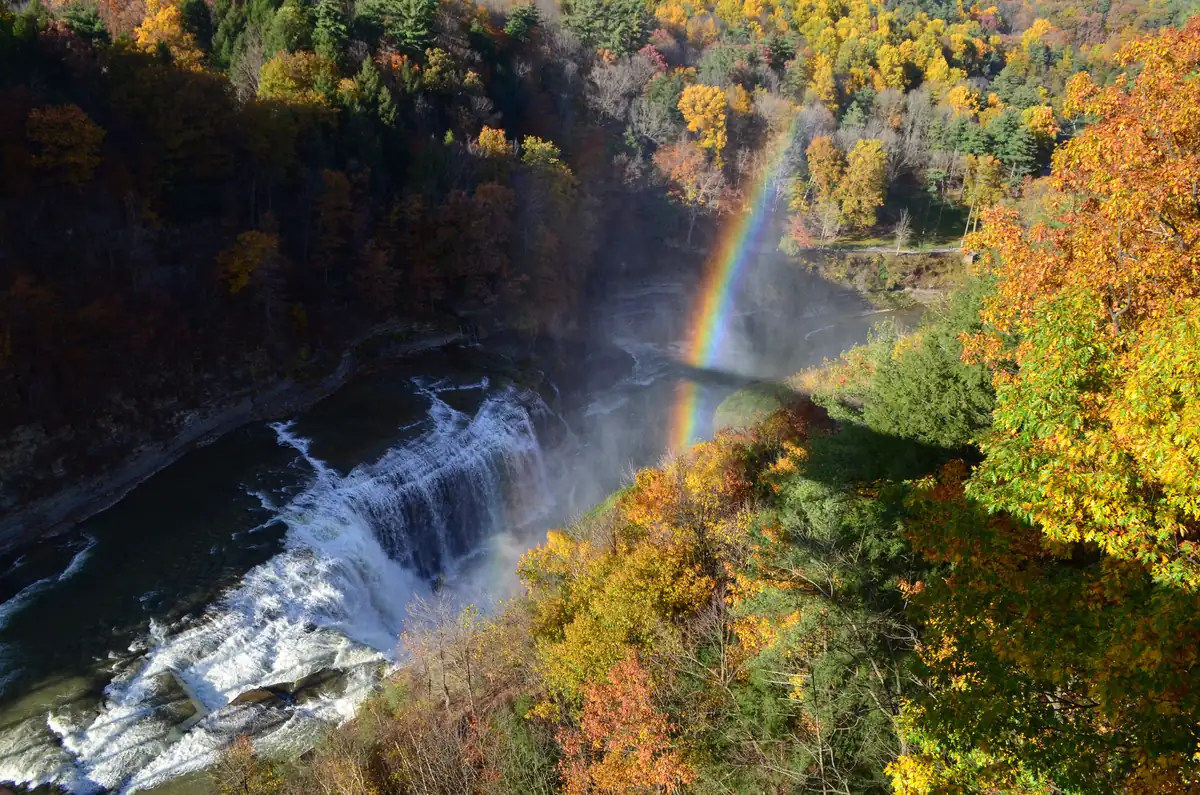
New York’s October is two months stacked on top of each other. The High Peaks are at or past their best color in the first week while Central Park is still green; the Adirondack lowlands have usually frozen by late September, yet Manhattan’s first freeze typically holds off until late November. Between those extremes, king salmon push up the Lake Ontario tributaries, golden eagles ride north winds past Oneonta, merlins and kestrels stream down the Fire Island dunes, and the Great Lakes start brewing their first squalls. Below: what to watch, where to go, and the dates.
Start here
- Color on the move, north to south. In I LOVE NY’s September 30 report, Lake Placid was already at peak with 75% change and Tupper Lake at 85%, while Kingston stood at 50%, Niagara Falls at 25% and Central Park at just 10%. Go north this weekend; the Hudson Valley, Long Island and the city come later in the month.
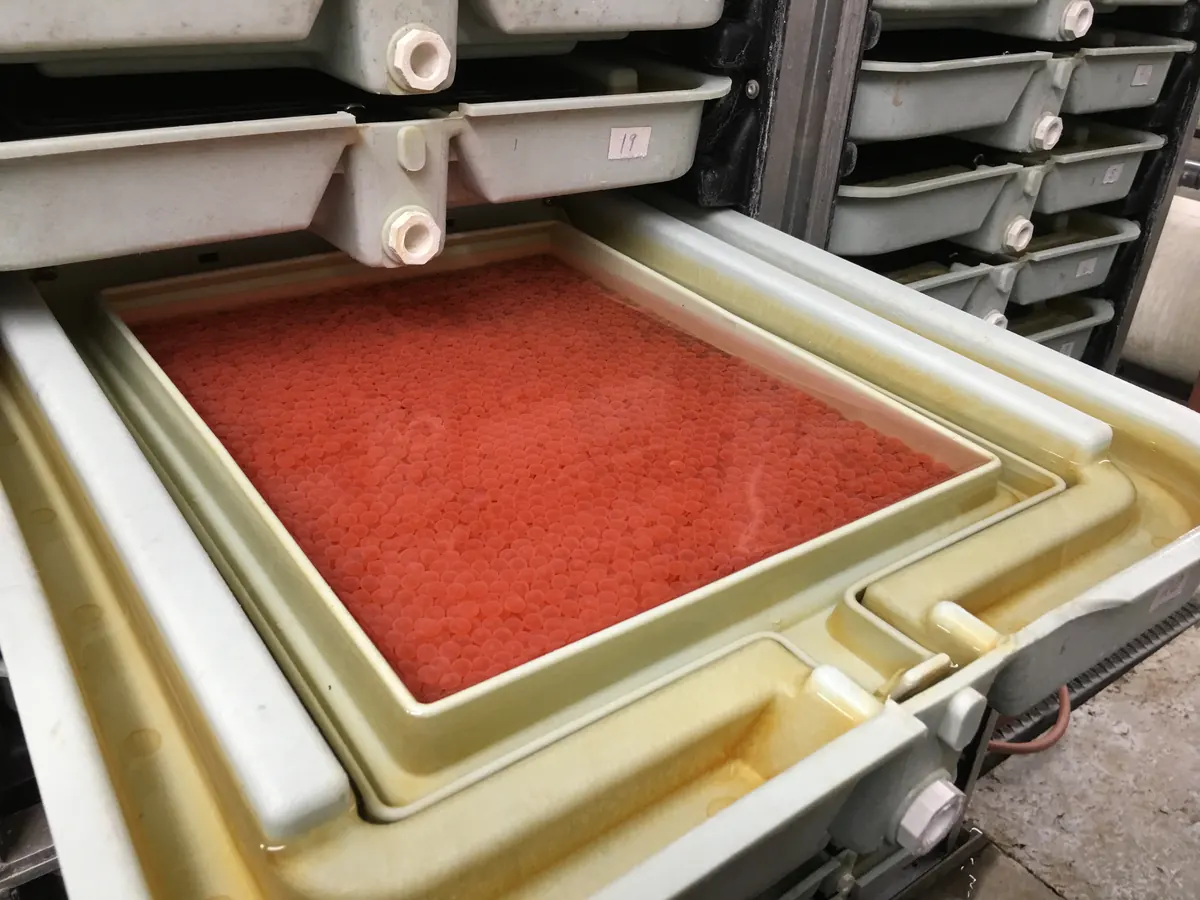
- King salmon in a dry year. Chinook and coho run up the Lake Ontario tributaries from early September to early November, usually peaking in the first two weeks of October. Because of low, warm water, DEC has held back the flow increase on the Salmon River and kept the lower fly-fishing section closed until its hatchery at Altmar has collected enough eggs. From mid- to late October you can watch that egg take at the hatchery.
- The moon covers Jupiter. Jupiter goes behind the moon in the dark hours before Tuesday’s dawn, October 6. From New York the planet disappears at about 4:23 to 4:29 a.m. EDT and reappears at about 5:23 to 5:28, both in a fully dark sky, with the moon 17 to 33 degrees up in the east.
Pages to fill in the Naturalist’s Field Journal in October: the “birds I have seen” list for your first golden eagle or first junco of the season, “a tree through the seasons” for one sugar maple or tamarack followed from full color to bare twigs, “seeds, pods and cones” for witch hazel capsules and acorns, and “dusk and dawn watch” for the occultation morning and the Hunter’s Moon rising. Write the date and the wind direction on each page.
Regions used below: Adirondacks and North Country; Western New York and the Lake Erie shore; Finger Lakes and Central New York; Southern Tier and Catskills; Capital Region and Hudson Valley; New York City and Long Island.
When is peak fall color in New York this year?
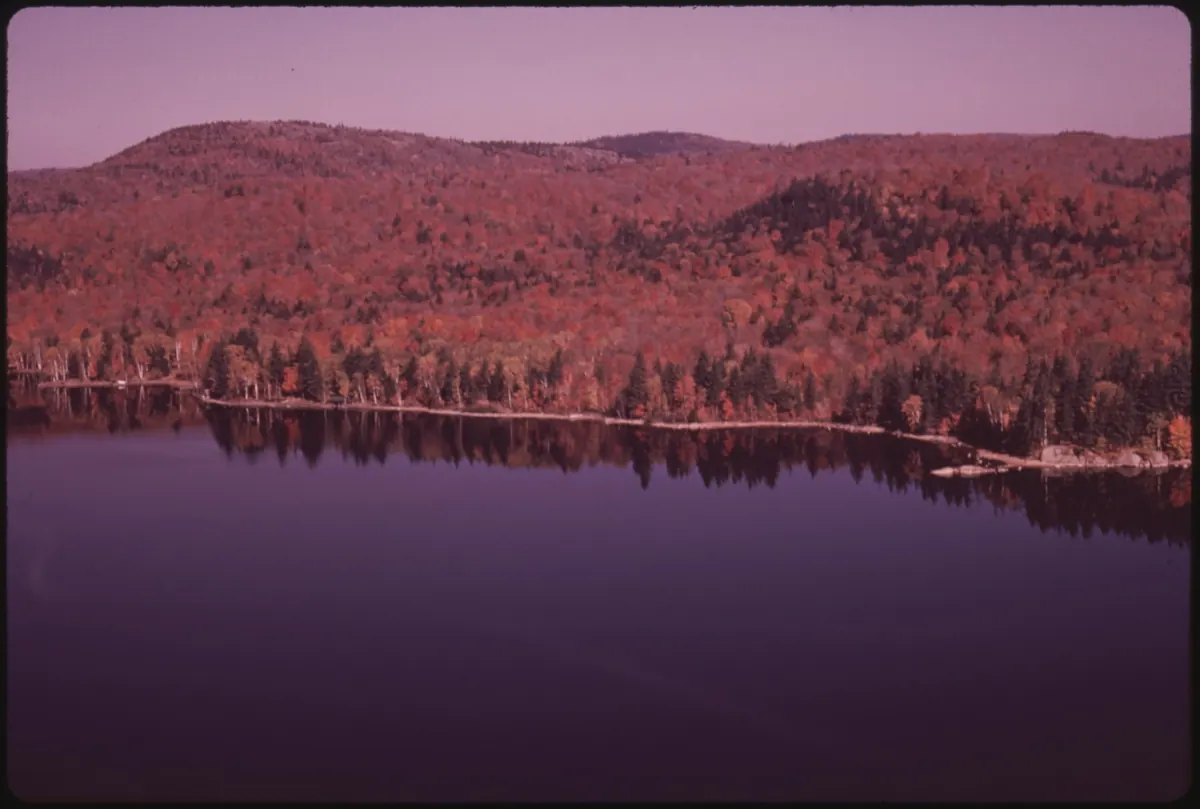
Empire State Development says the leaves reach their best “between late September and mid-November, depending on the location,” and about 100 volunteer spotters send in conditions every Wednesday for the I LOVE NY foliage report, now in its fifth decade. The report of September 30, covering the weekend of October 3–4, put the Adirondacks closest to peak, the Catskill summits close behind, and everything from the Finger Lakes to the city still early.
| Region | Reporting places | Change reported |
|---|---|---|
| Adirondacks | Lake Placid, Tupper Lake | 75% at Lake Placid, peak; 85% at Tupper Lake, near peak to peak |
| Catskills | Windham (upper elevations), Delhi | 75–80% and near peak at Windham; 60% at Delhi |
| Finger Lakes and Central New York | Cortland and area | 5–45%; Cortland 45% |
| Hudson Valley | Kingston, New Paltz | 10–50%; Kingston 50%, New Paltz 40% |
| Western New York | Niagara Falls and area | Under 25% |
| Long Island | Wantagh and area | 5–40%; Wantagh 40% |
| New York City | Central Park | 5–20%; Central Park 10%, mostly green |
If the season keeps its usual order, the wave cresting in the High Peaks now crosses the Catskills and Finger Lakes in the first half of October, the Hudson Valley and the Lake Erie shore in the second half, and Long Island and the five boroughs at the end of the month or into November. A new report appears each Wednesday, and one windy nor’easter can end a region’s show overnight.
In the northern Adirondacks, look down as well as up once the maples are bare. Tamarack, the one native conifer here that sheds its needles, turns “golden-yellow” in the bogs and wet flats, a last flare of color before the needles drop.
When is the salmon run on the Salmon River in 2026?
Lake Ontario’s Pacific salmon are stocked fish, and every fall the survivors come back to the streams where they were released. DEC’s summary: tributary fishing for Chinook and coho “begins in early-September and runs through early-November, with the peak often occurring during the first two weeks of October.” On rivers whose flow is set by hydropower dams, such as the Salmon and the Oswego, the best four weeks usually fall between mid-September and mid-October.
-
Chinook and coho in the rivers
Early September to early November; peak usually the first half of October · Salmon River (Pulaski, Altmar), Oswego, Black and Genesee rivers, Sandy Creeks, Oak Orchard Creek, lower Niagara River
Nine in ten Chinook in the run are two or three years old and weigh 15 to 25 pounds; cohos average 8 to 10. In the river they stop eating, and DEC says their “sole purpose left in life is to spawn.” They die soon after, and the carcasses feed the whole stream, including the steelhead and brown trout that trail the salmon to eat loose eggs.
-
A low-water year, and the egg take at Altmar
Flow change announced September 14; egg take mid- to late October; hatchery open daily 8:30 a.m.–3:30 p.m. · Salmon River Fish Hatchery, County Route 22, one mile northeast of Altmar, Oswego County
A dry summer left the tributaries low and warm. On September 14 DEC postponed the planned rise in the Salmon River’s base flow, from 185 to 335 cubic feet per second, because a pulse of water could lure Chinook in before the river is cool enough, stranding or killing them. The quarter-mile lower fly-fishing section, which normally opens September 15, stays closed until the hatchery has its eggs; the 16 miles below remain open. Check DEC’s notices before you go.
The hatchery raises about 1.4 million Chinook fingerlings a year, plus coho, steelhead and brown trout, and from mid- through late October staff strip eggs from ripe females and fertilize them with milt from the males. It is free and indoors.
-
Steelhead on the Lake Erie creeks
A few from mid-September; the bulk from mid-October through April · Cattaraugus, Canadaway, Chautauqua and Eighteen Mile creeks
On the Erie side the run is steelhead. DEC says fish stage off the creek mouths from late summer and push upstream as the water cools, with most arriving between mid-October and April.
Note the water temperature and river height whenever you visit a run. After a few Octobers in the daily field log, those two numbers explain most of the difference between a full pool and an empty one.
Where can you watch hawks, eagles and ducks in New York in October?
New York has two very different fall hawk flights: falcons along the ocean beaches and a late eagle flight on the northern Appalachian ridges. Add the Montezuma marshes and the city’s own green islands, and October is the busiest birding month of the year.
-
Golden eagles over Franklin Mountain
Count mid-August to January 1; eagles build through late October and November · Franklin Mountain Hawkwatch, Delaware-Otsego Audubon sanctuary, 52 Grange Hall Rd. Spur, above Oneonta
On the western edge of the Catskills, this watch is known for late-season golden eagles and red-tailed hawks: a season averages about 138 golden eagles (the record is 323, in 2018) and nearly 1,500 red-tails. The best days follow rain and a cold front, on north or northwest winds of 10 mph or more, which can also bring lake-effect showers off Lake Ontario.
-
Falcons on the Fire Island dunes
Count September 10 to November 18; kestrels and merlins peak late September into early October · Fire Island Hawkwatch, east end of Robert Moses State Park
Volunteers on a low platform in the dunes have tracked this coastal flight since 1982, and it is a falcon show: seasonal averages of about 1,175 American kestrels, 1,121 merlins and 144 peregrines. The birds follow the barrier beach at eye level.
-
Red-tails at Mount Peter
Count September 1 to November 15; red-tails late October to early November · Bellevale Mountain, west of Greenwood Lake, Warwick, Orange County
Counted every fall since 1958, Mount Peter calls itself the oldest all-volunteer hawk watch in the country. The broad-wings are gone by October, but red-tails peak around the turn of the month, and a golden eagle (about four a season) is the prize.
-
Montezuma’s waterfowl
Mid-September to freeze-up; peak in mid-November · Montezuma National Wildlife Refuge and Northern Montezuma Wildlife Management Area, north end of Cayuga Lake
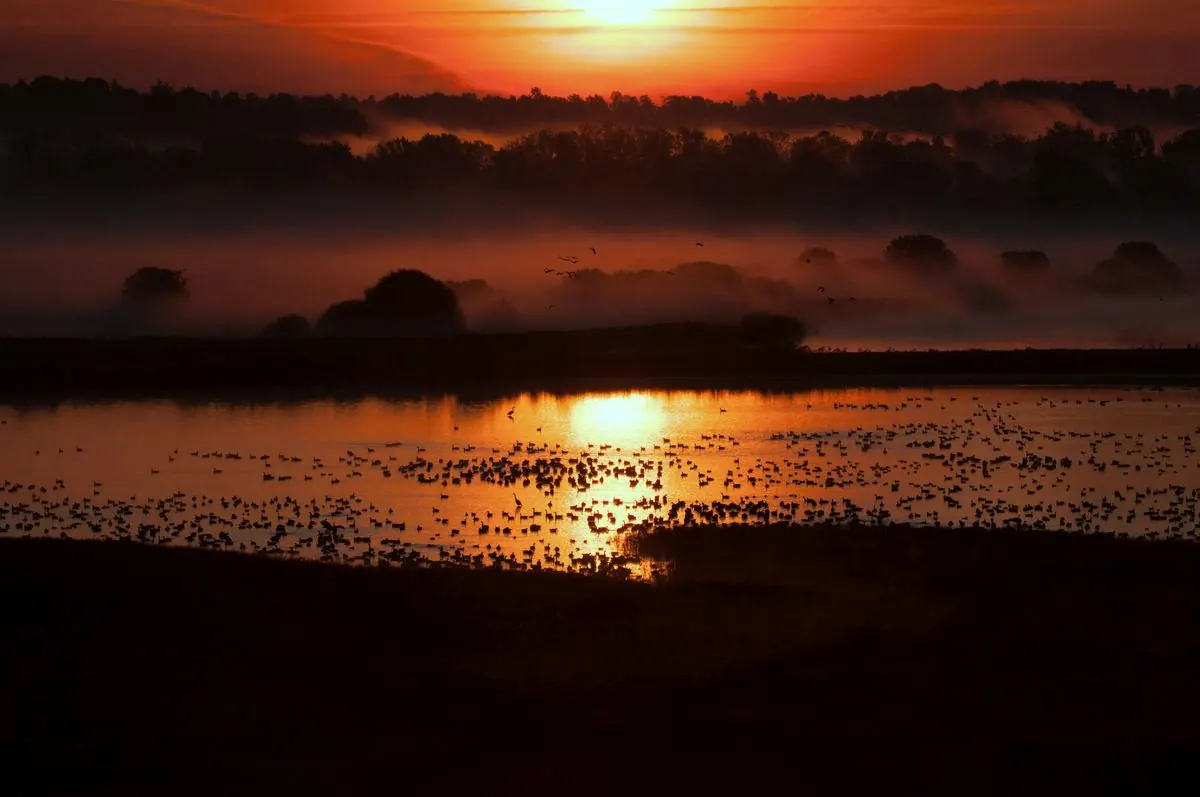
DEC calls the Montezuma wetlands one of the largest in the Northeast. The refuge says geese and ducks return from mid-September until freeze-up and reach the tens of thousands by mid-November, and DEC notes large snow goose flocks on the northern units. The Wildlife Drive is open sunrise to sunset through November 30; watch for eagles over the pools.
-
Jays, siskins and purple finches
October into winter · Lake Ontario shore first; conifer woods statewide
The Finch Research Network, in a forecast posted September 25, expects blue jays to move in above-average numbers along the northern shores of Ontario and Erie, many purple finches in the Northeast, plenty of pine siskins in cedar and white pine country, and a few evening grosbeaks. Redpolls and pine grosbeaks should mostly stay north.
The dark-moon weekend brings two counts: The Big Sit (October 10–11), a tally of every species seen or heard from inside a 17-foot circle, and eBird’s fall Big Day on Saturday the 10th (confirm the details on eBird). A lawn chair in the backyard qualifies for both.
What is happening in the Adirondacks in October?
The park goes from peak color to early winter in about four weeks. DEC tells hikers to expect roughly 5 °F less for every 1,000 feet climbed, and notes that with sunset now before 7 p.m., a forgotten headlamp is one of the most common reasons for a rescue.
-
Moose in the rut
Late September and early October · Northern and central Adirondacks; a few in the Taconic Highlands
DEC estimated 600 to 700 moose in the Adirondacks as of 2018. During the rut bulls wander widely and cross roads at dusk, and because a car passes under a moose and hits it at windshield height, one to two percent of moose–car crashes kill someone in the vehicle. Slow down on the park’s two-lane highways after dark. Winter ticks, which kill many calves in New England, have not yet been documented in New York.
-
Bears fattening up
Through October, until they den · Adirondacks (half or more of the state’s bears), Catskills, and increasingly the Tug Hill, Hudson Valley and Southern Tier
New York has at least 6,000 to 8,000 black bears, and in fall they eat nuts, fruit, corn, honey and bird seed before a dormancy that can last five months. Feeding a bear on purpose is illegal, and a feeder left out in October feeds one by accident. Canisters are required for overnight trips in the Eastern High Peaks Wilderness through November 30.
-
The first white summits
Any time in October · The High Peaks above tree line
The summits can pick up snow and rime ice while the valleys are mild, so carry traction and warm layers above 4,000 feet. Parking at the Adirondack Mountain Reserve in Keene needs a reservation through October 31.
When is the first frost and freeze in New York?
Few states have a wider spread. In NOAA’s 1991–2020 records, the airport at Saranac Lake has frozen by August 26 one year in ten and has a median first freeze of September 9; Central Park’s median is November 20, and one year in ten it holds out until December 6. The Lake Erie shore at Westfield, in the grape belt, waits until November 5 in a typical year because the lake is still in the 60s in early October; at Salamanca, about 45 miles inland and some 700 feet higher, the median is October 1. The Chautauqua–Erie grape belt, roughly 31,500 acres of vineyards in New York and Pennsylvania, most of it Concord, exists because the lake adds roughly a month of frost-free weather.
| Station | One year in ten | Median | Nine years in ten |
|---|---|---|---|
| Saranac Regional Airport (Adirondacks) | Aug 26 | Sep 9 | Sep 24 |
| Massena International Airport (St. Lawrence Valley) | Sep 17 | Oct 1 | Oct 17 |
| Binghamton (Southern Tier) | Sep 28 | Oct 11 | Oct 29 |
| Albany Airport (Capital Region) | Oct 3 | Oct 15 | Nov 1 |
| Syracuse Hancock International Airport (Central New York) | Oct 2 | Oct 19 | Nov 4 |
| Buffalo (Western New York) | Oct 10 | Oct 26 | Nov 9 |
| Westfield 2 SSE (Lake Erie grape belt) | Oct 23 | Nov 5 | Nov 19 |
| Islip Li Macarthur Airport (Long Island) | Oct 18 | Nov 2 | Nov 15 |
| New York Cntrl Pk Twr (Manhattan) | Nov 6 | Nov 20 | Dec 6 |
Lake Placid, Watertown, Rochester, Poughkeepsie, Montauk and every other station are on our New York first and last frost page. Upstate, the grass usually whitens with frost a week or two before the air itself hits freezing, on some clear, windless night. On nights like that, carry in the potted herbs, pick the last green tomatoes and note the morning the lawn first turns white.
How much daylight does New York lose in October?
Between 77 and 88 minutes, and the farther north, the more. Plattsburgh loses 88 minutes, almost three a day; New York City loses 77. Buffalo sits far west in its time zone, so its sun rises at 7:13 a.m. on October 1 and 7:49 on Halloween, and children walk to school in near-darkness by month’s end. Standard time resumes early on Sunday, November 1, and that afternoon Plattsburgh’s sun is down before 4:45.
| City | Oct 1 | Oct 31 | Lost | Per day |
|---|---|---|---|---|
| Plattsburgh | 11 h 42 m | 10 h 14 m | 88 min | 2.9 min |
| Buffalo | 11 h 44 m | 10 h 20 m | 84 min | 2.8 min |
| Rochester | 11 h 43 m | 10 h 19 m | 84 min | 2.8 min |
| Syracuse | 11 h 44 m | 10 h 20 m | 84 min | 2.8 min |
| Albany | 11 h 44 m | 10 h 21 m | 83 min | 2.8 min |
| Binghamton | 11 h 44 m | 10 h 24 m | 80 min | 2.7 min |
| New York | 11 h 45 m | 10 h 28 m | 77 min | 2.6 min |
| Montauk | 11 h 45 m | 10 h 27 m | 78 min | 2.6 min |
Type in your own town on the daylight calculator to see its sunrise, sunset, twilight and this week’s loss.
What is October weather like in New York, and what could El Niño bring this winter?
October is cool, wet and changeable. NOAA’s 1991–2020 normals give average highs from 57 °F at Binghamton to 64.5 °F in Central Park and lows from about 40 °F at Binghamton to 51 °F in Manhattan, with 3.2 inches of rain at Rochester, 3.9 at Albany, 4.0 at Buffalo and 4.4 in Central Park. On September 30 the National Weather Service measured Lake Erie off Buffalo at 62 °F and Lake Ontario off Rochester at 65 °F; when the first sharp cold air crosses water that warm, the lakes answer with squalls, waterspouts and sometimes snow.
October snow is usually a trace (normals are 0.9 inch at Buffalo and 1.0 at Binghamton), but on October 12 and 13, 2006, Buffalo measured 8.6 and then 14.0 inches of wet lake-effect snow on trees still in full leaf. November normals jump to 9.8 inches at Syracuse and 7.8 at Buffalo, against half an inch in Central Park. NWS Buffalo puts the city’s average first measurable snow on November 8; the earliest was October 6, 1991.
-
A very strong El Niño this winter
Winter 2026–27; NOAA’s winter outlook is due in mid-October · Statewide, clearest upstate
In the September 10 ENSO discussion from NOAA’s Climate Prediction Center, forecasters gave a very strong El Niño a chance above 90% of holding through the fall and the coming winter. The Northeast Regional Climate Center explains what that usually means here: the polar jet stays north, the dry pattern of the Ohio Valley often reaches into western New York, and coastal storms become more frequent. Station records agree. In the four very strong El Niño winters since 1982 (1982–83, 1997–98, 2015–16 and 2023–24), December through February ran warmer than the 1991–2020 normal at Buffalo, Syracuse, Albany, Binghamton and Central Park every time, and Buffalo’s snowfall came in at 52 to 76 inches each time, against a normal of about 96. Albany managed only 16.9 inches in 2015–16.
-
Why the coast is a gamble
December to March · New York City, Long Island and the lower Hudson Valley
Downstate, El Niño’s extra nor’easters can cancel out the warmth. Central Park had 5.5 inches of snow in 1997–98 but an above-normal 32.8 in 2015–16, most of it from the January 2016 blizzard. El Niño barely touches October itself; lake temperatures and the first cold outbreaks matter far more this month.
Before a long drive to the mountains or the lake, look up your county’s forecast on our weather page.
What can you see in the New York night sky in October 2026?
-
The moon covers Jupiter
Tuesday, October 6, about 4:23 to 5:28 a.m. EDT · East, 17 to 33 degrees above the horizon
The crescent, 18% lit, rises about 2:20 a.m. in New York City and Albany and about 2:40 in Buffalo, with Jupiter close by. IOTA, the International Occultation Timing Association, times the disappearance at the lit limb at about 4:24 a.m. in Manhattan and White Plains, 4:25 or 4:26 in Buffalo, Rochester, Syracuse and Albany, and 4:29 in Plattsburgh and Massena. It returns at the dark limb about an hour later: 5:23 in Buffalo and Niagara Falls, 5:24 in Rochester, 5:25 in Syracuse and Watertown, 5:27 in Albany, Plattsburgh and New York City, 5:28 at Islip. Civil twilight starts around 6:30, so both happen in a black sky.
-
The Hunter’s Moon
Full at 12:12 a.m. EDT Monday, October 26; looks full the evenings of October 25 and 26 · Rising in the east-northeast at sunset
In Manhattan it rises at 5:26 p.m. on the 25th, 35 minutes ahead of the 6:01 sunset, and at 5:58 p.m. on the 26th, just before the 6:00 sunset; Buffalo’s times are 5:42 and 6:12. This is a normal-sized full moon, whatever the headlines say about supermoons. Hamlin Beach State Park holds a full-moon walk on the 26th at 7:30 p.m.
-
Orionid meteors
Active October 2 to November 7; best before dawn October 21 and 22 · Any dark sky; look high in the southeast and south
Fast meteors shed by Halley’s Comet, in a broad, modest peak. The moon sets between about 2 and 2:30 a.m. on the 21st and between 3 and 3:30 on the 22nd, leaving three to four dark hours before twilight begins, about 6:45 in the city and 7:10 in Buffalo.
-
Draconid meteors
Evening of Thursday, October 8 · High in the north after dark
An early-evening shower, easy for children, and the moon, which sets before the sun that afternoon, stays down until about 6 the next morning. Expect only a handful an hour.
-
Saturn all night; Jupiter and Mars at dawn
Saturn at opposition October 4; moon beside it October 23–24; Mars at the Beehive October 11 · Saturn east at dusk, south at midnight; Jupiter and Mars east before dawn
At opposition on October 4, Saturn comes up as the sun goes down and is visible the whole night, and a small telescope shows the rings. Venus clings to the western horizon at dusk for just the first few evenings, then reaches inferior conjunction on October 23. Jupiter blazes in the east before dawn, and before sunrise on the 11th Mars sits beside the Beehive star cluster, a pretty binocular pair.
-
Telescopes to look through
October 3, 9, 11 and 14, and every Saturday · Southold, Grafton, Lake Taghkanic, Moreau Lake, Clark Reservation
Custer Observatory in Southold opens its telescopes Saturday nights from 7 p.m. and has an autumn sky program on October 3 at 8 p.m. (register). On Friday, October 9, the Albany Area Amateur Astronomers set up at Grafton Lakes State Park (6:30 p.m.) and the Mid-Hudson Astronomical Association meets at Lake Taghkanic (6 p.m., RSVP). Moreau Lake State Park opens its beach observatory on October 11 at 7 p.m., and the Friends of Clark Reservation near Syracuse bring big telescopes out on October 14 (7 p.m., rain date the 15th); both need registration.
| Phase | Date | Time |
|---|---|---|
| Last quarter | Saturday, Oct 3 | 9:25 a.m. EDT |
| New moon | Saturday, Oct 10 | 11:50 a.m. EDT |
| First quarter | Sunday, Oct 18 | 12:12 p.m. EDT |
| Full moon, the Hunter’s Moon | Monday, Oct 26 | 12:12 a.m. EDT (looks full the evenings of Oct 25 and 26) |
| Last quarter | Sunday, Nov 1 | 3:28 p.m. EST |
Lake-effect cloud can blanket Buffalo and Syracuse while Albany is clear, so check tonight’s cover on the Today’s sky page, and your local moonrise on the moon phase calendar.
What is blooming and ripening in New York in October?
-
Witch hazel
Late October into November · Hardwood understory statewide; ravines and stream banks
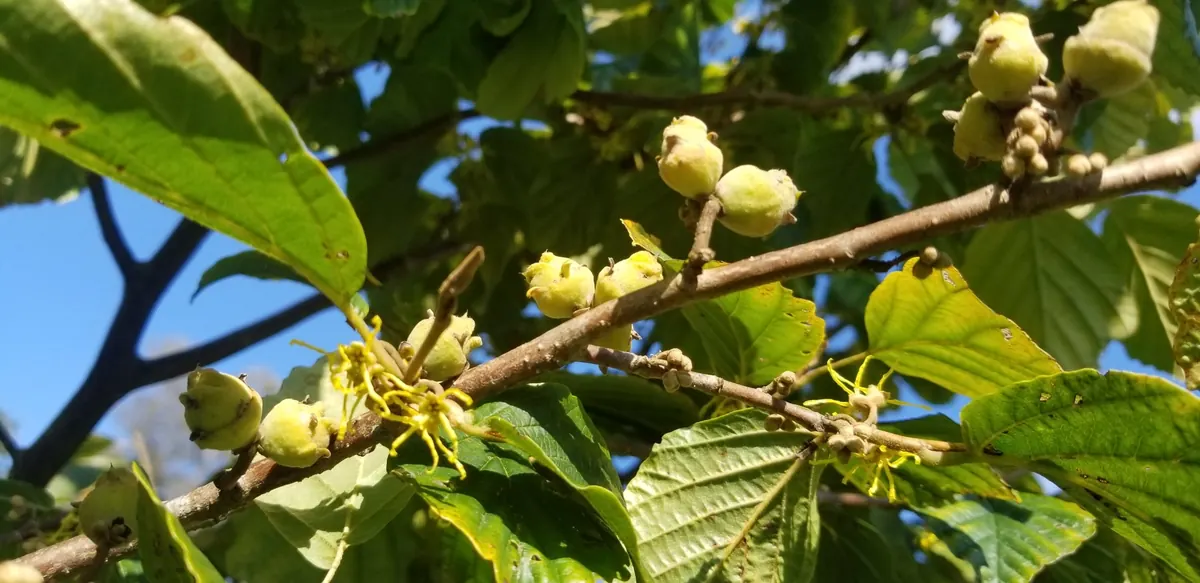
The Forest Service says American witch hazel blooms “in late October to early November in the eastern United States,” with fragrant, ribbon-thin yellow petals up to three-quarters of an inch long. The same branches carry the previous year’s capsules, which crack open in fall and shoot two glossy black seeds 10 to 20 feet, occasionally 40. On a dry, warm afternoon you may hear them snap.
-
Asters and goldenrods
Until the first hard freeze · Roadsides, old fields, dunes and salt-marsh edges
New England aster, rose-purple with orange-yellow centers, is a known monarch nectar plant and carries the last bumblebees. On Long Island’s dunes and marsh edges, seaside goldenrod, with long, waxy, evergreen leaves, keeps flowering into October and is often the only nectar on the beach.
-
Concord grapes, and a pest to watch
Grape harvest September into October · The Lake Erie grape belt from Silver Creek to Ripley
The grape belt smells of Concord juice at harvest, and it is also a frontier. The state Department of Agriculture and Markets values New York’s grape harvest at $52.8 million a year and names spotted lanternfly as a threat to grapes, apples, hops and maple; the insect is already established around New York City, Long Island, the lower Hudson Valley, Ithaca, Binghamton and the Buffalo area.
Acorns, beechnuts and wild grapes are what jays, turkeys, deer and bears are working on now. Count the acorns under one oak for ten minutes and write down the number; next year’s count will mean something.
What are deer, snakes and insects doing in New York in October?

-
Deer on the move
Rubs and scrapes from mid-October; breeding usually peaks in November · Statewide, from the Adirondacks to Staten Island
Hunters take some 220,000 deer a year in New York. Through late October bucks rub saplings, paw scrapes and travel more at dawn and dusk, which is when they cross roads, and the clock change on November 1 moves the evening commute into their busiest hour.
-
Timber rattlesnakes heading to their dens
September and October, on sunny days · South-facing talus in the lower Hudson Valley, eastern Catskills, southeastern Adirondacks and parts of the Southern Tier
This threatened snake has declined 50 to 75% in New York. In fall adults return to rock crevices facing south, and the young of the year find the den by following their mother’s scent trail. If you meet one on a warm ledge, stay at least 6 feet away and let it go; they are not aggressive.
-
Spotted lanternfly egg masses
Adults until a hard freeze; egg masses fall to spring · Trees, fences, stone walls, cars and trailers, mostly downstate
In the counties where it is established, including the five boroughs, Nassau, Suffolk, Westchester, Rockland, Orange, Putnam, Dutchess, Ulster and Sullivan, the state asks you to kill any lanternfly you see; elsewhere, photograph it and report it. Late-season females lay mud-colored egg masses on almost any hard surface. Scraping them into alcohol removes next summer’s nymphs, and checking a car before driving upstate keeps them out of the grape belt.
-
Woolly bears and ticks
Woolly bears on warm afternoons; ticks until the ground freezes · Roadsides and trail edges; brush and leaf litter
Banded woolly bears cross roads in October seeking a sheltered crevice where they will freeze solid until spring; their stripes forecast nothing. Adult blacklegged ticks are active on any mild fall day, so use repellent, tuck pants into socks, and look over every person and pet when you get home.
What are the best nature outings for New York families in October 2026?
- Saturday, October 3: a 2-mile foliage walk around Green Lake at Green Lakes State Park near Syracuse (10 a.m.), or Junior Ranger Birding Buddies at Jamaica Bay Wildlife Refuge in Queens (10:30 a.m.).
- Sunday, October 4: Migration Meander at Hamlin Beach State Park on Lake Ontario, a game and a one-mile walk (noon).
- Tuesday, October 6: the moon covers Jupiter before school, about 4:25 to 5:25 a.m.
- Thursday, October 8: Draconids after dinner, with no moon.
- October 9–11, the dark-moon weekend: star parties at Grafton Lakes and Lake Taghkanic on Friday; on Saturday, Fall Family Birding at Rockefeller State Park Preserve (9 a.m., tickets), Autumn in the Park at Taconic State Park’s Copake Falls area (10 a.m.–3 p.m., free, with Smokey Bear and live reptiles), The Big Sit and the eBird count; on Sunday, the Moreau Lake observatory or a lantern walk at Hallock State Park Preserve on the North Fork (6 p.m.).
- Mid-October: the egg take at the Salmon River Fish Hatchery in Altmar.
- Friday, October 16: an accessible owl walk at Thacher State Park (7 p.m., ages 6 and up, call to register).
- Saturday, October 17: the free Hempstead Lake Fall Fishing Festival in Nassau County, with loaner rods and bait and no license needed (10 a.m.–3 p.m.), or an owl prowl at Fort Niagara State Park (6:30 p.m., registration).
- Thursday, October 22: a sunset migratory bird walk at Shirley Chisholm State Park in Brooklyn (5 p.m.).
- Monday, October 26: the Hunter’s Moon walk at Hamlin Beach (7:30 p.m.).
- Saturday, October 31: a Halloween foliage walk at Jamaica Bay, costumes encouraged.
Most programs are small and many need registration, so check the park’s listing the week before. For science at home, report monarchs to Journey North until the first frost, send your bird lists to eBird, and join the Friends of Montezuma collecting native seed on October 7 or 14 or planting trees on October 28 (9 a.m. to 1 p.m.). Other states and months are on our nature calendar, and almost every outing above has a matching page in the Naturalist’s Field Journal.
Safety notes for October in New York
- Hunting seasons. From DEC’s 2026–27 guide: in the Northern Zone, deer bowhunting runs September 27–October 23, the early muzzleloader season October 17–23 and the regular firearms season October 24–December 6; bear season there opened September 19. In the Southern Zone, bowhunting runs October 1–November 20 and the regular firearms season November 21–December 13. The youth firearms deer and bear hunt is October 10–12, Columbus Day and Indigenous Peoples’ Day weekend, north of the Bronx–Westchester line. Fall turkey is October 1–14 in open areas, and youth pheasant weekends are October 10–11 in Western New York and October 24–25 on Long Island. Sunday hunting is legal statewide.
- Fluorescent orange or pink. Anyone hunting deer or bear with a firearm, and anyone with them, must wear at least 250 square inches of solid fluorescent orange or pink above the waist, visible from all directions (or 250 square inches of a pattern at least half orange or pink), or a hat at least half orange or pink. Hikers are not required to, but a bright hat and vest make sense in the woods from October 10 on, and a bright bandanna on the dog.
- Moose and deer. Drive slowly at dusk in the Adirondacks, where a moose is tall enough to come through the windshield, and watch for deer everywhere after the clocks change.
- Cold on the summits and in the water. Carry a headlamp, spare layers and traction on the High Peaks and Catskill ridges; a wet 50 °F day on a summit is how hypothermia starts. Paddlers on the Adirondack lakes and Lake Champlain should wear life jackets.
- Lake-effect squalls. The season’s first bands can drop sudden downpours, graupel or wet snow on the Tug Hill, Interstate 81 north of Syracuse and the hills south of Buffalo, with sunshine a few miles away.
- Ticks and lanternflies. Keep up the tick checks, and look over any car or trailer leaving the lanternfly counties.
Sources
- I LOVE NY: Fall Foliage Report, September 30–October 6, 2026
- Empire State Development: Autumn in New York, start of the fall foliage and travel season (September 10, 2026)
- Lady Bird Johnson Wildflower Center: tamarack (Larix laricina)
- NYSDEC: Pacific salmon fishing in Lake Ontario tributaries
- NYSDEC: actions to protect fish populations in the Salmon River (September 14, 2026)
- NYSDEC: Salmon River Fish Hatchery
- NYSDEC: steelhead fishing in Lake Erie tributaries
- HawkCount: Franklin Mountain site profile (season, winds, averages)
- Delaware-Otsego Audubon Society: Franklin Mountain Hawkwatch
- HawkCount: Fire Island Hawkwatch site profile
- HawkCount: Mount Peter site profile
- U.S. Fish and Wildlife Service: Montezuma National Wildlife Refuge, wildlife and seasons
- U.S. Fish and Wildlife Service: Montezuma National Wildlife Refuge (Wildlife Drive and visitor center)
- NYSDEC: Northern Montezuma Wildlife Management Area
- Friends of Montezuma: volunteer events, October–November 2026
- Finch Research Network: winter finch forecast 2026–2027 (September 25, 2026)
- The Big Sit!: October 10–11, 2026
- eBird: October Big Day, October 10, 2026
- Journey North: monarch sightings
- NYSDEC: Adirondack backcountry information and advisories
- NYSDEC: moose
- NYSDEC: black bear
- NYSDEC: white-tailed deer
- NYSDEC: timber rattlesnake
- Wikipedia: Lake Erie AVA (Chautauqua–Erie grape belt acreage and frost-free season)
- NOAA Regional Climate Centers, ACIS: 1991–2020 monthly normals and season snowfall, Buffalo, Rochester, Syracuse, Binghamton, Albany, Central Park and Islip
- National Weather Service Buffalo: Lake Erie and Lake Ontario water temperatures
- National Weather Service Buffalo: first snowfall dates for Buffalo and Rochester
- Climate Prediction Center: ENSO diagnostic discussion, September 10, 2026
- Northeast Regional Climate Center and NOAA: El Niño impacts and outlook, Northeast region (PDF)
- International Occultation Timing Association: occultation of Jupiter, October 6, 2026 (New York predictions)
- U.S. Naval Observatory: sun and moon rise and set (data API; New York City, October 2026)
- U.S. Naval Observatory: moon phases 2026
- EarthSky: meteor shower guide
- EarthSky: visible planets, October 2026
- Custer Institute and Observatory, Southold: public viewing and October 2026 events
- NY State Parks: Star Party, Grafton Lakes State Park, October 9, 2026
- NY State Parks: Mid-Hudson Astronomical Association star party, Lake Taghkanic, October 9, 2026
- NY State Parks: Night through the Telescope, Moreau Lake, October 11, 2026
- NY State Parks: Fall Night Sky, Clark Reservation, October 14, 2026
- NY State Parks: Full Moon Phenology, Hamlin Beach, October 26, 2026
- NY State Parks: Fall Foliage Walk, Green Lakes, October 3, 2026
- NY State Parks: Migration Meander, Hamlin Beach, October 4, 2026
- NY State Parks: Fall Family Birding, Rockefeller State Park Preserve, October 10, 2026
- NY State Parks: 3rd Annual Autumn in the Park, Taconic State Park, October 10, 2026
- NY State Parks: Autumn Lantern Walk, Hallock State Park Preserve, October 11, 2026
- NY State Parks: Accessible Owl Walk, Thacher State Park, October 16, 2026
- NY State Parks: Owl Prowl, Fort Niagara State Park, October 17, 2026
- NY State Parks: Sunset Migratory Bird Walk, Shirley Chisholm State Park, October 22, 2026
- NYSDEC: Hempstead Lake Fall Fishing Festival, October 17, 2026
- National Park Service, Gateway National Recreation Area: calendar (Jamaica Bay Wildlife Refuge ranger walks, October 2026)
- USDA Forest Service: American witchhazel, plant of the week
- Lady Bird Johnson Wildflower Center: New England aster
- Chesapeake Bay Program field guide: seaside goldenrod
- NYS Department of Agriculture and Markets: spotted lanternfly
- National Weather Service La Crosse: the woolly bear caterpillar
- CDC: preventing tick bites
- 2026–2027 New York Hunting and Trapping Regulations Guide (NYSDEC, eRegulations PDF: season dates, youth hunts, fluorescent orange and pink rule)
- NYSDEC: deer and bear hunting regulations (fluorescent orange or pink requirement)
- Photos via Wikimedia Commons; licenses and photographers are credited under each picture
