What to look for in nature in New York this February
February is the hinge of a New York winter. The cold still has a firm grip, Lake Erie is usually at its iciest of the year, and some of the biggest snowstorms in New York City history have come in this short month. Yet the season is quietly turning. Bald eagles are rebuilding nests and a growing number lay eggs before March, sap begins to drip from the first tapped sugar maples, red foxes and coyotes are pairing up, and in swampy woods near the city a mottled purple hood of skunk cabbage can melt its way up through the snow. The days lengthen by more than two minutes every day, and the sky offers two planets at their best in one month.
Other months in New York: October, November, December, January.
Start here
- Count birds over Presidents’ Day weekend. New York birders join the 30th Great Backyard Bird Count across the long weekend of February 12 through 15. Watch for at least 15 minutes, from a window, a park or a frozen shoreline, and enter what you see; birdcount.org explains how.
- Find a sugarhouse with steam rising. In a typical year New York’s sap starts running in February, on days when a frosty night turns into a sunny thaw. Watch for steam from sugarhouse roofs on bright afternoons, and plan ahead for Maple Weekend in March.
- Step out for Jupiter on February 10. Wednesday, February 10: as sunset fades, the giant planet clears the eastern rooftops and keeps shining until morning twilight. Mars follows on February 19, and both sit in Leo.
Plates of the Naturalist’s Field Journal that fit a New York February: “nest observed” for an eagle pair adding sticks to a known nest (noted from a distance, with the date); “birds I have seen” for every species on your Backyard Bird Count tally; “reading the signs” for a skunk cabbage hood with a ring of melted snow around it, or a fox’s scent post on a snowbank; and “a tree through the seasons” to follow a tapped sugar maple, sketched with its bucket. Mark the morning you hear the first red-winged blackbird on the “daily field log,” and use “dusk and dawn watch” for the evening Jupiter rises opposite the setting Sun.
Regions used below: Adirondacks and North Country; Western New York and the Lake Erie shore; Finger Lakes and Central New York; Southern Tier and Catskills; Capital Region and Hudson Valley; New York City and Long Island.
When do bald eagles lay eggs in New York?
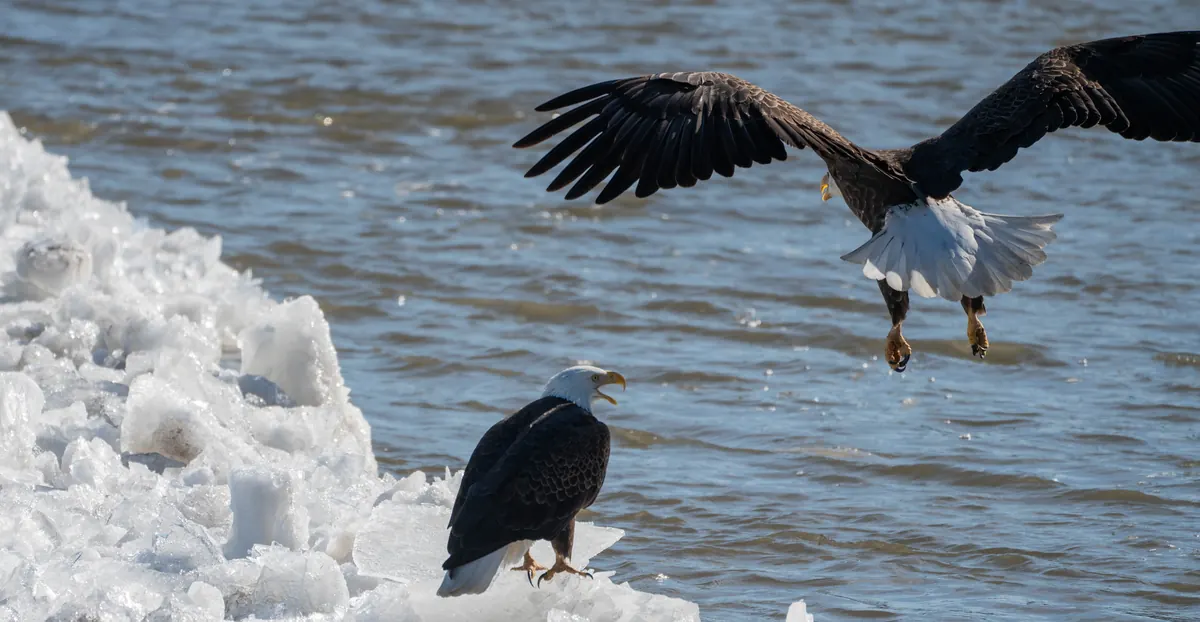
For eagles that live in New York year-round, February opens the nesting calendar. DEC’s species status assessment says courtship and nest building can begin as early as January, that eggs are laid from February through April, and that the whole nesting season stretches about seven months, ending as late as September.
-
Eggs before March
A growing share of pairs lay in the last two weeks of February; most still lay in March · Nests along the Hudson, the St. Lawrence, Lake Champlain, the Finger Lakes, the upper Delaware and many smaller rivers and reservoirs
DEC’s eagle biologists have watched egg-laying creep earlier for years. Their 2010 report notes that many pairs now regularly lay within the final fortnight of February, although the great majority still wait until March, and warns that the early birds risk late-winter storms during incubation. DEC gives a clutch size of one to three and an incubation period of roughly 35 days, so February eggs hatch in late March or early April. If an adult sits low and motionless in a nest through a cold snap, it is probably covering eggs.
-
From one pair to hundreds
The long recovery, 1976 to today · Statewide
By the 1970s New York was down to a single nesting pair. DEC’s restoration project brought 198 nestlings, mostly from Alaska, to New York between 1976 and 1989 and reached its goal of 10 breeding pairs. DEC counted 254 breeding pairs in 2014, and by 2020 it had documented 630 territories since restoration began, with 256 of the territories that could be checked that year occupied. The agency now says there are so many active nests that tracking every one’s productivity is no longer needed.
-
Hudson River EagleFest
Annual, usually a Saturday in February; the 2027 date had not been posted in early October · Croton Point Park, Croton-on-Hudson (Westchester County), with eagle-spotting stations along the river
Teatown Lake Reservation’s EagleFest celebrates the wintering eagles of the lower Hudson with live bird-of-prey shows, guided walks to scopes trained on the river, and children’s crafts in heated tents. The 22nd festival was held Saturday, February 14, 2026, after its original date was called off because of dangerous subzero wind chills, a reminder to dress for the river. Watch teatown.org or call 914-762-2912 for the 2027 date.
Both New York and federal law protect nesting eagles, and DEC treats January 1 to September 30 as the nesting season when it reviews projects near nests. Eggs left uncovered in February cold are at risk, so watch from well back, ideally from a car, and never walk toward a nest tree for a better photo.
When does maple sugaring season start in New York?
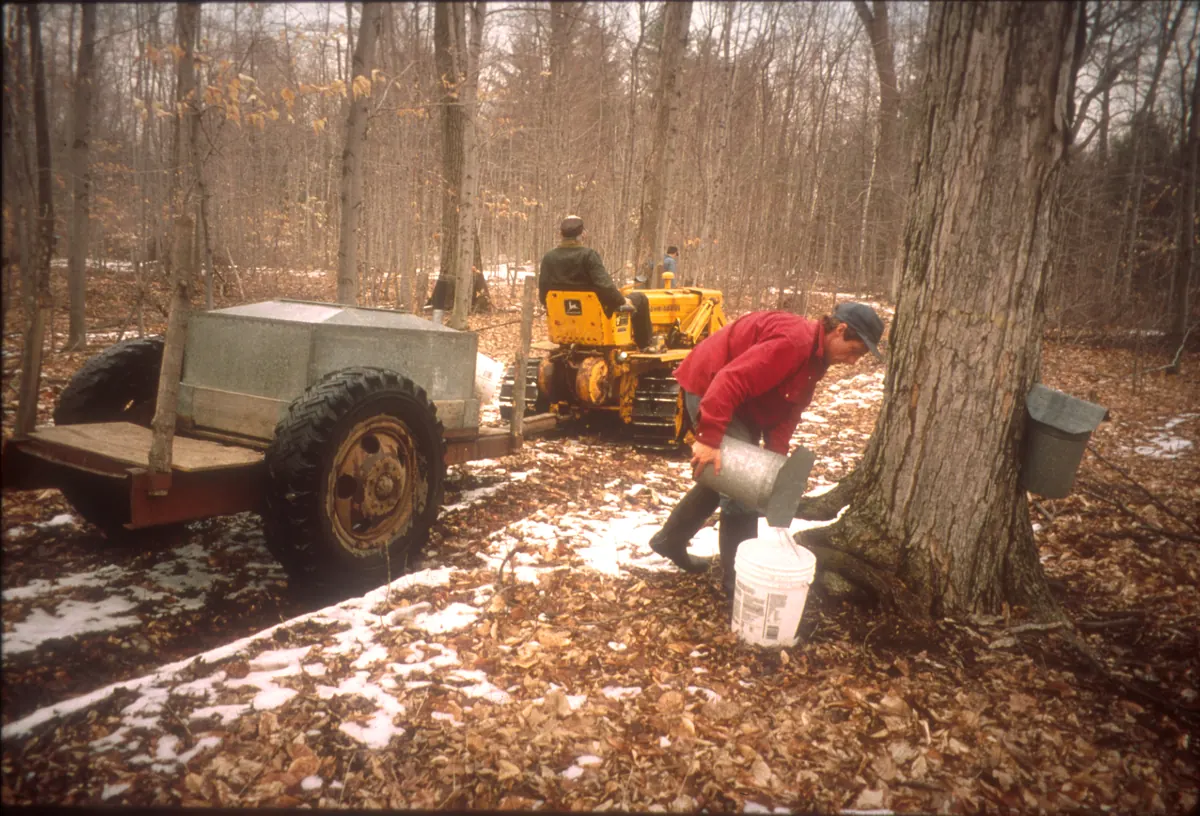
In most years, sometime in February. Cornell researchers explain that sap moves when a maple’s trunk swings from a few degrees below freezing at night to a few degrees above it by day: freezing pulls gas out of the wood’s water-conducting tubes, and the thaw that follows builds pressure that pushes sap out of a taphole. Cornell Cooperative Extension in Warren County puts the usual tapping window in the Finger Lakes at February 10 to March 10, with the exact day left to the forecast.
-
The first runs
About mid-February around the Finger Lakes; closer to March in the Adirondacks · Sugar bushes statewide, from the Catskills and Southern Tier to the North Country
A Cornell climate study found that the best start date for tapping was about mid-February around Ithaca and about March 1 near Saranac, and projected that warming could move those dates a month earlier by 2100. Trials at Cornell’s Uihlein maple research forest in Lake Placid found that waiting until late February or early March risks missing the early runs. Fresh sap is clear and only faintly sweet: at the roughly 2% sugar typical of sugar maple, Warren County extension figures about 43 gallons of sap boil down to a single gallon of syrup.
-
Second only to Vermont
Each spring · More than 2,000 sugarmakers across the state
USDA’s National Agricultural Statistics Service counted 2.7 million taps in New York in 2025, producing 829,000 gallons of syrup, behind only Vermont. The state’s producers’ association says New York has the country’s largest supply of tappable maples. On a cold, sunny afternoon, a white plume over a sugarhouse roof means they are boiling.
-
Maple Weekend
March 13–14 and March 20–21, 2027, 10 a.m. to 4 p.m. at most farms · Participating farms statewide; the association’s map lists them
The New York State Maple Producers’ Association has already posted its 2027 dates. The event began in 1995 as a single “Maple Sunday” and now spans two weekends, with free tours and samples at most farms. It comes just after February, but the season it celebrates starts now. Expect mud and wear boots.
If you tap a backyard tree, extension guidance is one tap for a trunk 10 to 17 inches across at chest height and two for 18 to 24 inches.
What are the first signs of spring in New York?
Spring arrives in New York from the bottom up and from the south first. In late February, the lower Hudson Valley, New York City and Long Island usually show the earliest hints, while the North Country is still deep in snow.
-
Skunk cabbage melting through the snow
As early as mid-February near New York City · Swamps, seeps and wet stream banks; wooded wetlands in the Bronx, Westchester, Long Island and up the Hudson
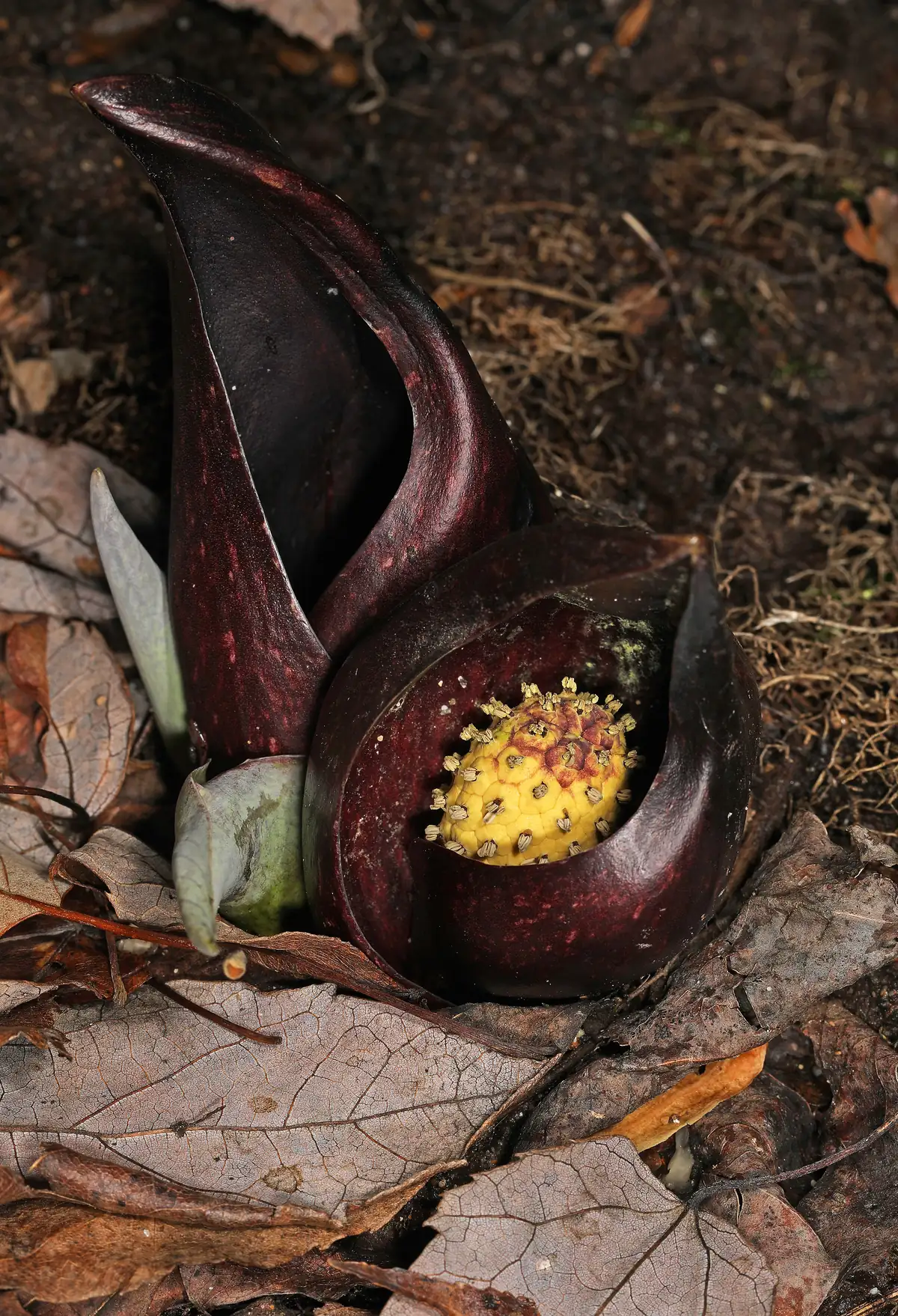
The New York Botanical Garden says skunk cabbage may bloom by mid-February in this area. The flower is a knob inside a thick, spongy, maroon-and-green hood. NYBG’s EcoFlora notes that the plant burns carbohydrates drawn from its underground stem to heat the flower head, holding it as much as 30°C (54°F) above the outside air for up to three weeks, which is why each hood often sits in a little bowl of bare ground. Early flies and honeybees come for the warmth and pollen. The broad green leaves come later, after the flowers.
-
Red-winged blackbirds back on the cattails
Males from late February into early March; females follow · Marshes and wet fields statewide; in Brooklyn, Prospect Park, Marine Park and Floyd Bennett Field
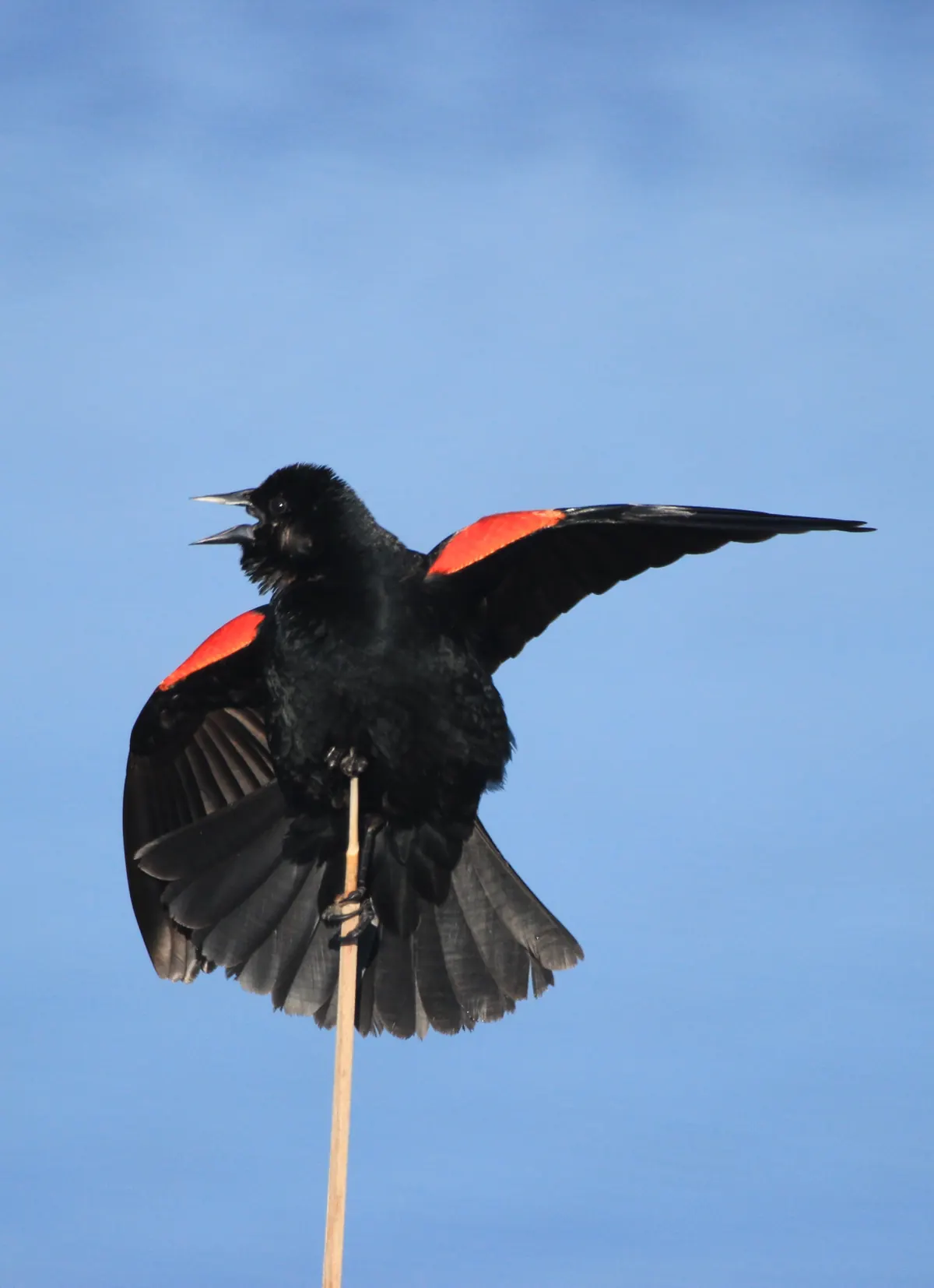
Brooklyn Botanic Garden puts the first returning males in late February and early March, traveling in flocks ahead of the females. Each male claims a patch of cattails and sings a musical konk-a-ree while flaring his red-and-yellow shoulder patches.
-
American woodcock, if spring is early
Displays mostly from March into spring · Damp brushy fields and young woods; city parks on migration
DEC counts the woodcock among the first spring migrants and says it travels only by night, low over the ground. Its courtship display, a nasal peent from the ground at dusk followed by a spiraling, twittering flight 100 to 200 feet up, belongs mostly to March, and DEC gives nesting from mid-March into June, so the first birds must arrive before then. Five Rivers near Albany has led woodcock walks in March; if late February turns mild, start checking damp fields at dusk.
Write down the date of each first: the first skunk cabbage, the first singing blackbird, the first sap run on your road. Over a few years, a personal list like this becomes a record of how New York’s springs are changing.
Why are foxes, coyotes and skunks so active in February?
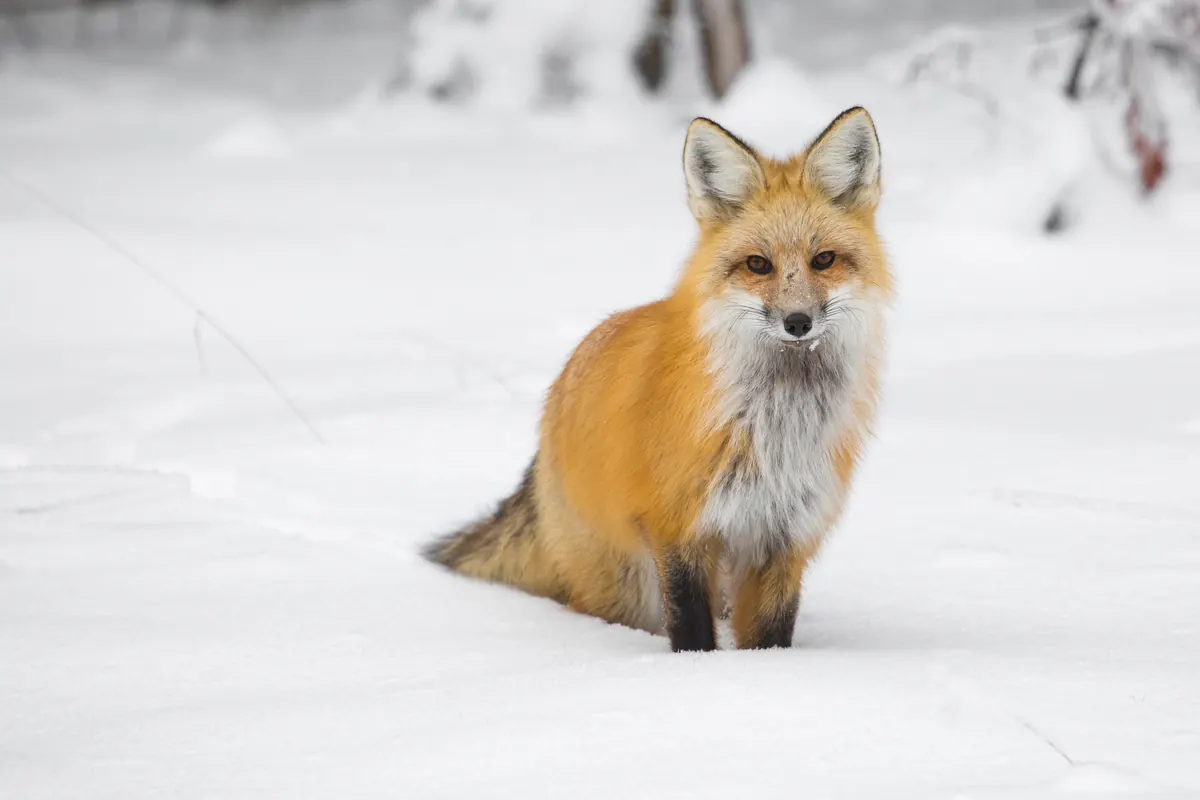
For several of New York’s mammals, late winter is the mating season. Fresh snow makes their courting easy to read: two sets of tracks running side by side, scent marks on stumps and snowbanks, and loud calls after dark.
-
Red foxes pairing up
Breeding December to April, peaking in January and February · Farmland, woodland edges, suburbs and city parks statewide
DEC says red foxes in New York keep the same mate for life and breed mostly in January and February. Kits arrive about 52 days after mating, in a den that is often an old woodchuck burrow widened for the purpose, usually to three to six kits. In February, watch for a pair of trails that wander side by side and for scent posts marked with urine, which DEC describes as the way foxes signal their territories to one another.
-
Coyotes howling
Breeding in winter; pups in spring · Farmland, forests and suburban and urban green spaces statewide
DEC notes that eastern coyotes are highly vocal in their winter breeding season and mate for life. In a February press release, the agency described this as the time of year when resident coyotes breed and set up dens for pups due in the spring, and urged people never to feed coyotes, to bring pet food and bird seed in, and to supervise pets outdoors, especially at sunset and at night. A family group of a pair and its young defends 2 to 15 square miles, so a chorus of yips at dusk rarely means many animals.
-
Skunks on the move
Mating in February and early March · Fields, yards and woodland edges statewide
DEC says striped skunks retreat to dens and stay inactive for long stretches in winter, but they are not true hibernators, and males in particular come out during cold weather to look for mates. That is why the first skunk smell of the year often drifts across a road on a February night.
-
Groundhog Day, and the real woodchuck
Tuesday, February 2 · Fields, hedgerows and roadsides statewide
The woodchuck spends the winter curled in a sealed chamber with its heart slowed to 4 or 5 beats a minute and losing 30 to 40% of its body weight, according to SUNY-ESF’s Adirondack Ecological Center. Despite the holiday, ESF notes that few woodchucks surface in early February; most come out in March, and later at high elevations.
Most black bear cubs have been born in their dens by now; leave any den you come across alone. The New York January page covers bear births and life under the snow.
When is the Great Backyard Bird Count in 2027?
The 30th Great Backyard Bird Count fills the four days of Presidents’ Day weekend 2027, February 12 through the holiday Monday, February 15, according to the National Audubon Society, one of the count’s three organizers along with Birds Canada and Cornell’s bird lab in Ithaca. Anyone can join: count for 15 minutes or longer on one day or all four, at home or away, and report the birds through the Merlin Bird ID app, eBird or the count’s website.
-
Feeders and windows
Any part of the four days · Backyards, school grounds and apartment balconies
A feeder count is a good way to start. Expect black-capped chickadees, tufted titmice, white-breasted nuthatches, dark-eyed juncos, downy woodpeckers, northern cardinals and blue jays across most of the state.
-
Open water and the coast
Mornings, when the light is behind you · The Niagara River, Finger Lakes outlets, the Hudson and Long Island’s bays and inlets
A count at a big lake, river or inlet can add dozens of species. Eagles, gulls, rafts of diving ducks, and loons and grebes on the coast all count. In February, cold snaps can freeze the shallows and crowd the waterbirds into the remaining open water, which makes them easier to see.
-
Winter finches, a progress check
All month · Conifers and feeders
The Finch Research Network’s 2026–27 forecast called for a good pine siskin flight into the Northeast and red crossbills in conifers. A GBBC checklist from your own yard helps show whether that forecast came true.
Project FeederWatch keeps going through April, and eBird takes checklists every day of the year, so the count weekend can be the start of a habit.
Does Lake Champlain still freeze over?
Less often than it used to. The National Weather Service office in Burlington, Vermont, keeps a record of the years the broad lake froze across, judged by full ice from Burlington west to Port Kent, New York; since 2009 the office has made the call from satellite images. Across the long record, closing dates cluster in late January and February. The earliest on record is January 7, 1868, and the latest March 26, 1894. In recent winters, though, the lake has more often stayed open.
-
Peak ice on Lake Erie
Usually mid- to late February · Lake Erie off Buffalo and Dunkirk; Lake Ontario’s bays
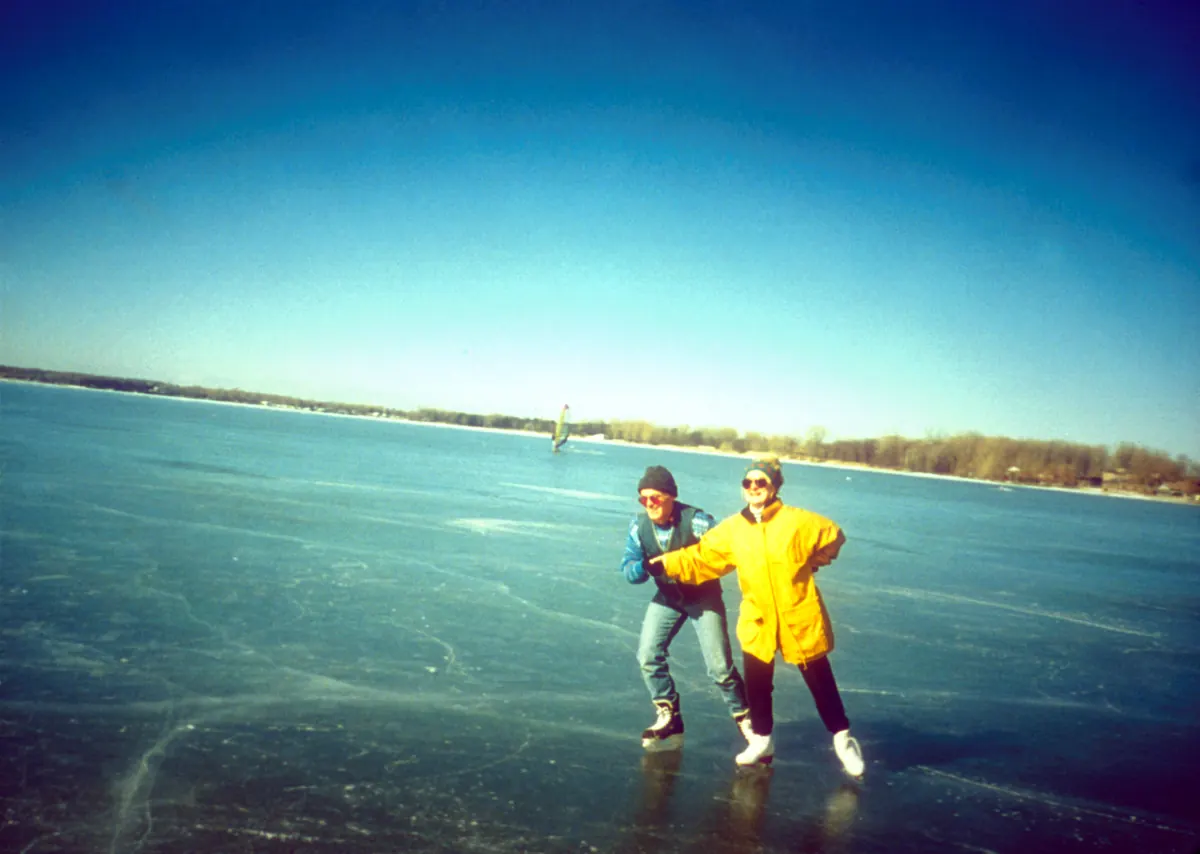
Scientists at NOAA’s Great Lakes lab in Ann Arbor (GLERL) say ice on the lower lakes such as Erie usually peaks in the second half of February, while Lake Superior’s peak comes later. Erie, the shallowest of the five, ices over more than any other: GLERL’s records run from a maximum of 98.2% in 1994 down to 22.8% in the mild winter of 2012. Lake Ontario, by contrast, keeps a low ice cover in most years.
-
Late-season ice fishing
Through February, as long as the ice holds · Lakes and ponds statewide; shanties must be off the ice by March 15
DEC’s ice table, based on new, clear ice on still water, gives 4 inches for fishing on foot and 5 inches for a snowmobile or ATV. Late in the winter ice changes character: DEC warns that slushy ice carries only about half the load of clear ice, that clear ice over moving water loses about 20% of its strength, and it advises doubling the guidelines for white ice.
| Year | Lake closed |
|---|---|
| 2026 | February 13 |
| 2020 to 2025 | Not closed |
| 2019 | March 8 |
| 2016 to 2018 | Not closed |
| 2015 | February 16 |
| 2014 | February 12 |
| 2008 to 2013 | Not closed |
| 2007 | March 2 |
| 2006 | Not closed |
| 2005 | March 8 |
| 2004 | January 27 |
| 2003 | February 15 |
| 2002 | Not closed |
| 2001 | March 2 |
The same NWS list shows no closing in the strong El Niño winters of 1983, 1998 and 2016, a pattern to keep in mind this year. Even in a year when the lake closes, open leads and thin spots remain; never assume a frozen lake is safe all the way across.
Is February the snowiest month in New York, and what could El Niño bring?
It depends where you live. Under the 1991–2020 normals, Central Park, LaGuardia and JFK all have a snowier February than January on average, and the month has delivered three of Central Park’s ten biggest storms: 26.9 inches on February 11–12, 2006, 20.9 inches on February 25–26, 2010, and 19.8 inches on February 16–17, 2003, according to the NWS office in Upton. Upstate the pattern flips: at most stations in the table below January is the snowier month, although Syracuse and Old Forge still average about 30 inches.
-
What a very strong El Niño suggests
Late winter 2027 · Statewide
New York heads into 2027 with the Pacific warming hard: the Climate Prediction Center’s (CPC) September 10, 2026, update rated a very strong, winter-long El Niño better than 90% likely. For what NOAA’s official winter outlook says about February, see the CPC’s seasonal outlook maps, first issued October 15 and revised each month. In its Northeast summary, the Northeast Regional Climate Center and NOAA describe El Niño winters as tending toward a northward polar jet and dry conditions spreading from the Ohio Valley into western New York, and point out that strong El Niños produced the two lowest seasonal snow totals Buffalo has recorded since 1950.
-
But watch the coast
Any time in February · New York City, Long Island and the lower Hudson
The same summary cites a study that found roughly two additional coast-hugging nor’easters in a typical El Niño winter, mostly storms that form off the Carolinas, especially when the event is strong, and names the February 2003 Presidents’ Day Storm as one that came with El Niño conditions. Near the coast, it says, such winters can bring up to 6 more inches of snow than usual from December through February. Central Park’s 17.6 inches on February 11–12, 1983, fell in one of the two strongest El Niño winters NOAA’s Great Lakes laboratory identified.
| Station | Average high | Average low | January snowfall | February snowfall |
|---|---|---|---|---|
| Old Forge (western Adirondacks) | 28.7 °F | 6.6 °F | 46.7 in | 30.9 in |
| Lake Placid 2 S (High Peaks) | 27.3 °F | 8.1 °F | 21.0 in | 21.0 in |
| Syracuse airport | 33.6 °F | 17.5 °F | 34.0 in | 30.3 in |
| Rochester airport | 35.2 °F | 19.6 °F | 27.4 in | 23.1 in |
| Buffalo airport | 33.3 °F | 19.5 °F | 26.7 in | 18.1 in |
| Binghamton airport | 32.2 °F | 16.9 °F | 20.6 in | 19.7 in |
| Albany airport | 36.0 °F | 17.6 °F | 15.6 in | 13.7 in |
| Central Park | 42.2 °F | 29.5 °F | 8.8 in | 10.1 in |
| Islip (Long Island) | 41.0 °F | 25.5 °F | 10.3 in | 9.4 in |
An El Niño tilt is not a promise, and one late-February nor’easter can make a winter. For your own trip, check our weather forecasts, and when the seed orders go out, the New York frost-date tables tell you when your town usually sees its last spring freeze.
How much daylight does New York gain in February?
More than an hour. New York City’s day grows from 10 hours 8 minutes on February 1 to 11 hours 14 minutes on February 28, a gain of 66 minutes, and the daily gain itself speeds up from about 2.2 to 2.7 minutes. Groundhog Day, Tuesday, February 2, is only a rough marker of mid-winter: counting from the December solstice, the season reaches its true midpoint on February 3–4, with the March equinox an equal span ahead.
| City | Feb 1 | Feb 28 | Gained | Per day |
|---|---|---|---|---|
| Plattsburgh | 9 h 49 m | 11 h 07 m | 78 min | 2.9 min |
| Buffalo | 9 h 58 m | 11 h 10 m | 72 min | 2.7 min |
| Rochester | 9 h 57 m | 11 h 10 m | 73 min | 2.7 min |
| Syracuse | 9 h 57 m | 11 h 10 m | 73 min | 2.7 min |
| Albany | 9 h 59 m | 11 h 10 m | 71 min | 2.6 min |
| Binghamton | 10 h 01 m | 11 h 11 m | 70 min | 2.6 min |
| New York | 10 h 08 m | 11 h 14 m | 66 min | 2.4 min |
| Montauk | 10 h 06 m | 11 h 13 m | 67 min | 2.5 min |
Northern towns gain light fastest now, so by the end of the month Plattsburgh’s day is only about seven minutes shorter than New York City’s. For sunrise and sunset at any address, try our daylight tool.
What can you see in the New York night sky in February 2027?
On two dates a little over a week apart, first Jupiter and then Mars line up opposite the Sun, both among the stars of Leo. All times are Eastern Standard Time.
-
Mercury after sunset
Late January to about February 10; best around February 2–3 · Low in the west-southwest, 30 to 45 minutes after sunset
Mercury swings farthest from the Sun early on February 3, giving New York its most favorable evening look at the planet this winter. Look again on Sunday, February 7, when the slimmest sliver of a new Moon keeps it company low in the glow after sunset; binoculars help, and a clear, flat western horizon is essential.
-
Jupiter at opposition
Evening of Wednesday, February 10 · Rising in the east at sunset; high in the south around midnight
Jupiter reaches opposition at 7:21 p.m., closest to Earth for the year at about 405 million miles, and shines all night. Hold binoculars steady against a post and up to four of its big moons appear as pinpricks strung beside the disk. On the night of February 19–20 a Moon that is almost full slides very close by.
-
Mars at opposition
Friday, February 19; closest on the 20th · In Leo, rising in the east around sunset
This is a small, distant opposition: Mars comes no closer than about 63 million miles, so it looks like a bright orange-red star rather than the dazzling beacon of a close year.
-
The Snow Moon and a faint eclipse
Full at 6:23 p.m. Saturday, February 20; eclipse 4:12 to 8:13 p.m. · Rising in the east around sunset (5:32 p.m. in New York City)
The Snow Moon rises already inside Earth’s faint outer shadow, a penumbral eclipse that peaks at 6:13 p.m., while the Moon is still low in twilight. Look closely near 6:15 and one rim may seem faintly smudged; anyone not told about the eclipse would take it for a normal full moon. A few almanacs list this moon as a supermoon; the stricter lists leave it out. The same evening, the Moon, Jupiter, Mars and the star Regulus gather in Leo. The February 6 solar eclipse is visible only from South America and Africa, not from New York.
| Phase | Date | Time |
|---|---|---|
| New moon | Saturday, Feb 6 | 10:56 a.m. EST |
| First quarter | Sunday, Feb 14 | 2:58 a.m. EST |
| Full moon, the Snow Moon | Saturday, Feb 20 | 6:23 p.m. EST |
| Last quarter | Sunday, Feb 28 | 12:16 a.m. EST |
Moonless evenings, best for faint stars or a surprise aurora, run from about February 2 through 11. The solar cycle peaked in 2024, but even on the way down the Sun can fire off a big storm; NOAA’s Space Weather Prediction Center issues alerts. See our moon calendar for rise times, and check the cloud forecast before a late night.
What can New York families do outdoors in February 2027?
- Tuesday, February 2: Groundhog Day. Take the day as an excuse to look for woodchuck burrows at field edges, then return in March to see whether anyone has come out.
- Early evenings, February 2 to 10: look for Mercury low in the west after sunset, and on Sunday, February 7, for the thin crescent Moon beside it.
- Wednesday, February 10: Jupiter at opposition. Hand a child binoculars and see how many of its moons they can spot.
- Presidents’ Day weekend, February 12–15: the Great Backyard Bird Count, which asks for as little as 15 minutes with the feeder in view.
- Presidents’ Day weekend: DEC has made this a free fishing weekend in recent years (February 14–15 in 2026), when no freshwater license is needed. DEC had not named its 2027 dates by early October, so look on its Learn to Fish page, and test the ice before stepping out.
- A Saturday in February: Teatown’s Hudson River EagleFest at Croton Point Park; watch teatown.org for the date.
- Saturday evening, February 20: the Snow Moon rises over Leo with Jupiter and Mars nearby.
- All month: DEC’s environmental education centers, including Five Rivers near Albany and Reinstein Woods near Buffalo, post winter walks and snowshoe programs on DEC’s events calendar a few weeks ahead.
- Plan ahead: Maple Weekend is March 13–14 and 20–21, 2027.
Year-round citizen science fits easily into a February weekend: keep a Project FeederWatch tally, upload trail-camera photos to DEC’s Snapshot NY, or start a list of firsts. Browse our nature guides by month and state, look back at the December page for New York, and give a child a Naturalist’s Field Journal to hold the season’s sketches.
Safety notes for February in New York
- No deer or bear seasons. All big-game seasons have closed by February in DEC’s 2026–27 guide, so the fluorescent orange or pink rule for firearm deer and bear hunters (250 square inches above the waist visible from all sides, or a hat whose outside is half or more of either color) is not in force. Small-game hunters remain afield, so hikers and their dogs are wise to wear something bright.
- Small game and furbearers. The guide runs squirrel season and ruffed grouse season to February 28 in most units, and cottontail season to February 28 or March 21 depending on the wildlife management unit. Raccoon and fox hunting ends February 15 upstate and February 25 on Long Island and in New York City, and coyote hunting continues to March 28 everywhere but Long Island and New York City, day or night.
- Geese. Canada goose seasons run to February 3 in the Central area and February 21 in the Western area, and snow goose seasons run to March 10 (in the Northeast and Lake Champlain zones they reopen on February 26), so expect shotgun fire near fields and open water.
- Trapping. Fox, raccoon and coyote trapping closes February 15 or 25 depending on the unit, while mink, muskrat and otter trapping continue into April in some units. Keep dogs leashed near streams and marshes.
- Late-winter ice. February thaws rot ice from beneath. Slush cuts ice strength roughly in half, and inlets, outlets and areas near docks with bubblers stay thin. Bring a buddy, a throw rope and ice picks worn around the neck.
- Avalanches and high water. DEC warns backcountry skiers and hikers that avalanches can run on the open slides of the High Peaks, especially after thaws and rain. Snowshoes or skis are required in the High Peaks Wilderness when snow is deeper than 8 inches, and swollen streams after a thaw are dangerous to cross.
- Nor’easters and squalls. Heed winter storm and snow squall warnings, and pack the car with a shovel, warm blanket, drinking water and phone charger.
Sources
- NYSDEC: bald eagle
- NYSDEC: Bald Eagle Species Status Assessment (PDF)
- NYSDEC: New York State Bald Eagle Report 2010 (PDF)
- NYSDEC: species-specific guidance for bald eagles (PDF)
- NYSDEC: Bald Eagle Restoration in New York, 1976 to 1989
- Teatown: Hudson River EagleFest
- Cornell Chronicle: In 100 years, maple sap will flow a month earlier
- Cornell Small Farms: maple and birch tapping research responds to variable climate
- Cornell Cooperative Extension of Warren County: maple syrup production
- USDA NASS: Crop Production, June 2025 (maple syrup by state) (PDF)
- New York State Maple Producers Association
- New York State Maple Producers Association: Maple Weekend 2027
- New York Botanical Garden, Plant Talk: the first wildflower of spring
- New York City EcoFlora (NYBG): skunk cabbage (PDF)
- Brooklyn Botanic Garden: Birds of Brooklyn, red-winged blackbird
- NYSDEC: American woodcock
- NYSDEC Conservationist: American woodcock (PDF)
- NYSDEC: Watchable Wildlife, Woodcock Walk, Five Rivers (March 2026)
- NYSDEC: red fox
- NYSDEC: eastern coyote
- NYSDEC: DEC issues guidance to avoid coyote conflicts (February 15, 2022)
- NYSDEC: striped skunk
- SUNY-ESF Adirondack Ecological Center: woodchuck
- National Audubon Society: Great Backyard Bird Count (2027 dates)
- Finch Research Network: Winter Finch Forecast 2026–2027
- National Weather Service Burlington: dates of Lake Champlain closing
- NOAA GLERL: Great Lakes ice cover
- NOAA GLERL: Technical Memorandum GLERL-152, Great Lakes ice cover and El Niño (PDF)
- NYSDEC: ice fishing and ice safety
- NOAA Regional Climate Centers, ACIS: 1991–2020 monthly normals for New York stations
- National Weather Service New York: biggest snowstorms at Central Park (PDF)
- Climate Prediction Center: ENSO diagnostic discussion, September 10, 2026
- Climate Prediction Center: seasonal (90-day) outlooks
- Northeast Regional Climate Center and NOAA: El Niño impacts and outlook, Northeast region (PDF)
- U.S. Naval Observatory: moon phases from December 30, 2026
- U.S. Naval Observatory: Earth’s seasons and apsides, 2027
- Fred Espenak, Sky Event Almanac 2027
- NASA Goddard: lunar eclipses 2021 to 2030
- NASA Goddard: solar eclipses 2021 to 2030
- Old Farmer’s Almanac: eclipse dates
- Sea and Sky: astronomy calendar of celestial events 2027
- NOAA Space Weather Prediction Center: aurora dashboard
- NYSDEC: Learn to Fish and Free Fishing Days
- NYSDEC: Five Rivers public programs and events
- NYSDEC: events calendar
- 2026–2027 New York Hunting and Trapping Regulations Guide (NYSDEC, eRegulations PDF)
- NYSDEC: deer and bear hunting regulations (fluorescent orange and pink rule)
- NYSDEC: winter hiking safety
- NYSDEC: avalanche and high water risk in the Adirondacks (February 17, 2022)
- Photos via Wikimedia Commons; licenses and photographers are credited under each picture
