What to look for in nature in New York this December
Meteorological winter, the December-to-February quarter that runs coldest on average, opens on December 1, and New York slips into it quickly. Ponds skim over, the snow belts east of the lakes start their season in earnest, and the birds that came south to spend the cold months here take up their places: bald eagles along the open reaches of the Hudson and the Delaware, short-eared owls quartering the grasslands near Fort Edward at dusk, and tens of thousands of gulls milling below Niagara Falls. Sunsets reach their earliest nearly two weeks before the solstice, the Christmas Bird Count starts on the 14th, and the Geminids, the best meteor shower of the year, fall on a nearly moonless night. What follows covers the sights, the places and the dates.
Other months in New York: October, November.
Start here
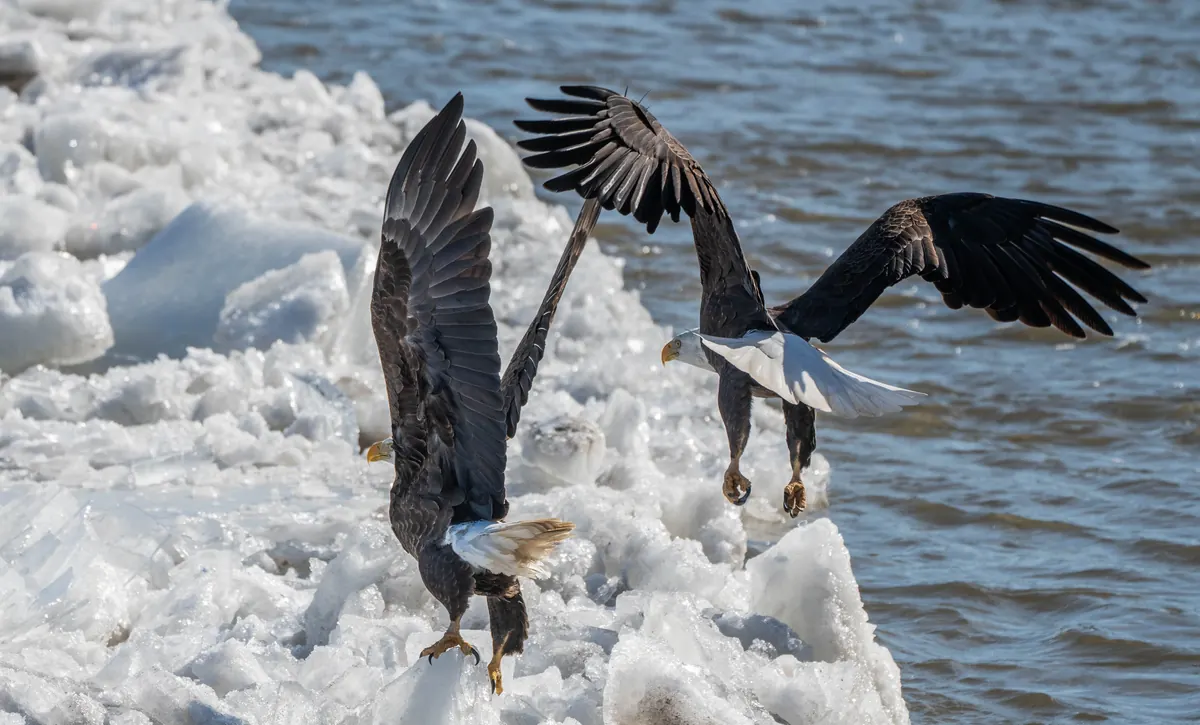
- Eagles where the water stays open. DEC says wintering bald eagles start showing up in December and build toward a January and February peak. Bring binoculars to the Hudson River overlooks at Norrie Point, Peekskill or Iona Island, or to the blinds at the Mongaup reservoirs, and watch from at least a quarter mile.
- Geminids on a dark Sunday night. Plan on Sunday night, December 13, for the Geminids. A slim waxing moon drops out of the sky during the evening, leaving dark hours until dawn, and the meteors come fastest after midnight once Gemini climbs high.
- Count birds for science. The free Christmas Bird Count, Audubon’s 127th, opens December 14 and closes January 5. Manhattan’s count is on Sunday, December 20; elsewhere, find your nearest 15-mile circle on Audubon’s map, or count the birds at your own feeder within a circle.
Naturalist’s Field Journal pages for a New York December: “dusk and dawn watch” for the evening the short-eared owls lift off the grass at Fort Edward, or for the earliest sunset of the year; “reading the signs” for chewed hemlock twigs, a squirrel’s midden or white wool on a hemlock branch; “a tree through the seasons” for one white pine or hemlock you can return to all winter; and the “daily field log” for the Christmas Bird Count. Add the temperature and whether the ponds have frozen.
Regions used below: Adirondacks and North Country; Western New York and the Lake Erie shore; Finger Lakes and Central New York; Southern Tier and Catskills; Capital Region and Hudson Valley; New York City and Long Island.
Where can you see bald eagles in New York in winter?
Bald eagles eat mostly fish, and when lakes and slow rivers freeze, the birds gather where water stays open: below dams, along tidal rivers and at the mouths of creeks. DEC’s watchable wildlife page describes the pattern: wintering eagles begin to turn up in December, their numbers peak in January and February, and most have headed back toward their nesting territories by mid-March.
-
The lower Hudson River
December onward; best on cold mornings when ice floes run on the river · Norrie Point State Park (Hyde Park), Constitution Island (West Point), the Route 6/202 overlook above Iona Island, Riverfront Park (Peekskill), George’s Island Park (Montrose)
DEC notes that the Hudson has hosted more than 10 wintering eagles in recent seasons. Scan shoreline treetops, the ice floes and the open leads between them.
-
Mongaup Valley
December to March; early morning (7 to 9 a.m.) and late afternoon (4 to 5 p.m.) are best · Mongaup Valley Wildlife Management Area, Sullivan and Orange counties: the blind at Mongaup Falls Reservoir and the viewing site at Rio Reservoir, off Route 42
The reservoirs on the Mongaup River, a tributary of the upper Delaware, are among the state’s best-known places to see wintering eagles, and DEC maintains two marked viewing areas there so you can watch without flushing them.
-
St. Lawrence River and Onondaga Lake
Early winter, as ice forms · Wellesley Island State Park and the Brockville Narrows in the Thousand Islands; Onondaga Lake near Syracuse
The St. Lawrence is New York’s second-largest wintering site, averaging 20 to 30 eagles, and the birds follow the open water as the river freezes. Onondaga Lake, in the middle of Syracuse, also draws a winter group.
DEC’s etiquette is simple: stay at least a quarter mile from eagles and their roosts, stay in or beside your car where you can, skip the horn and the slammed doors, and leave the dog at home. Mild winters spread the birds out: in 2022–23, NWS Buffalo noted, Lake Erie never froze over, something that happened in five of the twelve winters up to then.
Where can you see short-eared owls and other winter raptors in New York?
Open grassland is scarce in New York, and the hawks and owls that hunt voles in winter crowd onto what is left. The best known of these places is the Washington County Grasslands near Fort Edward in the upper Hudson Valley, an Audubon Important Bird Area.
-
Short-eared owls at dusk
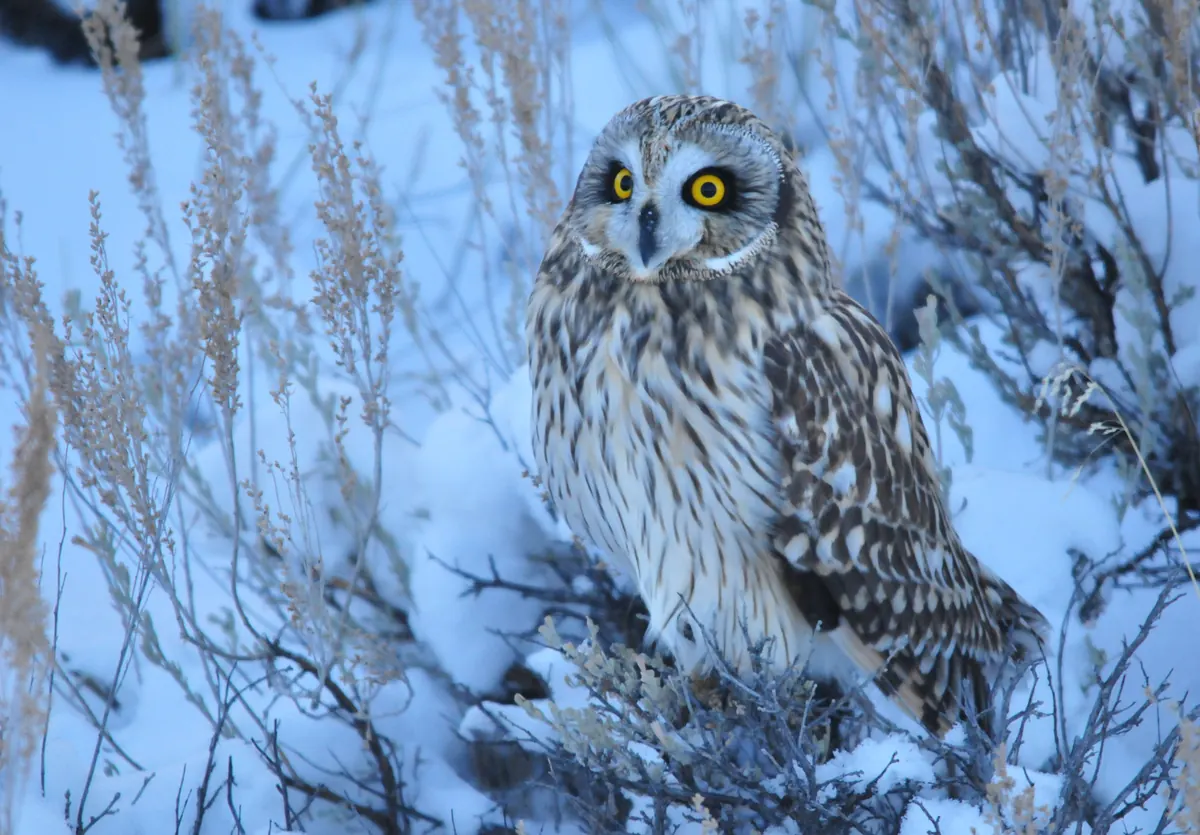
Late fall to March; most active from late afternoon into dusk · Washington County Grasslands Wildlife Management Area, Fort Edward: the accessible viewing platform about 500 feet from the Black House Road parking area
The short-eared owl is listed as endangered in New York, and DEC says it is far more common here as a winter visitor than as a breeder; the second state Breeding Bird Atlas found it in only 24 survey blocks. In winter the owls hunt low over fields and marshes on floppy, moth-like wingbeats, and where voles are plentiful they share roosts that can hold up to 200 birds. DEC lists the Finger Lakes, the Lake Ontario plain (Jefferson County especially), parts of the Hudson Valley and the Long Island shore as other winter haunts.
-
Harriers, rough-legs and snowy owls
December to March · The same Fort Edward grasslands; open farmland across the Lake Ontario plain and St. Lawrence Valley
The Grassland Bird Trust, a local conservation group that watches these fields, lists northern harriers, American kestrels, rough-legged hawks and, in some winters, snowy owls among the regulars, with flocks of snow buntings and horned larks on the bare ground.
To protect the wintering birds, DEC closes the part of the wildlife management area east of Fitzpatrick Lane from December 1 to April 15; the platform and its trail stay open. Watch from there or from the roadsides, and keep your car on the shoulder rather than the field edge. The owls tend to appear in the last half hour of light, around 4 p.m.
Why do so many gulls gather on the Niagara River in December?
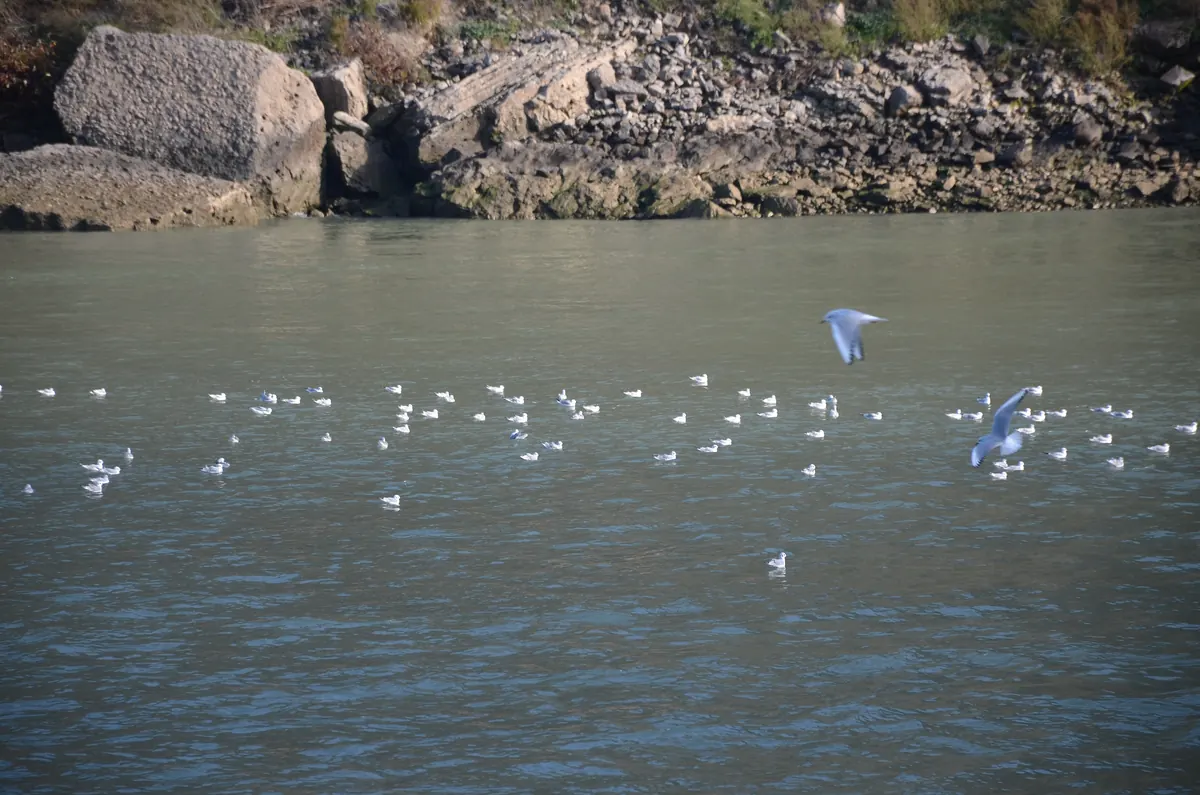
Its fast, open water makes the Niagara River one of the great gull-watching places on Earth in fall and early winter. National Audubon calls the corridor a Global Important Bird Area, with 19 gull species on record and single-day counts of more than 100,000 birds.
-
Bonaparte’s gulls by the thousand
Fall into early winter, with big counts in November and December · Below the falls and the upper rapids in Niagara Falls State Park, the lower river at Lewiston and Fort Niagara, and the Buffalo waterfront at the river’s head
The small, tern-like Bonaparte’s gull is the river’s signature bird. The Canadian partners who monitor the Important Bird Area estimate that up to a quarter of the species’ entire population passes through in fall and early winter, and volunteers once tallied more than 12,800 of them on a single November morning, over 3% of the world’s total.
-
A hunt for the rare ones
Fall and early winter · Anywhere gulls rest on the river ice, breakwalls and power-plant intakes
Herring and ring-billed gulls make up the bulk, but the same surveys have found little gulls in significant numbers, and with 19 species on the river’s list, birders come from far away to sift the flocks for something rare. Greater scaup and red-breasted mergansers on the river sometimes reach 1% of their North American population.
A scope pays off here. DEC’s duck-season planners note that as small waters ice up, ducks crowd onto big ones like the Niagara and the Finger Lakes.
How do you join a Christmas Bird Count in New York?
The Christmas Bird Count began in 1900, when the ornithologist Frank Chapman organized a “Christmas Bird Census”; 27 observers took part in 25 counts that first year and found 90 species. The 127th edition opens on December 14 and closes after January 5, 2027. Every count circle measures 15 miles in diameter, gets a single count day chosen by its compiler, and welcomes beginners. Participation is free.
-
Manhattan’s count
Sunday, December 20, 2026 · Central Park and the rest of the Manhattan circle
NYC Bird Alliance organizes the count in Manhattan and says registration details will be posted closer to the date; its newsletter announces when sign-ups open. The other boroughs, Long Island and the lower Hudson Valley run their own counts on their own dates.
-
Counts upstate
Any day from December 14 to January 5, depending on the circle · Dozens of circles from Montauk to Massena
The New York State Ornithological Association keeps a statewide count calendar; last season it listed dates for about three dozen circles, and the 2026–27 list was not yet posted in early October. Audubon’s online Circle Finder shows each circle with its compiler’s contact, and the compiler will assign you a route or a team.
-
Count from your kitchen window
Count day in your circle · Any feeder or yard inside a count circle
Homes inside a count circle can take part as feeder counters: Audubon asks you to count every bird you see or hear at a stationary feeder on count day and report the totals to the compiler. It makes a good first count for children.
No experience is needed: compilers pair newcomers with seasoned counters, and Audubon notes that many counts can lend binoculars. Bring water, snacks and layers, since field teams are often out from dawn to dusk.
How do New York’s animals survive the winter?
Every animal still alive in New York in late December has a strategy for the cold: store food, slow down, sleep it out, or freeze outright. You can see the first strategy at any feeder; the others are hidden under leaves and underground.
-
Chickadees that hoard
All winter · Feeders, woodlots and city parks statewide
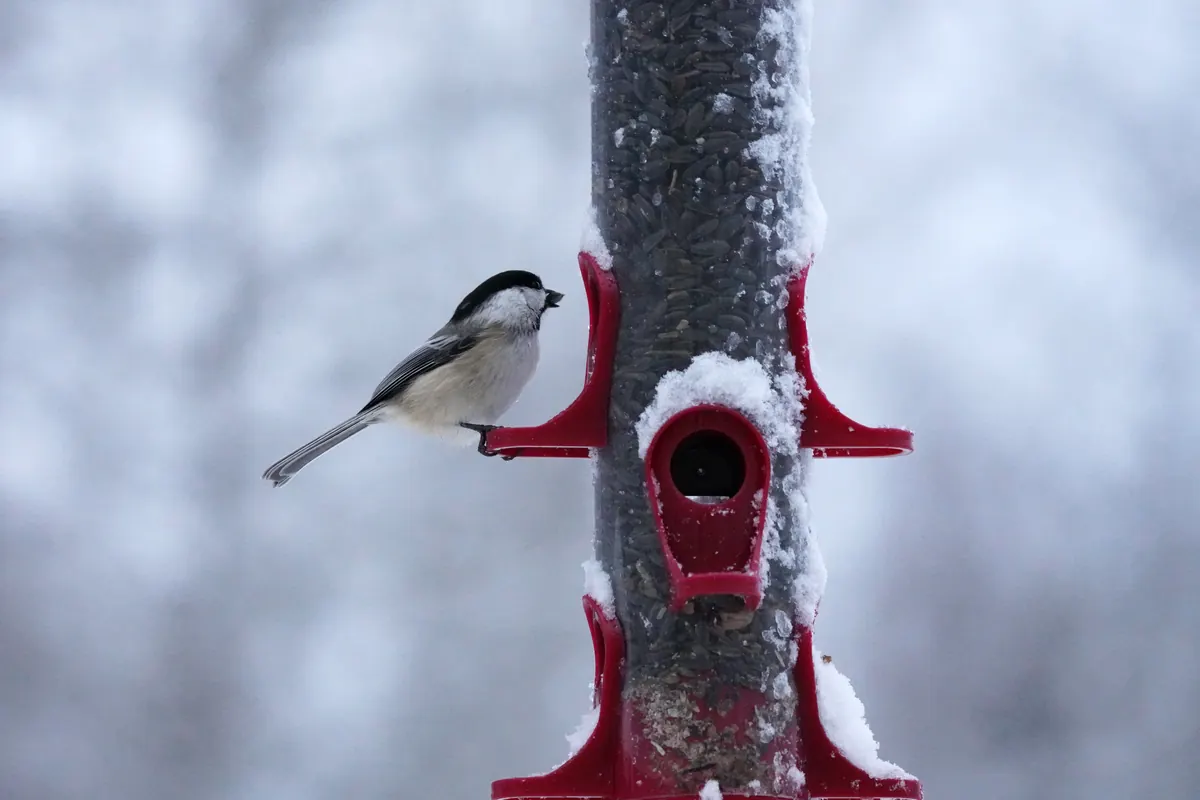
Black-capped chickadees carry seeds from feeders and tuck them into bark crevices to retrieve later. Audubon’s field guide notes that seeds and fruit may make up no more than a tenth of a chickadee’s summer diet but as much as half in winter, along with insect eggs and pupae picked from twigs. Pairs formed in fall stay together inside small winter flocks that roam the woods and visit feeders on a loose circuit.
-
Bats asleep in caves and mines
October 1 through April 30 · About 100 caves and old mines around the state
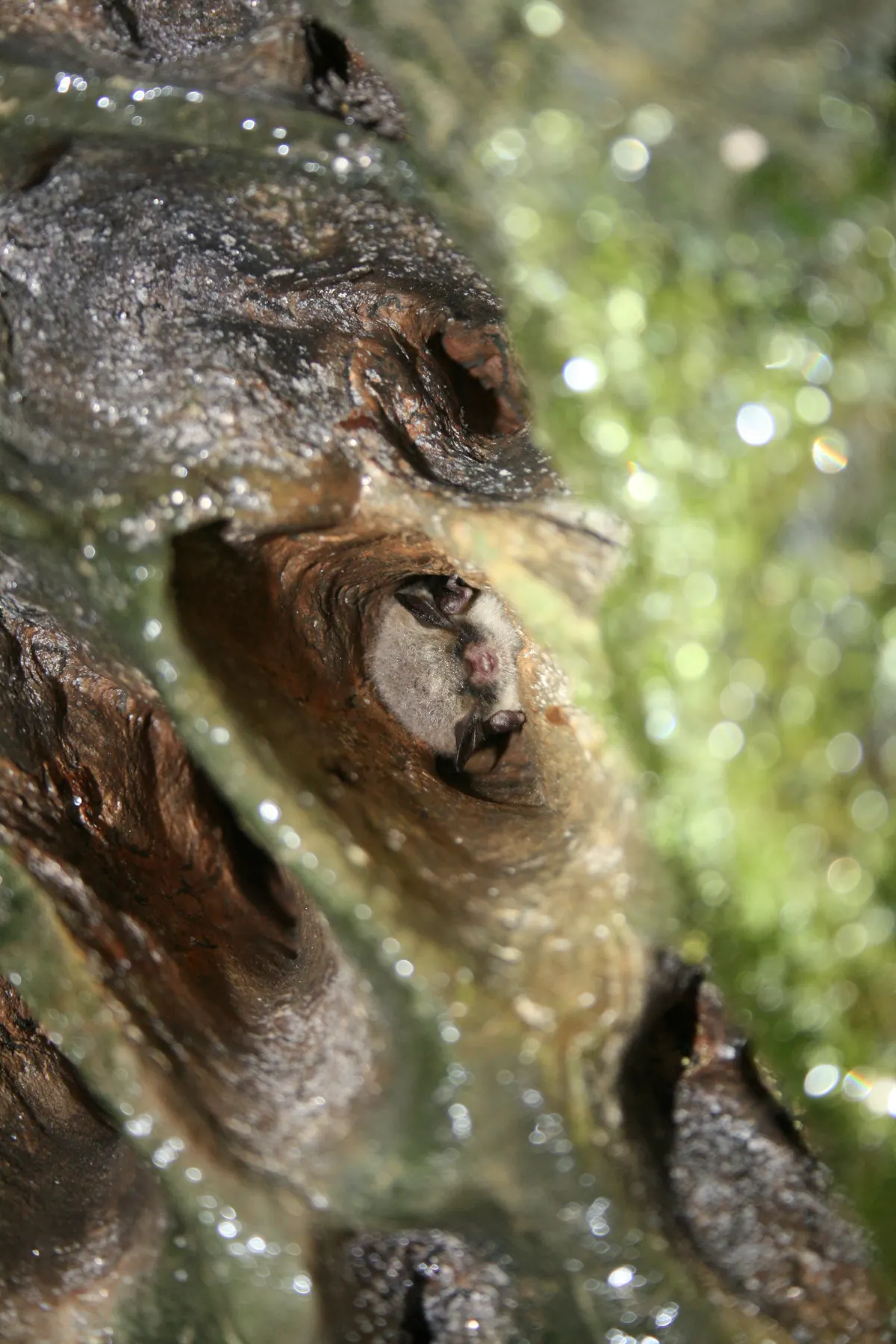
Several of New York’s bats hibernate underground, where temperatures hold steady all winter. White-nose syndrome, a fungal disease, has killed more than 90% of the bats at some New York hibernation sites, and the northern long-eared bat has fallen to about 1% of its former numbers. Each time a bat is roused it spends fat reserves meant to carry it to spring, so DEC asks everyone to stay out of caves and mines from October 1 to April 30; entering some sites can bring prosecution. If you come upon hibernating bats, leave quickly and quietly.
-
Wood frogs frozen in the leaf litter
From the first hard freezes until spring thaw · Moist woods statewide, just under the leaves
The wood frog, one of the first frogs to call from woodland pools in spring, spends the winter frozen. The National Park Service describes how ice fills the body cavity and forms between skin and muscle while the liver floods every cell with glucose, a syrupy natural antifreeze that keeps the cells themselves from freezing. The heart stops, breathing stops, and in spring the frog thaws and hops off; nobody is quite sure what restarts the heart.
Five Rivers Environmental Education Center near Albany devotes a December morning to chickadees and how they make it through the cold (see the families section).
How do you tell New York’s evergreens apart in winter?
With the maples and oaks bare, the conifers are suddenly obvious, which makes this a fine month to sort them out. Start with the needles: are they in bundles, or single?
-
Eastern white pine
Any time · Statewide, from old fields to the shores of Adirondack lakes
Count the needles: white pine carries soft, blue-green needles in bundles of five. The Lady Bird Johnson Wildflower Center calls it the largest conifer of the Northeast, with long, slender cones 6 to 8 inches long and branches that grow out in tiers, one new whorl each year, so you can roughly age a young tree by counting them.
-
Eastern hemlock
Any time; check for adelgid from late fall through spring · Cool ravines, north-facing slopes and stream banks statewide
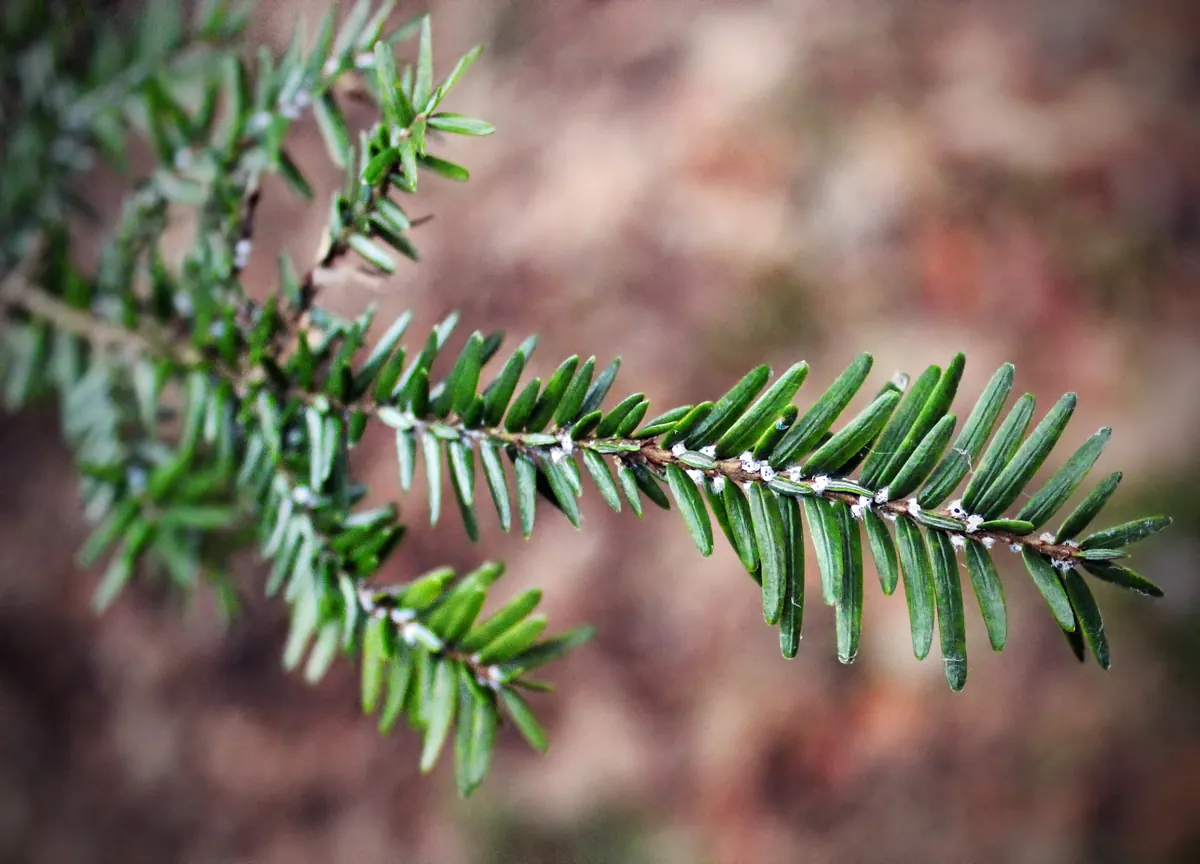
Hemlock needles are short, flat and single, dark green above with silvery undersides, on drooping, feathery branches. Trout streams, salamanders and many birds depend on hemlock shade, DEC notes, which is why the hemlock woolly adelgid matters. DEC says winter through spring is the best time to spot this tiny invasive insect by the white, cottony masses it leaves at the base of the needles on the underside of twigs, each about a quarter the size of a cotton swab’s tip. First found in New York in 1985 in the lower Hudson Valley and on Long Island, it has spread through the Catskills and Finger Lakes into western New York and the Adirondack Park.
-
Balsam fir
Any time · Adirondack and Catskill high country; also on Christmas tree lots
Balsam fir has flat, aromatic needles and upright cones 2 to 3.5 inches tall that fall apart on the branch. Press a blister on the smooth bark of a young tree and it oozes the resin sold as Canada balsam, once used to mount microscope slides because it bends light almost exactly as glass does. It is a common Christmas tree, too.
If you think you have found hemlock woolly adelgid in a new area, photograph the twig and report it to DEC’s Forest Health Information Line at 1-866-640-0652 or through iMapInvasives.
How much snow does New York get in December?
December is when snow becomes routine across upstate, and the amounts depend enormously on where you live relative to the Great Lakes. In NOAA’s 1991–2020 normals, the Tug Hill Plateau east of Lake Ontario averages more than 50 inches in December alone, while Central Park averages about 5. The lakes are still unfrozen and relatively warm, so every outbreak of cold northwest wind can raise narrow bands of heavy lake-effect snow.
-
The pre-Christmas blizzard of 2022
December 23–24, 2022 · Buffalo and its northern suburbs; Jefferson and Lewis counties east of Lake Ontario
The National Weather Service in Buffalo says it rivals the infamous blizzards of 1977 and 1985. A rapidly deepening storm turned morning rain to snow with a flash freeze, a lake-effect band then parked over the city and the airport, and blizzard conditions lasted 37 hours straight, with gusts to 72 mph and wind chills colder than minus 20 °F. Close to 4 feet of snow fell around Buffalo and more than 4 feet in central Jefferson County, thousands of cars were abandoned, and the storm took the lives of nearly four dozen people.
-
First ice on ponds
Small ponds from early December upstate; later near the coast · Shallow ponds and bays freeze first; big lakes and rivers last
The first skin of ice on a farm pond is lovely to watch form on a still, cold night, but it is not safe for weeks. DEC’s ice table starts at “stay off” for 2 inches or less and calls for 4 inches of new, clear ice before anyone walks out. Slushy ice has roughly half the strength, clear ice above a current loses about 20%, and white ice needs twice the thickness. Inlets, outlets and shorelines are the weakest spots.
| Station | Region | December snowfall (in.) |
|---|---|---|
| Highmarket 2 W | Tug Hill Plateau | 51.1 |
| Hooker 12 NNW | Tug Hill Plateau | 50.6 |
| Old Forge | Western Adirondacks | 34.8 |
| Syracuse airport | Central New York | 30.6 |
| Watertown | Eastern Lake Ontario | 26.9 |
| Buffalo airport | Western New York | 25.3 |
| Lake Placid 2 S | High Peaks | 22.7 |
| Albany airport | Capital Region | 13.3 |
| Central Park | New York City | 4.9 |
Snowfall normals hide a lot of variation: one stalled band can deliver a month’s worth in a day, and a mild December can leave the ground bare. Before driving through the snow belts, look up the forecast for your route on our weather page. Gardeners planning ahead for spring can find each town’s average last freeze on the New York frost dates page.
When is the earliest sunset in New York, and when does winter begin?
Winter has two starting lines. Meteorologists begin it on December 1, because December, January and February are on average the three coldest months of the year; astronomers start the clock at the solstice, 3:50 p.m. on the 21st, a Monday. Through the first three weeks the days keep shrinking: Plattsburgh drops from 9 h 04 m of daylight on December 1 to 8 h 48 m at the solstice, and New York City from 9 h 28 m to 9 h 15 m.
The surprise is that the year’s earliest sunsets arrive about twelve days ahead of the shortest day. Plattsburgh’s sun goes down at 4:13 p.m. around December 10 and Albany’s at 4:21 around the 9th, while Buffalo, far to the west in the Eastern time zone, bottoms out at 4:41 around December 9. Albany’s clock shows 4:21 p.m. at sunset on every evening from December 6 to 11, so the table names the midpoint of each town’s run. From then on the evenings slowly brighten even as the mornings keep darkening; in Manhattan the latest sunrise, 7:20 a.m., does not arrive until January 4. The cause is that around the solstice the time from one solar noon to the next runs slightly longer than 24 hours, which pushes sunrise and sunset later on the clock each day.
| City | Dec 1 | Dec 21 | Dec 31 | Earliest sunset |
|---|---|---|---|---|
| Plattsburgh | 9 h 04 m | 8 h 48 m | 8 h 52 m | 4:13 p.m., Dec 10 |
| Buffalo | 9 h 15 m | 9 h 01 m | 9 h 05 m | 4:41 p.m., Dec 9 |
| Rochester | 9 h 13 m | 8 h 59 m | 9 h 03 m | 4:35 p.m., Dec 9 |
| Syracuse | 9 h 15 m | 9 h 00 m | 9 h 03 m | 4:30 p.m., Dec 9 |
| Albany | 9 h 16 m | 9 h 02 m | 9 h 06 m | 4:21 p.m., Dec 9 |
| Binghamton | 9 h 21 m | 9 h 06 m | 9 h 10 m | 4:32 p.m., Dec 9 |
| New York | 9 h 28 m | 9 h 15 m | 9 h 18 m | 4:28 p.m., Dec 8 |
| Montauk | 9 h 27 m | 9 h 14 m | 9 h 16 m | 4:19 p.m., Dec 8 |
By December 31 the cities in the table have regained between two and four minutes. Look up your own town’s sun times on the daylight calculator.
What could a strong El Niño mean for New York this winter?
The tropical Pacific is running hot. In a September 10 update, the federal Climate Prediction Center put better than nine-in-ten odds on an exceptionally strong El Niño lasting into the winter months. The agency’s own December-to-February maps come out in mid-October, a couple of weeks after this was written, so we leave them to the CPC’s seasonal outlook page.
-
Fewer lake-effect blockbusters, as a rule
December 2026 to February 2027 · Western and Central New York, the Tug Hill and the Southern Tier
A review by the Northeast Regional Climate Center and NOAA explains the usual El Niño setup: the polar jet stream retreats northward and the Pacific jet runs across the southern states, leaving the Great Lakes between storm tracks and often drier than normal. The lake-effect region of New York is the exception to the general rule of more Northeast snow in El Niño winters; Buffalo’s two least snowy winters since 1950 both came during strong El Niños.
-
More nor’easters for the coast
December to March · New York City, Long Island and the lower Hudson Valley
The same review cites research finding about two more classic nor’easters, coastal lows that form off the Carolinas and track northeast, in an average El Niño winter than in other winters; the strongest El Niños show the clearest effect. Near the coast, December-through-February snowfall in such winters has run as much as 6 inches above average, and eight of the ten storms ranked crippling on the Northeast Snowfall Impact Scale came during El Niño winters. Rain or snow still depends on each storm’s exact track.
El Niño only tilts the odds. The NRCC notes that the Arctic and North Atlantic oscillations, which cannot be predicted months out, can override it, as a strongly negative North Atlantic Oscillation did in 1965–66. Whatever the season brings, note the first day your nearest pond holds ice and the first snow that stays on the ground.
What can you see in the New York night sky in December 2026?
With darkness falling before 5 p.m., December gives the longest nights of the year for stargazing, if you can bear the cold. All times here are Eastern Standard Time.
-
The Geminids
Night of Sunday, December 13, into Monday, December 14; active December 4 to 20 · Anywhere dark; the radiant in Gemini is highest around 2 a.m.
The International Meteor Organization expects a peak zenithal rate of about 150 meteors an hour, a figure for a perfect sky with the radiant overhead, so real counts will be lower, especially near city lights. This year the moon cooperates: it is a thin waxing sliver that is gone by mid-evening, and the hours after midnight are dark. Dress for deep cold.
-
The Cold Moon, closest of the year
Full at 8:28 p.m. Wednesday, December 23; nearly as full on Christmas Eve · Rising in the northeast around sunset
Perigee, when the moon’s orbit brings it nearest to us, falls roughly seven hours after this full moon, so the Cold Moon is the closest, biggest-looking full moon of 2026. Two evenings earlier, on Monday the 21st, the bright gibbous moon slides past the Pleiades star cluster after dark.
-
The solstice
Monday, December 21, at 3:50 p.m. · The sun reaches its farthest south point
At this moment the sun stands over the Tropic of Capricorn, and its midday height over New York reaches the year’s minimum. The days begin to lengthen the next afternoon, though the mornings keep getting darker into early January.
-
Planets
All month · Saturn south and southwest after dusk; Venus, Mars and Jupiter in the morning
Look south or southwest at nightfall for Saturn, the lone bright evening planet; by late December it sets roughly four hours after sunset. Venus is a brilliant morning star in the southeast before dawn, and a waning crescent passes it and Spica, a blue-white star, before dawn on the 4th and 5th. Jupiter, rising around mid-evening as the month closes, sits high in the south by dawn, with a brightening Mars nearby.
| Phase | Date | Time |
|---|---|---|
| Last quarter | Tuesday, Dec 1 | 1:08 a.m. EST |
| New moon | Tuesday, Dec 8 | 7:52 p.m. EST |
| First quarter | Thursday, Dec 17 | 12:42 a.m. EST |
| Full moon, the Cold Moon | Wednesday, Dec 23 | 8:28 p.m. EST |
| Last quarter | Wednesday, Dec 30 | 1:59 p.m. EST |
Clouds are the main obstacle in a New York December, especially downwind of the lakes, so look over the current cloud picture on Today’s sky before setting an alarm, and find the moon’s rising time for your town on the moon phase calendar.
What are good nature outings for New York families in December 2026?
- Sundays through December 27: drop in at Letchworth State Park’s Humphrey Nature Center between 10 a.m. and 5 p.m. to count feeder birds for Project FeederWatch (free).
- Thursday, December 10: an early-morning birding session (7:30 a.m.) in the I BIRD NY series at the Five Rivers center in Delmar.
- Saturday, December 12: Chatting about Chickadees at Five Rivers (10 to 11:30 a.m., call 518-475-0291 by December 9), then a winter story and craft for families at 2 p.m.
- Sunday night, December 13: the Geminids, best after midnight.
- From Monday, December 14: Christmas Bird Counts begin around the state.
- Saturday, December 19: Calling All Trail Detectives at Five Rivers, reading tracks and scat on the trails (2 to 3:30 p.m., ages 7 and up with younger siblings welcome; register by December 16).
- Sunday, December 20: the Manhattan Christmas Bird Count.
- Monday, December 21: mark the solstice at 3:50 p.m., or join the winter raptor survey training at Five Rivers (3:30 to 5 p.m., bring binoculars, registration required), part of a Northeast-wide project that watches grasslands at sunset for hawks and owls.
- Wednesday, December 23: the Cold Moon rises around sunset.
- Wednesday, December 30: an owl prowl at Five Rivers, learning three common owl calls indoors and then listening outside (6 to 7:15 p.m., registration required).
- Friday, January 1, 2027: First Day Hikes. DEC, State Parks and the Canal Corporation organize guided walks across the state each New Year’s Day; the 2027 list had not been posted in early October.
Park and DEC calendars fill in through the fall, so check them again in late November for winter walks near you, and call ahead, since most programs are small. For citizen science, keep up FeederWatch counts, join a Christmas Bird Count, and report hemlock woolly adelgid if you find it. Our nature pages for every state and month include last month’s New York November guide, and a Naturalist’s Field Journal makes a good place to keep a winter of sightings.
Safety notes for December in New York
- Deer and bear hunting. The Southern Zone regular firearms season continues to December 13 and the Northern Zone’s ends December 6, according to DEC’s 2026–27 guide. The same guide lists the late bowhunting and muzzleloader seasons that follow: December 7–13 in Northern Zone units 5A, 5G, 5J, 6A, 6C, 6G and 6H, and in the Southern Zone December 14–22 plus a holiday hunt from December 26 to January 1. Westchester is bow-only through December 31. Suffolk is bow-only through at least December 31; the guide’s season table runs it to January 31, with a permit firearms season from January 3, but another page of the guide gives December 31, so check with DEC. Sunday hunting is legal statewide.
- Waterfowl. Duck season reopens in the Western Zone on December 5 and runs to January 10, and the Northeast Zone has a short second split from December 12 to 20, so expect shotgun fire at dawn on open water near marshes, the Finger Lakes and the Niagara and St. Lawrence rivers.
- Wear color. Firearm deer and bear hunters, plus their companions, must show fluorescent orange or pink on the upper body, visible all around: 250 square inches of it (solid, or a pattern that is at least 50% orange or pink), or else a hat that is at least 50% one of those colors. Nobody else is required to, but on any trail through hunted land in December, a blaze-orange hat and vest are cheap insurance, and a bright collar or vest helps a dog stand out.
- Thin ice. New ice is deceptive. Early-season ice is rarely uniform: test it often, keep away from inlets, outlets and current, and bring a partner, as DEC urges.
- Cold and dark. With sunsets between about 4:15 and 4:40 p.m. upstate, start hikes early and carry a headlamp, extra layers, food and something hot to drink. On the High Peaks and Catskill summits, full winter gear (snowshoes or traction, insulated boots, a shell) is needed by December.
- Lake-effect and blizzard warnings. When the National Weather Service issues a lake-effect or blizzard warning, stay off the roads in the warned area if you can, and keep a shovel, blanket, water and a charged phone in the car all winter.
- Caves and mines. Stay out until May 1 to protect hibernating bats.
Sources
- NYSDEC: viewing bald eagles in New York State
- NYSDEC: bald eagle watchable wildlife
- National Weather Service Buffalo: winter summary 2022–23 (Lake Erie ice, December 2022 blizzard) (PDF)
- NYSDEC: Washington County Grasslands Wildlife Management Area
- NYSDEC: short-eared owl
- Grassland Bird Trust: winter secrets of the New York grasslands
- National Audubon Society: Niagara River Corridor restoration (Global Important Bird Area)
- Niagara River Important Bird and Biodiversity Area (Bonaparte’s gull and waterfowl counts)
- NYSDEC: Western Zone duck season summary, 2024–25 to 2026–27 (PDF)
- NYSDEC: Northeast Zone duck season summary, 2024–25 to 2026–27 (PDF)
- National Audubon Society: join the Christmas Bird Count
- NYC Bird Alliance: Audubon Christmas Bird Count (Manhattan, December 20, 2026)
- New York State Ornithological Association: NYS Christmas Bird Count calendar
- National Audubon Society field guide: black-capped chickadee
- NYSDEC: help safeguard bats during Bat Week (cave and mine closures, white-nose syndrome)
- NYSDEC: white-nose syndrome
- National Park Service, Gates of the Arctic: the wood frog’s biological miracle
- Lady Bird Johnson Wildflower Center: eastern white pine
- Lady Bird Johnson Wildflower Center: eastern hemlock
- Lady Bird Johnson Wildflower Center: balsam fir
- NYSDEC: hemlock woolly adelgid
- NOAA Regional Climate Centers, ACIS: 1991–2020 December snowfall normals for New York stations
- NYSDEC: ice fishing and ice safety
- Climate Prediction Center: ENSO diagnostic discussion, September 10, 2026
- Climate Prediction Center: seasonal (90-day) outlooks
- Northeast Regional Climate Center and NOAA: El Niño impacts and outlook, Northeast region (PDF)
- U.S. Naval Observatory: moon phases from November 1, 2026
- U.S. Naval Observatory: Earth’s seasons, 2026
- International Meteor Organization: 2026 meteor shower calendar (PDF)
- EarthSky: what is a supermoon (2026 full supermoons)
- BBC Sky at Night: supermoons in 2026
- RASC Observer’s Handbook 2026: lunar occultations (PDF)
- NY State Parks: Project FeederWatch, Letchworth State Park, Sundays November 1 to December 27, 2026
- NYSDEC: I BIRD NY Early Birders, Five Rivers, December 10, 2026
- NYSDEC: I BIRD NY, Chatting about Chickadees, Five Rivers, December 12, 2026
- NYSDEC: Family Fun, Winter’s Tale and Craft, Five Rivers, December 12, 2026
- NYSDEC: Calling All Trail Detectives, Five Rivers, December 19, 2026
- NYSDEC: Training, Winter Raptor Survey, Five Rivers, December 21, 2026
- NYSDEC: Owl Prowl, Five Rivers, December 30, 2026
- NYSDEC: First Day Hikes
- America’s State Parks: First Day Hikes
- 2026–2027 New York Hunting and Trapping Regulations Guide (NYSDEC, eRegulations PDF)
- NYSDEC: deer and bear hunting regulations (season schedule, fluorescent orange and pink rule)
- Photos via Wikimedia Commons; licenses and photographers are credited under each picture
