What to look for in nature in New York this January
January is the deep middle of a New York winter. On average it holds the coldest days of the year, upstate snow cover is at its most reliable, and ponds that only skimmed over in December lock up hard. That squeeze on open water is what makes the month rewarding: bald eagles, diving ducks and loons crowd onto the rivers, reservoirs and lakes that stay liquid, and seals rest on ledges off Montauk and on two little islands below the Verrazzano Bridge. Great horned owls are already settling onto nests and black bears are giving birth in their dens. Evenings stretch a little every day, a good meteor shower arrives in the first week, and the year’s nearest full moon rises on the 21st.
Other months in New York: October, November, December, February.
Start here
- Join the January Waterfowl Count. The New York State Ornithological Association’s count runs January 16 to 24, with Sunday the 17th as the target day. Volunteers tally every duck, goose, swan, loon and grebe on open water; contact your regional compiler through nybirds.org to help.
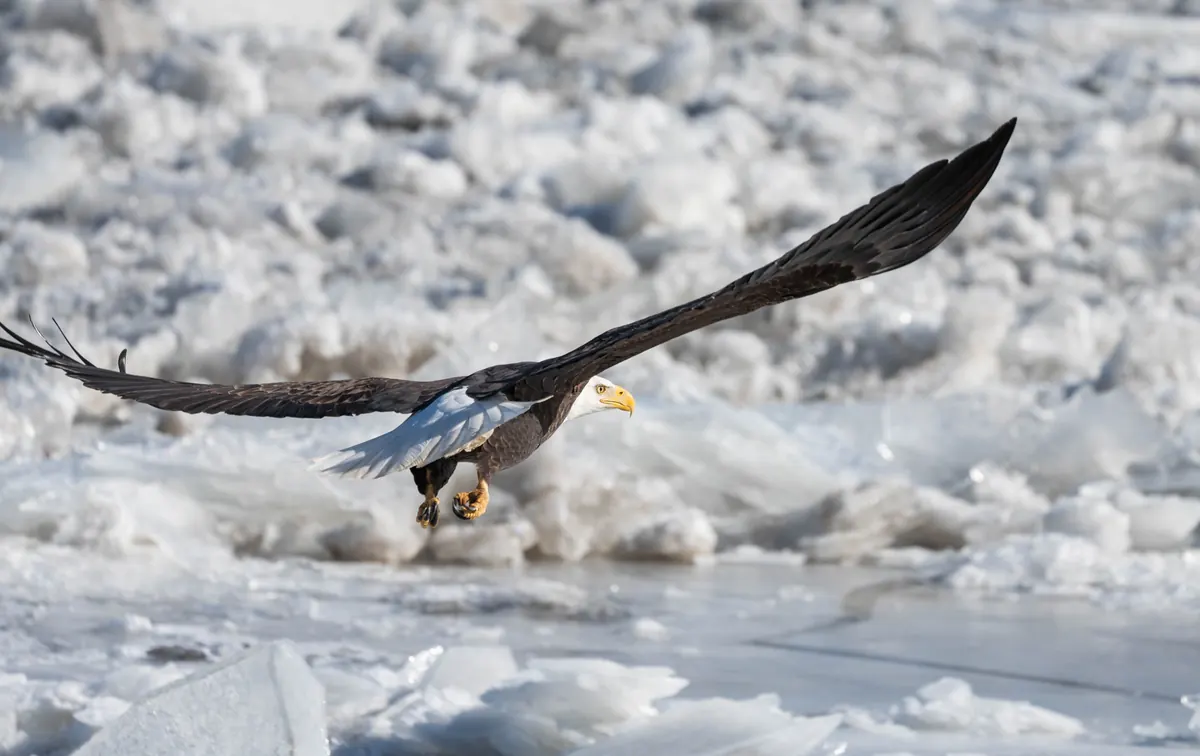
- Look for eagles on cold mornings. Wintering eagle numbers peak in January and February. On the coldest mornings, when ice narrows the open water, scan the Hudson, the Mongaup reservoirs, the St. Lawrence and Lake Champlain from a car or a marked viewing area.
- Catch the Quadrantids. Plan on the predawn hours of Monday, January 4. The Quadrantids crest overnight from Sunday the 3rd, a waning sliver of moon barely interferes, and rates climb as the radiant rises toward morning.
Naturalist’s Field Journal plates that suit a New York January: “tracks to know” for a hare’s bounding prints or a fox’s tidy single file across fresh snow; “birds I have seen” for each eagle, scoter or siskin added this month; “a map of sounds” for a pair of great horned owls hooting after dark; and “a tree through the seasons” to draw one beech or sugar maple from bud and bark now and again in spring. Use the “daily field log” for the Waterfowl Count, with the temperature and how much water was open.
Regions used below: Adirondacks and North Country; Western New York and the Lake Erie shore; Finger Lakes and Central New York; Southern Tier and Catskills; Capital Region and Hudson Valley; New York City and Long Island.
When are the most bald eagles in New York?
January is the heart of the eagle season. DEC’s watchable wildlife guide says wintering birds arrive in December and peak in January and February, when ice has sealed the small waters and eagles from Canada, along with many of New York’s own breeders, line up along whatever stays open.
-
The national Midwinter Bald Eagle Survey
Early January, a two-week window each year · Survey routes statewide, flown and driven by DEC staff and volunteers
New York has joined the national Midwinter Bald Eagle Survey every January since 1979. For the 2010 count, DEC reported about 100 staff and volunteers on roughly 75 routes, with helicopters over the main gathering areas: the Allegheny Reservoir and Lake Erie shore, Lake Champlain, the St. Lawrence, the lower Hudson and the upper Delaware. The first survey found 41 eagles; the 2010 survey found 658, the first statewide total above 600, and DEC noted that resident New York eagles make up a growing share of every winter tally. DEC has not posted a statewide winter total since, but the breeding side kept growing: its 2025 species status assessment counts 841 known nesting territories by the end of the 2023 season.
-
Where the birds concentrate
Peak from January into February; early morning and late afternoon · Lower Hudson River; Mongaup Valley Wildlife Management Area (Sullivan County); the St. Lawrence between Kingston–Cape Vincent and Cornwall–Massena; Onondaga Lake; Lake Champlain
DEC suggests watching where tributaries join a river or near power plant outflows, since moving or warm water resists ice. Its viewing page lists the Hudson overlooks from Norrie Point to Montrose, the Mongaup Falls and Rio reservoir blinds, and stretches of the St. Lawrence. Eagles are busiest from about 7 to 9 a.m. and 4 to 5 p.m.
-
Guided eagle watching on the upper Delaware
Weekends in January and February; check the organizer for 2027 dates · The upper Delaware River valley on the New York–Pennsylvania line
The Delaware Highlands Conservancy leads guided eagle-watching outings each January and February. It notes that local pairs start claiming nesting territory as early as February, so late in the month two adults perched together near a nest are a good sign. Its 2027 dates had not appeared by early October; see the conservancy’s website or call 570-226-3164.
| Year | Survey window | Bald eagles | Adults | Immatures |
|---|---|---|---|---|
| 1979 | January 13–27 | 41 | 28 | 13 |
| 1985 | January 2–16 | 65 | 42 | 23 |
| 1990 | January 4–18 | 105 | 67 | 38 |
| 1995 | January 4–18 | 144 | 94 | 50 |
| 2000 | January 1–15 | 350 | 198 | 152 |
| 2005 | January 1–15 | 441 | 257 | 184 |
| 2008 | January 2–16 | 573 | 339 | 234 |
| 2010 | December 30–January 13 | 658 | 389 | 269 |
An eagle flushed from its perch on a frigid morning spends energy it can ill afford, so watch from a car or a marked blind. The 2010 survey also logged seven golden eagles, a record then, mostly along the lower Hudson, so check any big dark eagle that lacks a white head.
Where do ducks spend the winter in New York, and how can you help count them?
Every January since 1955 (with a gap from 1968 to 1972), volunteers with the New York State Ornithological Association have fanned out across the state’s lakes, rivers and shorelines to count every waterfowl they can find. In most years the tally tops a quarter of a million birds. For 2027 the count runs from Saturday, January 16, to Sunday, January 24, with Sunday, January 17, the target date; it always opens on the Saturday before Martin Luther King Jr. Day. Regional compilers, listed on the NYSOA count page, assign shorelines and ponds and welcome beginners; results appear later in The Kingbird.
-
Redheads and canvasbacks on the big lakes
All winter, wherever big water stays open · Cayuga, Seneca and the other Finger Lakes; Lake Ontario bays around Rochester; the Niagara River
DEC’s waterfowl managers point out that January ice pushes ducks into larger waterbodies like the Finger Lakes and the Niagara River. In the 2020 count, the latest with a full statewide report online, the Finger Lakes region had 13,612 redheads and 4,163 canvasbacks, and the Genesee region around Rochester 11,604 more redheads, mostly in long rafts well offshore.
-
Sea ducks and brant on the coast
December to March · Jamaica Bay, the South Shore bays, Jones Beach, Shinnecock Inlet and Montauk Point
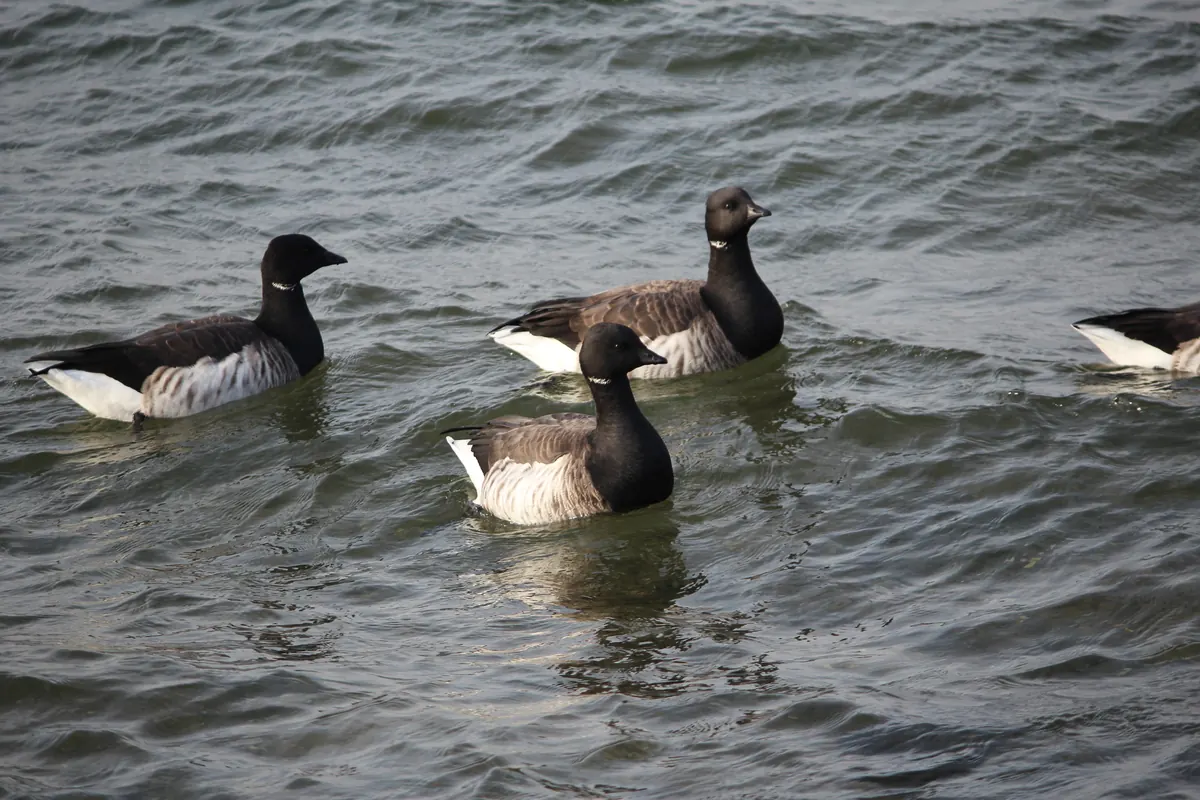
The Marine region (New York City and Long Island) dwarfed every other region in 2020, with 142,938 waterfowl. Brant, a small, dark coastal goose, numbered 25,274 there, and every one of the state’s 2,492 common eiders was counted in that region. Long-tailed ducks, scoters and red-breasted mergansers bob just beyond the surf.
| Species | Statewide count | Region with the most |
|---|---|---|
| Canada goose | 168,330 | Marine (51,484) |
| Mallard | 38,023 | Finger Lakes (8,937) |
| Redhead | 28,111 | Finger Lakes (13,612) |
| Brant | 25,670 | Marine (25,274) |
| Greater scaup | 18,197 | Marine (12,502) |
| Common goldeneye | 12,442 | St. Lawrence (2,283) |
| Red-breasted merganser | 10,178 | Genesee (4,560) |
| Common merganser | 9,843 | Hudson-Delaware (2,604) |
| American black duck | 9,620 | Marine (6,612) |
| Long-tailed duck | 9,514 | Marine (4,179) |
Weather shapes each tally. A mild run-up in 2020 brought record counts of wood ducks, northern shovelers and hooded mergansers, while the same report flagged possible long-term declines in American black ducks, pintails and white-winged scoters.
Where can you see seals in New York in winter?
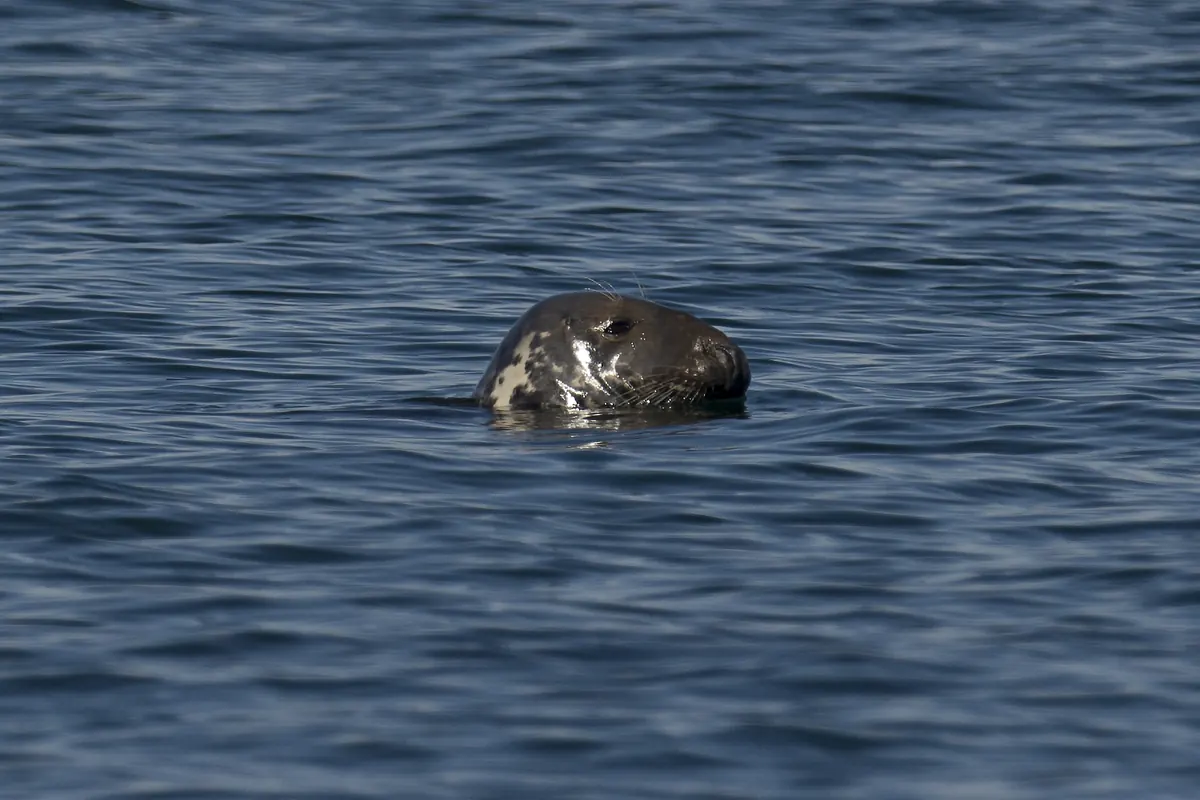
Few New Yorkers realize that seals winter within sight of the city. The National Park Service says harbor seals use the waters around Gateway National Recreation Area from November through March, and State Parks calls them Long Island’s winter visitors, resting on rocks, sandbars and quiet islands between fishing trips.
-
Montauk Point
Late fall to early spring; low tide is best · Montauk Point State Park, at the eastern tip of Long Island
Seals rest on the offshore rocks where Block Island Sound meets the Atlantic. State Parks naturalists lead seal hikes of about 3 miles round trip along the beach and park trails to the haul-out, In early October the park listed hikes on December 5 and 20, 2026, but none yet for January; check parks.ny.gov or call the park at 631-668-3781 for January dates, age limits and any fee.
-
Harbor seals in New York Harbor
Late fall through early spring · Hoffman and Swinburne islands, south of the Verrazzano-Narrows Bridge off Staten Island
Save Coastal Wildlife, a nonprofit that runs volunteer winter seal surveys in the area, counts within two hours of low tide, when the most seals are out of the water. South Beach and Midland Beach on Staten Island face the islands about a mile out, so bring a spotting scope; some harbor cruise operators also run winter seal trips from Manhattan.
-
Telling the species apart
All winter · Any rocky shore or sandbar
State Parks lists five seals that visit Long Island in winter: harbor, gray, harp, hooded and ringed. Harbor seals, by far the most common, run 4.5 to 6 feet long, spotted tan to gray, with nostrils that meet in a V; resting, they often curl into a “banana,” head and tail raised. DEC warns that stressed harp seals may swallow sand or stones, which can kill them.
DEC’s distance rule for seals is 50 yards, roughly half a football field. Most seals hauled out on a beach are simply resting; raised flippers, yawning or a lurch toward the water mean you are too close. Report one that seems sick or hurt to the 24-hour New York State Stranding Hotline, 631-369-9829.
When do great horned owls nest in New York?
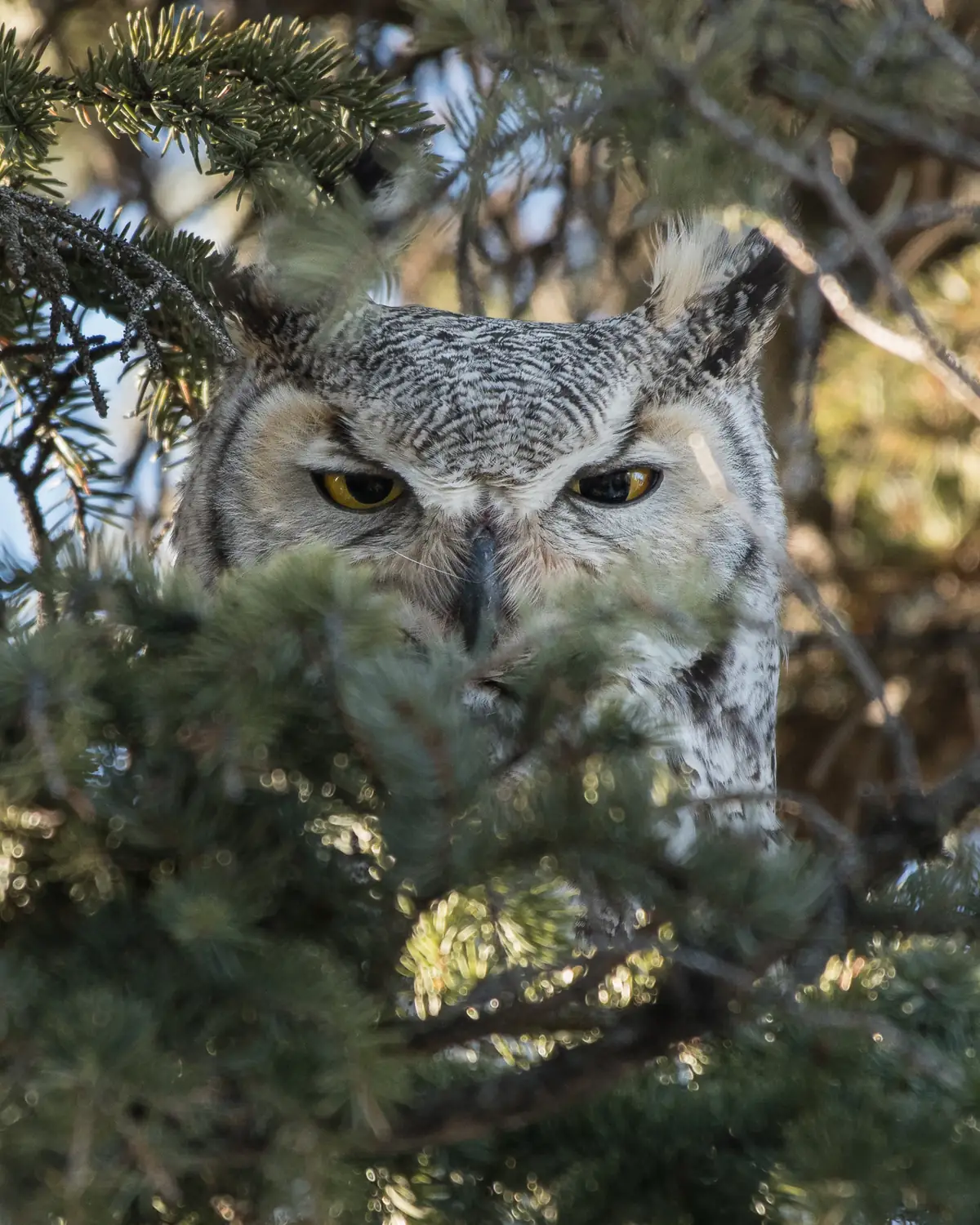
While other birds simply try to outlast the cold, great horned owls are starting families. The New York Breeding Bird Atlas calls them the state’s earliest reliable nester, with courtship duets from as early as November and nesting in January.
-
Owls on the nest
From January or February · Woodlots, farm edges, city parks and suburban yards statewide
DEC says the owls can be seen sitting on nests as early as January or February. They build nothing of their own, borrowing a tree hollow, a broken snag, a ledge, a barn loft, or an old stick platform built by a hawk, crow, heron or squirrel. On a bare tree, look for two feather tufts poking above the rim of a bulky nest. DEC’s suggested places include Braddock Bay, Iroquois and Montezuma refuges, Letchworth and Cold Spring Harbor.
-
Listening for the duet
Dusk and the first hours of darkness, through January · Anywhere with big trees and open ground nearby
The territorial call is a deep, steady run of three to six hoots, and DEC notes that calling can last all winter; in January, listen for two birds trading hoots from nearby trees. Beneath a regular roost, gray pellets of fur and small bones, plus white splashes on the snow, give the owl away.
-
An owl prowl near Albany
Wednesday, January 6, 6 to 7:15 p.m. · Five Rivers Environmental Education Center, Delmar
DEC’s Five Rivers center starts indoors, teaching the calls of the three owls most often heard on its trails, then heads outside to listen in the dark. Space is limited; call 518-475-0291 to register, and dress for standing still in the cold.
If you find a nest, view it briefly and from a distance. Crows sometimes mob the owls at roosts and nests, DEC notes, and a stream of visitors only adds to the disturbance. Never play recorded calls near a nest.
Which winter finches might come to New York in 2027?
The Finch Research Network’s yearly forecast predicts which northern seed-eaters will head south, judging from cone and berry crops across Canada. The 2026–27 edition, posted September 25, 2026, reads as mixed: weak seed crops across the central boreal should send birds toward the Great Lakes and the Northeast, but a heavy white pine and northern white cedar crop, plus good red spruce, will keep many in the conifers and away from feeders.
-
Pine siskins
All winter · Conifer stands statewide, especially hemlock, cedar and white pine; some at feeders
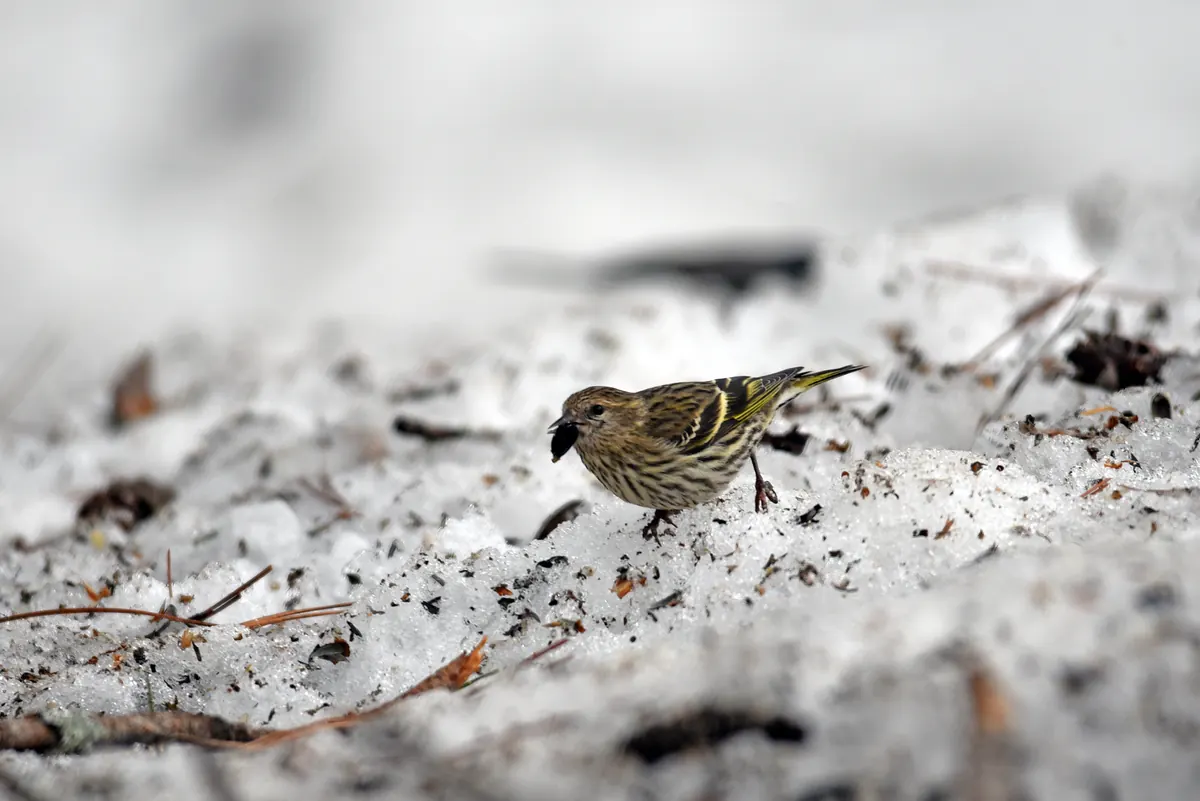
The forecast expects a sizable siskin flight into the Northeast, citing several September days with more than 1,000 siskins at a Minnesota migration watch. Siskins are small, streaky finches with yellow wing bars and a rising, buzzy call. With cones everywhere, you may find them hanging upside down in hemlocks before they ever reach the thistle feeder.
-
Red and white-winged crossbills
All winter, with possible movement toward the coast late in the season · Spruce and pine forests in the Adirondacks and Tug Hill; pines on Long Island later on
Crossbills pry seeds from closed cones with crossed bill tips. The forecast expects good numbers of red crossbills in the northeastern United States, perhaps shifting toward Long Island late in winter, while white-winged crossbills settle wherever spruce cones are thickest.
-
Evening grosbeaks and purple finches
All winter · Northern forests; a few south to the Southern Tier and Hudson Valley
A long spruce budworm outbreak in eastern Canada has fed a rebound in evening grosbeaks, which have irrupted in four of the last six winters. This year calls for a small to moderate flight, with some reaching southern New York; during the last big budworm outbreak the species turned up on the Ithaca Christmas Bird Count every year from 1967 to 1991. Many purple finches should winter in the Northeast too.
Not every northern bird will come. Big mountain-ash and cone crops farther north should hold back pine grosbeaks, Bohemian waxwings and red-breasted nuthatches, and redpolls are forecast in modest numbers. Log what you see on eBird or keep counts for Project FeederWatch.
What are New York’s mammals doing in January?
January tests every warm-blooded animal. Some vanish into dens and snow; others write the night’s work across the snow for you to read.
-
Black bear cubs born in the den
January to early February · Dens in hollow trees, rock crevices and brush piles in the Adirondacks, Catskills and Southern Tier
Black bears are not true hibernators, but a denned bear does not eat, drink or pass waste all winter. DEC’s natural history report explains that the fertilized egg does not implant until November or early December, timing every birth for January or early February, inside the den. Two or three cubs are usual in New York, and the state’s earliest confirmed date is January 17, 2007, when DEC staff found newborns in two dens. Mothers stay denned longer than males, sometimes into May.
-
Snowshoe hares in white
All winter · Dense young conifers and swamp edges inside the Adirondack Park; high spruce-fir forest
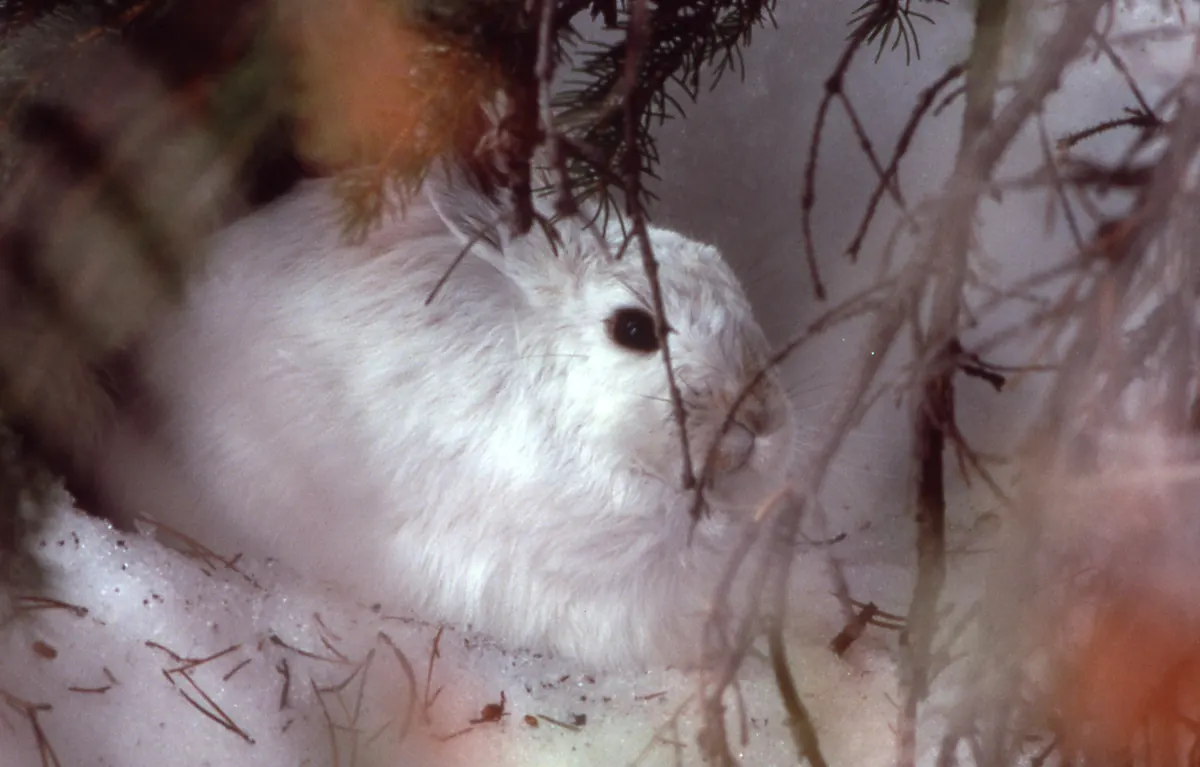
The snowshoe hare molts into white over about 70 days, a change set mostly by day length. SUNY-ESF’s Adirondack guide describes the long, dense hair on its 5- to 7-inch hind feet that works like snowshoes. In winter hares nip small twigs of maple, birch, aspen, willow and raspberry.
-
Life under the snow
Whenever snow cover lasts · Fields, lawns and forest floors statewide
Under a lasting snowpack lies the subnivean zone, a network of runways at ground level that stays near 32°F however cold the air above. The Audubon Community Nature Center near Jamestown describes voles, mice, moles and shrews traveling through it to reach seeds, plants and insects, with only small air holes at the surface. Foxes and owls hunt them by ear, diving through the crust, and weasels follow the runways from inside.
Go tracking on the first calm morning after a dusting of snow. DEC’s Winter Tracks guide sorts prints by family: cats leave four toes and no claw marks, dogs and coyotes show claws, and the fox is the only member of the dog family whose hind foot lands squarely in its front print, so its trail looks like a single line of dots. Hares and squirrels jump, so their long hind prints land in front of the smaller fore prints.
How do you identify New York trees in winter without leaves?
A leafless tree still gives plenty away. Check whether buds are paired across the twig or staggered, then look at the color and shape of the buds and the feel of the bark. Virginia Tech’s dendrology fact sheets, written for forestry students, cover both trees below.
-
American beech
All winter; the pale leaves rattle in the wind · Northern hardwood forests statewide
Beech is the easiest tree in the January woods: smooth gray bark even on old trunks, slender zigzag twigs, and long, narrow, cigar-shaped buds about three-quarters of an inch long that jut out almost like thorns. Young beeches often hold their dry, papery tan leaves until spring. Beech leaf disease, first found in New York in Chautauqua County in 2018, has spread through western, central and southern New York; DEC takes summer reports of striped or curled leaves through iMapInvasives.
-
Sugar maple
All winter · Upland forests, roadsides and old farm lanes statewide
Maples have opposite buds and twigs. On sugar maple the twigs are slender, brown and shiny, and the terminal buds are brown, sharply pointed and tightly scaled. Older trunks develop long, firm ridges that curl outward at the edges. Learn it now, and you will know which trees to watch when the sap starts to run.
Photograph the bud, twig and bark of one tree, then work through a key at home; a hand lens makes bud scales much easier to read.
How cold does January get in New York, and what could El Niño change?
NOAA’s National Centers for Environmental Information, mapping the 1991–2020 normals, find that most of the East reaches its coldest point of the year in January, and that the coldest day has drifted three to six days later or more at many stations east of the Rockies compared with the previous normals. Snow-covered Canada is the reason, Climate.gov explains: the East waits for that cold air to spill south.
-
A very strong El Niño in the Pacific
Winter 2026–27 · Statewide, with different effects inland and on the coast
In its September 10, 2026, ENSO discussion, the Climate Prediction Center reports a warming Pacific and judges it more than 90 percent likely that New York’s coming winter unfolds under a very strong El Niño. NOAA’s seasonal maps for winter first appear October 15 and are refreshed each month on the CPC’s seasonal outlook pages. The Northeast Regional Climate Center’s El Niño summary describes the last record-setting event, 2015–16, as warmer than normal across the whole Northeast, with below-normal snowfall in New York and New England.
-
The January 2016 blizzard
January 22–24, 2016 · New York City, Long Island and the lower Hudson Valley
Mild does not mean storm-free: the NRCC summary notes that this blizzard struck during one of the strongest El Niños on record. The National Weather Service office in Upton measured 27.5 inches in Central Park, the city’s biggest snowstorm since records began in 1869, and 30.5 inches at JFK.
-
Less Great Lakes ice
Late winter · Lake Erie and Lake Ontario
Research at NOAA’s Great Lakes Environmental Research Laboratory ties strong El Niño winters to the least lake ice. In its study of 1963 to 2008, the two strongest El Niños, 1983 and 1998, held the lakes’ combined maximum ice to 22.1% and 13%, against a long-term average of 54.7%, though a few El Niño winters still brought heavy ice. Open lakes can feed lake-effect bands whenever cold air arrives, but in mild 2023–24 NOAA scientists found that a shortage of cold air meant fewer lake-effect events.
| Station | Region | Average high | Average low | January snowfall |
|---|---|---|---|---|
| Old Forge | Western Adirondacks | 26.1 °F | 5.5 °F | 46.7 in |
| Lake Placid 2 S | High Peaks | 23.3 °F | 6.5 °F | 21.0 in |
| Syracuse airport | Central New York | 31.7 °F | 16.5 °F | 34.0 in |
| Buffalo airport | Western New York | 32.1 °F | 19.0 °F | 26.7 in |
| Binghamton airport | Southern Tier | 29.5 °F | 15.5 °F | 20.6 in |
| Albany airport | Capital Region | 32.8 °F | 15.9 °F | 15.6 in |
| Central Park | New York City | 39.5 °F | 27.9 °F | 8.8 in |
El Niño tilts the odds; one Arctic outbreak or coastal storm can still define a January. Check our weather page before a long drive, and if seed catalogs are arriving, the New York frost dates give each town’s typical last spring freeze.
When do New York sunsets get back past 5 p.m.?
Daylight has been returning since the solstice, slowly at first. In New York City the day grows by less than a minute on January 1 and by just over two minutes a day as February begins; across the month the city gains 46 minutes. The evenings brighten first. Manhattan’s sunrise holds near 7:20 a.m. through the first days of January, while sunset, at 4:39 p.m. on New Year’s Day, reaches 5:00 p.m. on January 21.
| City | Jan 1 | Jan 31 | Gained | Per day |
|---|---|---|---|---|
| Plattsburgh | 8 h 53 m | 9 h 47 m | 54 min | 1.8 min |
| Buffalo | 9 h 06 m | 9 h 56 m | 50 min | 1.7 min |
| Rochester | 9 h 04 m | 9 h 54 m | 50 min | 1.7 min |
| Syracuse | 9 h 04 m | 9 h 55 m | 51 min | 1.7 min |
| Albany | 9 h 07 m | 9 h 57 m | 50 min | 1.7 min |
| Binghamton | 9 h 11 m | 9 h 59 m | 48 min | 1.6 min |
| New York | 9 h 19 m | 10 h 05 m | 46 min | 1.5 min |
| Montauk | 9 h 17 m | 10 h 03 m | 46 min | 1.5 min |
The farther north the town, the faster its days are stretching. Look up sunrise and sunset for any address with the daylight calculator.
What can you see in the New York night sky in January 2027?
Cold, dry Arctic air can make January skies exceptionally clear between storms. All times are Eastern Standard Time.
-
The Quadrantid meteor shower
Night of Sunday, January 3, into Monday, January 4; active December 28 to January 12 · Anywhere dark, away from city lights
The Quadrantids have a brief, intense maximum of only a few hours. Predictions for it range from about 10:30 p.m. Sunday to about 12:47 a.m. Monday, both during our night. The radiant, in the area of Boötes and Draco, climbs as the night goes on, which makes the last dark hours before Monday’s sunrise the most productive; the thin waning crescent rises late. Away from lights, expect a few dozen meteors in a good hour, not a storm.
-
Perihelion and the morning star
Perihelion Saturday, January 2, 9:33 p.m.; Venus all month before dawn · Venus low in the southeast before sunrise
On Saturday evening Earth swings through perihelion, some 91.4 million miles out, its closest to the Sun all year; our cold comes from the tilt of Earth’s axis, not from distance. A day later, Venus pulls as far from the Sun in our dawn sky as it will get this time around (an angle of 47 degrees), and it gleams low in the southeast in morning twilight all month.
-
The Wolf Moon, a supermoon
Full at 7:17 a.m. Friday, January 22; best the night of Thursday, January 21 · Rising in the east around sunset
This is the nearest full moon of 2027, coming about 14 hours after perigee. See it rise on Thursday evening, January 21, ride high overnight and set near sunrise. On Saturday evening, January 23, the just-past-full moon sits close to Jupiter, with the star Regulus nearby.
-
Planets in the evening
All month; Mercury late in the month · Saturn in the southwest after dark; Jupiter in the east; Mercury low in the west-southwest
Saturn hangs in the southwest after dusk, sinking lower each week, and Jupiter, at opposition on February 10, climbs out of the east during the evening. Late in the month Mercury shows very low in the west-southwest shortly after sunset; it is best in early February.
| Phase | Date | Time |
|---|---|---|
| New moon | Thursday, Jan 7 | 3:24 p.m. EST |
| First quarter | Friday, Jan 15 | 3:34 p.m. EST |
| Full moon, the Wolf Moon (a supermoon) | Friday, Jan 22 | 7:17 a.m. EST |
| Last quarter | Friday, Jan 29 | 5:55 a.m. EST |
Sunspot counts have dropped since the 2024 solar maximum, but a strong geomagnetic storm could still bring aurora to the North Country; moonless evenings near the new moon of January 7 give the best odds. NOAA’s Space Weather Prediction Center posts alerts. Before you head out, check today’s cloud cover, and look up the moon’s rising time on our moon phases page.
What can New York families do outdoors in January 2027?
- New Year’s Day, Friday: DEC, State Parks and their partners lead First Day Hikes all over the state. The 2027 sites were not yet listed in early October, so watch DEC’s First Day Hikes page in late December. At Five Rivers in Delmar, the Hudson-Mohawk Bird Club leads the center’s 46th New Year’s Day bird count (9 a.m. to noon), and there are two easy guided walks, about three-quarters of a mile at 10:30 a.m. and a mile and a half at 1:30 p.m. (call 518-475-0291 by December 29 to register).
- Through Tuesday, January 5: the Christmas Bird Count season closes. A handful of circles usually pick a January date; NYSOA’s statewide calendar lists them as compilers report dates.
- Saturday, January 2: Introduction to Snowshoeing at Five Rivers (1:30 to 3 p.m.; loaner snowshoes free for this program; register by December 30).
- Night of January 3 to 4: the Quadrantid meteor shower.
- Wednesday, January 6: Owl Prowl at Five Rivers (6 to 7:15 p.m.; registration required).
- January 16 to 24: the New York State January Waterfowl Count, with Sunday, January 17, as target day.
- Thursday night, January 21: the Wolf supermoon rises at dusk.
- Through the winter: seal walks at Montauk Point State Park and guided eagle watches on the upper Delaware; check each organizer for January dates.
For citizen science that fits a family schedule, keep a Project FeederWatch tally, post sightings to eBird, or share trail-camera photos with DEC’s Snapshot NY network. Our month-by-month nature guides include the New York December page, and a Naturalist’s Field Journal holds a winter of hare tracks and owl sketches.
Safety notes for January in New York
- Deer seasons still open. DEC’s 2026–27 guide keeps the Southern Zone holiday bow and muzzleloader season open December 26 through January 1, so expect hunters out on New Year’s Day. In Suffolk County a special shotgun and muzzleloader deer season (permit required) runs from Sunday, January 3, through January 31, and bowhunting there also stays open to January 31, as the guide’s season map and DEC’s own January announcements show. Hunting is allowed on Sundays everywhere in the state.
- Small game, coyotes and waterfowl. Coyote season runs October 1 to March 28 outside Long Island and New York City; squirrel and cottontail seasons last to the end of February or later; and raccoon and fox hunting continue to mid- or late February. Duck hunting ends January 10 in the Western Zone but continues to January 31 on Long Island, where brant season runs January 2 to 31. Several Canada goose seasons run into February.
- Trapping. Mink and muskrat trapping stays open through January across much of the state, running to mid-February, late February or mid-April depending on the wildlife management unit. Keep dogs leashed near streams, beaver ponds and marsh edges, and never touch a trap.
- Blaze colors. DEC requires firearm deer and bear hunters, and the people with them, to wear fluorescent orange or pink: 250 square inches above the waist, solid or a pattern of 50% or more, seen from every side, or else a hat whose exterior is half or more one of those colors.
- Ice. January ice can look solid and still fail. DEC’s rule of thumb is that clear, new ice needs to be at least 4 inches thick for walking, and white or slushy ice is far weaker. Stay away from inlets, outlets, springs and pressure ridges, and bring ice picks and a throw rope.
- Cold and wind chill. Old Forge’s average January low is 5.5°F, so subzero nights are common in the Adirondacks. Dress in layers, cover skin in subzero wind chills, and check children for pale, numb fingers and cheeks.
- Mountains and snow belts. Carry snowshoes or traction and a headlamp on High Peaks and Catskill trails, and skip driving through a lake-effect warning area.
Sources
- NYSDEC: bald eagle watchable wildlife
- NYSDEC: bald eagle (population and restoration)
- NYSDEC: Bald Eagle Species Status Assessment, updated March 3, 2025 (PDF)
- NYSDEC: New York State Bald Eagle Report 2010 (PDF)
- Delaware Highlands Conservancy: eagle watching
- New York State Ornithological Association: January Waterfowl Count (2027 dates)
- The Kingbird, June 2020: January Waterfowl Count 2020 (PDF)
- NYSOA: regional editors and Kingbird regions
- National Park Service, Gateway National Recreation Area: harbor seals
- National Park Service, Gateway National Recreation Area: mammals
- NY State Parks: Montauk Point State Park
- NY State Parks blog: Long Island’s winter “wing-footed” visitors
- Save Coastal Wildlife: winter seal survey
- NYSDEC: stranding response and responsible viewing of marine mammals and sea turtles
- New York Breeding Bird Atlas: breeding calendar
- NYSDEC: great horned owl watchable wildlife
- NYSDEC: Owl Prowl, Five Rivers, January 6, 2027
- Finch Research Network: Winter Finch Forecast 2026–2027
- NYSDEC: Black Bears in New York, natural history, range and interactions with people (PDF)
- SUNY-ESF Adirondack Ecological Center: snowshoe hare
- Audubon Community Nature Center (Jamestown): subnivean life
- NYSDEC Conservationist: Winter Tracks (PDF)
- Virginia Tech Dendrology: American beech
- Virginia Tech Dendrology: sugar maple
- NYSDEC: beech leaf disease
- NOAA NCEI: when to expect the coldest day of the year
- NOAA Climate.gov: interactive map, coldest day of the year across the United States
- NOAA Regional Climate Centers, ACIS: 1991–2020 January normals for New York stations
- Climate Prediction Center: ENSO diagnostic discussion, September 10, 2026
- Climate Prediction Center: seasonal (90-day) outlooks
- Northeast Regional Climate Center and NOAA: El Niño impacts and outlook, Northeast region (PDF)
- National Weather Service New York: January 22–24, 2016 blizzard
- NOAA GLERL: Technical Memorandum GLERL-152, Great Lakes ice cover and El Niño (PDF)
- NOAA GLERL: Q&A on 2024’s historically low Great Lakes ice cover
- U.S. Naval Observatory: moon phases from December 30, 2026
- U.S. Naval Observatory: Earth’s seasons and apsides, 2027
- Fred Espenak, Sky Event Almanac 2027
- American Meteor Society: meteor shower calendar
- EarthSky: Quadrantid meteor shower
- EarthSky: what is a supermoon
- NOAA Space Weather Prediction Center: aurora dashboard
- NYSDEC: First Day Hikes
- NYSDEC: First Day Hikes (Session 1), Five Rivers, January 1, 2027
- NYSDEC: First Day Hikes (Session 2), Five Rivers, January 1, 2027
- NYSDEC: Community Science, New Year’s Bird Count, Five Rivers, January 1, 2027
- NYSDEC: Introduction to Snowshoeing, Five Rivers, January 2, 2027
- New York State Ornithological Association: NYS Christmas Bird Count calendar
- 2026–2027 New York Hunting and Trapping Regulations Guide (NYSDEC, eRegulations PDF)
- NYSDEC: January deer hunting season in Suffolk County, bowhunting through January 31 (press release, December 2025)
- NYSDEC: deer and bear hunting regulations (fluorescent orange and pink rule)
- NYSDEC: Western Zone duck season summary, 2024–25 to 2026–27 (PDF)
- NYSDEC: ice fishing and ice safety
- Photos via Wikimedia Commons; licenses and photographers are credited under each picture
