What to look for in nature in New York this November
November is when New York turns over from fall to winter, one region at a time. The marshes at the north end of Cayuga Lake hold more ducks and geese than at any other point in the year, the last golden eagles slide south along the Catskill ridges, and harbor seals start hauling out on the sandbars of the South Shore. Upstate, the first serious lake-effect bands can bury one town while the next stays bare; on Long Island, a cold week can strand sea turtles on the beaches. With standard time back from November 1, all of it plays out in short, dim afternoons. Below are the things worth seeing, the places, and the dates.
Other months in New York: October, December.
Start here
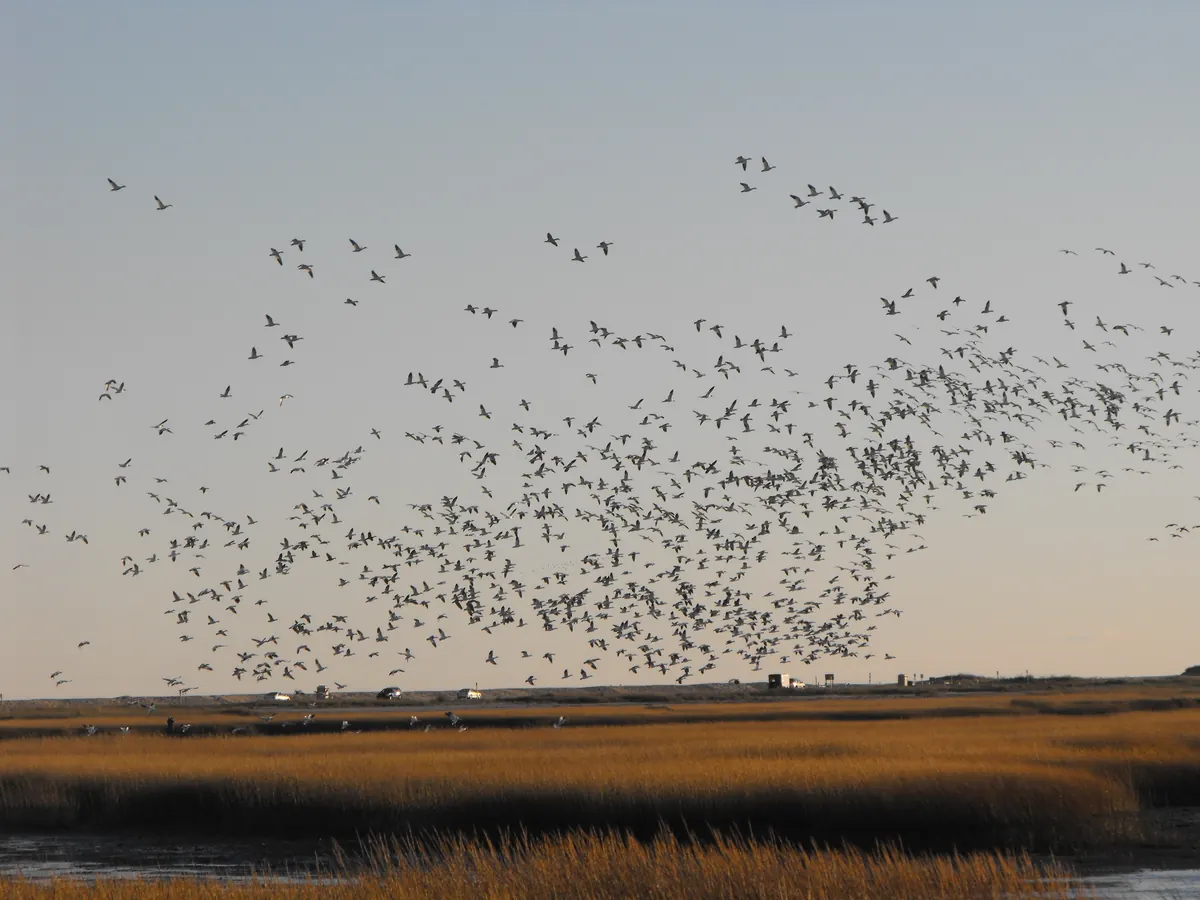
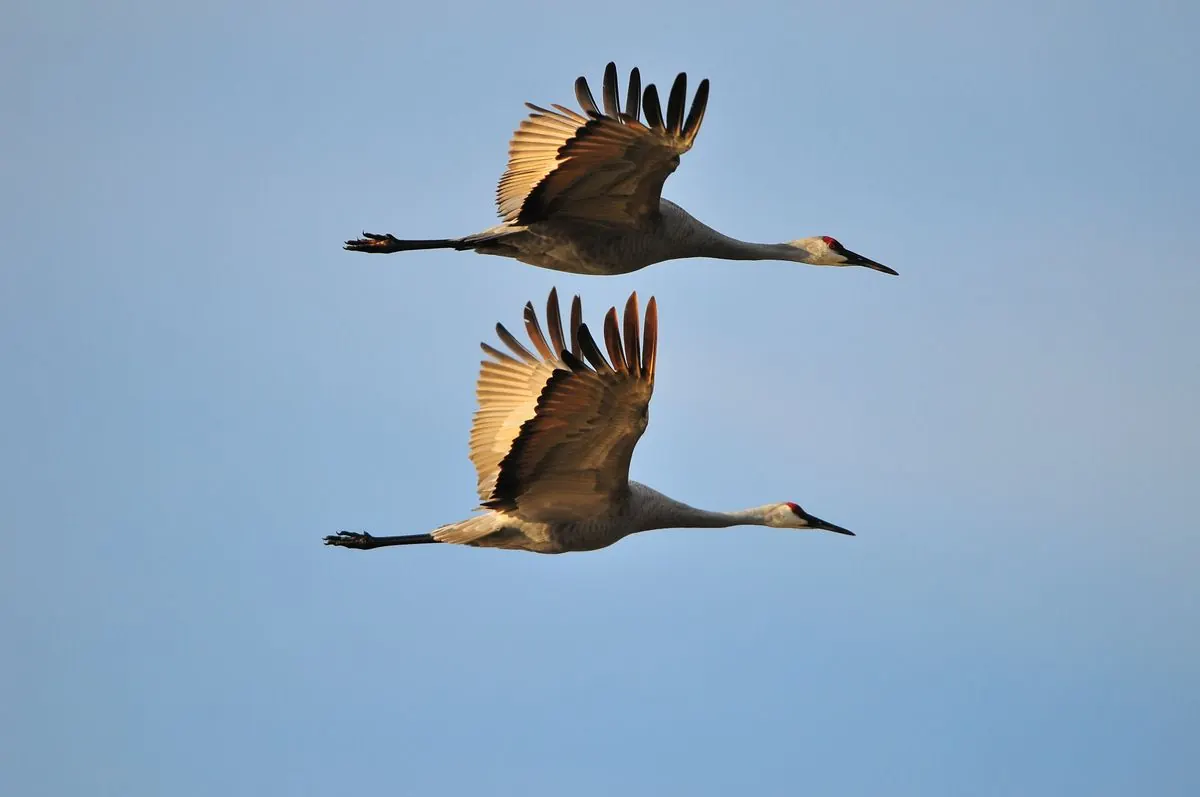
- Montezuma at its fullest. The refuge’s waterfowl count tops out around mid-November in the tens of thousands, with snow geese, hundreds of tundra swans and, in late November 2024, more than 300 sandhill cranes beside the visitor center. Drive the Wildlife Drive before it closes for the season on November 30.
- Look twice at a turtle on the beach. From late fall into January, sea turtles that linger in Long Island’s cooling bays can go limp from the cold and wash ashore looking dead. Do not put one back in the water or try to warm it: call the New York Marine Rescue Center’s 24-hour hotline, (631) 369-9829.
- Mars meets Jupiter before dawn. Look southeast in the last dark hour of November 15 or 16 (a Sunday and a Monday) and you will find Mars, faint and orange, tucked about 1.2 degrees from far brighter Jupiter; Venus shines below them, closer to the horizon.
Naturalist’s Field Journal plates that suit New York’s November: log the year’s first tundra swan, sandhill crane or evening grosbeak under “birds I have seen”; give “tracks to know” over to deer prints along a muddy field edge; “a map of sounds” for geese passing over in the dark; and “the same place twice” for one oak or beech that is still holding its brown leaves, to be revisited in April. Note the wind direction and the temperature with each entry.
Regions used below: Adirondacks and North Country; Western New York and the Lake Erie shore; Finger Lakes and Central New York; Southern Tier and Catskills; Capital Region and Hudson Valley; New York City and Long Island.
When do snow geese, swans and cranes peak at Montezuma, and where can you still see migrating eagles?
Two migrations wind down this month: waterfowl in the Finger Lakes marshes reach their high point, and the late flight of red-tailed hawks and golden eagles finishes along the hills west of the Catskills.
-
Peak waterfowl at Montezuma
Peak around mid-November; the Wildlife Drive is open through November 30 · Montezuma National Wildlife Refuge and the surrounding Montezuma Wetlands Complex, north end of Cayuga Lake near Seneca Falls
The refuge’s own birding page names mid-November as the high point, with ducks and geese numbering in the tens of thousands. Snow geese arrive and leave in loud, shifting rafts, and a volunteer survey from the Friends of the Montezuma Wetlands Complex describes hundreds of tundra swans sitting on the ice of the pools in a cold late November, ducks wedged between them. The visitor center keeps 10 a.m. to 3 p.m. hours through November 30, which is also the last day cars can use the Wildlife Drive until it reopens in spring. From November 1 to January 1 the Esker Brook and South Spring Pool trails are open only to permitted hunters.
-
Sandhill cranes at the visitor center wetland
Late November in recent years · The wetland beside the refuge visitor center
In the Friends’ notes, a refuge observer counted 323 cranes in the visitor center wetland on November 26, 2024, and about 100 there in the last days of November 2023, some of them squaring off in short, neck-stretched charges at rival groups. Listen for their rolling, bugled calls at dusk as they come in to roost.
-
Golden eagles over Franklin Mountain
Goldens peak from late October to mid-November; the count runs to January 1 · Franklin Mountain Hawkwatch, Delaware-Otsego Audubon Society sanctuary, 52 Grange Hall Road Spur, Oneonta
HawkCount’s profile of this watch puts its golden eagle peak between late October and the middle of November, with red-tailed hawks peaking just before. The best single day on record brought 128 golden eagles on October 25, 2018. In November the flights are smaller but come on the same weather: a day after a cold front, with northwest winds above about 10 mph. The coastal counts end sooner: Fire Island closes its season on November 18 and Mount Peter on November 15.
Duck and goose hunting is legal on parts of the Montezuma complex in fall, so wear something bright on the open trails and check the refuge page before you go.
When do seals come back to New York beaches?
Every late fall, harbor seals return to spend the cold months in the bays and inlets of New York City and Long Island. From about November to April they haul out on sandbars, rocks and marsh islands to rest between feeding trips, and a quiet low-tide walk is often all it takes to see them.
-
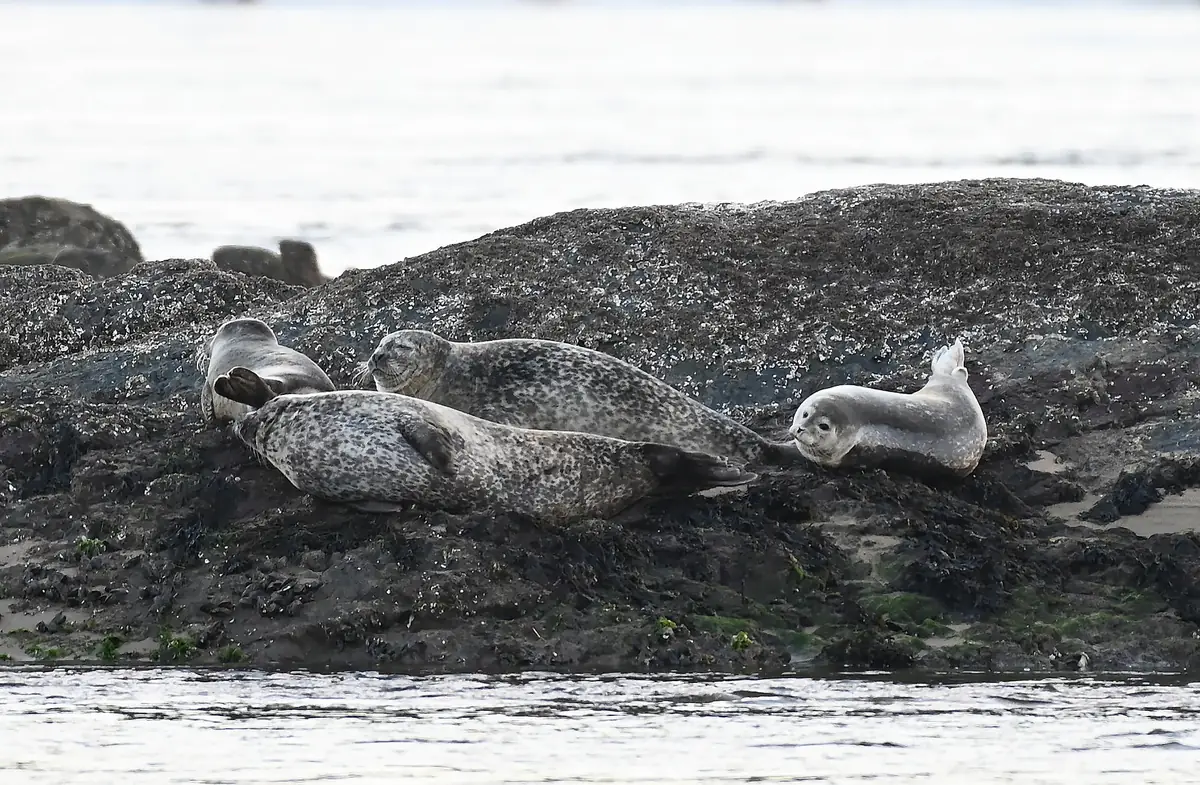
Harbor seals arriving
First arrivals in November; numbers build through winter, peaking March to May · Gateway National Recreation Area in New York City, Jones Beach, and Moriches Bay at Cupsogue Beach
The National Park Service says seals can be found throughout Gateway from November to March. DEC adds that harbor, gray and harp seals all turn up regularly on the state’s saltwater beaches, most of all from March to May, though the first ones show up in November. At low tide, scan sandbars for a row of curved, sausage-shaped bodies with heads and rear flippers lifted.
-
Seal walks at Cupsogue Beach
Walks usually begin in mid- to late November; the 2026–27 schedule is not yet posted · Cupsogue Beach County Park, Moriches Inlet, Westhampton
The Coastal Research and Education Society of Long Island has led guided seal walks here since 2006, logging tens of thousands of seal sightings. Last season’s first walks were in mid- and late November, and recent outings have tallied anywhere from about 45 to more than 100 seals. Sign-up is required; the new dates will appear on cresli.org.
-
Snowy owls on the dunes
Some winters, from late fall · Jones Beach and other wide, open South Shore beaches
DEC lists the snowy owl among Jones Beach’s winter visitors, though numbers swing widely from year to year. Watch from afar; every flush costs the owl energy.
Seals are protected by the Marine Mammal Protection Act, and DEC’s rule of thumb is 50 yards, about half a football field. A seal alone on the beach is almost always just resting. If one looks hurt or sick, call the stranding hotline at (631) 369-9829 instead of approaching it.
What should you do if you find a sea turtle on a Long Island beach in November?
Sea turtles spend summer feeding in Long Island Sound and the Peconic and South Shore bays. Most leave as the water cools, but some, often young Kemp’s ridleys, stay too long. When the water drops into the low 50s °F (the New York Marine Rescue Center gives 55 °F; NOAA Fisheries puts the danger point at 50 °F), they become hypothermic, stop swimming and drift with the wind. This is called cold stunning, and in New York it happens from October into January. The rescue center points to the shape of Long Island and its two forks, which trap turtles in bays that cool quickly.
-
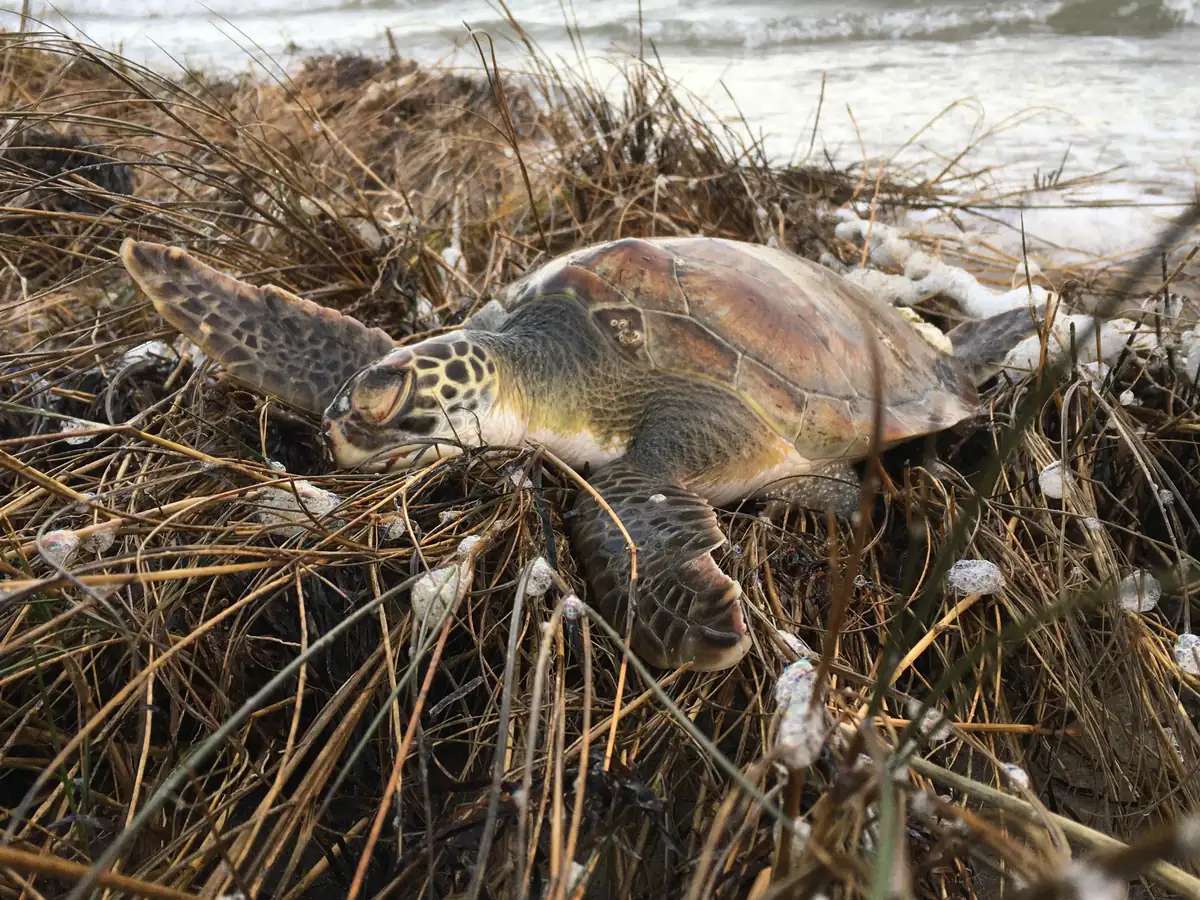
A turtle that looks dead may not be
Any cold, windy day from late October to January · Beaches of Long Island Sound, the North and South Forks and the Peconic bays
A cold-stunned turtle barely moves and can look like a carcass, yet with care most recover; the rescue center says its record season in 2024 brought more than 150 cold-stun calls, including 18 strandings in a single day. Its instructions are clear: do not put the turtle back in the water and do not try to warm it up, which can do more harm. Note exactly where it is, keep dogs away, and call the center’s 24-hour hotline at (631) 369-9829 right away.
-
Walk a beach for science
Wednesday, November 25 (listed as 11:30; confirm the time when you reserve) · Wildwood State Park, Wading River, on Long Island Sound
State park educators lead a beach walk on Long Island Sound that surveys marine debris and explains how cold-stunned turtles are found. Reservations are through Eventbrite.
In recent seasons the rescue center has also recruited volunteers to patrol beaches for stranded turtles. If you live near the Sound and walk the shore anyway, it is worth asking.
When is the deer rut in New York, and when do bears den?
For deer and bears, November is the hinge of the year. Bucks spend the month looking for does, and bears finish fattening up and settle into dens. Both are in a good position this year: the Finch Research Network’s September survey of the Northeast describes the oak and beechnut crops as quite good, which means plenty of acorns and beechnuts on the ground.
-
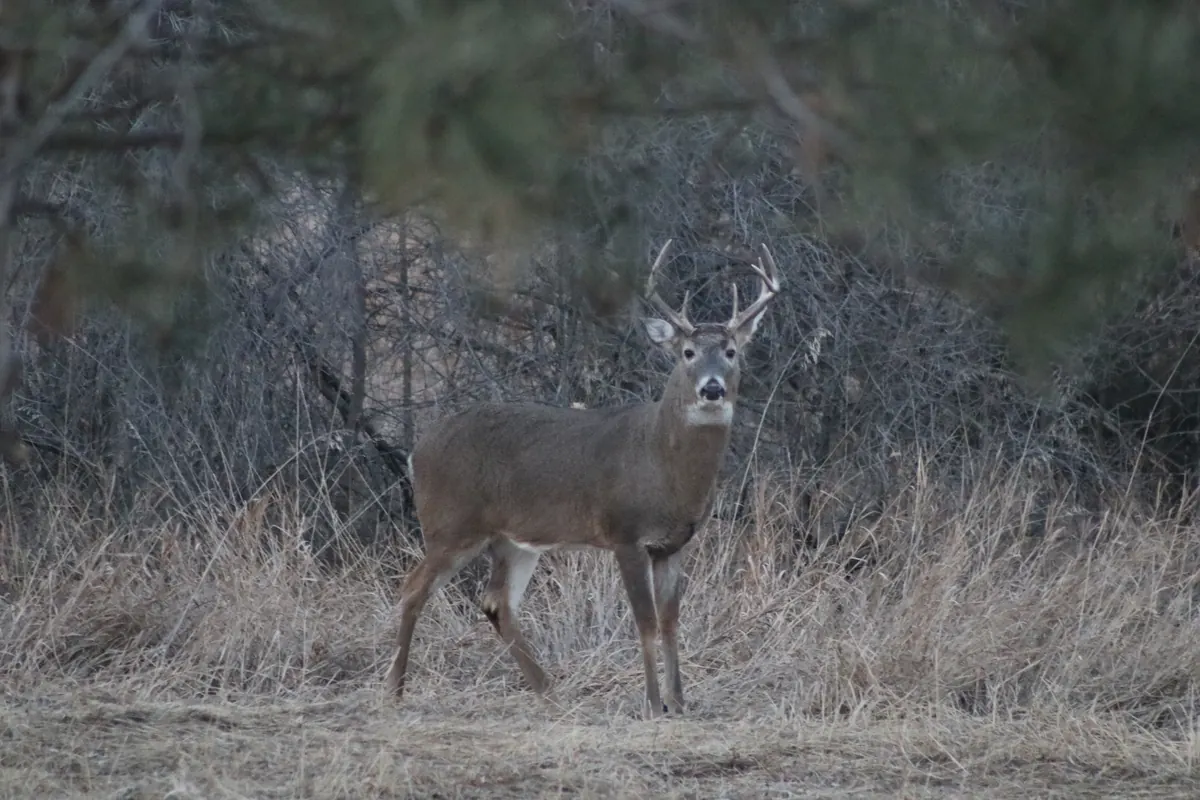
The whitetail rut
Chasing and breeding through November; deer collisions peak this month · Statewide, from farm country to suburbs and the city’s edge
Bucks now roam widely, often in daylight, trailing does and ignoring roads. The state DMV counted 12,195 crashes involving deer in October, November and December of 2023, and November alone accounted for 5,498 of them. Most happen around dawn and dusk, which after the clock change on November 1 lines up with the evening drive home. DMV’s advice: expect more than one deer, brake firmly, and do not swerve.
-
Bears going to bed
Females den in October or November; males in November or December · Adirondacks, Catskills, Allegany hills, Tug Hill and the Southern Tier
New York’s black bears do not truly hibernate, but in the den they go months without eating, drinking or passing waste. DEC’s natural history report adds a quiet bit of biology: a pregnant female’s fertilized egg floats unattached until about November or early December, when it implants, so the cubs arrive in January or early February while she is still in the den. A bear that has not yet denned will still raid a bird feeder or a garbage can, so in bear country hold off on filling feeders until the cold has clearly set in, and take them down again by April 1, as DEC asks.
Fresh hoof prints in a muddy field edge, a sapling rubbed raw, a scrape of bare earth under a low branch: these are the signs of the rut you can find even without seeing a deer. Sketch them on the spot.
Which winter finches will come to New York feeders this year?
Winter finches move south in years when the seed and cone crops fail in the boreal forest, and stay put when they are good. The Finch Research Network’s forecast for 2026–27, written by Tyler Hoar and posted September 25, reports bumper cone crops on the region’s red spruce, eastern white pine and cedar, so many of these birds will stay deep in the forest rather than visit yards.
-
Blue jays on the move
Through November · Along the Lake Ontario and Lake Erie shores; oak woods statewide
The forecast expects an above-average jay flight along both Great Lakes shorelines, and good acorn and beechnut crops will hold many of them through winter.
-
Pine siskins, purple finches and crossbills
November into winter · Conifer stands in the Adirondacks, Tug Hill and Catskills; white pine and spruce plantings elsewhere
Siskins should be plentiful but mostly in the woods, and purple finches, after flights in each of the last two winters, are expected to stay mostly north. In the spruce country, red crossbills (mainly the type the forecast calls Type 12) are likely, with a new eastward push of Type 2 crossbills possible later in the winter, and small groups of white-winged crossbills may wander through.
-
Evening grosbeaks, maybe
Late fall · Northern New York first
These big, yellow and black finches have irrupted four times in the last six winters, and the forecast says another small southward movement is quite possible. Most other northern specialties, from redpolls to Bohemian waxwings, look likely to stay put in Canada this winter.
-
Project FeederWatch starts November 1
November 1 to the end of April · Your yard, balcony or any spot you can watch regularly
Cornell Lab of Ornithology’s winter count, running since 1987–88, asks you to pick a spot, count the birds there on days you choose, and for every kind of bird send in the biggest group you saw together, so no individual is tallied twice. U.S. participants pay $18 a year, and a patch of shrubs works as well as a feeder. Letchworth State Park’s Humphrey Nature Center runs drop-in FeederWatch sessions every Saturday and Sunday from 10 a.m. to 5 p.m. through late December.
Which trees still have leaves or color in New York in November?
After the maples drop, the woods do not go completely bare. Some trees keep their color late, and others hold dead leaves all winter, which makes November a good month to learn the trees by shape, bark and buds.
-
Oaks and beeches holding on
From now until spring · Oak woods of the Hudson Valley and Long Island; beech understory statewide
Clemson’s extension service calls American beech the best-known example of marcescence. In these trees the abscission layer, the seam of cells where a leaf stem breaks away, is not completed until spring, so pale, papery leaves rattle on the twigs all winter. Young oaks, hornbeam, hophornbeam and witch hazel do it too, mostly on young trees and lower branches. Why they do it is not settled; one idea is that the dry leaves make the buds less tempting to deer.
-
Gold larches
Early to mid-November in the south and west; earlier in the Adirondacks · Tamarack bogs in the north; planted larches in parks such as Letchworth
Larches are conifers that drop their needles each fall, and they turn a soft gold first. Letchworth State Park’s arboretum walk on Sunday, November 15 (1 p.m., free, about 2 miles from the Humphrey Nature Center) goes looking for the large larches planted in the park’s early reforestation.
Pick one oak or beech you pass every day and photograph it once a week until its leaves finally fall, sometime around budbreak.
Has New York had its first freeze yet?
Across most of upstate, yes. In NOAA’s station records for 1991–2020, the typical (median) date of the first freezing night comes on September 9 at Saranac Lake, October 1 at Massena, October 11 at Binghamton, October 15 at Albany, October 19 at Syracuse and October 26 at Buffalo, so a typical year has already frozen at all six before November begins. Three places usually reach November first: Islip on Long Island, with a median of November 2; Westfield in the Lake Erie grape belt, where the warm lake holds off the freeze until a median of November 5; and Central Park, which has a median of November 20 and in one year in ten stays unfrozen until December 6.
| Station | One year in ten | Median | Nine years in ten |
|---|---|---|---|
| Saranac Regional Airport (Adirondacks) | Aug 26 | Sep 9 | Sep 24 |
| Massena International Airport (St. Lawrence Valley) | Sep 17 | Oct 1 | Oct 17 |
| Binghamton (Southern Tier) | Sep 28 | Oct 11 | Oct 29 |
| Albany Airport (Capital Region) | Oct 3 | Oct 15 | Nov 1 |
| Syracuse Hancock International Airport (Central New York) | Oct 2 | Oct 19 | Nov 4 |
| Buffalo (Western New York) | Oct 10 | Oct 26 | Nov 9 |
| Westfield 2 SSE (Lake Erie grape belt) | Oct 23 | Nov 5 | Nov 19 |
| Islip Li Macarthur Airport (Long Island) | Oct 18 | Nov 2 | Nov 15 |
| New York Cntrl Pk Twr (Manhattan) | Nov 6 | Nov 20 | Dec 6 |
If you are in Manhattan or on the South Shore with tender plants still outside, this is the month to bring them in. Look up your own station on our New York frost date tables, and note in your journal the first morning you find skim ice on a puddle, which in town often comes a week or more after the official freeze.
How much daylight does New York lose in November?
Between 56 and 65 minutes. Plattsburgh goes from 10 h 10 m on the first of the month to 9 h 05 m on the last day, losing 65 minutes; New York City and Montauk lose 56. The clock change on the 1st makes it feel like far more. In Albany the sun sets at 5:49 p.m. on Halloween and at 4:48 p.m. the next evening, the first day of standard time, and by November 30 it is down at 4:23. Plattsburgh’s last sunset of the month comes at 4:15.
| City | Nov 1 | Nov 30 | Lost | Per day |
|---|---|---|---|---|
| Plattsburgh | 10 h 10 m | 9 h 05 m | 65 min | 2.2 min |
| Buffalo | 10 h 18 m | 9 h 17 m | 61 min | 2.1 min |
| Rochester | 10 h 17 m | 9 h 16 m | 61 min | 2.1 min |
| Syracuse | 10 h 17 m | 9 h 16 m | 61 min | 2.1 min |
| Albany | 10 h 19 m | 9 h 19 m | 60 min | 2.1 min |
| Binghamton | 10 h 20 m | 9 h 22 m | 58 min | 2.0 min |
| New York | 10 h 26 m | 9 h 30 m | 56 min | 1.9 min |
| Montauk | 10 h 24 m | 9 h 28 m | 56 min | 1.9 min |
Your own town’s sunrise, sunset and twilight times, day by day, are on the daylight calculator.
When does lake-effect snow start in New York, and what might El Niño do this winter?
November is when the Great Lakes, still holding late-summer warmth, meet the first truly cold air of the season. The result is lake-effect snow: narrow bands that can drop several inches an hour on one set of towns while places a few miles away see sun. The National Weather Service in Buffalo counts an average of about ten lake-effect events a winter off Lake Erie and Lake Ontario, and some of the biggest have come in November, before the lakes cool.
-
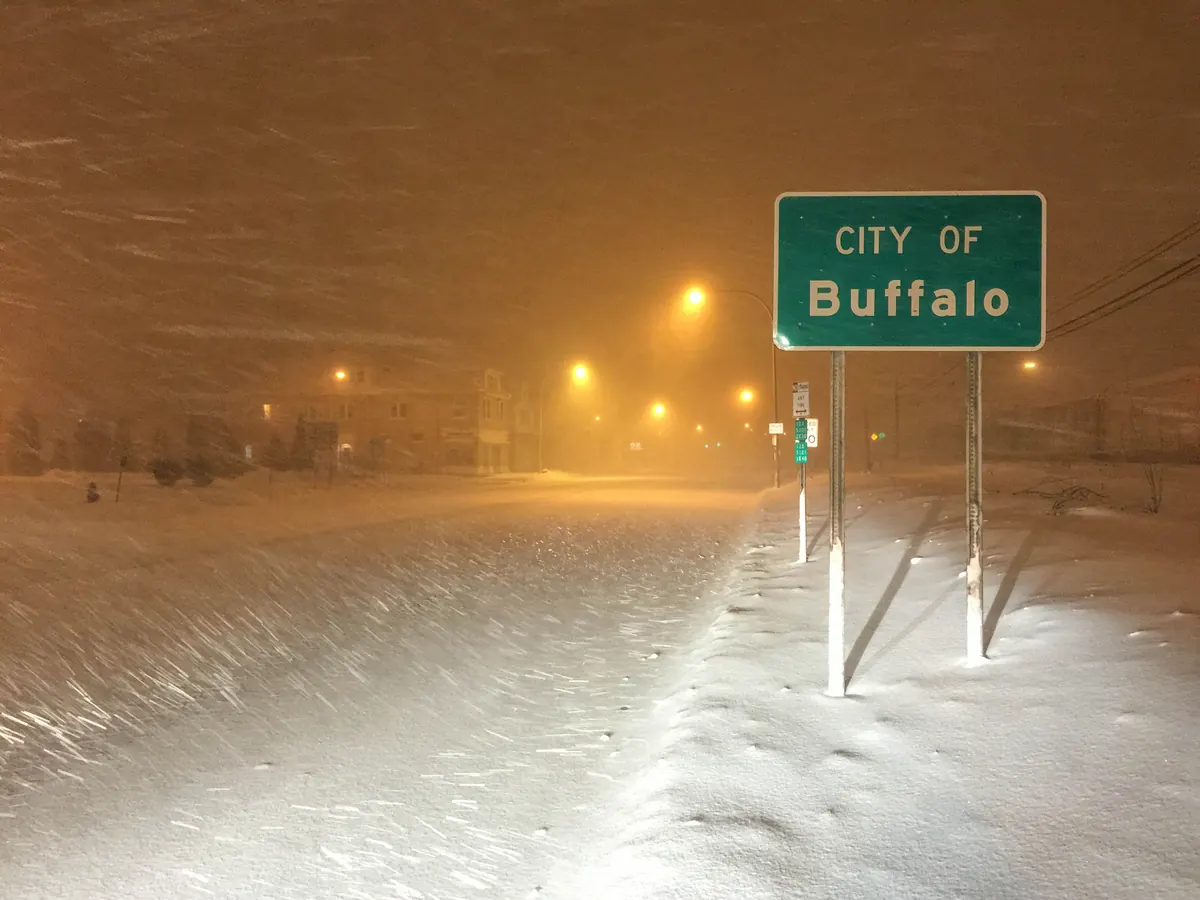
Snowvember, 2014
November 17–21, 2014 · Buffalo’s southern and eastern suburbs
In NWS Buffalo’s account, a band off Lake Erie parked over the Southtowns on November 17–19, dropping 65 inches at South Cheektowaga, with snow falling at 3 inches an hour and at times close to 6. A second event on November 19–21 added up to 49 inches at Wales Center. Combined totals approached 7 feet in places, and the storm was blamed for 13 deaths, hundreds of roof collapses and thousands of stranded drivers.
-
November 2022
November 17–20, 2022 · Hamburg, Blasdell and Orchard Park; Carthage and Croghan east of Lake Ontario
Eight years later it happened again. NWS Buffalo’s winter summary records six to six and a half feet of snow in the southern Buffalo suburbs over about two and a half days, and nearly four feet near Carthage and Croghan off Lake Ontario, with the Thruway shut from Rochester to the Pennsylvania line.
-
El Niño and the winter ahead
December 2026 to February 2027 · Statewide
In their mid-September update (dated the 10th), NOAA’s ENSO team rated a very strong El Niño persisting into the cold months as better than 9-in-10 likely. NOAA and the Northeast Regional Climate Center describe what that tends to mean here: with the polar jet stream displaced to the north, the dry winters typical of Ohio often reach into western New York, while storms riding up the coast bring extra precipitation to the Eastern Seaboard. Their review of 2015–16, a record-setting event, found warmth everywhere from Maine to West Virginia and a snow deficit across New York. In the strong event of 2023–24, NWS Buffalo logged Rochester’s warmest meteorological winter on record, snow totals about two feet below normal at Buffalo and more than four feet below at Rochester, and just five lake-effect events instead of the usual ten.
Yet November behaved differently that year: it was the one month colder than normal at the office’s main climate sites, and many stations had above-normal November snow. The lakes can still deliver an early storm before El Niño’s midwinter grip takes hold. The government’s formal winter forecast is not due until mid-October (the 15th), so it is not reflected here; when it appears, the December–February maps will be posted on the three-month outlook page of the Climate Prediction Center.
Before driving into the snow belts east of the lakes, check the local forecast on our weather page, and keep a shovel, boots and a blanket in the car from mid-November on.
What can you see in the New York night sky in November 2026?
With standard time in force from the first Sunday of the month, it is fully dark by around 6 p.m., which puts the stars within reach of anyone with young children. All times below are Eastern Standard Time.
-
The Beaver Moon
Full at 9:53 a.m. Tuesday, November 24; looks full the evenings of November 23 and 24 · Rising in the east-northeast around sunset
EarthSky counts this as one of 2026’s supermoons, because the moon swings to its closest point about 30 hours after it turns full; in practice the boost in size is too small to see. In the small hours of Tuesday the moon brushes the Seven Sisters star cluster, but moonlight swamps the cluster. Guided moonlight walks: Five Rivers near Albany on Monday the 23rd (7 p.m., phone registration by the 20th); on Tuesday the 24th, Lakeside State Park on Lake Ontario (6 p.m.), Reinstein Woods in Depew (6 p.m.) and Knox Farm in East Aurora (7 p.m., adults only).
-
The Leonids
Best from midnight to dawn on Wednesday, November 18 · Any dark spot; Leo rises in the east around midnight
The International Meteor Organization foresees an ordinary return, roughly 15 per hour at most under pristine skies, and no outburst. Moonset around 12 a.m. clears the sky, and the Lion’s head, where the meteors appear to start, climbs toward the south as dawn nears; an alarm a couple of hours before first light works well, and a backup try on the 17th or 19th costs little.
-
Taurid fireballs
Southern Taurids peak around November 5; Northern Taurids around November 12 · Taurus is up in the east by mid-evening
Expect a handful per hour at most, yet these slow meteors, shed by Comet Encke, sometimes include a startling fireball. With new moon on the 9th, the week between the two maxima has dark evenings.
-
A crowded morning sky
Mars and Jupiter closest on the mornings of November 15 and 16; Mercury best about November 18 to 25 · East and southeast before dawn
Venus has returned to the dawn sky and gains height every week, peaking in brilliance in the last days of the month. Evenings belong to Saturn alone, a yellowish point well up in the south. Mars and Jupiter come up around midnight in Leo and have their close pairing before sunrise on Sunday and Monday, November 15–16. Mercury joins them low in the dawn twilight in the week after the 18th, and around mid-month all four planets form a line before sunrise.
| Phase | Date | Time |
|---|---|---|
| Last quarter | Sunday, Nov 1 | 3:28 p.m. |
| New moon | Monday, Nov 9 | 2:02 a.m. |
| First quarter | Tuesday, Nov 17 | 6:48 a.m. |
| Full moon, the Beaver Moon | Tuesday, Nov 24 | 9:53 a.m. (looks full the evenings of Nov 23 and 24) |
| Last quarter | Tuesday, Dec 1 | 1:08 a.m. |
Lake-effect clouds often cover the snow belts while other parts of the state stay clear, so look at the cloud map on Today’s sky before heading out, and look up when the moon clears your own horizon with the moon phase calendar.
What are good nature outings for New York families in November 2026?
- Weekends from November 1: drop-in Project FeederWatch at Letchworth’s Humphrey Nature Center, Saturdays and Sundays 10 a.m. to 5 p.m. (free).
- Tuesday, November 3: Good Dam Views, an easy walk past beaver dams and chewed stumps on the Genesee Valley Greenway near Route 305 (2 p.m., free).
- Saturday, November 7: learn trees by bark, buds and seeds at Hallock State Park Preserve in Riverhead (9 a.m.).
- Wednesday, November 11: Veterans Day is a DEC free fishing day: anyone can fish the state’s fresh waters without a license, though the regular rules still apply.
- Saturday, November 14: a fall wildlife safari at Caleb Smith State Park Preserve in Smithtown (10:30 a.m., $4) or the evergreen walk at Five Rivers (2 p.m.).
- Sunday, November 15: the larch walk at Letchworth (1 p.m.).
- Wednesday, November 18: collect trail cameras and look at the footage together at Connetquot River State Park Preserve (1 p.m., $4); notable animals go to the Snapshot NY project.
- Thursday, November 19: I BIRD NY Early Birders at Five Rivers (7:30 a.m., no registration, loaner binoculars).
- Saturday, November 21: Who Stays for Winter? at Reinstein Woods (10 a.m.), turkeys up close at Five Rivers (10 a.m.), a late autumn bird walk at Hallock (9 a.m.), or Build Like a Beaver at Hamlin Beach (2 p.m.).
- November 23 and 24: Beaver Moon walks at Five Rivers, Lakeside, Reinstein Woods and Knox Farm.
- Wednesday, November 25: the cold-stun and beach debris walk at Wildwood State Park.
- Friday, November 27: an Opt Outside waterfall hike at Letchworth, Inspiration Point to Middle Falls (2 p.m., moderate).
- Saturday, November 28: a natural history walk at Camp Hero State Park in Montauk (noon, $4, reservations).
Many of these programs are small and fill early, so register where asked and confirm times with the park before you go. For citizen science, join FeederWatch, send your Montezuma and backyard lists to eBird, and if you live near Long Island Sound, learn the turtle hotline number by heart. Other months and states live on the nature calendar; the field journal for naturalists gives you somewhere to write each of these outings down. Last month’s highlights are on the New York October page.
Safety notes for November in New York
- Deer and bear seasons. DEC’s 2026–27 guide sets the Southern Zone regular firearms season for deer and bear from Saturday, November 21 through December 13, (opening weekend falls just before Thanksgiving); Southern Zone bowhunting runs until November 20. In the Northern Zone the regular season, which began October 24, continues through December 6. Westchester and Suffolk counties allow only bowhunting for deer this month. Sunday hunting is permitted statewide.
- Small game and waterfowl. Pheasant season is open across much of the state, Long Island’s youth waterfowl days are November 7 and 8, and goose seasons, along with duck seasons in several zones, are open during the month, so expect shots at dawn near marshes such as Montezuma.
- Orange or pink. Anyone using a firearm to hunt deer or bear, and anyone accompanying such a hunter, has to wear fluorescent orange or pink above the waist: at least 250 square inches of solid color seen from all sides, 250 square inches of a pattern that is at least half orange or pink, or a hat at least half that color. The law does not apply to hikers, yet from November 21 on a bright hat and vest are sensible in any woods, and the same goes for a dog.
- Short days. With sunset before 4:45 p.m. upstate by late month, start hikes early and carry a headlamp. On the High Peaks and Catskill summits, November can bring snow, ice and hard wind while the valleys are bare, so pack traction and winter layers.
- Lake-effect bands. Whiteouts can hit the Thruway south of Buffalo, Interstate 81 on the Tug Hill and roads in the Southern Tier with almost no warning. Watch NWS lake-effect warnings and do not drive into a band.
- Cold water. Paddlers should wear life jackets and assume a capsize means immersion in 40- or 50-degree water.
- Wildlife on the beach. Keep 50 yards from seals and call (631) 369-9829 for any stranded seal or turtle.
Sources
- U.S. Fish and Wildlife Service: Montezuma National Wildlife Refuge (Wildlife Drive, visitor center hours, trail closures)
- U.S. Fish and Wildlife Service: birding at Montezuma National Wildlife Refuge
- Friends of the Montezuma Wetlands Complex: bird survey for November 26, 2024
- Friends of the Montezuma Wetlands Complex: bird survey for November 29 and December 1, 2023
- NYSDEC: Montezuma Wetlands Complex
- HawkCount: Franklin Mountain site profile and seasonal timing
- Delaware-Otsego Audubon Society: Franklin Mountain Hawkwatch
- HawkCount: Fire Island Hawkwatch site profile
- HawkCount: Mount Peter site profile
- National Park Service, Gateway National Recreation Area: harbor seals
- NYSDEC: DEC reminds New Yorkers to avoid close encounters with seals (April 2025)
- NYSDEC: Jones Beach State Park watchable wildlife
- Coastal Research and Education Society of Long Island: seal walks and cruises
- New York Marine Rescue Center: cold stunning
- RiverheadLOCAL: NY Marine Rescue Center seeks volunteers to patrol beaches for cold-stunned sea turtles (November 12, 2025)
- NOAA Fisheries: cold-stunned turtles fly south to recover
- NY Department of Motor Vehicles: drivers warned of increased deer and moose activity in fall (November 6, 2024)
- NYSDEC: Black Bears in New York, natural history, range and interactions with people (PDF)
- NYSDEC: guidance to reduce conflicts with bears
- Finch Research Network: winter finch forecast 2026–2027 (September 25, 2026)
- Project FeederWatch: project overview
- Clemson Cooperative Extension, Home and Garden Information Center: when leaves don’t let go (marcescence)
- National Weather Service Buffalo: lake effect summary, November 17–19, 2014
- National Weather Service Buffalo: lake effect summary, November 19–21, 2014
- National Weather Service Buffalo: winter summary 2022–23 (PDF)
- National Weather Service Buffalo: winter season summary 2023–24 (PDF)
- Climate Prediction Center: ENSO diagnostic discussion, September 10, 2026
- Climate Prediction Center: seasonal (90-day) outlooks
- Northeast Regional Climate Center and NOAA: El Niño impacts and outlook, Northeast region (PDF)
- U.S. Naval Observatory: moon phases from November 1, 2026
- International Meteor Organization: 2026 meteor shower calendar (PDF)
- EarthSky: what is a supermoon (2026 full supermoons)
- EarthSky: Mercury at greatest western elongation
- Star Walk: planetary conjunctions (Mars and Jupiter, November 2026)
- NY State Parks: Project FeederWatch, Letchworth State Park, Sundays from November 1, 2026
- NY State Parks: Project FeederWatch, Letchworth State Park, Saturdays from November 7, 2026
- NY State Parks: Good Dam Views, Genesee Valley Greenway, November 3, 2026
- NY State Parks: Tree Identification Walk, Hallock State Park Preserve, November 7, 2026
- NY State Parks: Fall Wildlife Safari, Caleb Smith State Park Preserve, November 14, 2026
- NY State Parks: Arboretum Walks, In Search of the Large Larches, Letchworth, November 15, 2026
- NY State Parks: Citizen Science Mammal Survey, Connetquot River State Park Preserve, November 18, 2026
- NY State Parks: Late Autumn Bird Walk, Hallock State Park Preserve, November 21, 2026
- NY State Parks: Build Like a Beaver, Hamlin Beach State Park, November 21, 2026
- NY State Parks: Full Moon Phenology, the Beaver Supermoon, Lakeside State Park, November 24, 2026
- NY State Parks: Full Beaver Moon Walk, Knox Farm State Park, November 24, 2026
- NY State Parks: Citizen Science Beach Hike, Wildwood State Park, November 25, 2026
- NY State Parks: Opt Outside, Inspiration Point to Middle Falls, Letchworth, November 27, 2026
- NY State Parks: Camp Hero Natural History Tour, November 28, 2026
- NYSDEC: Free Fishing Day, statewide, November 11, 2026
- NYSDEC: Guided Walk, Pining for a Tree, Five Rivers, November 14, 2026
- NYSDEC: I BIRD NY Early Birders, Five Rivers, November 19, 2026
- NYSDEC: Who Stays for Winter?, Reinstein Woods, November 21, 2026
- NYSDEC: Family Fun, Animal Investigations, Five Rivers, November 21, 2026
- NYSDEC: Night Hike, Full Beaver Moon, Five Rivers, November 23, 2026
- NYSDEC: Full Moon Walk, Reinstein Woods, November 24, 2026
- 2026–2027 New York Hunting and Trapping Regulations Guide (NYSDEC, eRegulations PDF: deer, bear, small game and waterfowl dates; fluorescent orange and pink rule)
- NYSDEC: deer and bear hunting regulations
- Photos via Wikimedia Commons; licenses and photographers are credited under each picture
