What to look for in nature in North Carolina this March
March is when North Carolina changes its mind about winter, a few degrees and a few rainy nights at a time. The Boone area can still see snow, but in the Piedmont the first warm downpour sends spotted salamanders marching to woodland pools, spring peepers ring from every ditch, and American toads begin to trill. In the coastal rivers, shad crowd upstream to spawn. Redbud flushes pink before it has a leaf, hepatica and bloodroot open on the forest floor, and the first Henry’s elfin butterflies flutter among them. Ruby-throated hummingbirds begin to arrive toward month’s end, and on the Outer Banks the Park Service fences off beaches for returning piping plovers. It is also the start of wildfire season, with yellow pine pollen on every windshield. Clocks jump ahead on Sunday the 14th and the Sun crosses the equator on the 20th. Each event below comes with its usual timing and its source.
Other months in North Carolina: October, November, December, January, February, April.
Start here
- Go out after dark on the first warm, rainy evening. Listen at a woodland pool, ditch or pond edge after dark. Spring peepers sound like sleigh bells, American toads trill, and in the Piedmont spotted salamanders may be crossing the leaf litter. Bring a flashlight, stay on the path and leave egg masses alone.
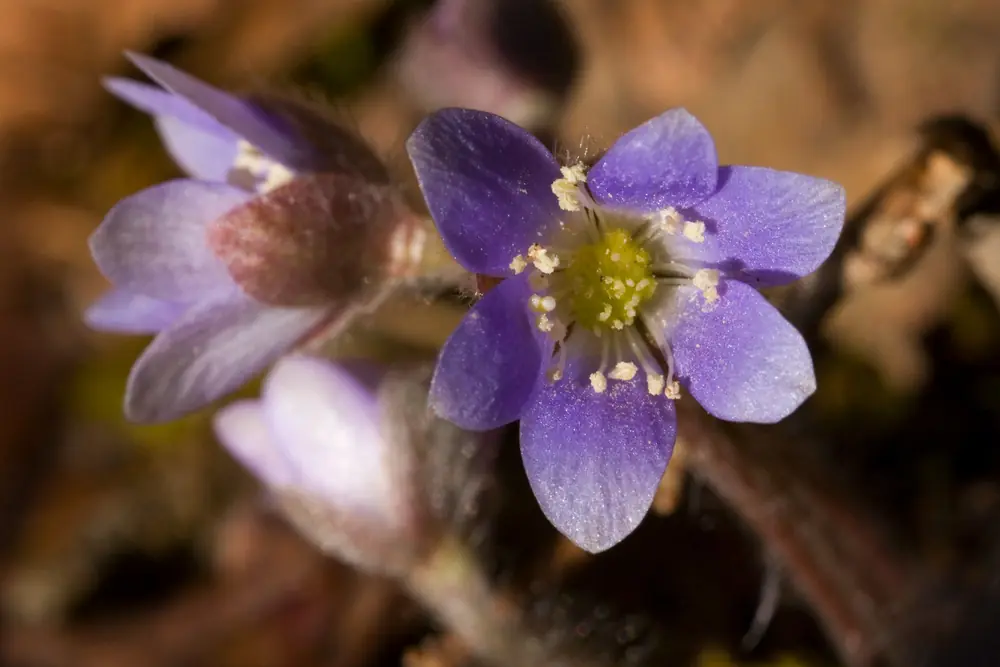
- Find a redbud in flower. Look along woodland edges for bare branches covered in small pink-to-purple flowers. Then check rich, shady woods for the white and lavender stars of hepatica and the white blooms of bloodroot.
- Hang a hummingbird feeder before the 20th. The first males often reach the Piedmont around the third week of March. Put out a clean feeder with a weak sugar-water mix (four parts water to one part sugar), skip the red dye and honey, and change it every two days.
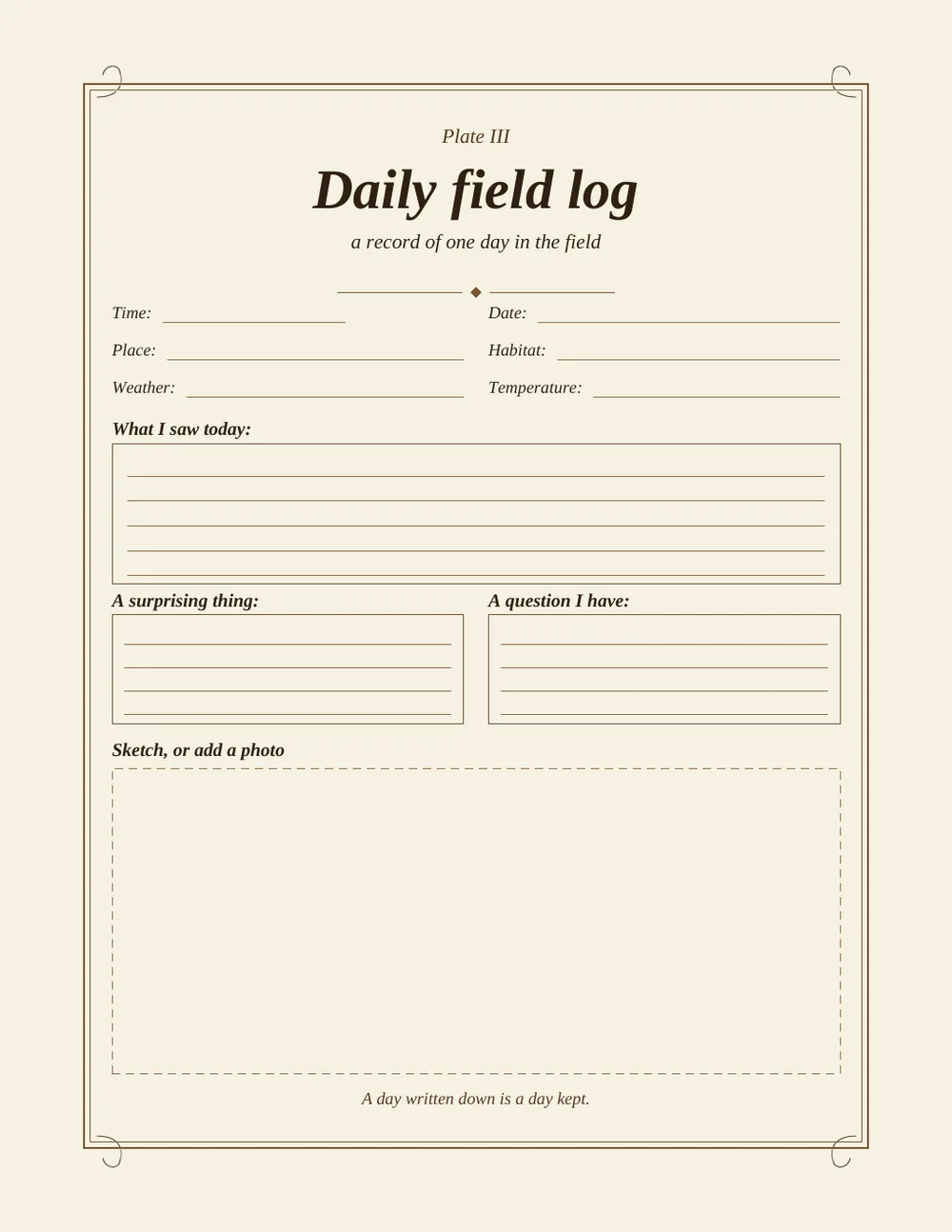
Journal plates for March: put the first peeper, the first toad trill and the first hummingbird on the daily field log, and sketch a redbud twig in flower for a tree through the seasons. The salamander night and the peepers’ chorus belong on a map of sounds; a warbler, a woodcock’s sky dance and a feeder visitor fit birds I have seen; a fenced plover beach suits nest observed; and Mercury before sunrise and the Worm Moon earn a page under dusk and dawn watch. Return to one redbud each week for the same place twice.
Regions used below: Mountains; Foothills; Piedmont; Sandhills; Coastal Plain; Outer Banks and the coast.
Which frogs, toads and salamanders are breeding in North Carolina in March?
After dark, March is the most rewarding month for a walk. Ponds are full, the ground has thawed, and the first mild, wet evenings set off breeding all over the state. Nobody can name the night in advance, because the trigger is the weather. Go out on the first rainy evening that feels almost warm.
-
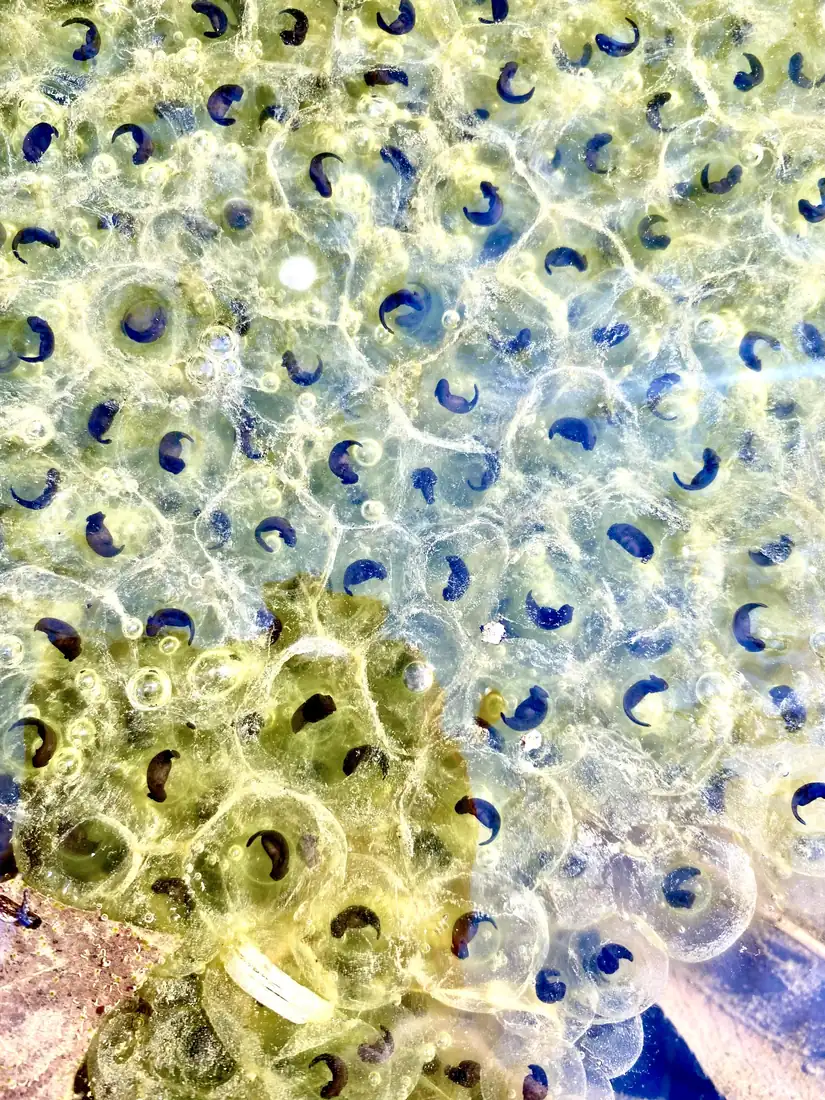
Spotted salamanders gathering at pools
Rainy nights from late winter into March · Fishless woodland pools in the Piedmont and foothills; preserves such as Hemlock Bluffs and Swift Creek Bluffs in Cary, Harris Lake County Park, Duke Forest and the North Carolina Botanical Garden in Chapel Hill
A regional magazine feature describes the Piedmont’s “breeding congresses” as taking place on wet nights from January through March, an account from one writer, not a survey. The heavier the rain, the better the movement, and early-evening rain works best. Females attach egg masses of 50 to over 200 eggs that start about the size of a golf ball and swell to a softball over several days. The Amphibians and Reptiles of North Carolina site says a mass can hold up to 250 eggs and may turn green because of algae living alongside the embryos. A big, dark salamander with bright yellow or orange spots crossing a road at night is almost certainly one of these.
-
Spring peepers and their sleigh bells
Mostly November to April, strongest on mild evenings · Swamps, brushy woods and temporary ponds across the state except the Outer Banks
The same site says peepers call “most frequently from November to April,” though a few may call at any time. One peep is a high, whistle-like note that can carry about a mile, and a big chorus sounds like sleigh bells.
-
American toads trilling
February to April · Most of the Mountains and Piedmont and parts of the northeastern Coastal Plain
American toads breed from February to April, and the male’s call is a high, musical trill held for up to thirty seconds. Females lay thousands of eggs in long strings, and tadpoles turn into toadlets under half an inch long in roughly eight weeks.
-
Southern leopard frogs on the Coastal Plain
Late winter and early spring · Abundant across most of the Coastal Plain and parts of the Piedmont
Most breeding happens in late winter and early spring, though leopard frogs breed opportunistically. The call is a croaking chuckle that has been compared to rubbing an inflated balloon. Eggs hatch in one to two weeks, but tadpoles need more than twelve weeks to transform.
Never handle an egg mass or relocate a salamander. If you help one across a road, use a wet hand and carry it to the side it was facing. FrogWatch USA volunteers monitor frog and toad calls from February through August; the N.C. Aquarium at Fort Fisher runs a chapter that asks for at least four ten-minute sessions and offers training. Park rangers also lead salamander hikes in late winter (the Eno River one ran in February 2026), so watch the state events calendar for 2027 listings.
When do shad and striped bass run up North Carolina’s rivers?
While the woods wake up, the coastal rivers fill with silver fish heading upstream to spawn. In the Roanoke, Tar, Neuse and Cape Fear, the spring runs of American shad and hickory shad are one of the oldest signs of the season, and fishing for them has a loyal following.
-
American and hickory shad
February through early April; hickory shad peak mid-March to early April on the upper Roanoke · Roanoke, Chowan, Neuse, Tar and Cape Fear rivers (hickory shad: the first four)
The Wildlife Resources Commission says American shad ascend the Roanoke, Chowan, Neuse, Tar and Cape Fear rivers each spring. A Carolina Country guide gives the window as February through early April, with American shad averaging 2 to 4 pounds and hickory shad 1 to 2 pounds. The Commission says hickory shad begin to appear in the lower Roanoke near Plymouth in late February and early March, with the best action near Weldon from mid-March to early April, when the water is 52 to 58 °F. American shad generally do not feed on their spawning trip, which the Commission calls a mystery given how readily they strike shad darts and small spoons. The daily limit is 10 shad per angler.
-
Striped bass on the Roanoke: check before you go
The 2026 closure ran March 9 to April 30 · Roanoke River Management Area, from Roanoke Rapids Dam to Albemarle Sound, plus the Cashie, Middle and Eastmost rivers
In March 2026 the Commission suspended hook-and-line harvest of striped bass in the Roanoke River Management Area from March 9 through April 30, requiring that any striped bass caught be returned at once. It cited little improvement after four years of harvest reductions, a 2025 spawning survey that continued a declining trend, and poor spawning success over the past eight years, and said it would evaluate conditions before the March 1, 2027 opening. We cannot say what the 2027 rules will be, so read the Commission’s announcements before you fish.
Each spring Commission crews sample striped bass, American shad and hickory shad by electrofishing in the Roanoke, Tar, Neuse and Cape Fear, and results are posted on the Coastal Rivers Fisheries Reports page from March through May. A Carolina Country guide names the Shad Hole at Tarboro, the Pipe and Battle Park at Rocky Mount, and Rockfish Park at Weldon as Roanoke River spots. Rules differ by river, so check the current regulations before you cast.
Which birds return to North Carolina in March?
Purple martins and ospreys arrived in February (see our February guide). March brings the next wave, and the first of the long-distance migrants from the tropics begin to show up near the end of the month.
-
Ruby-throated hummingbirds
Often the third week of March in the Piedmont; males first · Feeders, gardens and woodland edges, beginning in the south and east
Birds of the Central Carolinas, a county parks booklet hosted by the Carolina Bird Club, says the first male ruby-throats there are often back by the third week of March, with an average reported arrival over the past ten years of about March 23. Females follow about a week later. Journey North says the species reached North Carolina in late March 2026. A Transylvania County Extension guide advises four parts water to one part sugar, no red dye or honey, a fresh batch every 48 hours, and native plants such as wild columbine, bee balm and coral honeysuckle. Expect later dates in the cooler mountains.
-
Louisiana waterthrush and northern parula
Generally March (waterthrush) and late March or early April (parula) · Rocky streams (waterthrush); tall trees along rivers and swamps (parula)
The Central Carolinas booklet calls the Louisiana waterthrush an early returner, generally arriving in March (earliest on file March 10), and more common on rocky streams in the western counties. The northern parula, one of the first migrant warblers back, usually arrives in late March or early April (earliest on file March 17).
-
Woodcock sky dances
Dawn and dusk in spring · Fields with brush next to moist woods; refuges such as Alligator River and Great Dismal Swamp, which the Fish and Wildlife Service names as places to seek them out
The Wildlife Resources Commission lists the American woodcock as present all year across most of the state: a permanent resident of the Coastal Plain and Piedmont and largely a summer resident in the mountains. At dawn or dusk in springtime the male calls with a buzzy peent, spirals up with twittering wings, then descends and lands to start again. Eggs, one to five in a shallow scrape in the leaf litter, hatch from early April to mid-June, usually peaking by May.
Add your first hummingbird to Journey North’s map: sightings from backyards are what show whether spring is arriving earlier.
What is happening on the Outer Banks and offshore in March?
For the beaches, March is a month of preparation. For the whales offshore, it is a month of departure.
-
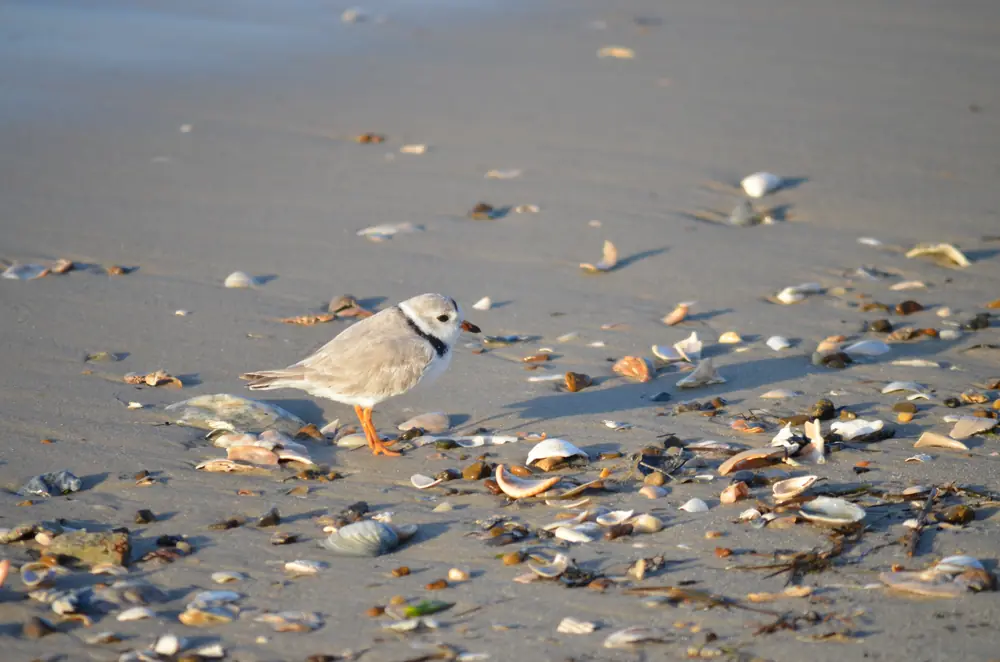
Piping plovers return to Cape Hatteras
Monitoring starts in early March; breeding birds arrive from late March to early April; nests from mid to late April · Cape Hatteras National Seashore: Bodie Spit, Cape Point, South Beach, North Ocracoke and South Point
The Atlantic Coast piping plover has been listed as threatened since December 11, 1985. The Fish and Wildlife Service puts arrival on breeding grounds in early April, followed by courtship and nesting in mid-to-late April. At Cape Hatteras, the Park Service’s 2015 report shows the groundwork: monitoring began in early March, and symbolic fencing of five pre-nesting closure sites was in place by March 15. The report describes a 75-meter (roughly 250-foot) buffer around nests and breeding behavior, wider once chicks hatch, and the first nest that year was found on April 19. Years differ, so check the Seashore’s pages for current closures.
-
Right whales on the move north
Speed zones run through April 30; the calving-ground zone ends April 15 · Coastal waters off Morehead City and Beaufort
NOAA Fisheries says mothers give birth in shallow coastal waters off North Carolina, South Carolina, Georgia and Florida, and that many right whales travel north in spring to feeding grounds off New England and Canada. Its species page puts the population at approximately 380. Vessels 65 feet or longer must slow to 10 knots in the seasonal management areas: the zone around the ports of Morehead City and Beaufort (a 20-nautical-mile radius) runs from November 1 through April 30, and the calving-ground zone from November 15 through April 15. Smaller boats are asked to slow voluntarily. NOAA revises these rules from time to time, so check its page.
Keep dogs leashed and stay out of fenced areas, however empty they look.
What is blooming in North Carolina in March, and when is the last spring freeze?
March flowers are a gamble with the frost. A warm week can open the redbuds in the Piedmont while a late cold snap in the mountains holds everything back. The table below gives the usual date of the last 32 °F night at eight main stations, a rough guide to how long each region has to wait.
-
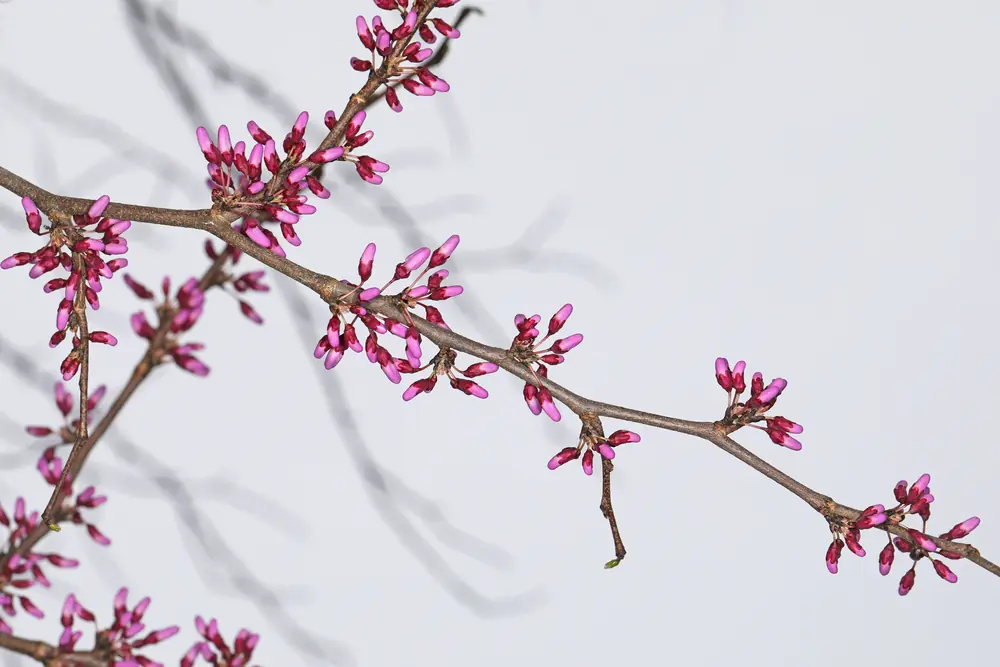
Eastern redbud
March to May; usually the Piedmont first · Woodland edges and roadsides in all three regions
N.C. Cooperative Extension’s plant toolbox says redbud blooms from March to May, with flowers appearing before the leaves. They are small, pea-shaped and about half an inch wide, pink to red to purple, and they grow from both new stems and older branches. Bees visit, including a specialist, and the tree hosts the Henry’s elfin butterfly.
-
Round-lobed hepatica
Mid-March through April · Shaded, acidic, organically rich woodlands in the Coastal Plain, Piedmont and Mountains
Hepatica sends up flowers with five to twelve petal-like sepals, white, light blue, lavender or sometimes pink, on a plant only three to nine inches tall. Its leathery, heart-shaped leaves have three rounded lobes and are often mottled with purple.
-
Bloodroot
March to April · Rich woods in all three regions
Bloodroot has white flowers one to three inches across, with 8 to 12 petals. It is named for the blood-red juice in its underground stem, which is poisonous, so look but do not pick or taste. Ants carry off and spread the seeds.
| Station | One year in ten | Median | Nine years in ten |
|---|---|---|---|
| Murphy | Apr 7 | Apr 22 | May 7 |
| Asheville | Mar 20 | Apr 6 | Apr 24 |
| Boone | Apr 17 | May 2 | May 19 |
| Charlotte | Mar 12 | Mar 30 | Apr 14 |
| Raleigh | Mar 15 | Mar 31 | Apr 16 |
| Wilmington | Feb 26 | Mar 19 | Apr 4 |
| Elizabeth City | Mar 7 | Mar 27 | Apr 18 |
| Cape Hatteras | Feb 4 | Mar 4 | Mar 25 |
Plan first plantings around the median date, not the earliest. For your own town, our North Carolina frost dates page lists many more stations.
Which butterfly flies first with the redbud?
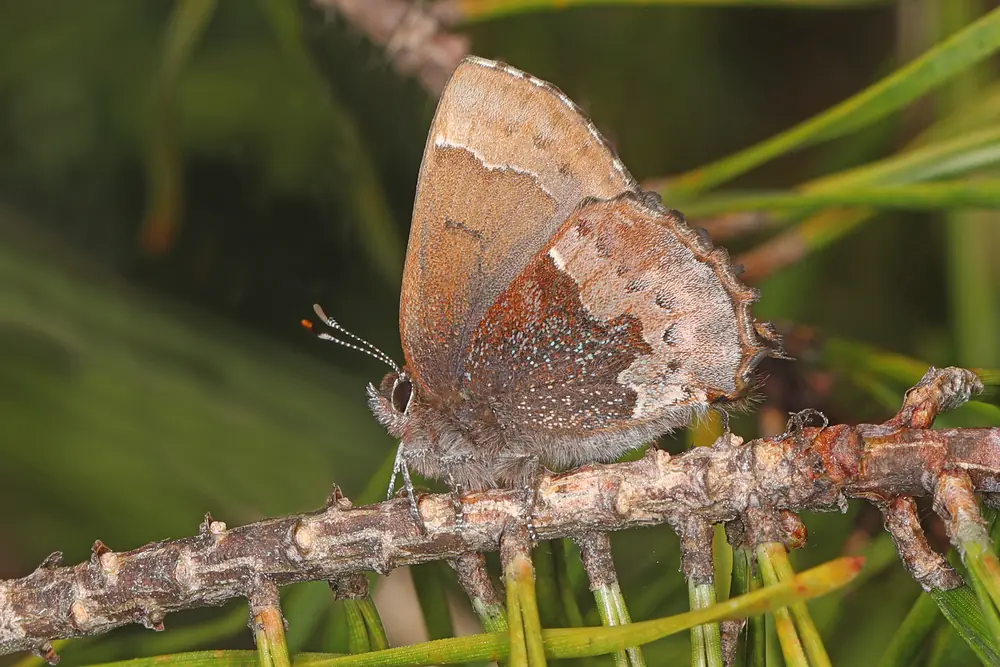
A small brown butterfly follows the redbud bloom.
-
Henry’s elfin
Early March to late April, rarely to mid-May; peaking with the redbud bloom · Mostly the eastern half of the state; scattered records in the west
The Butterflies of North Carolina site notes a single brood of Henry’s elfin from early March to late April, only rarely to mid-May, peaking when redbud is in full flower. It is uncommon to fairly common in the Coastal Plain and eastern Piedmont and rare in the western Piedmont, with scattered records in counties such as Burke, Catawba, Clay and Polk. Extension lists it among the butterflies that use redbud as a host plant. Look slowly on warm, sunny mornings along the edge of a stand of blooming redbud.
Records from the western part of the state are still few, so tell a nature center if you find one there.
Why is March wildfire and pollen season in North Carolina?
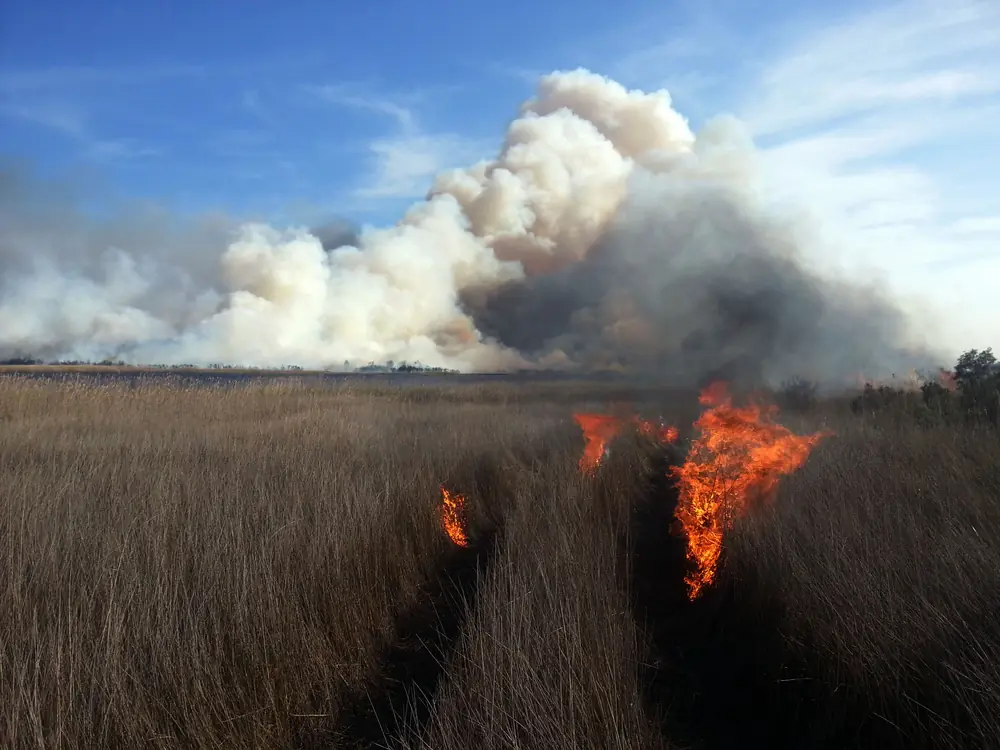
In the Southeast, wildfire season does not wait for summer. The N.C. Forest Service says escaped debris burns cause nearly half of the state’s wildfires and that people are behind 99 percent of them. Open burning requires a permit, available online or at a Forest Service office, and local rules can be stricter.
-
What recent Marches looked like
March · Statewide; the Mountains and the Helene-damaged counties carry extra risk
The State Climate Office reports that March 2025 brought 1,846 fires, the most in a March since 2006, burning 17,841 acres in the least humid March on record at Charlotte, Greensboro and Raleigh, with a statewide burn ban from March 21 to April 2. In 2026 the Forest Service answered 626 new wildfires in ten days from March 20 and canceled nearly 18,000 digital burn permits when a statewide ban began at 6 p.m. on March 28. Counties hit by Hurricane Helene carry extra risk from dead timber. Check for a ban before you light a pile.
-
Planned fires on game lands
Most between January and March · State game lands, with a map on the Commission’s website
The Wildlife Resources Commission carries out 200 to 300 prescribed burns a year, covering 20,000 to 30,000 acres of its roughly 2 million acres of game lands, most of them from January through March in cool, humid weather. If you see smoke on game land, check the Prescribed Burns Dashboard; if you are unsure it is planned, call 911. The Commission says fire helps species such as red-cockaded woodpeckers and Venus flytraps.
-
Red-cockaded woodpeckers
The female usually lays three to five eggs in mid-April; prescribed fire in winter and spring keeps the woods open · Fort Bragg, the Sandhills Game Lands, Camp Lejeune, Croatan National Forest and Holly Shelter Game Land
This endangered bird is the only North American woodpecker to dig its roost and nest cavities in living pines, usually trees over 80 years old, and fire keeps its pine woods open. The Commission’s species page puts what remains at about 5,600 groups, or 14,000 birds.
-
Yellow pine pollen
Tree pollen counts typically peak between late March and early April · Everywhere with pines, which is nearly everywhere
N.C. State’s forestry extension says pine pollen is the most visible kind, but its grains are two to three times larger and smoother than hardwood pollen and less likely to cause allergies than oak or hickory. The State Climate Office recorded a 2026 peak of 1,522 grains per cubic meter on March 24, above the 2025 peak of 1,325 on April 4. A late frost can cut a year’s total.
Rain washes pollen from the air. For smoke, stay away and keep windows closed.
How warm is March in North Carolina, and when do storms and late freezes arrive?
March swings. Raleigh’s normal high is 63.3 °F and Charlotte’s 64.2 °F, yet Boone’s is only 51.7 °F, with nearly 19 freezing nights and a normal 4.8 inches of snow. Asheville still gets 1.9 inches, and Wilmington none. Cape Hatteras averages a high of 61.4 °F and only 1.7 freezing nights.
| Station | Average high | Average low | Freezing nights | Rain and melted snow | Snowfall |
|---|---|---|---|---|---|
| Boone | 51.7 °F | 29.2 °F | 18.9 | 4.77 in | 4.8 in |
| Asheville | 59.8 °F | 37.0 °F | 11.1 | 3.80 in | 1.9 in |
| Greensboro | 61.3 °F | 39.3 °F | 8.0 | 3.72 in | 0.9 in |
| Charlotte | 64.2 °F | 41.2 °F | 6.3 | 3.95 in | 0.3 in |
| Raleigh | 63.3 °F | 40.3 °F | 7.8 | 4.10 in | 0.3 in |
| Wilmington | 66.5 °F | 44.1 °F | 3.9 | 3.97 in | 0.0 in |
| Cape Hatteras | 61.4 °F | 46.2 °F | 1.7 | 4.43 in | – |
Severe storms start early in North Carolina. The State Climate Office calculates that the first tornado of a typical year strikes around February 22, and the eighth around May 20 (30-year averages). In 2026 the eighth came on March 16, after five tornadoes in Onslow, Craven and Pamlico counties on March 12 and three in Madison and Mecklenburg counties on March 16. That March was the fourth warmest since 1895 at 56.7 °F; March 2025 ranked 23rd. Severe Weather Preparedness Week, with a statewide tornado drill, is usually held in the first week or so of March, and the Weather Service announces the exact dates ahead of time. It also notes that more people die from floods each year than from tornadoes, lightning or hurricanes, and that 12 inches of water can sweep a car away.
NOAA posts a new three-month outlook mid-month on the Climate Prediction Center site; read the latest one there. For the days ahead use our weather page, and the cloud guide helps read the sky when a front is coming.
How much daylight does North Carolina gain in March?
Between March 1 and March 31, 2027, Wilmington gains 64 minutes of daylight, Charlotte 66, Raleigh 67, and Boone and Elizabeth City 69, roughly two minutes a day. By the 31st every city on the list has more than 12 hours and 30 minutes from sunrise to sunset.
| City | Mar 1 | Mar 31 | Gained | Per day |
|---|---|---|---|---|
| Murphy | 11 h 26 m | 12 h 32 m | 66 min | 2.2 min |
| Asheville | 11 h 25 m | 12 h 33 m | 68 min | 2.3 min |
| Boone | 11 h 24 m | 12 h 33 m | 69 min | 2.3 min |
| Charlotte | 11 h 26 m | 12 h 32 m | 66 min | 2.2 min |
| Raleigh | 11 h 25 m | 12 h 32 m | 67 min | 2.2 min |
| Wilmington | 11 h 27 m | 12 h 31 m | 64 min | 2.1 min |
| Elizabeth City | 11 h 24 m | 12 h 33 m | 69 min | 2.3 min |
| Cape Hatteras | 11 h 26 m | 12 h 32 m | 66 min | 2.2 min |
This table counts hours of daylight, which the March 14 clock change does not alter, although sunrise and sunset times jump an hour later that night. Our daylight calculator gives the times for your own town.
What is in North Carolina’s night sky in March 2027?
The sky this month marks a change of seasons in more ways than one. Table times are Eastern: the new moon on the 8th falls in standard time, and the later rows follow the clock change on the 14th.
-
Clocks spring forward on Sunday, March 14
2 a.m. Sunday, March 14 · Everywhere in North Carolina
Under the federal rule that NIST describes, daylight saving time begins at 2 a.m. on the second Sunday of March, and that Sunday is March 14 in 2027. Sunrise and sunset clock times both jump an hour later overnight, so mornings start darker again while evenings stay bright for an extra hour. For any sunrise or sunset table covering early March, add an hour for dates after the 14th.
-
The March equinox
Saturday, March 20, 4:25 p.m. EDT · The whole sky
The equinox arrives at 20:25 Universal Time on Saturday, March 20 (U.S. Naval Observatory), which is 4:25 in the afternoon Eastern Daylight Time. From here the Sun climbs a little higher each day, and the calendar’s “first day of spring” finally agrees with the birds.
-
Mercury before sunrise
Greatest western elongation on Wednesday, March 17; best roughly March 8 to 25 · Low in the east-southeast before sunrise
Wednesday, March 17, is Mercury’s best morning of the month, with the planet 27.6 degrees west of the Sun (SeaSky). Our own estimate has it peeking over the eastern skyline about 60 minutes before sunrise in early March. The clock change pushes sunrise an hour later from the 14th, so check the time before you set the alarm, and look low in the east-southeast from a spot with a clear view.
-
The Worm Moon, full at dawn
Monday, March 22, 6:44 a.m. EDT; best evenings Sunday the 21st and Monday the 22nd · Rising in the east at dusk, setting in the west around sunrise
The Naval Observatory times the full Moon at 10:44 Universal Time on March 22, or 6:44 a.m. in North Carolina, so it is low in the west at about sunrise. That makes the evenings of the 21st and 22nd the best times to see it round and bright. SeaSky gives the traditional reason for the name: this was the time of year when the ground began to soften and earthworms reappeared.
| Phase | Date | Time |
|---|---|---|
| New moon | Monday, Mar 8 | 4:29 a.m. |
| First quarter | Monday, Mar 15 | 12:25 p.m. |
| Full moon, the Worm Moon | Monday, Mar 22 | 6:44 a.m. |
| Last quarter | Monday, Mar 29 | 8:54 p.m. |
Our moon phases page has the phase for any date, and next month brings the Pink Moon on April 20.
What can families do outside in North Carolina in March 2027?
- Go on a night walk after the first warm rain. Bring flashlights, stay on the trail and listen for peepers and toads. See how many different calls you can tell apart.
- Put up a hummingbird feeder before the third week of the month and report the first visitor to Journey North.
- Plant a tree on North Carolina Arbor Day, Friday, March 19. The state sets it as the first Friday following March 15. Towns may pick another day.
- Hunt for redbud, hepatica and bloodroot. Make a checklist for one woodland. Look for the first elfin butterfly beside the redbuds.
- Watch the shad anglers at a public access point on the Roanoke, and respect posted rules.
- See Mercury before dawn on March 17 and the Worm Moon on the evening of the 21st.
Many state parks and nature centers hold spring programs, but 2027 listings are not yet posted, so look at the state events calendar or call ahead. Notes from each trip belong in your Naturalist’s Field Journal, and the guides for April will pick up where this one leaves off.
Safety notes for March in North Carolina
- Hunting seasons. Under the Wildlife Resources Commission’s 2026–27 dates, deer and bear seasons ended January 1, and small game and trapping end February 28, so March is nearly free of hunting; snow and Ross’s geese run to March 10. Spring turkey youth days are April 10 to 11, 2027, and the statewide season, for male or bearded turkeys only, is April 17 to May 15. North Carolina’s hunter orange law covers most game animals and upland game birds but exempts wild turkey hunters; a bright hat is still sensible on game lands in April.
- Trout waters. Hatchery Supported waters are closed in March and reopen at 7 a.m. on the first Saturday in April, which is April 3, 2027 under the rule. The Setzer hatchery has been closed for renovation since late 2025 and is due to reopen at the end of 2027, so stocking is reduced; the Commission earlier said only 35 percent of the usual number of trout would be available. Delayed Harvest waters stay catch-and-release until the first Saturday in June, with special gear rules, so check the regulations.
- Wildfire. Get a permit before you burn, never leave a fire unattended, and expect that a statewide ban can come with little warning.
- Storms and floods. Know where you would shelter in a tornado warning, and never drive through flooded roads.
- Black bears. Most bears leave their dens in March or early April, depending on weather and the cubs’ mobility, and they now live across about 60 percent of the state. Secure food, trash and pet food; the Commission points to its Co-Existing with Bears guide and Bearwise.org.
- Ticks. Four main species are active in spring, summer and fall, and some in winter. Rocky Mountain spotted fever is the most common tick-borne illness in the state, followed by ehrlichiosis and Lyme disease. Wear repellent, keep pant legs tucked in, and look over yourself and pets after every walk.
- Roads and beaches. Slow down near woodland pools on rainy nights. On the Outer Banks, keep dogs leashed and stay out of fenced plover areas.
- Plants. Bloodroot is poisonous; eat no wildflower.
- Blue Ridge Parkway. As of early October 2026 the Park Service listed the Mount Mitchell section as closed after Hurricane Helene damage, so check its closure page. Snow can still fall in the high country in March: Boone’s normal is 4.8 inches.
Sources (54)
- N.C. Wildlife Resources Commission: American shad species page
- N.C. Wildlife Resources Commission: hickory shad species page
- Carolina Country: shad, harbingers of spring
- N.C. Wildlife Resources Commission: Roanoke River striped bass hook-and-line suspension (March 6, 2026)
- N.C. Wildlife Resources Commission: Coastal Rivers Fisheries Reports
- Amphibians and Reptiles of North Carolina: spotted salamander
- Amphibians and Reptiles of North Carolina: spring peeper
- Amphibians and Reptiles of North Carolina: American toad
- Amphibians and Reptiles of North Carolina: southern leopard frog
- Walter Magazine: Love in the Rain, a salamander congress
- N.C. Department of Natural and Cultural Resources: Salamander Spring at Eno River State Park (2026 event listing)
- NAAEE EEPro: FrogWatch USA at the N.C. Aquarium at Fort Fisher
- Birds of the Central Carolinas (Seriff), via the Carolina Bird Club: ruby-throated hummingbird (PDF)
- Birds of the Central Carolinas (Seriff), via the Carolina Bird Club: Louisiana waterthrush (PDF)
- Birds of the Central Carolinas (Seriff), via the Carolina Bird Club: northern parula (PDF)
- N.C. Cooperative Extension, Transylvania County: follow the spring return of the hummingbirds
- Journey North: looking back at the 2026 ruby-throated hummingbird migration
- Journey North: hummingbird program and migration maps
- N.C. Wildlife Resources Commission: American woodcock wildlife profile (PDF)
- U.S. Fish and Wildlife Service: American woodcock, bird of the month
- National Park Service: 2015 piping plover report, Cape Hatteras National Seashore
- U.S. Fish and Wildlife Service: piping plover species page
- NOAA Fisheries: reducing vessel strikes to North Atlantic right whales
- NOAA Fisheries: North Atlantic right whale species page
- N.C. Cooperative Extension plant toolbox: eastern redbud
- N.C. Cooperative Extension plant toolbox: round-lobed hepatica
- N.C. Cooperative Extension plant toolbox: bloodroot
- Butterflies of North Carolina (Carolina Nature): Henry’s elfin
- N.C. Forest Service: best practices ahead of spring wildfire season (February 23, 2026)
- N.C. Forest Service: 626 new wildfires in ten days (March 31, 2026)
- N.C. State Climate Office: severe pollen, severe drought and severe storms ramp up in March (2026)
- N.C. State Climate Office: dry weather, dry air spark March fire danger (2025)
- N.C. Wildlife Resources Commission: prescribed burns on State Game Lands (March 17, 2026)
- N.C. Wildlife Resources Commission: red-cockaded woodpecker species page
- N.C. State Extension Forestry: the North Carolina pine pollen season
- NOAA NCEI: 1991–2020 monthly normals for seven North Carolina stations (data API)
- National Weather Service Newport/Morehead City: North Carolina Severe Weather Preparedness Week
- Climate Prediction Center: seasonal (90-day) outlooks
- N.C. Forest Service: North Carolina’s Arbor Day
- U.S. Naval Observatory: moon phases for 2027 (data API)
- U.S. Naval Observatory: 2027 seasons (equinoxes and solstices, data API)
- SeaSky: astronomy calendar 2027
- NIST: daylight saving time rules
- N.C. Wildlife Resources Commission: hunting and trapping season dates, July 1, 2026 to June 30, 2027 (PDF)
- N.C. Wildlife Resources Commission: proclamation on 2026–27 migratory game bird seasons (PDF)
- N.C. General Statute 113-291.8: hunter orange
- 15 NCAC 10C .0316, Mountain Trout (administrative code text via Cornell Legal Information Institute)
- N.C. Wildlife Resources Commission: Delayed Harvest trout waters open June 1 (2024 release)
- N.C. Wildlife Resources Commission: adjusting fall 2026 mountain trout stockings
- N.C. Wildlife Resources Commission: black bear species page
- N.C. Cooperative Extension, Lee County: tick season
- National Park Service: Blue Ridge Parkway road closures
- N.C. Department of Natural and Cultural Resources: events calendar
- Photos via Wikimedia Commons; licenses and photographers are credited under each picture