What to look for in nature in North Carolina this November
November is when North Carolina fills up with winter guests. Tens of thousands of tundra swans and snow geese settle onto the lakes and farm fields of the northeast, gannets string along the beaches, and a handful of western hummingbirds find their way to backyard feeders. Inland, the Triangle has its color in the first week while the cypress swamps wait until Thanksgiving; up high, the first snow usually dusts Mount Mitchell. The deer rut runs across the state in the opposite direction from the leaves, coast first and mountains last. Clocks fall back on the 1st, and Raleigh’s last sunsets of the month come at about 5:01. Below, region by region, are the typical windows and where each one comes from.
Other months in North Carolina: October, December.
Start here
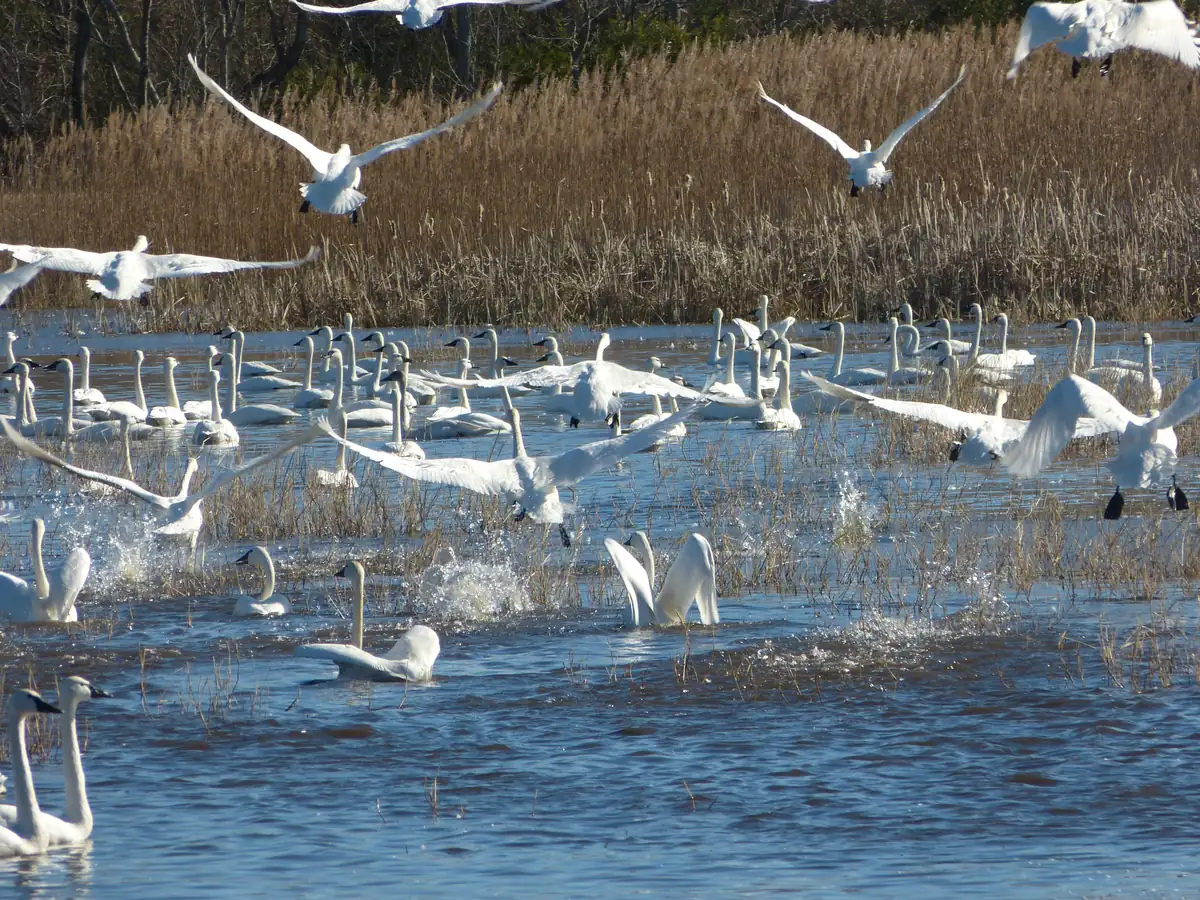
- Snow geese at sunset on Pat’s Road. At Pocosin Lakes’ Pungo Unit, the Carolina Bird Club suggests Pat’s Road in the late afternoon, when snow geese feed in the fields before flying in to roost on Pungo Lake. Tundra swans use the same fields. Bring binoculars, stay on the open roads, and expect some interior roads to be closed for the waterfowl until the end of February.
- Mars and Jupiter, then the Leonids. On November 15 and 16, an hour before sunrise, look southeast for Mars and Jupiter about one degree apart, both inside a single binocular view. Then on Wednesday the 18th, give the Leonids the dark hours after moonset.
- Keep one hummingbird feeder up. A few hummingbirds spend the winter in North Carolina, most of them rufous hummingbirds from the West. The Carolina Bird Club and an affiliate of the N.C. Museum of Natural Sciences want to hear about any hummingbird seen between November 1 and March 15.
For the Naturalist’s Field Journal: the season’s first swan flock, the gannets and any winter hummingbird are entries for the “birds I have seen” plate, while a deer rub or a fresh scrape belongs on reading the signs. A bald cypress at Thanksgiving belongs on a tree through the seasons; the Leonid hours and a sunset flight of snow geese fit dusk and dawn watch, and a swan feather picked up along a dike goes on feather found.
Regions used below: Mountains; Foothills; Piedmont; Sandhills; Coastal Plain; Outer Banks and the coast.
When do the tundra swans and snow geese come to North Carolina?
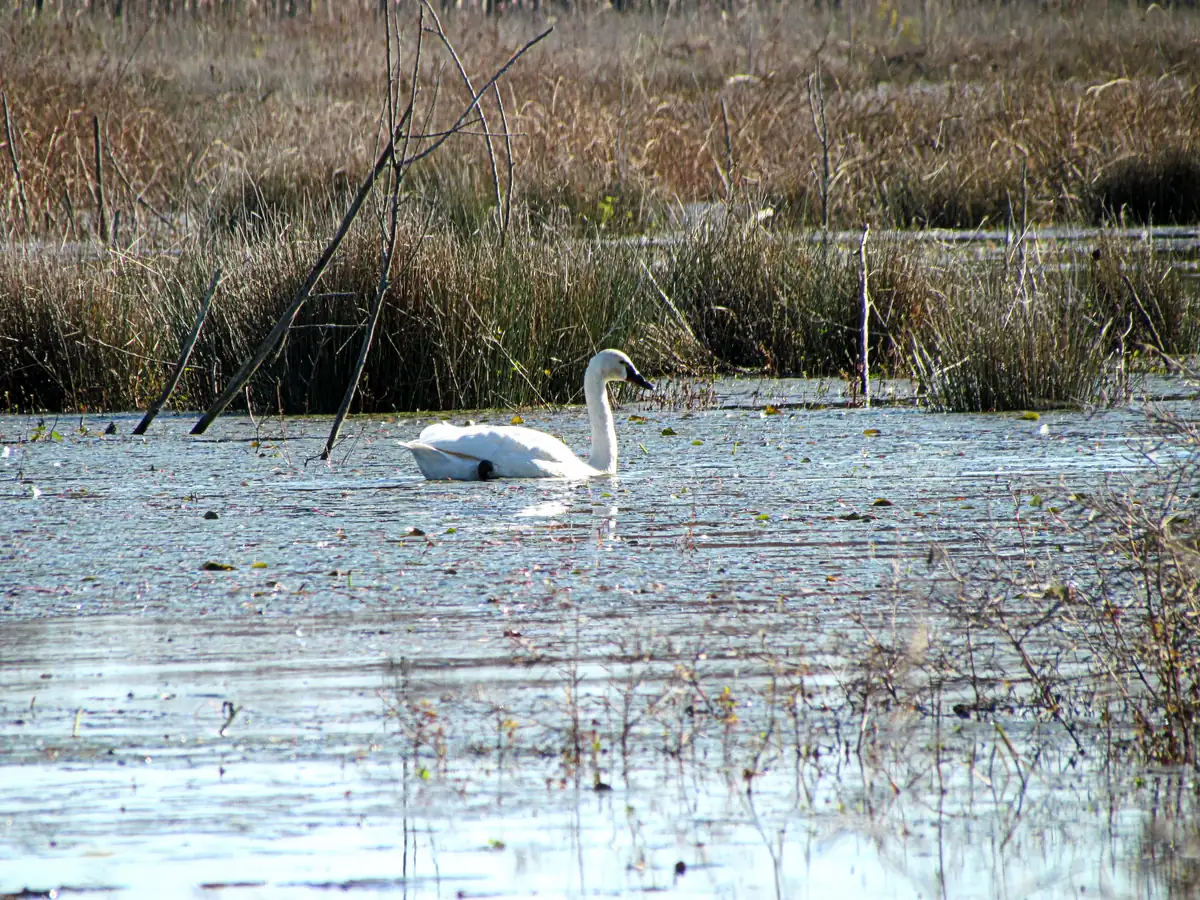
The first ones turn up in October, but November is the month the numbers build. The Wildlife Resources Commission says about 65,000 to 75,000 tundra swans come to the northeast of the state each year, the biggest wintering flock on the East Coast, and the Carolina Bird Club puts their usual stay at late October to late March. Snow geese keep a similar calendar, mid-October to late March. The birds roost on the big shallow lakes and sounds and feed in the surrounding farm fields, so the best views come early and late in the day, as they fly between the two.
-
Pocosin Lakes, the Pungo Unit
November through February; late afternoon is best · Pungo Unit, near Plymouth and Pantego; Pat’s Road
The Pungo Unit has about 44 miles of dirt roads, and the refuge closes some of them from November through February to give the waterfowl peace; check the map at the kiosk. It has held some of the biggest counts in the state: 60,000 tundra swans in January 1996, and 85,000 snow geese in the winter of 2007–08. Most of these are greater snow geese, which the bird club says have grown far more common around Pungo and Lake Phelps in the last few decades. Black bears feed in the same fields, so you may see both in one evening.
-
Lake Mattamuskeet
Swans build through November; the lake closes to boats November 1 · Mattamuskeet National Wildlife Refuge, Hyde County, between Swan Quarter and Engelhard
This broad, shallow lake in Hyde County is the refuge’s heart. From November 1 through February 28 the refuge allows no boating on it except by permitted waterfowl hunters, and some walking areas close for the winter, so read the signs. The bird club’s top count here is 32,186 swans on December 29, 2008, so the flock you see in early November is only the first installment.
-
Lake Phelps and Pea Island
All winter · Pettigrew State Park; Pea Island National Wildlife Refuge on Hatteras Island
Pettigrew State Park, on Lake Phelps, is another place the state parks name for wintering tundra swans; its Christmas count tallied 38,798 tundra swans in December 2015. Pea Island was created for the greater snow goose, though the geese no longer crowd along NC 12 the way they once did; today most of them stay on the refuge’s South Pond.
-
The hunting days
Ducks, geese and swans from November 7 · The same lakes and sounds
The regular duck season reopens November 7 and runs to the 28th in both the inland and coastal zones, and the snow goose and tundra swan seasons open the same day. Swan hunters need one of a limited number of permits from the Wildlife Resources Commission, and each may take one swan a season. Expect gunfire at dawn near the lakes on those mornings, and choose the refuge’s posted viewing areas.
If you can only go once, go in the last two hours of daylight on a calm day, and keep your car as a blind: the birds tolerate a parked vehicle better than a person walking up the dike. The high-pitched, yelping chorus of a swan flock carries a long way across open water, so listen before you look.
When is the deer rut in North Carolina?
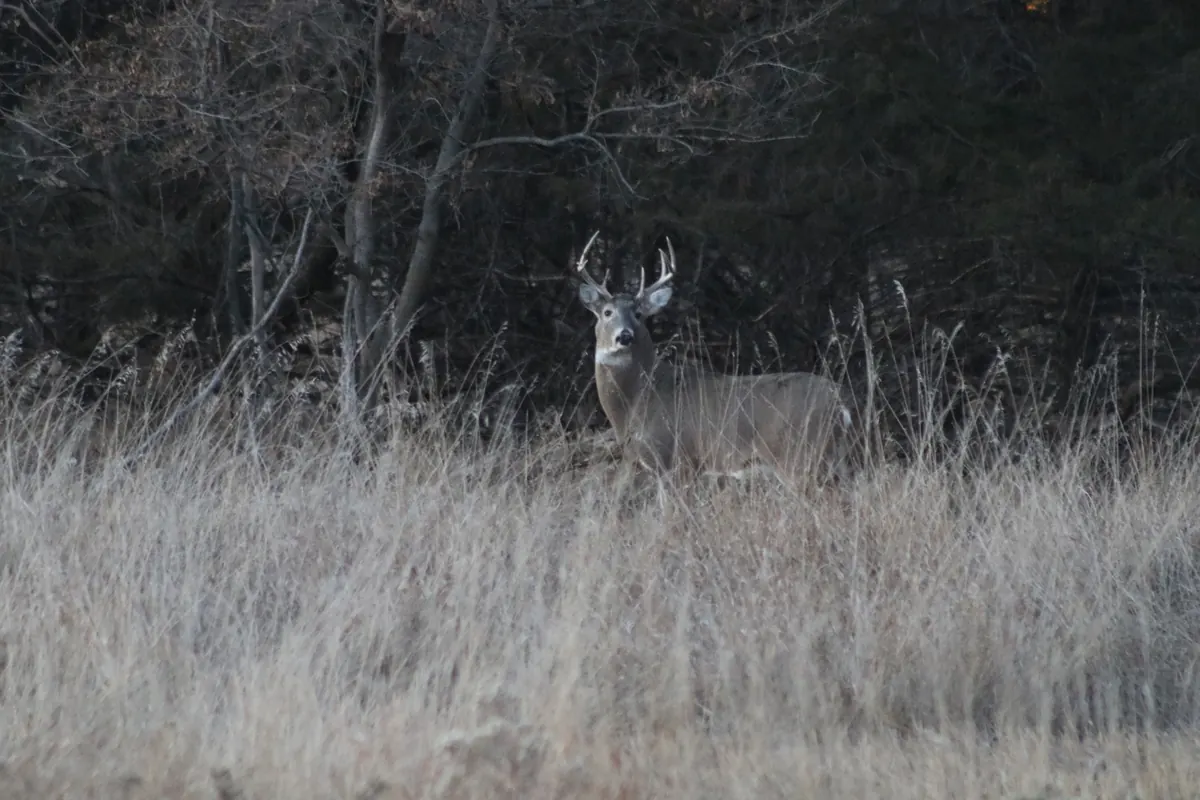
It depends on where you live, and the order may surprise you. The Wildlife Resources Commission estimates peak conception each year from does taken by hunters and collected from roadsides, and its 2025 map runs from east to west: the southeastern counties average October 31, the northeast November 8, the central Piedmont November 15, the northwestern zone November 25 and the western mountains December 5. So the coast is past its peak by the time November starts, and the mountain bucks are still waiting. The Commission adds that this timing barely moves from year to year, because day length triggers the does’ cycles, not cold snaps or the Moon.
| Deer season zone | Average peak conception | Gun season opens (2026) |
|---|---|---|
| Southeastern | Oct 31 | Oct 17 |
| Northeastern | Nov 8 | Oct 17 |
| Central | Nov 15 | Nov 14 |
| Northwestern | Nov 25 | Nov 21 (Nov 14 in Forsyth, Stokes, Surry, Wilkes and Yadkin) |
| Western | Dec 5 | Nov 28 |
In the weeks before a local peak, bucks shred saplings with their antlers and paw bare scrapes under low branches, often with a twig above that they mark with scent. Those are worth a photograph and a date. Bucks chasing does cross roads at odd hours in the rut, so drive the dusk and dawn hours slowly, especially on two-lane roads through farm and woodland. The map shows each county’s estimate; for a few counties it rests on only a handful of samples.
Where is there still fall color in North Carolina in November?
-
The Triangle and the Piedmont
Usually the first week of November · Raleigh, Durham, Chapel Hill, Charlotte, Greensboro
Color reaches the foothills and Piedmont in late October or early November, and the Triangle usually peaks in the first week. This year may be thin: WRAL reported on September 30 that the Triangle had less than half its usual September rain, and the Fall Color Guy expected heat and drought to strip many trees early. Look for the reds of sweetgum, dogwood and red maple on the trees that held on, and for the long brown-and-russet finish of the oaks.
-
Bald cypress turns copper
Around Thanksgiving · Merchants Millpond State Park, the Roanoke and Cape Fear river swamps, coastal blackwater creeks
The color ends at the coast, where the bald cypress goes rusty red around Thanksgiving before it sheds its needles. Merchants Millpond, in Gates County near the Virginia line, is built around a 760-acre millpond more than 190 years old, with old-growth cypress hung with Spanish moss; the park rents boats, so call ahead, and a paddle on a still late-November morning is about as good as the coastal fall gets.
-
Beeches and oaks that keep their leaves
From November until spring · Woods statewide, especially young beeches in the understory
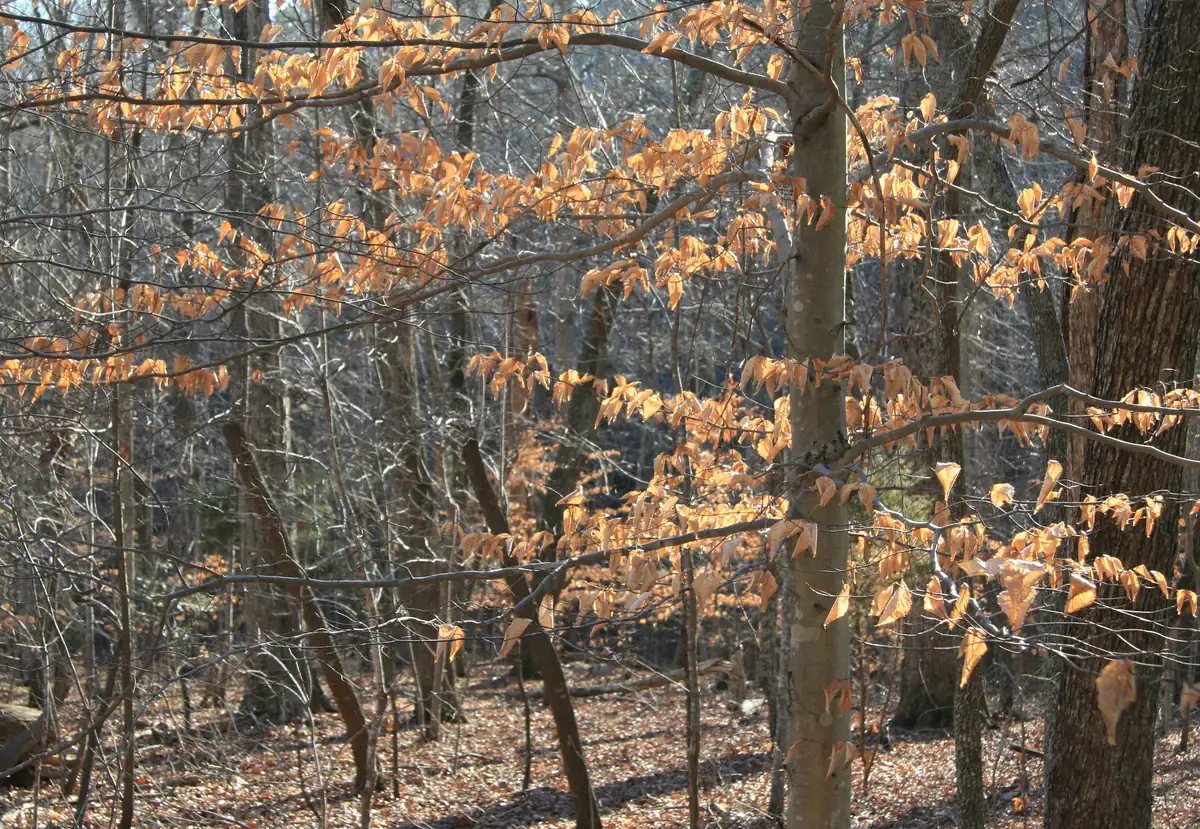
Once the woods are bare, you will notice young American beeches still holding pale, papery leaves, and some oaks do the same. Botanists call it marcescence. N.C. Cooperative Extension notes that juvenile beeches keep their dead leaves through the winter and that nobody is sure why; the trees tend to grow out of it as they age. A beech sapling glowing tan in a gray forest makes an easy winter landmark.
If you missed the mountain color in October, the North Carolina October page has the elevation timetable. For a tree in your own yard, the Field almanac estimates its leaf-off timing from satellite greenness at the spot you choose.
Which winter birds come to North Carolina in November?
-
Winter hummingbirds
Report any hummingbird from November 1 to March 15 · Backyard feeders statewide
The ruby-throats are gone by now, so a hummingbird at your feeder in late November is probably a western bird. The Carolina Bird Club says ten species have been found in North Carolina outside the breeding season, rufous hummingbirds most often, and the study arranges for a bander to identify and band visitors when it can. Keep a feeder at four parts water to one part sugar; the club notes it will not freeze until the air around it drops below about 27 °F. Change it every two weeks or so in cool weather.
-
Northern saw-whet owls
Mainly early November to late February · High mountain spruce-fir; a few in coastal thickets such as Bodie Island
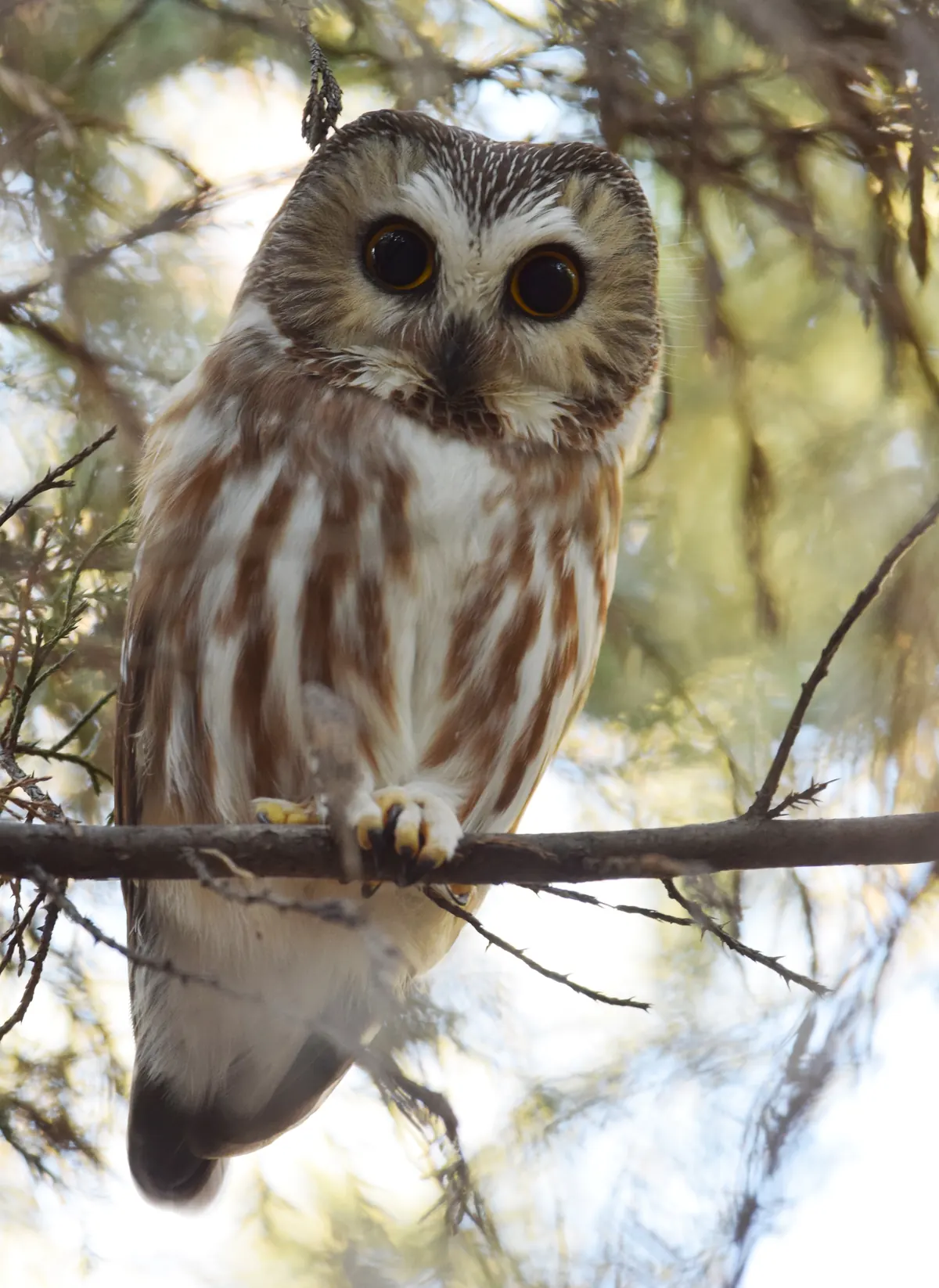
This robin-sized owl breeds in the high spruce and fir above about 5,000 feet, and migrants from the north join it in winter. Banders mist-netted two near Lansing in Ashe County on November 6, 2024, and one more on November 20, 2025, and the bird club calls them seemingly regular in winter at Bodie Island on the Outer Banks. You are far more likely to hear one than see one: a long, steady series of whistled toots on a still night.
-
The winter finch forecast
Through the winter · Mountain conifers; feeders statewide
Tyler Hoar’s forecast for the Finch Research Network, out on September 25, finds good cone crops across the eastern boreal forest, so most northern finches should stay well north of us. Two North Carolina notes stand out: a flight of Type 2 red crossbills moving east could reach the mountains of West Virginia and North Carolina as the winter goes on, and a small to moderate push of pine siskins into the Southeast is possible. Our own crossbills are a resident type that nests in the high mountains; the ones that reach the Piedmont and coast in irruption years have mostly been Type 12. Purple finches are worth watching for at sunflower feeders too.
-
Project FeederWatch begins
November through April · Your own window
Cornell Lab’s winter feeder count runs from November into April. Your count covers any two days in a row, at most once a week; for each species, note the most birds you can see at the same moment, not a running total. Juncos, white-throated sparrows, yellow-rumped warblers and chipping sparrows will be the new faces this month, joining the year-round cardinals, chickadees and titmice.
Hawks are still moving in early November, mostly red-tails and the last sharp-shins, and every cold front brings a fresh batch of sparrows to the brushy edges. Write the date of your first junco down; next year you will have something to compare it with.
What happens on the North Carolina coast in November?
-
Gannets offshore
Common to abundant November through April · Any ocean beach; the Outer Banks are best
North Carolina sits near the center of the northern gannet’s winter range, and the Carolina Bird Club lists it as common to abundant along the coast from November through April. Most stay within a mile of the beach. The record counts are staggering: about 20,000 on the Bodie–Pea Island Christmas count in December 2001, and 16,173 counted from the point at Cape Hatteras on a single February day in 2021. Look for long white wings with black tips, and for the folded-wing plunge when a flock finds fish. In winter some move into the Pamlico Sound too, so the ferries are worth riding on the open deck.
-
Cold-stunned sea turtles
From the first sharp cold front, often late November, through winter · Sound-side shores of Hatteras and Ocracoke islands, Pamlico and Core sounds
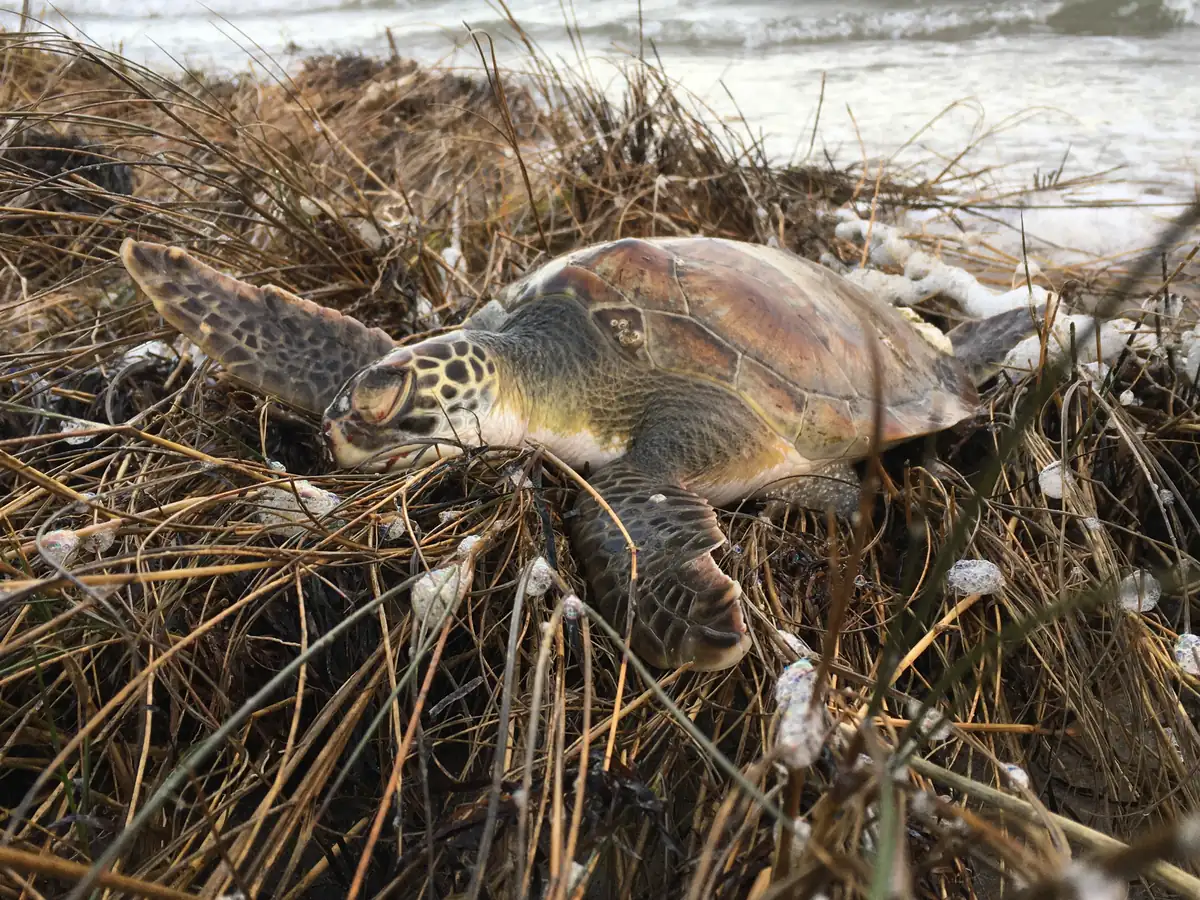
Young green turtles, Kemp’s ridleys and loggerheads feed in the warm, shallow sounds through the fall. When a strong cold front drops the water temperature suddenly, they become hypothermic, float, and wash up looking dead. In the 2022–23 season volunteers and staff recovered 367 live and 443 dead turtles in the state, and the live ones went to rehabilitation centers on Roanoke Island, at Pine Knoll Shores and in Surf City. If you find one, do not put it back in the cold water: note the spot and call the N.C. Sea Turtle Stranding Network at 252-241-7367.
Hurricane season formally ends on November 30. A strong nor’easter is the likelier trouble this month, and NC 12 can overwash on high tides; check NCDOT’s DriveNC road status before you drive the Banks.
When does it start snowing in the North Carolina mountains, and when do bears den?
The high peaks usually get their first real snow in November. Mount Mitchell’s 1991–2020 normals give November an average low of 27.6 °F, a high of 44.8 °F and 3.9 inches of snow, out of an annual total the State Climate Office puts at 89.1 inches, the most in the state. Boone, around 3,300 feet, averages about an inch in November with a low near 30 °F. Below the mountains snow this early is rare, but not unknown: the earliest measurable snow on record across the Piedmont fell on November 12, 1968. On the Blue Ridge Parkway, the Park Service closes sections whenever ice or snow makes them unsafe.
-
Bears going to bed, or not
Den entry from November into January · The mountains and the Coastal Plain
In North Carolina a bear may den as early as November or as late as January, in a hollow tree, a rock crevice, a hole in the ground or simply a nest of leaves in a thicket, and come out in March or early April. Coastal bears are some of the biggest anywhere: the state’s record, from Craven County, weighed 880 pounds. Keep trash and feeders secured until the cold sets in for good.
-
Elk after the rut
All winter · Cataloochee and Oconaluftee fields
By November the elk have stopped bugling, yet the herd still grazes the open valley fields, and with the leaves down they are easier to pick out along the wood edges. The park’s distance rule still applies: never approach within 25 yards, and use binoculars.
-
Rime ice on the ridgelines
Cold, foggy days · Mount Mitchell, Roan, Grandfather, the Craggies
When freezing fog blows across the summits, it builds feathers of ice on the windward side of every twig and fence post. It looks like snow from a distance. Note which way the feathers point: they grow into the wind.
Has my part of North Carolina had its first freeze yet?
By November 1 the mountains usually have: Boone’s median first freeze is October 13 and Asheville’s October 31. The Piedmont and the southern Coastal Plain tend to get theirs during the first half of the month, Charlotte around November 3, Greensboro November 4, Wilmington November 8, Raleigh November 9 and Fayetteville November 10. Out on the Outer Banks the ocean keeps the frost away much longer, and Cape Hatteras’s median does not come until December 22.
| Station | One year in ten | Median | Nine years in ten |
|---|---|---|---|
| Boone | Sep 30 | Oct 13 | Oct 27 |
| Asheville | Oct 17 | Oct 31 | Nov 13 |
| Charlotte | Oct 22 | Nov 3 | Nov 17 |
| Greensboro | Oct 23 | Nov 4 | Nov 19 |
| Raleigh | Oct 27 | Nov 9 | Nov 27 |
| Fayetteville | Oct 28 | Nov 10 | Nov 29 |
| Wilmington | Oct 27 | Nov 8 | Nov 26 |
| Cape Hatteras | Nov 29 | Dec 22 | Jan 16 |
In nine Novembers out of ten, all of these stations but Cape Hatteras will have dropped to 32 °F by the 30th. For your own town, the North Carolina frost dates page has the full list. Bring in the last tender pots before a clear, windless night; in the Piedmont, a frost sweetens the collards and kale already in the ground.
How early does it get dark in North Carolina in November?
Suddenly early. On Saturday, October 31, Raleigh’s sun sets at 6:20 p.m. daylight time; standard time returns overnight, when 2 a.m. Sunday becomes 1 a.m., and Sunday’s sunset in Raleigh comes at 5:19. By November 30 it is down at 5:01, and on the Outer Banks at Cape Hatteras at 4:50. Across the month the state loses 44 to 47 minutes of daylight, a little more in the north than the south, roughly ninety seconds a day.
| City | Nov 1 | Nov 30 | Lost | Per day |
|---|---|---|---|---|
| Boone | 10 h 40 m | 9 h 54 m | 46 min | 1.6 min |
| Greensboro | 10 h 41 m | 9 h 54 m | 47 min | 1.6 min |
| Asheville | 10 h 43 m | 9 h 57 m | 46 min | 1.6 min |
| Raleigh | 10 h 42 m | 9 h 56 m | 46 min | 1.6 min |
| Charlotte | 10 h 44 m | 9 h 58 m | 46 min | 1.6 min |
| Cape Hatteras | 10 h 43 m | 9 h 58 m | 45 min | 1.6 min |
| Fayetteville | 10 h 44 m | 10 h 00 m | 44 min | 1.5 min |
| Wilmington | 10 h 47 m | 10 h 03 m | 44 min | 1.5 min |
The loss slows as the solstice gets near. Sunrise moves the other way after the time change: 6:37 a.m. in Raleigh on November 1, 7:05 on the 30th, so school-bus stops are light again for a few weeks. To see the same numbers for your own street, with twilight added, open the Field almanac.
What is November weather like in North Carolina, and what will El Niño do this winter?
Cool and changeable. NOAA’s 1991–2020 normals give Raleigh an average November high of 63 °F and low of 40 °F, Asheville 59.5 and 36.1, Wilmington 67.4 and 44.8, and Cape Hatteras, warmed by the ocean, 65.8 and 51.5. Rainfall runs about three and a third inches in the Piedmont, a little more in Asheville and nearly 4.8 at Hatteras; Mount Mitchell averages over six. Clear, dry nights after a front give the biggest temperature swings, and the coldest mornings come in the valleys and low spots, where cold air settles.
Looking past November, El Niño matters most: in its discussion of September 10, the Climate Prediction Center gave odds above nine in ten that a very strong event holds through the cool season. North Carolina’s State Climate Office has looked at past strong events and found that all three of the strongest were already wetter than normal here by November, carried by a stronger subtropical jet that steers Gulf moisture along the coast. Its 2023 review found that moderate and strong El Niño winters have usually brought a little more snow than normal to the Piedmont, about 6.3 inches at Charlotte against a 4.9-inch normal and 7.0 at Raleigh against 6.4, but that more than half left the Coastal Plain with less snow than average. It also found that the five most recent of those winters all ran warmer than average. The Wilmington Weather Service office has noted a 70 percent chance of winter precipitation in the wettest third of the record during an El Niño, more frequent nor’easters along the coast, and measurable snow in 13 of the 26 El Niño winters in its local records, half of them.
Treat all of that as leanings drawn from a short list of past winters rather than a prediction. NOAA’s official winter maps come out October 15, and you will find them among the 90-day outlooks at the Climate Prediction Center. For the days just ahead, our weather page has the local forecast.
What is in the night sky over North Carolina in November?
-
The Leonids
Best in the dark hours before dawn on Wednesday, November 18 · High in the east and south after midnight
The International Meteor Organization’s 2026 calendar has the Leonids peaking on the 17th, at roughly 15 per hour for an observer under a perfectly dark sky, and predicts no outburst this year. From Murphy to Manteo the first-quarter Moon is down by around midnight or a little after, while Leo keeps climbing toward morning, so the useful window opens near 1 a.m. and closes when dawn starts to gray the east. Give the nights before and after a try as well. Leonids are fast meteors, and the brightest sometimes leave a train that hangs in the air for a moment.
-
Taurid fireballs
Southern Taurids peak about November 5, Northern Taurids about November 12 · Overhead most of the night
Comet Encke left the dust behind both Taurid streams. They manage only five to ten an hour, but each one crawls across the sky, and once in a while one turns into a bright fireball. No moonlight spoils the stretch between the peaks, since the Moon is new on the 9th.
-
The Beaver Moon, a modest supermoon
Rising at dusk on Monday, November 23, and Tuesday, November 24 · East-northeast at sunset
Full comes at 9:53 on Tuesday morning, the 24th. Perigee, the Moon’s nearest approach, trails it by roughly a day and a quarter, so call this a mild supermoon; the December full moon gets closer. Overnight into the 24th the Moon slides right beside the Pleiades, though moonlight will wash most of the cluster out.
-
Four planets before sunrise
All month; Mars and Jupiter closest on the 15th and 16th · East and southeast before dawn
Mornings are where the planets are. Venus has moved to the dawn side, climbs a little higher each day and is at its most dazzling during Thanksgiving week. In Leo, Jupiter and Mars draw together until only about a degree separates them; Sunday the 15th and Monday the 16th are the closest dawns. Mercury adds itself low in the east-southeast, easiest from roughly the 18th to the 25th, and on the 7th a hairline crescent may hang close to Venus, low in the twilight glow. In the evening sky only Saturn shines, in the south after dusk. Uranus, at opposition on the 25th, is a binocular target near the Pleiades.
| Phase | Date | Time |
|---|---|---|
| Last quarter | Sunday, Nov 1 | 3:28 p.m. |
| New moon | Monday, Nov 9 | 2:02 a.m. |
| First quarter | Tuesday, Nov 17 | 6:48 a.m. |
| Full moon, the Beaver Moon | Tuesday, Nov 24 | 9:53 a.m. (looks full the evenings of Nov 23 and 24) |
| Last quarter | Tuesday, Dec 1 | 1:08 a.m. |
Clouds ruin more meteor nights than moonlight does, so look at Today’s sky before setting the alarm; moonrise and moonset times for any town in the state are on our moon phases page.
What can families do outside in North Carolina in November 2026?
- Look through a telescope at Haw River State Park, Saturday, November 7, 6 to 8 p.m. The Greensboro Astronomy Club sets up at the Iron Ore Belt Access; it is free, all ages are welcome, and registering gets you a weather cancellation notice. Bring a red light.
- Go on a tree scavenger hunt in Wake Forest, Sunday, November 8, 10 a.m. to noon. Triangle Land Conservancy’s “FALLing for Trees” at Old Creedmoor Nature Preserve ends with leaf crowns.
- Climb Jockey’s Ridge at dusk, Saturday, November 14, 5:30 to 6:45 p.m. A ranger leads a night hike over the dunes in Nags Head; sign up ahead by email through the park.
- Spend an afternoon at Lake Norman State Park, Sunday, November 15, 2 to 5 p.m. Community Day brings games, crafts and guided walks to the park’s witness trees, with the State Climate Office among the partners.
- Walk with a ranger at Carolina Beach State Park, Wednesday, November 18, 8 to 10 a.m. The monthly bird hike meets at the marina parking lot.
- Get outside the day after Thanksgiving. On Friday, November 27, every state park is free to enter; the only entrance fees are at three state recreation lakes on certain days from April to September and at the Chimney Rock attraction.
- Count and report. Start a Project FeederWatch season, tell the Carolina Bird Club’s winter hummingbird study about any hummer at your feeder, and enter your swan and goose flocks in eBird so the counts build a record.
More programs are added every week to the state’s natural and cultural resources events calendar, where you can filter for state parks. Pea Island and Alligator River post a refuge program calendar each month; the November one was not yet out on October 2, so call 252-216-9464 or check the refuge site before you go. For something to carry along, the Naturalist’s Field Journal has the pages, and other states and months live on the nature by month index.
Safety notes for November in North Carolina
- Hunting is in full swing. Deer gun season runs all month in the Northeastern and Southeastern zones. In the Central zone and in Forsyth, Stokes, Surry, Wilkes and Yadkin, blackpowder runs to November 13 and guns start November 14. The rest of the Northwestern zone switches to blackpowder November 7 to 20 and guns on the 21st; the Western zone has archery to November 13, blackpowder November 14 to 27 and guns from the 28th. Bear season continues in the Mountain unit through November 21, opens across more of the Piedmont on November 14 and 21, and opens in the coastal zones between November 9 and 21. Ducks, doves, snow geese and swans are open from November 7, and quail from November 21. Dates are from the Wildlife Resources Commission’s 2026–27 summary.
- Hunter orange. State law requires anyone hunting most game animals with a firearm, deer and bear included, to wear a hunter-orange cap or hat or an orange outer garment visible from all sides; landholders and their families hunting their own land are exempt. The rule does not apply to hikers, but in game lands and national forests this month an orange hat or vest is simple insurance, for dogs as well.
- Short days. With sunset close to 5 p.m. by late November, a late-afternoon hike ends in the dark. Carry a headlamp and start back with time to spare.
- Cold at elevation. Mount Mitchell’s average November low is below freezing, wind chill on the open balds is far colder, and sections of the Blue Ridge Parkway close when ice forms. Check the Parkway’s road status before a trip.
- Deer on the roads. Collisions peak with the rut and the early dark; slow down at dusk and dawn, and expect a second deer behind the first.
- Water is cold now. Paddlers on the millponds and sounds should dress for the water temperature, not the air, and wear a life jacket.
- Ticks stay active on warm days all winter; check after walks.
Sources
- N.C. Wildlife Resources Commission: tundra swan
- Carolina Bird Club, Birds of North Carolina: tundra swan
- Carolina Bird Club, Birds of North Carolina: snow goose
- U.S. Fish and Wildlife Service: Pocosin Lakes National Wildlife Refuge, visit us
- U.S. Fish and Wildlife Service: Mattamuskeet National Wildlife Refuge, visit us
- U.S. Fish and Wildlife Service: Pea Island National Wildlife Refuge
- U.S. Fish and Wildlife Service: Alligator River and Pea Island interpretive program schedule
- N.C. State Parks: Pettigrew State Park
- N.C. Wildlife Resources Commission: white-tailed deer and rut-date maps
- N.C. Wildlife Resources Commission: estimated peak conception dates by county and zone, updated 2025 (PDF)
- WRAL, September 30, 2026: heat delays fall color in North Carolina
- Fall Color Guy (Appalachian State): 2026 reports
- N.C. State Parks: Merchants Millpond State Park
- NCpedia: Merchants Millpond State Park
- N.C. Cooperative Extension, Lee County: beeches, indicator trees of biodiversity (marcescence)
- Carolina Bird Club: go ahead and leave your hummingbird feeder up (winter hummingbird study)
- Carolina Bird Club, Birds of North Carolina: northern saw-whet owl
- Finch Research Network: winter finch forecast 2026–2027 (September 25, 2026)
- Carolina Bird Club, Birds of North Carolina: red crossbill
- Project FeederWatch: how to participate
- Carolina Bird Club, Birds of North Carolina: northern gannet
- N.C. Wildlife Resources Commission: saving sea turtles takes a village (cold-stunning)
- N.C. Division of Marine Fisheries: guidelines for protected species interactions (stranding hotline)
- National Park Service: sea turtles at Cape Hatteras National Seashore
- N.C. Department of Transportation: DriveNC road conditions and closures
- National Hurricane Center: climatology (season ends November 30)
- N.C. State Climate Office: wintry precipitation (snowfall climatology)
- NOAA NCEI: 1991–2020 monthly normals for Asheville, Charlotte, Raleigh, Cape Hatteras, Mount Mitchell, Wilmington and Boone (data API)
- N.C. Wildlife Resources Commission: black bear
- National Park Service: elk in Great Smoky Mountains National Park
- National Park Service: Blue Ridge Parkway road closures
- NOAA NCEI: U.S. Climate Normals 1991–2020 (freeze-date probabilities)
- U.S. Naval Observatory: moon phases from November 1, 2026 (data API)
- NIST: daylight saving time (ends November 1, 2026)
- Climate Prediction Center: ENSO diagnostic discussion, September 10, 2026
- Climate Prediction Center: seasonal (90-day) outlooks
- N.C. State Climate Office: El Niño check-up, September 23, 2026
- N.C. State Climate Office: winter outlook 2023–24 (El Niño winters in North Carolina)
- NWS Wilmington: winter outlook 2023–2024 (El Niño in the Carolinas)
- International Meteor Organization: 2026 meteor shower calendar (archived copy)
- EarthSky: what is a supermoon? (2026 list)
- EarthSky: best stargazing of 2026 (Mars and Jupiter, November 16)
- EarthSky: Mercury at greatest western elongation
- EarthSky: Uranus at opposition
- N.C. State Parks events: Deep Sky Astronomy, Haw River State Park, November 7, 2026
- Triangle Land Conservancy: events (Get Wild: FALLing for Trees, November 8, 2026)
- N.C. State Parks events: In the Park After Dark night hike, Jockey’s Ridge, November 14, 2026
- N.C. State Parks events: Community Day, Lake Norman State Park, November 15, 2026
- N.C. State Parks events: bird hike, Carolina Beach State Park, November 18, 2026
- N.C. State Parks: reservation rates and activity fees (entrance fees)
- eBird: submit your sightings
- N.C. Wildlife Resources Commission: 2026–27 hunting and trapping season dates (PDF)
- N.C. Wildlife Resources Commission (eRegulations): 2026–27 migratory game bird seasons
- N.C. General Statute 113-291.8: hunter orange
- N.C. Department of Health and Human Services: tick-borne diseases
- Photos via Wikimedia Commons; licenses and photographers are credited under each picture
