What to look for in nature in North Carolina this October
October runs two ways at once in North Carolina. Frost is settling on the high ridges and the color is coming down the mountain, while the Outer Banks are still in the seventies and the last sea turtle nests are hatching. Between the two, elk bugle in Cataloochee, hawks and monarchs stream down the Blue Ridge, the bears eat around the clock, and by Halloween the first tundra swans are back on the sounds. The sections below go region by region, with the dates that matter.
Start here

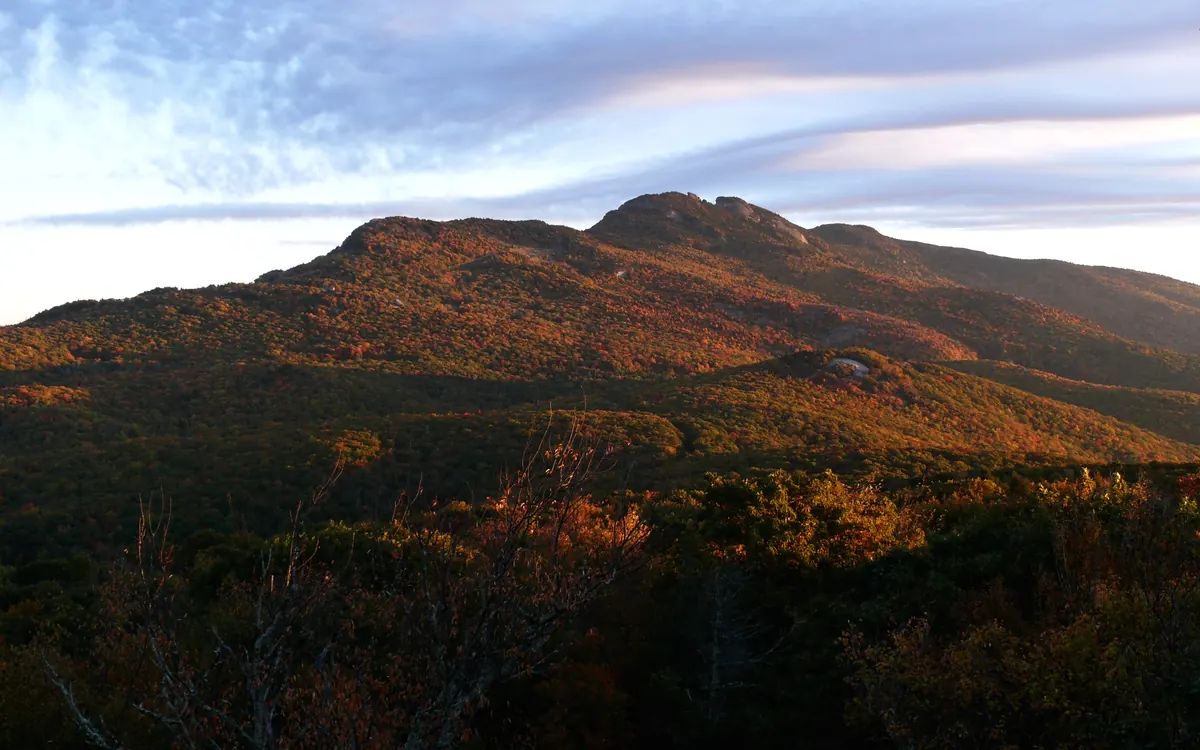
- Color coming down the mountain. Peak color between 3,000 and 4,000 feet usually comes around October 12–20, a week earlier higher up and a week later lower down. This year is running a week to ten days late after a hot September, so the last weekend of October may be the best one in the High Country.
- Elk bugling at Cataloochee. The rut in the Smokies runs to late October. Go to the Cataloochee or Oconaluftee fields at first light or in the last hour before dark, stay by the road, and listen; a bugle carries more than a mile.
- The Moon hides Jupiter, then the Hunter’s Moon. Before dawn on Tuesday, October 6, the crescent Moon covers Jupiter at about 4:17–4:19 a.m. and uncovers it at about 5:20–5:24 a.m., both in a dark sky. The Hunter’s Moon rises before sunset on Sunday, October 25, and the Orionids are best before dawn on the 21st and 22nd.
For the journal: the Naturalist’s Field Journal has a tree-through-the-seasons plate for the color as it comes down the mountain, a dusk-and-dawn watch page for the elk and the deer, the “birds I have seen” page where the first swans and juncos go, and a seeds, pods and cones page for the acorn count. One observation at a time.
Regions used below: Mountains; Foothills; Piedmont; Sandhills; Coastal Plain; Outer Banks and the coast.
When does fall color peak in the North Carolina mountains, and when does it reach the Piedmont and the coast?
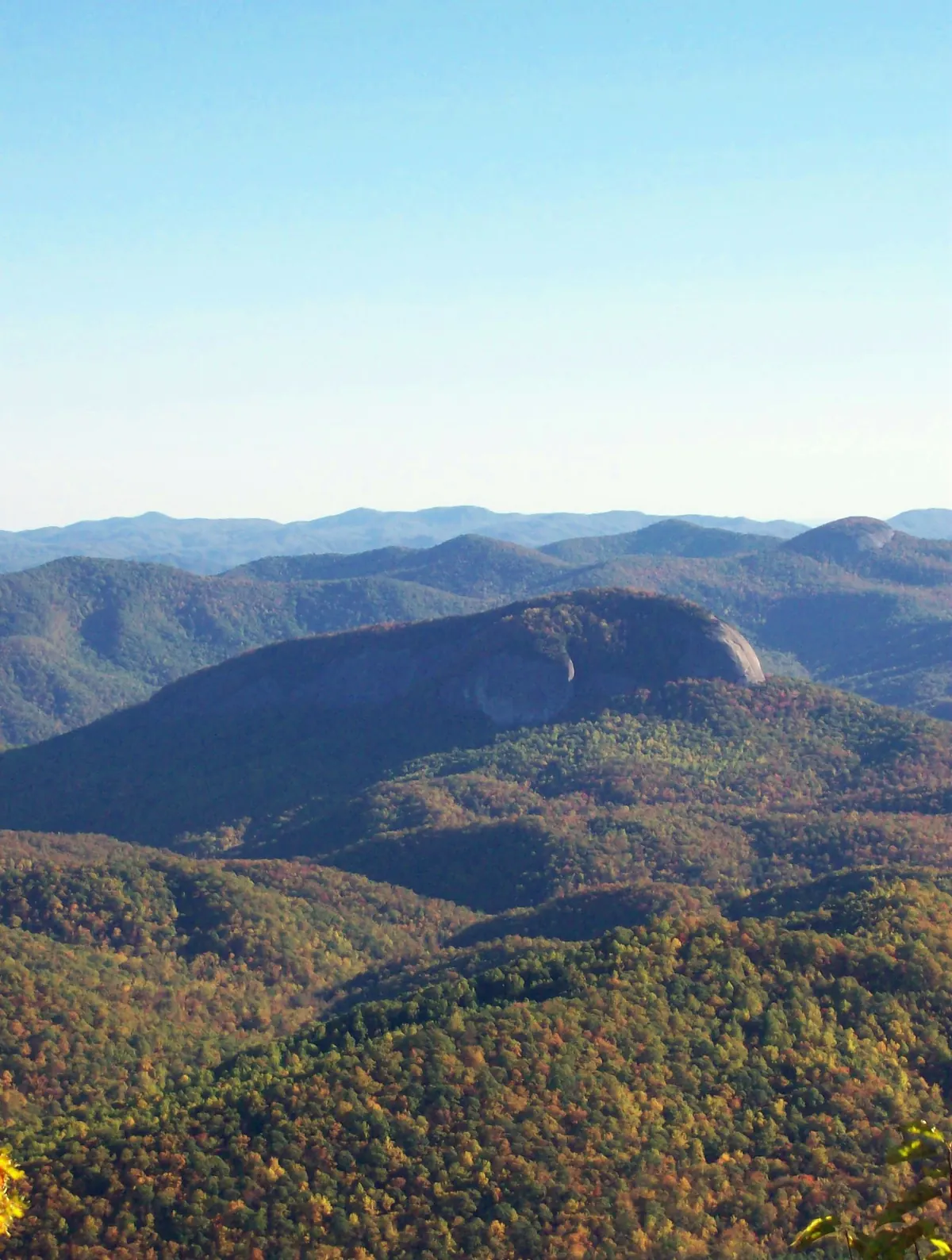
By elevation, from the top down. Appalachian State’s fall color report gives the rule of thumb: peak around October 12–20 between 3,000 and 4,000 feet, “a week earlier if higher, and a week later if lower.” Grandfather Mountain’s summit usually peaks in early October and its lower park in mid-October; Henderson County’s extension office puts its peak at October 24–31; the foothills go in early November and the Piedmont and Coastal Plain later that month. Sourwood turns red early, the tulip poplars and birches yellow next, and the oaks close the season in dull reds and browns.
| Elevation and region | Reference places | Typical peak |
|---|---|---|
| Above 5,000 ft | Grandfather summit, Mount Mitchell, Roan, Craggy Gardens, Graveyard Fields | Late September – first week of October |
| 4,000–5,000 ft | Boone, Blowing Rock, Beech Mountain, Banner Elk | Oct 5–20; Boone usually Oct 10–20 |
| 3,000–4,000 ft | Most of the Parkway, Grandfather’s lower park, Highlands, Waynesville | Oct 12–20 |
| 2,000–3,000 ft | Asheville, Hendersonville, Brevard, Cherokee | Oct 20–31; Henderson County Oct 24–31 |
| Foothills below 2,000 ft | Chimney Rock, Gorges, Hickory, Pilot Mountain, Hanging Rock | Late October – early November |
| Piedmont | Charlotte, Greensboro, Raleigh | First half of November; the Triangle usually the first week |
| Sandhills and Coastal Plain | Southern Pines, Fayetteville, the cypress swamps | November; the swamps turn last |
This year is late. “This year the colors are way behind,” Howard Neufeld, the Appalachian State professor emeritus known as the Fall Color Guy, told WRAL on September 30. Boone ran four to six degrees above normal in September, each degree delays peak by roughly two days, and he expects color “delayed by a week to 10 days at least, unless we get some really cold weather soon.” Boone’s peak normally falls between October 10 and 20; after the warm Septembers of 2018 and 2019 it slipped to about October 28. The Triangle had less than half its normal September rain and drought-stressed trees are already dropping leaves, so expect a shorter, duller show in the Piedmont; the mountains had enough rain to escape the worst of it. In any year, a long Parkway drive that climbs and drops will find some section near its peak. For your own backyard trees, our Field almanac estimates green-up and color timing from satellite data at the spot you pin.
Where and when can I hear elk bugle in North Carolina?
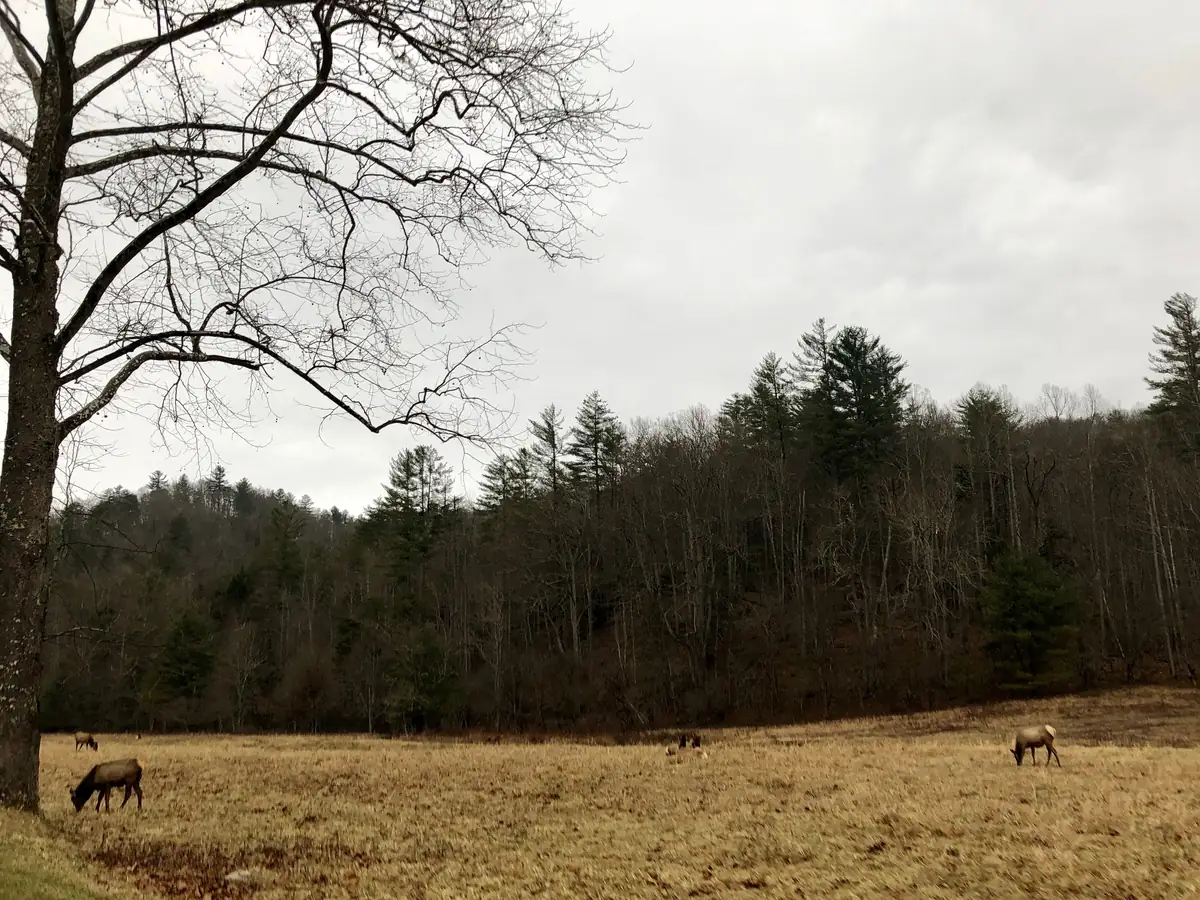
Cataloochee, on the North Carolina side of Great Smoky Mountains National Park, is the place. The park says the rut runs “from early September to late-October,” when bulls “produce their legendary bugling calls to challenge other males,” calls that “can be heard from more than a mile away.” Elk also graze the fields at Oconaluftee, near Cherokee, and on Balsam Mountain. Go early in the morning, late in the evening or on a cloudy day. About 270 elk live in western North Carolina, all descended from 25 animals released in 2001 and 27 more in 2002.
Willfully approaching within 25 yards of an elk, or any distance that disturbs it, is illegal in the park, and the Wildlife Commission advises 100 yards, because elk are “unpredictable and sometimes aggressive, especially during the fall breeding season.” Stay by the road with binoculars. The road into Cataloochee is narrow, winding gravel with steep drop-offs and no guardrails; expect company on fall weekends. The journal’s dusk-and-dawn watch page fits the evening: time, light, temperature, what you heard before you saw anything.
Which birds arrive in North Carolina in October, and which pass through?
-
Hawks along the ridges
Counts run to Oct 31 at Mahogany Rock; the big days were in September · Mahogany Rock Overlook (Parkway milepost 235), Little Pinnacle at Pilot Mountain, Grandfather Mountain
North Carolina’s great hawk days come in September. Forsyth Audubon has counted from Pilot Mountain for more than 40 years: the broad-winged hawks peak between September 20 and 30, a typical fall brings 2,000 to 5,000 hawks past the mountain, and one day in 1993 brought nearly 11,000. October belongs to the others: sharp-shinned and Cooper’s hawks, red-tails, kestrels, merlins, peregrines and eagles, a few at a time on a northwest wind after a front. At Mahogany Rock, near Sparta, the Blue Ridge Birders count through October 31 and post daily tallies on hawkcount.org.
-
Falcons on the Outer Banks
October · Pea Island, Cape Hatteras, Cape Lookout, Jockey’s Ridge
Peregrines “often travel along coastlines and regularly occur well out at sea,” in Audubon’s words, and the barrier islands funnel them, with merlins and kestrels close behind; a north wind after a front is the day to stand on a dune and look up. Pea Island’s free bird walks run Friday mornings, 8 to 9:30, from the visitor center on NC 12; the building itself is closed after storm damage to the highway, so check the refuge calendar before you drive out.
-
Tundra swans and snow geese: the first by Halloween
First birds late October; the crowds in November · Lake Mattamuskeet, Pocosin Lakes (the Pungo Unit), Pea Island
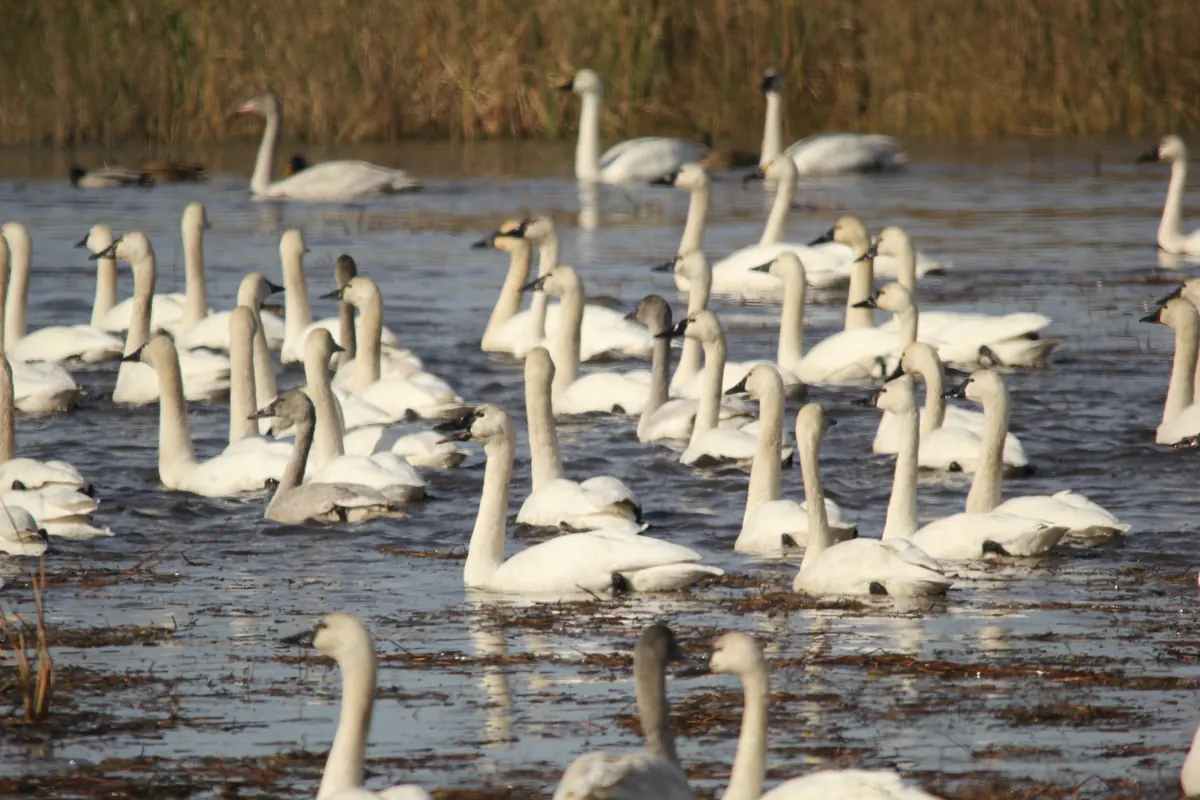
Some 65,000 to 75,000 tundra swans, most of the eastern population, winter in northeastern North Carolina after a flight of about 4,000 miles from the Arctic. Mattamuskeet closes the lake to boating on November 1, and the swan permit season opens November 7. Pocosin Lakes holds more than a hundred thousand ducks, geese and swans in winter, and Pea Island was set aside for the greater snow goose. Expect family groups in the last week of October and the spectacle a month later.
-
Winter residents settling in
Through October · Statewide; the coastal thickets for warblers
Yellow-rumped warblers migrate later in fall than any other warbler and winter farther north because they can digest the wax on bayberry and wax myrtle berries, which is why the coastal thickets fill with them. White-throated sparrows come “relatively late in fall, moving south gradually,” and the first ones scratch under the feeder this month; juncos usually follow by the end of it. Those are general dates, not North Carolina counts, so write down your own first sighting.
-
Gannets off the beach
Late fall · Any ocean beach or pier, with binoculars
Northern gannets migrate south offshore along the Atlantic coast and feed by plunging headfirst from a hundred feet up. As the water cools the first white crosses appear beyond the breakers; a calm morning on a pier is the way to see the dives.
-
Hummingbirds leaving
Stragglers through October · Feeders and the last salvias
Ruby-throated hummingbirds fatten up and start south at the end of summer, averaging fewer than 25 miles a day, so an October bird at your feeder is likely a traveler from farther north. Keep the feeder clean and full into November, and note the date of your last one.
-
Wings Over Water
Oct 13–18; keynote Sat Oct 17, 6–8 p.m. · Six refuges of northeastern North Carolina; Manteo
The refuges’ wildlife festival, running since 1997, offers about 60 programs across six refuges: birding, paddling, photography and natural history. Scott Weidensaul gives the keynote, “The Return of the Oystercatcher,” at the Pioneer Theater in Manteo on Saturday the 17th, 6 to 8 p.m. ($20), and there is an encore weekend December 4–6. Registration is on the festival website.
October is not the fallout month here. The big kettles went over in September, and the sea ducks and most of the swans belong to November. What October has is variety, one thing arriving as another leaves, and the day after a front is the day to be out.
When do monarchs pass through North Carolina?
Monarch Watch keeps a table of peak passage by latitude, twelve-day windows that move south about two and a half days per degree, and calls it “a general, not a specific, guideline.” North Carolina spans roughly 34 to 36.5 degrees north, which puts the state’s peak in the last week of September and the first week of October, with the beaches running later and depending on the wind. In the Smokies the Park Service says monarchs pass “from mid-September until late October.” So October is the second half of the show inland and the main event on the coast.
| Region | Reference cities | Peak window |
|---|---|---|
| Northern mountains and Piedmont, about 36–36.5° N | Boone, Mount Airy, Winston-Salem, Elizabeth City | About Sept 22 – Oct 4 |
| Central band, about 35–36° N | Asheville, Charlotte, Raleigh, Greenville, Cape Hatteras | Sept 24 – Oct 6 |
| Southern tier, about 34–35° N | Wilmington, Fayetteville, Lumberton, Southern Pines | About Sept 27 – Oct 9 |
| Outer Banks and the beaches | Pea Island, Hatteras, Ocracoke, Fort Fisher | Through October; late and wind-dependent |
Look in the warm afternoon on goldenrod and asters, and at dusk in the trees on the lee side of a ridge or a dune, where roosts form. Journey North wants fall roost reports above all, because a roost is the surest sign the migration is moving. Monarch Watch’s tagging season for latitudes between 35 and 45 degrees starts in late August, and south of 35 degrees it runs through September and early October, so the mountains and the coast can still tag this month. The pollinator watch plate in the journal is for this.
When is the first frost and the first freeze in North Carolina?
It depends on your elevation and your distance from the ocean more than on the calendar. Boone has a one-in-ten chance of a freeze by the end of September and has usually had one by mid-October; Cape Hatteras usually waits until Christmas week. The National Weather Service in Raleigh issues a frost advisory for 33 to 36 °F on clear, calm nights, a freeze warning at 32 and a hard freeze warning at 28, and its records show how early it can come: 32 °F on October 2, 1947, at both Raleigh and Greensboro, and October 8, 1935, at Fayetteville. Farther east the Newport office’s long records put the average first freeze at November 2 in Greenville, November 12 in New Bern, November 19 at Morehead City and December 5 at Cape Hatteras,, and the Wilmington office gives November 17 for Wilmington and October 29 for Lumberton; those long-record averages differ a little from the 1991–2020 normals below. On Mount Mitchell the normal October low is already 37 °F.
| Station | One year in ten | Median | Nine years in ten |
|---|---|---|---|
| Boone | Sep 30 | Oct 13 | Oct 27 |
| Asheville | Oct 17 | Oct 31 | Nov 13 |
| Charlotte | Oct 22 | Nov 3 | Nov 17 |
| Greensboro | Oct 23 | Nov 4 | Nov 19 |
| Raleigh | Oct 27 | Nov 9 | Nov 27 |
| Fayetteville | Oct 28 | Nov 10 | Nov 29 |
| Wilmington | Oct 27 | Nov 8 | Nov 26 |
| Cape Hatteras | Nov 29 | Dec 22 | Jan 16 |
Look up your own town on the North Carolina frost dates page. Up in the mountains, get the potted plants under cover before the first clear, calm night and write the date of the first frost down; across the Piedmont, October is planting time for collards, kale and garlic; at the beach the tomatoes are still bearing.
How much daylight does North Carolina lose in October?
About an hour and five minutes, a little more in the north of the state than in the south, roughly two minutes a day. In Raleigh the sun rises at 7:10 on October 1 and 7:36 on the 31st, and sets at 6:58 and then 6:20. Standard time returns at 2:00 a.m. on Sunday, November 1, and that evening Raleigh’s sunset comes at 5:19.
| City | Oct 1 | Oct 31 | Lost | Per day |
|---|---|---|---|---|
| Boone | 11 h 48 m | 10 h 42 m | 66 min | 2.2 min |
| Greensboro | 11 h 49 m | 10 h 43 m | 66 min | 2.2 min |
| Asheville | 11 h 49 m | 10 h 45 m | 64 min | 2.1 min |
| Raleigh | 11 h 48 m | 10 h 44 m | 64 min | 2.1 min |
| Charlotte | 11 h 49 m | 10 h 46 m | 63 min | 2.1 min |
| Cape Hatteras | 11 h 49 m | 10 h 45 m | 64 min | 2.1 min |
| Fayetteville | 11 h 49 m | 10 h 46 m | 63 min | 2.1 min |
| Wilmington | 11 h 50 m | 10 h 49 m | 61 min | 2.0 min |
For your own street, the Field almanac lists today’s sunrise, sunset and twilight times and how many minutes of light you have lost since last week.
Is October a dry month in North Carolina, and what about hurricanes and El Niño?
Inland, yes. It is the driest month of the year at Asheville (3.37 inches in the 1991–2020 normals), the second-driest at Charlotte (3.16) and Greensboro (3.10) and the third-driest at Raleigh (3.37). The coast stays wetter: 4.66 inches at Wilmington, 5.59 at Cape Hatteras. Dry air, falling leaves and warm afternoons give North Carolina a fall fire season that, in the Department of Public Safety’s words, “starts in late September or early October and runs into early December”; the Forest Service counted 4,588 wildfires on 15,706 acres in 2024, and burning brush or trash carelessly is the most common way people start them. Get a burn permit, check for burn bans, and never burn trash, which is illegal in this state.
Hurricane season runs to November 30, and the state’s benchmark storm came in October. Hazel came ashore near Little River, on the South Carolina line, on October 15, 1954, as a Category 4, the only known Category 4 landfall in North Carolina,, with gusts near 150 mph at the coast, an 18-foot surge at Calabash on the full-moon tides, and 19 deaths in the state. Matthew, on October 8–9, 2016, dropped 15.24 inches at Seymour Johnson Air Force Base and pushed the Neuse, Cape Fear and Lumber rivers past their Floyd records. This year the Wilmington forecast office gives a 75 percent chance of a below-normal Atlantic season, because El Niño strengthens the wind shear over the tropical Atlantic, but storms that form close to the Carolinas are less affected. The month’s highest predicted tides at Duck come on the mornings of October 26–29, just after the Hunter’s Moon; a nor’easter on those tides is how NC 12 overwashes.
El Niño will shape the winter ahead. The Climate Prediction Center’s September 10 discussion kept an El Niño Advisory and put the odds of a very strong event this fall and winter above 90 percent, with a 75 percent chance of the strongest since 1950. The State Climate Office notes that El Niño’s local effects are most pronounced in the cool season, from mid-fall through winter; in the three strongest past events, two of three Octobers ran wet and all three Novembers did. Nine of twelve moderate-to-strong El Niño winters were wetter than normal, with more snow than usual (Greensboro averaged 10.3 inches against a normal 8.4). NOAA’s winter outlook is due in mid-October, and we will translate it when it arrives.
What is in the sky over North Carolina this October?
-
The Moon hides Jupiter
About 4:17–4:19 a.m. to 5:20–5:24 a.m. EDT, Tuesday, October 6 · In the east, 13 to 30 degrees up; any open eastern view
The whole event happens in a dark sky here. The 20-percent crescent, 13 to 17 degrees up in the east, covers Jupiter with its bright edge at about 4:17 a.m. in Charlotte, 4:18 in Raleigh and Wilmington and 4:19 in Elizabeth City. Jupiter comes out from behind the dark edge, the Moon now 25 to 30 degrees up, at about 5:20 in Charlotte, 5:22 in Raleigh and Wilmington and 5:24 in Elizabeth City. The disappearance against the sunlit limb is the harder one to see; binoculars help. The reappearance out of the dark limb is sudden and easy, and worth the alarm clock.
-
The Hunter’s Moon
Rises before sunset Sunday, October 25; full at 12:12 a.m. Monday · Low eastern horizon
The full moon after the Harvest Moon comes up before the sun goes down on the 25th: 5:54 p.m. in Raleigh against a 6:27 sunset, 6:10 in Asheville (sunset 6:42), 5:42 at Cape Hatteras (sunset 6:15). On the 26th it rises a few minutes after sunset and looks just as full. You may see it called a supermoon; it does not reach perigee this month, so we leave the label off.
-
Orionid meteors
Before dawn, October 21 and 22 · Anywhere dark; face south-southeast
The shower runs from early October into early November and peaks broadly on the 21st–22nd, with 10 to 20 meteors an hour under a dark sky. The waxing gibbous moon sets at 2:34 a.m. on the 21st and 3:36 on the 22nd in Raleigh (2:51 and 3:52 in Asheville, 2:22 and 3:23 at Cape Hatteras), which leaves a dark window until the sky begins to brighten around 6. By the 23rd the moon is up until 4:39 and the window shrinks. A Parkway overlook or an Outer Banks beach, town lights at your back, is the best dark ground.
-
Draconid meteors
Evening of Thursday, October 8 · Look northwest after dark
A slow, sparse shower, perhaps ten an hour at best, but its radiant is highest at nightfall and the thin crescent moon does not rise until after 5 a.m., so it is the one shower children can watch at bedtime.
-
Saturn all night
Opposition October 4; Moon beside it October 23–24 · Rising in the east at sunset
Saturn is closest and brightest for the year on the 4th, up all night as the steady, pale yellow “star” between Pisces and Cetus. On the 23rd and 24th the gibbous moon parks next to it.
-
Venus leaves; Jupiter and Mars take the morning
Venus only in the first days; Jupiter and Mars before dawn · West at dusk; east at dawn
Venus is a low evening sight only in the first days of the month, sinking into the glow before its inferior conjunction on the 23rd. The morning sky belongs to Jupiter, bright in the east before dawn, with Mars above it; Mars slides past the Beehive cluster on the morning of the 11th, a binocular sight.
| Phase | Date | Time |
|---|---|---|
| Last quarter | Saturday, Oct 3 | 9:25 a.m. |
| New moon | Saturday, Oct 10 | 11:50 a.m. |
| First quarter | Sunday, Oct 18 | 12:12 p.m. |
| Full moon, the Hunter’s Moon | Monday, Oct 26 | 12:12 a.m. (looks full the evenings of Oct 25 and 26) |
| Last quarter | Sunday, Nov 1 | 3:28 p.m. EST |
Check the Today’s sky page for tonight’s cloud forecast before you set the alarm, and the moon phases page for moonrise and moonset at your address. Daylight saving time ends at 2 a.m. on Sunday, November 1.
What is blooming, fruiting and dropping?
-
Goldenrod, asters and the ragweed question
Goldenrod August–November; ragweed pollen fading · Roadsides, old fields, the Parkway’s edges
Tall goldenrod blooms from August into November and feeds bees, butterflies and soldier beetles; it is blamed for hay fever “because it is in bloom during that season,” but “ragweed is the actual culprit,” and the weed pollen count tails off through October. Asters carry the purple side of the same roadsides to the end of the month.
-
Witch hazel, the last flower
October–December · Woodland edges and stream banks statewide
Common witch hazel opens its yellow, ribbon-petaled flowers along the branches from October to December, often as its own leaves turn gold and drop, so one shrub can be in flower and in fall color at once. Last year’s woody capsules split on the same twigs and throw their two black seeds.
-
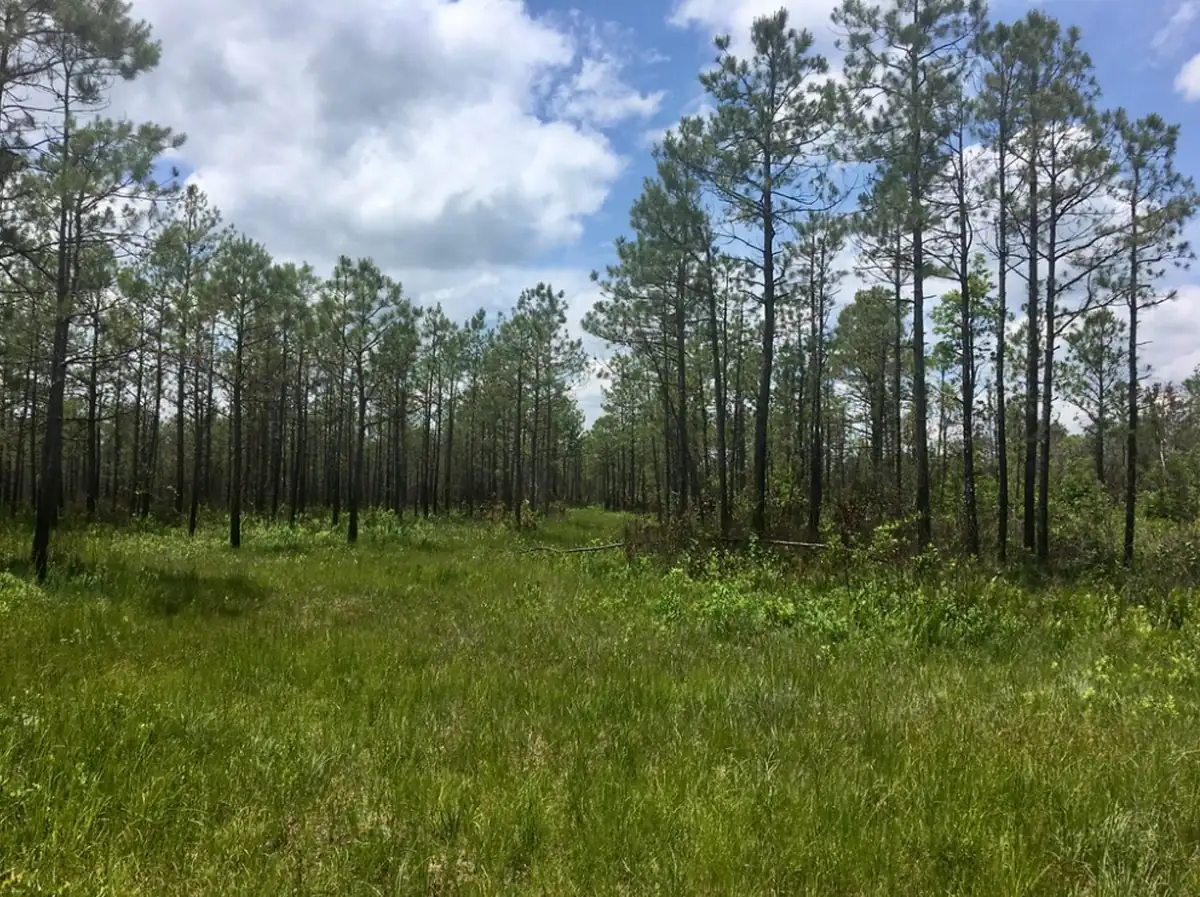
Pine barrens gentian in the Sandhills
Late September to December · Longleaf savannas and flatwoods of the Sandhills and southern Coastal Plain
The deep blue gentian of the longleaf pine country blooms from late September into December in burned wiregrass savannas; it is listed as vulnerable in North Carolina, found now in 17 counties where it once grew in 26. Weymouth Woods, near Southern Pines, is the place to walk among old longleafs and look. Photograph it and leave it.
-
Persimmons and muscadines
Persimmons September–December; muscadines to October · Field edges, fencerows, bottomlands
American persimmons ripen from September through December and are “astringent unless overripe”: wait until the fruit is soft and wrinkled. It does not need a frost, and it hangs on the bare tree after the leaves fall. Muscadines are done by the end of the month; grouse, turkeys and bears clean up the rest.
-
Acorns, hickory nuts and the mast
September–November · Every oak and hickory; note the ones in your yard
White oak acorns drop from September to November, and shagbark hickory nuts split their husks in October; jays, turkeys, deer and black bears all count on them, and a good or bad mast year shapes the bear and deer seasons that follow. Count what is under one tree on one day; that is what the seeds, pods and cones page is for.
-
The coast turns last
November · Cypress swamps, blackwater rivers, the flytrap savannas
Bald cypress goes orange and cinnamon-brown before it drops its needles, the time to paddle the swamps along the Roanoke, Cape Fear and Black rivers. The Venus flytrap, native only to coastal North Carolina and a corner of South Carolina and protected from collecting, is beginning its winter rest in the savannas around Wilmington; Carolina Beach State Park is the easy place to see it.
What are the bears, deer, salamanders and fish doing?
-
Black bears eating around the clock
Hyperphagia through October; denning from November · Mountains and Coastal Plain; uncommon in the Piedmont
In fall a bear may feed up to 20 hours a day on berries, acorns and hickory nuts, and the coastal bears are as fat as any: Pocosin Lakes supports “one of the densest populations of black bear ever reported.” In North Carolina den entry runs from November to January, and coastal males may never den at all; in the Smokies bears settle in between late October and mid-December. Bears live on about 60 percent of the state’s land, common in the mountains and on the coast and uncommon between. Take the bird feeder down where bears are active, and never feed one.
-
Deer: rubs and scrapes
October into November · Statewide
Bucks have shed their velvet and are rubbing saplings and pawing scrapes. The Wildlife Commission’s county map of peak rut dates shows the breeding season moving through the state over the fall, so check your county. Deer are “most active near daylight and dusk and on dark, overcast or foggy nights,” which is when they are on the roads.
-
Marbled salamanders breed on dry land
Late September and October · Dry floodplain pools and ditches statewide
Most mole salamanders breed in water in spring. The marbled salamander breeds in fall on land: the female lays 50 to 200 eggs under leaf litter in the bed of a dry pool and guards them until winter rain fills it; if the fall stays dry, the eggs wait and hatch in spring. Turn a log back the way you found it.
-
Box turtles heading down
Active by day through fall; dormant with the cold · Woods, yards, roads
Eastern box turtles are out by day in spring and fall and dig into soil or leaf litter for the winter. Help one across a road in the direction it was headed, and never take one home.
-
Brook trout spawn; delayed harvest opens
Spawning September–October; delayed harvest from October 1 · Mountain headwaters; the Delayed Harvest streams
The southern Appalachian brook trout, the mountains’ only native trout, spawns over clean gravel in September and October; wade around the pale patches of gravel in the headwaters this month. On October 1 the Delayed Harvest waters switch to catch-and-release until the first Saturday in June: artificial lures with a single hook only, and no natural bait.
-
The last sea turtle nests
Hatching into November · Cape Hatteras and Cape Lookout beaches
Most nesting at Cape Hatteras happens May through September and loggerhead eggs take roughly 50 to 75 days, so the last nests hatch in October and even November. Loggerheads are the main nesters, with an occasional green or leatherback; the seashore’s count has ranged from 11 nests in 1987 to a record 473 in 2019. Give a marked nest room and keep lights off the beach.
-
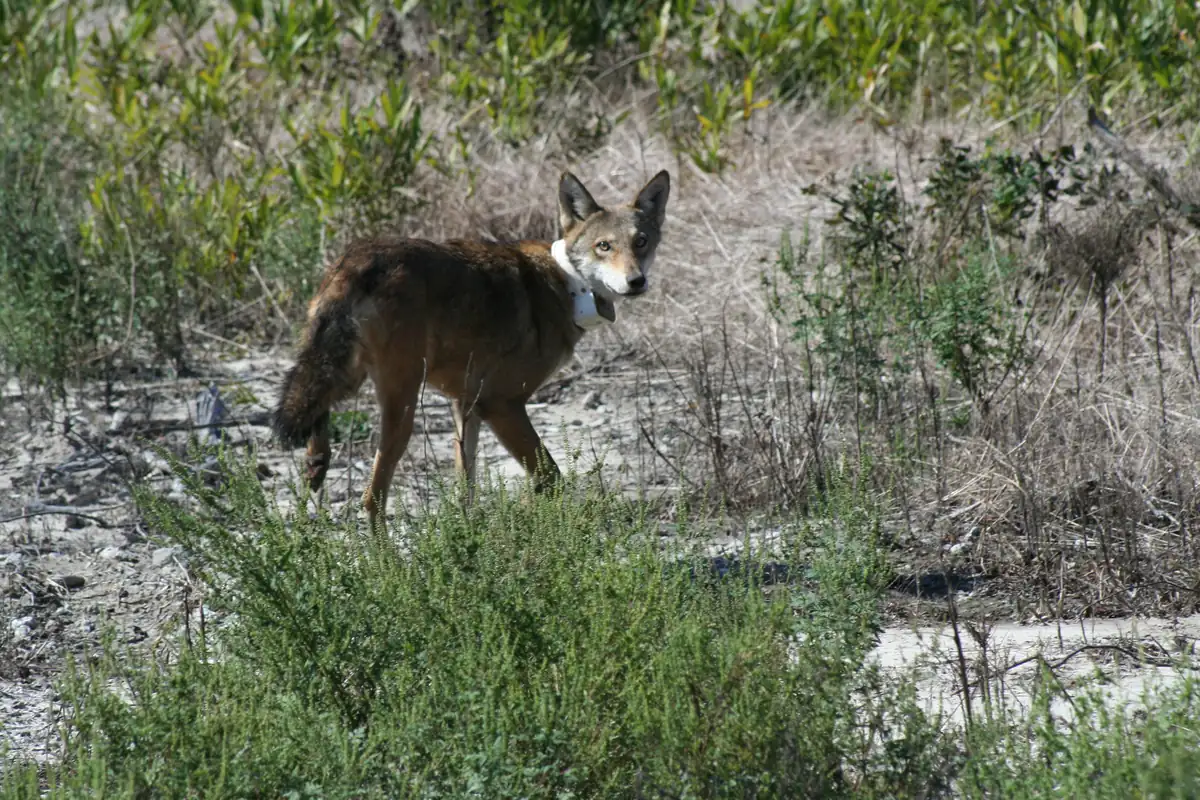
Red wolves in the dark
Dawn, dusk and night · Alligator River and Pocosin Lakes refuges; the Red Wolf Center in Columbia
The only wild red wolves anywhere live in five counties of the Albemarle Peninsula. In August 2026 the Fish and Wildlife Service estimated 22 or 23 adults and subadults, 21 of them collared, plus 14 or 15 pups. They are secretive and busiest around dawn and dusk; the surest sighting is at the Red Wolf Center in Columbia. Drive US 64 through the refuge slowly at dusk, and report a sighting or an injured wolf to 1-855-4-WOLVES.
-
Copperheads on warm days
Active on warm October afternoons · Leaf litter, woodpiles, garden edges
Copperheads account for “probably over 90 percent of venomous snakebites in North Carolina,” painful and serious but not considered life-threatening, and nearly all avoidable. Warm October afternoons keep them out and the fallen leaves hide them, so watch where you put hands and feet.
-
Woolly bears and the last crickets
October · Roads, sidewalks, porch lights
The banded woolly bear crossing the road is the caterpillar of the Isabella tiger moth, and Banner Elk has raced them since 1978; the winning worm’s 13 bands are read as the 13 weeks of winter. Nobody has to believe it. Crickets and katydids slow with the cold nights, and the journal’s cricket thermometer page (chirps in 14 seconds, plus 40) works until the first hard frost silences them.
What can families do outside in North Carolina this month?
- Walk Grandfather’s Fall Color Ramble, October 3–11. A short guided walk on the color, daily at 1 p.m., included with admission.
- Take the Friday bird walk at Pea Island on October 2, 9, 23 or 30, 8 to 9:30 a.m., free (none during festival week). Alligator River also runs reservation-only tram tours ($10 an adult, children 12 and under free); call 252-216-9464 for dates.
- Go to Wings Over Water, October 13–18, for birding, paddling and photography programs across six refuges.
- Race a woolly worm in Banner Elk, October 17–18. The 49th Woolly Worm Festival runs Saturday 9 to 5 and Sunday 9 to 4; the winning worm earns its owner $1,000.
- Hunt spiders with the museum, October 2. The N.C. Museum of Natural Sciences lists a Spider Hunt from 10 a.m. to noon.
- Sit at a hawk watch at Mahogany Rock or Pilot Mountain’s Little Pinnacle.
- Do the science. Log a monarch roost with Journey North while it is still light enough to count; put out a CoCoRaHS rain gauge and measure the driest month yourself; sign up for Project FeederWatch, which starts November 1.
State parks post their programs on the N.C. State Parks events calendar, and they allow no hunting, which makes them an easy choice for an October walk with children.
Safety notes for October in North Carolina
- Hurricane season runs to November 30, and the highest tides on the Outer Banks come October 26–29; never drive through water on NC 12 or anywhere else.
- Bears: secure garbage and grills and keep 50 yards in the Smokies, where closer is illegal. If a bear follows you, change direction; if it keeps coming, stand your ground and never run.
- Ticks are active year-round, carrying Rocky Mountain spotted fever, ehrlichiosis, Lyme disease and STARI here. Use an EPA-registered repellent, treat clothing with permethrin, and check yourself after every walk.
- Fire season is under way: burn permit, burn bans, and never leave a fire.
- Hunting. Bear season opens October 3 in the Mountain unit (in and west of Surry, Wilkes, Caldwell, Burke and Cleveland counties) and October 17 in ten counties from Wake and Johnston to Moore and Scotland. In the Northeastern and Southeastern deer zones blackpowder runs October 3–16 and gun season opens October 17; the Central zone and the Forsyth–Stokes–Surry–Wilkes–Yadkin area switch to blackpowder October 31; the rest of the Northwestern zone and the Western zone stay archery-only all month. Squirrel, rabbit, grouse and raccoon open October 12; duck days are October 15–17 inland and 23–24 on the coast; dove runs through October 10. Anyone hunting deer in a firearms season, or bear, rabbit, squirrel, grouse or quail with a firearm, must wear a hunter-orange cap or hat or a hunter-orange outer garment visible from all sides (landholders on their own land are exempt). Hikers are not required to, but on game lands and national forests wear it anyway.
- Above 4,000 feet October can turn wintry: Mount Mitchell’s normal October low is 37 °F, and sections of the Parkway close when the road ices. Carry a layer, a light and water.
- Elk and deer are on the roads at dusk.
Sources
- National Park Service: elk in Great Smoky Mountains National Park (rut, viewing rules)
- National Park Service: Cataloochee and Balsam Mountain (access road)
- N.C. Wildlife Resources Commission: elk
- Appalachian State University: fall color report (peak by elevation)
- Fall Color Guy (Howard Neufeld): 2026 reports
- WRAL, September 30, 2026: heat delays fall color in North Carolina
- Grandfather Mountain: fall visits, color timing and the Fall Color Ramble
- N.C. Cooperative Extension, Henderson County: fall color dates in WNC
- Explore Asheville: 2026 guide to fall (color by elevation)
- Blue Ridge Parkway Association: fall color
- Audubon Society of Forsyth County: Pilot Mountain Hawk Watch
- HawkCount (Hawk Migration Association of North America): Mahogany Rock
- Monarch Watch: peak migration dates by latitude
- Monarch Watch: tagging program
- Journey North: monarch sightings and fall roost reports
- National Park Service: monarchs through the Smokies in fall
- Journey North: all about ruby-throated hummingbird migration
- N.C. Wildlife Resources Commission: tundra swan
- U.S. Fish and Wildlife Service: bird of the month, tundra swan
- U.S. Fish and Wildlife Service: Mattamuskeet National Wildlife Refuge, visit us
- U.S. Fish and Wildlife Service: Pocosin Lakes National Wildlife Refuge
- U.S. Fish and Wildlife Service: Pocosin Lakes, visit us (Pungo Unit)
- U.S. Fish and Wildlife Service: Pea Island National Wildlife Refuge, visit us
- U.S. Fish and Wildlife Service: Pea Island species (greater snow goose)
- U.S. Fish and Wildlife Service: Alligator River and Pea Island refuges, October 2026 programs calendar (PDF)
- U.S. Fish and Wildlife Service: Alligator River National Wildlife Refuge
- U.S. Fish and Wildlife Service: Red Wolf Recovery Program (population, August 2026)
- N.C. Wildlife Resources Commission: red wolf
- Wings Over Water Wildlife Festival 2026: schedule and keynote
- Audubon field guide: yellow-rumped warbler
- Audubon field guide: white-throated sparrow
- Audubon field guide: northern gannet
- Audubon field guide: peregrine falcon
- Audubon field guide: tundra swan and snow goose
- NOAA NCEI: 1991–2020 monthly temperature and precipitation normals (data API)
- NWS Raleigh: frost and freeze information and climatology
- NWS Newport/Morehead City: frost and freeze climatology
- NWS Wilmington: fall 2026 climate outlook (El Niño, hurricanes, first freeze)
- Climate Prediction Center: ENSO diagnostic discussion, September 10, 2026
- N.C. State Climate Office: El Niño check-up, September 23, 2026
- N.C. State Climate Office: winter outlook 2023–24 (what El Niño winters have done in North Carolina)
- N.C. State Climate Office: was Hazel North Carolina’s worst-case hurricane?
- N.C. State Climate Office: four factors that made Hazel a perfect storm (the full-moon tide)
- N.C. State Climate Office: Matthew’s mark on North Carolina, October 2016
- N.C. State Climate Office: drought digs in during a bone-dry October (2023)
- National Hurricane Center: climatology
- NOAA Tides and Currents: October 2026 tide predictions, Duck, N.C. (station 8651370)
- N.C. Department of Public Safety: how to be ready for fire season in North Carolina
- U.S. Naval Observatory: moon phases 2026 and rise/set times (data API)
- International Occultation Timing Association: lunar occultation of Jupiter, October 6, 2026
- EarthSky: meteor shower guide (Draconids, Orionids)
- American Meteor Society: 2026 meteor shower calendar
- EarthSky: visible planets tonight (Saturn, Venus, Jupiter, Mars)
- Fred Espenak: full moons at perigee, 2001–2100
- NIST: daylight saving time
- N.C. Extension plant toolbox: tall goldenrod (and the ragweed note)
- N.C. Extension plant toolbox: common witch hazel
- N.C. Extension plant toolbox: pine barrens gentian
- N.C. Extension plant toolbox: American persimmon
- N.C. Extension plant toolbox: white oak, shagbark hickory, muscadine, bald cypress, sourwood, Venus flytrap
- N.C. Division of Air Quality: pollen sampling
- N.C. State Parks: Weymouth Woods Sandhills Nature Preserve
- N.C. State Parks: Grandfather Mountain State Park (cold at elevation)
- N.C. State Parks: Mount Mitchell State Park (Parkway closures)
- N.C. State Parks: events calendar
- BearWise: what bears do in September (hyperphagia)
- BearWise: six at-home basics
- N.C. Wildlife Resources Commission: black bear
- National Park Service: black bears in the Smokies (denning, the 50-yard rule)
- N.C. Wildlife Resources Commission: white-tailed deer and the county rut-date map
- N.C. Wildlife Resources Commission: marbled salamander profile (PDF)
- Virginia Department of Wildlife Resources: marbled salamander (breeding timing)
- N.C. Wildlife Resources Commission: eastern box turtle profile (PDF)
- U.S. Fish and Wildlife Service: brook trout (spawning)
- N.C. Wildlife Resources Commission: trout fishing and Delayed Harvest rules
- National Park Service: sea turtles at Cape Hatteras National Seashore
- N.C. Wildlife Resources Commission: copperhead
- N.C. Department of Health and Human Services: tick-borne diseases
- CDC: preventing tick bites
- N.C. Wildlife Resources Commission: 2026–27 season dates at a glance (PDF)
- N.C. Wildlife Resources Commission (eRegulations): general hunting regulations, hunter orange and Sunday rules
- N.C. Wildlife Resources Commission (eRegulations): 2026–27 migratory game bird seasons
- N.C. General Statute 113-291.8: hunter orange
- Woolly Worm Festival, Banner Elk, October 17–18, 2026
- N.C. Museum of Natural Sciences: calendar
- Project FeederWatch: how to participate (season starts November 1)
- CoCoRaHS: North Carolina
- Photos via Wikimedia Commons; licenses and photographers are credited under each picture
