What to look for in nature in North Carolina this May
May is the month North Carolina closes its canopy. By the end of it the Piedmont is fully leafed and humid, the mountain ridges have gone from lime to deep green, and the last freeze is a memory everywhere except a few high valleys. The wildlife news turns to young animals and to things that glow, bloom or crawl ashore. In the Smokies the park sets aside a short window each year for one of the only fireflies in America that flashes in unison. Elk cows hide their calves in the grass of Cataloochee Valley, and black bears are more active than at any other time of year. On the Outer Banks, terns and oystercatchers sit on sand scrapes while loggerhead turtles come up the beach after dark. Near Wilmington, the Venus flytrap, found wild only in the Carolinas, sends up white flowers. Heat, ticks and thunderstorms arrive with all this, and so does a Blue Moon of a kind. Each entry gives the typical timing and where the information comes from.
Other months in North Carolina: October, November, December, January, February, March, April.
Start here
- Take a slow walk at dusk for fireflies. Pick a damp, grassy or wooded edge near home and arrive as the light fades. Flash patterns differ by kind, and a notebook with the time and temperature will show you when the first ones switch on in your neighborhood.
- Look for a tulip tree flower on the ground. The big yellow-and-orange blossoms of the tulip poplar sit high in the crown, so most people first notice the fallen petals. Find a tree, look down, then look up.
- Visit one beach before the summer crowds. Walk the strand at Pea Island, Cape Hatteras or Cape Lookout in the morning, read the closure signs, and watch the terns from a distance. If you can, return a second week and compare.
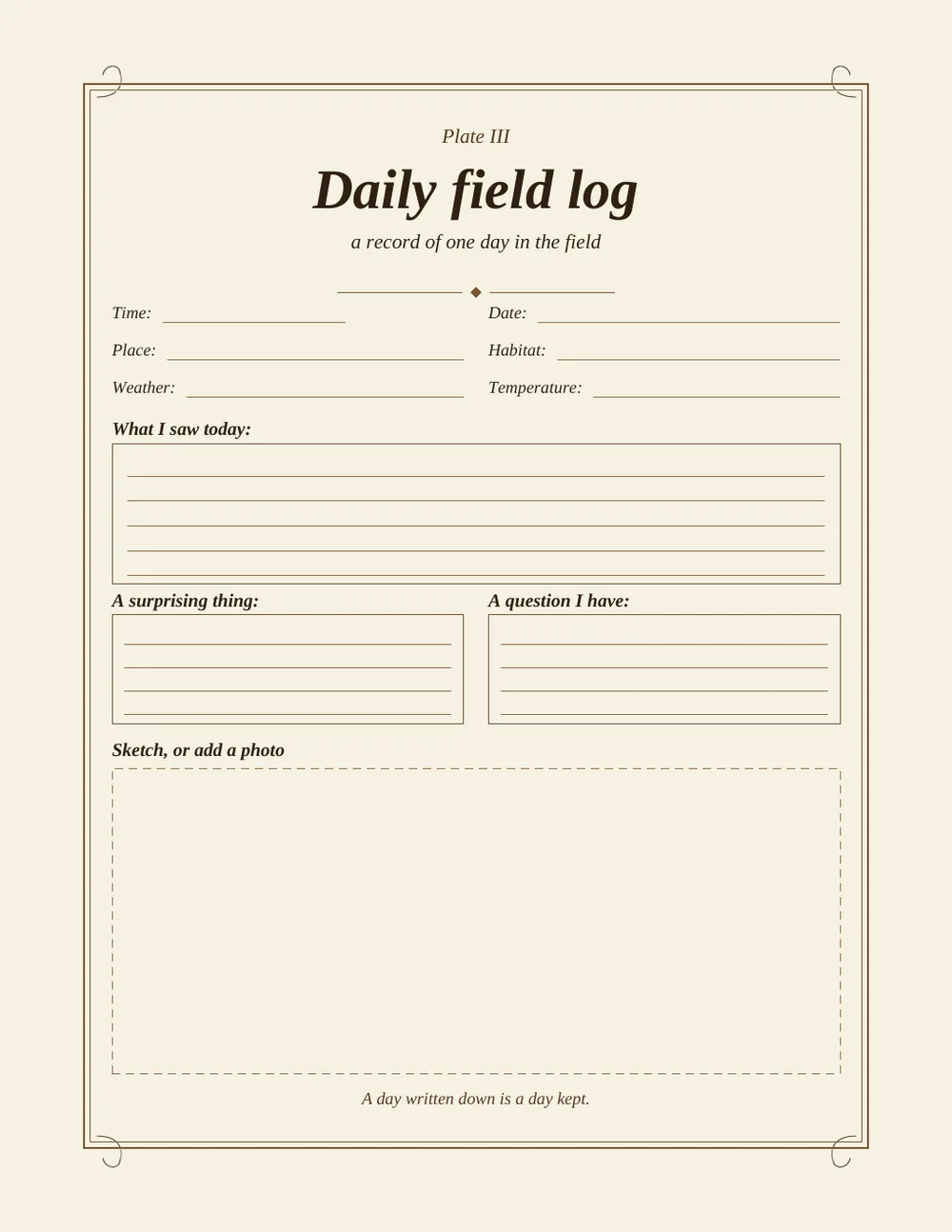
Journal plates for May: record the first firefly night and your warblers on birds I have seen; the long tulip tree flowering belongs on a tree through the seasons, with its cup-shaped seed cones later in the year on seeds pods and cones. A turtle crawl across the sand fits tracks to know, and an elk calf or a black bear seen from a safe distance goes under mammal watch. Firefly flashes and the Eta Aquariids suit dusk and dawn watch, and a plain nesting scrape on a beach, watched from far off, belongs under nest observed. Walk one trail again near month’s end: that is the same place twice.
Regions used below: Mountains; Foothills; Piedmont; Sandhills; Coastal Plain; Outer Banks and the coast.
Where can you see synchronous fireflies in North Carolina?
Most fireflies flash on their own schedule. One species, Photinus carolinus, flashes in unison in a few places, and the best-known place in the eastern United States is the Elkmont area of Great Smoky Mountains National Park, on the Tennessee side near Gatlinburg. The Park Service manages the viewing carefully, so plan ahead.
-
The synchronous firefly show
Usually late May to mid June; the park’s 2026 window was May 20 to 27 · Elkmont, Great Smoky Mountains National Park (Tennessee side)
The Park Service says recorded peak dates since 1993 have ranged from the third week of May to the third week of June. The mating season lasts about two to three weeks, and its timing depends on soil temperature and moisture, which is why it moves from year to year. For 2026 the park set an eight-night viewing window of May 20 to 27. The park had announced nothing for 2027 by early October 2026, so expect a similar window and watch its news releases.
-
The lottery
In 2026 applications ran April 24 to April 27 on Recreation.gov · Recreation.gov, then a vehicle reservation for one night
Access to Elkmont at night is limited to vehicles with a reservation and registered campground guests. In 2026 the park charged a $1 application fee, then $29 more for winners, who got a vehicle reservation for one night, with results sent by May 6. Treat those numbers as last year’s. The 2027 process, dates and prices will come from the park, so check its page rather than a calendar site.
When you go, keep bright lights off and give the insects the dark they need. Many other kinds of fireflies usually appear over lawns and woodland edges across the Piedmont and Coastal Plain as the weather warms, so a lottery ticket is not required to see some. Note the first night you see one on your field journal page, and the temperature.
What are elk, bears and deer doing in the mountains in May?
Late spring is birthing season for large animals, and the hardest rule of the month is the simplest: a young animal that seems alone almost never needs help, and the people who approach it do harm.
-
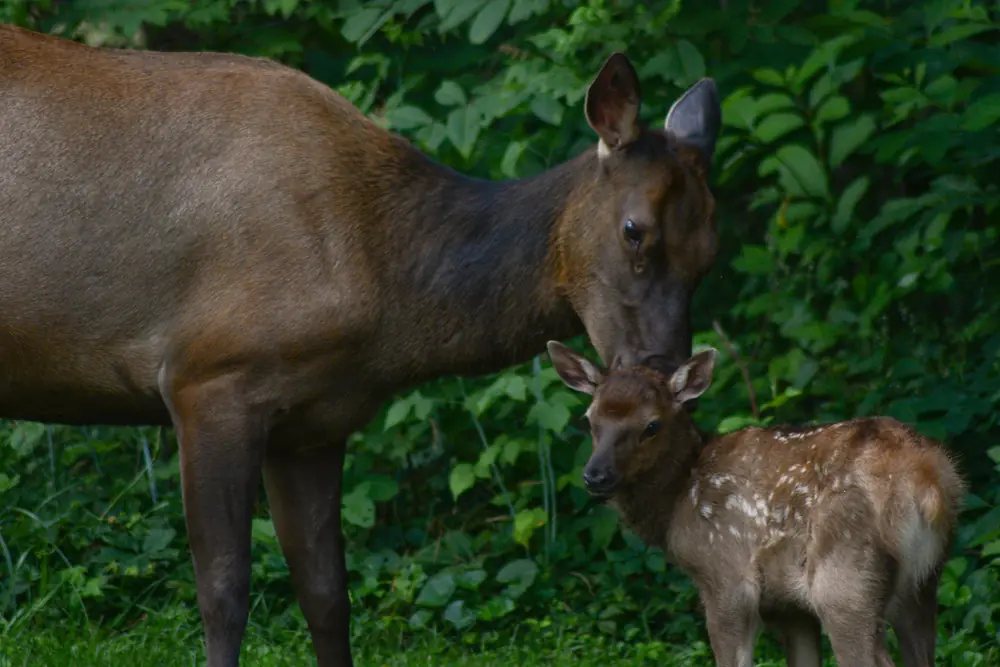
Elk calves at Cataloochee
Most cows give birth by early June · Cataloochee Valley, Balsam Mountain and Oconaluftee in Great Smoky Mountains National Park
The Park Service counts a western North Carolina herd of about 270 elk, roughly 150 of which spend at least part of the year inside the national park. Cataloochee Valley received the first reintroduced group, 25 elk, in 2001. Cows usually bear a single calf of about 35 pounds, and they often leave it hidden in a safe spot while they feed nearby. Do not assume a lone calf is abandoned, and never touch or move one. Park rules keep you 25 yards (75 feet) or more from an elk, farther if it reacts, and out of the fields. Early morning and late evening are the best times to look.
-
Black bears on the move
The Park Service says activity is especially high from May through August · Smokies and the western mountains; Alligator River refuge on the Dare County mainland
The Smokies page says biologists estimate about 1,900 bears live in the park, roughly two per square mile, which it calls the densest black bear population in the country. Cubs leave the den in late March or April, so by May family groups are on the move. Inside the park, knowingly coming within 50 yards (150 feet) of a bear, or close enough to bother it, breaks the rules. Far to the east, the Fish and Wildlife Service notes that Alligator River National Wildlife Refuge supports large bear numbers, and that locals on the Dare County mainland enjoy counting bears along the wildlife drive on an evening. Wildlife there is most active in the morning and evening.
-
Fawns that look abandoned
Fawns are born in the warm months; the Commission’s guidance applies whenever you find one · Yards, meadows and field edges statewide
The Wildlife Resources Commission’s deer page points visitors to a “Found a Lone Fawn?” page and a leaflet titled “Don’t Touch that Fawn.” The advice in the title is the whole message: A fawn that lies motionless in tall grass is concealed on purpose, not lost, and its mother comes back. Keep pets away, keep your distance, and read the Commission’s guidance before you call anyone.
Record these sightings, if you make them, from the roadside or a trail with a long lens. The guides for the other months show how the same animals are doing at other times of the year.
Which birds are nesting on North Carolina’s beaches in May?
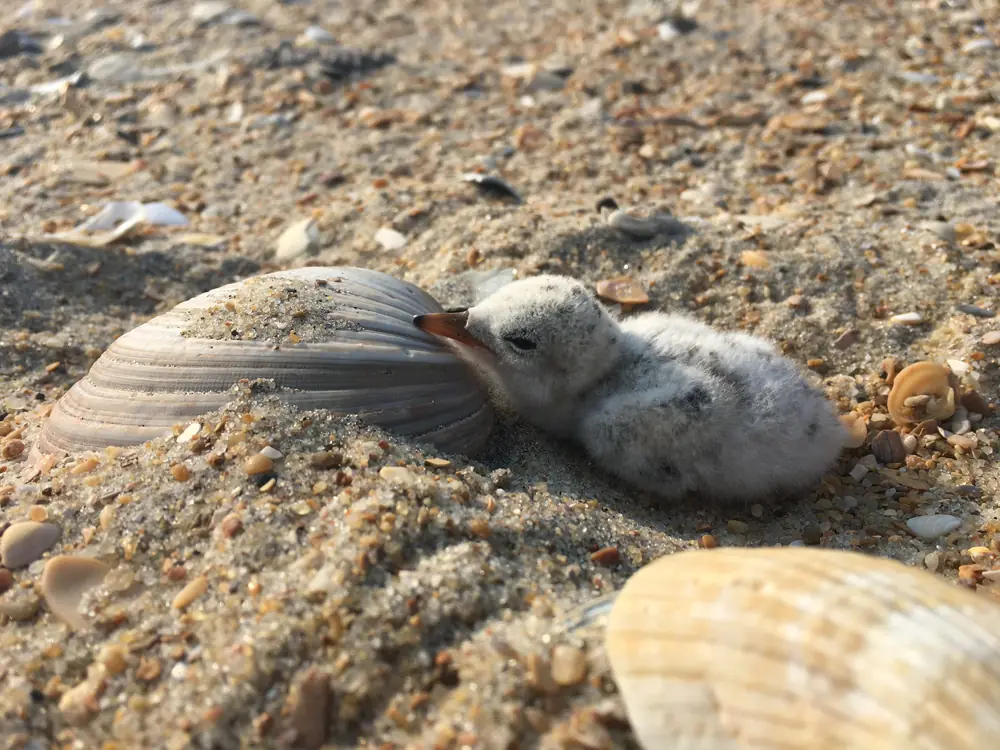
By May the outer beaches are a nursery. The ground-nesting birds you walk past are not nesting in a tree or a bush but in a shallow scrape in the sand, and a stray footstep can flatten a clutch.
-
Least and common terns and black skimmers
Egg-laying and incubation across late spring; chicks can fly three to four weeks after hatching · Upper beach and overwash flats on Cape Hatteras and Cape Lookout National Seashores
The Park Service describes these as colonial nesters: least, common and gull-billed terns, plus black skimmers, nest in groups on the upper beach. Each nest is a shallow sand scrape with two or three speckled eggs. A colony means many pairs reacting to a single threat at once. When the whole group lifts and screams, you are too close.
-
American oystercatchers and piping plovers
Plover chicks fly at four to five weeks and oystercatcher chicks at about five weeks · Wide, undisturbed beaches
These two nest alone and chase away others of their own species. The oystercatcher is a stout black-and-white bird with a long orange-red bill; the piping plover is a small sand-colored shorebird listed as threatened. The Park Service states that habitat loss, human disturbance, predators and storms are the main threats, and that the closures posted each spring are there to protect breeding areas. Stay outside any fenced or signed stretch, keep dogs leashed, and use the marked paths.
-
Pea Island National Wildlife Refuge
Open daily; programs vary by season · Highway 12, south of Oregon Inlet
The refuge was established in 1938 for migratory birds, and its checklist is above 370 species, according to the Fish and Wildlife Service. Staff fence off stretches to shelter the nests of both birds and turtles, and visitors are asked to heed the signs. The North Pond Wildlife Trail is a 0.6-mile one-way walk for waterbirds and turtles.
These beaches are some of the few places on the East Coast where a person can watch an entire nesting cycle from the dunes. Take a field guide, a pair of binoculars and the patience to stand still.
When do sea turtles begin nesting in North Carolina, and what about land turtles?
May is the opening of turtle season in two senses: loggerheads begin coming ashore on the ocean beaches, and the box turtles and terrapins of the mainland and the salt marsh are laying or looking for places to.
-
Loggerhead sea turtles on the beaches
Nesting season May through October; most nesting May through September · Cape Hatteras, Cape Lookout and the barrier islands south to Bald Head
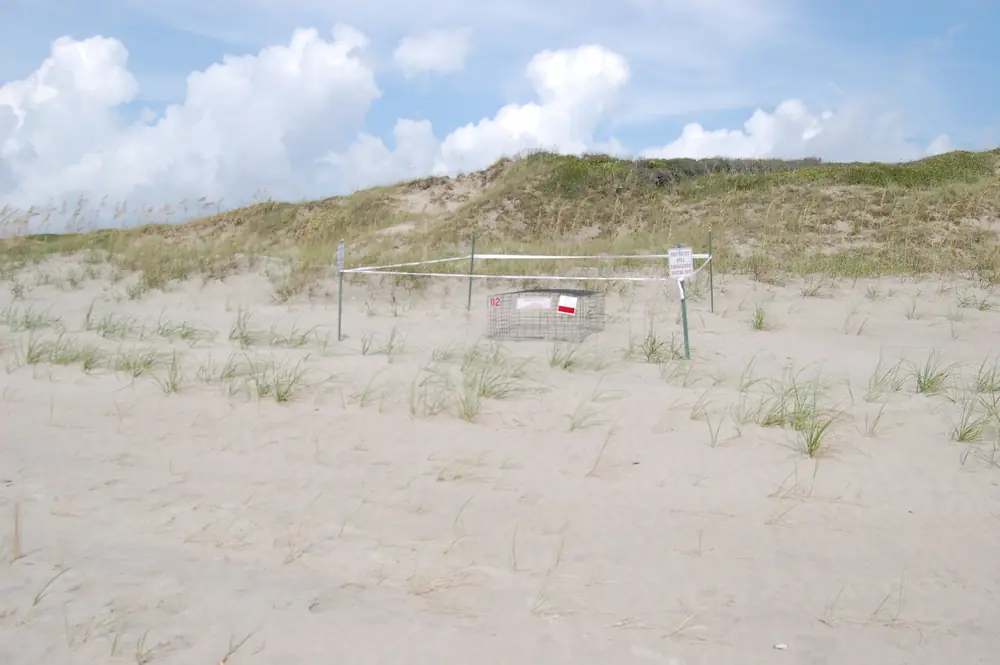
The Park Service lists the loggerhead as the main nester at Cape Hatteras National Seashore, with a few green turtles and occasional leatherbacks and Kemp’s ridleys. At Cape Lookout, it says, only the loggerhead regularly nests on the park’s beaches. A nest hatches about two months after it is laid, and incubation is 49 to 76 days, which puts the first hatchlings in July. Hatteras reported a peak of 473 nests in 2019 and an average of 192.2 nests a year from 2008 to 2016. Those are Hatteras numbers only; other beaches have their own counts.
-
What to do if you meet a nesting turtle
At night, usually in the dark hours · Ocean beaches
The Park Service asks you to stay at least 30 feet from a nesting female, stay quiet, turn off flashlights and skip flash photography. Keep pets away, never block a turtle’s path to the water, take chairs, canopies and fishing gear off the beach at night, fill in any holes you dig, and use downward-facing lights near the beach. To report a sea turtle sighting at Cape Hatteras, including nesting, live, dead or tangled animals, the park gives 252-216-6892.
-
Eastern box turtles
Females lay 3 to 6 eggs each spring · Woods, yards and roadsides statewide
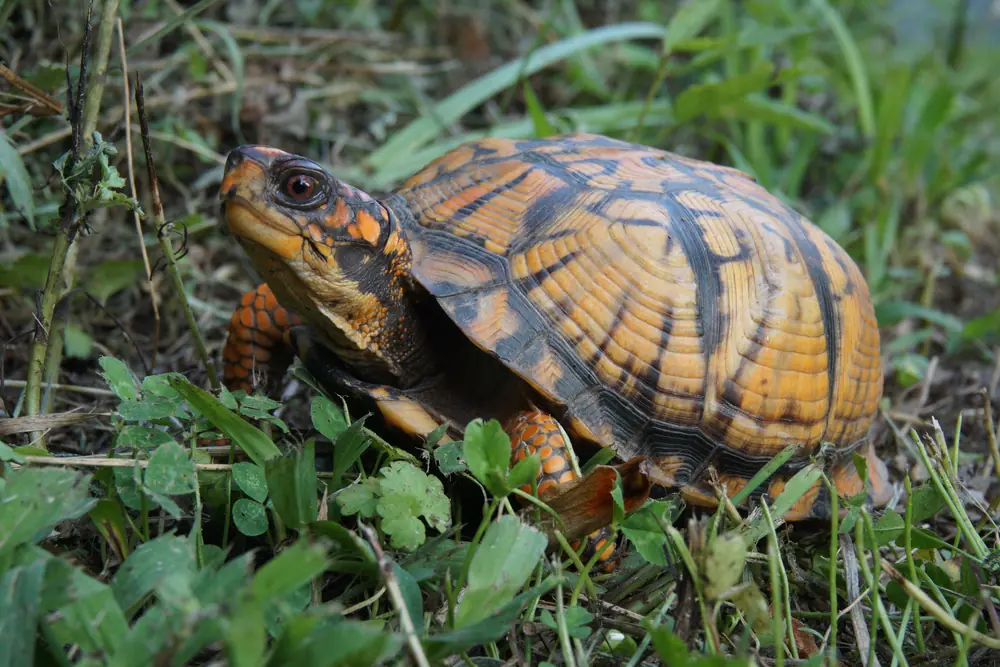
The Commission says females dig a shallow hole with their back legs, lay 3 to 6 eggs and cover them. Box turtles keep small home ranges, usually under 2 acres, and have strong homing instincts. If one must be moved off a road, carry it the shortest possible distance, ideally under 50 feet, and pointed the way it was going; never take it elsewhere or keep it. The species is a nongame animal with no open season, and populations are declining. Sightings can be logged on HerpMapper.
-
Diamondback terrapins
Spring and early summer at the coast · Salt marshes and estuaries, Carteret to Brunswick County
The terrapin is state-listed as a species of special concern and cannot be collected without a permit. The Commission names drowning in derelict crab pots, pollution, development and increased predation by raccoons as threats. A volunteer survey called the Terrapin Tally ran kayak counts in 2021 at ten coastal sites from April 28 to May 16; the program page reflects that year, so ask the NC Coastal Reserve whether it runs in 2027.
A turtle track is among the most readable marks on a beach: a broad, symmetrical trail like a tractor’s. If you find one, note it, walk around it and tell the park.
Are Venus flytraps blooming in North Carolina in May?
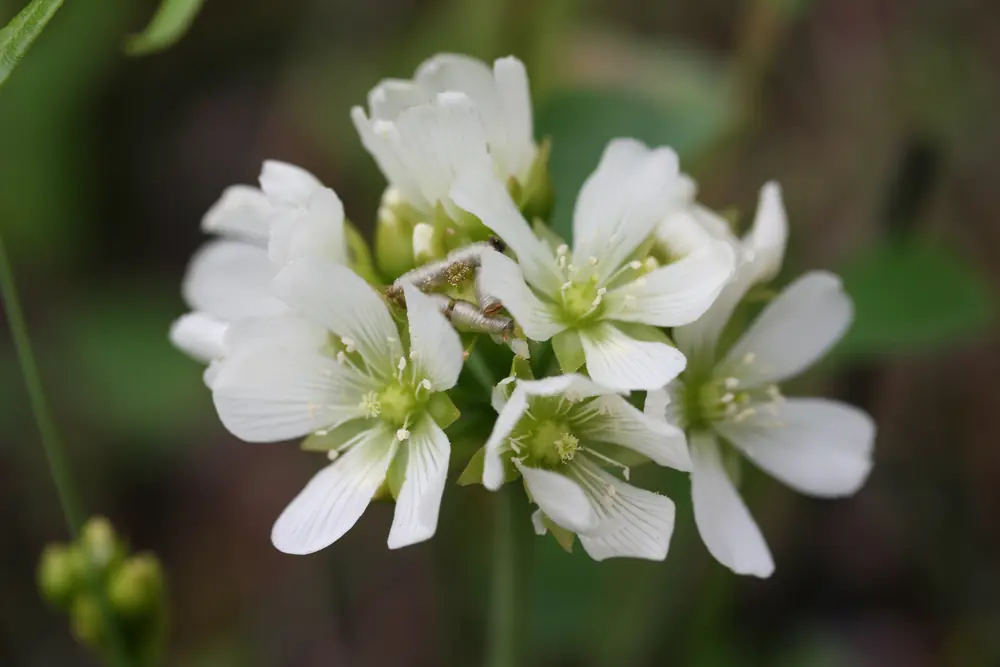
Few plants are as tied to a single corner of the country. North Carolina State Extension says the Venus flytrap is native to coastal North Carolina and a small area of northeastern South Carolina, and that it is an endangered species that cannot be legally collected from the wild. May is the month to look for its flowers, not its traps.
-
The flower on a tall stalk
May and June · Wet, sandy longleaf pine savannas near Wilmington, such as the Nature Conservancy’s Green Swamp Preserve
Extension describes small white, cup-shaped flowers, about 0.7 inch across, on a leafless stalk 4 to 12 inches tall. The Nature Conservancy’s visitor guidance gives the same months and suggests following the stalk down to the plant, because grass and other plants can hide the trap rosette.
-
Walking Green Swamp
Open daily, dawn to dusk · Green Swamp Preserve, Brunswick County
The Conservancy describes a trail of 1.3 miles one way, marked with red diamonds, with no restrooms or benches and pets on leashes. The preserve holds four species of pitcher plant among at least 14 insect-eating species, and longleaf pine savannas kept open by controlled burning. It recommends morning or late afternoon visits because summer heat can be dangerous, and warns that mosquitoes and other biting insects are common from late May until the first frost. Part of the preserve is open to hunting in season. Carolina Beach State Park, which the state parks system notes is also home to the Venus flytrap, is a closer option for many visitors.
Stay on the trail, because trampling the savanna damages exactly the plants you came to see. Buy a nursery-propagated flytrap if you want one at home; that is the legal, unthreatening choice.
What blooms in North Carolina in May, and when is the last spring freeze?
The spring wildflower show ends as the canopy closes, but trees and shrubs carry the color forward. Bloom times shift with elevation, and the Park Service dates the low-elevation peak to mid or late April, with the highest peaks coming weeks afterward.
-
Mountain laurel
Early May through June in the Smokies, according to the Park Service; state extension gives a wider span, late April through July · Rocky ridges and slopes in the mountains and foothills
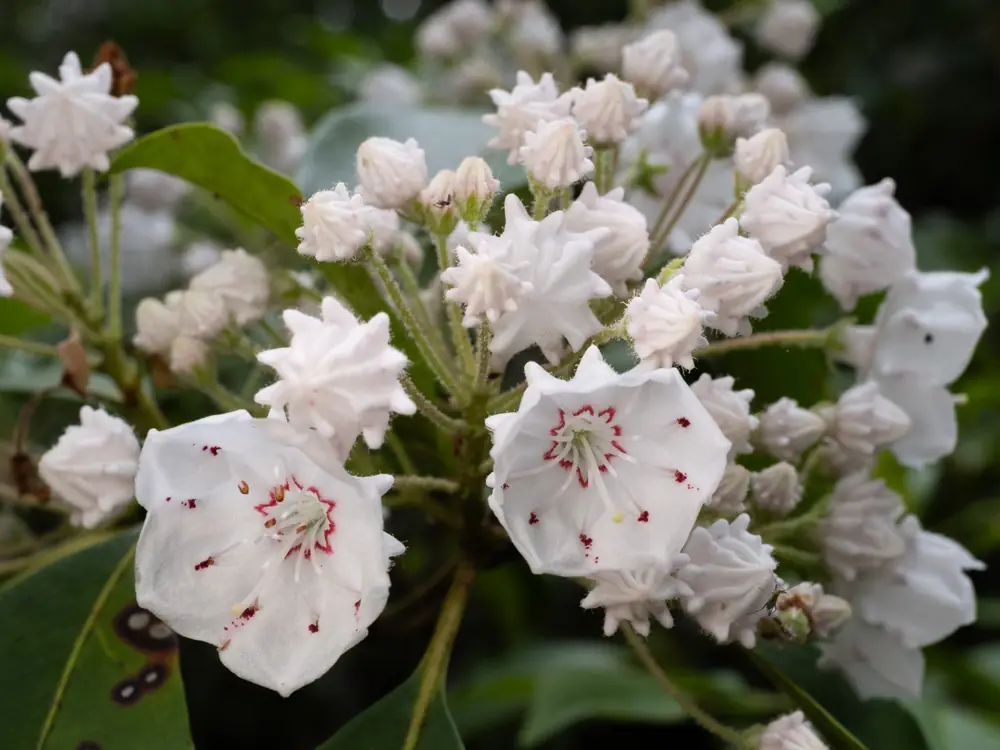
The pink and white flowers open from deep pink buds. Each cup-shaped flower holds ten anthers bent back like springs, which flip forward and dust a visiting insect with pollen when touched; each flower can do it once. NC State warns that every part of the plant is poisonous, and that honey from bees that feed heavily on the flowers can be toxic to people.
-
Flame azalea moves uphill
April and May at low and mid elevations; Gregory Bald’s display peaks in late June or early July · Mountain balds and open slopes
Orange azaleas that opened in the foothills in April are followed by blooms at higher elevations. The Smokies page puts Gregory Bald’s display in late June or early July and Andrews Bald’s usually in early July, so the mountains hold the color for weeks.
-
Tulip poplar flowers
May to early June · Deep, moist soils along streams and in lower mountain coves; common in the Piedmont
NC State describes cup-shaped, fragrant yellow-green flowers with orange bands near the base, held high in the crown where they are easily missed until the petals drop. The tree can stand 80 to 120 feet tall. Its leaves feed the caterpillars of eastern tiger and spicebush swallowtails and the viceroy, and hummingbirds, bees and cedar waxwings drink the nectar.
-
The big rhododendrons are not yet in bloom
June at higher elevations · Above about 3,500 feet
According to the Smokies page, Catawba rhododendron peaks in June above 3,500 feet, rosebay blooms in June at lower elevations and July at middle elevations. In May you are watching the buds swell.
| Station | One year in ten | Median | Nine years in ten |
|---|---|---|---|
| Murphy | Apr 7 | Apr 22 | May 7 |
| Asheville | Mar 20 | Apr 6 | Apr 24 |
| Boone | Apr 17 | May 2 | May 19 |
| Charlotte | Mar 12 | Mar 30 | Apr 14 |
| Raleigh | Mar 15 | Mar 31 | Apr 16 |
| Wilmington | Feb 26 | Mar 19 | Apr 4 |
| Elizabeth City | Mar 7 | Mar 27 | Apr 18 |
| Cape Hatteras | Feb 4 | Mar 4 | Mar 25 |
The table shows the dates by which the last 32 °F freeze has usually already happened. A May freeze is rare in the Piedmont and on the coast, but not in the high valleys: at Boone, nine springs in ten are finished by May 19. Gardeners who plant tomatoes and tender annuals early in the mountains take that risk. The frost page covers every station in the state.
Which warblers and other songbirds are in the North Carolina mountains in May?
Migrants passing through and birds that stay to nest overlap in the mountains this month, and the Park Service says early morning is the best time to bird, especially during migration.
-
Warblers in the Smokies
Spring and early summer mornings · Newfound Gap Road overlooks, the Appalachian Trail at Newfound Gap, and Kuwohi Road
The Park Service has documented more than 240 bird species in the park, about 60 year-round and nearly 120 nesting in the warmer months. It calls warblers the most diverse group of birds there, including breeders such as the chestnut-sided and Blackburnian, and others, such as the Kentucky and prairie warblers, that it lists as passing through. It describes Kuwohi Road as known for high-elevation species, including the Canada warbler and black-capped chickadee. The page does not name a spring peak week, so watch the first half of May for migrants and the second half for settled singers.
-
World Migratory Bird Day
Held in May and October each year; the 2026 dates were May 9 and October 10 · Anywhere with a bird
The campaign’s site lists two annual dates because migration timing differs between hemispheres. Find the 2027 date on the organizers’ page or from your local Audubon chapter.
Log your counts on birds I have seen. A sound map of one morning in one place makes a lovely record, and the monthly guides will help you put it in context.
How warm is May in North Carolina, and what are the hazards?
May is the month the state tips into summer. Charlotte’s normal high is 80.1 °F and Raleigh’s 80.0 °F, Wilmington’s 81.1 °F, while Boone’s is 69.4 °F, with a normal of 1.5 freezing nights. Cape Hatteras has the mildest nights, a normal low of 62.7 °F, because the ocean has not yet fully warmed.
| Station | Average high | Average low | Freezing nights | Rain and melted snow | Snowfall |
|---|---|---|---|---|---|
| Boone | 69.4 °F | 45.8 °F | 1.5 | 5.46 in | 0.0 in |
| Asheville | 76.3 °F | 53.2 °F | 0.1 | 4.13 in | 0.0 in |
| Greensboro | 78.0 °F | 57.1 °F | 0.0 | 3.49 in | 0.0 in |
| Charlotte | 80.1 °F | 58.0 °F | 0.0 | 3.36 in | 0.0 in |
| Raleigh | 80.0 °F | 57.7 °F | 0.0 | 3.38 in | 0.0 in |
| Wilmington | 81.1 °F | 61.1 °F | 0.0 | 4.54 in | 0.0 in |
| Cape Hatteras | 76.7 °F | 62.7 °F | 0.0 | 4.37 in | – |
Thunderstorms are the main hazard. The State Climate Office says storms linked to fronts occur in spring and summer, and that they can produce hail, tornadoes or damaging straight-line winds. For a sense of how bad a single day can be, its review of the April 2011 outbreak notes that the previous one-day record of 20 tornadoes in the state was set on May 7, 1998. That is an extreme case, but it shows that May is not safe from severe weather. Make a plan before a watch is issued: know your shelter, and keep a way to get warnings.
Looking back, the Office’s write-up for May 2026 said late rain brought the month to near-normal precipitation after a warm, dry spring; that is one year, not a forecast. Hurricane season starts on June 1, and the Office’s hurricane page says the North Carolina coast sees a hurricane on average every 5 to 7 years, with September the peak of the Atlantic season. The newest seasonal outlook is kept on the Climate Prediction Center site; this page does not quote it. For the days ahead, use the weather page; the cloud guide explains how a thunderhead grows before it breaks.
How much daylight does North Carolina gain in May?
Between May 1 and May 31, 2027, Murphy and Wilmington gain 43 minutes of daylight, Charlotte and Cape Hatteras 45, Asheville and Elizabeth City 46, and Boone and Raleigh 47, an average near 1.5 minutes daily, down from two minutes a day in April. By the 31st Boone and Elizabeth City have 14 hours and 27 minutes from sunrise to sunset and Wilmington 14 hours and 17 minutes.
| City | May 1 | May 31 | Gained | Per day |
|---|---|---|---|---|
| Murphy | 13 h 37 m | 14 h 20 m | 43 min | 1.4 min |
| Asheville | 13 h 38 m | 14 h 24 m | 46 min | 1.5 min |
| Boone | 13 h 40 m | 14 h 27 m | 47 min | 1.6 min |
| Charlotte | 13 h 37 m | 14 h 22 m | 45 min | 1.5 min |
| Raleigh | 13 h 38 m | 14 h 25 m | 47 min | 1.6 min |
| Wilmington | 13 h 34 m | 14 h 17 m | 43 min | 1.4 min |
| Elizabeth City | 13 h 41 m | 14 h 27 m | 46 min | 1.5 min |
| Cape Hatteras | 13 h 37 m | 14 h 22 m | 45 min | 1.5 min |
Gains taper off as June approaches and stop at the solstice on June 21. Remember that the table lists hours of daylight rather than clock times; the daylight calculator takes your town and returns its own sunrise and sunset times.
What is in North Carolina’s night sky in May 2027?
All times below are Eastern Daylight Time. New moon comes on May 6, so early May skies are dark and good for meteors and the Milky Way, and the Flower Moon arrives on the 20th, and the old seasonal rule labels it a Blue Moon.
-
The Eta Aquariid meteors
Best mornings about May 5 to 7, in the last hours before dawn · Low in the east, from a dark site
These meteors are bits of Halley’s Comet. SeaSky lists the peak as May 6 and 7 and calls it an excellent year since there is almost no moonlight to wash it out; new moon comes on May 6. The American Meteor Society (AMS) estimates 10 to 30 meteors an hour, mostly in the last dark hours before the Sun comes up, and SeaSky mentions a figure near 30 for the Northern Hemisphere. Aquarius, the source constellation, lifts above the eastern horizon only late in the night, so count on the modest end in North Carolina. Lie back, look at the whole sky, and give your eyes 20 minutes.
-
The Flower Moon, a seasonal Blue Moon
Full at 6:59 a.m. EDT on Thursday, May 20; best viewing the evening of Wednesday, May 19 · Rising in the east a little after 8 p.m.
The full instant arrives about an hour after sunrise, when the Moon has already set (it goes down around 5:45 a.m. in Raleigh by our calculation), so the evening before is the best one for a round Moon rising: moonrise is around 8 p.m. in the state. By the older seasonal rule, in which the third of four full moons in one astronomical season is a Blue Moon, SeaSky calls May 20 a Blue Moon; under today’s looser rule, two full moons inside a single calendar month, 2027 has no Blue Moon at all. Name it the Flower Moon first, tied to the abundance of spring flowers, as SeaSky describes it.
-
Mercury in the evening
Greatest eastern elongation Friday, May 28; look on the evenings of May 27 and 28 · Low in the west-northwest after sunset
On May 28 SeaSky has Mercury at its widest evening separation from the Sun, 22.9 degrees. Our calculation has it setting roughly 90 minutes behind the Sun in mid-May, so look 45 to 90 minutes after sunset with a clear, flat horizon. It will look like a bright, steady point of light that does not twinkle much. Mercury fades quickly in early June.
-
The Moon beside Jupiter
Evening of Wednesday, May 12 · High in the south after dusk
Our calculation has the two about 1.2 degrees apart on May 12, the day before first quarter. They are closest in late-afternoon daylight, so enjoy the pairing once it gets dark.
-
Dark windows for the Milky Way
About May 1 to 14 and May 25 to 31, by our calculation for 40 degrees north · Low in the south, from a dark site
Our calculation, done for 40 degrees north latitude and 95 degrees west, finds dark-sky windows around the new moon at those dates. North Carolina lies farther south, so treat the dates as approximate; the core of the Milky Way is a low southern object from the state, and a view of the horizon helps.
| Phase | Date | Time |
|---|---|---|
| New moon | Thursday, May 6 | 6:58 a.m. |
| First quarter | Thursday, May 13 | 12:44 a.m. |
| Full moon, the Flower Moon | Thursday, May 20 | 6:59 a.m. |
| Last quarter | Friday, May 28 | 9:58 a.m. |
Dates not shown here are on the moon phases page. Light pollution matters more than anything else for the Eta Aquariids, so go to a dark site if you can.
What can families do outside in North Carolina in May 2027?
- Hold a firefly night. Take a short walk at dusk in a damp field or the edge of a yard. Count flashes for one minute and write down the date, time and temperature. Enter the Smokies lottery only after the park announces its 2027 process.
- Watch for a meteor before dawn on the 5th, 6th or 7th. Set an alarm, bring a blanket and choose the darkest spot nearby.
- Mark a tulip tree. Check it every few days. See when the first flower opens, then when petals appear on the ground.
- Finish a City Nature Challenge. Photo-taking runs April 30 to May 3, 2027, identifications run May 4 to 16, and results come out May 20, according to the organizers. The organizers’ site lists participating areas.
- Mark World Migratory Bird Day. Look for the 2027 date on the organizers’ site and spend that morning counting birds.
- Be a good beach neighbor. Visit an ocean beach in the morning, read the closure signs and photograph terns through binoculars or a long lens.
- Log a box turtle. If you see one, note the place and date, and add it to HerpMapper, the site the Commission recommends.
Parks and nature centers usually schedule spring programs, but no 2027 listings existed yet. Look at the state events calendar and each refuge’s own page, or phone ahead. Memorial Day falls on Monday, May 31, and the beaches, parkway and park lots fill that weekend; go early. Keep notes in your Naturalist’s Field Journal; the April guide covers the month before.
Safety notes for May in North Carolina
- Turkey season. The Wildlife Resources Commission’s 2026–27 season-dates summary, which still carried a tentative label in October 2026, lists the statewide spring wild turkey season as April 17 to May 15, 2027, and gray squirrel season as reopening for May 17 to 31, 2027. State law exempts wild turkey hunters from the upland game bird orange rule, so wear bright clothing on game lands anyway and avoid anyone calling in the woods. Confirm dates and bag limits on the Commission’s own page before you hunt.
- Bears and elk. Stay 50 yards from a bear and 25 yards from an elk in the national park, farther if the animal reacts. Lock up food and trash, and never feed wildlife.
- Beaches. The National Weather Service warns that rip currents can form on days that look perfect. Choose a lifeguarded beach, read the local forecast first, and keep dogs leashed and out of closed areas.
- Lightning and storms. Lightning kills about 20 people a year in the United States, according to the National Weather Service. Get inside when thunder first sounds, and never drive through a flooded road.
- Ticks. The CDC puts peak tick activity between April and September. A repellent registered with the EPA and clothing treated with permethrin help; showering soon after coming inside and a head-to-toe check finish the job.
- Mosquitoes and heat. The Nature Conservancy warns of biting insects from late May at Green Swamp and of dangerous summer heat. Carry water, and go early or late.
- Snakes. Timber rattlesnakes are most common in the mountains and Coastal Plain, according to the Commission, and they are protected as a species of special concern. Watch your step and hands, and leave a snake alone.
- Blue Ridge Parkway and Mount Mitchell. As of October 8, 2026, the Park Service listed mileposts 344.2 to 355.3 as closed for Hurricane Helene damage, with all recreation prohibited, and Linville Falls Campground and Picnic Area also shut. Mount Mitchell State Park listed the Old Mitchell Trail as partly closed. Check both before you plan a May trip, since conditions may have changed.
Sources (42)
- N.C. Wildlife Resources Commission: 2026–27 hunting and trapping season dates (PDF, marked tentative)
- N.C. General Statute 113-291.8: hunter orange
- National Park Service: synchronous fireflies, Great Smoky Mountains
- National Park Service: elk in the Smokies
- National Park Service: black bears in the Smokies
- National Park Service: birds of the Smokies
- National Park Service: wildflowers of the Smokies
- National Park Service: Blue Ridge Parkway wildflowers
- National Park Service: Blue Ridge Parkway road closures
- N.C. State Parks: Mount Mitchell State Park
- N.C. State Parks: Carolina Beach State Park
- National Park Service: sea turtles, Cape Hatteras National Seashore
- National Park Service: nesting shorebirds, Cape Hatteras National Seashore
- National Park Service: animals of Cape Lookout National Seashore
- U.S. Fish and Wildlife Service: Pea Island National Wildlife Refuge
- U.S. Fish and Wildlife Service: Alligator River National Wildlife Refuge
- N.C. Wildlife Resources Commission: white-tailed deer (fawn guidance links)
- N.C. Wildlife Resources Commission: eastern box turtle
- N.C. Wildlife Resources Commission: diamondback terrapin
- N.C. Department of Environmental Quality: Terrapin Tally (2021 program page)
- N.C. Wildlife Resources Commission: timber rattlesnake
- N.C. Cooperative Extension plant toolbox: Venus flytrap
- N.C. Cooperative Extension plant toolbox: mountain laurel
- N.C. Cooperative Extension plant toolbox: tulip poplar
- The Nature Conservancy: Green Swamp Preserve
- World Migratory Bird Day
- City Nature Challenge: 2027 dates
- Journey North: monarch butterflies
- NOAA NCEI: 1991–2020 monthly normals for seven North Carolina stations, May (data API)
- N.C. State Climate Office: thunderstorms
- N.C. State Climate Office: hurricanes
- N.C. State Climate Office: April 2011 tornado outbreak, one for the records
- N.C. State Climate Office: May 2026 climate summary
- Climate Prediction Center: seasonal (90-day) outlooks
- National Weather Service: rip currents
- National Weather Service: lightning
- National Weather Service: flood safety
- CDC: preventing tick bites
- U.S. Naval Observatory: moon phases for 2027 (data API)
- SeaSky: astronomy calendar 2027
- N.C. Department of Natural and Cultural Resources: events calendar
- Photos via Wikimedia Commons; licenses and photographers are credited under each picture