What to look for in nature in Ohio this March
March in Ohio is mud, melt and the first big choruses. On the first soaking, mild night the woods wake up with salamanders and wood frogs walking to the pools, and by the middle of the month male woodcock are spiraling over brushy fields at dusk. Turkey vultures return to Hinckley, swans pass over the Lake Erie marshes, walleye climb the Maumee, and the first wildflowers push through the leaf litter in the south before the north has lost its snow. Daylight saving time starts on Sunday the 14th, the equinox falls on Saturday the 20th, and Sunday evening the 21st brings the Worm Moon up above Ohio’s eastern skyline, hours before it turns full.
Other months in Ohio: October, November, December, January, February, April.
Start here

- Listen on the first soaking night. On a rainy evening above about 45 °F, once the snow is gone, pause beside a wooded wetland and listen for quacking wood frogs and whistling spring peepers. Drive carefully near water.
- Watch for a woodcock at dusk. From mid-March on, watch the west from a thicket meadow some twenty minutes after sunset for the woodcock’s twittering climb and its warbling plunge.
- Follow the Friday bloom reports. ODNR’s Spring Wildflower Bloom Report appears every Friday through mid-May, and the first one in 2026 came out on March 20. Choose a nature preserve from the South or Central list and go on a sunny afternoon.
Plates for March in the Naturalist’s Field Journal: calling frogs on a map of sounds, the first woodcock or turkey vulture you meet on birds I have seen, sunset and moonrise times on dusk and dawn watch, and a trillium or skunk cabbage bloom on reading the signs. Come back to the same wetland edge in April for the same place twice.
Regions used below: Northwest and Lake Erie; Northeast and Cleveland; Central Ohio; Southwest and Cincinnati; Southeast and the Hocking Hills.
What is a “big night” for Ohio’s salamanders, and when does it come?
Rain and mild air decide it, not the date. The National Park Service says the great amphibian walk at Cuyahoga Valley usually comes on the first rainy night of early March, with the air above 45 °F, nearly all the snow gone and the temporary woodland pools thawed. Then hundreds of salamanders and frogs head for the water at once, and the frog chorus can carry more than a quarter mile. A cold spring pushes the night later, so watch for the first soaking, mild rain wherever you live in Ohio.
-
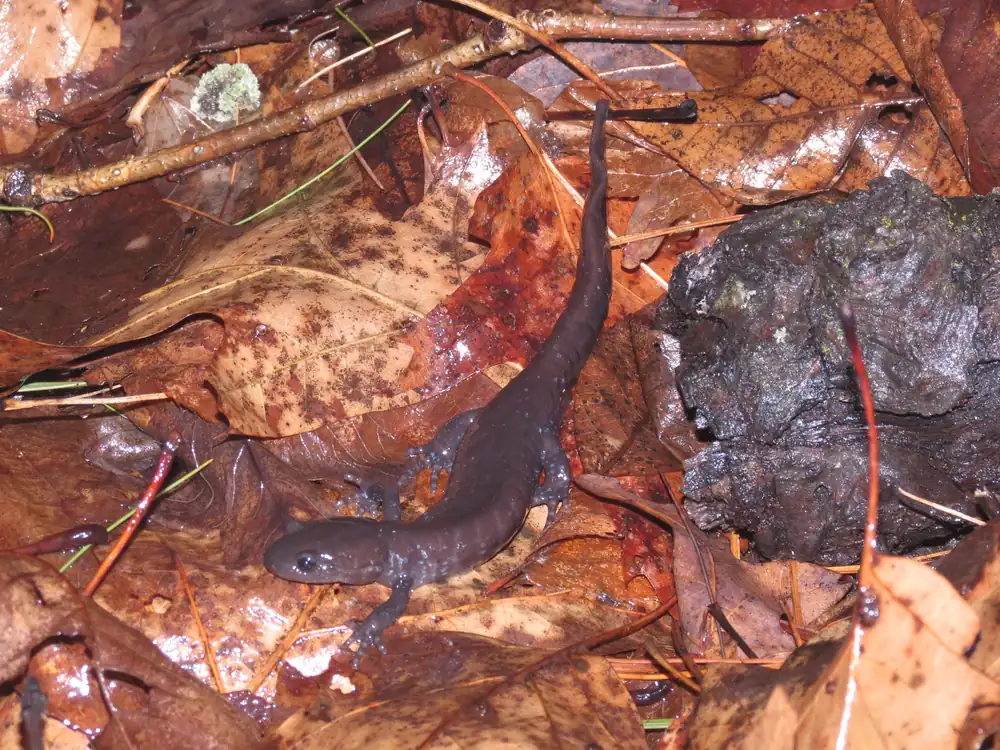
Spotted and Jefferson salamanders at the pools
The first steady rainy nights, once the pools have thawed · Vernal pools in mature woods, such as the two at the base of the ravine along the Brandywine Gorge Trail in Cuyahoga Valley National Park
The park names this pair of pools on the east side of Brandywine Creek as a place to meet the migration, and says Jefferson and spotted salamanders can sometimes be seen there even by day. Go after dark with a dim flashlight and keep your boots out of the water. Capturing or disturbing amphibians is against park rules, and it is good manners at any preserve.
-
Roads between the woods and the water
Warm, wet nights, often soon after dark · Any road that separates a woodlot from a pond, ditch or wetland
According to the park, the trip is dangerous in many places because it means crossing pavement to reach the breeding ponds, and park scientists are studying how many animals die on the roads. Spring peepers and American toads were the amphibians seen most often in a 2017 road-crossing study there. On a wet night above about 45 °F, slow down near water; if you stop to help an animal, pull off the road first and move it in the direction it was already heading.
Write down the date, temperature and rainfall of your own big night and compare notes next year. The field journal has a page for such records, and the weather page helps you see the rain coming.
When do spring peepers and wood frogs start calling in Ohio?
As soon as a pool is free of ice and a few nights stay above freezing. In its first wildflower report of 2026, issued March 20, the Division of Natural Areas and Preserves said red-winged blackbirds were calling and spring peepers peeping. A 2024 Geauga Park District report says peepers seem to be doing well in Ohio, with the highest numbers in the east and south. You will not see most of them: the singers are thumbnail-sized and the chorus is loud.
-
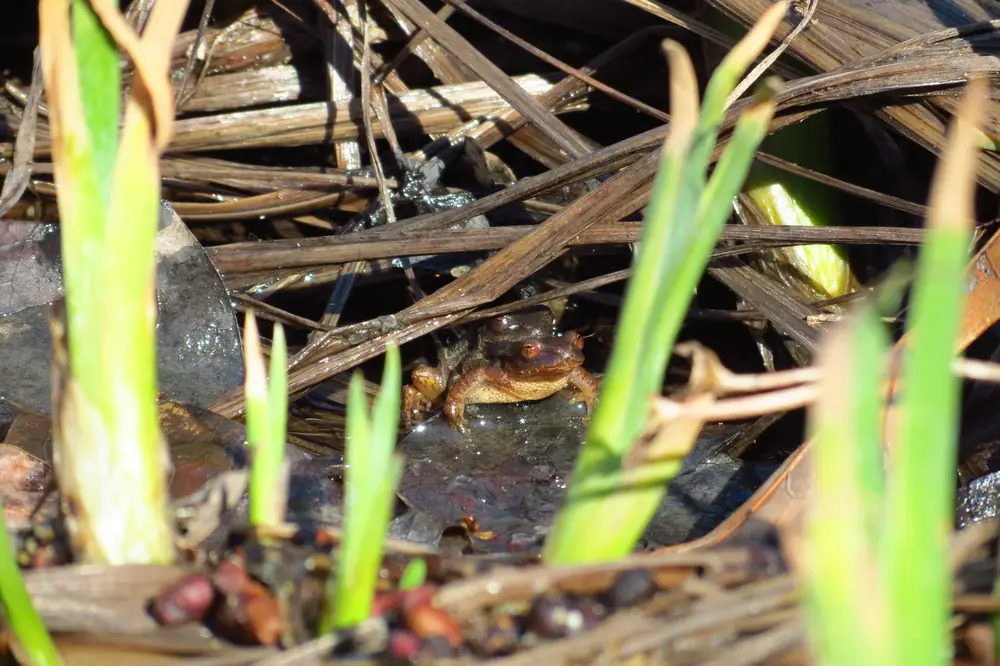
Wood frogs, the quackers
Right at the thaw, often before the peepers · Fishless woodland pools and flooded ditches in wooded country
The park service describes the wood frog’s voice as an unusual quack-like call, very unlike the whistle of its smaller neighbor. A pool in full cry sounds like distant ducks arguing in the trees. The calling season is short, so a mild night just after the ice goes out is the one to catch.
-
Spring peepers, the sleigh bells
Mild evenings from the thaw into April · Shallow, sunny wetlands; in Cuyahoga Valley, the Towpath Trail just south of Beaver Marsh
Cuyahoga Valley’s naturalists compare the high whistle of a peeper chorus to sleigh bells. Stand still at the water’s edge: the chorus will go quiet as you arrive and resume within minutes. Bring a flashlight but keep it off while you listen.
-
Listening for the record
Evenings from February through August, the national program’s season · Any pond, ditch or marsh you can visit often
The Association of Zoos and Aquariums gave FrogWatch USA, the national frog-and-toad listening program, to the Akron Zoo to run in 2022, and trained volunteers report what they hear on evenings from February through August. In recent years the Geauga Park District has also kept a call list for a naturalist-led night visit to its woodland pools; check whether it returns in 2027.
Add each call to your own map of sounds, and note the nights the chorus starts and stops.
Which birds return to Ohio in March, from woodcock to turkey vultures?
Most songbirds are still weeks away, but a few early performers arrive. Woodcock reach the state at winter’s end, turkey vultures return to their roosts, and the stick nests of bald eagles and great horned owls are busy with eggs and chicks.
-
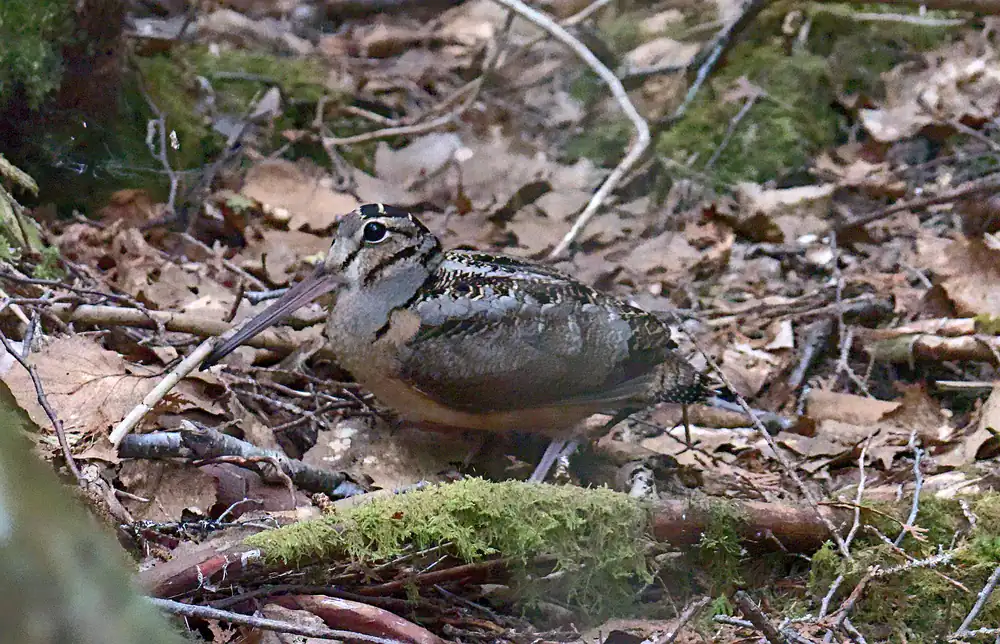
American woodcock sky dance
The second half of March into April, starting about 20 minutes after sunset · Thicket meadows and brushy fields, with a clear view west
Cuyahoga Valley’s naturalists put the displays late in March, with males climbing more than 300 feet before spiraling down, and recommend facing west so the dark birds show against the afterglow. Metroparks Toledo describes loud twittering on the way up and a warbling plunge on the way down, and names Fallen Timbers Battlefield, Oak Openings, Secor, Wildwood and Swan Creek for March and April. At Ottawa National Wildlife Refuge, the short Gallagher Memorial Trail behind the Black Swamp Bird Observatory is called a great spot for the spring display. ODNR says woodcock turn up statewide from late February through March.
-
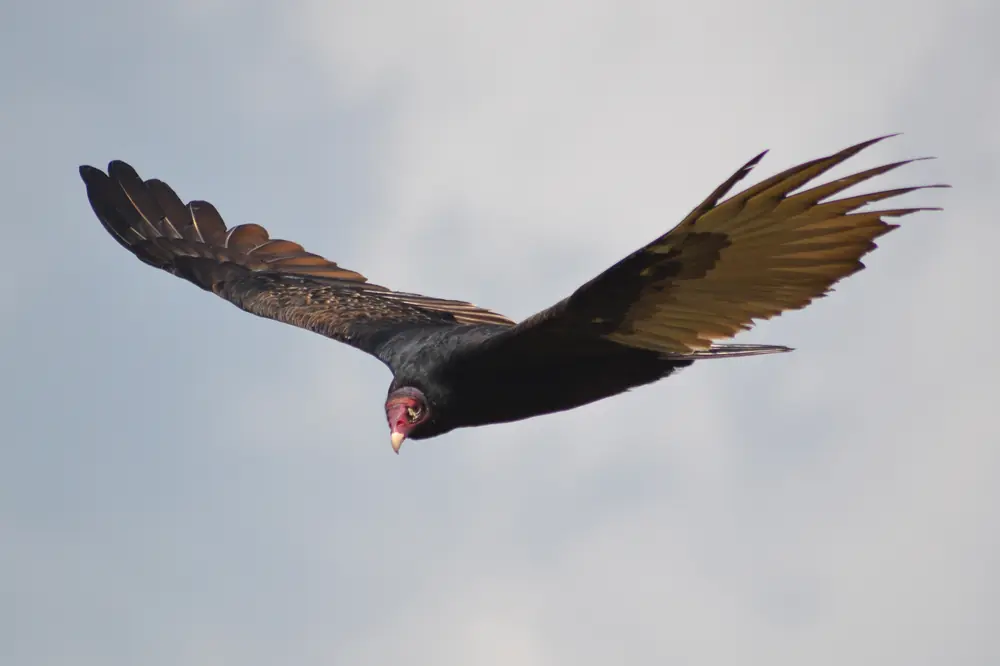
Turkey vultures and the Hinckley buzzard watch
Cleveland Metroparks says its spotter welcomes the first buzzards every March 15 (a Monday in 2027); Buzzard Day is a separate community event · Hinckley Reservation, near the Buzzard Roost at State Road and West Drive
The turkey vulture is the big black bird with a six-foot wingspan that rocks across the sky with its wings in a shallow V. The Hinckley tradition dates to 1957, according to Cleveland Metroparks, when the park’s official buzzard spotter first greeted the birds on March 15. The Hinckley Chamber of Commerce runs Buzzard Day, which has usually been a Sunday in mid-March; the chamber’s page showed no 2027 date at the time of writing, so check hinckleyohchamber.com. ODNR calls the species a fairly common summer resident that often gathers in large night roosts.
-
Eagles and great horned owls on the nest
Eagle eggs laid mid-February to late March; owlets hatch late February through early April · Tall trees near rivers, lakes and marshes; woodlots and old stick nests
ODNR says an eagle clutch of one to three eggs is incubated for about 35 days, so the first chicks can appear around the third week of March. The division flies its aerial nest surveys by helicopter in March. Great horned owls are mid-season, with the male feeding the female and later the owlets. Keep well back: Cuyahoga Valley asks visitors to stay at least 75 yards from an owl nest.
Log each first arrival on your birds-I-have-seen page, and use the cloud outlook to pick an evening with a clear western sky for the woodcock.
What can you see around Lake Erie’s marshes and the Maumee River in March?
As ice leaves the western basin, the lakeshore becomes a first stopover on the way north. Swans move through the marshes and flooded fields near Ottawa National Wildlife Refuge, and part of the lake’s walleye population swims up the Maumee to spawn.
-
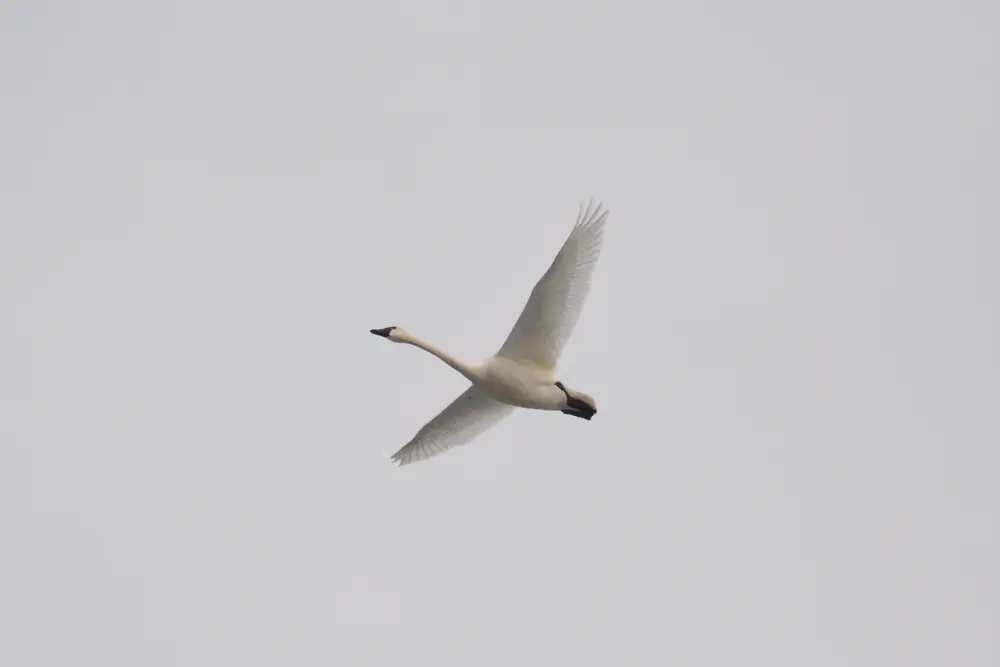
Tundra swans passing through
Early spring, on the northbound trip · Marshes and flooded or planted fields in the western basin, south of Ottawa National Wildlife Refuge and Magee Marsh
ODNR calls the tundra swan Ohio’s only highly migratory swan and says flocks have run into the thousands, though a few dozen is more typical. They are just passing through to Arctic nesting grounds. A former manager of Ohio Sea Grant’s Stone Laboratory, writing in Midwest Outdoors, describes the flocks feeding in cornfields and winter wheat south of Ottawa and Magee Marsh and says they head back north in early spring, so scan the same flooded fields. Look for pure white birds with black bills, often with a small yellow spot at the base.
-
The Maumee walleye run
Spawning in March and April, peaking from late March through mid-April, ODNR says · The Maumee River from Orleans Park in Perrysburg upstream to Jerome Road in Maumee
The Division of Wildlife says walleye spawn when the water is 42 to 52 °F and flows rise steadily, with older fish tending to arrive earlier. In ODNR’s Maumee guide (last updated in 2022), two stretches carry special rules from March 1 to April 30 (the Ohio Turnpike to the old Waterville interurban bridge, and the State Route 295 bridge to the Providence Dam at Grand Rapids): one hook, sunrise to sunset only, and no keeping a fish hooked outside the mouth. A walleye must be 15 inches. ODNR’s Lake Erie daily limit through April 30, 2027 is six, but confirm the Maumee limit at wildohio.gov.
-
Rainbow trout in public ponds
ODNR says releases run from March into May · Public lakes and ponds statewide; schedule on the ODNR trout page
The Division of Wildlife releases about 80,000 rainbow trout, 10 to 13 inches long, into ice-free public lakes and ponds each spring; the inland daily limit is five. The 2027 dates were not yet public at the time of writing, so check ohiodnr.gov/troutstockings.
Mud along the shore records what walked past overnight, which makes a fine start for the tracks and signs pages of the field journal.
Which Ohio wildflowers bloom first in March?
Skunk cabbage has been in bloom since winter, so the first true ephemerals make the news. The Division of Natural Areas and Preserves publishes a bloom report every Friday through mid-May, sorted into South, Central and North; in 2026 the first came out on March 20. ODNR has long noted that flowering can differ by about three weeks between the Ohio River counties and the far north.
-
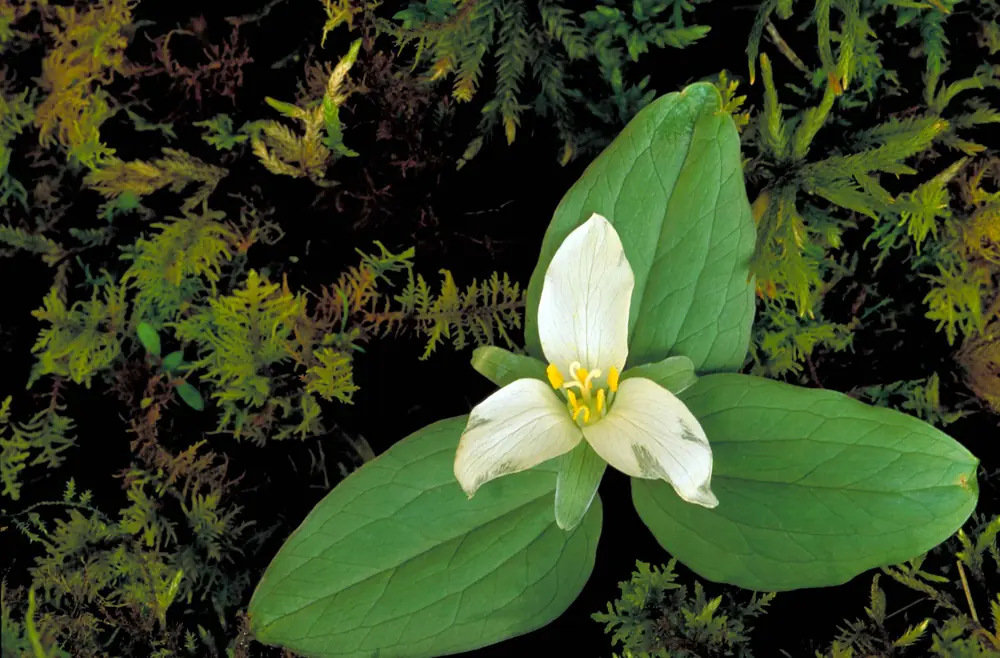
Snow trillium
In 2026, in bloom on March 20 and expected to finish a week or so later · Clifton Gorge State Nature Preserve, Miller Sanctuary, Stillwater Prairie Preserve, Oakes Quarry Park, Fort Hill and Chalet Nivale
This is the small, white trillium that blooms at winter’s edge, and ODNR’s first 2026 report noted that a late snowfall showed off its name. The second report, a week later, urged readers to see it before it was done. ODNR calls Clifton Gorge one of the state’s most spectacular spring wildflower sites, rare snow trillium included.
-
Golden-star lily
Late March, briefly · Gladys Riley Golden-star State Nature Preserve, in the far south
ODNR’s naturalists say this endangered lily is known only from a very small area of southernmost Ohio, flowers each late March and grows there by the thousands. It resembles the common yellow trout-lily, but its petals are flat and face up, while the trout-lily’s droop and curl back.
-
Harbinger-of-spring, bloodroot, hepatica and spring beauty
South first, then central; the far north may wait for April · Wooded slopes and floodplains from Shawnee to Cuyahoga Valley
Southern Ohio’s early 2026 list included harbinger-of-spring, white trout-lily, purple cress, spring beauty, bloodroot and sharp-lobed hepatica. In Cuyahoga Valley the park says the next flowers after skunk cabbage may appear at the end of March once the snow is gone, with coltsfoot (a non-native), harbinger-of-spring and spring beauty often first. Many flowers stay closed on rainy or overcast days, so pick a sunny afternoon.
-
Skunk cabbage
Already blooming since January · Cedar Bog, Boch Hollow, Christmas Rocks, Gallagher Fen and Lou Campbell state nature preserves
ODNR lists these preserves as easy places to see it. The plant makes its own heat to thaw soil and melt snow, and its odor draws flies and beetles.
Never pick or dig wildflowers: in Cuyahoga Valley National Park it is against the law, and some plants take years to bloom again. A quick sketch on the reading-the-signs page is a better souvenir.
Is March too late to watch maple syrup being made in Ohio?
Often, and it depends on the winter. Sap flows only when frozen nights are followed by thawing days. Ohio State’s maple specialist wrote that the 2024 season ended on the first weekend of March, though dark north-facing woods that hold snow can run until the end of March or even into April. In 2026, the Geauga Park District moved its maple programs into February after March events were missing peak sap flow in recent years.
-
Sugarhouse tours
Usually on several March weekends; the Ohio Maple Producers Association’s Maple Madness tour ran March 7 to 8 and 14 to 15 in 2026 · Sugarhouses across the state, with maps from the association
The 2027 tour dates were not yet public at the time of writing; check ohiomapleproducers.com, and call a sugarhouse to ask whether it will be boiling that day. Steam over the roof means the evaporator is running.
-
When the sap stops
When nights no longer freeze · Sugar maple woods, especially in the cooler northeast
When the nights stop freezing the sap no longer runs well, and the Ohio State specialist blamed the end of the 2024 season on microbes multiplying in warm sap. Watch the weather, not the calendar.
Never tap a tree without the owner’s permission, and remember that trees in state parks and metroparks are protected.
How cold and snowy is March in Ohio, and when does tornado season begin?
March swings hard. The 1991–2020 normals put the average afternoon high in the upper 40s around Lake Erie and the low 50s in the south, with average lows between 28 and 34 °F, and 15 to 22 nights a month still reach 32 °F or below. Cleveland and Youngstown average more than 10 inches of snow in March, against under 5 at Columbus, Dayton and Cincinnati. Precipitation runs from about two and a half inches at Toledo to just over four at Cincinnati.
-
Tornadoes and thunderstorms
March into summer; the National Weather Service in Cleveland says most of its area’s tornadoes come from April to August · Statewide; the Seneca and Huron County area is the hotspot in northern Ohio
The Cleveland office counts 549 tornadoes from 1950 to 2025 in its warning area of northern Ohio and northwestern Pennsylvania, with June the busiest month. Its county list shows that March is not exempt: tornadoes on March 14, 2024 in Richland (EF2), Hancock and Seneca Counties, on March 26, 2026 in Morrow and Knox Counties, and on March 31, 2026 in Geauga and Wayne Counties. The governor designates a Severe Weather Awareness Week in March with a statewide tornado drill; the 2026 week was March 15 to 21, and the 2027 week will be posted at weathersafety.ohio.gov.
-
Late snow near the lake
Most likely early in the month · The snowbelt east and south of Cleveland and around Youngstown
Cleveland’s 10.8-inch March normal and Youngstown’s 10.5 are enough for one storm to whiten the ground again, and in an average March the ground still holds at least an inch of snow on seven or eight days there.
| Station | Average high | Average low | Snowfall | Precipitation | Snow-cover days | Nights at or below 32 °F |
|---|---|---|---|---|---|---|
| Toledo (Express Airport) | 48.4 °F | 29.9 °F | 5.3 in | 2.61 in | 4.6 | 21.4 |
| Cleveland | 47.1 °F | 30.7 °F | 10.8 in | 3.06 in | 7.2 | 20.3 |
| Akron-Canton | 48.4 °F | 29.4 °F | 7.6 in | 3.23 in | 5.9 | 20.3 |
| Youngstown | 46.6 °F | 27.8 °F | 10.5 in | 3.21 in | 8.1 | 22.2 |
| Columbus | 51.1 °F | 32.0 °F | 4.1 in | 3.62 in | 2.5 | 16.7 |
| Dayton | 51.5 °F | 32.7 °F | 3.9 in | 3.50 in | 2.3 | 17.3 |
| Cincinnati (CVG) | 53.5 °F | 33.8 °F | 3.4 in | 4.16 in | 2.2 | 15.0 |
NOAA’s Climate Prediction Center updates its three-month outlooks every month; read the latest at cpc.ncep.noaa.gov/products/predictions/90day, and check your county’s forecast before any trip. Compare your town with these stations on our weather page.
When is Ohio’s last freeze of spring?
Not in March. At every station below the median last 32 °F night comes in the second half of April, except at Youngstown, where it is May 1, and even the earliest dates, for the mildest spring in ten, run from April 3 to April 16. A warm March can start buds and flowers, and a hard freeze afterward can brown them; ODNR has long warned that early warmth followed by a sudden hard frost damages delicate spring blooms. For your own town, see the frost dates for Ohio.
| Station | One year in ten | Median | Nine years in ten |
|---|---|---|---|
| Toledo (Express Airport) | Apr 6 | Apr 22 | May 7 |
| Cleveland | Apr 4 | Apr 20 | May 5 |
| Akron (Fulton Airport) | Apr 10 | Apr 24 | May 9 |
| Youngstown (Regional Airport) | Apr 16 | May 1 | May 20 |
| Columbus (WCMH) | Apr 5 | Apr 20 | May 7 |
| Dayton (MCD) | Apr 3 | Apr 18 | May 5 |
| Cincinnati | Apr 5 | Apr 19 | May 6 |
| Athens (OU) | Apr 11 | Apr 25 | May 12 |
Treat the dates as odds, not promises: the first column is when only about one spring in ten has seen its last freeze, and the last is when nine in ten are done.
How much daylight does Ohio gain in March, and when do the clocks change?
Ohio picks up 76 to 84 minutes of daylight over March, the northern cities a few minutes ahead of the southern, which averages roughly 2.5 to 2.8 minutes more each day. Columbus goes from 11 h 19 m of sun on the 1st to 12 h 37 m on the 31st. The big step comes at 2 a.m. on Sunday, March 14. Using Columbus as the example, Saturday the 13th has sunrise near 6:47 a.m. and sunset near 6:37 p.m. in standard time; Sunday the 14th has them near 7:45 a.m. and 7:38 p.m. in daylight time. On March 1 (standard time) sunrise is near 7:06 a.m. and sunset near 6:24 p.m., and by March 31 (daylight time) they are near 7:18 a.m. and 7:55 p.m.
| City | Mar 1 | Mar 31 | Gained | Per day |
|---|---|---|---|---|
| Toledo | 11 h 16 m | 12 h 39 m | 83 min | 2.8 min |
| Cleveland | 11 h 15 m | 12 h 39 m | 84 min | 2.8 min |
| Youngstown | 11 h 16 m | 12 h 38 m | 82 min | 2.7 min |
| Akron | 11 h 16 m | 12 h 39 m | 83 min | 2.8 min |
| Columbus | 11 h 19 m | 12 h 37 m | 78 min | 2.6 min |
| Dayton | 11 h 19 m | 12 h 37 m | 78 min | 2.6 min |
| Cincinnati | 11 h 19 m | 12 h 37 m | 78 min | 2.6 min |
| Athens | 11 h 20 m | 12 h 36 m | 76 min | 2.5 min |
To look up sunrise and sunset anywhere in the state, use our day length calculator, and the dusk and dawn watch plate gives you somewhere to record how the light shifts.
What can you see in Ohio’s night sky in March 2027?
Planets carry the month: Jupiter and Mars stay high in the evening, Venus blazes before dawn, and Mercury shows briefly at first light. There is no eclipse and no worthwhile meteor shower. Clock times here are Ohio’s only zone: standard time through Saturday, March 13, daylight time from Sunday, March 14.
-
The equinox and the Worm Moon
Equinox Saturday, March 20, 4:25 p.m. EDT; full moon Monday, March 22, 6:44 a.m. EDT · Rising in the east near sunset on Sunday evening, March 21
Spring starts in the afternoon of the 20th. The moon turns full before dawn two days later, so the moonrise on Sunday evening is the one to watch for a disk that already looks round. Worm Moon is a traditional name, along with Crow Moon and Sap Moon.
-
Jupiter and Mars
All month; by our own figures the pair stand about 4.3 degrees apart on the evening of Tuesday, March 30 · Jupiter, cream-colored and bright, and orange Mars, in the east at dusk and high up by 8 p.m. at month’s end
On March 1 both are up until nearly dawn. By the 30th they ride more than halfway up the evening sky, a wide but easy pair. Earlier, on Thursday the 18th and Friday the 19th, a fat gibbous moon sits roughly a degree from Jupiter.
-
Venus and Mercury at first light
Venus all month; Mercury best from about March 8 to 25, widest from the sun early on March 17 · Low in the east and east-southeast before sunrise
Venus (magnitude minus 4.1) is already up about 115 minutes before sunrise on March 1, and a thin waning crescent sits 2 degrees from it on the mornings of Thursday the 4th and Friday the 5th. Mercury, at its widest angle from the sun at 12:20 a.m. EDT on the 17th, rises about an hour before sunup. It is a shallow, tricky target at this season, so find Venus first and scan lower with binoculars. The clock change shifts these morning sights an hour later on the watch.
-
Northern lights
Any clear, dark night; geomagnetic storms are a little likelier around the equinoxes · Low on the northern horizon, away from town lights
NOAA’s Space Weather Prediction Center projects a smoothed sunspot number near 86 for March 2027 as the current cycle declines. Ohioans see aurora only in strong storms, and no agency forecasts it by season, so check the center’s live aurora forecast before heading out.
| Phase | Date | Time |
|---|---|---|
| New moon | Monday, Mar 8 | 4:29 a.m. EST |
| First quarter | Monday, Mar 15 | 12:25 p.m. EDT |
| Full moon (Worm Moon) | Monday, Mar 22 | 6:44 a.m. EDT |
| Last quarter | Monday, Mar 29 | 8:54 p.m. EDT |
Clouds decide everything, so check tonight’s cloud outlook first, and find the moon’s phase for any date on our moon phases page.
What can Ohio families do outdoors in March 2027?
- After the first soaking thaw rain: a frog walk. Go out after dark and listen for quacking wood frogs and whistling peepers. FrogWatch USA, based at the Akron Zoo, takes volunteer listeners through August.
- Sunday, March 14: the clocks jump ahead. Columbus sunset goes from about 6:37 p.m. on Saturday to 7:38 p.m. on Sunday, which opens up the evening for a walk.
- Monday, March 15: the official buzzard sighting. Cleveland Metroparks welcomes Hinckley’s first turkey vultures on this date; the town’s Buzzard Day is usually a Sunday in mid-March, so confirm with the Hinckley Chamber.
- Mid-March: Severe Weather Awareness Week. Rehearse a tornado-warning plan at home or school, and look up the 2027 week and drill time on the state’s weather-safety page.
- Thursday and Friday, March 18 and 19: Jupiter and the moon. Rest binoculars on a fence post and you may pick out Jupiter’s four bright moons next to ours.
- Saturday, March 20: the equinox, at 4:25 p.m. Note where the sun sets against the horizon, then compare in June.
- Sunday evening, March 21: moonrise. Face east around sunset for the almost-full moon.
- Fridays from mid-March: bloom reports. ODNR’s weekly wildflower report began on March 20 in 2026; pick a preserve and take the free checklist.
- Late March, just after sunset: woodcock. Find a brushy field edge facing west and listen for the twitter that climbs into the dusk.
Safety notes for March in Ohio
- Hunting, trapping and orange. Crow hunting, open Fridays, Saturdays and Sundays only, ends March 7, 2027. Coyotes and woodchucks have no closed season, and Lake Erie marsh trapping stops March 15. The Division of Wildlife’s 2026-27 chart lists the spring wild turkey season as “to be announced”; it falls after March, applications for controlled turkey hunts run March 1 to 31, and the final dates will appear at wildohio.gov. Hunter orange is required only during the deer gun and muzzleloader seasons, none of which touches March, so it is not legally needed; a bright hat is still sensible on public hunting land.
- Cold, high water. Walleye spawn when the river is 42 to 52 °F. Wear a life vest when wading the Maumee, keep children and dogs away from swift spring runoff, and stay off any ice left on lakes and ponds.
- Ticks. ODNR says blacklegged ticks are active all year in Ohio, with adults out in spring, fall and winter, so a mild March afternoon in leaf litter is enough. Check yourselves and your dog afterward.
- Storms. Decide on your shelter before a March thunderstorm builds. A watch means conditions could produce a tornado; a warning means act now.
- Wet roads at night. Frogs, salamanders and deer all travel in the rain after dark. Drive slowly near woods and water.
- Nests. Stay at least 100 yards from an eagle nest, as ODNR asks, and 75 yards from an owl nest, as the national park does. A parent frightened off a nest in cold weather may not return in time.
- Trails. Mud is deep, so stay on the path and keep the wildflowers beside it intact. Clifton Gorge asks visitors to stay on the designated trail, and pets are not allowed there.
Sources (47)
- ODNR Division of Wildlife: Maumee River spring walleye fishing (spawning, access, special regulations)
- ODNR: Ohio’s 2026-27 hunting and trapping season dates
- ODNR Division of Wildlife: 2026-27 Ohio hunting and trapping regulations
- ODNR: Proposed 2026-27 hunting seasons chart
- ODNR: Rainbow trout stocking dates
- Farm and Dairy: Lake Erie daily limits announced for 2026 fishing season (ODNR release, April 13, 2026)
- National Park Service: Cuyahoga Valley natural history topics by month
- National Park Service: Amphibians of Cuyahoga Valley
- National Park Service: Wildflowers of Cuyahoga Valley
- National Park Service: Find spring wildflowers in Cuyahoga Valley
- Cleveland Metroparks: Hinckley Reservation
- Cleveland Metroparks: Buzzard Roost
- Hinckley Chamber of Commerce: Hinckley happenings and Buzzard Day
- WGTE Ohio Newsroom: Why one Ohio town has a festival for “the vacuum cleaners of the woods”
- Ohio Festivals: Buzzard Sunday, Hinckley
- ODNR: American woodcock species account
- ODNR: Turkey vulture species account
- ODNR: Tundra swan species account
- ODNR: Bald eagle species account
- ODNR: Great horned owl species account
- Metroparks Toledo: Dancing at dusk (American woodcock)
- U.S. Fish and Wildlife Service: Ottawa National Wildlife Refuge, visit us
- U.S. Fish and Wildlife Service: Ottawa National Wildlife Refuge
- Midwest Outdoors: Acres of swans on western Lake Erie area marshes, cornfields
- The Nature Conservancy: Top five must-see migrations in Ohio
- ODNR: 2026 Spring Wildflower Bloom Report, week 1 (March 20, 2026)
- ODNR: 2026 Spring Wildflower Bloom Report, week 2 (March 27, 2026)
- ODNR: Clifton Gorge State Nature Preserve
- Farm and Dairy: Colorful wildflower season on the way (ODNR release, 2015)
- 1808Delaware: Spring wakes up across Ohio (2026 ODNR bloom reports)
- Farm and Dairy: Peeper breeding alert list now open (Geauga Park District, 2024)
- Geauga Park District
- Akron Zoo: FrogWatch USA
- Ohio Maple Producers Association: Maple Madness
- Ohio Maple Producers Association
- Ohio State University maple blog: Is February the new March? (March 2024)
- Tribune Chronicle: Maple syrup season is on tap (February 28, 2026)
- Ohio Committee for Severe Weather Awareness
- City of New Albany: Severe Weather Awareness Week 2026 and the statewide tornado drill
- National Weather Service Cleveland: Local natural hazard risk assessment (tornado climatology)
- NOAA NCEI: U.S. climate normals 1991-2020, monthly (data service)
- NOAA Climate Prediction Center: 90-day outlooks
- NOAA Space Weather Prediction Center: Aurora 30-minute forecast
- ODNR: Ticks in Ohio
- Ohio State University Extension: Blacklegged (deer) tick, Ixodes scapularis
- Cleveland19: Rainbow trout releases underway in Ohio ponds and lakes (2026)
- Photos via Wikimedia Commons; licenses and photographers are credited under each picture
