What to look for in nature in Ohio this October
Ohio’s October runs from the lake south. Ducks pile into the Lake Erie marshes, the color starts in the far north and reaches the Hocking Hills around Halloween, steelhead gather off the breakwalls, sandhill cranes stage at Funk Bottoms, and the first freeze lands on the Allegheny Plateau more than two weeks before it reaches the Cleveland lakeshore. Here is what to watch, region by region, with dates.
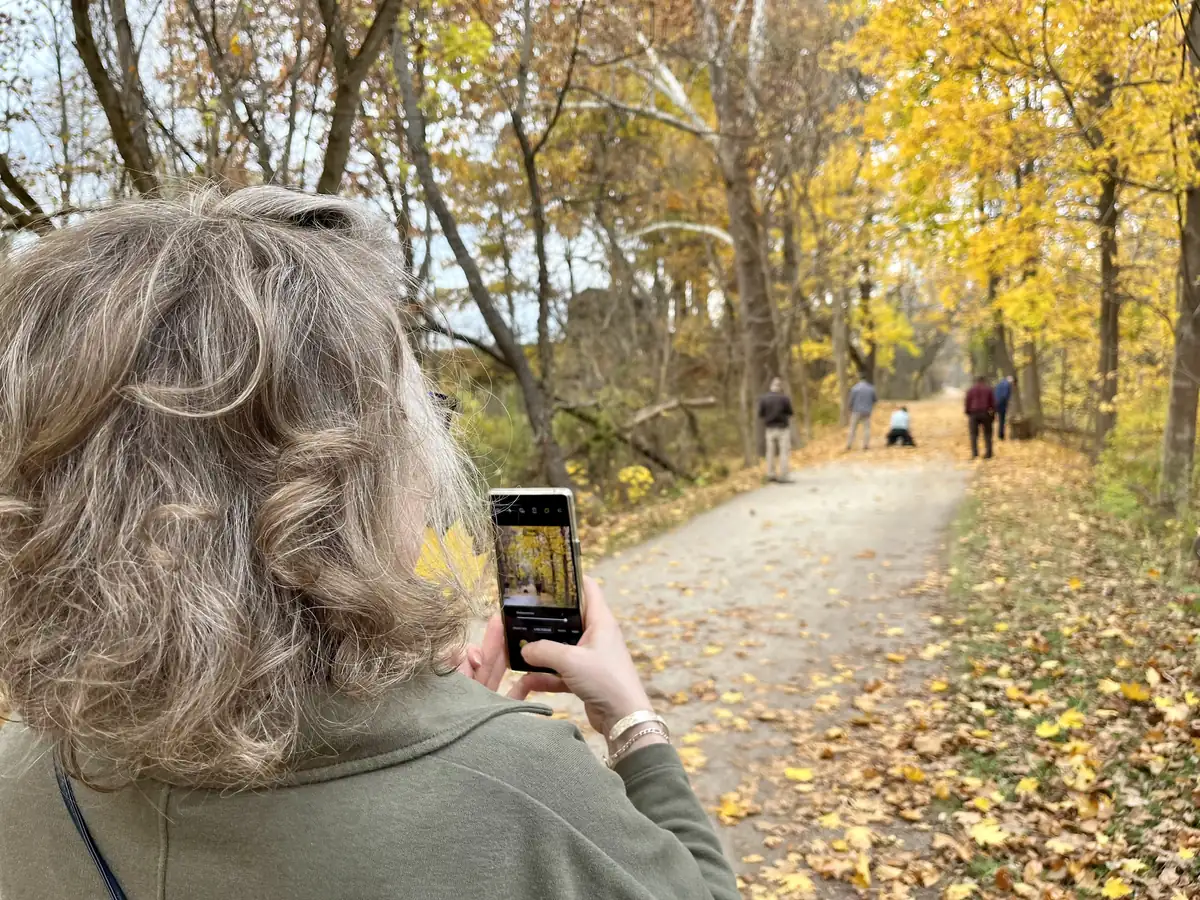
Start here
- Fall color, north to south. ODNR expects a vibrant year, because Ohio enters autumn without drought for the first time in several seasons. Its foresters put peak color in the far north in mid-October, across central and northern Ohio in mid-to-late October, and in southern Ohio at the end of October into early November. The weekly fall color report starts Thursday, October 1.
- The Lake Erie marshes. Waterfowl numbers at Ottawa National Wildlife Refuge peak in October, sparrows replace warblers in the shore thickets, saw-whet owls slip through the lakeshore woods, and the first tundra swans can turn up with the October peak. The refuge opens its Wildlife Drive October 10–12.
- The moon hides Jupiter, then the Hunter’s Moon. Before dawn on Tuesday, October 6, the crescent moon covers Jupiter for about an hour, from roughly 4:20 to 5:20 a.m. Eastern, and both the disappearance and the reappearance happen in a dark sky. The full Hunter’s Moon rises at sunset on October 25 and 26, and the Orionids peak before dawn on October 21 and 22.
Keep a record: in the Naturalist’s Field Journal, the “birds I have seen” list takes the sparrows and first ducks, the tree-through-the-seasons page takes the maple on your street, the seeds-pods-and-cones plate takes the walnuts and witch hazel capsules, and the cricket thermometer takes the last warm evenings. Date every entry.
Regions used below: Northwest and Lake Erie; Northeast and Cleveland; Central Ohio; Southwest and Cincinnati; Southeast and the Hocking Hills.
When is peak fall color in Ohio?
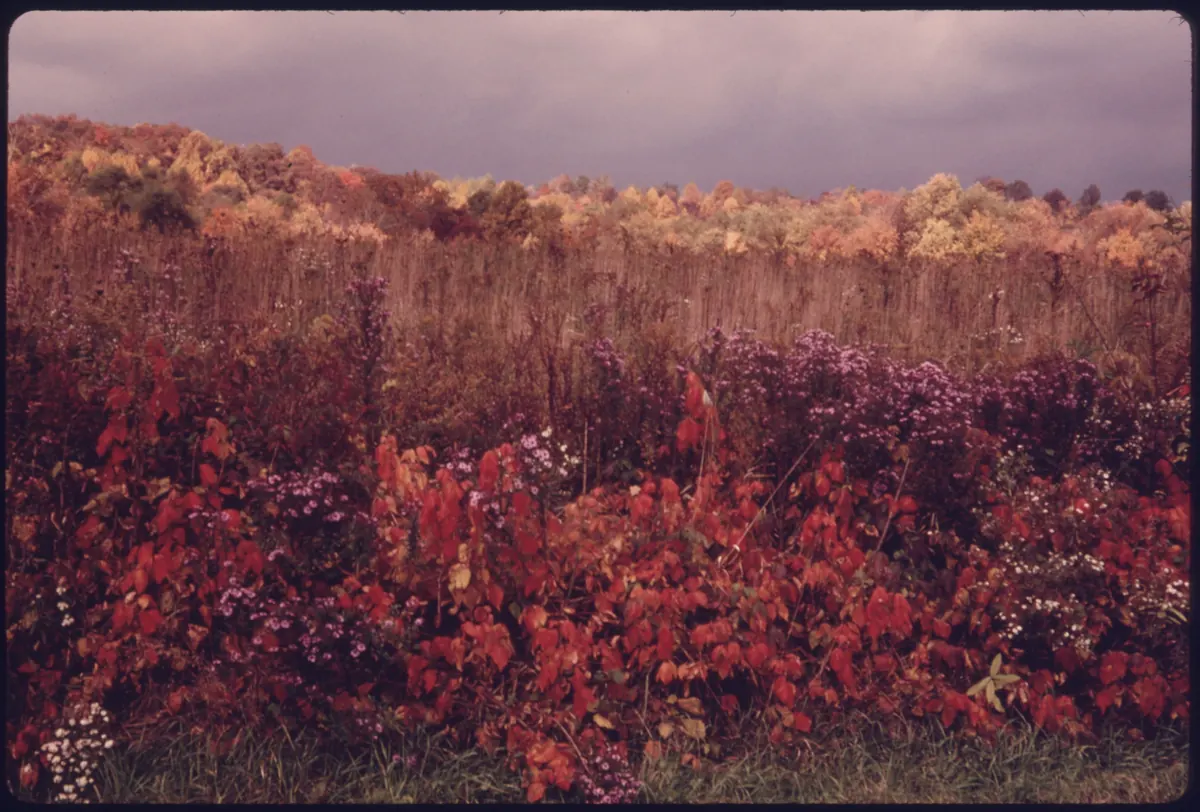
ODNR fall color forester David Parrott expects a good year: “we are entering autumn without near-drought or drought conditions,” unlike the last few years. The Division of Forestry’s timing, north to south, is in the table below, and its weekly color report begins Thursday, October 1. Sunny days and cool nights bring out the reds; one windy, wet night can strip a street.
| Region | Reference places | Typical peak |
|---|---|---|
| Northwest and Lake Erie | Toledo, the Oak Openings, the Lake Erie marshes | Mid-October |
| Northeast and Cleveland | Cuyahoga Valley, Geauga and Ashtabula counties, Akron | Mid-to-late October; Cuyahoga Valley usually the third week |
| Central Ohio | Columbus, Mohican, Delaware and Licking counties | Mid-to-late October |
| Southwest and Cincinnati | Cincinnati, Dayton, the Little Miami valley | Late October into early November |
| Southeast and the Hocking Hills | Old Man’s Cave, Athens, Wayne National Forest | End of October into early November |
The National Park Service gives Cuyahoga Valley a schedule worth copying across the northeast: early October on the Oak Hill Trail for maple reds, sassafras oranges and the yellows of white ash and bigtooth aspen; mid-October at Brandywine Falls for sugar maples against white oaks; late October on the Ledges trails for the late-turning oaks, hazelnut and witch hazel. In the Hocking Hills, ODNR naturalists lead a one-mile Old Man’s Cave hike at 10 a.m. on Tuesdays, October 6, 13, 20 and 27, and the Grandma Gatewood Fall Colors Hike on Saturday, October 10, runs about six miles from Old Man’s Cave to Cedar Falls and back, rated difficult. For your own street, the Field almanac estimates green-up and leaf-off from satellite data. Pick one tree, photograph it every Sunday, and note the date it is bare.
What birds are moving along Lake Erie and across Ohio in October?
Fall migration on Lake Erie is bigger than spring, if quieter: Black Swamp Bird Observatory says the fall flight runs from late July to early November and carries more birds, because the year’s young travel too. The Cleveland Museum of Natural History puts the sequence simply: warblers peak in September, sparrows in October. Then the ducks come.
-
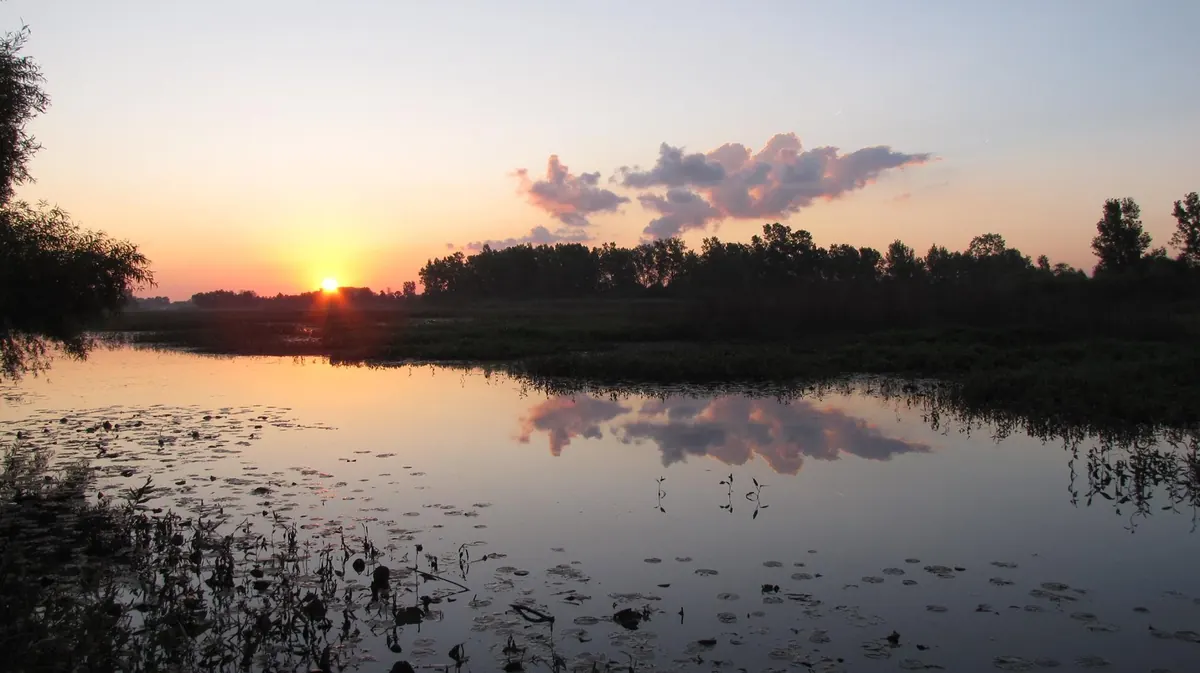
The waterfowl peak at Ottawa and Magee
Peak in October; tundra swans from late October, in numbers by mid-November · Ottawa National Wildlife Refuge and Magee Marsh, Ottawa County
The refuge puts it this way: “We will see waterfowl numbers peak in October, this is usually when we see the first tundra swans arrive.” Canada geese, northern shovelers, blue-winged teal and pintails fill the marsh as the month goes on; the Friends group puts the main swan arrival in mid-November. The Wildlife Drive is open October 10–12, sunrise to an hour before sunset. Controlled waterfowl hunts run Mondays, Wednesdays, Fridays and Saturdays through October and November at Ottawa, and hunts at Magee Marsh periodically close the road to the boardwalk from mid-October, so check before you drive out.
-
Sparrows, kinglets and the first juncos
All month; juncos at feeders by November · Thickets, hedgerows, weedy fields statewide
October is sparrow month: white-throated and white-crowned sparrows work the edges of every park, golden-crowned kinglets tick through the conifers, and hermit thrushes move quietly along the trails. The Friends of Ottawa put juncos, tree sparrows and pine siskins back at feeders in November, but the first junco usually shows up in October and is worth a line in the journal.
-
Saw-whet owls
October · Lakeshore woods and vine tangles
The Friends of Ottawa note that “saw-whet owl migration is also particularly prevalent in October.” A saw-whet is barely bigger than a soda can and sits silent in dense cover by day; banders catch them at night with recorded calls. If you find one at eye level in a grapevine tangle, back away and leave it be.
-
Sandhill cranes at Funk Bottoms and Killbuck
Staging October into December; most Ohio cranes leave in late November · Funk Bottoms and Killbuck Marsh wildlife areas, Wayne County
ODNR’s aerial fall waterfowl surveys, flown October to December, have found flocks of up to 150 cranes around Funk Bottoms and Killbuck Marsh, one of the largest inland marshes left in Ohio. The 2026 Midwest Crane Count tallied 344 sandhills statewide, led by Ottawa (63), Wayne (61), Geauga (40), Ashtabula (37) and Lucas (24) counties. Ohio’s breeders winter in central Florida and leave in late November, so October and early November are the staging weeks, when families merge into flocks in the flooded meadows. Listen before you look; the rolling, rattling call carries a long way, and the journal’s map-of-sounds plate is made for it. Cranes are still listed as threatened in Ohio, so keep your distance.
-
Hawks: an honest note
October, on north winds · Open country and ridges inland
Ohio sits south of the big lake-crossing bottlenecks, so the dramatic fall hawk counts happen on the Ontario and Michigan shores, and the mid-September broad-wing kettles are mostly past. What Ohio gets in October is a steadier flow: turkey vultures, sharp-shinned and Cooper’s hawks and red-tails on any day with a north wind behind a front.
-
Blue jays and winter finches
October into November · Lakeshore first, then the woods more than the feeders
The Finch Research Network’s forecast, posted September 25, expects an above-average blue jay flight along the north shores of Lakes Erie and Ontario on good acorn and beechnut crops, moderate numbers of purple finches in the Great Lakes, plenty of pine siskins in the Northeast, and small-to-medium flocks of evening grosbeaks in the Great Lakes region. Redpolls should come only in small numbers, and good cone crops should hold most red-breasted nuthatches in the north. With wild seed plentiful, siskins, crossbills and purple finches “will be found in the forests more than at feeders.”
Two dated days: The Big Sit, October 10–11, asks how many species you can identify from a 17-foot circle, and eBird’s October Big Day is Saturday, October 10. Ohio Lights Out has programs in six areas, from Akron–Canton and Cleveland to Columbus, Cincinnati, the Miami Valley and Toledo, asking buildings and homes to dim lights at night during migration and recruiting volunteers to monitor window collisions. The “birds I have seen” list is the place for the first junco and the last swallow.
Are monarchs still passing through Ohio in October?
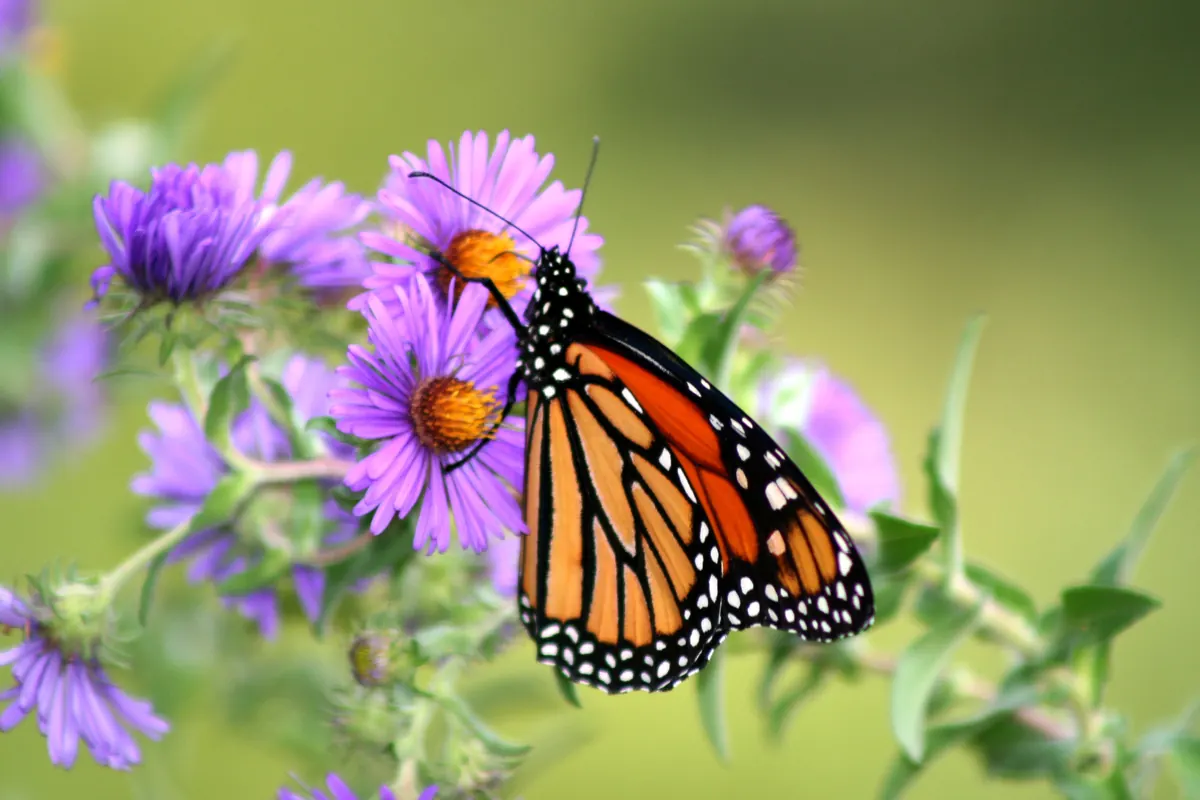
Only the stragglers. Monarch Watch puts the peak flight at 41° N, the latitude of Toledo and Cleveland, on September 8–20, and at 39° N, roughly Cincinnati, on September 14–26. On the Cleveland lakeshore, Metroparks naturalists watch Wendy Park and the Lakefront Reservation, where roosts form “after a very warm day with north winds that are followed by afternoon or evening thunderstorms.” In October the same rule works on a smaller scale: a warm south-wind afternoon can put a dozen monarchs on a patch of New England aster, and the next cold north wind takes them all. Report sightings, and especially roosts, to Journey North; the last monarch in your yard is a real data point, and one for the pollinator watch page.
What is the fall run on Lake Erie?
The lake is cooling fast. By NOAA Great Lakes lab satellite records for 1995–2025, Lake Erie’s average surface temperature is about 66 °F on October 1, 62 °F at mid-month, 56 °F on Halloween and 51 °F by mid-November. That drop moves fish toward shore.
-
Steelhead at the breakwalls
Staging off the piers in October; the main river run in November · Vermilion, Rocky, Chagrin, Grand and Ashtabula rivers and Conneaut Creek; piers from Avon east
ODNR stocks about 450,000 yearling steelhead a year in seven Lake Erie tributaries, reared at the Castalia State Fish Hatchery from several wild strains. In October, says the Division of Wildlife, “anglers can find steelhead congregating along nearshore break walls, staging to run upriver”; its Lake Erie guide dates the pier and river fishery November through May. A few fish push into the lower rivers after an October rain, and the first real pulse usually follows a November high-water event. You do not need a rod: after a rain, a bridge over the Rocky River is a fine place to watch for silver fish holding in the riffles.
-
Walleye come west
September to November, close to shore · Cleveland to Catawba; most anglers from Cleveland to Sandusky
ODNR’s guide: in fall “walleye slowly begin their seasonal migrations back toward their western basin spawning grounds,” chasing baitfish in the shallows from Cleveland to Catawba, and “anglers cast or troll crankbaits in shallow waters just off piers and along the shoreline.” The guide admits it is “sometimes difficult to predict”; the pier regulars fish it into the dark.
-
Yellow perch for a first fishing trip
Late summer through fall · Western basin reefs; off Huron to Conneaut
“Late summer through fall produces some of the best yellow perch fishing on Lake Erie,” says the guide, with perch or crappie rigs baited with minnows fished near the bottom. For a child’s first trip, nothing on the lake is simpler.
Write the water temperature next to whatever you catch or watch in the daily field log; in a few years the page will tell you when the fall run really starts on your river.
When is the first frost and freeze in Ohio?
Ohio freezes from the plateau down to the lake. Youngstown, up on the Allegheny Plateau, has already frozen by October 1 in one year in ten and reaches its median first freeze on October 17. Cleveland, warmed by a lake still near 60 °F, waits until November 3 in a typical year. Between them, most of the state freezes in the last ten days of October. Frost on the grass, possible on a clear, calm night with the thermometer reading 36 °F, usually comes a week or two earlier, and a hard freeze before peak color browns the leaves and drops them early.
| Station | One year in ten | Median | Nine years in ten |
|---|---|---|---|
| Toledo (Express Airport) | Oct 11 | Oct 24 | Nov 8 |
| Cleveland | Oct 21 | Nov 3 | Nov 17 |
| Akron (Fulton Airport) | Oct 12 | Oct 28 | Nov 8 |
| Youngstown (Regional Airport) | Oct 1 | Oct 17 | Nov 1 |
| Columbus (WCMH) | Oct 13 | Oct 24 | Nov 4 |
| Dayton (MCD) | Oct 13 | Oct 25 | Nov 7 |
| Cincinnati | Oct 8 | Oct 22 | Nov 3 |
| Athens (OU) | Oct 8 | Oct 23 | Nov 3 |
Your own town, and every other Ohio station, is on the Ohio frost dates page. Before the first clear, still night, carry the houseplants indoors, cut the last basil and pull the squash off the vine; then log the date the grass first turns white. Ten years of those dates make a better guide than any table.
How much shorter do Ohio days get in October?
About an hour and a quarter, and more the farther north you are: Toledo loses 80 minutes over the month, Cleveland 78, Cincinnati 73. In Columbus, sunrise slips from 7:28 to 8:00 a.m. and sunset from 7:14 to 6:31 p.m., so by Halloween the school bus runs in twilight. Standard time returns at 2 a.m. on Sunday, November 1, and the evenings get darker still.
| City | Oct 1 | Oct 31 | Lost | Per day |
|---|---|---|---|---|
| Toledo | 11 h 45 m | 10 h 25 m | 80 min | 2.7 min |
| Cleveland | 11 h 44 m | 10 h 26 m | 78 min | 2.6 min |
| Youngstown | 11 h 45 m | 10 h 26 m | 79 min | 2.6 min |
| Akron | 11 h 45 m | 10 h 27 m | 78 min | 2.6 min |
| Columbus | 11 h 46 m | 10 h 31 m | 75 min | 2.5 min |
| Dayton | 11 h 46 m | 10 h 32 m | 74 min | 2.5 min |
| Cincinnati | 11 h 46 m | 10 h 33 m | 73 min | 2.4 min |
| Athens | 11 h 46 m | 10 h 33 m | 73 min | 2.4 min |
Put in your own address on the Field almanac for local sunrise, sunset, twilight and this week’s minutes lost.
What is October weather like in Ohio, and what does El Niño mean this year?
October is a settled, often clear month in Ohio. NOAA’s 1991–2020 normals put the average high between 62 °F at Youngstown and 67 °F at Cincinnati and the lows between 42 and 47 °F. Rain totals are moderate: 2.59 inches at Toledo, 2.90 at Columbus, 3.35 at Cincinnati and 3.60 at Cleveland, and at Columbus and Dayton October is among the three driest months. November is another matter, with normal snowfall of 4.5 inches at Cleveland and Youngstown, 1.2 at Columbus and 0.8 at Cincinnati.
October snow is rare but real. Normal October snowfall runs from a tenth of an inch at Cleveland and Toledo to 0.7 inch at Youngstown, and Cleveland’s first measurable snow averages November 10. The earliest measurable snows on record: Columbus on October 10, 1906, Dayton on October 18, 1989, and five inches at Cincinnati on October 19, 1989. With the lake in the mid-50s at Halloween, the snowbelt east of Cleveland can see a first lake-effect squall late in the month in a cold year.
The winter ahead is shaped by El Niño. The Climate Prediction Center’s September 10 discussion kept an El Niño Advisory in place and gave a “greater than 90% chance of a very strong event” this fall and winter, with a 75 percent chance that October–December outdoes every El Niño since 1950. A study by the Cleveland and Cincinnati weather offices of eight El Niño winters since 1957 found them warmer than normal on average, with a precipitation deficit in seven of the eight and “below normal snowfall at many stations,” an effect “particularly pronounced at stations removed from lake effect snow regimes”; at Cleveland and Youngstown, lake-effect masked the signal. NWS Cleveland’s Raelene Campbell said in July that snowfall “may be decreased, but when I say that, that’s not accounting for lake effect.” So: milder and drier statewide is the best bet, less snow is most reliable away from the lake, while this month’s weather owes little to El Niño. NOAA publishes its winter outlook in mid-October.
What can you see in Ohio’s night sky in October?
-
The moon hides Jupiter
Tuesday, October 6, about 4:20 to 5:20 a.m. EDT · Low in the east, moon 11 to 26 degrees up
This is the event of the month, and Ohio gets both halves of it in a dark sky. The waning crescent rises a little after 3 a.m. with Jupiter beside it. By the International Occultation Timing Association’s predictions, Jupiter slips behind the moon’s bright edge between about 4:19 a.m. (Cincinnati) and 4:22 (Cleveland, Youngstown), with the moon 11 to 15 degrees up, and reappears from the dark edge about an hour later, between 5:19 and 5:22, with the moon 23 to 26 degrees up and civil twilight nearly two hours off. Toledo is not on IOTA’s list; Detroit’s times are 4:23 and 5:20. Jupiter’s four big moons go behind too, minutes apart. Binoculars show it; a small telescope makes it unforgettable. You need a low, open eastern horizon.
-
The Hunter’s Moon
Sunday, October 25 and Monday, October 26, rising at sunset · Everywhere; find a low eastern horizon
Full at 12:12 a.m. on Monday the 26th, so both evenings look full. In Columbus it rises at 6:04 p.m. on the 25th, half an hour before the 6:38 sunset, and at 6:37 p.m. on the 26th, right at sunset; Cleveland’s times are 5:56 and 6:31 on the 25th. You may see it billed as a supermoon, but the moon is not close enough to perigee to earn the name.
-
Orionid meteors
Pre-dawn, October 21 and 22 · Anywhere dark; face south
Active from late September to late November, with a broad peak on October 21 and 10 to 20 an hour in a good year; EarthSky notes that recent displays have been low to average, though the meteors, debris from Halley’s Comet, are fast and bright. The gibbous moon is the problem and patience is the fix: it sets around 3:45 to 4 a.m. across Ohio on the morning of the 22nd (3:51 in Columbus), leaving a dark window until the sky starts to brighten after 6. Get out of town for it.
-
Draconid meteors
Evening of Thursday, October 8 · Look north after dark
A slow, sparse shower that favors the early evening, so it suits children, and this year there is no moon in the evening sky. Rates are unpredictable and usually modest. Two nights later the moon is new and the darkest weekend of the month begins.
-
Saturn all night, Venus gone, Jupiter and Mars at dawn
Saturn at opposition October 4; Venus leaves after the first days; Mars crosses the Beehive October 11 · East at dusk for Saturn; east at dawn for Jupiter and Mars
Saturn reaches opposition on October 4, rising at sunset and up all night as the brightest point in a dim stretch of sky near the Pisces–Cetus border; the waxing moon sits beside it on October 23 and 24. Venus is low in the western twilight only early in the month and reaches inferior conjunction on October 23–24. Before sunrise, Jupiter is the brightest thing in the east, red Mars sits higher to its west, and on October 11 Mars crosses the stars of the Beehive cluster.
-
Star programs
Friday and Saturday nights in the Hocking Hills; October 9 and 18 in Geauga County · John Glenn Astronomy Park; Observatory Park, Montville
John Glenn Astronomy Park, on State Route 664 in the Hocking Hills, runs free guided stargazing on clear Friday and Saturday nights through late November, with a laser constellation tour and a 28-inch telescope; reserve a free parking pass and check the forecast post by noon. October’s weekends: the Andromeda Galaxy (2–3, 7:15 p.m.), Dark Fall Skies (9–10, 7:00 p.m.), Cassiopeia (16–17, 6:45 p.m.), the Color of Moonlight with Saturn (23–24, 6:45 p.m.) and Pegasus with the cluster M15 (30–31, 6:30 p.m.). Observatory Park in Geauga County, a Silver-tier International Dark Sky Park with a 36-inch Warner & Swasey telescope, lists Ohio’s Ancient Skywatchers and Night Sky Viewing (7–11 p.m.) on Friday, October 9, and Nature Journaling: The Moon on October 18.
| Phase | Date | Time |
|---|---|---|
| Last quarter | Saturday, Oct 3 | 9:25 a.m. EDT |
| New moon | Saturday, Oct 10 | 11:50 a.m. EDT |
| First quarter | Sunday, Oct 18 | 12:12 p.m. EDT |
| Full moon, the Hunter’s Moon | Monday, Oct 26 | 12:12 a.m. EDT (looks full the evenings of Oct 25 and 26) |
| Last quarter | Sunday, Nov 1 | 3:28 p.m. EST |
Before you head out, the Today’s sky page shows tonight’s cloud forecast, and our moon phases page lists local moonrise and moonset.
What is blooming, dropping and fruiting in Ohio in October?
-
Witch hazel, the last flower of the year
Mid-October into November · Ravines and moist woods statewide; the Ledges at Cuyahoga Valley
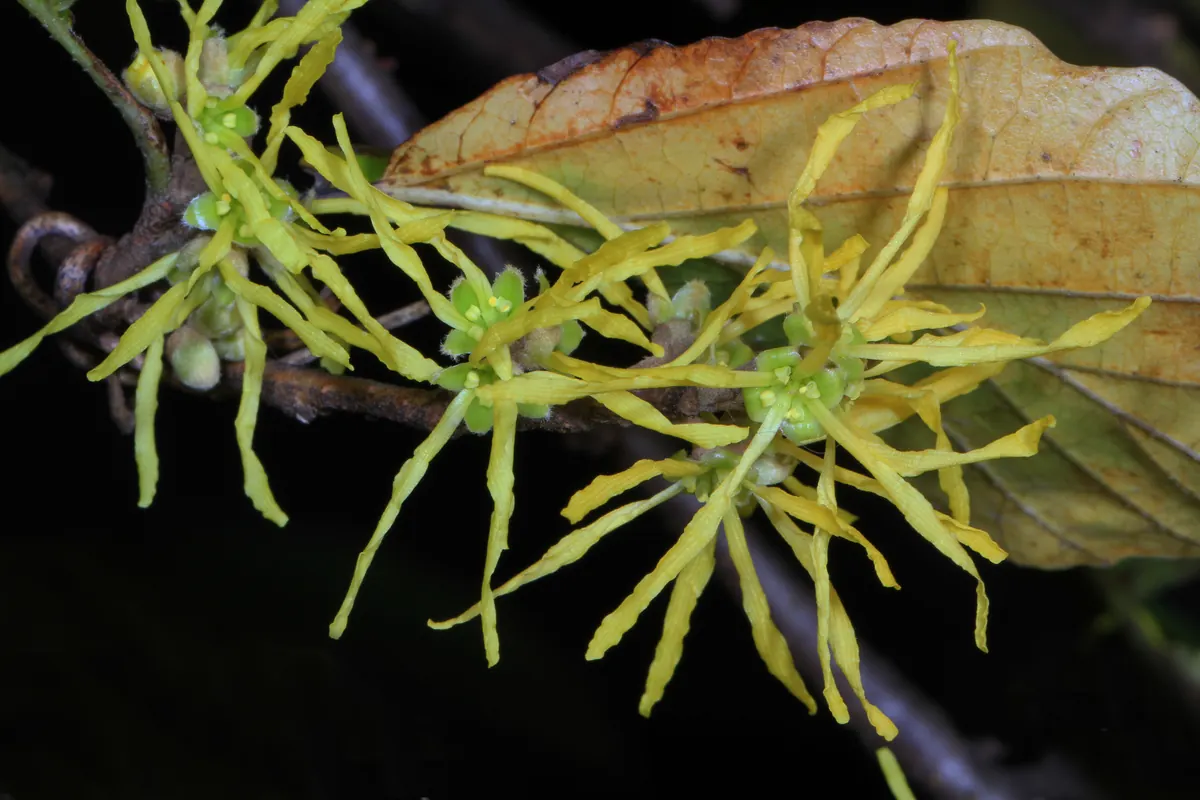
American witch hazel flowers when everything else has finished: bright yellow blooms with four slender, strap-like petals “appearing in mid to late fall,” in the Forest Service’s words, fragrant and often on bare branches; the Wildflower Center lists its bloom from September to December. The same shrub carries last year’s capsules, which dry and fire two black seeds ten to twenty feet; on a warm, dry afternoon you can hear them snap. The Park Service points to witch hazel and hazelnut yellows on the Ledges trails in late October.
-
Asters, goldenrods and gentians
Until the first hard freeze · Roadsides, meadows, prairie remnants, wet ground
New England aster blooms August through October, Canada goldenrod September into November, and bottle gentian, whose closed blue flowers only a strong bumblebee can force open, August through October in fens and wet thickets. They are the last nectar for late monarchs and for bumblebee queens fattening before they dig in. Goldenrod is “commonly blamed for hay fever,” as the Wildflower Center notes; the culprit is ragweed, blooming at the same time with flowers nobody notices.
-
Black walnuts and buckeyes
September and October · Fencerows, floodplains, yards
The Forest Service says black walnut fruit “ripens in September or October of the same year, dropping shortly after the leaves fall,” and that big crops come irregularly, “perhaps twice in 5 years,” so a count under one tree is worth writing down. Ohio buckeye drops its leaves early and stands nearly bare while the walnuts are still falling; every part of it is poisonous if eaten, so the shiny nut in a pocket is a charm, not a snack.
-
Ginkgo and the day it all comes down
Usually after the first hard freeze, late October or November · City streets and campuses
OSU’s BYGL newsletter notes that ginkgo drops its leaves “in a short time, often in a single day,” usually after a hard freeze, leaving a circle of yellow fans on the sidewalk by breakfast. Oaks do the opposite and hold brown and russet into November.
-
Apples, pumpkins and the Pumpkin Show
Through October; Circleville October 21–24 · Orchards statewide; Pickaway County
Ohio’s orchards say September and October are the months for pickers, and the late varieties come ripe now. The 119th Circleville Pumpkin Show, October 21–24, stacks more than 100,000 pounds of pumpkins, squash and gourds in a town of about 12,000 and draws several hundred thousand people; the giant-pumpkin weigh-in is the thing to see.
-
Hen of the woods and the fall fungi
September and October; October is the peak · Oak bases, logs, lawns
ODNR’s nature preserves staff call chicken of the woods and hen of the woods “common throughout Ohio” and add giant puffballs, coral fungi, the indigo milk cap and the bleeding tooth fungus, which oozes red drops in early fall. The Ohio Mushroom Society adds lion’s mane, parasols and honey mushrooms to the October list. Two rules from ODNR: “Misidentification can be deadly!” and “collecting is strictly prohibited in state nature preserves.” Take pictures, not meals: leave any wild mushroom uneaten until an expert has confirmed it.
What are the deer, insects and other animals doing?
-
Deer: courtship begins in mid-October
From mid-October; peak breeding early to mid-November · Statewide, and on every road at dusk
ODNR’s life-history notes put peak breeding in early to mid-November, beginning “as early as mid-October and runs through mid-January.” This month is the pre-rut: saplings rubbed raw at knee height and pawed scrapes under low branches; the dusk-and-dawn watch plate exists for this. OSU’s BYGL calls October through November “the prime time for deer vehicle collisions,” peaking in November, mostly between 5 p.m. and 1 a.m. and 5 and 8 a.m.
-
Woolly bears on the road
September and October · Roads, sidewalks, trail edges on warm afternoons
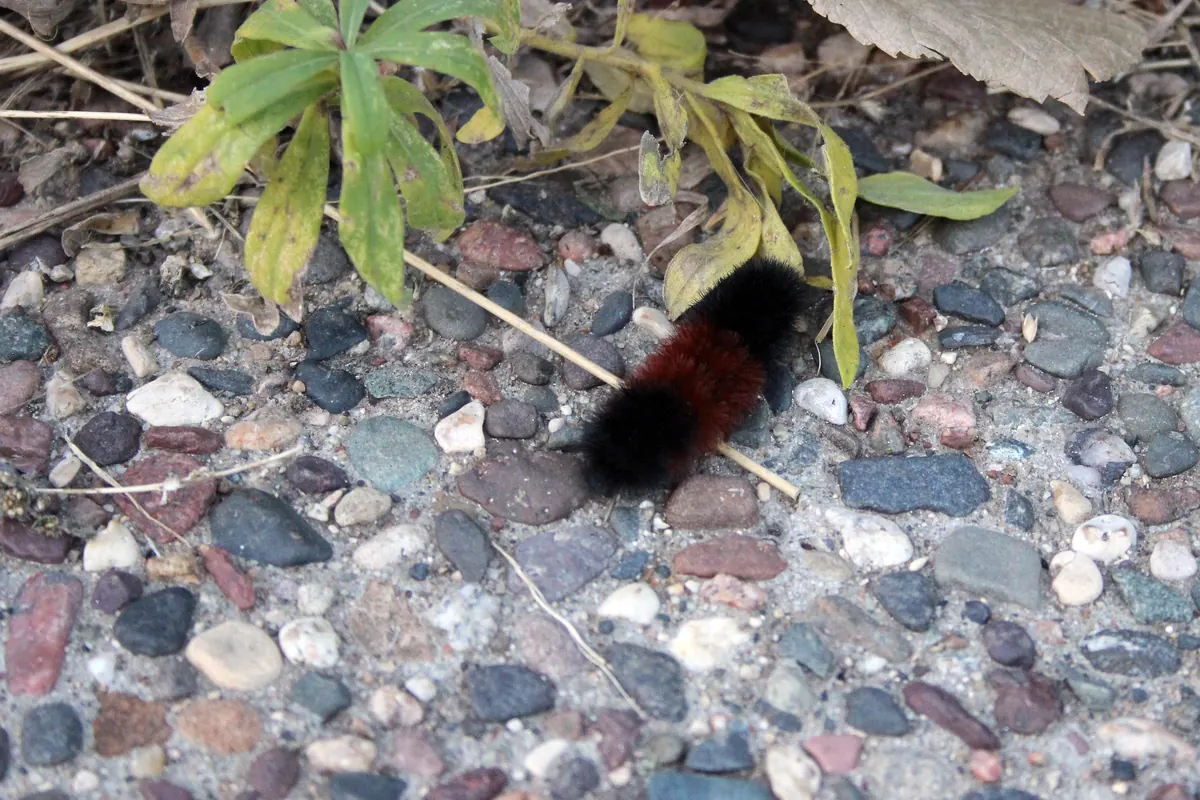
The banded woolly bear, caterpillar of the Isabella tiger moth, crosses roads in October looking for a winter spot under bark or leaf litter. The idea that its rust band predicts the winter is folklore, and Vermilion has built what it bills as Ohio’s largest one-day festival on it: the 54th Woollybear Festival is Sunday, October 4, with a parade at 1:30 p.m. and the Woollybear 500 caterpillar races.
-
Lady beetles, stink bugs and boxelder bugs
Mid-to-late October, on warm days after a cold snap · Sunny south and west walls, then indoors
OSU’s BYGL explains the timing: boxelder bugs cluster on sunny trunks during early-fall cold snaps, and “if a cold snap is followed by a warm spell, the adult bugs use their wings to disperse in search of suitable overwintering sites which may include homes.” Multicolored Asian lady beetles, from mid-to-late October, and brown marmorated stink bugs follow the same rule. Seal cracks now, and vacuum rather than swat the ones that get in, because crushed lady beetles stain.
-
Ticks are not done
October and November · Woods, edges, tall grass; on the dog
OSU’s tick fact sheet is blunt: “Blacklegged tick adults are active during spring, fall, and winter,” so “preventative measures should be taken outdoors where the tick occurs, even during autumn and winter.” Tuck pants into socks, use repellent, and check everyone, dogs included, after every walk in leaf litter.
-
The last crickets
Until the first hard freeze · Any evening outside
Field crickets and tree crickets sing until the cold stops them, slower as it gets colder. Count a snowy tree cricket’s chirps for 14 seconds and add 40 for a fair estimate of the temperature in Fahrenheit; the cricket thermometer plate is a page of exactly those counts. The night the count reaches zero, the chorus is over, and that date belongs in the log.
What are the best outdoor outings for Ohio families in October?
- Sunday, October 4: the Woollybear Festival in Vermilion. Parade at 1:30 p.m. and caterpillar races.
- October 8–10: the dark-moon weekend. Draconids after dark on Thursday the 8th, then Dark Fall Skies at John Glenn Astronomy Park (Friday and Saturday, 7:00 p.m., free parking pass) or Observatory Park’s night-sky viewing on Friday the 9th.
- October 10–12: count birds. The Big Sit, eBird’s October Big Day on the 10th, and the Ottawa refuge’s Wildlife Drive.
- Saturday, October 10: the Grandma Gatewood Fall Colors Hike in the Hocking Hills, or the one-mile Old Man’s Cave hike any Tuesday at 10 a.m.
- October 21–24: the Circleville Pumpkin Show, and an alarm for the Orionids before dawn on the 21st or 22nd.
- Through November 30: Summit Metro Parks’ 63rd Fall Hiking Spree. Hike eight designated trails for the staff and shield; rewards are free for Summit County residents, $10 for first-year hikers from elsewhere and $5 for returners.
- Citizen science that fits a school week. Report the last monarch and any roost to Journey North, dim the porch light for Ohio Lights Out, and join Project FeederWatch before its season opens November 1. The Ohio Young Birders Club’s 18th annual conference is Saturday, November 7, at the Grange Insurance Audubon Center in Columbus, with student talks and, by tradition, a bird quiz led by Kenn Kaufman; adults are welcome.
For the fridge door, the Field almanac prints a one-page October checklist; other states are on the nature hub.
Safety notes for October in Ohio
- Deer on the roads. Collisions peak in November, mostly at dusk and dawn. If a deer steps out, brake firmly and stay in your lane; swerving causes more injuries than the deer does.
- Hunting seasons and hunter orange. Deer archery has been open statewide since September 26, and the Disease Surveillance Area (all of Allen, Hardin, Marion and Wyandot counties and townships in Crawford, Delaware, Hancock, Morrow and Union) has an early gun season October 10–12. Youth, military and veteran waterfowl days are October 3–4, the regular duck season opens October 17 in all three zones, fall wild turkey runs October 1–25 in 70 counties, squirrel is open all month, woodcock opens October 16, and youth small-game weekends fall on October 24–25 and October 31–November 1. Ohio requires anyone hunting anything but waterfowl during the deer gun seasons (youth gun November 21–22, gun November 30–December 6 and December 19–20, muzzleloader January 2–5) to wear a solid or camouflage hunter-orange vest, jacket or coveralls; confirm with ODNR’s digest whether that covers the October early gun days. Hikers and dog walkers on wildlife areas and in Wayne National Forest: wear orange anyway this month, and put some on the dog.
- The lake, and the first snow. Lake Erie is in the mid-50s by Halloween; a fall off a pier or out of a kayak is a cold-water emergency, so wear the life jacket. The snowbelt can get a first lake-effect squall in the last week of the month; the Weather now page shows what is coming.
- Ticks, mushrooms and buckeyes. Check for ticks after every walk, eat no wild mushroom without expert confirmation, and keep buckeyes away from small children and dogs.
Sources
- WYSO: vibrant and bright fall colors in the forecast for Ohio (ODNR outlook, September 25, 2026)
- National Park Service: find the best fall colors in Cuyahoga Valley
- Hocking Hills calendar of events, October 2026 (Old Man’s Cave hikes, Grandma Gatewood Fall Colors Hike)
- WTVG 13abc: fall migration in northwest Ohio, Black Swamp Bird Observatory (September 25, 2026)
- Cleveland Museum of Natural History: a beginner birder’s guide to fall migration in Cleveland
- U.S. Fish and Wildlife Service: Ottawa National Wildlife Refuge, species and seasons
- Friends of Ottawa National Wildlife Refuge: timing of bird migration
- Friends of Ottawa National Wildlife Refuge: 2026 Wildlife Drive dates
- Friends of Ottawa National Wildlife Refuge: hunting and fishing information
- ODNR: Magee Marsh Wildlife Area (controlled hunts, boardwalk hours, visitor center)
- ODNR Division of Wildlife: sandhill crane
- Ohio’s Country Journal: 2026 Midwest Crane Count results for Ohio
- Ian Adams Photography: Picture Ohio! sandhill cranes (migration timing)
- HawkCount (Hawk Migration Association of North America): Ohio sites
- Detroit River Hawk Watch
- BWD magazine: Ohio birding by season, fall
- Finch Research Network: winter finch forecast 2026–2027
- The Big Sit! 2026
- BirdsCaribbean: October Big Day 2026 (Saturday, October 10)
- Ohio Lights Out
- Monarch Watch: peak migration dates by latitude
- Cleveland Metroparks: ten places to view the monarch migration
- Journey North: monarch sightings and fall roost reports
- NOAA GLERL CoastWatch: long-term average Lake Erie surface water temperature (daily, °F)
- ODNR Division of Wildlife: Ohio’s steelhead program (PDF)
- ODNR Division of Wildlife: Lake Erie fishing guide (PDF)
- NOAA NCEI: 1991–2020 monthly normals, Ohio stations (data API)
- NWS Wilmington: earliest snowfall climatology for Cincinnati, Columbus and Dayton
- News 5 Cleveland: typical first frost, freeze and snowfall across northeast Ohio (NWS data)
- NWS Cleveland: climatological effects of ENSO in the lower Great Lakes and Ohio Valley
- Cincinnati Enquirer via Yahoo: what a super El Niño could mean for winter in Ohio (July 24, 2026)
- Climate Prediction Center: ENSO diagnostic discussion, September 10, 2026
- U.S. Naval Observatory: moon phases 2026 and sunrise, sunset, moonrise (data API)
- International Occultation Timing Association: lunar occultation of Jupiter, October 6, 2026
- EarthSky: visible planets and night sky guide (Saturn opposition, Venus, Mars and the Beehive)
- EarthSky: meteor shower guide (Draconids, Orionids)
- John Glenn Astronomy Park: programs, fall 2026
- Geauga Park District: Observatory Park and October 2026 programs
- USDA Forest Service: American witchhazel, plant of the week
- Lady Bird Johnson Wildflower Center: native plant database (witch hazel, New England aster, Canada goldenrod, Ohio buckeye)
- USDA Forest Service: closed bottle gentian, plant of the week
- USDA Forest Service Fire Effects Information System: black walnut
- OSU BYGL: trees in autumn attire (ginkgo leaf drop)
- Ohio Magazine: guide to Ohio’s best apple orchards
- Circleville Pumpkin Show, October 21–24, 2026
- ODNR Division of Natural Areas and Preserves: phenomenal fall fungi
- Ohio Mushroom Society: October mushrooms of the month
- ODNR Division of Wildlife: white-tailed deer life history notes (PDF)
- ODNR Division of Wildlife: white-tailed deer
- OSU BYGL: white-tailed deer road watch
- Vermilion Chamber of Commerce: 54th Woollybear Festival, October 4, 2026
- OSU BYGL: boxelder bugs and other fall home invaders
- OSU Extension: ticks and tick-borne diseases in Ohio (HYG-2073)
- Summit Metro Parks: 63rd annual Fall Hiking Spree
- Project FeederWatch: how to participate (season begins November 1)
- Ohio Young Birders Club: 18th annual conference, November 7, 2026
- ODNR Division of Wildlife: Ohio’s 2026–27 hunting and trapping season dates (PDF)
- ODNR Division of Wildlife: Ohio hunting and trapping regulations 2026–27 (PDF; Disease Surveillance Area, hunter orange)
- Ohio Administrative Code 1501:31-15-11: hunter orange requirement
- Photos via Wikimedia Commons; licenses and photographers are credited under each picture
