What to look for in nature in Ohio this May
May is when Ohio’s woods fill with color and song. Warblers, thrushes and orioles drop into the trees along Lake Erie on the first warm southerly nights, and the Black Swamp Bird Observatory’s Biggest Week in American Birding runs May 7 to 16 this year. Inland, the Cuyahoga Valley’s river bottoms ring with migrants while herons feed chicks in treetop nests, bullfrogs begin to call, and the spring wildflowers rush to bloom before the canopy closes. The sky adds a moonless Eta Aquariid shower around May 5 to 7, Thursday the 20th’s full Flower Moon, the third of spring’s four, and Mercury low in the evening twilight as the month ends. It is also a month of cool snaps, heavy rain and the first real storms.
Other months in Ohio: October, November, December, January, February, March, April.
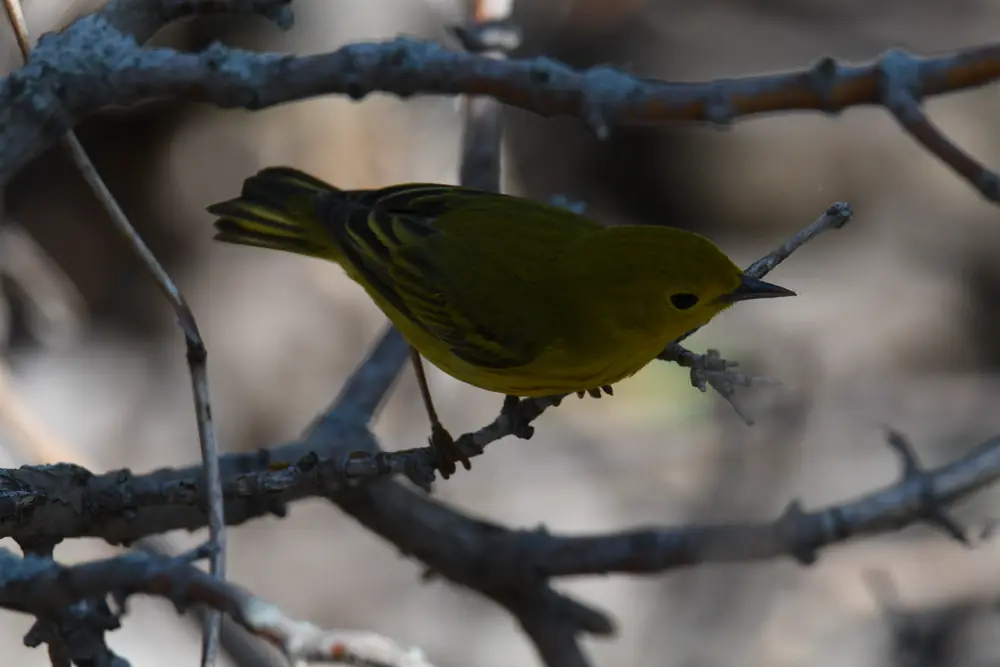
Start here
- Be out at first light after a warm night. When the wind has blown from the south overnight and a front arrives near dawn, migrants can pile into the first trees they find. Head to a Lake Erie woodlot or an inland river bottom at sunrise with binoculars, and walk slowly.
- Follow the Friday bloom reports to the woods. The state’s Friday wildflower reports run through mid-May. Choose a forest trail early in the month to see jack-in-the-pulpit and wild geranium before the leaves overhead cut off the light.
- Learn three frog calls on a warm evening. Stand at a pond edge after dark and listen for the leopard frog’s balloon squeak, the gray treefrog’s trill and the bullfrog’s deep jug-o-rum. Note which ones you hear on which dates.
Plates for May in the Naturalist’s Field Journal: every warbler and oriole you can name on birds I have seen, the ponds that call at night on a map of sounds, a nest watched from a distance on nest observed, the leafing of one tree on a tree through the seasons, and an hour at dawn and dusk on dusk and dawn watch. Pair a woodland trail you walked in April with a return trip now for the same place twice plate.
Regions used below: Northwest and Lake Erie; Northeast and Cleveland; Central Ohio; Southwest and Cincinnati; Southeast and the Hocking Hills.
When do the warblers peak along Lake Erie, and what is the Biggest Week?
The Black Swamp Bird Observatory describes Ohio’s spring migration as a series of waves, driven mostly by day length but moved around by weather. Its wave-theory page says a low-pressure system crossing the southern part of the continent pulls warm air north along the Mississippi and Ohio valleys and brings birds into Ohio, with each wave arriving in two pulses about a week apart. It names three waves: one near April 25, a second and largest on May 7 to 13 with the most species of the spring, and a third around Memorial Day weekend. The observatory’s May timeline adds that a lakeshore migrant trap can jump from about a dozen species to nearly 30 literally overnight.
-
The Biggest Week in American Birding
May 7 to 16, 2027, according to the organizers; the festival’s site shows the dates for next year · Northwest Ohio around Magee Marsh Wildlife Area, Ottawa National Wildlife Refuge and Maumee Bay State Park
The Black Swamp Bird Observatory runs this ten-day festival at the entrance of Magee Marsh, and calls northwest Ohio the warbler capital of the world. The dates fall almost exactly on the second wave, so expect crowds on the boardwalk and in the parking lots on any day with fresh arrivals. A good May outing, the Ohio Ornithological Society says, can turn up about 25 warbler species and more than 150 species overall.
-
The May 1 to 10 push
Some time in the first ten days, whenever the weather opens a gate · Woodlots and thickets within a mile or two of the lakeshore
The observatory’s timeline expects the first large arrival of Neotropical migrants in this window, with waterfowl and raptor movement winding down and shorebirds building toward their peak. Rusty blackbirds and fox sparrows have mostly gone by May 10. If a warm southerly night ends in a cold front at dawn, tired birds drop out of the sky, and that is the morning to be in a lakeshore woodlot.
-
Mid-May warblers, cuckoos and buntings
May 11 to 20, per the observatory · Lakeshore woods, thickets and brushy fields
Palm and yellow-rumped warblers are fading by then, while magnolia, blackpoll and bay-breasted warblers arrive in numbers. Typical mid-May arrivals also include cuckoos, ruby-throated hummingbirds, indigo buntings and bobolinks.
-
The late stragglers
May 21 to 31 and the Memorial Day weekend (May 29 to 31 in 2027) · Thick lakeshore woods and wet thickets
The observatory points to Connecticut warbler as the late-May specialty, though an elusive one, with mourning, Wilson’s and Canada warblers and American redstart good late migrants. Yellow-bellied, alder and olive-sided flycatchers peak, red-eyed vireos can be abundant and thrush migration is excellent. Its wave-theory page ties the Memorial Day wave to female magnolia warblers, redstarts and mourning warblers, vireos and flycatchers. Leaves are out by then, so the birds are harder to see; listen first.
Cornell’s BirdCast posts live and forecast maps of nighttime migration for spring, which helps you pick the morning. Log each first-of-year warbler on the birds-I-have-seen page, and glance at the weather page for the wind direction the night before.
Where do shorebirds, eagles and white bass gather on Lake Erie in May?
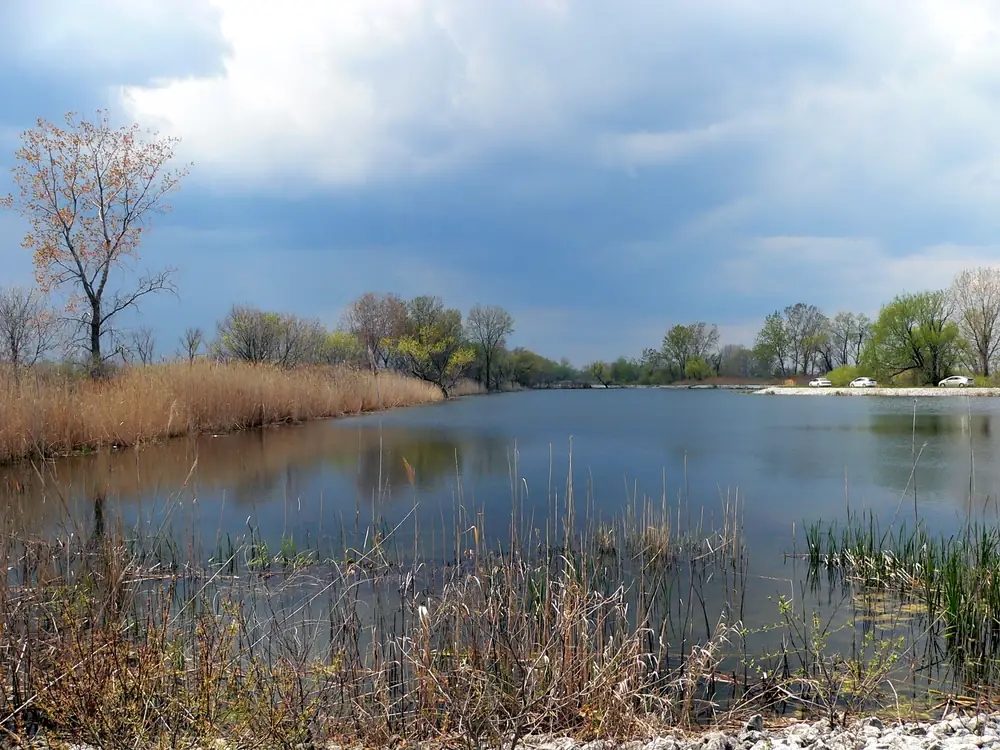
Beyond the warbler woods, the lakeshore marshes and beaches are busy all month. The refuge calls late April through mid-May the best time for spring migratory birds, and the observatory’s timeline has shorebird diversity and numbers excellent in suitable habitat by mid-May, with many species at peak numbers in the last third of the month.
-
Crane Creek estuary and the Ottawa refuge trails
All month; the main songbird push is early and mid-May · Ottawa National Wildlife Refuge, north of the main parking lot toward Crane Creek, and the new east-west trail to the Magee Marsh causeway
The Ohio Ornithological Society’s guide calls the estuary the best place on the refuge for adult and immature bald eagles, says the impoundments along the north trail hold ducks, shorebirds and wading birds, and names two woodlots for warblers and vireos. About nine miles of stone-base trails are open sunrise to sunset with no fee, and poison ivy grows beside them. The refuge lists its Wildlife Drive as open on scheduled dates only, and the page showed May dates of 1 to 25 and 30 to 31 without saying which year or whether weekends only; no 2027 schedule was out yet, so confirm at fws.gov/refuge/ottawa before driving out.
-
Shorebirds on the beaches at Maumee Bay
Spring, with shorebird numbers building through May · Lakeside and inland beaches at Maumee Bay State Park, near Oregon
The Ohio Ornithological Society says sanderlings, red knots and ruddy turnstones may use the beaches in spring and suggests arriving early before beach traffic flushes them. The park’s mile-long boardwalk through swamp forest and the shrubby thickets host more than thirty kinds of warblers in late April and May, among them breeding yellow warblers, which share the cottonwoods with warbling vireos and yellow-billed cuckoos.
-
The white bass run on the Maumee
Fish arrive around the third week of April, stay to the first week of June and usually peak in the first or second week of May, a Midwest Outdoors column says · The Maumee River near Toledo; the Sandusky and Portage rivers have smaller runs
A typical Maumee white bass runs 12 to 14 inches, with some near 18, the column says, and the Lake Erie islands and reefs produce big fish from shore and offshore in May and June. In southern Ohio the runs start earlier, in early to mid-April, and last two to four weeks. Check the special rules for the Maumee and other rivers before you cast.
-
New Lake Erie limits on May 1
Ohio’s current daily limits run to April 30, 2027 · Lake Erie and its tributaries
The Division of Wildlife’s 2026 release set walleye at six a day with a 15-inch minimum and yellow perch at 30 in the west zone, 10 in the central zone and 20 in the east zone, for May 1, 2026 through April 30, 2027. Limits for the year beginning May 1, 2027 were not yet public when this page was written; read the new numbers on wildohio.gov or in the HuntFish OH app before you go.
Wet sand records the night’s visitors; the tracks to know plate helps you read them.
What can you see inland, from the Cuyahoga Valley heronries to hummingbirds at the feeder?
The lakeshore gets the headlines, but the park service calls May the pinnacle month to see a great variety of migrants in Cuyahoga Valley, with spring counts topping twenty species of wood warblers. The valley’s migration, it says, reaches a frenzied peak by mid-May, and many of the birds that pause there stay to nest.
-
Warblers on the Towpath Trail
Early May through mid-May, building to the park’s peak · Towpath Trail between Hunt House and Deep Lock Quarry in Cuyahoga Valley National Park
The park names cerulean, northern waterthrush, northern parula, blackburnian, blackpoll and Cape May warblers as possible on this stretch. Orchard orioles are also possible when the buckeye trees are in flower.
-
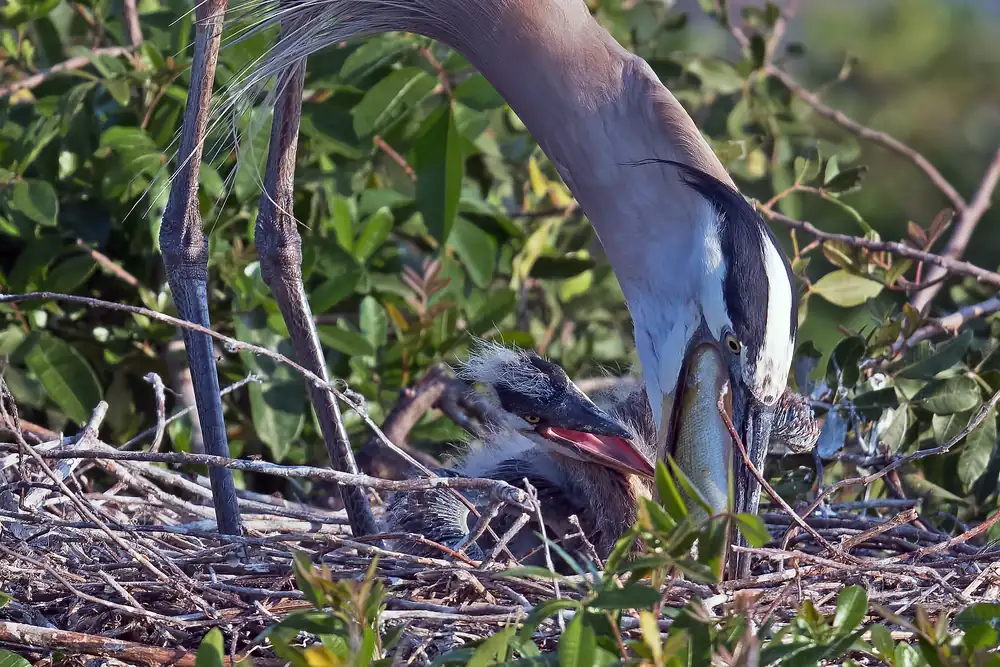
Heronries with chicks in the treetops
May, with the noise growing as the young grow louder · The Bath Road heronry and the park’s two other heronries; great blue herons raise young at three within or beside the park
The park suggests binoculars or a spotting scope to look for chicks in the tree-top eagle and heron nests, and says the Bath Road heronry gets noisier later in the month. Bald eagles first nested in the valley in 2006 and are now seen regularly.
-
Ruby-throated hummingbirds and orioles at the feeder
First males in central and southern Ohio near the end of March or in early April in one year’s report; the bulk reach northern Ohio from late April to mid-May · Feeders and flower beds, plus window-view feeders such as the one at the Black Swamp Bird Observatory
One Cleveland television weather feature put its year’s first sightings around Columbus and Dayton in the final days of March and first week of April, and urged northern Ohioans to hang feeders by May 1. Its recipe is sugar and water mixed one to four, and it says to wash and refill a feeder roughly every five days once the heat arrives. The observatory’s trail page says the window on wildlife in its gift shop is often a good place to see orioles, grosbeaks and warblers at the water garden. Journey North lets anyone report a first sighting and see the migration map.
Count the herons on your nest observed plate, and note whether more chicks show up as the weeks pass.
Which frogs start calling in Ohio in May?
Spring peepers and wood frogs finished weeks ago. Kenyon College’s nature-center frog guide lists the later sequence: leopard frogs breeding from March through May, gray treefrogs calling from late April or early May, bullfrogs starting in May and green frogs from late May. You are far more likely to hear them than see them, and May nights are loud.
-
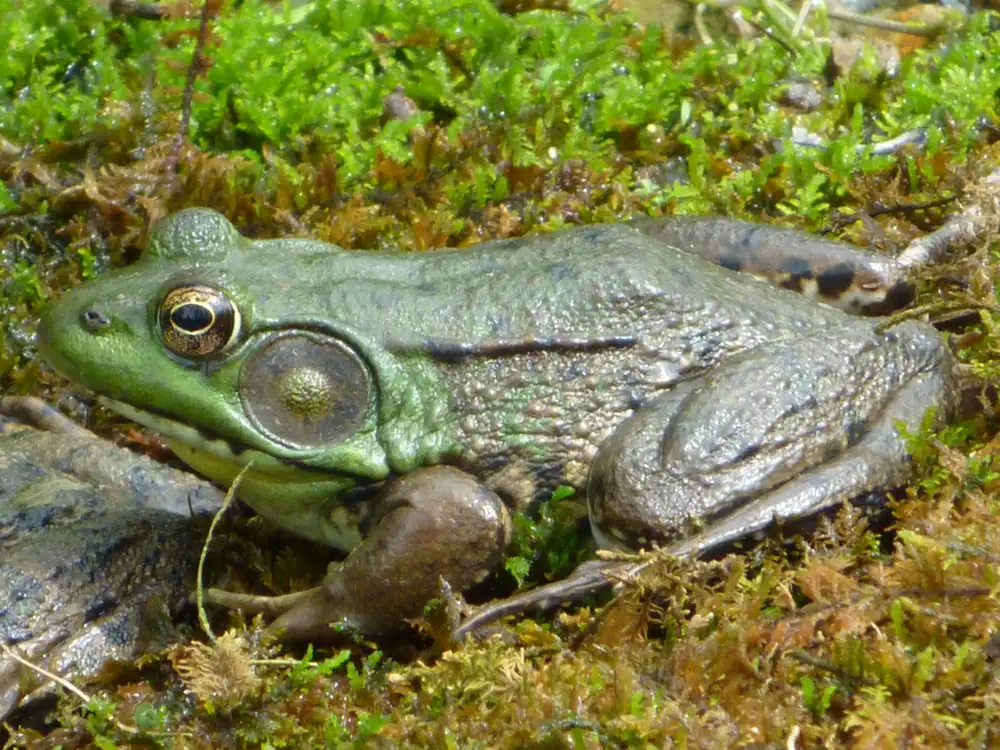
Bullfrog, the jug-o-rum
Males begin calling in May · Larger ponds, lakes and slow river backwaters, along shallow edges
The Kenyon guide describes a deep, resonant jug-of-rum call and says bullfrogs reach up to six inches, the largest frog in North America.
-
Gray treefrog, the trill from the trees
Males start calling in late April or early May · Trees and shrubs beside small ponds and wet ditches
These frogs change from green to gray, have rounded toe pads for climbing and are heard far more than seen.
-
Green frog, the out-of-tune banjo
From late May · Pond edges and shallow wetlands
The same guide says the male’s call sounds like a plucked, out-of-tune banjo string. Green frogs are 2 and a half to 4 inches long and show a raised fold of skin along each side, which separates them from bullfrogs.
-
Northern leopard frog
March through May · Lake edges, marshes, wet meadows and flooded fields
The call is likened to a thumb rubbed across a balloon, and males sing even while fully submerged.
FrogWatch USA, the national program hosted by the Akron Zoo, trains volunteers to log calls on evenings between February and August; email the zoo to find a chapter. Put each species on your map of sounds.
Which wildflowers bloom in Ohio in May, and what is the lakeside daisy?
The state’s Friday wildflower reports, sorted into North, Central and South, run through mid-May. In its 2026 spring guidance, as reported by Farm and Dairy, the Division of Natural Areas and Preserves expected jack-in-the-pulpit, wild geranium and Solomon’s plume to open in early May, after the bluebells and trilliums of April. Bloom in the far north lags the south by weeks, so a flower that has finished near Cincinnati may be at its best near Cleveland. Woodland flowers are racing to bloom and set seed before the leaves overhead shade them.
-
Wild geranium, rue anemone and dutchman’s breeches in Cleveland Metroparks
Early May in a typical spring; the Friday reports show whether the bloom is early or late · The Hemlock Loop in Bedford Reservation, the Scenic Loop in North Chagrin Reservation and the West Channel Pond Loop in Rocky River Reservation
Cleveland Metroparks names purple wild geranium and rue anemone on the Hemlock Loop, wild geranium on the North Chagrin Scenic Loop, and large-flowered trillium, wild geranium, early meadow rue and dutchman’s breeches at West Channel Pond. Its Squirrel Run Trail at Euclid Creek lists squirrel corn and red and white trillium, and Jackson Field in South Chagrin is known for white fawnlily beside yellow trout lily.
-
Jack-in-the-pulpit and Solomon’s plume
Early May, according to the state’s 2026 spring guidance · Moist woods and floodplain forests statewide
Jack-in-the-pulpit has a hooded green-and-maroon flower that hides a small spike; look under the hood without touching. Solomon’s plume is a tall, arching stem with a row of tiny cream flowers beneath each leaf. The Hocking Hills tourism guide says the wildflower season there runs from late April through early May, before the canopy leafs out.
-
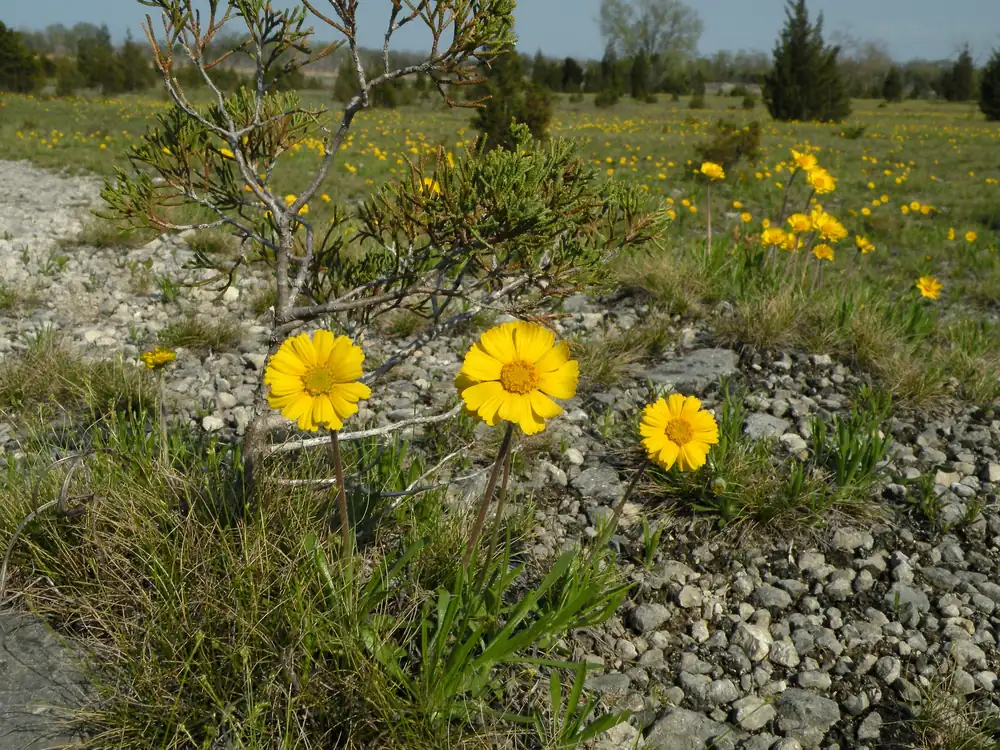
Lakeside daisy on the Marblehead Peninsula
May, according to the U.S. Fish and Wildlife Service; each flower’s petals fade after about a week · Limestone ledges and old quarry ground on the Marblehead Peninsula in Ottawa County
This bright yellow daisy grows only in the Great Lakes region, on flat limestone with thin soil that dries out hard each summer. The Fish and Wildlife Service says the Marblehead Peninsula was the only known U.S. population when the plant was listed, and that most Ohio populations are on land owned by the state, where the plant is listed as endangered. It needs genetically varied neighbors to set viable seed, so stay on marked paths and never step among the plants. Ask the state’s Division of Natural Areas and Preserves about access and rules; its preserve page could not be opened while this was written.
Take only photographs: in Cuyahoga Valley National Park and in state nature preserves picking is against the rules. Sketch a bloom on the reading-the-signs page instead, and compare with April’s flowers.
What happens in Ohio’s woods and ponds in May: green-up, morels, young animals and reptiles?
May is the month Ohio turns green. Trees finish leafing out, the forest floor shades over, and parents with young are everywhere. Plants and animals both race the clock, and this is the time to watch more than collect.
-
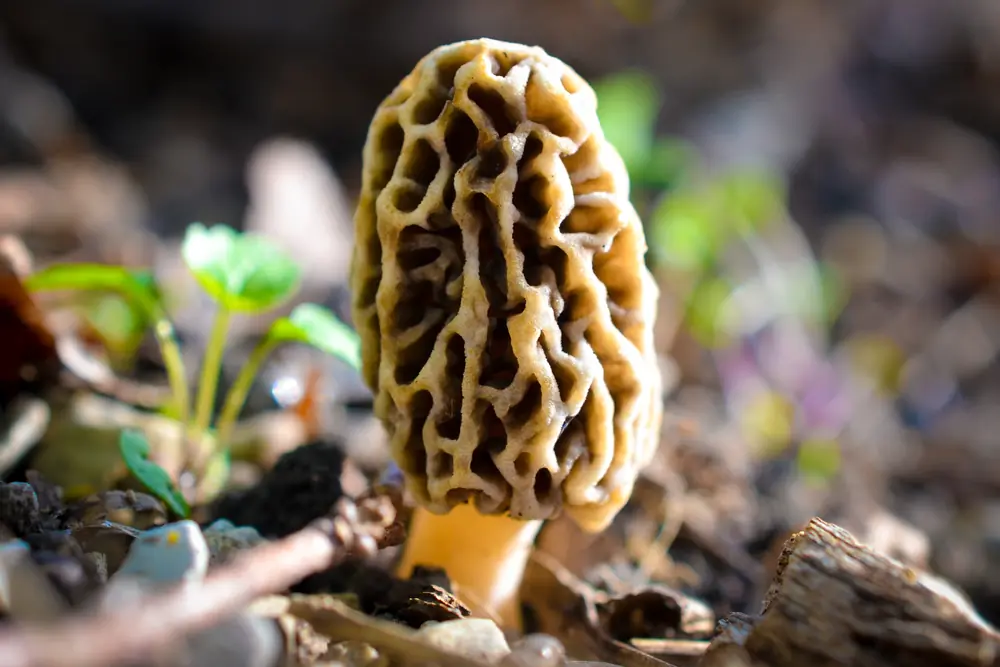
The last of the morels
Most often early April through the first week of May, sometimes a little longer, per a Farm and Dairy column · Wood edges; sycamore, aspen, oak, ash and elm; state forests and wildlife areas
The column adds that daytime highs in the 60s and nights not below 40 °F are best. A mid-April to May news report says state parks allow mushroom hunting only on designated trails and ask collectors to contact the park office first, state forests and wildlife areas permit it, and state nature preserves and designated natural areas prohibit collecting. Never eat a mushroom you cannot name with certainty.
-
Turtles and snakes on warm days
Warm, sunny days from mid-spring on · Ponds, marshes and lake edges; basking logs
Cuyahoga Valley counts 20 kinds of reptiles, among them northern water snakes, common snapping turtles and painted turtles. No venomous snake has been found inside the park, though eastern massasauga and northern copperhead turn up nearby. Female turtles often cross roads to nest around now, so slow down near water.
-
A fawn or fledgling alone is usually fine
Late spring and early summer · Lawns, ditches and wood edges
Young deer lie still and alone while their mother feeds nearby, and fledgling birds hop on the ground before they can fly well. Walk away and keep dogs back, since a person lingering can keep the parent from returning; call a licensed wildlife rehabilitator only if the animal is plainly injured.
Dawn and dusk sightings belong on the mammal watch plate.
How warm, wet and stormy is May in Ohio?
Looking at 1991–2020 normals, May afternoons average about 71 °F around Cleveland and Youngstown and 74 to 75 °F in the southwest, while average lows range from 48 °F at Youngstown to 54 °F at Dayton. Precipitation averages from about 3.7 inches to 4.7 inches. Snow no longer shows up in the normals, but a frost is not out of the question on the coolest nights, especially in the northeast. Most stations average a fraction of one night at 32 °F or below in May; Youngstown averages 1.3.
-
One recent May, as a reminder of the range
May 2026, as reviewed by the State Climate Office of Ohio · Statewide
The office reported two overnight frosts, on May 1 to 2 and May 11 to 12, a statewide average of 60 °F that was 1 to 3 °F below normal over most of the state, and a mid-month heat wave that was not enough to bring the monthly average back to normal. It was also the 22nd wettest May in a 132-year record, with 10 to 12.5 inches southwest of Columbus and just 1 to 1.5 inches in the northwest. That is one year, not a forecast, but it shows how far apart the extremes can sit.
-
Flooding rain after a wet stretch
The 2026 Memorial Day weekend · Central Ohio, especially Columbus
More than two inches fell in many central Ohio towns, up to 3 to 4 inches locally, and flash flood warnings followed. Columbus had already logged measurable precipitation on 18 of May’s 31 days, the climate office noted, so saturated ground shed even moderate rain.
-
Severe storms and tornadoes
April to August, with June the busiest month in northern Ohio, the Cleveland office says · Statewide
The Cleveland forecast office’s county list shows a tornado in Portage County on May 11, 2024 (EF0). The Wilmington office counts 47 tornadoes in its warning area in 2024 (74 statewide) and 22 in 2025 (28 statewide). Non-tornadic severe storms, with damaging wind and hail, are frequent in spring and summer. Cleveland’s office also notes that slow-moving storms can drop several inches of rain in a few hours.
| Station | Average high | Average low | Precipitation | Days with 0.10 in or more | Nights at or below 32 °F |
|---|---|---|---|---|---|
| Toledo (Express Airport) | 73.3 °F | 50.9 °F | 3.82 in | 8.0 | 0.4 |
| Cleveland | 71.1 °F | 51.4 °F | 3.79 in | 8.2 | 0.2 |
| Akron-Canton | 72.3 °F | 50.4 °F | 4.13 in | 8.6 | 0.4 |
| Youngstown | 70.9 °F | 47.6 °F | 3.72 in | 8.4 | 1.3 |
| Columbus | 74.1 °F | 52.4 °F | 3.99 in | 8.6 | 0.2 |
| Dayton | 74.2 °F | 53.8 °F | 4.51 in | 9.1 | 0.1 |
| Cincinnati (CVG) | 74.5 °F | 53.7 °F | 4.67 in | 9.1 | 0.3 |
NOAA issues fresh seasonal outlooks every month, around mid-month, on the Climate Prediction Center’s 90-day page (linked in the sources). Before any outing, read your county’s forecast; our weather page lines up other towns against these stations.
Is it safe to plant after Ohio’s last spring freeze in May?
Usually, but not always. The typical final 32 °F night comes between April 18 and April 25 at most stations and on May 1 at Youngstown; at the late end, May 5 (Cleveland, Dayton) to May 20 (Youngstown) is when nine springs in ten have cleared it. That leaves roughly one spring in ten with a frost even after those dates. The State Climate Office counted two frosts in May 2026. Our Ohio frost page has dates for hundreds of towns; before setting out tender plants, check the forecast for cold nights.
| Station | One year in ten | Median | Nine years in ten |
|---|---|---|---|
| Toledo (Express Airport) | Apr 6 | Apr 22 | May 7 |
| Cleveland | Apr 4 | Apr 20 | May 5 |
| Akron (Fulton Airport) | Apr 10 | Apr 24 | May 9 |
| Youngstown (Regional Airport) | Apr 16 | May 1 | May 20 |
| Columbus (WCMH) | Apr 5 | Apr 20 | May 7 |
| Dayton (MCD) | Apr 3 | Apr 18 | May 5 |
| Cincinnati | Apr 5 | Apr 19 | May 6 |
| Athens (OU) | Apr 11 | Apr 25 | May 12 |
Read each row as odds: the earliest column is a lucky spring, the latest column an unlucky one.
How much daylight does Ohio gain in May?
The days still lengthen, but the pace eases by the end of the month. The table gives day length on May 1 and May 31 for eight cities, with the northern ones adding a little more than the southern ones.
| City | May 1 | May 31 | Gained | Per day |
|---|---|---|---|---|
| Toledo | 14 h 01 m | 14 h 58 m | 57 min | 1.9 min |
| Cleveland | 14 h 00 m | 14 h 57 m | 57 min | 1.9 min |
| Youngstown | 13 h 58 m | 14 h 55 m | 57 min | 1.9 min |
| Akron | 13 h 59 m | 14 h 54 m | 55 min | 1.8 min |
| Columbus | 13 h 55 m | 14 h 48 m | 53 min | 1.8 min |
| Dayton | 13 h 54 m | 14 h 47 m | 53 min | 1.8 min |
| Cincinnati | 13 h 51 m | 14 h 43 m | 52 min | 1.7 min |
| Athens | 13 h 52 m | 14 h 44 m | 52 min | 1.7 min |
For a single date in your own town, try the day length calculator; the dusk and dawn watch plate records how the light moves.
What can you see in Ohio’s night sky in May 2027?
May brings a meteor shower under a new moon, a Flower Moon, bright Jupiter and a good dusk view of Mercury, with no eclipse. Times below are Eastern Daylight Time.
-
Eta Aquariid meteors in a moonless year
Active from about April 19 to May 28; the best mornings are Wednesday, May 5 through Friday, May 7 · Any open view of the eastern sky in the last two hours before dawn
With the new moon at 6:58 a.m. EDT on the 6th, no moonlight washes out the dawn sky. The American Meteor Society puts rates at 10 to 30 an hour at best and notes they are lower at northern latitudes, so Ohio should plan on a modest show. The meteors are bits of Halley’s Comet, and they seem to fan out from Aquarius, which climbs above the horizon only shortly before the Sun. Dress warmly and give your eyes 20 minutes.
-
The Flower Moon, also a seasonal Blue Moon
Full at 6:59 a.m. EDT on Thursday, May 20; look on the evening of Wednesday, May 19 · Climbing out of the east near sunset
Flower Moon is May’s traditional name. Spring in the astronomical sense contains four full moons this year, the others falling in March, April and June, and an older rule calls the third of four a Blue Moon. By the newer calendar-month rule no month has two, so there is no Blue Moon that way. Expect an ordinary cream-colored disk, not a blue one.
-
The Moon passes Jupiter and Mars
Wednesday, May 12 and Thursday, May 13, in the evening · High in the southern sky after dusk
By our calculation the half-lit Moon passes within 1.2 degrees of Jupiter on the 12th (closest at 5:52 p.m. EDT, before dark), so the two shine as a close pair once the sky darkens. By the 13th it has slid to roughly 3 degrees from Mars, by the same calculation. Cream-colored Jupiter stays up into the small hours as May begins and sets earlier night by night.
-
Mercury low after sunset
Best from about May 12 to June 5; greatest eastern elongation (22.8 degrees from the Sun) comes Friday, May 28 at 9:14 a.m. EDT, so the evenings of the 27th and 28th are about equal · Low in the west-northwest, roughly 45 to 90 minutes after the Sun goes down
Across the northern states, no other dusk showing of Mercury this year beats this one. In mid-May Mercury sets about 97 minutes after the Sun and glows near magnitude minus 0.6, then fades quickly in June. Find a western horizon free of trees and keep binoculars handy.
-
Venus and Saturn before sunrise, a faint extra
Around Friday, May 7 · Very low in the east at first light
Venus and Saturn close to roughly 0.6 degrees on May 7 by our figures, but only after sunrise, so the mornings of the 6th and 8th are the ones that show them about a degree apart. Half an hour before sunrise both stand only 3 to 6 degrees up, so you will need a clear horizon and binoculars. Count it as a bonus.
| Phase | Date | Time |
|---|---|---|
| New moon | Thursday, May 6 | 6:58 a.m. EDT |
| First quarter | Thursday, May 13 | 12:44 a.m. EDT |
| Full moon (Flower Moon) | Thursday, May 20 | 6:59 a.m. EDT |
| Last quarter | Friday, May 28 | 9:58 a.m. EDT |
Cloud cover is the deciding factor, so peek at the cloud outlook before going out, and use the moon phases page for other dates.
What can Ohio families do outdoors in May 2027?
- Friday, April 30 to Monday, May 3: a photo count of local wildlife. The City Nature Challenge sets these dates for taking photos, with May 4 to 16 for identifying them; ask whether your metro area has a team.
- Before dawn on the 5th, 6th and 7th: meteors. Set an early alarm, lie back under the moonless sky and count Eta Aquariids.
- Friday, May 7 to Sunday, May 16: ten days of birding. The Black Swamp Bird Observatory hosts its Biggest Week around Magee Marsh; ask about events and registration.
- Early May: a wildflower walk. Pick a metropark trail for wild geranium and jack-in-the-pulpit after reading the Friday bloom report.
- World Migratory Bird Day. 2026’s was May 9, and the organizers had no 2027 date up yet, so look at worldmigratorybirdday.org for it and for local events.
- Wednesday, May 12: the Moon beside Jupiter. Binoculars braced on a fence may reveal Jupiter’s four brightest moons.
- Warm, damp evenings: a frog walk. Learn the bullfrog, gray treefrog and leopard frog by ear.
- Wednesday, May 19: Flower Moon rise. Face east around sunset to see the full moon climb out of the trees.
- Thursday and Friday, May 27 and 28: Mercury at dusk. Look low in the west-northwest a little more than an hour after sunset.
- Memorial Day weekend, Saturday to Monday, May 29 to 31: the third migrant wave. The observatory expects late migrants such as redstarts and mourning warblers. Memorial Day itself is Monday, May 31.
Safety notes for May in Ohio
- Gobbler hunters. Dates for the 2027 spring turkey season are still “to be announced” on the state’s 2026-27 chart, so watch wildohio.gov. In 2026 the south zone (83 counties) ran April 25 to May 24 and the northeast zone (Ashtabula, Cuyahoga, Geauga, Lake and Trumbull) May 2 to 31, with the first nine days ending at noon, per the state’s release. Expect hunters at dawn on public land. That release said nothing on hunter orange, so read the regulations; something bright on your head makes sense on public land that is open to hunting.
- Other seasons. Coyote and woodchuck are listed without a closed season; crow hunting is shut in May and reopens June 4, 2027.
- Boardwalk manners. Magee Marsh’s boardwalk is crowded during the Biggest Week. Keep to the path, do not play recordings to draw birds in close, and give nesting and resting birds space.
- Ticks. A county health department names three Ohio species: blacklegged, American dog and lone star. Dress in long pants, apply repellent, shower and inspect yourself after hikes, and run clothes through a hot dryer. Pull a tick straight out with pointed tweezers.
- Thunderstorms and high water. Pick your shelter before storms form. Turn around at flooded roads, and keep children and dogs off swollen creek banks. Rivers and the lake are still cold in May; a life vest belongs on anyone wading or boating.
- Snakes and turtles. Leave them alone and slow down for turtles crossing roads.
- Young animals, nests and poison ivy. Never touch a fawn, and stay away from heronries and eagle nests. Poison ivy lines trails at Maumee Bay and Ottawa.
- Picking and collecting. State nature preserves forbid taking mushrooms, and Cuyahoga Valley National Park forbids picking wildflowers.
Sources (44)
- Black Swamp Bird Observatory: Timing of spring migration (May timeline)
- Black Swamp Bird Observatory: Spring migration wave theory
- Black Swamp Bird Observatory: John Gallagher Memorial Birding Trail
- Black Swamp Bird Observatory: home page
- Biggest Week in American Birding (2027 dates)
- BirdCast (Cornell Lab of Ornithology): migration forecasts and live maps
- Ohio Ornithological Society: Birder’s Almanac, April
- Ohio Ornithological Society: Birder’s Almanac, May
- Ohio Ornithological Society: Birding at Magee Marsh Wildlife Area
- Ohio Ornithological Society: Birding at Ottawa National Wildlife Refuge
- Ohio Ornithological Society: Birding at Maumee Bay State Park
- U.S. Fish and Wildlife Service: Ottawa National Wildlife Refuge, visit us
- U.S. Fish and Wildlife Service: Ottawa National Wildlife Refuge
- U.S. Fish and Wildlife Service: Lakeside daisy (Hymenoxys herbacea)
- National Park Service: Cuyahoga Valley natural history topics by month
- National Park Service: Birds of Cuyahoga Valley
- National Park Service: Amphibians of Cuyahoga Valley
- National Park Service: Reptiles of Cuyahoga Valley
- National Park Service: Mammals of Cuyahoga Valley
- National Park Service: Wildflowers of Cuyahoga Valley
- Cleveland Metroparks: Ten places to spot wildflowers
- Hocking Hills Tourism Association: Spring in Hocking Hills
- Farm and Dairy: Ohio wildflower bloom report 2026, where to find the best spring blooms
- 1808Delaware: Spring wakes up across Ohio (2026 ODNR bloom reports)
- Farm and Dairy: A mess of morels
- Mount Vernon News: Mushroom hunting in full swing across Ohio’s public lands (April 2025)
- Kenyon College Brown Family Environmental Center: Frogs of the BFEC
- Akron Zoo: FrogWatch USA
- News 5 Cleveland: Get those feeders up, the hummingbirds are back
- Journey North: Hummingbird migration reporting and maps
- Midwest Outdoors: White lightning strikes Ohio in the springtime (white bass runs)
- Ashland Source: Lake Erie daily limits announced for 2026 fishing season (ODNR release)
- Ashland Source: Ohio’s spring wild turkey season is about to begin (ODNR release, April 2026)
- ODNR: Ohio’s 2026-27 hunting and trapping season dates
- State Climate Office of Ohio: Monthly climate update, May 2026
- National Weather Service Cleveland: Local natural hazard risk assessment
- National Weather Service Wilmington: Tornado climatology by year
- NOAA NCEI: U.S. climate normals 1991-2020, monthly (data service)
- NOAA Climate Prediction Center: 90-day outlooks
- U.S. Naval Observatory: Moon phases for 2027 (data service)
- City Nature Challenge
- World Migratory Bird Day
- Greene County Public Health: Tick protection in Ohio
- Photos via Wikimedia Commons; licenses and photographers are credited under each picture
