What to look for in nature in Oklahoma this March
March is when Oklahoma’s prairies, rivers and woods start to move. A small family of whooping cranes did something new last winter: they stayed at Salt Plains and left for Canada in early March. At sunrise on the Tallgrass Prairie Preserve, male greater prairie-chickens begin to boom from late March, and Chickasaw plum and redbud flowers open along fencerows. Spotted salamanders walk to ponds on rainy nights, paddlefish head upriver and the first ruby-throated hummingbirds arrive. The same month brings wildfire, hail and the first tornadoes, and a freeze can still follow a warm week. Daylight time starts on the 14th and gives Oklahoma evenings an extra hour just before the equinox on the 20th and the Worm Moon on the 22nd. What follows is a tour of the month, region by region.
Other months in Oklahoma: October, November, December, January, February, April.
Start here
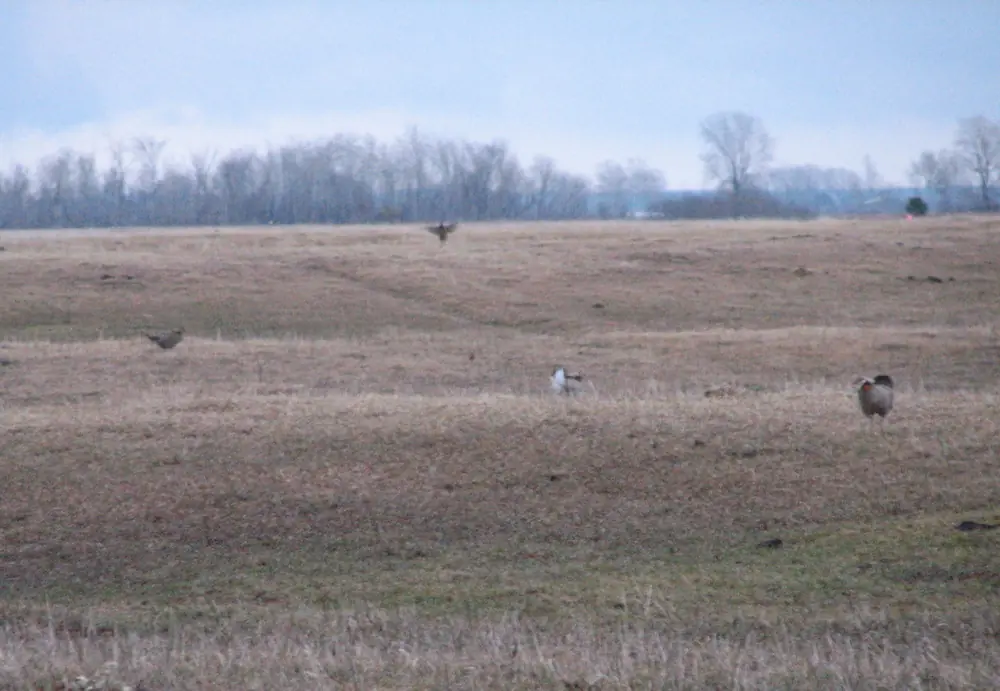
- Listen for a booming lek. Be at the Tallgrass Prairie Preserve near Pawhuska before sunrise from late March, stay in your vehicle with the engine off and listen for the low humming boom of male greater prairie-chickens.
- Date your first redbud. Note the day a redbud or Chickasaw plum near you first opens and compare it with the old Norman records, which average March 17 for the plum and March 24 for the redbud.
- Take a rainy-night amphibian walk. On the first warm, wet night, visit a quiet road by a woodland pond and look for spotted salamanders; carry any you find across the road the way it was facing.
In the Naturalist’s Field Journal this March, enter cranes, the first hummingbird and any martin on the birds I have seen plates. Keep a dusk and dawn watch page for a lek or woodcock display, a map of sounds for frog and toad nights, and, for the date a redbud first opens, a tree through the seasons page. Log wind and storms in the daily field log, and give a Chickasaw plum thicket a same place twice page. Date every entry.
Regions used below: Panhandle and High Plains; Northwest and the Salt Plains; Central Oklahoma and the Oklahoma City metro; Northeast and Green Country; Southwest and the Wichita Mountains; Southeast and the Ouachita Mountains.
Can you still see whooping and sandhill cranes in Oklahoma in March?
March is when Oklahoma’s crane season turns over. The birds that spent winter in the state or just to the south begin to lift off for Canada, and the Wildlife Department says whooping cranes pass through the state in April and again in October. The surprise of the past winter was a small family that never left. Their story, and the geese that are still being hunted under a special order until the end of the month, set the scene for the migration.
-
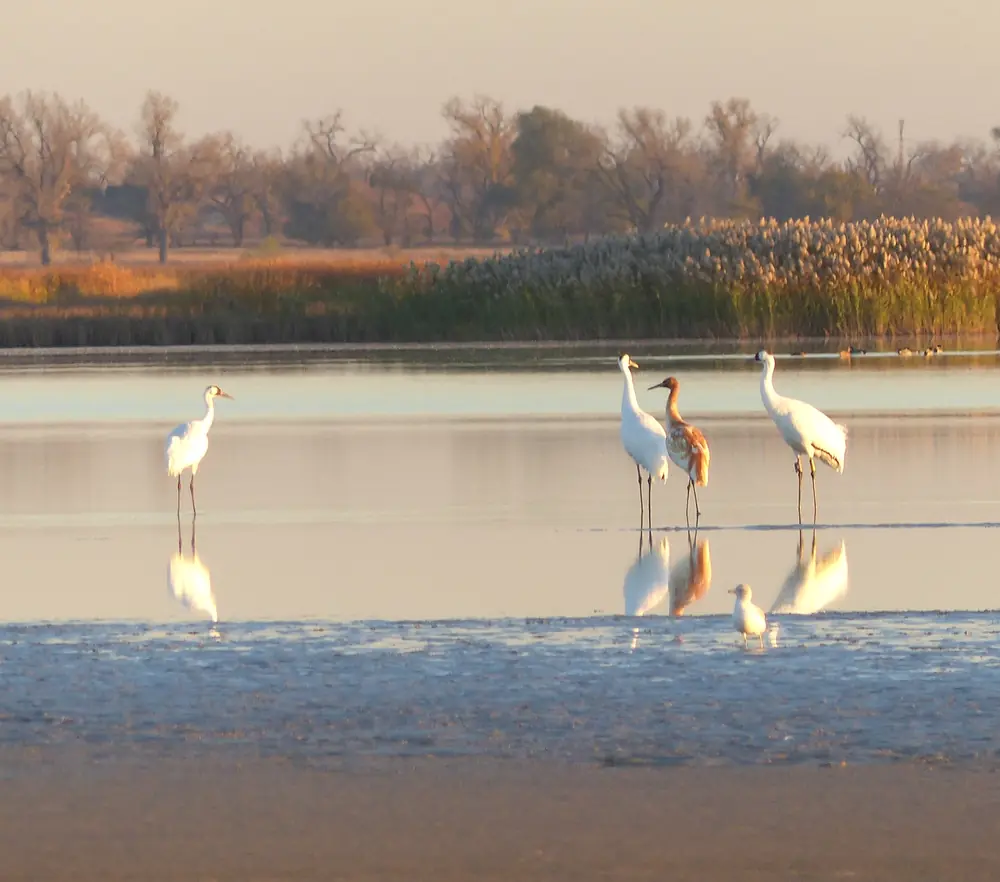
Whooping cranes that wintered at Salt Plains
Left in early March 2026; if any winter over again, expect a similar timing · Salt Plains refuge, by the town of Jet in north-central Oklahoma
A group of eight whooping cranes, six adults and two tawny juveniles, stayed at Salt Plains through the whole 2025–26 winter, the Fish and Wildlife Service says. They were still there for the Christmas Bird Count in early January, which made them the first group known to winter at the refuge rather than push on to the Texas coast. A late-January arctic blast left eight inches of snow, yet the birds stayed, grazing on scrap corn. The group headed north in early March toward their breeding grounds at Wood Buffalo National Park in Canada, the story says. Whether any winter over again is unknown, so check the refuge and the Wildlife Department before planning a trip around them.
-
Whoopers on the move
Stopovers are expected mostly in April, and only for a day or three · Western half of the state, mostly east of Guymon and west of Interstate 35
The Wildlife Department says migrating whooping cranes use shallow wetlands, marshes and crop fields, stay at a stopover for one to three days, and rarely travel in groups bigger than eight. The wild flock now numbers just over 500 birds, so any sighting is notable. A whooper stands nearly five feet tall, is white with black wingtips, and flies with the neck stretched straight out. Sandhill cranes, in contrast, gather by the dozens. If you think you have seen one, photograph it from a distance and send the date and place through the Wildlife Department’s crane sighting form. Leave the bird alone; it is endangered and it needs to refuel.
-
Sandhill cranes passing through
Late winter and early spring flights; flocks come and go with weather · Salt Plains and the wetlands and fields of the west
The Wildlife Department puts the mid-continent sandhill population at over half a million birds, at least four in five of all sandhills. The call is a rolling, trumpeting trill that can carry more than a mile, so you often hear a flock before you spot it high up in a V or a shifting line. Salt Plains reports that its peak spring and fall counts of ducks, geese and cranes together can approach 400,000 birds. Look for gray birds with outstretched necks and trailing legs. Herons fold their necks into an S when they fly, and cranes do not.
-
The light goose Conservation Order
Season dates listed as February 15 to March 30, 2027 (2026–27 license year) · Open fields and wetlands statewide
Snow geese and their relatives are so abundant that a special Conservation Order has been set for February 15 through March 30, 2027, in the Wildlife Department’s published 2026–27 seasons. Large white flocks lifting off a field in March are heading north, and during this period they may also be hunted. If you walk or bird near wheat fields or reservoir shorelines, learn which land is open to hunting and wear something bright.
Log the date and the place for each crane on a birds I have seen page. A pair of binoculars and a patient hour at a wetland in the western half of the state will pay off more often than driving around. For the winter side of this story, see our February page for Oklahoma.
Where can you watch prairie-chickens boom and bison calves in Oklahoma?
Oklahoma still has real grassland, and late March is when it starts to move. Two prairie-chickens live here: the greater prairie-chicken in the tallgrass east and the lesser in the western mixed-grass and shortgrass country. Both are species of greatest conservation need, and both are at their most visible on spring display grounds called leks.
-
Greater prairie-chickens on the lek
Booming starts in late March and goes to early May, at sunrise · Joseph H. Williams Tallgrass Prairie Preserve, near Pawhuska in Osage County
The Nature Conservancy says males perform at sunrise from late March through early May. They stamp, inflate orange air sacs on the neck, raise feathers like ears and let out a low hum; the sound is called booming. The 39,650-acre preserve is free and open daily in daylight hours, with a 15-mile bison driving loop and several self-guided trails. Dogs, off-roading and camping are not permitted. Treat a lek as you would a nest: stay in your vehicle, keep the engine off and never walk toward the birds.
-
Lesser prairie-chickens in the northwest
Spring display season; the birds are federally threatened · Short and mixed-grass prairie of northwestern Oklahoma
Reddish-orange air sacs identify the lesser prairie-chicken, according to the Wildlife Department, which also explains that the greater bird has heavier barring and richer color. Both species can be reported to eBird or iNaturalist with a photo. Tulsa Audubon, which used to host a festival around the western leks, announced that it ended the event in 2021 because there were too few birds to promise participants a view, and suggests Kansas’s lek festival as an alternative. Check with a local Audubon chapter before driving out.
-
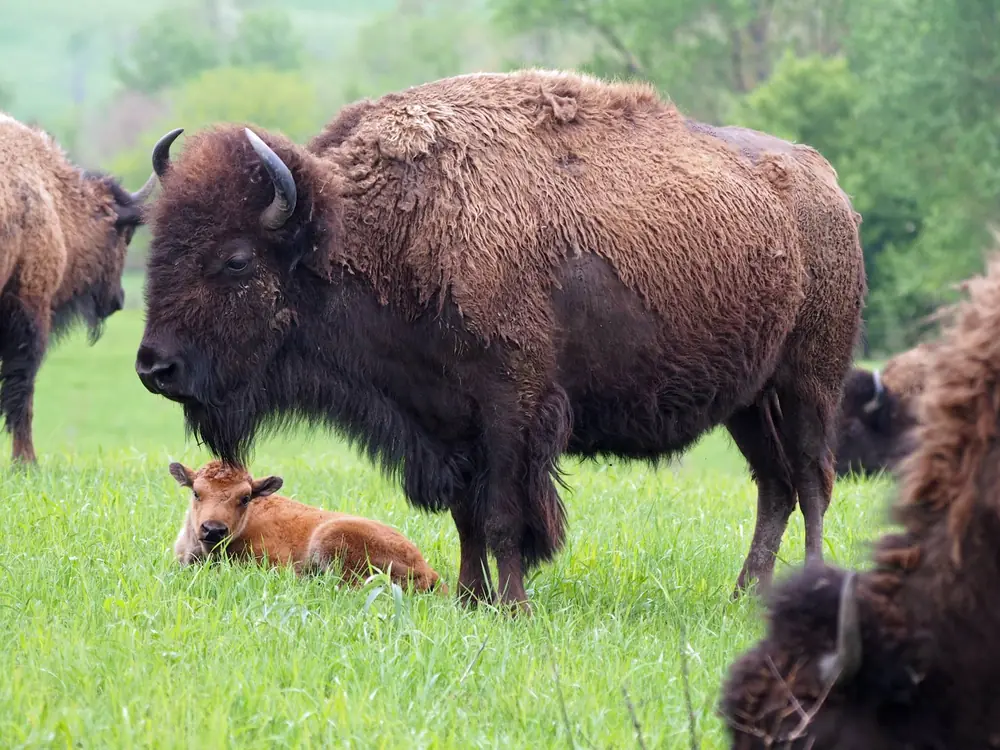
Bison and their calves
Calving runs through spring; the preserve counts 600 to 700 calves by mid-May · Tallgrass Prairie Preserve, Wichita Mountains Wildlife Refuge and Chickasaw National Recreation Area
The Tallgrass preserve is home to about 2,500 free-ranging bison. It has been managed with patch-burn fire since 1989, which creates a patchwork of fresh and old grass that benefits birds and grazers alike. The Wichita Mountains refuge in southwest Oklahoma, about 60,000 acres of granite mountains, mixed-grass prairie and lakes, is home to bison, Texas longhorn and Rocky Mountain elk, and more than 275 bird species. Black-tailed prairie dogs live in towns there. Chickasaw National Recreation Area in Sulphur keeps a bison herd too. These are wild, powerful animals; stay far back, never get between a cow and her calf, and watch the posted refuge rules.
Many of Oklahoma’s grassland birds depend on fire, and bare black ground in March is not damage. Read more about it in our February page for Oklahoma. Jot a lek visit on a dusk and dawn watch page: the time you arrived, the first sound you heard and the light.
What blooms first in Oklahoma in March?
Every Oklahoman has a tree that says spring is here. The best early record is a flowering calendar by Ben Osborn, a 1934 report from the University of Oklahoma’s Bebb Herbarium that the Oklahoma Native Plant Record printed in 2015. It lists first flowering dates observed mostly at Norman in the late 1920s and early 1930s. These are old and local, so use them as a rough order of events and note your own dates. Spring can arrive earlier or later by a week or two.
-
Chickasaw plum
Average first flowers March 17 in the old Norman records; Chickasaw plum flowers appear any time from February to May, says the Wildflower Center · Fencerows, old fields and sandy ground across the state
Small, white, fragrant flowers cover the thickets before the leaves appear. The Wildflower Center notes that birds and mammals eat the fruit later and that the dense tangles shelter nesting birds. Look for a cloud of white along a fence line and a hum of early bees.
-
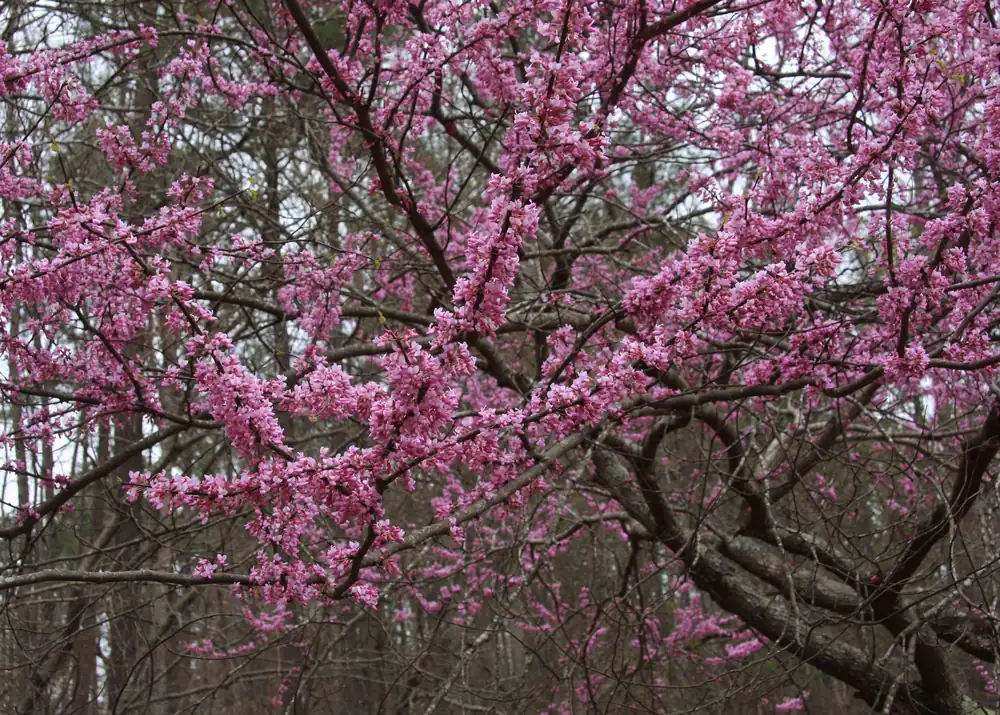
Eastern redbud
Average first bloom March 24 in the Norman records; the Wildflower Center gives March through May · Woodland edges, yards and parks, mainly in the east and center
Clusters of pink flowers grow in tight clusters along bare stems and branches before heart-shaped leaves appear. The Wildflower Center notes that redbud is of special value to native bees and bumble bees. Oklahoma’s state tree is the redbud, and a mass of them on a hillside is a reliable signal that the last freeze is close to over, though not past: see the freeze table below.
-
The small early flowers
Henbit averages March 12; yellow false-garlic and Missouri buffalo currant March 19; narrowleaf puccoon March 27; ground-plum March 28 · Lawns, roadsides, pastures and prairie edges
Look low. The old records list midland dogtooth-violet at about March 6, Carolina anemone about the 14th, Missouri violet and plantainleaf cat’s-foot about the 24th, and the first yellow wood-sorrel near the end of the month. Cottonwoods flower about the 26th and box-elders about the 19th.
Write dates on a tree through the seasons page and a same place twice page: if you note the day a redbud opens each year, you will build your own phenology record. We also keep a list of earlier flowers in our February page for Oklahoma.
Which frogs and salamanders are moving in Oklahoma in March?
Rain after dark in March brings out amphibians. The first chorus frogs of late winter keep calling, and the next wave of species joins them as nights warm toward 50 °F.
-
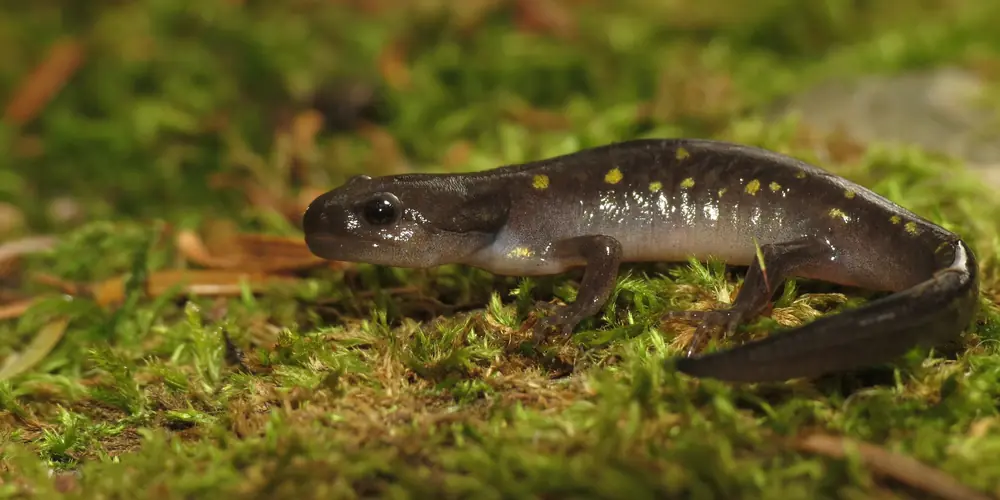
Spotted salamander
Migrates on rainy nights from late January through March · Hardwood forests of south-central and eastern Oklahoma, near temporary ponds
The Wildlife Department says adults walk to temporary breeding ponds during late winter and early spring storms, and females lay clutches of from about 20 to more than 300 eggs on twigs and leaves underwater, which hatch in 30 to 40 days. Most of the year the animal lives underground; you may also find one under a rotting log. If you move one across a road, send it in the direction it was heading.
-
Woodhouse’s toad
Choruses form from March through August if rain is enough · Sandy and open country almost statewide; also under porch lights
This is the most common toad over most of Oklahoma. The male’s call is a long, low, nasal sound that can last several seconds. Eggs hatch and tadpoles transform within a couple of weeks in warm water, so a ditch that fills after a storm can be a nursery.
-
Blanchard’s cricket frog
Calling begins in April; listen for the first on a warm late-March evening · Ponds, streams, creek edges and lake shores statewide
The Wildlife Department calls this inch-long frog one of the most abundant in the state. Its call sounds like two marbles rubbed together. It is a good one to log on your first warm evening. Note the night, the air temperature and whether the water was moving.
Put each sound on a map of sounds page and add a note about the weather. Wet roads on warm nights are crossing places. Slow down in wooded areas near ponds, and see the safety notes below.
What fish run in Oklahoma in March, and which trout waters close?
Rivers wake up in March. Rising, warming water sends large fish upstream, and Oklahoma’s winter trout fisheries wind down.
-
Paddlefish
Spawning season is March through June; snagging usually starts sometime in March and ends in late April · Grand and Neosho, Arkansas and Red River systems; lakes such as Kaw, Oologah, Texoma and Hugo
The Wildlife Department describes the paddlefish as one of Oklahoma’s largest fish, with a long paddle-shaped snout. It spawns when spring rains lift the rivers and water temperatures reach 50 to 60 °F. Paddlefish numbers dropped because of dams, poor water quality and illegal harvest for caviar, and the state has released hatchery fish since 1992. Season dates, permits and closures change, so read the current fishing regulations before you go.
-
Seasonal trout waters
Several end March 15 or March 31; two rivers stay open · Blue River, Sunset Lake in Guymon, Robbers Cave, Medicine Creek, Lake Carl Blackwell’s Turtle Pond; the Lower Mountain Fork and Lower Illinois River are year-round
The Wildlife Department’s trout page lists the Blue River, Sunset Lake and the Turtle Pond near Stillwater as November 1 through March 31, and Robbers Cave and Medicine Creek as November 1 through March 15. The Lower Mountain Fork in McCurtain County and the Lower Illinois River below Tenkiller dam have trout year-round, and both require barbless hooks in their managed areas. A fishing license is needed. Robbers Cave and Medicine Creek close in mid-March, and the rest of the seasonal waters run to the end of the month.
Rivers can rise fast in March storms, so check flows before wading or boating. Water temperature changes the whole picture; a small thermometer is a useful tool for a daily field log.
Which birds return to Oklahoma in March?
Winter birds linger while the first long-distance migrants appear. By the end of March, the soundscape has changed.
-
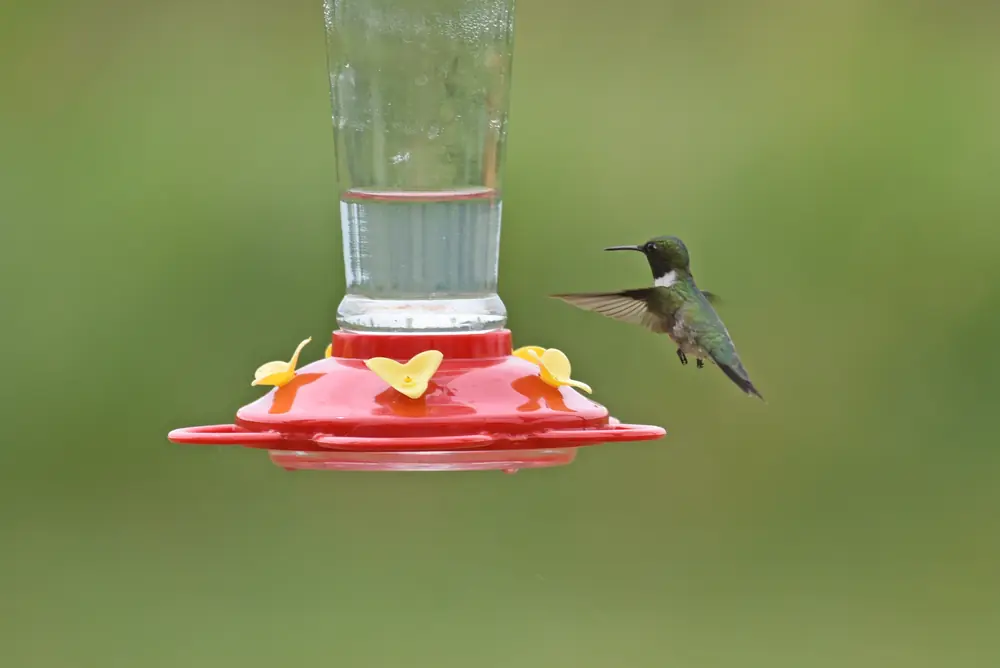
Ruby-throated hummingbirds
Begin arriving in mid-March and early April, males first · Eastern half of the state, in gardens, woodland edges and at feeders
The Wildlife Department says males come before females. Its advice is to put feeders out by early April and keep them up through at least November 1, by stirring one part sugar into four parts boiled water, with no honey, dye or substitutes. Hang more than one feeder, well apart, because males defend them. Change the nectar weekly in cool weather. Journey North collects first sightings from across the continent and maps the spring advance.
-
Purple martins
Arrive from mid-February through May; last year’s young arrive four to six weeks after the adults · Open lawns and fields with martin houses, usually near water
The Wildlife Department notes that martins nest in colonies and that houses should be 12 to 14 feet high and within about 100 feet of human activity. Oklahoma City Audubon warns that the earliest arrivals risk starvation if a cold snap suppresses the insects. Have houses clean and open before the first scouts show up.
-
American woodcock displays
Dusk and dawn display flights, which begin in January in some years · Damp thickets next to clearings, such as Lake Draper in Oklahoma City
Oklahoma City Audubon describes the display: a short, buzzy peent from the ground, then a spiraling flight 50 to 100 yards up with a liquid, twittering sound made by air rushing through the wing feathers. Arrive before dark and stand quietly.
-
Spring shorebirds
Migration builds in spring; the Wildlife Department counts 29 species at Hackberry Flat · Hackberry Flat Wildlife Management Area near Frederick, and Salt Plains NWR
The Department ranks Hackberry Flat among the region’s best spots for shorebirds, and the number of flooded wetland units depends on rainfall. Salt Plains calls itself a major rest stop for hundreds of thousands of shorebirds across spring, summer and fall. At Hackberry Flat, visitors who are not hunting need either a Wildlife Conservation Passport or a license. At Salt Plains, fishing and selenite crystal digging open on April 1.
Put arrivals under birds I have seen. In spring, try NestWatch and record a nest from a distance, never close enough to alarm the parents. The Naturalist’s Field Journal offers plates for both.
How warm, wet and stormy is March in Oklahoma?
March is the month Oklahoma’s weather gets loud. Cold fronts still push down from the north, while warm, humid air starts to stream up from the Gulf. The collision produces wind, wildfire, hail and the first tornadoes. The 1991–2020 normals below show how the month looks on paper; a given March can run far from them.
| Station | Average high | Average low | Precipitation | Snowfall |
|---|---|---|---|---|
| Boise City 2 E (western Panhandle) | 64.2 °F | 29.5 °F | 1.10 in | 7.2 in |
| Beaver (eastern Panhandle) | 61.5 °F | 30.5 °F | 1.41 in | 2.8 in |
| Great Salt Plains Dam (north central) | 61.2 °F | 36.1 °F | 2.16 in | 1.7 in |
| Enid (north central) | 61.0 °F | 37.0 °F | 2.41 in | 1.5 in |
| Oklahoma City Will Rogers Airport | 62.9 °F | 39.5 °F | 2.55 in | 0.8 in |
| Tulsa International Airport (northeast) | 63.3 °F | 40.7 °F | 3.10 in | 1.9 in |
| Wichita Mountains Wildlife Refuge (southwest) | 64.5 °F | 41.6 °F | 2.48 in | 0.1 in |
| Broken Bow 1 N (southeast) | 66.4 °F | 40.5 °F | 4.58 in | 0.1 in |
| Idabel (southeast) | 67.3 °F | 40.9 °F | 5.02 in | 0.2 in |
The numbers climb from west to east. Oklahoma City’s normal March high is 62.9 °F and its low 39.5 °F, with 2.55 inches of precipitation, while Idabel in the southeast averages 5.02 inches. In the far northwest, Boise City still gets a normal 7.2 inches of March snow, while Oklahoma City’s normal is only 0.8 inch.
Two recent Marches show the range. The Oklahoma Mesonet reports that on March 14, 2025, single-digit humidity and gusts above 75 mph fed fires that burned more than 170,000 acres and destroyed at least 530 homes and businesses; an 83 mph gust was recorded at Frederick Airport, and 63 Mesonet sites measured gusts of 58 mph or more in a single day, a record. The same month saw 14 tornadoes on March 4, the most for any March day since records began in 1950, all rated EF0 or EF1. Statewide, that March averaged 56 °F, 4.8 degrees above normal, and 2.00 inches of precipitation, 0.78 inch below normal. A year later, storms on March 5 and 6, 2026 led Governor Stitt to declare a state of emergency for eight counties, including Tulsa and Creek. Watch the sky and your phone, know the nearest shelter, and learn to read cloud signs with our guide to clouds. Our Oklahoma forecast page has the current outlook, and the newest monthly 90-day outlooks from NOAA’s Climate Prediction Center are posted there.
When is the last spring freeze in Oklahoma?
A warm week in March tempts people to plant, and the last freeze often comes later than the blossoms suggest. The table gives NOAA’s normals for the main station in each place: an early date reached in only one spring out of ten, the median, and a late date after which freezes are rare.
| Station | One year in ten | Median | Nine years in ten |
|---|---|---|---|
| Guymon | Apr 4 | Apr 18 | May 1 |
| Woodward | Mar 19 | Apr 5 | Apr 23 |
| Enid | Mar 20 | Apr 6 | Apr 21 |
| Tulsa | Mar 11 | Mar 31 | Apr 15 |
| Oklahoma City (Wiley Post Airport) | Mar 14 | Apr 2 | Apr 18 |
| McAlester | Mar 11 | Mar 31 | Apr 18 |
| Lawton | Mar 4 | Mar 26 | Apr 14 |
| Idabel | Mar 9 | Mar 31 | Apr 18 |
The pattern runs from southeast to northwest. At Idabel, the median last freeze is March 31, the same day as at Tulsa and McAlester, while Woodward and Enid come in around April 5 or 6 and Guymon in the Panhandle reaches April 18. Even in the southeast, one spring in ten still freezes after April 18. A redbud that opens in late March in the center of the state can lose its flowers to a cold night, and so can plum and peach blossoms. Keep a sheet or blanket handy for tender plants and look up any town on our Oklahoma frost dates page.
How much daylight does Oklahoma gain in March?
March is one of the two months when daylight grows fastest. The Naval Observatory puts the March equinox at 3:25 p.m. CDT on the 20th, when day and night come out close to equal. The table counts hours of daylight only, so the clock change leaves it untouched.
| City | Mar 1 | Mar 31 | Gained | Per day |
|---|---|---|---|---|
| Guymon | 11 h 23 m | 12 h 34 m | 71 min | 2.4 min |
| Woodward | 11 h 24 m | 12 h 34 m | 70 min | 2.3 min |
| Enid | 11 h 24 m | 12 h 34 m | 70 min | 2.3 min |
| Tulsa | 11 h 25 m | 12 h 33 m | 68 min | 2.3 min |
| Oklahoma City | 11 h 25 m | 12 h 33 m | 68 min | 2.3 min |
| McAlester | 11 h 26 m | 12 h 32 m | 66 min | 2.2 min |
| Lawton | 11 h 26 m | 12 h 32 m | 66 min | 2.2 min |
| Idabel | 11 h 28 m | 12 h 31 m | 63 min | 2.1 min |
Oklahoma City’s day grows from 11 hours 25 minutes on March 1 to 12 hours 33 minutes on March 31, a gain of 68 minutes, a little over two minutes every day. The Panhandle gains the most: Guymon picks up 71 minutes, and Idabel in the far southeast picks up 63. Clocks move ahead an hour overnight on March 13 to 14, so the Sun then rises and sets an hour later by the clock and evenings suddenly feel long. Our daylight calculator gives sunrise and sunset to the minute for whatever town you choose.
What is in the Oklahoma night sky in March 2027?
March skies are clear on many nights, and the Moon sets the schedule. The new moon on March 8 falls in standard time. Clocks then move ahead at 2 a.m. on March 14, so every later time here is daylight time, and sunset arrives about an hour later by the clock. Phase times come from the U.S. Naval Observatory.
-
Dark skies and the Milky Way
Around the March 8 new moon; our calculation puts the best pre-dawn window at roughly March 5 to 16 · Dark country away from town lights, such as the Panhandle and the Ouachitas
With no Moon in the evening, faint objects stand out in the first weeks. The bright center of the Milky Way rises only in the hours before dawn this early in the year. Our own calculation suggests a window of up to a couple of hours before the sky starts to brighten, so set an alarm and give your eyes twenty minutes in the dark.
-
A young moon by the Pleiades
Evening of Saturday, March 13 · Western sky after dark
On the evening of March 13, a thin crescent, five days past new, should pass within about one degree of the Pleiades star cluster, by our own calculation. Binoculars bring out the cluster’s stars next to the Moon.
-
The Moon beside Jupiter
Evenings of Thursday and Friday, March 18 and 19 · Southern half of the sky after dark
The gibbous Moon, about 88 percent lit, moves past Jupiter on these evenings, coming within a degree of the planet on the 19th. It makes Jupiter easy to find, and a small telescope will show its four large moons.
-
The equinox and the Worm Moon
Equinox on the 20th (a Saturday) at 3:25 p.m. CDT; full moon on the 22nd (a Monday) at 5:44 a.m. CDT · Anywhere with an open horizon
The Worm Moon, the traditional name for the March full moon, turns full just before sunrise on Monday the 22nd. Expect it to look full on both of those evenings, March 21 and 22. Watch the sunrise and sunset points move north along the horizon over the month.
-
Mars near Jupiter
Evening of Tuesday, March 30 · Southern half of the sky after dark
Our own figures put Mars roughly four degrees from Jupiter on Tuesday, March 30, a wide but easy pairing when both are high up around 8 p.m. The last quarter moon comes the evening before.
| Phase | Date | Time |
|---|---|---|
| New moon | Monday, Mar 8 | 3:29 a.m. CST |
| First quarter | Monday, Mar 15 | 11:25 a.m. CDT |
| Full moon, the Worm Moon | Monday, Mar 22 | 5:44 a.m. CDT (both evenings of Mar 21 and 22 look full) |
| Last quarter | Monday, Mar 29 | 7:54 p.m. CDT |
Check our moon phase calendar for any date. No eclipses are visible from Oklahoma this month.
Which nature programs and citizen science projects can you join in Oklahoma in March 2027?
- Sunday, March 14: clocks spring forward. Evenings last an hour longer, so try a sunset walk after dinner and a dusk and dawn watch for woodcocks or the first purple martins.
- Saturday, March 20: the equinox. Mark the sunrise and sunset points on a fence post or window frame, then check them again in June.
- Arbor Week, usually the last week of March. Oklahoma celebrates trees at the end of March rather than the national April date, because it is a good time to plant. Ask Oklahoma Forestry Services or your city forester for the 2027 dates and local seedling giveaways.
- Join a bird club outing. Tulsa Audubon posts field trips on its calendar, and Oklahoma City Audubon keeps a field trip schedule and holds meetings, September through June, usually on the third Monday. Confirm each date with the club.
- Prairie-chicken watching. Greater prairie-chickens boom at the Tallgrass Prairie Preserve at sunrise from late March. The Lesser Prairie-Chicken Festival no longer runs in Oklahoma, so watch Tulsa Audubon’s page for any alternative.
- Citizen science all month. Report the first hummingbirds and monarchs to Journey North, add sightings to eBird, and start a NestWatch record of a nest box or nest you can watch from far away.
- A rainy-night amphibian walk. Take a flashlight and a notebook to a quiet wet road near a pond, keep children well off the pavement and listen.
Print the one-page March checklist from our nature pages, and keep the first dates in the Naturalist’s Field Journal. Spring turkey season and Earth Day both fall in April. For late-winter stories, see our February page for Oklahoma.
Safety notes for March in Oklahoma
- Hunting seasons. Under the Wildlife Department’s 2026–27 seasons, the light goose Conservation Order is listed through March 30, rabbit through March 15, and crow ended March 4. The spring turkey season is listed as April 10 to 11 for youth hunters and April 16 to May 16 for everyone else, so it begins after the month ends. Hackberry Flat is closed to spring turkey hunting and trapping in March. Check the current regulations before any outing on public hunting land.
- Hunter orange. Oklahoma requires 400 square inches of hunter orange, including a head covering and an upper garment, for firearm hunters of deer, elk, bear and antelope, and says that during those seasons all other hunters and trappers, except those hunting waterfowl, crow, crane or dove, must wear a head covering or an upper garment of hunter orange. No big-game firearm season is open in March, but a bright hat still makes sense on public land near goose hunts.
- Severe weather. Tornadoes, hail and straight-line winds are possible. Know where you will shelter, keep alerts turned on, and leave a trailhead or lakeshore when thunder is near.
- Wildfire and burns. Warm, windy, dry afternoons bring fire danger. Check for burn bans with Oklahoma Forestry Services, never leave a fire unattended, and give smoke and firefighters room.
- Late freezes. A bright afternoon can be followed by a freezing night; carry a coat and cover tender plants.
- Snakes. The Wildlife Department counts eight venomous species in Oklahoma, among them rattlesnakes, copperheads and the cottonmouth. Watch where you step and sit, back away from any snake and let it leave on its own, and get medical care at once after a bite.
- Ticks. The CDC lists April through September as peak tick months, with some risk the rest of the year. Use repellent, treat clothes with permethrin, and check yourself after a hike.
- Wet roads and wildlife. Slow down on rainy nights near ponds, and do not approach a bison, elk or any animal with young.
Sources (44)
- Oklahoma Department of Wildlife Conservation: migrating whooping cranes expected to make spring stops
- Oklahoma Department of Wildlife Conservation: endangered whooping cranes move through Oklahoma
- Oklahoma Department of Wildlife Conservation: whooping crane field guide
- Oklahoma Department of Wildlife Conservation: sandhill crane field guide
- U.S. Fish and Wildlife Service: whooping cranes winter in Oklahoma (2025–26 at Salt Plains)
- U.S. Fish and Wildlife Service: Salt Plains National Wildlife Refuge
- U.S. Fish and Wildlife Service: Salt Plains seasons of wildlife
- Oklahoma Department of Wildlife Conservation: 2026–27 hunting seasons
- Oklahoma Department of Wildlife Conservation: big game regulations (hunter orange)
- Oklahoma Department of Wildlife Conservation: wild double take, greater and lesser prairie-chickens
- The Nature Conservancy: Joseph H. Williams Tallgrass Prairie Preserve
- Tulsa Audubon Society: Lesser Prairie-Chicken Festival status
- Tulsa Audubon Society
- Oklahoma City Audubon Society
- U.S. Fish and Wildlife Service: Wichita Mountains Wildlife Refuge
- National Park Service: Chickasaw National Recreation Area
- Oklahoma Native Plant Record, vol. 15: first flowering dates for central Oklahoma (Ben Osborn, 1934 report)
- Lady Bird Johnson Wildflower Center: eastern redbud
- Lady Bird Johnson Wildflower Center: Chickasaw plum
- Oklahoma Department of Wildlife Conservation: spotted salamander
- Oklahoma Department of Wildlife Conservation: Woodhouse’s toad
- Oklahoma Department of Wildlife Conservation: Blanchard’s cricket frog
- Oklahoma Department of Wildlife Conservation: paddlefish
- Oklahoma Department of Wildlife Conservation: trout area information
- Oklahoma Department of Wildlife Conservation: ruby-throated hummingbird
- Oklahoma Department of Wildlife Conservation: purple martin
- Oklahoma City Audubon Society: purple martin
- Oklahoma City Audubon Society: American woodcock
- Oklahoma Department of Wildlife Conservation: Hackberry Flat Wildlife Management Area
- Journey North: hummingbirds
- Journey North: monarch butterflies
- Journey North
- NestWatch (Cornell Lab of Ornithology)
- Oklahoma Mesonet: devastating wildfires steal March headlines (March 2025)
- Oklahoma Emergency Management: Governor Stitt declares state of emergency after March 5–6, 2026 storms
- NOAA NCEI: 1991–2020 March normals for the Oklahoma stations in the table
- NOAA NCEI: U.S. climate normals
- Climate Prediction Center: 90-day seasonal outlooks
- U.S. Naval Observatory: moon phases 2027
- U.S. Naval Observatory: Earth’s seasons, 2027
- Oklahoma Forestry Services: fire information and burn bans
- Oklahoma Department of Wildlife Conservation: how to avoid unwanted snake encounters
- Centers for Disease Control and Prevention: tick bite prevention
- Photos via Wikimedia Commons; licenses and photographers are credited under each picture
