What to look for in nature in Oklahoma this October
October in Oklahoma is a month of arrivals and departures. Whooping cranes drop into the Salt Plains, monarchs ride the north winds toward Mexico, bull elk bugle in the Wichita Mountains, male tarantulas walk across the highways, and the Ouachitas begin to turn. The Panhandle can freeze in the first week while the Red River stays mild into November. Below, by region and by week, is what to watch for.
Start here

- Cranes over the western half. Whooping cranes pass through from mid-October into November, most often between Guymon and I-35, and Salt Plains National Wildlife Refuge lists October through early November as its best window. Listen for sandhills trumpeting overhead the whole month.
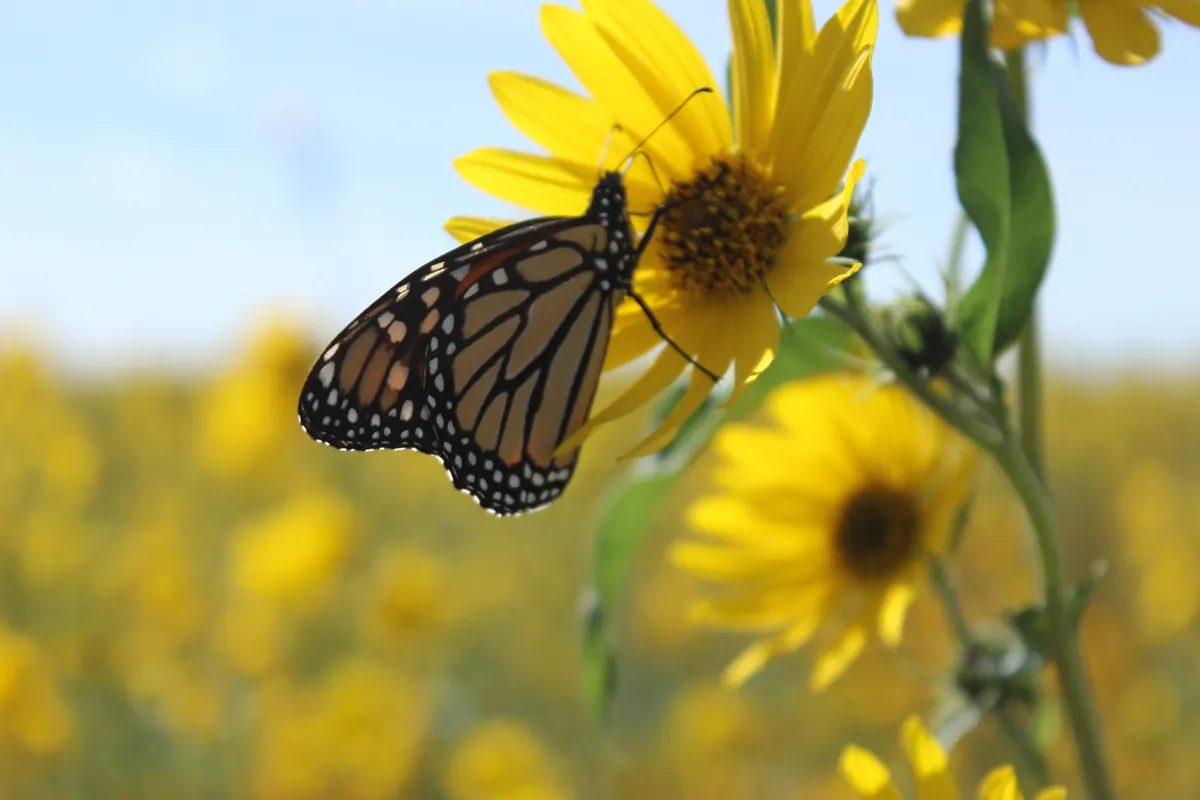
- Monarchs at their peak. The Oklahoma Monarch Society puts the state’s peak between the end of September and mid-October. Look on Maximilian sunflowers and frostweed in the afternoon, and in pecans and cedars at dusk after a north wind.
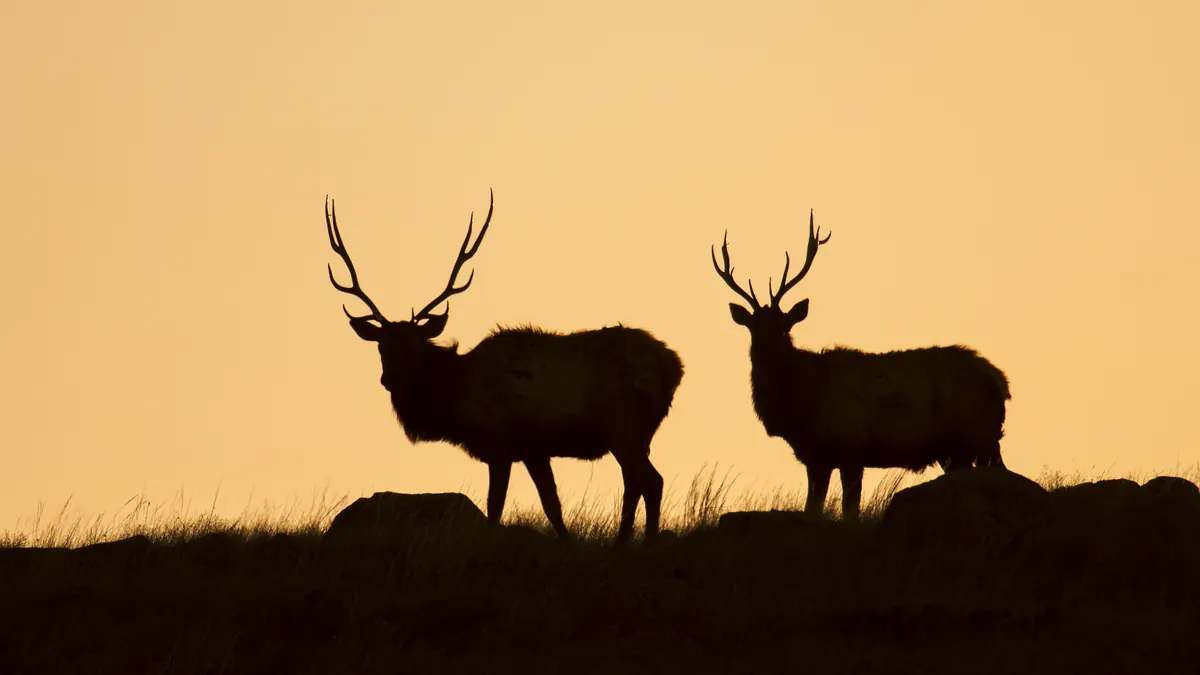
- Elk in the Wichitas and a Hunter’s Moon. Bull elk bugle at dawn and dusk in the Wichita Mountains through early October, fading by month’s end. The Hunter’s Moon turns full late Sunday evening, October 25 (11:12 p.m. Central), and comes up around sunset on both the 25th and the 26th.
For the Naturalist’s Field Journal this month: log the first fall crane among the birds you have seen, draw a map of sounds at dusk in the Wichitas, note monarchs on the pollinator watch and tarantulas in the daily field log, sketch a pecan and a hedge apple among the seeds, pods and cones, and let the cricket thermometer take the last warm nights. Date everything.
Regions used below: Panhandle and High Plains; Northwest and the Salt Plains; Central Oklahoma and the Oklahoma City metro; Northeast and Green Country; Southwest and the Wichita Mountains; Southeast and the Ouachita Mountains.
When do whooping cranes and sandhill cranes come through Oklahoma?
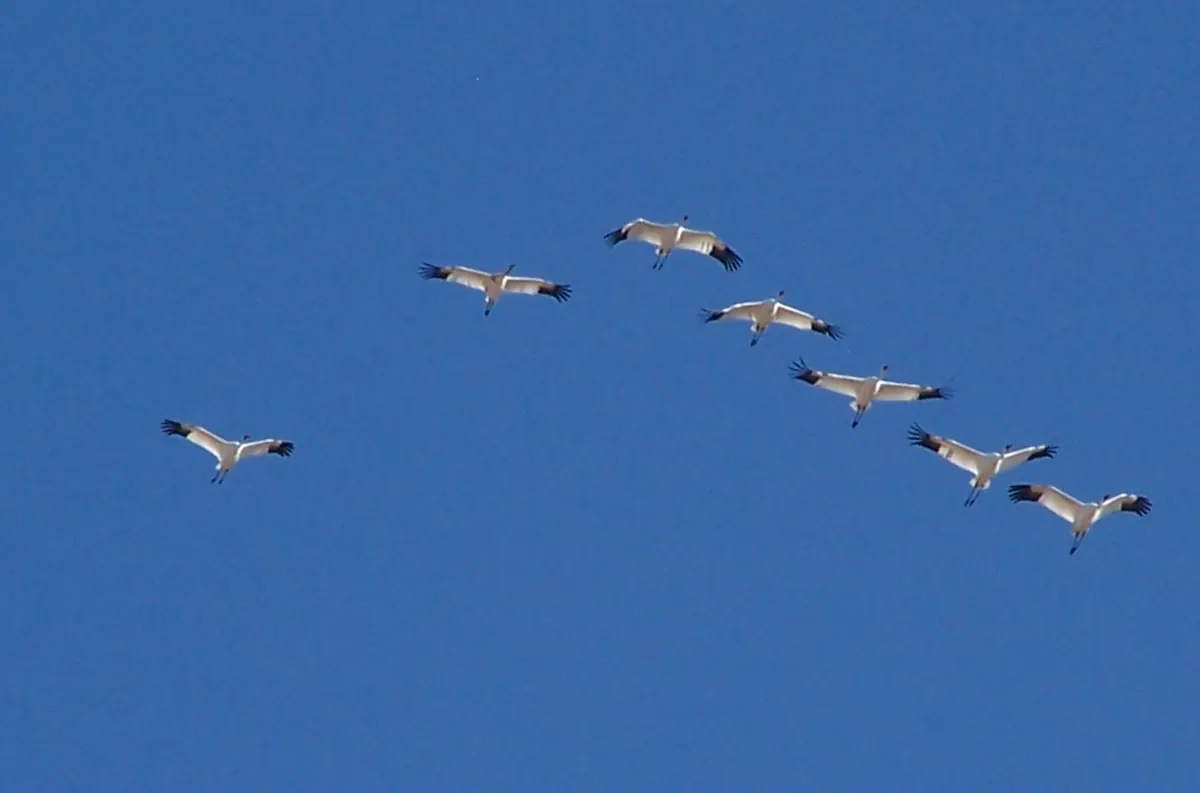
October is crane month in western Oklahoma. The endangered whooping crane, North America’s tallest bird, crosses the state between Canada and the Texas coast, and the Oklahoma Department of Wildlife Conservation says most sightings come from mid-October through November, east of Guymon and west of Interstate 35. Sandhill cranes by the thousands share the route, and Salt Plains National Wildlife Refuge, near Jet in Alfalfa County, is where the two most often meet.
-
Whooping cranes at Salt Plains
October through early November · Eagle Roost Trail and Cottonwood Point, Salt Plains National Wildlife Refuge
The refuge’s own visitor sheet lists October through early November as the best window for whoopers, and names Eagle Roost Trail and Cottonwood Point as the places to look. The Wildlife Department describes an adult as nearly five feet tall with a 90-inch wingspan, snow white with a red crown and black wingtips that show only in flight, and it flies with its neck stretched straight out, which separates it from pelicans and egrets. They often travel as a family of two adults and one rusty-headed youngster. Keep your distance, stay in the car if they are near the road, and send the date, place, number of birds and any leg bands to the Wildlife Department’s online sighting form.
-
Sandhill cranes overhead
From early October; staying at Salt Plains October through April · Western Oklahoma wheat country, the Salt Plains, Hackberry Flat near Frederick
You will often hear sandhills before you find them. The Wildlife Department notes that their rolling, trumpeting call carries more than a mile, and a flock can be spiraling so high it looks like pepper on the sky. A sandhill stands about four feet tall with a six-foot wingspan and is gray, often stained rusty, with a red forehead. At Salt Plains the refuge expects them from October through April along Eagle Roost Trail, Cottonwood Point, the Jet Recreation Trail and Hoot Owl Loop. Sandhill crane hunting opens October 17, which is one reason the department asks everyone to learn the white-versus-gray difference.
-
Pelicans on the big lakes
Early September into November · Big reservoirs and rivers statewide; Great Salt Plains Lake
American white pelicans pass through from early September to November, according to the Wildlife Department, stopping on reservoirs across most of the state. Their wings span nine to ten feet, and a flock circling up a thermal flashes black and white as it turns in near unison.
-
Selenite crystals, until October 15
Last digging day Thursday, October 15 · Selenite Crystal Digging Area, 66003 Garvin Road, Cherokee
The same salt flats that shelter the cranes hold the only hourglass-shaped selenite crystals known anywhere, colored by iron oxide as they grow in the mud. The dig area is free, open sunrise to sunset from April 1 through October 15, and then closes for the migration. Each person may take ten pounds plus one large cluster a day. Bring a shovel, water and sunglasses, and wash the salt off the car afterward.
Audubon’s guide to Oklahoma birding points to Hackberry Flat Wildlife Management Area in Tillman County, a restored wetland of about 7,000 acres, for shorebirds in fall and wintering sandhills, and to Sequoyah National Wildlife Refuge on the Arkansas River for the state’s biggest flocks of snow geese once the weather turns. Your first crane of the season deserves a line in the journal’s bird list, with the date and which way the wind blew.
When is the monarch migration in Oklahoma?
Oklahoma is squarely in the central flyway, where most of the eastern monarchs funnel toward Texas and Mexico. Monarch Watch’s table of peak dates by latitude has the flight cresting between September 19 and October 1 along the Kansas line (37° N) and between September 24 and October 6 at 35° N, the latitude of Oklahoma City and McAlester. The Oklahoma Monarch Society’s Stefanie Leland told News 9 on September 11 that the Oklahoma peak “typically occurs from the end of September to the middle of October,” with weather and flowers deciding the exact week. So the first days of October are prime in the north and middle of the state, and the south keeps seeing them into the middle of the month.
This year’s wrinkle is dry ground. The same report noted that golden crownbeard, a staple fall nectar plant, is flowering weakly where drought has bitten. The butterflies will concentrate wherever something is blooming: Maximilian sunflowers along highway ditches, frostweed in shady creek bottoms, and late asters and goldenrods in prairie remnants.
-
Where to watch
Sunny afternoons after a north wind, early to mid-October · Pecan groves and cedar windbreaks at dusk; gardens and roadside sunflowers by day
Monarchs travel on the tail winds behind a cold front and stop for the night in sheltered trees, such as pecans or cedars on the lee side of a windbreak. A roost can hold dozens to thousands and usually breaks up by mid-morning. In Tulsa, the Zoo’s Conservation Garden has three certified Monarch Waystations with more than a hundred native plants, and Public Radio Tulsa pointed visitors there and to the Tulsa Botanic Garden in its September 10 story.
-
A fifth generation
August surge, joining the main flight in early October · Milkweed patches statewide
Okies for Monarchs explains why some monarchs you see are fresh and bright: a “premigration” wave of northern monarchs reaches Oklahoma in late July and August, lays eggs on milkweed revived by late-summer rain, and produces a generation that emerges in September and heads south in early October with the rest. Their advice is to leave milkweed standing into September and keep late nectar blooming.
Report roosts and your last monarch of the year to Journey North, and if you want to go further, Monarch Watch sells tagging kits; a tiny sticker on the hindwing can turn up in Mexico in winter.
Where can you hear elk bugling and see bison in Oklahoma in October?
Two places give Oklahoma a taste of the old plains. The Wichita Mountains Wildlife Refuge near Lawton protects about 60,000 acres of mixed-grass prairie and granite peaks with bison, longhorn and Rocky Mountain elk, and the Nature Conservancy’s Joseph H. Williams Tallgrass Prairie Preserve north of Pawhuska runs a free-ranging bison herd on 39,650 acres, the largest protected remnant of tallgrass prairie left. October is a different month at each.
-
The elk rut in the Wichitas
Height of the rut in late September and early October; bugling fades late in the month · Wichita Mountains Wildlife Refuge, especially at dawn and dusk
Bulls gather cows into harems and bugle, a high whistle ending in grunts, loudest before sunrise and after sunset. The Friends of the Wichitas run guided Bugling Elk Tours into the refuge’s closed Special Use Area on October weekends: Saturday the 3rd (a 6:30 a.m. tour), and the 4th, 10th, 11th, 17th, 18th and 24th, departing at 5:00 p.m. from the visitor center. Tours last two and a half to three hours, and children must be at least eight. Reservations opened September 7 and fill fast; check for openings, or simply park at a refuge pullout at dusk, switch off the engine and listen.
-
Bison and prairie dogs
All month · Wichita Mountains refuge roads; prairie dog towns along the main roads
Refuge bison graze beside the pavement and cross it when they please; stay in the car or well back. Prairie dog towns are busy on warm afternoons, and hawks hunting over them repay binoculars.
-
Tallgrass Prairie Preserve: the bison are off the road
October 1 to about November 20 · Near Pawhuska, Osage County
The fall roundup for weighing and vaccinations means the Conservancy expects the bison to be out of sight of the road from October 1 until about November 20. Go for the grass instead: big bluestem, “turkeyfoot” for its three-branched seed head, stands four to eight feet tall and turns a maroon-tan that makes the Osage hills look rusted.
A map of sounds from the Naturalist’s Field Journal works well in the Wichitas: sit still at dusk, put yourself in the middle of the page, and mark each bugle, coyote and owl by direction and distance.
When is peak fall color in Oklahoma?
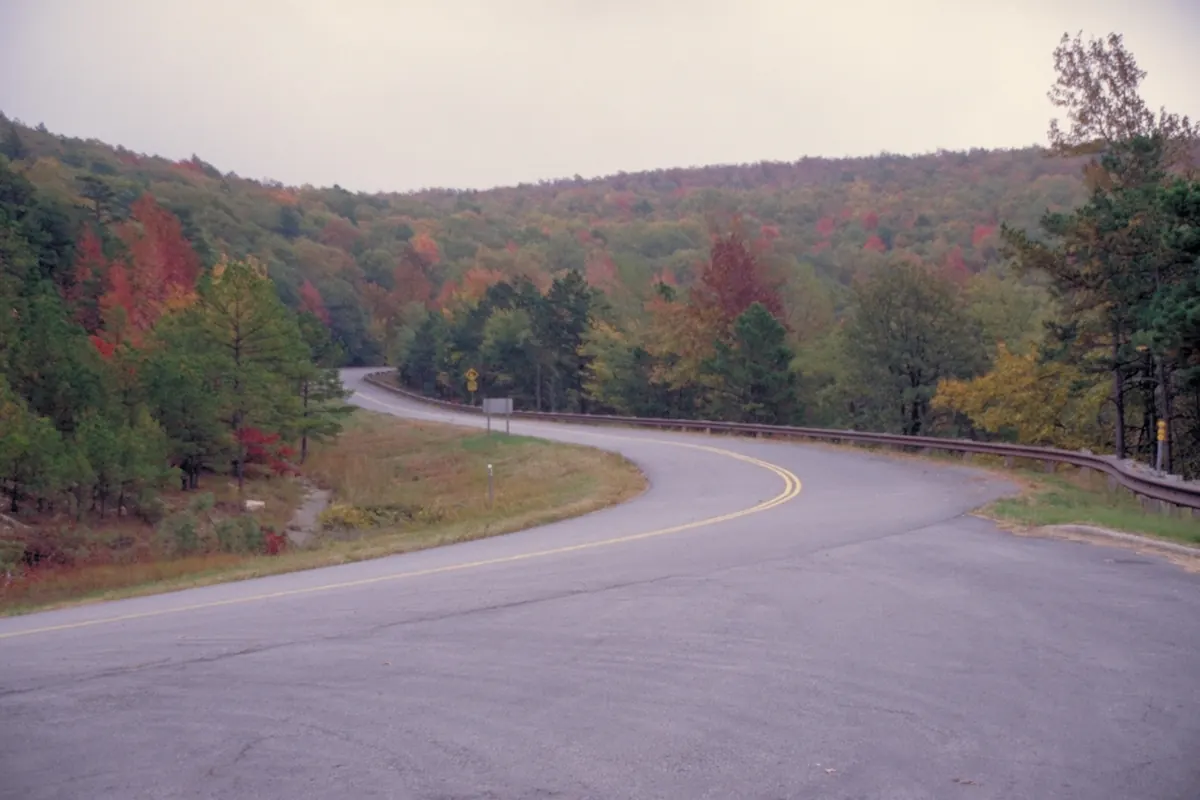
Oklahoma’s best color is in the east, where oak, hickory, maple, sweetgum and black gum mix with shortleaf pine on the Ozark Plateau and in the Ouachita Mountains. The west turns more quietly, with cottonwoods going gold along the rivers and sumac and prairie grasses turning red and copper on the slopes. In most years the show starts in mid-October and is at its best in the southeast in late October and the first days of November.
-
Talimena National Scenic Byway
Typically the last week of October through the first week of November · State Highway 1 from Talihina along Winding Stair and Rich mountains toward Mena, Arkansas
Thirty-six of the byway’s 54 miles are in Oklahoma, with more than 15 overlooks such as Panorama and Sunset Point vistas. Allow a day, and fill the tank in Talihina, since there is no gas along the drive.
-
Beavers Bend and the Mountain Fork
Late October into November · US 259 north of Broken Bow; Beavers Bend State Park
TravelOK describes yellows and deep reds scattered through the pine forest along Highway 259 and the Mountain Fork River. The park lists a naturalist on site, and the Forest Heritage Center sits inside the park; ask at the park office what programs are running the week you visit.
-
Green Country and the Arbuckles
Mid- to late October · Robbers Cave State Park near Wilburton; Highway 10 around Tahlequah; Oologah Lake; Chickasaw National Recreation Area at Sulphur
These round out TravelOK’s list of fall drives. The oak-hickory hills around Oologah and Tahlequah are the nearest color to Tulsa, and Chickasaw’s spring-fed creeks are the closest to Oklahoma City.
Choose one tree near home, a blackjack oak, a sweetgum or a cottonwood, and give it a page in the journal’s tree-through-the-seasons plate. A sketch and a date each week in October shows exactly when your own street peaks.
When is the first freeze in Oklahoma?
The Panhandle freezes first and the Red River last, with almost a month between them. Boise City, at the western end of the Panhandle, has its median first freeze on October 17, and has already had one by October 4 in one year in ten. Oklahoma City and Tulsa usually wait until the first days of November, and Idabel in the far southeast until November 3. Low spots freeze sooner than the table suggests: river bottoms and valleys collect cold air on still, clear nights, while hilltops and downtowns stay a few degrees warmer.
| Station | One year in ten | Median | Nine years in ten |
|---|---|---|---|
| Boise City 2 E (western Panhandle) | Oct 4 | Oct 17 | Oct 29 |
| Guymon Municipal Airport (Panhandle) | Oct 11 | Oct 23 | Nov 3 |
| Gage Airport (northwest) | Oct 6 | Oct 20 | Nov 2 |
| Enid (north central) | Oct 21 | Nov 1 | Nov 15 |
| Oklahoma City Will Rogers Airport | Oct 21 | Nov 2 | Nov 17 |
| Tulsa International Airport (northeast) | Oct 20 | Nov 4 | Nov 19 |
| Lawton Municipal Airport (southwest) | Oct 22 | Nov 5 | Nov 18 |
| Mcalester Regional Airport (east central) | Oct 20 | Nov 3 | Nov 19 |
| Idabel (southeast) | Oct 18 | Nov 3 | Nov 20 |
Look up the station nearest you, among well over a hundred across the state, on our Oklahoma first and last frost dates page. When the forecast calls for a clear, calm night in the mid-30s, pick the last tomatoes and peppers, bring in the potted plants, and cover anything tender with a sheet. Note the first morning with frost on the windshield; a few years of those dates will describe your yard better than any airport can.
How fast are Oklahoma days getting shorter in October?
Every city in the state starts October with nearly the same day, about 11 hours and 48 minutes, and the difference shows by the end: Guymon loses 67 minutes over the month while Idabel, farther south, loses 59. In Oklahoma City sunrise slides from 7:25 to 7:51 a.m. and sunset comes forward from 7:14 to 6:36 p.m., a loss of 64 minutes. Once Oklahomans set clocks back overnight into Sunday, November 1, sunrise lands before 7 and puts the drive home in twilight.
| City | Oct 1 | Oct 31 | Lost | Per day |
|---|---|---|---|---|
| Guymon | 11 h 48 m | 10 h 41 m | 67 min | 2.2 min |
| Woodward | 11 h 48 m | 10 h 42 m | 66 min | 2.2 min |
| Enid | 11 h 48 m | 10 h 42 m | 66 min | 2.2 min |
| Tulsa | 11 h 48 m | 10 h 43 m | 65 min | 2.2 min |
| Oklahoma City | 11 h 49 m | 10 h 45 m | 64 min | 2.1 min |
| McAlester | 11 h 49 m | 10 h 47 m | 62 min | 2.1 min |
| Lawton | 11 h 49 m | 10 h 48 m | 61 min | 2.0 min |
| Idabel | 11 h 49 m | 10 h 49 m | 60 min | 2.0 min |
The Field almanac gives any Oklahoma address its sunrise, sunset, twilight and weekly loss of light.
What is October weather like in Oklahoma, and will El Niño change it?
October is one of Oklahoma’s kindest months: warm afternoons, cool nights and fewer storms than spring. NOAA’s 1991–2020 normals give Oklahoma City an average high of 72.8 °F and low of 49.4 °F, and Tulsa 73.6 and 50.9. The Panhandle has the same afternoons but much colder nights, with Guymon averaging a high of 73.1 °F and a low of 43.0 °F. Rain falls off sharply to the west: 3.78 inches in a normal October at Tulsa, 3.32 at Oklahoma City, 2.33 at Clinton-Sherman and 1.75 at Guymon.
The Oklahoma Climatological Survey calls autumn a secondary severe-weather season, with far fewer supercells than spring. Southerly winds rule until a front arrives; behind it come gusty north winds, dry air, a hard blue sky and the first cold nights.
The bigger story is the coming winter, and a very strong El Niño looks all but certain: federal forecasters rated it above 90 percent likely in their September 10 update, with three chances in four that October through December ranks as historic. State Climatologist Gary McManus said in August that a strengthening El Niño could bring the state cooler temperatures and more moisture, but that its effects “typically take time to establish across the Southern Plains.” By the analysis the Oklahoma Farm Report cited, in the strong El Niños since 1950 the October-to-April season in Oklahoma landed among the wettest third of years roughly 60 to 80 percent of the time and among the coolest third about 60 to 70 percent. So the odds lean toward a damp, chilly winter and some drought relief, especially in the south, but they say little about this month, whose weather comes from the fronts rather than the Pacific. The government’s winter outlook arrives in mid-October; the monthly El Niño report comes first, on October 8.
What can you see in the Oklahoma night sky this October?
-
The moon covers Jupiter
Tuesday, October 6: Jupiter reappears about 4:11 to 4:13 a.m. CDT · Low in the east before dawn
Early on the 6th, the thin waning crescent passes in front of Jupiter. In Oklahoma the moon rises only around 3 a.m. (3:04 in Tulsa, 3:12 in Oklahoma City, 3:26 in Guymon), and the International Occultation Timing Association predicts the planet will vanish at about 3:15 to 3:18 a.m. Central, when the moon is still at or below the horizon. Eastern Oklahoma may just catch it with a perfectly flat horizon; the rest of the state will miss it. The reappearance is the part to set the alarm for: IOTA’s times for nearby Wichita Falls, Fort Smith and Wichita all fall between 4:11 and 4:13 a.m., with the moon 9 to 13 degrees up and the sky still fully dark. Jupiter pops out from the moon’s unlit edge as a bright point, and binoculars or a small telescope show its moons following one by one.
-
The Hunter’s Moon
Sunday and Monday, October 25 and 26, at sunset · Low in the east
Full moon falls at 11:12 p.m. Central on Sunday the 25th, and the disk will look complete on both evenings. Oklahoma City sees it come up at 6:12 p.m. on Sunday, thirty minutes ahead of the 6:42 sunset, and at 6:49 p.m. on Monday, eight minutes after sunset; in Guymon moonrise is 6:26 and 7:02 p.m. Ignore any supermoon billing, since the moon is far from perigee.
-
Orionids
Broad peak before dawn on October 21 and 22; active October 2 to November 7 · Anywhere dark, facing south-east
Grit shed by Halley’s Comet makes these quick, bright streaks, perhaps 10 to 20 an hour in the country. A fat gibbous moon spoils the evening, so wait for moonset: 2:53 a.m. on the morning of the 21st and 3:55 a.m. on the 22nd in Oklahoma City, a little later in the Panhandle. That leaves a good two hours of real darkness before dawn.
-
Draconids
Evening of Thursday, October 8 · Look high in the north after dark
Slow meteors, few in number and hard to predict, that radiate from the head of Draco after dusk, an easy shower for a school night. No moon interferes: the thin crescent rises only near dawn.
-
Saturn, Venus, Jupiter and Mars
Saturn at opposition October 4; Mars in the Beehive the morning of October 11 · Saturn east at dusk; Jupiter and Mars east before dawn
Saturn reaches opposition on the 4th: up at dusk, high in the south around 1 a.m., down at dawn, and joined by the moon on the 23rd and 24th. Venus can be glimpsed low after sunset for just a few evenings early in October, then reaches inferior conjunction on the 23rd. The dawn sky belongs to Jupiter, blazing in the east, with Mars higher up; on the 11th, binoculars will show Mars sliding through the Beehive cluster.
-
The Okie-Tex Star Party
October 9–17 · Camp Billy Joe near Kenton, in the far western Panhandle
The 43rd Okie-Tex gathers amateur astronomers at 4,439 feet near Black Mesa, under some of the darkest skies in the Southwest, and this year it falls over the new moon. Attendance is by registration, so contact the organizers before you drive out. Black Mesa State Park, nearby, is an International Dark Sky Park in its own right.
| Phase | Date | Time |
|---|---|---|
| Last quarter | Saturday, Oct 3 | 8:25 a.m. CDT |
| New moon | Saturday, Oct 10 | 10:50 a.m. CDT |
| First quarter | Sunday, Oct 18 | 11:12 a.m. CDT |
| Full moon, the Hunter’s Moon | Sunday, Oct 25 | 11:12 p.m. CDT (looks full the evenings of Oct 25 and 26) |
| Last quarter | Sunday, Nov 1 | 2:28 p.m. CST |
The Today’s sky page shows whether clouds will spoil a given night, and the moon phases calendar gives moonrise and moonset for Oklahoma towns.
What is blooming and ripening in Oklahoma in October?
-
Maximilian sunflower
August into November; best in early October · Highway ditches, prairie edges, old fields statewide
The tall sunflower with flowers climbing a single stem, three to ten feet high, is the roadside plant of an Oklahoma October. The Lady Bird Johnson Wildflower Center notes it feeds bees and butterflies and that birds eat the seeds, and migrating monarchs work it hard. Heath aster, goldenrods and snow-on-the-prairie bloom alongside.
-
Frostweed
Blooming through fall; ice “ribbons” after the first hard freeze · Shady creek bottoms and woodland edges, central and eastern Oklahoma
The white, rather ragged flowers are a favorite of late butterflies. The plant earns its name later: on the first hard-freezing morning, the stems split and push out thin curls of ice. Mark a patch now and go back at sunrise after the first freeze.
-
Pecans
Ripen September to October; falling into December · River bottoms and old groves, especially central and southern Oklahoma
Native pecans line river bottoms across much of the state. The Forest Service’s species account has the nuts ripening in September and October and falling through December, feeding squirrels, raccoons, opossums and many birds. After a dry summer, expect plenty of empty shells.
-
Osage orange and persimmon
Osage orange ripens September to October; persimmon September to November · Fencerows and pastures; persimmons on woodland edges
The bumpy green “horse apples” thudding onto country roads come from a tree whose native range is a narrow belt that includes southeastern Oklahoma and the Red River country. Settlers planted it for hedges because its thorny branches stopped cattle. Squirrels shred the fruit for its seeds. Common persimmons ripen from September into November and feed foxes, coyotes, raccoons, opossums and quail; wait until they are soft and wrinkled before you try one.
Collect a pecan, a hedge apple and a sycamore ball on a walk and draw each one life-size in the journal. Children like weighing the horse apple.
What animals are on the move in Oklahoma in October?
-
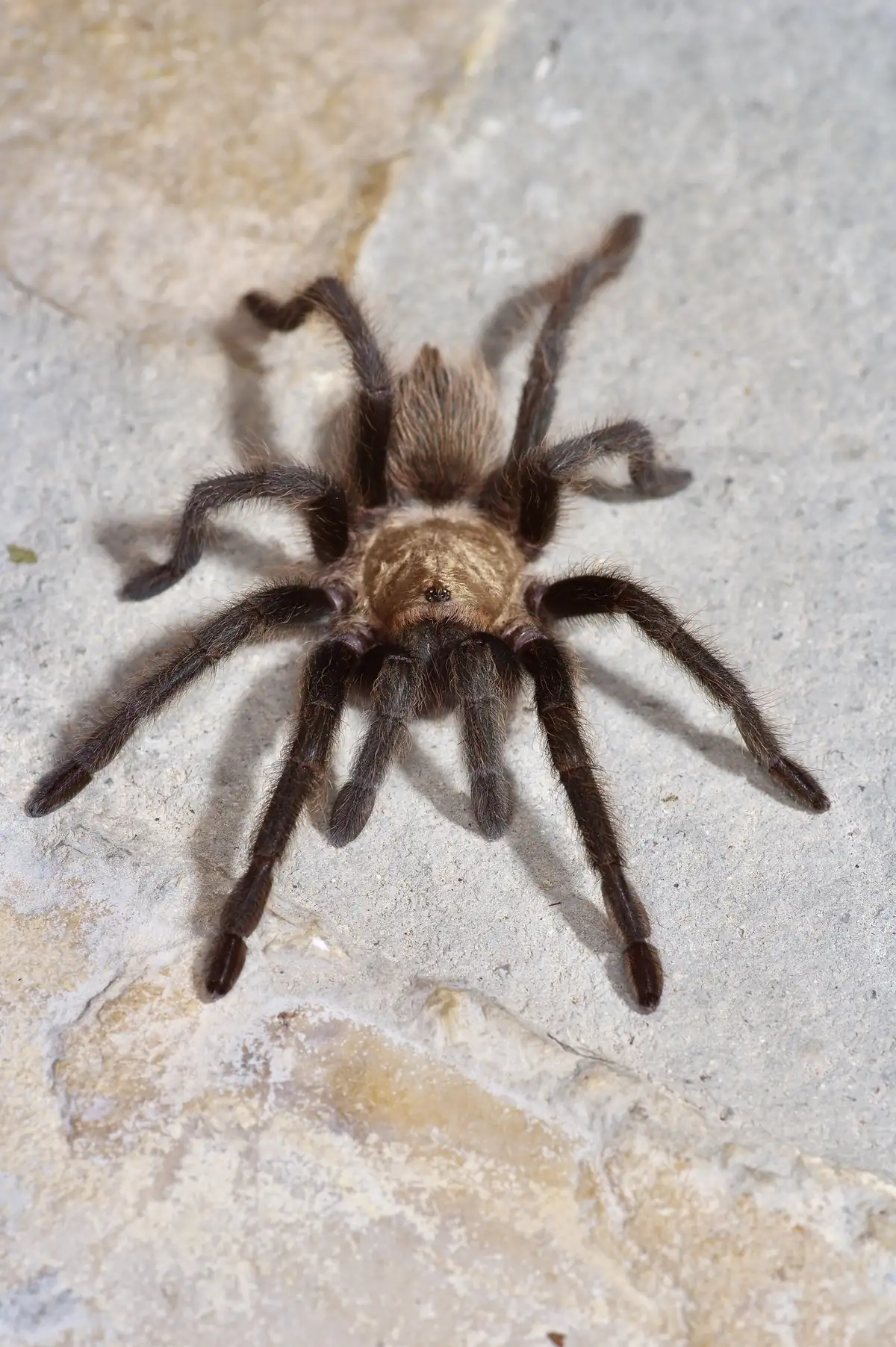
Tarantulas crossing the road
From September through October · Roads, driveways and porches, most common in western and southern Oklahoma
Mature male brown tarantulas leave their burrows in fall to hunt for females, and the Wildlife Department says the wandering usually starts in September. They are big, with a leg span of four to five inches, but the department says the venom is not known to be life-threatening to people. A cornered one rears up and shows its fangs, and the hairs it flicks from its abdomen can itch. Watch, photograph and leave it be: most wandering males will not live to see another fall, while a female can live for decades.
-
Deer in the rut
Rubs and scrapes multiply through late October into November · Field edges, creek bottoms, suburban greenbelts
Bucks strip bark from saplings with their antlers and paw out scrapes that they mark with scent, and the Wildlife Department calls the rut one of the most interesting times to watch whitetails. Look for the rubs at knee to waist height on cedars and small hardwoods. Bucks chasing does pay little attention to traffic, so this is the season when deer run into cars.
-
Copperheads in the leaf litter
Active by day in spring and fall; mating late August to October · Woodpiles, rock ledges and leaf litter in wooded country
Copperheads shift from night to daytime activity as it cools, and their banded pattern vanishes among fallen oak leaves. The Wildlife Department says the venom is considered mild and rarely fatal with prompt treatment, and that the best response to a copperhead is to leave it alone. Wear shoes outdoors after dark on warm evenings and use a light.
-
Crickets and katydids
Until the first hard freeze · Any warm evening
The chorus slows as nights cool; the journal’s cricket thermometer turns chirps into degrees.
What can Oklahoma families do outdoors in October?
- Now through Thursday, October 15: dig selenite crystals at Salt Plains. Free, sunrise to sunset, with a shovel, water and sunglasses.
- October weekends: hear bull elk bugle. The Friends of the Wichitas tours run October 3 (6:30 a.m.), 4, 10, 11, 17, 18 and 24 (5 p.m.) for children eight and up; if they are full, a dusk drive through the refuge often does the job.
- Thursday, October 8: Draconids after dark, with a moonless sky and an early bedtime still possible.
- October 10–11: count birds. The Big Sit runs from midnight Saturday to 11:59 p.m. Sunday: pick a 17-foot circle, such as a backyard or a lakeshore, and list every species you see or hear. eBird’s October Big Day is expected that Saturday too; confirm the date on eBird.
- Through October 31: BOOtanical at Tulsa Botanic Garden, with a hay maze and pumpkin patch, Tuesday through Sunday 10 a.m. to 5 p.m., and a lantern-lit Spooky Trail on Thursday evenings. Oxley Nature Center in Mohawk Park lists a Little Seedlings program on Friday, October 9, at 10 a.m.; check the age range and register at least 48 hours ahead.
- Late October: the Talimena drive or Beavers Bend for the peak of the color, with the Hunter’s Moon coming up over the ridges Sunday and Monday evening, October 25–26.
- Citizen science for school weeks. Report any whooping crane to the Wildlife Department, log monarch roosts with Journey North, post your tarantula and your first frostweed ice to iNaturalist, and sign up for Project FeederWatch, whose count season begins in November.
Print this month’s checklist from the Field almanac, and find neighboring states on the nature this month page.
Safety notes for October in Oklahoma
- Hunting seasons and hunter orange. Deer, elk and fall turkey archery and rabbit season all open October 1, antelope archery runs October 1–14, sandhill cranes open October 17, dove continues through October 31, and fall turkey gun opens that same day. The two firearm deer seasons that matter this month are the youth deer gun season, October 16–18, and muzzleloader, October 24–November 1; regular deer gun runs November 21–December 6. During any firearm deer, elk, antelope or bear season, gun and muzzleloader hunters must wear a hunter-orange head covering and an outer garment above the waist totaling at least 400 square inches, archery hunters must wear orange on the head or upper body, and most other hunters must also wear an orange cap or upper garment; waterfowl, crane, crow and dove hunters are exempt. Hikers are exempt, but an orange cap, and a vest for the dog, is wise on public hunting land during those two stretches.
- Refuge closures. Sequoyah National Wildlife Refuge closes the Sandtown Bottom beyond Tuff Boat Ramp for controlled deer hunts on October 16–18 and 28–30; other refuges and management areas post similar closures, so check before you go.
- Fire. Cured grass and dry north winds open the fall fire season in the west. Check county burn bans with Oklahoma Forestry Services, never park on tall grass, and call 911 to report smoke.
- Bison, elk and snakes. Give bison and bull elk in rut at least a football field of room. Watch where you put your hands on rock piles and woodpiles; copperheads and rattlesnakes are still out on warm days.
- Storms. Fall has its own smaller severe-weather season. Keep weather alerts on during outings, especially on lakes, and check current weather before you set out.
Sources
- U.S. Fish and Wildlife Service: Salt Plains National Wildlife Refuge
- U.S. Fish and Wildlife Service: Salt Plains general information (June 2025; crystal digging, trails, best times for whooping and sandhill cranes)
- U.S. Fish and Wildlife Service: Salt Plains, visit us (dig area hours and limits)
- Oklahoma Department of Wildlife Conservation: whooping crane field guide
- Oklahoma Department of Wildlife Conservation: endangered whooping cranes to move through Oklahoma (reporting sightings)
- Oklahoma Department of Wildlife Conservation: sandhill crane field guide
- Oklahoma Department of Wildlife Conservation: American white pelican field guide
- Audubon: birding in Oklahoma (Salt Plains, Hackberry Flat, Red Slough, Sequoyah)
- Monarch Watch: peak migration dates by latitude
- News 9: monarch butterflies begin fall migration through Oklahoma (September 11, 2026; Oklahoma Monarch Society)
- Public Radio Tulsa: monarch migration to peak in Oklahoma late September, early October (September 10, 2026)
- Okies for Monarchs: the bonus monarch generation
- Journey North: monarch sightings and roost reports
- Monarch Watch: tagging program
- U.S. Fish and Wildlife Service: Wichita Mountains Wildlife Refuge
- Friends of the Wichitas: 2026 fall tour schedule
- Friends of the Wichitas: Bugling Elk Tours
- The Nature Conservancy: Joseph H. Williams Tallgrass Prairie Preserve (2026 bison roundup, visiting)
- Lady Bird Johnson Wildflower Center: big bluestem
- TravelOK: explore the Talimena National Scenic Byway
- TravelOK: best bets for Oklahoma fall foliage
- TravelOK: Beavers Bend State Park
- NOAA NCEI: 1991–2020 monthly normals (Oklahoma City, Tulsa, Guymon, Clinton-Sherman)
- NOAA NCEI: U.S. climate normals 1991–2020 (freeze dates)
- Oklahoma Climatological Survey: the climate of Oklahoma
- Climate Prediction Center: ENSO diagnostic discussion, September 10, 2026
- Oklahoma Farm Report: historically strong El Niño could bring cool, wet relief to Oklahoma by winter (August 21, 2026; State Climatologist Gary McManus)
- Climate Prediction Center: seasonal outlooks
- U.S. Naval Observatory: sunrise, sunset, moonrise and moonset (data API; Oklahoma City, October 25, 2026)
- U.S. Naval Observatory: sunrise, sunset, moonrise and moonset (data API; Tulsa, October 6, 2026)
- U.S. Naval Observatory: moon phases 2026
- International Occultation Timing Association: occultation of Jupiter, October 6, 2026 (times and moon altitudes for Wichita Falls, Fort Smith and Wichita)
- EarthSky: meteor shower guide
- American Meteor Society: 2026 meteor shower calendar
- EarthSky: visible planets tonight
- Okie-Tex Star Party: 43rd annual, October 9–17, 2026
- DarkSky International: Black Mesa becomes Oklahoma’s first International Dark Sky Park
- Lady Bird Johnson Wildflower Center: Maximilian sunflower
- Lady Bird Johnson Wildflower Center: frostweed
- USDA Forest Service Fire Effects Information System: pecan
- USDA Forest Service Fire Effects Information System: Osage-orange
- USDA Forest Service Fire Effects Information System: common persimmon
- Oklahoma Department of Wildlife Conservation: brown tarantula field guide
- KGOU: brown tarantulas will soon make their seasonal scurry across Oklahoma
- Oklahoma Department of Wildlife Conservation: white-tailed deer field guide
- Oklahoma Department of Wildlife Conservation: copperhead field guide
- Oklahoma Department of Wildlife Conservation: 2026–27 hunting seasons
- Oklahoma Department of Wildlife Conservation: deer big game seasons 2026–27
- Oklahoma Department of Wildlife Conservation: big game regulations (hunter orange)
- U.S. Fish and Wildlife Service: Sequoyah National Wildlife Refuge (2026 controlled hunt closures)
- Oklahoma Forestry Services: fire information and burn bans
- The Big Sit! 2026 (October 10–11)
- eBird: October Big Day 2026
- Tulsa Botanic Garden: BOOtanical and October events
- Oxley Nature Center, Tulsa: programs
- Project FeederWatch: how to participate
- iNaturalist
- Photos via Wikimedia Commons; licenses and photographers are credited under each picture
