What to look for in nature in Oklahoma this May
May is Oklahoma at full volume. Mississippi kites lay their eggs in the treetops and will dive at anyone who strays too close, roadrunners are feeding young, and the salt flats at Salt Plains are busy with shorebirds passing north while terns and plovers nest on bare sand. By mid-May hundreds of bison calves are on the Tallgrass Prairie, and the prairie turns from green to a patchwork of beardtongue, evening-primrose, Indian blanket and coneflower. Collared lizards bask on the boulders, gray treefrogs fill the farm ponds, and free-tailed bats return to their gypsum caves. The month is also the core of tornado season, so pack a weather plan with the binoculars. After dark, meteors and a seasonal Blue Moon take their turn. Treat what follows as a month-long checklist.
Other months in Oklahoma: October, November, December, January, February, March, April.
Start here

- Watch a kite from a distance. Find a Mississippi kite in a park or open woodland in the west, stay well back from any tree where one perches and watch it snatch insects from the air.
- Meet the bison calves. Drive the Tallgrass Prairie Preserve near Pawhuska, stay in your vehicle and look for calves among the herd.
- Log the first blooms. Choose a patch of prairie or a road shoulder and record the day each beardtongue, evening-primrose and Indian blanket opens.
In the Naturalist’s Field Journal this May, put the kite and the roadrunner on the birds I have seen plates, a prairie flower patch on a same place twice page, and a nest you can watch from far away on the nest observed plates. Use the dusk and dawn watch plates for the Eta Aquariid mornings, the reading the signs plates for storm clouds, and the daily field log plates for rainfall. Date every entry.
Regions used below: Panhandle and High Plains; Northwest and the Salt Plains; Central Oklahoma and the Oklahoma City metro; Northeast and Green Country; Southwest and the Wichita Mountains; Southeast and the Ouachita Mountains.
Which birds are nesting in Oklahoma in May?
By May the question changes from who has arrived to who is raising young. The Wildlife Department says that more than 200 bird species raise young in Oklahoma, and it recommends starting early, since songbirds are most active in the cool morning hours. Three of the easiest to find are a hawk-like kite that hunts insects on the wing, a bird that eats snakes and a pair of colorful grassland and thicket songbirds.
-
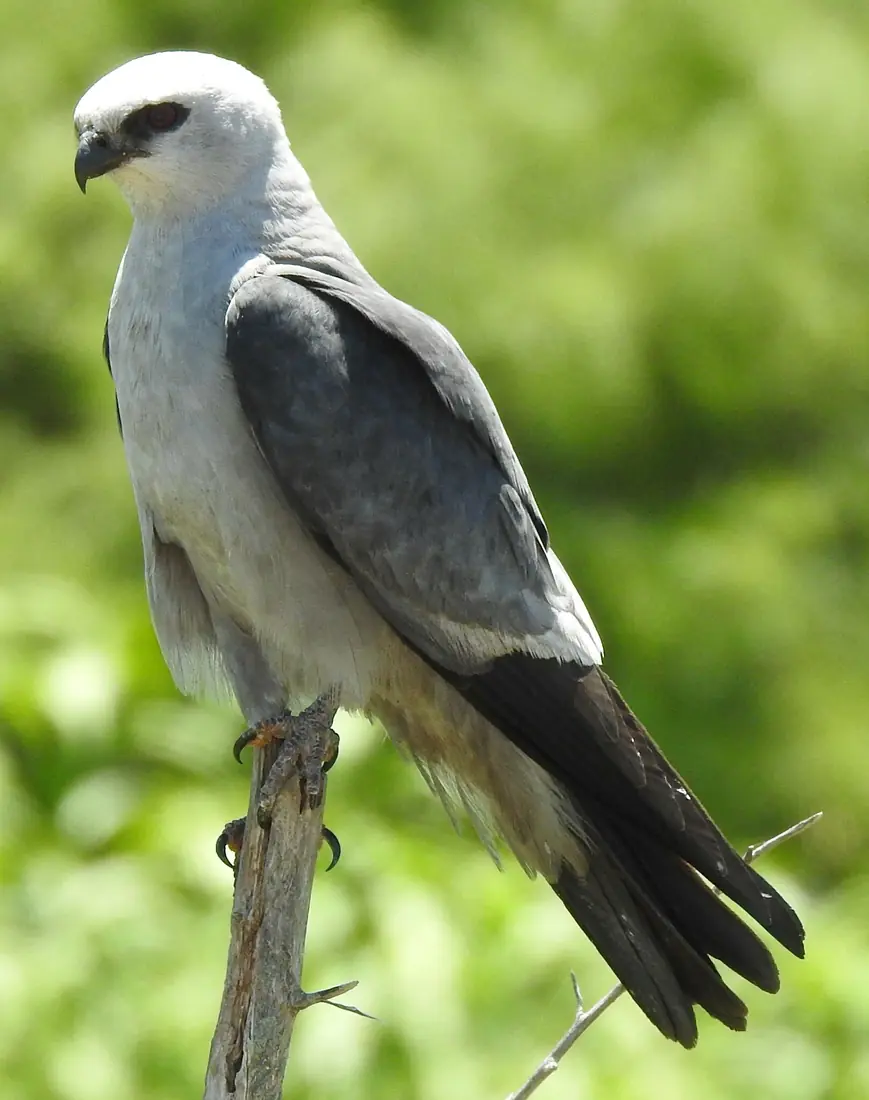
Mississippi kites
Eggs usually laid in late May, hatching about a month later · Wooded suburbs, open woodland and shrubland, most often in the western part of the state
The Wildlife Department describes the Mississippi kite as a slim gray raptor that catches insects in midair and often eats them without landing. A pair builds a shallow bowl of sticks in a tree, and the page says the females lay one to three bluish-white eggs in late May. Both parents incubate and feed the chicks, which leave the nest about five weeks after hatching. Kites guard a nest hard, and the Department says they swoop at people who wander near. Its advice is to keep away until the young have flown, leash pets in parks and use binoculars.
-
Greater roadrunners
Nesting through spring; chicks leave the nest at about three weeks · Open country with little brush, often seen along roadsides
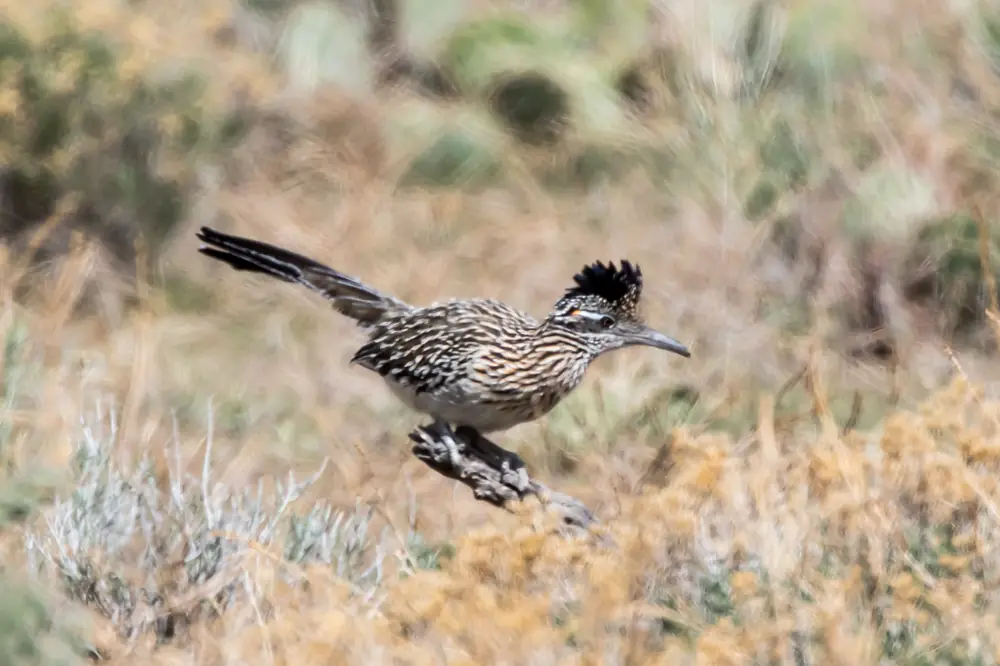
The roadrunner is a ground-running cuckoo that the Department says prefers open country and has spread east across Oklahoma from the desert Southwest. About nine-tenths of its diet is animal matter, with snakes the best known prey, plus lizards, rodents, insects and even other birds. In courtship a male may carry a lizard or small snake as a gift. The nest sits up in a tree, the female lays four or five round white eggs, and both parents share incubation and feeding. Young birds leave the nest around three weeks old, and their parents keep teaching them to hunt for several more weeks.
-
Painted buntings and dickcissels
Breeding season, with songs strongest in the early morning · Painted bunting in the Cross Timbers, such as Lexington Wildlife Management Area and Lake Thunderbird State Park; dickcissel in the mixed-grass prairie, such as the Wichita Mountains
An Audubon guide to birding in Oklahoma pairs species with ecoregions. It lists the painted bunting under the Cross Timbers, with Lexington Wildlife Management Area, Chickasaw National Recreation Area and Lake Thunderbird State Park as hotspots, and the dickcissel under the mixed-grass prairie, with the Wichita Mountains refuge, Sandy Sanders Wildlife Management Area and Boiling Springs State Park.
-
Ruby-throated hummingbirds
Second and third broods possible through the summer · Yards, woodland edges and gardens, mostly in the east; black-chinned hummingbirds mainly in the far west
The Wildlife Department says ruby-throats start nesting about mid-April, soon after they arrive, building cup nests 10 to 20 feet up and laying two white eggs, and some pairs raise two or three broods in a season. Its feeder advice is one part sugar to four parts boiled water, never honey, in the shade and cleaned every few days. Black-chinned hummingbirds live mainly in far western Oklahoma.
To find all of this in one place, the Department’s birding guide names Cookson, Red Slough and Blue River for spring warblers still passing through, and Lexington, Atoka, Packsaddle, Sandy Sanders and Spavinaw for summer songbirds. For sparrows, shrikes and thrashers it suggests grassland fencerows, and for wrens, chickadees and tanagers it suggests tree rows. Start a running tally of what you hear at any of them in the Naturalist’s Field Journal.
Where do shorebirds and nesting terns gather at Salt Plains and Hackberry Flat in May?
Oklahoma’s mud and salt flats are stopovers for birds on their way to the Arctic and nesting grounds for a few that stay. The refuge calls the Great Salt Plains a major migration rest area for hundreds of thousands of shorebirds in spring, summer and fall.
-
Shorebirds on the flats
Spring passage, with March through May the best period at Hackberry Flat · Salt Plains National Wildlife Refuge near Jet; Hackberry Flat near Frederick
The Audubon guide says that March through May is the peak shorebird period at Hackberry Flat in the southwest, and that August is also good. It lists black-necked stilts, American avocets, snowy plovers and Wilson’s phalaropes there, along with king rails and soras in the marsh. The Wildlife Department notes that how many wetland units are flooded depends on rainfall, so conditions change from year to year. At Salt Plains the refuge describes large flocks of white pelicans on the lake in spring and fall.
-
Least terns and snowy plovers
Nests built from late May to mid-July, according to the Wildlife Department · Open sand and gravel on rivers and the west side of the Salt Plains lake
The refuge says the salt flats are a nesting site for the endangered interior least tern and the threatened western snowy plover. The refuge adds that the nests are almost invisible from afar, and that newly hatched chicks walk off to forage. The Wildlife Department’s field guide says least terns nest in shallow scrapes on open, nearly bare sand and gravel, in colonies of 2 to 70 pairs, and that the eggs and chicks are well camouflaged. Treat any open sandbar or salt flat in May as a nursery and watch from a distance.
-
Why most of the flats are closed
Crystal digging and fishing trails listed as open April 1 through October 15 · Selenite Crystal Digging Area, about a mile past the gate
The refuge says digging for crystals is allowed only in the marked dig area and that all other areas are closed to protect birds. Visitors can still look over the flats from the observation tower when the dig area is closed. Hours and rules change, so check the refuge’s current notice before a trip.
-
A birding convention in the southeast
Held in May, according to the Wildlife Department; check the organizer for the 2027 date · Red Slough Wildlife Management Area in McCurtain County
The Department says May is when birding at Red Slough is in full swing, and that the annual Red Slough Birding Convention draws visitors from across the country, with participants often logging 100 or more species. The Department counts more than 300 bird species there, about 70 percent of Oklahoma’s documented total. We have not seen a 2027 date, so ask the organizers.
Are there bison calves on the Oklahoma prairie in May?
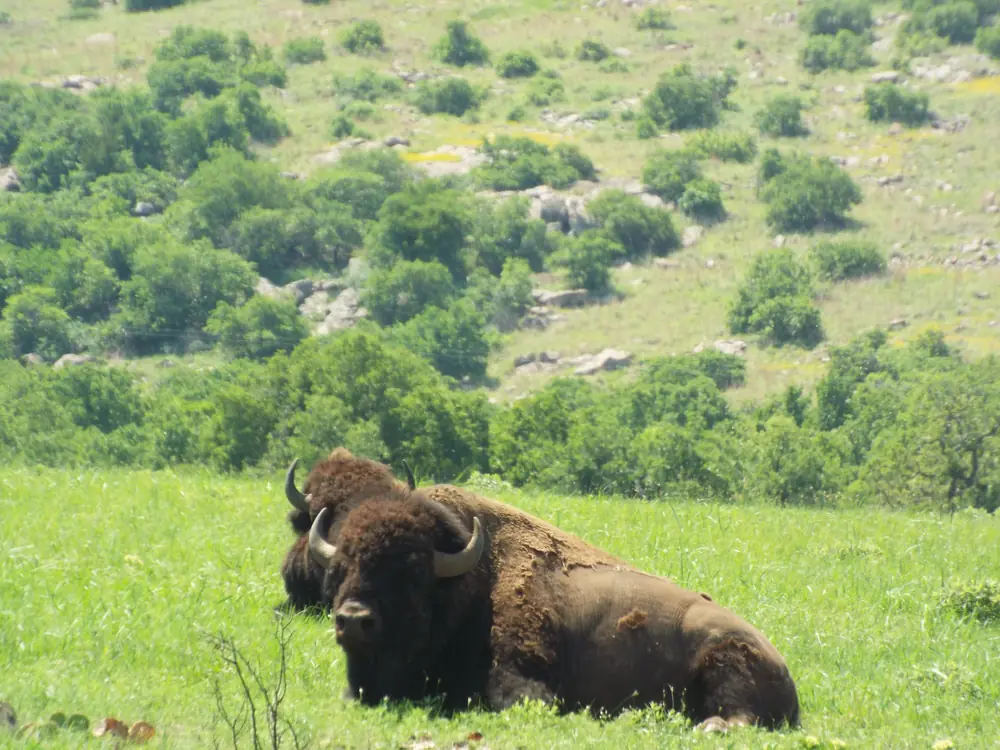
Yes. The Nature Conservancy says that by mid-May 600 to 700 bison calves are running across the Tallgrass Prairie Preserve near Pawhuska. Calves also arrive in spring at the Wichita Mountains Wildlife Refuge, which the Fish and Wildlife Service calls best known for roaming herds of bison, longhorn and Rocky Mountain elk.
-
Bison and calves
By mid-May, per the Nature Conservancy · Tallgrass Prairie Preserve near Pawhuska; Wichita Mountains Wildlife Refuge near Lawton
The preserve is open during daylight hours every day. The Conservancy’s advice is to stay in your car, since bison are dangerous, with enormous power and very pointy horns. Use binoculars, not your feet, to get closer.
-
Prairie-chicken hens and broods
After the booming season ends in early May · Tallgrass Prairie Preserve and the northwest
The Conservancy has males dancing at dawn on the lek from late March until the first days of May. The Wildlife Department explains that after mating the females leave the lek to nest and raise their broods, and that young birds break away from the hens within two to three months.
-
Wildflowers on the preserve
Mid-May through mid-June, according to the preserve’s own page · Tallgrass Prairie Preserve
The preserve says that from mid-May through mid-June wildflowers cover the fields with blankets of color. Dickcissels and scissor-tailed flycatchers are often seen in the warm months.
What blooms in Oklahoma in May?
May is the month the open prairie goes from green to colorful. The best old dataset for timing is a published compilation of first-flowering dates for central Oklahoma, assembled by Ben Osborn in the Oklahoma Native Plant Record from records kept at Norman and Oklahoma City in the late 1920s and 1930s. It gives an average first-flower date for many species, and a handful of earliest-record dates for others. Dates in a particular year can be earlier or later by a week or more, and plants in the Panhandle and the Ouachitas run on their own clocks.
-
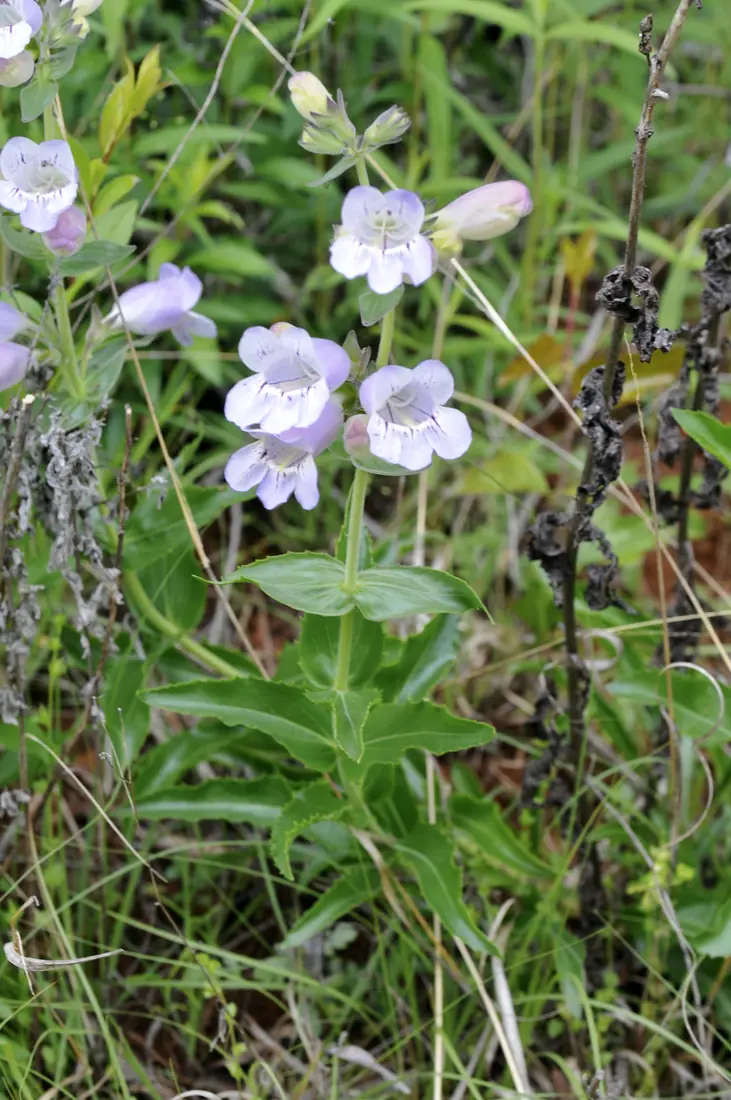
Beardtongues, evening-primroses and yucca
Averages from May 2 to May 8 in the old central Oklahoma records · Open prairie, road cuts and pastures
Slender beardtongue averages May 2, showy evening-primrose May 6, large beardtongue and smooth soapweed (a yucca) May 7, and Missouri evening-primrose and whorled tickseed May 8. Downy phlox averages May 4. Large beardtongue is the tall one with pale lavender tubes, and yucca throws up a spike of creamy bells.
-
Indian blanket
The Wildflower Center gives May through August; the earliest Norman record in Osborn’s list is May 15 · Sandy and limy prairies in the western two-thirds of the state, including the Wichita Mountains
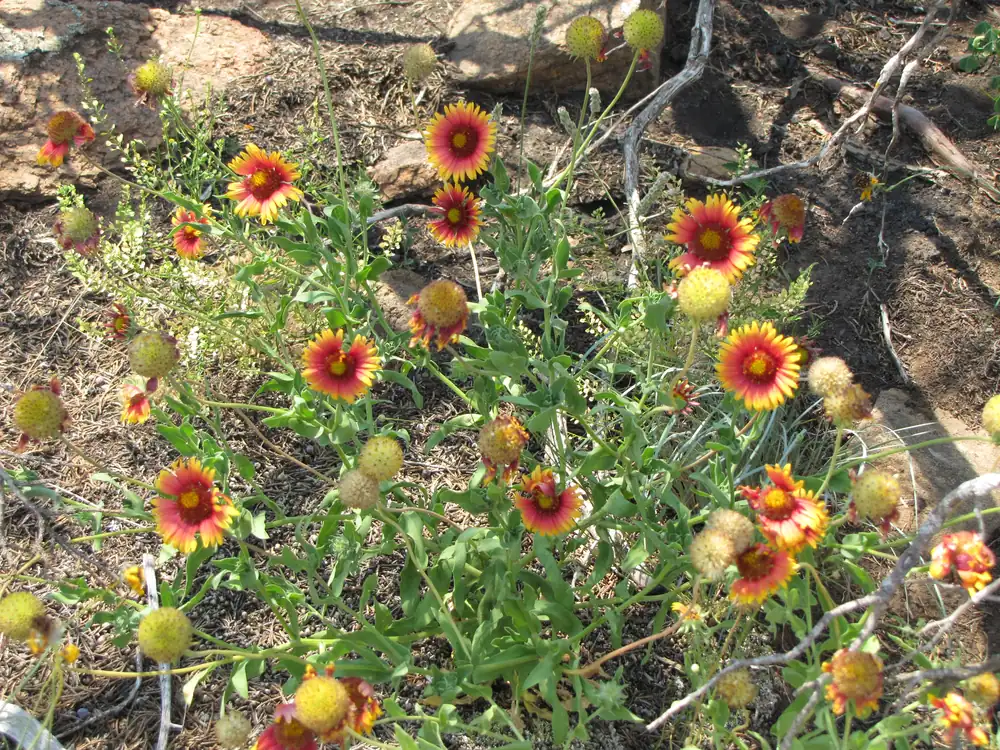
The red-and-gold flower also called firewheel and Indian blanket is an annual that reseeds readily and tolerates heat and dryness. The Wildflower Center lists bloom from May through August, longer in a wet year. It grows in dry plains and open areas, and the Center’s range map includes Oklahoma, with the plant common on limy and sandy prairies. Look for it on road shoulders and at the Wichita Mountains refuge.
-
Coneflowers, lemon mint and sunflowers late in the month
Averages May 21 to May 29 in the old records · Prairie and roadside patches
Purple coneflower averages May 21, purple lemon-mint May 23, wild sweet-pea May 25, prairie sunflower May 24 and longhead coneflower May 29, with black-eyed Susan not far behind, since its earliest record is May 26.
-
Milkweeds for monarchs
Bluntleaf milkweed averages May 5 and oblongleaf milkweed May 6 · Prairie, open woodland and roadsides
Milkweed flowers open in early May by the old records, which is when monarch caterpillars need leaves. Journey North invites volunteers to report the first monarch eggs, caterpillars and adults they see each spring.
The Oklahoma Native Plant Society lists impromptu field trips on its social media page when the weather is just right.
Which lizards, frogs and snakes are active in Oklahoma in May?
Warm nights set everything moving.
-
Eastern collared lizard
Mating from mid-April through June; eggs laid May through July · Rocky hillsides and outcrops, such as the Wichita Mountains and the Arbuckles
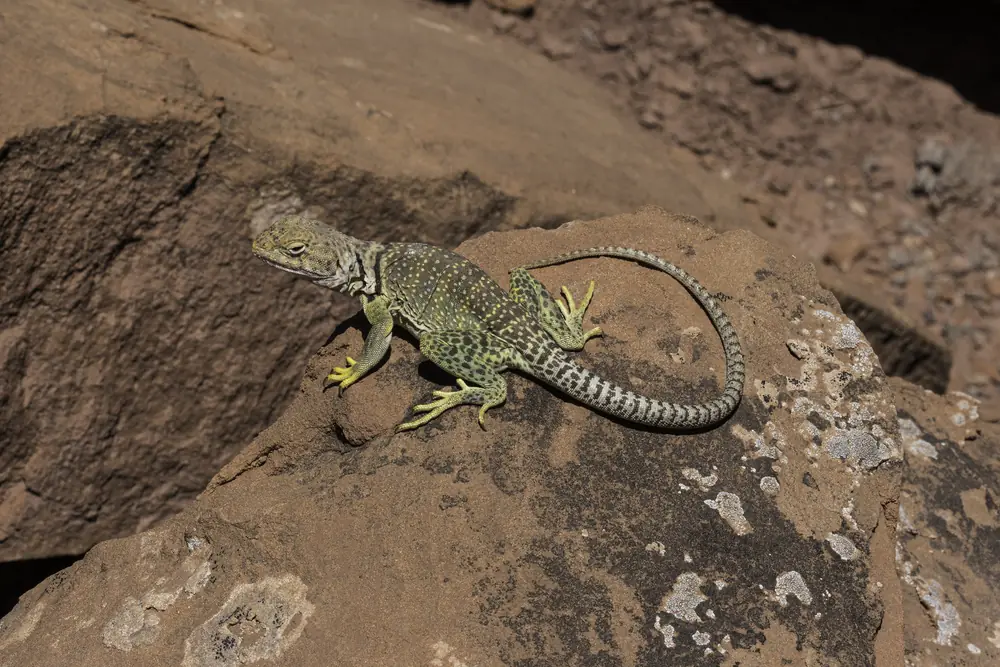
Oklahoma’s state reptile is active from as early as mid-March through September, says the Wildlife Department. Males are mostly green with faint orange markings and small yellow spots, females are brown to gray with orange blotches in breeding condition, and both have a black collar. Males and pairs bask on rocks in spring and early summer. Check boulders and fence posts along roads with rocky outcrops. Most do not survive in captivity, so look and leave.
-
Gray treefrogs and Cope’s gray treefrogs
Largest choruses in late April and May · Farm ponds, roadside ditches and wooded swamps in the eastern half of the state
The Department says the largest choruses of gray treefrogs come in late April and May, and that in a wet year breeding can last into July or early August. The gray treefrog’s call is a melodic trill, and Cope’s gray treefrog, which looks almost identical, has a faster, harsher one.
-
Snakes
Active all month; bluff lines get more attention in late spring and summer · Rock piles, leaf litter and bluff lines
Oklahoma has 49 snake species, and eight are venomous pit vipers: the rattlesnakes, copperheads and cottonmouth. In 2024 the Oklahoma Poison Center reported 363 snakebite cases, and of the 210 identified by species, 76 percent were copperheads. The Department advises watching your step, avoiding bluff lines in late spring and summer, checking a five-foot circle before sitting, and getting medical care right away after a venomous bite.
What else is stirring in Oklahoma in May, from bats and bass to fawns?
Spring is also the season of mammals returning, fish spawning and young animals appearing, often in places where people are likely to find them.
-
Mexican free-tailed bats
Back from Mexico in spring; pups born in late June · Gypsum caves in the western two-thirds of the state
The Wildlife Department says the bats spend fall and winter in Mexico and return to the southern United States in spring. Known Oklahoma maternity caves have high ceilings, large entrances and warm interiors, and all of them are in gypsum formations. Pregnant females gather in large numbers at those caves, while migrant males form separate bachelor colonies. Each female gives birth to a single pup in late June, and the young can fly about six weeks later.
-
A gypsum cave you can tour
Tours leave on the hour from 9 a.m. to 4 p.m. daily, according to the park · Alabaster Caverns State Park near Freedom
The park describes its cavern as one of the largest natural gypsum caves in the world and the only gypsum show cave in the United States. It lists no wild caving permits from October 1 through April 30, to protect hibernating bats, and limits tours to 30 people.
-
Bass, crappie and catfish
Bass spawn at 62 to 65 °F; catfish spawn from late May into July · Ponds and lakes statewide
The Department’s spring fishing guide says largemouth bass begin to spawn as water temperatures reach 62 to 65 °F, and that the bite can be slow for a week or so afterward. Crappie spawn at 52 °F for black and 56 °F for white crappie, and males guarding the nests keep fish biting for another week or so. Sunfishing really picks up in April and May. Channel catfish are often caught in the pre-spawn period from late April into May, and catfish spawning usually starts in late May and can run into July. The Free Fishing Days listed for 2027 are June 5 and 6.
-
Fawns and fledglings
Late May and early June are the most likely times to find a solitary fawn · Fields, yards and woodland edges
The Wildlife Department explains that a seemingly helpless fawn is following its survival strategy while the doe feeds or beds close by. Leave it be, even if it lies alone for days. A fledgling hopping on the ground is generally still fed by its parents. Furred young rabbits, squirrels and opossums with open eyes can manage alone, and a mother rabbit calls at her nest only about twice a day.
How warm, wet and stormy is May in Oklahoma?
May is wet and stormy. NOAA’s 1991–2020 normals are below, though no single May looks average.
| Station | Average high | Average low | Precipitation |
|---|---|---|---|
| Boise City 2 E (western Panhandle) | 80.4 °F | 47.3 °F | 1.82 in |
| Beaver (eastern Panhandle) | 79.8 °F | 50.6 °F | 2.49 in |
| Great Salt Plains Dam (north central) | 80.3 °F | 56.6 °F | 4.78 in |
| Enid (north central) | 79.4 °F | 57.5 °F | 4.36 in |
| Oklahoma City Will Rogers Airport | 78.9 °F | 57.6 °F | 5.31 in |
| Tulsa International Airport (northeast) | 79.7 °F | 59.5 °F | 5.73 in |
| Wichita Mountains Wildlife Refuge (southwest) | 80.5 °F | 59.4 °F | 4.77 in |
| Broken Bow 1 N (southeast) | 80.8 °F | 57.7 °F | 6.32 in |
| Idabel (southeast) | 81.8 °F | 58.7 °F | 6.35 in |
Every station has a normal high near 80 °F, between 78.9 °F at Oklahoma City and 81.8 °F at Idabel, while lows run from 47.3 °F at Boise City to 59.5 °F at Tulsa. Rain increases toward the east, from 1.82 inches at Boise City to 6.35 inches at Idabel. The data even list 0.2 inch of normal May snow at Boise City.
The Oklahoma Mesonet says May sees an average of 24 tornadoes in the state, against an annual average of 57.5 for 1950 through 2023. The National Weather Service in Norman counts 72 Oklahoma tornadoes in the outbreak of May 3 and 4, 1999, with 40 deaths in the state, including an F5 tornado through Bridge Creek, south Oklahoma City and Moore. On May 20, 2013, an EF5 tornado cut about 14 miles from Newcastle through south Oklahoma City to Moore in roughly 40 minutes, killing 24 people and injuring 212. These are history, not a forecast.
For a tornado warning, the Weather Service advises sheltering in a basement, a storm shelter or an inside room without windows. Mobile homes, tents and sheds do not protect you, and a car is a poor refuge too. The agency says to drive to the nearest shelter if possible, and otherwise to crouch with your head covered or lie in a low ditch. Our guide to clouds explains the signs that come before storms, and the weather page shows current conditions. Fresh seasonal outlooks appear at the Climate Prediction Center around the middle of each month.
Is a freeze still possible in Oklahoma in May?
Only in the Panhandle and the northwest, and rarely. Each row below lists three of NOAA’s dates for the final 32 °F night at the station.
| Station | One year in ten | Median | Nine years in ten |
|---|---|---|---|
| Boise City (western Panhandle) | Apr 10 | Apr 26 | May 9 |
| Guymon Municipal Airport (Panhandle) | Apr 4 | Apr 18 | May 1 |
| Gage Airport (northwest) | Apr 1 | Apr 17 | May 2 |
| Enid (north central) | Mar 20 | Apr 6 | Apr 21 |
| Oklahoma City Will Rogers Airport | Mar 16 | Apr 4 | Apr 20 |
| Tulsa International Airport (northeast) | Mar 11 | Mar 31 | Apr 15 |
| Lawton Municipal Airport (southwest) | Mar 12 | Apr 1 | Apr 19 |
| McAlester Regional Airport (east central) | Mar 11 | Mar 31 | Apr 18 |
| Idabel (southeast) | Mar 9 | Mar 31 | Apr 18 |
Boise City has the latest dates: a median of April 26 and a late date of May 9. Guymon and Gage have late dates of May 1 and May 2. The other stations are done by April 21. Readers outside these towns can look up their own on our Oklahoma frost page.
How much daylight does Oklahoma gain in May?
Days keep lengthening through May, though more slowly than around the equinox. The table counts sunrise to sunset, so the daylight-time clocks do not affect it.
| City | May 1 | May 31 | Gained | Per day |
|---|---|---|---|---|
| Guymon | 13 h 42 m | 14 h 29 m | 47 min | 1.6 min |
| Woodward | 13 h 42 m | 14 h 28 m | 46 min | 1.5 min |
| Enid | 13 h 41 m | 14 h 28 m | 47 min | 1.6 min |
| Tulsa | 13 h 40 m | 14 h 26 m | 46 min | 1.5 min |
| Oklahoma City | 13 h 37 m | 14 h 23 m | 46 min | 1.5 min |
| McAlester | 13 h 36 m | 14 h 20 m | 44 min | 1.5 min |
| Lawton | 13 h 34 m | 14 h 19 m | 45 min | 1.5 min |
| Idabel | 13 h 33 m | 14 h 15 m | 42 min | 1.4 min |
Guymon gains the most and Idabel the least. Oklahoma City goes from 13 h 37 m to 14 h 23 m. The days are still lengthening in June, with the longest on the solstice on June 21. For sunrise and sunset where you live, use the lookup on the daylight page.
What is in the Oklahoma night sky in May 2027?
Times below are CDT, the clock Oklahoma follows all month. A new Moon opens the first week and a full one lands on the 20th, with phase times taken from the Naval Observatory.
-
The Eta Aquariid meteors
Best mornings May 5, 6 and 7 before dawn · A dark place with a clear eastern horizon
The American Meteor Society points to May 5 into May 6 as the peak, under a Moon only 2 percent lit. Its rate estimate is modest, about 10 to 30 an hour, and strongest in the tropics. Aquarius climbs the eastern sky only shortly before sunrise, so Oklahoma should see the low end. Face east for an hour before dawn.
-
Venus and Saturn before sunrise
Mornings of May 6 to 8, closest May 7 · Low in the east, with a flat horizon
Our own calculation has Venus and Saturn closest, about 0.6 degrees, in the daytime of May 7, so the dawns of May 6 and 8 show a pair roughly a degree apart. Both hug the horizon, and Saturn is far dimmer than Venus. You will want binoculars and an unobstructed horizon.
-
Mercury in the evening
Best from about May 12 to June 5; greatest elongation May 28 · Low in the west-northwest, 45 to 90 minutes after sunset
At 8:14 a.m. CDT on Friday, May 28, the little planet reaches its widest separation east of the Sun, 22.8 degrees, so Thursday and Friday evenings at the end of the month show it best. For central latitudes our calculation has it setting about 97 minutes after sunset on May 15. Choose a spot with a clear west-northwest horizon.
-
The Moon beside Jupiter and Mars
Jupiter on the evening of May 12; Mars near the Moon on May 13 · High in the south in the evening
Jupiter and the Moon pair up on May 12, about 1.2 degrees apart in our figures, and a dim reddish Mars lies about 3 degrees off the Moon on May 13. Jupiter is the brilliant one and Mars a dim reddish dot.
-
The Flower Moon, a seasonal Blue Moon
Full Thursday, May 20, at 5:59 a.m. CDT; best evening Wednesday, May 19 · Anywhere with an open eastern horizon
Tradition names May’s full Moon the Flower Moon. Fullness arrives near sunrise on the 20th, so the disk looks round on the 19th and 20th after dark. Astronomical spring 2027 holds four full moons, falling in late March, on April 20, on May 20 and on June 19. Counting seasonally, the third of those is a Blue Moon, a label that applies only under that older rule. Counting by calendar month, 2027 has none.
-
Dark skies and the Milky Way
May 1 to 14 and May 25 to 31, by our calculation · Dark country away from town lights
For central latitudes our calculation finds moonless nights with the galactic center well up on May 1 to 14 and again May 25 to 31, with nearly four hours at the best. The glow sits low in the south, so find a dark site and allow time for your eyes to adjust.
| Phase | Date | Time |
|---|---|---|
| New moon | Thursday, May 6 | 5:58 a.m. CDT |
| First quarter | Wednesday, May 12 | 11:44 p.m. CDT |
| Full moon, the Flower Moon | Thursday, May 20 | 5:59 a.m. CDT |
| Last quarter | Friday, May 28 | 8:58 a.m. CDT |
Oklahoma sees no eclipse this month. The Moon calendar covers other dates.
Which nature programs and citizen science projects can you join in Oklahoma in May 2027?
- City Nature Challenge. Observations count from Friday, April 30 to Monday, May 3, 2027, identification continues until May 16, and results are due May 20. Their site does not say which Oklahoma cities join, so look for yours.
- World Migratory Bird Day. The U.S. celebration is held each May (May 9 in 2026), but no 2027 date or schedule is posted yet, so check the organizers’ site.
- Watch a nest. Cornell’s NestWatch project offers an app for logging nests you watch from a distance.
- Report monarchs and hummingbirds. Journey North takes sightings of monarch eggs, larvae and adults, and of hummingbirds, all year.
- Join a club. The Oklahoma Native Plant Society has a central chapter at Oklahoma City University and a northeast chapter at the Tulsa Garden Center, each usually meeting monthly; ask the society for dates.
- Visit a cave. Alabaster Caverns State Park runs tours on the hour from 9 a.m. to 4 p.m.
- Fish for free. Free Fishing Days are June 5 and 6, 2027, and a free paddlefish permit is still required.
The one-page May checklist is on our nature pages, and enter every sighting in the Naturalist’s Field Journal. Single-day festival dates are left out because most organizers have not posted May 2027 schedules.
Safety notes for May in Oklahoma
- Spring turkey season. The Wildlife Department lists the regular spring turkey season as April 16 to May 16, 2027, statewide. The limit is one bearded tom, shot no larger than BB, and rifles and handguns are not legal in spring. The state’s hunter orange rule names antelope, bear, deer and elk seasons, not turkey. Anyone walking in turkey woods should still wear a bright color and announce themselves.
- Severe weather. Tornadoes are most frequent now. Know where you will shelter, keep alerts switched on and turn around at flooded roads.
- Kites. Kites swoop at people near a nest, so walk away and return after the chicks have flown.
- Fawns and fledglings. Leave them alone. The parents are usually near.
- Snakes. Watch where you step, especially near rocks and bluffs.
- Ticks. The CDC recommends EPA-registered repellent, boots and clothes treated with permethrin, a full-body check and a quick shower after coming inside.
- Bison. Stay in your vehicle at the Tallgrass Prairie Preserve.
- Nesting areas. Stay out of the closed parts of the Salt Plains refuge, where birds nest on open sand.
Sources (45)
- Oklahoma Department of Wildlife Conservation: Mississippi kite
- Oklahoma Department of Wildlife Conservation: Mexican free-tailed bat
- Oklahoma Department of Wildlife Conservation: eastern collared lizard
- Oklahoma Department of Wildlife Conservation: interior least tern
- Oklahoma Department of Wildlife Conservation: greater roadrunner
- Oklahoma Department of Wildlife Conservation: ruby-throated hummingbird
- Oklahoma Department of Wildlife Conservation: white-tailed deer
- Oklahoma Department of Wildlife Conservation: gray treefrog and Cope’s gray treefrog
- Oklahoma Department of Wildlife Conservation: how to avoid unwanted snake encounters
- Oklahoma Department of Wildlife Conservation: keep young wildlife wild
- Oklahoma Department of Wildlife Conservation: spring fishing tips
- Oklahoma Department of Wildlife Conservation: fishing regulations and Free Fishing Days
- Oklahoma Department of Wildlife Conservation: 2026–27 hunting seasons
- Oklahoma Department of Wildlife Conservation: spring turkey regulations
- Oklahoma Department of Wildlife Conservation: big game regulations (hunter orange)
- Oklahoma Department of Wildlife Conservation: birding season
- Oklahoma Department of Wildlife Conservation: Oklahoma’s bird life
- Oklahoma Department of Wildlife Conservation: Red Slough WMA nature watching
- Oklahoma Department of Wildlife Conservation: wild double take, greater and lesser prairie-chickens
- Audubon: birding in Oklahoma
- U.S. Fish and Wildlife Service: Salt Plains seasons of wildlife
- U.S. Fish and Wildlife Service: Salt Plains National Wildlife Refuge
- U.S. Fish and Wildlife Service: Salt Plains spring and summer access
- U.S. Fish and Wildlife Service: Wichita Mountains Wildlife Refuge
- The Nature Conservancy: Joseph H. Williams Tallgrass Prairie Preserve
- Lady Bird Johnson Wildflower Center: Gaillardia pulchella
- Oklahoma Native Plant Record, vol. 15: first flowering dates for central Oklahoma (Ben Osborn)
- U.S. Army: wildflowers at Wichita Mountains Wildlife Refuge (2016)
- Oklahoma Native Plant Society
- Travel Oklahoma: Alabaster Caverns State Park
- National Weather Service Norman: May 3, 1999 tornado outbreak
- National Weather Service Norman: May 20, 2013 Moore tornado
- Oklahoma Mesonet: April tornado outbreak scars Oklahoma (May and annual tornado averages)
- NOAA NCEI: 1991–2020 May normals for the Oklahoma stations in the table
- National Weather Service: tornado safety during a tornado
- Climate Prediction Center: 90-day seasonal outlooks
- Centers for Disease Control and Prevention: tick bite prevention
- U.S. Naval Observatory: moon phases 2027
- American Meteor Society: meteor shower calendar
- City Nature Challenge
- World Migratory Bird Day
- NestWatch (Cornell Lab of Ornithology)
- Journey North: hummingbirds
- Journey North: monarchs
- Photos via Wikimedia Commons; licenses and photographers are credited under each picture
.jpg)