What to look for in nature in Oklahoma this November
In November Oklahoma swaps one cast of birds for another. Bald eagles start turning up below the dams, snow geese settle on the wheat fields of Sequoyah and Tishomingo, Harris’s sparrows fill the plum thickets, and bucks chase does across the hay meadows. The last red leaves hang on in the Ouachitas while bald cypress along the Mountain Fork goes copper. With standard time back from November 1, Oklahomans get to see it in a briefer afternoon. Below is a guide by region and by week.
Other months in Oklahoma: October, December.
Start here

- The first winter eagles. The Wildlife Department says eagle sightings pick up in November and peak in January and February. Check the trees along the shore at Kaw, Keystone, Fort Gibson or Texoma early in the morning, and look for brown immature birds as well as white-headed adults.
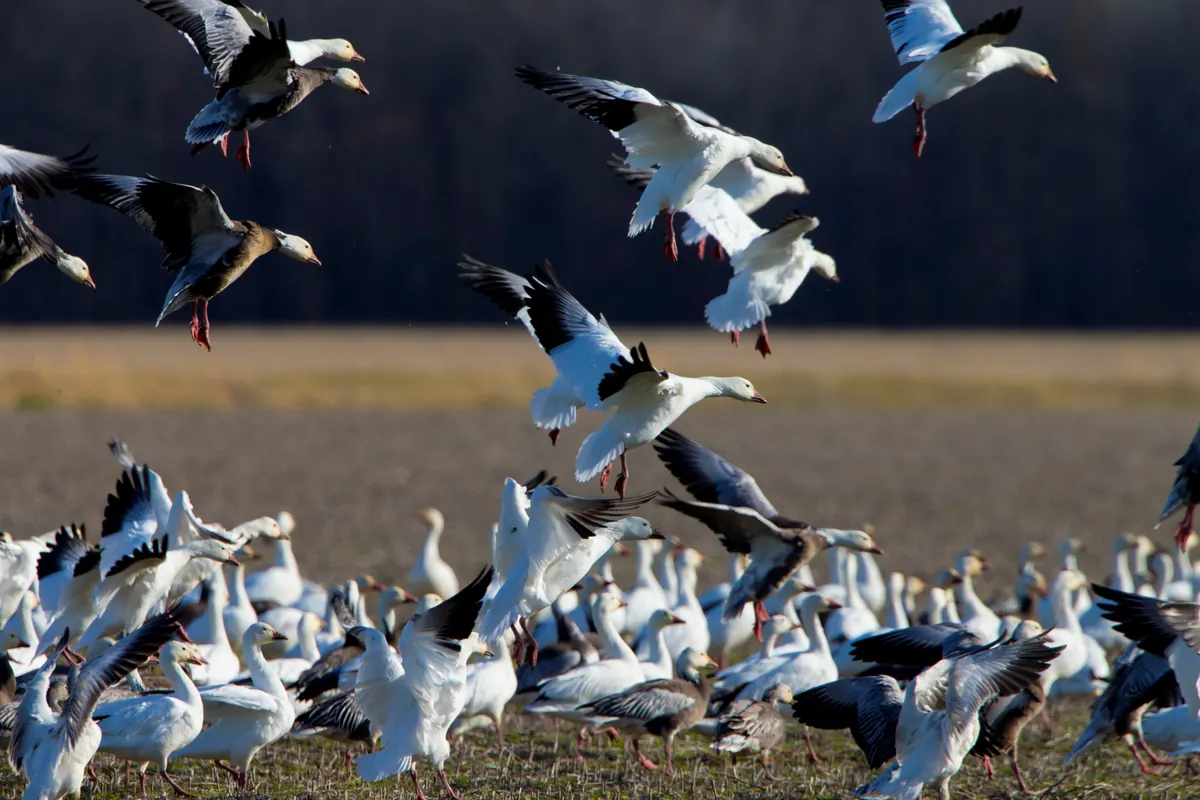
- Snow geese on the refuges. Sequoyah National Wildlife Refuge counts flocks of up to 20,000 snow geese in November and December, the largest in the state, and Tishomingo expects them from November on. Be on the auto tour road at sunrise, when the flocks lift off the water.
- A supermoon and the Leonids. November’s Beaver Moon peaks Tuesday morning, November 24 (8:53 a.m. CST), and looks round when it comes up Monday and Tuesday evening. A week earlier, the Leonids are best after moonset on the morning of Wednesday, November 18.
For the Naturalist’s Field Journal this month: add your first winter eagle and first Harris’s sparrow to the birds I have seen list, turn to the reading the signs plate for the rubs and scrapes bucks leave along a field edge, give frostweed ice a page of its own on the first hard-freeze morning, sketch a bald cypress cone or a possumhaw twig among the seeds, pods and cones, and spend one early morning on the dusk and dawn plate while Mars and Jupiter pair up. Date everything.
Regions used below: Panhandle and High Plains; Northwest and the Salt Plains; Central Oklahoma and the Oklahoma City metro; Northeast and Green Country; Southwest and the Wichita Mountains; Southeast and the Ouachita Mountains.
When do bald eagles come to Oklahoma for the winter?
Every fall, as lakes freeze across the northern Plains and Canada, bald eagles move south to open water, and Oklahoma’s big reservoirs are among the places they choose. The Oklahoma Department of Wildlife Conservation says sightings increase from November and peak in January and February. TravelOK puts the winter total at somewhere between about 800 and 2,000 birds. They join more than 300 pairs that the Wildlife Department says now live here all year, a recovery the Sutton Avian Research Center in Bartlesville helped begin in the 1980s.
-
Where the early eagles show up
First birds in November; numbers build into December · Kaw, Keystone, Grand, Fort Gibson, Tenkiller and Texoma lakes; Sequoyah and Salt Plains refuges
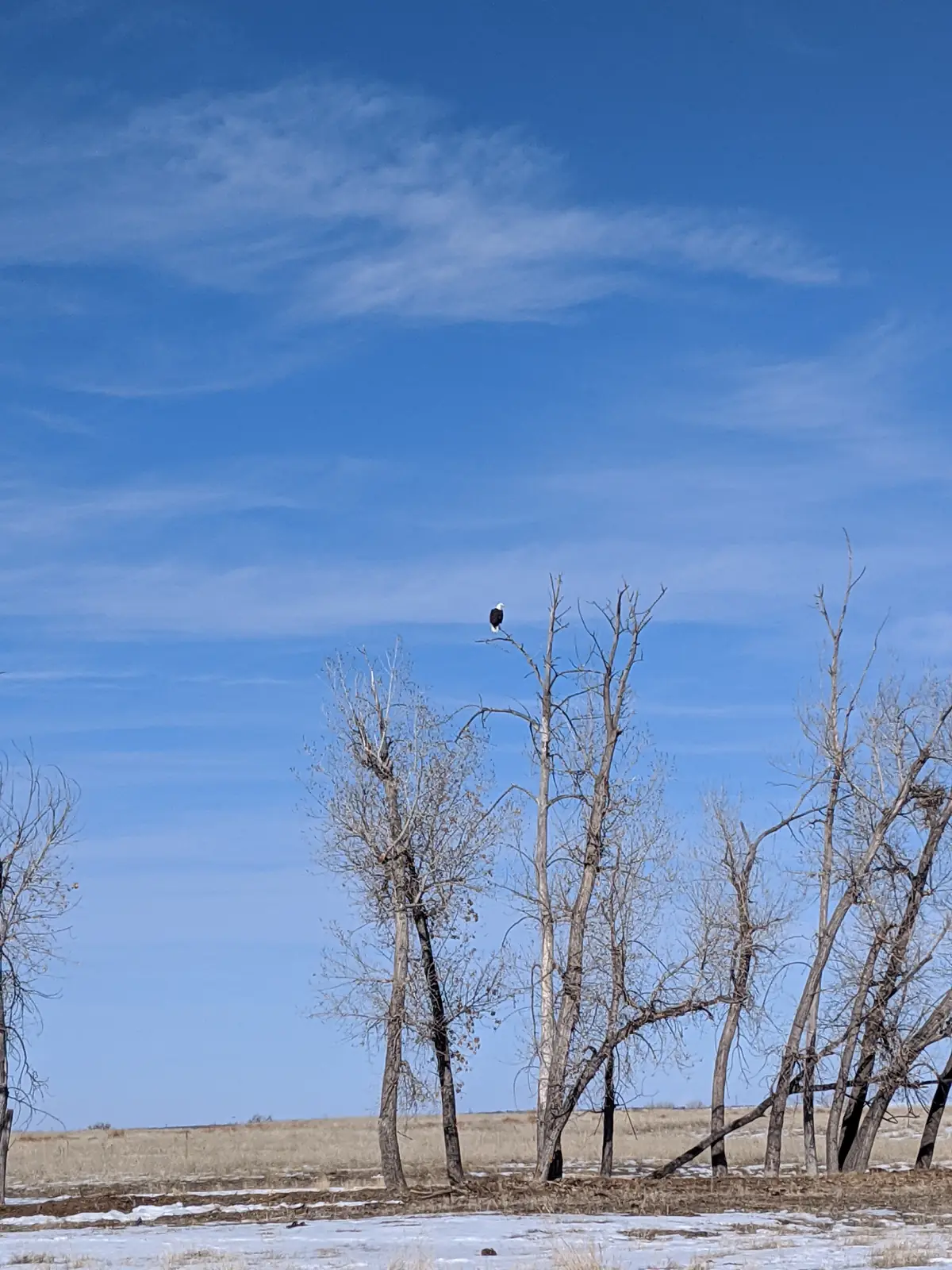
The Wildlife Department’s own viewing tips name Kaw Lake, Grand Lake O’ the Cherokees and Lake Texoma, with Sequoyah National Wildlife Refuge, Keystone Lake and Salt Plains National Wildlife Refuge also worth the drive. Eagles fish early, so go in the first hours after sunrise or late in the afternoon. Scan the big cottonwoods and snags along the shoreline before you scan the water: a perched adult shows a white head and tail against a dark brown body, and you can spot it from half a mile with binoculars. Keystone State Park has an eagle overlook platform in the Brush Creek area below the dam.
-
Brown eagles are eagles too
All winter · Same lakes; often perched near adults
Young bald eagles are mostly brown for their first several years, and the Wildlife Department warns that this makes them easy to mistake for golden eagles. Size gives them away as eagles: an adult can have a seven-foot wingspan and stand about three feet tall. If a big brown bird is sitting on a lakeshore snag near fish, it is far more likely to be a young bald eagle than a golden one, which prefers open country in the west.
-
Resident pairs start nesting
Nest building in late fall; eggs usually in December and January · Large trees near rivers and reservoirs statewide
Oklahoma’s own breeding eagles are getting ready while the visitors arrive. The Wildlife Department says local pairs usually lay eggs in December or January, with about 35 days of incubation, so November is when pairs add sticks to old nests and perch together nearby. Watch from a distance and leave quickly if the birds seem agitated; a nesting pair should never be flushed.
Salt Plains, which hosts the state’s largest winter concentration of 70 or more eagles according to the Wildlife Department, lists January and February as its best eagle months, so a November visit is a preview. The refuge auto tour, Cottonwood Point and the Jet Recreation Trail are the places it recommends once the numbers build.
Where can you see snow geese and ducks in Oklahoma in November?
November is when Oklahoma’s winter waterfowl really arrive. Duck season in most of the state opens on November 14, geese on November 7, and the refuges fill with birds that will stay until February or March. The sights here are flocks big enough to hear before you see them.
-
Snow geese at Sequoyah
November and December · Sequoyah National Wildlife Refuge, Sandtown Bottom, on Robert S. Kerr Reservoir south of Vian
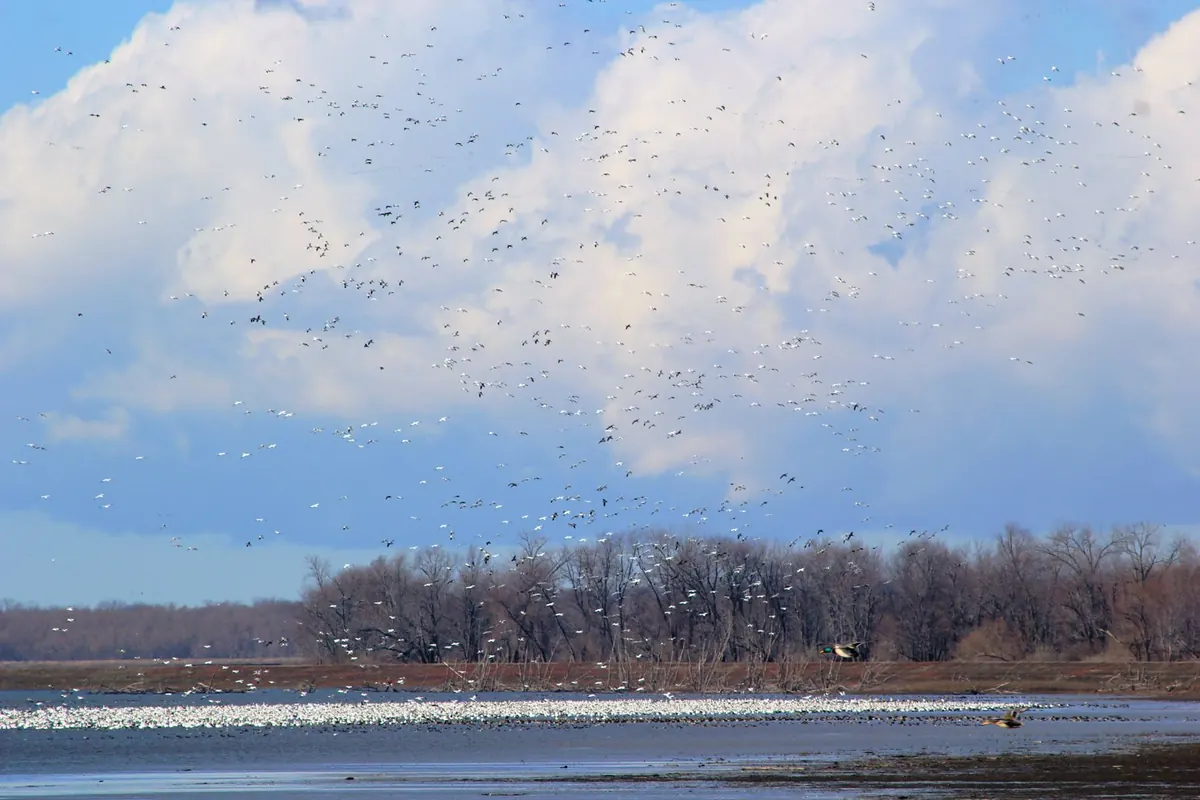
The refuge reports flocks that can reach 20,000 snow geese in November and December, the largest gathering in Oklahoma. They spend the day resting on Kerr Reservoir and fly out at dawn and dusk to graze the refuge’s soybean and winter wheat fields. Arrive before sunrise, park along the tour road with the engine off, and wait for the whole flock to go up at once; the roar of wings and calls is half the experience. Dark “blue geese” in the flock are the same species. Note that the tour road beyond Tuff Boat Ramp closes for controlled deer hunts November 18–20.
-
Geese and ducks at Tishomingo
From November through the winter · Cumberland Pool, Tishomingo National Wildlife Refuge, Johnston County
Tishomingo’s species page says snow geese start arriving in November and stay all winter, feeding by the thousands on the refuge’s planted wheat and resting on the Cumberland Pool. The same page notes that bald eagles are often seen from the eagle cove observation tower, and annual surveys have counted as many as 34 there. Ducks spread out to smaller ponds and lakes to feed, so drive slowly and check every pond you pass.
-
Red Slough in the far southeast
Duck numbers climb through November · Red Slough Wildlife Management Area, far southeastern McCurtain County
This 5,814-acre restored wetland in the Ouachita National Forest has a bird list of 320 confirmed species, the Wildlife Department says, and ducks are usually present in good numbers through the hunting season. Waterfowl hunting there closes at 1 p.m., so birders get quieter afternoons. Expect mallards, gadwall, wigeon and shovelers, and look for eagles over the impoundments.
-
The last whooping cranes and wintering sandhills
Whooping cranes through November; sandhills stay all winter in the southwest · Western Oklahoma between Guymon and I-35; Salt Plains; Hackberry Flat near Frederick
The tail of the whooping crane migration falls in November: the Wildlife Department says most of the roughly 500 birds in the wild flock cross Oklahoma between mid-October and the end of November. Report any you see with date, place and count, and keep your distance. Sandhill cranes keep calling overhead all month, and many winter on the wheat fields of the southwest.
Learn geese by ear first: snow geese yap in a high, nasal crowd, Canada geese honk lower. Log the first big flock, its direction and the next day’s weather.
When is the deer rut in Oklahoma?
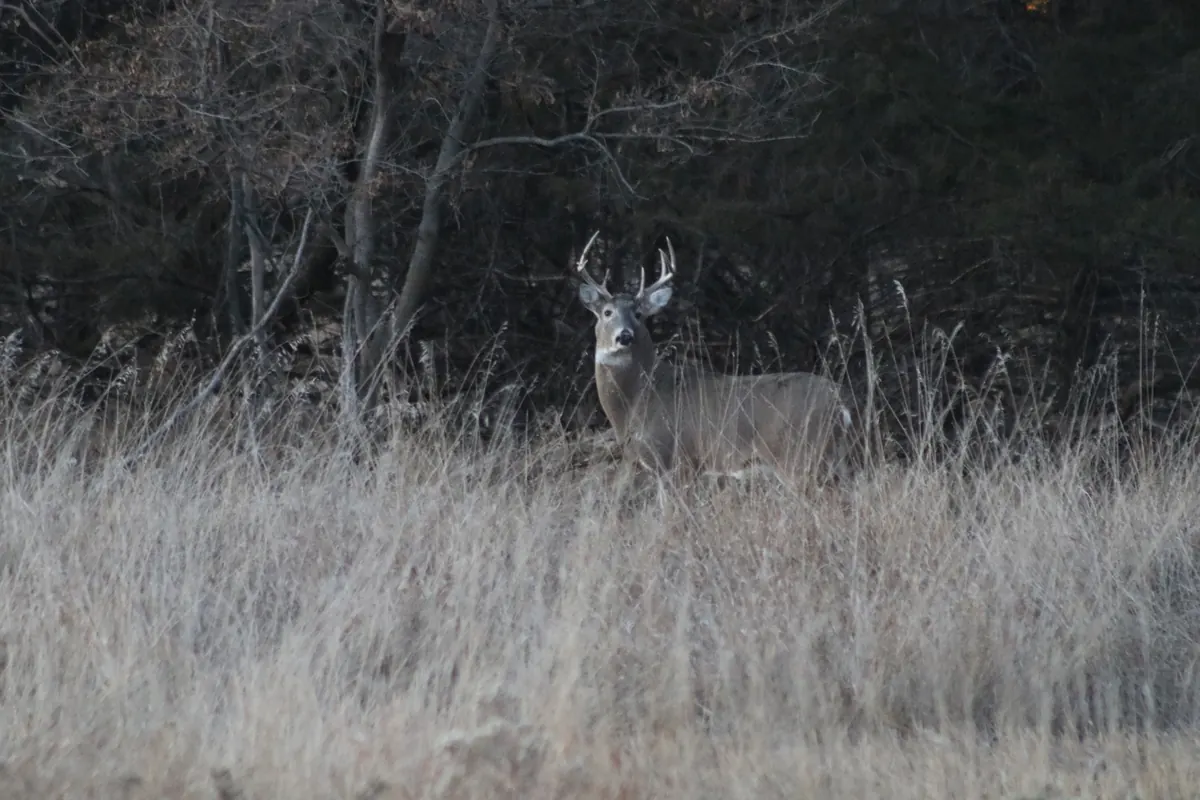
The Wildlife Department says the white-tailed deer rut normally peaks around the second week of November, which puts the most buck activity just before the regular deer gun season opens on Saturday, November 21. This is the month when big bucks that were invisible all summer show up in daylight, nose down, trailing does across roads and pastures.
-
Rubs and scrapes
All month; scrapes busiest just before peak breeding · Field edges, creek bottoms, logging roads, suburban greenbelts
Bucks scrape the bark off saplings with their antlers, leaving pale, shredded rubs; a scrape is a bare spot he has pawed clean beneath a low branch, which the buck licks and marks with scent from his forehead. Several rubs in a line show a travel route. Photograph them, note the height and the tree species, and go back a week later to see whether the scrape has been freshened.
-
Bucks on the move
Dawn and dusk; sometimes midday in cold weather · Anywhere deer live, which is every county
During the chase phase, bucks travel far beyond their usual range and pay little attention to traffic. Drive slowly at dusk on country roads, and assume a second deer is following the first. From a safe pullout, a pair of binoculars on a hay meadow at sunset can show a buck following a doe at a steady distance, head low.
-
Tallgrass Prairie bison back in view
About November 20 onward · Joseph H. Williams Tallgrass Prairie Preserve, north of Pawhuska
The Nature Conservancy keeps the bison herd off the roadside pastures from October 1 while it completes the annual roundup and health checks. The preserve expects that work to wrap up by about November 20, when the herd returns to the open prairie. The preserve is free and open every day during daylight; drive its bison loop slowly and stay in your vehicle.
The journal’s reading the signs plate is made for this month. Sketch one rub and one scrape, and add any tracks pressed into the mud beside them.
What winter birds arrive in Oklahoma in November?
Watch the brush and the bird feeder this month as closely as the lakes. Sparrows, juncos and kinglets that nested far to the north settle in for the winter, and a few of them are birds that Oklahoma is especially good for.
-
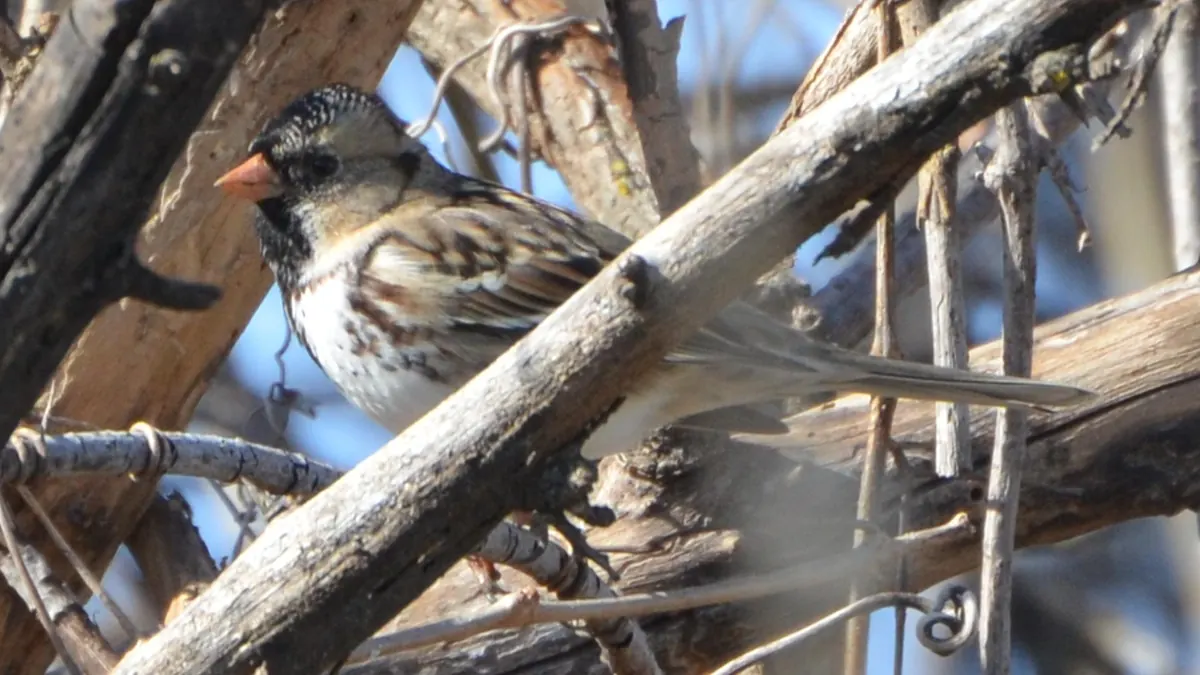
Harris’s sparrow
Arriving mostly in November; through April · Brushy fencerows, plum thickets, cedar edges and feeders, especially central and western Oklahoma
The largest North American sparrow, seven to eight inches long, nests at the edge of the Arctic tundra and spends the winter mainly on the southern Great Plains, with Oklahoma and Kansas at the center of the range. Audubon says most reach their wintering grounds in November. Look for a black face and bib, a pink bill and a clean white belly. They feed on the ground near cover and fly up into the thicket when disturbed, so scatter seed close to a brush pile.
-
Longspurs on bare ground
From late November through February · Wheat stubble, plowed fields and short-grazed pastures; short-grass fields around airports
Tulsa Audubon’s guide notes that four longspurs winter in Oklahoma: Lapland, the most numerous and nomadic; Smith’s, which prefers fields of short three-awn grass such as those near Norman, Stillwater and Tulsa; chestnut-collared, in the Wichita Mountains grasslands; and McCown’s, in the southwestern prairies. Most arrive by late November. You usually find them by flushing a flock and hearing a dry rattle as they rise.
-
American woodcock
Peak migration mid-November into early December · Brushy bottomlands with moist soil, mostly in the eastern third of the state
A study of woodcock in Oklahoma by J. S. Barclay and R. W. Smith found the birds most often from mid-October to early January, with the fall peak between November 11 and December 10, and 57 percent of sightings in the eastern third of the state. The bird is a plump, long-billed shorebird that lives in woods and probes damp soil for earthworms. Walk a wet creek bottom at dusk and you may flush one from almost underfoot.
-
Few northern finches expected
All winter · Feeders and conifers statewide
The Finch Research Network’s 28th winter finch forecast, posted September 25, finds good cone and berry crops in the east and far west of the boreal forest. It expects most finches to stay north and does not predict big irruptions in the southern states. Last winter’s big southward push of red-breasted nuthatches is not expected to repeat. Pine siskins and purple finches still show up at Oklahoma feeders in some winters, so keep the thistle feeder clean and report what you see.
Project FeederWatch’s new season, a Cornell Lab program shared with Birds Canada, runs from November 1 to April 30. Watch on two consecutive days, write down each species’ peak count at a single moment, and enter those numbers online; Oklahoma counts help show where Harris’s sparrows really spend the winter.
Is there still fall color in Oklahoma in November?
Yes, in the east. TravelOK says the state offers prime foliage well into November, and Robbers Cave State Park near Wilburton is usually at its best in late October and early November. The Talimena National Scenic Byway along Rich and Winding Stair mountains is usually brightest from about October 25 into the first days of November. This year carries a caution: the State Climatologist reported in late September that extreme to exceptional drought covered wide parts of the state, and stressed trees often brown and drop their leaves early instead of coloring well. A cold snap and a rainy spell in late October would help.
-
Bald cypress goes copper
Around Thanksgiving · Mountain Fork River and Beavers Bend State Park; Little River and other southeastern bottomlands
The Lady Bird Johnson Wildflower Center calls bald cypress a deciduous conifer whose feathery needles turn a terra cotta copper before they fall, typically around Thanksgiving. Its native range reaches southeastern Oklahoma, and the trees along the Mountain Fork below Broken Bow Lake are the easiest to see. Look at the base for the knobby “knees” that rise from the roots in wet ground.
-
Shumard oak and the last reds
Early to mid-November · Rich bottomland and slope forests in central and eastern Oklahoma
Shumard oak, native across much of the state, frequently turns scarlet in fall, often after the maples and sweetgums have peaked. Its large acorns, about three quarters of an inch to an inch long, feed deer, turkeys and squirrels.
-
Possumhaw berries
Showing as leaves drop; persisting through winter · Low, wet woods and creek bottoms in central and eastern Oklahoma
This deciduous holly turns yellow and drops its leaves, leaving the female trees covered with red or orange berries that last into winter, the Wildflower Center notes. Songbirds, gamebirds, opossums and raccoons all eat them.
-
Cedar berries and waxwings
All winter · Eastern redcedar, statewide
The bluish “berries” on eastern redcedar are really small cones, and the Wildflower Center calls them a staple for many birds and small mammals. The cedar waxwing is named for the tree, and flocks of waxwings and robins that strip a loaded cedar in an afternoon are a sign the wintering birds have arrived.
If you have been sketching one tree on the journal’s tree-through-the-seasons plate since October, November is the page where it goes bare. Note the date of the last leaf. See the Oklahoma October page for the start of the color season.
Has Oklahoma had its first freeze by November?
By November 1 most of the Panhandle and northwest has already frozen. Boise City’s median first freeze is October 17, and Guymon and Gage follow within a week. The middle of the state is right on the line: Enid’s median is November 1 and Oklahoma City’s November 2, so in about half of years the first 32 °F night still lies ahead when the month begins. Tulsa, McAlester and Idabel usually freeze around November 3 or 4, and Lawton waits until November 5. By the nine-years-in-ten dates, between November 15 and November 20 everywhere south and east of the Panhandle, nearly every corner of the state has had its first freeze.
-
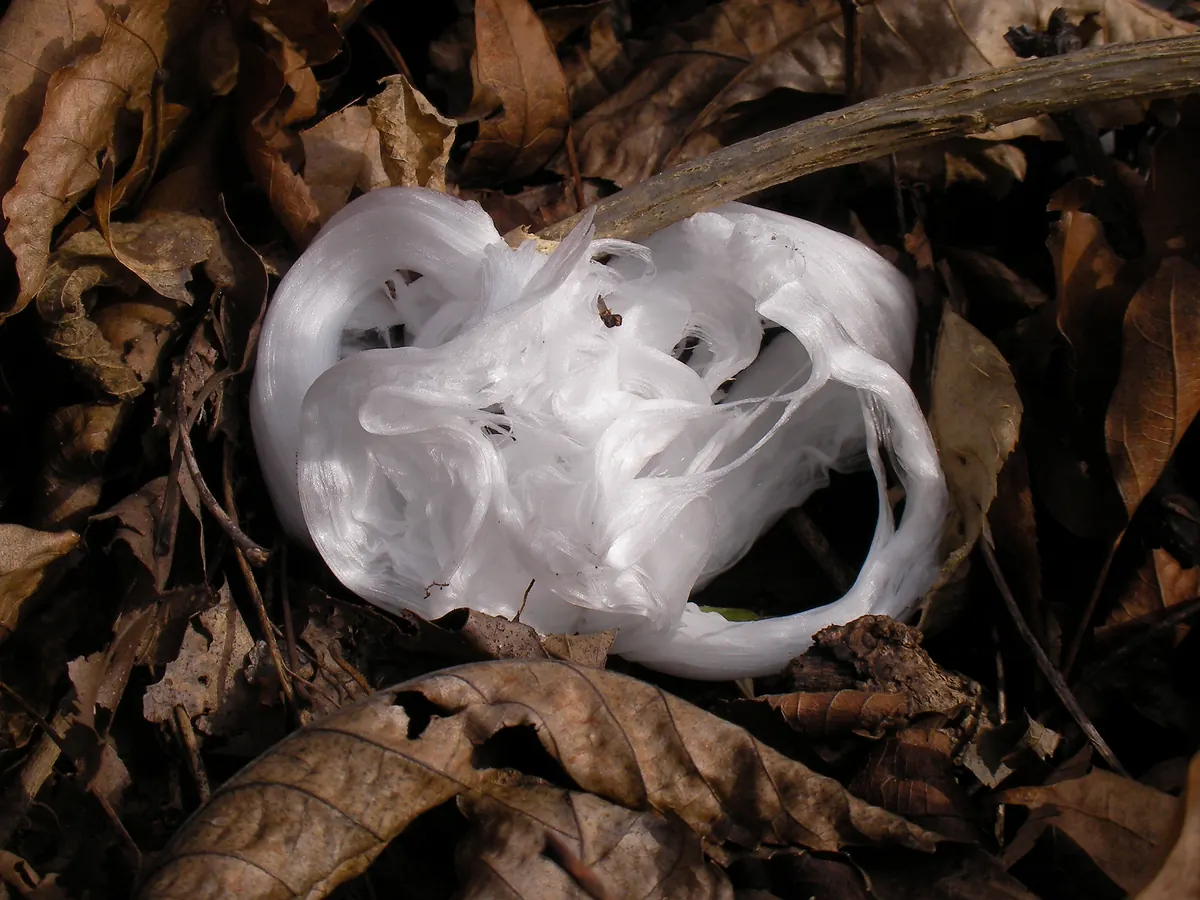
Frostweed ice ribbons
The first mornings below freezing · Shady creek bottoms and woodland edges, central and eastern Oklahoma
The tall frostweed that fed butterflies in October now earns its name. When the temperature first drops below freezing, sap pushed up from the still-living roots seeps out through cracks in the stem and freezes into thin, curling ribbons of ice. The Wildflower Center lists many folk names for them, including frost flowers, ice fringes and rabbit ice. Go early, before sunlight reaches them.
| Station | One year in ten | Median | Nine years in ten |
|---|---|---|---|
| Boise City 2 E (western Panhandle) | Oct 4 | Oct 17 | Oct 29 |
| Guymon Municipal Airport (Panhandle) | Oct 11 | Oct 23 | Nov 3 |
| Gage Airport (northwest) | Oct 6 | Oct 20 | Nov 2 |
| Enid (north central) | Oct 21 | Nov 1 | Nov 15 |
| Oklahoma City Will Rogers Airport | Oct 21 | Nov 2 | Nov 17 |
| Tulsa International Airport (northeast) | Oct 20 | Nov 4 | Nov 19 |
| Lawton Municipal Airport (southwest) | Oct 22 | Nov 5 | Nov 18 |
| Mcalester Regional Airport (east central) | Oct 20 | Nov 3 | Nov 19 |
| Idabel (southeast) | Oct 18 | Nov 3 | Nov 20 |
For the station closest to your home, use our Oklahoma frost dates table. Garden hoses, outdoor faucets and potted citrus all need attention before the first hard freeze, which is usually counted as 28 °F.
How early does it get dark in Oklahoma in November?
When daylight saving time ends at 2 a.m. Sunday, November 1, that evening’s sunset arrives a full hour sooner by the clock: in Oklahoma City, at 5:35 p.m. instead of 6:36 the night before. After that the loss is steadier, a minute and a half or a little more per day. Oklahoma City goes from 10 h 43 m of daylight on November 1 to 9 h 57 m on November 30, a loss of 46 minutes, while Guymon in the Panhandle loses 48 and Lawton and Idabel in the south 44. By November 30 the sun sets at 5:10 p.m. in Tulsa and Idabel, 5:17 in Oklahoma City and 5:30 in Guymon.
| City | Nov 1 | Nov 30 | Lost | Per day |
|---|---|---|---|---|
| Guymon | 10 h 39 m | 9 h 51 m | 48 min | 1.7 min |
| Woodward | 10 h 40 m | 9 h 52 m | 48 min | 1.7 min |
| Enid | 10 h 40 m | 9 h 53 m | 47 min | 1.6 min |
| Tulsa | 10 h 41 m | 9 h 54 m | 47 min | 1.6 min |
| Oklahoma City | 10 h 43 m | 9 h 57 m | 46 min | 1.6 min |
| McAlester | 10 h 45 m | 10 h 00 m | 45 min | 1.6 min |
| Lawton | 10 h 46 m | 10 h 02 m | 44 min | 1.5 min |
| Idabel | 10 h 48 m | 10 h 04 m | 44 min | 1.5 min |
Sunrise and sunset for your own town, along with twilight and day length, are on the daylight calculator. Oklahoma’s earliest sunsets arrive about two weeks before the solstice, not on it.
What is November weather like in Oklahoma, and what will El Niño bring this winter?
November is the month Oklahoma turns from autumn to winter, often in a single afternoon when a strong front comes through. By NOAA’s 1991–2020 normals, Oklahoma City’s typical November runs from a high of 60.7 °F to a low of 37.7 °F, with Tulsa slightly milder at 61.4 and 39.4. The Panhandle is just as warm by day but much colder at night: Guymon averages a high of 60.6 °F and a low of 30.7 °F. Rain fades sharply to the west, from 2.66 inches in a normal November at Tulsa to 1.68 at Oklahoma City, 0.91 at Clinton-Sherman and only 0.51 at Guymon.
Snow is possible but usually light this early. The Oklahoma City normal for November is half an inch and Tulsa’s is 0.8 inch. The National Weather Service office in Norman finds that heavy snow becomes more frequent from October through December and peaks in January, and that the Panhandle and northwest counties are the likeliest to get a four-inch storm. It happens: the Oklahoma Mesonet recorded 7.3 inches at Elk City on November 14, 2022, after an arctic front ended a long warm spell.
The larger question is the winter ahead. Pacific watchers at the Climate Prediction Center, writing September 10, put better than 90 percent odds on this El Niño ranking as very strong through Oklahoma’s coming fall and winter. In late September, with extreme to exceptional drought over much of the state, Oklahoma State Climatologist Gary McManus told the Oklahoma Farm Report that conditions should start leaning wetter in October, November and December; a strong El Niño has historically tilted the odds toward a wetter-than-normal cool season for Oklahoma and the rest of the southern tier. Southwest and west-central Oklahoma had just come through their driest or second-driest twelve months on record, so rain would be welcome. The official NOAA winter outlook is due October 15, and readers will find its maps at NOAA’s three-month outlooks.
For the forecast before a hike or a hunt, check today’s Oklahoma weather, and the cloud forecast tells you whether a frosty clear night is coming.
What can you see in the Oklahoma night sky in November?
-
The Beaver Moon, a modest supermoon
Evenings of Monday and Tuesday, November 23 and 24 · Rising in the east-northeast near sunset
Full phase comes Tuesday morning, 8:53 Central time, which leaves both evenings looking round. Its closest approach to Earth trails full phase by roughly a day and six hours, which makes it a borderline supermoon. In the small hours of Tuesday it brushes by the Seven Sisters, whose faint stars vanish in the moonlight. December’s full moon, two days before Christmas, comes closer still.
-
The Leonids
Best before dawn on Wednesday, November 18 · Anywhere dark; the radiant in Leo rises around midnight
IMO’s 2026 calendar times the Leonid maximum for early evening on November 17, Oklahoma time, and a Panhandle-dark sky might yield fifteen an hour at most; no burst is expected. Once the half-lit moon goes down, roughly 12:30 a.m., you have dark sky until dawn on the 18th, when Leo stands high in the south. Leonids are fast and often leave a brief glowing trail.
-
Taurid fireballs
Southern Taurids peak November 5; Northern Taurids November 12 · High in the sky through most of the night
Both Taurid branches, grit left behind by Comet Encke, produce just a few meteors per hour; most are leisurely, and an occasional one blazes like a flare. Moonless skies around November 9 fill the gap between the peaks, a good week for a long look from the Panhandle or the Wichitas.
-
Four planets before sunrise
Mars and Jupiter closest the mornings of November 15 and 16; Mercury best about November 18–25 · East and south before dawn; Saturn in the south and southwest after dusk
Venus is now a brilliant morning star, climbing higher in the east-southeast each week, and on November 9 it sits roughly one degree from Spica before dawn. Higher up in Leo, Mars and Jupiter draw together and their tightest pairing, 1.2 degrees, lights the Oklahoma predawn of the 15th and again the 16th, so a pair of binoculars frames both planets at once. Mercury creeps into the dawn glow, low in the east-southeast, during the month’s last two weeks. In the Oklahoma evening, ringed Saturn rules alone in the south.
| Phase | Date | Time |
|---|---|---|
| Last quarter | Sunday, Nov 1 | 2:28 p.m. CST |
| New moon | Monday, Nov 9 | 1:02 a.m. CST |
| First quarter | Tuesday, Nov 17 | 5:48 a.m. CST |
| Full moon, the Beaver Moon | Tuesday, Nov 24 | 8:53 a.m. CST (looks full the evenings of Nov 23 and 24) |
| Last quarter | Tuesday, Dec 1 | 12:08 a.m. CST |
Our moon calendar lists moonrise and moonset for Oklahoma, which helps you plan meteor watching around the glare.
What can Oklahoma families do outside in November?
- Sunday, November 1: start a feeder count. Project FeederWatch’s season opens that day and runs to April 30. A tray of millet near a brush pile is the best way to get a Harris’s sparrow into a child’s binoculars.
- Early November: walk the last color at Robbers Cave or drive the Talimena byway before the leaves are down, and look for frostweed ice on the first frosty morning.
- Friday through Sunday, November 13–15: Beavers Bend Folk Festival and Craft Show at the Forest Heritage Center in Beavers Bend State Park, with free admission and parking, blacksmithing and basket weaving demonstrations, folk music and candle dipping for children. Walk down to the Mountain Fork afterward to see the bald cypress turning.
- Saturdays, November 14 and 21, at 9 a.m.: Fall Foliage Hike in the Wichitas. The Friends of the Wichitas run this bus tour with moderate hiking in the refuge; children must be at least eight; book a seat through the Friends ahead of time.
- Tuesday night, November 17, into Wednesday morning: the Leonids, best after moonset around 12:30 a.m.
- About November 20 onward: see the bison back on the Tallgrass Prairie Preserve after the roundup, free and open in daylight.
- Monday and Tuesday, November 23 and 24: watch the Beaver Moon rise over a lake.
- Thanksgiving weekend. In 2023 Oklahoma State Parks and the governor’s office waived admission and parking at selected parks on the weekends around Thanksgiving. The 2026 plan was not announced when we wrote this; check TravelOK before you go.
- Citizen science. Report whooping cranes to the Wildlife Department, enter your eagle and goose counts in eBird, and post frostweed ice and buck rubs to iNaturalist.
Print the month’s checklist from the nature this month collection, and take the Naturalist’s Field Journal along to record what you find.
Safety notes for November in Oklahoma
- Hunting seasons and hunter orange. November is Oklahoma’s busiest hunting month. Deer muzzleloader season ends November 1, the regular deer gun season runs November 21 to December 6, and deer, elk and fall turkey archery continue all month. Fall turkey gun season runs October 31 to November 20. Light, dark and white-fronted geese open November 7, ducks in Zones 1 and 2 on November 14 (the Panhandle has been open since October 10), quail on November 14, woodcock on November 7, and sandhill cranes continue through January 17. During firearm seasons for deer, elk, antelope and bear, anyone hunting with a gun or muzzleloader needs orange on both head and upper body, 400 square inches or more combined; bowhunters need one or the other, and most other hunters an orange hat or top. The rule does not cover those after ducks, geese, crows, cranes or doves, or furbearers at night. Nobody requires hikers to wear it, yet blaze orange on your own head and on the dog’s back makes sense on public ground during the deer gun weeks.
- Closures and passes. At Sequoyah National Wildlife Refuge the tour road beyond Tuff Boat Ramp closes for controlled deer hunts November 18–20. On Wildlife Department areas such as Hackberry Flat, birders and other non-hunters need a Conservation Passport or a valid hunting or fishing license.
- Deer on the roads. The rut puts bucks on the move at dawn and dusk, just when commuters are driving in the dark after the time change. Slow down near creek crossings and wooded edges.
- Fire and drought. With much of the state in serious drought and the grass cured, a dry, windy day ahead of a front can spread fire fast. Before lighting any campfire, look up your county’s burn ban status with Oklahoma Forestry Services, and never park on dry grass.
- Fronts and early dark. A strong November front can drop temperatures sharply within a few hours and bring wind-driven rain, sleet or snow, especially in the northwest. Carry a warm layer, a headlamp and water, and aim to reach the trailhead ahead of sunset, which is between about 5:10 and 5:30 p.m. by month’s end. Check the forecast before you set out.
Sources
- Oklahoma Department of Wildlife Conservation: tips for winter eagle watching trips (eagle arrival and peak, best lakes)
- Oklahoma Department of Wildlife Conservation: bald eagle field guide (size, Salt Plains wintering numbers, nesting timing)
- TravelOK: top places for eagle watching in Oklahoma
- George Miksch Sutton Avian Research Center: bald eagle recovery in Oklahoma
- U.S. Fish and Wildlife Service: Salt Plains National Wildlife Refuge general information (best times and places for cranes and eagles)
- U.S. Fish and Wildlife Service: Sequoyah National Wildlife Refuge, species (snow geese, eagles)
- U.S. Fish and Wildlife Service: Sequoyah National Wildlife Refuge (2026 controlled hunt closures)
- U.S. Fish and Wildlife Service: Tishomingo National Wildlife Refuge, species (snow geese, bald eagles)
- Oklahoma Department of Wildlife Conservation: Red Slough WMA
- USDA Forest Service, Ouachita National Forest: Red Slough Wildlife Management Area
- Oklahoma Department of Wildlife Conservation: Hackberry Flat WMA (sandhill cranes, winter raptors, Conservation Passport)
- Oklahoma Department of Wildlife Conservation: endangered whooping cranes to move through Oklahoma
- Oklahoma Department of Wildlife Conservation: it’s deer season, Oklahoma (rut timing)
- Oklahoma Department of Wildlife Conservation: white-tailed deer field guide
- The Nature Conservancy: Joseph H. Williams Tallgrass Prairie Preserve (2026 bison roundup)
- National Audubon Society: Harris’s sparrow field guide
- Tulsa Audubon Society: longspurs in Oklahoma
- Oklahoma Department of Wildlife Conservation: wintering birds
- J. S. Barclay and R. W. Smith: the status and distribution of woodcock in Oklahoma (USGS Publications Warehouse)
- Finch Research Network: winter finch forecast 2026–2027 (September 25, 2026)
- Project FeederWatch: how to participate
- eBird
- TravelOK: best bets for Oklahoma fall foliage
- TravelOK: explore the Talimena National Scenic Byway
- Lady Bird Johnson Wildflower Center: bald cypress
- Lady Bird Johnson Wildflower Center: Shumard oak
- Lady Bird Johnson Wildflower Center: possumhaw
- Lady Bird Johnson Wildflower Center: eastern redcedar
- Lady Bird Johnson Wildflower Center: frostweed
- NOAA NCEI: U.S. climate normals 1991–2020 (freeze dates)
- NOAA NCEI: 1991–2020 monthly normals for November (Oklahoma City, Tulsa, Guymon, Clinton-Sherman)
- National Weather Service Norman: heavy snow in Oklahoma, where, when and how often
- Oklahoma Mesonet: November sees pattern change (November 2022 summary)
- Climate Prediction Center: ENSO diagnostic discussion, September 10, 2026
- Oklahoma Farm Report: drought relief on the horizon as El Niño strengthens (September 23, 2026; State Climatologist Gary McManus)
- Climate Prediction Center: seasonal outlooks
- U.S. Naval Observatory: moon phases
- International Meteor Organization: 2026 meteor shower calendar
- EarthSky: what is a supermoon
- Farmers’ Almanac: November’s full Beaver Moon
- NASA JPL Horizons ephemeris system (planet and moon positions)
- EarthSky: best stargazing of 2026 (Mars and Jupiter conjunction)
- Oklahoma Department of Wildlife Conservation: 2026–27 hunting seasons
- Oklahoma Department of Wildlife Conservation: deer big game seasons 2026–27
- Oklahoma Department of Wildlife Conservation: big game regulations (hunter orange)
- Oklahoma Department of Wildlife Conservation: ducks, mergansers and coots
- Oklahoma Forestry Services: fire information and burn bans
- TravelOK: Beavers Bend Folk Festival and Craft Show, November 13–15, 2026
- Friends of the Wichitas: 2026 fall tour schedule (Fall Foliage Hikes)
- McAlester News-Capital: state parks offer free admission and parking the weekends around Thanksgiving (2023 program)
- TravelOK: Oklahoma State Parks
- iNaturalist
- Photos via Wikimedia Commons; licenses and photographers are credited under each picture
