What to look for in nature in Oklahoma this December
December in Oklahoma is quieter than November but full of things to find. Trumpeter swans drift onto northern ponds, golden eagles patrol the western ranges, rough-legged hawks hover over Hackberry Flat, and great horned owls hoot to each other at dusk. Mistletoe shows in the bare treetops, black bears sleep in the Ouachitas, and bird watchers fan out for the Christmas Bird Count, a Tulsa tradition since 1926. The year’s earliest sunsets, between 5:09 and 5:30 p.m. depending on the town, come in the first week of December. Below is the month by region and by week.
Other months in Oklahoma: October, November.
Start here

- Count birds for Christmas. Oklahoma bird clubs pick their Christmas count days between mid-December and January 5. Tulsa’s count has gone on every winter since 1926; sign up with Tulsa Audubon, Oklahoma City Audubon or a nearby circle and spend a day on a team.
- Look for big winter birds. Trumpeter swans settle on ponds in the northeast and north-central counties from about late November, and roughly 100 golden eagles winter west of I-35. Hackberry Flat near Frederick is the place for ferruginous and rough-legged hawks.
- Geminids and the year’s closest full moon. The Geminids are best after the crescent moon sets on the night of Sunday, December 13. On Wednesday evening, December 23, the Cold Moon reaches full at 7:28 CST, and no full moon in 2026 comes nearer.
In the Naturalist’s Field Journal this December, enter count-day birds, plus any trumpeter swan, under birds I have seen, keep a dusk and dawn watch for the first owl calls, press a track into the tracks to know plate after a muddy morning, draw a mistletoe sprig or shortleaf pine bundle among the seeds, pods and cones, and give the solstice sunset its own entry in the daily field log. Date everything.
Regions used below: Panhandle and High Plains; Northwest and the Salt Plains; Central Oklahoma and the Oklahoma City metro; Northeast and Green Country; Southwest and the Wichita Mountains; Southeast and the Ouachita Mountains.
When is the Christmas Bird Count in Oklahoma, and how can you join?
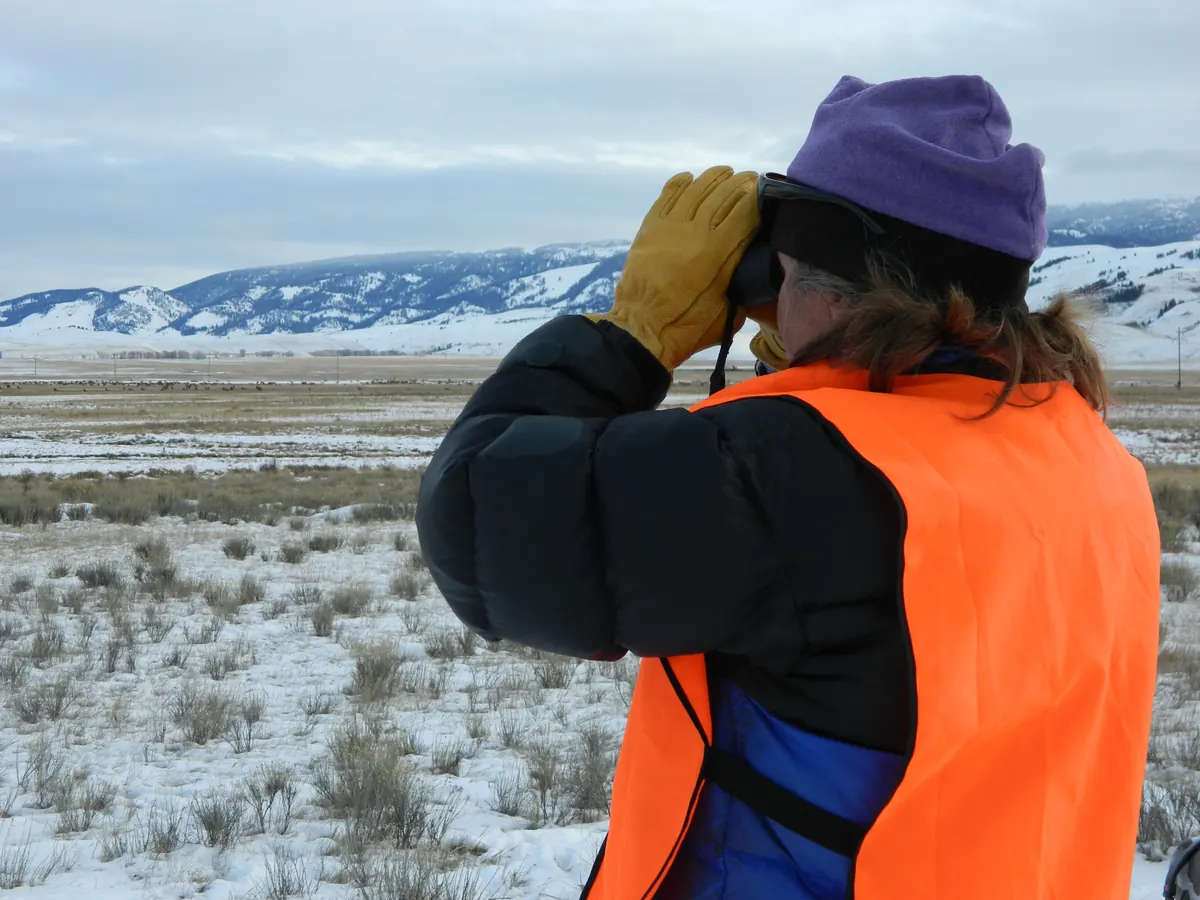
The Christmas Bird Count is the oldest community bird survey in the Americas, proposed on Christmas Day 1900 by the Audubon ornithologist Frank Chapman as a census in place of the Christmas “side hunt,” a contest to shoot the most birds. For its 127th season, Oklahoma counts can be held on any one day from December 14 through January 5. Each count covers one fixed circle 15 miles across, and volunteers split up across it to tally every bird they can find within a single 24-hour period chosen by the local compiler. Counts are held in several parts of Oklahoma, and beginners are welcome.
-
Tulsa’s count, a century old
One day between December 14 and January 5; the date is posted by Tulsa Audubon · The Tulsa count circle, mapped on the Tulsa Audubon website
Tulsa Audubon says its count has been held without a break since 1926, a remarkable run for a volunteer survey. The circle is split into areas, each led by at least one experienced birder, and the society’s page says plainly that you need not be an expert to join a team. Sign up through the society’s Christmas Bird Count page well before the date and dress for a full day outdoors.
-
Oklahoma City and the rest of the state
Dates set by each compiler within the count window · Oklahoma City Audubon and counts statewide
Oklahoma City Audubon runs a count of its own and posts results online; its 2025 count reached a respectable 118 species. To find a circle near you, use the Audubon count map or the statewide list that Tulsa Audubon links to, and email the compiler directly.
-
Counting from home
Through April 30 · Any yard with a feeder
If a long day in the field is too much, Project FeederWatch keeps running all winter. Audubon also assigns some volunteers to watch feeders inside a count circle on count day, so if you live inside one, ask the compiler. Record each species by the most individuals in view together, never a running total; that is the habit both projects rely on.
The journal’s birds I have seen list is the right place for a count day: note your team, the weather, and the one bird that made everyone stop. Next December you will want to compare.
Where can you see trumpeter swans and golden eagles in Oklahoma in winter?
December brings Oklahoma two big birds that many residents never realize visit at all. Neither is common, which is part of the pleasure, and both are worth reporting when you find them.
-
Trumpeter swans
About late November to late February · Ponds and lakes in northeastern and north-central Oklahoma; wetlands and stock ponds in the west
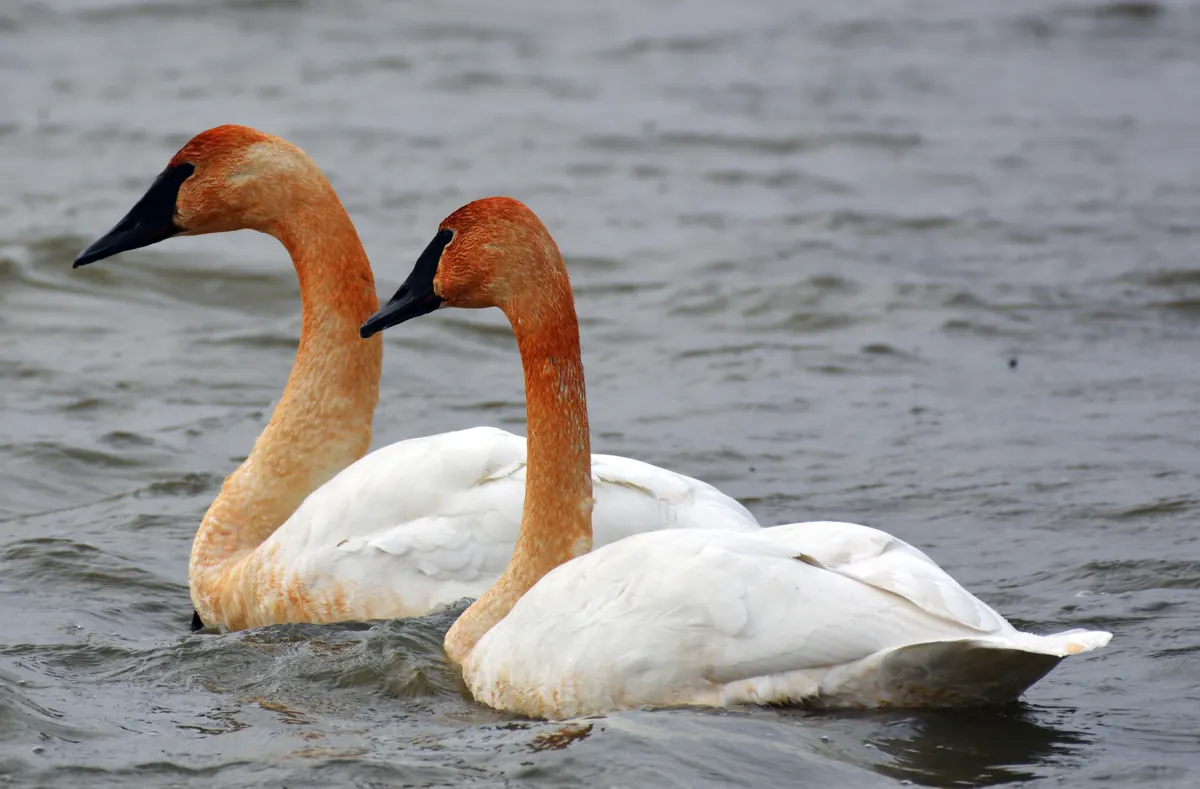
North America’s largest waterfowl spends the middle of winter in Oklahoma, according to the Wildlife Department. Swans from nesting flocks in Iowa, Minnesota and Wisconsin settle mainly in the northeast and north-central counties, while birds from the High Plains of South Dakota, Nebraska and Wyoming turn up farther west. The department notes that the state once hosted hundreds or even thousands of trumpeters in winter and that numbers are climbing again as the Midwest flocks recover. Adults are entirely white with a long, solid black bill; youngsters are a smoky gray with some pink-orange on the bill. Some birds carry a colored neck collar with letters and numbers. If you can read one, send it to the Wildlife Diversity Program, which uses those sightings to trace where Oklahoma’s swans nest.
-
Golden eagles in the west
All winter · Open country west of Interstate 35; a small resident group in Cimarron County
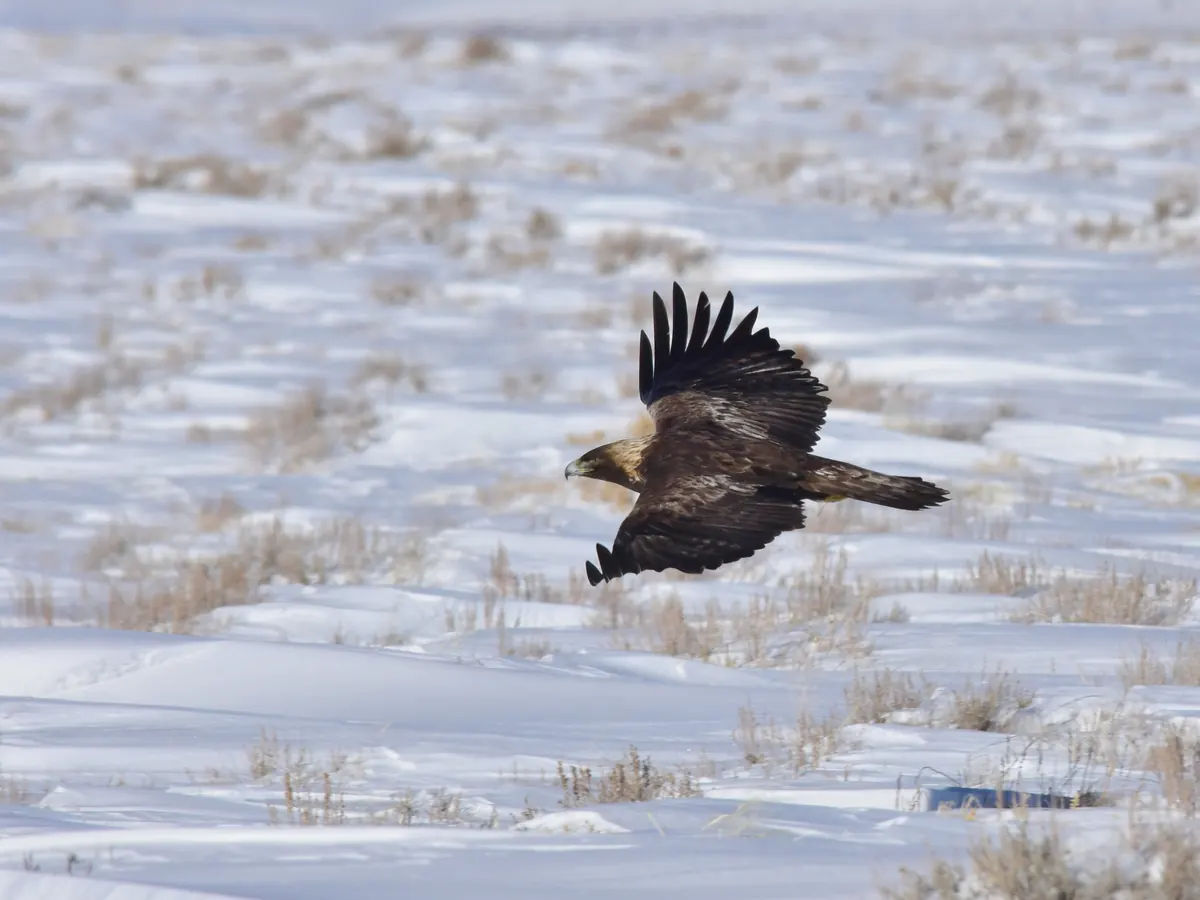
The Wildlife Department estimates that about 100 golden eagles come down from the Rocky Mountains each winter, staying mostly west of I-35, while a small group lives year-round in Cimarron County at the tip of the Panhandle. Adults have a golden-brown sheen on the back of the head and neck. A young golden eagle shows a clean white band at the base of the tail, and the department calls that the easiest way to separate it from a brown young bald eagle.
-
Bald eagles on eggs
Egg laying mainly December and January · Nest trees near reservoirs and rivers statewide
While wintering eagles keep piling onto the big lakes, the state’s own breeding pairs are starting families. The Wildlife Department places egg laying in December or January, so by the holidays some pairs may already be incubating. Keep well back from any occupied nest. For a close view without disturbing anyone, the Sutton Avian Research Center in Bartlesville, which has worked since 1984 to bring Oklahoma’s eagles back from the brink, streams a live bald eagle nest camera from its website.
Use the journal’s feather found page if you pick up a big flight feather near a roost, but leave it where it lies: possessing an eagle feather without a federal permit is illegal, so sketch and photograph it instead.
What hawks and owls can you see in Oklahoma in December?
With the leaves down and the grass grazed short, raptors are easy to pick out in December. Western Oklahoma in particular gathers hawks from the Arctic and the northern Plains, and owls across the state start calling for mates as the nights stretch out.
-
Winter hawks at Hackberry Flat
December through February · Hackberry Flat Wildlife Management Area, southeast of Frederick in Tillman County
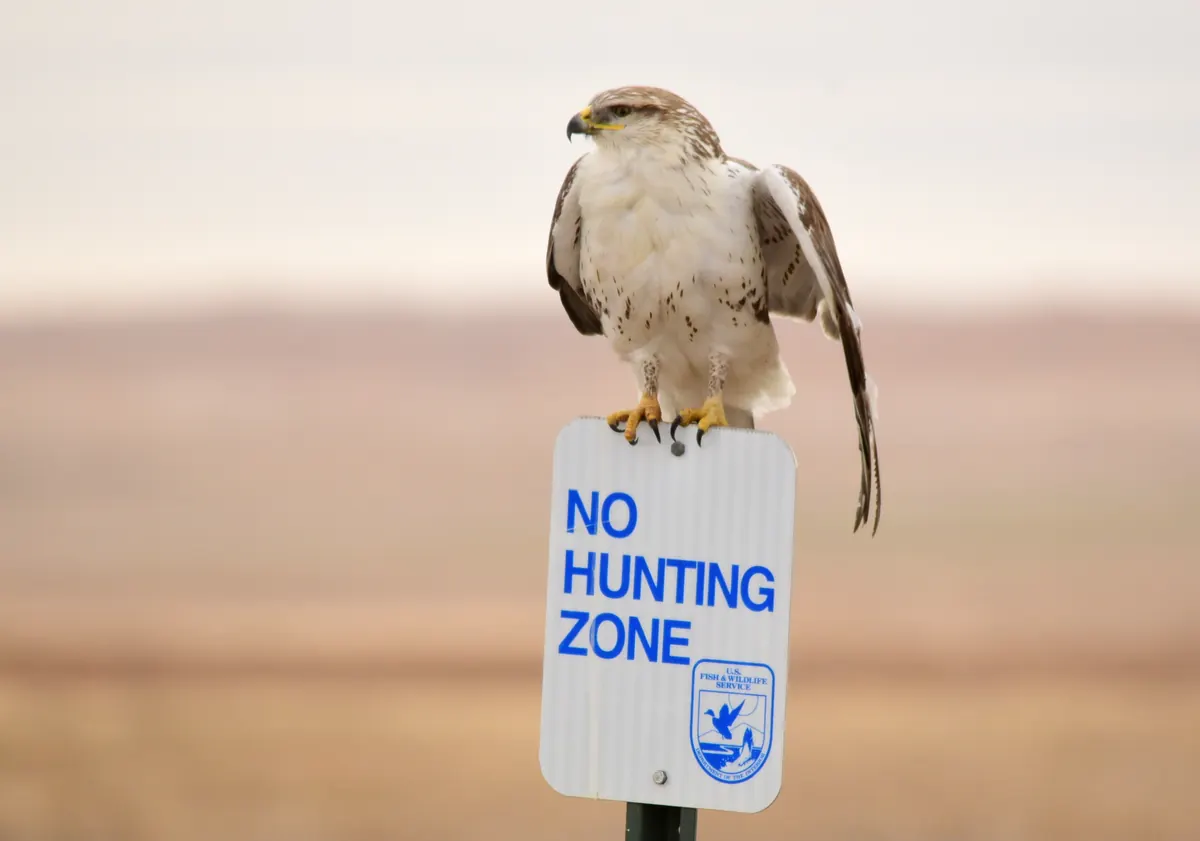
The Wildlife Department lists ferruginous hawks, rough-legged hawks and prairie falcons as frequent winter sights on this 7,566-acre restored wetland. Audubon calls the ferruginous hawk the largest of the soaring buteos; a light adult shows rusty shoulders and leggings and a whitish tail, and soars with its wings raised in a shallow V. The rough-legged hawk nests on the Arctic tundra and often hangs in the wind over a field, hovering as it scans for voles; dark wrist patches under the wings and a white tail with a dark tip are the marks to learn. Drive slowly and check every fence post.
-
Great horned owls start duetting
Hooting builds through December; eggs in late winter · Woodlots, shelterbelts, river bottoms and city parks statewide
Audubon notes that this owl nests very early, which gives the young the whole summer to learn to hunt, and that its deep, soft hoots carry across the woods on midwinter nights. Listen at dusk for a pair answering back and forth. Great horned owls build no nest of their own, taking over an old one left by a hawk, crow or heron. Find a pair now and you may see a pair of ear tufts poking above an old hawk nest by late winter.
-
Eastern screech-owl
All winter, calling most on calm nights · Every county except Cimarron; tree rows, open woods and wetland edges, including in towns
The Wildlife Department calls this Oklahoma’s smallest owl: about nine inches tall and seven ounces, in either gray or reddish-brown feathers. It hunts from dusk to dawn along tree rows, open woods and wetland edges, much of it on the wing. Listen after dark for the male’s mellow, eerie trill, two or three seconds of rapid notes on one pitch.
A dusk and dawn watch page suits owl listening: stand outside for fifteen minutes after sunset, note the time of the first call, and repeat the next week. The calls come earlier as the month goes on.
Which Oklahoma animals hibernate, and how do others get through the winter?
An Oklahoma winter alternates warm, muddy weeks with sharp cold snaps, and its wildlife uses every strategy, from deep sleep in a den to staying wide awake on a food store. December is when most of them settle into their winter routine.
-
Black bears in their dens
Denning through winter; cubs born January to March · Eastern Oklahoma’s forested hills and parts of the Panhandle
The Wildlife Department says Oklahoma’s black bears den up for winter in caves, hollow logs, big trees and under boulders, and that a denning bear can wake quickly if disturbed. Pregnant females give birth in the den between January and March, usually to one to three cubs. If you come on a likely den while hiking, back away quietly.
-
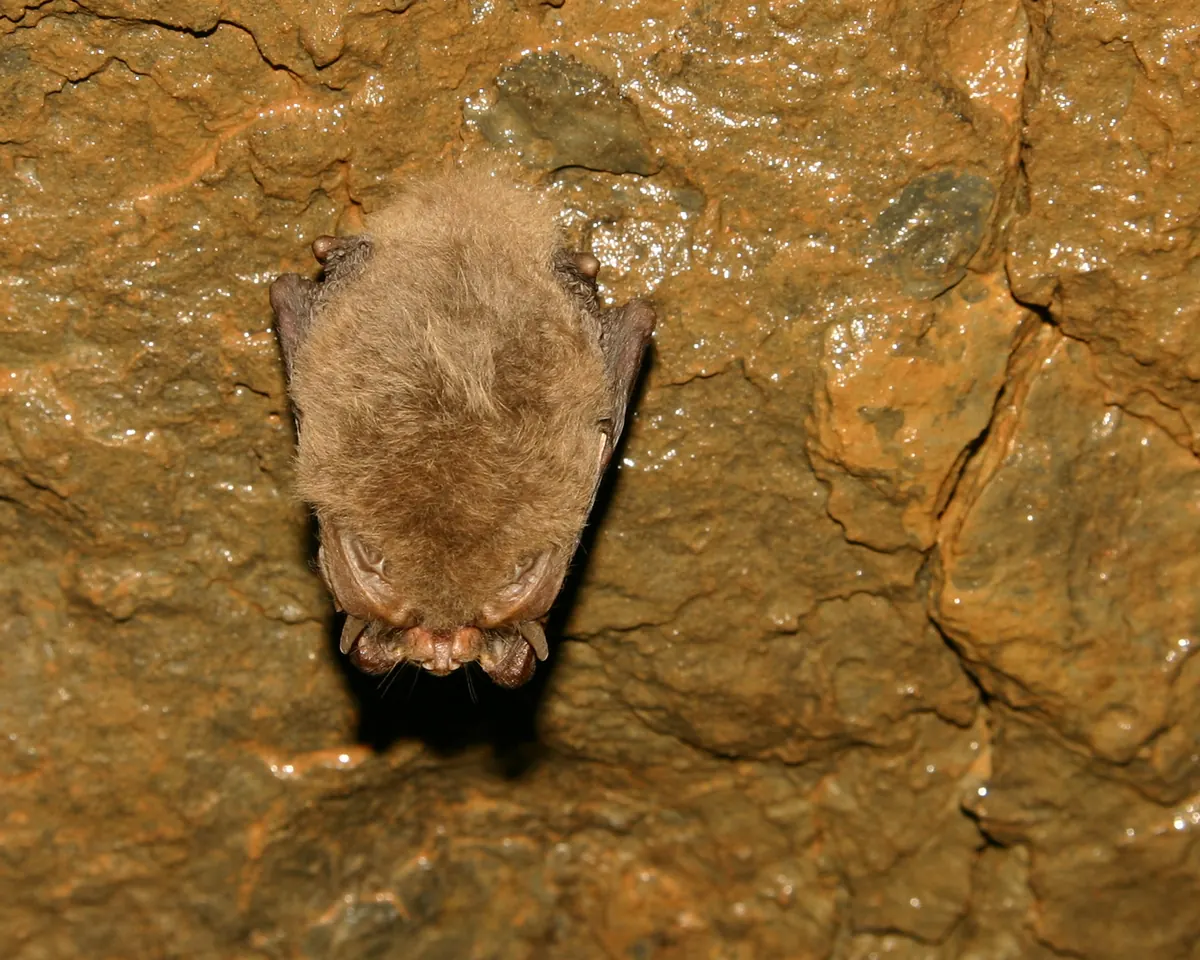
Bats in protected caves
Hibernation through the cold months · Gated caves in Adair, Cherokee and Sequoyah counties
The Ozark big-eared bat, one of Oklahoma’s rarest mammals with fewer than 2,000 in total, hibernates in limestone and sandstone caves of the Ozark highlands, often the same caves each year. Each time a hibernating bat is woken it burns stored fat that it cannot replace until spring, which is why the Wildlife Department and Rogers State University have fitted steel gates over six of its key caves. Most of the state’s endangered gray bats leave altogether, flying to caves in Arkansas and Missouri for the winter. Never enter a gated or closed cave.
-
Chipmunks, beavers and armadillos
All winter · Chipmunks in the Ozark hills; beavers on streams and ponds statewide; armadillos in the south and east
Eastern Oklahoma sits on the western edge of the eastern chipmunk’s range, and the Wildlife Department describes these little rodents spending cold spells deep in their burrows, some truly hibernating and others awake but sluggish, living on a cache of nuts and seeds. Beavers never hibernate: they pile sticks and logs underwater near the lodge in fall and gnaw the bark all winter, so fresh chips under a gnawed trunk are a December sign. Armadillos run cool by mammal standards, with body temperatures of 86 to 95 °F, and the department ties their slow march north and east to roads and bridges.
-
Tracks in mud and snow
After rain or the first snow · Creek banks, pond edges, farm roads
December is a good month to read tracks, since soft mud along creeks and the occasional dusting of snow hold prints sharply. Beaver, raccoon, opossum, deer, coyote and bobcat all leave distinctive marks. Bobcats are mostly nocturnal, and the Wildlife Department says they breed most often in late winter, so the rounded, clawless prints of a cat traveling a creek bank are a winter find.
The journal’s tracks to know plate and its mammal watch page work well together: sketch the track on one, and log the animal, the time and the weather on the other.
What stays green in Oklahoma in December, and where does mistletoe grow?
With the oaks and hickories bare, the green things in the landscape stand out, and the best known of them is half parasite. The Oklahoma Historical Society calls mistletoe the state’s oldest symbol: Oklahoma Territory chose it as its floral emblem in 1893, long before statehood.
-
American mistletoe
Easiest to see December through February · High in bare deciduous trees
Look for round, green clumps in the crowns of leafless trees. The Lady Bird Johnson Wildflower Center describes this mistletoe as semi-parasitic, rooted in the branches of sunlit deciduous trees, and notes it is the familiar sprig hung at Christmas. Its white berries are coated with a sticky pulp. Cedar waxwings and bluebirds eat them and spread the seeds by wiping their bills on branches or in their droppings, which is how new clumps start. People should never eat them, so hang any holiday sprig out of reach of children and pets.
-
Shortleaf pine
All year · Ouachita and Ozark hills of eastern Oklahoma
Oklahoma’s native pine of the eastern hills carries its needles two or sometimes three to a bundle, each three to five inches long, and bears reddish-brown cones. The Wildflower Center notes it gives cover, nest sites and seeds to small mammals and seed-eating birds. In a December oak forest the pines are the dark green ridgelines you see from the Talimena byway overlooks.
-
Eastern redcedar
All year · Pastures, roadsides and canyons statewide
Oklahoma’s most familiar evergreen is a juniper, Juniperus virginiana, not a true cedar, with scale-like leaves instead of needles. The dusty blue “berries” on female trees are fleshy cones, and the Wildflower Center counts them as winter food for many birds and small mammals.
Sketch a shortleaf bundle next to a sprig of redcedar where the journal collects seeds, pods and cones, and needles versus scales becomes plain at a glance.
When does winter start in Oklahoma, and how much snow and ice does December bring?
For forecasters, winter opens on December 1: they treat December through February as one season since those three months average colder than any other stretch, while the calendar’s winter starts at the December 21 solstice. In Oklahoma December is cold at night nearly everywhere, but the state still spans two climates: the Panhandle averages several inches of snow, while the far southeast averages almost none and gets its winter as cold rain.
| Station | Average high | Average low | Precipitation | Snowfall |
|---|---|---|---|---|
| Boise City 2 E (western Panhandle) | 51.3 °F | 21.7 °F | 0.74 in | 7.9 in |
| Beaver (eastern Panhandle) | 48.5 °F | 20.4 °F | 1.05 in | 4.3 in |
| Great Salt Plains Dam (north central) | 48.0 °F | 26.0 °F | 1.43 in | 3.6 in |
| Enid (north central) | 48.3 °F | 27.8 °F | 1.50 in | 3.1 in |
| Oklahoma City Will Rogers Airport | 50.4 °F | 29.5 °F | 1.79 in | 1.8 in |
| Tulsa International Airport (northeast) | 50.9 °F | 31.1 °F | 2.43 in | 1.7 in |
| Wichita Mountains Wildlife Refuge (southwest) | 52.9 °F | 31.3 °F | 1.64 in | 0.3 in |
| Broken Bow 1 N (southeast) | 55.8 °F | 31.7 °F | 5.30 in | 0.3 in |
| Idabel (southeast) | 56.7 °F | 32.2 °F | 4.98 in | 0.3 in |
Read the table from top to bottom and the state tips from dry and snowy to wet and mild. Boise City averages 7.9 inches of December snow on just 0.74 inch of total precipitation, while Broken Bow, in the Ouachita foothills, gets more than seven times as much water and about a third of an inch of snow. The National Weather Service office in Norman, which tracks heavy snow by month and county, finds that the Panhandle and northwest counties average one or two storms of four inches or more each year, while counties along the Red River can expect one only every three or four years.
Ice is the hazard Oklahomans remember. On December 9 to 11, 2007, freezing rain coated the corridor from near Lawton through Oklahoma City and Tulsa with three-quarters of an inch to more than an inch of ice; the Norman forecast office calls it the worst power outage in state history, with more than 641,000 customers in the dark at its peak and at least 27 deaths. Losses to the pecan crop alone were put at $25 million.
What about this winter? Odds that this El Niño holds at very strong strength through winter topped nine in ten when federal Pacific forecasters last reported, on September 10. NOAA’s long-term analysis on Climate.gov finds the steadiest El Niño signal in the southern United States is a wetter-than-average cold season along the Gulf Coast, showing up in over four of every five El Niño years of the last hundred, and that the stronger the event, the more dependable that signal has been. Closer to home, in a September 23 interview with the Oklahoma Farm Report, State Climatologist Gary McManus said strong El Niños have leaned the state wet in past winters, that he expects storm systems to come along more often, and that ice and freezing rain stay a real danger even as snow would help refill dry soils. The Oklahoma Mesonet’s October 1 summary, written after the hottest September on record (82.8 °F statewide, 2.7 degrees above the old 1931 mark) and with extreme or exceptional drought over 55 percent of the state, quoted the Climate Prediction Center’s note that the southern storm track of strong El Niño years is already taking shape. Hard freezes are routine by now everywhere; our Oklahoma frost dates show when the last one of spring usually comes. When NOAA publishes its winter outlook on October 15, you can find the maps among NOAA’s 90-day outlooks, and our Oklahoma weather page has the forecast for the week you plan to go out.
When is the earliest sunset in Oklahoma?
Not on the shortest day. In Oklahoma City the sun sets at 5:17 p.m. every evening from November 30 through December 10, its earliest of the season, and the exact low point falls around December 5. By the solstice it has already slipped later, to 5:21 p.m., and it reaches 5:27 by New Year’s Eve. The mornings do the opposite, with sunrise still sliding later, from 7:21 a.m. on December 1 to 7:35 at the solstice and 7:39 on December 31, and it goes on drifting later into January.
The shortest day itself is Monday, December 21: 9 hours 46 minutes in Oklahoma City, 9 hours 39 minutes in Guymon and 9 hours 53 minutes in Idabel. Tulsa’s earliest sunset is 5:09 p.m., the Panhandle’s 5:30, since Guymon sits so far west in the Central time zone.
| City | Dec 1 | Dec 21 | Dec 31 | Earliest sunset |
|---|---|---|---|---|
| Guymon | 9 h 50 m | 9 h 39 m | 9 h 42 m | 5:30 p.m., Dec 6 |
| Woodward | 9 h 51 m | 9 h 40 m | 9 h 43 m | 5:22 p.m., Dec 5 |
| Enid | 9 h 51 m | 9 h 41 m | 9 h 43 m | 5:16 p.m., Dec 6 |
| Tulsa | 9 h 52 m | 9 h 42 m | 9 h 44 m | 5:09 p.m., Dec 6 |
| Oklahoma City | 9 h 56 m | 9 h 46 m | 9 h 48 m | 5:17 p.m., Dec 5 |
| McAlester | 9 h 59 m | 9 h 49 m | 9 h 51 m | 5:11 p.m., Dec 5 |
| Lawton | 10 h 01 m | 9 h 50 m | 9 h 53 m | 5:23 p.m., Dec 5 |
| Idabel | 10 h 04 m | 9 h 53 m | 9 h 57 m | 5:10 p.m., Dec 5 |
Your own town’s sunrise, sunset and twilight for any date are on the daylight calculator.
What can you see in the Oklahoma night sky in December 2026?
December has the year’s longest nights and its best meteor shower, and this year the moon cooperates. All times are Central Standard Time.
-
The Geminids
Night of Sunday, December 13, into Monday morning, December 14 · Anywhere dark; the radiant in Gemini is high in the east by late evening
On the International Meteor Organization’s 2026 calendar the Geminid rate reaches 150 an hour in theory, the strongest of the annual showers; actual counts are lower, yet a dark rural spot still gives a steady show. A slim crescent moon drops out of the western sky somewhere around 9 or 10 p.m.; after that Oklahoma has true darkness, and the count improves until about 2 a.m., when Gemini stands highest. Many Geminids are bright and unhurried, which makes this an easy first shower for children. Black Mesa State Park in the Panhandle, an International Dark Sky Park, is among the darkest places in the state to watch, but a county road away from town lights works too. The Ursids on December 22 are washed out by a nearly full moon this year.
-
The solstice
Monday, December 21, 2:50 p.m. · Watch the sunset point on the southwestern horizon
The sun reaches its southernmost point at 2:50 in the afternoon. Note where it sets against a tree or rooftop, then check again in March. As it gets dark that evening, look for the Pleiades just beside the fat waxing moon.
-
The Cold Moon, closest full moon of 2026
Full Wednesday evening, December 23, at 7:28 CST; round on the 23rd and 24th · Rising in the east-northeast around sunset
December’s full moon arrives early on the evening of the 23rd, only about seven hours before perigee, its nearest point to Earth. That makes it the closest and biggest-looking full moon of the year, a genuine supermoon. By the evening of the 24th the disk has barely begun to thin.
-
Planets at dawn and dusk
All month; crescent moon near Spica and Venus the mornings of December 4 and 5 · Venus low in the southeast before sunrise; Mars and Jupiter higher; Saturn in the south and southwest after dark
Before dawn Venus hangs low in the southeast, the brightest point in the Oklahoma sky after the moon. A thin old moon slides past Spica and then toward Venus at dawn on December 4 and 5. Higher up, Mars and Jupiter are both in Leo; by late December Jupiter rises in the mid-evening. After dark only Saturn is up, lower in the southwest each week; by New Year’s Eve it goes down roughly four hours behind the sun. After the holidays, the Quadrantids crest late on Sunday evening, January 3, 2027, in a nearly moonless sky.
| Phase | Date | Time |
|---|---|---|
| Last quarter | Tuesday, Dec 1 | 12:08 a.m. CST |
| New moon | Tuesday, Dec 8 | 6:52 p.m. CST |
| First quarter | Wednesday, Dec 16 | 11:42 p.m. CST |
| Full moon, the Cold Moon | Wednesday, Dec 23 | 7:28 p.m. CST (looks full the evenings of Dec 23 and 24) |
| Last quarter | Wednesday, Dec 30 | 12:59 p.m. CST |
| New moon | Thursday, Jan 7, 2027 | 2:24 p.m. CST |
Plan around moonlight with the moon phase calendar, and the sky and cloud forecast tells you whether Geminid night will be clear.
What can Oklahoma families do outdoors in December?
- Tuesday, December 1: winter begins for weather watchers. Start a cold log: each morning’s low and any frost or ice.
- Friday, December 4, 10:30 a.m.: First Friday Hort Tour at Tulsa Botanic Garden. A gardener leads a walk through what still looks good in early winter; free with garden admission. Early that morning and the next, look southeast before dawn for the crescent moon near Venus.
- Sunday night, December 13: Geminid meteors. Bundle up in sleeping bags and give it half an hour after moonset.
- Count season, December 14 into the new year: bird with an Audubon team. Tulsa Audubon, Oklahoma City Audubon and other groups welcome beginners on teams; children do best on a half day with a feeder stop.
- Monday, December 21: a solstice walk. Take a short walk at sunset and look for the gibbous moon near the Pleiades as it gets dark.
- Evening of December 23: moonrise over open water. Bring the family to a lakeshore to see the biggest-looking full moon of the year climb out of the east.
- Nightly through January 3, 2027: Safari Lights at the Oklahoma City Zoo, with lantern animals on a walk-through or drive-through route from 5:30 to 11 p.m.; tickets are sold by the zoo.
- New Year’s Day, Friday, January 1, 2027: hike a state park. For New Year’s Day 2026 Oklahoma State Parks held guided hikes at 14 parks, from Roman Nose and Boiling Springs to Lake Wister and McGee Creek, with parking fees waived and tokens for hikers. The 2027 list was not posted when we wrote this; check TravelOK in December.
- Citizen science. Count birds for Project FeederWatch, read any collared swan’s code and send it to the Wildlife Department, add hawks and owls to eBird, and check in on the Sutton Center’s eagle nest camera over the holidays.
A printable checklist for the month is in the nature this month collection, and everything on this list fits in the Naturalist’s Field Journal. For the season that came before, see Oklahoma in November.
Safety notes for December in Oklahoma
- Hunting seasons and hunter orange. The regular deer and elk gun seasons run through Sunday, December 6, and the holiday antlerless deer and elk gun seasons follow from December 18 to December 31. Deer and elk archery continue to January 15. Pheasant season and the bobcat and fox furbearer season open December 1; quail runs through February 15, sandhill cranes to January 17, and rabbit and squirrel all month. Duck season in Zones 1 and 2 takes a break December 7–11, then resumes on the 12th and continues to January 31, with goose seasons on the same split; Panhandle ducks run straight through to January 13. During every firearm season for deer, elk, antelope or bear, the Wildlife Department requires anyone hunting with a gun or muzzleloader to show hunter orange on both a hat and an upper-body garment, adding up to 400 square inches or more. Bowhunters in those weeks need orange either on the head or above the waist, and other hunters and trappers need it as well, except those after waterfowl, crows, cranes or doves and furbearer hunters at night. The rule leaves hikers out, though anyone walking public hunting ground in the gun weeks is wise to add a blaze cap, with orange on the dog as well.
- Refuge closures. At Sequoyah National Wildlife Refuge, a controlled deer hunt shuts the Sandtown Bottom tour road past Tuff Boat Ramp from December 2 through December 4. To bird or photograph on a department-owned area like Hackberry Flat, carry a Wildlife Conservation Passport or any current Oklahoma hunting or fishing license.
- Ice, on roads and on water. Freezing rain is the winter hazard to respect most. Bridges and overpasses glaze first; if ice is in the forecast, postpone the trip. Ponds and lakes here rarely freeze thick enough to trust, so stay off the ice entirely and keep dogs leashed near open water.
- Cold and wind. A mild afternoon can turn into a hard freeze within hours when a front arrives, and Panhandle lows average in the low 20s in December. Pack gloves and a warm hat even when the morning is mild, and leave a blanket and drinking water in the vehicle.
- Short days. Sunset comes between 5:09 p.m., in Tulsa early in the month, and 5:40, in Guymon on New Year’s Eve. Set out by early afternoon, pack a flashlight, and let someone at home know your plans. Wildfire risk stays high on dry, windy days while drought lingers, so check Oklahoma Forestry Services for a burn ban in your county first.
Sources
- National Audubon Society: Christmas Bird Count (December 14 to January 5)
- National Audubon Society: about the Christmas Bird Count (history, 15-mile circles)
- Tulsa Audubon Society: Christmas Bird Counts
- Tulsa Audubon Society: Tulsa Christmas Bird Count circle
- Oklahoma City Audubon Society (2025 Christmas Bird Count results)
- Project FeederWatch: how to participate
- Oklahoma Department of Wildlife Conservation: trumpeter swan field guide
- Oklahoma Department of Wildlife Conservation: golden eagle field guide
- Oklahoma Department of Wildlife Conservation: bald eagle field guide (nesting timing)
- Oklahoma Department of Wildlife Conservation: tips for winter eagle watching trips
- George Miksch Sutton Avian Research Center: bald eagle nest camera and eagle restoration
- U.S. Fish and Wildlife Service: eagle feathers and parts (Bald and Golden Eagle Protection Act)
- Oklahoma Department of Wildlife Conservation: Hackberry Flat WMA (winter raptors, Conservation Passport)
- National Audubon Society: ferruginous hawk field guide
- National Audubon Society: rough-legged hawk field guide
- National Audubon Society: great horned owl field guide
- Oklahoma Department of Wildlife Conservation: eastern screech-owl field guide
- Oklahoma Department of Wildlife Conservation: wintering birds
- Oklahoma Department of Wildlife Conservation: black bear field guide
- Oklahoma Department of Wildlife Conservation: Ozark big-eared bat field guide
- Oklahoma Department of Wildlife Conservation: gray bat field guide
- Oklahoma Department of Wildlife Conservation: eastern chipmunk field guide
- Oklahoma Department of Wildlife Conservation: American beaver field guide
- Oklahoma Department of Wildlife Conservation: nine-banded armadillo field guide
- Oklahoma Department of Wildlife Conservation: bobcat field guide
- Oklahoma Historical Society: Oklahoma’s state symbols (mistletoe, 1893)
- Lady Bird Johnson Wildflower Center: American mistletoe
- Lady Bird Johnson Wildflower Center: shortleaf pine
- Lady Bird Johnson Wildflower Center: eastern redcedar
- NOAA NCEI: 1991–2020 monthly normals for December (Oklahoma stations in the table)
- NOAA NCEI: U.S. climate normals 1991–2020
- National Weather Service Norman: heavy snow in Oklahoma, where, when and how often
- National Weather Service Norman: the December 9–11, 2007, ice storm
- Climate Prediction Center: ENSO diagnostic discussion, September 10, 2026
- Climate.gov: United States El Niño impacts
- Oklahoma Farm Report: drought relief on the horizon as El Niño strengthens (September 23, 2026; State Climatologist Gary McManus)
- Oklahoma Mesonet ticker, October 1, 2026 (record September, drought coverage, El Niño storm track)
- Climate Prediction Center: seasonal outlooks
- U.S. Naval Observatory: moon phases
- U.S. Naval Observatory: Earth’s seasons, 2026 (December solstice)
- International Meteor Organization: 2026 meteor shower calendar
- EarthSky: what is a supermoon (December 2026 full moon distance)
- BBC Sky at Night: supermoons in 2026 (the Cold Moon)
- NASA JPL Horizons ephemeris system (planet and moon positions)
- DarkSky International: Black Mesa, Oklahoma’s first International Dark Sky Park
- Tulsa Botanic Garden: events (First Friday Hort Tour, December 4, 2026)
- Oklahoma City Zoo: Safari Lights, November 14, 2026, to January 3, 2027
- TravelOK: First Day Hikes at Oklahoma State Parks (January 1, 2026 list)
- America’s State Parks: First Day Hikes
- eBird
- Oklahoma Department of Wildlife Conservation: 2026–27 hunting seasons
- Oklahoma Department of Wildlife Conservation: big game regulations (hunter orange)
- U.S. Fish and Wildlife Service: Sequoyah National Wildlife Refuge (2026 controlled hunt closures)
- Oklahoma Forestry Services: fire information and burn bans
- Photos via Wikimedia Commons; licenses and photographers are credited under each picture
