What to look for in nature in Oklahoma this January
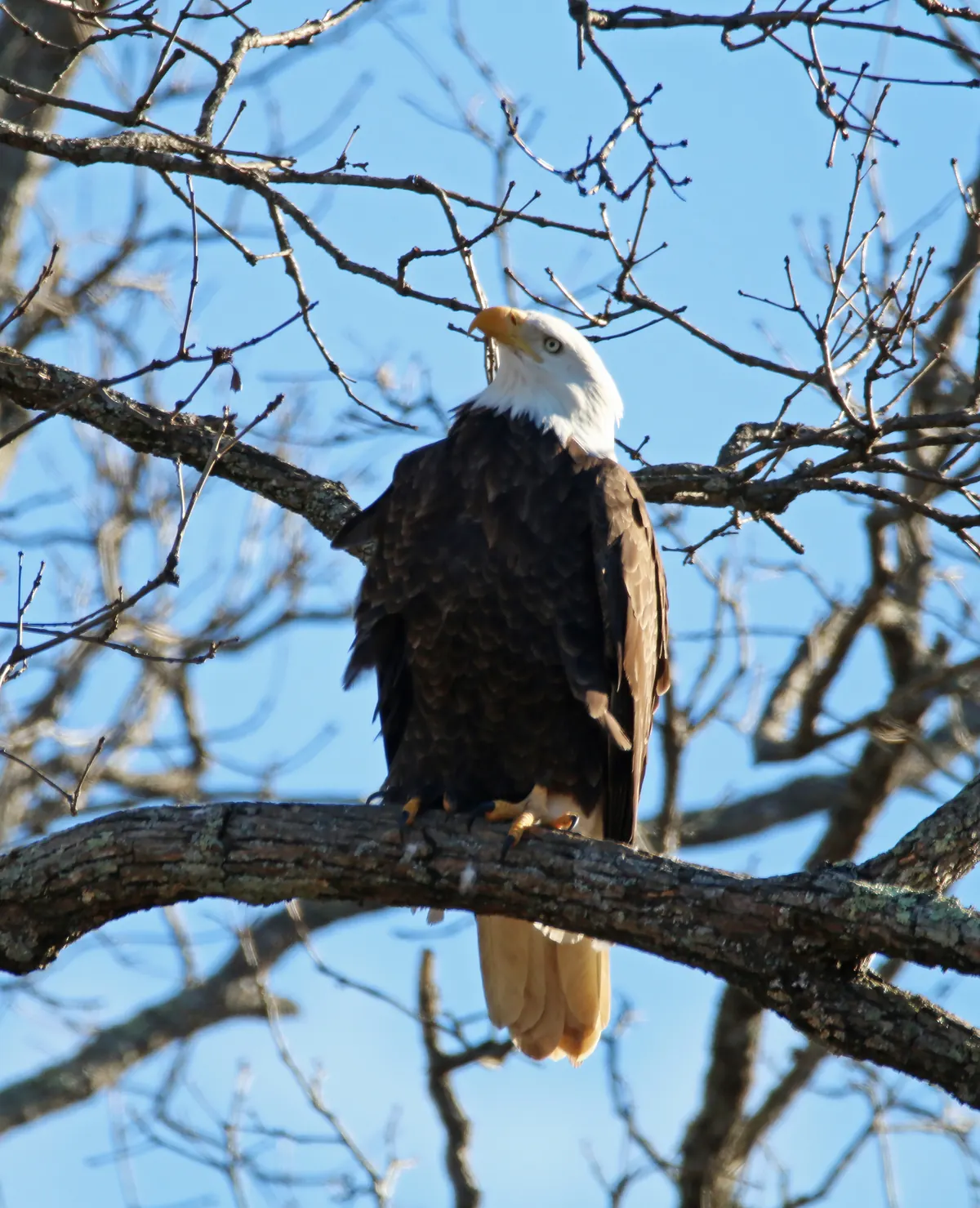
January is eagle month in Oklahoma. Wintering bald eagles reach their peak on the big reservoirs, where they perch over the open, churning water below Kaw, Keystone and Pensacola dams, while the state’s own nesting pairs sit tight on eggs. Loons and gulls drift on Lake Hefner and Lake Tenkiller, great horned owls call to each other from the creek bottoms, and coyotes yip more often as their breeding season begins. Last winter a family group of whooping cranes stayed at Salt Plains for the first time on record. Overhead, a strong Quadrantid shower kicks off the year and the closest full moon of 2027 follows three weeks later. Here is what to find, region by region.
Other months in Oklahoma: October, November, December, February.
Start here

- Go see the eagles. January and February are the best months for bald eagles. Try the viewing platform below Keystone Dam, GRDA’s Eagle Pass below Pensacola Dam at Grand Lake, Kaw Lake near Ponca City or Lake of the Arbuckles, early on a cold morning.
- Watch a big lake in winter. Walk the north end of the Lake Hefner dam in Oklahoma City for common loons, horned grebes and gulls, or visit Lake Tenkiller, a favorite loon lake in the Cookson Hills.
- Meteors, then a supermoon. The Quadrantids peak on the night of Sunday, January 3, best in the dark hours before Monday’s dawn. The Wolf Moon, a supermoon, turns full at 6:17 a.m. CST on Friday, January 22.
In the Naturalist’s Field Journal this January, put every eagle you count on birds I have seen, noting adults and brown young separately, along with the dam, the time and how much water was running. Start a nest observed page for an eagle or owl nest you can watch from a respectful distance, and add a coyote chorus or an owl duet to a map of sounds. A cracked Osage orange and a leathery blackjack leaf make good subjects for seeds, pods and cones, while the dusk and dawn watch page can follow the lengthening evenings. Date every entry.
Regions used below: Panhandle and High Plains; Northwest and the Salt Plains; Central Oklahoma and the Oklahoma City metro; Northeast and Green Country; Southwest and the Wichita Mountains; Southeast and the Ouachita Mountains.
When is the best time to see bald eagles in Oklahoma?
Right now. State wildlife biologists report that eagle sightings begin climbing in November, once lakes to the north freeze and birds move south, and are highest in January and February. Estimates of the winter crowd vary: TravelOK puts it at 800 to 2,000 eagles, and Chickasaw National Recreation Area uses a figure of about 2,000. On top of the migrants, the Wildlife Department counts more than 300 pairs that live in Oklahoma all year.
-
Below the dams
Best on cold January and February mornings · Keystone Dam west of Tulsa, Pensacola Dam at Grand Lake, Kaw Dam east of Ponca City, Lake Texoma, Fort Gibson and Tenkiller
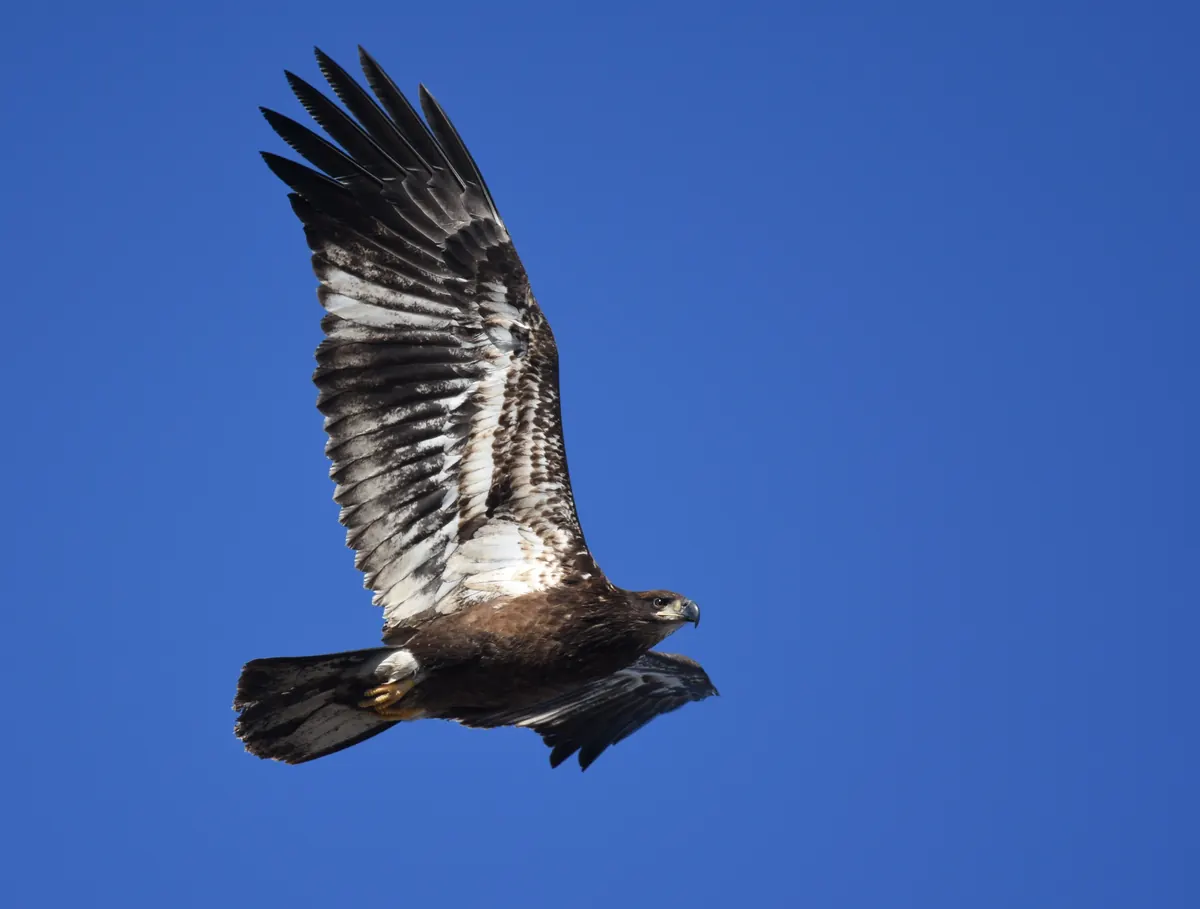
Eagles are mostly fish eaters, and the water churned up below a dam stays open and full of stunned fish when lakes upstream skim over. Tulsa Audubon has watched eagles gather below Keystone Dam for decades; TravelOK points visitors to an eagle viewing platform near Brush Creek, downstream of the dam. At Grand Lake, the Grand River Dam Authority keeps an “Eagle Pass” viewing area on the west side of the spillway channel below Pensacola Dam and says January and February mornings are best, when the birds hunt small fish in the release water.
-
Refuges and quieter lakes
December through February · Salt Plains and Sequoyah national wildlife refuges, Lake Thunderbird, Lake of the Arbuckles, Quartz Mountain
The Wildlife Department calls Salt Plains National Wildlife Refuge the site of the state’s largest gathering of bald eagles, usually 70 or more through the winter, and the refuge’s Eagle Roost Nature Trail runs for about a mile and a quarter. In the southwest, TravelOK says eagles roost in tall cottonwoods along the north shore of Lake Altus-Lugert at Quartz Mountain from late December into early March. Eagles younger than about four years lack the white head and tail, so give every big brown bird a second look.
-
Oklahoma’s own nesting pairs
Eggs in December and January; hatching about five weeks later · Nest trees along the Arkansas River and near the larger reservoirs
While the visitors loaf, resident pairs are busy. Southern bald eagles lay in December and January, the Wildlife Department says, and sit on the eggs for about 35 days, so Oklahoma’s first eaglets hatch in late winter. The recovery owes much to the George M. Sutton Avian Research Center, which raised and released 275 young bald eagles across the southeastern states between 1984 and 1992, Tulsa Audubon says, and it notes that eagles now nest all along the Arkansas River. Below Pensacola Dam the authority closes an area around one long-used nest each winter (the 2026 closure was announced in January), keeping a buffer of 330 to 660 feet as federal guidelines recommend.
Our Oklahoma weather forecast can help you pick a calm, cold morning, when eagles are most active over the water.
Do whooping cranes and sandhill cranes stay in Oklahoma in January?
Usually the answer has been no for whooping cranes, which pass through Oklahoma in fall and spring on the way between Canada and the Texas coast. Last winter changed that, and it is worth watching whether it happens again.
-
Whooping cranes at Salt Plains
Winter 2025–26 was the first time a group stayed all season · Salt Plains National Wildlife Refuge, Alfalfa County
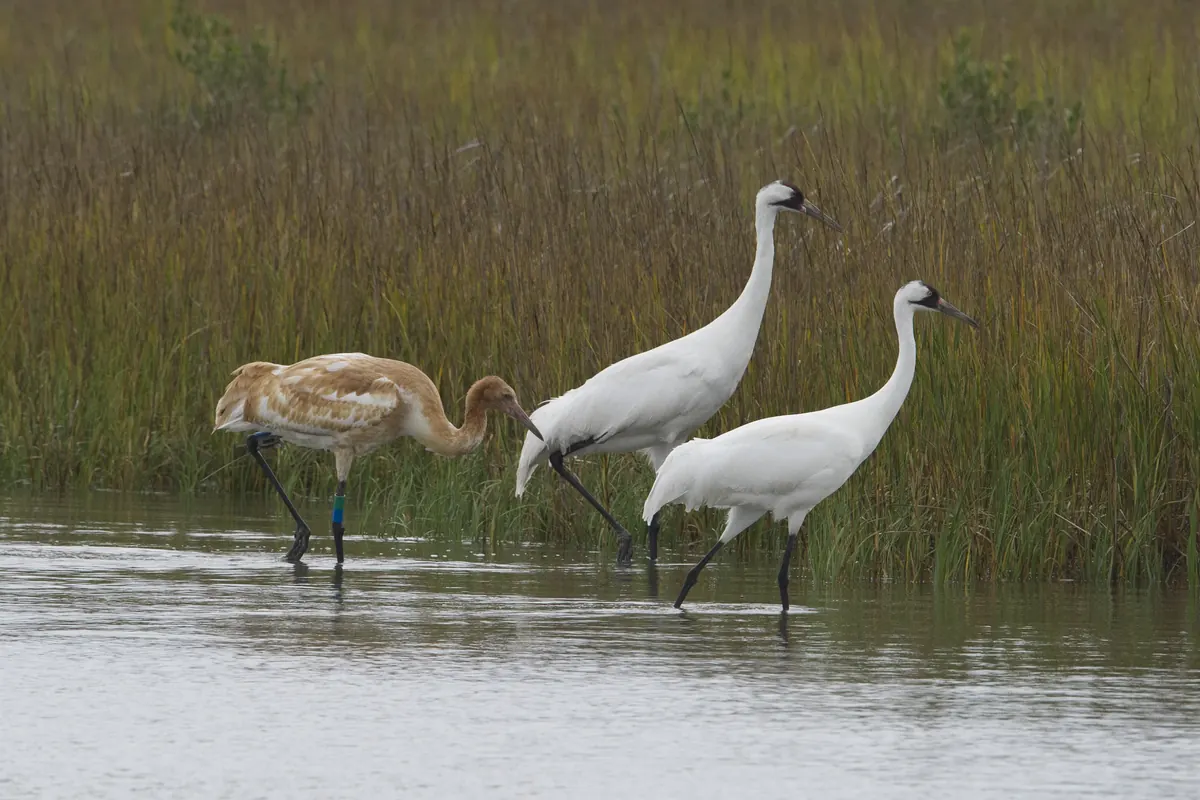
The U.S. Fish and Wildlife Service reports that eight whooping cranes, six adults and two young of the year, spent the whole 2025–26 winter at Salt Plains instead of continuing to Texas. The first hint came on January 3, when several Christmas Bird Count teams reported them, later than the cranes had ever lingered at the refuge. They came through a late-January arctic blast with single-digit temperatures and eight inches of snow, gleaning waste corn from snowy fields, and left in early March for Wood Buffalo National Park in Canada. No one knows yet whether any will stay this winter. If you find one, the Service asks you to remain inside your car and a quarter mile or more from the birds. The whole wild flock has grown from 16 birds in 1941 to more than 550 today.
-
Sandhill cranes in the southwest
Small wintering groups through January · Washita National Wildlife Refuge near Butler; Jackson County fields
Washita National Wildlife Refuge, on the upper end of Foss Reservoir, was set aside in 1961 as a wintering home for waterfowl and sandhill cranes, and the Fish and Wildlife Service says it shelters hundreds of thousands of geese every year, which rest on Foss Lake at night and fly out to farm fields by day. Most sandhills move on south, but small numbers spend the season in the southwest. Listen for their rolling, bugled calls overhead on mild afternoons. If you see one very large white crane with black wingtips among gray sandhills, report it.
Record every crane you see in the journal, noting its flight direction and the hour; a sandhill in January may be a winterer, while a flock heading north in February is the start of spring migration.
Where can you see loons, grebes and gulls on Oklahoma lakes in winter?
Oklahoma’s deep, open reservoirs collect northern water birds that most residents never notice, and January is a fine month to look. A spotting scope helps, but binoculars from a dam or point will show a lot.
-
Lake Hefner and Lake Overholser
Loons about November 1 to May 1; rarer gulls best January through mid-March · The dams of both Oklahoma City lakes; Prairie Dog Point on Hefner
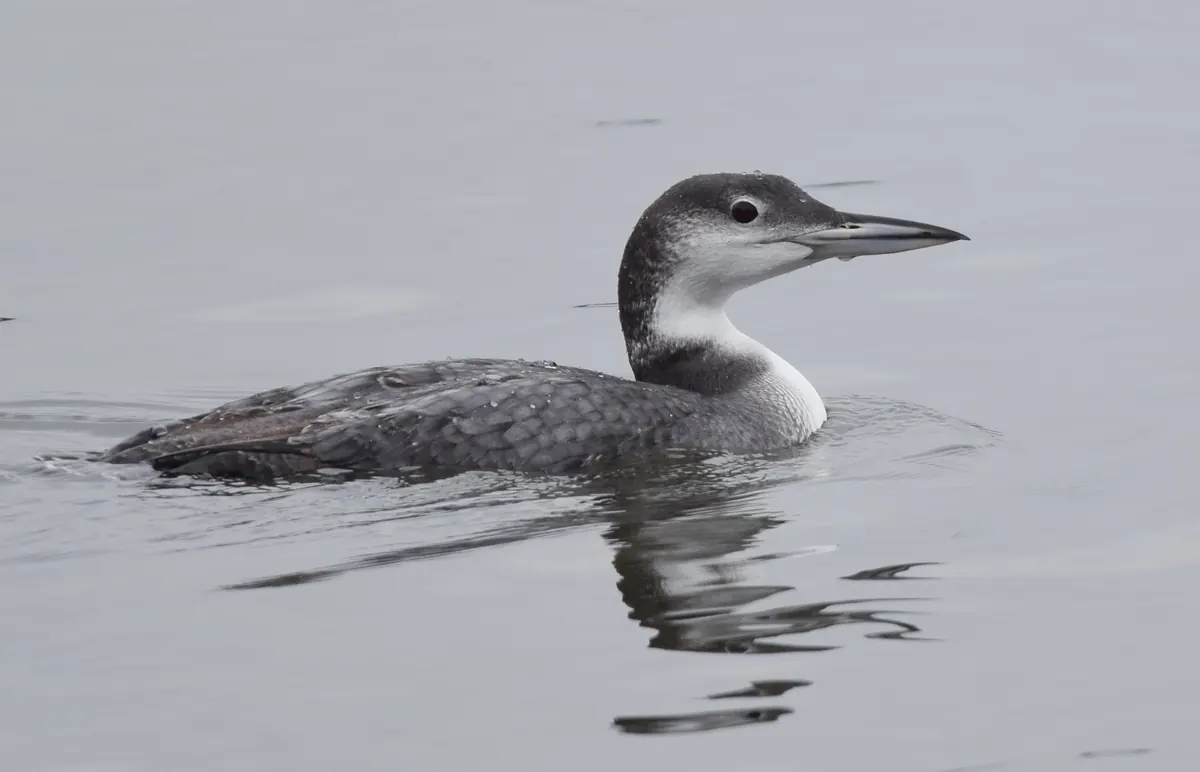
Oklahoma City Audubon calls common loons reliable winter visitors at Hefner, usually fishing in deep water 20 to 50 yards off the rocks along the northern section of the dam. In winter plumage they are gray above and white below, not the checkered black and white of summer. Horned grebes are dependable from about November 1 to May 1, western grebes turn up most dependably from mid-October to the start of January and again in spring, and ring-billed, herring and Bonaparte’s gulls turn up every year. Rarer gulls, such as lesser black-backed and glaucous, are most likely from January into March, and the chapter says partial ice or low water that exposes roosting islands brings the biggest concentrations.
-
Lake Tenkiller, the loon lake
Winter and early spring · Tenkiller State Park and the Driftwood Nature Center near Vian; Blackgum Landing
Birders rank this Corps of Engineers lake in the Cookson Hills among the region’s top loon spots, and local birders have reported the rarer red-throated, Pacific and yellow-billed loons there as well as the common loon. A loon can stay underwater for a minute or more while it chases fish, so watch the spot where one vanished and then scan outward. In past winters the Sequoyah refuge’s Saturday eagle tours have been paired with an afternoon loon watch at the Tenkiller nature center.
Wind on an open dam is brutal in January, so check the cloud and sky forecast for a still, overcast morning, when glare is low and birds rest on calm water.
When do great horned owls nest in Oklahoma?
Sooner than almost any other Oklahoma bird. January is their courtship peak: the deep hoots that began in late fall become duets, pairs settle on a nest site, and in the south the first eggs can follow within weeks.
-
Great horned owls choosing a nest
Calling peaks in January; first eggs from about early February · Creek bottoms, shelterbelts, windbreaks, cemeteries and big-city parks statewide
Oklahoma City Audubon calls the great horned owl one of the state’s earliest nesters and cites the ornithologist George Sutton’s earliest Oklahoma nesting date of February 6, from Marshall County. Clutches run from one to five eggs, most often two. Rather than build, a pair borrows: an abandoned hawk, crow or heron platform, a hollow trunk, even a cliff shelf. Listen at dusk for two owls hooting back and forth, then come back in daylight and look for an old stick nest in the same grove with an ear-tufted head showing above the rim.
-
Barred owls in the eastern bottomlands
Calling on still nights through winter · River and creek bottoms of eastern and central Oklahoma
In the hardwood bottoms of Green Country and the southeast, barred owls answer with their rhythmic “who cooks for you” call. A barred owl has dark eyes and a rounded head without tufts, while a great horned owl stares back with yellow eyes under two feathered horns.
Owls are easy to disturb now. Never play recorded calls, and keep so far back from a nest that the sitting bird stays relaxed, eyes half shut.
Which winter birds visit Oklahoma feeders and fields in January?
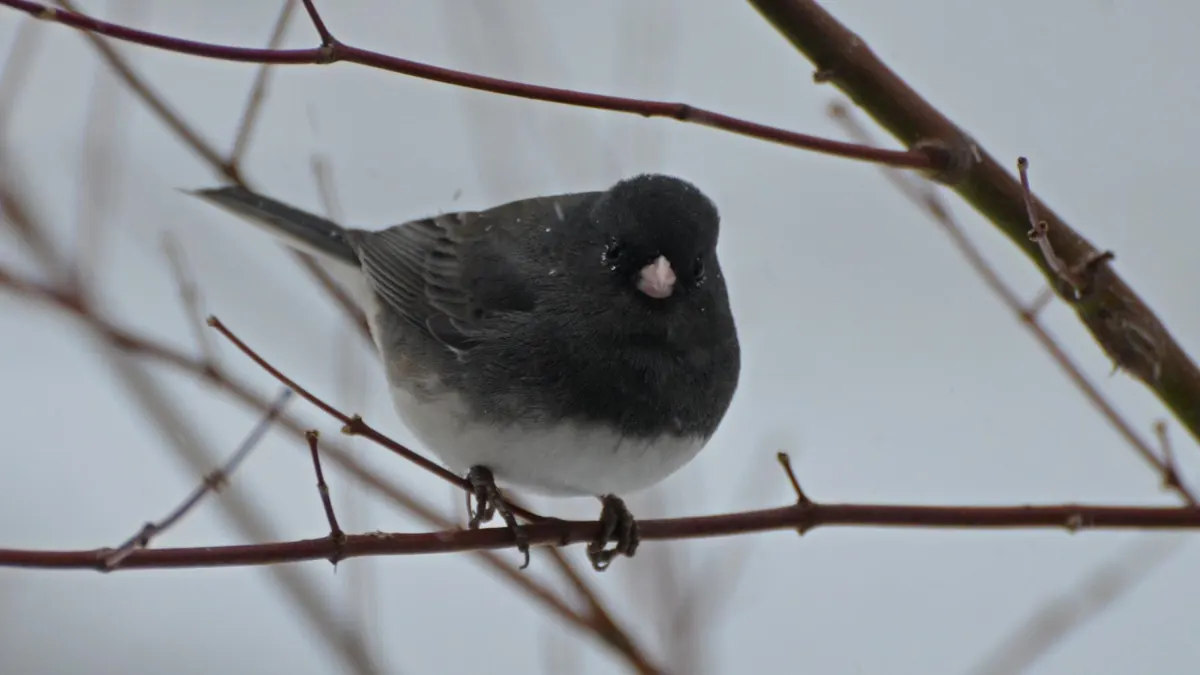
Sparrows, juncos and hawks from the north spend the cold months here, the Wildlife Department notes. A morning at a feeder or along a quiet farm road in January can turn up a surprising mix.
-
Sparrows, juncos and towhees
All month · Brushy fencerows, woodland edges and backyard feeders
Fox, song, chipping and field sparrows feed low in thick cover, often alone, and spotted towhees scratch noisily in leaf litter nearby. Dark-eyed juncos, titmice and jays come readily to seed.
-
Longspurs and harriers in open country
Midwinter · Plowed fields, short-grass pastures and wheat stubble, especially in the west
Flocks of longspurs rise from bare fields with dry rattling calls and settle again a few yards on, feeding where seeds are thick on open ground. Over the same fields a northern harrier, with its white rump patch, quarters low on tilted wings, one of the hawks the Wildlife Department lists as taking refuge here in winter.
-
Will northern finches come south?
Forecast for winter 2026–27 · Feeders statewide
Probably not many. The Finch Research Network’s September 25 forecast, written mainly for the eastern half of the continent, expects good seed crops in the north to hold most finches there this winter and says no big irruptions are expected in the southeastern states. The Wildlife Department still counts siskins and purple finches among Oklahoma’s winter visitors, so keep a thistle feeder filled.
Each eBird checklist or FeederWatch count helps show which northern birds made it this far south.
What are Oklahoma’s mammals doing in the middle of winter?
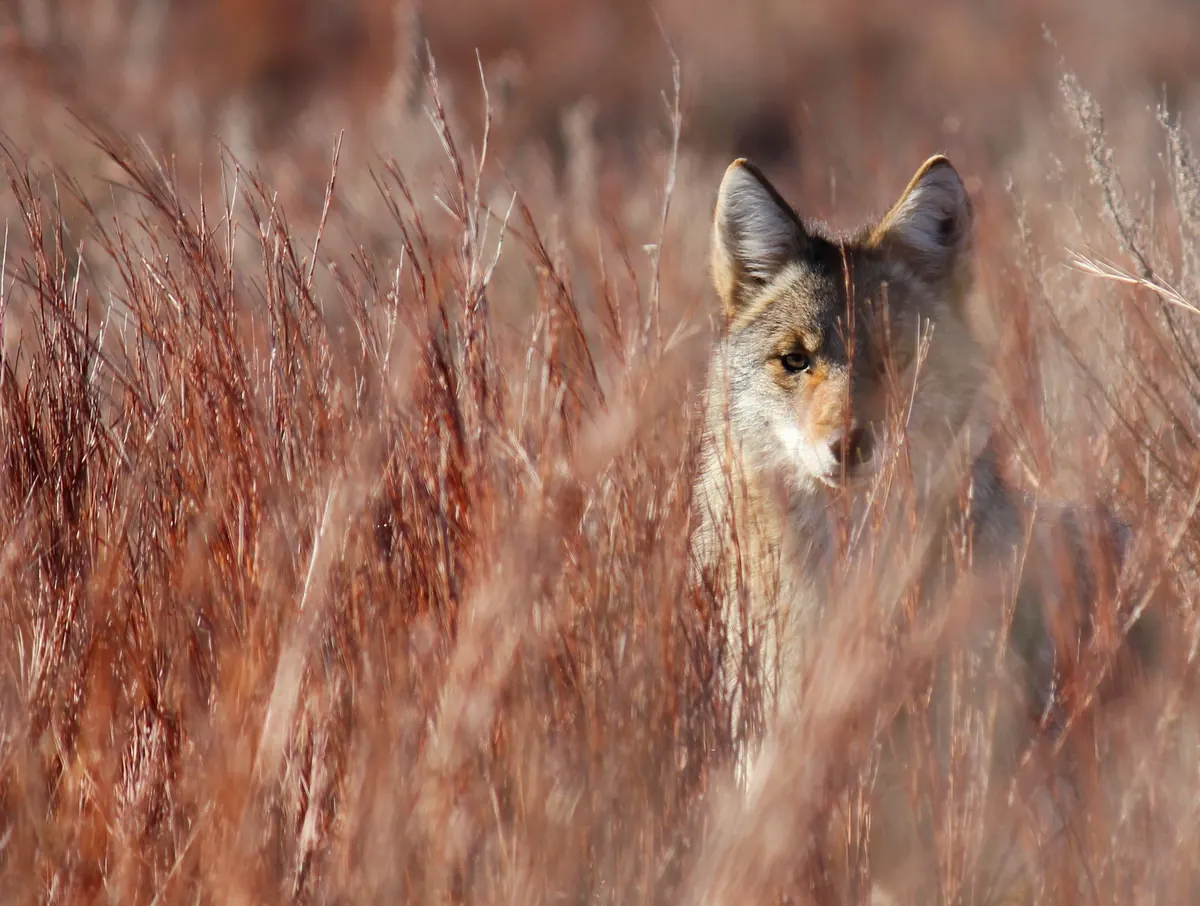
Most Oklahoma mammals stay active all winter, slowing down only in the worst cold. January brings two milestones: coyotes begin their breeding season, and the first black bear cubs of the year are born in their mothers’ dens.
-
Coyotes calling
Breeding season January through March; pups in spring · Statewide, from wheat country to the suburbs
Wildlife specialists at Kansas State University Extension, just across the border, say the coyote breeding season runs from January through March and that coyotes become more active and more vocal in it, with more howling, yipping and barking. Pups follow about 60 days after mating. The Wildlife Department explains what the calls mean: a howl tells others where a coyote is, short barks warn of danger, and yips greet pack members. Keep small pets indoors at night and dogs leashed on trails this time of year.
-
Black bear cubs born in the den
Cubs born January through March · Forested hills of eastern Oklahoma
Inside a hollow log, a cave or a cavity under boulders, a sleeping mother bear gives birth to one to three cubs sometime between January and March, according to the Wildlife Department, and nurses them through the rest of the winter. Bears in Oklahoma’s Ouachita and Ozark hills wake easily, so give rock piles and big hollow trees a wide berth on winter hikes in the east.
If a January snow falls, the tracks to know plate is ready for a coyote trail, and the mammal watch page can log the evening a chorus started.
How can you identify Oklahoma trees in winter?
Bare branches reveal bark, thorns, buds and fruit that summer leaves hide. Across the middle of the state the woods are the Cross Timbers, the belt of small, tough oaks between the eastern forest and the prairie, and they hold some easy winter clues.
-
Blackjack and post oak
All winter · The Cross Timbers of central Oklahoma
The Wildflower Center in Austin counts these two as the defining trees of the Cross Timbers. Blackjack oak keeps its dull reddish-brown leaves into winter, broad and widening toward the tip, and has nearly black, deeply furrowed bark. Post oak drops its leaves and has grayer bark and leaves with rounded lobes, the upper pair often larger than the rest, like a cross.
-
Osage orange
Fallen fruit lie under the trees through winter · Old hedgerows and fencerows statewide
The bumpy green “hoss apples” under a thorny tree give it away. The Wildflower Center says the tree’s original range was probably the Red River country of southeastern Oklahoma, northeastern Texas and southwestern Arkansas, and that settlers planted it in rows as living fences on the plains before barbed wire. Look for stout, straight thorns up to an inch long, yellowish-brown furrowed bark and fruit gnawed open by squirrels for the seeds.
-
Sycamore, honey locust and sugar hackberry
All winter · Creek and river bottoms
Sycamores stand out along streams, their upper bark peeling to smooth white, and some of their round seed balls hang on into winter. Honey locust carries big branched thorns on its trunk and long, twisted brown pods that persist on the tree. Sugar hackberry has smooth, pale bark marked with lighter corky patches and is often loaded with mistletoe, and the Wildflower Center counts at least ten kinds of birds, robins and mockingbirds among them, that eat its small sweet fruit.
Pick one tree you pass every day and start the journal’s tree through the seasons page now, with a twig sketch and a bark rubbing, so you can watch it leaf out in spring.
How cold and icy is January in Oklahoma, and what could El Niño bring?
January is normally Oklahoma’s coldest month: at Oklahoma City the normal low is 27.0 °F, two and a half degrees below December’s. Every station in the table averages less precipitation than in December, yet January has brought some of Oklahoma’s worst ice. The Panhandle gets the most snow, the southeast the most rain.
| Station | Average high | Average low | Precipitation | Snowfall |
|---|---|---|---|---|
| Boise City 2 E (western Panhandle) | 51.8 °F | 20.4 °F | 0.50 in | 7.3 in |
| Beaver (eastern Panhandle) | 48.0 °F | 19.1 °F | 0.67 in | 1.8 in |
| Great Salt Plains Dam (north central) | 47.2 °F | 23.2 °F | 0.95 in | 2.0 in |
| Enid (north central) | 46.7 °F | 24.7 °F | 1.04 in | 2.4 in |
| Oklahoma City Will Rogers Airport | 49.3 °F | 27.0 °F | 1.32 in | 1.8 in |
| Tulsa International Airport (northeast) | 48.9 °F | 28.0 °F | 1.63 in | 1.9 in |
| Wichita Mountains Wildlife Refuge (southwest) | 51.6 °F | 29.1 °F | 1.35 in | 1.1 in |
| Broken Bow 1 N (southeast) | 53.4 °F | 28.3 °F | 3.77 in | 1.0 in |
| Idabel (southeast) | 54.4 °F | 29.4 °F | 3.77 in | 0.6 in |
Boise City, at the far end of the Panhandle, averages 7.3 inches of January snow from only half an inch of total precipitation, while Broken Bow and Idabel each average 3.77 inches of water and well under an inch of snow. Notice, too, that the coldest nights belong to the Panhandle and the north, where the Beaver station averages a January low of 19.1 °F.
Ice is the danger to plan around. From January 12 to 14, 2007, an arctic front under a warm layer aloft turned a storm into freezing rain and sleet across much of the state. The Norman forecast office’s storm report names Atoka, Bryan, Coal, Cotton, Hughes, Seminole and Johnston counties as the hardest hit by freezing rain, with trees and power lines down across southern and eastern Oklahoma and 14 deaths indirectly blamed on the storm. Extreme cold is rarer: the statewide record of −31 °F was set at Nowata on February 10, 2011, beating the −27 °F recorded at Vinita in February 1905 and at Watts in January 1930, according to the Oklahoma Mesonet.
And this winter? Pacific watchers at NOAA judged on September 10 that a very strong El Niño had more than a nine-in-ten shot at persisting through Oklahoma’s winter. In August the Oklahoma Farm Report quoted Gary McManus, the state’s climatologist, as saying that winters during strong El Niño events have more often than not run wetter and cooler than usual here, though not every time. The Farm Report’s September story adds that more storms only mean more snow or ice if cold air masses line up with them. The El Niño winter of 2009–10 shows what that can look like. The National Weather Service office in Tulsa credited a moderate-to-strong El Niño, working together with a strongly negative Arctic Oscillation, for a southern storm track and repeated cold; Tulsa recorded 17.1 inches of snow, its fifth snowiest winter on record, and Mesonet sensors measured only 46.2 percent of possible sunshine, a figure beaten for gloom only by the super El Niño winter of 1997–98. Look for NOAA’s winter outlook, first issued October 15 and refreshed each month, among NOAA’s three-month outlooks. For the coming week, our Oklahoma weather page has the details, and our frost dates for Oklahoma towns show how many weeks of hard freezes remain before spring.
How much daylight does Oklahoma gain in January?
The evenings are already pulling away from their early-December low, and by the end of January every Oklahoma town has gained more than half an hour of daylight. That works out to about 1.2 to 1.3 minutes a day on average, and the daily gain grows a little larger each week as the month goes on.
| City | Jan 1 | Jan 31 | Gained | Per day |
|---|---|---|---|---|
| Guymon | 9 h 43 m | 10 h 21 m | 38 min | 1.3 min |
| Woodward | 9 h 44 m | 10 h 23 m | 39 min | 1.3 min |
| Enid | 9 h 44 m | 10 h 23 m | 39 min | 1.3 min |
| Tulsa | 9 h 45 m | 10 h 23 m | 38 min | 1.3 min |
| Oklahoma City | 9 h 49 m | 10 h 26 m | 37 min | 1.2 min |
| McAlester | 9 h 52 m | 10 h 28 m | 36 min | 1.2 min |
| Lawton | 9 h 53 m | 10 h 30 m | 37 min | 1.2 min |
| Idabel | 9 h 57 m | 10 h 32 m | 35 min | 1.2 min |
To time an owl walk, look up twilight for your town with the daylight and sunset calculator.
What can you see in the Oklahoma night sky in January 2027?
January opens with a meteor shower under dark skies and brings the year’s biggest full moon three weeks later. All times here are Central Standard Time.
-
Perihelion
Saturday, January 2, 8:33 p.m. · No viewing needed
Oklahoma’s coldest weeks arrive with Earth at its yearly closest to the Sun, some 91.4 million miles. Winter here comes from the low angle of the sunlight and the short days, not from distance.
-
The Quadrantids
Late evening Sunday, January 3, through dawn Monday, January 4 · Anywhere dark; face northeast after midnight
The Quadrantid maximum is brief, and both forecasts place it during the North American night: the American Meteor Society expects it around 9:30 p.m., while EarthSky gives 11:47 p.m. Its radiant in the northern sky climbs higher through the night, so the best rates come in the dark hours before Monday’s dawn, when a slim waning crescent rises late and barely brightens the sky. Under the dark skies of Black Mesa, the state’s International Dark Sky Park, a patient watcher might count several dozen in an hour; town lights cut that sharply.
-
Venus at dawn
Greatest distance from the Sun on Sunday, January 3; bright all month · Low in the southeast before sunrise
Venus hits greatest western elongation on January 3, blazing at magnitude −4.3; telescope users will see a half-lit disk.
-
The Wolf Moon, closest full moon of 2027
Full Friday, January 22, 6:17 a.m.; best the night of January 21 into the 22nd · Rising in the east-northeast at dusk on the 21st, setting in the west near dawn
Only about 14 hours after perigee, this full moon sits roughly 222,229 miles from Earth, closer than any other full moon in 2027: a genuine supermoon. It looks round from moonrise on Thursday evening the 21st until it sets on Friday morning, and still nearly full that Friday evening.
-
Planets after dark
All month; Moon near Jupiter the evening of Saturday, January 23; Mercury in the last days of January · Jupiter in the east in the evening; Saturn in the southwest; Mercury very low in the west-southwest after sunset
Jupiter climbs out of the east in the evening, outshining every star there; on Saturday evening the 23rd the moon, one day past full, passes close to it. Late in the month, binoculars and a flat western view may catch Mercury low in the west-southwest in the half hour or so after sunset.
| Phase | Date | Time |
|---|---|---|
| New moon | Thursday, Jan 7 | 2:24 p.m. CST |
| First quarter | Friday, Jan 15 | 2:34 p.m. CST |
| Full moon, the Wolf Moon (supermoon) | Friday, Jan 22 | 6:17 a.m. CST (looks full the night of Jan 21 and the evening of Jan 22) |
| Last quarter | Friday, Jan 29 | 4:55 a.m. CST |
| New moon | Saturday, Feb 6 | 9:56 a.m. CST |
The darkest evenings for faint stars and the Milky Way fall from about January 3 to January 12, around the new moon; see our moon phase calendar to plan an outing.
What nature events and programs are on in Oklahoma in January 2027?
- Friday, January 1: a First Day Hike. Each New Year’s Day, Oklahoma State Parks offer free guided walks as part of the nationwide First Day Hikes. For 2026 the hikes included the Lakeview Trail at Tenkiller and the Woodland Trail at Osage Hills; the 2027 list was not out when we wrote this, so check TravelOK in December.
- Until January 5: final Christmas Bird Count days. The 2026–27 count season ends Tuesday, January 5. Tulsa Audubon and Oklahoma City Audubon can tell you whether a circle near you still has a count day ahead, and beginners are welcome on teams.
- Night of January 3 to 4: the Quadrantids. Set an alarm for the hours before Monday’s dawn, bring blankets, and see who spots the most meteors in twenty minutes.
- Eagle watches, usually on January Saturdays. Chickasaw National Recreation Area held its ranger-led Eagle Watch on January 10 and 17 in 2026, starting at 9 a.m. at the Travertine Nature Center and caravanning to Lake of the Arbuckles; watch nps.gov/chic for 2027. The Kaw Lake Association holds an eagle watch near Ponca City each January, and Tulsa Audubon’s Eagle Watch and Raptor Rally, with wild eagles along the Arkansas River and live raptors indoors at Jenks, is also a January tradition. Arcadia Lake near Edmond has held an eagle watch in January too. None had posted a 2027 date when we wrote this, so check with each organizer.
- Saturdays from late January: eagle tours and loon watches. In past winters Sequoyah National Wildlife Refuge has led free Saturday morning caravans to eagle nests, followed by an afternoon loon watch at Tenkiller State Park, through early March. Call the refuge for this winter’s schedule.
- Night of January 21: the supermoon. Watch the Wolf Moon rise over a lake or open field, the biggest-looking full moon of the year.
- Citizen science all month. Count birds at your feeder for Project FeederWatch, enter eagle and loon counts in eBird, and tell the Wildlife Department about any whooping crane. Next month brings the Great Backyard Bird Count, February 12 to 15, 2027, according to Audubon.
A one-page printable checklist for the month is in our nature guides by month, while the Naturalist’s Field Journal holds a winter’s worth of eagle tallies and owl notes. To look back at the start of winter, see December in Oklahoma.
Safety notes for January in Oklahoma
- Hunting seasons. Hunters share the outdoors with you all month. Deer and elk archery run through Friday, January 15. Duck season in Zones 1 and 2 continues to January 31, while the Panhandle season closes January 13; dark and light goose seasons run to February 14 and white-fronted geese to February 7. Sandhill crane season ends January 17, pheasant January 31 and quail February 15, and rabbit, squirrel and crow seasons continue. The bobcat, fox, otter and other furbearer hunting and trapping season runs to February 28, so keep dogs on a leash near creeks and fencerows where traps may be set. Youth waterfowl days fall on January 30 in the Panhandle zone.
- Hunter orange. Oklahoma’s hunter orange rule is tied to the deer, elk, antelope and bear gun seasons. While they are open, firearm hunters need an orange hat plus an orange upper garment, at least 400 square inches in all, and most other hunters need one or the other; waterfowl, crow, crane and dove hunters are exempt. The deer and elk gun seasons, including the holiday antlerless deer season, ended in December, and the only firearm big-game hunt left in January is a doe-only antelope season on landowner permits, open to January 15. Few January hunters must wear orange, but a bright hat or vest is still a sensible choice on public land.
- Cranes and closures. Know a whooping crane before crane season ends on the 17th: it is all white with black wingtips and far bigger than a gray sandhill. Below Pensacola Dam, respect the eagle nest closure and use Eagle Pass. Birders on Hackberry Flat and other department-owned land must carry a Wildlife Conservation Passport or a current hunting or fishing license.
- Ice storms and roads. Freezing rain is Oklahoma’s most damaging winter weather. If ice is forecast, stay home: bridges glaze first and falling limbs bring down lines. Never walk on a frozen pond or lake here, since the ice rarely grows thick enough to bear weight.
- Wind chill and short days. A north wind sweeping across a dam turns a 30-degree morning bitter. Wear layers, a hat and gloves, keep water and a blanket in the car, and finish hikes before dark. On dry, windy days with low humidity, check Oklahoma Forestry Services for burn bans before any campfire.
Sources
- Oklahoma Department of Wildlife Conservation: tips for winter eagle watching trips
- Oklahoma Department of Wildlife Conservation: bald eagle field guide (Salt Plains, nesting and incubation)
- TravelOK: top places for eagle watching in Oklahoma
- Tulsa Audubon Society: bald eagles in Tulsa and Oklahoma
- Tulsa Audubon Society: Eagle Days and Raptor Rally
- Grand River Dam Authority: eagle nest buffer zone below Pensacola Dam and Eagle Pass
- Grand River Dam Authority: January 2026 news (nest closure and Eagle Pass)
- National Park Service: 2026 Eagle Watch at Chickasaw National Recreation Area
- TravelOK: Eagle Tour and Loon Watch, Sequoyah National Wildlife Refuge and Tenkiller State Park
- U.S. Fish and Wildlife Service: Sequoyah National Wildlife Refuge
- U.S. Fish and Wildlife Service: Salt Plains National Wildlife Refuge
- George Miksch Sutton Avian Research Center
- U.S. Fish and Wildlife Service: Bald and Golden Eagle Protection Act
- U.S. Fish and Wildlife Service: whooping cranes winter in Oklahoma (2025–26 at Salt Plains)
- U.S. Fish and Wildlife Service: Washita National Wildlife Refuge
- Oklahoma Historical Society: Washita National Wildlife Refuge
- Oklahoma City Audubon Society: Lakes Hefner and Overholser, loons, grebes and gulls
- Oklahoma Department of Wildlife Conservation: common loon species spotlight (archived)
- Birding Hotspots: Lake Tenkiller, Blackgum Landing
- Oklahoma City Audubon Society: great horned owl
- National Audubon Society: great horned owl field guide
- Oklahoma Department of Wildlife Conservation: wintering birds
- Finch Research Network: winter finch forecast 2026–2027
- Project FeederWatch
- eBird
- Kansas State University Extension: coyote behavior in breeding season (February 2026)
- Oklahoma Department of Wildlife Conservation: coyote field guide
- Oklahoma Department of Wildlife Conservation: black bear field guide
- Lady Bird Johnson Wildflower Center: blackjack oak
- Lady Bird Johnson Wildflower Center: post oak
- Lady Bird Johnson Wildflower Center: Osage orange
- Lady Bird Johnson Wildflower Center: American sycamore
- Lady Bird Johnson Wildflower Center: honey locust
- Lady Bird Johnson Wildflower Center: sugar hackberry
- NOAA NCEI: 1991–2020 January normals for the Oklahoma stations in the table
- NOAA NCEI: U.S. climate normals
- National Weather Service Norman: Storm Data, January 2007
- Oklahoma Emergency Management: January 12, 2007, winter weather event
- Oklahoma Mesonet: Oklahoma shatters all-time low temperature record
- Climate Prediction Center: ENSO diagnostic discussion, September 10, 2026
- Climate Prediction Center: 90-day seasonal outlooks
- Oklahoma Farm Report: historically strong El Niño could bring cool, wet relief by winter (August 21, 2026)
- Oklahoma Farm Report: potentially historic El Niño offers drought relief (September 17, 2026)
- National Weather Service Tulsa: monthly hydrologic report, February 2010 (winter 2009–10)
- U.S. Naval Observatory: moon phases
- U.S. Naval Observatory: Earth’s seasons and perihelion, 2027
- Fred Espenak: Sky Event Almanac 2027
- American Meteor Society: meteor shower calendar
- EarthSky: Quadrantid meteor shower
- EarthSky: what is a supermoon
- DarkSky International: Black Mesa, Oklahoma’s first International Dark Sky Park
- TravelOK: First Day Hikes at Oklahoma State Parks
- America’s State Parks: First Day Hikes
- National Audubon Society: Christmas Bird Count
- Great Backyard Bird Count
- Oklahoma Department of Wildlife Conservation: 2026–27 hunting seasons
- Oklahoma Department of Wildlife Conservation: big game regulations (hunter orange)
- Oklahoma Department of Wildlife Conservation: Hackberry Flat WMA
- Oklahoma Forestry Services: fire information and burn bans
- Photos via Wikimedia Commons; licenses and photographers are credited under each picture
