What to look for in nature in Oklahoma this February
February is when Oklahoma’s winter starts to come apart. Bald eagle chicks hatch in nests along the rivers while the northern eagles begin to leave the dams. Ranchers and refuges burn dry prairie to keep out redcedar, and the same dead grass feeds the month’s wildfires. Male cedars shed the pollen behind cedar fever, Strecker’s chorus frogs whistle from flooded fields on the first warm rain, and the first purple martins and woodcocks return. Ozark witch-hazel blooms on stream gravel bars in the northeast. In the night sky, Jupiter and then Mars come opposite the Sun in Leo, and the Snow Moon comes up in a barely visible eclipse. Here is what to look for across the state.
Other months in Oklahoma: October, November, December, January.
Start here

- Listen for the first frogs. On the first mild, rainy night, stop by a flooded field or ditch and listen for Strecker’s chorus frogs, a fast, high whistle; in the far eastern counties, add spring peepers.
- Watch a woodcock at dusk. Find a clearing ringed by thickets near damp woods, such as Lake Draper in Oklahoma City, about 15 minutes after sunset and listen for the “peent” and the twittering sky dance.
- Two planets and a full moon. Jupiter’s opposition comes on the evening of Wednesday, February 10, with Mars’s nine days later. On Saturday, February 20, the Snow Moon turns full at 5:23 p.m. CST and rises with a penumbral shading so faint few will notice.
In the Naturalist’s Field Journal this February, keep a nest observed page for an eagle nest you can watch from far away, noting when an adult first stands up to feed chicks. Start a map of sounds with the first chorus frog of the year and the date of the first woodcock display, and enter the year’s first purple martin under birds I have seen. Sketch male and female redcedar sprigs on seeds, pods and cones, and use reading the signs for a burned field and the green that follows. Date each entry.
Regions used below: Panhandle and High Plains; Northwest and the Salt Plains; Central Oklahoma and the Oklahoma City metro; Northeast and Green Country; Southwest and the Wichita Mountains; Southeast and the Ouachita Mountains.
When do bald eagle eggs hatch in Oklahoma, and when do the winter eagles leave?
February is the hinge of the eagle year. The northern visitors that crowded the dams in January start drifting away as ice melts farther north, while Oklahoma’s resident pairs go from sitting on eggs to feeding chicks. The Wildlife Department says bald eagles can be seen in the state from October to April, so there is still time for a dam-side visit, but the story to follow now is at the nest.
-
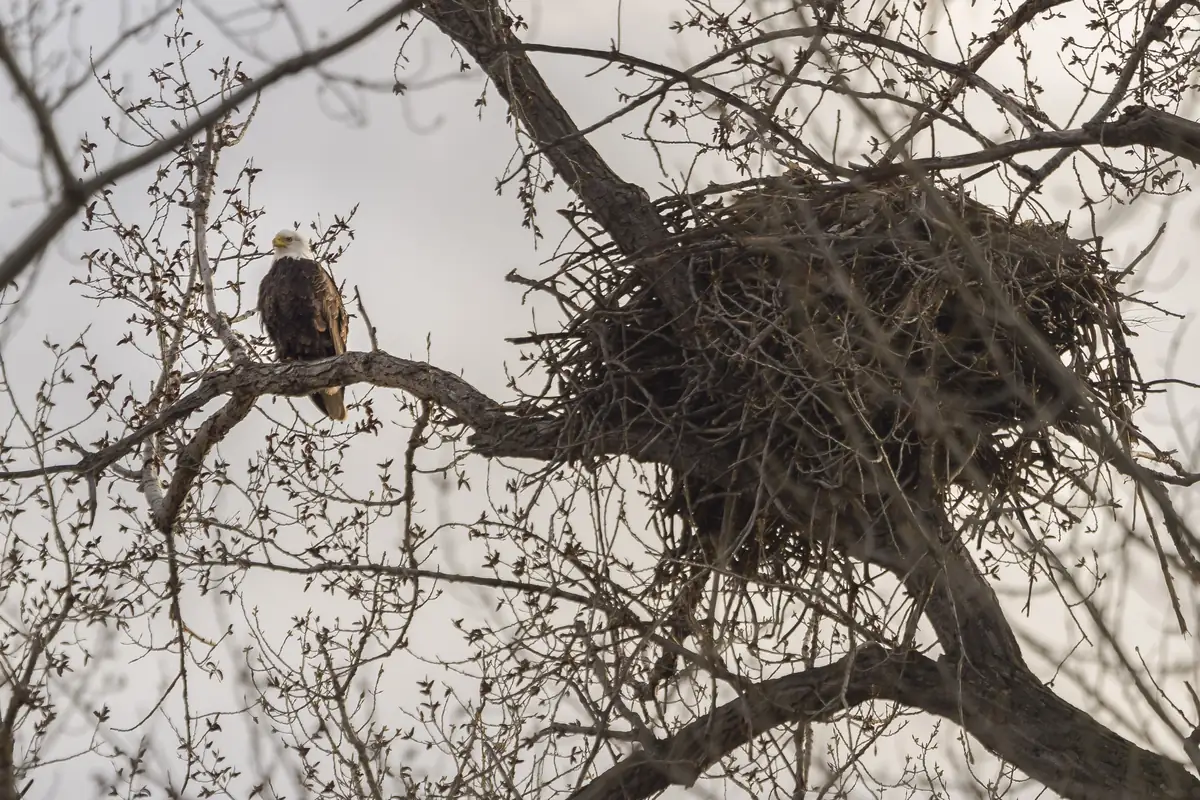
Eaglets in the nest
Hatching from about late January through February and into March · Nest trees near the big reservoirs and along the Arkansas River and other large rivers
Southern bald eagles lay their eggs in December and January, according to the Wildlife Department, and incubate for about 35 days. Do the arithmetic and many Oklahoma nests hold tiny gray chicks during February, with later pairs still incubating. The adults trade places on the nest often and bring in food. Watch from a vehicle or a long way off with a spotting scope: disturbing nesting eagles is illegal under federal law. Chased off the nest on a cold, windy day, a parent leaves small chicks to chill.
-
The Sutton Center eagle cam
Live all season · Online, on the Sutton Center’s website
The George Miksch Sutton Avian Research Center in Bartlesville, which began restoring Oklahoma’s nesting eagles in 1984, streams a live bald eagle nest camera on its website. In February 2025 the center reported three eggs in the nest. The same center recruits volunteers for its Bald Eagle Survey Team.
-
Winter visitors heading north
Numbers thin through February and March · Salt Plains, Kaw, Keystone, Fort Gibson, Tenkiller and other big lakes
As the month goes on, look for wintering eagles to scatter from their roosts. Other big birds leave on a similar clock: last winter’s family group of eight whooping cranes stayed at Salt Plains National Wildlife Refuge into early March before flying toward Canada, the U.S. Fish and Wildlife Service reported. If you count eagles on a late-February trip, compare your total with a January visit to the same dam.
Use our sunrise and sunset times to plan an early start; eagles hunt most actively in the first hours after dawn.
Why do Oklahoma prairies burn in late winter?
Late winter is fire season on the southern Great Plains. By February the grass is dead, dry and standing, humidity can crash on a warm afternoon, and the first strong southwest winds of spring arrive before any green-up. Some fires are set on purpose by ranchers, refuges and burn associations. Others are wildfires, and February has produced some of the biggest in recent memory.
-
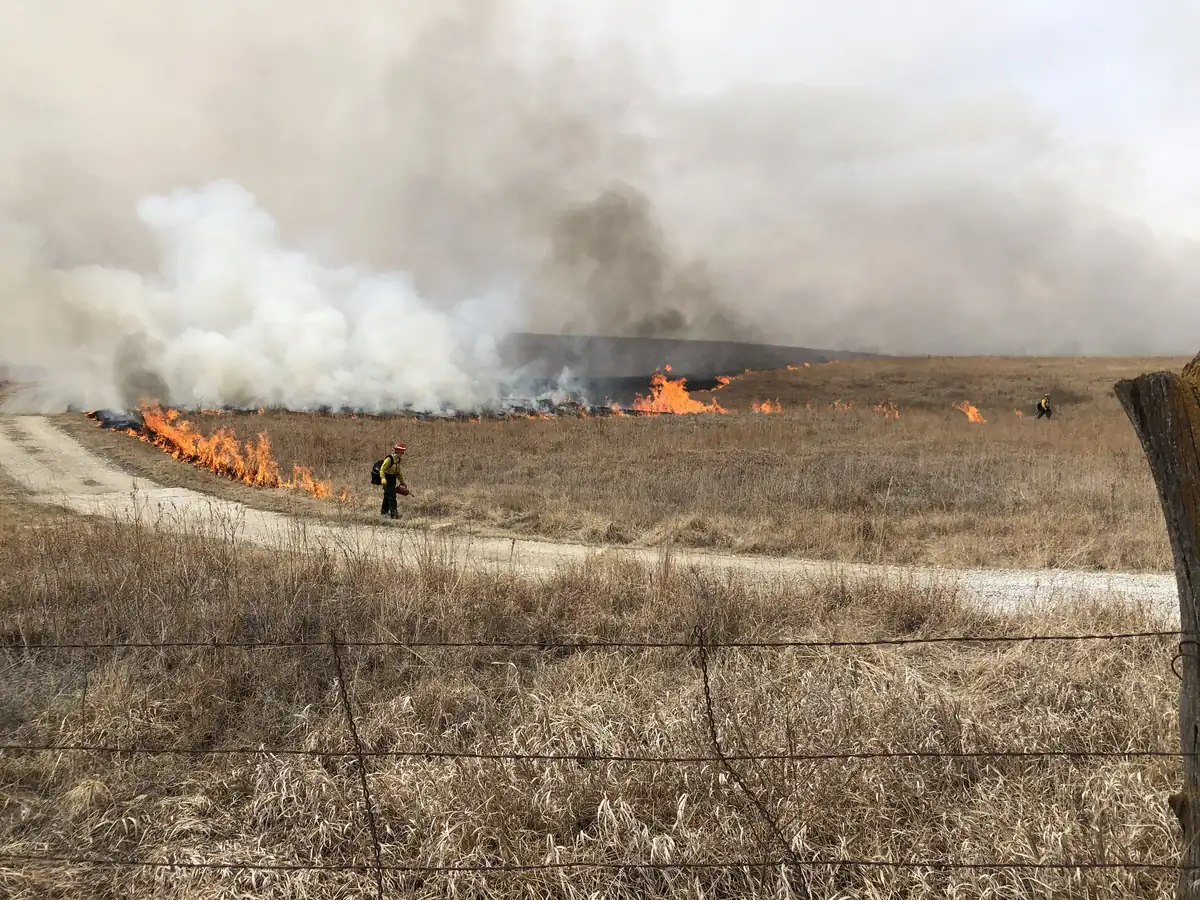
Prescribed burns
Dormant season, on days the weather allows · Ranches, wildlife refuges and preserves statewide; watch for smoke columns on calm afternoons
Fire kept the prairie open long before settlement: the Oklahoma Conservation Commission notes that Native Americans burned to bring up fresh grass for bison and other game, and lightning lit more. Planned burns now do the same job, and the commission calls burning the cheapest way to control eastern redcedar. Last February the staff at Salt Plains National Wildlife Refuge burned about 1,500 acres, and the refuge’s wintering whooping cranes went out of sight for a week, probably feeding in the blackened ground. After a burn, watch the black ground turn green within weeks of the first warm rain.
-
Why a small cedar dies and a big one survives
Any burn · Pastures and old fields invaded by redcedar
Eastern redcedar has thin bark and cannot resprout from its roots, so fire kills it while it is small. Fire summaries kept by the U.S. Forest Service cite an Oklahoma study in which a burn killed 82 percent of redcedars 2 to 5 feet tall but only 39 percent of those 8 to 16 feet tall. That is the case for burning early and often: the taller a cedar grows, the more likely it is to survive the next fire.
-
February wildfires
Most dangerous on warm, dry, windy days · Especially the western half of the state
The Oklahoma Mesonet’s monthly summaries show the pattern. In late February 2024, a fire that had already burned more than a million acres in the Texas Panhandle spread into Ellis and Roger Mills counties on winds gusting past 60 mph. February 2026 was the warmest February in Oklahoma since records began in 1895, and wildfires burned nearly 200,000 acres in Oklahoma that month; one of them, the Ranger Road fire, covered more than 280,000 acres on both sides of the Kansas line.
A burn ban can come into force within days when grass dries out. Check Oklahoma Forestry Services before you burn anything, and never park a hot vehicle in tall dry grass.
Why is February cedar fever season in Oklahoma?
If your eyes itch in February, blame a tree that is quietly flowering. Juniper pollen is Oklahoma’s winter allergy, known locally as cedar fever, and the trees that make it are spreading.
-
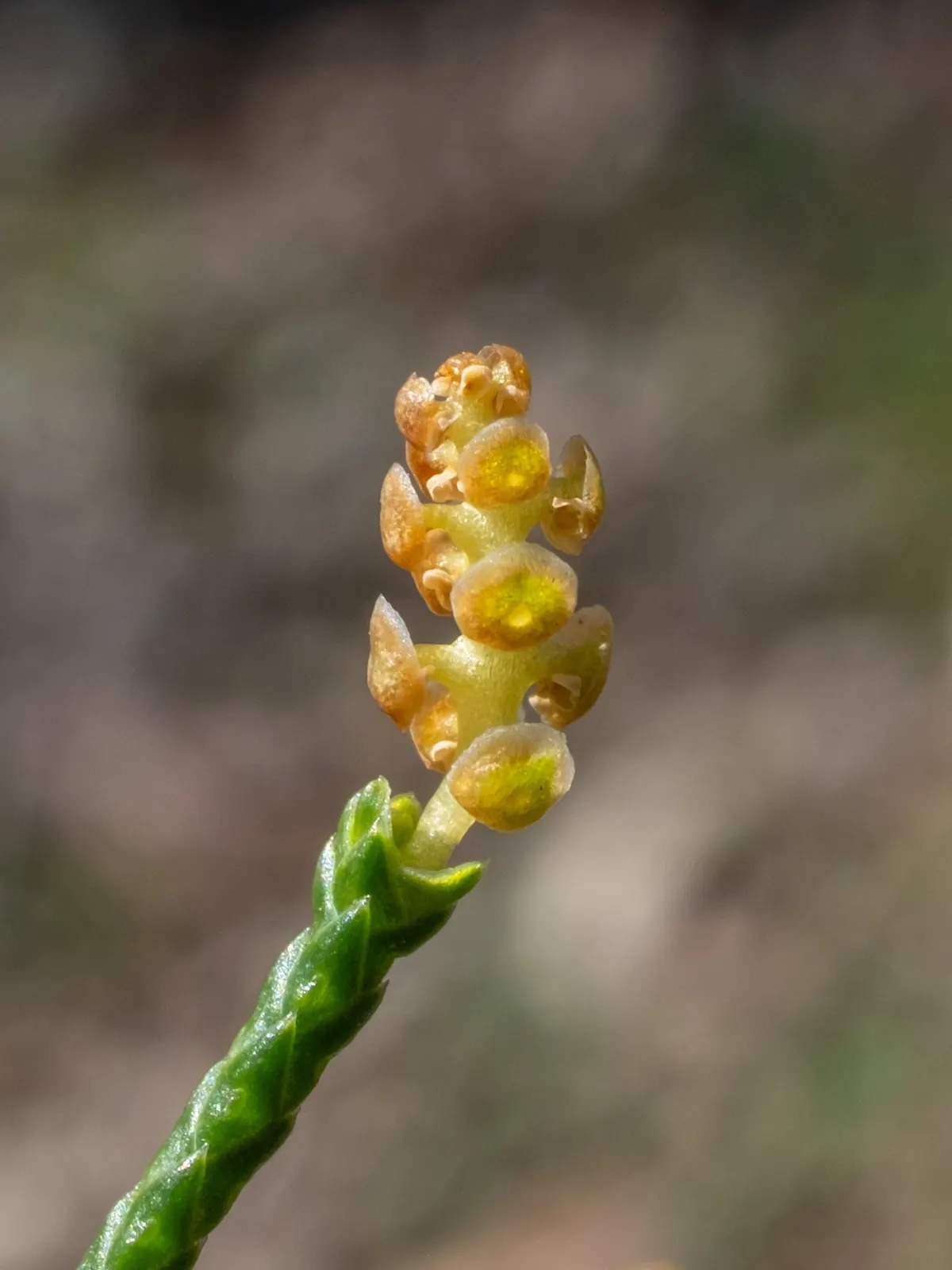
Rusty-gold pollen cones
Cedar fever often peaks January through February; Oklahoma’s own redcedars shed from about February into early spring · Male redcedars on pastures, roadsides and fencerows statewide
Allergists call the illness cedar fever, and News On 6, quoting the Oklahoma Allergy and Asthma Clinic, says cedar fever is a reaction to mountain cedar pollen that surges from late November to February and often peaks from January through February. Oklahoma’s own eastern redcedar joins in a little later: the U.S. Forest Service says it begins shedding pollen as early as February in the southern part of its range. The trees are either male or female. By late winter, male trees look tinged with rust from thousands of tiny pollen cones at their tips; shake a branch on a dry, breezy day and a yellow cloud drifts off.
-
Blue berries and the birds that plant them
All winter · Female redcedars, often with flocks of waxwings and robins
Female trees carry the waxy blue “berries,” which are really small cones. The Forest Service lists waxwings, bobwhite, wild turkeys, foxes, raccoons, opossums and coyotes among the animals that eat them, especially in winter, and notes that seeds can pass through a bird within half an hour. That is how a fence line becomes a cedar row: perching birds drop the seeds beneath them.
-
A spreading problem
Year-round · Statewide; mapped in detail across a dozen central and northwestern counties
In a fact sheet based on estimates from the Natural Resources Conservation Service in the early 2000s, the Oklahoma Conservation Commission reported that cedars were taking over about 762 acres a day, some 300,000 acres a year, and that cedar pollen counts had tripled between 1988 and 1996. Payne County went from fewer than 500 acres of cedar in a 1984 inventory to more than 50,000 by 2005. The commission adds that cedars push out grassland birds and drink water that grass and streams would otherwise get.
Draw a male and a female sprig side by side on a seeds, pods and cones page; the difference is plain once you have seen both.
When do frogs start calling in Oklahoma?
On the first mild, rainy night of February, step outside near a flooded field or roadside ditch and listen. Oklahoma’s earliest frogs breed in cold water, before predators in the ponds wake up, and they do it loudly.
-
Strecker’s chorus frog
Usually from late February into March · Most of Oklahoma; temporary ponds, flooded fields and ditches in sandy country
The Wildlife Department describes the call of this stout little frog as a single high whistle repeated quickly. It is a burrower and, unusually, digs forward with its strong front legs rather than backing in with its hind feet. Adults are only 1½ to 2 inches long.
-
Spring peeper
Usually from February into April · Only the extreme eastern counties, in wooded wetlands
In Oklahoma the peeper lives right along the Arkansas line. The Wildlife Department says breeding here usually begins in February and calls the peeper one of the first signs of thawing weather. Males call from shrubs and tall grass over shallow wooded ponds; the frogs are under 1½ inches long, so you will hear far more than you see.
-
Cajun chorus frog
Late winter into spring, for several months · Eastern Oklahoma; small ponds, ditches, swamps and marshes
Its trill is often likened to running a fingertip slowly along a comb’s teeth, repeated about 20 times a minute. The Wildlife Department notes that breeding begins in late winter or early spring depending on the weather and goes on for months.
-
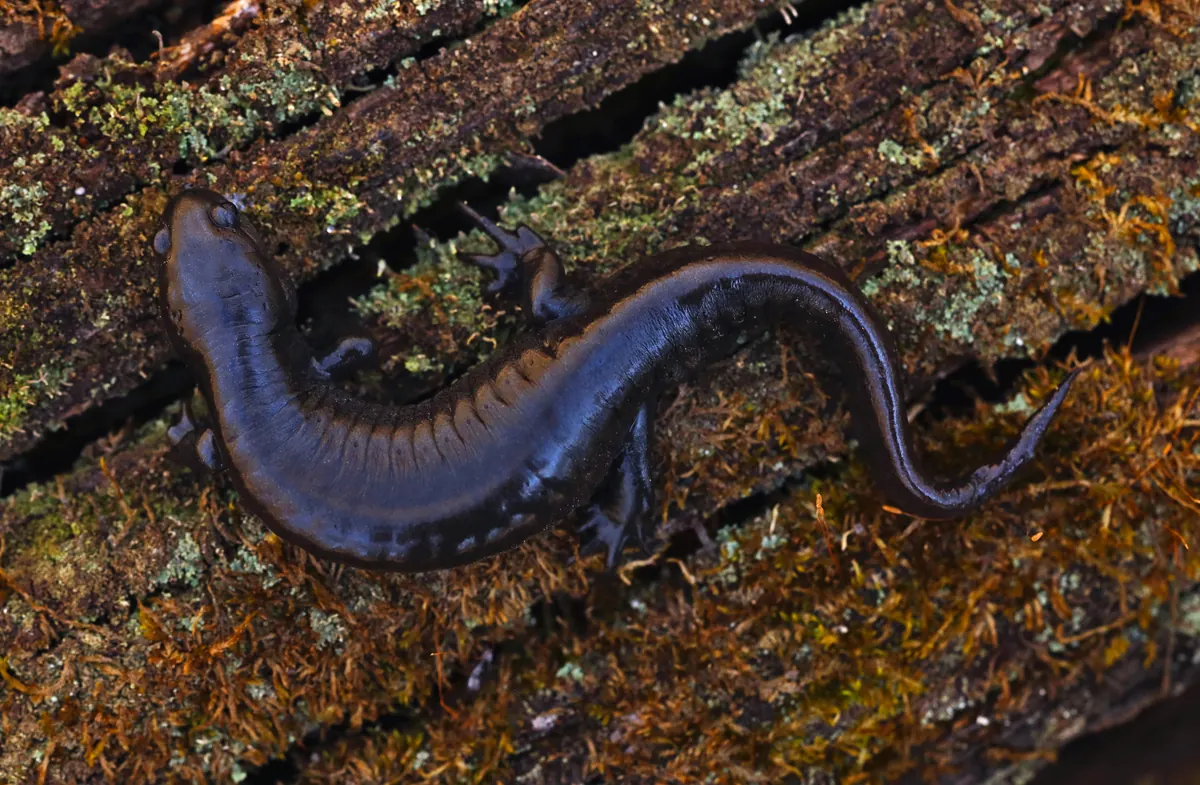
Small-mouthed salamander migration
Rainy nights, usually February or March · Woodlands and pastures near ponds
This dark mole salamander lives underground most of the year. During rainstorms in late winter it walks to breeding ponds, and the Wildlife Department says the migration usually lasts only a few days. A slow drive or walk on a wet back road after dark is the way to see one; move any you find across in the direction they were heading.
Add each frog to a map of sounds: the date, the air temperature and how many were calling.
Which birds return to Oklahoma first in February?
Spring migration starts in February here, weeks before most trees leaf out. Some arrivals are early birds in every sense, and some winter birds are already on their way out.
-
Purple martins
Adults from mid-February through May; young birds four to six weeks later · Martin houses and gourd racks statewide, often near water
The Wildlife Department says adult martins reach Oklahoma from mid-February, with last year’s young birds following later. Oklahoma City Audubon notes that the earliest records fall in February, that males tend to come about a week before females, and that a long cold snap soon after arrival can starve early martins, because they eat only flying insects. Landlords can report their first bird to the Purple Martin Conservation Association’s Scout-Arrival Study.
-
The woodcock’s sky dance
Dusk and dawn on calm evenings, February into spring · Brushy fields and thickets near wet woods in central and eastern Oklahoma; Lake Draper in Oklahoma City
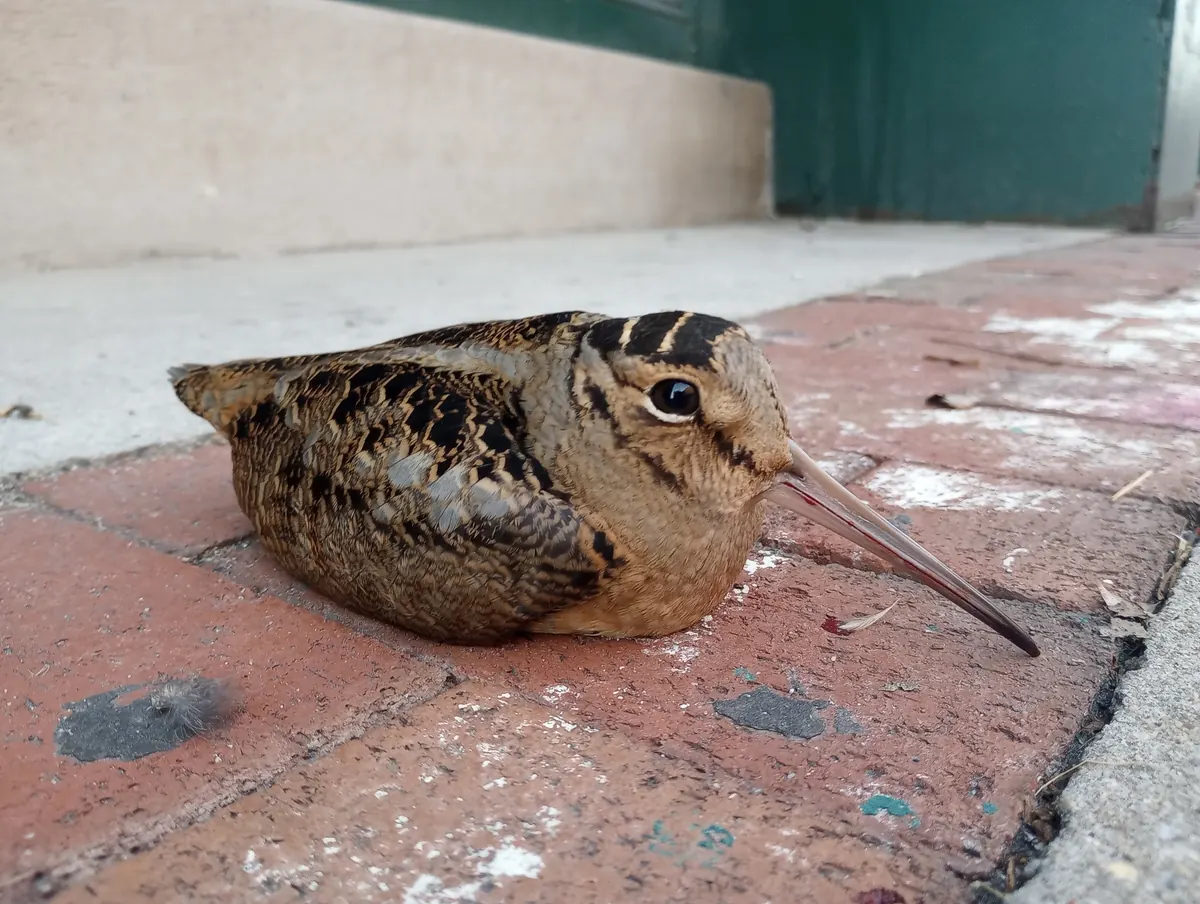
Though related to sandpipers, the American woodcock is a round, long-billed bird of damp thickets. Oklahoma City Audubon says courtship starts very early in the year, with birds heard in January at Lake Draper. At dusk a male gives a buzzy “peent” from the ground, then spirals 50 to 100 yards up and tumbles back down with a twittering wing sound and a liquid chirping song. Wait quietly beside a weedy clearing starting about 15 minutes after sundown.
-
Phoebes, blackbirds and killdeer
Building through late February · Culverts and bridges, cattail marshes, pastures and parking lots
Oklahoma City Audubon calls the eastern phoebe one of spring’s most welcome signs: a gray flycatcher that wags its tail and says its own name, nesting under bridges and eaves. Oklahoma City Audubon’s February field notes also include killdeer back at Liberty Lake and turkey vultures overhead. Not every bird is coming north; the light geese are leaving, and the Wildlife Department opens its Conservation Order light goose season on February 15, after the regular goose seasons close.
Note the first date you see each returning bird on your birds I have seen page; next year you can compare.
What is blooming in Oklahoma in February?
Most Oklahoma flowers wait for March, but a few native trees and shrubs bloom in the cold, and they are easy to miss because they rely on wind or early insects rather than showy petals.
-
Ozark witch-hazel
January into April, sometimes with snow on the ground · Gravel bars and rocky streambeds in the Ozark hills of northeastern Oklahoma
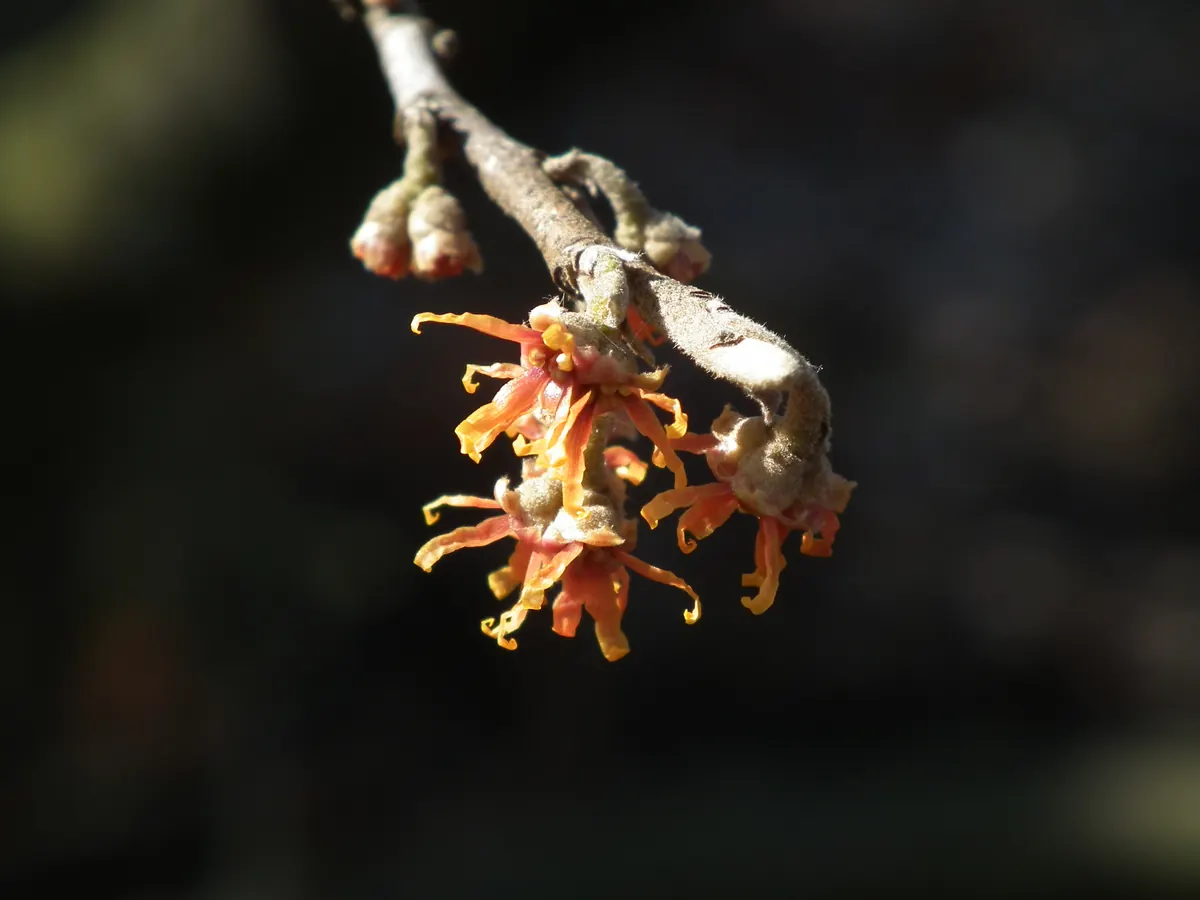
The Missouri Department of Conservation describes this shrub’s range as the Ozark Plateau of southern Missouri, northwestern Arkansas and northeastern Oklahoma, where it is typical of gravel bars along clear streams. Its fragrant flowers have four narrow, crinkled petals in orange to dark red, and they open in the middle of winter. Look along streams in the Ozark hills on a sunny afternoon, when the scent carries.
-
American and slippery elm
Slippery elm from January, American elm from February · Creek bottoms, stream banks and old fields statewide
The Lady Bird Johnson Wildflower Center gives slippery elm a bloom time beginning in January and American elm from February. Neither has petals; the flowers are small reddish tufts that cover the bare twigs and give the treetops a faint rusty haze from a distance. Flat, winged seeds follow within weeks.
-
Spring beauty
From late winter on mild days · Rich, moist woods and thickets in eastern Oklahoma
The first native wildflower many families find is this low plant with five white or pale pink petals striped in darker pink. The Wildflower Center lists a bloom season that can start as early as January and run into May.
Pick one tree near home and draw its twig every week on a tree through the seasons page, from tight bud to first flower.
Is February snowier than January in Oklahoma, and what could El Niño bring?
February warms quickly on paper: at Oklahoma City the normal high rises to 53.8 °F. Even so, several stations normally collect more February snow than January snow, and the month lurches wildly between near-summer afternoons and the state’s worst cold.
| Station | Average high | Average low | Precipitation | Snowfall |
|---|---|---|---|---|
| Boise City 2 E (western Panhandle) | 55.7 °F | 22.6 °F | 0.36 in | 2.5 in |
| Beaver (eastern Panhandle) | 51.9 °F | 21.7 °F | 0.58 in | 0.7 in |
| Great Salt Plains Dam (north central) | 51.8 °F | 27.1 °F | 1.20 in | 2.8 in |
| Enid (north central) | 51.4 °F | 28.1 °F | 1.28 in | 2.0 in |
| Oklahoma City Will Rogers Airport | 53.8 °F | 30.8 °F | 1.42 in | 1.8 in |
| Tulsa International Airport (northeast) | 54.0 °F | 31.7 °F | 1.62 in | 2.4 in |
| Wichita Mountains Wildlife Refuge (southwest) | 55.2 °F | 33.0 °F | 1.67 in | 0.2 in |
| Broken Bow 1 N (southeast) | 57.7 °F | 32.3 °F | 4.17 in | 0.8 in |
| Idabel (southeast) | 58.9 °F | 33.8 °F | 4.09 in | 0.9 in |
Tulsa’s normal February snowfall of 2.4 inches and Great Salt Plains Dam’s 2.8 inches both top their January normals, while the far southeast gets more than 4 inches of rain and only a dusting of snow. Two Februaries show the range. From January 31 to February 1, 2011, a blizzard dropped 14.0 inches on Tulsa, the city’s biggest single snowstorm on record, according to the National Weather Service office there. Ten years later, on February 16, 2021, Oklahoma City fell to −14 °F, its second-lowest reading on record; the Mesonet found that 96 of its 120 stations set all-time lows on February 15 or 16, and that the Lahoma site stayed below freezing for 334 hours. Yet on February 11, 2017, the Mangum Mesonet station hit 99 °F, tying Oklahoma’s highest winter temperature.
Sooners heading into this winter should know the Pacific is running hot: NOAA’s September 10 El Niño discussion put better than 90 percent odds on a very strong event lasting through winter 2026–27. A strong Pacific warm phase favors an active subtropical jet across the southern states, yet past Februaries show how differently it can play out here. In February 2010, with a moderate to strong El Niño working alongside a negative Arctic Oscillation, Tulsa never reached 60 °F for the first time since records began in 1905, the Tulsa weather office reported. In February 2024, after a strong El Niño had helped shrink drought coverage from 34 percent of the state to 3 percent, the month still finished as Oklahoma’s sixth-warmest February, the Mesonet said, and ended in fire. The Oklahoma Farm Report adds that extra storms bring snow or ice only when cold air masses line up with them. NOAA revises its winter outlook every month, around the third Thursday, and the latest version sits among the Climate Prediction Center’s seasonal outlooks. For this week’s details, check our Oklahoma forecast page, and use our Oklahoma frost date tables to see how close your town is to its last spring freeze.
How much daylight does Oklahoma gain in February?
February adds daylight faster than January did, and the gain keeps accelerating toward the March equinox.
| City | Feb 1 | Feb 28 | Gained | Per day |
|---|---|---|---|---|
| Guymon | 10 h 24 m | 11 h 21 m | 57 min | 2.1 min |
| Woodward | 10 h 25 m | 11 h 22 m | 57 min | 2.1 min |
| Enid | 10 h 25 m | 11 h 22 m | 57 min | 2.1 min |
| Tulsa | 10 h 26 m | 11 h 22 m | 56 min | 2.1 min |
| Oklahoma City | 10 h 28 m | 11 h 23 m | 55 min | 2.0 min |
| McAlester | 10 h 30 m | 11 h 24 m | 54 min | 2.0 min |
| Lawton | 10 h 31 m | 11 h 25 m | 54 min | 2.0 min |
| Idabel | 10 h 34 m | 11 h 26 m | 52 min | 1.9 min |
Oklahoma City’s day runs 10 hours 28 minutes on February 1 and 11 hours 23 minutes by the 28th, a gain of 55 minutes, or about two minutes every day. Towns in the northwest gain the most: Guymon and Woodward each pick up 57 minutes, while Idabel in the far southeast gains 52. Groundhog Day falls on Tuesday, February 2, while the Sun reaches the season’s halfway point on February 3 to 4. Oklahoma’s clocks move ahead on the second Sunday of March, the 14th, handing an extra hour of light to the evenings. Our daylight calculator gives exact sunrise and sunset times for any Oklahoma town.
What can you see in the Oklahoma night sky in February 2027?
Jupiter and Mars each have their yearly best within nine days of each other, both in Leo, and the full Snow Moon sails past them. Times below are Central Standard Time.
-
Mercury at dusk
Best around Tuesday, February 2, through about February 10; thin crescent moon nearby the evening of Sunday, February 7 · Low in the west-southwest 30 to 45 minutes after sunset
Mercury swings farthest from the Sun’s glare around midnight as February 2 turns to February 3, giving Oklahomans the planet’s finest evening appearance this winter. The day after the February 6 new moon, on Sunday evening the 7th, a razor-thin crescent pairs up with Mercury in the glow. Wheat-country horizons in western Oklahoma suit this low planet well; binoculars make the search easier.
-
No eclipse here on February 6
Saturday, February 6 · Visible only from the Southern Hemisphere and Africa
On February 6 the Moon makes a ring-shaped solar eclipse, but its path tracks over Chile, Argentina and the ocean beyond toward the coast of West Africa. Oklahomans see no part of it, not even a partial bite.
-
Jupiter at opposition
Wednesday, February 10, 6:21 p.m. · Rising in the east at sunset; up all night
Opposite the setting Sun in Oklahoma’s sky, the king of planets lifts out of the east at dusk, shining at magnitude −2.5, as bright as it gets in 2027. Steady your binoculars against a car roof, and Jupiter’s four big moons can show as a row of faint sparks beside the planet.
-
Mars at opposition
Friday, February 19, about 9 a.m.; closest to Earth on the 20th · Rising in the east at dusk, in Leo near the star Regulus
Mars stays about 63 million miles away at this opposition, one of the far ones, so a telescope shows only a small disk. To the eye it is an obvious orange-red point, brighter than any star near it.
-
The Snow Moon and a faint eclipse
Full Saturday, February 20, 5:23 p.m. · Rising in the east around sunset
When Oklahomans first see the Snow Moon on Saturday evening, it is already partway through Earth’s pale outer shadow. Greatest eclipse comes at 5:13 p.m., before moonrise in Oklahoma, and the penumbral phase ends at 7:13 p.m. Expect, at best, a subtle dusky tint along one limb of the low moon, which most watchers miss entirely, and the farther west you are in the state, the less of it is left once the moon clears the horizon. Supermoon status for this one is a split decision: the Old Farmer’s Almanac grants it, while EarthSky’s tighter list leaves it off. Late on Friday the 19th the fat gibbous Moon passes extremely close to Jupiter; a night later, Mars and bright Regulus sit nearby too, all within Leo.
-
Venus and Saturn
All month · Venus low in the southeast before dawn; Saturn low in the southwest after dusk
Venus blazes in the southeast before every dawn. Saturn hangs lower in the southwestern twilight every week, on its way to solar conjunction on April 7.
| Phase | Date | Time |
|---|---|---|
| New moon (annular solar eclipse, not visible from Oklahoma) | Saturday, Feb 6 | 9:56 a.m. CST |
| First quarter | Sunday, Feb 14 | 1:58 a.m. CST |
| Full moon, the Snow Moon (faint penumbral eclipse) | Saturday, Feb 20 | 5:23 p.m. CST (looks full the evenings of Feb 19, 20 and 21) |
| Last quarter | Saturday, Feb 27 | 11:16 p.m. CST |
| New moon | Monday, Mar 8 | 3:29 a.m. CST |
Moonless evenings for faint stars run from about February 2 to February 11; check the lunar schedule on our moon phase calendar before driving out to a dark site. Clear, dry air behind a February cold front often makes for the sharpest views, and our guide to clouds helps you read the sky before you set up.
What nature events and programs are on in Oklahoma in February 2027?
- Tuesday, February 2: Groundhog Day. Forget the groundhog and make your own forecast: list every sign of spring you can find in your yard or park, from swelling buds to a singing cardinal. Repeat the list on the 28th.
- February 3 to 4: halfway through winter. Count the days between the shortest day in December and the equinox in March, and this is the middle of them. Mark it with a sunset walk and note the time the Sun goes down.
- February 12 through Presidents’ Day Monday: backyard birding that counts. Now in its 30th year, the Great Backyard Bird Count needs just 15 minutes of watching, anywhere, with sightings reported through eBird or the Merlin app. Families can do it from a kitchen window.
- Wednesday evening, February 10: Jupiter at its best. The planet rises at sunset on the evening of opposition; look east after dark for the brightest point in the sky, then try binoculars for its moons.
- Saturdays through winter: eagle tours and loon watches. Sequoyah National Wildlife Refuge and Tenkiller State Park have run free Saturday eagle caravans at 9 a.m. and loon watches at 2 p.m. in past winters, into March. Call the refuge to confirm this season’s schedule.
- A rainy-night frog walk. On the first warm, wet evening, take flashlights to a flooded field or ditch on a quiet road and count the calls. Wear something reflective.
- Citizen science all month. Watch the Sutton Center eagle cam and ask about its Bald Eagle Survey Team, send the date of your first martin to the Purple Martin Conservation Association, keep counting for Project FeederWatch, and add early migrants to Journey North’s maps.
Print this month’s one-page checklist from our monthly nature guides, while our Naturalist’s Field Journal gives first-arrival dates and frog nights a permanent home. The eagle peak and the loons are covered on our January page for Oklahoma.
Safety notes for February in Oklahoma
- Hunting seasons. Several seasons run into February under the Wildlife Department’s 2026–27 dates. Quail closes February 15, white-fronted geese February 7, and dark and light geese February 14; the Conservation Order light goose season then runs February 15 to March 30. Squirrel season and the bobcat, fox, otter and other furbearer season run through February 28, rabbit to March 15 and crow to March 4, and coyote may be hunted year-round. With furbearer traps still allowed, keep dogs leashed along creeks, culverts and fencerows.
- Hunter orange. Oklahoma requires hunter orange only while deer, elk, antelope or bear firearm seasons are open: firearm hunters then need an orange head covering and an upper garment totaling at least 400 square inches. None of those seasons is open in February, but a bright hat or vest on public land during goose and quail hunts is still wise.
- Fire weather. Warm, dry, windy February afternoons are among the most dangerous of the year. Check Oklahoma Forestry Services and your county for burn bans, never toss a cigarette or drag a trailer chain, and if smoke is drifting your way, leave early.
- Whiplash weather. A 70-degree afternoon can be followed by sleet, ice or a blizzard within a day. Before a hike or a drive across the state, check the forecast, carry a coat even on mild days, and stay off the roads during freezing rain. Pond ice in Oklahoma is almost never safe.
- Cedar pollen and smoke. If you have allergies or asthma, watch pollen counts on windy days and carry your medicine on outings.
- Night walks. Frog and salamander nights put people on dark roads. Pick quiet back roads, wear reflective gear, and keep children well off the pavement.
Sources
- Oklahoma Department of Wildlife Conservation: bald eagle field guide
- George Miksch Sutton Avian Research Center (live bald eagle nest camera and Bald Eagle Survey Team)
- News On 6: three bald eagle eggs laid at the Sutton Avian Research Center (February 2025)
- U.S. Fish and Wildlife Service: Bald and Golden Eagle Protection Act
- U.S. Fish and Wildlife Service: whooping cranes winter in Oklahoma (Salt Plains, 2025–26)
- U.S. Fish and Wildlife Service: Salt Plains National Wildlife Refuge
- Oklahoma Conservation Commission: Eastern redcedar, a growing threat (fact sheet)
- Oklahoma Department of Wildlife Conservation: redcedar removal a big first step to improving habitat
- U.S. Forest Service, Fire Effects Information System: Juniperus virginiana
- Oklahoma Mesonet: wildfires erupt during warm February (March 1, 2024)
- Oklahoma Mesonet: record warmth fuels wildfires and drought in February (March 2, 2026)
- Oklahoma Forestry Services: fire information and burn bans
- Oklahoma Allergy and Asthma Clinic: cedar fever
- News On 6: what is cedar fever? (February 2026)
- Oklahoma Department of Wildlife Conservation: Strecker’s chorus frog
- Oklahoma Department of Wildlife Conservation: spring peeper
- Oklahoma Department of Wildlife Conservation: Cajun chorus frog
- Oklahoma Department of Wildlife Conservation: small-mouthed salamander
- Oklahoma Department of Wildlife Conservation: Oklahoma amphibians
- Oklahoma Department of Wildlife Conservation: purple martin
- Oklahoma City Audubon Society: purple martin
- Purple Martin Conservation Association: Scout-Arrival Study
- Oklahoma City Audubon Society: American woodcock
- Oklahoma City Audubon Society: eastern phoebe
- Missouri Department of Conservation: Ozark witch-hazel
- Lady Bird Johnson Wildflower Center: American elm
- Lady Bird Johnson Wildflower Center: slippery elm
- Lady Bird Johnson Wildflower Center: Virginia springbeauty
- NOAA NCEI: 1991–2020 February normals for the Oklahoma stations in the table
- NOAA NCEI: U.S. climate normals
- National Weather Service Tulsa: blizzard of January 31 to February 1, 2011
- Oklahoma Mesonet: historically frigid February punctuates winter (March 1, 2021)
- Oklahoma Mesonet: February brings early Oklahoma spring (March 1, 2017)
- National Weather Service Tulsa: climate summary, February 2010
- Climate Prediction Center: ENSO diagnostic discussion, September 10, 2026
- Climate Prediction Center: 90-day seasonal outlooks
- Oklahoma Farm Report: potentially historic El Niño offers drought relief (September 17, 2026)
- U.S. Naval Observatory: moon phases
- U.S. Naval Observatory: Earth’s seasons, 2027
- Fred Espenak: Sky Event Almanac 2027
- NASA: lunar eclipses 2021–2030
- NASA: solar eclipses 2021–2030
- Sea and Sky: astronomy calendar 2027
- Audubon: Great Backyard Bird Count (February 12–15, 2027)
- Great Backyard Bird Count
- TravelOK: Eagle Tour and Loon Watch, Sequoyah National Wildlife Refuge and Tenkiller State Park
- U.S. Fish and Wildlife Service: Sequoyah National Wildlife Refuge
- Project FeederWatch
- Journey North
- eBird
- Oklahoma Department of Wildlife Conservation: 2026–27 hunting seasons
- Oklahoma Department of Wildlife Conservation: big game regulations (hunter orange)
- Photos via Wikimedia Commons; licenses and photographers are credited under each picture
