What to look for in nature in Oregon this March
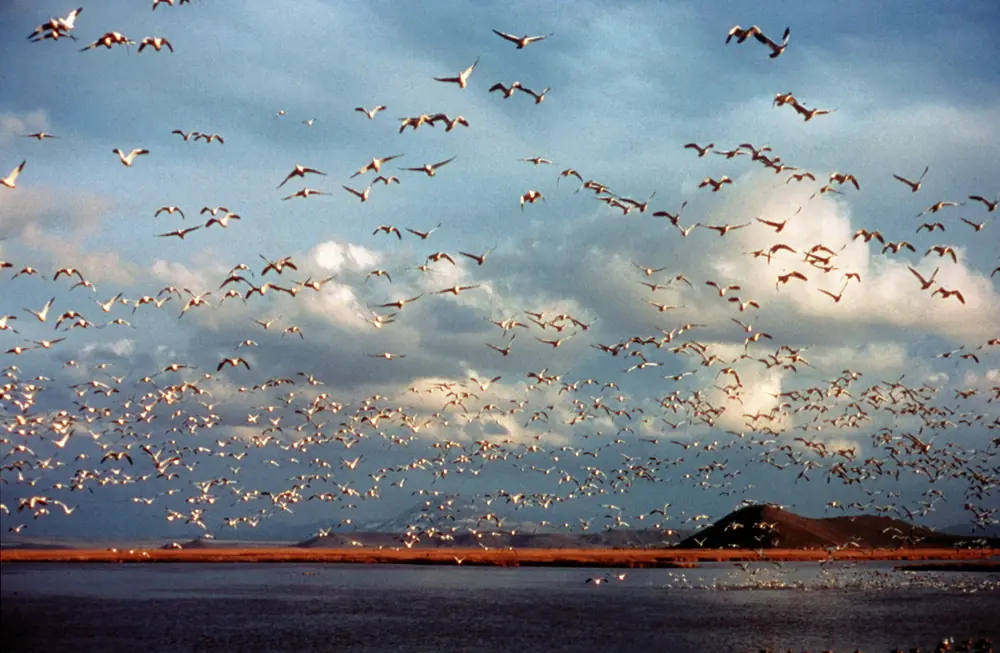
March is when Oregon starts moving. Northbound gray whales slip past the headlands, bound for Alaska, and the flooded meadows of the Harney and Klamath basins fill with some of the biggest waterfowl crowds in the West. West of the Cascades, newts cross trails and treefrog tadpoles hatch. On the beaches, nesting-season rules for the snowy plover begin on the 15th, and the first harbor seal pups arrive. The clocks jump ahead on the 14th, and the equinox follows on the 20th. Each story below comes with its place, its typical timing and its source.
Other months in Oregon: October, November, December, January, February, April.
Start here

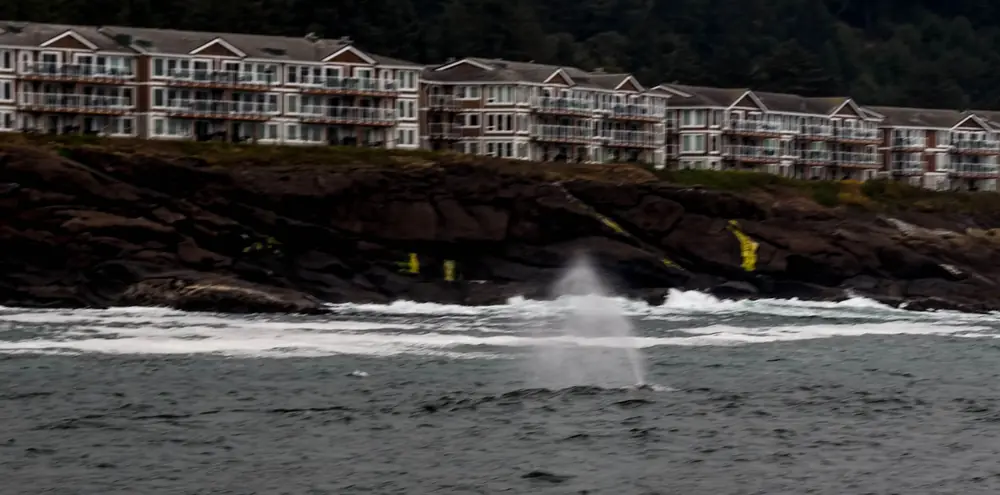
- Gray whales going north. Stand at a headland on a calm morning in the second half of March and watch for a slow, heart-shaped puff of mist. Northbound gray whales usually travel within a few miles of shore, and Oregon State Parks staffs 15 viewing sites during its annual spring whale week, which is usually in late March.
- The waterfowl peak. Waterfowl are most plentiful at Malheur in March, and the Klamath Basin refuges peak the same month, with more than a million birds some years. Pick a calm afternoon and scan the flooded meadows from the road, using the car as a blind.
- A newt on the move. On a mild, wet evening, watch the trail edge and the road shoulder near a pond or a coastal forest. Rough-skinned newts migrate between breeding ponds and forest, and ODFW says you may see them crossing roads in spring and fall.
Record it: keep the daily field log for a morning at a whale-watching headland (blows per quarter hour, wind, sea state). Malheur arrivals belong on the birds I have seen plate, one dated line each. A newt on the trail goes under reading the signs, a map of sounds can hold your first treefrog chorus after dark, and mammal watch suits a harbor seal seen from far off.
Regions used below: Portland and the Columbia River Gorge; Willamette Valley; Oregon Coast; Southern Oregon: the Rogue and Umpqua valleys; Central Oregon and the Cascades; Eastern Oregon: the Blue Mountains, the Wallowas and the high desert.
When can you watch gray whales heading north off Oregon?
The northward trip runs from mid-February to May along the West Coast, according to NOAA Fisheries, and covers about 10,000 miles round trip. Oregon State Parks says northbound whales start passing the state in late March, which is when it holds its spring whale week. Spring has an edge over December: a park ranger said the whales are often within a few miles of shore on the return trip.
-
Spring Whale Watch Week
Annual, usually in late March; check Oregon State Parks for 2027 dates · 15 sites from Fort Stevens to Harris Beach
In 2026 the week ran March 21 to 29, with trained volunteers and rangers at 15 sites from 10 a.m. to 1 p.m. daily. Oregon State Parks had not announced 2027 dates when this page was written, so watch its events calendar. The sites include Cape Meares, Boiler Bay, Yaquina Head, Cape Perpetua, Heceta Head, Shore Acres and Harris Beach.
-
The Whale Watching Center
Open daily; 10 a.m. to 4 p.m. during whale week · Depoe Bay seawall
The center on the Depoe Bay seawall has exhibits and staff who can help you find a blow. It makes a good first stop even outside whale week.
-
Calves later in spring
As March turns to April and May · Close to shore
The same ranger said that later in spring you can sometimes see mothers with calves in tow. NOAA says calves are born during the migration or in the Mexican lagoons from early January to mid-February, then travel north beside their mothers.
Numbers are down. The 2026 Oregon announcement said NOAA expects about 13,000 gray whales to pass the state from late winter through June, far fewer than earlier projections, and that new winter 2025 estimates showed the lowest numbers since the 1970s. About 200 whales stay in Oregon waters through summer, so the chances do not end in March. Scan with your eyes first, then binoculars, and count blows over a set quarter hour.
Where is the March waterfowl peak in eastern and southern Oregon?
In the high desert and the Klamath Basin. The U.S. Fish and Wildlife Service says waterfowl are most plentiful at Malheur National Wildlife Refuge in March, and that numbers at the Klamath refuges peak in March too, with more than a million birds some years. The Klamath Basin Birding Trails guide puts the spring crest of waterfowl in late March or early April, and says the wintering eagles linger in good numbers through mid-March.
-
The Klamath Basin refuges
March, cresting in late March or early April · Lower Klamath and Tule Lake refuges, near Klamath Falls
The refuge brochure says waterfowl numbers climb sharply in February, as the first northbound migrants arrive, and peak in March. Look for snow, Ross's and white-fronted geese, tundra swans and many ducks. Stay in the car: it works as a blind, and geese lift off in a roar if they feel watched on foot. The 2026-27 game bird regulations close goose hunting on every unit of the Klamath refuge complex from February 1 to March 10.
-
Malheur's flooded meadows
March, with songbirds peaking in mid to late May · State Highway 205 near Burns; refuge headquarters
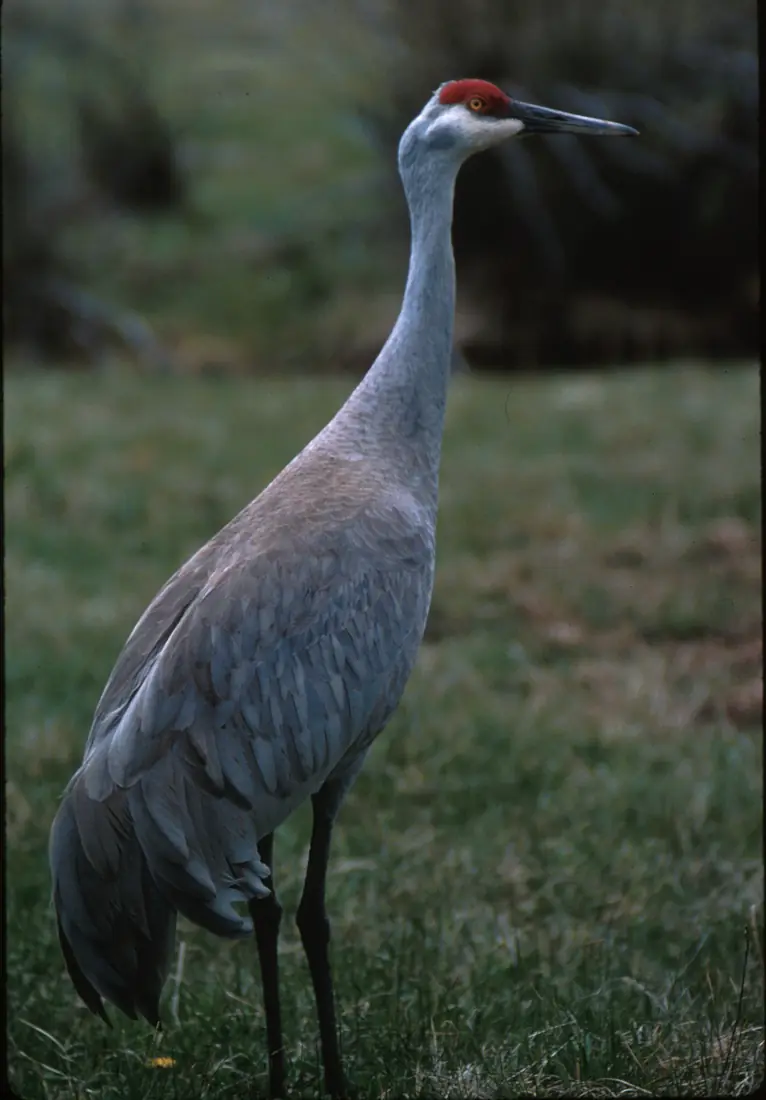
The refuge brochure points to the flooded meadows along State Highway 205 near Burns for snow, Ross's and white-fronted geese and sandhill cranes in March. Most shorebirds arrive in April. The species page stresses that timing matters: waterfowl and shorebirds come in late winter, songbirds later. Check road conditions with the refuge before driving on gravel.
-
The Harney County Migratory Bird Festival
Annual, in April; check the organizer for 2027 · Burns
The organizer's site shows the 2026 festival ran April 16 to 19 and has no 2027 dates yet. It falls just after this month, but Burns lodging fills fast, so ask the organizer.
| Species | Average arrival | Earliest on record | Latest on record |
|---|---|---|---|
| Tree swallow | Mar 2 | Feb 6, 1977 | Mar 11, 1990 |
| Ross's goose | Mar 9 | Feb 2, 1979 | Apr 14, 1969 |
| Pied-billed grebe | Mar 11 | Jan 19, 1984 | Apr 10, 1973 |
| Turkey vulture | Mar 15 | Feb 18, 1976 | Apr 5, 1962 |
| Greater yellowlegs | Mar 17 | Jan 22, 1963 | Apr 7 (1967 and 1973) |
| Western grebe | Mar 20 | Feb 22, 1979 | Apr 25, 1991 |
| American white pelican | Mar 24 | Feb 21, 1991 | Apr 16, 1968 |
| American avocet | Mar 26 | Mar 11, 1980 | Apr 14, 1967 |
| Long-billed curlew | Mar 26 | Mar 15, 1998 | Apr 5, 1982 |
| Burrowing owl | Mar 27 | Feb 18, 1990 | Apr 20, 1967 |
| Yellow-headed blackbird | Mar 27 | Mar 9 (1979 and 1981) | Apr 13, 1965 |
| Black-crowned night heron | Mar 28 | Mar 1, 1985 | Apr 24, 1980 |
The earliest dates for the grebes and the pelican fall in January and February, so any bird in the table can show up weeks early or late. Note the date, the weather and whether the ponds still had ice.
Can you watch greater sage-grouse dance at a lek in March?
Not by looking for one on your own. Oregon holds roughly 6 percent of the world's sage-grouse, according to ODFW, which calls the state a relative stronghold for a bird declining across the West. Males gather before dawn on traditional display grounds called leks. ODFW surveys them between March 15 and April 30, and it keeps their locations private.
-
Why the locations are secret
Lek counts run March 15 to April 30 · Sagebrush country in eight counties
ODFW lists sage-grouse in Union, Baker, Deschutes, Crook, Grant, Lake, Harney and Malheur counties, and says the location of nesting females draws males to the leks. Oregon Natural Desert Association adds that close approaches or loud noises can cause birds to abandon a lek, and that late snow or heavy rain in March and April can make access roads impassable.
-
Adopt-a-Lek
Counts run March 15 to April 30; ask ODFW well ahead · Volunteer program
The sanctioned way in is ODFW's Adopt-a-Lek program, which trains volunteers to monitor leks and report what they count. Oregon Natural Desert Association lists a contact address, adopt.a.lek@gmail.com.
-
If you come upon one
Early March to mid-May · Southeast Oregon
That association's viewing guide names the Owyhee Canyonlands and the McDermitt Caldera as places with many leks. Its rules: arrive before dawn, watch from afar, and stay until every grouse has left the lek for the day.
To see the sagebrush country these birds need without disturbing anyone, drive Highway 205 through Malheur's meadows. A volunteer slot with ODFW is the better view of the grouse themselves.
What changes on Oregon beaches in March?
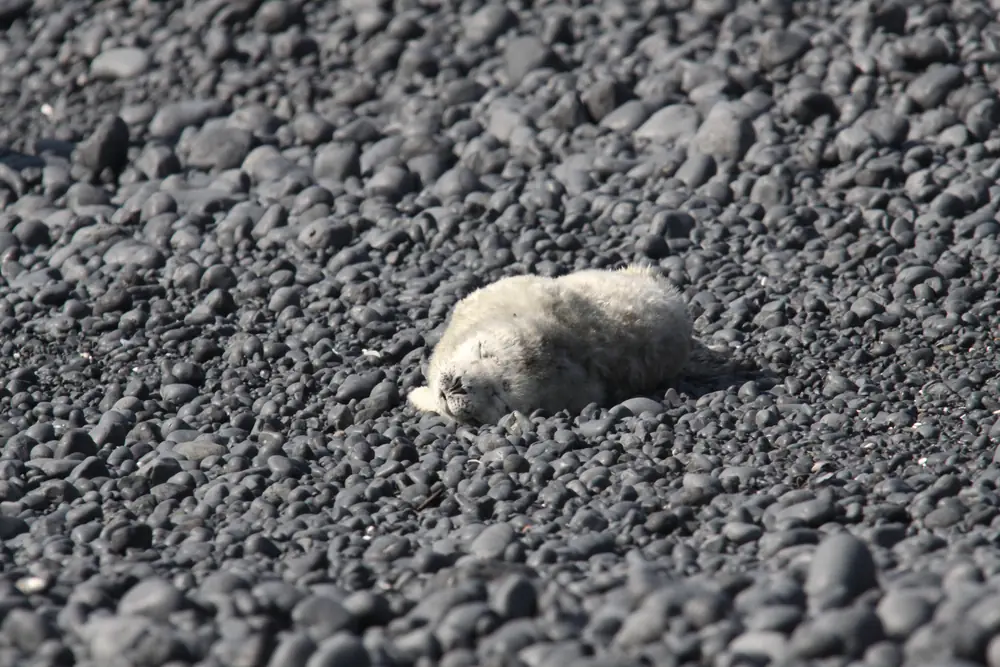
Two sets of rules and a batch of newborns. On the 15th, beaches managed for nesting western snowy plovers change their rules for people and dogs. Around the same time, the first harbor seal pups are born, and some will be left alone on the sand while their mothers feed.
-
Snowy plover nesting season
March 15 through September 15 · Designated plover beaches on the north and south coast
Oregon State Parks says the restrictions run from March 15 through September 15. On plover beaches in that period, no dogs (even on a leash), bikes, vehicles, kites or drones, and the rule applies to the entire dune area and the wet sand. Camping and beach fires are out, and vehicle access is restricted even for beach-driving permits. Walkers and riders stay on the wet, hard-packed sand. The plover is a sparrow-sized shorebird with a short dark bill, incomplete neck bands and dark legs, and many wear colored bands. The state says plover numbers are rebounding as visitors comply. Check its north and south coast maps first.
-
Harbor seal pups
Late March onward; sources differ on the peak · Sandy and cobble beaches and haul-outs
ODFW says harbor seal pups are born in late March through April. The Oregon Marine Mammal Stranding Network, run from Oregon State University, gives a longer season, March through June, with a peak in mid-May. Pups are often left on the beach while mothers search for food, and a pup on the sand is usually not stranded. Stay at least 50 yards away and leash dogs. The network's coordinator says a pup taken from its mother will certainly die, and touching or moving a marine mammal is illegal. For an injured animal, or any whale, dolphin or porpoise on the sand, call the NOAA West Coast Stranding Hotline at 1-866-767-6114.
-
A tide table for tide pools
March 19 to 26 holds the month's lowest predicted lows · Yaquina Bay entrance, near Newport
March 2027 is a modest month for tide pooling. NOAA's predictions for South Beach show the lowest tides of the month on the dates below, only about half a foot below mean lower low water, the usual zero for tide tables. All are daytime lows. Tide times differ along the coast, so check the predictions for your own beach.
| Day | Low tide (PDT) | Predicted height (ft) |
|---|---|---|
| Friday, March 19 | 5:08 p.m. | -0.4 |
| Saturday, March 20 | 5:52 p.m. | -0.4 |
| Tuesday, March 23 | 7:44 a.m. | -0.3 |
| Wednesday, March 24 | 8:26 a.m. | -0.5 |
| Thursday, March 25 | 9:08 a.m. | -0.5 |
| Friday, March 26 | 9:51 a.m. | -0.1 |
Look, do not touch, in a tide pool. Keep your eyes on the surf, stay off beach logs, and read the hazards list at the end of this page. Our moon phase page shows the lunar timing behind the tides.
What are Oregon's frogs, toads and newts doing in March?
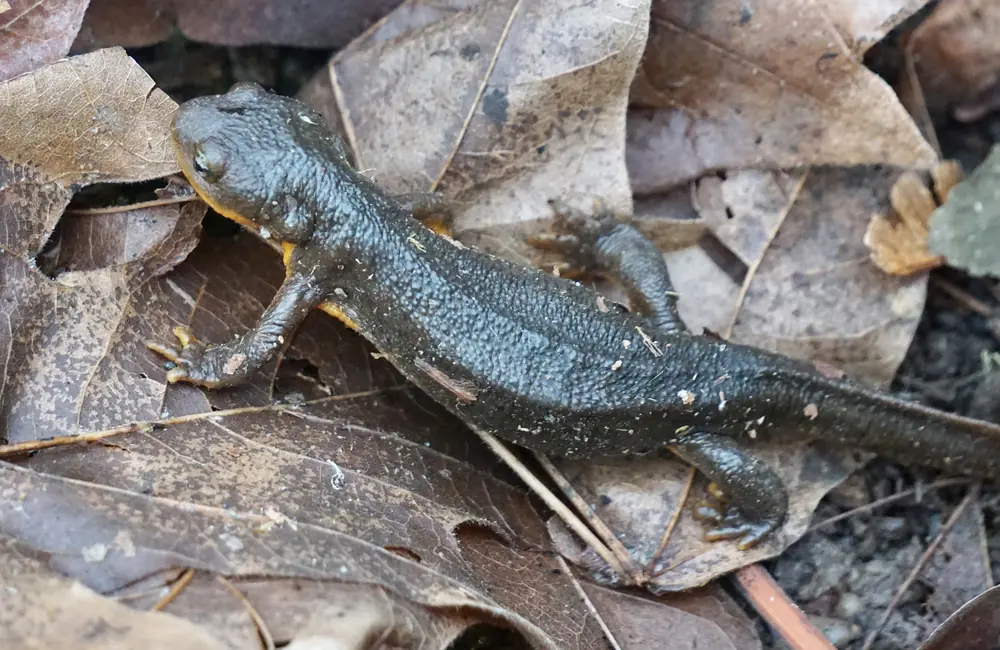
Moving between water and woods, mostly after dark. In March, the amphibians that bred in late winter have eggs and tadpoles in the water, and others are only now heading to ponds. Mild rain is the signal. Go on a wet evening with a flashlight and watch where you step.
-
Treefrog tadpoles
March, in warm shallows first · Ponds, ditches and seasonal pools in the lowlands
ODFW's fact sheet says treefrog breeding begins at different times by location, from February through July, and a female lays 400 to 750 eggs. Eggs hatch in three to five weeks, faster in warm water, and tadpoles become half-inch froglets in eight to ten weeks. A pond that chorused in February may now be full of tadpoles. The sheet adds that treefrog numbers swing widely from year to year.
-
Rough-skinned newts
Mild, damp nights in spring and fall · Forest trails, road shoulders and wetlands from the coast to the Cascade foothills
The rough-skinned newt is brown above with a bright orange belly, up to nearly eight inches long. ODFW says it travels far for its size between breeding and non-breeding habitat and may cross roads in spring and fall. Both skin and eggs hold a strong neurotoxin, so look but do not touch, and ODFW advises avoiding hand-to-mouth contact after handling one.
-
Western toads
Varies with elevation and snowmelt · Wetlands, lakes and slow streams statewide
The western toad is an Oregon Conservation Strategy Species in six of the state's nine ecoregions. The state's conservation profile says it breeds in sunny, sparsely vegetated shallows, and recommends culverts or drift fences where roads cut across its routes. Slow down for a toad on a spring road.
-
Red-legged frogs
Active year-round on the coast, according to ODFW · Damp forests and forested wetlands of the Coast Range, Willamette Valley and West Cascades
Oregon State University's profile calls the northern red-legged frog cryptic and often missed because it calls only underwater. Look under logs along a shaded stream by day instead.
The simplest courtesy is to stay out of breeding ponds and keep dogs out of them. Our February page for Oregon covers the first treefrog choruses and the red-legged frog egg masses.
Which birds are coming back to Oregon in March?
More than you might expect. Malheur's list of average arrivals puts the first tree swallows around March 2 and violet-green swallows near March 27, along with sage thrashers, sagebrush sparrows and vesper sparrows. In the Willamette Valley, Finley refuge says songbirds and shorebirds begin to stop over in spring while wintering waterfowl head north.
-
Rufous hummingbirds
Traveling north from February through May · Along the West Coast, then inland
Oregon State University Extension says rufous hummingbirds fly from Mexico between February and May, almost entirely along the West Coast, timed with the bloom of manzanita. To feed them, mix one part cane sugar with four parts water, boil one minute, cool it, and clean the feeder regularly. A hummingbird that looks dead may only be in torpor, so leave it alone. Journey North maps first sightings.
-
Swallows and sparrows at Malheur
Average dates March 2 to March 27 · Refuge headquarters and the Harney Basin
The refuge averages are tree swallow March 2, sagebrush sparrow March 21, sage thrasher March 23, vesper sparrow March 26 and violet-green swallow March 27. They come early and in small numbers, so look in the cool morning hours.
-
Finley refuge
Migration builds through spring · William L. Finley National Wildlife Refuge, south of Corvallis
The refuge's spring page says the wintering waterfowl start back north while neotropical songbirds and shorebirds stop to feed. Its prairies later show golden paintbrush, camas, rose checkermallow and Oregon grape along Finley Refuge Road.
NestWatch, the Cornell Lab of Ornithology's free project, invites anyone to monitor a nest and record eggs, nestlings and fledglings. Keep a dated arrival list year after year; the Naturalist's Field Journal has plates for it.
What is in bloom in Oregon in March, and when do the hard frosts end?
March is a scouting month for flowers. The earliest bloomers are out in the lowlands, but the big displays come in April and May, so use this month to find your places. The freeze table shows how far apart the state's climates are: the north coast has usually seen its last freeze by late March, the Willamette and Rogue valleys by the second week of April, and Redmond and Burns commonly wait until June.
-
Tom McCall Preserve opens
Open March 1 through October 31; most flowers in April and May · Rowena Crest, Columbia River Gorge
The Nature Conservancy keeps this grassland preserve closed in wetter months to prevent erosion, and its trails open March 1. Its page describes the display as running from March into June, most abundant in April and May, when the preserve can be extremely busy. No dogs (ground-nesting birds), no picnicking, stay on the trail. Park at the Rowena Crest viewpoint or the trailhead on Highway 30. March means quiet and fewer blooms.
-
The Wooden Shoe Tulip Festival
March 19 to April 25, 2027, as the farm shows it (tentative) · Woodburn, in the Willamette Valley
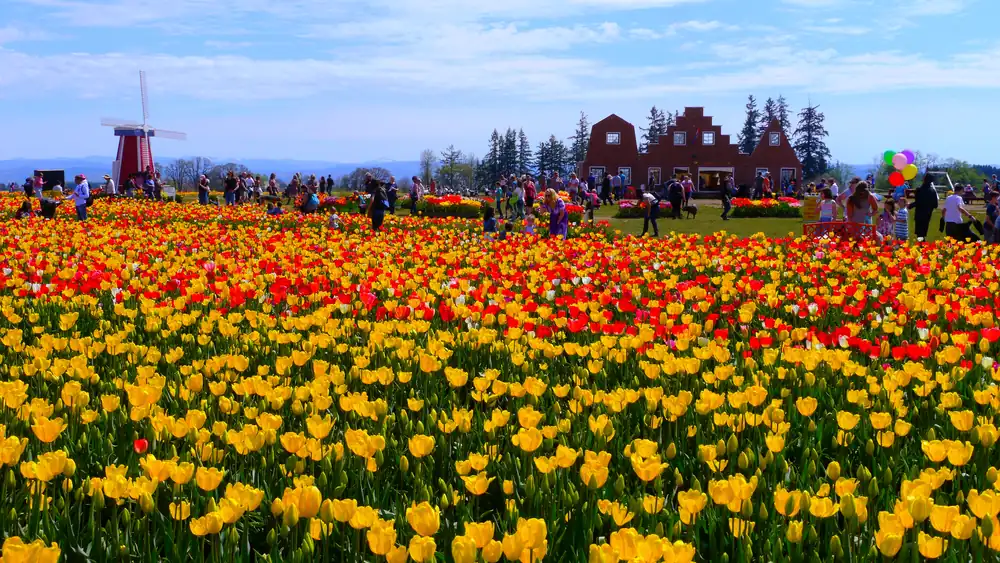
The farm's own page lists its 2027 festival as tentatively scheduled for March 19 to April 25. Treat the dates as provisional, since weather and bulbs rule, and watch the farm's newsletter or social media before you drive out. The tulips are cultivated, not wild, but they are a dependable first splash of color.
-
West-side forest scouting
Timing depends on elevation; log your own dates · Silver Falls State Park and other low forests
Oregon State Parks' wildflower leaflet for Silver Falls lists western trillium, skunk cabbage, red-flowering currant, salmonberry, osoberry, Oregon fawn lily, Oregon grape and wood violet among the park's common flowers. It gives no bloom dates, so use it as a checklist and note the day each plant first opens.
-
Camas in April
April to early May, per the Conservancy · Camassia Natural Area, West Linn
The preserve is open year-round, and common camas blooms April to early May, so March shows leaves and buds. Trails are muddy in spring, the boardwalk is slippery, and poison oak grows there.
| Station | One year in ten | Median | Nine years in ten |
|---|---|---|---|
| Astoria Regional Airport (north coast) | Feb 27 | Mar 26 | Apr 18 |
| North Bend Regional Airport (south coast) | Dec 31 | Feb 21 | Mar 25 |
| Portland International Airport | Feb 22 | Mar 13 | Apr 1 |
| Eugene Mahlon Sweet Airport (southern Willamette Valley) | Mar 15 | Apr 11 | May 9 |
| Medford Rogue Vly Airport (Rogue Valley) | Mar 17 | Apr 8 | Apr 30 |
| The Dalles (Columbia River Gorge) | Mar 27 | Apr 14 | May 1 |
| Redmond Roberts Field (Central Oregon) | May 17 | Jun 9 | Jun 26 |
| La Grande (Grande Ronde Valley) | Apr 21 | May 6 | May 26 |
| Burns Municipal Airport (high desert) | May 21 | Jun 11 | Jun 28 |
North Bend's December 31 entry reflects the warmest winters, when the last freeze came before the new year. For your own town, use the Oregon frost-date tables, and wait for the late date before planting tender things.
What is March weather like in Oregon, and what should you watch for?
Wet on the coast and in the mountains, drier east of the Cascades, and snowy at altitude. In NOAA's 1991 to 2020 normals, Astoria averages 7.9 inches of precipitation in March and Government Camp on Mount Hood 9.4, while Bend gets 0.7 and Burns 0.96. Crater Lake's park headquarters averages 71.9 inches of snow, the deepest of any station listed.
-
Cold nights east of the Cascades
All month · Bend, Burns and the Harney Basin
Average March lows are 27.6 degrees at Bend and 26.3 at Burns, so ponds can freeze overnight and thaw by afternoon.
-
Snow and avalanches
Through the month · The Cascades, Blue Mountains and Wallowas
The snowpack is still deep at altitude. The Northwest Avalanche Center posts avalanche forecasts; read the one for your zone before going near steep slopes.
-
Surf and sneaker waves
Any time, especially after storms · The whole coast
The National Weather Service says sneaker waves can run at least 150 feet up a dry beach, often after 10 to 20 minutes of small waves. Stay well back and off the logs.
-
The outlook
Updated monthly · NOAA Climate Prediction Center
NOAA's seasonal outlook maps are redrawn monthly. Open the latest outlook to see the March to May maps; our weather page has forecasts and radar.
| Station | Precipitation (in) | Snowfall (in) | Average high (°F) | Average low (°F) |
|---|---|---|---|---|
| Astoria Regional Airport (north coast) | 7.90 | 53.0 | 39.0 | |
| North Bend Regional Airport (south coast) | 7.49 | 0.0 | 55.1 | 41.9 |
| Portland International Airport | 3.97 | 0.1 | 56.8 | 39.7 |
| Eugene Mahlon Sweet Airport | 4.64 | 56.6 | 37.2 | |
| Medford Rogue Valley Airport | 1.81 | 0.2 | 59.4 | 37.2 |
| Government Camp (Mount Hood) | 9.41 | 35.6 | 41.0 | 28.1 |
| Crater Lake National Park headquarters | 7.81 | 71.9 | 36.1 | 20.3 |
| Bend | 0.70 | 1.5 | 51.7 | 27.6 |
| Pendleton | 1.33 | 0.7 | 55.0 | 33.7 |
| Burns Municipal Airport | 0.96 | 51.1 | 26.3 |
Pack for two seasons: rain gear for the west side and the coast, warm layers for pre-dawn starts in the east. The cloud guide helps you read the next front.
How much daylight does Oregon gain in March, and when do the clocks change?
March has the fastest gains of the year, near three minutes a day. In Portland the day grows from 11 hours 9 minutes on March 1 to 12 hours 45 minutes on March 31, 96 minutes longer, and every city in the table is past 12 hours by the end of the month. Daylight time begins at 2 a.m. Sunday, March 14, when clocks go ahead one hour, in Mountain-time Malheur County as well; a sunrise or sunset noted on March 13 lands an hour later by the clock on the 14th. The equinox arrives Saturday, March 20, at 1:25 p.m. PDT (2:25 p.m. MDT in Ontario).
| City | Mar 1 | Mar 31 | Gained | Per day |
|---|---|---|---|---|
| Astoria | 11 h 08 m | 12 h 46 m | 98 min | 3.3 min |
| Portland | 11 h 09 m | 12 h 45 m | 96 min | 3.2 min |
| Pendleton | 11 h 08 m | 12 h 45 m | 97 min | 3.2 min |
| Newport | 11 h 10 m | 12 h 43 m | 93 min | 3.1 min |
| Bend | 11 h 12 m | 12 h 43 m | 91 min | 3.0 min |
| Ontario | 11 h 11 m | 12 h 43 m | 92 min | 3.1 min |
| Medford | 11 h 14 m | 12 h 40 m | 86 min | 2.9 min |
| Brookings | 11 h 15 m | 12 h 40 m | 85 min | 2.8 min |
Astoria gains the most over the month and Brookings the least, by 13 minutes. After the 14th, a dawn chorus or whale-watching morning falls an hour later on the clock, so plan accordingly. Our day-length tool gives sunrise and sunset for any Oregon address.
What can you see in the Oregon night sky in March 2027?
Two planets glow in the evening, Mercury makes a tricky morning appearance, and Venus is a bright morning star. Clock times are Pacific, with Mountain time in Ontario one hour later, and all after March 14 are daylight time.
-
Mercury before dawn
Widest on the evening of Tuesday, March 16 (Pacific); best about March 8 to 25 · Low in the east-southeast before sunrise
Mercury swings out to its widest morning angle, about 28 degrees from the sun, at 9:20 p.m. PDT on March 16, which is March 17 in universal time. Early in the month it appears roughly sixty minutes before sunrise. Spring mornings give northern viewers a shallow angle, so you need a clear east-southeast horizon. Venus is well above it.
-
Venus and the end of Saturn
Venus all month; Saturn in the first weeks · Venus in the east before dawn; Saturn low in the west after dusk
Venus is a brilliant morning star, rising roughly two hours before the sun at the start of March and about an hour and a quarter before it by April 1. Saturn, low in the west at dusk, lingers about two and a half hours after sunset at the start of March, ninety minutes by the 15th and is gone in twilight by early April. These timings come from a central-U.S. calculation, so Oregon's will differ somewhat.
-
Jupiter and Mars
The Moon passes Jupiter on the evenings of March 18 and 19; by our own figures Mars and Jupiter are about 4.3 degrees apart on the evening of Tuesday, March 30 · East to south after dark, in the constellation Leo
Both planets are up in the evening and set near dawn in early March. On the 18th and 19th the Moon, about 88 percent lit, passes within a degree of Jupiter, closest at 2:26 a.m. PDT on the 19th. At month's end our calculation puts Mars and Jupiter about 4.3 degrees apart. Mars is fading from February's opposition but still outshines most stars.
-
The Worm Moon
Full at 3:44 a.m. PDT, Monday, March 22; Sunday evening, March 21, is the best look · Rising in the east around sunset
The March full moon is often called the Worm Moon, one of several traditional names. It turns full early Monday, so Sunday evening shows it rising at its roundest. Our moon phase page keeps the calendar.
| Phase | Date | Time |
|---|---|---|
| New moon | Monday, Mar 8 | 1:29 a.m. PST (2:29 a.m. MST) |
| First quarter | Monday, Mar 15 | 9:25 a.m. PDT (10:25 a.m. MDT) |
| Full moon, the Worm Moon | Monday, Mar 22 | 3:44 a.m. PDT (4:44 a.m. MDT) |
| Last quarter | Monday, Mar 29 | 5:54 p.m. PDT (6:54 p.m. MDT) |
Planets shine steadily where stars twinkle. A sky app can confirm which is which, and binoculars braced on a fence may show a few of Jupiter's moons.
What can families do outside in Oregon in March?
- Join a whale watch. Oregon State Parks hosts its spring whale week in late March, with volunteers at 15 headlands. Bring binoculars and count blows over a quarter hour.
- See the tulips. The Wooden Shoe Tulip Festival lists March 19 to April 25, 2027, tentatively. Confirm with the farm before driving to Woodburn.
- Go newt-spotting. On a wet, mild evening, take a flashlight to a trail near a pond. Look, never touch, and wash hands afterward.
- Watch seals from afar. Stay 50 yards from any pup, leash the dog, and report an animal in trouble to 1-866-767-6114.
- Snowshoe at Crater Lake. Ranger-led walks leave at 12:30 p.m. on weekends and holidays, plus weekdays during school breaks, through April when snow allows. They are free apart from the $20 per-car winter entrance fee, snowshoes are loaned, walkers must be 8 or older, and you must reserve at 541-594-3100. Severe weather or too little snow can cancel a walk.
- Start a nest watch. NestWatch is free, and a yard nest box makes a fine classroom.
- Keep an arrival list. Log the first swallow, rufous hummingbird or turkey vulture you see, and compare with Malheur's averages.
Call ahead, since storms close roads and refuges. The nature index has all fifty states, the Naturalist's Field Journal holds plates for your notes, and our Oregon page for February shows what the eagles and frogs were doing a month earlier.
What should I watch out for outdoors in Oregon in March?
- Hunting seasons. In the 2026-27 regulations, pheasant, quail, chukar, Hungarian partridge and forest grouse run through March 31, 2027. Goose seasons are nearly over: South Coast Zone Canada, white-fronted and white geese, February 20 to March 10; white-fronted and white geese in the zone covering the high desert and Blue Mountains, January 16 to March 10. The Klamath refuges, the Miller Island Unit of Klamath Wildlife Area, Summer Lake and Ladd Marsh are closed to goose hunting February 1 to March 10. Spring turkey comes next month, April 15 to May 31, with a youth hunt April 10 and 11. Check ODFW for changes.
- Trapping. ODFW's furbearer page lists raccoon, river otter and beaver through March 15, and muskrat and mink through March 31. Coyotes are open all year. Leash dogs near streams and marshes.
- Hunter orange. Only youths must wear orange: anyone under 18 carrying a firearm for a game mammal or an upland bird (not turkey). Adults face no requirement, though bright clothing helps on a wildlife area.
- Sheds and closed winter range. ODFW says deer shed through March and elk from late February to early April, and urges waiting until May or June. The 2026-27 regulations show White River Wildlife Area north of Forest Road 27 closed through March 31, and Ladd Marsh west of Foothill Road closed to entry February 1 to March 31 without a permit. Wenaha and Minam River open April 1, Elkhorn April 11, and Bridge Creek and Phillip W. Schneider April 15. Parts of Sauvie Island need a daily hunt permit for entry through April 30. Dates can change, so check the current rules.
- Beaches. Sneaker waves can reach at least 150 feet up a dry beach and roll logs. Stay off logs and keep watching the surf. From March 15, plover beaches ban dogs, bikes, vehicles, kites and drones.
- Young animals. Do not touch a seal pup. ODFW says deer and elk give birth May through July, but fledglings and other young animals can appear earlier and are best left alone.
- Ticks. The Oregon Health Authority says the western black-legged tick, which can transmit Lyme disease, lives mostly west of the Cascades, including Hood River County. Its nymphs, under 2 millimeters, feed in spring and summer. Check your skin after brushy walks.
- Gorge hazards. The Nature Conservancy warns of rattlesnakes, ticks, poison oak, steep drop-offs and slippery trail at Tom McCall Preserve.
- Avalanches. Snow is still deep in the mountains. Read an avalanche forecast before entering steep terrain.
- Clocks. You lose an hour on March 14, so set an alarm for any pre-dawn outing that morning.
Check conditions the day before and again that morning. Our Oregon frost-date tables and weather page help with planning.
Sources (51)
- Oregon Parks and Recreation Department: Spring Whale Watch Week returns March 21 through 29 (2026 announcement)
- Oregon State Parks: whale watching
- NOAA Fisheries: gray whale species page
- U.S. Fish and Wildlife Service: Malheur NWR average spring migratory bird arrival dates
- U.S. Fish and Wildlife Service: Malheur NWR seasons of wildlife
- U.S. Fish and Wildlife Service: Malheur NWR general brochure
- U.S. Fish and Wildlife Service: Klamath Basin refuges general brochure (2017)
- Klamath Basin Birding Trails: frequently asked questions
- Harney County Migratory Bird Festival (organizer site)
- Oregon Natural Desert Association: watch the desert's dawn dancers (sage-grouse viewing guide)
- ODFW: sage-grouse biology
- ODFW: Oregon sage-grouse population information and lek monitoring
- Oregon State Parks: western snowy plover beach restrictions
- Oregon State University: public urged to refrain from approaching seal pups on Oregon beaches
- Oregon Marine Mammal Stranding Network: what to do if you find a marine mammal ashore
- ODFW: give wildlife a chance, leave young wild animals where you found them (2024 news release)
- NOAA CO-OPS: tide predictions for South Beach, Yaquina Bay entrance (station 9435380), March 2027
- ODFW: salamanders in Oregon (rough-skinned newt)
- ODFW: frogs and toads in Oregon
- ODFW: Living with Wildlife, Pacific treefrog
- Oregon Conservation Strategy: western toad
- Oregon Conservation Strategy: northern red-legged frog
- Oregon State University Fisheries, Wildlife, and Conservation Sciences: northern red-legged frog
- Oregon State University Extension: rufous hummingbird (EC 1570)
- U.S. Fish and Wildlife Service: William L. Finley NWR seasons of wildlife
- Cornell Lab of Ornithology: NestWatch
- Journey North: hummingbirds
- The Nature Conservancy: Tom McCall Preserve at Rowena
- The Nature Conservancy: Camassia Natural Area
- Wooden Shoe Tulip Farm: tulip festival
- Oregon State Parks: wildflowers of Silver Falls
- National Park Service: ranger-guided snowshoe walks at Crater Lake
- ODFW: 2026-27 Oregon game bird hunting regulations
- ODFW: furbearer trapping and hunting
- ODFW: responsible shed hunting
- NOAA NCEI 1991-2020 monthly normals: Astoria Regional Airport
- NOAA NCEI 1991-2020 monthly normals: North Bend Regional Airport
- NOAA NCEI 1991-2020 monthly normals: Portland International Airport
- NOAA NCEI 1991-2020 monthly normals: Eugene Mahlon Sweet Airport
- NOAA NCEI 1991-2020 monthly normals: Medford Rogue Valley Airport
- NOAA NCEI 1991-2020 monthly normals: Government Camp
- NOAA NCEI 1991-2020 monthly normals: Crater Lake National Park headquarters
- NOAA NCEI 1991-2020 monthly normals: Bend
- NOAA NCEI 1991-2020 monthly normals: Pendleton
- NOAA NCEI 1991-2020 monthly normals: Burns Municipal Airport
- National Weather Service: sneaker waves
- Oregon State Parks: be safe exploring the beach
- Oregon Health Authority: ticks
- Northwest Avalanche Center
- NOAA Climate Prediction Center: seasonal outlooks
- Photos via Wikimedia Commons; licenses and photographers are credited under each picture
