What to look for in nature in Oregon this February
February is the hinge of Oregon's winter. Snow still piles up on Crater Lake and the Wallowas, but in the lowlands west of the Cascades the treefrogs start calling from flooded ditches and the first Indian plum flowers open along creek banks. In the Klamath Basin, wintering bald eagles reach their highest numbers of the year, and at Malheur the first tundra swans, pintails and sandhill cranes come back to a frozen high desert. Overhead, Jupiter and then Mars reach opposition, just over a week apart. Each story below has its place, its timing and its source.
Other months in Oregon: October, November, December, January.
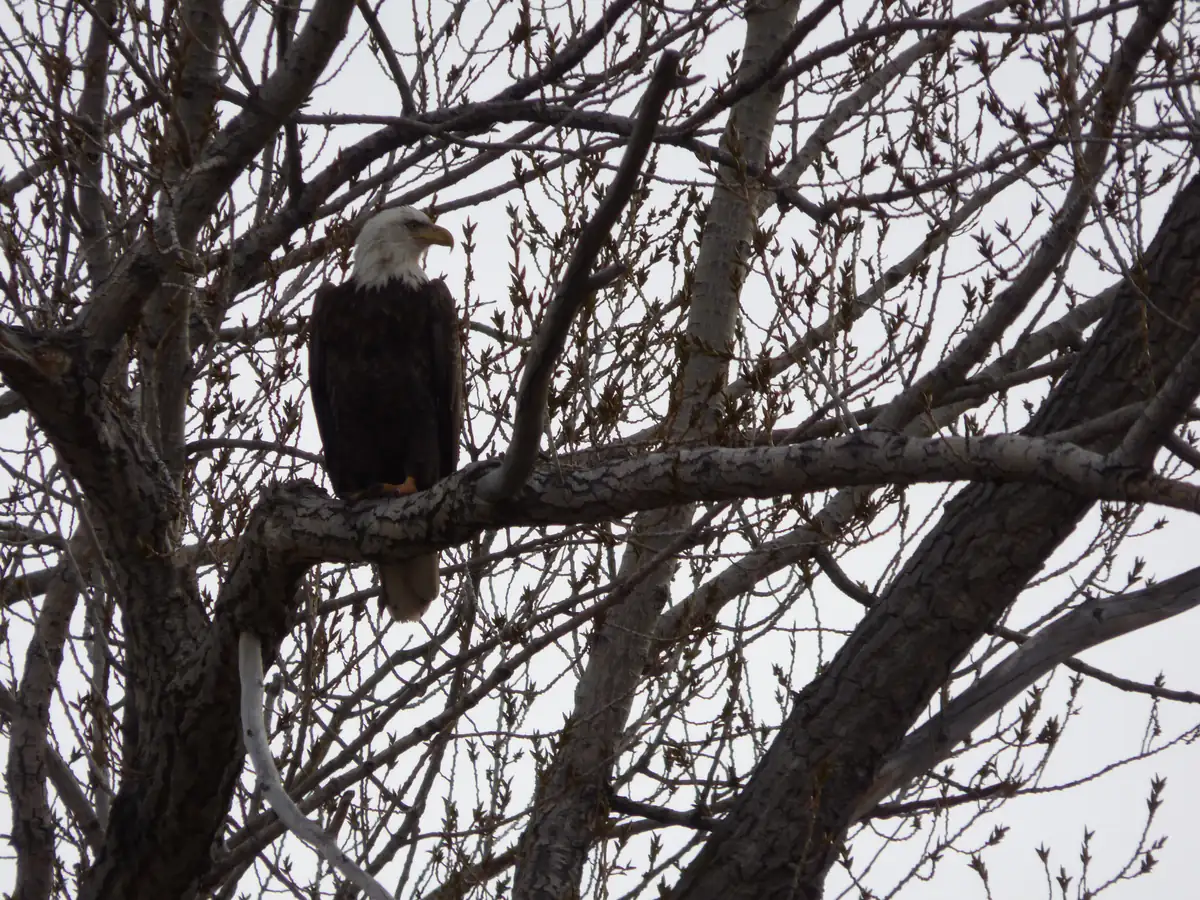
Start here
- The eagle fly-out at Klamath. The Klamath Basin's wintering bald eagles usually peak in mid-February. Park along the Lower Klamath refuge or Township Road before sunrise and watch them stream out of their Bear Valley night roost toward the marshes and flooded fields.
- A frog chorus after dark. On a mild, wet evening west of the Cascades, walk to a pond, a wet meadow or a roadside ditch and listen. Male Pacific treefrogs give a two-part kreck-ek, and once one starts, the rest join in.
- Count birds for four days. From February 12 through 15, 2027, the Great Backyard Bird Count asks people everywhere to spend a quarter hour or longer noting every bird, then report the list through eBird or Merlin.
Record it: the dusk and dawn watch plate in the Naturalist's Field Journal is made for the Bear Valley fly-out (time of first eagle, count per minute, sky color). Put the first treefrog chorus of the year on a map of sounds, give each Malheur arrival its own dated line on birds I have seen. An osoberry branch in bloom suits a tree through the seasons; come back in June for the fruit. A frog egg mass in a ditch belongs on reading the signs.
Regions used below: Portland and the Columbia River Gorge; Willamette Valley; Oregon Coast; Southern Oregon: the Rogue and Umpqua valleys; Central Oregon and the Cascades; Eastern Oregon: the Blue Mountains, the Wallowas and the high desert.
When do bald eagle numbers peak in the Klamath Basin?
Usually in the middle of February. The Klamath Basin Birding Trails, the regional guide to the basin's refuges and wildlife areas, says eagles are present in large numbers from early December to mid-March and that the count generally tops out in mid-February. They follow the waterfowl, hunting the weak and scavenging birds that die on the ice in a cold snap. In January the numbers were still climbing; this month is the high point.
-
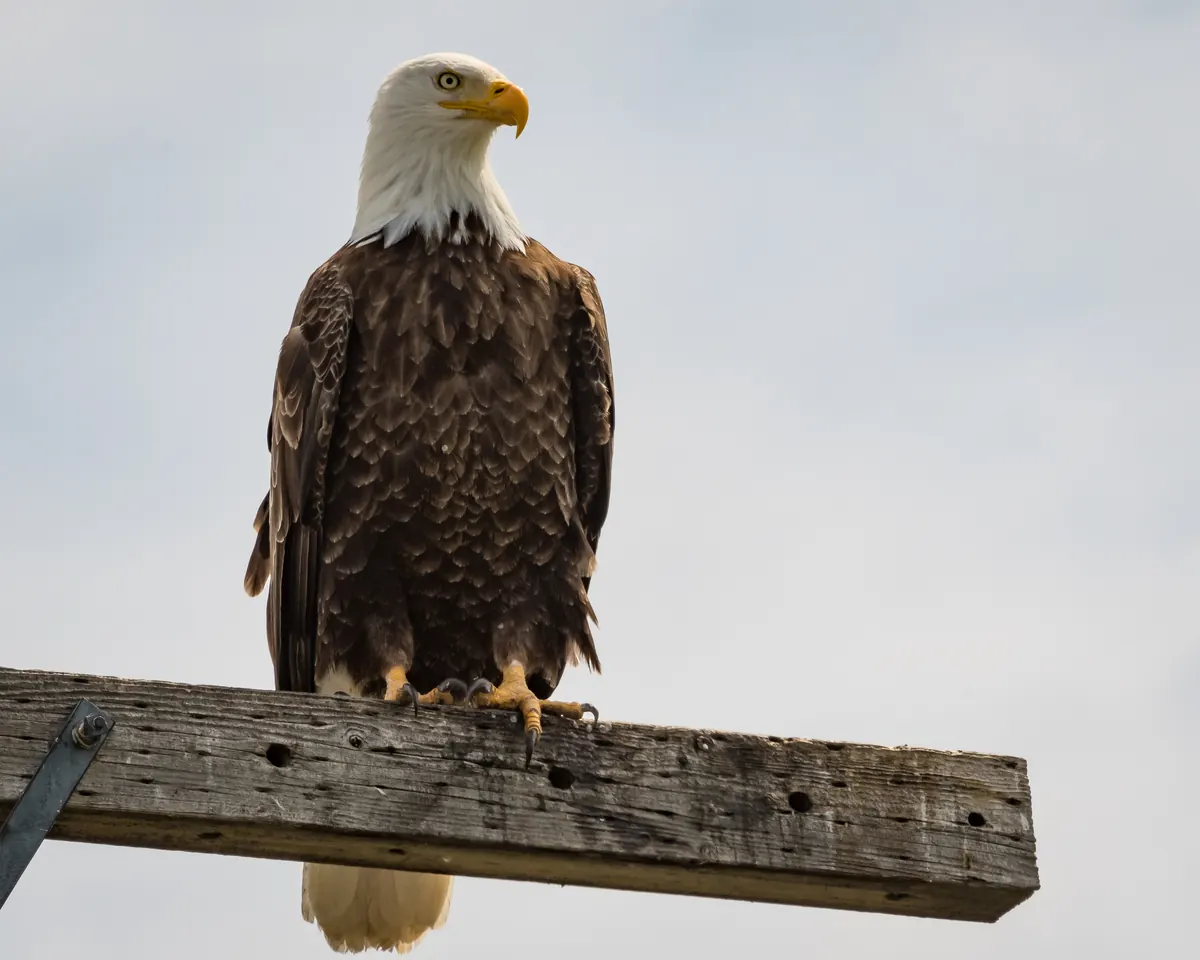
The morning fly-out from Bear Valley
First light, through February and into March · Lower Klamath refuge; Township Road and Lower Lake Road
Bear Valley National Wildlife Refuge protects a night roost: 4,200 acres, mostly old-growth ponderosa pine, incense cedar and fir, where eagles and other raptors sleep out of the wind. The refuge itself is closed to visitors, but the birds can be seen leaving it. The birding trail guide describes them flying out at dawn to feed over Lower Klamath and the flooded farm fields around Township Road and Lower Lake Road. Get there in the dark, stay in your car with the engine off, and count how many pass in each minute after the first one appears.
-
Where to see them through the day
Mid-morning to afternoon · Lower Klamath and Tule Lake refuges; Klamath Wildlife Area at Miller Island
After the fly-out, eagles spread across the basin. The birding trail lists Lower Klamath refuge, Township Road, Tule Lake refuge and the state's Klamath Wildlife Area at Miller Island as the best places to find them. Look for dark shapes standing on the ice next to open water, or a cluster of eagles in one cottonwood. Many of the birds are young ones, mottled brown and white, without the adults' white head and tail.
-
The Winter Wings Festival
Annual; usually Presidents' Day weekend in February · Klamath Falls
Klamath Basin Audubon Society's four-day festival of guided trips and programs is timed for the eagle peak. The 2027 program had not been announced when this guide was written, so look for it through the Klamath Basin Birding Trails events page or the Audubon chapter before booking a room.
Eagles here are wild and wary. A car makes a good blind, and a scope lets you stay farther back. If an eagle on the ice flushes as you pull over, you are too close.
When do the first spring birds come back to Malheur?
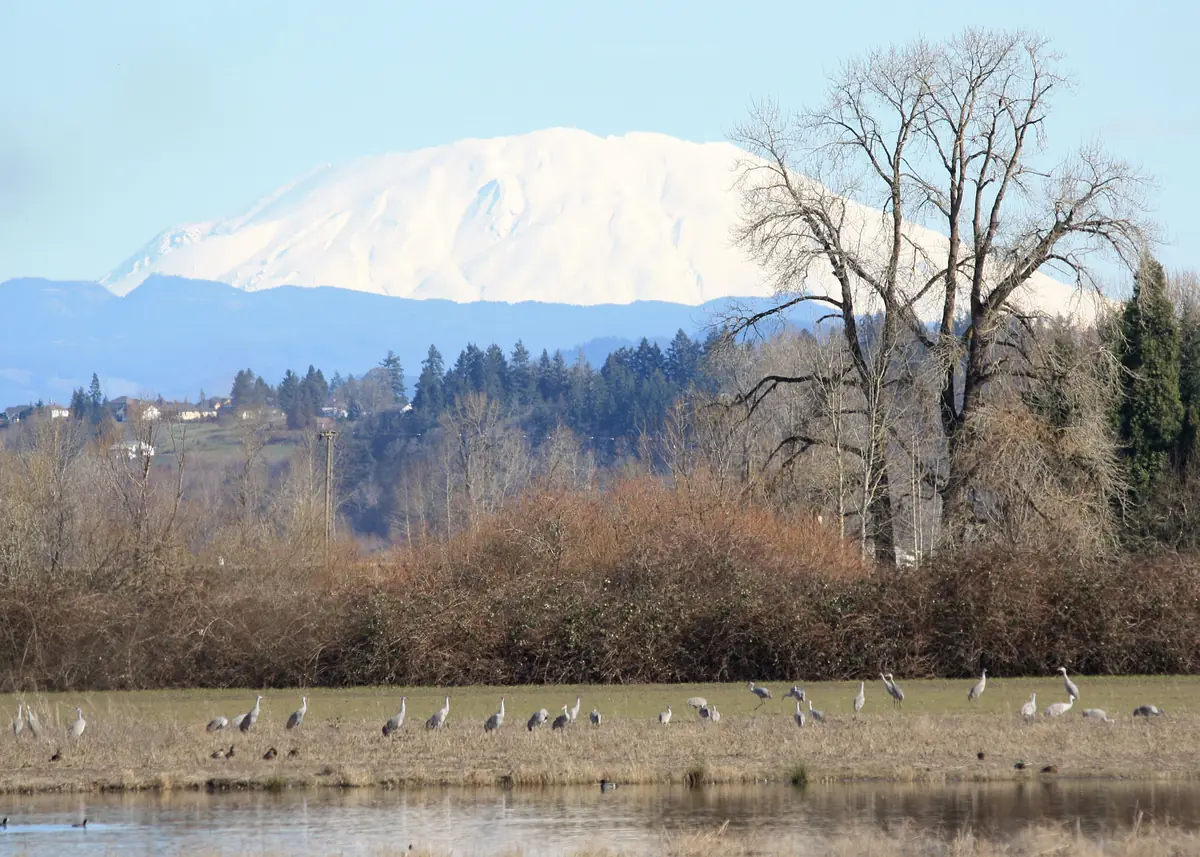
Earlier than most people expect. Malheur National Wildlife Refuge, in the Harney Basin south of Burns, keeps a list of average spring arrival dates for migrants that do not normally spend the winter there, compiled from decades of refuge records. A good share of the earliest arrivals land in February, while the lakes are often still partly frozen: northern pintails around the 8th, tundra swans around the 11th and sandhill cranes around the 17th. Western meadowlarks start singing from fence posts later in the month. The refuge's big show of migrating waterfowl comes in March and April, but the first flocks are the most exciting to find.
| Species | Average arrival | Earliest on record | Latest on record |
|---|---|---|---|
| Northern pintail | Feb 8 | Jan 20, 1990 | Feb 24 (1967 and 1974) |
| Tundra swan | Feb 11 | Jan 25, 1998 | Feb 25, 1966 |
| Snow goose | Feb 13 | Jan 29, 1970 | Mar 6, 1956 |
| Sandhill crane | Feb 17 | Feb 7, 1959 | Feb 28, 1957 |
| Killdeer | Feb 17 | Jan 31, 1971 | Feb 27, 1972 |
| Greater white-fronted goose | Feb 18 | Feb 2, 1994 | Mar 14, 1977 |
| Ring-billed gull | Feb 22 | Jan 26, 1993 | Mar 19, 1967 |
| Say's phoebe | Feb 22 | Jan 18, 1941 | Mar 16, 1973 |
| Western meadowlark | Feb 25 | Jan 28, 1972 | Mar 19, 1988 |
| Cinnamon teal | Feb 28 | Feb 4, 1972 | Apr 21, 1978 |
| Western bluebird | Feb 28 | Jan 24, 1979 | Mar 15, 1973 |
The sandhill crane window is strikingly narrow: in all the years on the refuge's list, the first cranes have never come before February 7 or after February 28. Visit after a few days of south wind, and stop at the refuge headquarters ponds and along the Center Patrol Road. Call the refuge at 541-493-2612 for road conditions before driving out, since snow and mud can close the gravel roads. The Klamath Basin's own spring waterfowl peak comes later, usually in late March or early April.
When do frogs start calling in Oregon?
In western Oregon, often in February. Late-winter rains draw frogs out of the woods to the water, and on a calm night a chorus can be heard from far off. Two native species start the year.
-
Pacific treefrogs (Pacific chorus frogs)
Breeding from February to July, depending on location; loudest on mild, damp evenings · Ponds, wet meadows, seasonal pools, roadside ditches and stock tanks statewide
ODFW calls this two-inch frog, green or bronze with a dark stripe through each eye, the smallest and most commonly seen and heard frog in Oregon. The agency's fact sheet says treefrogs move into breeding water anywhere from February to July depending on the place, which means the low, mild west side first and the high desert last. Males call mainly in the evening and at night, floating at the surface or half under water, and one caller sets off the rest. A female lays 400 to 750 eggs in small clumps of 10 to 75, each about half the size of a tennis ball, fixed to sticks or stems just below the surface, where algae and silt soon disguise them.
-
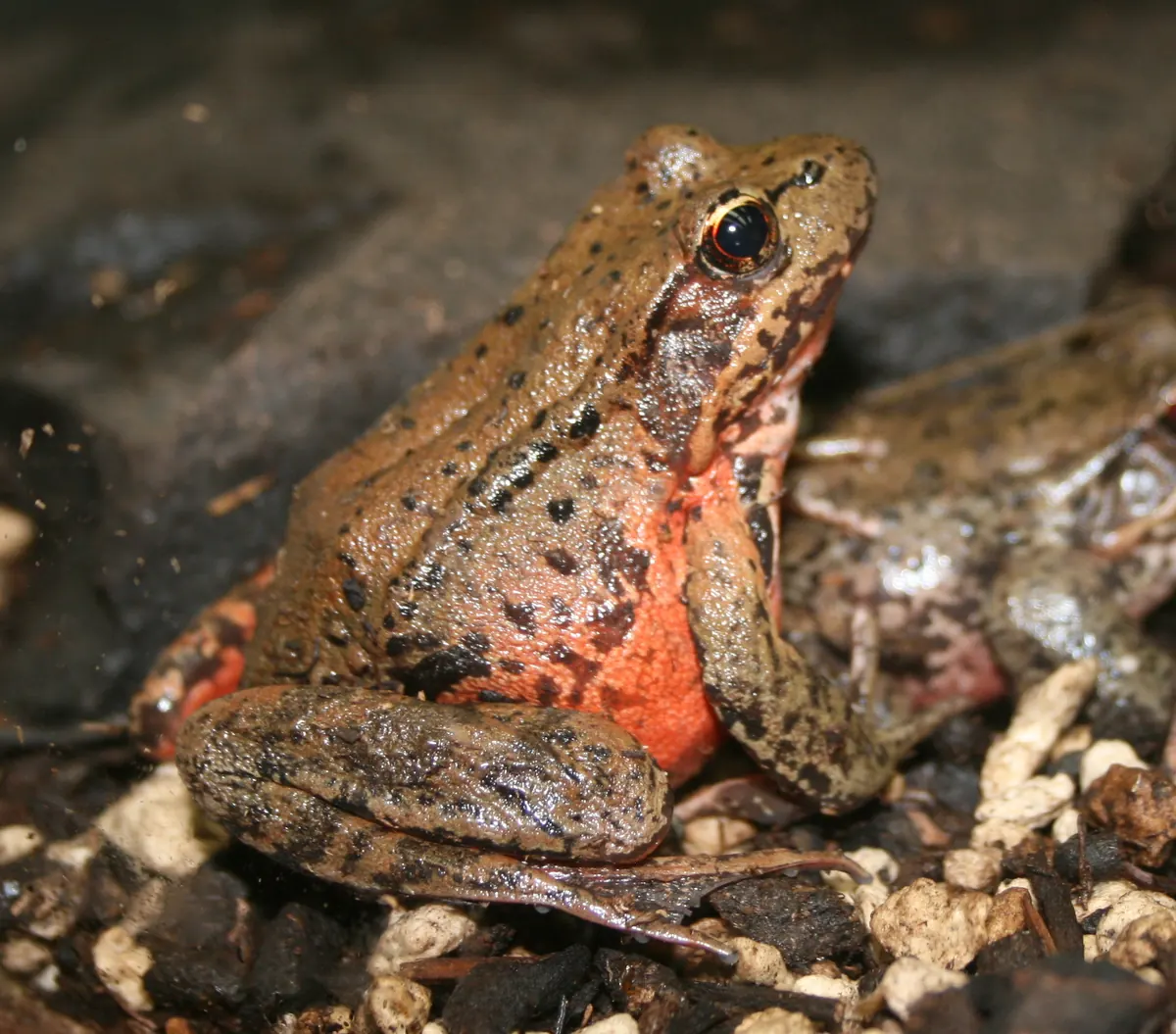
Northern red-legged frogs
Breeding usually begins in February, in a short burst at each pond · Shaded ponds and wetlands from the coast to the west Cascades, including the Willamette Valley
This larger brown frog, with a red wash on the underside of the hind legs, spends most of the year in moist forest away from water. ODFW's Willamette Valley frog notes say red-legged frogs usually begin breeding in February, and each female leaves a single large egg mass attached to underwater stems. Their call is quiet and often given from below the surface, so you are more likely to find the eggs than to hear the frogs. The species is on Oregon's Conservation Strategy list for the Coast Range, Klamath Mountains, West Cascades and Willamette Valley, and invasive bullfrogs are among its threats.
Admire any jelly clumps you find where they float; lifting them can tear them loose from their stems. On rainy nights frogs cross roads near breeding ponds, so drive slowly on rural lanes beside wetlands.
Which Oregon birds are already on nests in February?
Most songbirds will not start until spring, but Oregon's big raptors are well along by now. Their young need the whole spring and summer to grow and learn to hunt.
-
Bald eagles
Pairs repair nests in winter; egg laying in late winter and early spring · Near estuaries, rivers, reservoirs and lakes statewide
Oregon's nesting eagles are a recovery story. A 30-year Oregon State University study counted 65 occupied breeding areas in Oregon in 1978 and 496 by 2007, and its yearly surveys of nests started on February 1. The same study found that eagles west of the Cascades had moved their egg laying about five days earlier over those decades, which the authors linked to warmer late winters. The Oregon Forest Resources Institute notes that nests can measure 5 to 6 feet across; the Oregon Forest Practices Act protects a 330-foot buffer around an active nest tree on state and private land. Watch from well away, since a pair disturbed now may abandon its eggs.
-
Great horned owls
Many pairs incubating in February; the first owlets hatch late in the month · Woodlots, riverside cottonwoods, farm groves, city parks and rimrock canyons
Pairs that laid eggs in January are sitting tight this month, and the eggs hatch about a month after they are laid. Look for a pair of feathered ear tufts sticking up over the rim of an old hawk or heron nest, or from the top of a broken snag, with the mate often perched in a nearby tree. When the hooting goes quiet in a park where you heard a duet in January, the owls may simply be busy.
Do not play owl recordings near a nest, and do not post the location of an active nest online, where it can draw crowds.
What flowers first in Oregon at the end of winter?
West of the Cascades, the hazel orchards are finishing their pollen season, and a few native plants start flowering long before the trees leaf out. Look low and look in wet places.
-
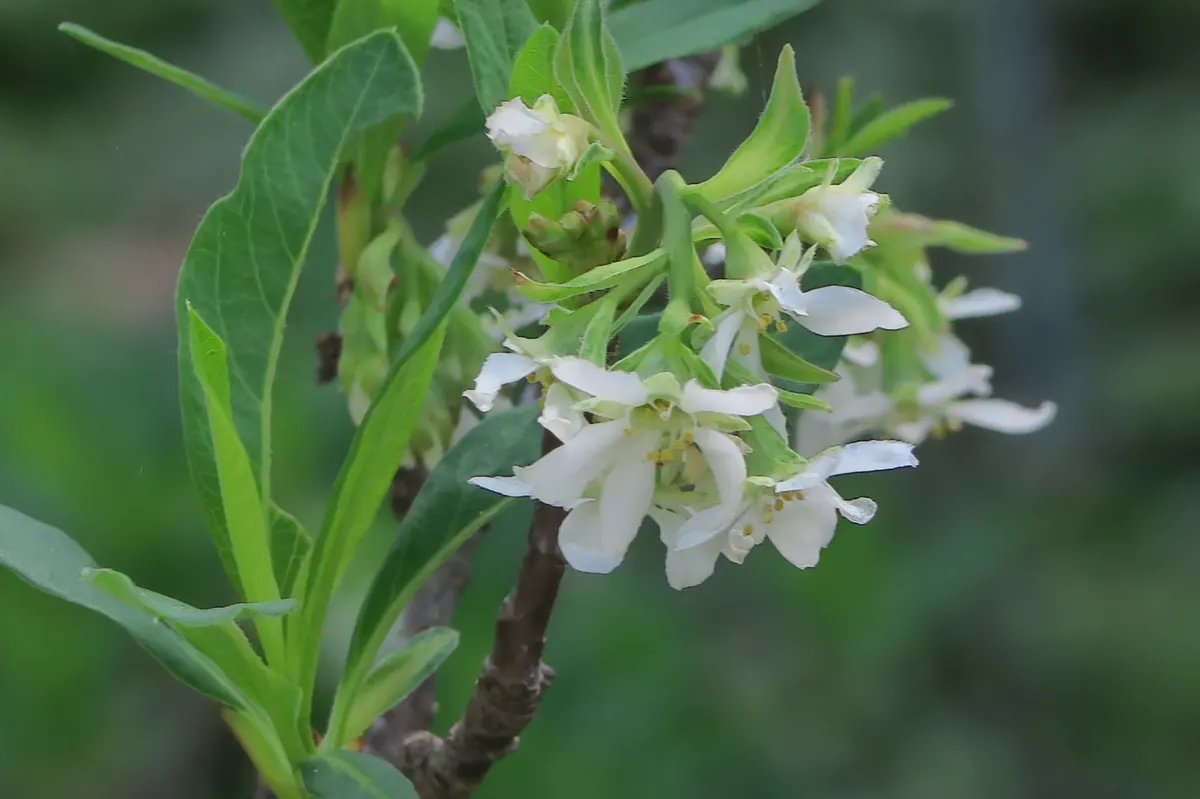
Indian plum (osoberry)
Flowers usually appear by late winter · Stream banks, forest edges and city natural areas at low elevation west of the Cascades
This shrub's drooping clusters of small greenish-white flowers open while most of the woods are bare, and its pale new leaves unfold at the same time. The USDA's Corvallis Plant Materials Center describes it as frequently the earliest native leaf-dropping shrub to bloom, and a key source of early nectar for hummingbirds, native bees and other pollinators. Male and female flowers are usually on separate plants, so only some bushes will set fruit. Crush a leaf and it smells like cucumber.
-
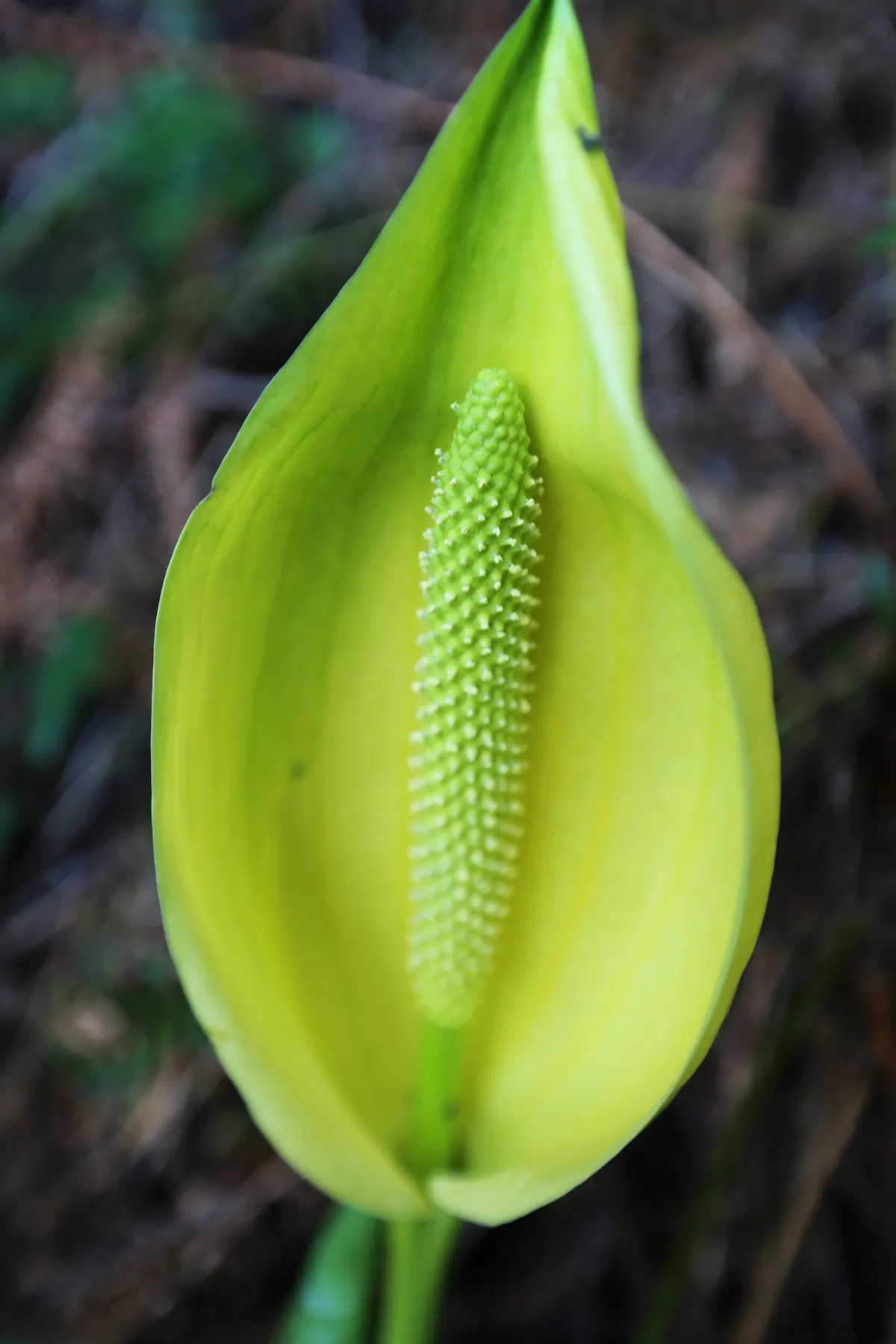
Western skunk cabbage
Yellow hoods emerge from about February on the coast, later inland and uphill · Swamps, seeps, alder bottoms and wet ditches, from the coast to the Cascades
The Oregon Encyclopedia notes that on the Oregon coast the bright yellow hood, or spathe, and the flower spike inside it traditionally began to come up in February. The giant glossy leaves follow, and the musky smell gives the plant its name. Across the plant's whole range, from California to Alaska, the Lady Bird Johnson Wildflower Center lists bloom from March to May, so inland and higher up, expect it later.
-
Grass widows in the Gorge
First flowers on warm slopes in some Februaries; the main show from March · Open, rocky ground in the eastern Columbia River Gorge, Mosier to The Dalles
These purple-pink six-petaled lilies are traditionally the first wildflowers of the eastern Gorge, and Gorge wildflower watchers have logged them in bloom on sunny south-facing slopes in early to mid-February in mild years. The Nature Conservancy's Tom McCall Preserve at Rowena is famous for them, but it is closed until March 1 each year to protect its soils when they are wet.
Keep track of the first date you see each of these in flower. The dates will vary from year to year by several weeks, and a long run of notes in the same spot shows the trend.
How can I join a bird count in Oregon in February?
February has one big, easy, worldwide count, and it is open to anyone with 15 minutes and a window.
-
The Great Backyard Bird Count
Friday, February 12, to Monday, February 15, 2027 · Anywhere: a yard, a park, a refuge, a school
Audubon and Birds Canada, two of the count's organizers, list the 30th count as February 12 to 15, 2027. Pick any of the four days, give it a quarter hour or more, note every species you see or hear, and submit it through eBird, the Merlin app or the count's website, birdcount.org. The four days fall over Presidents' Day weekend, which makes this an easy add-on to a trip to Klamath or the Willamette Valley refuges, where a single checklist can hold thousands of geese.
-
Project FeederWatch
Through April 30 · Feeders and yards
The Cornell Lab's winter-long feeder count keeps going until the end of April. February is a good time to start if you missed the fall: varied thrushes, juncos and Anna's hummingbirds are still at west-side feeders, and the first flocks of migrants may stop by later in the month.
Keep feeders and hummingbird nectar clean in a wet winter, and take seed feeders down for a week or two if you see sick finches, which can spread disease at crowded feeders.
Can you see gray whales off Oregon in February?
Some, but February is the quiet stretch between the two migrations. Oregon State Parks puts the southbound passage from mid-December to mid-January, and it says the first northbound surge passes the coast around the end of March.
-
The lull before the spring migration
February into March · High headlands; the state park Whale Watching Center in Depoe Bay
Most of the population is far south now, in the Baja California lagoons where the young are born. ODFW notes that mothers with calves stay in the lagoons a month or two longer than the other whales, and that the northbound trip, in April and later, is slower and closer to shore. Late stragglers and early northbound adults can turn up in February, so scan from a headland on any calm day, but expect long gaps.
-
Spring Whale Watch Week
March 20 to 28, 2027 · Volunteer stations along the coast
The Whale Watching Spoken Here program has already posted its spring 2027 dates, March 20 to 28, when trained volunteers will be at viewpoints to help visitors spot blows.
Winter storms keep throwing big surf at the coast in February. Stay off logs on the beach, and keep an eye on the water: sneaker waves can surge far up the sand without warning.
How snowy is February in Oregon, and what will a very strong El Niño do?
February is a little drier than January almost everywhere in Oregon, but it is still deep winter in the mountains. In NOAA's 1991 to 2020 normals, Crater Lake's park headquarters averages about 69 inches of snow in February and Government Camp on Mount Hood about 40 inches, while Portland and Medford average about an inch. Bend and Pendleton get more snow in an average February than the valleys west of the Cascades do, because cold air lingers longer on the dry side.
-
Last year's record-low snowpack
Winter 2025 to 2026 · Statewide
The winter just past is a warning. The federal drought service reported that Oregon's April 1, 2026, snow water equivalent was the lowest since SNOTEL measurements began in 1981, beating the old record from 2015: on April 5 the statewide average was about 2.1 inches of water, roughly 12 percent of the median peak. Record warmth, 5 to 9 °F above average over most of the state, was the main cause, turning much of the winter's precipitation to rain. The Natural Resources Conservation Service's Oregon Snow Survey publishes a new water supply outlook early each month from January to June; the one dated February 1 shows how this winter compares.
-
The El Niño in the background
Through late winter · Statewide
In its discussion of September 10, 2026, the federal Climate Prediction Center gave Oregon's coming winter a greater than nine-in-ten chance of sitting under a very strong El Niño. Across Washington, Oregon and Idaho, the USDA Northwest Climate Hub sums up the usual result as a warmer, drier winter with more of the precipitation falling as rain instead of snow, which leaves less runoff for summer. The strongest events do not always follow the pattern, though: 2015 to 2016 turned out wetter than normal over much of the region. Oregon's state climatologist, Larry O'Neill, has said that in very strong El Niño winters, storms tend to come in from farther south, carrying tropical moisture into southern and central Oregon as heavy rain more than snow. NOAA updates its three-month outlooks monthly at the Climate Prediction Center.
| Station | Precipitation (in) | Snowfall (in) | Average high (°F) | Average low (°F) |
|---|---|---|---|---|
| Astoria (north coast) | 7.18 | 50.9 | 37.4 | |
| North Bend (south coast) | 6.99 | 0.0 | 54.1 | 41.0 |
| Portland | 3.68 | 1.2 | 51.5 | 36.8 |
| Eugene | 4.67 | 51.5 | 35.0 | |
| Medford | 1.96 | 1.2 | 54.2 | 33.9 |
| Government Camp (Mount Hood) | 9.64 | 39.5 | 37.8 | 26.1 |
| Crater Lake National Park headquarters | 7.53 | 68.9 | 33.6 | 18.9 |
| Bend | 0.99 | 5.5 | 45.7 | 24.3 |
| Burns | 0.95 | 41.7 | 20.2 | |
| Pendleton | 1.19 | 4.5 | 46.4 | 29.6 |
| La Grande | 1.23 | 1.0 | 44.0 | 26.8 |
Burns and Crater Lake still average lows near 20 °F or below in February, while North Bend's average low stays above freezing. For the dates when the hard frosts usually end near you, see the Oregon frost-date tables, and before driving a Cascade pass, read the snow-level outlook on our weather page.
How much daylight does Oregon gain in February?
More than in any month since the summer. In Portland, U.S. Naval Observatory tables put sunrise at 7:32 a.m. and sunset at 5:17 p.m. on February 1, and sunrise at 6:51 a.m. and sunset at 5:56 p.m. on February 28: about 40 minutes more light at each end of the day. Groundhog Day is Tuesday the 2nd, a day or two ahead of winter's real astronomical halfway mark on February 3 or 4.
| City | Feb 1 | Feb 28 | Gained | Per day |
|---|---|---|---|---|
| Astoria | 9 h 42 m | 11 h 04 m | 82 min | 3.0 min |
| Portland | 9 h 45 m | 11 h 05 m | 80 min | 3.0 min |
| Pendleton | 9 h 44 m | 11 h 05 m | 81 min | 3.0 min |
| Newport | 9 h 50 m | 11 h 08 m | 78 min | 2.9 min |
| Bend | 9 h 52 m | 11 h 08 m | 76 min | 2.8 min |
| Ontario | 9 h 53 m | 11 h 08 m | 75 min | 2.8 min |
| Medford | 10 h 01 m | 11 h 12 m | 71 min | 2.6 min |
| Brookings | 10 h 02 m | 11 h 12 m | 70 min | 2.6 min |
Up at Astoria the gain is a little quicker than at Brookings on the California line, and in both places it speeds up until the equinox. Oregon switches to daylight time on March 14. Find the sunrise and sunset for any Oregon address with our day-length tool.
What can you see in the Oregon night sky in February 2027?
Two bright planets reach opposition this month, both in the constellation Leo, and a fine evening view of Mercury comes in the first days. Times below are Pacific; Ontario and the rest of Mountain-time Malheur County run an hour later.
-
Mercury low in the west
Greatest elongation the evening of Tuesday, February 2; a thin moon nearby on Sunday, February 7 · West-southwest, 30 to 45 minutes after sunset
Mercury rarely stands far from the sun, and early February gives this winter's best evening look, at about 18 degrees from the sun. Find a clear western horizon and look low in the twilight from late January to about February 10. Sunday the 7th adds a bonus: a slim day-old crescent beside the planet, which in Portland follows the sun down at 6:50 p.m.
-
Jupiter at opposition
Wednesday, February 10, 4:21 p.m. PST · Rising in the east at sunset, high in the south around midnight
Earth now lies on a straight line between the sun and Jupiter. From Portland or Pendleton, watch the planet clear the eastern skyline around dusk and ride across the sky until dawn, at peak brilliance for 2027. Brace binoculars on a fence or car roof and look for up to four pinpoint moons strung out beside it, rearranged each night.
-
Mars at opposition
Friday morning, February 19; nearest Earth on February 20 · East after dark, near Jupiter and the star Regulus in Leo
Mars follows Jupiter by eight days. Its nearest approach, on Saturday the 20th, still leaves some 63 million miles between us. For Mars that is a far-off opposition, so to the eye it is simply a vivid, steady ember of a star. Compare its steady color with Jupiter's creamy white light nearby.
-
The Snow Moon
Full at 3:23 p.m. PST, Saturday, February 20 · Rising in the east around sunset
Full phase arrives mid-afternoon, and Portland sees the moon come up at 5:52 p.m., a few minutes after sunset, with Regulus, Jupiter and Mars all nearby in Leo. Perigee falls about 40 hours before full, close enough for some almanacs to call this a supermoon. On Friday night, the 19th, watch the moon slide past Jupiter, very close. A faint penumbral eclipse also happens on the 20th, but it ends before the moon rises anywhere in Oregon (5:13 p.m. PST; 6:13 p.m. MST in Ontario, where moonrise is 6:29 p.m.), so there is nothing to see here.
-
Venus before dawn, Saturn after dusk
All month · Venus low in the southeast at dawn; Saturn low in the west after sunset
Venus still blazes before sunrise. Saturn drops lower into the dusk week by week, so look for it in the first half of the month.
| Phase | Date | Time |
|---|---|---|
| New moon | Saturday, Feb 6 | 7:56 a.m. PST (8:56 a.m. MST) |
| First quarter | Saturday, Feb 13 (Sunday, Feb 14 in Mountain time) | 11:58 p.m. PST (12:58 a.m. MST on Feb 14) |
| Full moon, the Snow Moon | Saturday, Feb 20 | 3:23 p.m. PST (4:23 p.m. MST) |
| Last quarter | Saturday, Feb 27 | 9:16 p.m. PST (10:16 p.m. MST) |
The February 6 new moon brings a ring-of-fire eclipse of the sun to Chile, Argentina and West Africa; Oregon sees none of it. Dark, moonless evenings last from roughly the 2nd to the 11th. Before you drive to a dark site, check the cloud-cover forecast, and see each night's moonrise on our moon calendar.
What can families do outside in Oregon in February?
- Count birds over Presidents' Day weekend. The worldwide backyard count covers February 12 through 15. Even a 15-minute list from a kitchen window counts, and Merlin can help with the birds you do not know.
- Go frog listening. On a rainy, mild evening, walk to a nearby wetland or ditch with a flashlight and see how many treefrogs you can hear.
- Watch the eagles wake up. A pre-dawn drive to Lower Klamath or Township Road during the eagle peak gives children a sight to remember. Bring a thermos and a blanket, and let them count eagles per minute.
- Look for the Winter Wings Festival. It usually comes over Presidents' Day weekend and often has programs for kids; check with Klamath Basin Audubon for the 2027 schedule.
- Start a first-flower list. Pick a creek-side trail near home and visit each week to note when the Indian plum opens and when the skunk cabbage shows its yellow hood.
- Snowshoe at Crater Lake. Rangers lead free two-hour snowshoe walks from Rim Village at 12:30 p.m. on weekends and holidays when snow allows, with snowshoes provided, for walkers 8 and older; reservations are required (541-594-3100), and the park's winter entrance fee applies.
Roads, refuge tours and ranger programs can close in winter storms, so call before you go. Our Oregon page for January has the eagles and owls a month earlier, the nature index covers all fifty states, and the Naturalist's Field Journal has plates for the notes.
What should I watch out for outdoors in Oregon in February?
- Hunting seasons. Most of Oregon's bird seasons close at the end of January, but some goose hunting continues in February. In the 2026 to 2027 regulations, Canada goose season in the Northwest Permit Zone runs January 30 to February 14, and white-fronted and white geese there to February 14; in the South Coast Zone, Canada and white goose seasons reopen February 20 to March 10. White goose seasons are open in the Mid-Columbia Zone February 6 to 28 and east of the Cascades in the high desert and Blue Mountains zone until March 10, which overlaps the swan and goose arrivals in the Harney Basin. Snipe season in Zone 1 runs to February 21. Cougars may be hunted year-round, and antlerless elk damage hunts last through March.
- Trapping. Bobcat and fox seasons run to February 28, raccoon, river otter and beaver to March 15, and mink and muskrat to March 31, and coyotes can be taken all year. Keep dogs leashed near streams, marshes and brushy edges.
- Hunter orange. Only youths are covered: a hunter under 18 hunting any game mammal or upland bird except turkey with a firearm must wear an orange hat or outer layer that shows from every direction. Adults are not required to, but bright clothing is wise on any wildlife area this month.
- Avalanches. February often brings some of the season's deepest snowpack in the Cascades and Wallowas. Read the daily forecast from the Northwest Avalanche Center (Mount Hood), the Central Oregon Avalanche Center or the Wallowa Avalanche Center before heading onto or below steep slopes, and carry a beacon, probe and shovel.
- Cold. February nights average around 20 °F in Burns and colder at Crater Lake, and pre-dawn eagle watching in the Klamath Basin can be colder still with wind. Dress in layers, and bring a hat and dry gloves.
- Roads. Snow, freezing rain and fog can make passes and the Columbia Gorge treacherous. Check TripCheck before leaving, carry chains and an emergency kit, and do not let a GPS route you onto unplowed forest roads.
- Closed places. The Tom McCall Preserve at Rowena stays closed until March 1, and parts of the Willamette Valley refuges and Sauvie Island remain closed to protect wintering birds; follow posted signs.
- Rivers, ice and surf. Rain on snow can raise rivers fast and trigger slides on steep slopes. Stay off frozen ponds; low-elevation ice in Oregon is rarely safe. On the coast, do not walk on drift logs, and watch for sneaker waves.
Sources
- Klamath Basin Birding Trails: frequently asked questions (eagle peak, Bear Valley roost)
- Klamath Basin Birding Trails: birding festivals and events
- Klamath Basin Birding Trails: Winter Wings Festival
- U.S. Fish and Wildlife Service: Bear Valley National Wildlife Refuge
- U.S. Fish and Wildlife Service: Malheur National Wildlife Refuge
- U.S. Fish and Wildlife Service: Malheur NWR average spring migratory bird arrival dates (PDF)
- ODFW: Living with Wildlife, Pacific treefrog (PDF)
- ODFW Natural Resources Information Management Program: frogs of the Willamette Valley
- ODFW: northern red-legged frog
- Oregon Conservation Strategy: northern red-legged frog
- Isaacs and Anthony, Oregon State University: Bald eagles nesting in Oregon and along the lower Columbia River, 1978 to 2007 (PDF)
- Oregon Forest Resources Institute: Oregon's largest nest maker, the bald eagle
- ODFW: bald eagle
- ODFW: owls
- Coast to Cascades Bird Alliance: breeding season begins in winter
- USDA NRCS Corvallis Plant Materials Center: Indian plum plant fact sheet (PDF)
- Oregon State University Extension: Growing hazelnuts in the Pacific Northwest, pollination and nut development
- Oregon Encyclopedia: skunk cabbage
- Lady Bird Johnson Wildflower Center: western skunk cabbage
- The Nature Conservancy: Tom McCall Preserve at Rowena
- Wildflowers of the Columbia River Gorge: grass widow, with bloom dates
- Audubon: Great Backyard Bird Count (February 12 to 15, 2027)
- Birds Canada: Great Backyard Bird Count
- Great Backyard Bird Count
- Cornell Lab of Ornithology: eBird
- Cornell Lab of Ornithology and Birds Canada: Project FeederWatch
- Oregon State Parks: whale watching
- ODFW: gray whale
- Whale Watching Spoken Here: Whale Watch Week dates
- National Weather Service: sneaker waves
- NOAA NCEI: 1991 to 2020 monthly normals for Oregon stations
- Drought.gov: snow drought conditions and impacts in the West, April 9, 2026
- USDA NRCS: Oregon Snow Survey
- NOAA Climate Prediction Center: ENSO diagnostic discussion, September 10, 2026
- NOAA Climate Prediction Center: three-month outlooks
- USDA Northwest Climate Hub: El Niño in the Northwest
- U.S. Geological Survey: regional super El Niño impacts, Northwest
- OPB: Oregon's state climatologist on the El Niño winter
- National Park Service: Crater Lake ranger-guided snowshoe walks
- U.S. Naval Observatory: sun and moon data, Portland, February 1, 2027
- U.S. Naval Observatory: sun and moon data, Portland, February 28, 2027
- U.S. Naval Observatory: sun and moon data, Portland, February 20, 2027
- U.S. Naval Observatory: sun and moon data, Ontario, February 20, 2027
- U.S. Naval Observatory: moon phases
- U.S. Naval Observatory: seasons, 2027
- Fred Espenak: Sky Event Almanac 2027
- Sea and Sky: 2027 astronomy calendar
- NASA: lunar eclipses, 2021 to 2030
- NASA: solar eclipses, 2021 to 2030
- Oregon hunting regulations: migratory game bird seasons, 2026 to 2027
- Oregon hunting regulations: upland game bird seasons, 2026 to 2027
- ODFW: big game hunting seasons
- ODFW: furbearer trapping and hunting
- Oregon hunting regulations: general hunting regulations (hunter orange)
- Avalanche.org: U.S. avalanche centers
- Wallowa Avalanche Center
- Oregon Department of Transportation: TripCheck
- Photos via Wikimedia Commons; licenses and photographers are credited under each picture
