What to look for in nature in Oregon this October
October splits Oregon in two. West of the Cascades the rain comes back, chinook and coho crowd onto the gravel bars, and the woods fill with chanterelles. East of the mountains most towns have already had their first frost, sandhill cranes gather in the Blitzen Valley, and the larches go gold. Below, each story gets its dates, its places and its sources.
Start here

- Salmon on the gravel. Fall chinook spawn in the Rogue Valley from early October, and Douglas County’s rivers peak in late October and early November. At Bonneville Hatchery in the Gorge, fall chinook and coho are spawned in September and October, a few steps from Herman, the ten-foot sturgeon.
- The first real rain. Portland’s normal October rainfall is 3.42 inches, more than twice September’s. Astoria’s is 6.74. The rain wakes the mushrooms, sends rough-skinned newts walking to their ponds, and muddies the salmon streams for a day or two after each storm.
- The Hunter’s Moon and the Orionids. The moon is full at 9:12 p.m. Pacific time on Sunday, October 25. For the Orionid meteors, set an alarm for the morning of October 22: in Portland the moon is down by 3:32 a.m., leaving a couple of dark hours before dawn.
Record it: in the Naturalist’s Field Journal, the tracks-to-know plate fits the hoof prints at an elk meadow, the daily field log is the place for the date of the first soaking rain, and the seeds, pods and cones page will take a larch cone or a bigleaf maple’s winged seeds. A map of sounds is for the evening a bull elk bugles.
Regions used below: Portland and the Columbia River Gorge; Willamette Valley; Oregon Coast; Southern Oregon: the Rogue and Umpqua valleys; Central Oregon and the Cascades; Eastern Oregon: the Blue Mountains, the Wallowas and the high desert.
Where can you watch salmon spawn in Oregon in October?
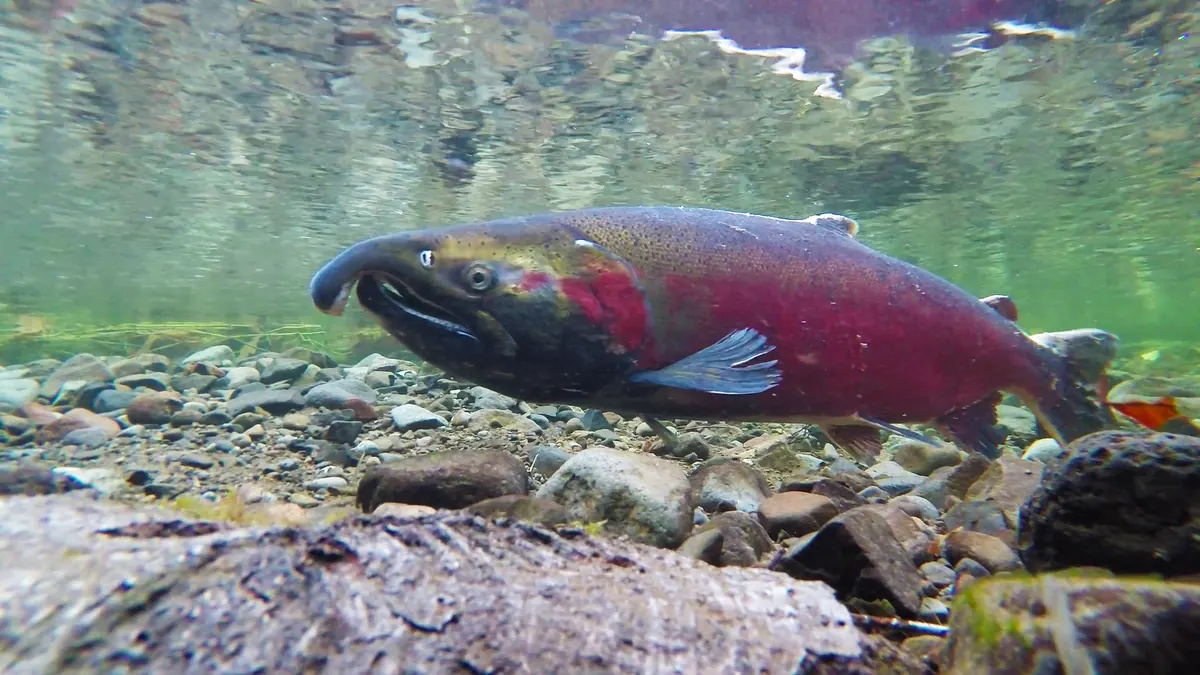
The Oregon Department of Fish and Wildlife puts the spawning season at mid-September through December, with the peak in late October and early November. Which fish you see, and when, depends on the river. Watch from the bank, bring binoculars, and never wade onto the redds, the gravel nests where eggs are buried. Polarized sunglasses cut the glare on the water. After a heavy rain the streams run brown for a few days; go back when they clear.
-
Fall chinook in the Rogue Valley
Early October to early January; peak October and November · Bear Creek, the Rogue at Grants Pass, the Applegate
ODFW lists three spots on the Bear Creek Greenway (the Pine Street bridge, Railroad Park and the McAndrews Road bridge), the shallow gravel bars at Valley of the Rogue State Park, and Reinhart Park in Grants Pass. On the Applegate River, Cantrall Buckley Park is best from late October through November.
-
The Umpqua and its forks
Peak late October to early November · Roseburg, Canyonville, Tyee, the North Umpqua
On the South Umpqua, try the river below the Roseburg visitor center, the Happy Valley boat ramp in Green, lower Cow Creek along County Road 39, and Stanton Park in Canyonville; on the main river, Myrtle Island at Tyee. The North Umpqua below Soda Springs Dam has fish from late September to mid-October. Coho follow in late November and December.
-
Bonneville Hatchery and Herman the sturgeon
Spawning September and October; open 7:30 a.m. to dusk · Columbia River Gorge, beside Bonneville Dam
ODFW’s hatchery at Bonneville spawns adult fall chinook and coho in September and October, with a viewing area and displays. Herman lives in the sturgeon viewing center: about ten feet long, some 500 pounds and more than 80 years old.
-
Mount Hood and the Willamette basin
Spring chinook to mid-October; coho in November · Wildwood near Welches, the McKenzie, Dexter Dam, Portland
The BLM’s Wildwood Recreation Site on the Salmon River, off Highway 26, has a fish-viewing window and paths along the stream. On the McKenzie, look near Leaburg Hatchery and from the highway pullouts between Leaburg Lake and Blue River; on the Middle Fork, below Dexter Dam. In Portland, Crystal Springs Creek through Westmoreland Park has fish in season.
-
Coast rivers
Mostly November; Coos County peak mid-November · Alsea, Siletz, Salmon River, Coos and Coquille
The north and central coast rivers run a little later. Near Newport ODFW’s best window is the first half of November, when a few hundred chinook spawn in the North Fork Alsea at Clemons Park. In Coos County fall chinook spawn from late October to mid-December; the Millicoma Interpretive Center near Allegany is wheelchair accessible and you can see fish from the car for miles upstream.
-
Kokanee and the dry side
Mid-October at Odell Lake; late October at Pendleton and Hood River · Central and northeastern Oregon
Kokanee, landlocked sockeye that turn red to spawn, run up Trapper Creek and along the Shelter Cove shoreline at Odell Lake in mid-October; Wallowa Lake’s run finishes by mid-October. Pendleton’s downtown river walk and McKay Creek are best in late October and early November, and the lower Hood River in late October.
A salmon that has spawned dies within days, and the carcasses along the banks feed eagles, bears, minks and, eventually, the streamside trees. Leave them where they lie.
Where can you see Roosevelt elk in the rut?
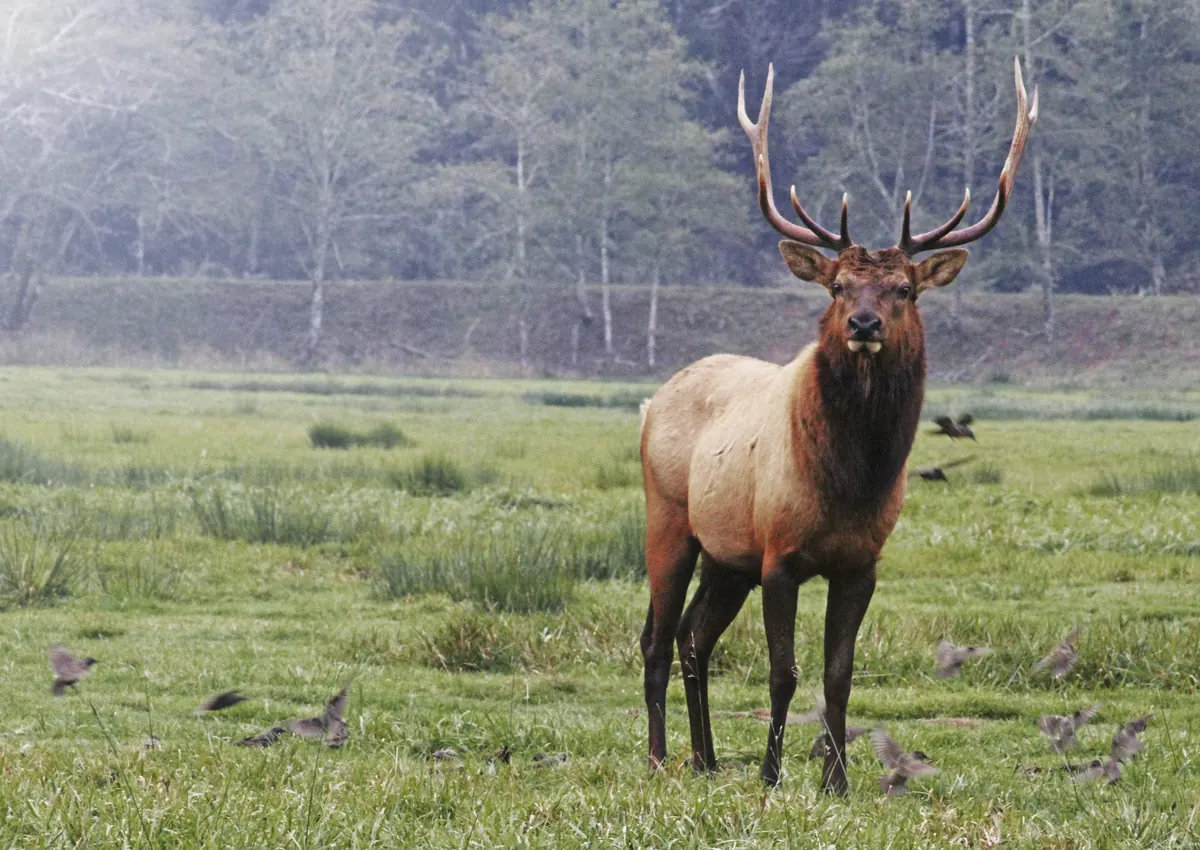
Roosevelt elk are the state’s largest land mammals, and the coast’s herds are easy to see. Travel Oregon puts the rut in September and October, when bulls bugle, a high, whistling scream, and spar for cows. Early morning and the hour before sunset are best. Keep at least 75 feet away, about two bus lengths, and stay in or next to your car: a bull in rut is dangerous.
-
Dean Creek Elk Viewing Area
Year-round; bugling into October · Highway 38, three miles east of Reedsport
A herd of 60 to 100 Roosevelt elk lives on the Umpqua River bottomland here all year, managed by the Bureau of Land Management. Pullouts line three miles of highway, and the main viewing area has interpretive panels and restrooms.
-
The north coast
Fall and spring · Ecola State Park, Fort Stevens, Lewis and Clark National Historical Park
Watch the meadows west of the Ecola Point day-use area north of Cannon Beach, and the fields along the roads near Fort Stevens and Fort Clatsop outside Astoria.
-
Jewell Meadows, for later
November to April · 27 miles southeast of Astoria
ODFW’s wildlife area holds up to 200 elk in winter and spring, and the free feeding tours run December through February (reservations open December 1; a wildlife-area parking permit is required). In October it is quieter.
Look for the signs as well as the animals: rubbed and shredded saplings, trampled wallows, and the heart-shaped prints in soft ground.
Which birds pass through or arrive in Oregon in October?
-
Sandhill cranes at Malheur
Peak early to mid-October · Malheur National Wildlife Refuge, Harney County
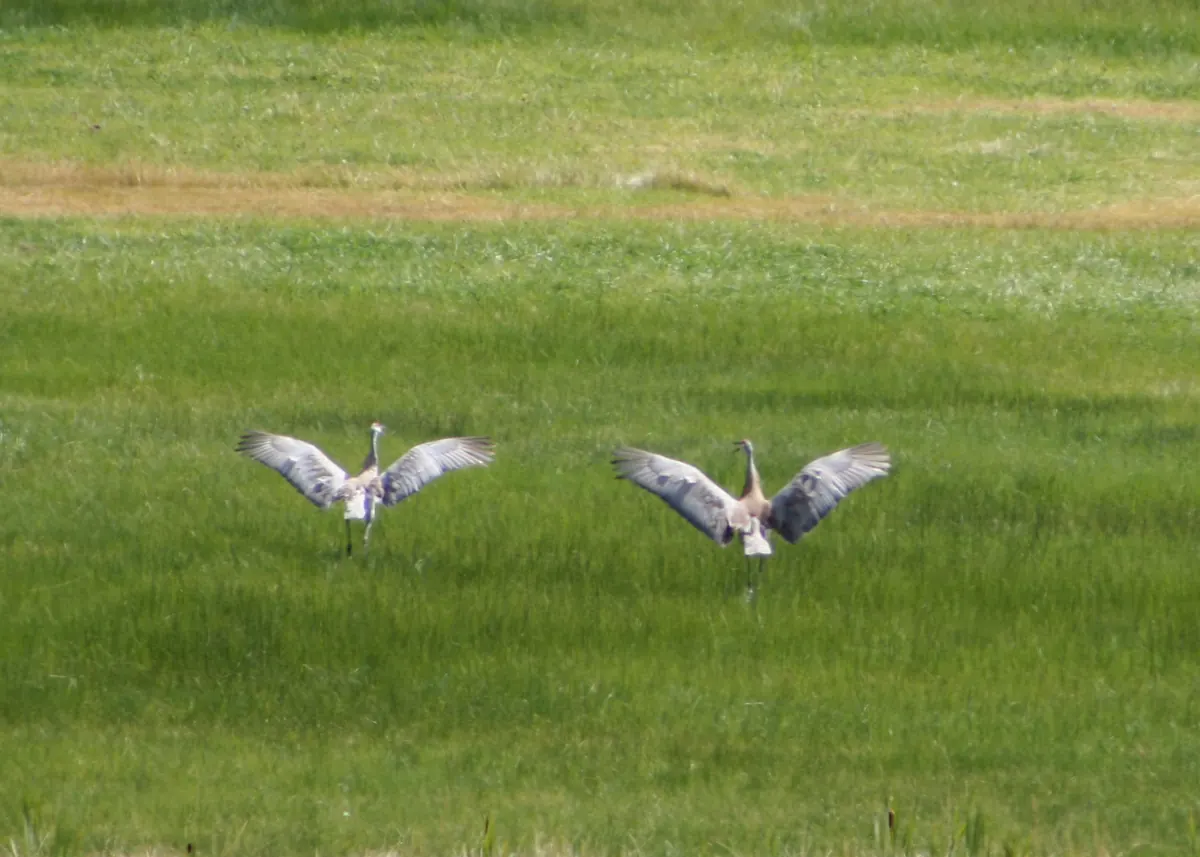
The Friends of Malheur say crane numbers crest in the first half of October, with up to 1,000 in view at once; try near stop 2 of the Blitzen Valley auto tour at dawn or dusk. The refuge is open sunrise to sunset and free.
-
Tundra swans and the first winter hawks
Swans late October and November; hawks from mid-October · Knox, Benson and Marshall ponds and the refuge’s fields
Hundreds of tundra swans can gather on a single pond at Malheur in October and November, and their calls carry a long way. Rough-legged hawks and bald eagles begin to arrive in the middle of the month; look on power poles. An honest caveat about ducks: the Friends group calls October the waterfowl peak, while the Fish and Wildlife Service notes that fall numbers at Malheur are often low because the basin is dry and many birds pass farther west.
-
The Klamath Basin
Building through October; largest numbers usually mid-November · Klamath Marsh and Lower Klamath refuges
Between one and two million ducks, geese and swans pass through the basin each fall, according to the Klamath Basin Birding Trails. Klamath Marsh National Wildlife Refuge, off Silver Lake Road about 45 miles north of Klamath Falls, is managed partly for fall cranes and waterfowl; call ahead (541-783-3380) about visitor center hours.
-
Sauvie Island and the Willamette Valley refuges
September to March · Northwest of Portland; south of Corvallis
From October 1 the Westside, North Unit and Oak Island parts of ODFW’s Sauvie Island Wildlife Area close to give the birds room, but Raccoon Point overlook, the Eastside viewing platform and Rentenaar Road stay open; a parking permit is required. Farther south, William L. Finley National Wildlife Refuge was set up for the dusky Canada goose, a small, dark subspecies of about 16,000 birds that nests on Alaska’s Copper River Delta and winters almost entirely in Willamette Valley wetlands.
-
Shorebirds and terns at the mouth of the Columbia
Friday, October 9 and Friday, October 16, 9:30 a.m. · Fort Stevens State Park
State park rangers lead a birding walk on Trestle Bay (meet at parking lot D) for migrating shorebirds, waterfowl and a tern colony on October 9, and a walk around Coffenbury Lake for resident water and forest birds on October 16.
-
No count at Bonney Butte this year
Normally August 27 to October 31 · East side of Mount Hood
In a normal fall, HawkWatch International counts up to 18 kinds of raptors crossing this Cascade ridge, including an unusual number of merlins. In 2026 the station is closed because of fire activity, clean-up and forest closures from the Grasshopper Fire; the group expects to return in 2027.
Whatever the refuge, go early. Birds are most active in the first two hours after dawn, and the light is better for it.
When is mushroom season in Oregon?
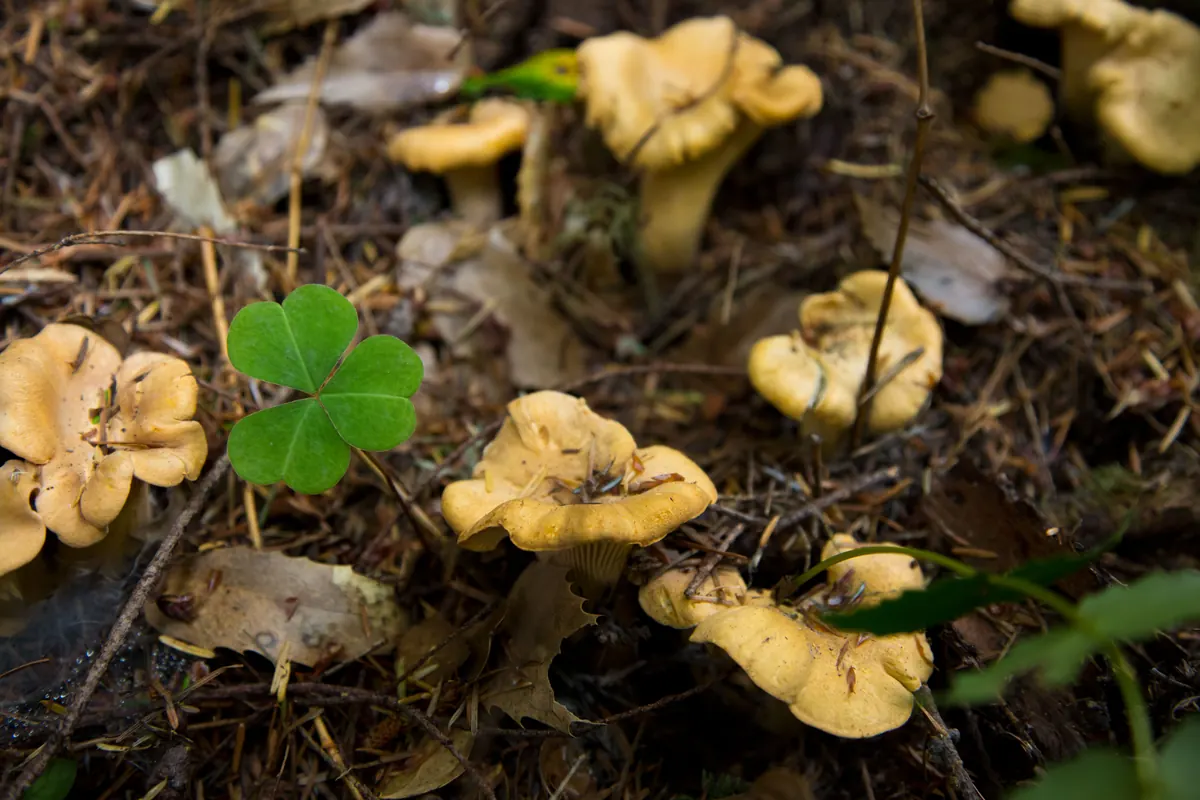
West of the Cascades it starts with the first soaking rain and runs until hard frost, and October is the heart of it. Golden chanterelles push up under Douglas fir and hemlock, along with boletes, hedgehogs and a long list of look-alikes. Three sets of events this month make it easy to learn with an expert beside you.
-
Yachats Mushroom Festival
Friday, October 16 to Sunday, October 18 · Yachats, central coast
The village fills with forays for all ages, free talks, an exhibition and identification hall, and a fair of fungi and mushroom crafts. This year’s keynote is about truffles and the dogs trained to sniff them out.
-
Mount Pisgah Arboretum Mushroom Festival and Mycoblitz
Festival Sunday, October 25, 10 a.m.–5 p.m.; Mycoblitz October 15–24 · Eugene
A big display of local species, an expert identification table with edible and poisonous kinds side by side, guided walks, cider pressing and hay rides. Children under 12 get in free; dogs stay home. Before the festival, photograph any mushroom you find in Lane County between October 15 and 24 and add it to the Mycoblitz.
-
Ranger mushroom walks at Fort Stevens
Fridays Oct 2, 9, 16, 23; Sundays Oct 4, 11, 18; 1–3 p.m. · Fort Stevens State Park, near Astoria
The Friday hikes start at Battery Russell, and you may bring finds to be identified; the Sunday program begins with a talk at the Coffenbury Lake picnic shelter. Both are free with no registration, but the day-use parking fee applies.
Photograph first, pick later, and eat only what an expert has identified in person. If someone in your house has eaten a wild mushroom and you are unsure of it, call the Oregon Poison Center at 1-800-222-1222, day or night. Rules on picking differ between state parks, national forests and private land, so ask the land manager before filling a basket.
Where do the leaves turn first in Oregon?
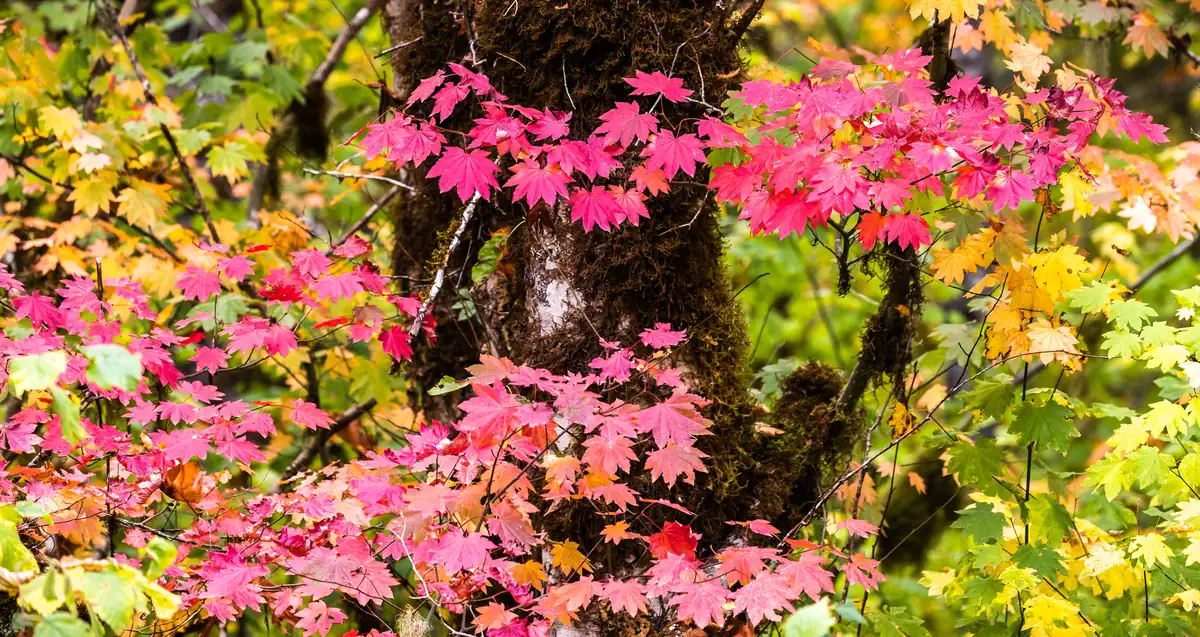
Oregon’s color is a mix of three trees more than a single blaze. The Forest Service singles out vine maple, which goes scarlet and orange in the understory; bigleaf maple, whose huge leaves turn butter yellow; and, on the dry side, aspen and western larch, the needle-shedding conifer of the Blue Mountains. The mountains go first and the valleys follow.
-
The Cascades’ west slope
Through October · Mount Hood and Willamette national forests, the Molalla and McKenzie
Vine maple and bigleaf maple line the rivers and the scenic byways. The BLM’s Molalla River corridor, about ten miles southeast of Molalla, is an easy drive from Portland and Salem; its vine maples were already red in the first week of October in 2018.
-
Larches and aspens
Later in the fall than the maples · Cascade Lakes Scenic Byway; the Blue and Wallowa mountains
The Deschutes National Forest points to aspens and larches along the Cascade Lakes Scenic Byway west of Bend. Western larch is most at home in northeastern Oregon, on cool north and east slopes at about 3,500 to 6,500 feet in the Blue and Wallowa mountains; its needles go gold late in the season and then fall, leaving the trees bare among the firs.
-
Around the Grasshopper Fire
Closure in effect to December 31 · East side of Mount Hood, near Highway 35
A Forest Service closure covers parts of the Barlow and Hood River ranger districts, including the Badger Lake, Bonney Meadows and Fifteenmile campgrounds and dozens of trails. The Pacific Crest Trail, the Timberline Trail and Tamanawas Falls trails are open. Check the order before you plan a drive up the Hood River Valley.
One tree, one spot, one photo each Saturday of the month: keep the weekly pictures company with notes on the tree page of our field journal for naturalists.
When does the rain come back to Oregon, and what will El Niño bring?
On the wet side of the range, this is the month the year turns. Rainfall roughly doubles from September to October and nearly doubles again into November. Over on the dry side the rise is modest, and the high desert barely notices.
| Station | September | October | November |
|---|---|---|---|
| Astoria | 2.67 | 6.74 | 11.05 |
| North Bend | 1.55 | 4.24 | 8.30 |
| Portland | 1.52 | 3.42 | 5.45 |
| Eugene | 1.39 | 3.17 | 5.98 |
| Medford | 0.48 | 1.22 | 2.61 |
| Pendleton | 0.53 | 1.09 | 1.39 |
| Burns | 0.38 | 0.77 | 1.02 |
| Redmond | 0.37 | 0.68 | 0.81 |
October is also when the first big Pacific storms arrive. Oregonians still measure every autumn gale against October 12, 1962, when the leftovers of Typhoon Freda roared in as the Columbus Day Storm and brought gusts well over 100 mph to Portland and higher still on the south coast, killed at least 46 people, and flattened more than 11 billion board feet of timber across Oregon, Washington and northern California in under half a day. Most October storms are ordinary ones, but it is a good month to clear gutters and tie down the patio furniture.
Then there is the winter. Odds above 90 percent: that is how NOAA’s Climate Prediction Center, on September 10, rated the chance of an El Niño of very strong size this coming cold season. Oregon’s state climatologist summarizes the usual El Niño winter here as warm and dry. The three strongest events since the 1980s (1982–83, 1997–98 and 2015–16) broke that rule a little: the state came out slightly wetter than normal but very warm, so much of the precipitation fell as rain instead of snow and the snowpack, which supplies a large share of Oregon’s water, came up short. That is the outcome to watch for this time. October weather itself barely feels El Niño’s pull. NOAA’s official winter outlook is due in mid-October, and the weather now page shows what the next front looks like where you live.
When is the first freeze in Oregon?
It depends almost entirely on which side of the Cascades you live. In the high desert the first freeze is a September event and an October freeze is late. In Portland, the Willamette Valley and along the coast it usually waits until November or later, and at North Bend the median date is December 9. Medford sits in between, with a median of October 29.
| Station | One year in ten | Median | Nine years in ten |
|---|---|---|---|
| Astoria Regional Airport (north coast) | Oct 22 | Nov 11 | Dec 8 |
| North Bend Regional Airport (south coast) | Nov 12 | Dec 9 | Jan 28 |
| Portland International Airport | Oct 29 | Nov 19 | Dec 10 |
| Eugene Mahlon Sweet Airport (southern Willamette Valley) | Oct 6 | Oct 23 | Nov 13 |
| Medford Rogue Vly Airport (Rogue Valley) | Oct 14 | Oct 29 | Nov 16 |
| The Dalles (Columbia River Gorge) | Oct 5 | Oct 23 | Nov 9 |
| Redmond Roberts Field (Central Oregon) | Sep 1 | Sep 14 | Oct 1 |
| La Grande (Grande Ronde Valley) | Sep 17 | Oct 1 | Oct 16 |
| Burns Municipal Airport (high desert) | Aug 21 | Sep 6 | Sep 20 |
Notice Eugene: its airport, out on the valley floor where cold air pools on clear nights, has a median first freeze of October 23, almost four weeks ahead of Portland’s. Stations only a few miles apart can differ that much, so look up the one nearest you on the Oregon frost dates page before you leave tomatoes or dahlias out.
How much daylight does Oregon lose in October?
About an hour and a half, and the farther north you are, the more you lose. Astoria loses 94 minutes between the first and the last of the month, just over three per day, and even Medford, in the south, loses 82. Portland’s sunrise slides from 7:09 to 7:49 a.m. across the month, and sunset from 6:51 back to 5:59 p.m. Ontario, on Mountain time, has the state’s latest mornings, with sunrise moving from 7:46 to 8:23 a.m. Standard time returns overnight on Saturday, October 31, into Sunday, November 1, and after that it is dark before six.
| City | Oct 1 | Oct 31 | Lost | Per day |
|---|---|---|---|---|
| Astoria | 11 h 41 m | 10 h 07 m | 94 min | 3.1 min |
| Pendleton | 11 h 41 m | 10 h 09 m | 92 min | 3.1 min |
| Portland | 11 h 42 m | 10 h 10 m | 92 min | 3.1 min |
| Newport | 11 h 42 m | 10 h 13 m | 89 min | 3.0 min |
| Bend | 11 h 43 m | 10 h 15 m | 88 min | 2.9 min |
| Eugene | 11 h 43 m | 10 h 15 m | 88 min | 2.9 min |
| Ontario | 11 h 42 m | 10 h 16 m | 86 min | 2.9 min |
| Medford | 11 h 44 m | 10 h 22 m | 82 min | 2.7 min |
For your own street, with civil twilight and this week’s loss, open the Field almanac.
What can you see in the Oregon night sky this October?
-
The Hunter’s Moon
Evenings of Sunday, October 25 and Monday, October 26 · Low in the east around sunset
Portland sees it clear the horizon at 5:34 p.m. on the 25th, in daylight, then at 6:03 p.m. on the 26th, three minutes before sunset. Both evenings it looks full. It is not a supermoon this year. Tryon Creek State Natural Area in Portland has a full moon hike on the 25th from 5:45 to 7:00 p.m.
-
Orionid meteors
Before dawn on October 21, 22 and 23 · Anywhere dark; look high in the south and east
Orionids trickle in for about five weeks, early October to early November. Their best stretch is broad, centered on October 21–22, and a dark rural sky might give ten or twenty an hour at that time. The moon, past first quarter, goes down in Portland at 2:22 a.m. on the 21st, 3:32 on the 22nd and 4:43 on the 23rd, so the 21st and 22nd leave the longest dark stretch before the eastern sky starts to brighten after about 6 a.m. West of the Cascades, clouds are the real obstacle; the high desert has the better odds.
-
Draconid meteors
Evening of Thursday, October 8 · Face north after dark
This meager shower yields few meteors, and slow ones. Its virtue is timing: the best of it comes soon after nightfall, and the sky stays moonless until nearly 5 a.m. A good one to try with children on a clear night.
-
Saturn at its best
Opposition October 4; the moon alongside October 23–24 · East at dusk, south at midnight
Opposition day for Saturn is October 4. The ringed planet then rises around sunset, sets around sunrise and is as bright as it gets all year, a steady pale-gold point among faint stars. Even a modest backyard telescope will show its rings. After dark on the 23rd and 24th a fat moon parks beside it.
-
Jupiter and the crescent moon rise together
About 2:20–2:45 a.m. PDT, Tuesday, October 6 (3:16 a.m. MDT in Ontario) · Low in the east; a flat horizon helps
Across much of North America that morning the moon passes in front of Jupiter, but Oregon is too far west to see it happen. The International Occultation Timing Association lists no Oregon city; its closest prediction, Salt Lake City, has Jupiter coming back out at 2:09 a.m. Pacific time, before the pair clears Oregon horizons. By the Naval Observatory’s tables, moonrise is 2:20 a.m. in Pendleton, 2:37 in Portland and 2:45 in Medford. What you get is Jupiter and a thin crescent, about a fifth lit, rising within a whisker of each other, a lovely pair in binoculars before dawn.
-
Venus bows out, Jupiter and Mars hold the morning
Venus only in the first few evenings; Mars in the Beehive October 11 · West after sunset; east before dawn
Catch Venus, if at all, hugging the sunset horizon during October’s opening days; after that the glare swallows it, and on the 23rd it slips between us and the sun. Before dawn, bright Jupiter rides high in the east with fainter, reddish Mars above it. On the 11th, before sunrise, the red planet is framed by the Beehive star cluster, a fine binocular view.
-
A dark-sky evening near La Pine
Friday, October 2; gates close at 7 p.m. · La Pine State Park day-use area
Staff and volunteers from the Sunriver Nature Center and Observatory bring telescopes to look at star clusters, nebulas and galaxies. The event depends on the weather and may be canceled. The University of Oregon’s Pine Mountain Observatory remains closed to the public.
| Phase | Date | Pacific time | Mountain time |
|---|---|---|---|
| Last quarter | Saturday, Oct 3 | 6:25 a.m. PDT | 7:25 a.m. MDT |
| New moon | Saturday, Oct 10 | 8:50 a.m. PDT | 9:50 a.m. MDT |
| First quarter | Sunday, Oct 18 | 9:12 a.m. PDT | 10:12 a.m. MDT |
| Full moon, the Hunter’s Moon | Sunday, Oct 25 | 9:12 p.m. PDT (looks full Oct 25 and 26) | 10:12 p.m. MDT |
| Last quarter | Sunday, Nov 1 | 12:28 p.m. PST | 1:28 p.m. MST |
Before you drive anywhere dark, check tonight’s cloud forecast on Today’s sky; and when the moon rises and sets over your own roof is on the moon phases page.
What are newts, whales and other animals doing this month?
-
Rough-skinned newts on the move
Warm, rainy nights after the fall rains begin · West of the Cascades, from the coast to the foothills
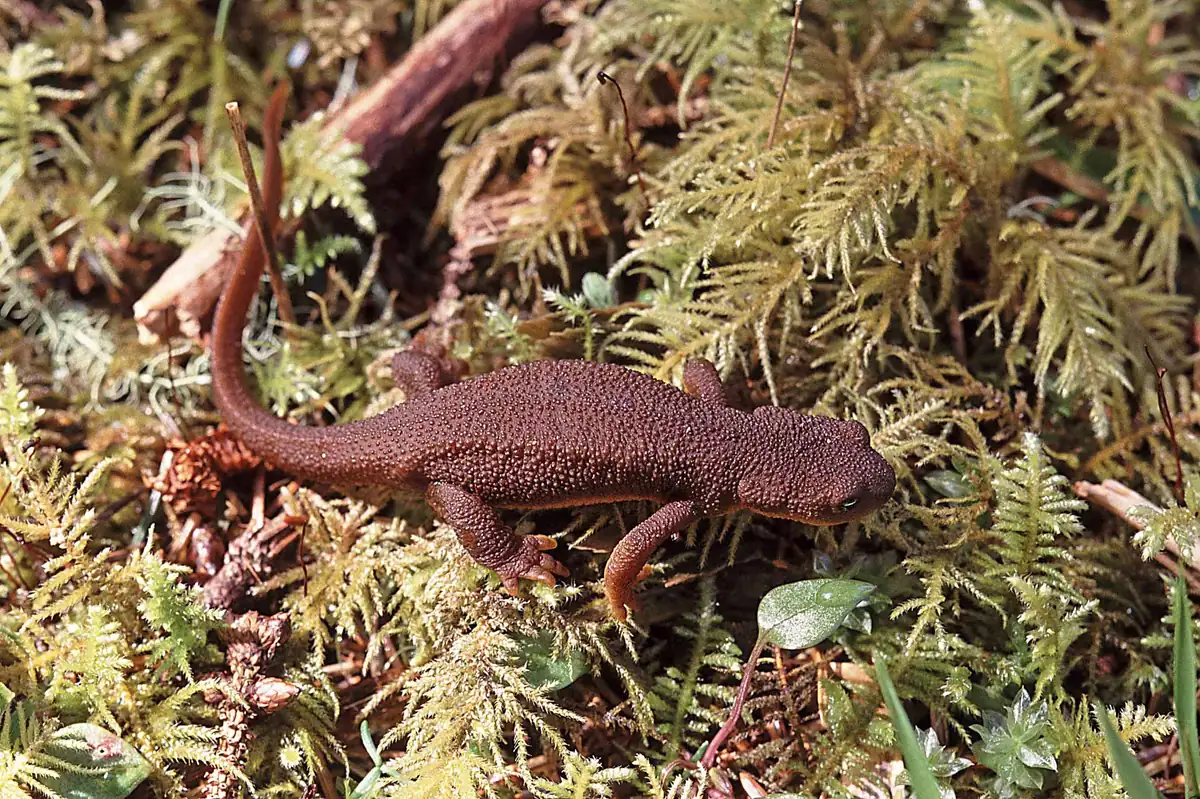
These brown-backed, orange-bellied newts spend the dry months under soft logs in the forest, then walk to ponds and slow streams to breed, and ODFW notes they are often seen crossing roads in fall and spring. Their skin and eggs carry a powerful nerve poison, so it is fine to move one off the road, but wash your hands afterward and keep fingers away from your mouth. Slow down on wet forest roads at night.
-
Gray whales still feeding
Resident whales June to mid-November · Central coast; the Whale Watching Center in Depoe Bay
About 200 gray whales stay off Oregon through summer and fall instead of migrating to Alaska, feeding close to shore, and Oregon State Parks calls the central coast a hot spot until mid-November. On a calm day, look for the heart-shaped blow near the rocks. The big southbound migration follows in December.
-
Few monarchs
Stragglers only · Mostly southern and eastern Oregon
The western monarch population is at a historic low, and by October the few that reach Oregon in summer are mostly gone. If you do see one, report it to Journey North. The Xerces Society’s Western Monarch Count takes place at the overwintering sites from November 14 to December 6.
Black bears are feeding hard before winter and squirrels are caching seeds. Try the dusk-and-dawn watch page: ten still minutes at a field edge at sunset.
What can families do outside in Oregon this month?
- Go to a mushroom festival. Yachats on October 16–18 or Mount Pisgah in Eugene on Sunday, October 25, or join a free ranger mushroom walk at Fort Stevens on a Friday or Sunday afternoon. Photograph a mushroom in Lane County for the Mycoblitz, October 15–24.
- Watch salmon spawn. Pick the closest site in the salmon list above and go on a clear day after a dry spell. Count how many fish you can see on one gravel bar and write the number down.
- Walk at Tryon Creek in Portland. Morning bird walks on Sundays, October 11 and 25, at 8:15 a.m.; a nature journaling session on leaves and leaf litter on Friday, October 16, at 3 p.m.; a bat storytime on Friday, October 23, at 10 a.m.; and the full moon hike on the 25th at 5:45 p.m.
- Meet the night animals. Rangers from Milo McIver State Park give a “Ravens, Owls, and Bats” program with bird-and-bat bingo at the Estacada Library on Tuesday, October 27, at 7 p.m., and again at the park’s campground amphitheater on Friday, October 30, at 10 a.m.
- Look up. Try the dark-sky evening at La Pine State Park on October 2 and the Draconids on the 8th, and log the first frost and the first real rain in the journal. Project FeederWatch opens for the winter in November, and the Western Monarch Count needs volunteers from mid-November.
Check each park’s event page the week before, since ranger programs can change with the weather, and browse the other months and states on our nature calendar.
Safety notes for October in Oregon
- Hunting seasons. The general western Oregon deer rifle season runs October 3 to November 6. East of the Cascades all deer rifle hunts are controlled by draw in 2026, and most buck hunts there are reported to run about October 3–14; the dates on each tag govern. Rooster pheasant, chukar and Hungarian partridge, and eastern Oregon quail open October 10. Duck season opens October 10 in Zone 2 and October 17 in Zone 1 (see ODFW’s zone map). The general Cascade elk and second Rocky Mountain elk seasons begin November 7. Bear season is open through December 31, and cougar all year.
- Hunter orange. Oregon requires it only of hunters younger than 18: anyone under 18 hunting game mammals or upland birds (not turkey) with a firearm must wear a hunter-orange hat or outer garment visible from all directions. Adults are not required to, but hikers, dog walkers and adult hunters in deer and bird country this month should wear a bright hat or vest anyway.
- Elk and wildlife. Keep 75 feet from elk, especially bulls in the rut. Wash your hands after touching a rough-skinned newt.
- Mushrooms. Several deadly species grow in Oregon. For any suspected poisoning, call the Oregon Poison Center at 1-800-222-1222.
- Storms, burn scars and the beach. Heavy fall rain on slopes that burned this summer can send mud and debris downhill quickly; stay out of steep drainages below burn areas during downpours. On the coast, never turn your back on the ocean: sneaker waves and rolling logs are most dangerous in the stormy months. Fire restrictions may still be in place in early October, and the Grasshopper Fire closure near Mount Hood lasts through December 31.
- Daylight. Days are shortening by about three minutes a day; carry a headlamp on afternoon hikes, especially after the clock change on November 1.
Sources
- ODFW: see salmon spawn (viewing sites and timing by region)
- ODFW: Bonneville Hatchery visitors’ guide (Herman the sturgeon, spawning season, hours)
- Bureau of Land Management: Dean Creek Elk Viewing Area
- Travel Oregon: how to watch elk along the Oregon coast (rut timing, safe distance, viewing sites)
- ODFW: Jewell Meadows Wildlife Area visitors’ guide
- Friends of Malheur National Wildlife Refuge: seasons of wildlife
- U.S. Fish and Wildlife Service: Malheur National Wildlife Refuge
- U.S. Fish and Wildlife Service: Malheur National Wildlife Refuge, species and seasons
- Klamath Basin Birding Trails: fall migration numbers and timing
- U.S. Fish and Wildlife Service: Klamath Marsh National Wildlife Refuge
- ODFW: Sauvie Island Wildlife Area visitors’ guide (October 1 closures, parking permit)
- U.S. Fish and Wildlife Service: William L. Finley National Wildlife Refuge (dusky Canada geese)
- Oregon State Parks: Let’s Go Birding, Trestle Bay, Fort Stevens, October 9, 2026
- Oregon State Parks: Coffenbury Lake bird walk, Fort Stevens, October 16, 2026
- HawkWatch International: Bonney Butte (season dates; 2026 season not operating)
- U.S. Forest Service, Mt. Hood National Forest: Grasshopper Fire closure order
- Yachats Mushroom Festival 2026 (October 16–18)
- Mount Pisgah Arboretum: Mushroom Festival and Mycoblitz
- Travel Oregon: Mount Pisgah Arboretum Mushroom Festival, October 25, 2026
- Oregon State Parks: Wild Mushroom Hike, Fort Stevens (Fridays in October 2026)
- Oregon State Parks: Mushroom Talk and Walk, Fort Stevens (Sundays in October 2026)
- Oregon Poison Center (OHSU)
- U.S. Forest Service: fall colors in the national forests (Mt. Hood, Willamette, Deschutes)
- U.S. Forest Service Fire Effects Information System: western larch
- NOAA NCEI: monthly climate normals 1991–2020 (Astoria, North Bend, Portland, Eugene, Medford, Pendleton, Burns, Redmond)
- NOAA NCEI: U.S. climate normals 1991–2020 (first-freeze probabilities)
- Wikipedia: Columbus Day Storm of 1962
- Climate Prediction Center: ENSO diagnostic discussion, September 10, 2026
- OPB Think Out Loud: Oregon’s state climatologist on the coming El Niño winter (September 3, 2026)
- NOAA Climate.gov: United States El Niño impacts
- U.S. Naval Observatory: sun and moon rise and set (data API; example for Portland, October 22)
- U.S. Naval Observatory: moon phases 2026
- International Occultation Timing Association: occultation of Jupiter, October 6, 2026
- American Meteor Society: meteor shower calendar
- EarthSky: meteor shower guide
- NIST: daylight saving time
- Oregon State Parks: Dark Skies Appreciation Event, La Pine State Park, October 2, 2026
- University of Oregon: Pine Mountain Observatory (closed to the public)
- Friends of Tryon Creek: October 2026 calendar (bird walks, nature journaling, storytime, full moon hike)
- Oregon State Parks: Morning Bird Walks, Tryon Creek State Natural Area
- Oregon State Parks: Ravens, Owls, and Bats, Estacada Library, October 27, 2026
- Oregon State Parks: Ravens, Owls, and Bats, Milo McIver State Park, October 30, 2026
- ODFW: salamanders in Oregon (rough-skinned newt)
- Oregon State Parks: whale watching (resident gray whales, Whale Watching Center)
- Xerces Society: western monarch numbers remain at historic low (January 29, 2026)
- Xerces Society: Western Monarch Count (2026 count dates)
- Journey North: monarch sightings
- Project FeederWatch: how to participate
- ODFW: big game hunting seasons, 2026
- Oregon game bird regulations (eRegulations, ODFW): 2026–27 upland game bird seasons
- Oregon game bird regulations (eRegulations, ODFW): 2026–27 migratory game bird seasons
- Oregon game bird regulations (eRegulations, ODFW): migratory bird zone maps
- Oregon hunting regulations (eRegulations, ODFW): general rules, including hunter orange for hunters under 18
- Oregon State Parks: home page (2026 fire restrictions notice)
- Photos via Wikimedia Commons; licenses and photographers are credited under each picture
