What to look for in nature in Oregon this January
January is the middle of Oregon's winter, and a surprising amount begins in it. Great horned owls and Anna's hummingbirds start nesting, hazelnut orchards shed their first pollen, and hundreds of elk come down to the hay at the foot of the Elkhorn Mountains. On the coast the season's last king tides ride in with the closest full moon of 2027, while geese by the tens of thousands graze the Willamette Valley and bald eagles hunt the marshes from Sauvie Island to the Klamath Basin. Each story below comes with where to go, when, and the source behind it.
Other months in Oregon: October, November, December, February.
Start here
- King tides with the Wolf Moon. The winter's final set of king tides runs January 20 to 24. The highest water comes around midday on Friday the 22nd, just hours after the year's nearest full moon. Watch from a headland or a seawall, never from the sand.
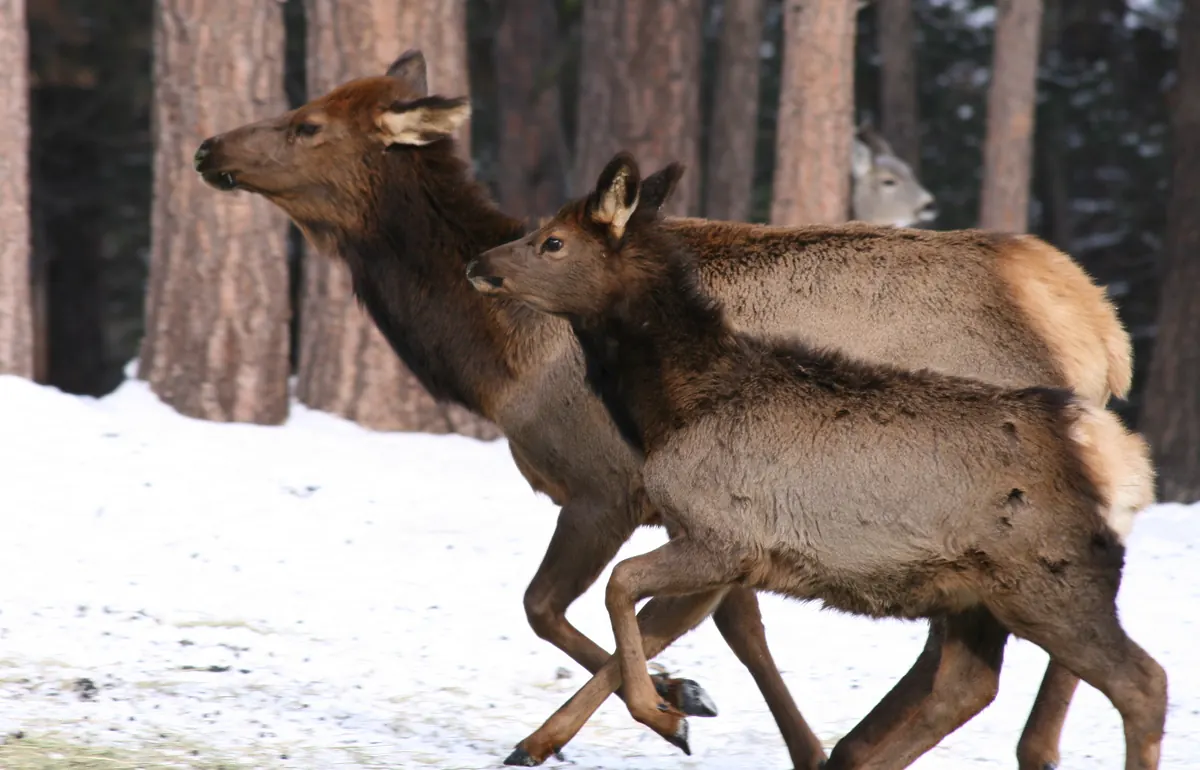
- Elk at the Elkhorn feed sites. In a snowy winter, about a thousand Rocky Mountain elk come down to ODFW's hay at the base of the Elkhorn Mountains. The Anthony Creek site west of North Powder has a parking area and kiosk; keep to the car or the pullout while the elk feed.
- Listen for owls at dusk. Great horned owls begin nesting this month. On a still evening, step outside around dark and listen for two owls answering each other in deep, measured hoots; the male's voice is the lower one.
Record it: count bulls, cows and calves at the feed line on the mammal watch plate of the Naturalist's Field Journal; the same place twice plate suits a king-tide spot, drawn at the midday high and again at the evening low. Note the first owl duet on a map of sounds, list every goose and eagle on birds I have seen, and sketch a hazel twig, catkins and tiny red flowers together, on a tree through the seasons.
Regions used below: Portland and the Columbia River Gorge; Willamette Valley; Oregon Coast; Southern Oregon: the Rogue and Umpqua valleys; Central Oregon and the Cascades; Eastern Oregon: the Blue Mountains, the Wallowas and the high desert.
When are the January king tides on the Oregon coast, and are gray whales still passing?
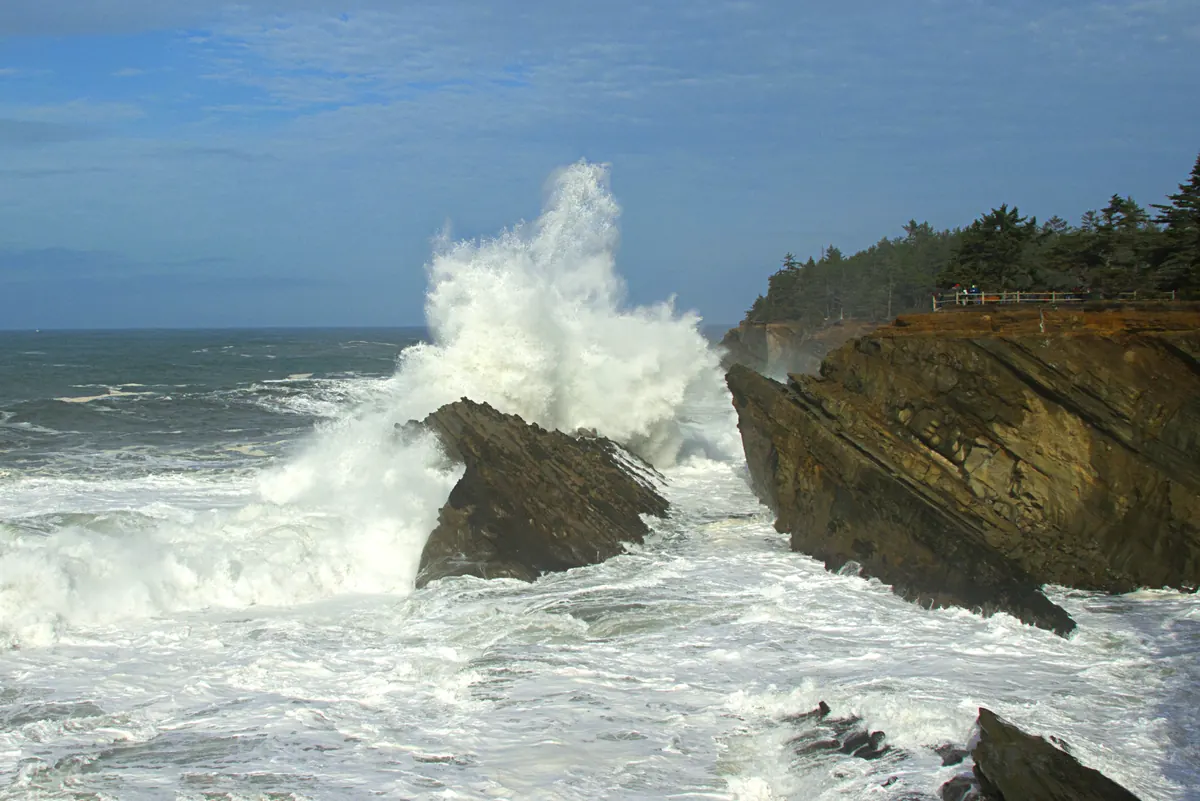
The Oregon King Tides Project's third and last photo window of the 2026 to 2027 season is January 20 to 24. These dates line up with the Wolf Moon, full before dawn on the 22nd and less than a day after perigee, the nearest the moon comes at any full moon in 2027. NOAA's predicted highs on the Friday are about 10.4 feet at both Newport and Astoria, a few tenths below the Christmas Eve tide but still among the year's biggest. Because the high water arrives near midday, this is the easiest king tide of the winter to watch in daylight.
-
Photograph the high water
January 20 to 24, 2027, around the late-morning or midday high · Seawalls, bay fronts, estuary roads and low parks from Astoria to Brookings
Volunteers take pictures of how far the tide reaches against something that does not move, such as a dock piling, a road shoulder, a set of stairs or a sea wall, so later photos can be compared at the same spot. Note the date, the time and the place, and include a recognizable landmark. The photos record what high water looks like now, which is a preview of an ordinary tide as sea level rises.
-
The minus tides that follow
Late afternoon, January 20 to 24 · Rocky shores and tidepool areas along the coast
The same pull that piles water up at midday drains it away later. NOAA predicts lows of more than a foot below zero at Newport in the late afternoons and evenings of the 20th through the 24th, the lowest at about 6:24 p.m. on the 22nd, after sunset. On the 20th the low comes at 4:51 p.m., while there is still some light. Tidepooling in the dusk on a winter beach is risky: go only on a calm day, take a headlamp, and keep watching the sea.
-
The tail of the southbound gray whales
Early to mid-January · High headlands; the state park Whale Watching Center at Depoe Bay
Oregon State Parks gives mid-December to mid-January as the span when gray whales swim south past the coast toward the Baja lagoons, so early January still brings blows, though fewer than at the turn of the year. The winter whales travel well out from shore, so a high perch and steady binoculars help. Oregon State Parks expects the northbound whales from late March.
| Date | Newport (South Beach) | Astoria (Tongue Point) |
|---|---|---|
| Wednesday, Jan 20 | 10.0 ft at 9:41 a.m. | 10.1 ft at 10:42 a.m. |
| Thursday, Jan 21 | 10.3 ft at 10:39 a.m. | 10.3 ft at 11:42 a.m. |
| Friday, Jan 22 | 10.4 ft at 11:34 a.m. | 10.4 ft at 12:37 p.m. |
| Saturday, Jan 23 | 10.2 ft at 12:26 p.m. | 10.2 ft at 1:30 p.m. |
| Sunday, Jan 24 | 9.7 ft at 1:17 p.m. | 9.8 ft at 2:21 p.m. |
A winter storm or a long-period swell can push the water and the drift logs far beyond the predicted line, and the National Weather Service warns that sneaker waves can run much farther up a beach than the waves before them. Keep to the high ground, and never turn your back to the ocean.
Where can you see bald eagles in Oregon in January?
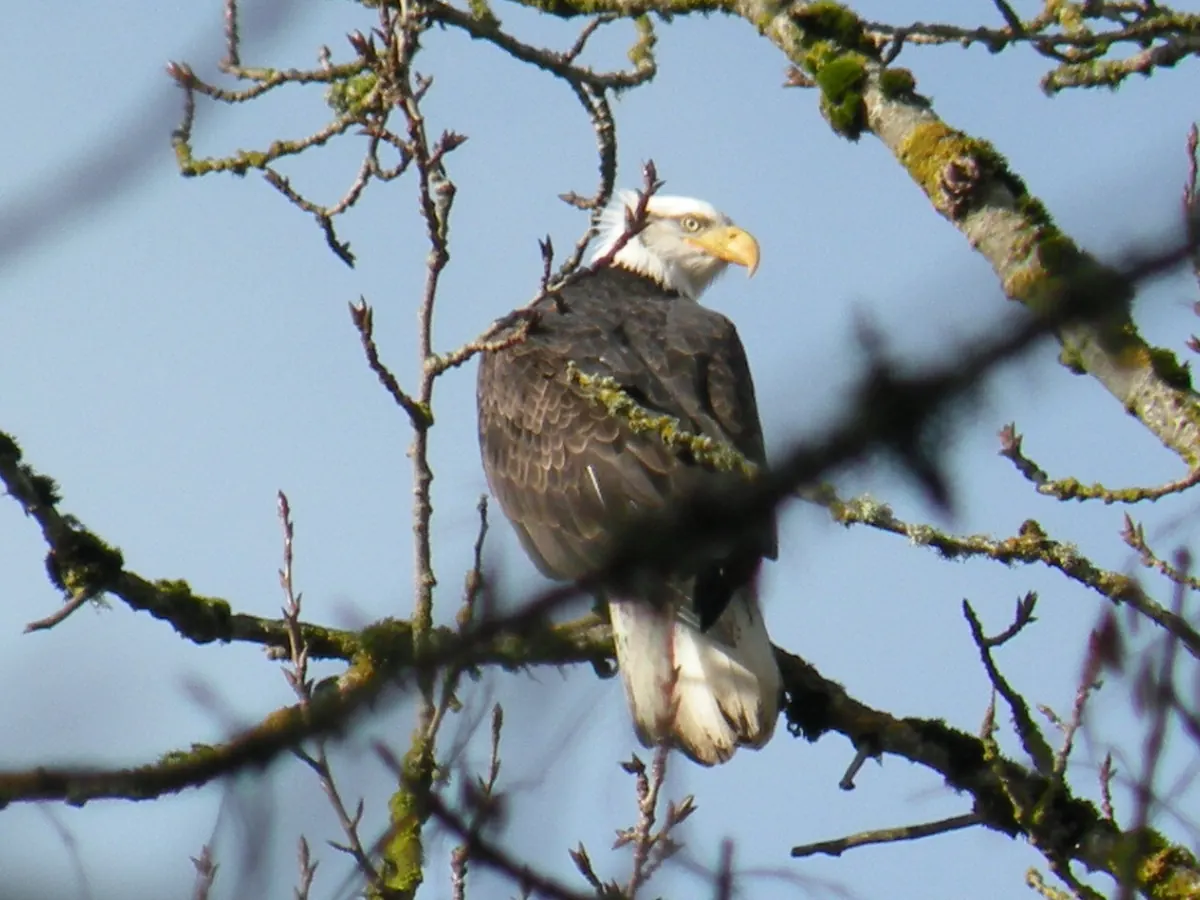
By January, Oregon's wintering bald eagles have settled where waterfowl gather. Look for them on ice edges, in cottonwoods along sloughs, or out in flooded fields among wary ducks.
-
Sauvie Island Wildlife Area
ODFW names January to March as the eagle months · Reeder Road: Raccoon Point overlook, the Eastside viewing platform, Rentenaar Road, Warrior Rock trail
On the island just downstream of Portland, ODFW's visitor guide pairs the eagle months with a longer September to March season for waterfowl and sandhill cranes. Several units are closed from October 1 to April 15 to give the birds room, but the viewpoints along Reeder Road stay open. A wildlife area parking permit is required at all times.
-
The Klamath Basin, still building
All month; the Basin's eagle numbers usually peak in mid-February · Lower Klamath and Tule Lake refuges, Township Road, Miller Island
Bear Valley refuge, closed to the public, was set aside to protect an eagle night roost, and federal biologists rank it among the busiest bald eagle wintering sites in the lower 48. From there the birds spread out each morning over the marshes and fields. The Klamath Basin Birding Trails put the peak in mid-February, so January numbers are still rising. The four-day Winter Wings Festival in Klamath Falls is usually held over Presidents' Day weekend in February; the 2027 program has not been posted yet, so check with the festival.
-
Willamette Valley refuges
Through the winter, best on clear mornings · Ankeny, Baskett Slough and William L. Finley refuges
The three valley refuges were created for wintering geese, and eagles follow the flocks. Finley's boardwalk to the Homer Campbell observation blind is open year-round, and the refuge lists bald eagles among the birds to look for from it.
Eagles flush easily: watch from the car or a viewpoint, and back off if a bird lifts off because of you.
Where do geese spend the winter in Oregon?
The Willamette Valley is one of the great goose wintering grounds of the Pacific Coast. Several kinds of white-cheeked geese share it, from big Canada geese to the small, short-necked cackling geese, and on a winter morning the flocks rise off the grass seed fields in long, noisy ribbons.
-
Dusky Canada geese
Fall through early spring · William L. Finley, Ankeny and Baskett Slough refuges
The dusky is a dark-breasted Canada goose that raises its young in Alaska's Copper River Delta and winters almost nowhere but the Willamette Valley; the Fish and Wildlife Service puts the whole population near 16,000. The valley refuges were set up in the 1960s mainly to give them a safe winter home.
-
Cackling geese in the thousands
Winter; the biggest flocks from late fall to early spring · Valley farm fields and refuges, the lower Columbia
A cackling goose looks like a Canada goose in miniature, with a stubby bill and a high-pitched, yelping call. ODFW's field guide to the valley's geese tells how this population collapsed in the 1980s and then, as it recovered in the 1990s, moved its winter home north from California's Central Valley. By the guide's 2006 count, about 95 percent of these cacklers, which nest on the western Alaska coast, now winter in the valley and along the lower Columbia.
-
Winter sanctuary rules
Finley: November 1 to March 31; Ankeny and Baskett Slough: from October 1 · Willamette Valley National Wildlife Refuge Complex
Large parts of the refuges close in winter so the geese can rest and feed without being flushed. At Finley, the Woodpecker Loop and Mill Hill trails, the Homer Campbell boardwalk, and the McFadden's Marsh and Lake Creek blinds stay open, and the refuge is open from dawn to dusk.
Goose seasons are still open in parts of the valley (see the safety section).
Which Oregon birds start nesting in January?
Most birds wait for spring, but a few start a family in the coldest part of the year. Their timing lets the young leave the nest just as food becomes plentiful.
-
Great horned owls
Nesting begins in January; owlets hatch about a month after the eggs are laid · Woodlots, river bottoms, city parks and desert canyons statewide
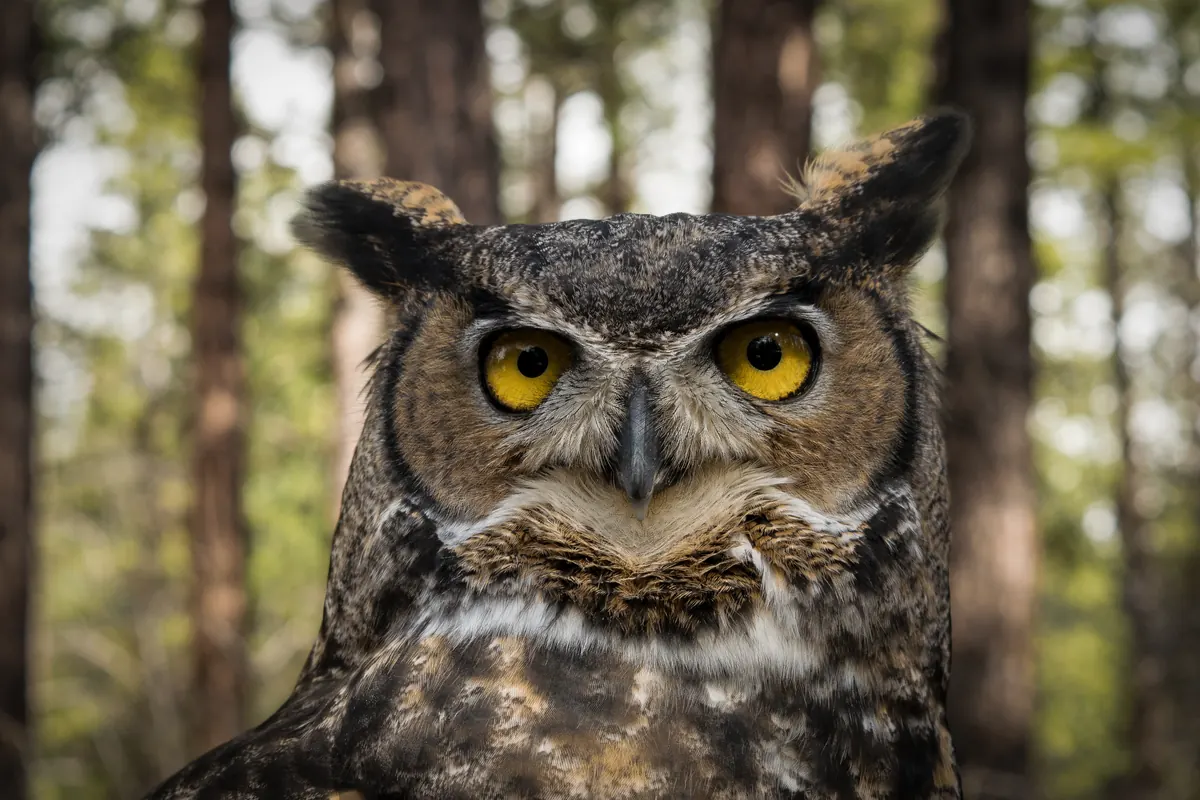
The Coast to Cascades Bird Alliance in Eugene notes that the pairs start nesting in January, after weeks of hooting to claim territory and strengthen the pair bond. Rather than building, they borrow: an old hawk nest, a hollow snag or a broken-off treetop. Up to five eggs hatch within a month; about six weeks after hatching the owlets start clambering onto the branches around the nest, and three weeks after that they can fly. Listen at dusk for two owls trading hoots: the lower voice is the male's.
-
Anna's hummingbirds
Some nests by January · Gardens, parks and neighborhoods west of the Cascades
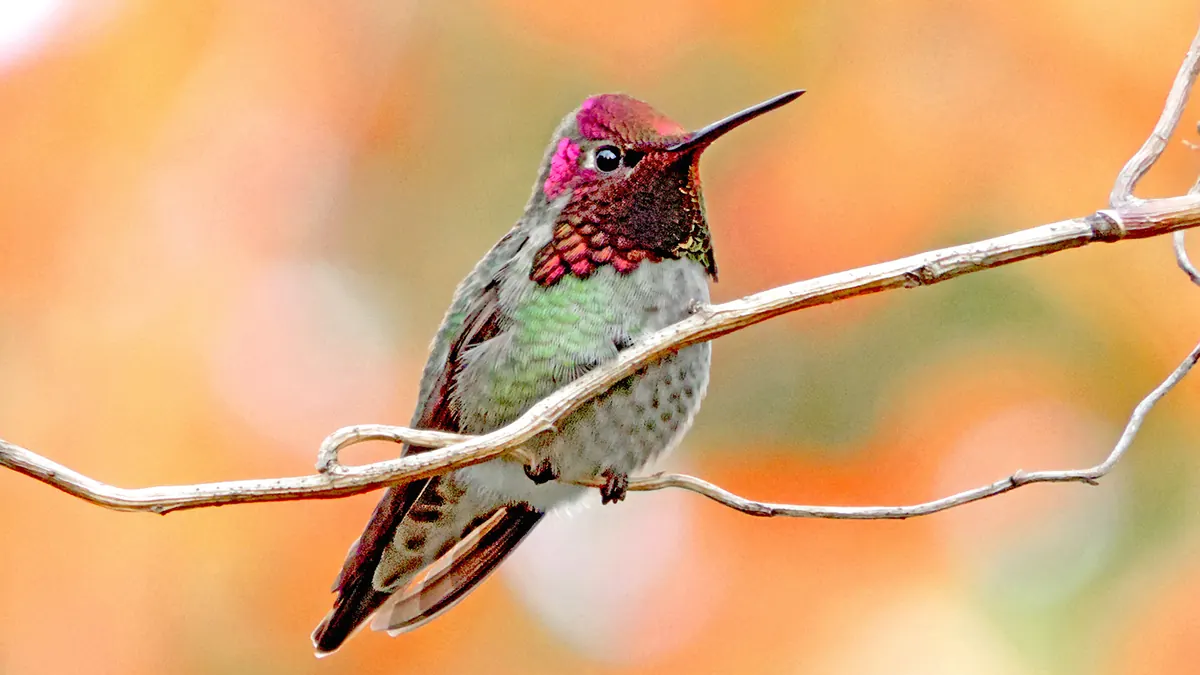
Anna's hummingbirds now stay year-round in western Oregon, helped by garden flowers and feeders. Audubon reports that in Portland some begin nesting as early as January, building inch-tall cups of moss, lichen and spider silk on a level branch. Watch for a male's courtship dive: he climbs high, then dives steeply toward a female and makes a loud, explosive pop at the bottom of the dive.
Watch any nest you find from a distance, and keep visits short so the eggs do not chill.
How can I count birds in Oregon in January?
The Christmas Bird Count season runs to Tuesday, January 5, 2027, and a few Oregon circles hold their count day in these first days of the year. After that, two long-running projects keep going all winter from your own window.
-
The Eugene Christmas Bird Count
Sunday, January 3, 2027 · The Eugene count circle; field teams and home counters
The Coast to Cascades Bird Alliance has already set its 2026 to 2027 count for January 3. Fill in the interest form to join a field team, or use the home count form if you live inside the circle and would rather watch your feeders. For counts elsewhere in the state, the Oregon Birding Association posts each season's dates as compilers announce them.
-
Project FeederWatch
All winter, from November 1; any days you choose · Your yard, balcony or schoolyard
The Cornell Lab of Ornithology and Birds Canada run this winter count of feeder birds. Pick two days, watch for as long as you like, and for each species, report the largest group in view at once.
Start the year's bird list on New Year's Day in the Naturalist's Field Journal, on its birds I have seen plate.
Where can you watch elk in Oregon in January?
Snow pushes elk down from the mountains in winter. In northeastern Oregon, ODFW sets out hay for them each winter along the foot of the Elkhorns, which turns a few roadside pastures into dependable places to see big herds.
-
Elkhorn Wildlife Area feed sites
Feeding usually starts in early December and lasts until winter weather breaks in spring · Anthony Creek site on River Lane west of North Powder; Auburn site on Old Auburn Road southwest of Baker City
ODFW runs 10 feed sites along the eastern edge of the Elkhorn Mountains in Baker and Union counties. In a typical winter, the Baker City Herald reports, crews are feeding perhaps 1,000 elk by Christmas, along with mule deer. The wildlife area itself is closed from December 1 to April 10 except by permit, but the Anthony Creek and Auburn sites can be watched from the road and parking areas. The elk come in greatest numbers when snow covers the hills; in a mild winter they may stay out on their own feed, as they did in December 2025.
-
On the west side
Through February · Jewell Meadows in Clatsop County; Dean Creek near Reedsport
ODFW's guided winter feeding tours at Jewell Meadows continue through February by reservation (503-755-2264), and the herd can also be seen from the highway pastures. Roosevelt elk at the BLM's Dean Creek viewing area graze in sight of Highway 38 all winter.
Elk pushed off the feed waste energy they need in January, so watch with binoculars from the car, and sketch their split hoofprints on the tracks to know plate.
What is flowering in Oregon in January?
Very little, which makes the few early bloomers easy to spot. The best known, the hazel, needs no insects at all: its pollen travels on the wind, so cold, wet weather does not stop it.
-
Hazelnut catkins
Catkins ripen in December or January; peak pollination January through February · Hazelnut orchards of the Willamette Valley; hedgerows and gardens
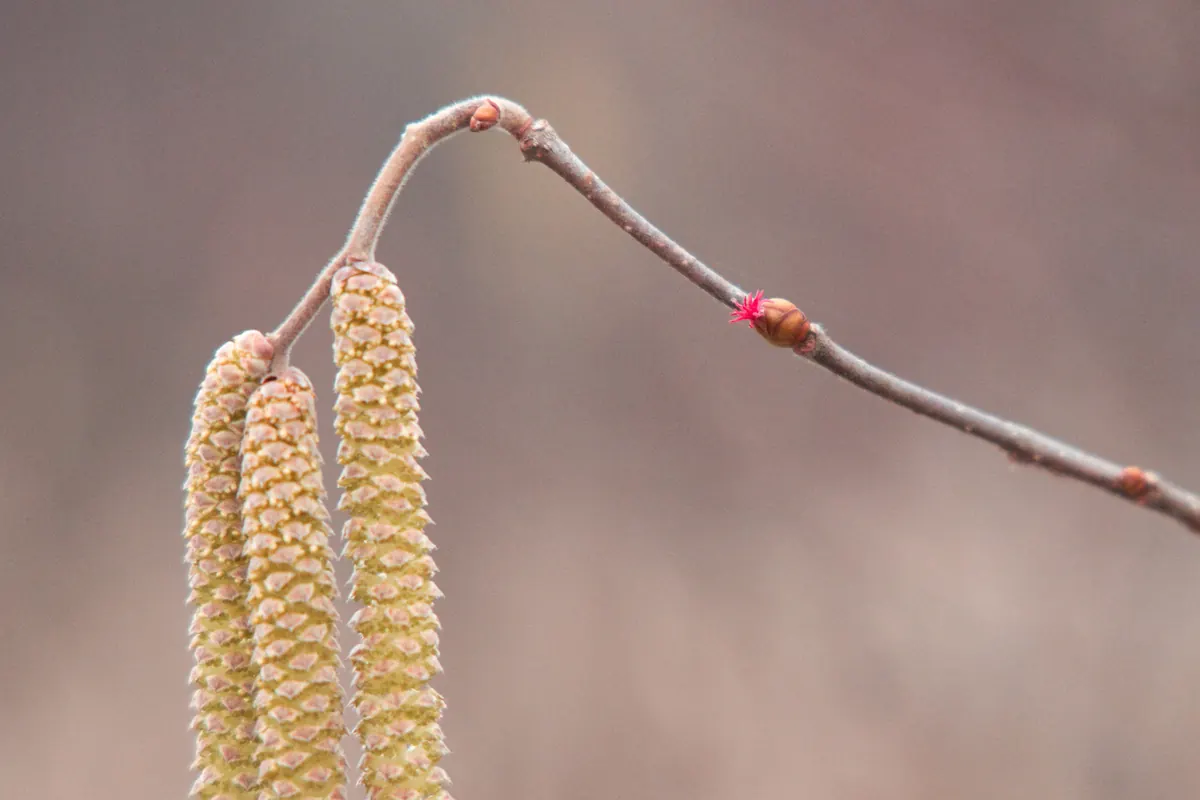
Oregon Agriculture in the Classroom says Oregon farms grow all of the hazelnuts produced in the United States, and in January the orchards turn a pale yellow-green as the catkins lengthen and loosen. OSU Extension explains that the male catkins form the previous summer but do not mature until December or January. Tap a hanging catkin on a dry day and a puff of pollen drifts off on the wind.
-
The hidden red flowers
Visible from late November; receptive January and February · The same branches, on separate buds
Look closely at the bare twigs near the catkins for a bud with a tiny tuft of bright red threads poking out of its tip. That is the female flower, and the threads are its styles, waiting for pollen. OSU explains one of the plant's oddities: fertilization does not happen until about mid-June, four to five months after the pollen lands.
-
Indian plum buds
Flowers usually late winter into March; check the buds now · Stream banks and forest edges west of the Cascades
The USDA's plant guide calls Indian plum, or osoberry, often the first native deciduous shrub to flower in late winter. Its leaves come out early too, before the trees overhead leaf out. Learn its smooth twigs now, and you will know where to look when the drooping clusters of greenish-white flowers open.
Draw a hazel twig with both kinds of flowers on it now, then add the leaves and the husked nuts to the same page as the year goes on.
How snowy is an Oregon January, and what does a strong El Niño usually bring?
January stays wet west of the Cascades in NOAA's 1991 to 2020 normals: Astoria and North Bend average about ten inches of rain in the month, while Pendleton, Burns and Bend average less than two inches of precipitation. Real snow is a mountain affair: the park headquarters at Crater Lake gets about 86 inches of snow in an average January, and Government Camp on Mount Hood about 49 inches.
-
The first snow report of the year
Early January, then monthly to June · USDA Natural Resources Conservation Service, Oregon Snow Survey
The NRCS publishes its Oregon Water Supply Outlook at the start of each month from January to June, comparing snow water at automated SNOTEL stations and manual snow courses with normal. Its January report is the first real look at how the winter's snowpack is going. Last year's was grim: on January 1, 2026, statewide snow water was the second lowest in 46 years of records, and the Mt. Hood Test Site station had its lowest, because the December storms fell as rain on record-warm mountains.
-
This winter's very strong El Niño
Usually most pronounced from December to February · Statewide
This winter's backdrop is probably an exceptionally strong El Niño: as of September 10, NOAA's climate forecasters put its chances above 9 in 10. The usual El Niño pattern for the Northwest, as the USDA Northwest Climate Hub summarizes it, is a warmer, drier winter with more rain and less snow, and so a thinner snowpack. Very strong events have not always followed that script. Oregon's state climatologist, Larry O'Neill, has pointed out that the strongest ones (1982 to 83, 1997 to 98 and 2015 to 16) left Oregon wetter than normal, yet 2015 to 16 still left one of the poorest snowpacks on record because so much fell as rain. NOAA's three-month outlooks are updated every month on the Climate Prediction Center site.
-
Snowshoe with a ranger at Crater Lake
Weekends and holidays, 12:30 p.m., late November through April, if snow allows · Rim Village, Crater Lake National Park
The two-hour walks cover a mile or two off trail, and the park lends the snowshoes. Space is limited: call 541-594-3100 to reserve, and note that walkers must be 8 or older. The only cost is the $20 winter vehicle entrance fee.
| Station | Precipitation (in) | Snowfall (in) | Average high (°F) | Average low (°F) |
|---|---|---|---|---|
| Astoria (north coast) | 10.59 | 49.4 | 38.1 | |
| North Bend (south coast) | 9.43 | 0.0 | 53.5 | 41.0 |
| Portland | 5.03 | 1.7 | 47.5 | 36.2 |
| Eugene | 6.05 | 48.1 | 34.7 | |
| Medford | 2.72 | 1.0 | 48.2 | 32.5 |
| Government Camp (Mount Hood) | 12.61 | 48.8 | 37.1 | 26.4 |
| Crater Lake National Park headquarters | 10.10 | 86.5 | 33.4 | 19.8 |
| Bend | 1.41 | 6.4 | 42.5 | 24.6 |
| Burns | 1.33 | 36.7 | 16.3 | |
| Pendleton | 1.52 | 3.8 | 41.7 | 28.0 |
| La Grande | 1.67 | 3.3 | 39.3 | 24.6 |
Burns, in the high desert, has the coldest nights on the list, with an average January low of about 16 °F. The Oregon frost dates page lists the typical last spring freeze for stations across the state, and the coming storm's snow level and timing are on our current weather page.
How much daylight does Oregon gain in January?
The days have been growing since the December solstice, but slowly at first; by late January the gain is easy to notice. In Portland, the U.S. Naval Observatory has the sun setting at 4:38 p.m. on New Year's Day and at 5:00 p.m. on Wednesday, January 20, the first 5 o'clock sunset of 2027. Sunrise lags behind: it is still 7:51 a.m. on January 1 and only reaches 7:33 a.m. by the 31st, so most of January's new light arrives in the afternoon.
| City | Jan 1 | Jan 31 | Gained | Per day |
|---|---|---|---|---|
| Astoria | 8 h 42 m | 9 h 40 m | 58 min | 1.9 min |
| Portland | 8 h 47 m | 9 h 43 m | 56 min | 1.9 min |
| Pendleton | 8 h 46 m | 9 h 42 m | 56 min | 1.9 min |
| Newport | 8 h 54 m | 9 h 48 m | 54 min | 1.8 min |
| Bend | 8 h 58 m | 9 h 50 m | 52 min | 1.7 min |
| Ontario | 8 h 57 m | 9 h 51 m | 54 min | 1.8 min |
| Medford | 9 h 09 m | 9 h 58 m | 49 min | 1.6 min |
| Brookings | 9 h 11 m | 10 h 00 m | 49 min | 1.6 min |
Northern towns gain the most, because the farther you are from the equator, the faster day length swings toward the equinox. Look up the exact sunrise and sunset for your own street with the daylight calculator.
What is in the Oregon night sky in January 2027?
Long nights, a strong meteor shower and the year's nearest full moon all fall in January, whenever the clouds part. Times are Pacific Standard Time; most of Malheur County, including Ontario, keeps Mountain time, an hour later.
-
The Quadrantid meteors
Night of Sunday, January 3, into Monday, January 4 · Any dark site; face northeast after midnight
The Quadrantid maximum is brief. Predictions differ: about 7:30 p.m. PST on Sunday by the American Meteor Society's reckoning, a little after 9:45 p.m. by EarthSky's, both while the radiant is still low in the north. The radiant climbs through the night, so in Oregon the hours just before Monday's dawn are usually richer. A sliver of old moon stays below the horizon in Portland until about 5:40 a.m. Away from city lights, a good hour may bring a few dozen meteors.
-
Earth at perihelion
Saturday, January 2, 6:33 p.m. PST · Everywhere
In the depth of the northern winter, Earth makes its nearest pass of the sun, roughly 91.4 million miles. Our cold season comes from the axis tilt, which is why being nearest the sun does nothing to warm January.
-
Venus at its greatest elongation
Sunday, January 3, and all month before sunrise · Low in the southeast before dawn
Greatest elongation comes on the 3rd, when 47 degrees of sky separate Venus from the sun, and it outshines everything but the moon.
-
The Wolf Moon, the year's closest full moon
Full at 4:17 a.m. PST, Friday, January 22 · Rises in the east-northeast at dusk on the 21st
Perigee comes roughly half a day earlier, so this full moon is 2027's nearest, some 222,229 miles off, and looks a little bigger and brighter than usual. In Portland it rises at 4:10 p.m. on Thursday the 21st and sets a little after 8 a.m. on Friday, so Thursday night is the time to look. On Saturday evening, the 23rd, the moon rises close to bright Jupiter in the east.
-
Planets after dark
All month · Jupiter in the east; Saturn in the southwest
Jupiter rises in the evening and is up most of the night, heading toward its February opposition. Saturn sits in the southwest after sunset and sinks lower each week, and late in the month Mercury starts to show low in the west-southwest in the evening twilight.
| Phase | Date | Time |
|---|---|---|
| New moon | Thursday, Jan 7 | 12:24 p.m. PST (1:24 p.m. MST) |
| First quarter | Friday, Jan 15 | 12:34 p.m. PST (1:34 p.m. MST) |
| Full moon, the Wolf Moon | Friday, Jan 22 | 4:17 a.m. PST (5:17 a.m. MST) |
| Last quarter | Friday, Jan 29 | 2:55 a.m. PST (3:55 a.m. MST) |
The darkest evenings fall around the new moon, roughly January 3 to 12, the best time for faint stars and, on the rare active night, a glimpse of aurora on the northern horizon. Check our sky-cover forecast before driving to a dark spot, and see moonrise and moonset times for each night on the lunar calendar.
What can families do outdoors in Oregon in January?
- Hike on New Year's Day. First Day Hikes fall on Friday, January 1, 2027, in every state. In recent years Oregon State Parks rangers and volunteers have led free guided walks at parks around the state; the 2027 list is not out yet, so check the State Parks site in December, and remember that some parks need a day-use parking permit.
- Join the Eugene bird count. On Sunday, January 3, families inside the Eugene circle can count from home with the home count form, or join a field team.
- Photograph a king tide. Between January 20 and 24, pick a seawall or bayfront near the midday high, take a picture with a landmark in it, and add it to the Oregon King Tides Project.
- Go to see the elk. At the Elkhorn feed sites near North Powder and Baker City, children can watch hundreds of elk from the car.
- Snowshoe at Crater Lake. Ranger walks on weekends and holidays at 12:30 p.m. take anyone aged 8 and up, with snowshoes provided; call ahead to reserve.
- Go on an owl walk at dusk. In a local park or along a river, stand still at nightfall and listen for great horned owls hooting.
- Count feeder birds. Sign up for Project FeederWatch and keep a weekly tally all winter, Anna's hummingbirds included.
Winter programs are cancelled when roads ice over, so confirm before you go. Look back at the Oregon December guide for the Christmas-season stories, or see every state's months on the nature calendar index.
What should I watch out for outdoors in Oregon in January?
- Hunting seasons. Waterfowl and upland seasons are still open for much of January. Duck season runs to January 31 in Zone 1 and to January 24 in Zone 2. Canada and cackling goose seasons close January 7 in the South Coast Zone and January 31 in the Southwest, Mid-Columbia and High Desert and Blue Mountain zones; in the Northwest Permit Zone the season closes after January 8 and reopens January 30. White goose hunting opens January 16 in the High Desert and Blue Mountain Zone. Chukar, Hungarian partridge, quail and forest grouse run to January 31. Cougar season is open all year, and antlerless elk damage hunts continue to March 31.
- Trapping. Oregon's 2026 to 2027 furbearer seasons are open: beaver, river otter and raccoon to March 15, mink and muskrat to March 31, bobcat and foxes to February 28, and marten to January 31. Keep dogs leashed and on trails in brushy country and along streams.
- Hunter orange. The rule covers only young hunters: anyone younger than 18 carrying a firearm while hunting game mammals or upland birds (turkey excepted) needs an orange hat or outer garment visible all around. Nobody else is required to, yet a vivid jacket is a sensible choice for anyone walking a wildlife area in January.
- Avalanches. Three centers issue backcountry avalanche forecasts in Oregon: the Northwest Avalanche Center for Mount Hood, the Central Oregon Avalanche Center, and the Wallowa Avalanche Center for the Wallowas, Elkhorns and Blues. Read the day's forecast before skiing, snowshoeing or snowmobiling on steep slopes, and carry rescue gear and training.
- Short days. In Portland the sun sets before 5 p.m. until January 20, so start winter hikes early and pack a headlamp.
- Cold. January nights average about 16 °F at Burns and below 20 °F at Crater Lake, and wind makes it feel colder. Wool or synthetic layers keep their warmth when damp; head for the car at the first hard shivering.
- Ice and roads. Mountain passes may require chains on short notice, and freezing rain or freezing fog can glaze roads in the valleys and the Gorge. Check TripCheck before leaving and carry chains, a blanket, food and water. Stay off frozen ponds and lakes; ice in Oregon's lowlands tends to be thin and uneven, and it is weakest over springs and inlets.
- Atmospheric rivers and the surf. Long bands of tropical moisture can bring heavy rain, flooding and landslides, especially on steep slopes and below burn scars. Never drive into water over a road. On the coast, stay off logs and out of the surf zone during storms and king tides.
Sources
- Oregon Shores Conservation Coalition: King Tides, 2026 to 2027 season dates
- Oregon King Tides Project
- NOAA Tides and Currents: predictions, Newport (South Beach), January 2027
- NOAA Tides and Currents: predictions, Astoria (Tongue Point), January 2027
- National Weather Service: sneaker waves
- Oregon State Parks: whale watching
- ODFW: gray whale
- ODFW: Sauvie Island Wildlife Area visitors' guide
- U.S. Fish and Wildlife Service: Bear Valley National Wildlife Refuge
- Klamath Basin Birding Trails: FAQs
- Klamath Basin Birding Trails: Winter Wings Festival
- U.S. Fish and Wildlife Service: William L. Finley National Wildlife Refuge
- U.S. Fish and Wildlife Service: Finley refuge, visiting and winter closures
- U.S. Fish and Wildlife Service: Baskett Slough National Wildlife Refuge
- U.S. Fish and Wildlife Service: annual winter sanctuary season on the Willamette Valley refuges
- ODFW: Identification field guide to the geese of the Willamette Valley and lower Columbia River (2006)
- ODFW: owls
- Coast to Cascades Bird Alliance: breeding season begins in winter
- Audubon magazine: Anna's hummingbird nests at Oaks Bottom, Portland
- Audubon field guide: Anna's hummingbird
- National Audubon Society: Christmas Bird Count
- Coast to Cascades Bird Alliance: Eugene Christmas Bird Count
- Oregon Birding Association: Christmas Bird Counts
- Cornell Lab of Ornithology and Birds Canada: Project FeederWatch
- Cornell Lab of Ornithology: eBird
- ODFW: Elkhorn Wildlife Area visitor guidelines
- Baker City Herald: mild winter keeps elk numbers down at Elkhorn Wildlife Area sites (December 22, 2025)
- ODFW: Jewell Meadows Wildlife Area visitors' guide
- Bureau of Land Management: Dean Creek Elk Viewing Area
- Oregon State University Extension: Growing hazelnuts in the Pacific Northwest, pollination and nut development (EM 9074)
- Oregon Agriculture in the Classroom: hazelnuts
- USDA NRCS plant fact sheet: Indian plum
- NOAA NCEI: 1991 to 2020 monthly normals for Oregon stations (January)
- USDA NRCS: Oregon Snow Survey
- USDA NRCS: January 1, 2026 Oregon Water Supply Outlook Report
- NOAA Climate Prediction Center: ENSO diagnostic discussion, September 10, 2026
- NOAA Climate Prediction Center: three-month outlooks
- U.S. Geological Survey: regional super El Niño impacts, Northwest U.S.
- USDA Northwest Climate Hub: El Niño in the Northwest
- OPB: Oregon's state climatologist on the El Niño winter
- National Park Service: Crater Lake ranger-guided snowshoe walks
- U.S. Naval Observatory: sun and moon data, Portland, January 20, 2027
- U.S. Naval Observatory: sun and moon data, Portland, January 21, 2027
- U.S. Naval Observatory: moon phases
- U.S. Naval Observatory: seasons and perihelion, 2027
- American Meteor Society: meteor shower calendar
- EarthSky: Quadrantid meteor shower
- EarthSky: supermoons
- Fred Espenak: Sky Event Almanac 2027
- Sea and Sky: 2027 astronomy calendar
- NOAA Space Weather Prediction Center: aurora forecast
- America's State Parks: First Day Hikes
- ODFW Oregon hunting regulations, official online edition: migratory game bird seasons, 2026 to 2027
- ODFW Oregon hunting regulations, official online edition: upland game bird seasons, 2026 to 2027
- ODFW: big game hunting seasons
- ODFW: furbearer trapping and hunting
- ODFW Oregon hunting regulations, official online edition: general hunting regulations (hunter orange)
- Avalanche.org: U.S. avalanche centers
- Wallowa Avalanche Center
- Oregon Department of Transportation: TripCheck
- Photos via Wikimedia Commons; licenses and photographers are credited under each picture
