What to look for in nature in Rhode Island this March
March is the month Rhode Island thaws. The first warm, rainy night sends wood frogs and spotted salamanders to the vernal pools, river herring start up the coastal brooks, and ospreys come back to their platforms on the bay. Woodcock begin their sky dances at dusk, the last maple sap runs, and the last winter seals and sea ducks are still offshore. The day gains 85 minutes in Providence, the clocks go forward on the 14th, and the equinox falls on the 20th. It is also the month of mud and, in 2010, of record river floods. Here is what to watch from the Blackstone Valley to Block Island.
Other months in Rhode Island: October, November, December, January, February, April.
Start here
- Listen on the first warm rainy night. When the ground has thawed and a rain falls after dark, walk or drive slowly near a wooded wetland, stop, and listen for the quacking of wood frogs and the peeping that follows. Stay on the road or path, and do not handle the animals.
- Watch a brook for river herring. Pick a bridge over a coastal brook, such as Gilbert Stuart Stream in the Narrow River headwaters or Buckeye Brook in Warwick, and look for silver fish working upstream on a mild afternoon. The run is usually under way from mid-March.
- Find your first osprey. Check a nest platform or utility pole near open water in the last half of March and note the date you first see an adult on it. Ospreys return between March and April.
For the Naturalist’s Field Journal, March is a month of arrivals. Write down the night of your first peeper on “a map of sounds,” adding the hour and the weather, and note the first osprey on “nest observed” beside the platform you are watching. A woodcock at dusk belongs on “dusk and dawn watch,” the first red maple flower on “a tree through the seasons,” and every new bird on “birds I have seen.” Visit one wet place twice, before and after the thaw, for “the same place twice.”
Regions used below: Northern Rhode Island and the Blackstone Valley; Providence and the upper bay; The western hills (Foster, Scituate, Coventry); South County and the salt ponds; Newport, Aquidneck Island and the East Bay; Block Island.
When do wood frogs, spring peepers and spotted salamanders reach Rhode Island’s vernal pools?
The first warm, rainy night of the year is the big event of Rhode Island’s March. A vernal pool is a shallow woodland wetland that fills from rain and melting snow in late fall through spring and usually dries by midsummer, according to the Department of Environmental Management (DEM). Because it dries, fish cannot live in it, and that is what makes it a safe nursery. DEM counts at least 11 amphibian species that breed in the state’s vernal pools, and says most pool-breeding amphibians walk to the water between late February and early April. A thaw plus a soaking rain after dark is usually what sets them moving, so the exact night changes from year to year and from the coast to the hills.
-
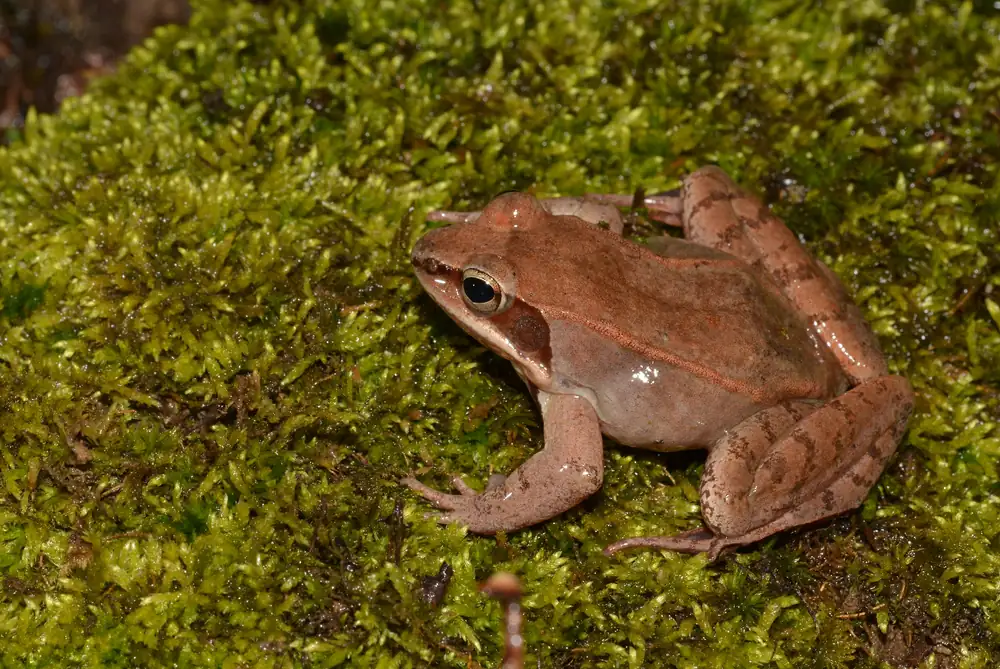
Wood frogs
Often the first to call, as the ground thaws · Woodland pools and flooded swamps
Audubon Society of Rhode Island (ASRI) describes the wood frog by its dark face mask and a call like a quacking duck, written kraack-arrack, and notes that it can freeze solid in winter and thaw out in spring. A Mass Audubon account says a large chorus carries several hundred feet. A wildlife veterinarian quoted in a Rhode Island public media story lists the order he listens for in spring: red-winged blackbirds first, then wood frogs, then peepers. Each female lays a gel-like mass of several hundred eggs, which DEM says hatch in a week or so, and the young leave the pool about four months later.
-
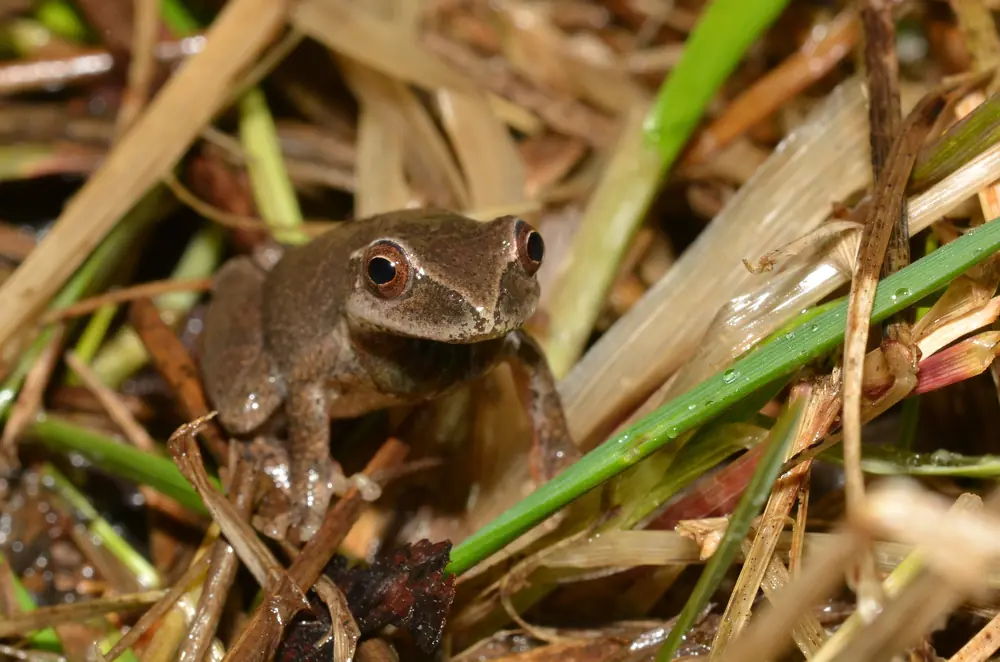
Spring peepers
Early spring, usually just after the wood frogs begin · Vernal pools, pond edges and flooded shrubby wetlands
DEM’s children’s magazine calls the spring peeper the smallest frog in Rhode Island. This frog is about an inch long at most, but it makes up for its size with a pond chorus that Mass Audubon says carries more than a quarter mile and can reach 80 to 90 decibels up close. ASRI points out that peepers lack the sticky toe pads of true tree frogs yet can still be found clinging to shrubs up to six feet off the ground.
-
Spotted salamanders
On the first warm rainy nights, usually between late February and early April · Upland woods around vernal pools, then the pools themselves
DEM’s magazine pictures these salamanders waiting under logs and leaves on the forest floor until sunset and rain, then heading for the water, where the egg mass is a blob of white jelly resting on the pool floor. The larvae must grow quickly, because the pool will dry up. DEM’s vernal pool brochure also lists the marbled salamander and the eastern spadefoot toad as species that depend on a pool that dries. ASRI says the spadefoot emerges in early spring during heavy rain and thunderstorms, and has a call like a disappointed “wa-ahh”.
-
American toads and the fairy shrimp
Toad trills usually come in April · Pools, ponds and ditches
ASRI places the American toad’s long, high rolling trill in April, a month after the first frogs.
DEM’s brochure asks pool neighbors to leave a buffer of natural vegetation (many pool species need at least 300 yards of natural habitat), not to stock pools with fish, and not to fill or dig in a pool even when it is dry. Audubon runs a volunteer vernal pool monitoring program from March through May that involves weekly visits. Drive slowly on rainy nights in the first warm spell, since frogs and salamanders cross roads near wet woods.
When do river herring run up Rhode Island’s streams?
Alewives and blueback herring (together called river herring) live at sea and come back to freshwater ponds to spawn. Volunteers have counted them in small Narragansett Bay brooks for decades, and the first fish show up in March. A herring run is best seen from a bridge or a fishway on a mild afternoon, when you can watch silver backs working against the current.
-
Gilbert Stuart Stream, Narrow River
Usually mid-March through mid-May · Gilbert Stuart Stream, in the headwaters of the Narrow River, Narragansett and North Kingstown
A Rhode Island rivers group that charts this run from 1981 to 2019 says it is “usually a mid-March through mid-May occurrence,” and that fish appeared as early as February 27 in 2017. The group describes a steady decline from 2001 until a moratorium was declared in 2006, then a recovery from 2006 to 2014, 2015 as an extremely low year, and better numbers from 2016 to 2018.
-
Buckeye Brook, Warwick
Early spring; the first fish were seen on March 14 in 2012 · Buckeye Brook, Warwick
Volunteers with the Buckeye Brook Coalition count fish on the brook. In 2012 they saw the first herring on March 14, about three weeks earlier than usual. The coalition called the previous year’s run, estimated at 54,800 fish, the best since its counts began ten years before.
-
The rules
All year · Rhode Island waters
DEM’s notice to Atlantic herring boat captains states that there is zero possession of river herring (alewife and blueback) and American shad while fishing in state waters. Treat the fish as a sight, not a catch.
Water temperature, not the calendar, sets the date, which is why 2012 and 2017 came early.
When do ospreys return to Rhode Island, and which other raptors are nesting?
Rhode Island’s ospreys winter in Central and South America, and DEM says they return between March and April. Watch for a bird hovering over open water in late March, then diving feet first. After 1967, when pesticides left the state with just two nests, the species has made a comeback, and today you can see their sticks piled on channel markers, power poles and the platforms people have put up near the bay and other water.
-
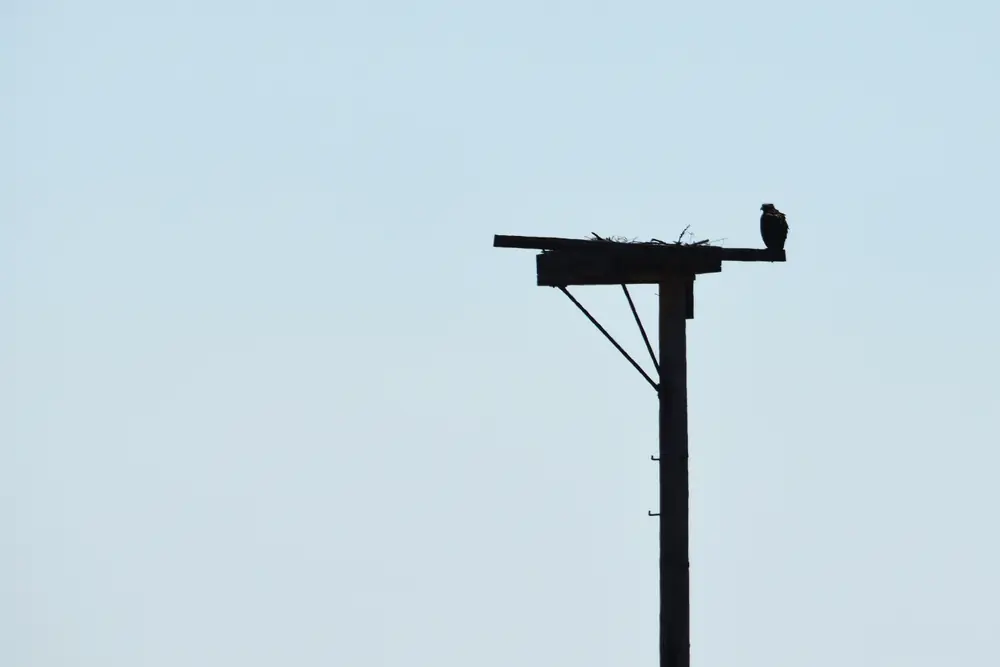
Ospreys back on their nests
Arriving between March and April; eggs usually laid in April · Salt marshes, coves and river mouths from Barrington to Westerly; nest platforms along Narragansett Bay
DEM’s fact sheet says ospreys pair for life, often return to the same nest, lay an average of three eggs in April, and start hatching them in late May after roughly 38 days of incubation. ASRI’s monitoring program, started by DEM in 1977 and passed to Audubon in 2010, now tracks more than 360 nests with over 100 volunteers. In the 2026 season, Audubon reports, only 38 percent of 339 monitored nests fledged young, compared with about 70 percent in 2025. Removing an active nest is a federal offense.
-
Bald eagles
Resident pairs now on nests; winter visitors thinning out · Reservoirs, the Seekonk River and other open water
Audubon’s senior director of education told a Providence television station that there were at least four nests in Rhode Island when he spoke (the count may be higher now), and an Audubon bulletin from 2020 also counted four nesting pairs. Eagles that wintered here on the Seekonk River and other unfrozen water generally move north by spring. An eagle takes five years to mature, which is one reason the recovery has been slow.
-
Peregrine falcons on city buildings
Courtship and territory-keeping in late winter and spring · Tall buildings and bridges in Providence and elsewhere
Audubon’s 2020 bulletin says Rhode Island’s peregrines, with no cliffs to nest on, use tall buildings and bridges, counted five breeding pairs, and pointed to a nest camera on a downtown Providence building.
If a nest on a utility pole worries you, call DEM’s Division of Fish and Wildlife at (401) 789-0281, the number in its fact sheet.
What returns to Rhode Island’s beaches and shores in March?
The ocean side of the state is changing over in March. Winter ducks are still offshore, harbor seals are still hauled out, and the first of the beach-nesting birds begin to scout the sand. Refuge and park staff rope off nesting areas before the birds settle, which is why a beach that was open in winter may suddenly have a fenced zone.
-
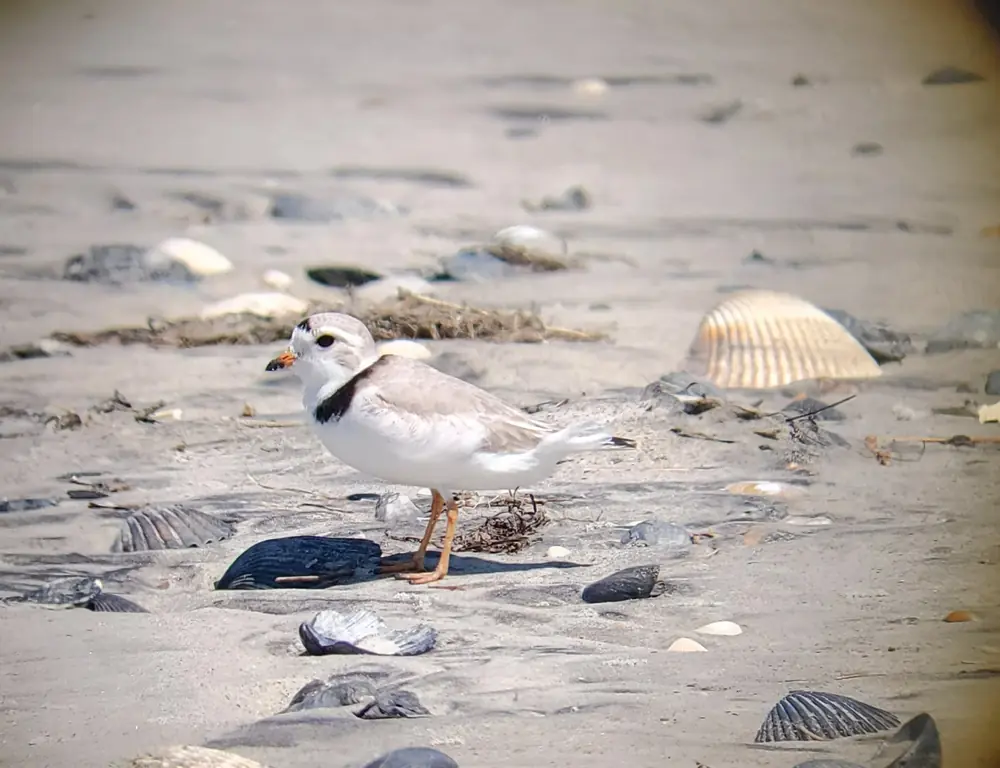
Piping plovers
Arrival timing: March to April per the state; early April per the federal species profile · Beaches including Misquamicut State Beach in Westerly and Goosewing Beach Preserve in Little Compton
A 2020 state release says plovers come back in March and April to set up territories, while the federal species profile puts the Atlantic Coast birds’ arrival in early April and their courtship and nest-building in the second half of April. Incubation lasts 25 to 28 days, so chicks hatch from late May into early June. The state release gives the count as 10 pairs in 1986, when the bird was listed, and 80 pairs by 2019. Dogs are not permitted at state beaches, federal wildlife refuge beaches or The Nature Conservancy’s Goosewing Beach Preserve from April through September.
-
American oystercatchers
Federal survey crews begin late March to early April · Sandy Point Island, Napatree Point, Quonochontaug Beach, islands in Narragansett Bay and Block Island’s northwest shore
A 2019 report by the state and the refuge complex says Fish and Wildlife Service staff start surveying for oystercatchers and posting historic nesting areas in late March to early April. Up to ten pairs nest on Sandy Point Island, where dogs are prohibited. The black-and-white shorebird with a long orange-red bill is hard to miss on a mussel bed.
-
Harbor seals and the last harlequin ducks
Seals are still here in March; harlequins usually seen November through March · Seals at ledges and shores around Narragansett Bay and Block Island; harlequins at Sachuest Point National Wildlife Refuge, Middletown
Save The Bay’s annual seal count took place on March 18 in 2026, when 43 scientists, naturalists and volunteers counted 590 seals, mostly harbor seals, which are winter visitors, plus gray seals, which stay all year and are most common on Block Island. The group says to stay at least 50 yards away from shore, keep dogs leashed, and back off if a seal stretches its neck or heads for the water. A Fish and Wildlife Service refuge brochure says harlequin ducks are seen at Sachuest Point between November and March and calls the refuge’s wintering flock the second largest on the Atlantic coast. The brochure dates from 2006, so check with the refuge for current numbers.
Go around any roped-off area on the wet sand and keep moving.
Is maple sap still running in March, and what is blooming?
Sap rises on mild days that follow freezing nights. DEM says the strongest flows come in February and March and last until the leaves come out, which for red maple can be as early as mid-March and for sugar maple later. A cold snap in the middle of the month can restart the run, and a string of warm nights ends it.
-
Red, Norway and sugar maples
Sap runs on days above freezing until the buds open · Backyards, roadsides and sugarhouses
Sugar maple is uncommon in Rhode Island, DEM says, so producers also tap the state tree, red maple, whose sap is less sweet and whose season is shorter, and the widely planted Norway maple, which they tap often because other maples are scarce. DEM’s brochure describes drilling a hole 7/16 inch wide and 2.5 to 3 inches deep, and pulling the spouts as soon as the season ends so the tree can heal. Rhode Island Monthly reports it takes 40 gallons of sap to make a gallon of syrup. Coggeshall Farm Museum in Bristol taps up to forty maples for its sugaring weekend. Check with the farm for 2027 dates.
-
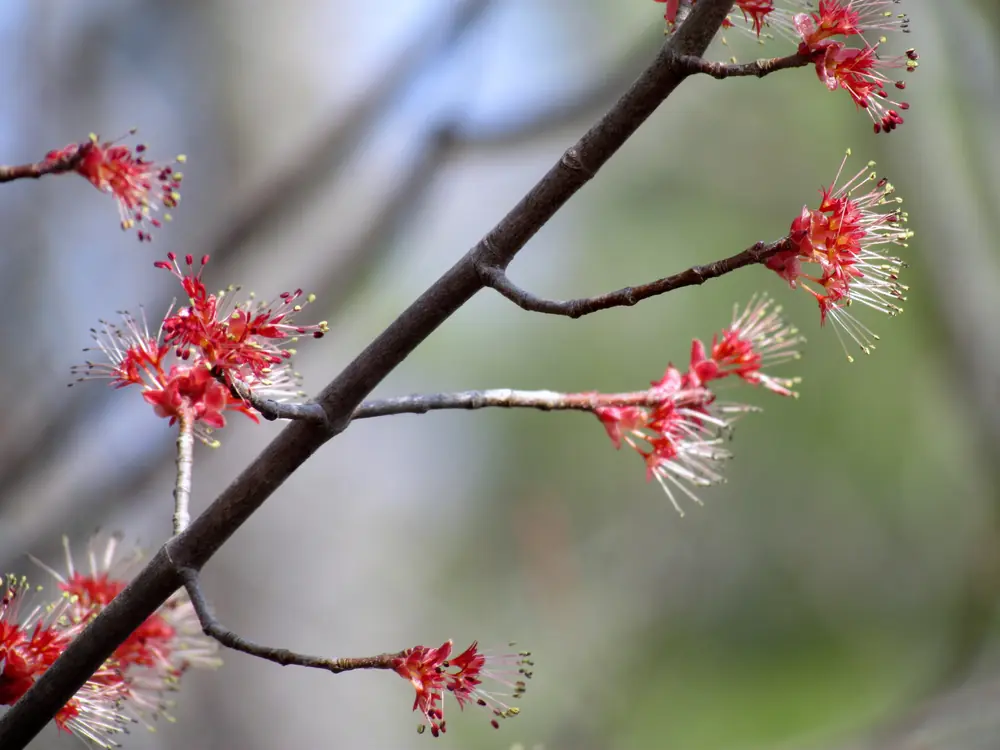
Red maple buds and flowers
As the buds swell in spring · Swamps, streamsides and street trees
Native Plant Trust says red maple buds swell and redden in spring, and that the tree grows largest in and near swamps and is abundant in New England forests. Look up at a swamp edge on a mild day for the reddening buds, before any leaves.
-
Skunk cabbage
Starting in March · Swamps and wet woods
A Rhode Island wildflower society account says the state’s woods come alive with blossoms “starting in March with Skunk Cabbage,” which flowers inside a mottled hood and opens its leaves afterward. It is described as common. Hepatica, bloodroot and trout lily bloom in early spring too, before the trees leaf out, but the same account rates them rare or uncommon in Rhode Island.
Note the date of the first red maple flower near you and compare it next year.
Where can I see woodcock courtship and join a bird program in March?
March is when Rhode Island’s birding turns from winter ducks to the courtship of the American woodcock, and Audubon’s volunteer season begins.
-
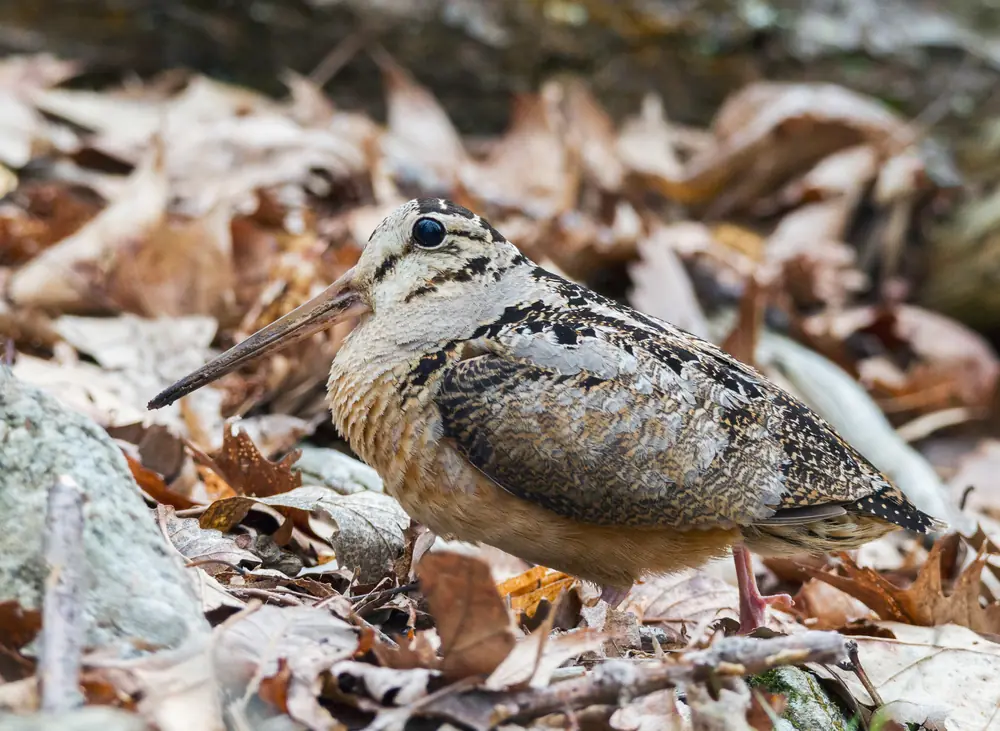
American woodcock sky dances
March through May, at dusk and dawn · Old fields and young woods, including Audubon’s Parker Woodland, Newman and Caratunk refuges, Trustom Pond and the Great Swamp
ASRI’s woodcock article says a displaying male performs for about a half hour at dusk and dawn. He peents from the ground, then spirals skyward to 200 or 300 feet, twittering, before dropping back near where he started. Migration from the southern wintering grounds begins in February and early March, so March is the month the displays begin. ASRI hosted evening woodcock events at its Fisherville Brook refuge in Exeter on March 27 and at Caratunk in Seekonk, Massachusetts, on March 28 in 2026. The 2027 schedule is not posted yet, so check the Audubon calendar.
-
Bluebird monitoring
Volunteer training in early March · Audubon wildlife refuges across the state
ASRI’s March 2026 calendar listed two virtual bluebird monitoring trainings, on March 3 and 5. Volunteers then check nest boxes through the summer. Its community science page also lists osprey monitoring (April to August) and vernal pool monitoring (March to May).
-
Wednesday walks and city birding
Weekly and special walks through the month · Locations across the state; Rhode Island College in Providence
The same Audubon calendar listed weekly small-group Wednesday morning bird walks and a free guided birding outing on the Rhode Island College campus on March 21, 2026.
To hear a woodcock, stand at a field edge at dusk on a calm, mild evening, hold still, and listen for the buzzy peent.
What is March weather like in Rhode Island, and could it flood?
March averages sit above freezing by day and below it at night, so the month is a swing between mud and snow. In NOAA’s 1991–2020 normals, afternoon highs run from about 46 °F in the northwest hills and on the harbor to 49 °F at Kingston and Tiverton. Lows average from the mid-20s inland to 32 °F at Westerly. Precipitation normals stay in a narrow band from 4.2 to 5.6 inches. The hills of North Foster average the most snow, 13.4 inches, while Newport’s harbor station averages 4.8.
March has also brought Rhode Island’s record river floods. Three storms in March 2010 (March 13 to 15, 22 to 23 and 29 to 31) dropped rain onto ground that was already saturated, according to the National Weather Service’s storm report from its Boston/Norton office. Providence recorded 16.34 inches for the month, the wettest March and the wettest month in its record as of that report. On March 29 to 31, as much as 6 to 10 inches of rain fell on Rhode Island and southern Connecticut. The Pawtuxet River at Cranston crested at 20.79 feet on March 31, a record and far above its 9-foot flood stage, after setting another record about two weeks earlier. Record flooding on the Pawcatuck River in the south shut down Amtrak service at Westerly, a dam in Hopkinton failed, and the river stayed above flood stage until April 12. The report says 22 of the 27 long-term stream gauges in Rhode Island broke their previous record crests during the month. FEMA approved $79 million in disaster aid for individuals and businesses, with nearly 26,000 residents applying.
The same snowmelt and rain that fill the vernal pools can flood roads, so check the local forecast for flood watches before a trip to a river or a low trail. The Climate Prediction Center posts its newest seasonal maps at cpc.ncep.noaa.gov; look under the three-month outlook for March through May.
| Station | Average high | Average low | Precipitation | Snowfall |
|---|---|---|---|---|
| N Foster 1 E (northwest hills) | 45.7 °F | 26.9 °F | 5.21 in | 13.4 in |
| Woonsocket (Blackstone Valley) | 47.3 °F | 28.2 °F | 4.89 in | 7.6 in |
| Coventry 2 (western Kent County) | 47.0 °F | 25.6 °F | 5.03 in | no normal |
| Providence T F Green Airport (Warwick) | 47.7 °F | 30.2 °F | 4.90 in | 6.4 in |
| Kingston (South Kingstown) | 49.1 °F | 28.3 °F | 5.59 in | 6.2 in |
| Westerly State Airport | 47.2 °F | 32.0 °F | 4.17 in | no normal |
| Tiverton (East Bay) | 49.0 °F | 30.3 °F | 5.55 in | 7.4 in |
| Newport Rose (Newport Harbor) | 45.9 °F | 31.7 °F | 4.61 in | 4.8 in |
The normals above blend quiet and stormy years, and a late nor’easter can still bring surf and high tide, so keep clear of seawalls and rocks.
When is the last spring freeze in Rhode Island?
March nights regularly dip below freezing, and plenty of Rhode Island gardens see more frost in April. The table shows NOAA’s 1991–2020 freeze normals for five stations. The coast clears first: the airport in Warwick, Newport and Westerly all have a median last freeze near April 11. Woonsocket in the Blackstone Valley and Coventry in the western hills come about eleven days later, on April 22. Use the Rhode Island frost dates page to find the town nearest you.
| Station | One year in ten | Median | Nine years in ten |
|---|---|---|---|
| Woonsocket | Apr 9 | Apr 22 | May 6 |
| Providence (T. F. Green Airport) | Apr 1 | Apr 11 | Apr 23 |
| Coventry (western hills) | Apr 10 | Apr 22 | May 4 |
| Newport (State Airport) | Mar 31 | Apr 11 | Apr 24 |
| Westerly (State Airport) | Mar 31 | Apr 11 | Apr 26 |
Do not move tender seedlings out because a week of March feels warm. The median is the middle year: in half of all springs, a last freeze comes later.
How much daylight does Rhode Island gain in March, and when do the clocks change?
Providence starts March with 11 hours 15 minutes of daylight and ends it with 12 hours 40 minutes: 85 minutes more, near 2.8 minutes each day. Spring begins astronomically with the equinox at 4:25 p.m. EDT on Saturday the 20th, per the U.S. Naval Observatory.
The jump on the clock is bigger than the gain in the sky. Clocks go forward at 2 a.m. Sunday the 14th. On Saturday the 13th the Providence sun rises at 6:01 a.m. and sets at 5:50 p.m. (standard time); on the 14th it rises at 6:59 a.m. and sets at 6:51 p.m. (daylight time), per the Naval Observatory. Evenings suddenly stay light, so a dusk woodcock watch starts an hour later by the clock.
| City | Mar 1 | Mar 31 | Gained | Per day |
|---|---|---|---|---|
| Woonsocket | 11 h 15 m | 12 h 39 m | 84 min | 2.8 min |
| Providence | 11 h 15 m | 12 h 40 m | 85 min | 2.8 min |
| Warwick | 11 h 15 m | 12 h 39 m | 84 min | 2.8 min |
| Coventry | 11 h 15 m | 12 h 39 m | 84 min | 2.8 min |
| Newport | 11 h 16 m | 12 h 39 m | 83 min | 2.8 min |
| Westerly | 11 h 16 m | 12 h 39 m | 83 min | 2.8 min |
| New Shoreham | 11 h 16 m | 12 h 39 m | 83 min | 2.8 min |
The daylight page has sunrise and sunset for every state, and the cloud guide helps you read the March sky ahead of a spring storm.
What can you see in the Rhode Island night sky in March 2027?
No eclipses this month, but there are bright planets to pick out, a thin morning crescent beside Venus, and the Worm Moon. Times below are Eastern. The March 8 new moon comes before the clock change (EST); later phases follow the switch to daylight time (EDT) on Sunday the 14th.
-
Mercury and Venus at dawn
Mercury is farthest from the sun on March 17; best from about the 8th to the 25th. Venus all month · Low in the east-southeast before sunrise
Mercury reaches its greatest western elongation, 27.6 degrees from the sun, on Wednesday, March 17. Spring mornings are a shallow angle for this view, so look about an hour before sunrise, with a flat horizon. Venus is far brighter and higher. Venus gets company from a slim old moon, about 2 degrees away, on the mornings of the 4th and 5th.
-
Jupiter and Mars in the evening
All month; the moon passes Jupiter on March 18 and 19, and by our own figures Mars is about 4.3 degrees from Jupiter on March 30 and 31 · Well up in the sky after dark, in the Leo and Cancer region
Jupiter, the brighter, rides the evening sky through the spring. A gibbous moon, 88 percent lit, glides within a degree of it as darkness falls on the 18th and again on the 19th. By Tuesday evening, March 30, Mars stands about 4.3 degrees from Jupiter; both are well up by about 8 p.m., a wide but easy pair to find.
-
Saturn’s last evenings
Early March · Low in the west-southwest after sunset
Saturn’s evening show is nearly over. Early in the month it lingers in the west for a couple of hours after dusk; by mid-March it is gone within about an hour and a half, and April 7 brings its conjunction with the sun. Treat it as a bonus for the first week or so, from a place with a clear western horizon.
-
The equinox and the Worm Moon
Equinox Saturday, March 20, at 4:25 p.m.; full moon Monday, March 22, at 6:44 a.m. · Anywhere with an open view east at dusk
The sun is directly above the equator at the equinox, the astronomers’ first day of spring. Monday’s full moon goes by the name Worm Moon, an old label tied to earthworms surfacing in softening soil. It will look round on both the 21st and 22nd.
| Phase | Date | Time |
|---|---|---|
| New moon | Monday, Mar 8 | 4:29 a.m. EST |
| First quarter | Monday, Mar 15 | 12:25 p.m. EDT |
| Full moon, the Worm Moon | Monday, Mar 22 | 6:44 a.m. EDT |
| Last quarter | Monday, Mar 29 | 8:54 p.m. EDT |
The moon phase page keeps the whole year, and the nights around the new moon on March 8 are the darkest for stargazing.
What can Rhode Island families do outdoors in March?
- Listen from the car window. On a mild, damp evening, park near a wooded wetland and roll the windows down. Wood frogs and peepers are easy to hear without ever getting out.
- Make a herring bridge visit. Look for a fishway or bridge over a coastal brook, such as Gilbert Stuart Stream in Narragansett or Buckeye Brook in Warwick, on a sunny afternoon after the water warms.
- Tap a tree, or tour a sugarhouse. Sugaring programs often run from late winter into March. Coggeshall Farm Museum in Bristol has held a maple sugaring weekend, but check with the organizer for 2027.
- Go to an Audubon walk or woodcock evening. Audubon’s programs repeat every year, but dates are not posted for 2027 yet; check its calendar.
- Join a seal watch. Newport seal tours run November through April. Save The Bay holds its annual seal count in mid-March (March 18 in 2026).
- Count something. Audubon’s citizen-science list includes bluebird boxes, vernal pools and ospreys, and a nature journal turns each first into a record.
Browse every state and month in the nature guides. For the winter that comes before this, see February in Rhode Island, and for field notes, the Naturalist’s Field Journal has plates for them all.
Safety notes for March in Rhode Island
- Hunting. DEM’s 2026–27 hunting guide lists crow hunting on Fridays, Saturdays and Sundays through April 3, 2027, and private-land beaver trapping through March 14. Spring turkey season is later: April 29 to May 23, 2027, with youth days April 19 to 25 and a paraplegic hunt on April 24 and 25. No blaze orange rule applies in March, but the guide requires 200 square inches of fluorescent orange of anyone using state management areas, undeveloped state parks and cooperative units from the third Saturday in April to the last day of May, with an exemption for spring turkey hunters. These dates come from the 2026–27 guide, so check DEM for any changes before you go.
- Dogs on management areas. From March 15 through August 15, dogs may not be run at large on state management areas without permission. Leashed walking is allowed on roads and trails, with a leash no longer than 25 feet.
- Fishing. Trout season opened on Saturday, April 11, in 2026. DEM announces the 2027 opening in the spring, so look up the date and the license rules before you go.
- Ticks. The University of Rhode Island’s TickEncounter center treats the adult blacklegged (deer) tick as a risk from fall into May whenever daytime temperatures stay above freezing, and the nymph as the larger worry from late spring through summer. Tuck pants into socks, check yourself afterward, and use a repellent.
- Floods and storms. Do not drive across a flooded road, and stay off the banks of swollen streams. Coastal storms bring surf and high water at the shore.
- Cold water. Narragansett Bay is still near its coldest, so kayakers and anglers should dress for the water and wear a life jacket. Treat any ice left on a pond as unsafe.
- Wildlife. Keep 50 yards from seals, and keep out of roped beach areas. Leave frogs and salamanders alone, and slow down where they cross the road.
Sources (41)
- Rhode Island DEM: Vernal Pools brochure (breeding season, species, 300-yard buffer)
- Rhode Island DEM Division of Fish and Wildlife: Wild Rhode Island Explorer, Spring 2019 (vernal pools, spring peeper, spotted salamander)
- Audubon Society of Rhode Island: frog and toad guide (wood frog, spring peeper, spadefoot, American toad)
- Audubon Society of Rhode Island: community science programs (vernal pool, bluebird and osprey monitoring)
- Mass Audubon: sounds of spring at the sanctuaries (wood frog and spring peeper calls)
- Ocean State Media (Rhode Island PBS): as spring arrives, so does a symphony of nature sounds (April 4, 2025)
- Rhode Island Rivers Council: river herring migration at Gilbert Stuart Stream, 1981–2019
- Buckeye Brook Coalition: Buckeyes know it’s spring, start early spawning run (March 27, 2012)
- Rhode Island DEM Division of Fish and Wildlife: notice to Atlantic herring vessels (zero possession of river herring and American shad)
- Rhode Island DEM Division of Fish and Wildlife: osprey fact sheet
- Audubon Society of Rhode Island: osprey monitoring program (2026 season results)
- Audubon Society of Rhode Island: Earth Week 2020, Rhode Island raptors (osprey, peregrine, bald eagle)
- NBC 10 (Turn to 10): Rhode Island seeing uptick of bald eagles
- American Oystercatcher Working Group: Rhode Island 2019 state update (Durkin and Felton)
- State of Rhode Island: piping plover protection release (May 28, 2020)
- U.S. Fish and Wildlife Service: piping plover, Atlantic Coast population
- U.S. Fish and Wildlife Service: Rhode Island National Wildlife Refuge Complex brochure (harlequin ducks at Sachuest Point, 2006)
- Save The Bay: 2026 seal count results, 590 seals (March 18, 2026)
- Save The Bay: seal watch tours, Newport (November to April)
- Rhode Island DEM and Rural Lands Coalition: maple syrup brochure (sap flow, red, Norway and sugar maple)
- Rhode Island Monthly: sugar solution, maple sugaring at Coggeshall Farm
- Native Plant Trust Go Botany: red maple
- Among Rhode Island Wildflowers: Rhode Island early spring wildflowers (web page)
- Among Rhode Island Wildflowers: Rhode Island early spring wildflowers, The Amateur Botanist (May 2009 PDF)
- Audubon Society of Rhode Island: the amazing American woodcock
- Audubon Society of Rhode Island: March 2026 program listings (woodcock evenings, bird walks, bluebird trainings)
- National Weather Service Boston/Norton (Taunton): The March 2010 floods in southern New England, Storm Series Report 2013-01
- NOAA NCEI: 1991–2020 monthly normals for Rhode Island stations (data API, March values)
- NOAA NCEI: GHCN-Daily station list (station names and identifiers)
- NOAA NCEI: U.S. Climate Normals 1991–2020
- Climate Prediction Center: 90-day (seasonal) outlooks
- U.S. Naval Observatory: moon phases, 2027
- U.S. Naval Observatory: Earth’s seasons, 2027
- U.S. Naval Observatory: sunrise and sunset for Providence, March 13 and 14, 2027
- Sea and Sky: astronomy calendar of celestial events, 2027 (March)
- Rhode Island DEM: 2026–2027 hunting general information, fluorescent orange requirements (eRegulations)
- Rhode Island DEM: 2026–2027 Rhode Island Hunting and Trapping Guide (PDF; crow, beaver trapping, turkey, dog rules)
- The Westerly Sun: RIDEM stocks 60,000 fish in over 100 waterbodies (trout opening day April 11, 2026)
- University of Rhode Island TickEncounter Resource Center: blacklegged tick
- University of Rhode Island TickEncounter Resource Center
- Photos via Wikimedia Commons; licenses and photographers are credited under each picture