What to look for in nature in Rhode Island this December
For meteorologists, winter starts on December 1: December, January and February make up the chilliest three months of a typical year, and the astronomical solstice waits until the 21st. In Rhode Island the ocean softens that start. Snow buntings skitter along the upper beach at Sachuest, razorbills and loons ride the swells offshore, and bald eagles from the north settle along open rivers and reservoirs. Inland the woodchucks are deep in their burrows and the wood frogs lie frozen under the leaves. In Providence the sun sets between 4:15 and 4:18 p.m. from the first of the month to the solstice, and volunteers fan out across six count circles to tally every bird they can find. Here is the month, with dates and places.
Other months in Rhode Island: October, November.
Start here
- Sign up for a count circle. Rhode Island has six Christmas Bird Count circles, from Providence and Scituate to Napatree and Block Island. Each one picks a day of its own inside the count period, and beginners are welcome on a team or at a home feeder. Find yours on Audubon’s count map and write to the compiler now.
- Walk Sachuest in winter clothes. Sachuest Point in Middletown is at its best in the cold. Scan the open water for loons, gannets and razorbills, the beach edge for flocks of snow buntings, and the grassland at dusk for harriers and, with luck, a short-eared owl.
- Geminids, then the Cold Moon. The Geminids, 2026’s best meteor shower, are at their peak as Sunday night, December 13, turns into Monday; a thin crescent moon is gone by mid-evening. Ten nights later, at 8:28 p.m. on Wednesday, December 23, the moon is full, and closer than at any other full moon of 2026.
December fills several pages of the Naturalist’s Field Journal. Every species on your count day belongs in “birds I have seen”; the first coyote or fisher trail in fresh snow goes on “tracks to know”; a pitch pine cone or a red cedar sprig fits “seeds, pods and cones”; a wild holly you can visit again in spring earns a “tree through the seasons” page; and the solstice sunset over the bay is a natural entry for the “dusk and dawn watch.”
Regions used below: Northern Rhode Island and the Blackstone Valley; Providence and the upper bay; The western hills (Foster, Scituate, Coventry); South County and the salt ponds; Newport, Aquidneck Island and the East Bay; Block Island.
When is the Christmas Bird Count in Rhode Island in 2026?
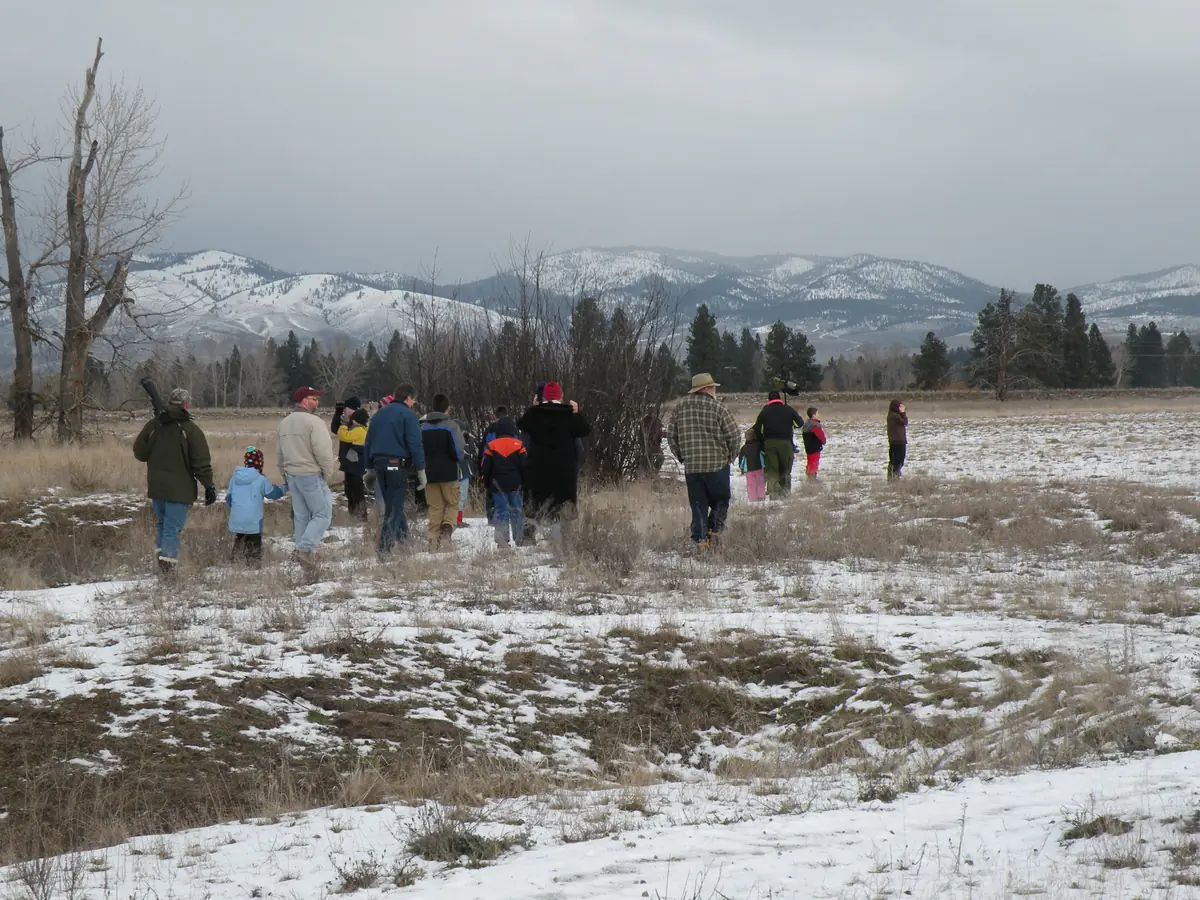
This is the 127th season of Audubon’s winter census, and the count period stretches over the holidays, from Monday, December 14, into the new year until Tuesday, January 5. A compiler in charge of each circle chooses one calendar day inside that window; on that day teams cover their assigned piece of the circle on foot, by car or by boat and write down each bird seen or heard, while other volunteers count at home feeders inside the boundary. There is no fee, National Audubon says, and no minimum skill level, so beginners can sign on.
-
The six Rhode Island circles
One day each, between December 14 and January 5 · Providence (an urban circle), Scituate, South Kingstown, Newport County–Westport, Napatree (shared with Connecticut and New York) and Block Island
Audubon’s map of last winter’s count lists these six circles centered in Rhode Island. Last season Providence counted on December 18 and Napatree on December 28; the other compilers had not posted dates on the map. The 2026 dates will appear on the same map as compilers set them, so check it, pick the nearest circle and send a note to the contact listed there.
-
Counting from the kitchen window
Your circle’s count day · Any yard or balcony inside a circle
Feeder counters keep a tally of the most birds of each kind seen at one time, over whatever hours they can watch. Ask the compiler first, so your list lands in the right circle.
-
Why the old totals matter
A record going back more than a century · Every circle
Because the counts repeat in the same places each winter, they show change. An ecoRI News report noted that only two bald eagles were found on Rhode Island’s counts in the 27 years from 1962 to 1988, during the DDT era. Eagles are now a routine winter find here, and the count data are part of how that recovery was tracked.
Copy each count-day species into the journal’s bird list with the circle and the date.
Where can you see bald eagles in Rhode Island in winter?
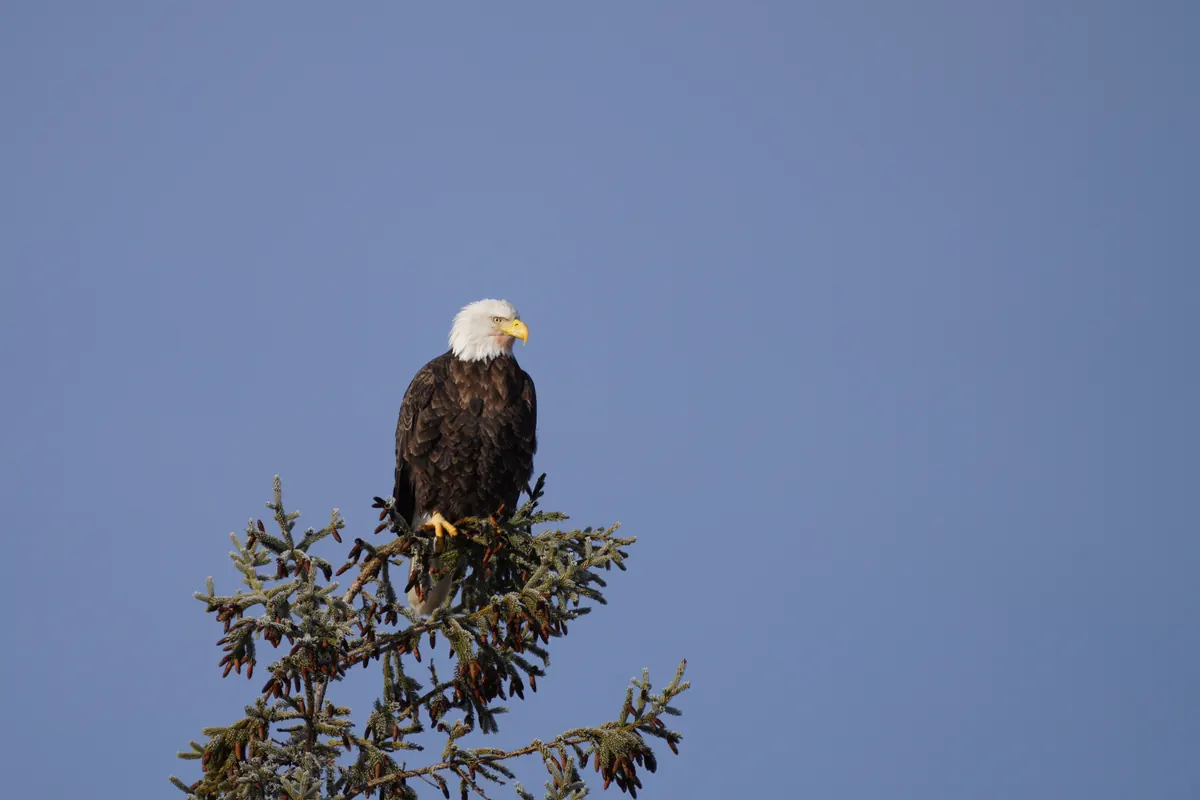
Rhode Island has a small nesting population of bald eagles, but most of the eagles seen in December and January have come down from the north, where lakes and rivers freeze. They settle wherever water stays open and fish or waterfowl are easy to catch. A Massachusetts state wildlife official quoted by ecoRI News put it simply: the harder the northern winter, the more eagles Rhode Island gets. With a mild, El Niño winter favored this year, numbers may be on the low side, so treat any December eagle as a prize.
-
The Seekonk River
December into March; best on cold mornings · The tidal river between Providence, East Providence and Pawtucket
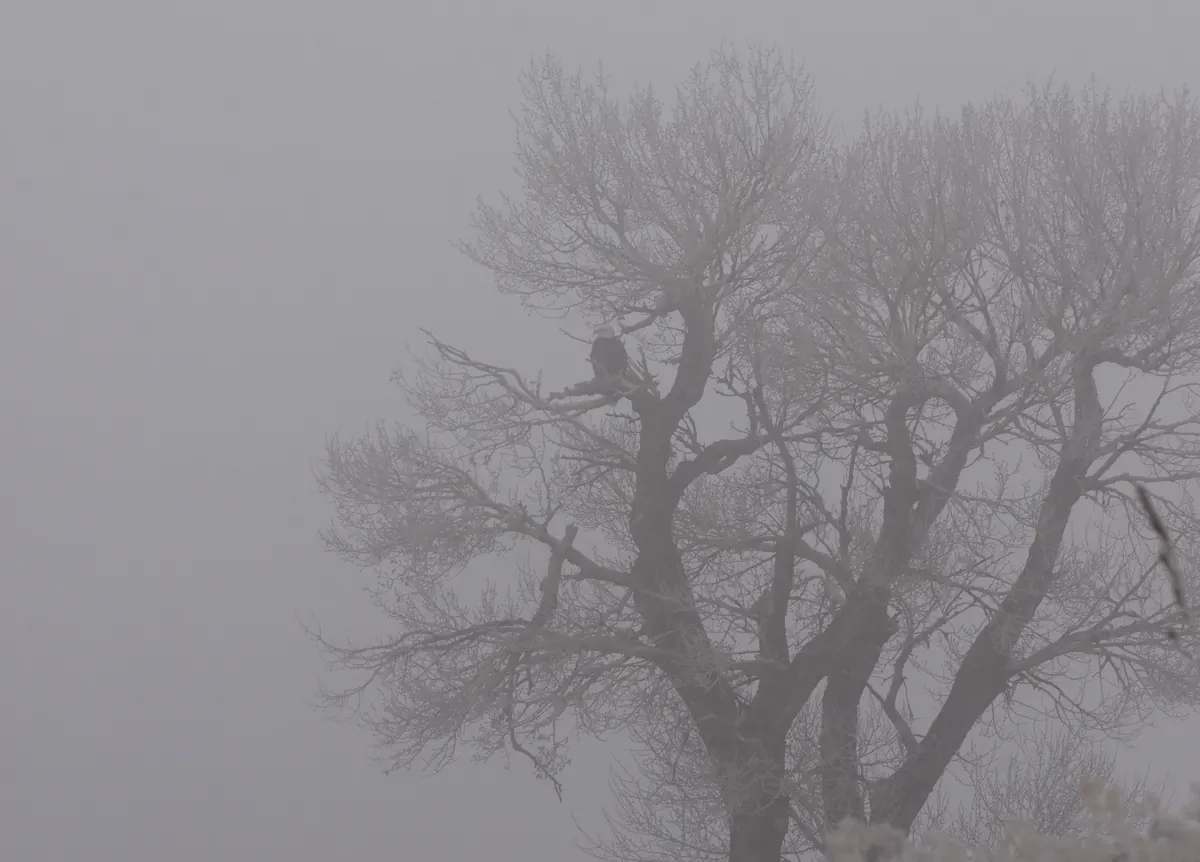
In a 2016 ecoRI News report, birders called the Seekonk the most reliable place in the state to find bald eagles, with as many as nine together; it is still a good first stop, but check recent eBird sightings before you go. Look for the white heads in the tall trees along the banks, or on the ice edge when the coves freeze. Spotting scopes help; the birds often sit far out.
-
Ponds, reservoirs and the Great Swamp
Winter, especially after a cold snap up north · Brickyard Pond, Barrington; Tiogue Lake, Coventry; Stump Pond, Smithfield; Watchaug Pond, Charlestown; Trustom Pond and the Great Swamp, South Kingstown
The same report listed eagle sightings at all of these places in a single January. Big open water draws them, and so do gatherings of ducks and gulls. Young eagles are dark brown all over, with blotchy white under the wings; they need several years to grow the white head and tail, so do not dismiss a big brown bird soaring on flat wings.
Keep well back from a perched eagle; if it stops preening and watches you, you are close enough. Log sightings in eBird.
Which winter birds come to the Rhode Island coast in December?
National Audubon’s guide to birding the state makes the point plainly: on the Rhode Island shoreline, winter may be the best birding season of the year. The sea ducks are the headline, and they build through the month, but December also brings birds of the open ocean close to shore and Arctic songbirds onto the beaches.
-
Loons, gannets and razorbills offshore
December through March; best on calm mornings or after an onshore blow · Sachuest Point, Middletown; Beavertail, Jamestown; Point Judith; the Block Island ferry
Audubon lists loons, grebes, northern gannets, great cormorants and razorbills off Sachuest in winter, and the refuge’s own wildlife page names the common loon among its cold-season visitors. A gannet is a large white seabird, dipped in black at the wingtips, that folds its wings and drops headfirst into the sea after fish. Razorbills are compact black-and-white auks with a thick, blunt bill, riding low on the water and diving often, so be patient with the binoculars.
-
Snow buntings and horned larks on the beach
Winter flocks from late fall into March · Upper beaches, dunes and short-grass fields near the shore: Sachuest, the South County barrier beaches
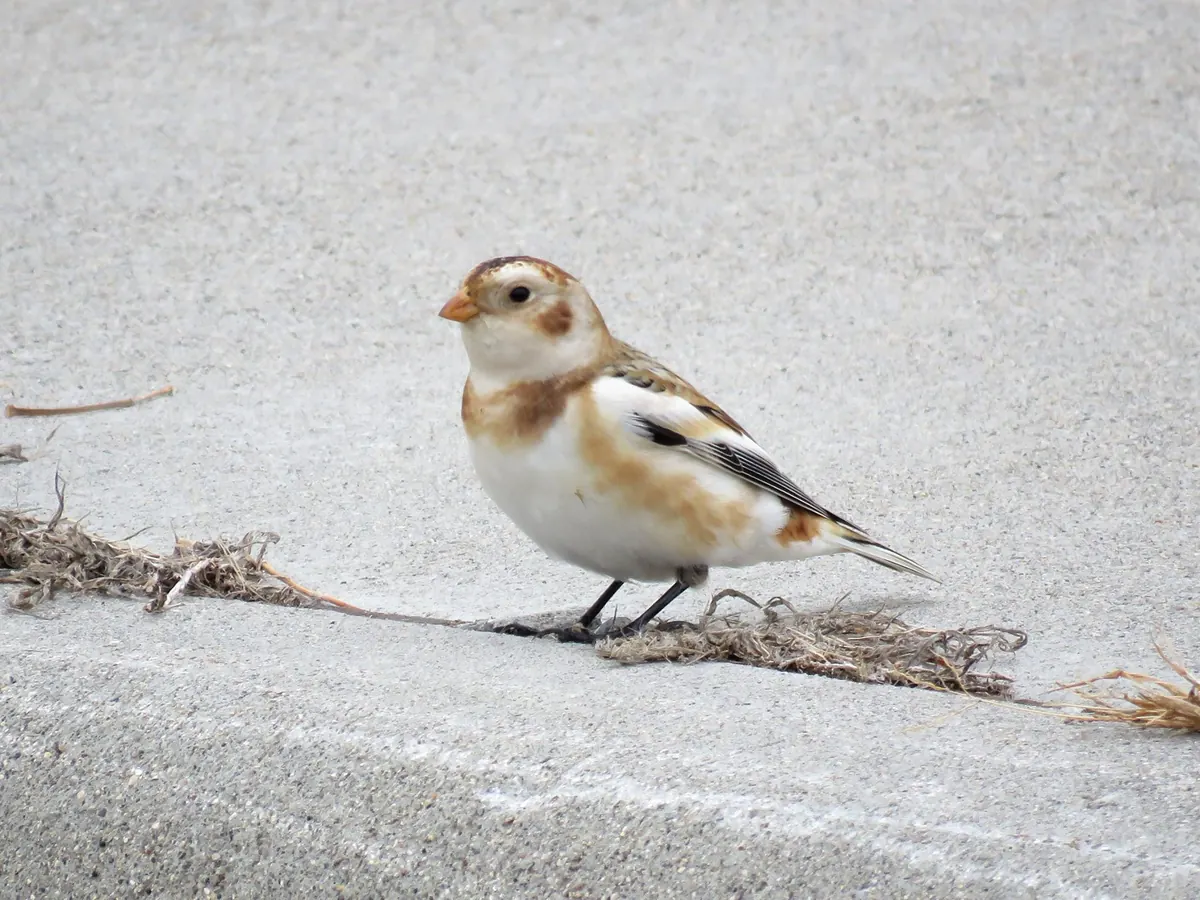
Snow buntings nest in the high Arctic and reach Rhode Island only in winter. The Audubon Society of Rhode Island describes them feeding on seeds in open fields and along the coast in flocks, their winter feathers a mix of white and sand that matches a snowy beach. A flock flushing in front of you looks like a swirl of snowflakes with black wingtips. Horned larks, brown with a black-and-yellow face, often feed with them.
-
Yellow-rumped warblers in the bayberry
All winter · Coastal thickets of bayberry and red cedar: Sachuest, Napatree, Ninigret Park
Nearly every warbler leaves New England in the fall, but this one stays. Audubon Society of Rhode Island naturalists explain that yellow-rumped warblers can switch from insects to waxy berries such as bayberry, red cedar and poison ivy, a trick no other warbler shares. In winter they are streaky brown, but the yellow patch on the rump still flashes when they fly.
-
Hunters of the dunes: harriers and owls
Late afternoon into dusk · Sachuest’s grasslands; marsh edges along the south shore
Audubon’s list of winter raptors at Sachuest includes the northern harrier, the short-eared owl and, in flight years, the snowy owl. Harriers quarter low over the grass with their wings held in a shallow V and show a white rump patch. Short-eared owls come out as the light fails, flapping like big moths. Stay on the trails and give any owl plenty of room; a bird that is flushed again and again burns energy it needs.
The harlequins and eiders that returned in November are still the main attraction off the Sachuest rocks; the November page covers them and the harbor seals.
How do Rhode Island’s animals survive the winter?
Every animal that stays here has a plan for the cold. An Audubon Society of Rhode Island article on winter survival sorts them into a few strategies: leave, sleep through it, freeze, or stay active with a thicker coat and a full pantry.
-
True hibernators: woodchucks and bats
From late fall to early spring · Burrows in fields and hedgerows; for bats, caves and mines to the north
Woodchucks and bats are among the few true hibernators in the state, with heart rate, breathing and metabolism turned down to a crawl. Rhode Island’s bats travel the wrong way for the season, Audubon notes: most go north, to caves and mines in New Hampshire, Vermont and northern New York, where conditions suit them. Chipmunks, skunks and bears doze more lightly and wake now and then to eat or move about.
-
Wood frogs, frozen solid
All winter · Under the leaf litter on the forest floor, near vernal pools
A wood frog spends the winter under the leaves, and much of its body water freezes. A natural antifreeze keeps ice crystals out of its cells, and with no detectable heartbeat it waits for a thaw, then revives; it can freeze and thaw more than once in a season. Turtles and most other frogs settle into pond mud instead.
-
Beavers under the ice
Whenever ponds freeze · Fisherville Brook Wildlife Refuge, Exeter; Fort Wildlife Refuge, North Smithfield; beaver ponds statewide
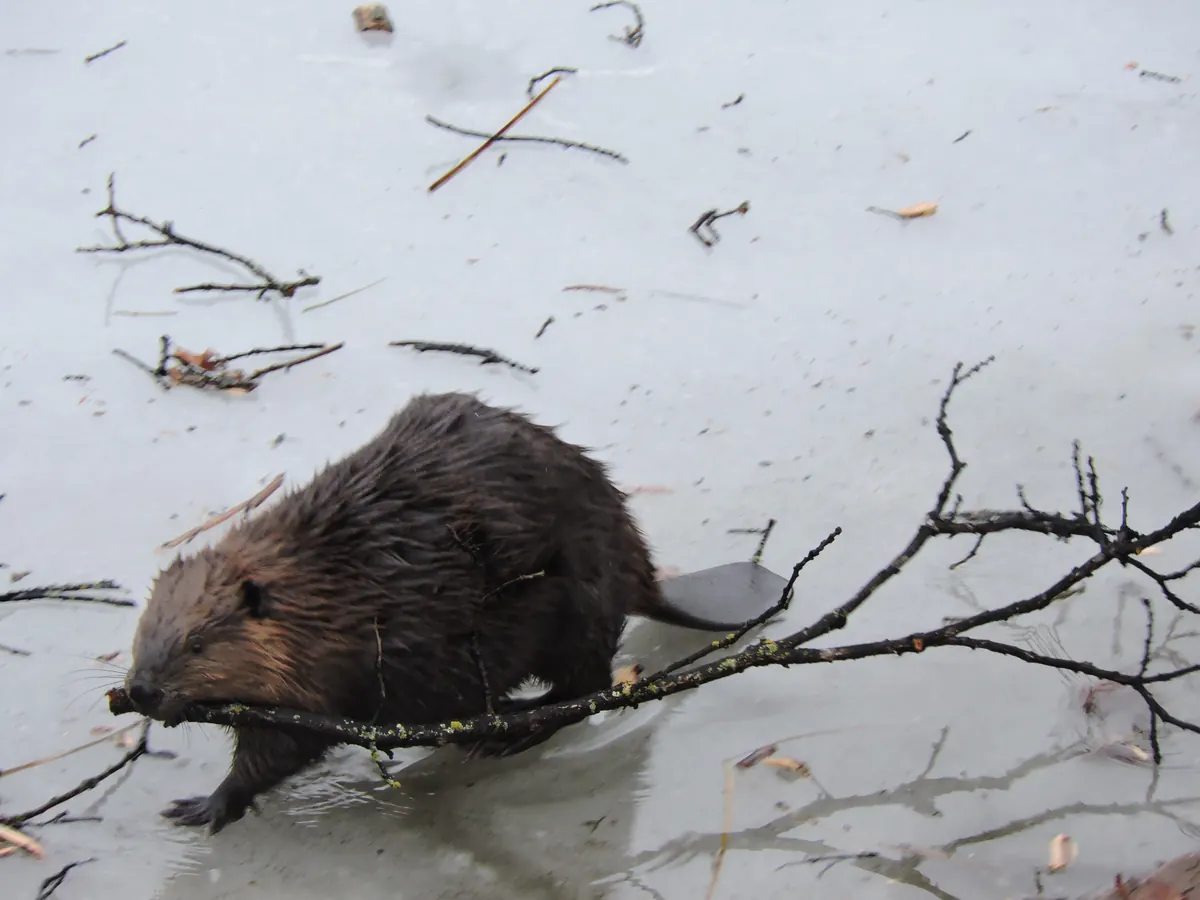
Beavers do not hibernate. They stack a winter supply of branches on the pond bottom near the lodge and keep the dam high, so the water stays deep enough to swim from lodge to food beneath the ice. A fresh pile of peeled sticks or a dark hole kept open in thin ice near the lodge shows the family is home.
The Audubon Nature Center in Bristol devotes its free family day on December 19 to hibernation; details are in the families section below.
Whose tracks are in the snow in Rhode Island this winter?
A light snow or a stretch of soft mud turns the woods into a notebook. Several predators have returned to Rhode Island on their own over the past few decades, according to the Audubon Society of Rhode Island’s conservation staff, and their trails are often the first sign of them.
-
Coyote
Any morning after snow; howling peaks in late winter · Fields, woodland edges and Audubon refuges statewide
Eastern coyotes are now common across most of the state. Their tracks are oval, with four toes and claw marks, and a trotting coyote leaves a neat, nearly straight row, the hind feet stepping into the front prints. Two or three sets together suggest a family group.
-
Bobcat
Rarely seen, more often tracked · Wooded refuges and larger forests
Bobcats are scarcer than coyotes but more common than most people expect. Their round prints usually show no claw marks, since cats keep their claws retracted, and like house cats they scrape soil or snow over their scat.
-
Fisher
All winter · Unbroken forest, often near stone walls and downed logs
The fisher is a large native weasel, an agile climber and one of the few animals that preys on porcupines. Its tracks often appear in pairs or groups of prints as it bounds along, and a trail that runs to a tree and stops is a good sign. Despite stories, fishers are not a danger to people.
Photograph a track next to a glove or coin for scale, and sketch the pattern of four or five prints on the journal’s tracks page; the pattern often identifies the animal better than one print does.
Which evergreens grow wild in Rhode Island, and how do you tell them apart?
With the oaks bare, the green that is left in the woods stands out. Conifers keep their needles because those needles are narrow and waxy and hold their water against drought and cold, as an Audubon naturalist explains it, though even they stop growing for the winter.
-
American holly
Red fruit from late fall into winter · Woods near the coast; also widely planted in yards
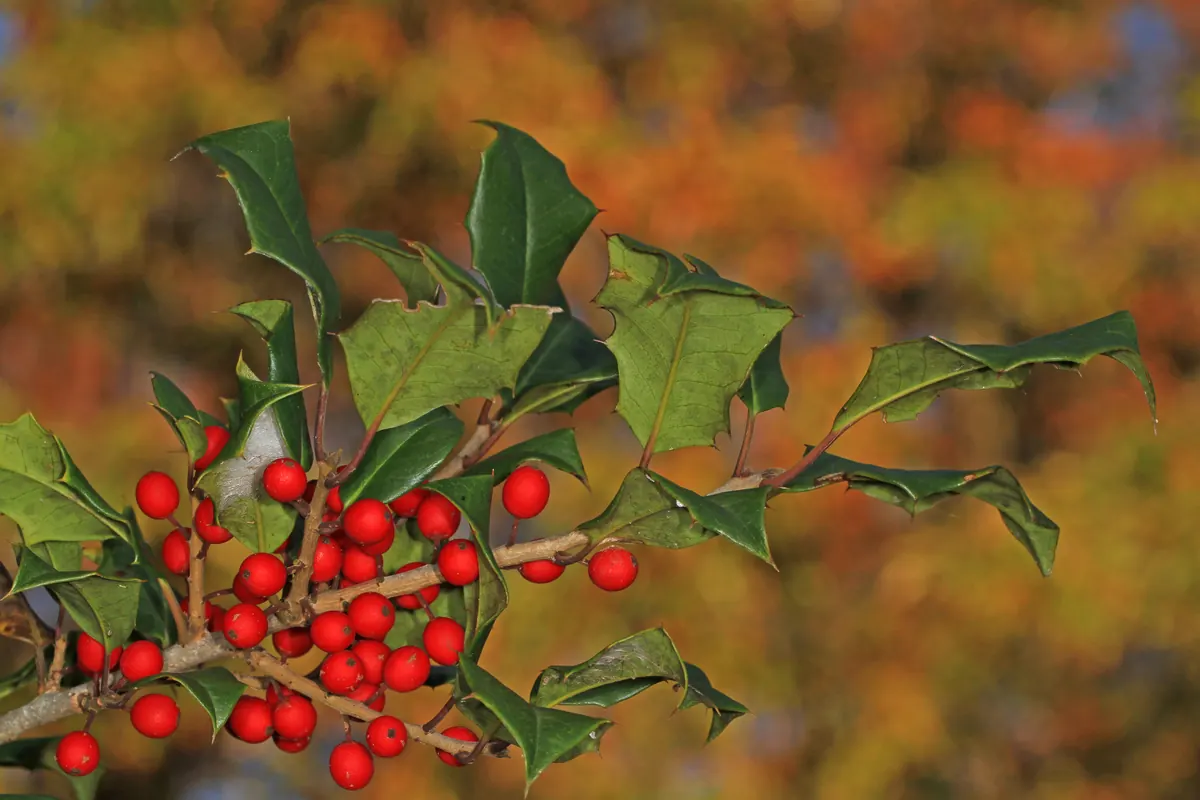
The Native Plant Trust’s Go Botany lists American holly for only two New England states, Massachusetts and Rhode Island, since the coast here marks the northern edge of its range. The leaves are thick and leathery with spiny points, set off by bright red berries from late fall. It tolerates salt spray, which is why it thrives near the shore.
-
Eastern red cedar
All year; blue berry-like cones in winter · Old fields, roadsides and the edges of salt marshes
This narrow, steeple-shaped tree moves into abandoned fields. Its mature foliage is made of tiny overlapping scales, while young shoots carry prickly needles, and its waxy blue cones feed cedar waxwings and yellow-rumped warblers. The tree also hosts a rust fungus that forms galls and spreads to apples, which is why many cedars near orchards were cut down.
-
Pitch pine
All year · Sandy, dry soils and coastal plain woods
Pitch pine has stiff needles in bundles of three and hard, prickly cones that may stay on the branches for years. Go Botany calls it the only pine in the region that tolerates some salt, and notes that it needs fire to clear out competition.
-
Atlantic white cedar
All year · Swamp forests of the coastal plain
Its foliage is a fine spray of flattened scales and its cones are small, round and woody. Once a dominant tree of nearly impassable coastal swamps, it has declined as wetlands were drained and cut.
Bring a holly sprig or pitch pine cone home for the journal, and leave the berries on wild trees for the birds. After the holidays, a cut Christmas tree can go back to the woods: DEM and Trout Unlimited collect them in January for stream habitat (see the families list).
When is the earliest sunset in Rhode Island?
Not on the shortest day. Every city in the table below reaches its earliest sunset on December 8, nearly two weeks ahead of the solstice: 4:14 p.m. in Woonsocket, 4:15 in Providence and Newport, 4:18 in Westerly. After that the evenings begin to stretch again, but the mornings keep darkening. Providence’s sunrise slides from 6:54 a.m. on December 1 to 7:10 on the solstice and 7:13 by New Year’s Eve, and it stays there into the first days of January. On December 21 Providence gets 9 hours and 8 minutes of daylight; ten days later it has won back 4 minutes, every one of them at the end of the afternoon, with sunset at 4:25. Solar noon creeps later on the clock through December, a side effect of Earth’s tilted axis and its slightly oval path around the sun, which is why the earliest sunset and the latest sunrise straddle the solstice.
| City | Dec 1 | Dec 21 | Dec 31 | Earliest sunset |
|---|---|---|---|---|
| Woonsocket | 9 h 20 m | 9 h 07 m | 9 h 10 m | 4:14 p.m., Dec 8 |
| Providence | 9 h 22 m | 9 h 08 m | 9 h 12 m | 4:15 p.m., Dec 8 |
| Warwick | 9 h 23 m | 9 h 09 m | 9 h 12 m | 4:15 p.m., Dec 8 |
| Coventry | 9 h 23 m | 9 h 09 m | 9 h 12 m | 4:16 p.m., Dec 8 |
| Newport | 9 h 24 m | 9 h 11 m | 9 h 13 m | 4:15 p.m., Dec 8 |
| Westerly | 9 h 25 m | 9 h 11 m | 9 h 15 m | 4:18 p.m., Dec 8 |
| New Shoreham | 9 h 26 m | 9 h 13 m | 9 h 15 m | 4:17 p.m., Dec 8 |
For the times on your own street, twilight included, use the sunrise and sunset calculator.
How cold and snowy is December in Rhode Island, and what might a strong El Niño do?
December is when winter takes hold inland while the coast hangs on to some of the ocean’s stored warmth. In NOAA’s 1991–2020 normals, the average December low is about 24 °F in the northwest hills at North Foster and at Woonsocket, but more than 31 °F at Newport Rose beside the harbor. North Foster, the highest station, also averages the most snow, a little over 12 inches for the month; T. F. Green Airport averages 7.6 inches and Newport Rose about 5. Rain and melted snow together come to between about 3.8 and 5.5 inches, depending on the station.
This winter the Pacific is sending an unusually loud signal. When the Climate Prediction Center updated its outlook on September 10, it gave odds above 90 percent for an event in the top, very strong category through the fall and winter. Federal and regional climatologists, in a joint briefing from NOAA and the Cornell-based climate center for the Northeast, list what such winters tend to bring here: a polar jet stream pushed north, warmer air, and an active coastal storm track. For a shore state, that last point matters most. The same briefing ties El Niño winters to more nor’easters, with the coastal damage that comes with them, from high winds to beach erosion, and recalls that the October 1991 “Perfect Storm,” which threw waves of 15 to 30 feet at coastal New England, came during a strong El Niño. It also warns that other patterns can override the Pacific: in 1965–66 a strongly negative North Atlantic Oscillation muted the expected El Niño precipitation. So a milder than usual December is the better bet, and a wet one, but not a guarantee.
NOAA releases its official winter outlook, December through February, on October 15, and it will sit with the other CPC seasonal outlooks.
| Station | Average high | Average low | Precipitation | Snowfall |
|---|---|---|---|---|
| N Foster 1 E (northwest hills) | 39.7 °F | 24.3 °F | 5.23 in | 12.4 in |
| Woonsocket (Blackstone Valley) | 43.0 °F | 24.6 °F | 5.27 in | 7.9 in |
| Coventry 2 (western Kent County) | 41.8 °F | 24.3 °F | 5.49 in | no normal |
| Providence T F Green Airport (Warwick) | 43.4 °F | 27.6 °F | 4.65 in | 7.6 in |
| Kingston (South Kingstown) | 45.2 °F | 26.3 °F | 5.33 in | 6.6 in |
| Westerly State Airport | 44.9 °F | 30.3 °F | 3.77 in | no normal |
| Tiverton (East Bay) | 43.3 °F | 29.5 °F | 4.91 in | 7.3 in |
| Newport Rose (Newport Harbor) | 44.2 °F | 31.3 °F | 4.45 in | 5.2 in |
For what the next few days hold rather than the next few months, open the forecast page. Spring and fall freeze dates by station are on the Rhode Island frost dates page.
What is in the Rhode Island night sky in December 2026?
-
The Geminids
Night of Sunday, December 13, into Monday, December 14 · Anywhere with a wide, dark sky; the radiant near Castor and Pollux climbs in the east through the evening
The International Meteor Organization expects the Geminids to peak on December 14 and gives about 150 meteors an hour as the figure for an ideal, pitch-black sky, more than any other shower this year; a real backyard shows far fewer. A sliver of a moon slips below the horizon in the evening, and from then until dawn the sky is moonless. Meteors start showing once it has gone, and the count climbs until about 2 a.m., when Gemini rides at its peak height. Geminids are fairly slow and often bright. A beach or field in Charlestown, away from the glow of Providence, is ideal.
-
The Cold Moon, the nearest full moon of 2026
Full at 8:28 p.m. Wednesday, December 23 · Rising in the northeast near sunset
The moon reaches full phase that Wednesday evening, and perigee, the moon’s nearest approach, follows by roughly seven hours, so no full moon of 2026 looks bigger. It will look just as round on Christmas Eve. Watch it rise over the water from the bay’s western shore.
-
Venus at dawn, Saturn at dusk
All month · Venus low in the southeast before sunrise; Saturn in the south to southwest after dark
Before sunrise, look southeast for Venus, far brighter than anything else in the dawn sky; a waning crescent hangs near it as dawn breaks on the 4th, with the star Spica set between them, and sits a little closer on the 5th. Mars and Jupiter keep it company in the hours before sunrise, though by late December Jupiter is up well before midnight. Of the bright planets only Saturn shows up after dusk, low in the south and southwest, and it sets earlier each night, a few hours behind the sun as the year closes.
-
The solstice, and a look ahead
Monday, December 21, 3:50 p.m. EST; Quadrantids on the night of January 3 · Anywhere
Winter begins by the astronomers’ reckoning at 3:50 that Monday afternoon, when the sun stands farthest south. After dark that night the Seven Sisters sit just beside a fat, nearly full moon. The latest sunrises do not come until the first days of January. The Quadrantid meteors peak on the night of January 3, 2027, with no moon to spoil them, and Comet Encke starts to brighten in December on its way to a binocular showing in late January and February.
-
Public stargazing
Fridays; December 4 is listed · Frosty Drew Observatory, Ninigret Park, Charlestown
Frosty Drew holds its Stargazing Nights on Fridays, opening at sunset or 6 p.m., whichever is later, with a $5 suggested donation per person. At the start of October its calendar listed Friday, December 4; check for the rest of the month and for weather closures before you drive down, and use only red light in the park.
| Phase | Date | Time |
|---|---|---|
| Last quarter | Tuesday, Dec 1 | 1:08 a.m. EST |
| New moon | Tuesday, Dec 8 | 7:52 p.m. EST |
| First quarter | Thursday, Dec 17 | 12:42 a.m. EST |
| Full moon, the Cold Moon (a supermoon) | Wednesday, Dec 23 | 8:28 p.m. EST |
| Last quarter | Wednesday, Dec 30 | 1:59 p.m. EST |
Check the cloud cover right now before heading out for the Geminids, and get moonrise and moonset for your town from the moon calendar.
What can Rhode Island families do outdoors in December?
- Thursdays, December 3 and 17: Junior Naturalists in Bristol. The Audubon Nature Center and Aquarium’s homeschool series for ages 5 to 10 covers sharks and whales on the 3rd and the owls of Rhode Island on the 17th, with a live owl ambassador, 10:30 a.m. to noon. Registration is required, and children must come with an adult; it is part of an eight-session series, so ask whether single sessions are open.
- Fridays: telescopes in Charlestown. Frosty Drew Observatory’s Stargazing Nights; December 4 is on its calendar.
- Wednesday afternoons: a short guided walk. Norman Bird Sanctuary in Middletown runs a free naturalist-led walk each Wednesday through the winter, 3 to 3:45 p.m.
- Late Sunday, December 13: meteor night. Put the children to bed early, wake them after midnight, and count meteors from sleeping bags on the lawn.
- Count week, mid-December into early January: birds for Audubon. Join a team or count at your feeder in one of the state’s six circles.
- Saturday, December 19: a free hibernation day in Bristol. The Audubon Nature Center and Aquarium opens free, 10 a.m. to 3 p.m., with a nature story at 10, animal interviews at 11 and 2:30, and at 1 p.m. a naturalist’s talk on where wild animals go in winter, with real skulls, pelts and other biofacts. No registration needed.
- Monday, December 21: the shortest day. Watch the sun set from a west-facing beach and note the time; then watch the Pleiades and the moon together after dark.
- Wednesday, December 23: the Cold Moon. Be at the shore at moonrise.
- Seal tours. Save The Bay’s hour-long boat trips out of Newport to see harbor seals sail mostly on weekends and school holidays, including the winter break. Call or book online for dates.
- New Year’s Day, 2027: walk it in. DEM has hosted a New Year’s Day hike every year for a decade, tied to the nationwide First Day Hikes effort run by America’s State Parks; the 2026 walk was a one-mile, stroller-friendly loop at Fishermen’s Memorial State Campground in Narragansett. The 2027 location had not been announced in early October, so watch DEM’s announcements in late December.
- After the holidays: Trees for Trout. DEM and Rhode Island Trout Unlimited collect undecorated real Christmas trees to anchor along stream banks for brook trout; last winter’s drop-off was a Saturday in January at the Arcadia check station in Exeter. Look for the 2027 date before you put the tree out.
- Citizen science. Keep a FeederWatch count going through the holidays, add bird lists to eBird and track photos to iNaturalist.
Browse every state and month from the nature index; a December’s worth of outings fits neatly in the Naturalist’s Field Journal.
Safety notes for December in Rhode Island
- Shotgun deer season and blaze orange. Shotgun deer season in Zones 1 and 2 runs December 5 through 31 this year. DEM’s orange rule covers every visitor to state management areas, undeveloped state parks and co-op hunting units, birders and hikers too. From September through February the minimum is 200 square inches of solid fluorescent orange worn above the waist; during the shotgun season the requirement is 500 square inches, in practice a hat and a vest, visible from all directions. Fluorescent camouflage does not count. For hikers and birders, the only exemption is land limited to archery hunting. The big tracts where birders and hikers go in December, Arcadia and Great Swamp among them, fall under the rule; put an orange vest on the dog as well.
- Other seasons open in December (2026–27 DEM guide). Muzzleloader deer closes December 4 and deer archery continues to January 31. On Block Island, deer hunting days in December are the 1st, 3rd, 4th, 7th to 11th, 14th, 15th, 17th, 18th, 21st and 22nd. Ducks, sea ducks and Canada geese reopen December 5 and run to January 24; brant open December 26. Fox closes December 31, mourning dove December 15. Pheasant, rabbit, squirrel, raccoon and coyote stay open into February.
- Ice is rarely safe in December. Early-season ice is thin and uneven, and a mild winter makes safe ice less likely. Connecticut’s environmental agency, whose guidance fits the whole region, says to stay off ice thinner than 4 inches, to expect weaker ice near streams, bridges and currents, and that a snow cover slows freezing and lowers how much weight the ice can bear. Let someone know where you are going, bring a throw rope and a pair of ice picks, and leash dogs near frozen ponds.
- Cold water and storms. Winter water in the bay and the ocean can leave a person helpless in minutes after a fall from a jetty or a kayak. A nor’easter can push big waves and flood tides onto the shore; keep away from the rocks at Beavertail, Point Judith and Brenton Point when waves are breaking over them.
- Short days. With sunset around 4:15 for much of the month, plan woodland walks to finish by mid-afternoon, pack a light, and leave word of where you are walking.
Sources
- National Audubon Society: join the Christmas Bird Count (December 14 to January 5; free, all levels)
- National Audubon Society: Christmas Bird Count circle map (126th count, Rhode Island circles and 2025 dates)
- ecoRI News: bald eagles make Rhode Island comeback (December 2016; Seekonk River, winter sites, Christmas Bird Count history)
- National Audubon Society: birding Rhode Island (Sachuest, Trustom, Ninigret; winter species)
- U.S. Fish and Wildlife Service: wildlife watching at Sachuest Point National Wildlife Refuge
- Audubon Society of Rhode Island: winter wildlife survival strategies
- Audubon Society of Rhode Island: yellow-rumped warblers adapt for winter (December 2, 2022)
- Audubon Society of Rhode Island: a predator’s place (coyotes, bobcats and fishers)
- Audubon Society of Rhode Island: programs, tours and events calendar (December 2026 listings)
- Audubon Society of Rhode Island: December 2026 events export (Junior Naturalists, Free Family Fun Day: Hibernation)
- Native Plant Trust Go Botany: American holly
- Native Plant Trust Go Botany: eastern red cedar
- Native Plant Trust Go Botany: pitch pine
- Native Plant Trust Go Botany: Atlantic white cedar
- NOAA NCEI: 1991–2020 monthly normals for Rhode Island stations (data API, December values)
- NOAA NCEI: U.S. Climate Normals 1991–2020
- Climate Prediction Center: ENSO diagnostic discussion, September 10, 2026
- Climate Prediction Center: 90-day (seasonal) outlooks
- NOAA and Northeast Regional Climate Center: El Niño impacts and outlook, Northeast region (Drought.gov)
- U.S. Naval Observatory: moon phases from November 2026
- U.S. Naval Observatory: Earth’s seasons, 2026 (December solstice)
- International Meteor Organization: 2026 meteor shower calendar (Geminids, Ursids, Quadrantids)
- EarthSky: what is a supermoon? (December 24 the closest full supermoon of 2026)
- BBC Sky at Night Magazine: supermoons in 2026 (Cold Moon)
- EarthSky: Venus before sunrise, greatest western elongation (January 3, 2027)
- RASC Observer’s Handbook 2026: lunar occultations (Pleiades, December 21)
- Star Walk: Comet Encke in 2027
- Frosty Drew Observatory: Stargazing Nights
- Frosty Drew Observatory: upcoming events
- Norman Bird Sanctuary: programs and events (free Wednesday nature walks)
- Save The Bay: seal watch tours (Newport, November to April)
- Save The Bay: seals and seal tours return to Newport (weekends and school holidays)
- Rhode Island DEM: start 2026 on the right foot with a First Day Hike (Fishermen’s Memorial State Campground, January 1, 2026; via Internet Archive)
- America’s State Parks: First Day Hikes
- Rhode Island DEM: turn your Christmas tree into fish habitat (Trees for Trout, January 2026; via Internet Archive)
- Rhode Island DEM: orange clothing during shotgun deer season (December 2025; via Internet Archive)
- Rhode Island DEM: 2026–2027 hunting season summary (eRegulations, updated August 19, 2026)
- Rhode Island DEM: 2026–2027 hunting general information, fluorescent orange requirements (eRegulations)
- Rhode Island DEM: 2026–2027 Rhode Island Hunting and Trapping Guide (PDF)
- Connecticut DEEP: ice safety (thickness guidance)
- Project FeederWatch: how to participate
- eBird
- iNaturalist
- Photos via Wikimedia Commons; licenses and photographers are credited under each picture
.jpg)